3111
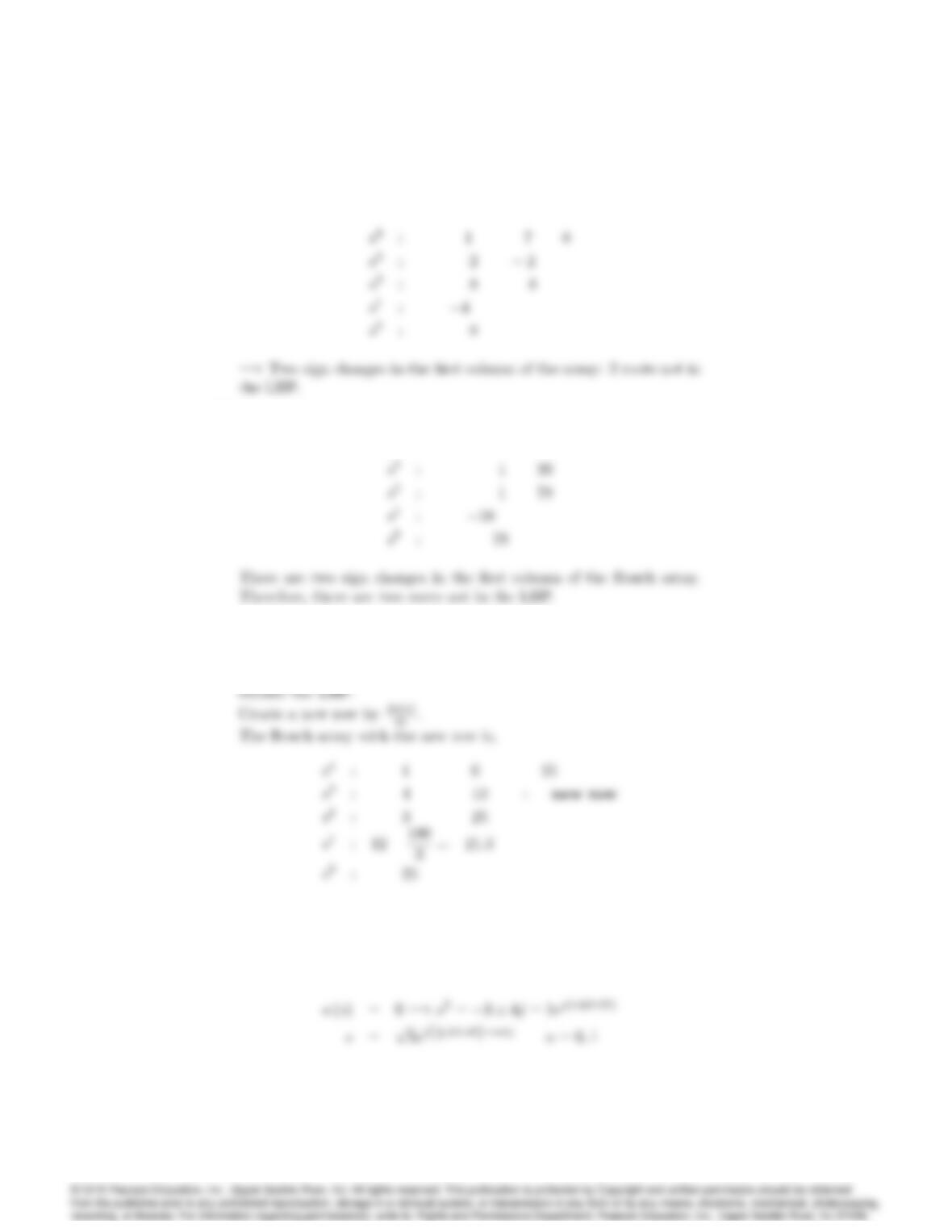
(d) The Routh array is,
(e)
a(s) = s4+ 6s2+ 25 = 0
Two coefficients (those of s3and s) are missing so there are roots
=)Two sign changes in the first column of the array: 2 roots not in
the LHP.
check:
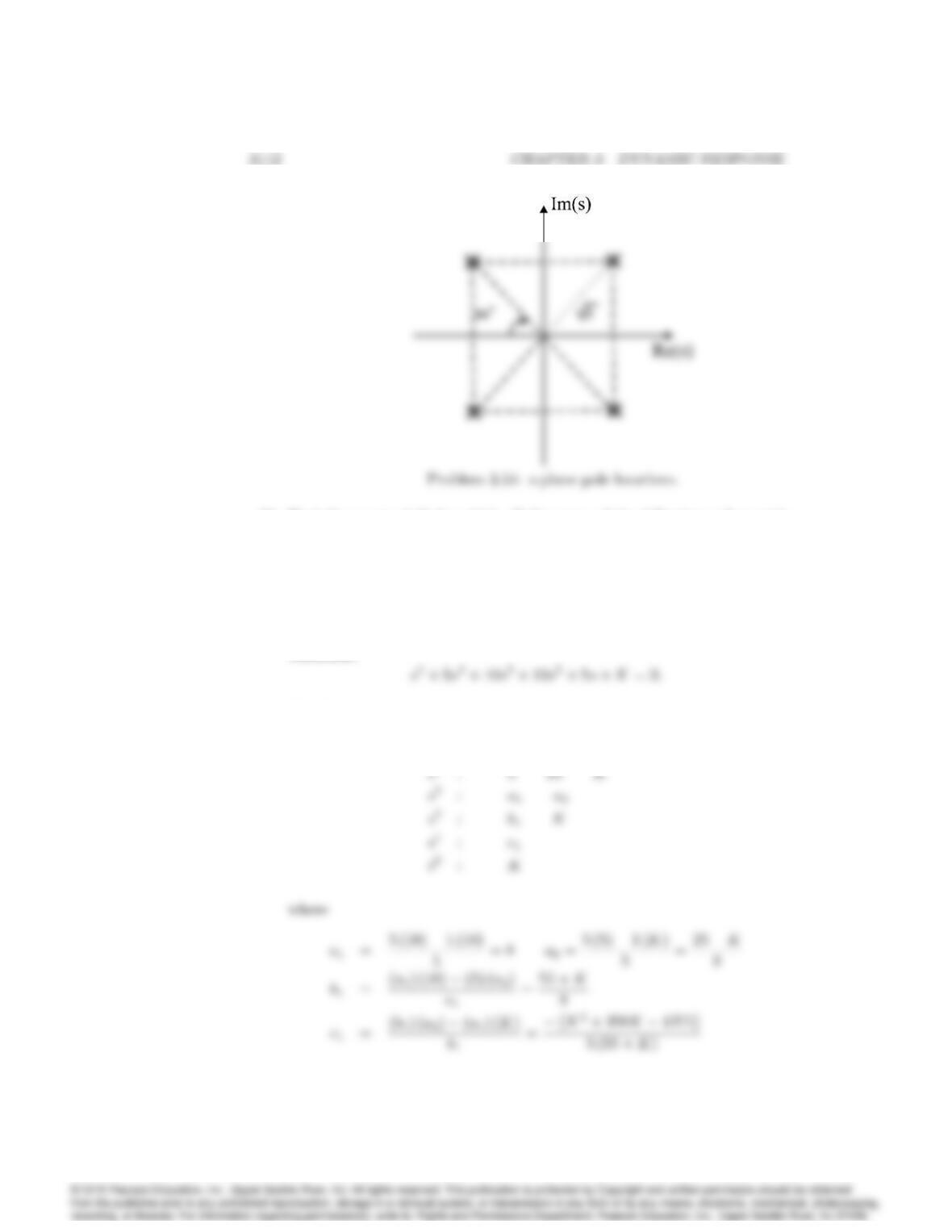
55. Find the range of Kfor which all the roots of the following polynomial
are in the LHP:
s5+ 5s4+ 10s3+ 10s2+ 5s+K= 0:
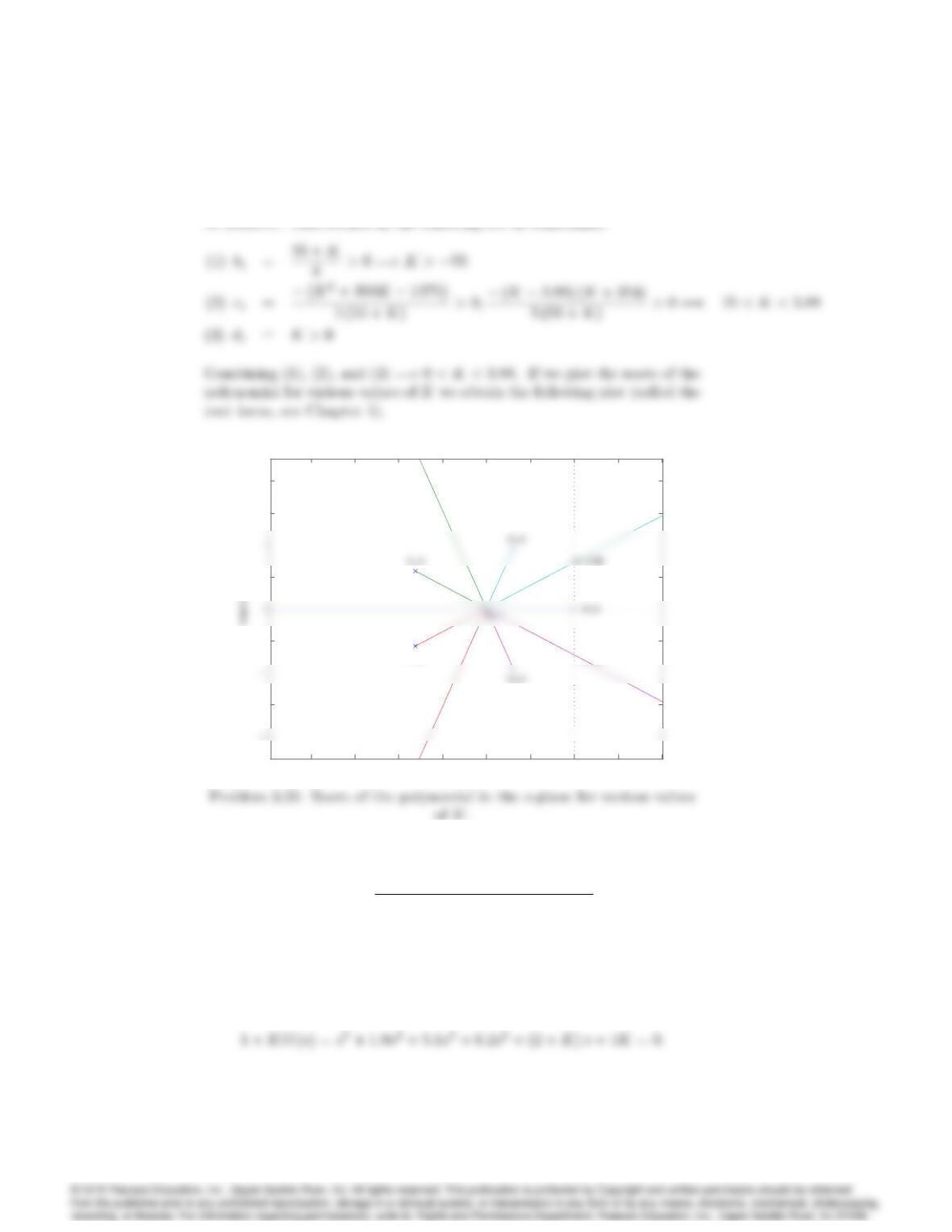
Use Matlab to verify your answer by plotting the roots of the polynomial
in the s-plane for various values of K.
Solution:
The Routh array is,
s5: 1 10 5
3113
For stability: all elements in first the first column of the Routh array must
be positive. That results in the following set of constraints:
Root Locus
Real Axis
-3 -2.5 -2 -1.5 -1 –0.5 00.5 1
-1.5
-0.5
0.5
1.5
2
K=0
K= 3. 88
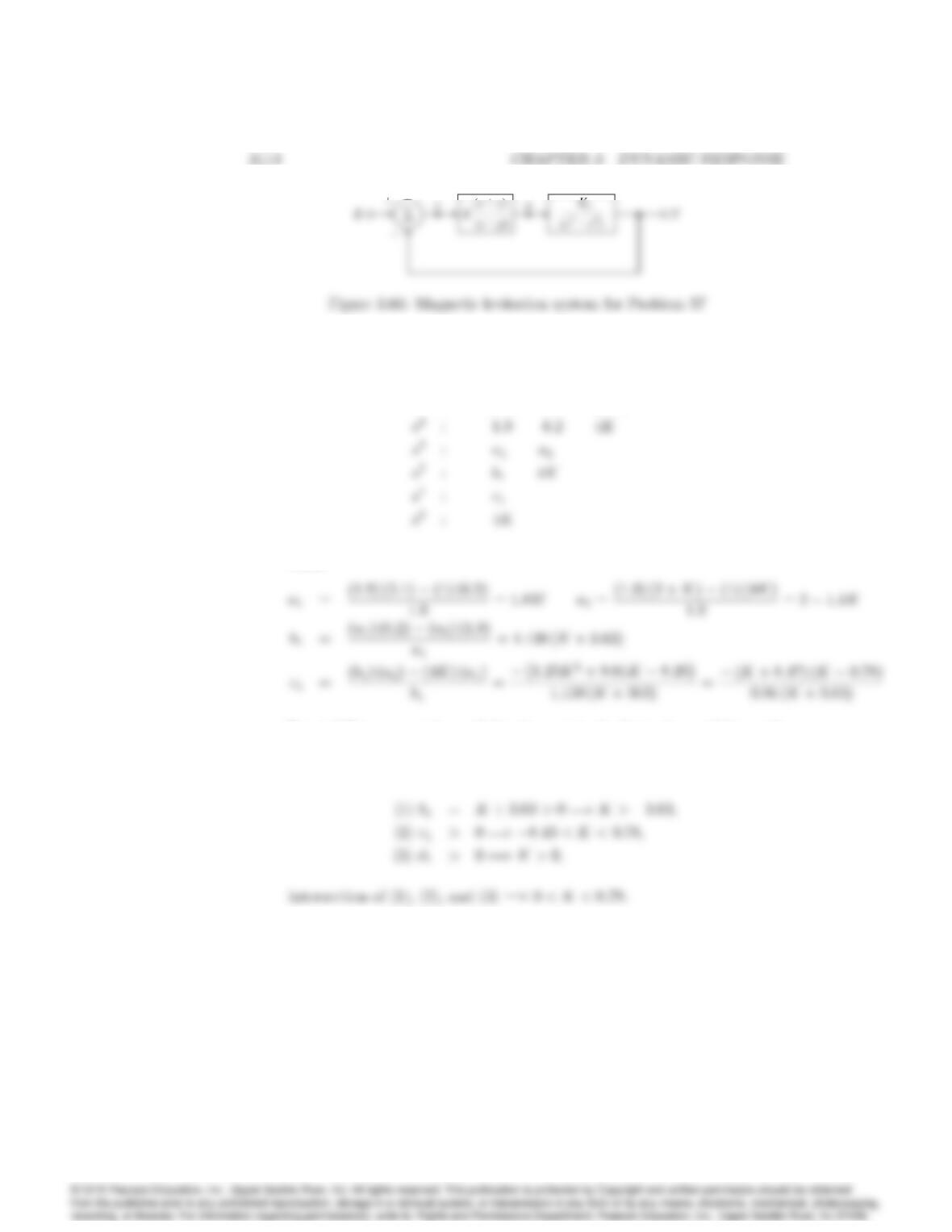
56. The transfer function of a typical tape-drive system is given by
KG(s) = K(s+ 4)
s[(s+ 0:5)(s+ 1)(s2+ 0:4s+ 4)];
where time is measured in milliseconds. Using Routh’s stability crite-
rion, determine the range of Kfor which this system is stable when the
characteristic equation is 1 + KG(s) = 0.
Solution:
The Routh array is,
s5: 1:0 5:1 2 + K
where
For stability we must have all the elements in the first column of the routh
array to be positive, and that results in the following set of constraints:
57. Consider the closed-loop magnetic levitation system shown in Figure 3.66.
(a) Compute the transfer function from the input (R) to the output
(Y).
(b) Assume Ko= 1. Determine the conditions on the system parame-
ters (a; K; z; p), to guarantee closed-loop system stability.
Solution:
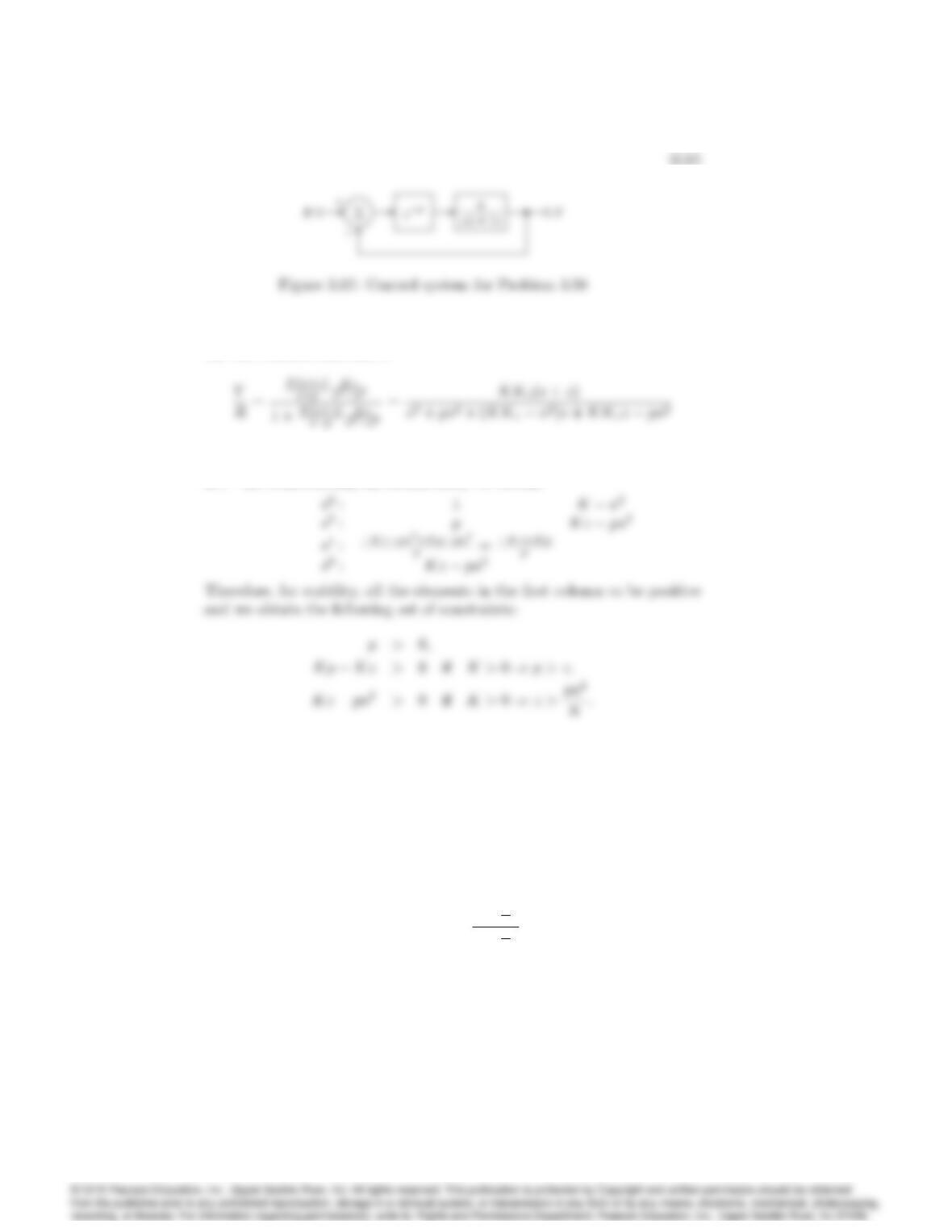
(a) The transfer function is
(b) With K= 1 we have Denominator (s) = s3+ps2+ (Ka2)s+
Kz pa2;constructing the Routh array we obtain
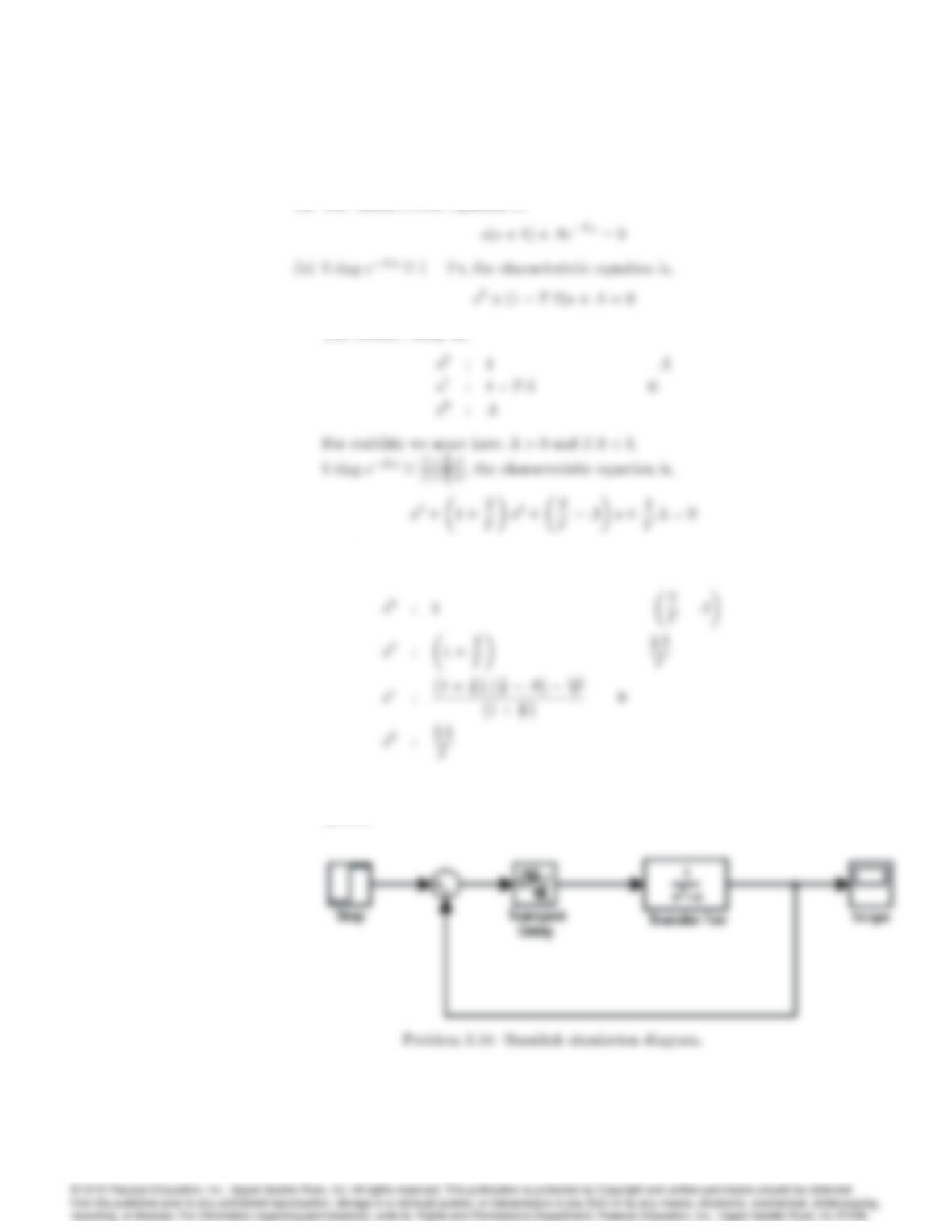
58. Consider the system shown in Fig. 3.67.
(a) Compute the closed-loop characteristic equation.
(b) For what values of (T; A)is the system stable? Hint : An approximate
answer may be found using
eT s
=1T s
or
eT s
=1T
2s
1 + T
2s
for the pure delay. As an alternative, you could use the computer
Matlab (Simulink) to simulate the system or to find the roots of the
system’s characteristic equation for various values of Tand A.
Solution:
3116 CHAPTER 3. DYNAMIC RESPONSE
(a) The characteristic equation is,
The Routh’s array is,
The Routh’s array is,
For stability we must have all the coefficients in the first column be
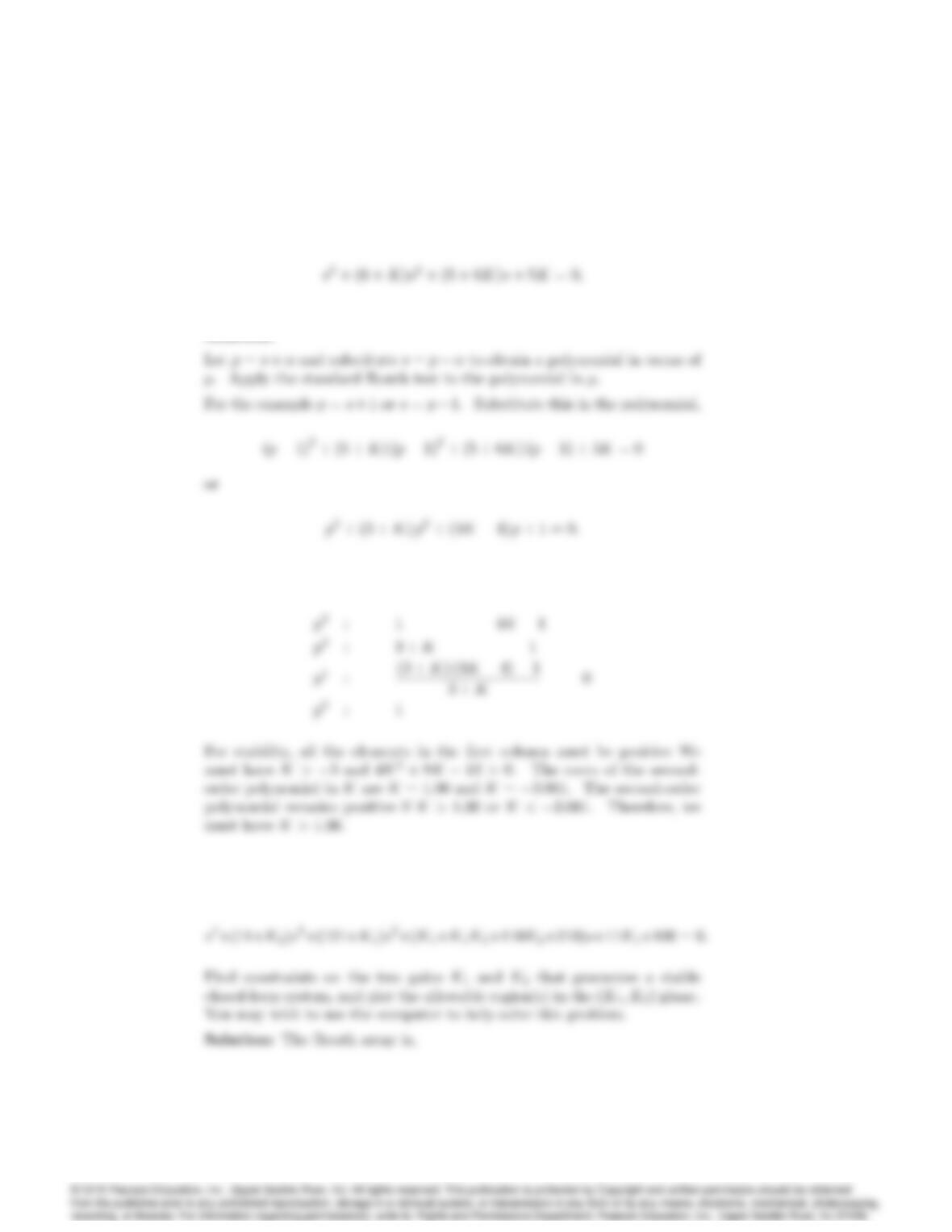
positive. The following Simulink diagram simulates the closed-loop
system.
3117
59. Modify the Routh criterion so that it applies to the case in which all the
poles are to be to the left of when > 0. Apply the modified test to
the polynomial
finding those values of Kfor which all poles have a real part less than 1.
Solution:
The Routh’s array is,
60. Suppose the characteristic polynomial of a given closed-loop system is
computed to be
3118 CHAPTER 3. DYNAMIC RESPONSE
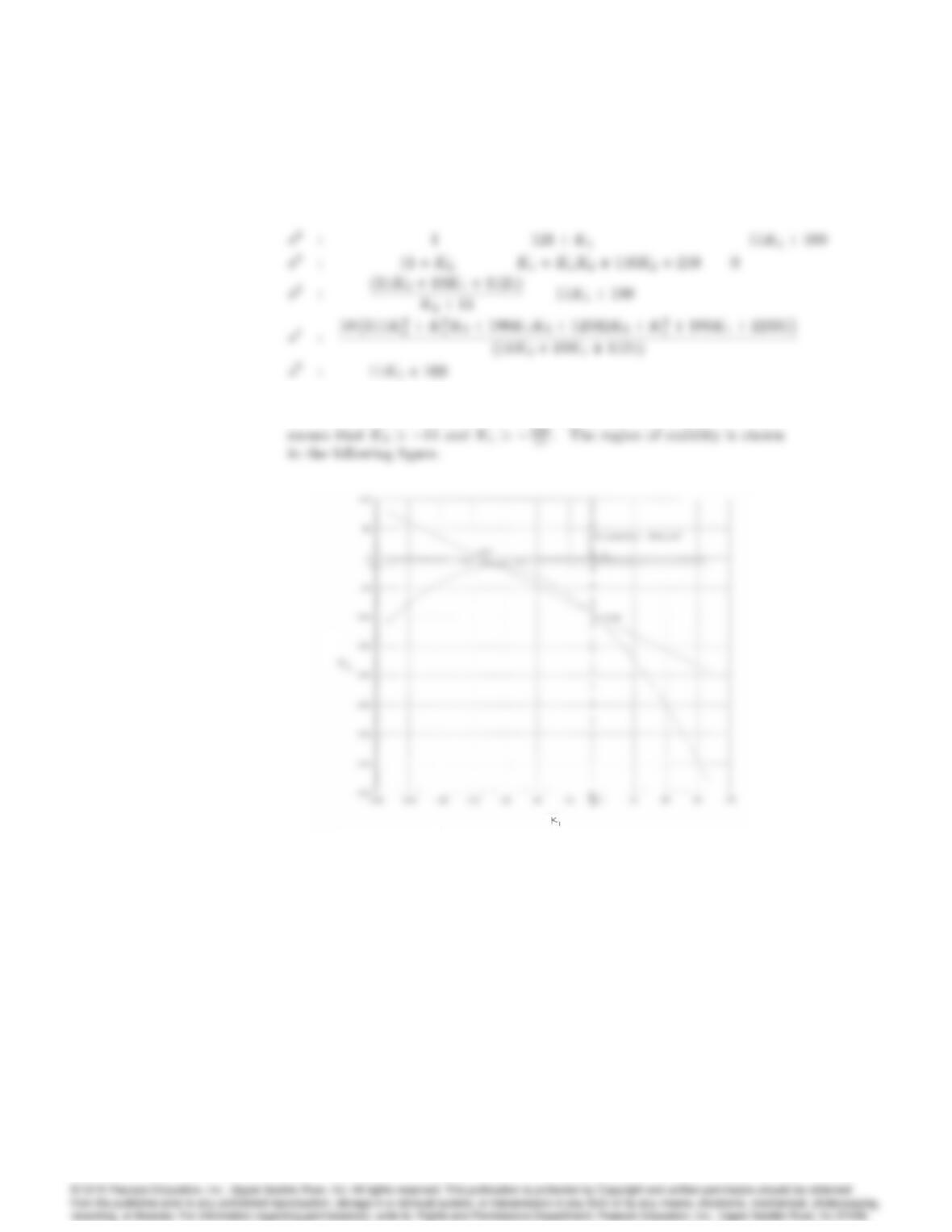
For stability, the elements in the first column must all be positive. This
Problem 3.60: s-plane region for stability.
61. Overhead electric power lines sometimes experience a low-frequency, high-
amplitude vertical oscillation, or gallop, during winter storms when the
line conductors become covered with ice. In the presence of wind, this ice
can assume aerodynamic lift and drag forces that result in a gallop up to
several meters in amplitude. Large-amplitude gallop can cause clashing
conductors and structural damage to the line support structures caused by
the large dynamic loads. These effects in turn can lead to power outages.
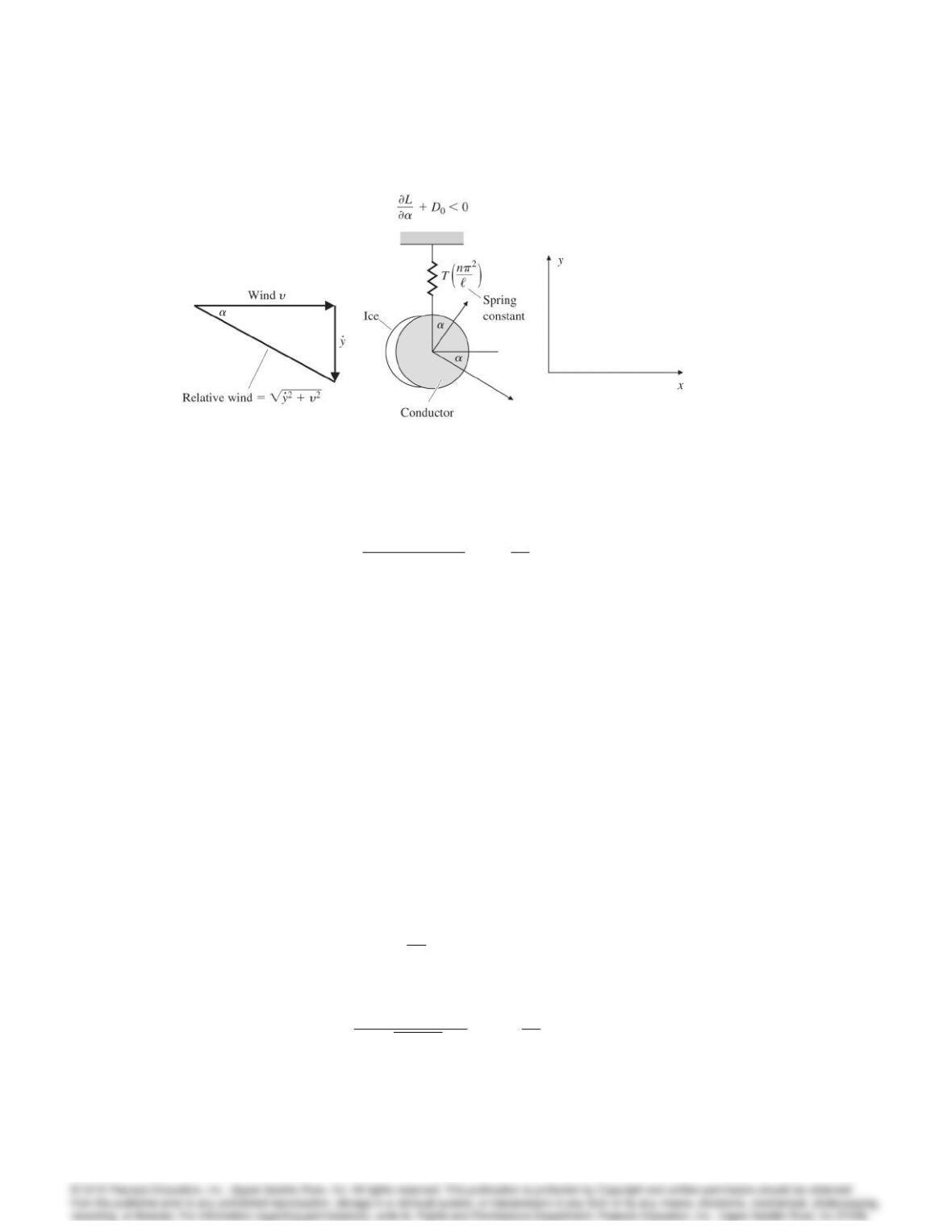
Assume that the line conductor is a rigid rod, constrained to vertical
motion only, and suspended by springs and dampers as shown in Fig. 3.68.
3119
Figure 3.68: Electric power-line conductor
A simple model of this conductor galloping is
m•y+D() _yL()v
( _y2+v2)1=2+Tn
`y= 0;
where
m=mass of conductor;
y= conductor0s vertical displacement;
D= aerodynamic drag force;
L= aerodynamic lift force;
v= wind velocity;
= aerodynamic angle of attack = tan1( _y=v);
T= conductor tension;
n= number of harmonic frequencies;
`= length of conductor:
Assume that L(0) = 0 and D(0) = D0(a constant), and linearize the
equation around the value y= _y= 0. Use Routh’s stability criterion to
show that galloping can occur whenever
@L
@ +D0<0:
Solution:
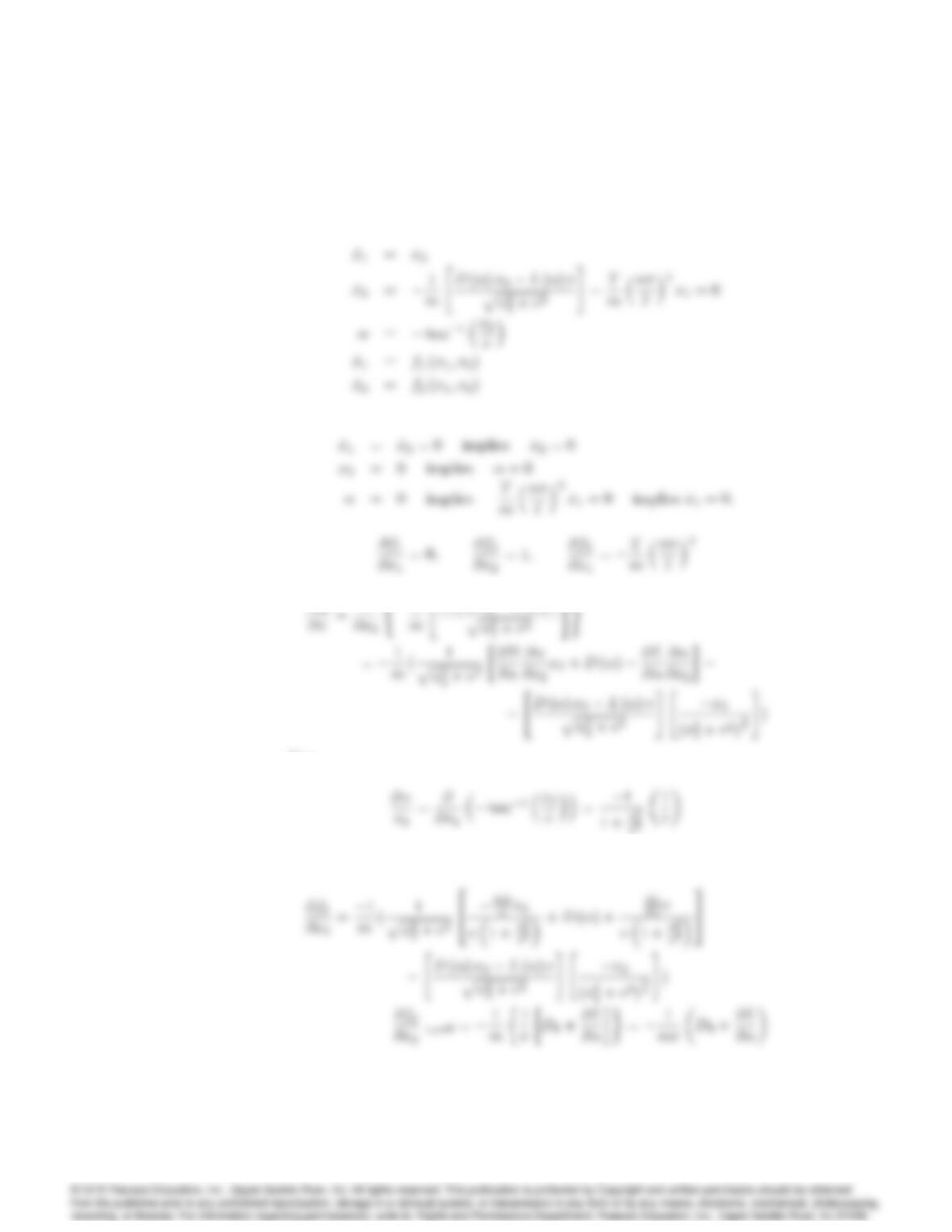
m•y+“D() _yL()v
p_y2+v2#+Tn
l2y= 0;
3120 CHAPTER 3. DYNAMIC RESPONSE
Let x1=yand x2= _y= _x1
@f2
Now,
so,