
1000
Solutions Manual: Chapter 1
7th Edition
Feedback Control of Dynamic
Systems
Gene F. Franklin
J. David Powell
Abbas Emami-Naeini
Assisted by:
H. K. Aghajan
H. Al-Rahmani
P. Coulot
P. Dankoski
S. Everett
R. Fuller
T. Iwata
V. Jones
F. Safai
L. Kobayashi
H-T. Lee
E. Thuriyasena
M. Matsuoka

Chapter 1
An Overview and Brief
History of Feedback Control
1.1 Problems and Solutions
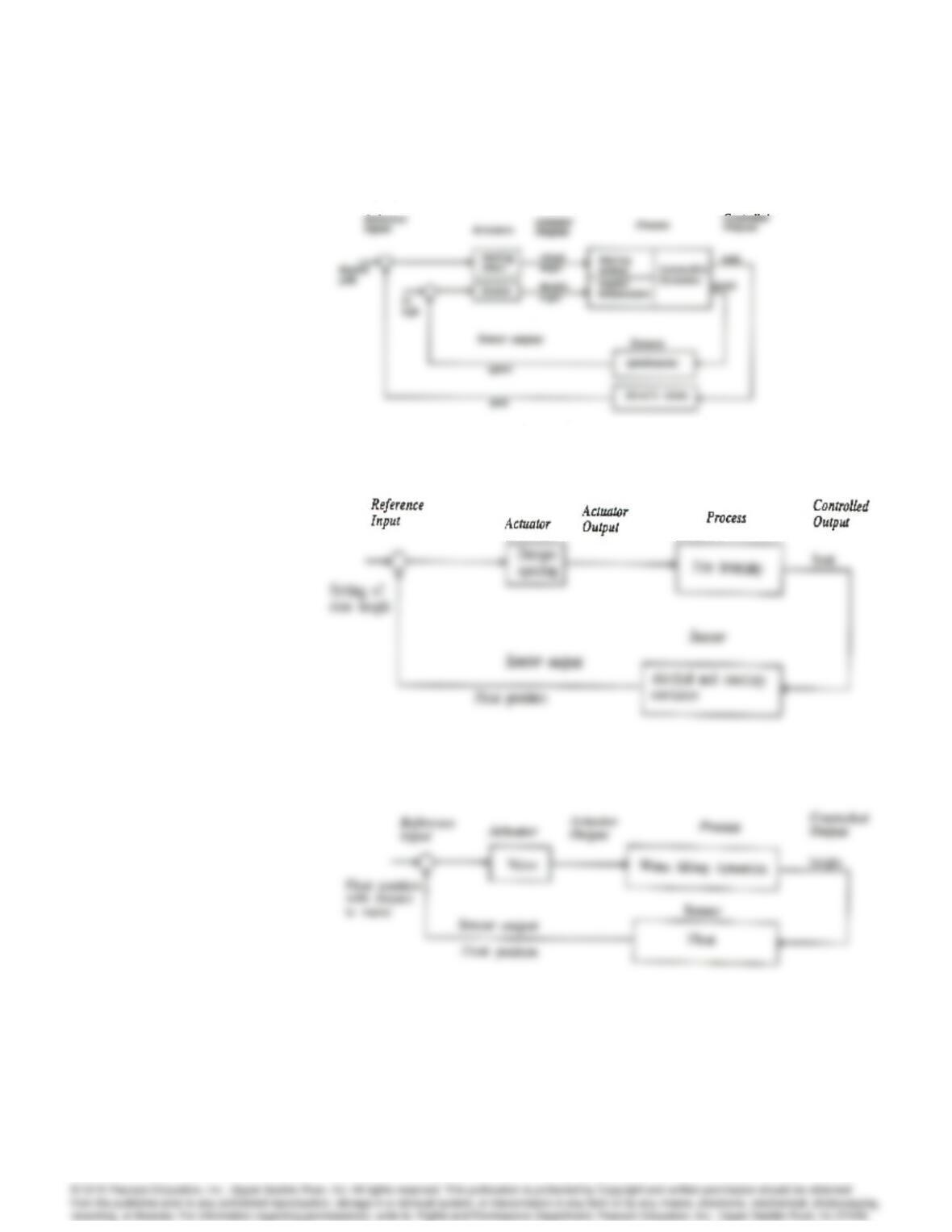
1. Draw a component block diagram for each of the following feedback control
systems.
(a) The manual steering system of an automobile
(b) Drebbel’s incubator
(c) The water level controlled by a ‡oat and valve
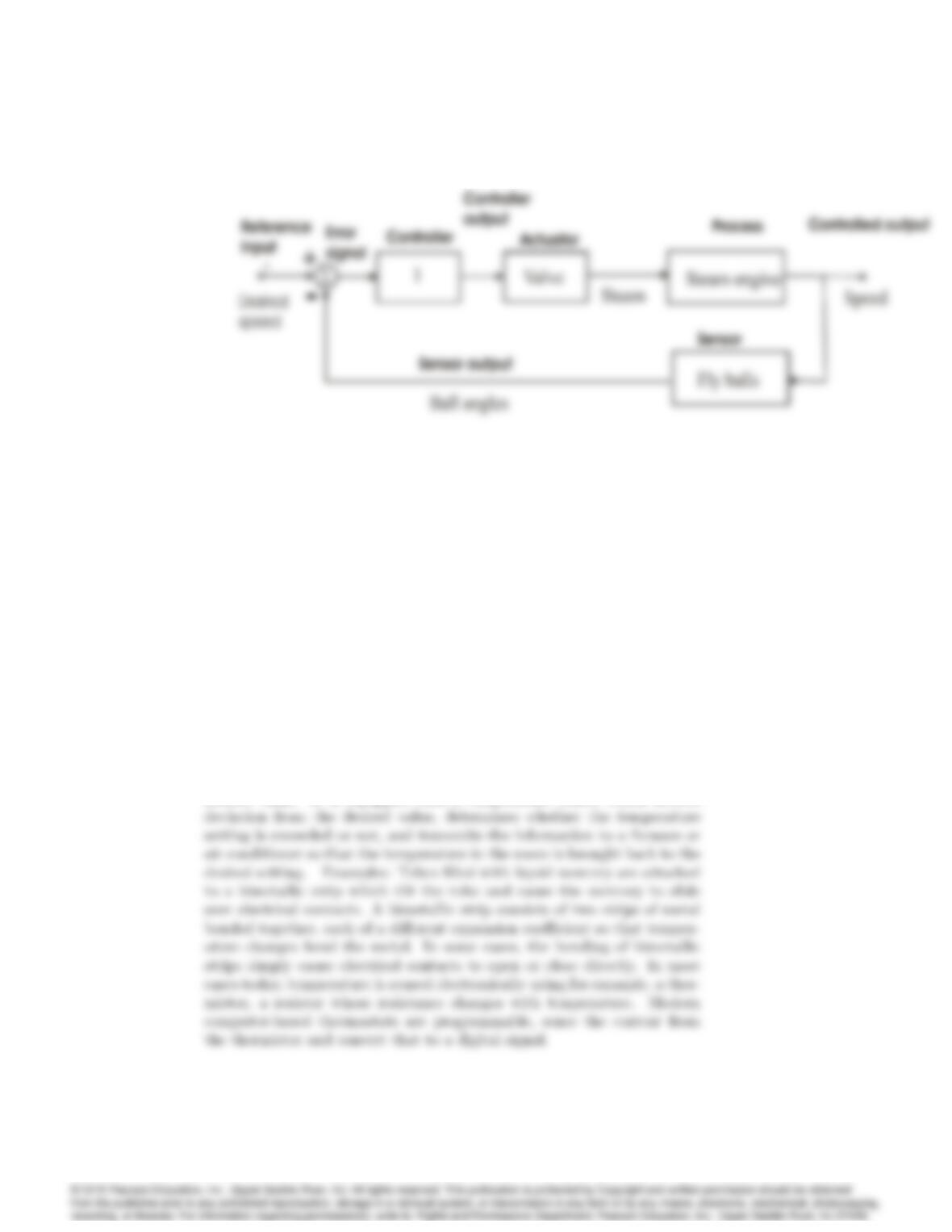
(d) Watt’s steam engine with ‡y-ball governor
In each case, indicate the location of the elements listed below and
give the units associated with each signal.
the process
the process desired output signal
the sensor
the actuator
the actuator output signal
the controller
the controller output signal
the reference signal
the error signal
Notice that in a number of cases the same physical device may per-
form more than one of these functions.
Solution:
(a) A manual steering system for an automobile:
1001
1002CHAPTER 1. AN OVERVIEW AND BRIEF HISTORY OF FEEDBACK CONTROL
(b) Drebbel’s incubator:
(c) Water level regulator:
(d) Fly-ball governor:
1.1. PROBLEMS AND SOLUTIONS 1003
2. Identify the physical principles and describe the operation of the thermo-
stat in your home or o¢ ce.
Solution:
A thermostat is a device for maintaining a temperature constant at a
desired value. It is equipped with a temperature sensor which detects
1004CHAPTER 1. AN OVERVIEW AND BRIEF HISTORY OF FEEDBACK CONTROL
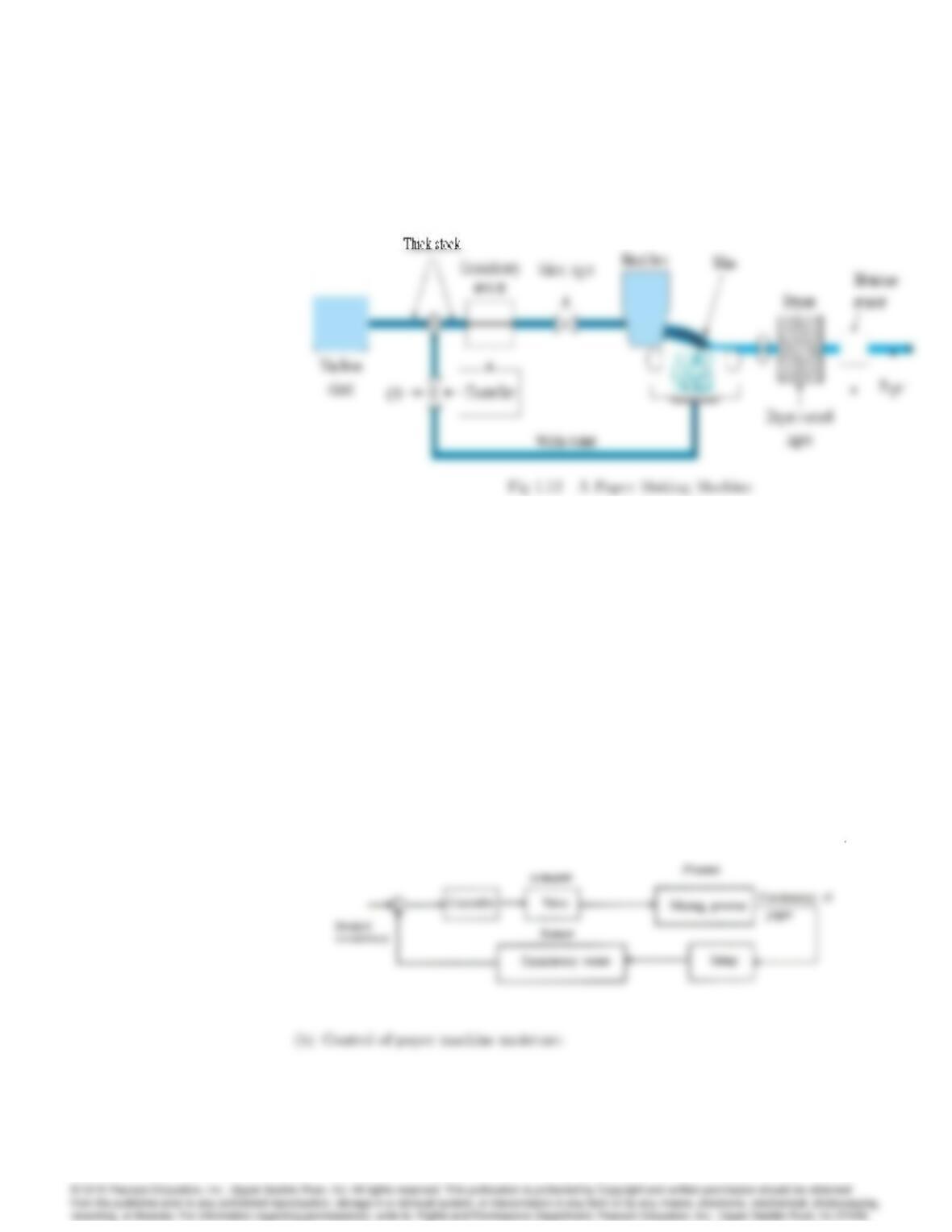
3. A machine for making paper is diagrammed in Fig. 1.12. There are two
main parameters under feedback control: the density of …bers as controlled
by the consistency of the thick stock that ‡ows from the headbox onto the
wire, and the moisture content of the …nal product that comes out of the
dryers. Stock from the machine chest is diluted by white water returning
from under the wire as controlled by a control valve (CV). A meter supplies
a reading of the consistency. At the “dry end” of the machine, there is a
moisture sensor. Draw a signal graph and identify the seven components
listed in Problem 1 for
(a) control of consistency
(b) control of moisture
Solution:
(a) Control of paper machine consistency:
1.1. PROBLEMS AND SOLUTIONS 1005
4. Many variables in the human body are under feedback control. For each
of the following controlled variables, draw a graph showing the process
being controlled, the sensor that measures the variable, the actuator that
causes it to increase and/or decrease, the information path that completes
the feedback path, and the disturbances that upset the variable. You may
need to consult an encyclopedia or textbook on human physiology for
information on this problem.
(a) blood pressure
(b) blood sugar concentration
(c) heart rate
(d) eye-pointing angle
(e) eye-pupil diameter
Solution:
Feedback control in human body:
Variable Sensor Actuator Inform ation path Disturbances
a) Blood pressure –Arterial –Cardiac output –A¤erent nerve –Bleeding
dilation –Stress,Pain
b) Blo od sugar –Pancreas –Pancreas secreting –Blo od ‡ow to –Diet
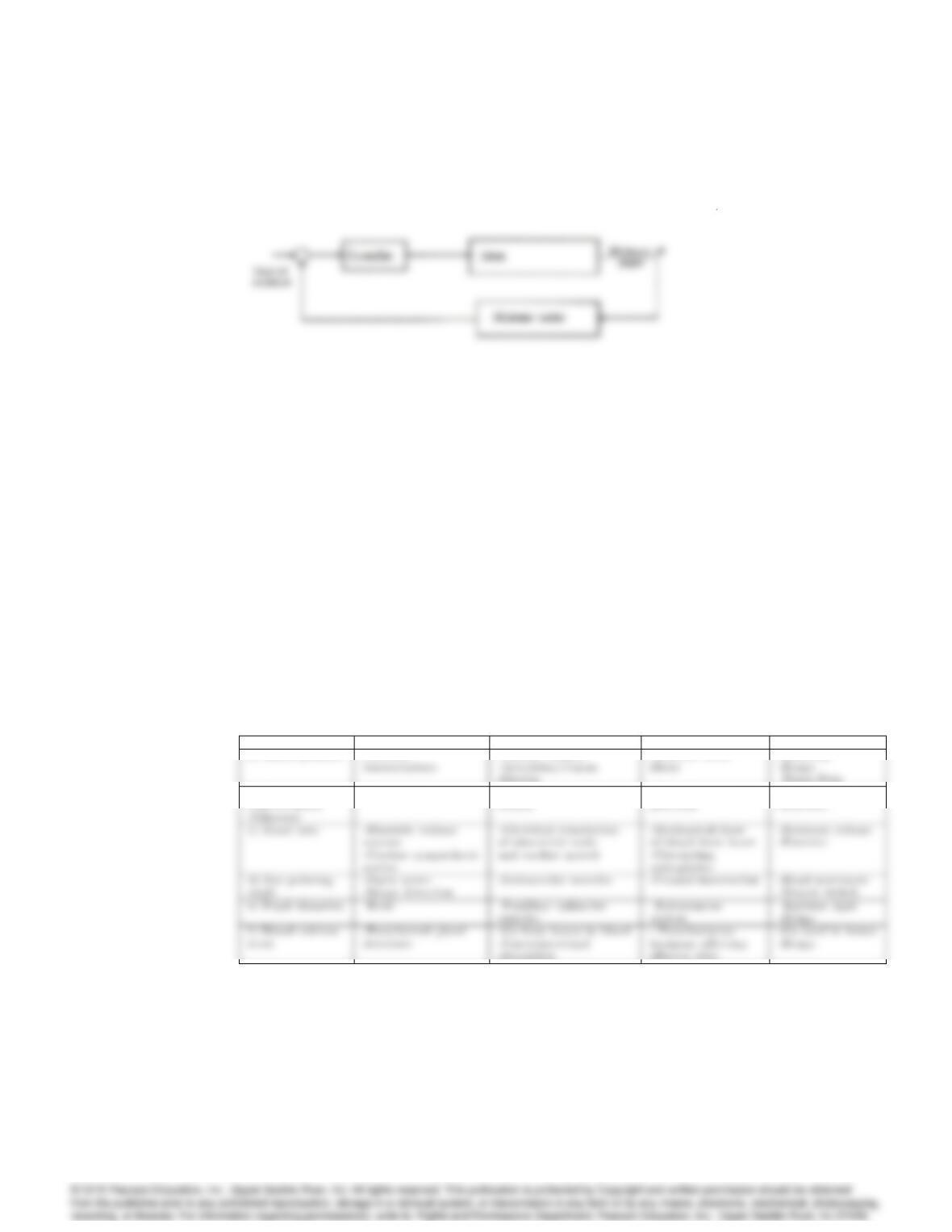
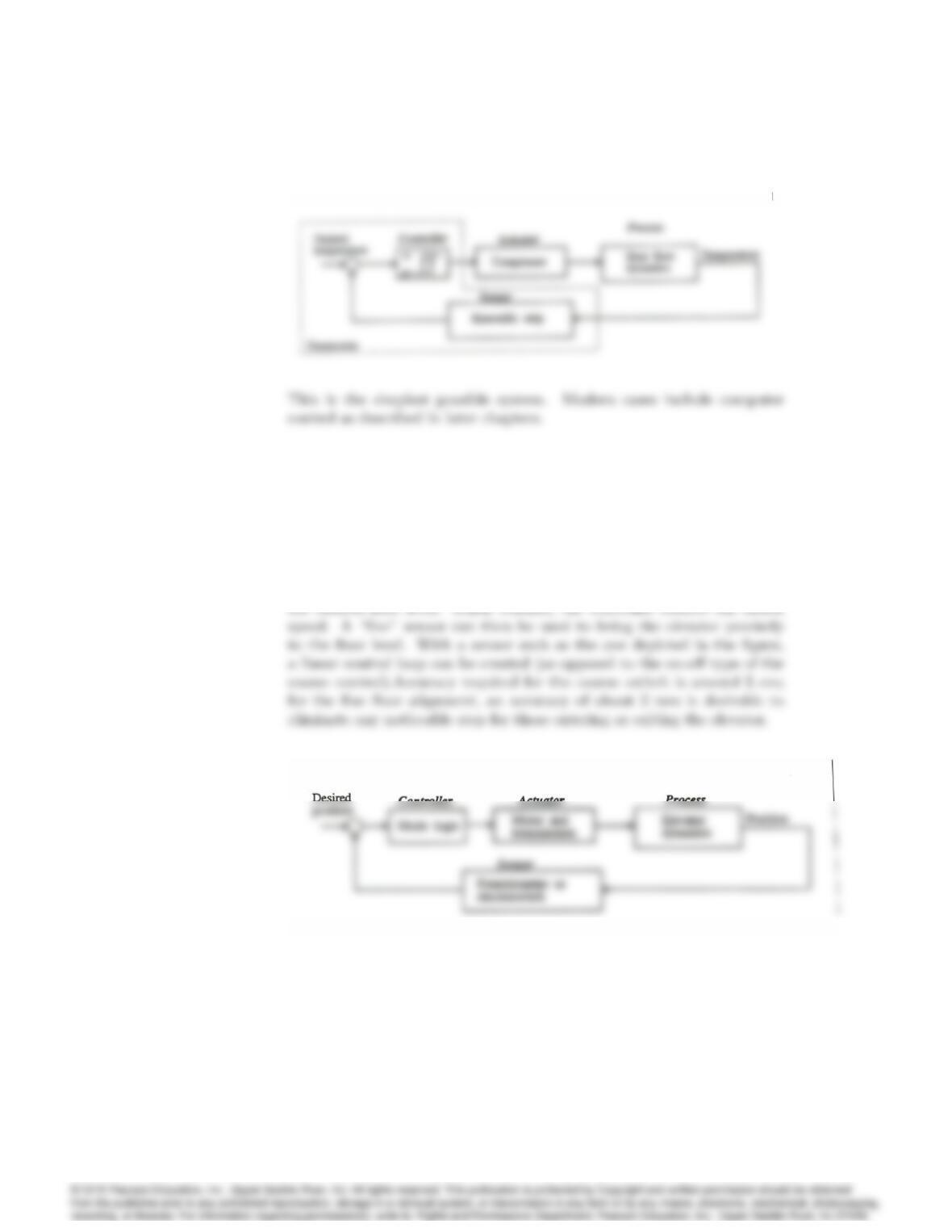
5. Draw a block diagram of the components for temperature control in a
refrigerator or automobile air-conditioning system.
Solution:
1006CHAPTER 1. AN OVERVIEW AND BRIEF HISTORY OF FEEDBACK CONTROL
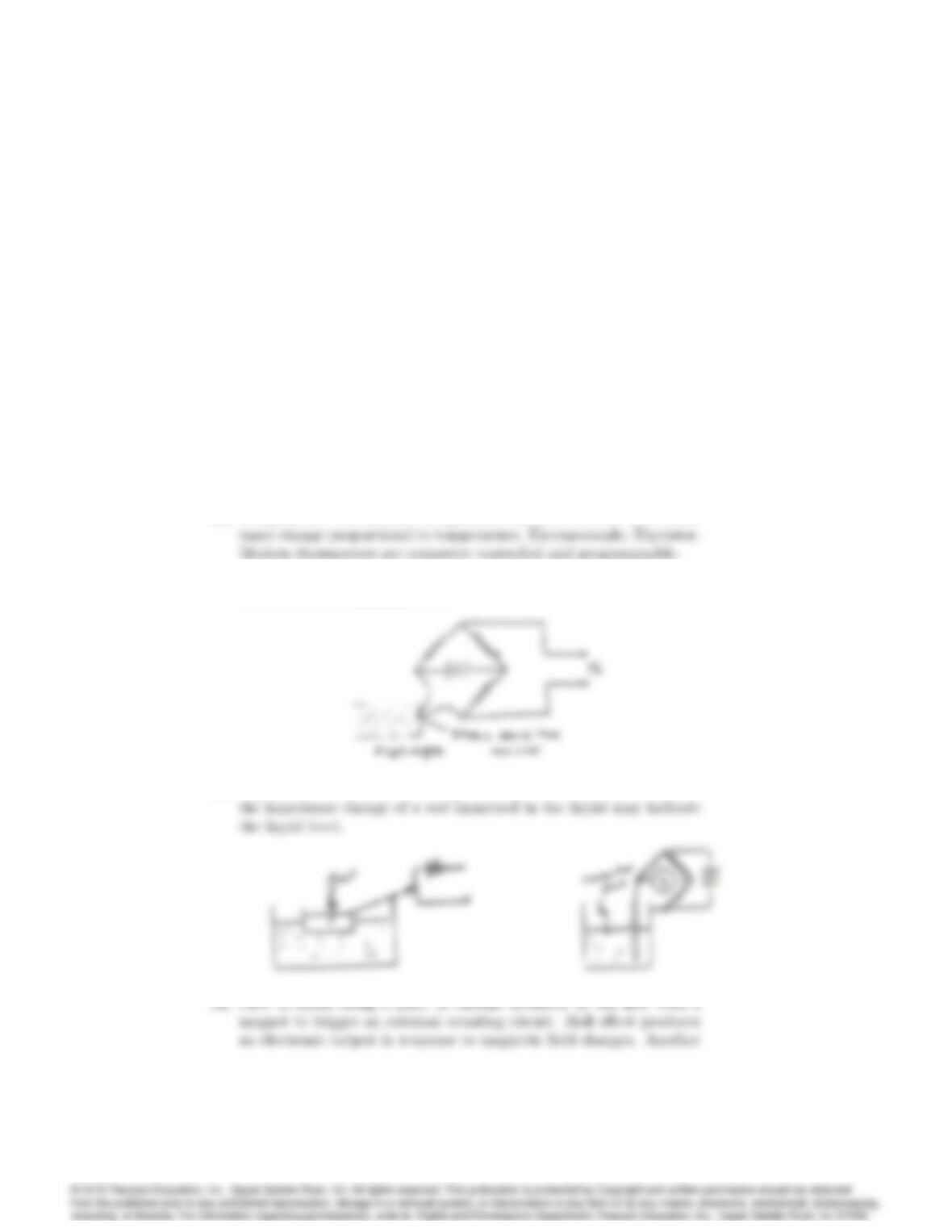
6. Draw a graph of the components for an elevator-position control. Indi-
cate how you would measure the position of the elevator car. Consider a
combined coarse and …ne measurement system. What accuracies do you
suggest for each sensor? Your system should be able to correct for the
fact that in elevators for tall buildings there is signi…cant cable stretch as
a function of cab load.
Solution:
A coarse measurement can be obtained by an electroswitch located before
7. Feedback control requires being able to sense the variable being controlled.
Because electrical signals can be transmitted, ampli…ed, and processed
easily, often we want to have a sensor whose output is a voltage or current
proportional to the variable being measured. Describe a sensor that would
give an electrical output proportional to:
1.1. PROBLEMS AND SOLUTIONS 1007
(a) temperature
(b) pressure
(c) liquid level
(d) ‡ow of liquid along a pipe (or blood along an artery) force
(e) linear position
(f) rotational position
(g) linear velocity
(h) rotational speed
(i) translational acceleration
(j) torque
Solution:
Sensors for feedback control systems with electrical output. Exam-
ples
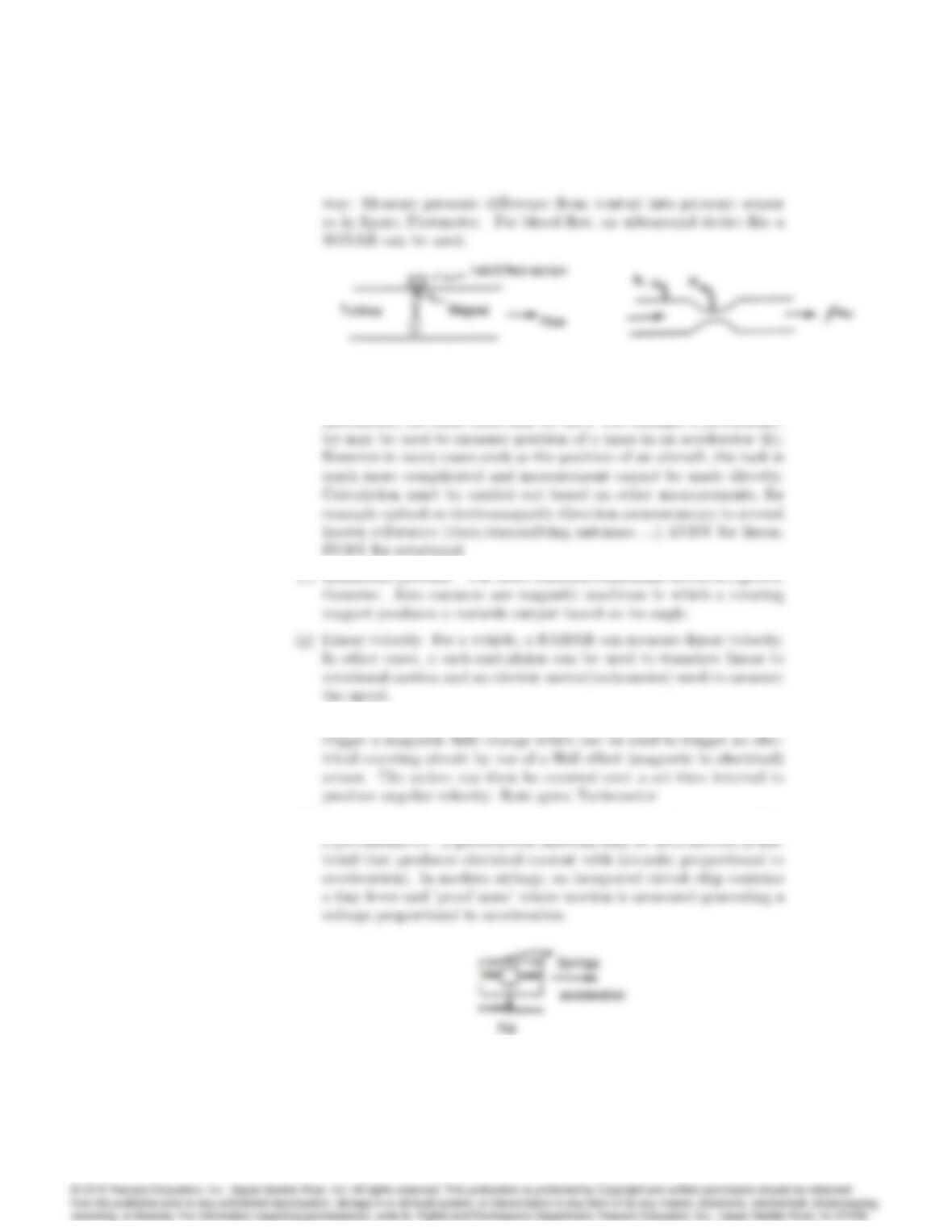
(a) Temperature: Thermistor- temperature sensitive resistor with resis-
(b) Pressure: Strain sensitive resistor mounted on a diaphragm which
bends due to changing pressure
(c) Liquid level: Float connected to potentiometer. If liquid is conductive
1008CHAPTER 1. AN OVERVIEW AND BRIEF HISTORY OF FEEDBACK CONTROL
(e) Position.
When direct mechanical interaction is possible and for “small” dis-
(h) Speed: Any toothed wheel or gear on a rotating part may be used to
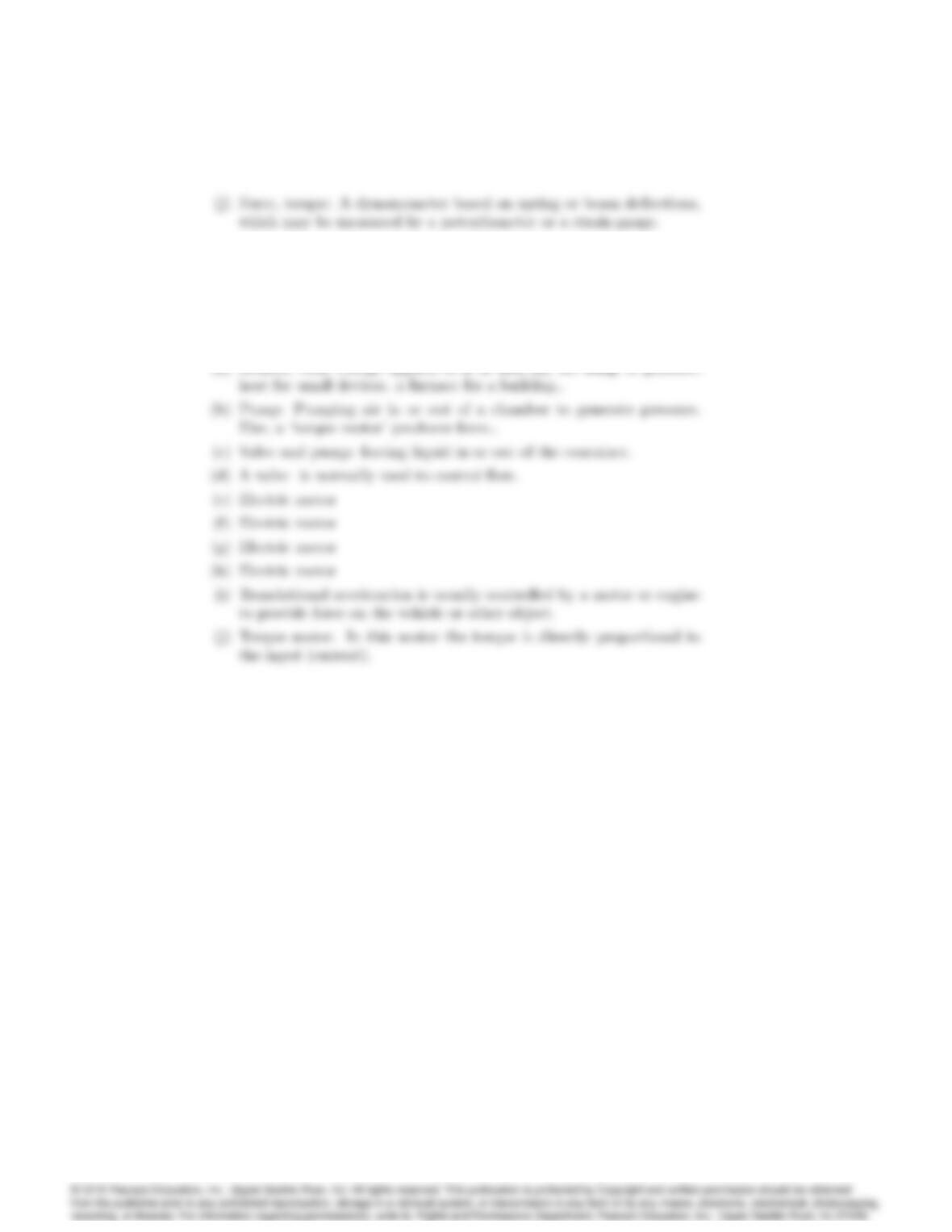
(i) Acceleration: A mass movement restrained by a spring measured by
1.1. PROBLEMS AND SOLUTIONS 1009
8. Each of the variables listed in Problem 7 can be brought under feedback
control. Describe an actuator that could accept an electrical input and be
used to control the variables listed. Give the units of the actuator output
signal.
Solution:
(a) Resistor with voltage applied to it or mercury arc lamp to generate
9. Feedback in Biology
(a) Negative Feedback in Biology: When a person is under long term stress
(say a couple of weeks before an exam!), hypothalamus (in the brain) se-
cretes a hormone called CRF (Corticotrophin Releasing Factor) which
binds to a receptor in the pituitary gland stimulating it to produce ACTH
(Adrenocorticotropic hormone), which in turn stimulates the adrenal cor-
tex (outer part of the adrenal glands) to release the stress hormone Glu-
cocorticoids (GC). This in turn shuts down (turns o¤ the stress response)
for both CRF and ACTH production by negative feedback via the blood-
stream until GC returns to its normal level. Draw a block diagram of this
closed-loop system.
(b) Positive Feedback in Biology: This happens in some unique circum-
stances. Consider the birth process of a baby. Pressure from the head
of the baby going through the birth canal causes contractions via secre-
tion of a hormone called Oxytocin which causes more pressure which in
turn intensi…es contractions. Once the baby is born, the system goes back
to normal (negative feedback). Draw a block diagram of this closed-loop
system.
Solution:
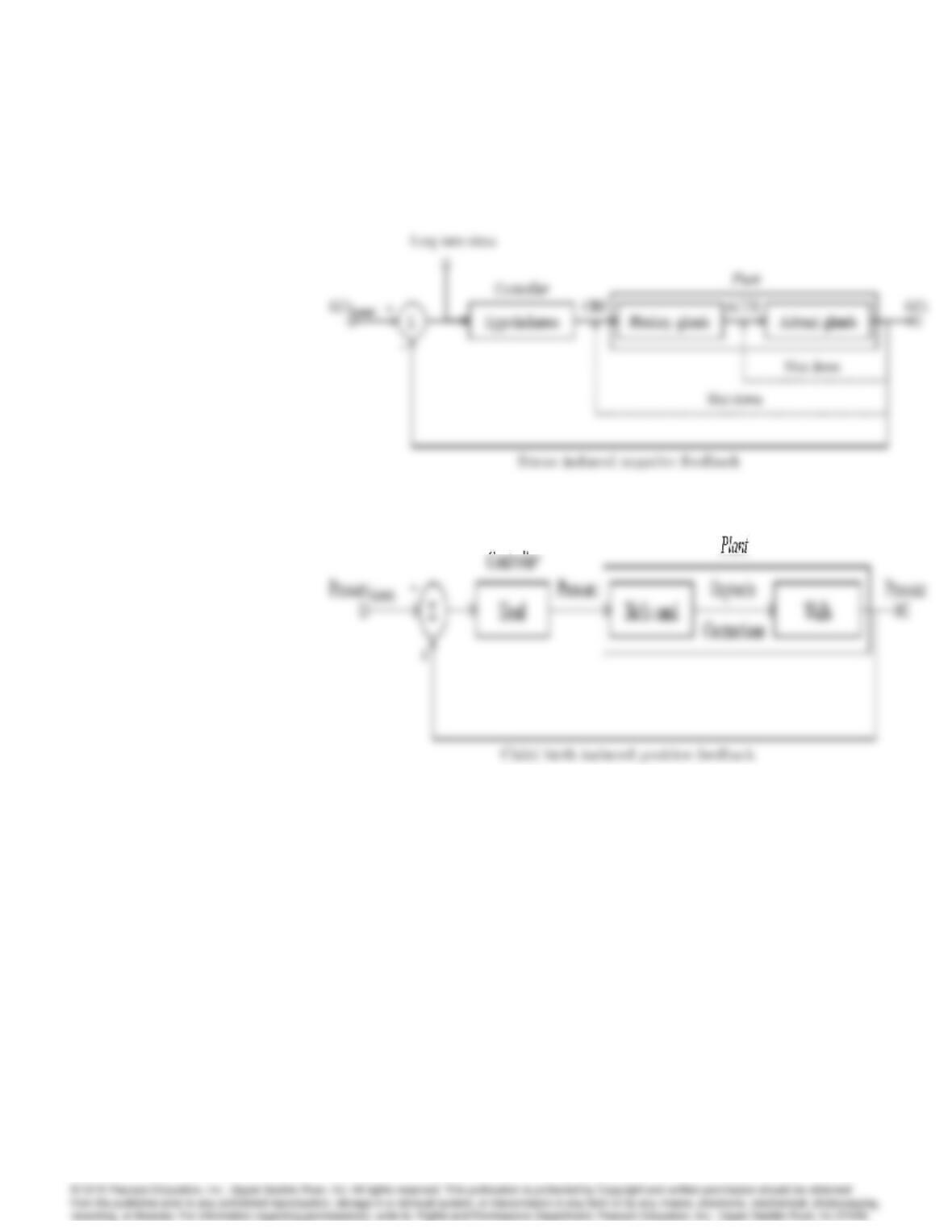
1010CHAPTER 1. AN OVERVIEW AND BRIEF HISTORY OF FEEDBACK CONTROL
(a) Negative Feedback in Biology – Stress
(b) Positive Feedback in Biology – Child birth