Chapter 8. Solutions
Chapter 8. Solutions
8.1. Titanium metal is capable of dissolving up to 30 atomic
a. The weight percent of O in the solution.
b. The molar concentration (gm-atoms/cc) of O in the
solution.
volume, V, and the molecular weights, MW1 and MW2, of the
elements involved.
b. The molar concentration:
c. The mass concentration:
———–———–———————————–———
Chapter 8. Solutions
Answer to 8.2.
Partial molal properties are defined to provide a measure of the
8.3. Given that the volume change on mixing of a solution obeys
the relation
a. Derive expressions for the partial molal volumes
of each of the components as functions of
composition.
b Demonstrate that your result is correct by using it
to compute • •Vmix, demonstrating that the
equation above is recovered.
and
Chapter 8. Solutions
8.4. Use the partial molal volumes computed in Problem 8.3 to
demonstrated that the Gibbs-Duhem equation holds for these
properties in this system.
An identity results if the quantity in brackets is zero:
Chapter 8. Solutions
8.5. In the system Pandemonium (Pn) – Condominium (Cn), the
partial molal heat of mixing of pandemonium may be fitted by
[NOTE THE CHANGE FROM THE STATEMENT OF THE
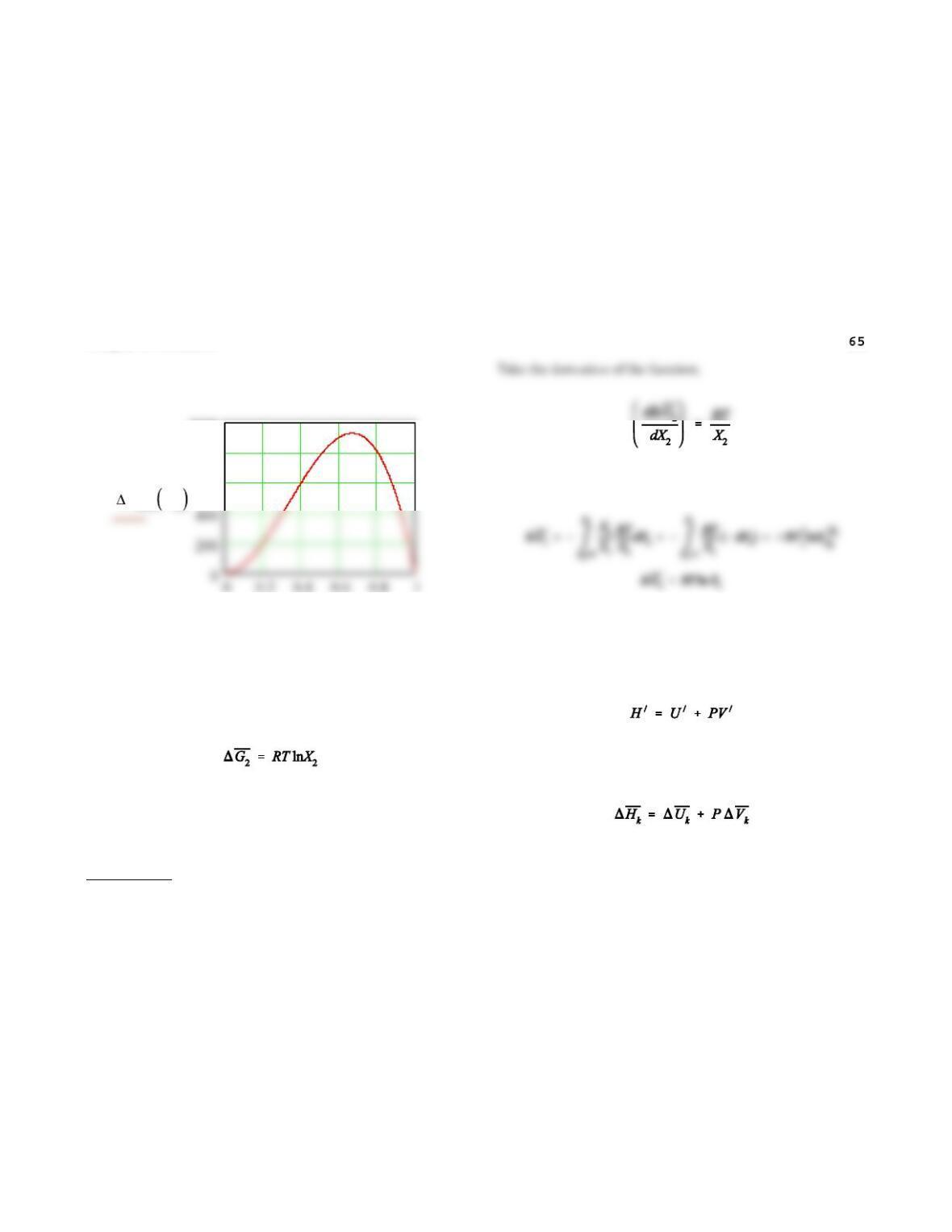
PROBLEM IN THE TEXT.] Calculate and plot the function that
describes variation of the heat of mixing with composition for
Insert this result into the integration procedure:
Chapter 8. Solutions
600
800
1000
Hmix XB
XB
———–———–———————————–———
8.6. For an ideal solution it is known that, for component 2,
Use the Gibbs Duhem integration to derive the corresponding
relation for component 1.
Answer to 8.6.
and substitute it into Eq.(8.36):
———–———–———————————–———-–
8.7. Recall the definitional relationship for the enthalpy function:
Use the partial molal operator and the definition of the properties
of the pure components to derive the analogous relationship,
Chapter 8. Solutions
Answer to 8.7.
Strategy: Apply the partial molal operator to the properties of the
solution, then to the pure components, and subtract. For the
solution:
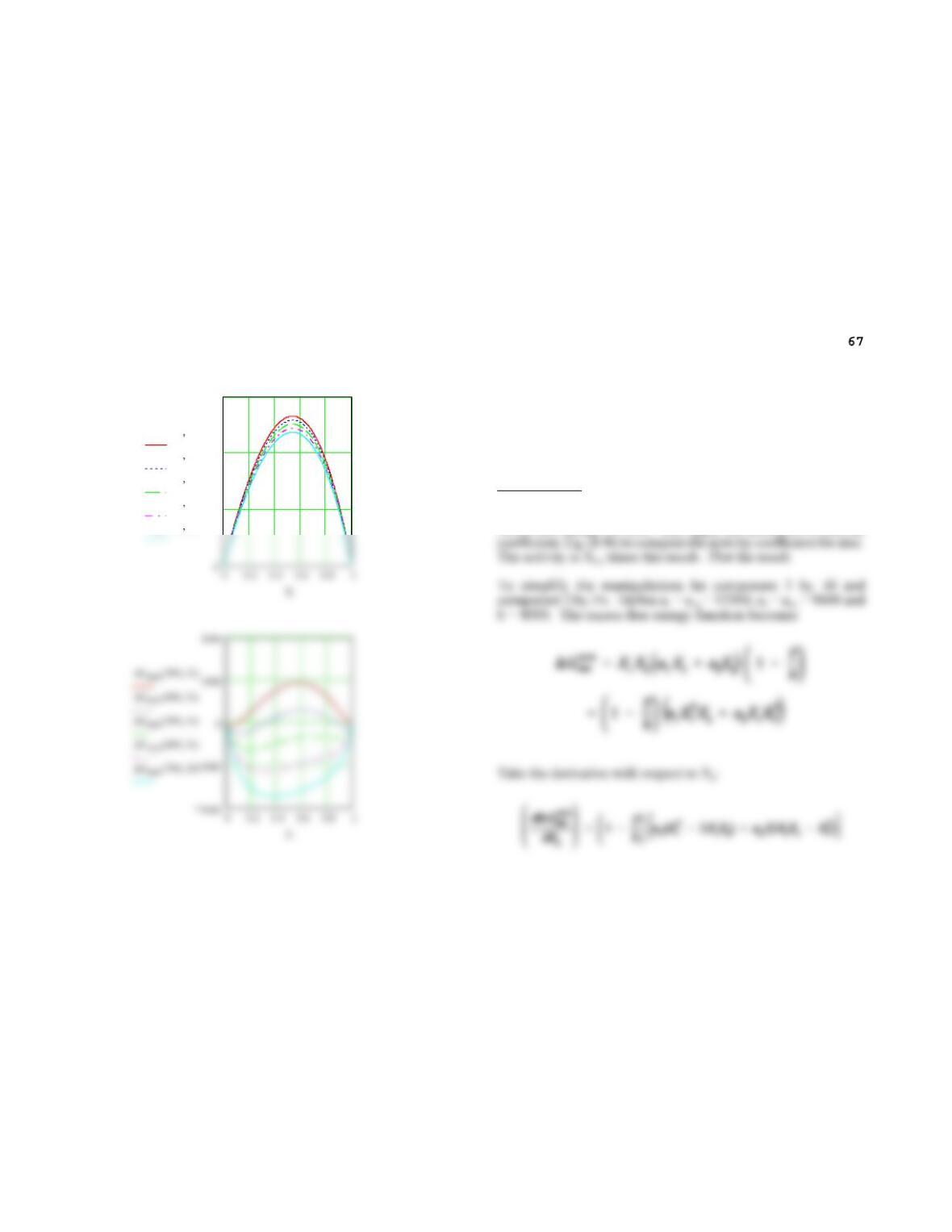
8.8. The excess free energy of mixing in face centered cubic
solid solutions of aluminum and zinc is well described by the
relation:
Chapter 8. Solutions
1000
2000
3000
Gxs 300 X( )
Gxs 400 X( )
Gxs 500 X( )
Gxs 600 X( )
Gxs 700 X( )
———–———–———————————–———
8.9. Using the relation given in Problem 8.8, calculate and plot
the activity of Zn in an FCC solid solution of these elements at
500 K.
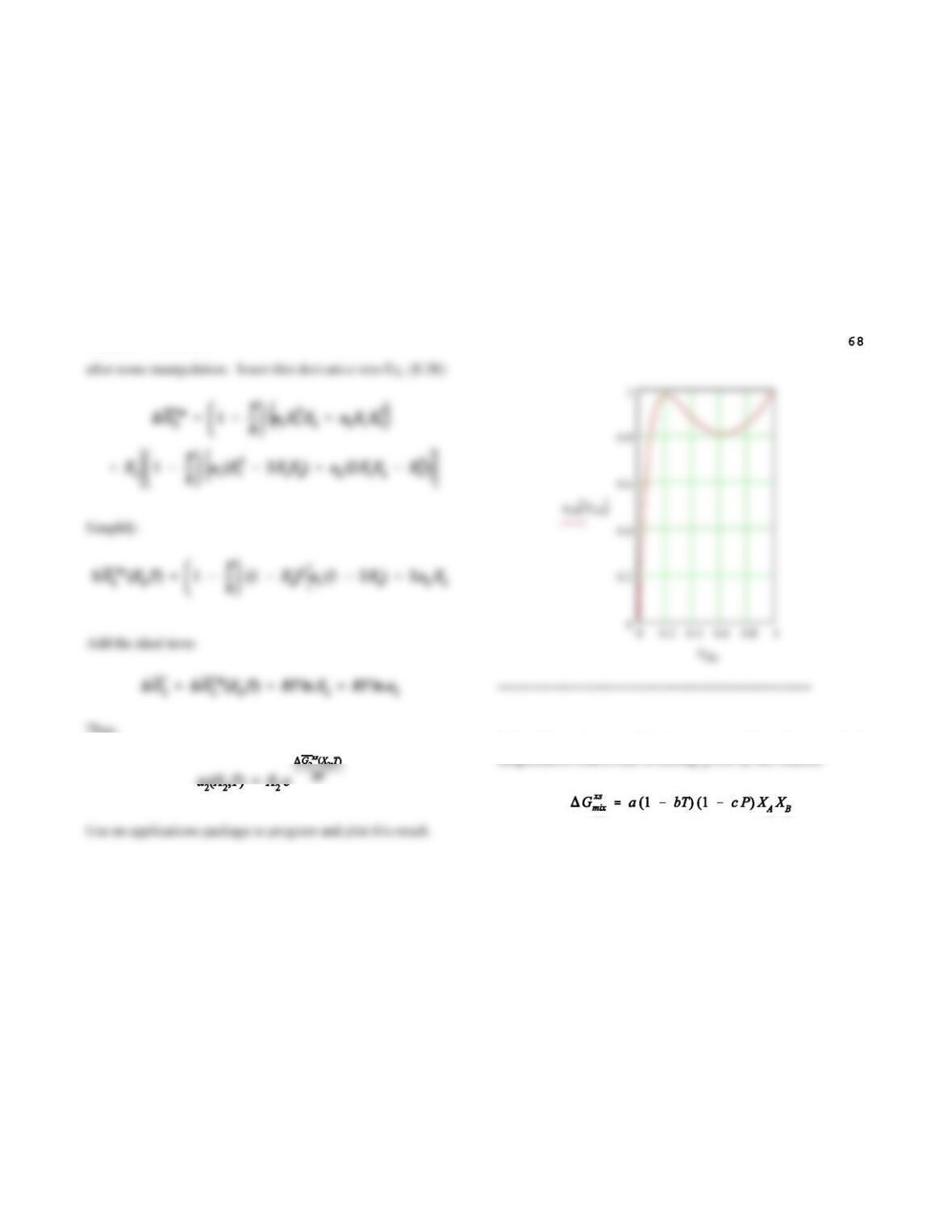
Answer to 8.9.
Strategy: Apply Eq.(8.28) to compute the partial molal excess
Gibbs free energy for zinc; then apply the definition of activity
Chapter 8. Solutions
Thus,
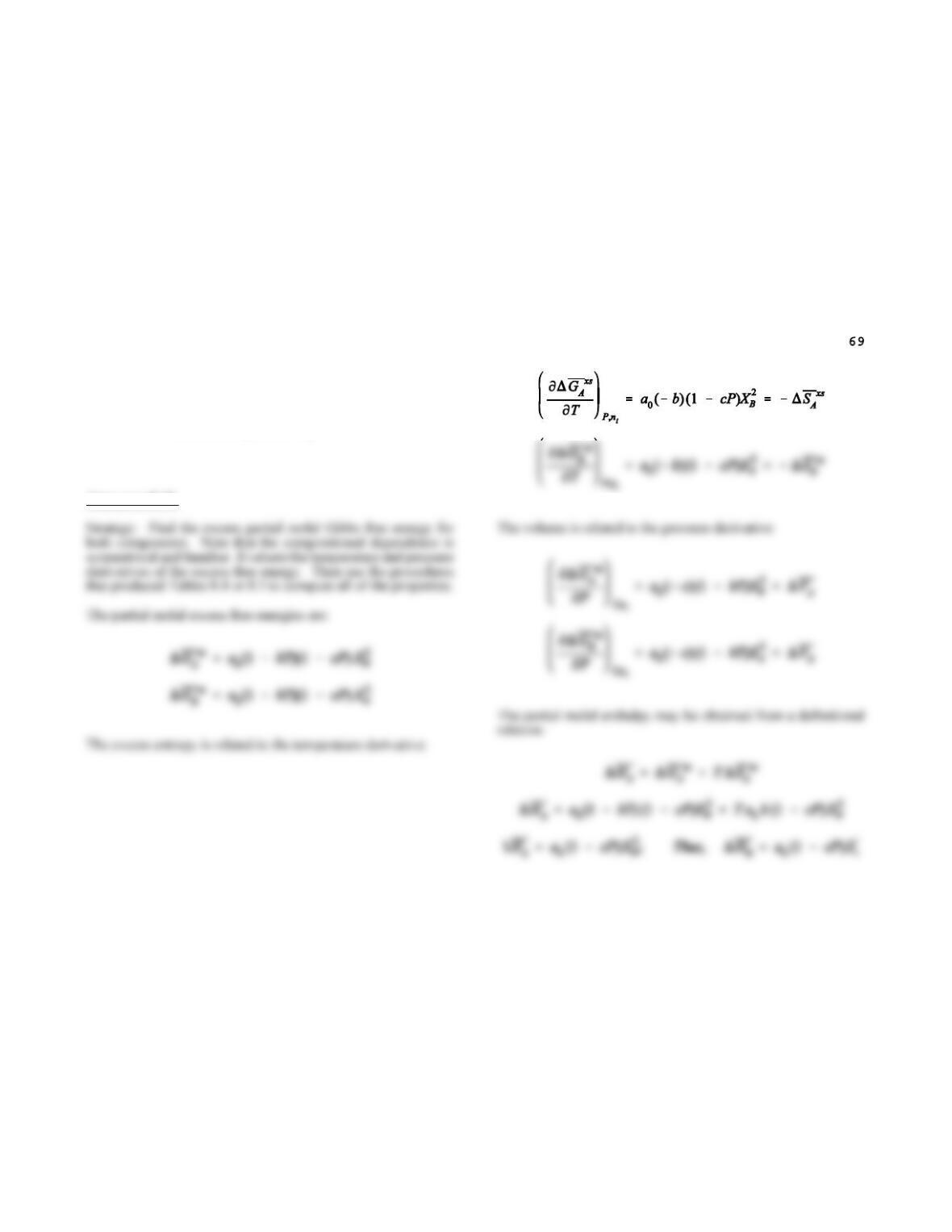
8.10. The system A – B forms a nonregular solution at high
temperatures with a heat of mixing given by the relation
Suppose a = 12,500 (J/mol), b = 5 x 10– 4 K– 1 and c = 7 X 10– 5
atm– 1.
Chapter 8. Solutions
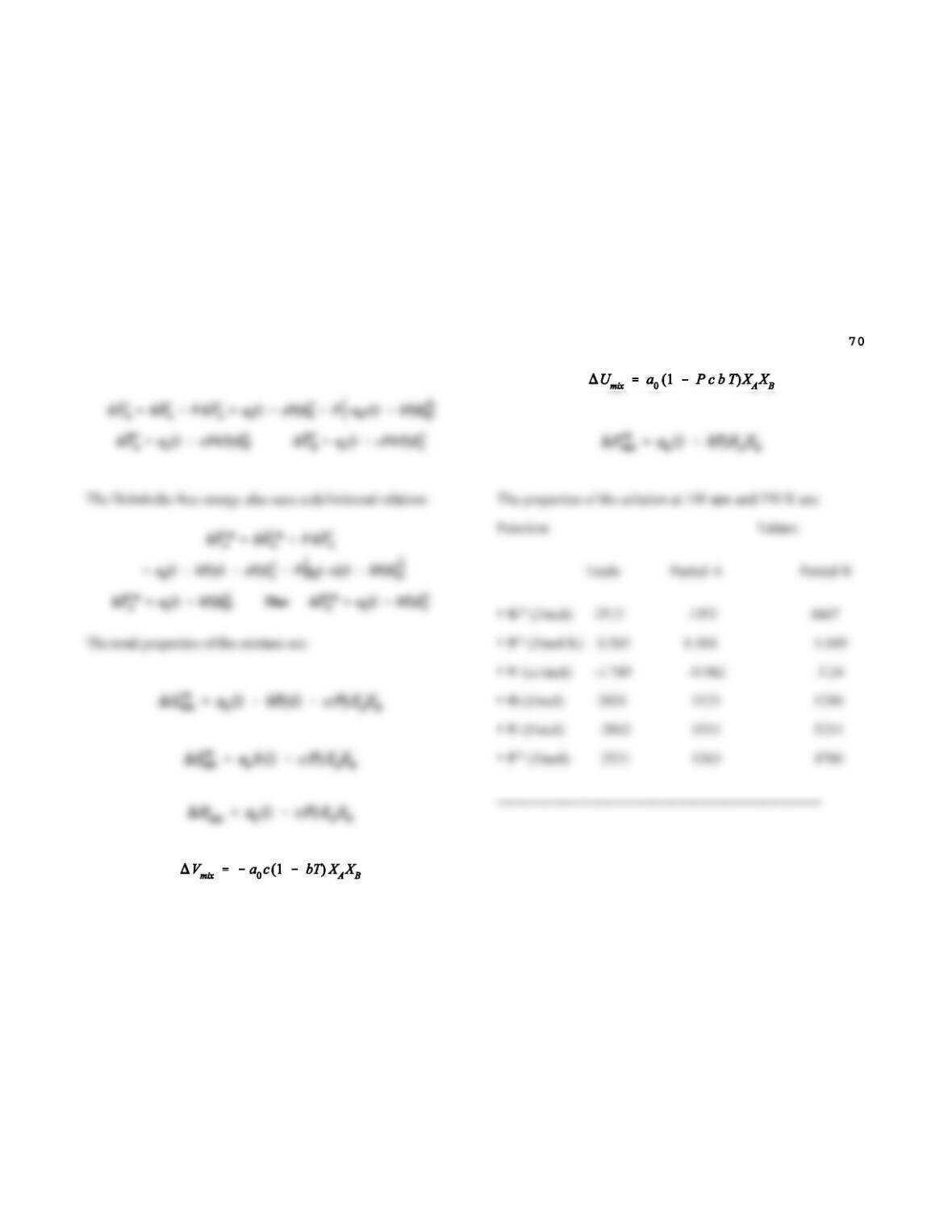
a. Derive expressions for all of the mixing
properties for this system.
b. Use these relations to evaluate all of the
properties of the solution at 100 atm pressure, 550
K and a composition XB = 0.35.
Answer to 8.10.
Chapter 8. Solutions
The internal energy may be obtained from a definitional relation:
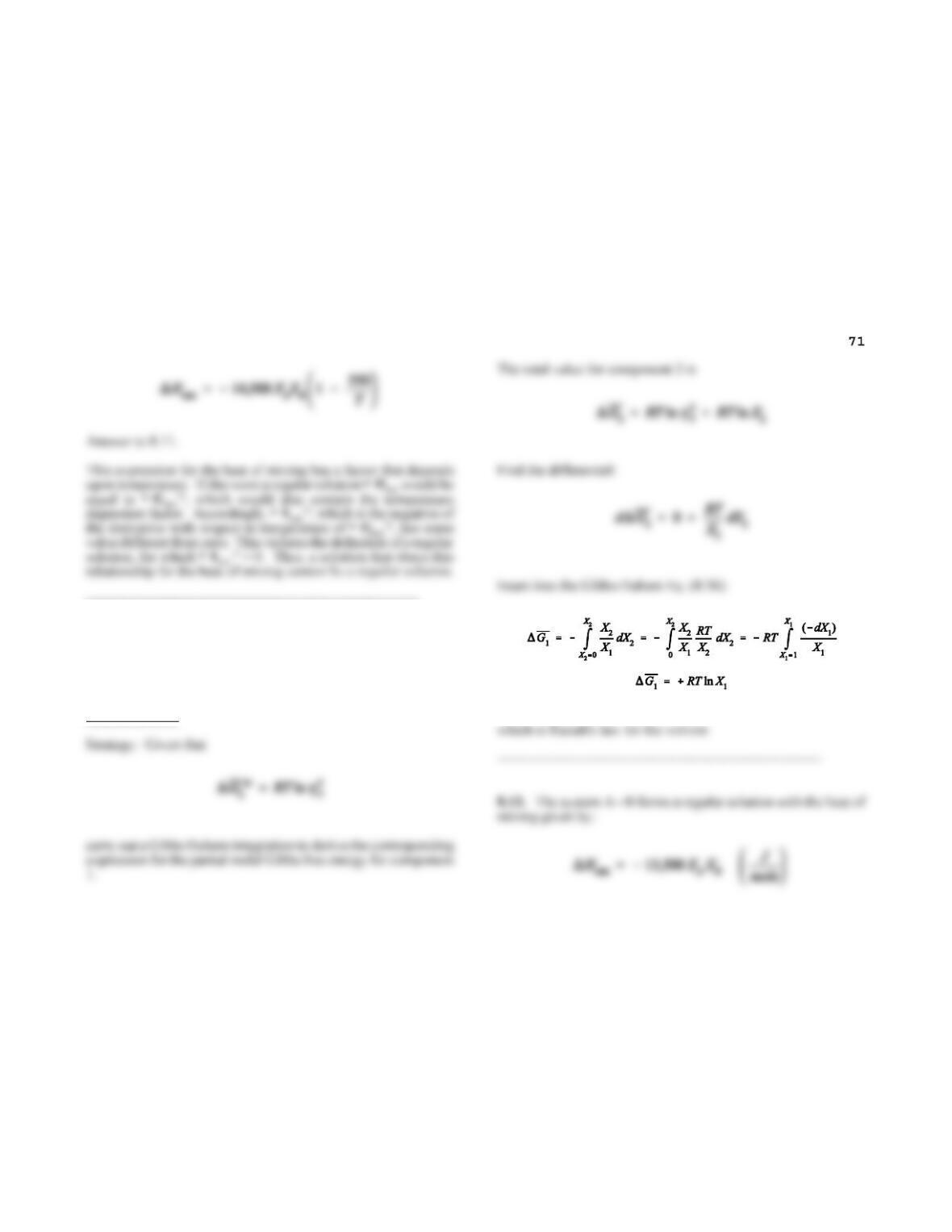
8.11. Criticize the following reported finding: “The system A –
B forms a regular solution at high temperatures with the heat of
mixing found to obey the relation,
Chapter 8. Solutions
———–———–———————————–———-—
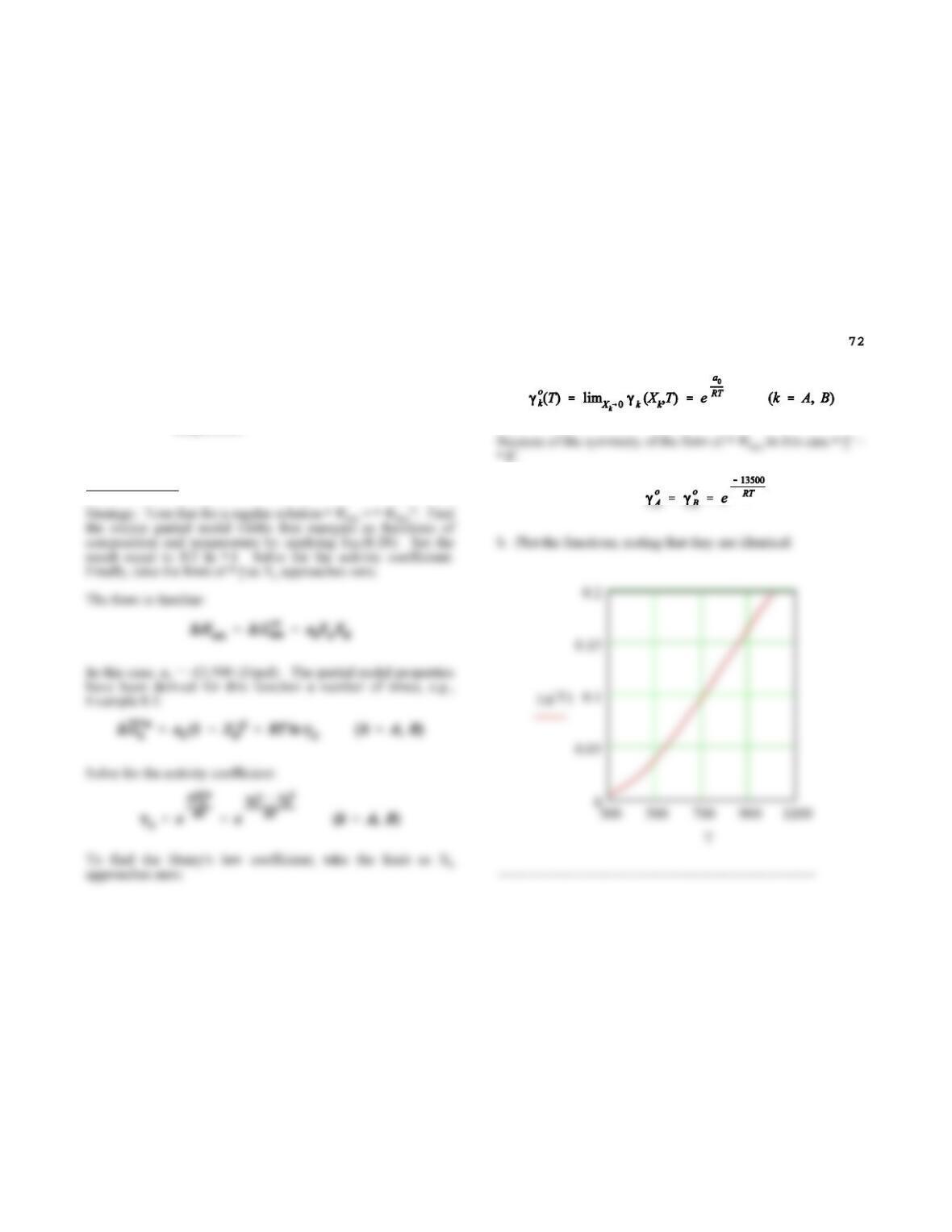
8.12. Given that Henry’s law holds for the solute a dilute real
solution, derive Raoult’s law for the solvent.
Answer to 8.12.
Chapter 8. Solutions
a. Derive expressions for the Henry’s law constant
for A as a solute in B and B as a solute in A.
b. Plot both Henry’s law constants as a function of
temperature.
Answer to 8.13.
B
Chapter 8. Solutions
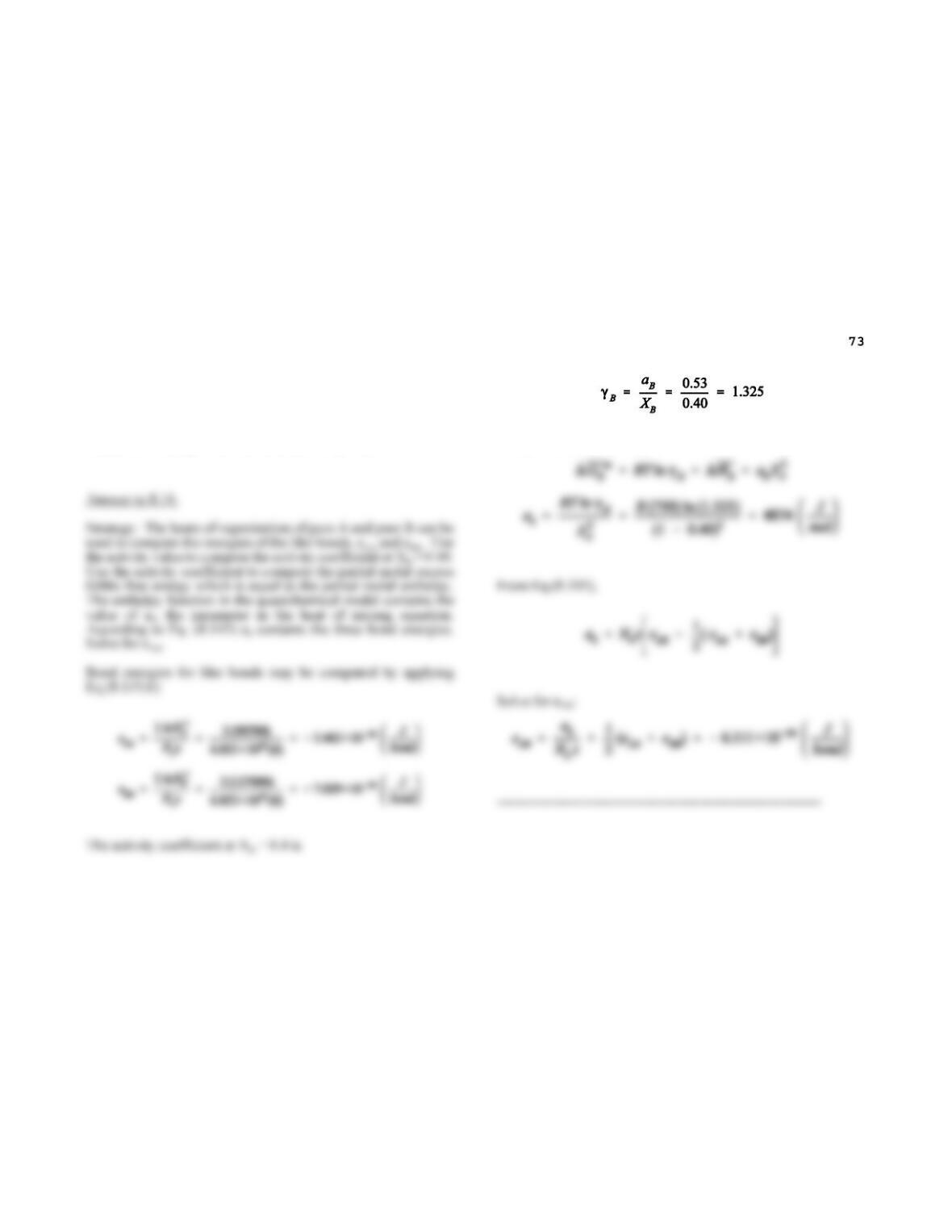
8.14. The system A – B may be described by the quasichemical
model. The heat of vaporization of pure A is 98,700 (J/mole);
that of pure B is 127,000 (J/mole). At a solution composition XB
= 0.40 at 750 K the activity of component A is found to be 0.53.
Estimate the energy of an AB bond in this system.
The partial molal enthalpy,
Chapter 8. Solutions
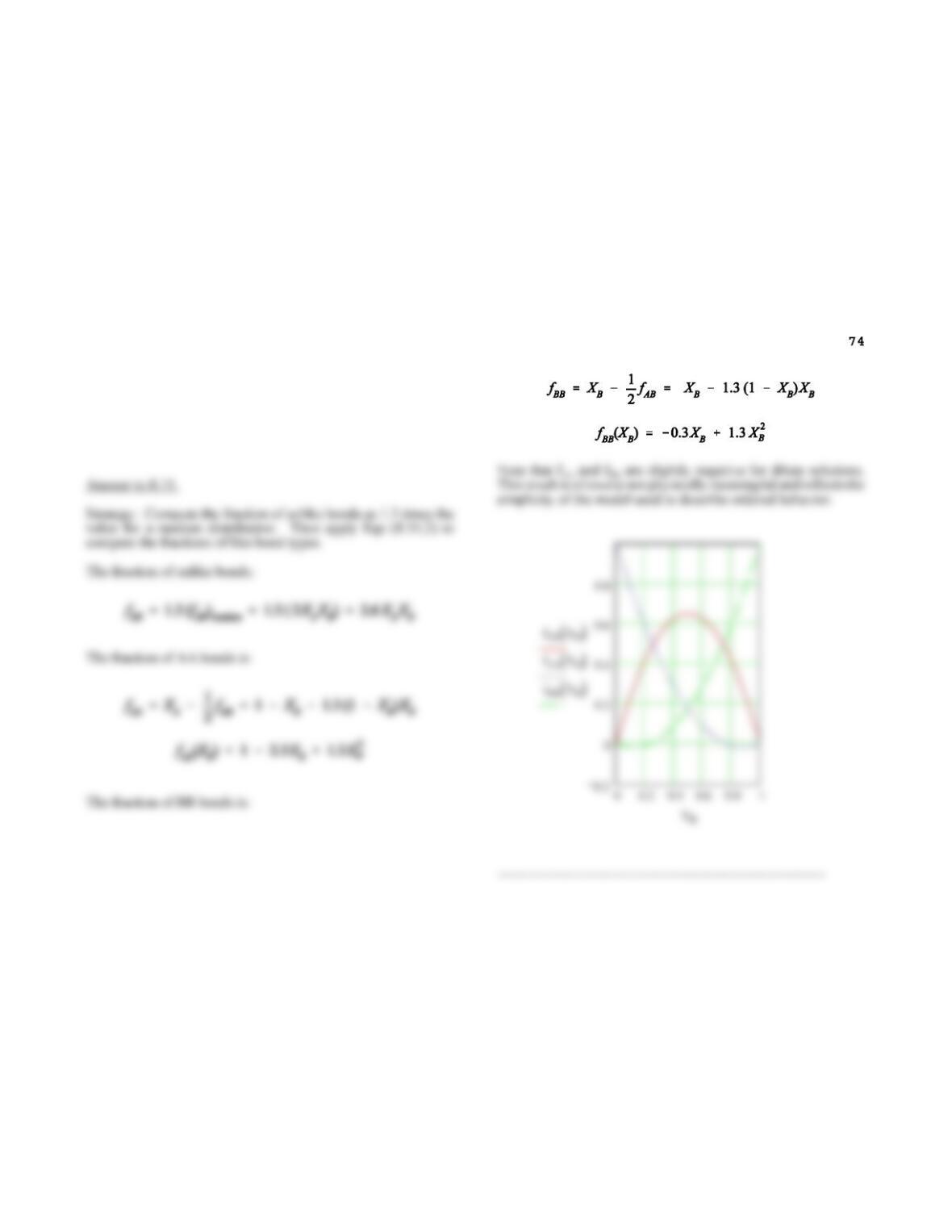
8.15. The system A – B exhibits a tendency toward ordering,
with
the number of unlike near neighbor pairs larger than the random
value by 30% at all compositions. Compute and plot the number
of AA, AB and BB bonds in the system.
Chapter 8. Solutions
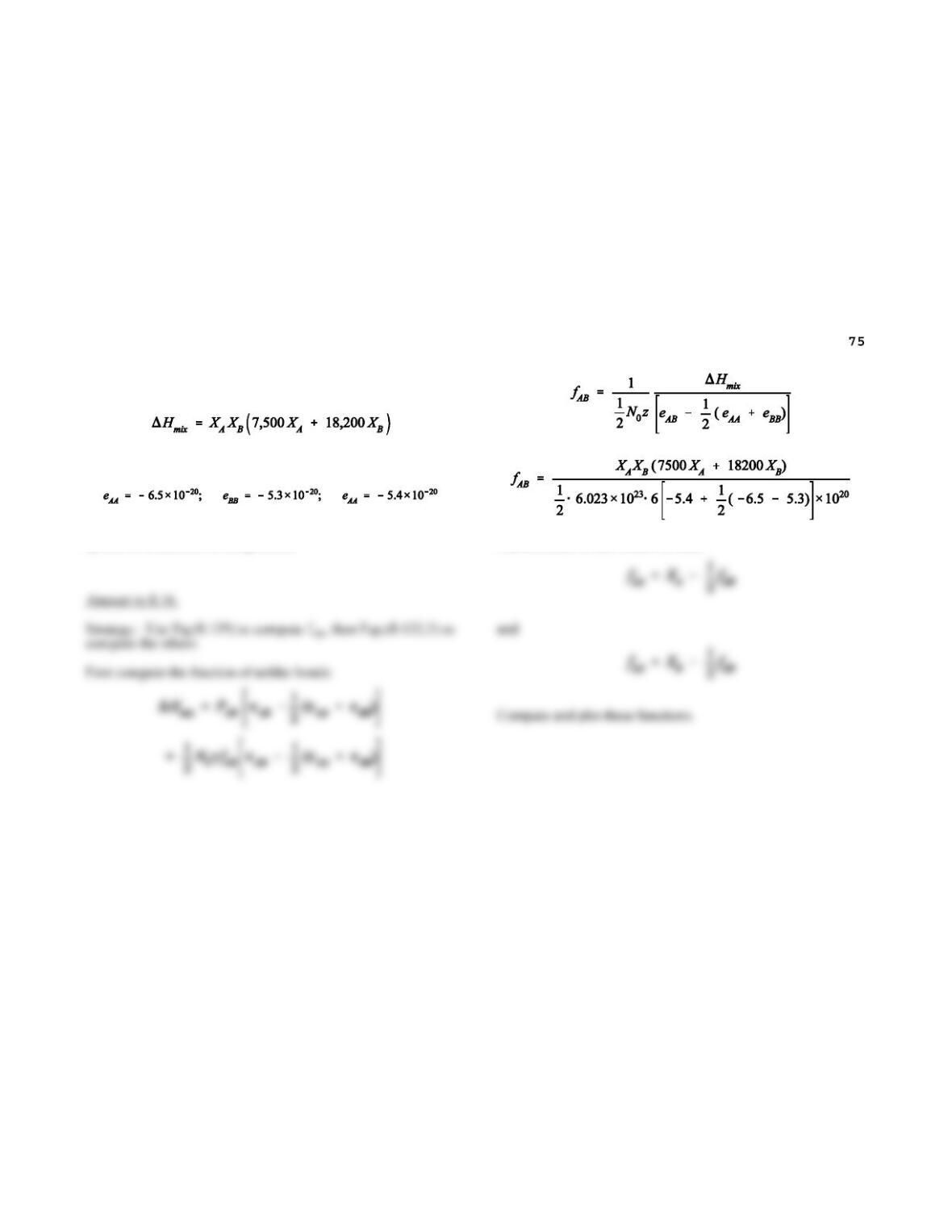
8.16. The A – B system exhibits a measured heat of mixing given
by the relationship
The bond energies (J/bond) for this system are estimated to be
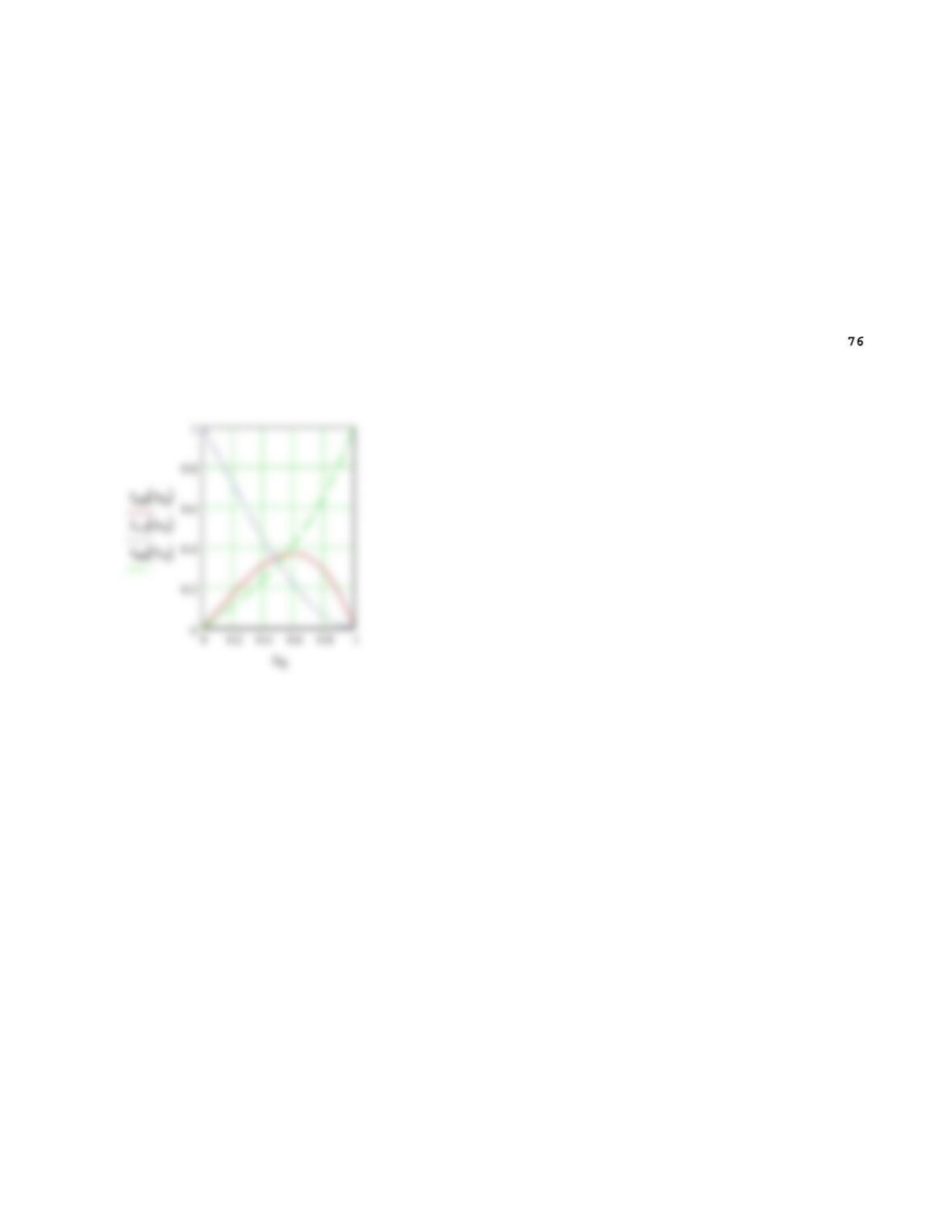
Compute and plot the fractions of AA, AB and BB bonds in the
system as a function of composition.
The fractions of like bonds are then
Chapter 8. Solutions