
Chapter 4. Thermodynamic Variables and Relations
Chapter 4. Thermodynamic Variables and
Relations
4.1. Write out the combined statements of the first and second
laws for the energy functions, U= U(S,V), H = H(S,P), F =
F(T,V) and G = G(T,P). Assume • •W’ is zero.
a. Write out all eight coefficient relations,
b. Derive all four Maxwell relations
for these equations.
Answer to 4.1.
Combined statements:
Coefficient relations:
Maxwell relations:

Chapter 4. Thermodynamic Variables and Relations
4.2. Derive the ratio relation equation (4.30):
[Hint: Begin with the differential form of Z = Z(X,Y); solve
for dX; write the differential form of X = X(Y,Z); compare
Answer to 4.2.
Write out the function and its differential:
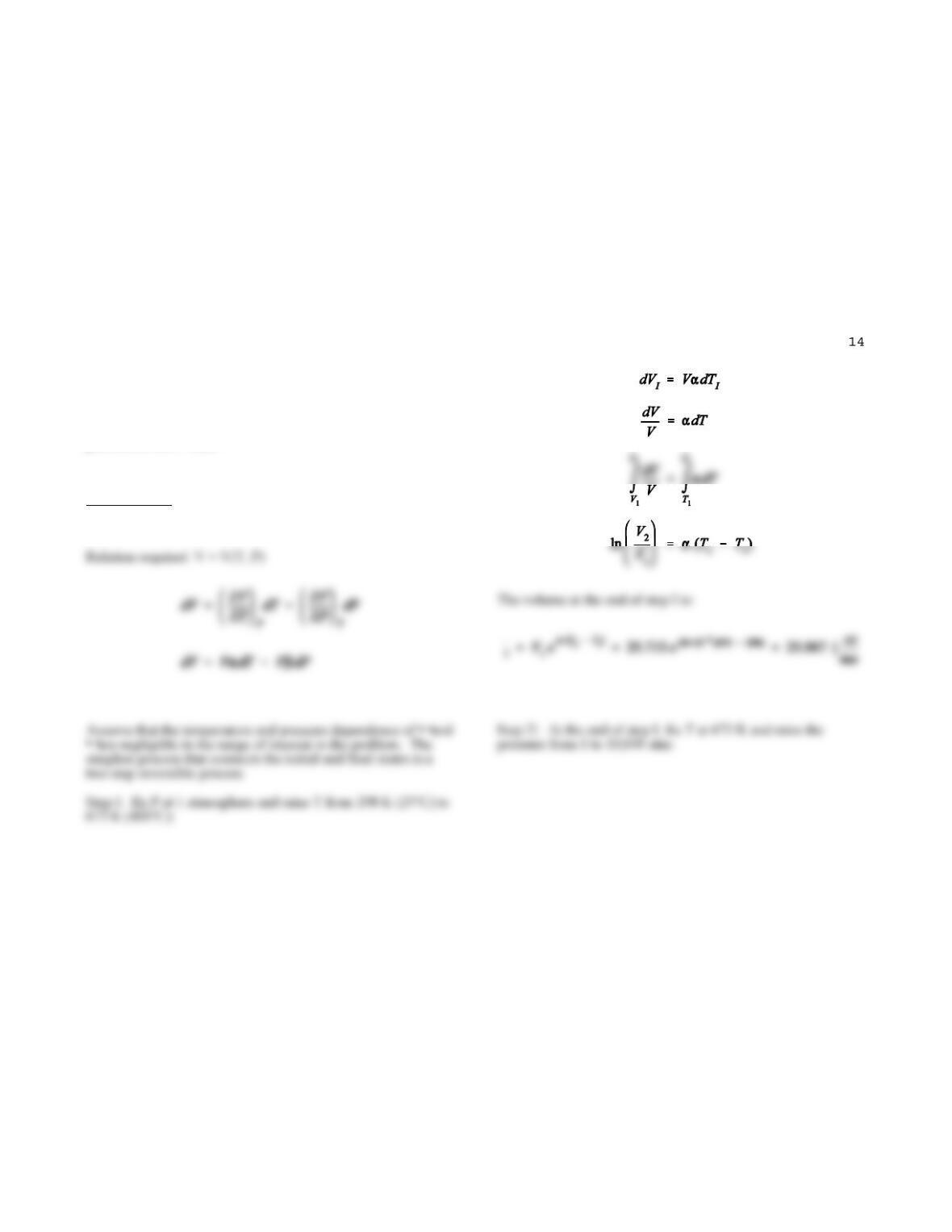
Write the differential of dX directly from X = X(Y, Z)
Compare coefficients of dY in these two expressions for dX:
Chapter 4. Thermodynamic Variables and Relations
4.3. The molar volume of Al2O3 at 25oC and 1 atm is 25.715
cc/mole. Its coefficient of thermal expansion is 26X10-6 K-1
and the coefficient of compressibility is 8.0X10⁻⁷ atm-1.
Estimate the molar volume of Al2O3 at 400oC and 10 kilobars
pressure (10X103 atm).
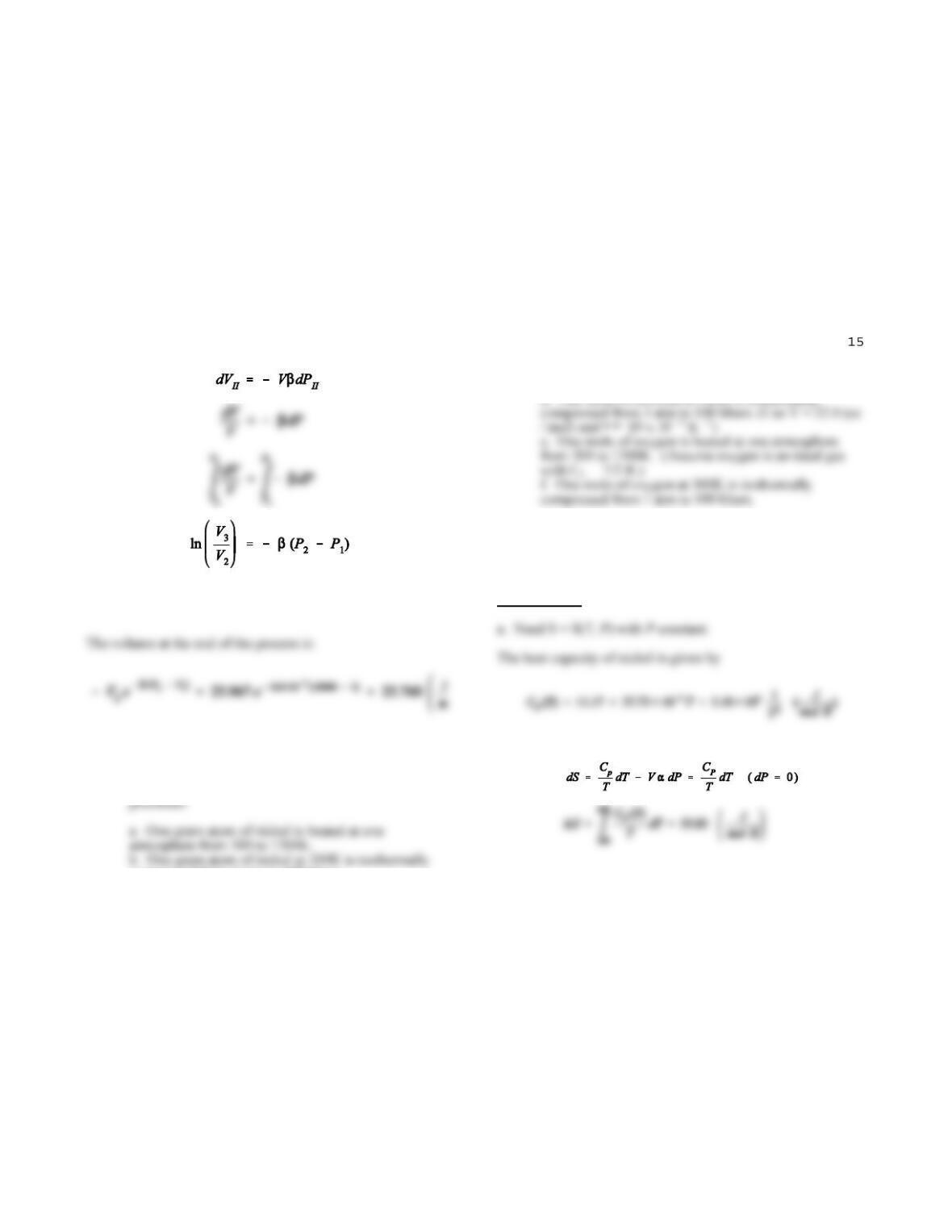
Answer to 4.3.
Independent variables: P, T; dependent variable: V
Chapter 4. Thermodynamic Variables and Relations
——–———-———–———————–———–——
4.4. Compare the entropy changes for the following
compressed from 1 atm to 100 kbars.
c. One mole of zirconia is heated at one atmosphere
from 300 to 1300K.
d. One mole of zirconia at 300K is isothermally
What general qualitative conclusions do you draw from these
calculations?
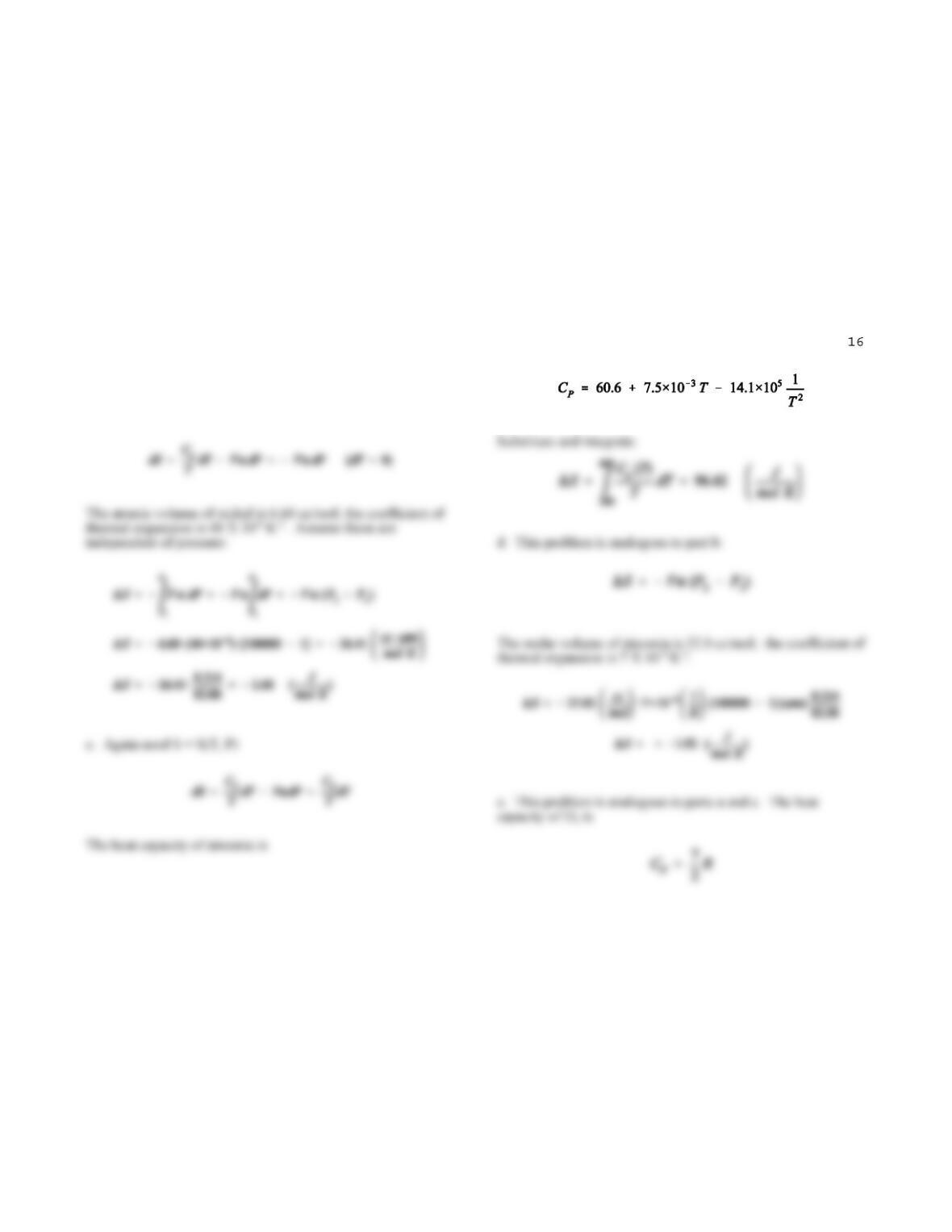
Answer to 4.4.
Chapter 4. Thermodynamic Variables and Relations
b. Need S = S(T,P)
Chapter 4. Thermodynamic Variables and Relations
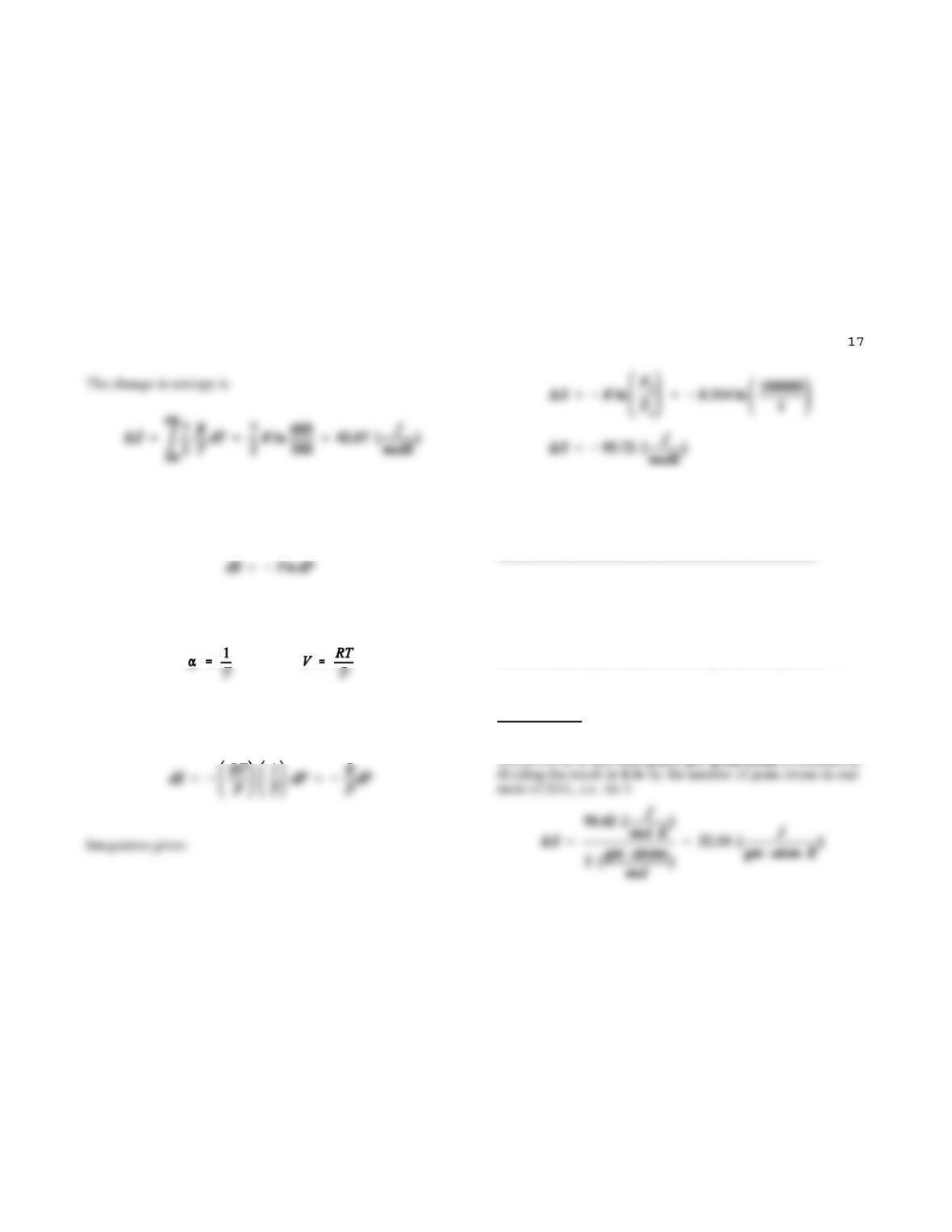
f. The differential form to be integrated is the same as in parts
b and d:
For an ideal gas,
so that
General conclusion: For condensed phases the effect of
pressure on entropy is much smaller than the effect of
temperature; both effects are important for gases.
4.5. Express the results obtained for parts c and d of problem
4.4. in values per gram atom of ZrO2. [Each mole of zirconia
contains three gram atoms of its elements: one gram atom of
zirconium and two of oxygen.] How does this result influence
the conclusions you made in the comparisons in problem 4.4?
Answer to 4.5.
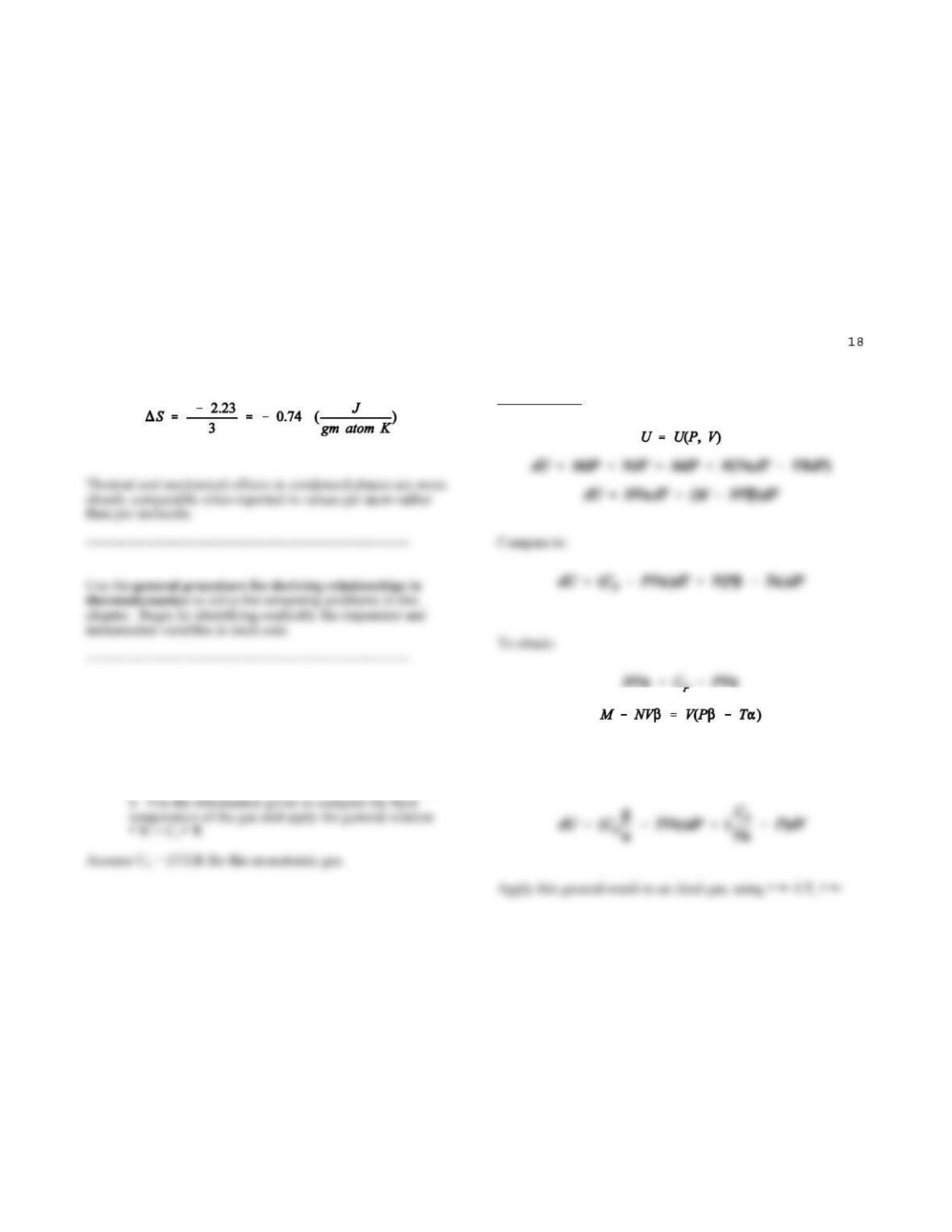
The change in entropy associated with heating zirconia from
Chapter 4. Thermodynamic Variables and Relations
The comparison for part d is also obtained by dividing by 3:
4.6. Compute the change in internal energy when 12 liters of
argon gas at 273K and 1 atm is compressed to 6 liters with the
final pressure equal to 10 atm. Solve this problem in two
different ways.
a. Apply the general procedure to evaluate U = U(P, V)
for an ideal gas and integrate from initial to final (P,V).
Answer to 4.6.
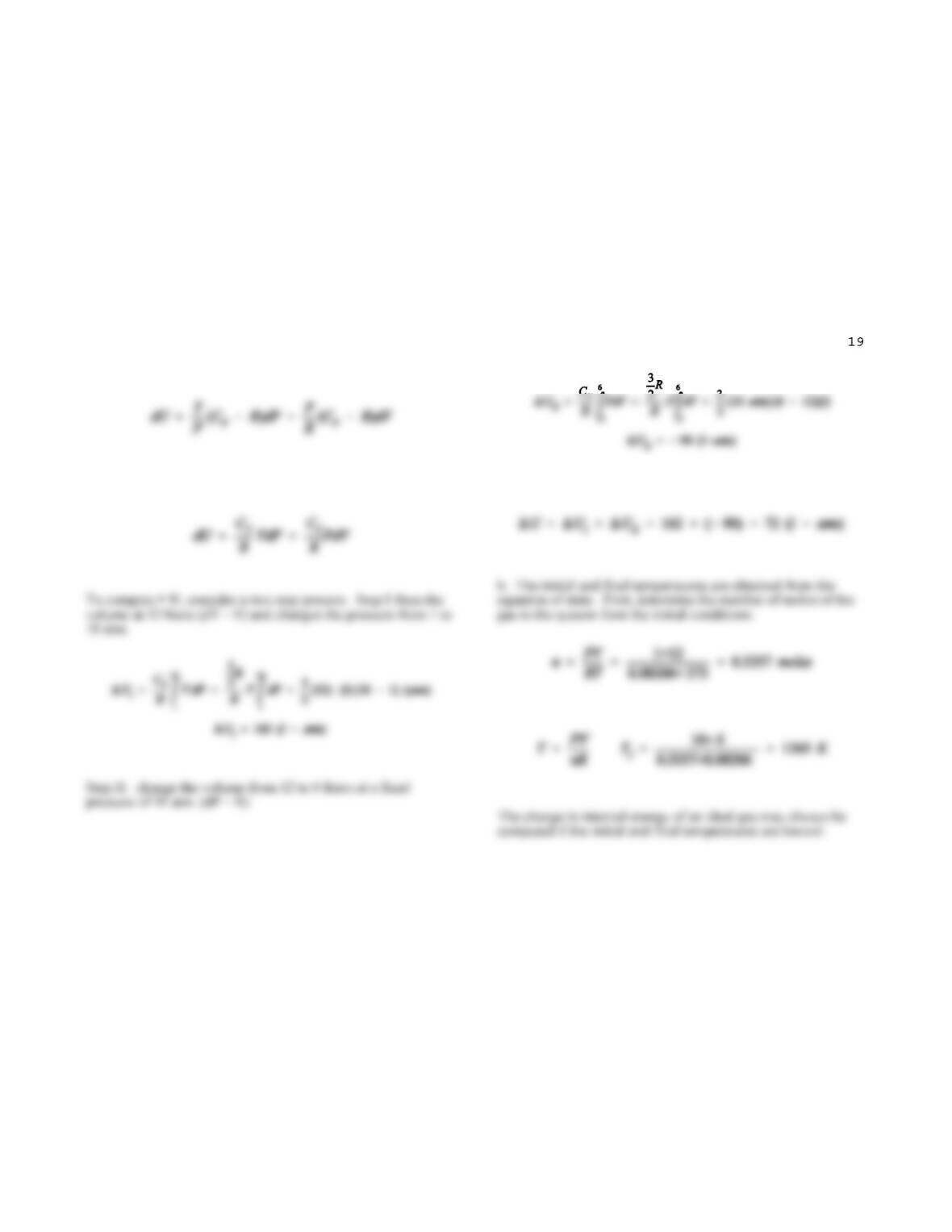
Solve for M and N and insert into dU:
Chapter 4. Thermodynamic Variables and Relations
1/P:
Which may be written:
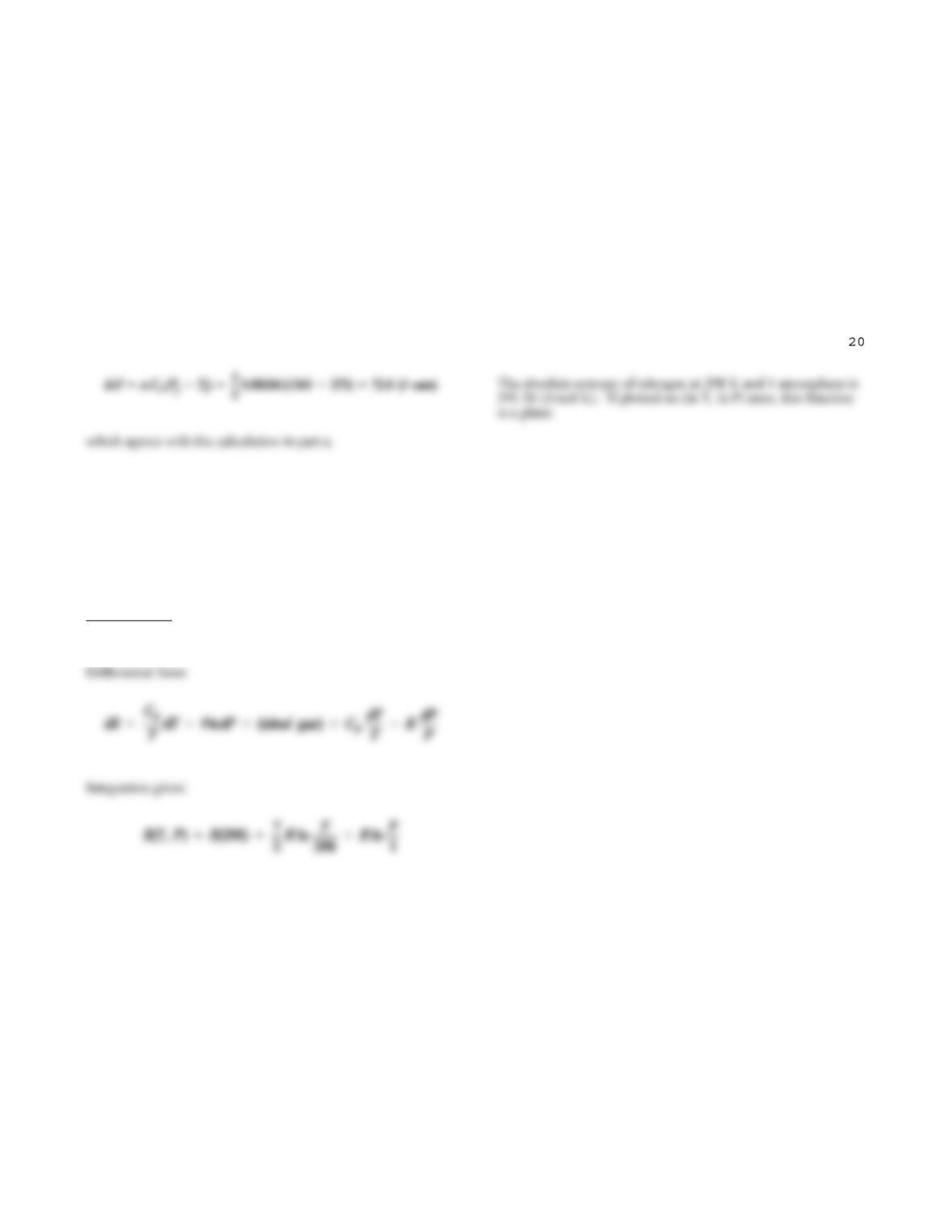
The total change in internal energy is the sum:
Chapter 4. Thermodynamic Variables and Relations
——–———-———–———————–———–—-
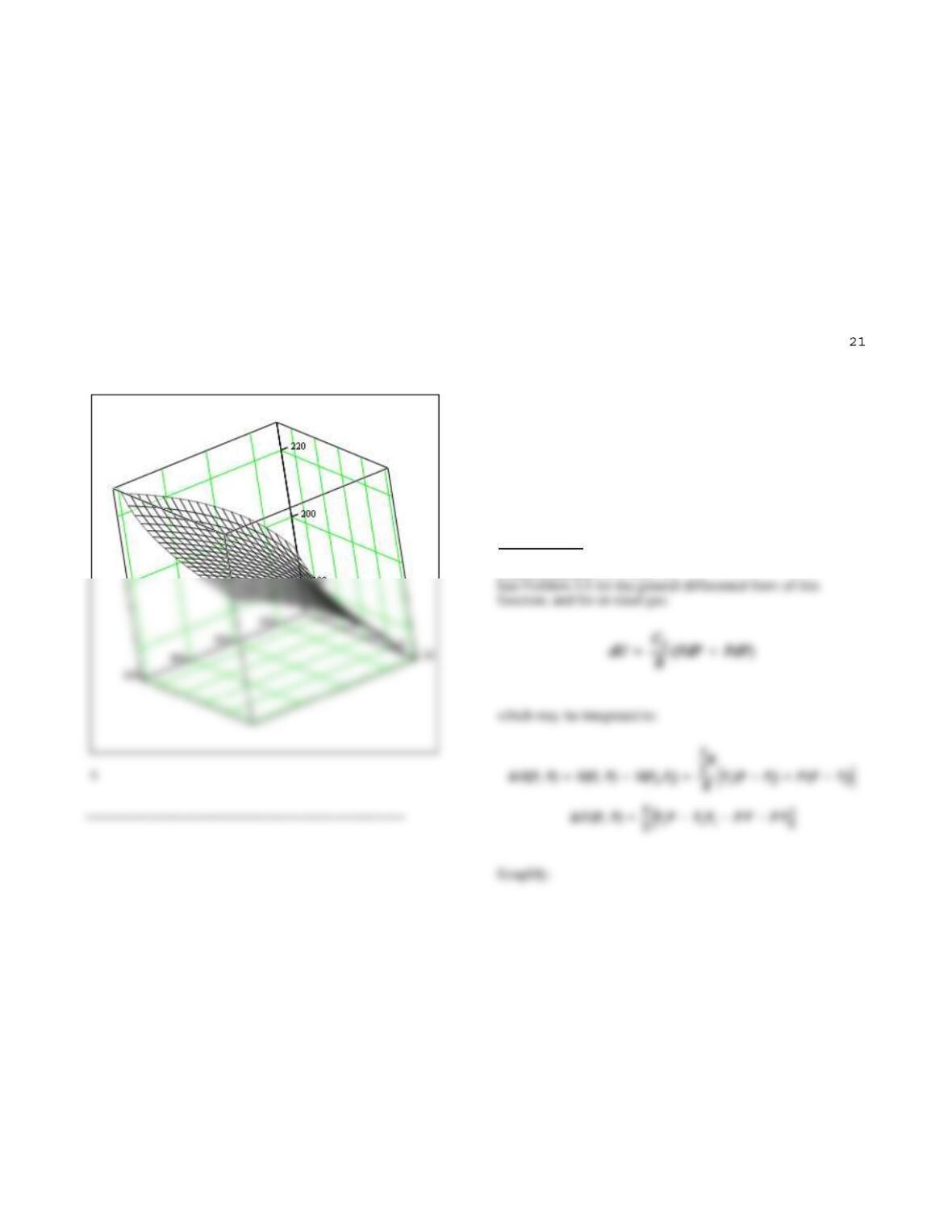
4.7. Compute and plot the surface that represents the
relationship for the entropy of nitrogen gas as a function of
temperature and pressure in the (P,T) range from (1 atm, 300K)
to (10 atm, 1000K). Since nitrogen is diatomic, CP = (7/2)R.
Assume it obeys the ideal gas law in this domain.
Answer to 4.7.
Function required: S = S(T, P)
Chapter 4. Thermodynamic Variables and Relations
S(T, P)
4.8. Compute and plot the surfaces that represent the variation
with pressure and volume of
a. The internal energy and
b. The enthalpy
of one mole of nitrogen gas. Cover the range in (P,V) space
from (1 atm, 22.4 liters) to (10 atm, 8.2 liters). Plot constant
energy lines on the surfaces. Assume it behaves ideally.
Answer to 4.8.
Function needed: U = U(P, V)
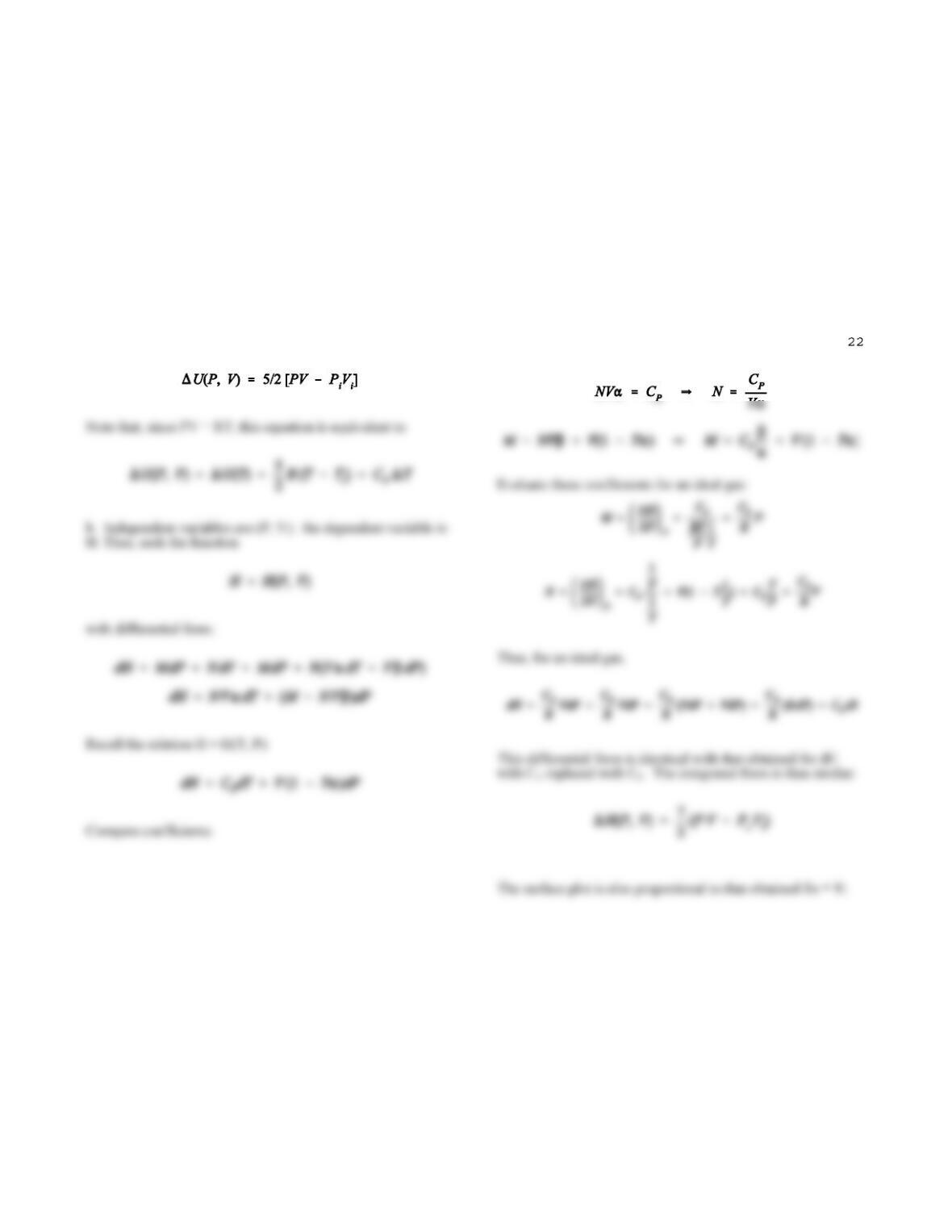
Chapter 4. Thermodynamic Variables and Relations

Chapter 4. Thermodynamic Variables and Relations
U(P, V)
H
4.9. Evaluate the partial derivative
in terms of experimental variables.
Answer to 4.9.
Dependent variables: (G, S); independent variable: H
Function needed: H = H(G, S)
Differential form: