Chapter 14. External Fields
Chapter 14. Equilibrium in Continuous
Systems; Thermodynamic Effects in External
Fields
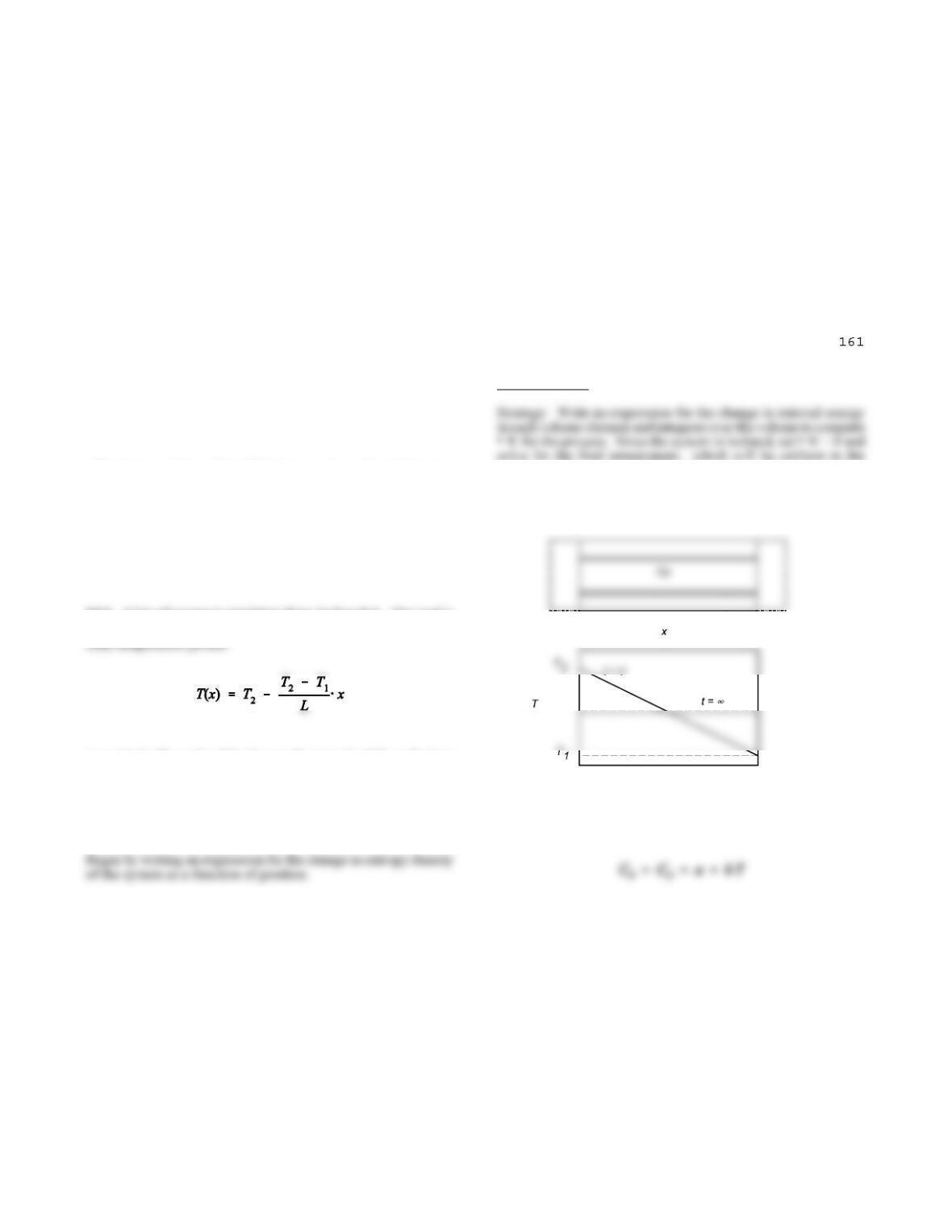
14.1. A bar of copper is insulated along its length L. One end is
held at 498 K, and the other end fixed at 298 K, until a steady
is reached. The ends of the bar are then insulated from the heat
source and sink (the system is isolated) If L = 2 cm,
a. Find the equilibrium temperature distribution.
b. Compute the change in entropy for the system during
its transition to equilibrium.
Answer to 14.1.
solve for the final temperature, which will be uniform in the
system. Then compute the entropy change for each volume
element and integrate over the volume to compute the change in
entropy of the system for the process.
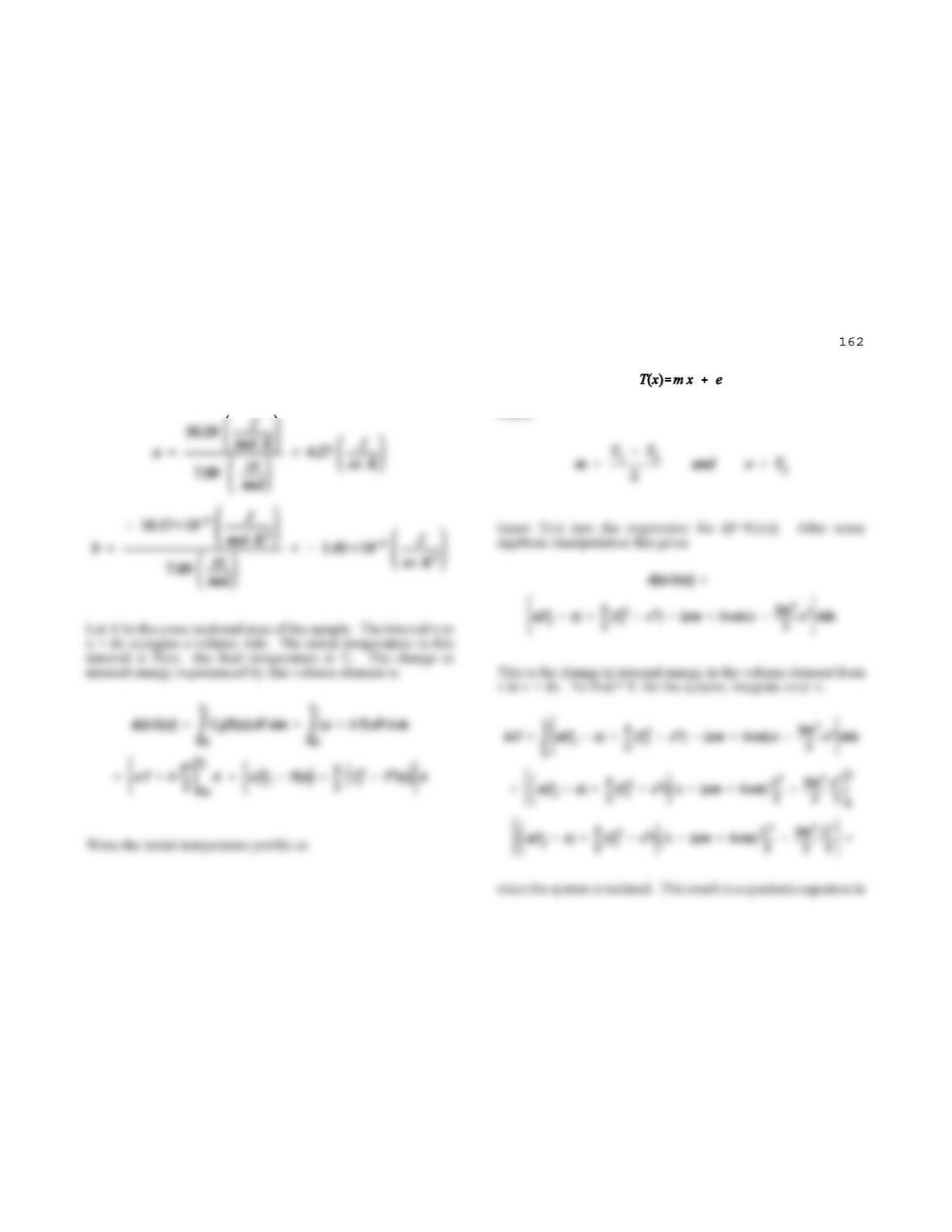
a. Begin by neglecting the difference between CP and CV. For
copper the heat capacity per unit volume is given by
Chapter 14. External Fields
where
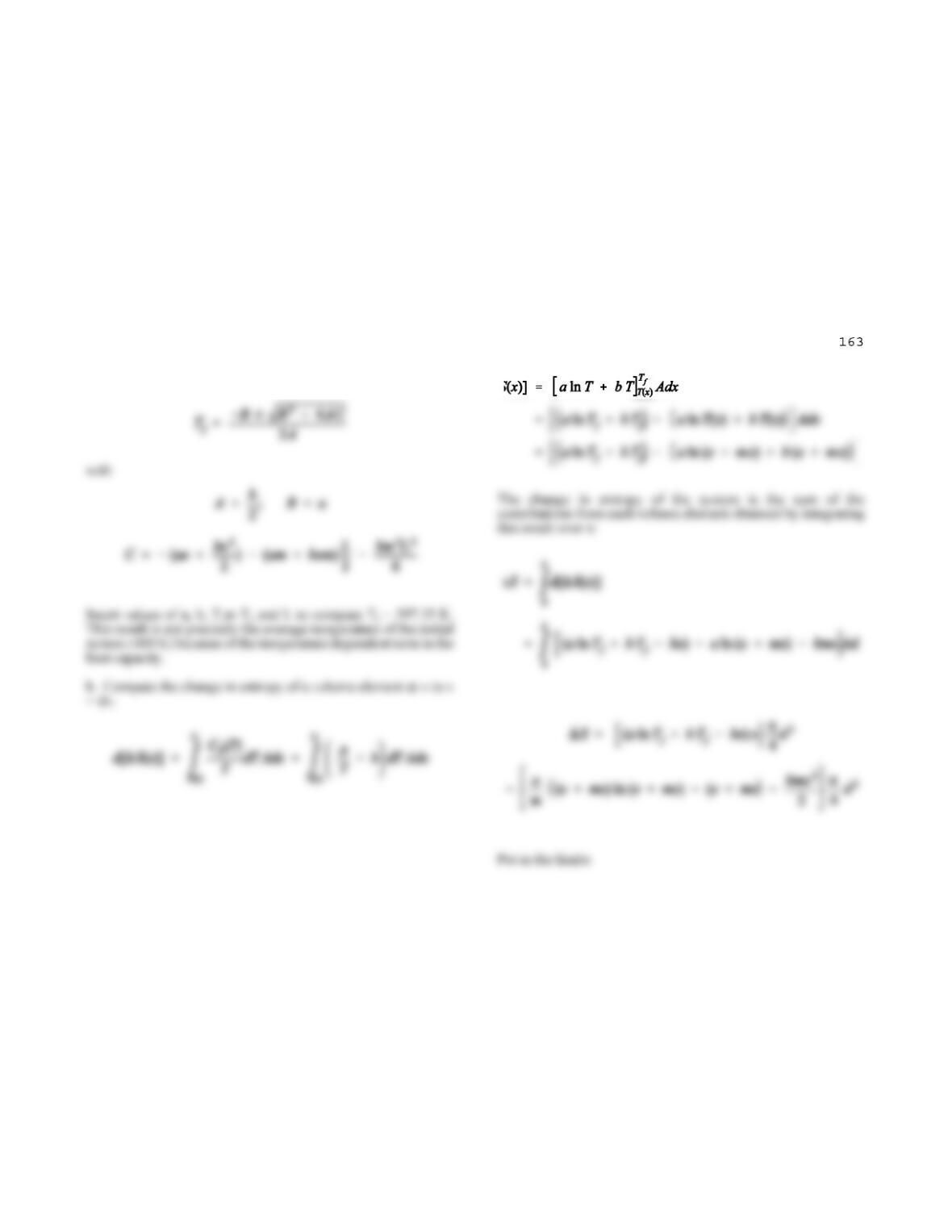
where
Chapter 14. External Fields
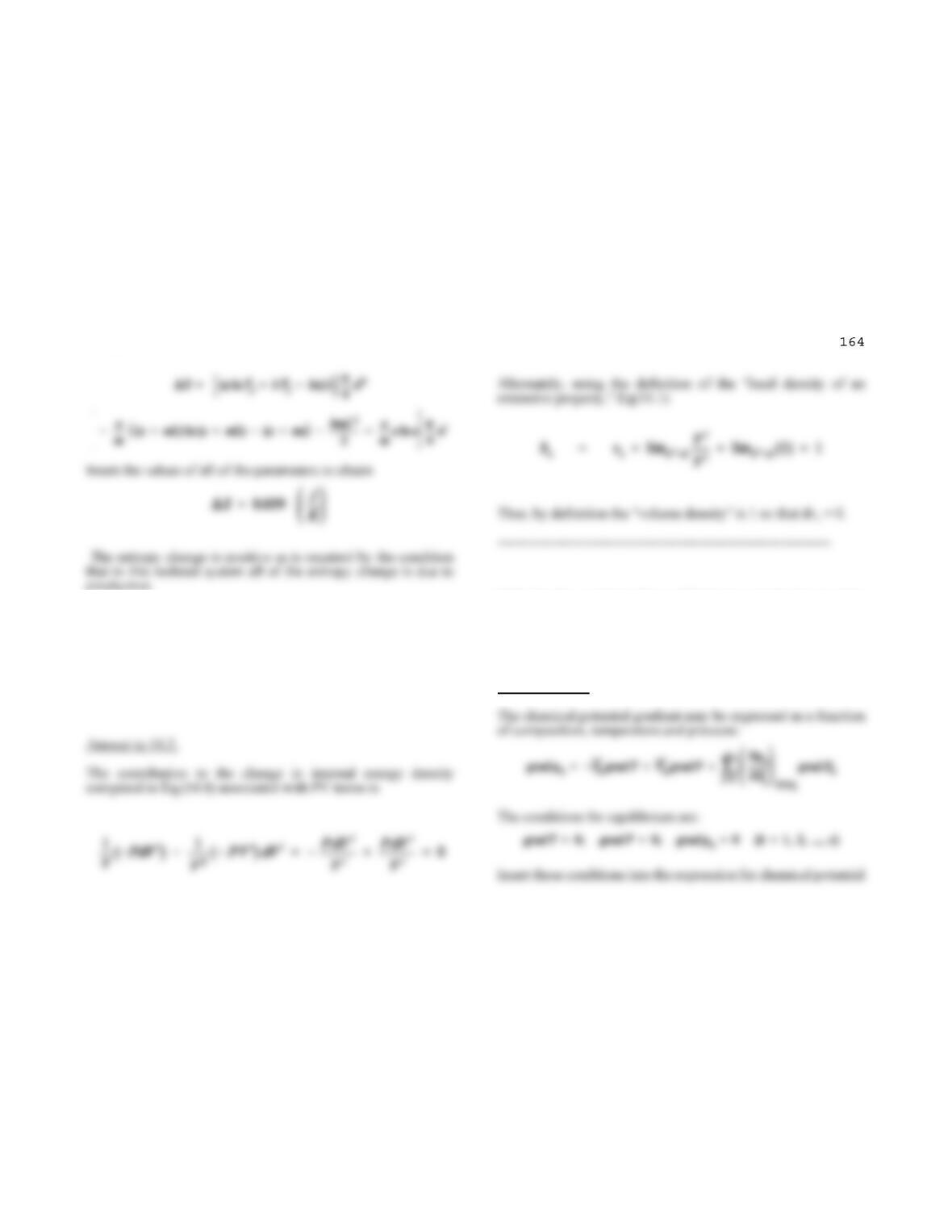
Tf, the final temperature, with the form
Chapter 14. External Fields
———–——–———————————————–—
14.2. Explain why there is no PdV type term in the local
formulation of the combined statement of the first and second
laws.
14.3. Use the conditions for equilibrium in a single phase system
to prove that, in the absence of external fields, the composition,
Xk, of each component is uniform in the system.
Answer to 14.3.
Chapter 14. External Fields
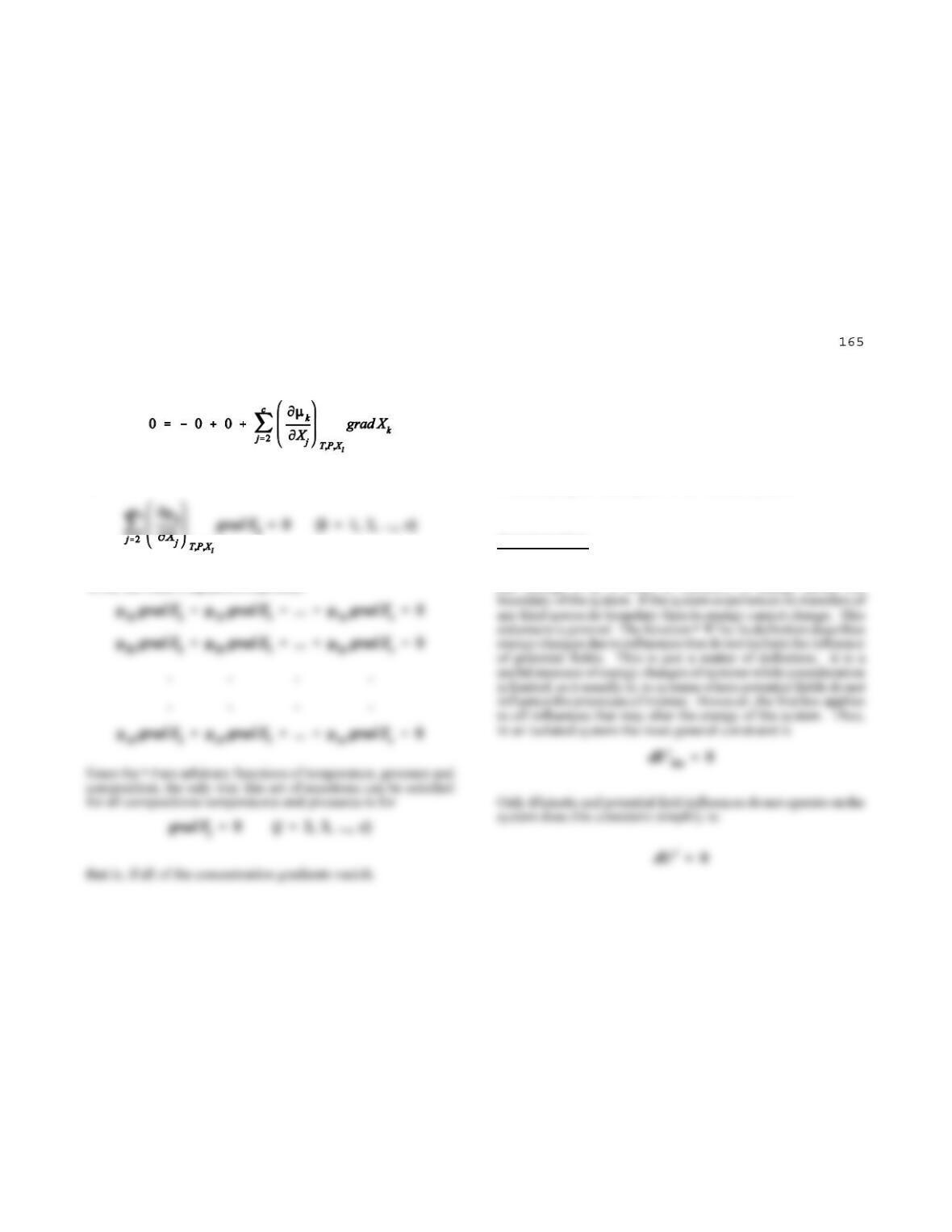
gradient:
Or
Write out these c equations explicitly:
———–——–———————————————–—-
14.4. Potential field effects are incorporated into the conditions
for equilibrium through equation (14.31), which expresses one of
the constraints that operates in an isolated system. Justify the
contention that the energy function, E’Tot = U’ + E’pot, is
constrained to be constant, rather than just the internal energy, U’,
in developing the description of an isolated system.
Answer to 14.4.
The first law states that the only way that the energy of a system
can change is as a result of transfers of energy across the
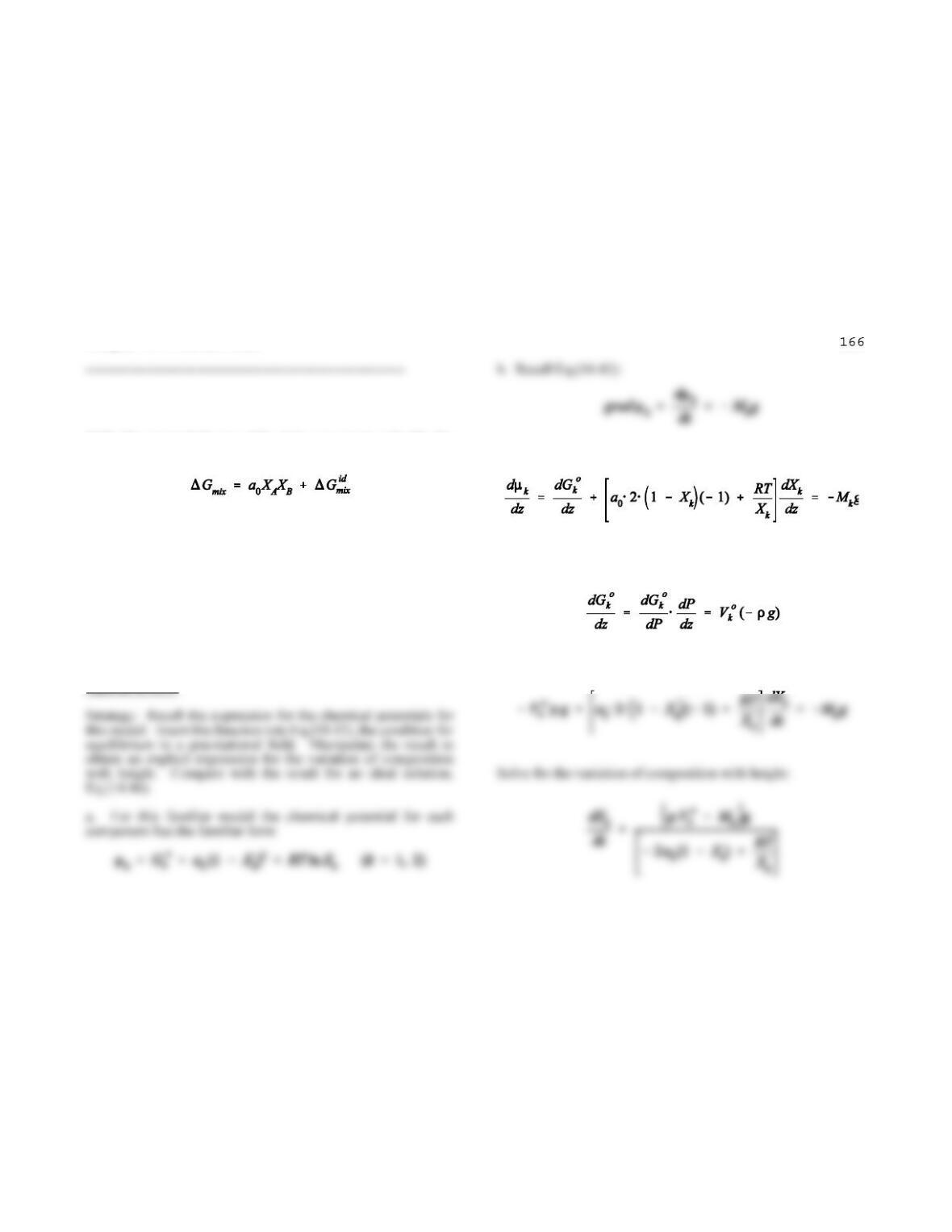
Chapter 14. External Fields
14.5. The mixing behavior of the A-B system is described by the
familiar equation
where a0 is independent of temperature and pressure.
a. Write an expression for the chemical potential of
component B as a function of T, P and XB.
b. Derive an expression for the variation of composition
with altitude for this system.
c. Compare this result with that obtained for an ideal
solution.
Answer to 14.5.
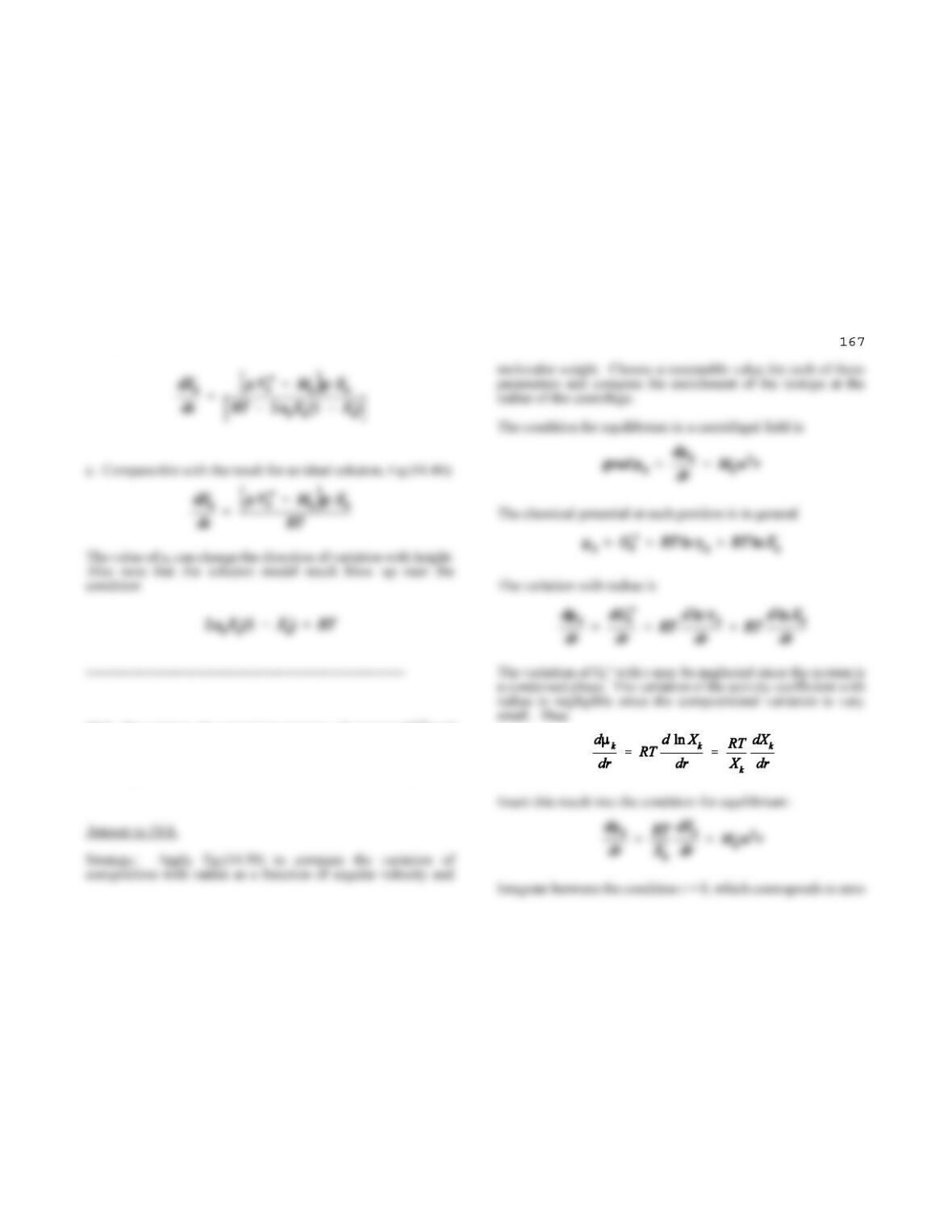
For this solution model,
Evaluate:
Insert this result into the chemical potential equation:
Chapter 14. External Fields
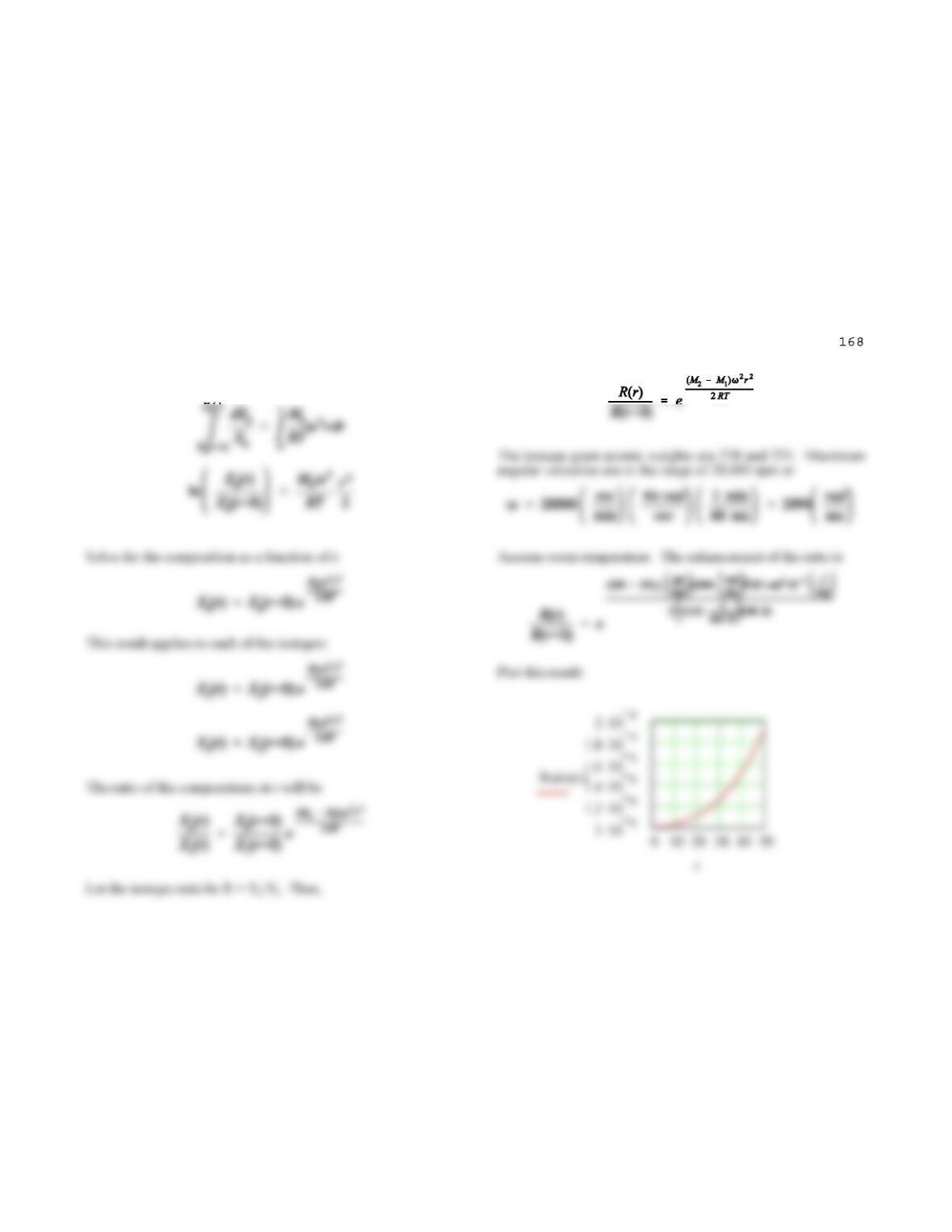
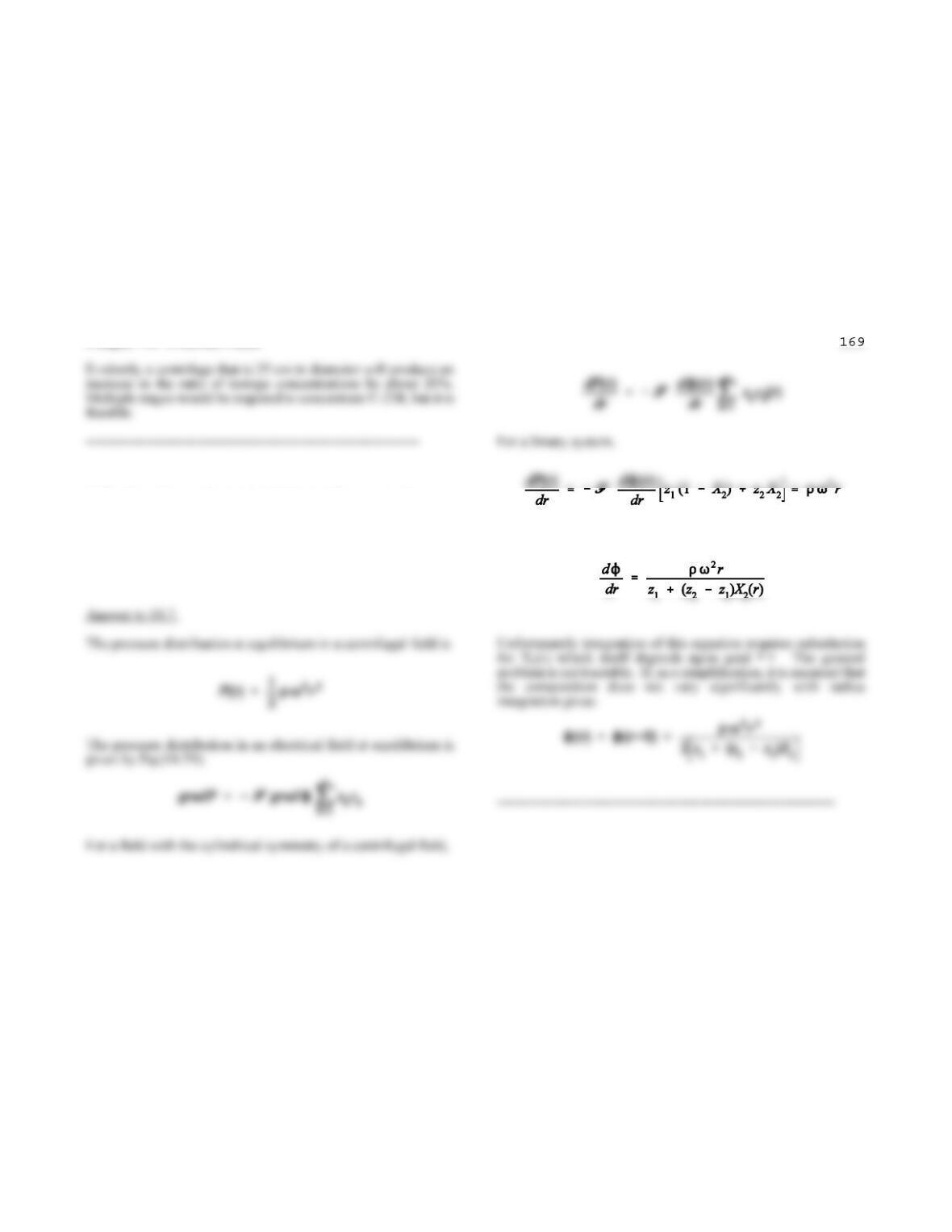
14.6. One strategy for separating isotopes of uranium (U235 and
U238) in the Manhattan Project was to form a dilute solution
containing these isotopes and centrifuge it. Examine the
thermodynamics of this situation and assess its feasibility.
Chapter 14. External Fields
centrifugal field, and r = r, outside radius of the centrifuge:
Chapter 14. External Fields
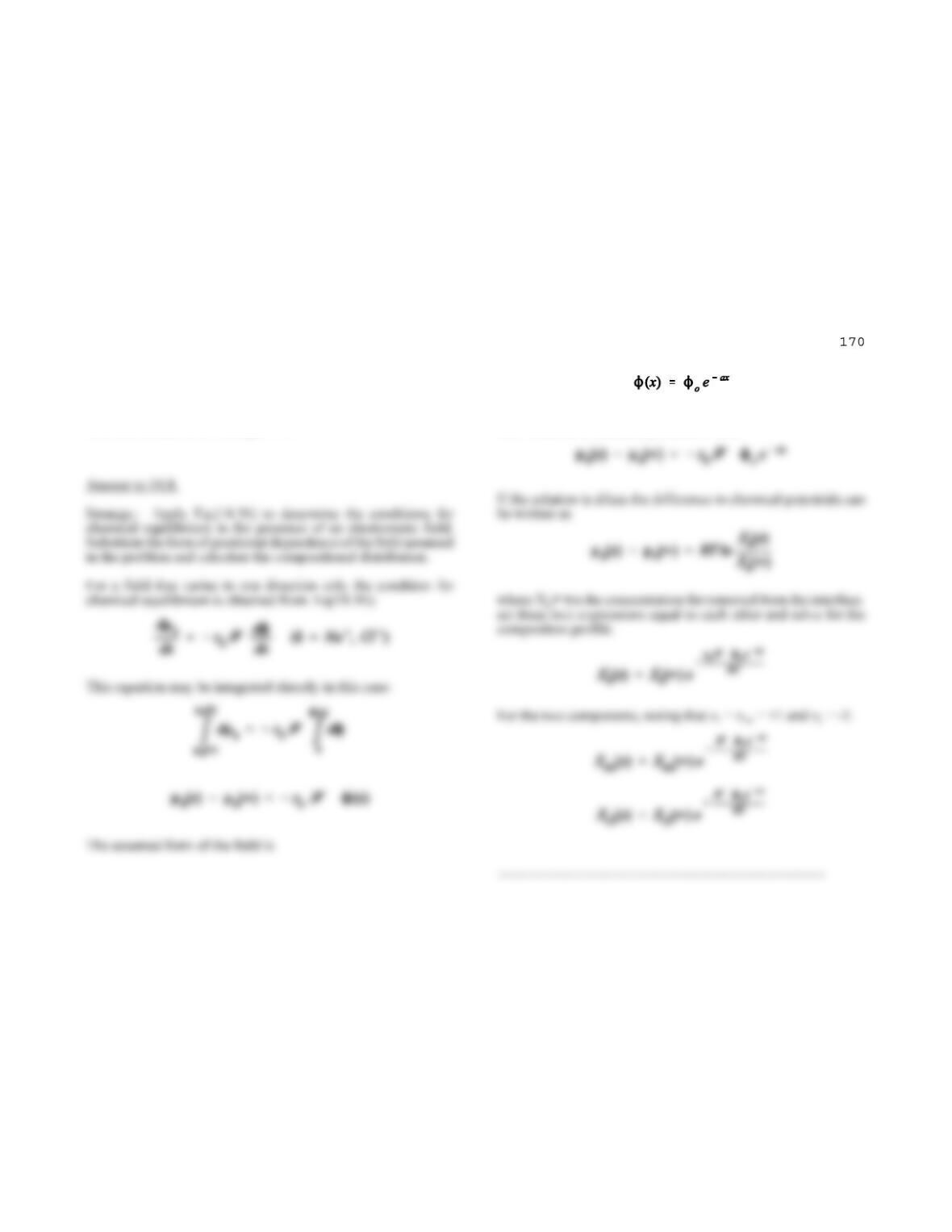
14.7. Describe an electrical field that will generate the same
pressure distribution as a centrifugal field developed in an
ultracentrifuge rotating at 20,000 rpm. State all of your
assumptions. (Several essential elements have been left out of the
statement of this problem.)
Solve for the gradient in electrical potential:
Chapter 14. External Fields
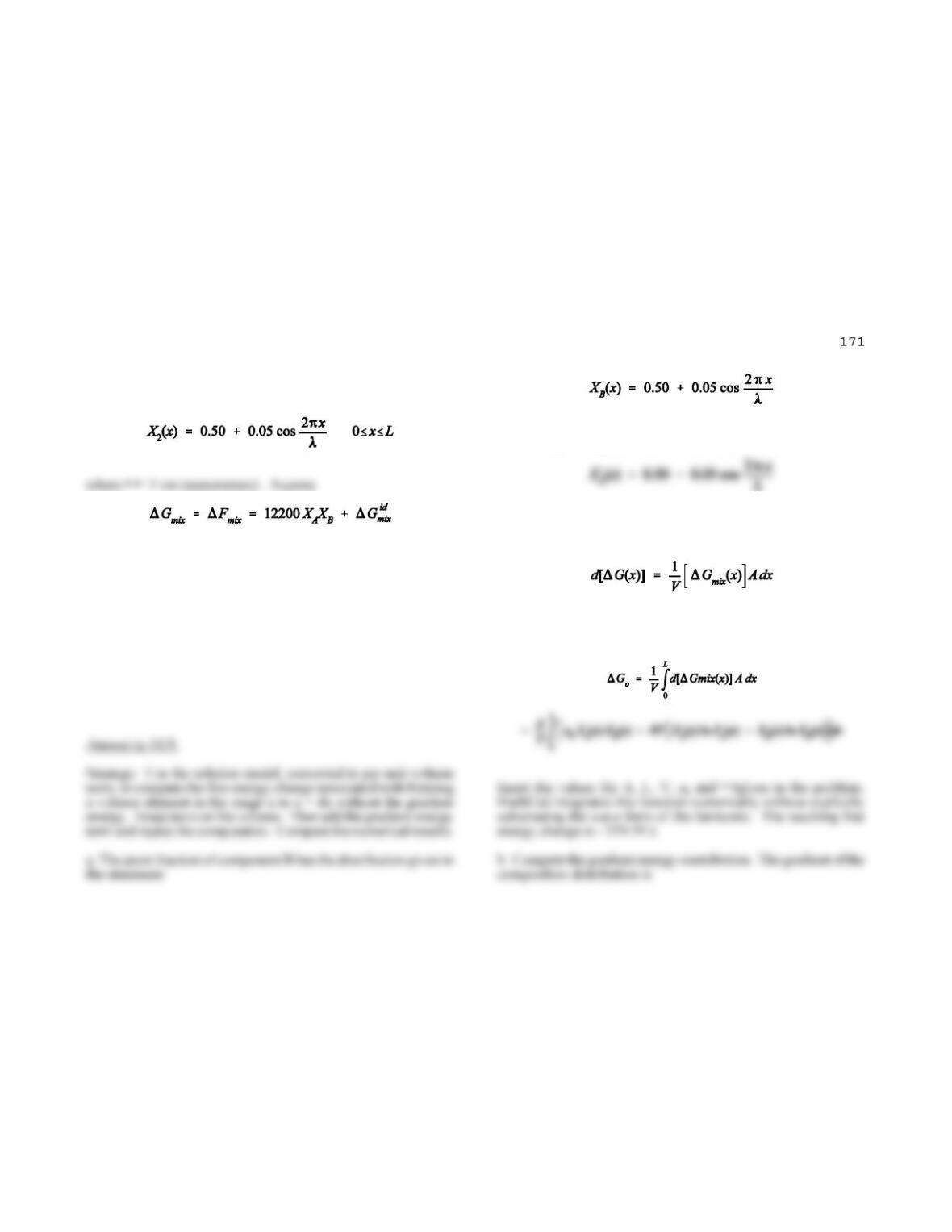
4.8. Develop an expression for the variation of composition with
distance from the surface of a system for a dilute NaCl aqueous
solution given that the electrical potential decays exponentially
from the surface as in Example 14.4.
The variation in chemical potential is then
Chapter 14. External Fields
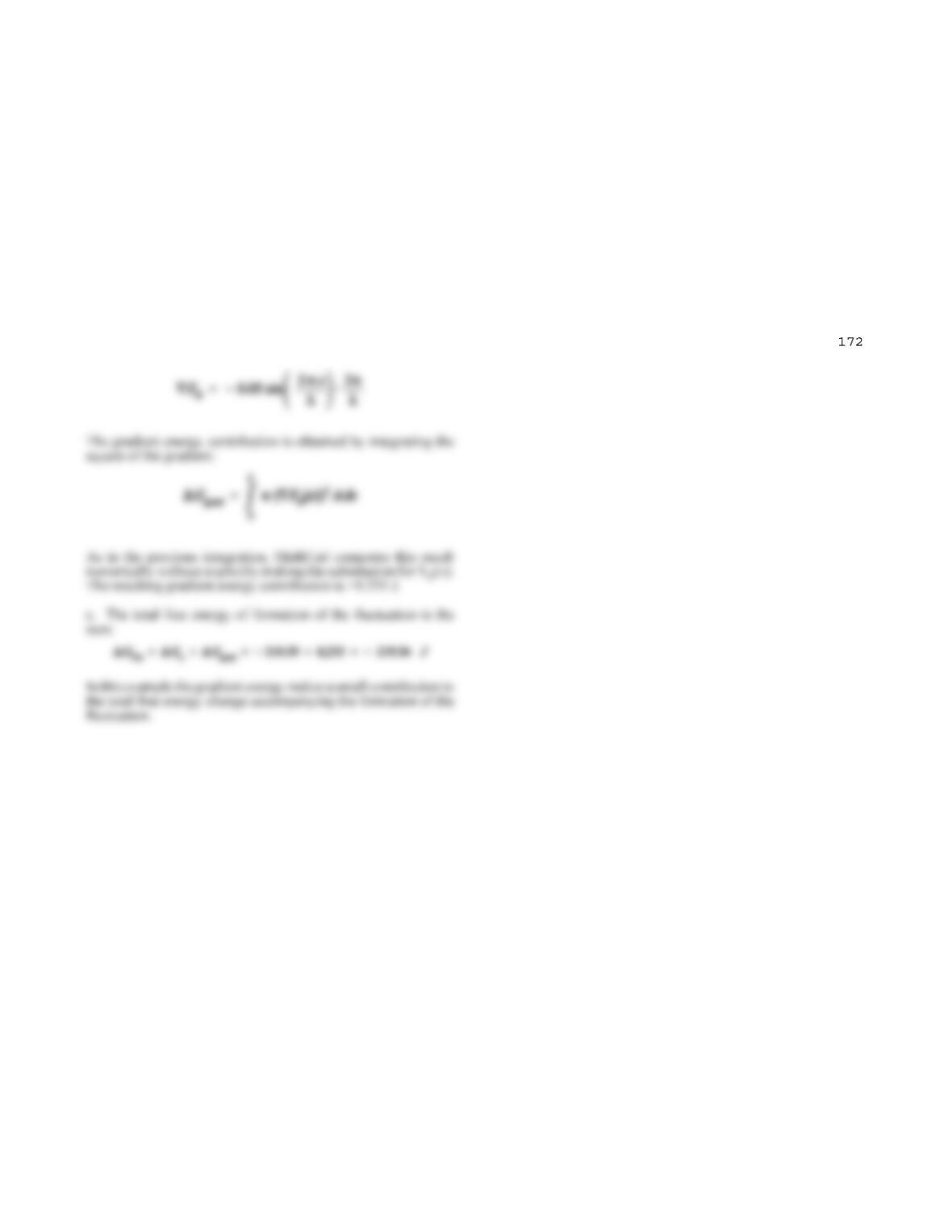
14.9. Consider a nonuniform single phase system in which the
composition varies periodically in one direction:
and V = 7.1 (cc/mole), independent of composition.
a. Calculate the Gibbs free energy of formation of this
periodic system from an initially uniform system for a
cube 1 cm on a side without the gradient energy
contribution.
b. Make the same calculation with the gradient energy
assuming • • = 6X10-11 J/cm.
c. Compare the contribution of the gradient energy to the
total energy of mixing.
The corresponding distribution for component A is
The free energy of mixing of a volume element from x to x + dx
is
Integrate to obtain the free energy of formation of the
composition distribution from the pure components:
Chapter 14. External Fields