Chapter 11. Reacting Systems
11.10. From the Richardson-Ellingham chart, will
a. Aluminum reduce Fe2O3 to iron at 1200oC?
b. An atmosphere with a CO/CO2 ratio of 0.06 oxidize
nickel at 800oC?
c. Silica oxidize liquid zinc at 700oC?
d. Sodium reduce water to oxygen and hydrogen at
500oC?
Answer to 11.10.
ratio 5 X 10⁷, corresponding to about 100 parts per billion of H2O
in nearly pure hydrogen. Thus, if there is measurable water
———–———–———————————–———–
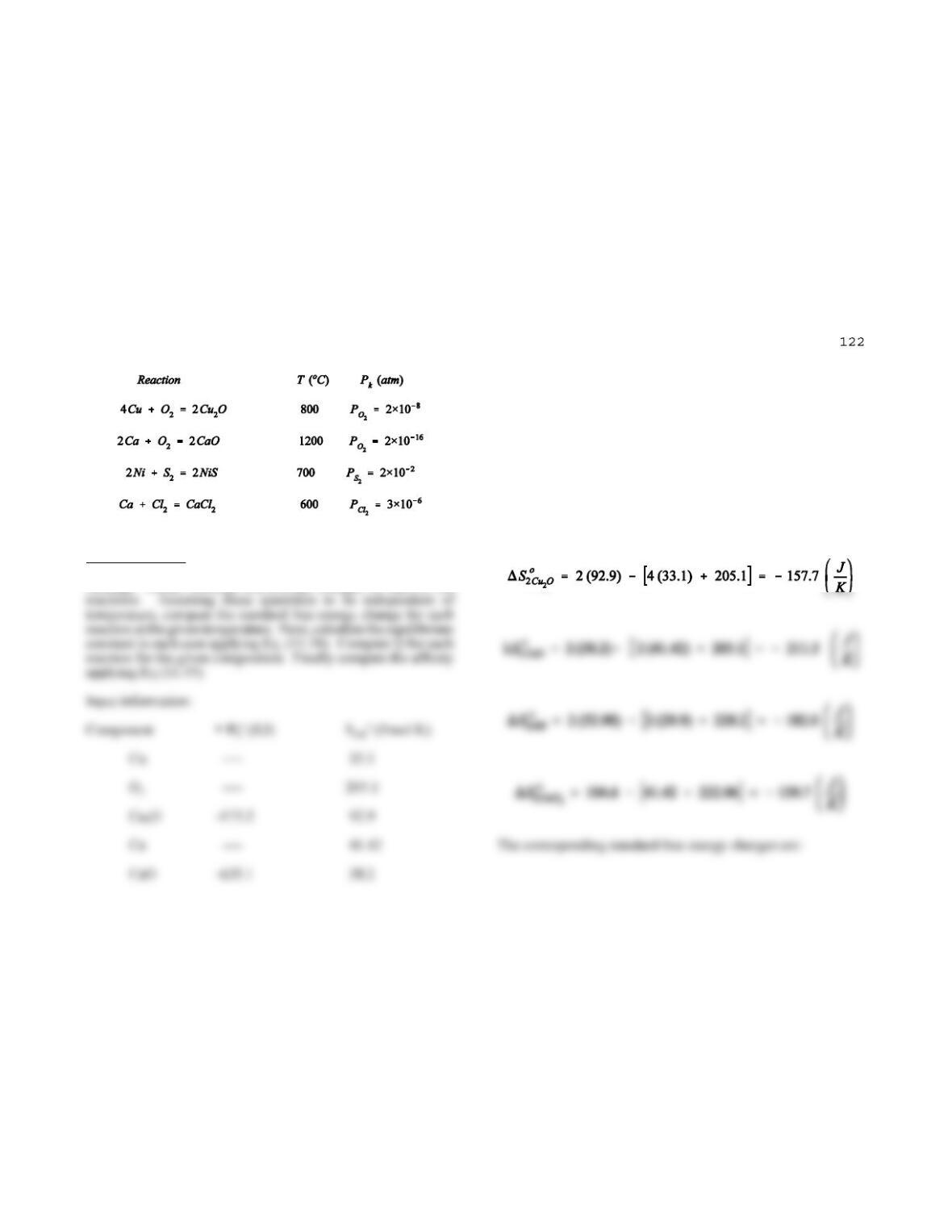
11.11. Compute the affinities for the following reactions under
the following conditions. Assume non-gaseous components are
pure.
Chapter 11. Reacting Systems
Answer to 11.11.
Strategy: Obtain enthalpy and entropy changes for each of the
Ni —- 29.9
S2 —- 228.92
NiS – 87.86 52.95
Cl2 —- 222.96
CaCl2-795.9 104.6
The entropy changes for the reactions are:
Chapter 11. Reacting Systems
Chapter 11. Reacting Systems
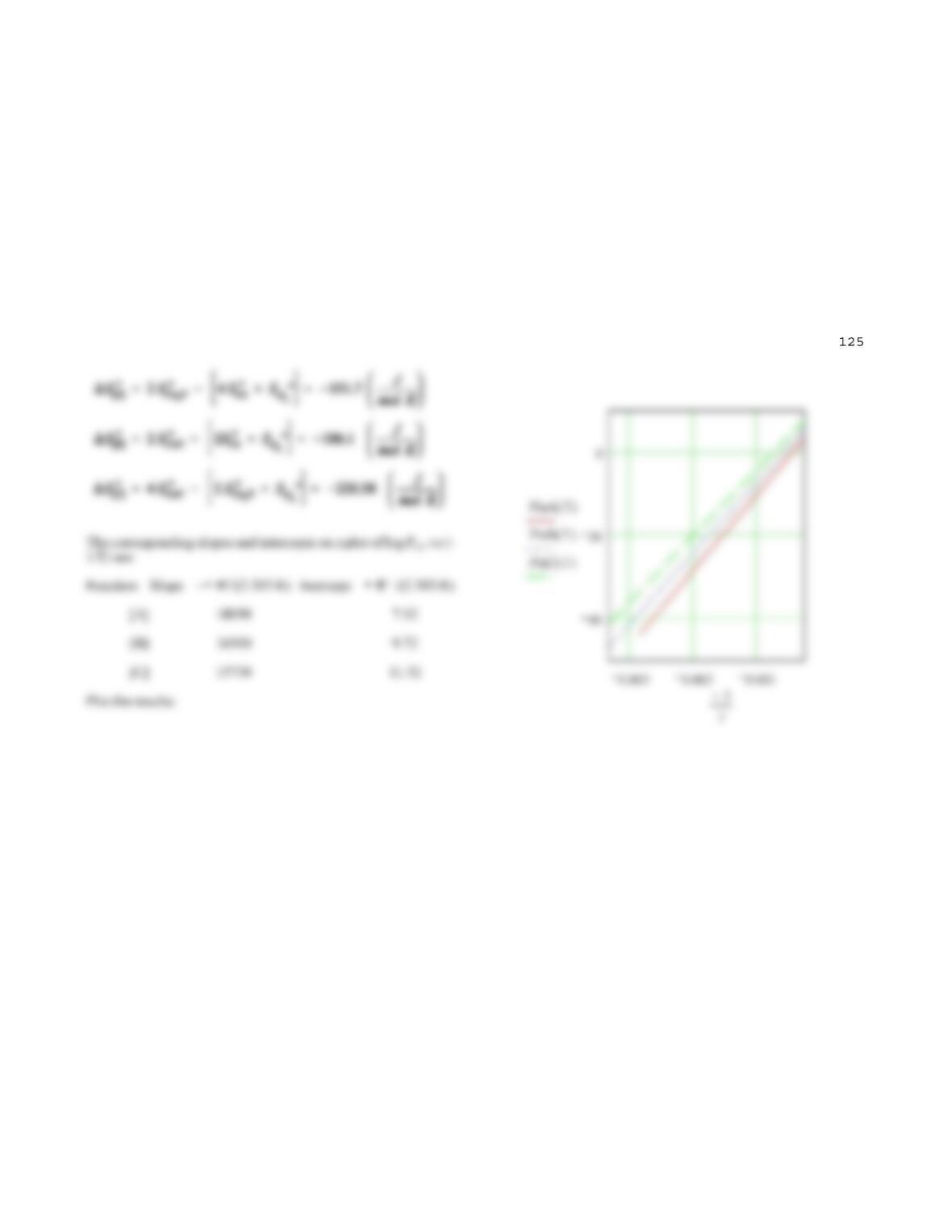
11.12. Compute and plot a Pourbaix high temperature diagram
for copper and its oxides, CuO and Cu2O.
Compute the standard enthalpy and entropy changes for these
reactions:
Chapter 11. Reacting Systems
———–———–———————————–———–
Chapter 11. Reacting Systems
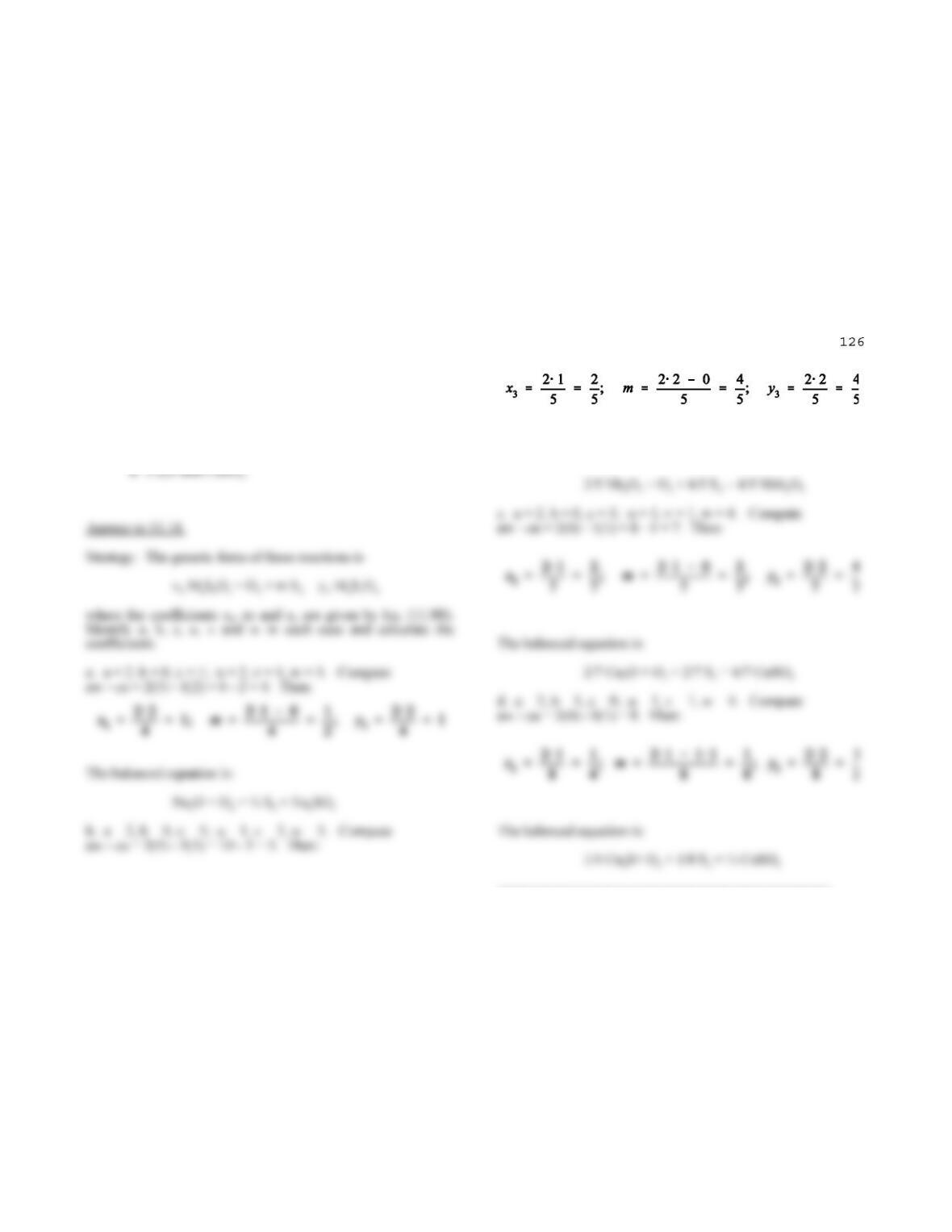
11.14. Write and balance chemical equations relating the
following components:
a. Na2O and Na2SO3.
b. Nb2O5 and NbS2O5.
c. Cu2O and CuSiO4.
The balanced equation is:
———–———–———————————–————
Chapter 11. Reacting Systems
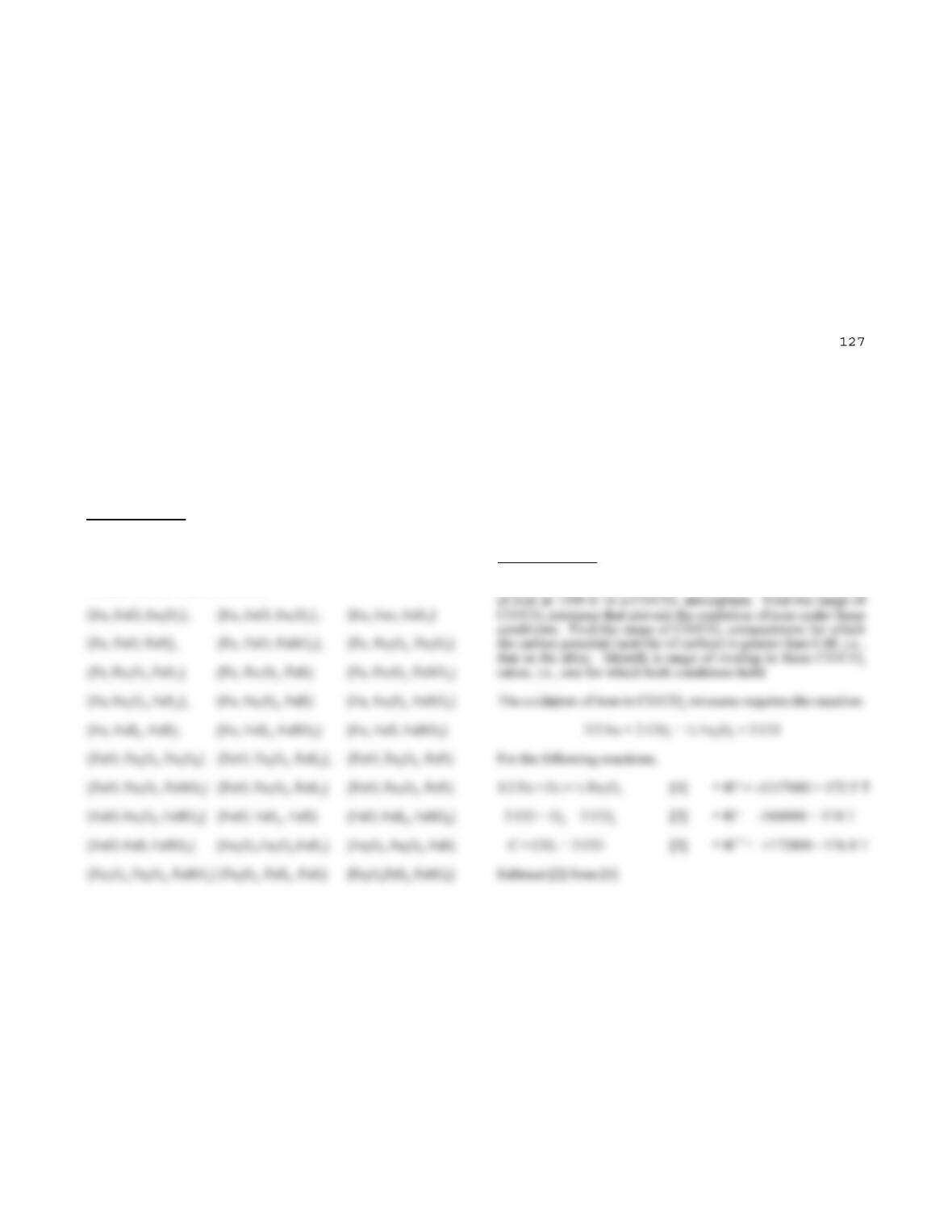
11.15. List the possible triple points that may exist in a log PO2 –
log PS2 predominance diagram involving the following
components:
Fe, FeO, Fe2O3, Fe3O4, FeS2, FeS, FeSO4.
Answer to 11.15.
Strategy: The number potential triple points in the system is
equal tot he number of ways the seven iron containing
components can be arranged three at a time: 7!/[3! 4!] = 35.
Simply list them systematically.
{Fe2O3, FeS, FeSO4} {Fe3O4, FeS2, FeS} {Fe3O4,FeS2, FeSO4}
{Fe3O4, FeS, FeSO4} {FeS2, FeS, FeSO4}
———–———–———————————–————–
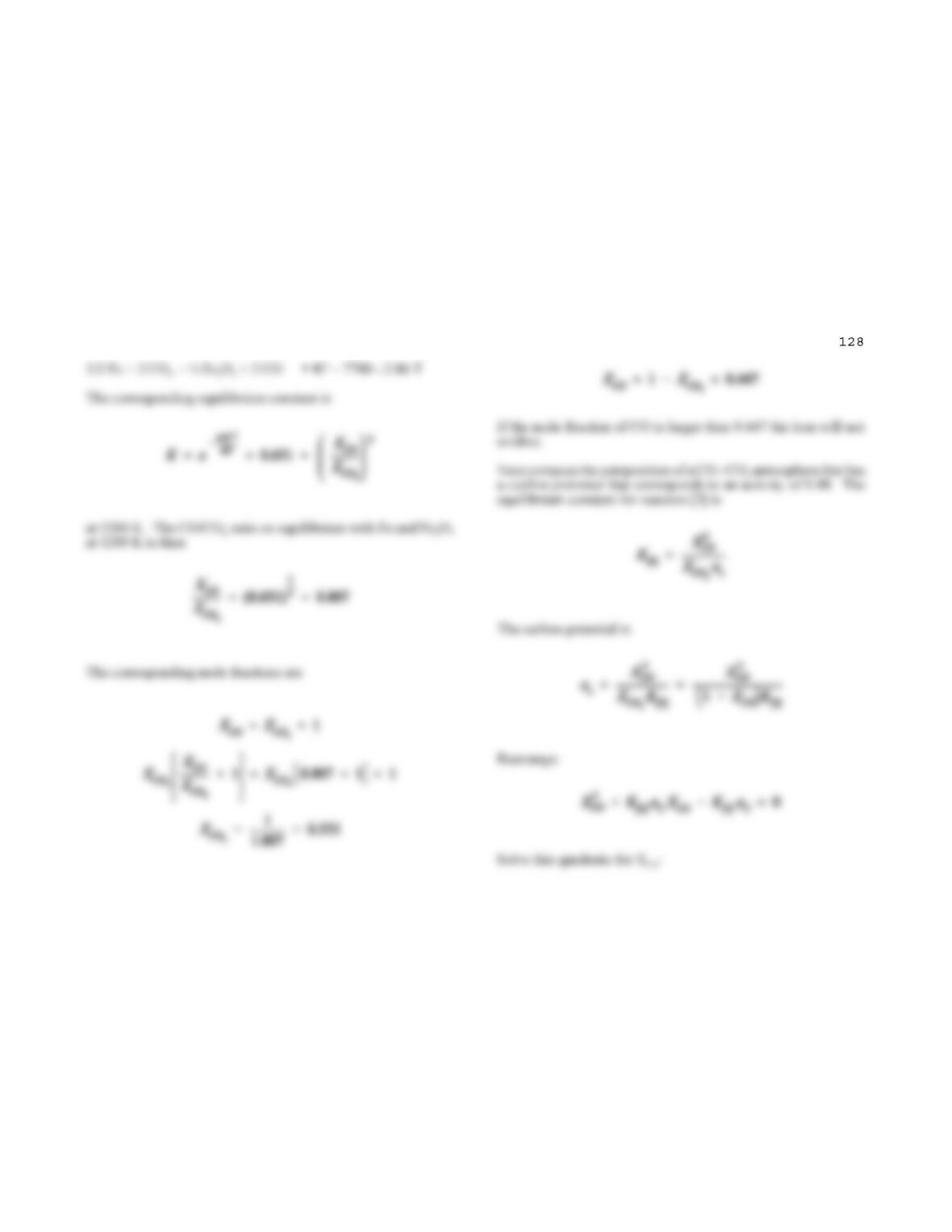
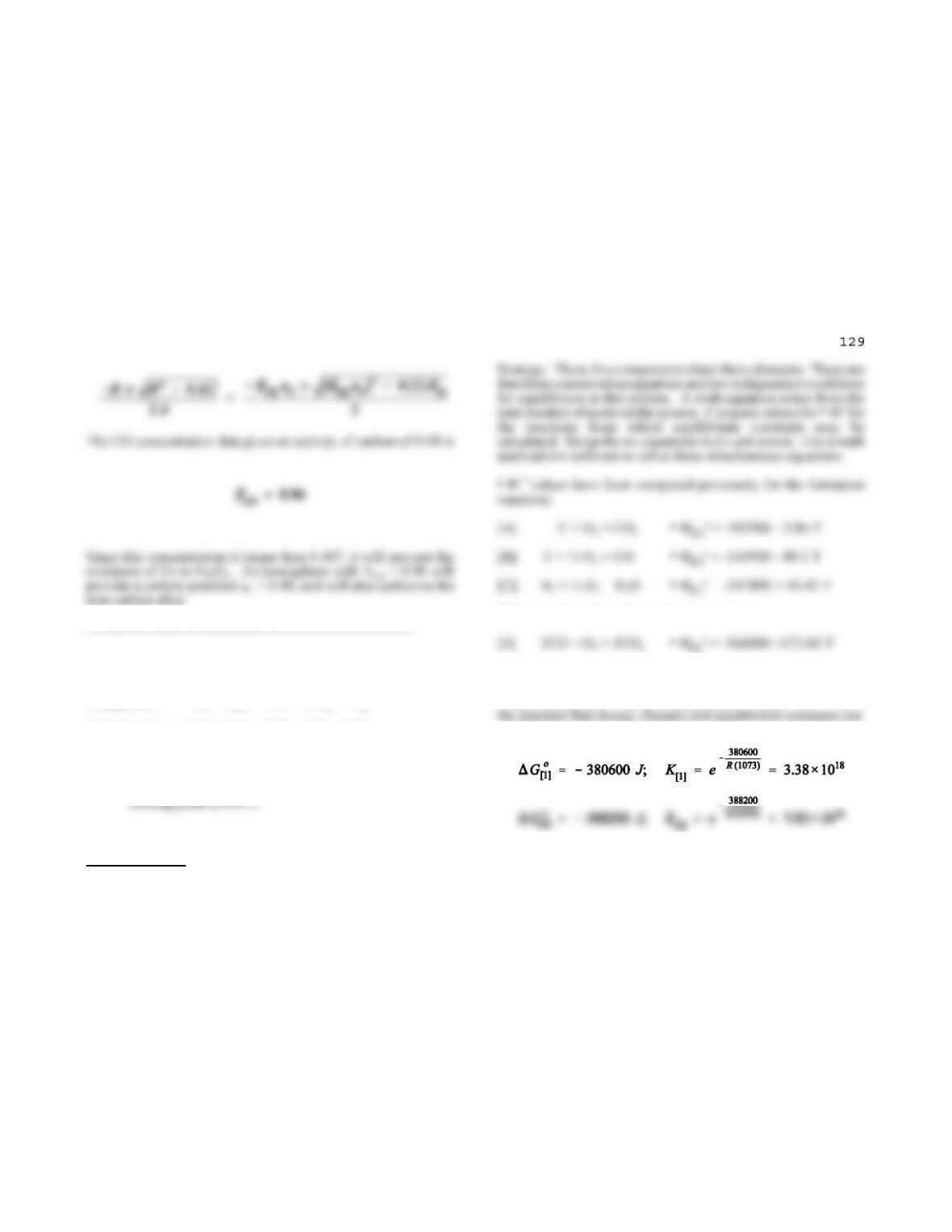
11.16. Can you find a CO/CO2 atmosphere that will both prevent
the oxidation of an iron – carbon alloy with aC = 0.48 at 1200 K,
and, at the same time, carburize it?
Answer to 11.16.
Strategy: Examine the formation of the most stable oxide (Fe3O4)
Chapter 11. Reacting Systems
Chapter 11. Reacting Systems
11.17. Initially the composition of a system is
Component: H2 H2O CO CO2 O2
Mole fraction: 0.40 0.10 0.40 0.08 0.02
a. Find the equilibrium composition for this system at
800oC.
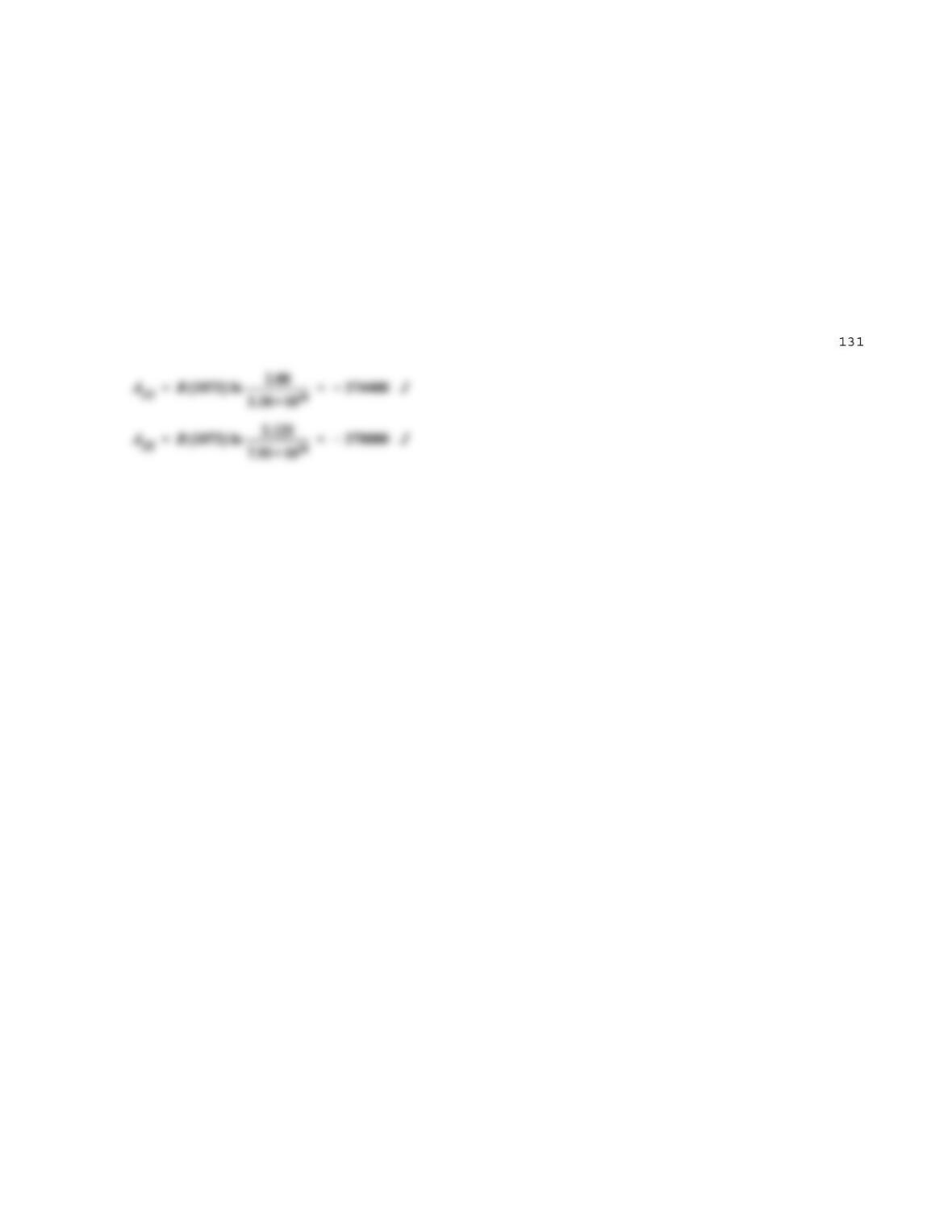
b. Compute the affinities for the reactions from this
Answer to 11.17.
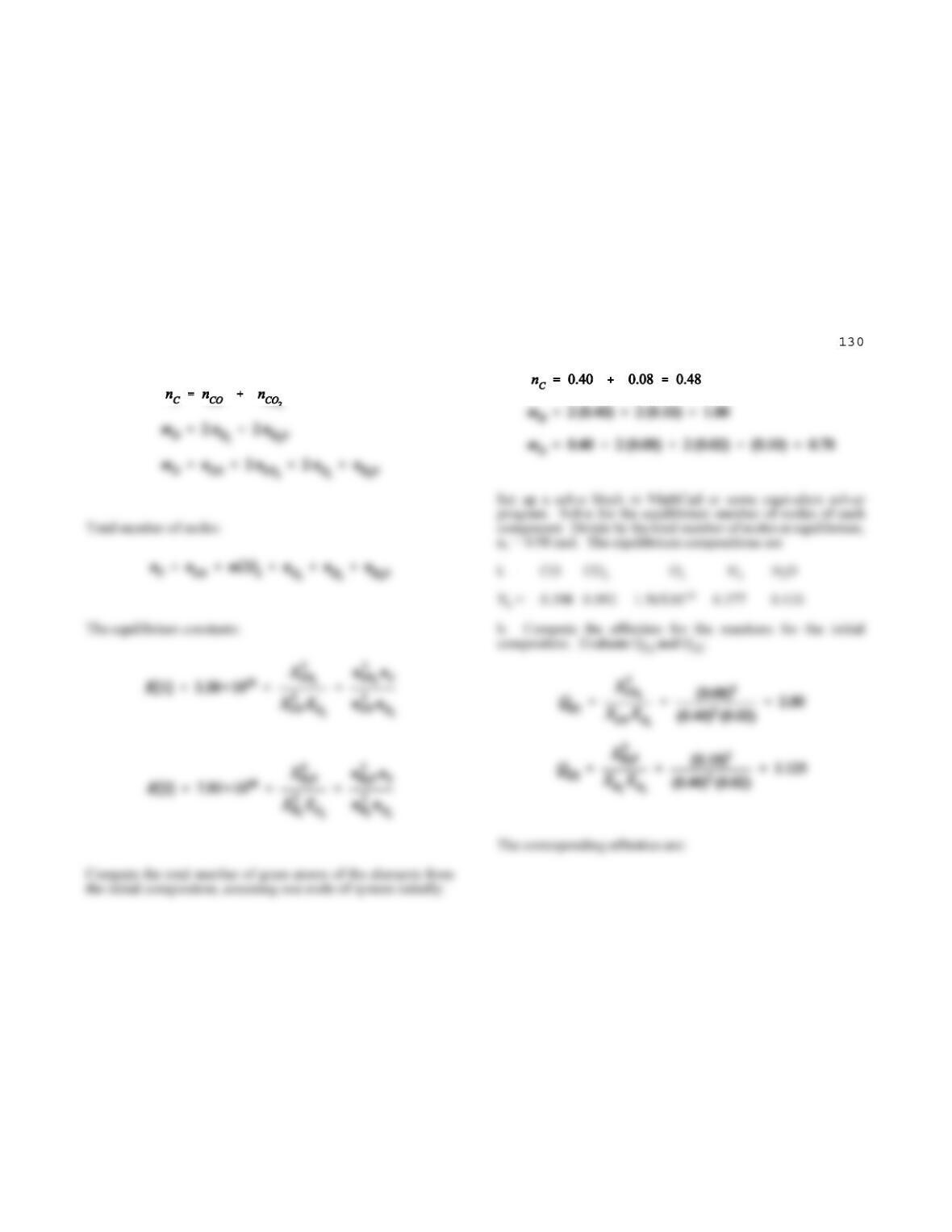
The two independent chemical reactions are:
[2] 2H2 + O2 = 2H2O• •G[2]
o = -483600 + 88.90 T
where reaction [1] = 2 [A] – 2 [C] and [2] = 2 [C]. At T = 1073
Set up the simultaneous equations. The conservation equations:
Chapter 11. Reacting Systems
Chapter 11. Reacting Systems