Guide to Networking Essentials, 8th ed., ISBN 9780357118283
Chapter 6 Solutions-1
Chapter 6 Solutions
Review Questions
1. An IPv6 address is made up of how many bits?
a. 32
c. 64
e. 256
2. The subnet mask of an IP address does which of the following?
a. Provides encryption in a TCP/IP network
c. Allows automated IP address configuration
3. Which of the following is needed if a computer with the IP address 172.31.210.10/24 wants to
communicate with a computer with the IP address 172.31.209.122/24?
a. Hub
d. Server
4. Which of the following is a private IP address and can’t be routed across the Internet?
a. 192.156.90.100
d. 221.24.250.207
e. 12.12.12.12
5. Which command should you use with a dual-homed server to make sure the server sends
packets out the correct interface?
a. ipconfig
b. ping
Guide to Networking Essentials, 8th ed., ISBN 9780357118283
Chapter 6 Solutions-2
6. Which command should you use to configure the primary DNS server on your computer?
a. ipconfig
d. arp
7. Which IP address expressed in CIDR notation has the subnet mask 255.255.255.0?
b. 172.16.88.222/16
d. 172.29.111.201/18
8. Which IP network address expressed in CIDR notation can support a maximum of 1022
hosts?
a. 10.100.44.0/24
c. 192.168.100.64/26
9. The IP address 10.240.0.0/8 can’t be assigned to a host. True or False?
10. What’s the term for each grouping of 8 bits in an IP address?
a. Quartet
b. Quintet
11. When using TCP/IP, which of the following must computers on the same logical network
have in common? (Choose all that apply.)
b. Host ID
d. Computer name
Guide to Networking Essentials, 8th ed., ISBN 9780357118283
Chapter 6 Solutions-3
12. Which of the following IPv6 features is an enhancement to IPv4? (Choose all that apply.)
b. Works at the Internetwork and Transport layers
d. Connectionless communication
13. Which protocol can configure a computer’s IP address and subnet mask automatically?
a. TCP
b. IP
c. ARP
14. How many bits must be reallocated from a host ID to a network ID to create 16 subnets?
a. 6
d. 28
15. For the Class C network address 192.168.10.0, which of the following subnet masks provides
32 subnets?
a. 255.255.255.252
d. 255.255.255.224
16. How many host bits are necessary to assign addresses to 62 hosts?
c. 4
d. 3
17. Which IP addressing process enables workstations to use private IP addresses to access the
Internet?
a. Supernetting
d. Subnetting
18. When a Windows computer is configured to use DHCP but no DHCP server is available,
what type of address is configured automatically for it?
a. PAT
d. Static
19. Which of the following represents a valid IPv6 address?
a. 2001:345:abcd:0:230:44
d. 2001:345:abcd:0:FEED:230:44
20. Which of the following is a reason to subnet? (Choose all that apply.)
b. Subnetting eliminates the need for routers.
d. There’s no need to assign static IP addresses to each computer.
21. Which of the following IP addresses has 12 bits in the host ID?
a. 172.31.21.12/16
c. 12.49.127.88/8
22. You have a server with two NICs, each attached to a different IP network. You’re having
problems communicating with devices on remote networks that send packets to one of the
interfaces. The server receives the packets fine, but the server’s replies never reach the
intended destination network. Replies to packets that come in through the other interface seem
to reach their destination without any problems. What can you do that will most likely solve
Guide to Networking Essentials, 8th ed., ISBN 9780357118283
Chapter 6 Solutions-5
the problem?
a. Configure a second default gateway on the interface exhibiting problems.
b. Change the default gateway to use the router that’s on the network of the interface
exhibiting problems.
23. You have just changed the IP address from 172.31.1.10/24 to 172.31.1.110/24 on a computer
named computer5 in your domain. You were communicating successfully with this computer
from your workstation before you changed the address. Now when you try the command
ping computer5 from your workstation, you don’t get a successful reply. Other
computers on the network aren’t having a problem communicating with the computer. Which
command might help solve the problem?
c. tracert computer5
d. ping -6 172.31.1.110
24. Which address can’t be assigned to a host computer?
c. 192.168.100.66/26
d. 172.29.132.0/18
25. Which IPv6 transition technology can be used with NAT routers and has the address prefix
2001::/32?
c. 6to4
d. IPv6-over-IPv4
26. How many bits are in the interface ID of an IPv6 address?
a. 32
d. 48
27. What address should you ping if you want to test local IPv6 operation but don’t want to
actually send any packets on the network?
a. 1::f
b. 2001::db8
Hands-On Projects
Hands-On Project 6-1
Decimal number
Binary number
167
10100111
149
10010101
252
11111100
128
10000000
64
01000000
240
11110000
255
11111111
14
00001110
15
00001111
63
00111111
188
10111100
224
11100000
Hands-On Project 6-2
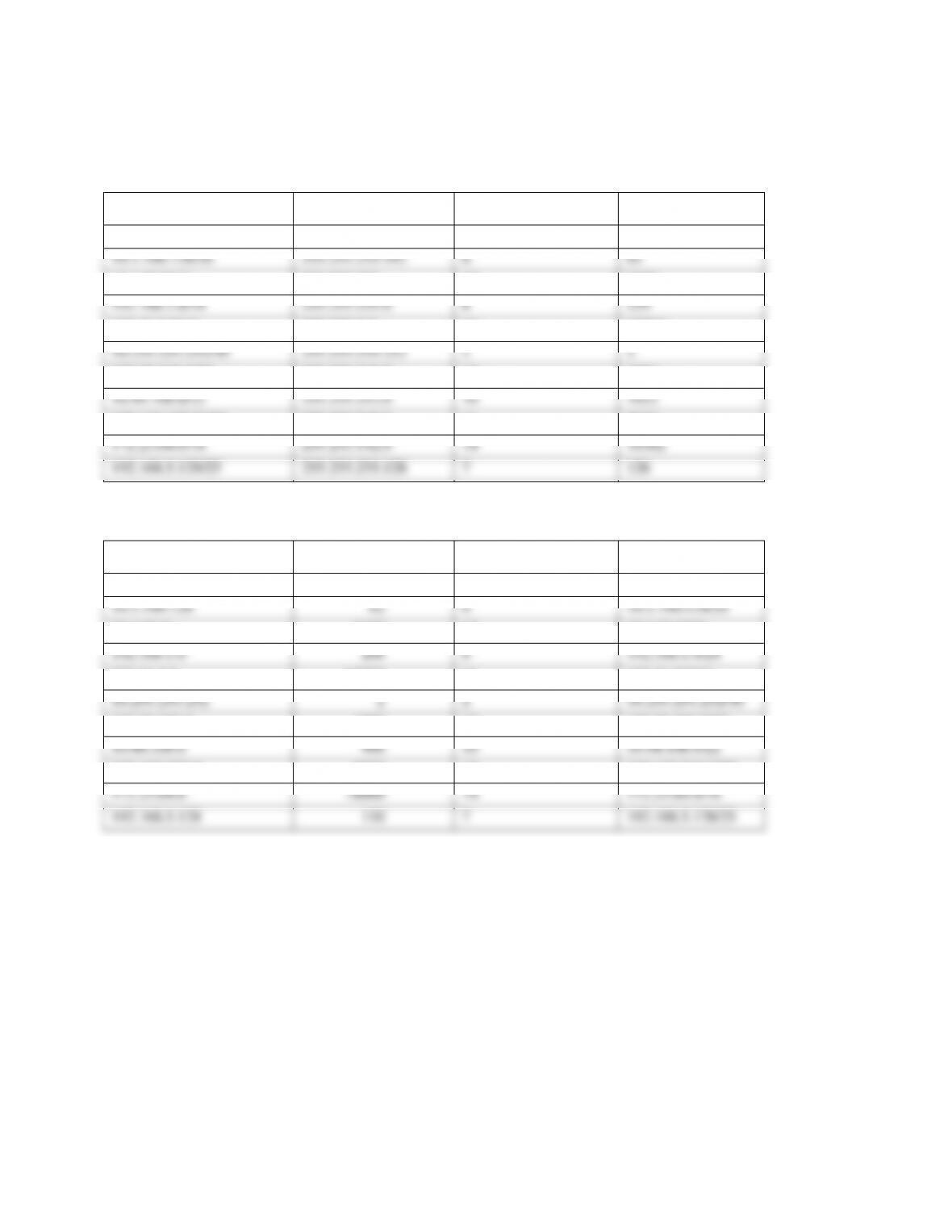
Binary number
Decimal number
00110101
53
11111000
248
00011111
31
10101010
170
01010101
85
11111110
254
11111100
252
00111011
59
11001100
204
00110011
51
00000111
7
00111100
60
Guide to Networking Essentials, 8th ed., ISBN 9780357118283
Chapter 6 Solutions-7
Hands-On Project 6-3
Network/prefix
Subnet mask
Host bits
Number of hosts
172.16.1.0/24
255.255.255.0
8
254
10.1.100.128/26
255.255.255.192
6
62
10.1.96.0/19
255.255.224
13
8190
192.168.1.0/24
255.255.255.0
8
254
172.31.0.0/16
255.255.0.0
16
65534
10.255.255.252/30
255.255.255.252
2
2
172.28.240.0/20
255.255.240.0
12
4094
10.44.108.0/22
255.255.252.0
10
1022
192.168.100.24/21
255.255.248.0
11
2046
172.23.64.0/18
255.255.192.0
14
16382
192.168.5.128/25
255.255.255.128
7
126
Hands-On Project 6-4
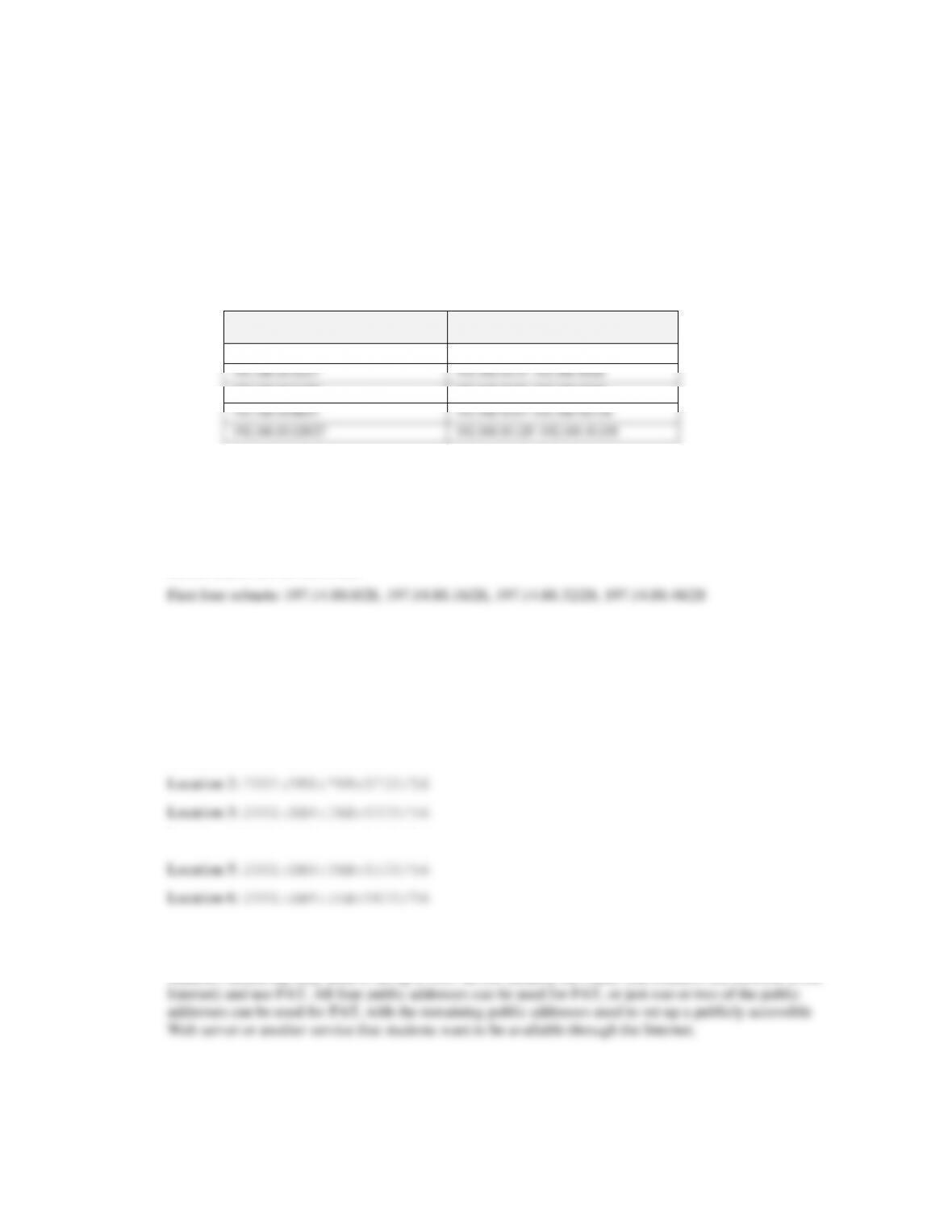
Network ID
Required hosts
Host bits needed
Network ID/prefix
172.16.1.0
254
8
172.16.1.0/24
10.1.100.128
62
6
10.1.100.128/26
10.1.96.0
8190
13
10.1.96.0/19
192.168.1.0
200
8
192.168.1.0/24
172.31.0.0
65000
16
172.31.0.0/16
10.255.255.252
2
2
10.255.255.252/30
172.28.240.0
4000
12
172.28.240.0/20
10.44.108.0
900
10
10.44.108.0/22
192.168.240.0
2200
12
192.168.240.0/20
172.23.64.0
16000
14
172.23.64.0/18
192.168.5.128
110
7
192.168.5.128/25
Guide to Networking Essentials, 8th ed., ISBN 9780357118283
Chapter 6 Solutions-8
Challenge Labs
Challenge Lab 6-1
• Number of subnets needed: 5
• Subnet mask: 255.255.255.224
• Number of subnets created: 8
Network number in CIDR
Host address range
192.168.10.0/27
192.168.10.1–192.168.10.30
192.168.10.32/27
192.168.10.33–192.168.10.62
192.168.10.64/27
192.168.10.65–192.168.10.94
192.168.10.96/27
192.168.10.97–192.168.10.126
192.168.10.128/27
192.168.10.129–192.168.10.158
Case Projects
Case Project 6-1
Subnet mask: 255.255.255.240
Case Project 6-2
Answers will vary. In this sample answer, each location has the first 56 bits assigned. Students create up to
256 subnets because they have 8 bits they can use to create subnets. For example, Location 1 can have
subnets 2001:DB8:FAB:0100, 2001:DB8:FAB:0101, 2001:DB8:FAB:0102, and so forth, up to
2001:DB8:FAB:01FF.
Location 1: 2001:DB8:FAB:0100/56
Location 4: 2001:DB8:FAB:0400/56
Case Project 6-3
Students should say they need to set up a NAT device (usually the router that connects the network to the