Chapter 5. Review Questions.
1. Per-router control means that a routing algorithm runs in each and every router; both
forwarding and routing function are constrained within each router. Each router has a
2. Logically centralized control means that a logically central routing controller
computes and distributes the forwarding tables to be used by each and every router,
3. A centralized routing algorithm computes the least-cost path between a source and
destination by using complete, global knowledge about the network. The algorithm
needs to have the complete knowledge of the connectivity between all nodes and all
links costs. The actual calculation can be run at one site or could be replicated in the
4. Link state algorithms: Computes the least-cost path between source and destination
using complete, global knowledge about the network. Distance-vector routing: The
5. The count-to-infinity problem refers to a problem of distance vector routing. The
problem means that it takes a long time for a distance vector routing algorithm to
converge when there is a link cost increase. For example, consider a network of three
6. No. Each AS has administrative autonomy for routing within an AS.
7. Policy: Among ASs, policy issues dominate. It may well be important that traffic
originating in a given AS not be able to pass through another specific AS. Similarly, a
given AS may want to control what transit traffic it carries between other ASs. Within
an AS, everything is nominally under the same administrative control and thus policy
8. False.
With OSPF, a router broadcasts its link-state information to all other routers in the
9. An area in an OSPF autonomous system is refers to a set of routers, in which each
router broadcasts its link state to all other routers in the same set. An OSPF AS can be
10. A subnet is a portion of a larger network; a subnet does not contain a router; its
boundaries are defined by the router and host interfaces. A prefix is the network
11. Routers use the AS-PATH attribute to detect and prevent looping advertisements;
they also use it in choosing among multiple paths to the same prefix. The NEXT–
12. A tier-1 ISP B may not to carry transit traffic between two other tier-1 ISPs, say A
13. False.
A BGP router can choose not to add its own identity to the received path and then
14. The communication layer is responsible for the communication between the SDN
controller and those controlled network devices, via a protocol such as OpenFlow.
Through this layer, an SDN controller controls the operation of a remote SDN-
enabled switch, host, or other devices, and a device communicates locally-observed
15. I would implement a new routing protocol at the SDN network-control application
16.
southbound from the controller to the controlled devices. The recipient of these
messages is a controlled packet switch.
Configuration. This message allows the controller to query and set a swit
17. Two types of messages from a controlled device to a controller:
Flow-removed message. Its purpose is to inform the controller that a flow table
entry has been removed, for example, by a timeout or as the result of a received
18. The service abstraction layer allows internal network service applications to
communicate with each other. It allows controller components and applications to
19. Echo reply (to ping), type 0, code 0
20.
21.
A managing server is an application, typically with a human in the loop, running in a
centralized network management station in a network operation center. It controls the
collection, processing, analysis, and/or display of network management information.
22.
GetRequest is a message sent from a managing server to an agent to request the value of
23.
A SNMP trap message is generated as a response to an event happened on a managed
Chapter 5. Problems.
Problem 1
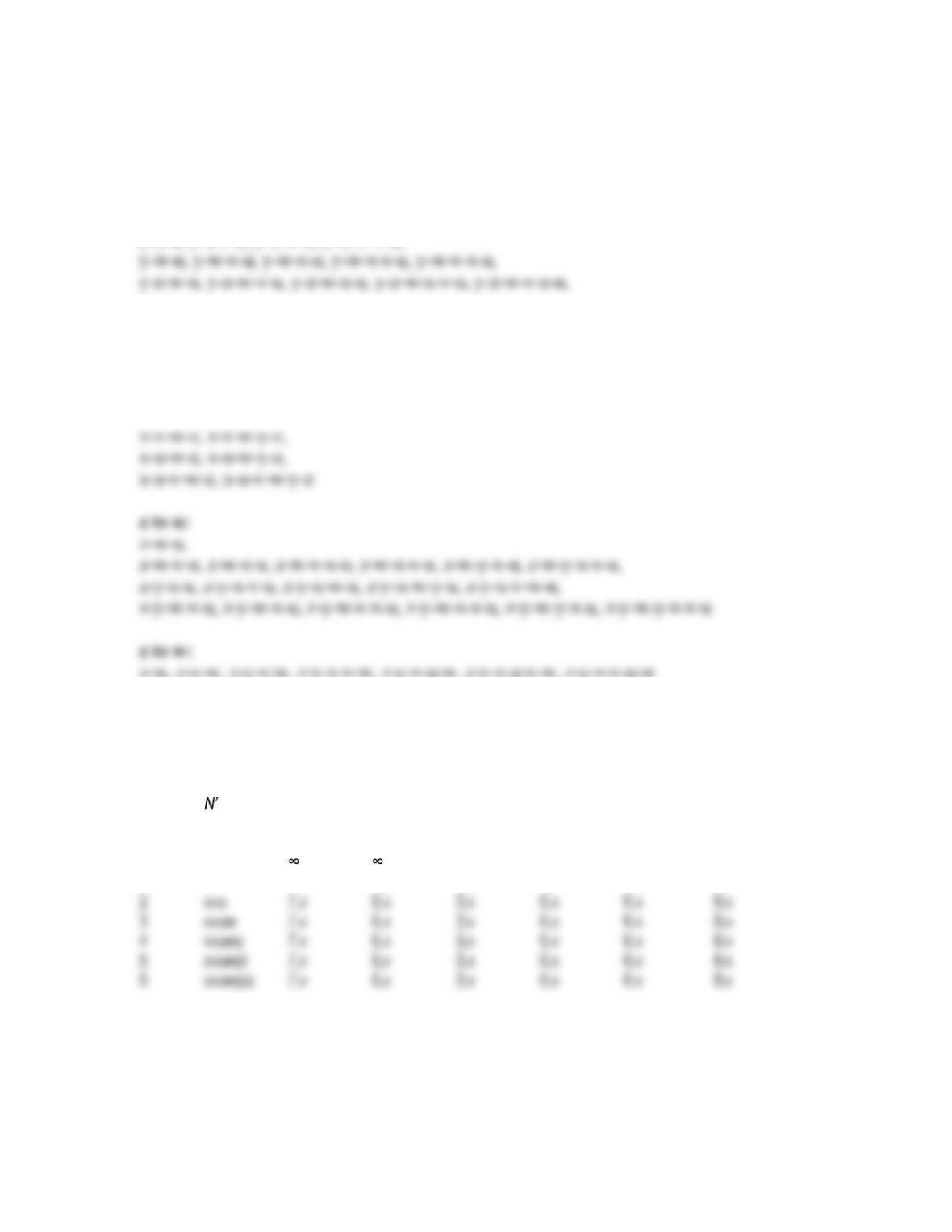
y-x-u, y-x-v-u, y-x-w-u, y-x-w-v-u,
Problem 2
x to z:
x-y-z, x-y-w-z,
x-w-z, x-w-y-z,
Problem 3
Step
D(t),p(t) D(u),p(u) D(v),p(v) D(w),p(w) D(y),p(y) D(z),p(z)
0 x 3,x 6,x 6,x 8,x
1 xv 7,v 6,v 3,x 6,x 6,x 8,x
Problem 4
a)
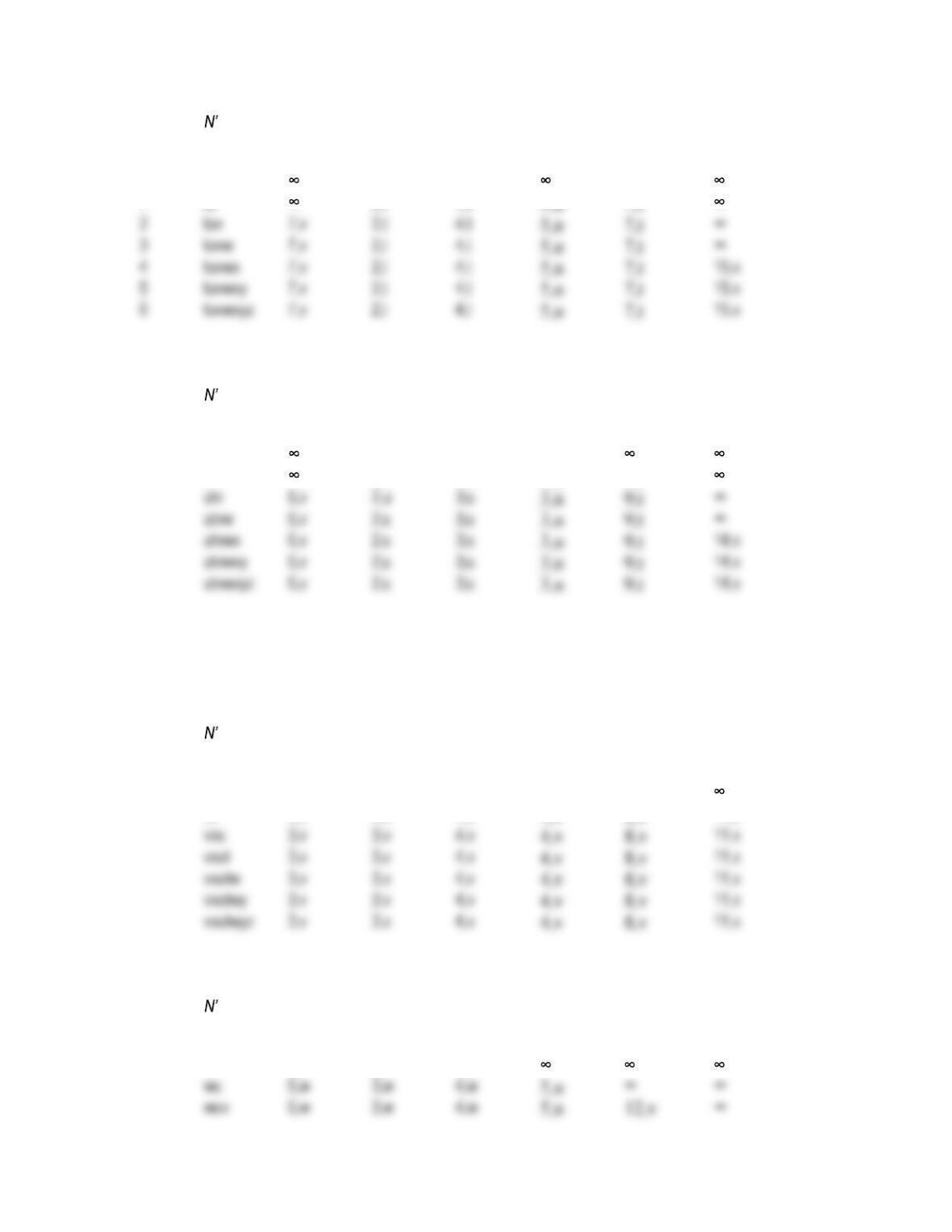
Step
D(x), p(x) D(u),p(u) D(v),p(v) D(w),p(w) D(y),p(y) D(z),p(z)
0 t 2,t 4,t
7,t
1 tu 2,t 4,t 5,u 7,t
b)
Step
D(x), p(x) D(t),p(t) D(v),p(v) D(w),p(w) D(y),p(y) D(z),p(z)
u 2,u 3,u 3,u
ut 2,u 3,u 3,u 9,t
c)
Step
D(x), p(x) D(u),p(u) D(t),pt) D(w),p(w) D(y),p(y) D(z),p(z)
v 3,v 3,v 4,v
4,v
8,v
vx 3,v 3,v 4,v
4,v
8,v
11,x
4,v
8,v
4,v
8,v
4,v
8,v
4,v
8,v
d)
Step
D(x), p(x) D(u),p(u) D(v),p(v) D(t),p(t) D(y),p(y) D(z),p(z)
w 6,w 3,w 4,w
5,u
5,u
12,v
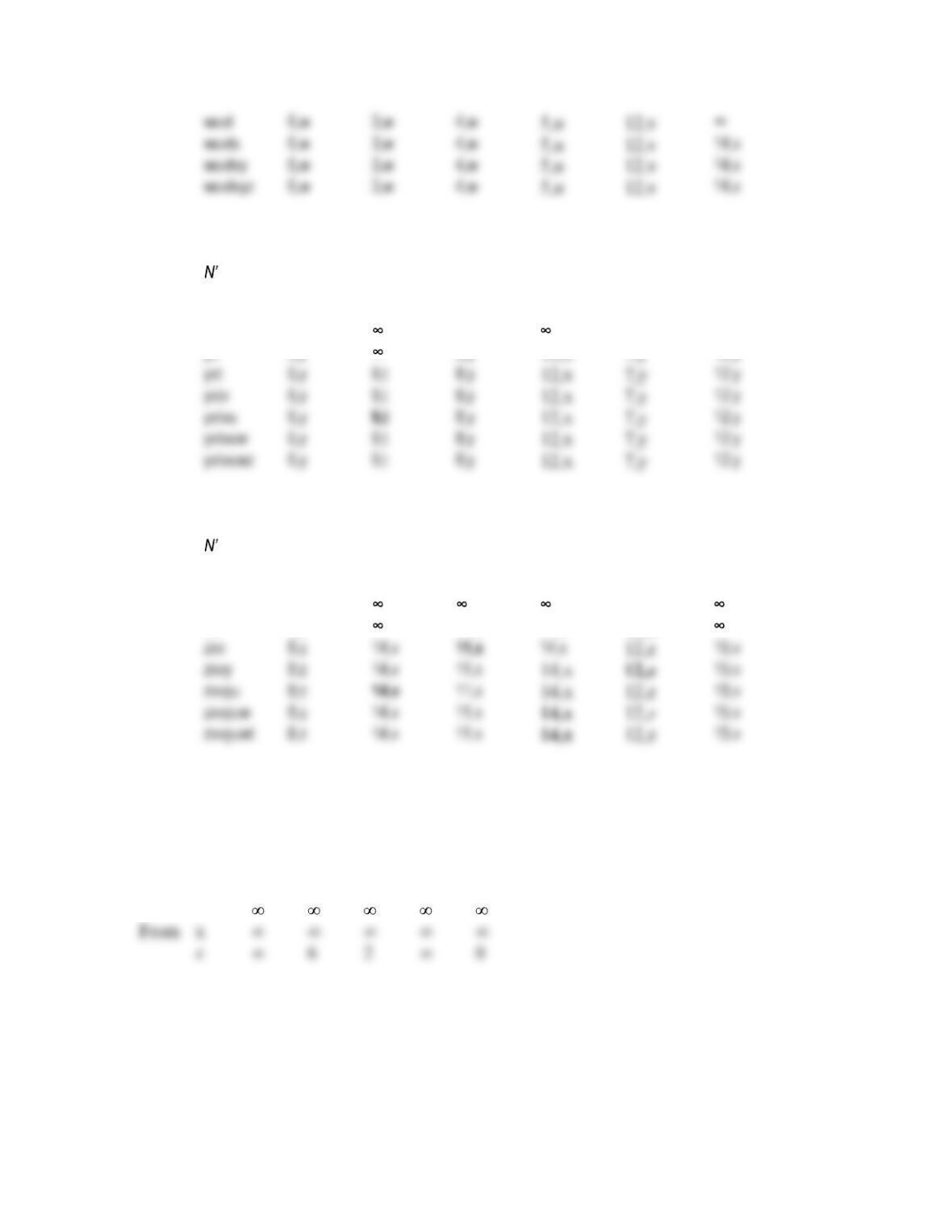
e)
Step
D(x), p(x) D(u),p(u) D(v),p(v) D(w),p(w) D(t),p(t) D(z),p(z)
y 6,y 8,y 7,y 12,y
yx 6,y 8,y 12,x 7,y 12,y
f)
Step
D(x), p(x) D(u),p(u) D(v),p(v) D(w),p(w) D(y),p(y) D(t),p(t)
z 8,z 12,z
zx 8,z 11,x 14,x 12,z
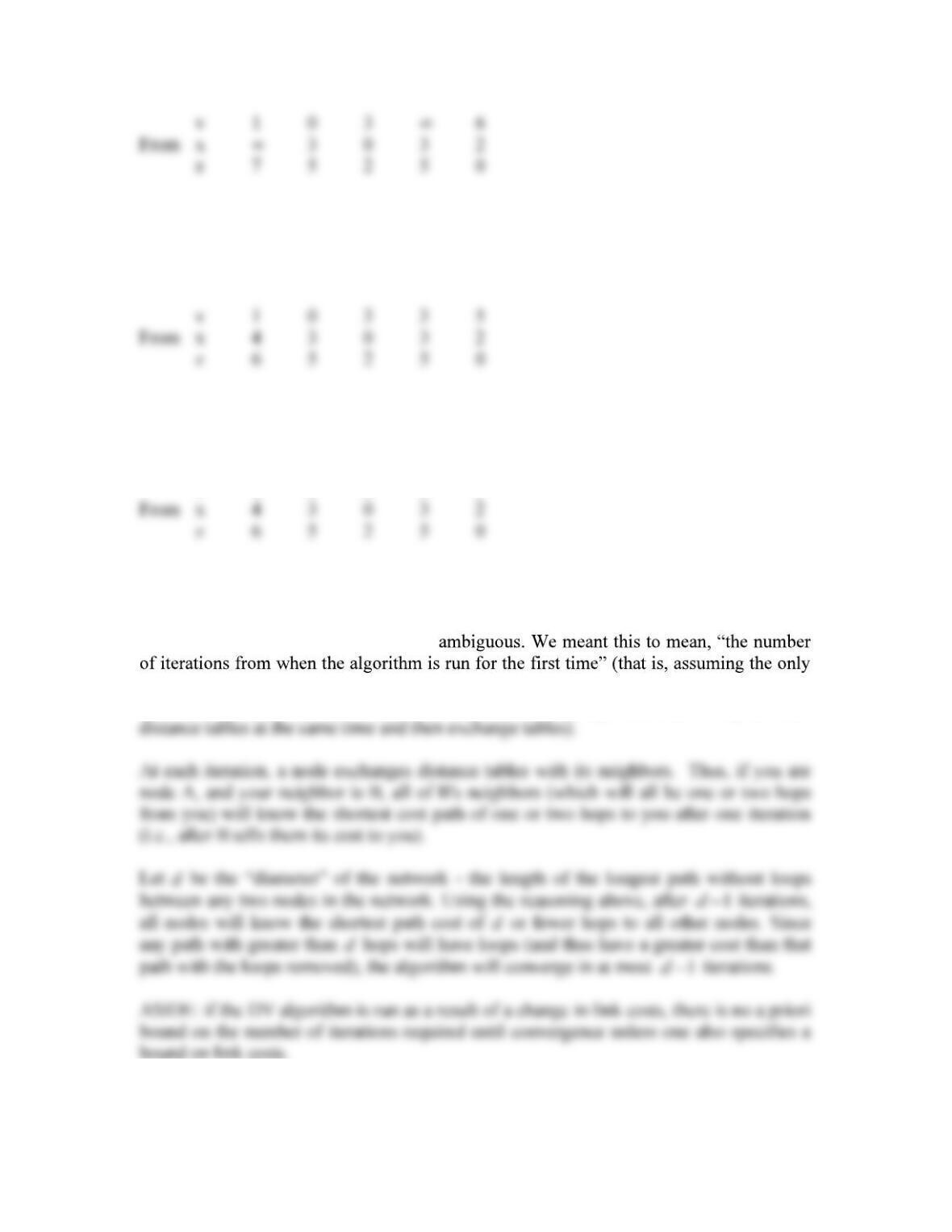
Problem 5
Cost to
u v x y z
v
Cost to
u v x y z
Cost to
u v x y z
Cost to
u v x y z
v 1 0 3 3 5
Problem 6
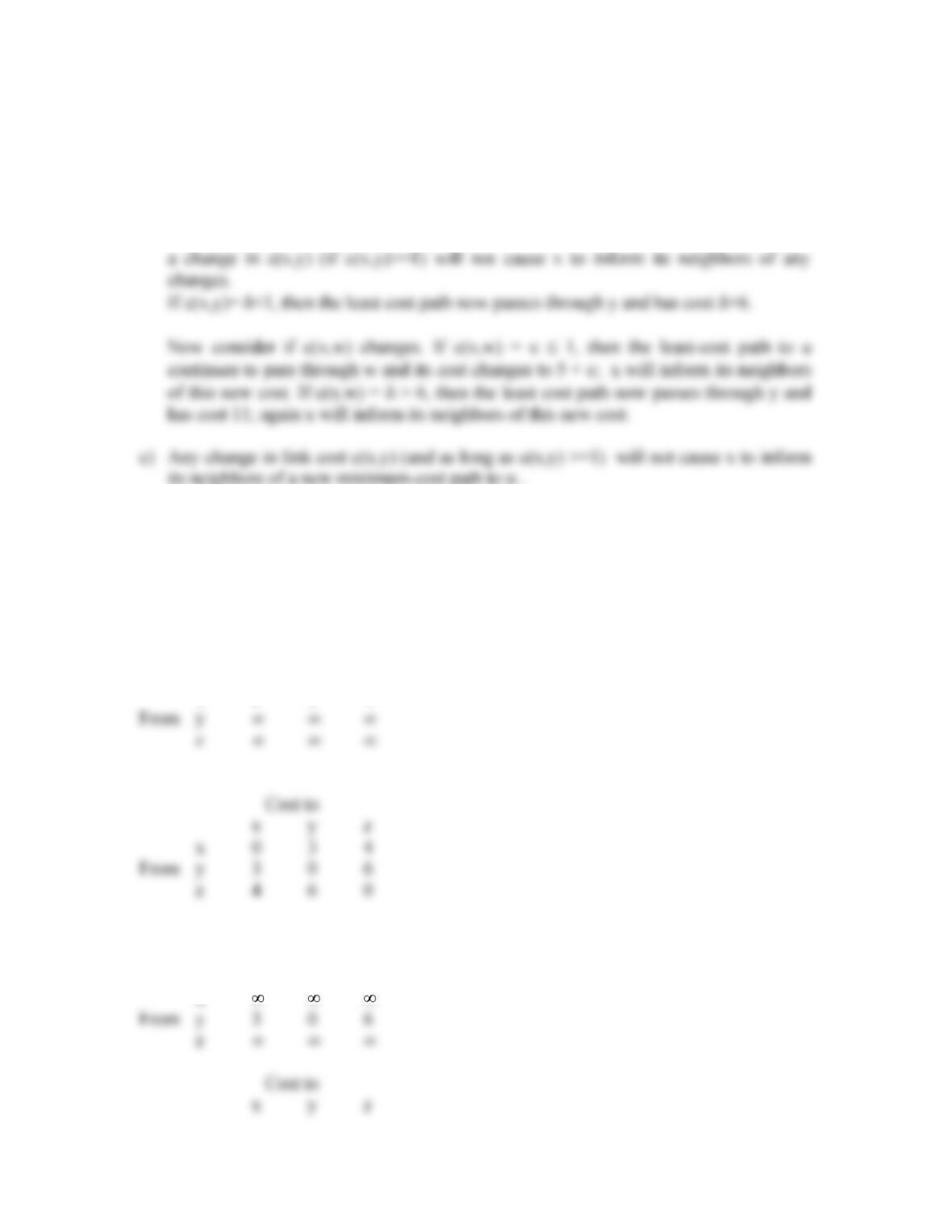
The wording of this question was a bit
information the nodes initially have is the cost to their nearest neighbors). We assume
that the algorithm runs synchronously (that is, in one step, all nodes compute their
Problem 7
a) Dx(w) = 2, Dx(y) = 4, Dx(u) = 7
b) First consider what happens if c(x,y) changes. If c(x,y) becomes larger or smaller (as
long as c(x,y) >=1) , the least cost path from x to u will still have cost at least 7. Thus
Problem 8
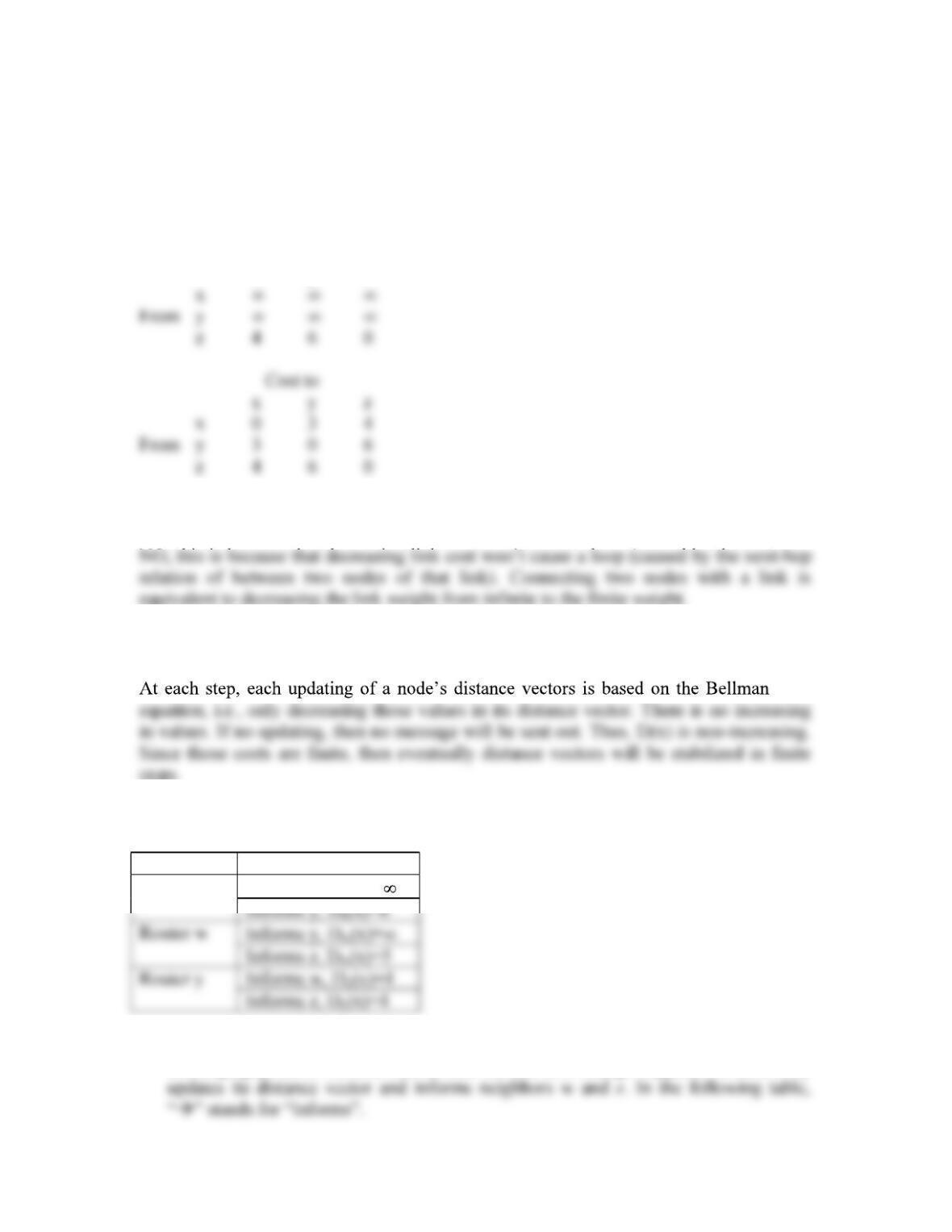
Node x table
Cost to
x y z
x 0 3 4
Node y table
Cost to
x y z
x
x 0 3 4
From y 3 0 6
z 4 6 0
Node z table
Cost to
x y z
Problem 9
Problem 10
-Ford
Problem 11
a)
Router z
Informs w, D
z
(x)=
Informs y, D
(x)=6
Informs y, D
(x)=
Informs z, D
(x)=5
Router y
Informs w, D
(x)=4
b) Yes, there will be a count-to-infinity problem. The following table shows the routing
converging process. Assume that at time t0, link cost change happens. At time t1, y
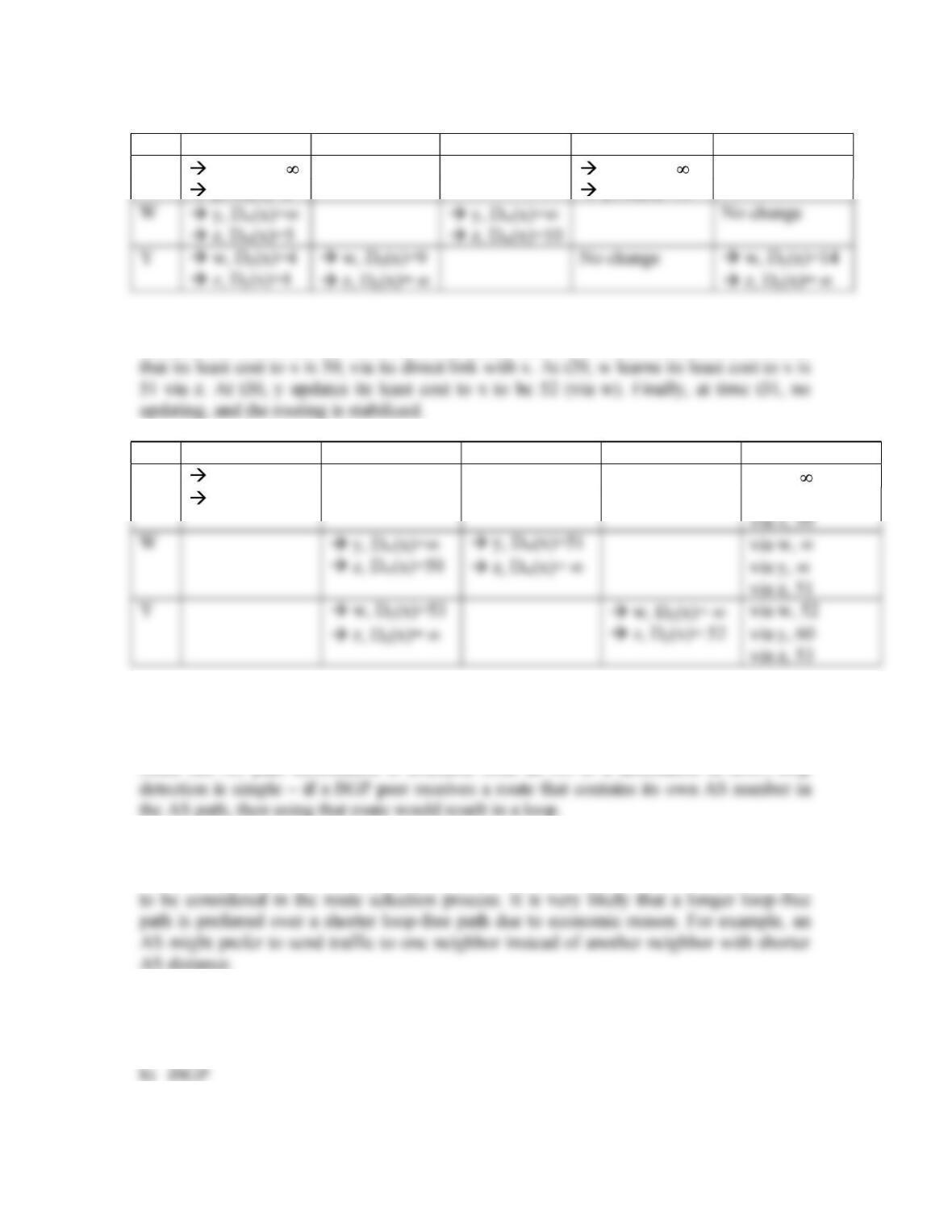
time
t0 t1 t2 t3 t4
Z w, Dz(x)= No change w, Dz(x)=
y, Dz(x)=6 y, Dz(x)=11
We see that w, y, z form a loop in their computation of the costs to router x. If we
continue the iterations shown in the above table, then we will see that, at t27, z detects
time
t27 t28 t29 t30 t31
Z w, Dz(x)=50 via w,
y, Dz(x)=50 via y, 55
c) cut the link between y and z.
Problem 12
Since full AS path information is available from an AS to a destination in BGP, loop
the AS path, then using that route would result in a loop.
Problem 13
The chosen path is not necessarily the shortest AS-path. Recall that there are many issues
Problem 14
a) eBGP
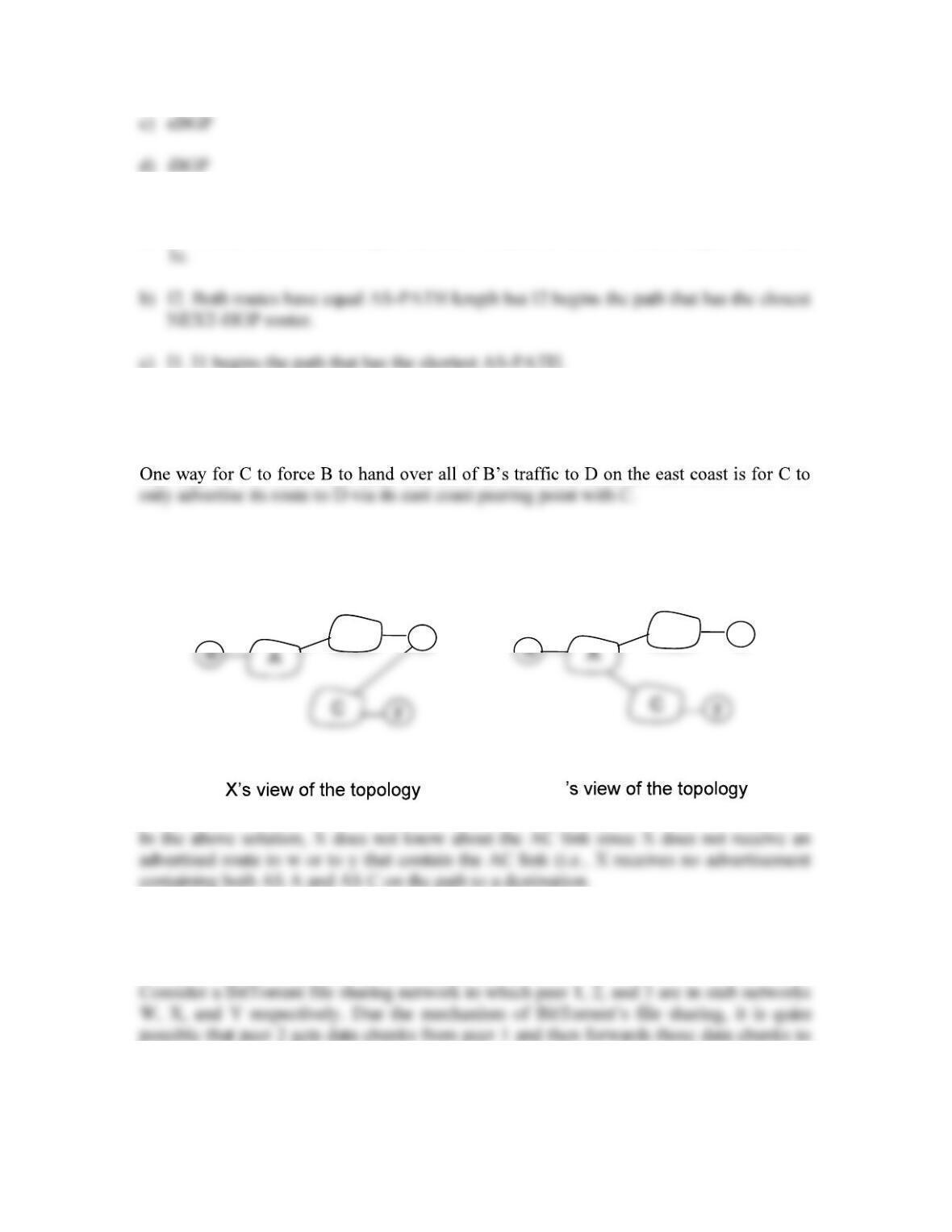
Problem 15
a) I1 because this interface begins the least cost path from 1d towards the gateway router
Problem 16
Problem 17
Problem 18
BitTorrent file sharing and Skype P2P applications.
3. This is equivalent to B forwarding data that is finally destined to stub network Y.
B
x
B
x
W
Problem 19
Problem 20
Since Z wants to transit Y’s traffic, Z will send route advertisements to Y. In this manner,
Problem 21
Request response mode will generally have more overhead (measured in terms of the
number of messages exchanged) for several reasons. First, each piece of information
received by the manager requires two messages: the poll and the response. Trapping
Problem 22
Often, the time when network management is most needed is in times of stress, when the