
Guide to Networking Essentials, 8th ed., ISBN 9780357118283
Chapter 13 Solutions-1
Chapter 13 Solutions
Review Questions
1. Which of the following best describes the Internet of Things?
b. A microprocessor with a network connection
d. The conversion of analog data to digital data
2. Which of the following is an example of an IoT device?
b. A fluorescent light
d. An analog phone
3. Which of the following is an IoT device used by utility companies that makes reading energy
usage more efficient?
a. Amazon Echo
d. CO2 detector
4. Which type of sensor is most likely to be used in seismology applications?
a. Microphone
b. LDR
5. Which type of sensor changes electrical resistance depending on the amount of light detected?
a. Proximity sensor
d. PIR
6. Which type of sensor detects and measures changes in velocity and directional movement?
c. Gyroscope
d. Biometric sensor
7. Which device would you use to detect wildlife in your garden?
a. Accelerometer
d. Hydrophone
8. What category of sensor is a first responder likely to use to determine the oxygen level in a
victim’s blood?
a. Occupancy sensor
b. Temperature sensor
9. What kind of sensor might be used by a controller that’s designed to keep the moisture in the
air at a constant level?
a. Photodiode
b. Infrared sensor
10. What type of computing takes place in close proximity to where sensors are located?
a. Back-end processing
d. Data center processing

11. What device is likely at the heart of an embedded system?
c. Zigbee
d. GPS
12. What type of device communicates with satellites?
c. PIR
d. PAN
13. Which of the following are likely to be factors in choosing a network technology for an IoT
device? (Choose all that apply.)
c. Amount of RAM
14. Which network type is likely to be used in the utility industry to collect data from utility
meters?
b. WAN
d. SAN
15. On which IEEE standard is Zigbee based?
a. 802.11ad
c. 802.16

16. Which IoT networking technology is built on 6LoWPAN and provides a mesh topology and a
high level of security?
a. Z-Wave
d. PROFINET
17. Which IoT network technology is an LPWA that has typical ranges from 2 to 7 km?
c. PROFINET
d. 6LoWPAN
18. If you have an industrial process control application that requires a deterministic network
technology, which of the following would be a good choice?
a. Z-Wave
b. Thread
19. What is the estimated annual growth rate of the home automation market?
a. 4 percent
d. 110 percent
20. What is the term given to the advent of IoT technologies used in sectors like manufacturing
and utilities?
c. CyberManufacturing
d. Business IoT
21. Which of the following tightly integrates computers, physical machinery, and data to make
more efficient, reliable, and intelligent devices?
a. SBC
b. Actuators
22. Which development tool has rows of interconnected holes called tie points?
a. Microcontroller unit
d. Passive components
23. What type of device are you likely to use as an indicator light in a project?
a. LDR
b. LCD
24. During the development of an IoT project, which of the following is commonly used to make
connections from one component to another, often with the use of a breadboard?
a. Solder
b. Actuator
25. Which of the following has a quad-core processor and is referred to as a single-board
computer?
a. Arduino Uno
d. ATmega328
Guide to Networking Essentials, 8th ed., ISBN 9780357118283
Chapter 13 Solutions-6
Challenge Labs
Challenge Lab 13-1
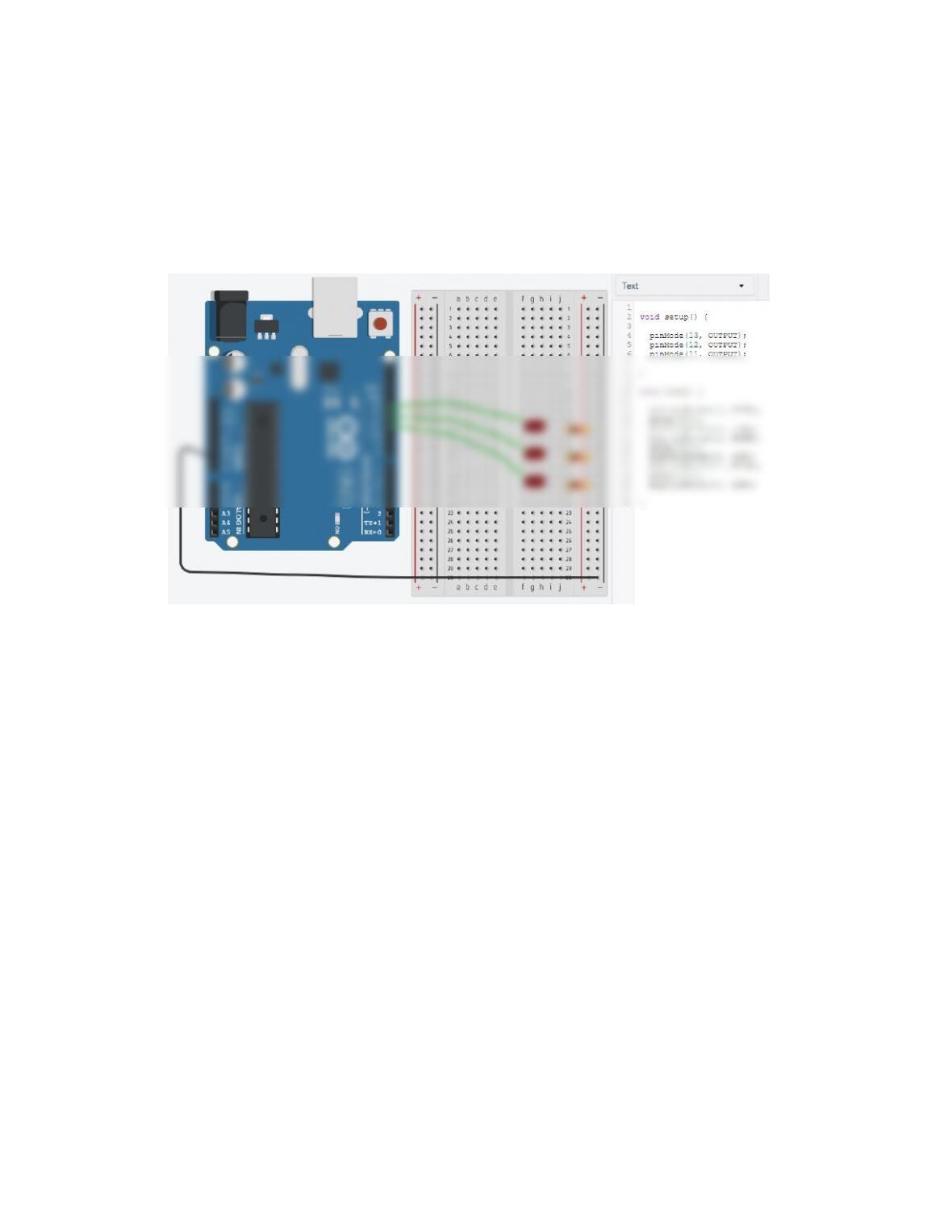
Answers will vary, but the following screenshot illustrates one way to accomplish the task. You can also
find the project on Tinkercad at www.tinkercad.com/things/iPm2yeiBaeg-challenge-lab-13-1-multi-led-
circuit.
Guide to Networking Essentials, 8th ed., ISBN 9780357118283
Chapter 13 Solutions-7
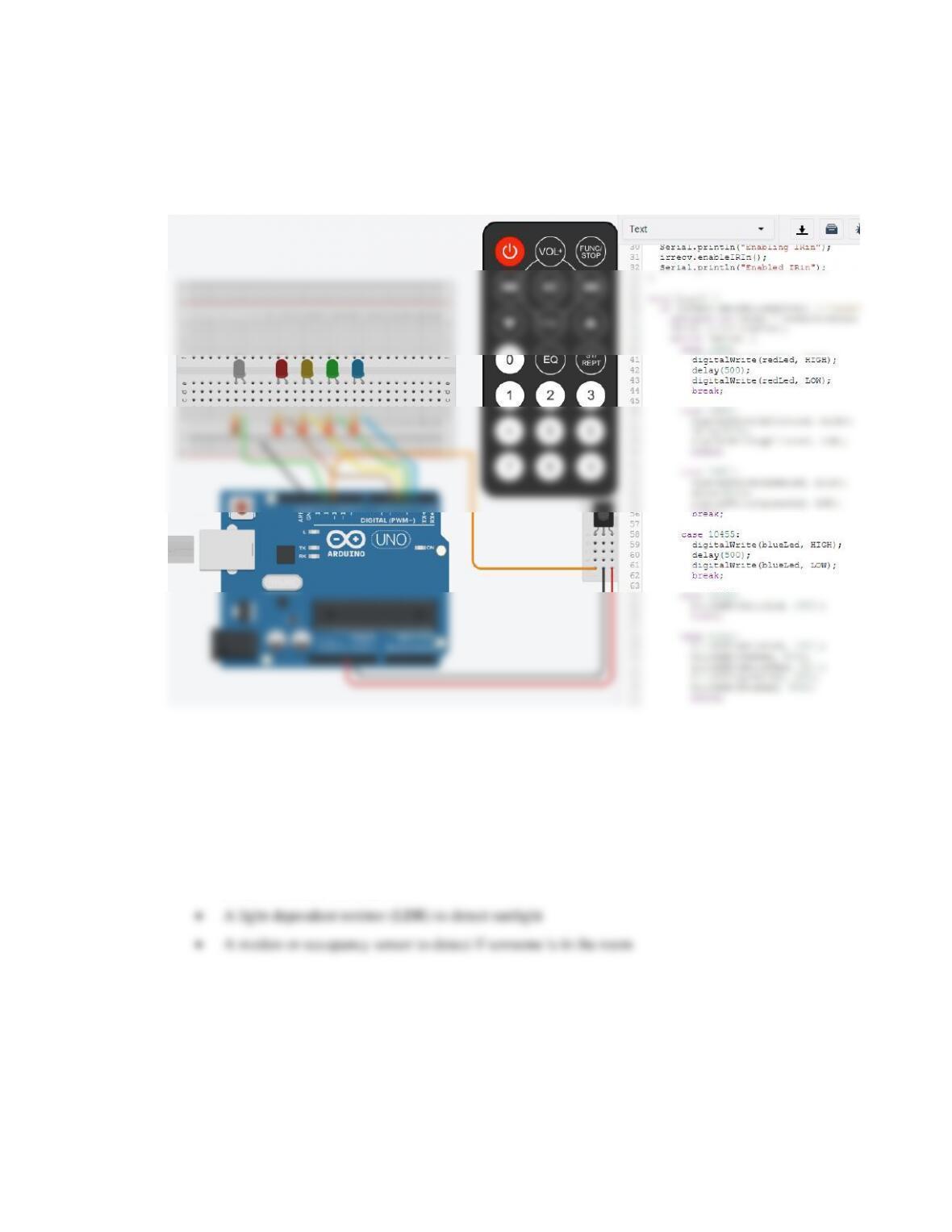
Challenge Lab 13-2
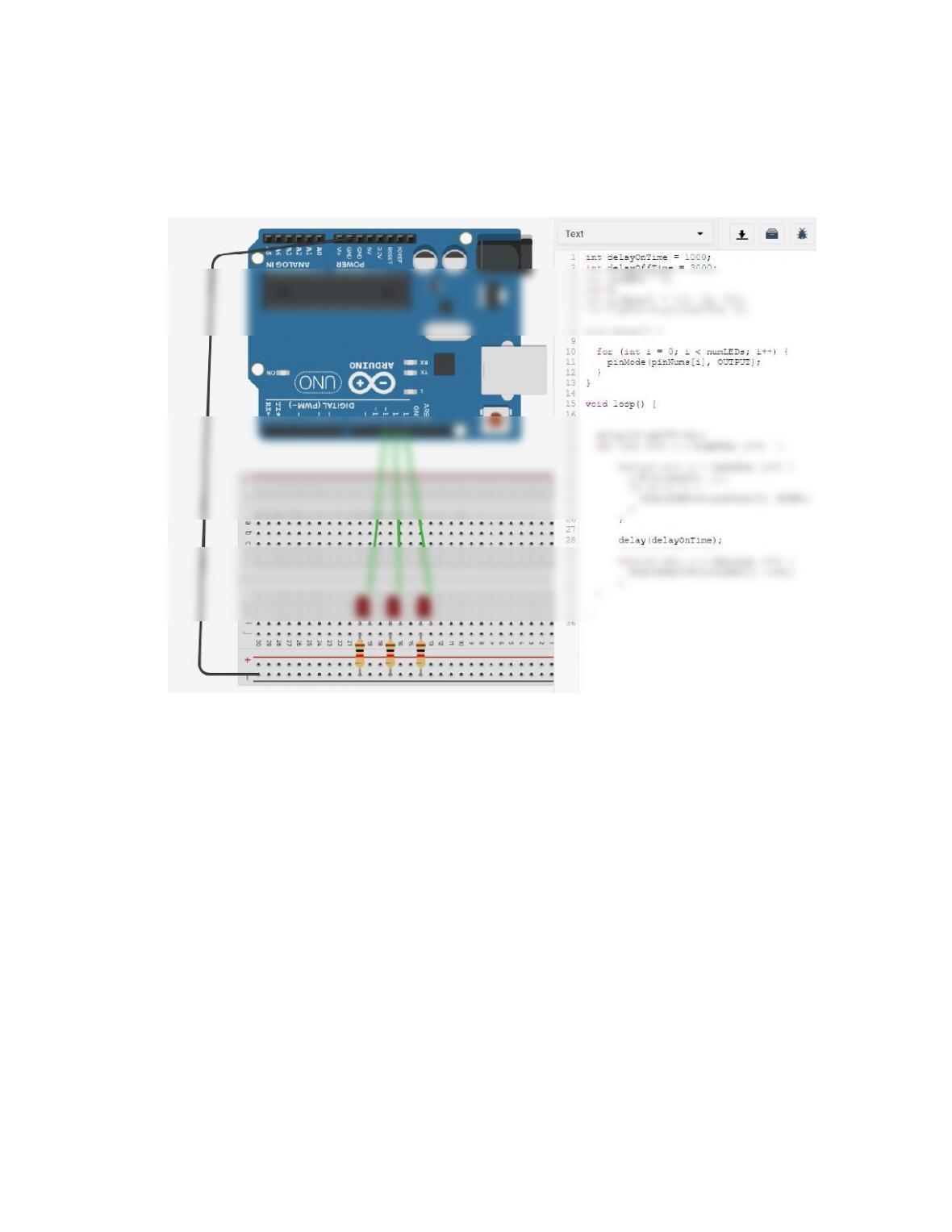
Answers will vary, but the following screenshot illustrates one way to accomplish the task. You can also
find the project on Tinkercad at www.tinkercad.com/things/iHXBoRqMYyF-challenge-lab-13-2-binary-
counter.
Guide to Networking Essentials, 8th ed., ISBN 9780357118283
Chapter 13 Solutions-8
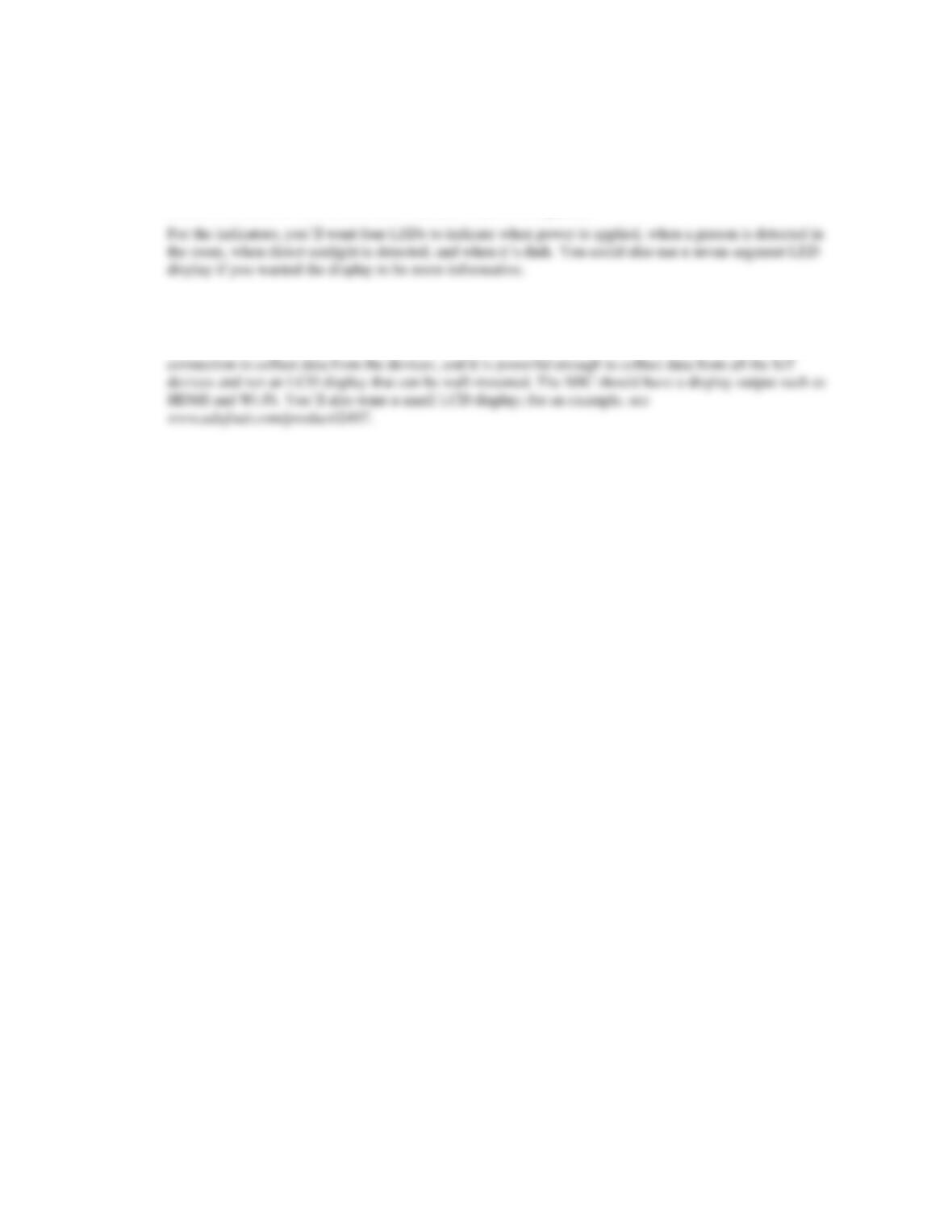
Challenge Lab 13-3
Answers will vary, but the following screenshot illustrates one way to accomplish the task. You can also
find the project on Tinkercad at www.tinkercad.com/things/3QC2CLtLfyQ-challenge-lab-13-3-control-leds-
with-ir-remote.
Case Projects
Case Project 13-1
Answers will vary, but here is one possible solution:
• A microcontroller development board such as Arduino Uno
• A servo motor to turn the rod
Guide to Networking Essentials, 8th ed., ISBN 9780357118283
Chapter 13 Solutions-9
Case Project 13-2
You’ll need a wireless network adapter such as ESP8266 or ESP32 to add to the project or change the
microcontroller board to one with a built-in adapter. You can get microcontroller development boards with
built-in ESP8266 or ESP32 controllers that are Arduino-compatible.
Case Project 13-3
Answers will vary, but you probably want an SBC such as a Raspberry Pi. The Raspberry Pi has a Wi-Fi