CCNA Guide to Cisco Networking, Fourth Edition Chapter 1 Lab Solutions
Chapter 1 Lab Solutions
Activity Questions Lab 1.1
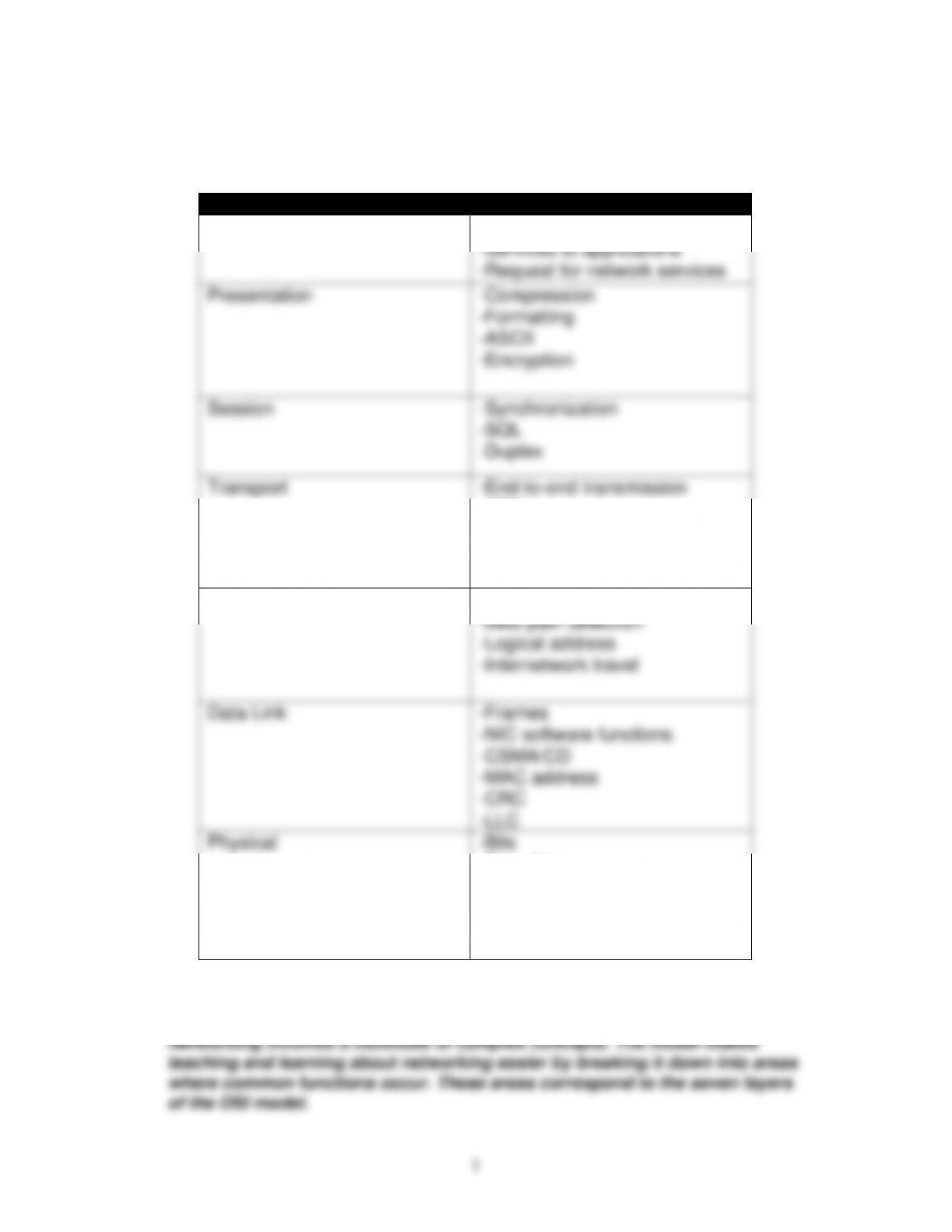
OSI Layer
Description
Application
-Where communications begin
-Services to applications
-Request for network services
Presentation
-Compression
-Formatting
-ASCII
-Encryption
Session
-Synchronization
-SQL
-Duplex
Transport
-End-to-end transmission
-ACK
-Data segmentation
-Connectionless service
-MTU
Network
-Datagram
-Best path selection
-Logical address
-Internetwork travel
Data Link
-Frames
-NIC software functions
-CSMA/CD
-MAC address
–CRC
–LLC
Physical
-Bits
-Encoding
-Cable
-Voltage
-Signals
-Hubs
Review Questions Lab 1.1
1. How does using the OSI model facilitate teaching and learning about networking?

CCNA Guide to Cisco Networking, Fourth Edition Chapter 1 Lab Solutions
closely related to the lower layers.
Activity Questions Lab 1.2
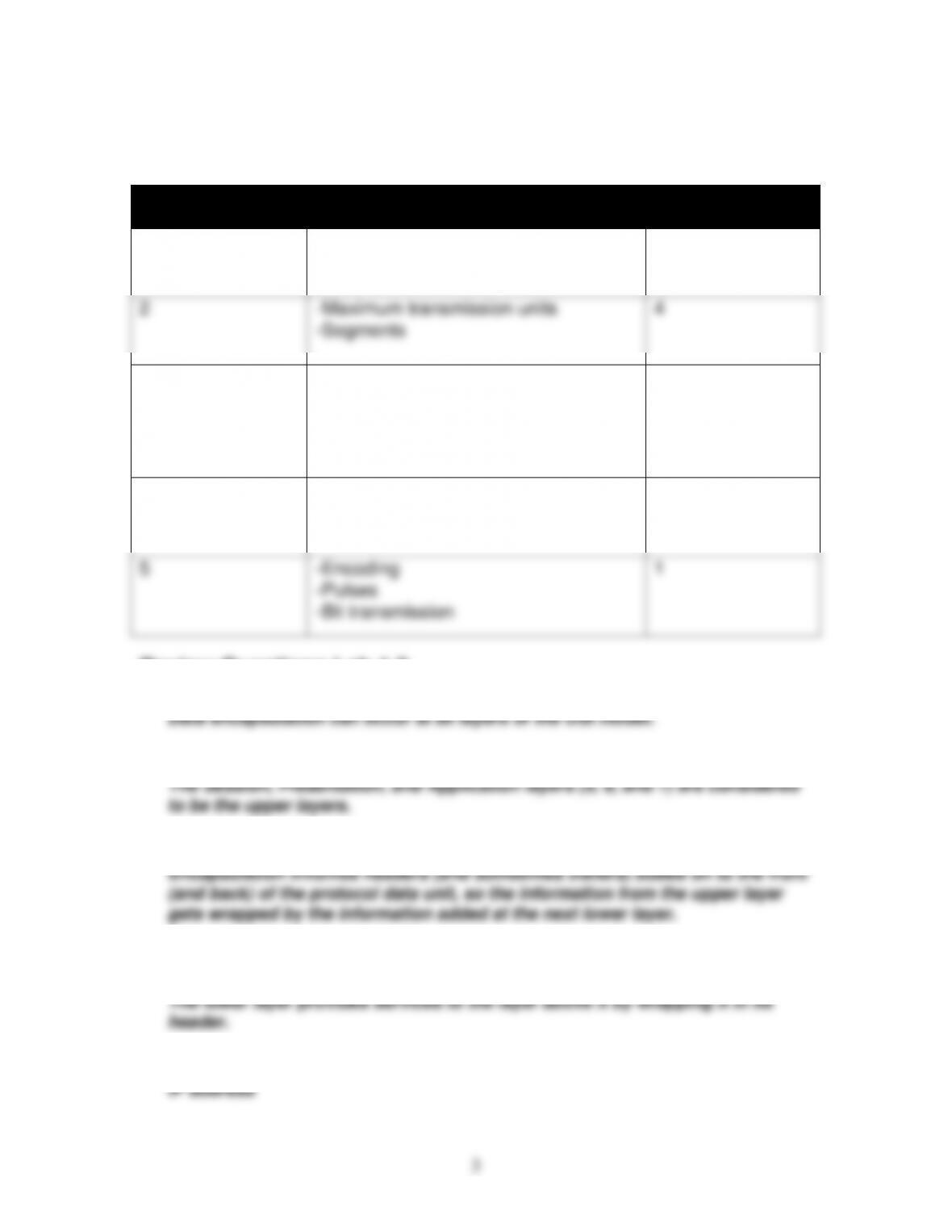
Step Number
Description
Associated OSI
Model Layer(s)
1
-Conversion to standard data format
-Upper layers
5, 6, and 7
2
-Maximum transmission units
-Segments
4
3
-Datagram
-Logical address
-IP header
-Packet creation
3
4
-Physical address
-Frame
-Trailer
2
5
-Encoding
-Pulses
-Bit transmission
1
Review Questions Lab 1.2
1. Which layers of the OSI model are involved in data encapsulation?
2. Which layers generally constitute the upper layers of the OSI model?
3. Encapsulation is often called “wrapping.” Why?
4. During the encapsulation process, do upper layers provide services for the layers
below them or do lower layers provide services for layers above them?
5. What is the most common logical address used in networking today?

5
7. Which layer of the OSI model is associated with the logical address?
8. Which address is displayed as hexadecimal numbers?
9. Which address allows transport between networks?
10. Which address does every host on a LAN segment evaluate?
Activity Questions Lab 1.4
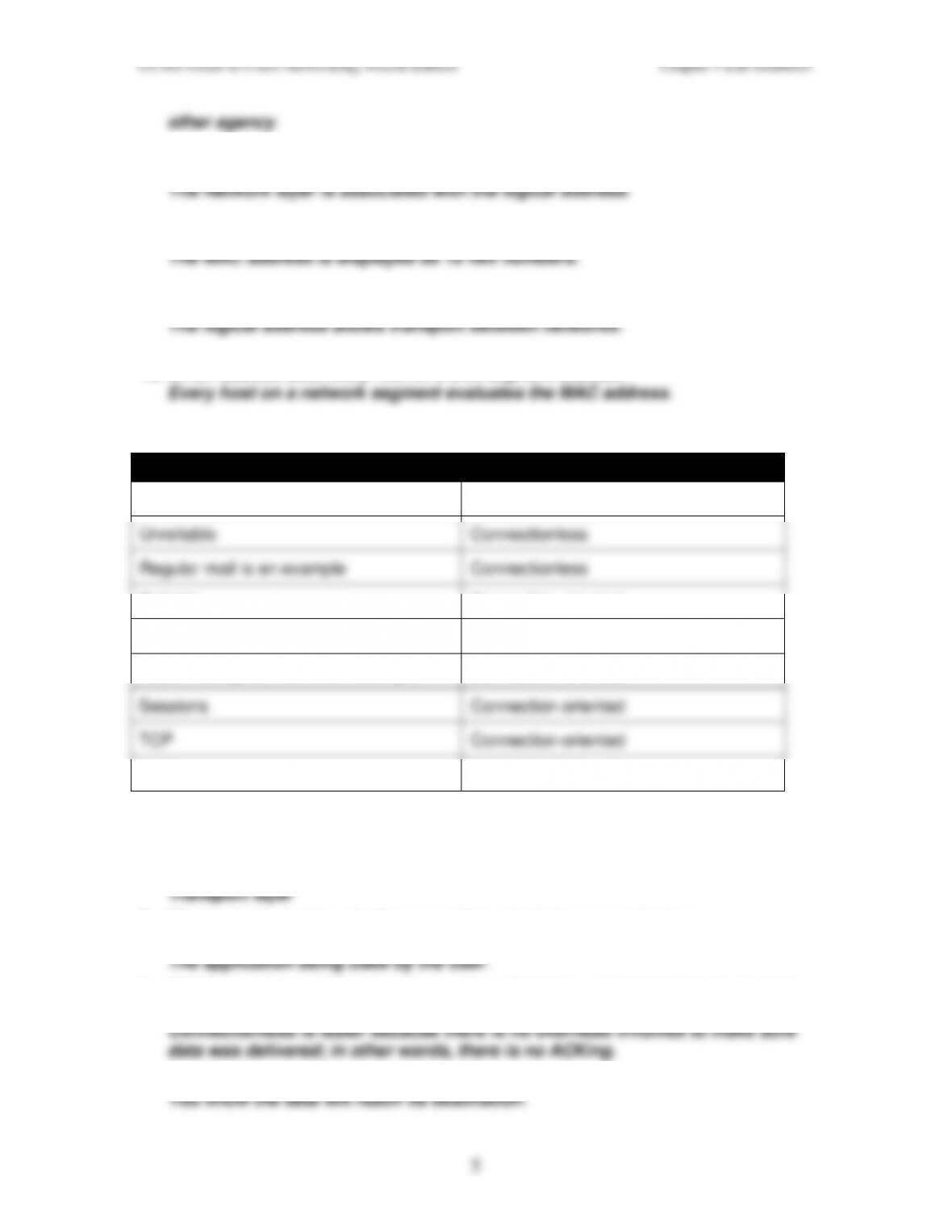
Description
Transport Method
ACK
Connection-oriented
Unreliable
Connectionless
Regular mail is an example
Connectionless
Reliable
Connection-oriented
Datagram
Connectionless
Return receipt for mail is an example
Connection-oriented
Sessions
Connection-oriented
TCP
Connection-oriented
UDP
Connectionless
Review Questions Lab 1.4
1. Where do connection-oriented and connectionless communications fit into the OSI
model?
2. What typically decides whether connection-oriented or connectionless
communications are used during a data transfer?
3. Which type of communications (connection-oriented or connectionless) do you think
is faster and why?
4. What is the benefit of using connection-oriented communications?