Travis S. Taylor 26
Chapter 4
4.1 Define and describe the basic components of a rocket engine.
4.2 What is an exothermic reaction?
4.3 What is the stoichiometric ratio?
Travis S. Taylor 27
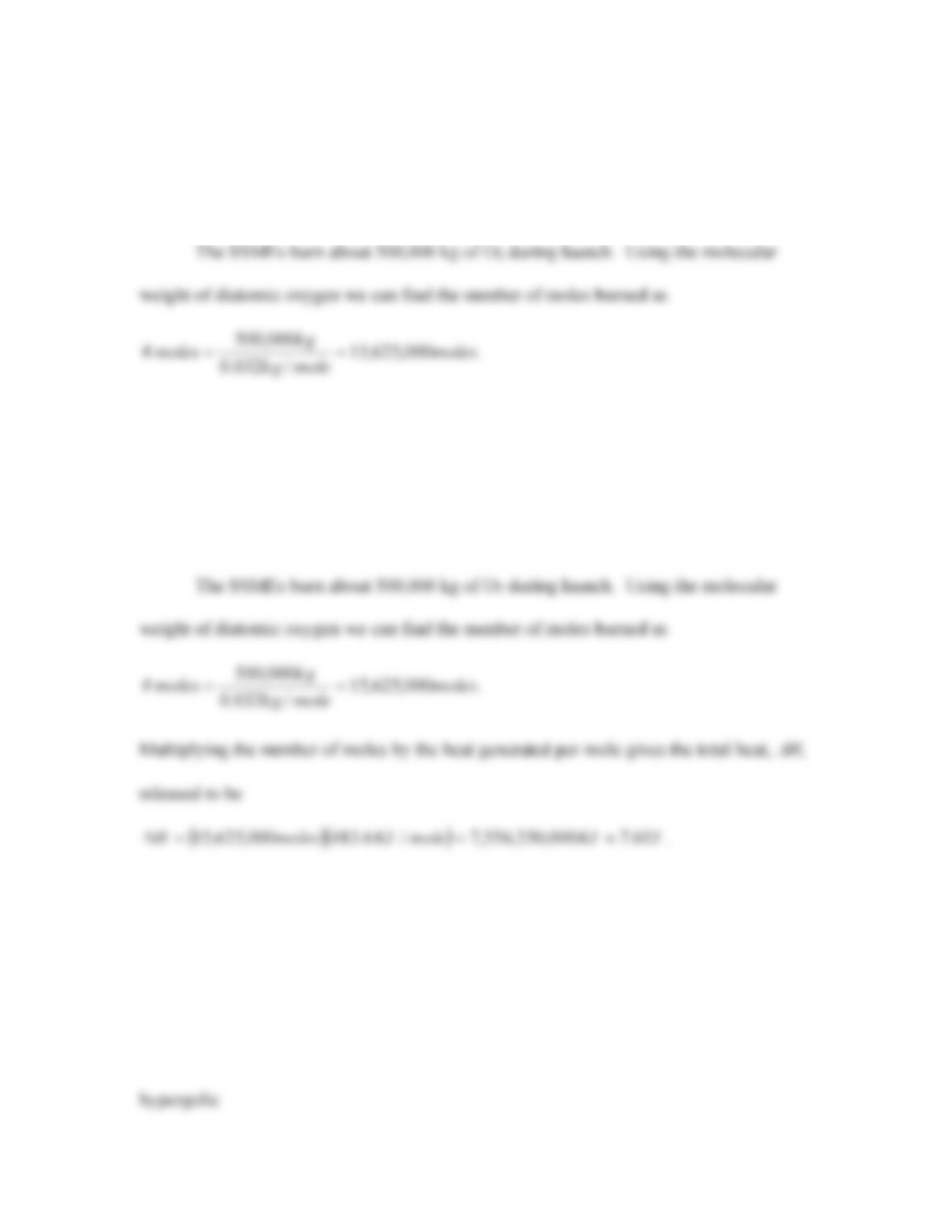
4.4 Calculate the number of moles of O2 the Space Shuttle Main Engines burn during
launch.
4.5 Calculate the energy released by burning liquid H2 and liquid O2 together in the
SSMEs during launch.
4.6 An engine that doesn’t need an igniter to spark the propellants to react is what
type of engine?
4.7 Give some advantages and disadvantages of using a hypergolic engine.
4.8 What is thermal expansion?
4.9 What is an isentropic process?
4.10 What are the conditions for isentropic flow?
4.11 Define the isentropic expansion factor.
Travis S. Taylor 29
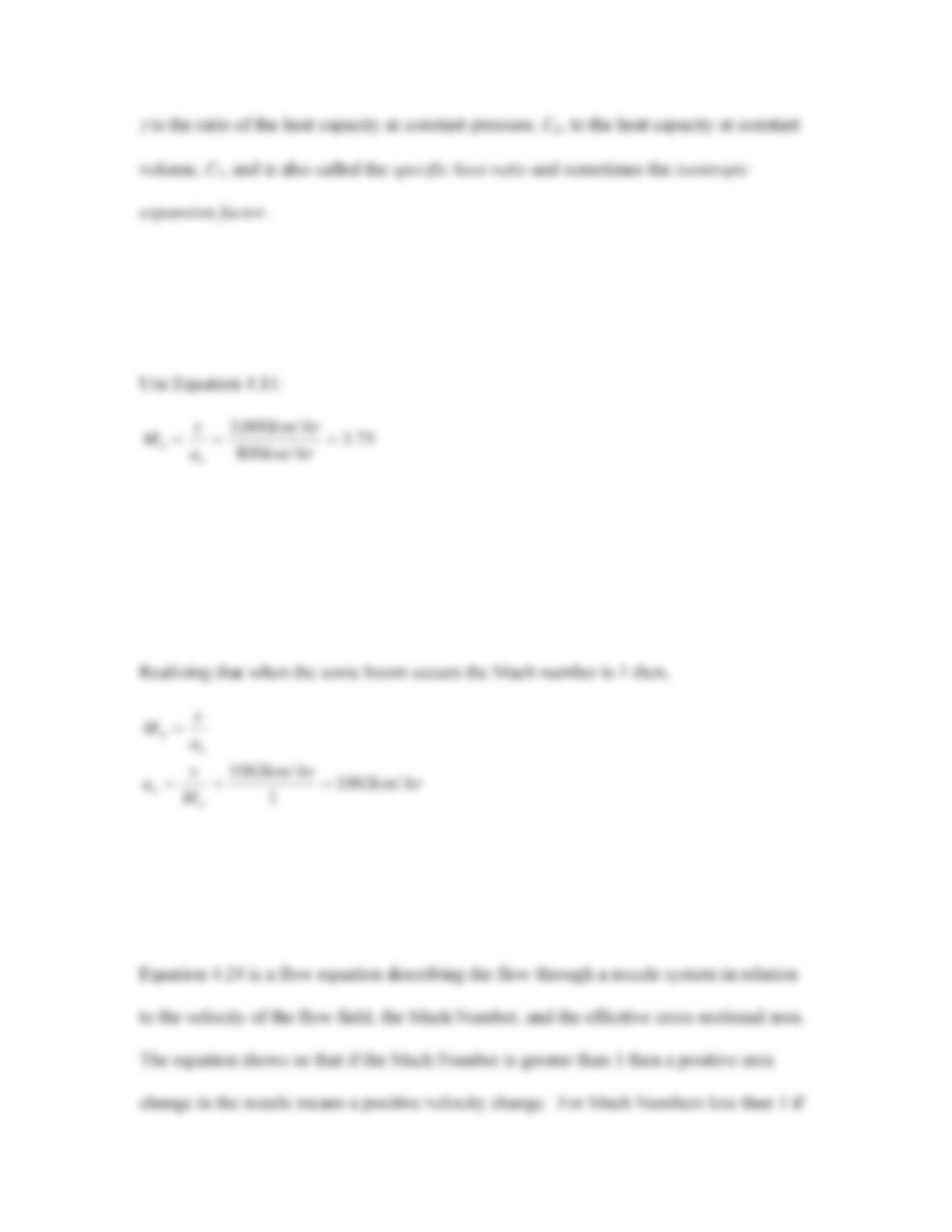
4.12 If a missile is traveling 3,000 km/hr at an altitude where the speed of sound in the
local atmosphere is 800 km/hr what is the Mach Number?
4.13 A spacecraft slows down by atmospheric drag after re-entry until it generates
sonic booms at an altitude of 11 km where the vehicle’s velocity is measured to
be 1063 km/hr. What is the speed of sound at that altitude?
4.14 Discuss the importance of Equation 4.24 and how it determines the shape of a
rocket nozzle.
Travis S. Taylor 30
4.15 What is choked flow?
4.16 Discuss the significant differences between Equations 4.36 and 4.37. What
4.17 Define the expansion ratio.
t
e
A
A
H
,
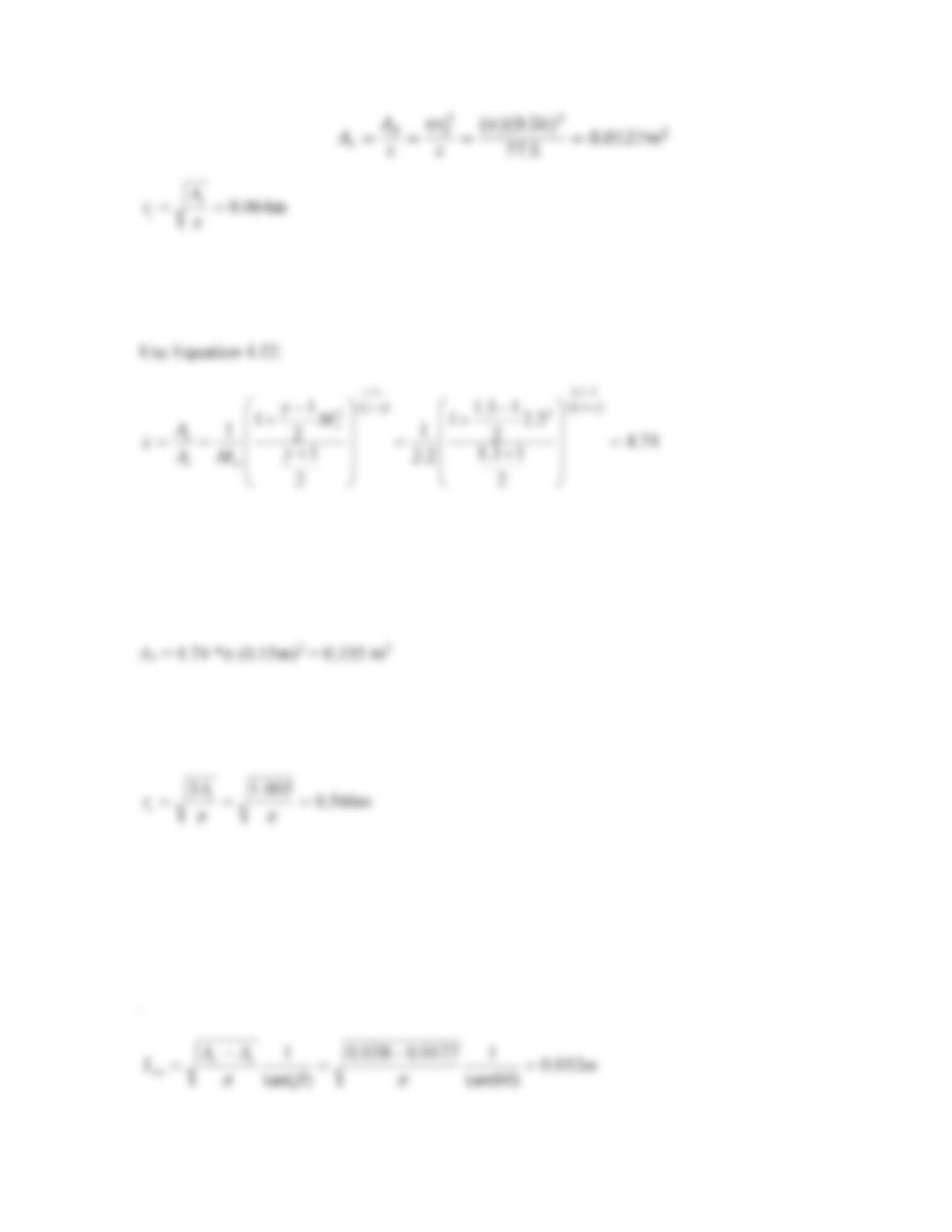
4.18 The SSMEs have a nozzle exit radius of about 1.2 m. The expansion ratio is 77.5.
What is the throat diameter of the rocket engine?
Travis S. Taylor 31
4.19 For an isentropic expansion factor of 1.3 and a Mach Number at the exit of the
rocket nozzle of 2.2 what is the expansion ratio?
4.20 In Exercise 4.19 assume a throat radius of 0.15 m. What is the exit nozzle radius?
4.21 In Exercise 4.20 what is the minimum combustion chamber radius?
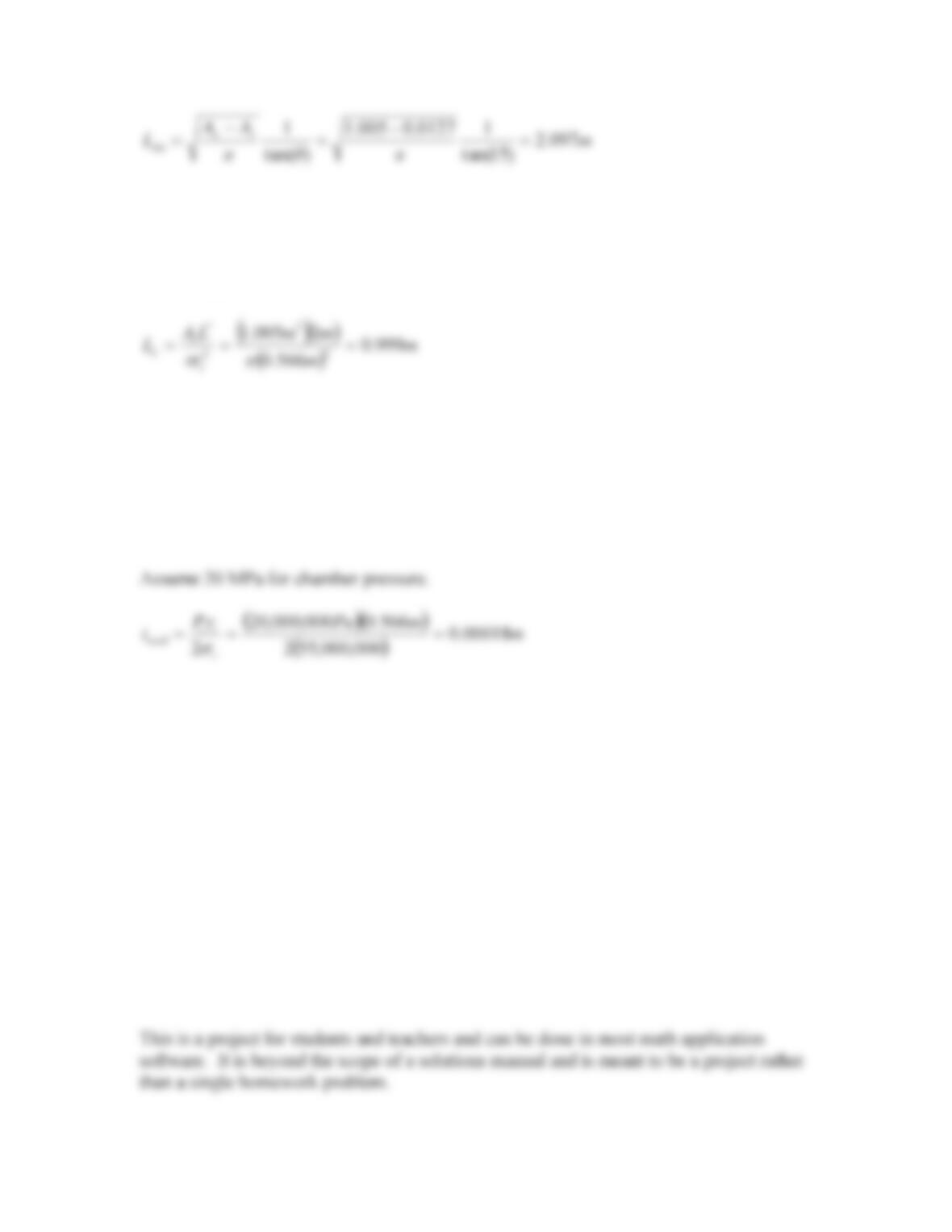
4.22 In Exercises 4.19 and 4.20 determine the converging nozzle length. What is the
diverging nozzle length?
Travis S. Taylor 32
4.23 In Exercises 4.19 through 4.22 determine the combustion chamber length and
radius.
4.24 In Exercises 4.19 through 4.23 find the wall thickness of the combustion chamber
if it is made of a material that can withstand a stress of 55 MPa.
4.25 Develop a computer model of the engine design process as shown in this chapter.
Generate graphs that describe the engine dimensions as functions of the pressure
ratio and of the exit pressure. Use the model to learn how to optimize an engine
design for a given external ambient pressure. In other words, learn how to
optimize an engine for a particular altitude or in space operations.