Travis S. Taylor 3
Chapter 2
2.1 Discuss the dichotomy of rocket science in the modern era.
2.2 In your own words give a definition for a rocket mission.
2.3 What is a payload?
2.4 What is the so-called “smad”?
2.5 Give the four basic assumptions required for understanding the basics of
projectile motion.
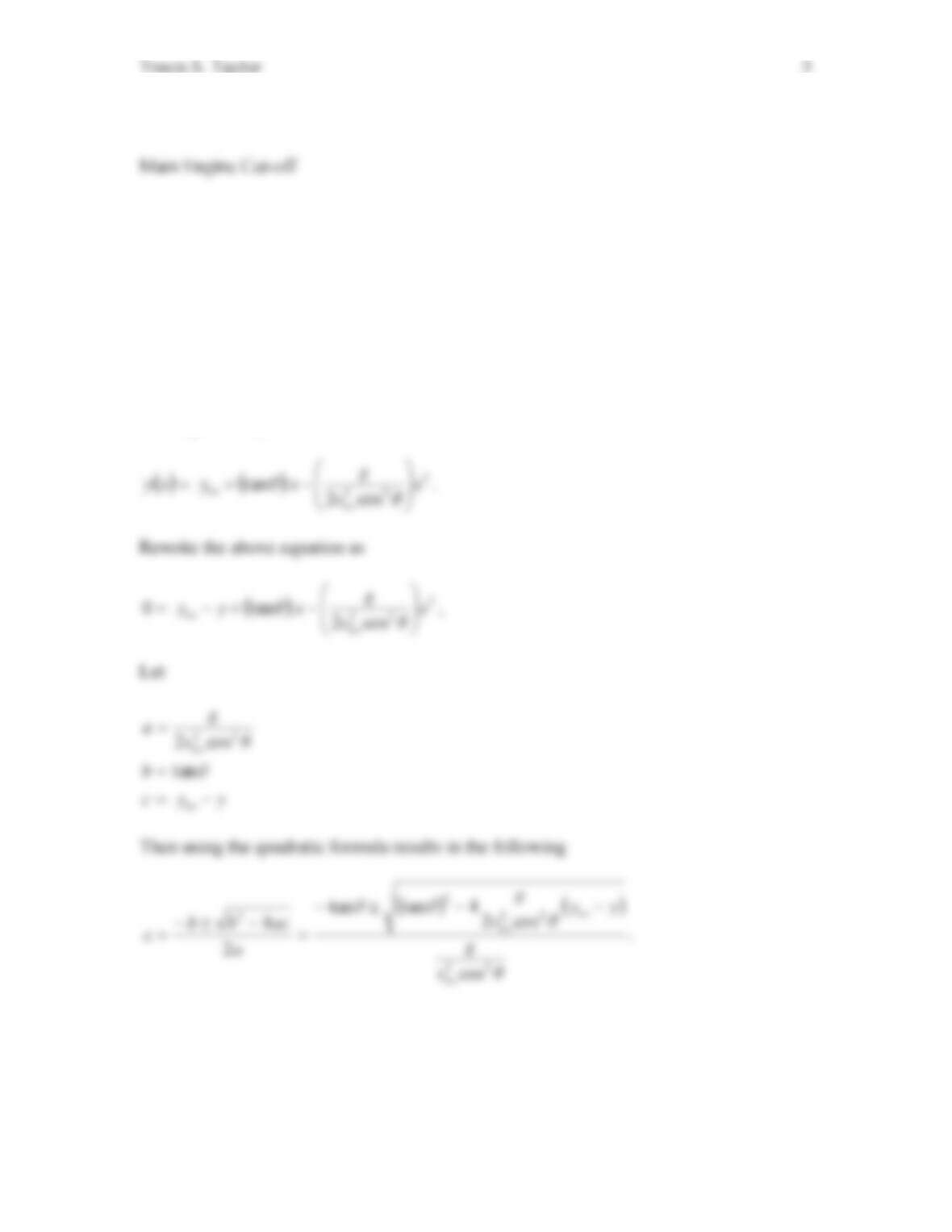
2.6 Define MECO.
2.7 Equation 2.9 gives the parabolic flight path of a rocket trajectory as height, y, as a
function of range, x, or y(x). Use the quadratic equation to solve for x as a
function of y to give a range equation as a function of height.
Starting with Equation 2.9
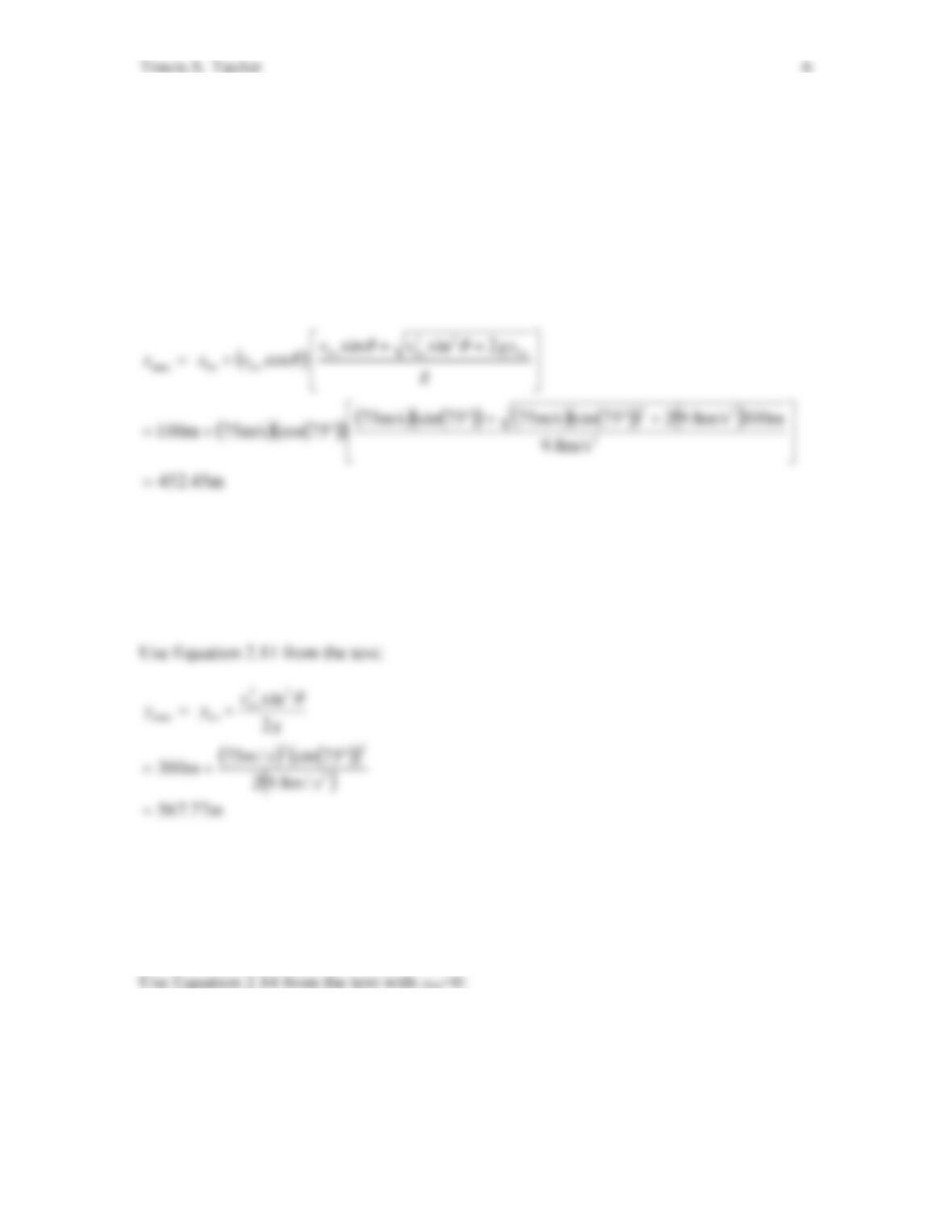
2.8 A rocket is launched with a burnout velocity of 75 m/s, burnout altitude of 300 m,
and a burnout range of 100 m. Assuming a flight path angle of 75° calculate the
final range of the rocket when it impacts the ground.
Use Equation 2.14 from the text:
2.9 Calculate the maximum altitude reached by the rocket in Exercise 2.8.
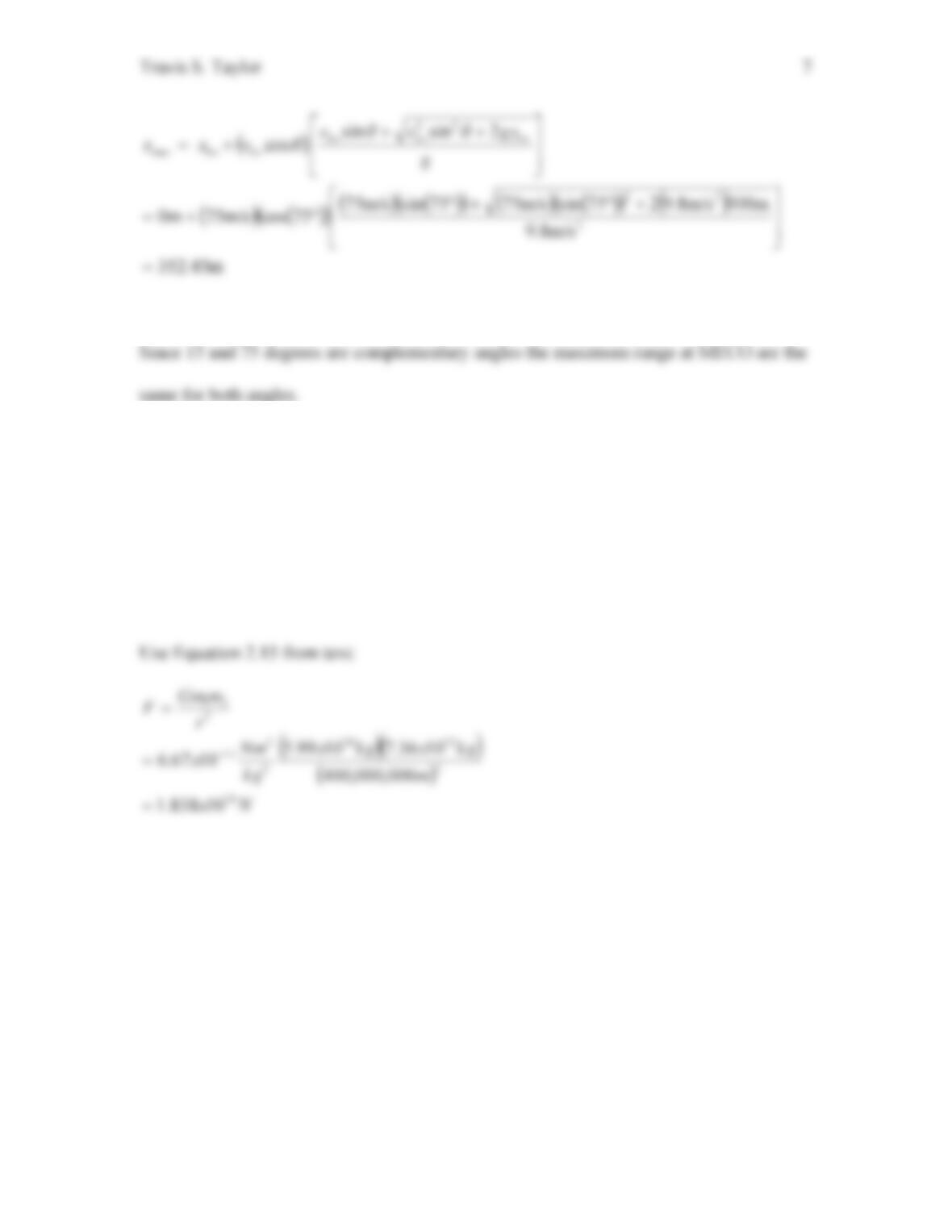
2.10 Redo Exercise 2.8 to determine the range at MECO altitude. What is the range at
MECO if the initial flight path angle is 15°?
2.11 What is the force due to gravitational attraction between the Earth and the Moon?
Assume the Moon is 400,000 km from Earth and the mass of the Earth is 5.99 x
1024 kg, and the mass of the Moon is 7.36 x 10²² kg.
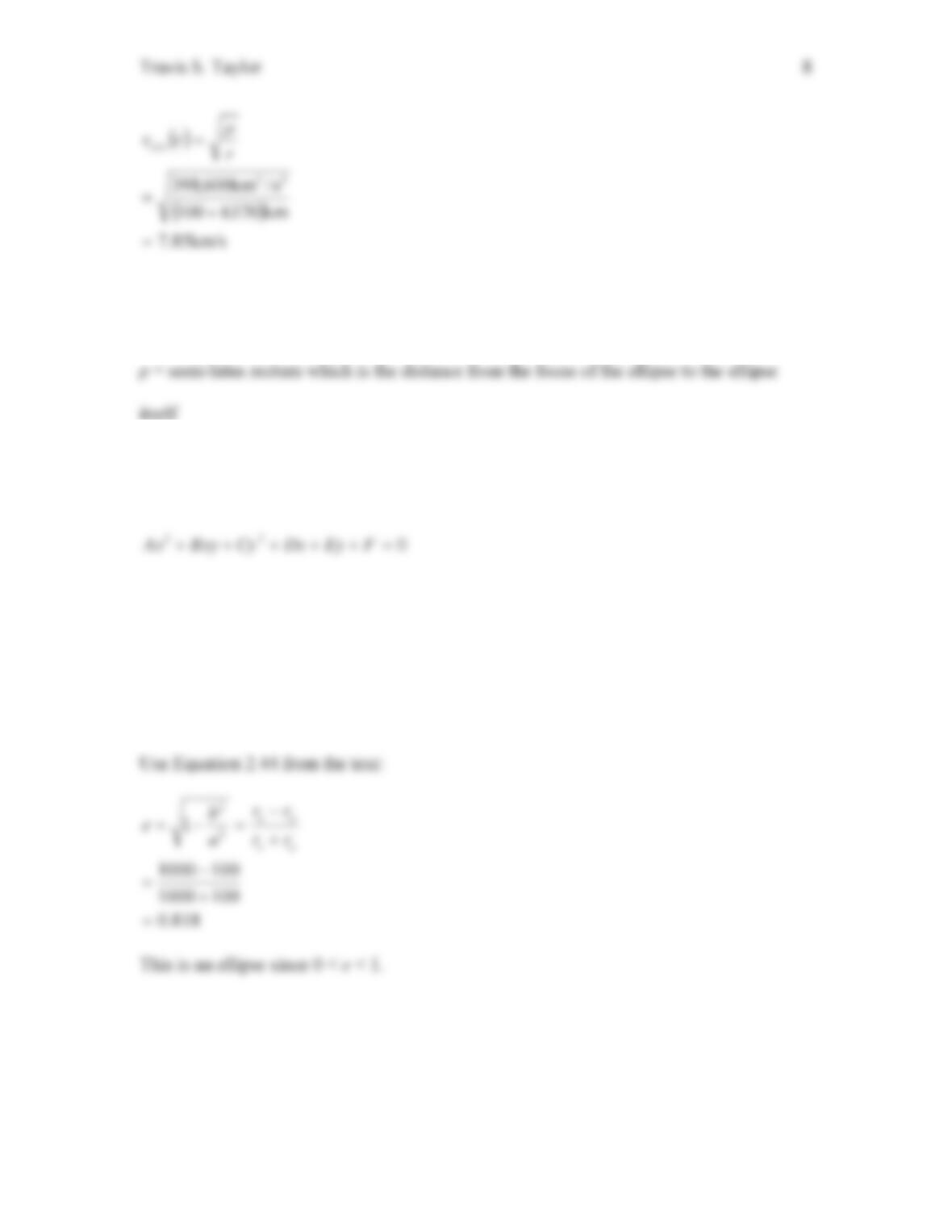
2.12 A satellite is in a circular orbit at 100 km above the Earth. What is the orbital
velocity of the satellite? How long does it take for the satellite to make one
complete orbit around the Earth?
Use Equation 2.73 from the text:
2.13 What is the semi-latus rectum?
2.14 Give the equation for a conic section.
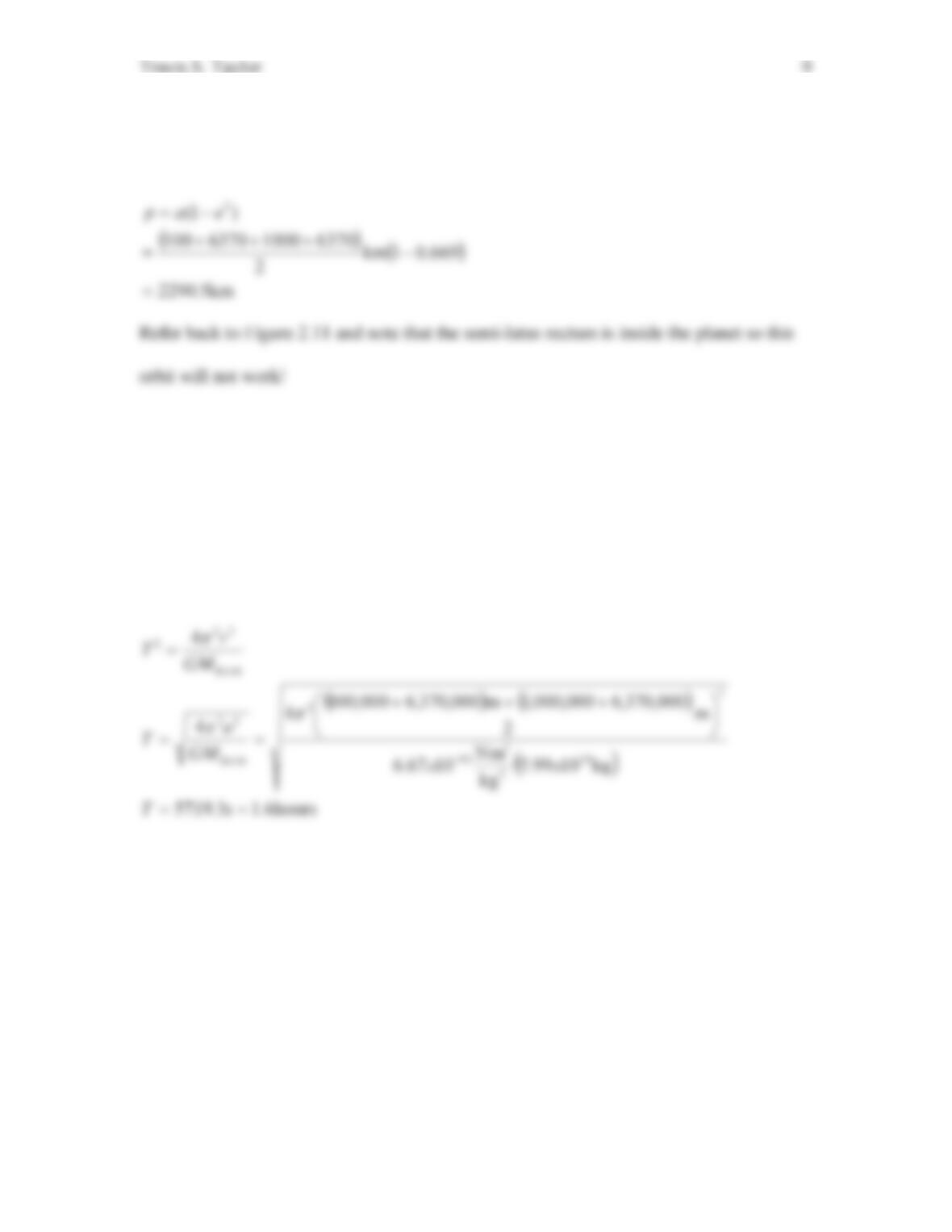
2.15 A spacecraft is traveling in an orbit with periapsis at 100 km and apoapsis at 1000
km. What is the eccentricity of the orbit? This orbit is what type of conic
section?
2.16 Calculate the semi-latus rectum of the spacecraft orbit in Exercise 2.15.
Use Equation 2.45 from the text and Figure 2.11 where it is shown that 2a = ra + rp then:
2.17 What is the period of the orbit described in Exercise 2.15?
First we realize from Exercise 2.16 that the orbit will not work because it would have to
pass through the Earth at the semi-latus rectum. But if we ignore that the period would
be found as below. Use Equation 2.51 where r = a:
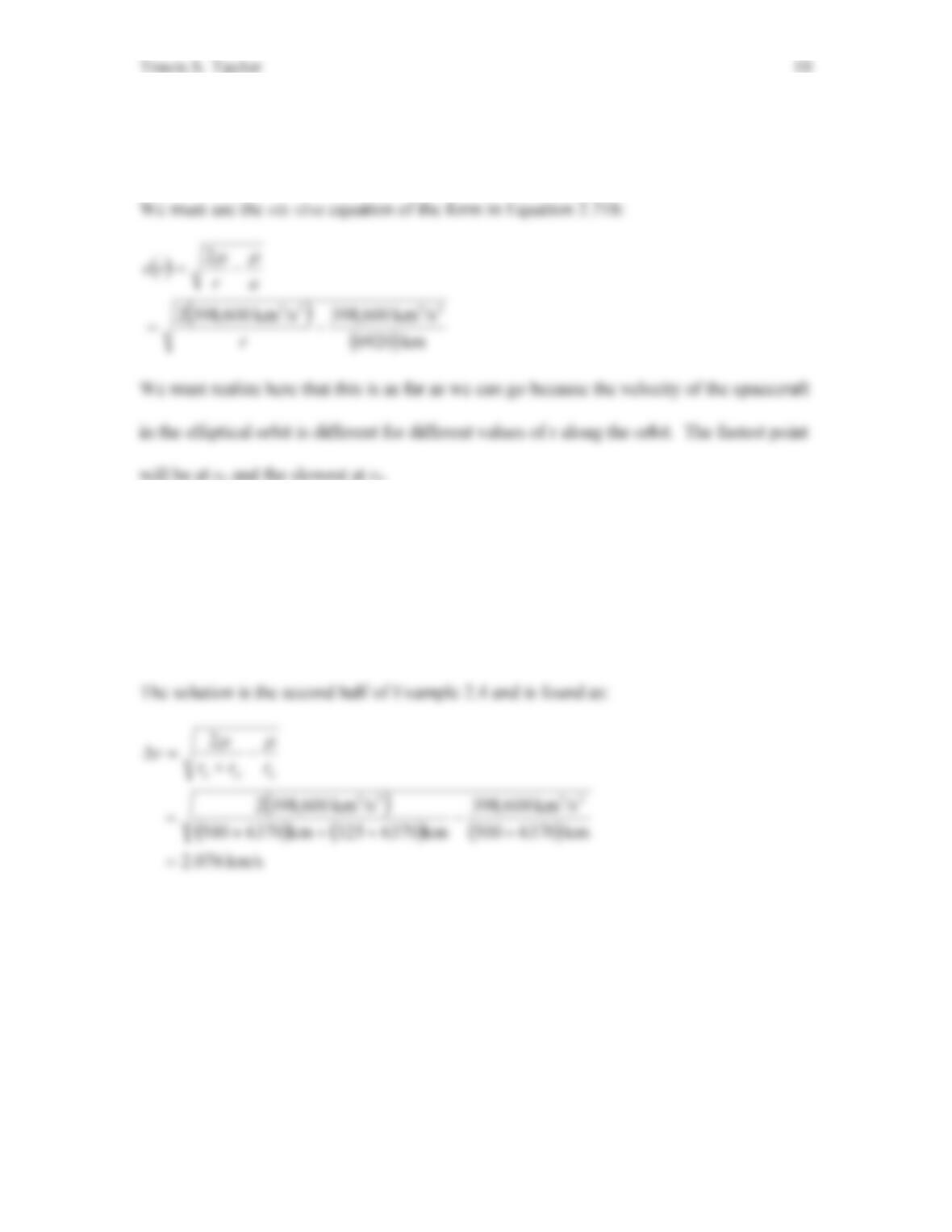
2.18 What is the velocity of the spacecraft in Exercise 2.15?
2.19 Calculate the
‘
v needed to circularize an elliptical orbit with an apoapsis at 500
km above the Earth and a periapsis at 325 km above the Earth. (Hint: see
Example 2.4)
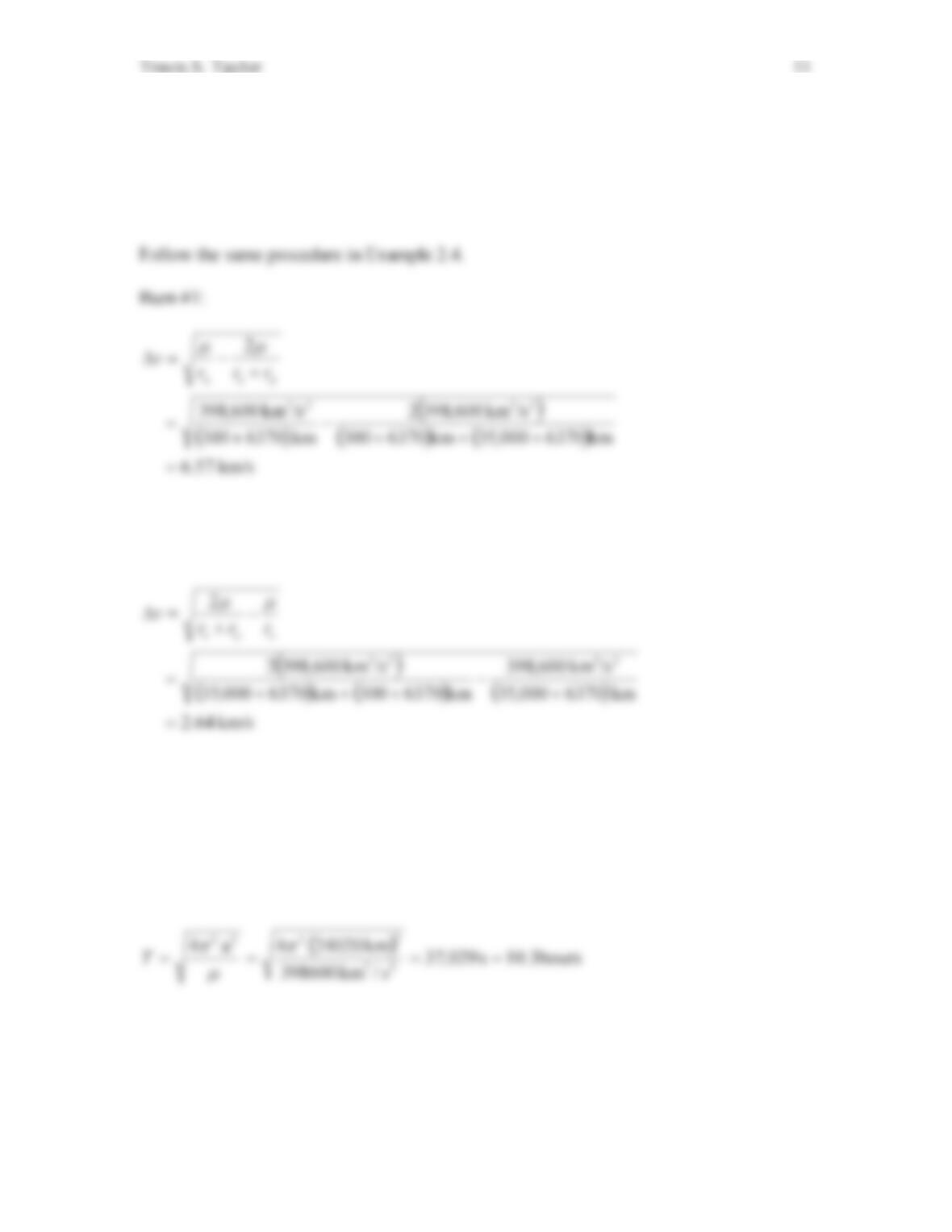
2.20 Calculate the
‘
v burns needed to conduct a Hohmann transfer from a 300 km
circular orbit around Earth to a 35,000 km circular orbit around Earth.
Burn #2:
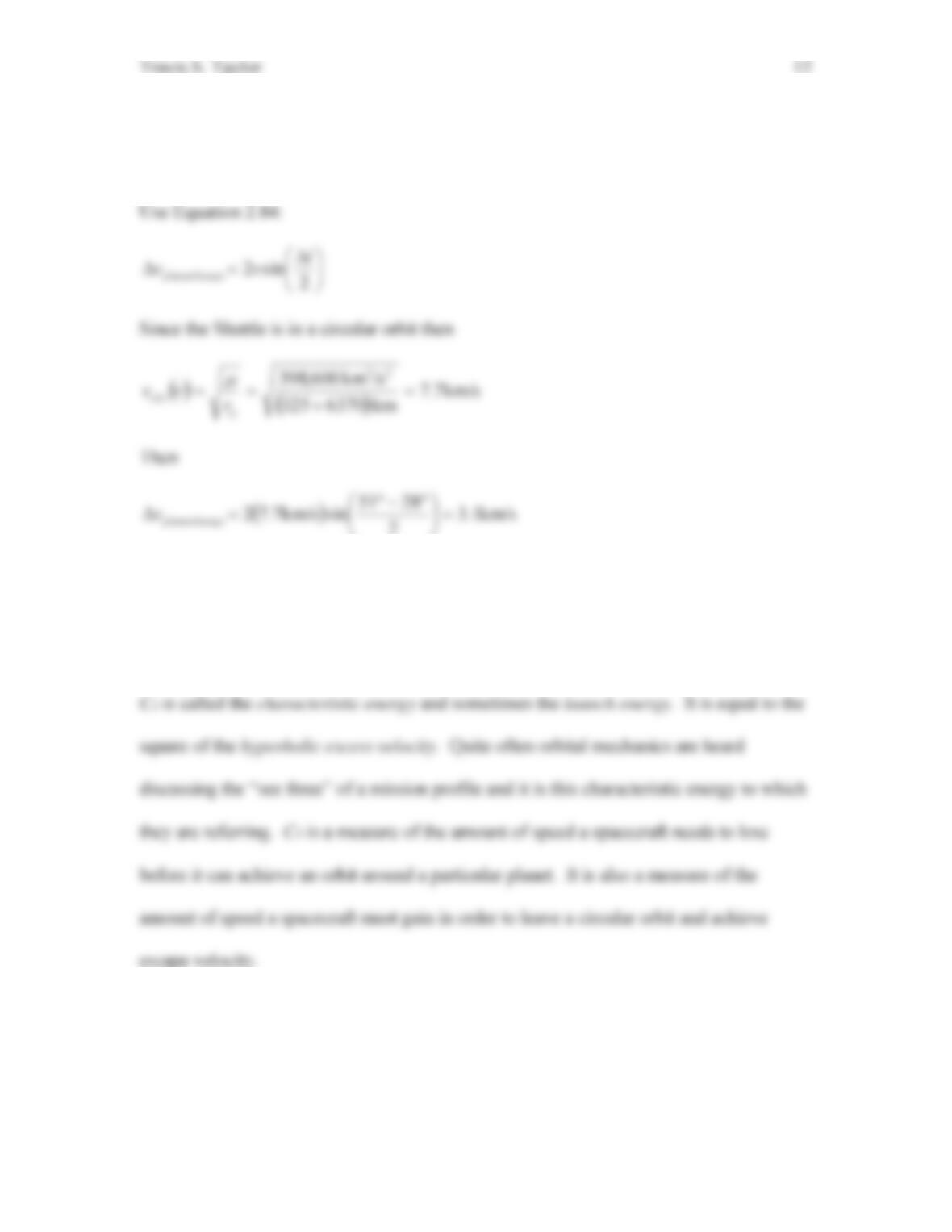
2.21 Calculate the transfer time for the Hohmann transfer given in Exercise 2.20.
Use Equation 2.83:
2.22 A Space Shuttle is in a 325 km circular orbit in a 28° inclination. How much
‘
v
is needed to move the shuttle to a 51° inclination?
¹
©
2.23 What is C3?
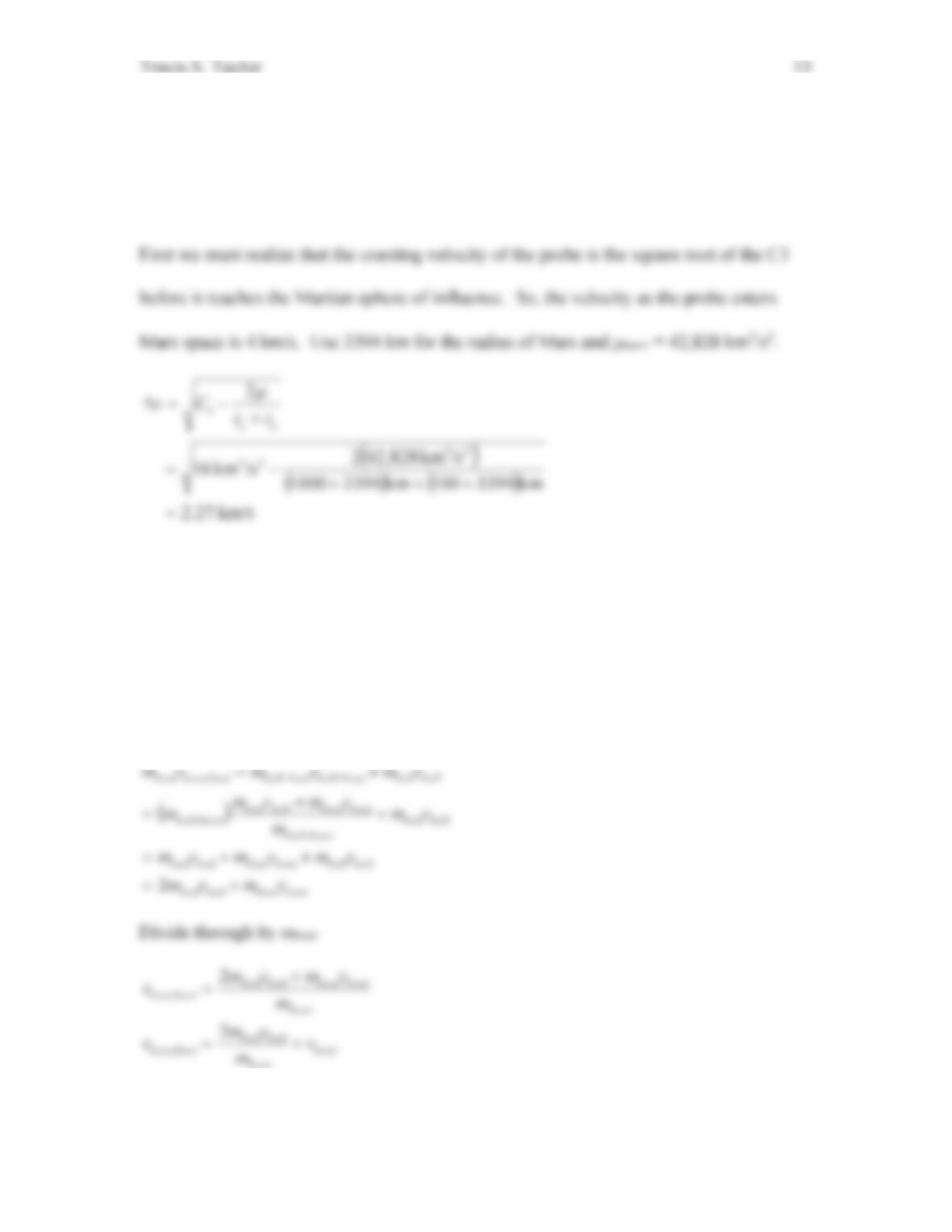
2.24 A Mars probe leaves Earth’s sphere of influence with a C3 of 16 km2/s2. How
much
‘
v is required for the probe to enter a Mars orbit with periapsis at 100 km
and apoapsis at 1000 km?
2.25 In order to go from Equation 2.88 to 2.89 (as well as 2.90 and 2.91) some algebra
was needed. Do this algebra showing all steps.
The first trick is to rewrite Equation 2.88 as a momentum equation and add the
momentum of the ball being thrown from the boat.
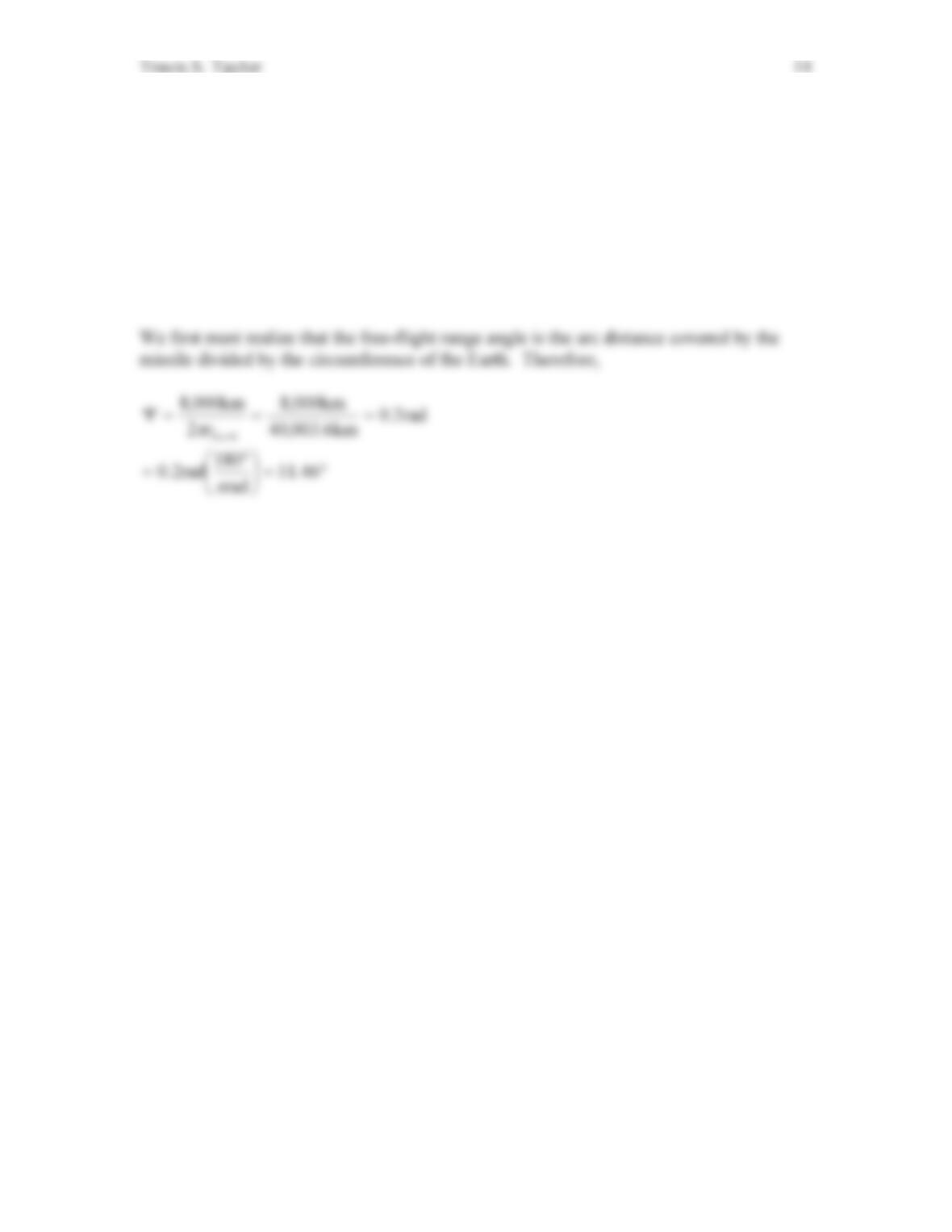
2.26 A ballistic missile has a powered flight range angle of 4° and a re-entry range
angle of 5°. If the missile has a total ground range of 8000 km, what is its free-
flight range angle? (Hint: assume the 8000 km range is the distance the missile
travels around the circumference of the Earth. The radius of the Earth is 6370
km.)