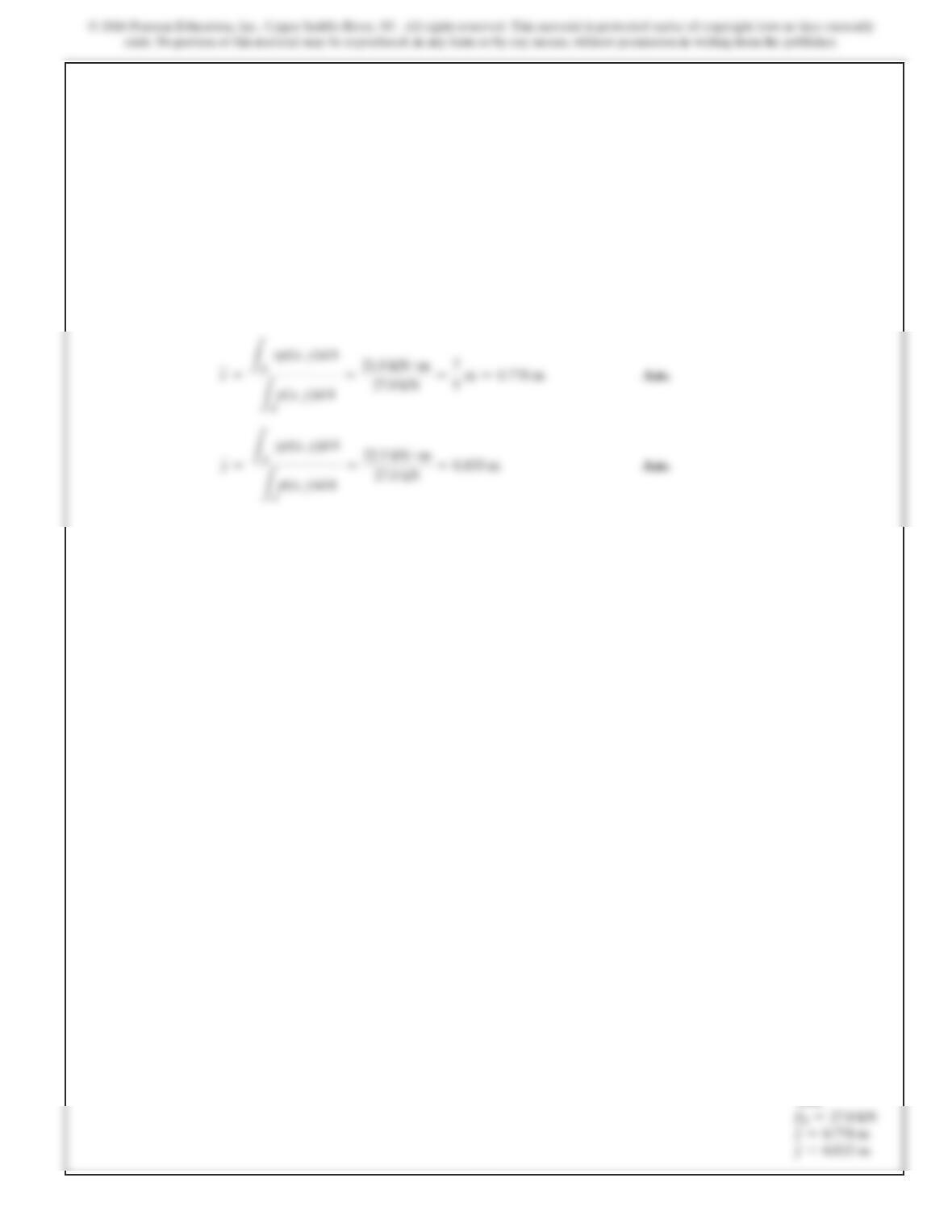
995
*9–116. Continued
Ans:
Thus,
996
9–117.
SOLUTION
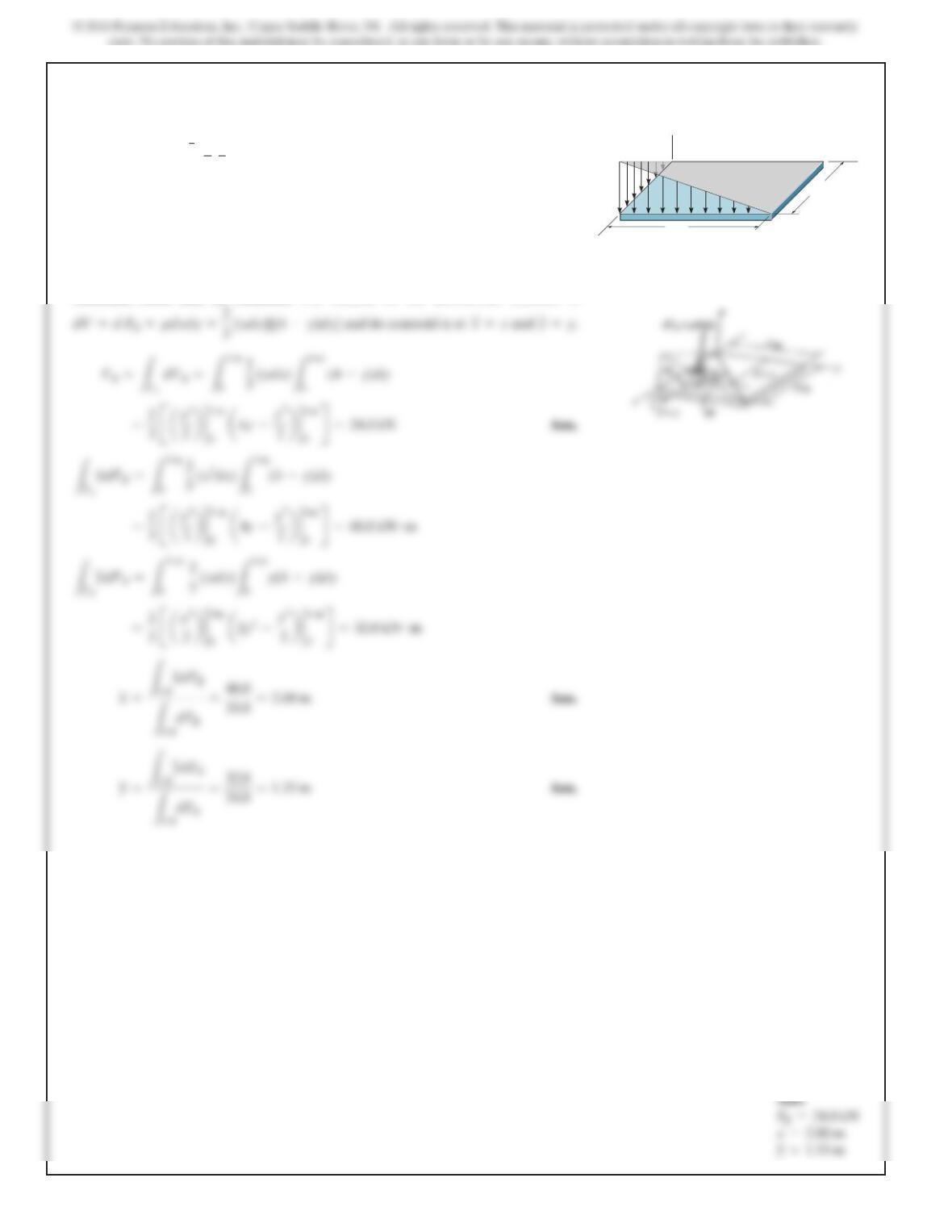
Resultant Force and its Location: The volume of the differential element is
T
h
e
l
oa
d
over t
h
e p
l
ate var
i
es
li
near
l
y a
l
ong t
h
e s
id
es of t
h
e
plate such that Determine the resultant
force and its position on the plate.1x,y2
p=2
3[x14–y2] kPa.
p
3m
4m
y
x
8kPa
997
9–118.
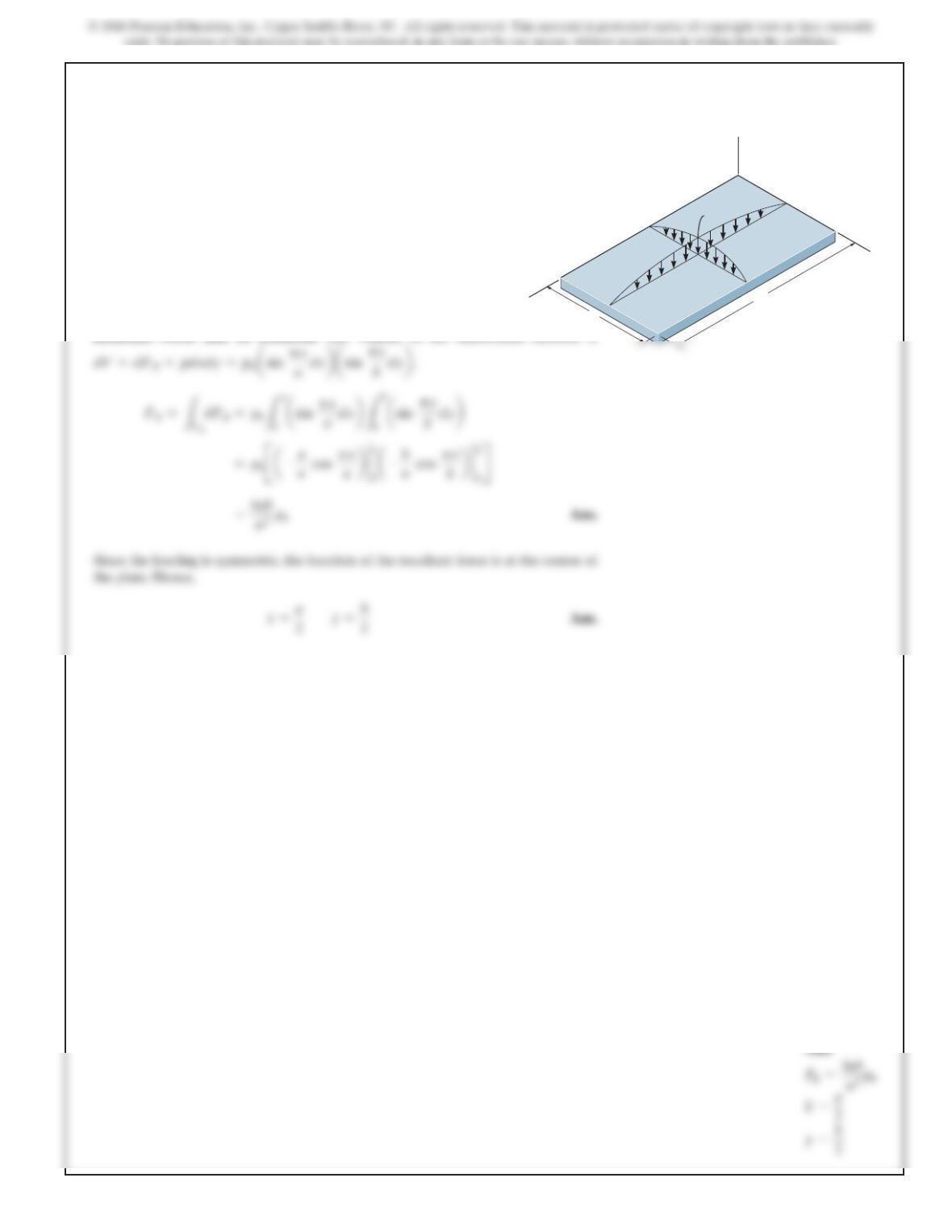
The rectangular plate is subjected to a distributed load over
its entire . The load is defined by the expression
where represents the
pressure acting at the center of the plate. Determine the
magnitude and location of the resultant force acting on
the plate.
p0
p=p0sin (px>a)
x
b
a
p
0
y
p
SOLUTION
Resultant Force and its Location: The volume of the differential element is
sin (py>b),
surface
998
9–119.
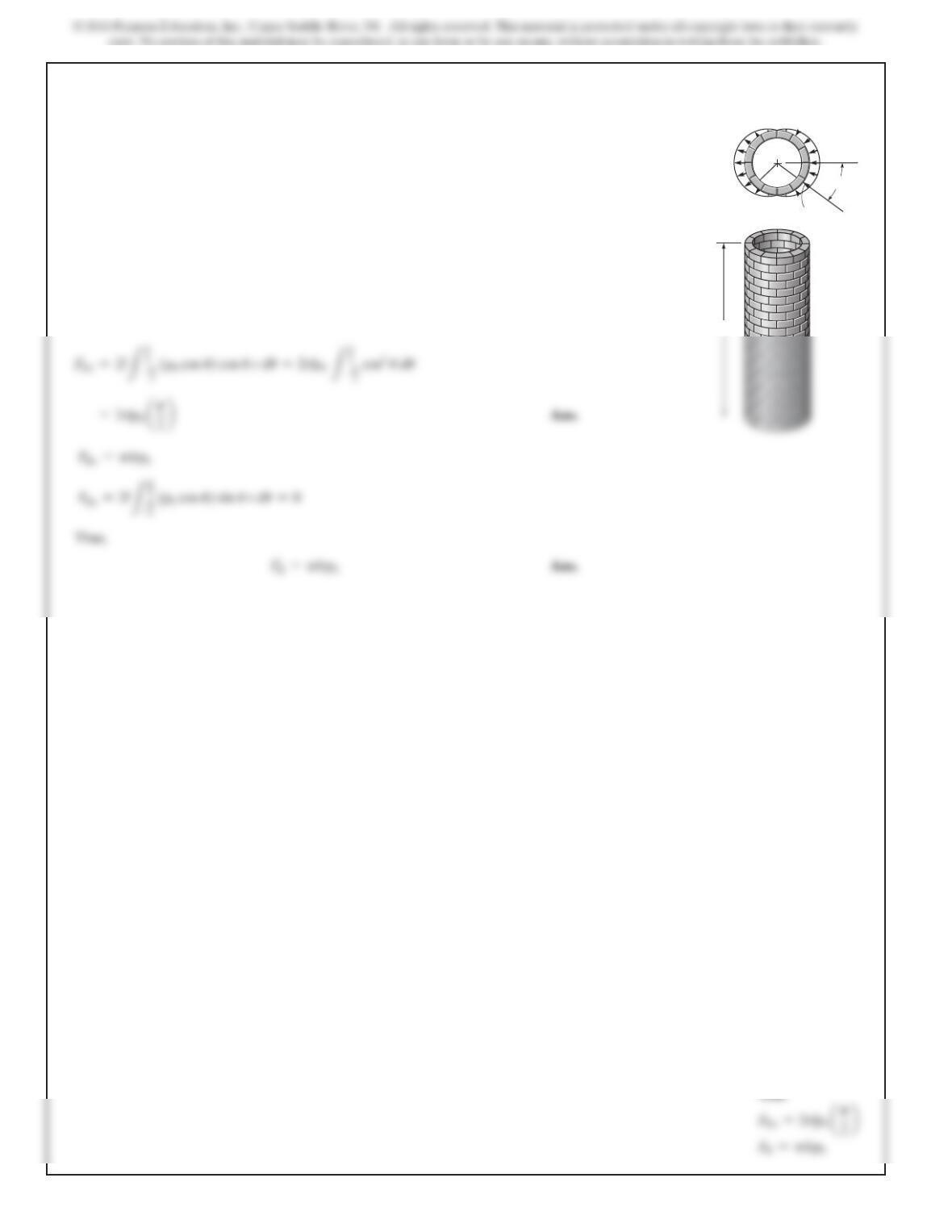
A wind loading creates a positive pressure on one side of
the chimney and a negative (suction) pressure on the other
side, as shown. If this pressure loading acts uniformly along
the chimney’s length, determine the magnitude of the
resultant force created by the wind.
SOLUTION
Ans:
p p0 cos u
p
l
u
999
*9–120.
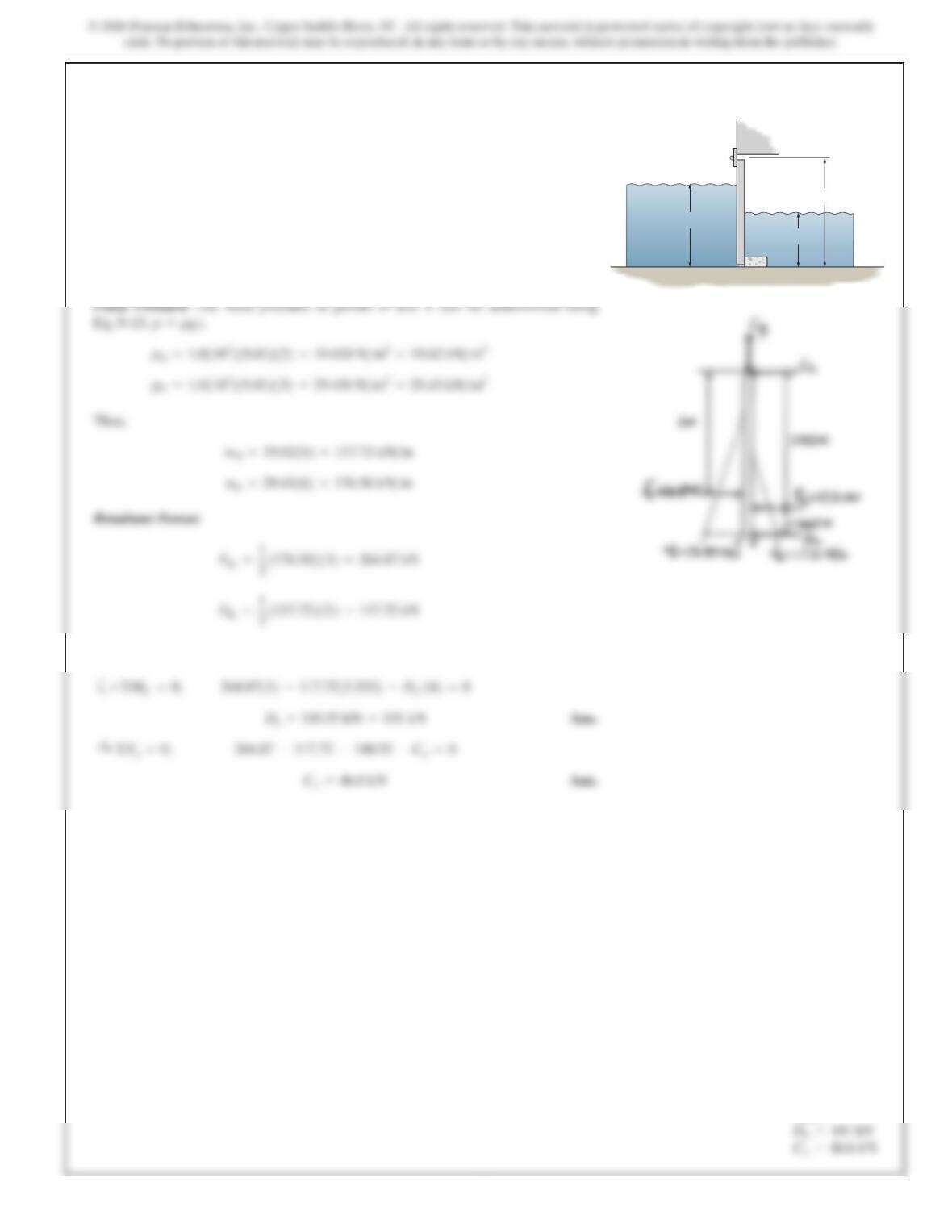
When the tide water Asubsides, the tide gate automatically
swings open to drain the marsh B.For the condition of high
tide shown, determine the horizontal reactions developed
at the hinge Cand stop block D.The length of the gate is
6mand its height is 4 m. rw=1.0 Mg/m3.
SOLUTION
Equations of Equilibrium:
A
B
C
D
3m
2m
4m
Ans:
9–121.
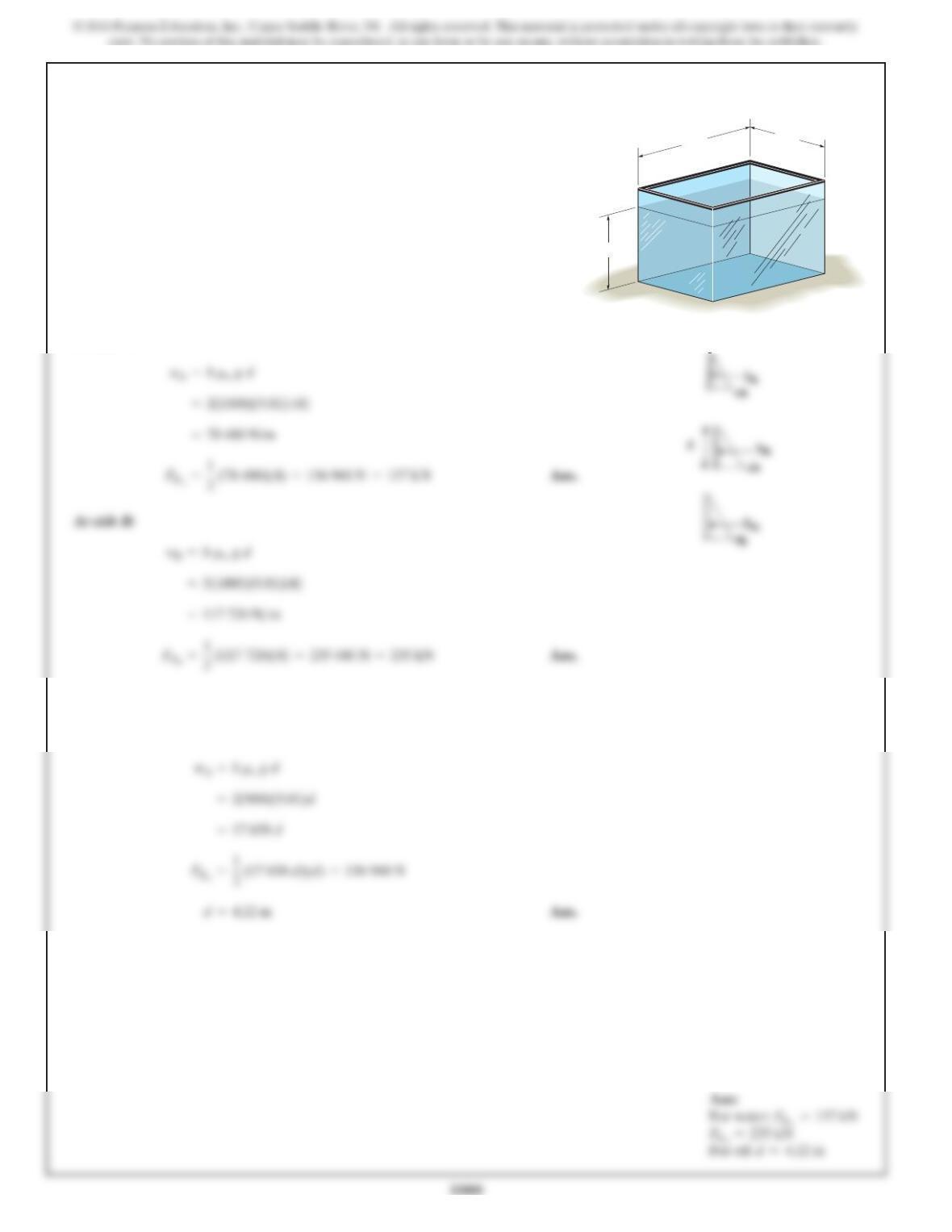
The tank is filled with water to a depth of
Determine the resultant force the water exerts on side Aand
side Bof the tank. If oil instead of water is placed in the tank,
to what depth dshould it reach so that it creates the same
resultant forces? and rw=1000 kg>m3.ro=900 kg>m3
d
=4m.
SOLUTION
For water
At side A:
For oil
At side A:
d
BA
3m 2m
9–122.
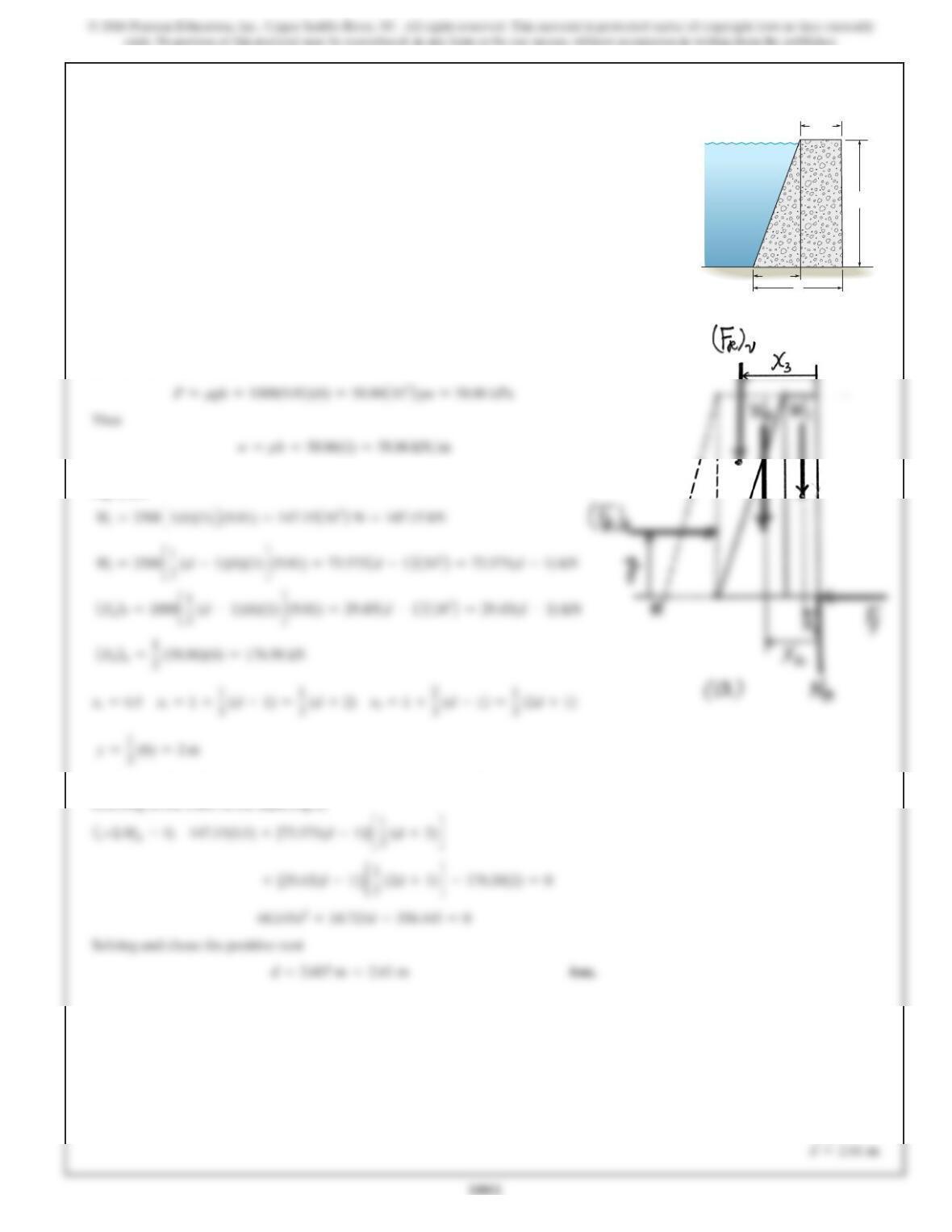
The concrete “gravity” dam is held in place by its own
weight. If the density of concrete is rc
=
2.5 Mg
>
m
3
, and
water has a density of rw
=
1.0 Mg
>
m
3
, determine the
smallest dimension d that will prevent the dam from
overturning about its end A.
A
d
1 m
6 m
d – 1
Ans:
SOLUTION
Loadings. The computation will be based on
b=1 m
width of the dam. The pressure
at the base of the dam is.
The forces that act on the dam and their respective points of application, shown in
Fig. a, are
Equation of Equilibrium. Write the moment equation of equilibrium about A by
referring to the FBD of the dam, Fig. a,
d=2.607 m =2.61 m
9–123.
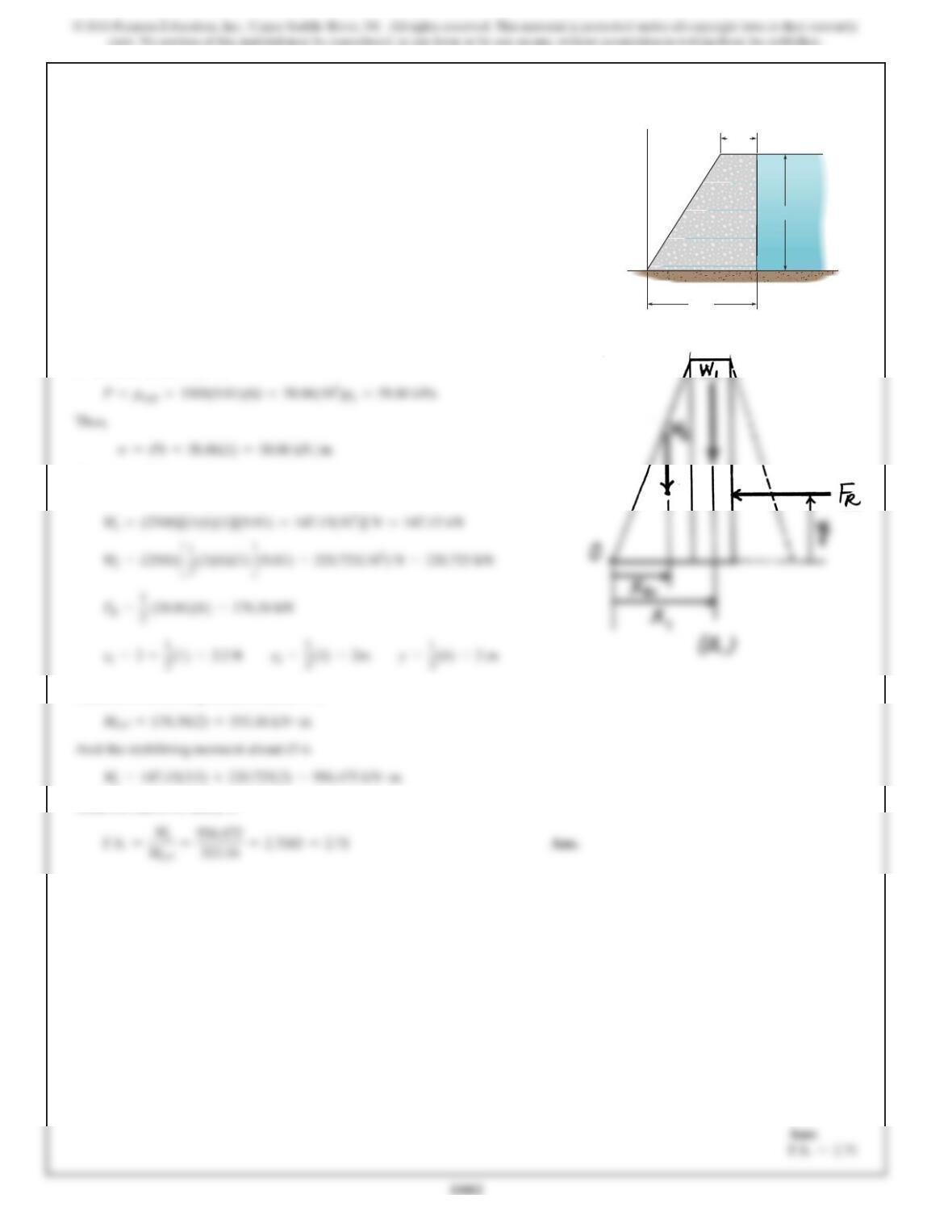
The factor of safety for tipping of the concrete dam is defined as the
ratio of the stabilizing moment due to the dam’s weight divided by
the overturning moment about O due to the water pressure.
Determine this factor if the concrete has a density of
r
conc =
2.5 Mg
>
m
3
and for water rw
=
1 Mg
>
m
3
.
y
1 m
x
4 m
6 m
O
SOLUTION
Loadings. The computation will be based on b
=
1m width of the dam. The pressure
at the base of the dam is
The forces that act on the dam and their respective points of application, shown in
Fig. a, are
Thus, the overturning moment about O is
Thus, the factor of safety is
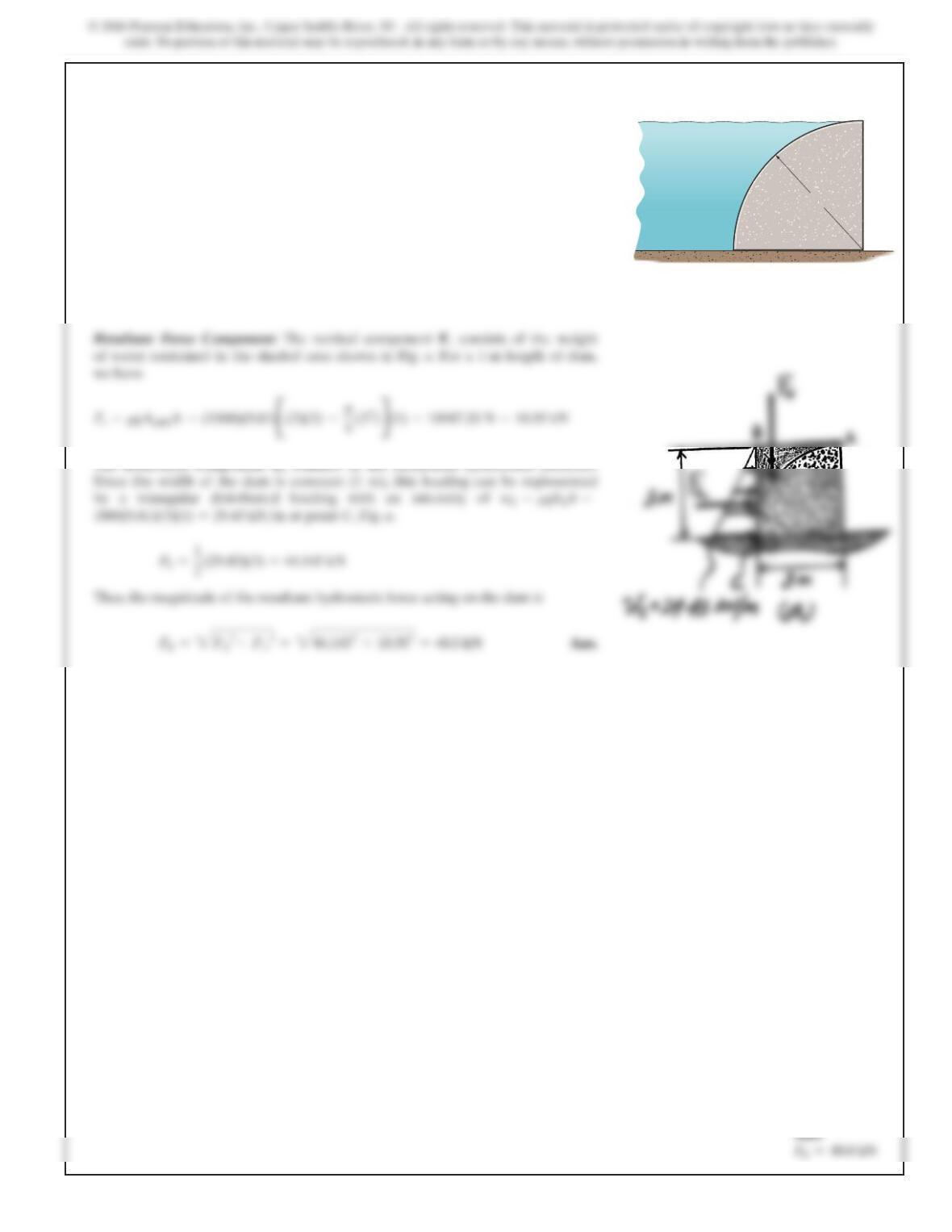
1003
*9–124.
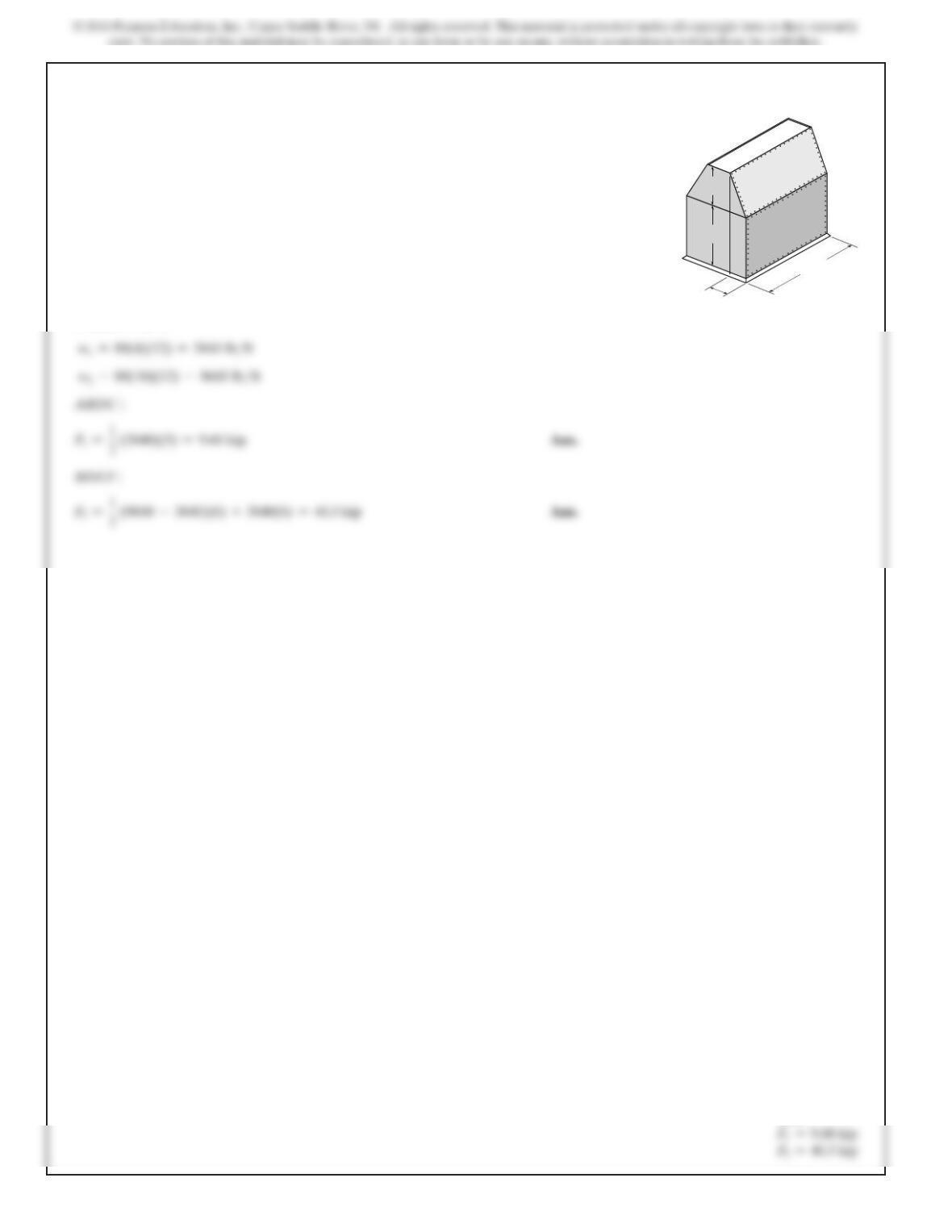
The concrete dam in the shape of a quarter circle.
Determine the magnitude of the resultant hydrostatic force
that acts on the dam per meter of length. The density of
water is
SOLUTION
Loading:The hydrostatic force acting on the circular surface of the dam consists of
the vertical component and the horizontal component as shown in Fig. a.
Fh
Fv
rw=1 Mg>m3.
3 m
1004
9–125.
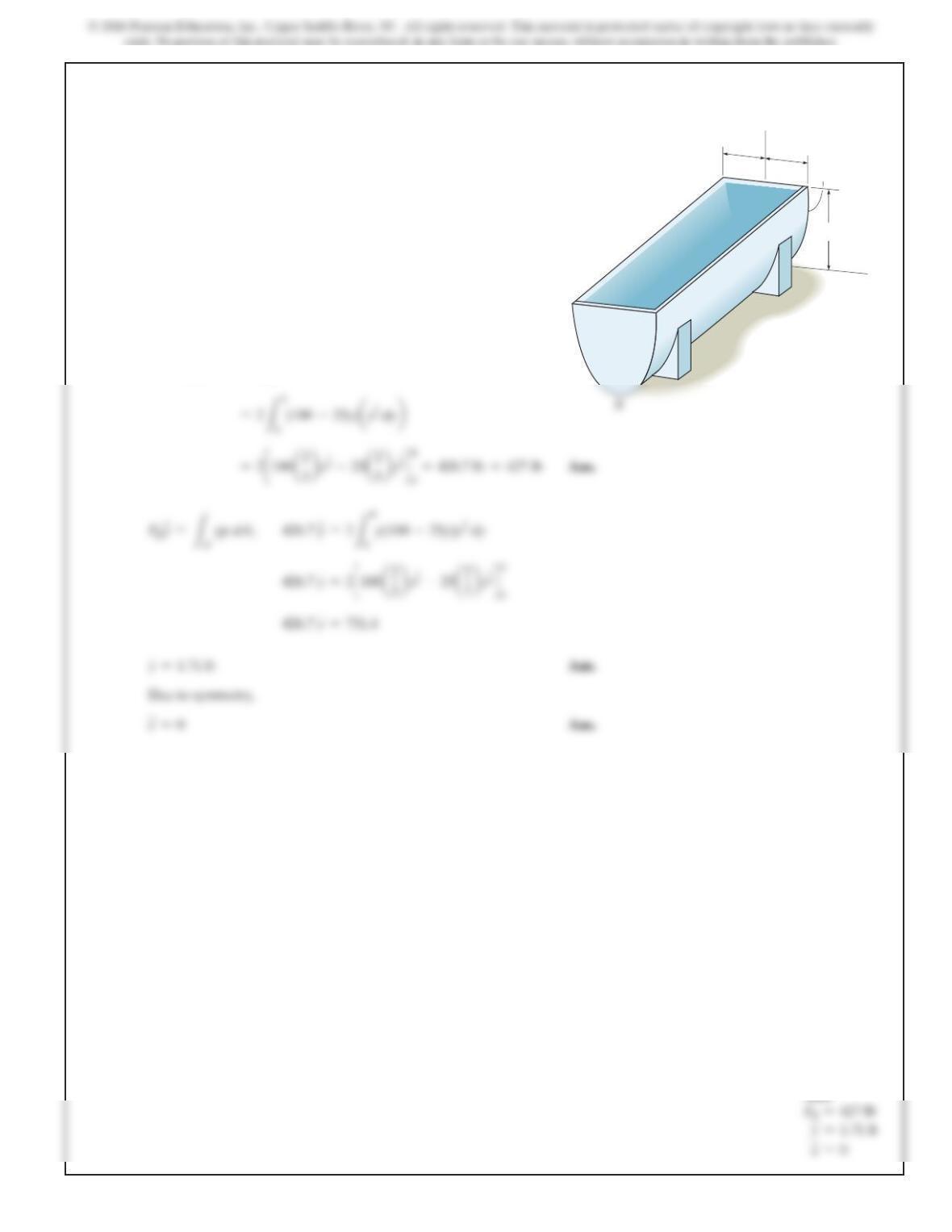
The tank is used to store a liquid having a density of
80 lb
>
ft3. If it is filled to the top, determine the magnitude of
force the liquid exerts on each of its two sides ABDC
and BDFE.
SOLUTION
Ans:
4 ft
6 ft
12 ft
3 ft
B
A
C
D
F
E
1005
9–126.
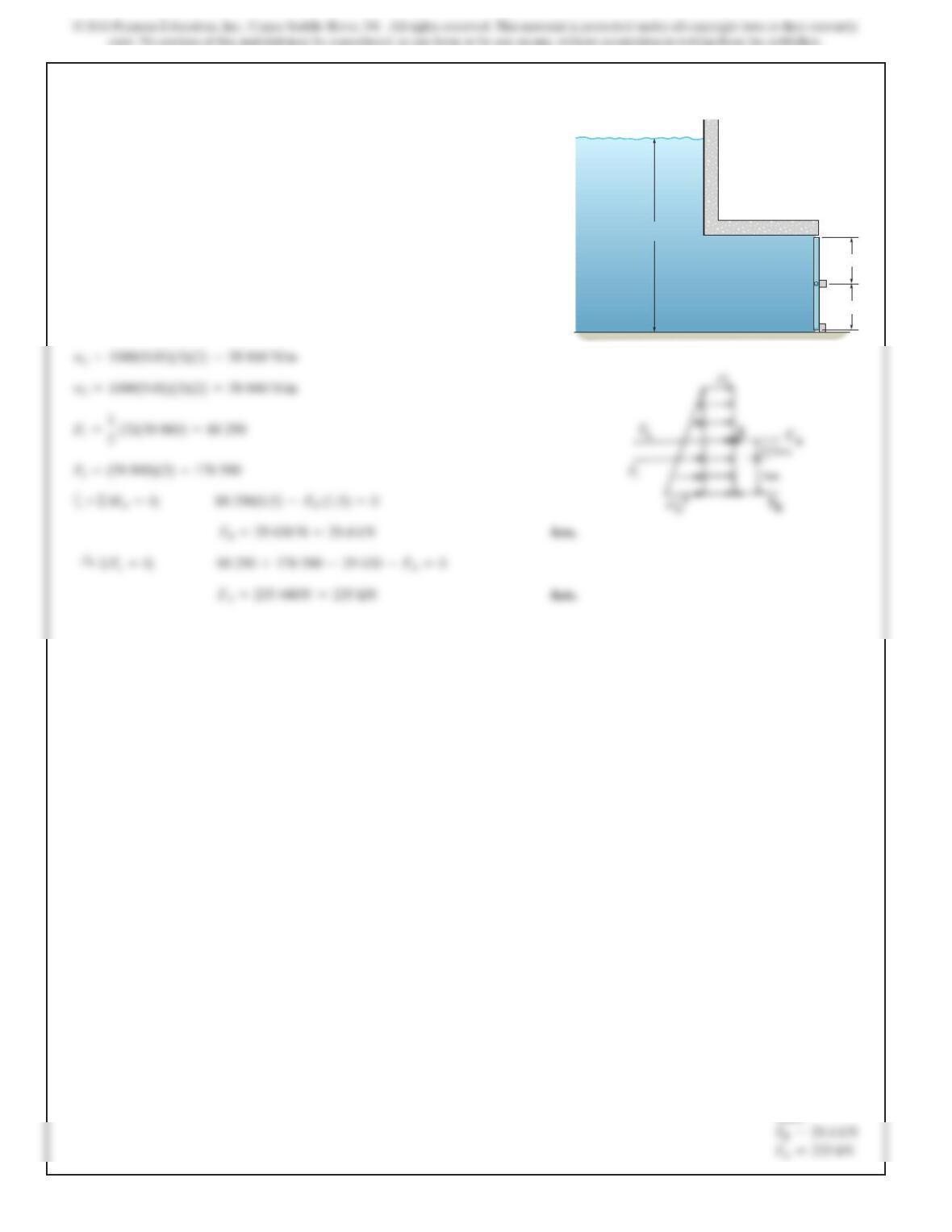
The parabolic plate is subjected to a fluid pressure that
varies linearly from 0 at its top to 100 lb
>
ft at its bottom B.
Determine the magnitude of the resultant force and its
location on the plate.
SOLUTION
FR=
LA
p dA =
L4
0
(100 –25y)(2x dy)
Ans:
2 ft 2 ft
4 ft
y x2
y
x
1006
9–127.
SOLUTION
The 2-m-wide rectangular gate is pinned at its center Aand
is prevented from rotating by the block at B. Determine the
reactions at these supports due to hydrostatic pressure.
rw
=1.0 Mg>m3.
6m
1.5m
A
B
1.5m
Ans:
1007
*9–128.
SOLUTION
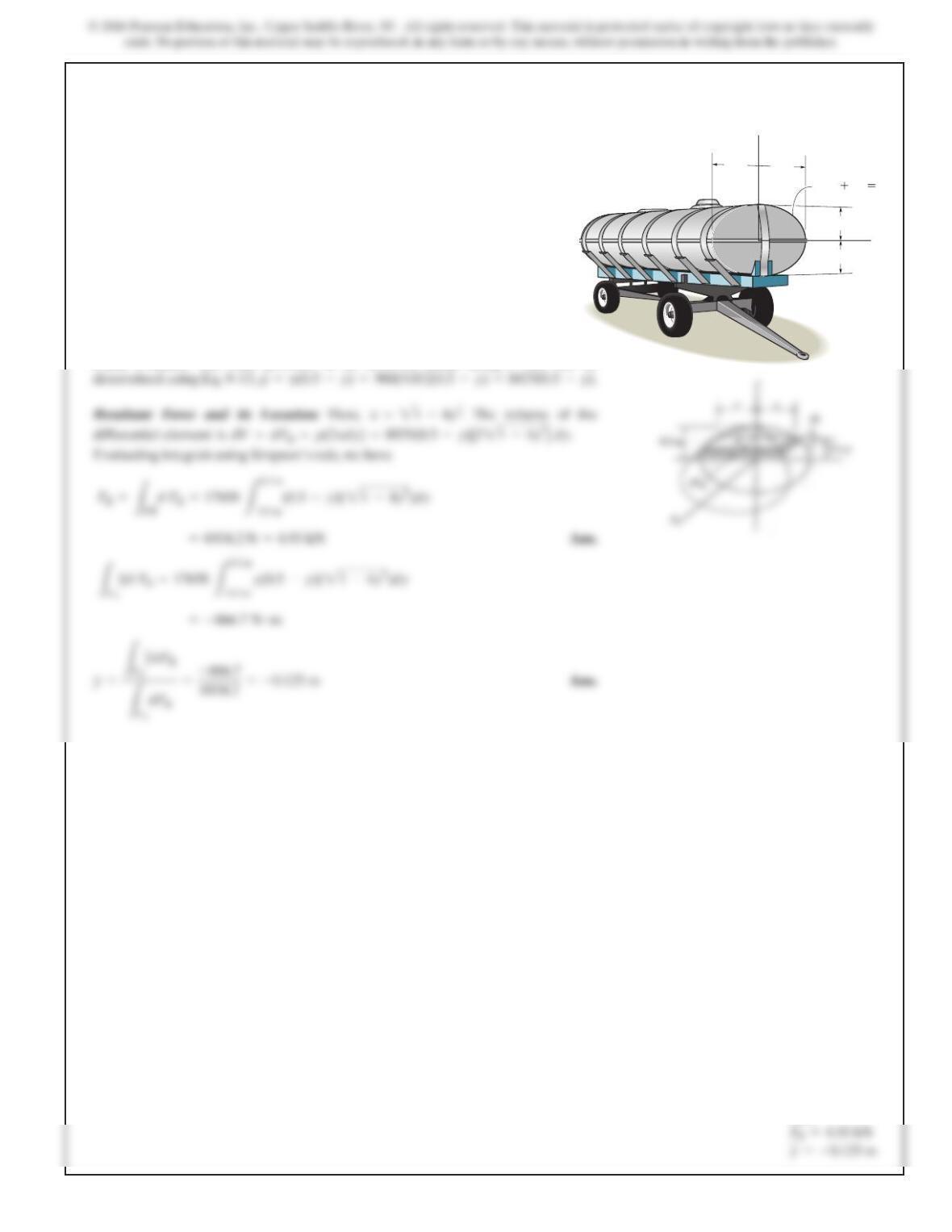
Fluid Pressure: The fluid pressure at an arbitrary point along yaxis can be
T
h
e tan
k
i
s f
ill
e
d
w
i
t
h
a
li
qu
id
w
hi
c
h
h
as a
d
ens
i
ty of
Determine the resultant force that it exerts on
the elliptical end plate, and the location of the center of
pressure, measured from the xaxis.
900 kg>m3.
0.5 m
1m
0.5 m
1m
x
y
4y
2
x
2
1
Ans:
9–129.
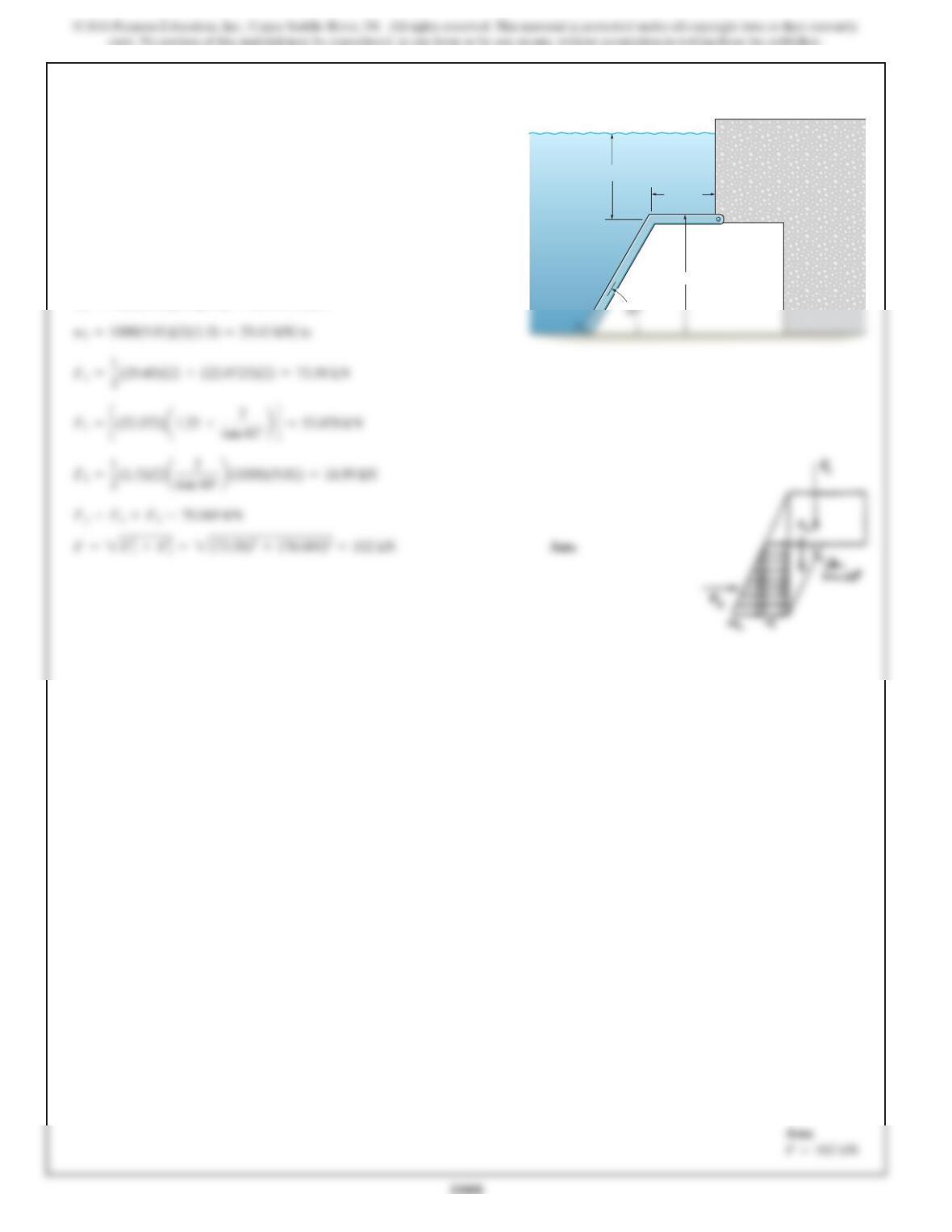
Determine the magnitude of the resultant force acting on
the gate ABC due to hydrostatic pressure. The gate has a
width of 1.5 m. .rw
=1.0 Mg>m3
B
C
2m
1.25 m
1.5 m
SOLUTION
w1=1000(9.81)(1.5)(1.5) =22.072 kN>m
9–130.
The semicircular drainage pipe is filled with water.
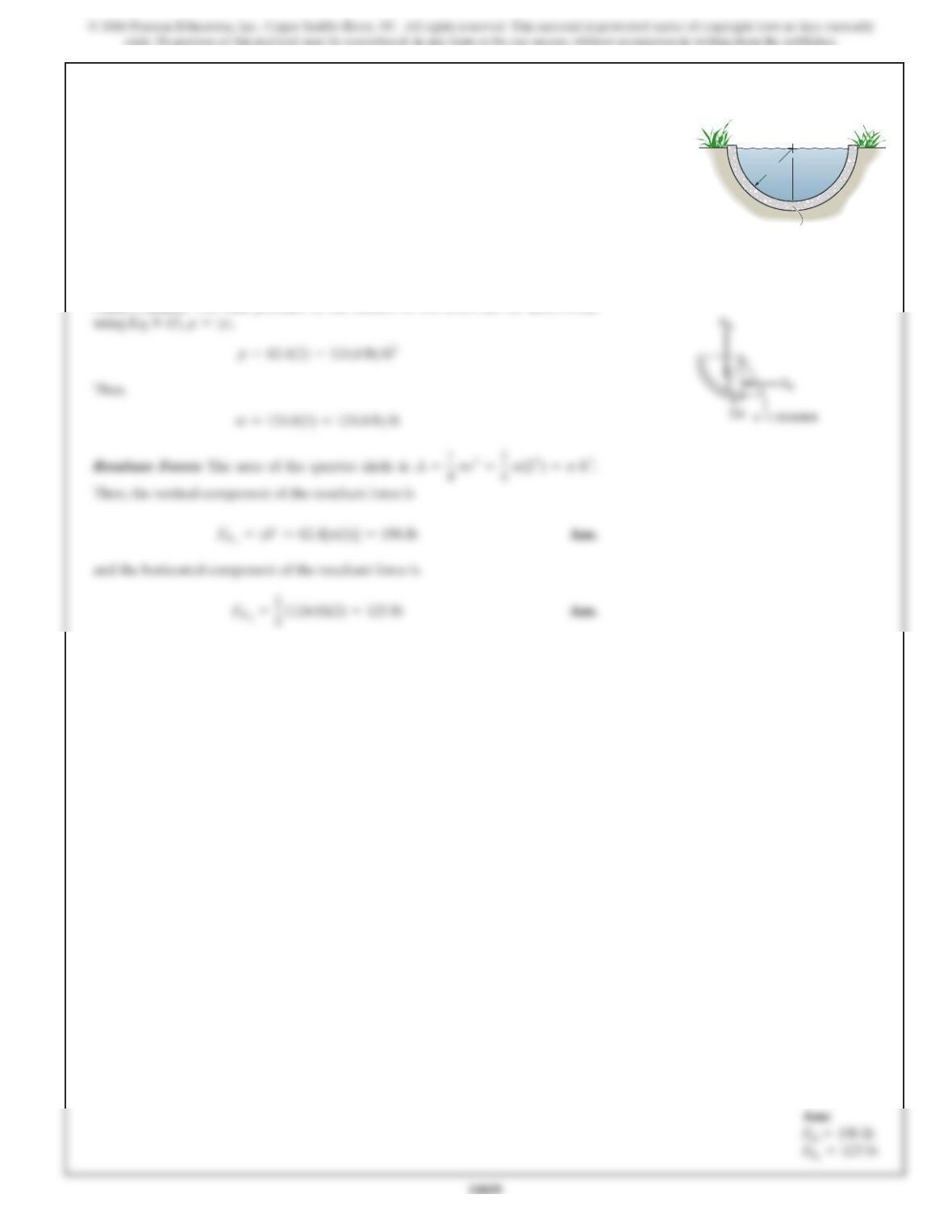
Determine the resultant horizontal and vertical force
components that the water exerts on the side AB of the
pipe per foot of pipe length; gw=62.4 lb>ft3.
SOLUTION
Fluid Pressure: The fluid pressure at the bottom of the drain can be determined
B
2ft
A