Problem 8.115 Determine the moment of inertia of the
bar in Problem 8.114 about the z0axis through its center
of mass.
Solution: In the solution of Problem 8.114, it is shown that the
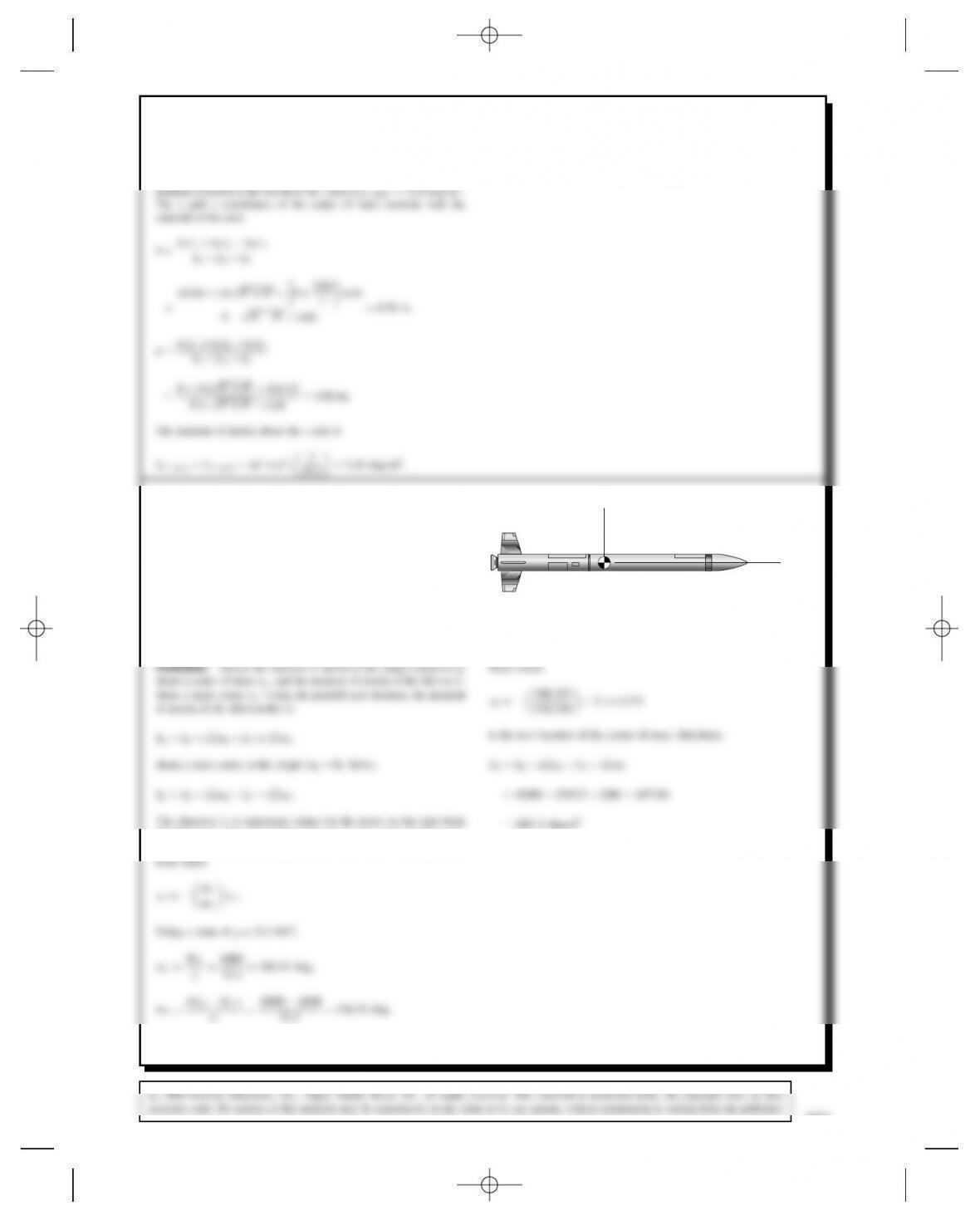
Problem 8.116 The rocket is used for atmospheric
research. Its weight and its moment of inertia about the
zaxis through its center of mass (including its fuel) are
10 kip and 10,200 slug-ft2, respectively. The rocket’s
fuel weighs 6000 lb, its center of mass is located at
xD3 ft, yD0, zD0, and the moment of inertia of
the fuel about the axis through the fuel’s center of mass
parallel to zis 2200 slug-ft2. When the fuel is exhausted,
what is the rocket’s moment of inertia about the axis
through its new center of mass parallel to z?
y
x
the data given. Since the filled rocket has a mass center at the origin,
the mass center of the empty rocket is found from 0 DmExECmFxF,
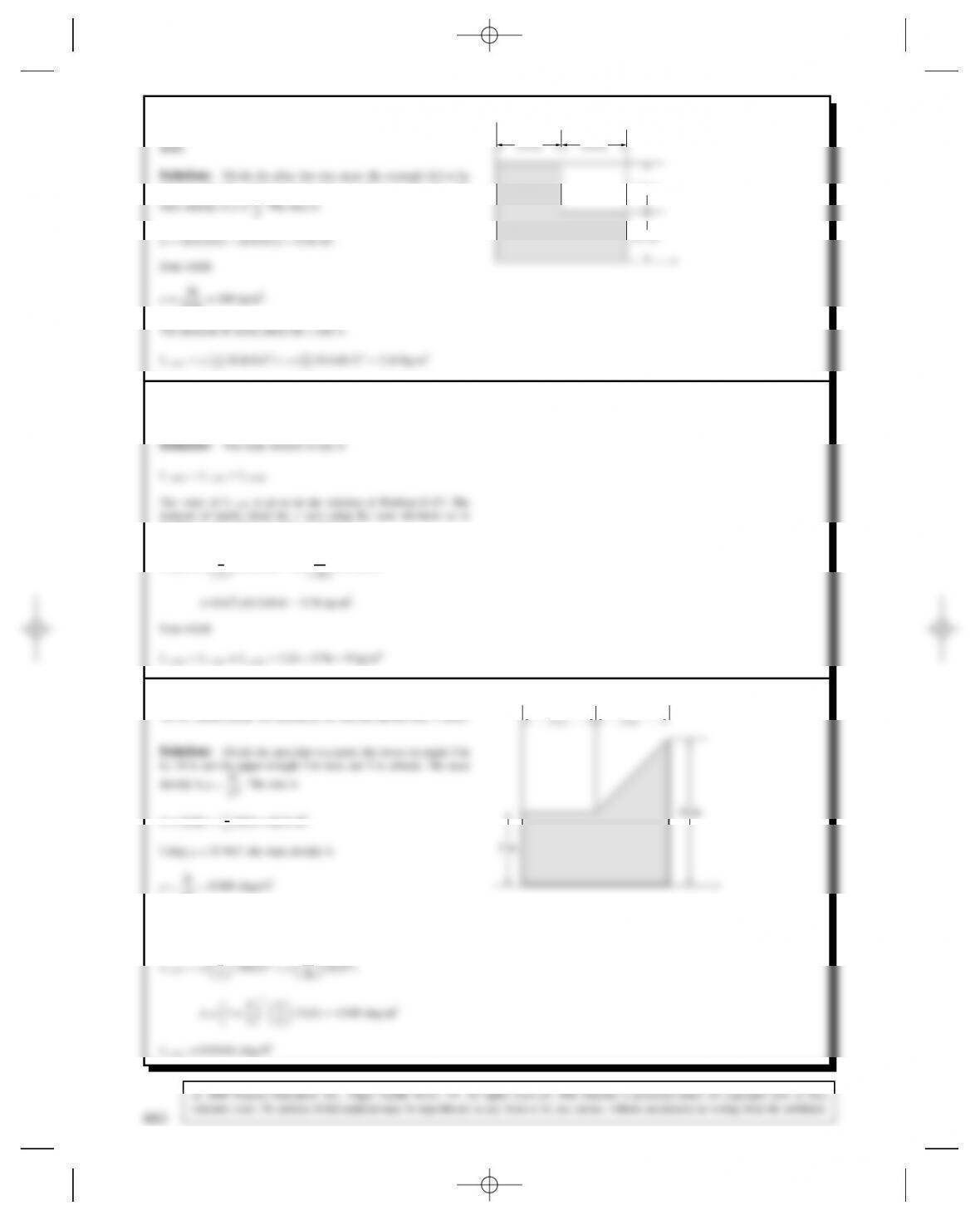
Problem 8.117 The mass of the homogenous thin plate
is 36 kg. Determine its moment of inertia about the x
0.3 m
y
0.6 m on the left, and the rectangle 0.4 m by 0.3 m on the right. The
0.36 D100 kg/m2.
Problem 8.118 Determine the moment of inertia of the
plate in Problem 8.117 about the zaxis.
Problem 8.117 and the parallel axis theorem is
Iyaxis D1
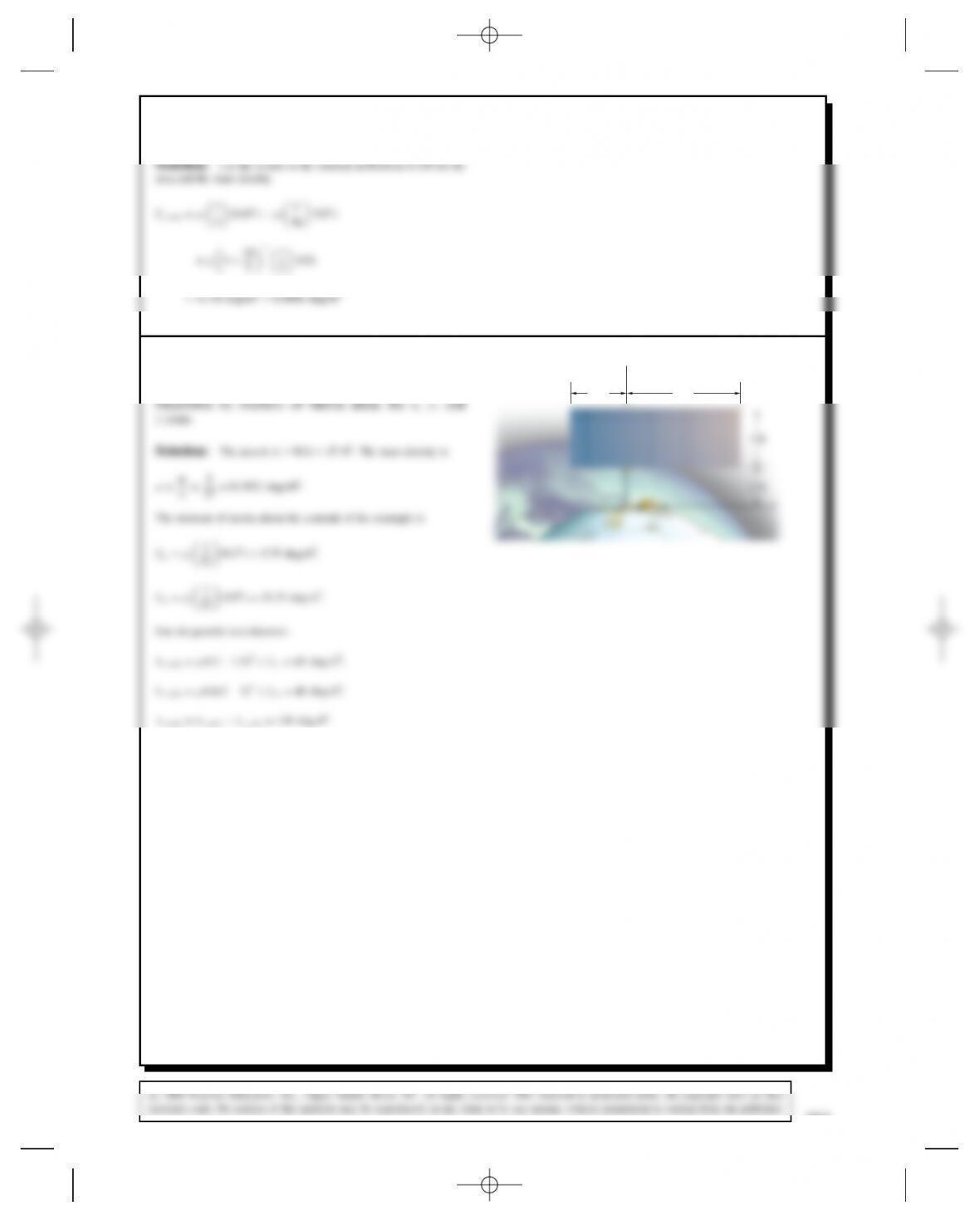
Problem 8.119 The homogenous thin plate weighs
10 lb. Determine its moment of inertia about the xaxis.
y
5 in5 in
Solution: Divide the area into two parts: the lower rectangle 5 in
by 10 in and the upper triangle 5 in base and 5 in altitude. The mass
density is DW
gA . The area is
gA D0.005 slug/in2.
Using the parallel axis theorem, the moment of inertia about the xaxis
is
662
Problem 8.120 Determine the moment of inertia of the
plate in Problem 8.119 about the yaxis.
Problem 8.121 The thermal radiator (used to elimi-
nate excess heat from a satellite) can be modeled as a
homogenous, thin rectangular plate. Its mass is 5 slugs.
y
6 ft
3 ft
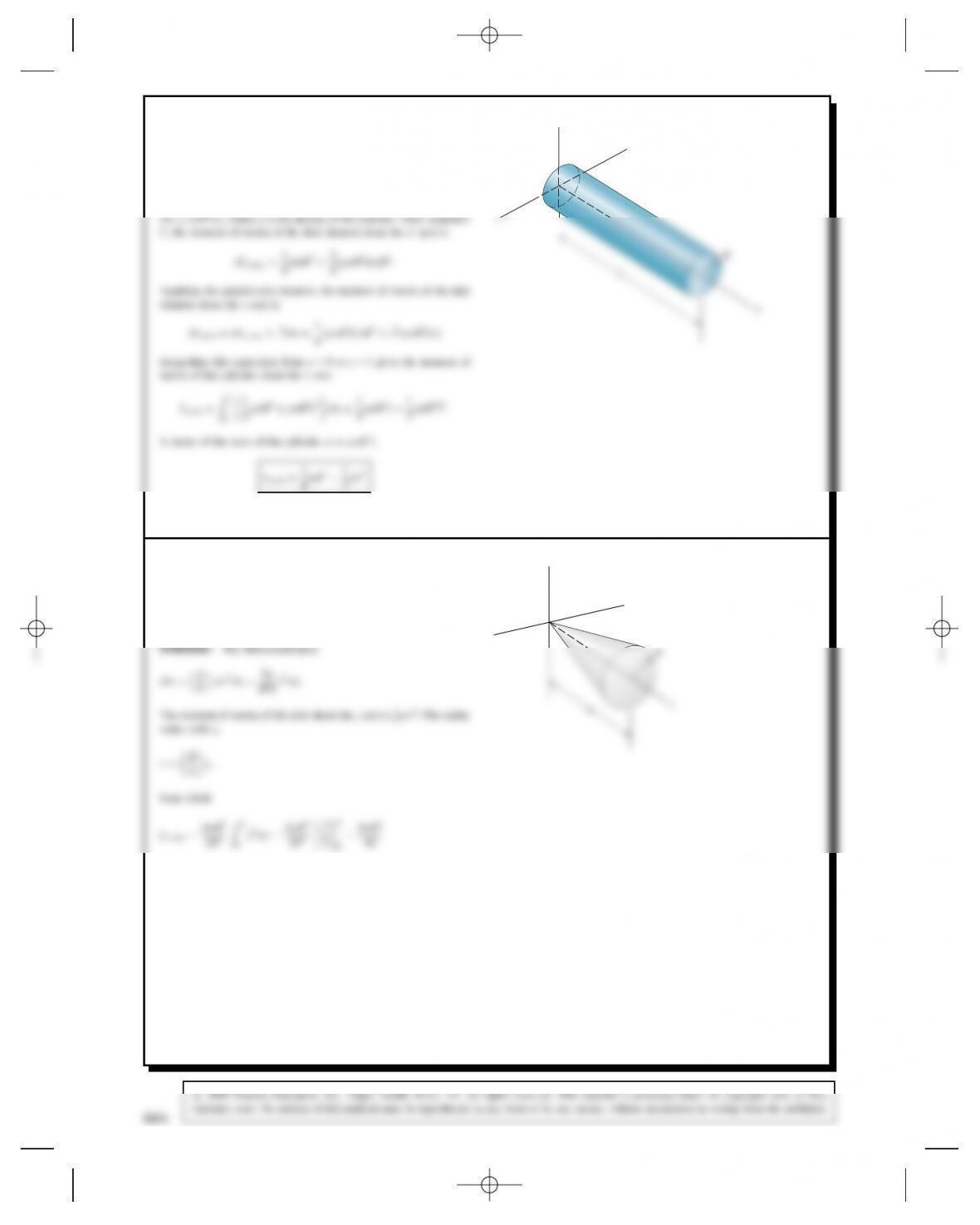
Problem 8.122 The homogeneous cylinder has mass m,
length l, and radius R. Use integration as described in
Example 8.13 to determine its moment of inertia about
the xaxis.
y
x
Solution: The volume of the disk element is R2dz and its mass is
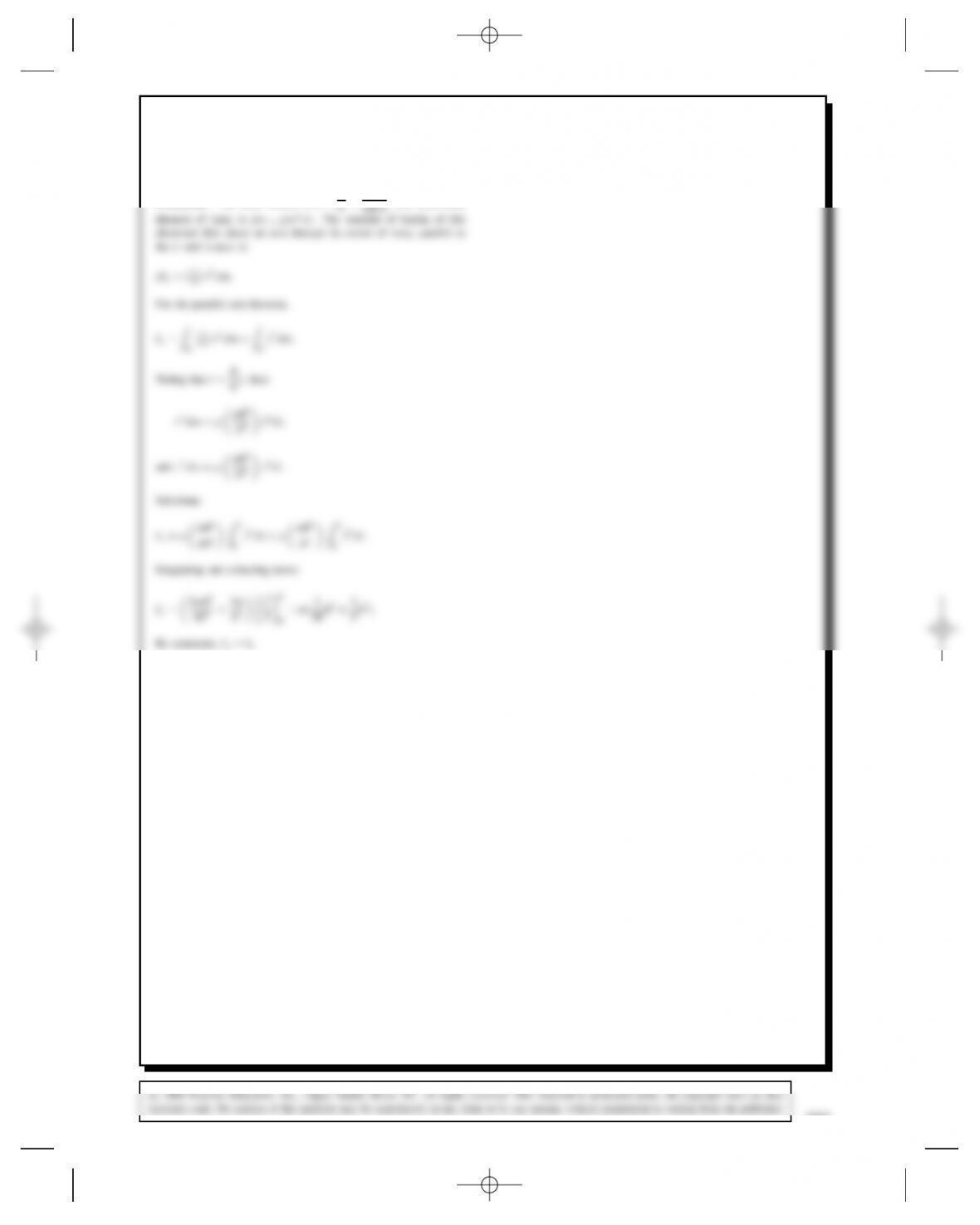
Problem 8.123 The homogenous cone is of mass m.
Determine its moment of inertia about the zaxis, and
compare your result with the value given in Appendix C.
(See Example 8.13.) x
y
R
Solution: The differential mass
dm Dm
Vr2dz D3m
R2hr2dz.
664
Problem 8.124 Determine the moments of inertia of
the homogenous cone in Problem 8.123 about the xand
yaxes, and compare your results with the values given
in Appendix C.
Solution: The mass density is Dm
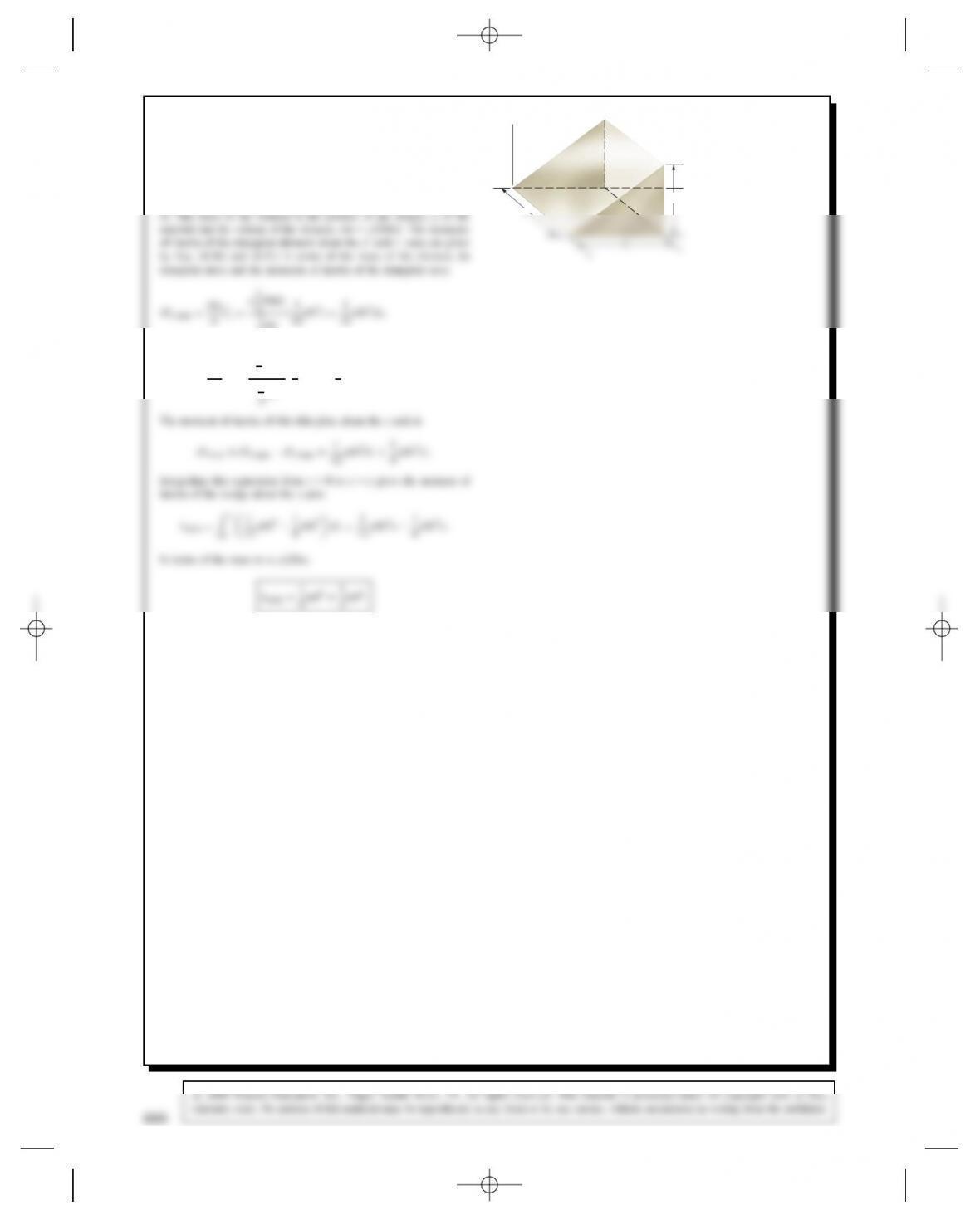
Problem 8.125 The mass of the homogeneous wedge
is m. Use integration as described in Example 8.13 to
determine its moment of inertia about the zaxis. (Your
answer should be in terms of m,a,b, and h.)
y
h
a
x
Solution: Consider a triangular element of the wedge of thickness
2bh
dIy0axis Ddm
AI0
yD
1
2bhdz
1
⊲1
4hb3⊳D1
4rhb3dz,
666
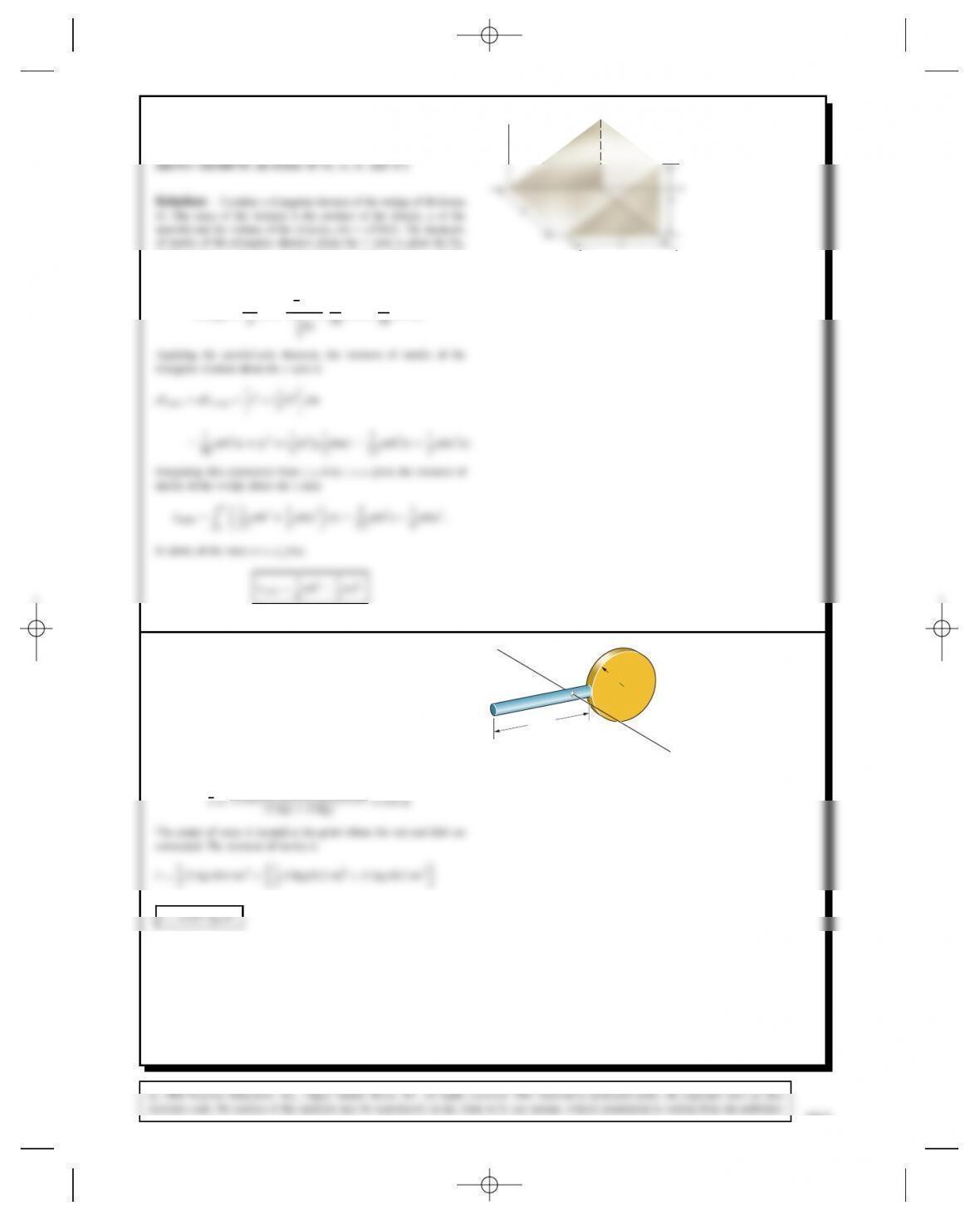
Problem 8.126 The mass of the homogeneous wedge
is m. Use integration as described in Example 8.13 to
determine its moment of inertia about the xaxis. (Your
y
zb
x
(8.30) in terms of the mass of the element, its triangular area, and the
moments of inertia of the triangular area:
dIx0axis Ddm
1
2bhdz
⊲1
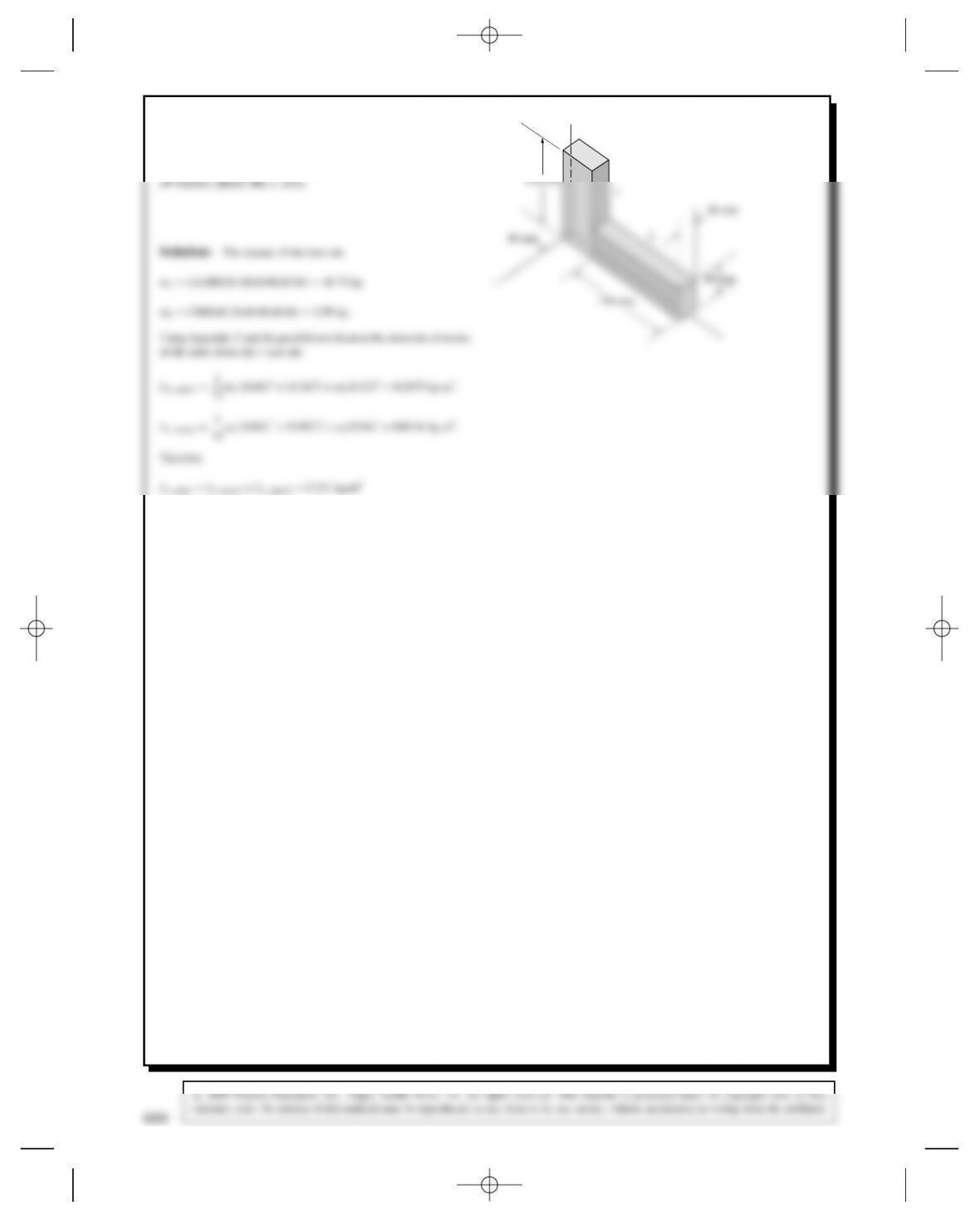
Problem 8.127 In Example 8.12, suppose that part of
the 3-kg bar is sawed off so that the bar is 0.4 m long
and its mass is 2 kg. Determine the moment of inertia
of the composite object about the perpendicular axis L
through the center of mass of the modified object.
L
0.6 m
0.2 m
Solution: The mass of the disk is 2 kg. Measuring from the left
end of the rod, we locate the center of mass
Problem 8.128 The L-shaped machine part is com-
posed of two homogeneous bars. Bar 1 is tungsten alloy
with mass density 14,000 kg/m3, and bar 2 is steel
with mass density 7800 kg/m3. Determine its moment
y
668
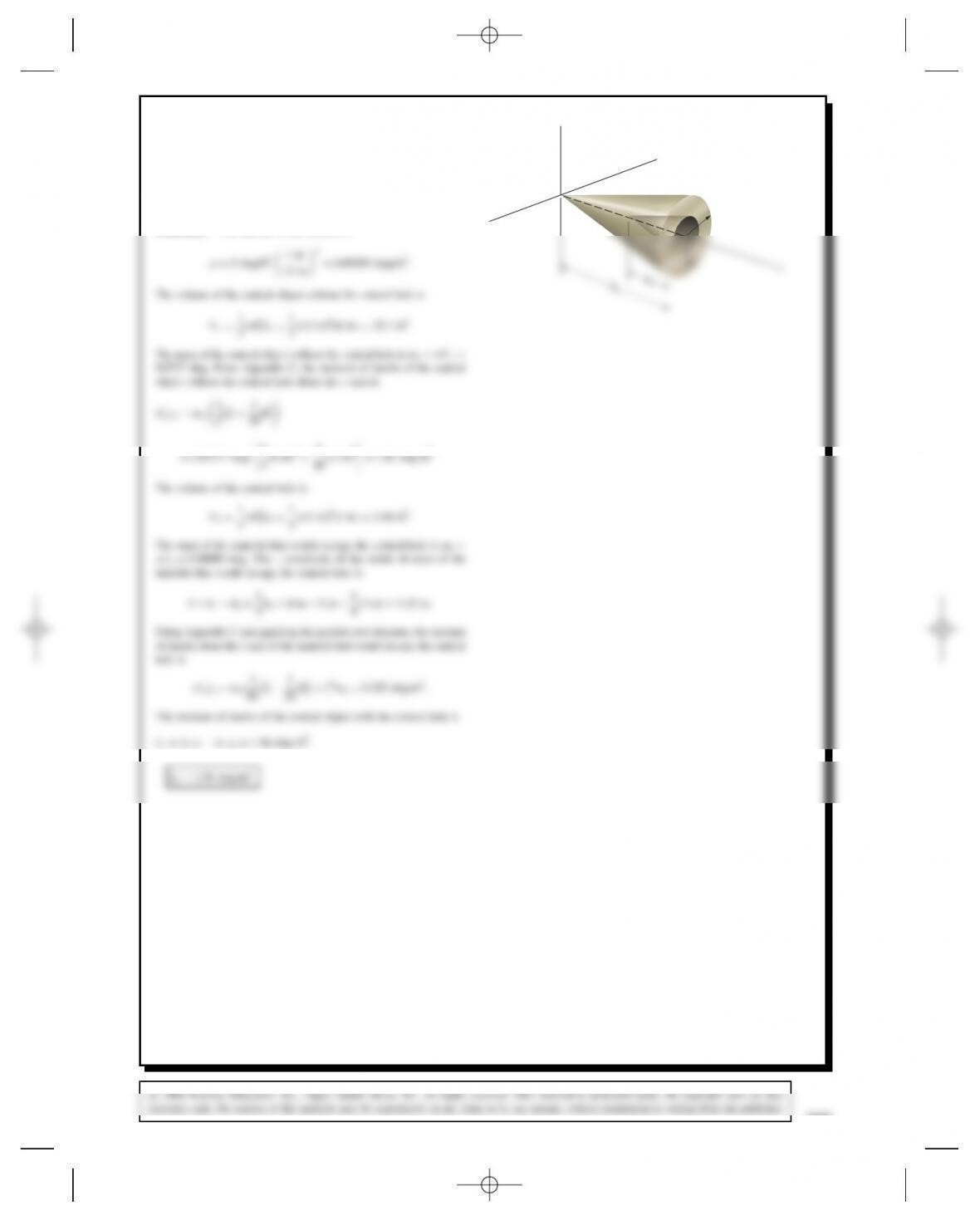
Problem 8.129 The homogeneous object is a cone
with a conical hole. The dimensions R1D2 in, R2D
1 in, h1D6 in, and h2D3 in. It consists of an
aluminum alloy with a density of 5 slug/ft3. Determine
its moment of inertia about the xaxis.
y
x
R1
Solution: The density of the material is
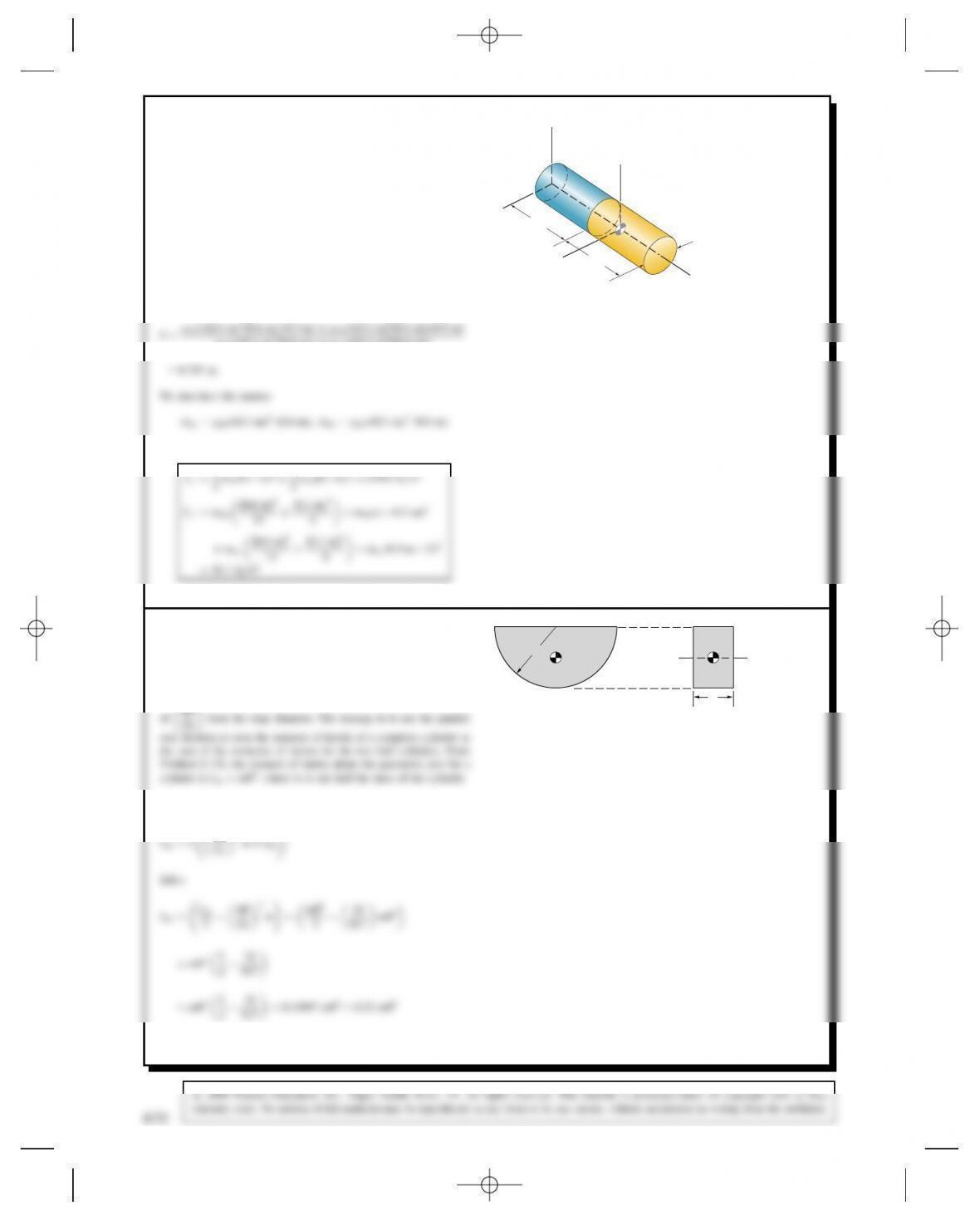
Problem 8.130 The circular cylinder is made of
aluminum (Al) with density 2700 kg/m3and iron (Fe)
with density 7860 kg/m3. Determine its moments of
inertia about the x0and y0axes.
200 mm
y
x, x⬘
z
Al
Fe
600 mm
600 mm
y⬘
z⬘
Solution: We have Al D2700 kg/m3,
Fe D7860 kg/m3
We first locate the center of mass
xDAl⊲[0.1m]
2[0.6m]⊳⊲0.3m⊳CFe⊲[0.1m]
2[0.6m]⊳⊲0.9m⊳
Al⊲[0.1m]
2[0.6m]⊳CFe⊲[0.1m]
2[0.6m]⊳
Now find the moments of inertia
Problem 8.131 The homogenous half-cylinder is of
mass m. Determine its moment of inertia about the axis
Lthrough its center of mass. L
T
R
Solution: The centroid of the half cylinder is located a distance
By the parallel axis theorem,
670
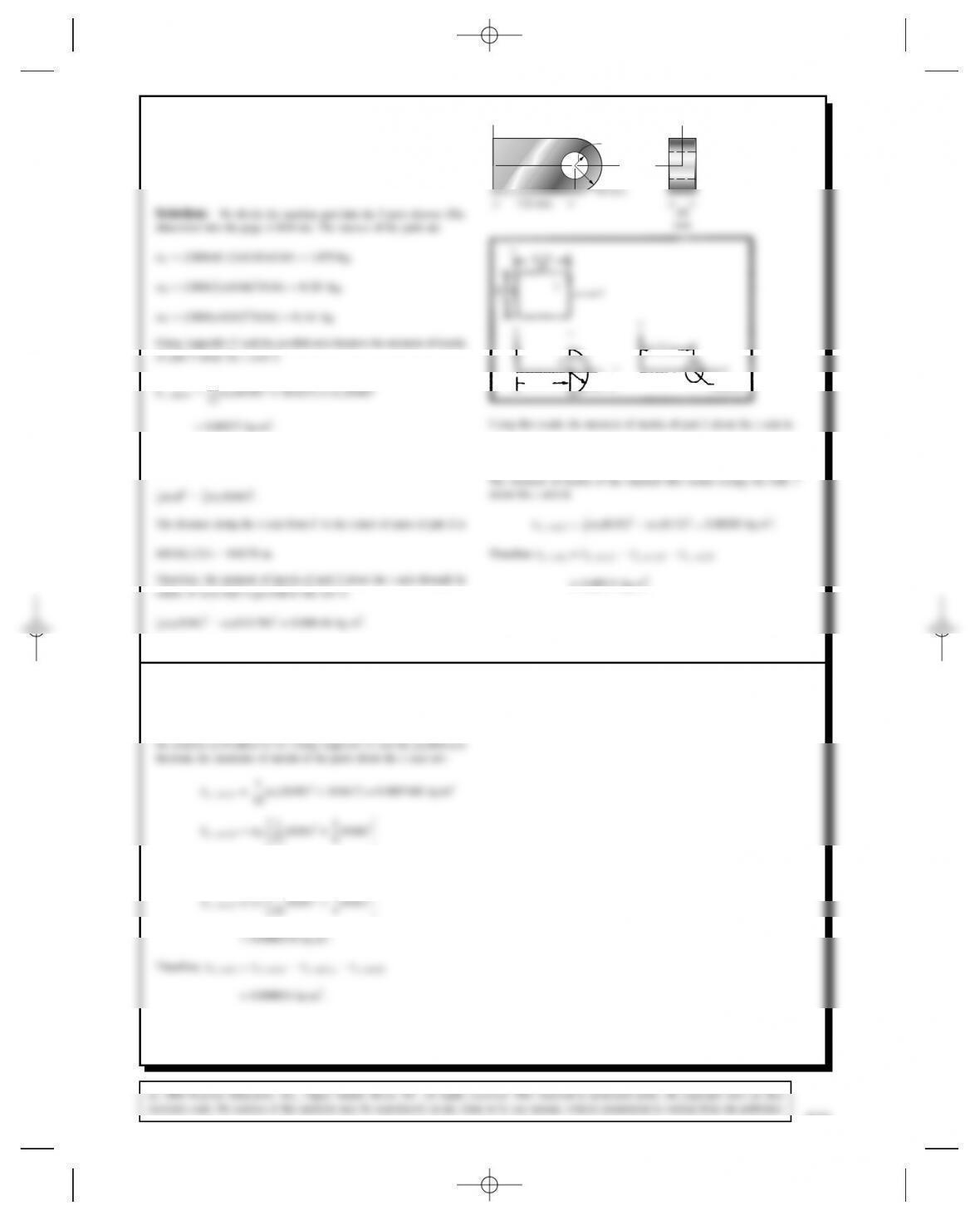
Problem 8.132 The homogeneous machine part is
made of aluminum alloy with density D2800 kg/m3.
Determine its moment of inertia about the zaxis.
20 mm
x
y
z
y
The moment of inertia of part 2 about the axis through the center C
that is parallel to the zaxis is
Therefore, the moment of inertia of part 2 about the zaxis through its
center of mass that is parallel to the axis is
1
2m2⊲0.04⊳2m2⊲0.0170⊳2D0.000144 kg-m2.
I⊲z axis⊳2D0.000144 Cm2⊲0.12 C0.017⊳2D0.00543 kg-m2.
D0.00911 kg-m2.
Problem 8.133 Determine the moment of inertia of the
machine part in Problem 8.132 about the xaxis.
Solution: We divide the machine part into the 3 parts shown in
D0.0001501 kg-m2
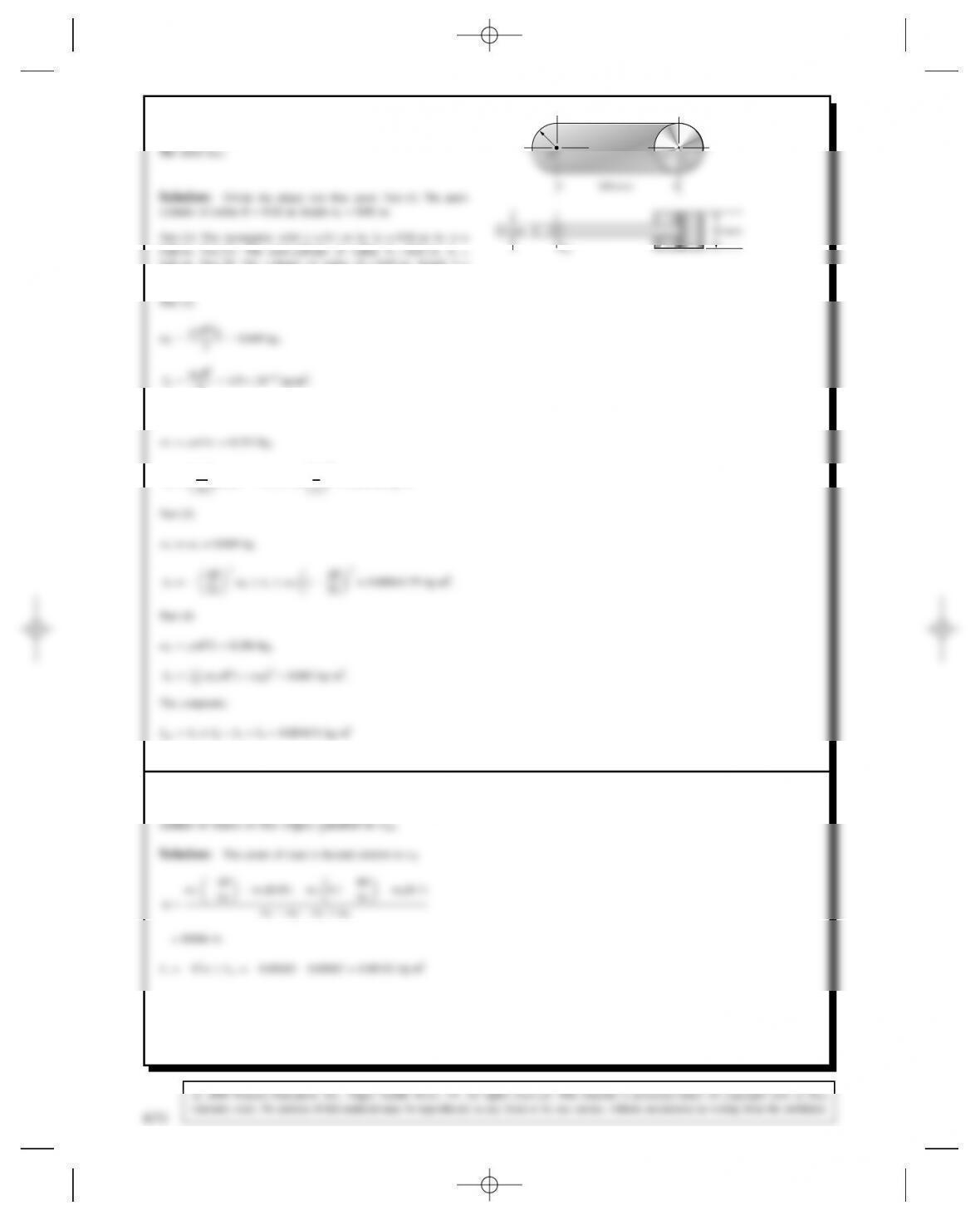
Problem 8.134 The object consists of steel of density
D7800 kg/m3. Determine its moment of inertia about
20 mm
0.01 m. Part (4) The cylinder of radius RD0.02 m, height hD
0.03 m.
4D4.9ð106kg-m2,
Part (2):
I2D1
D0.00108 kg-m2.
Problem 8.135 Determine the moment of inertia of
the object in Problem 8.134 about the axis through the
672