SOLUTION
The Equation of The Cable.
Boundary Conditions. At
x=0
,
y=0
. Then Eq (1) gives
x=0
Thus, the equation of the cable becomes
*7–108.
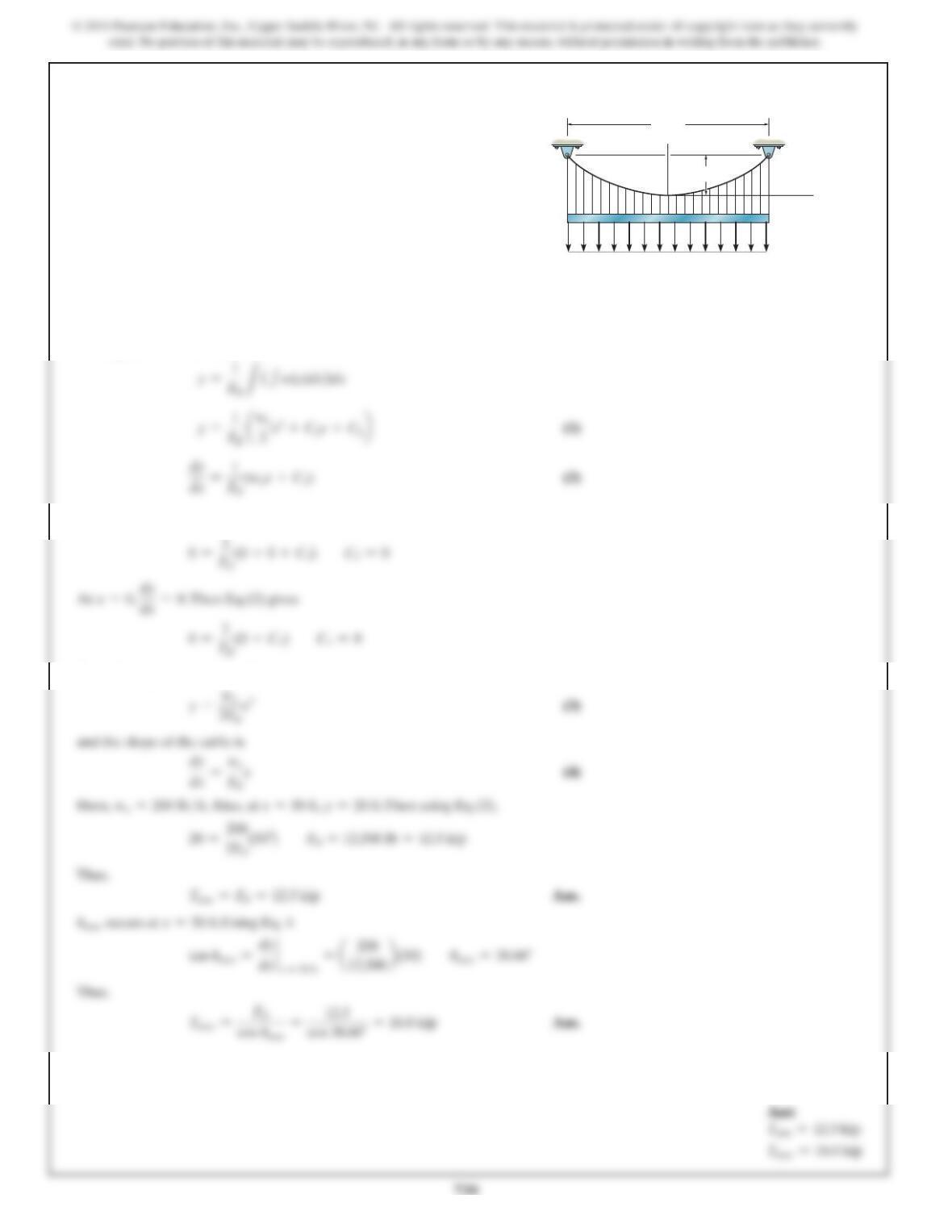
The cable is subjected to a uniform loading of
w = 200 lb
>
ft. Determine the maximum and minimum
tension in the cable.
100 ft
20 ft
y
x
AB
200 lb/ft
731
7–109.
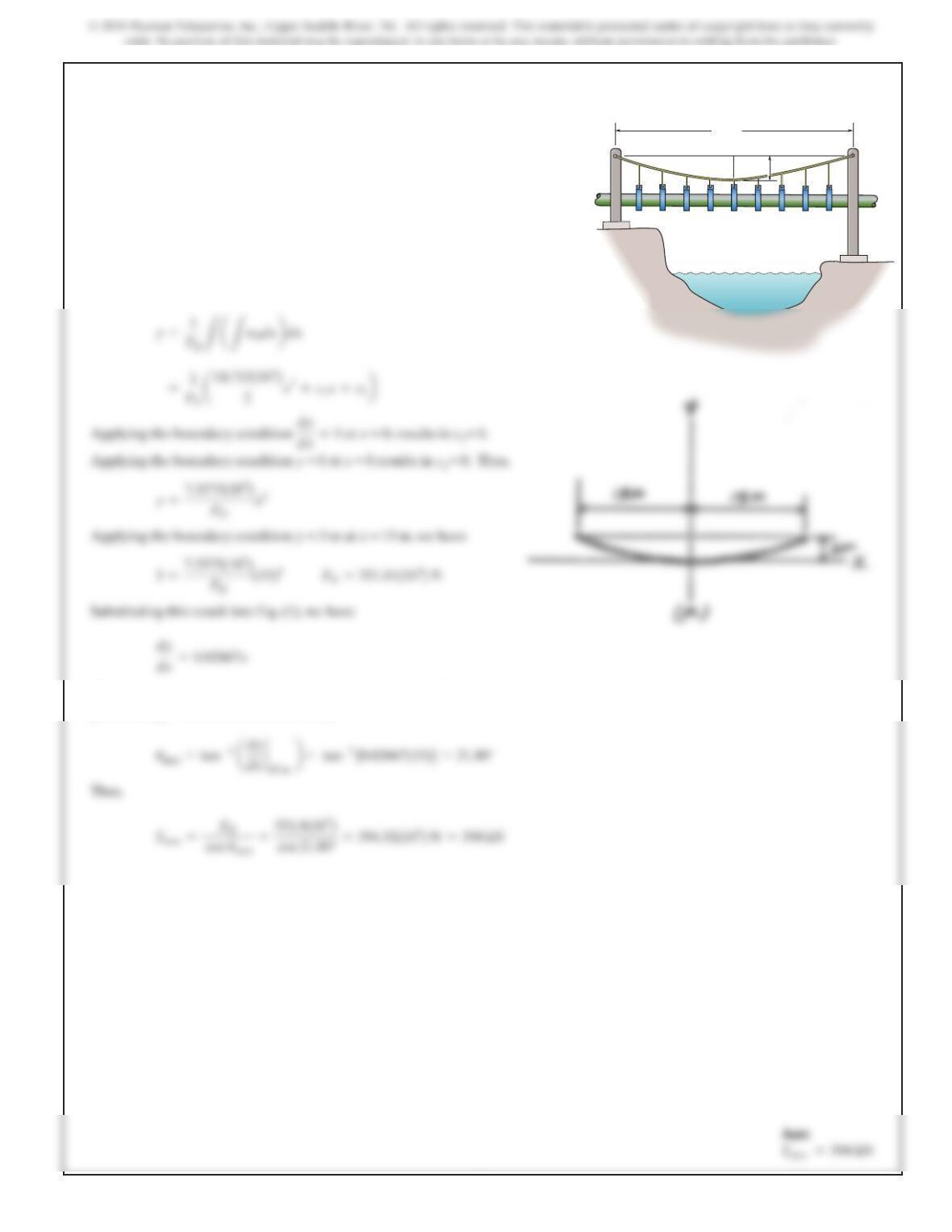
If the pipe has a mass per unit length of 1500 kg m,
determine the maximum tension developed in the cable.
SOLUTION
As shown in Fig. a, the origin of the x,ycoordinate system is set at the lowest point
of the cable. Here,.Using Eq. 7–12,
we can write
The maximum tension occurs at either points at Aor Bwhere the cable has the
greatest angle with the horizontal. Here,
w(x)=w0=1500(9.81) =14.715(103) N>m
>
30 m
3 m
AB
7–110.
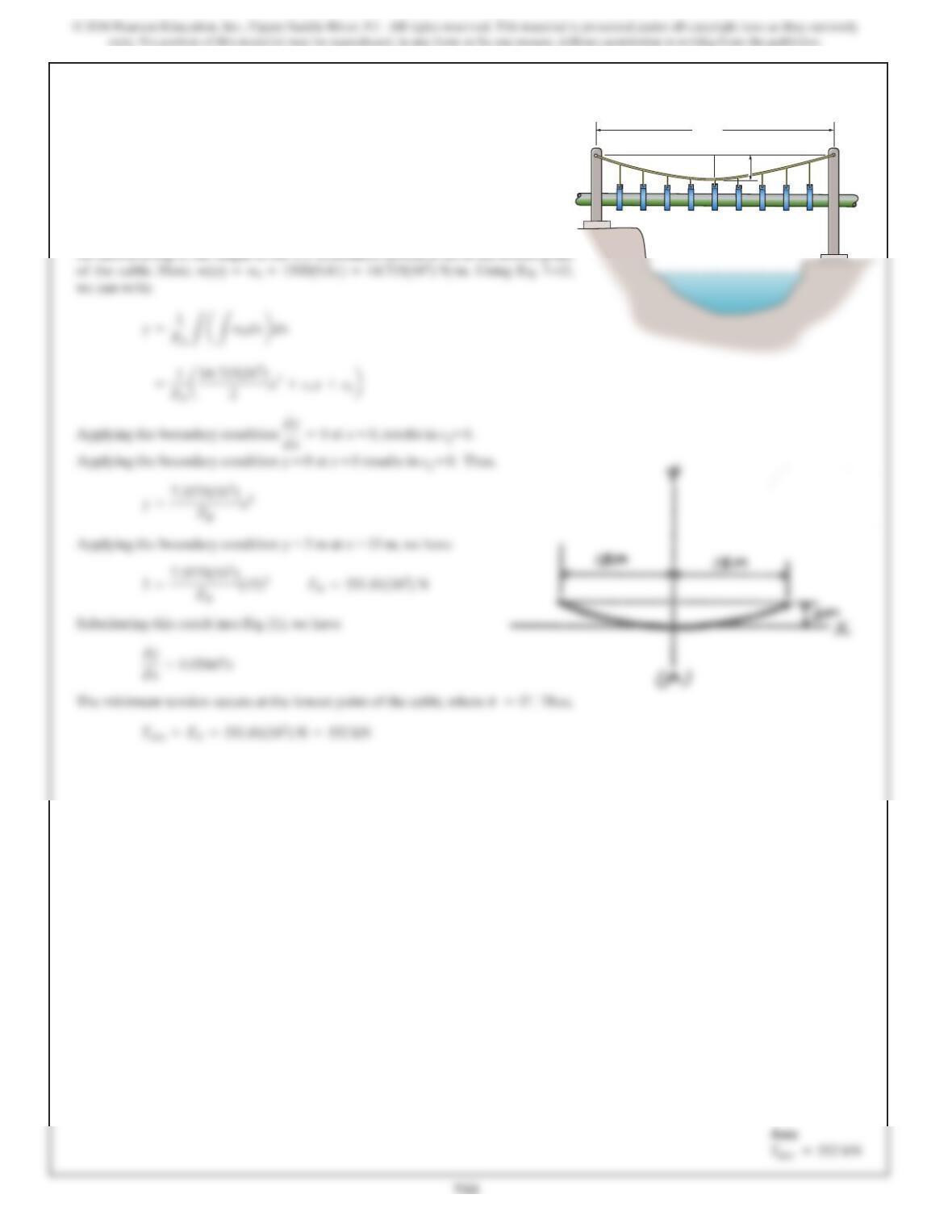
If the pipe has a mass per unit length of 1500 kg m,
determine the minimum tension developed in the cable.
SOLUTION
>
30 m
3 m
AB
733
SOLUTION
The Equation of The Cable. Here,
w(x)=15x
.
Boundary Conditions. At
x=0
,
y=0
. Then Eq (1) gives
x=0
And the slope of the cable is
x=20 ft
u
max
occurs at
x=20 ft
. Then Eq (4) gives
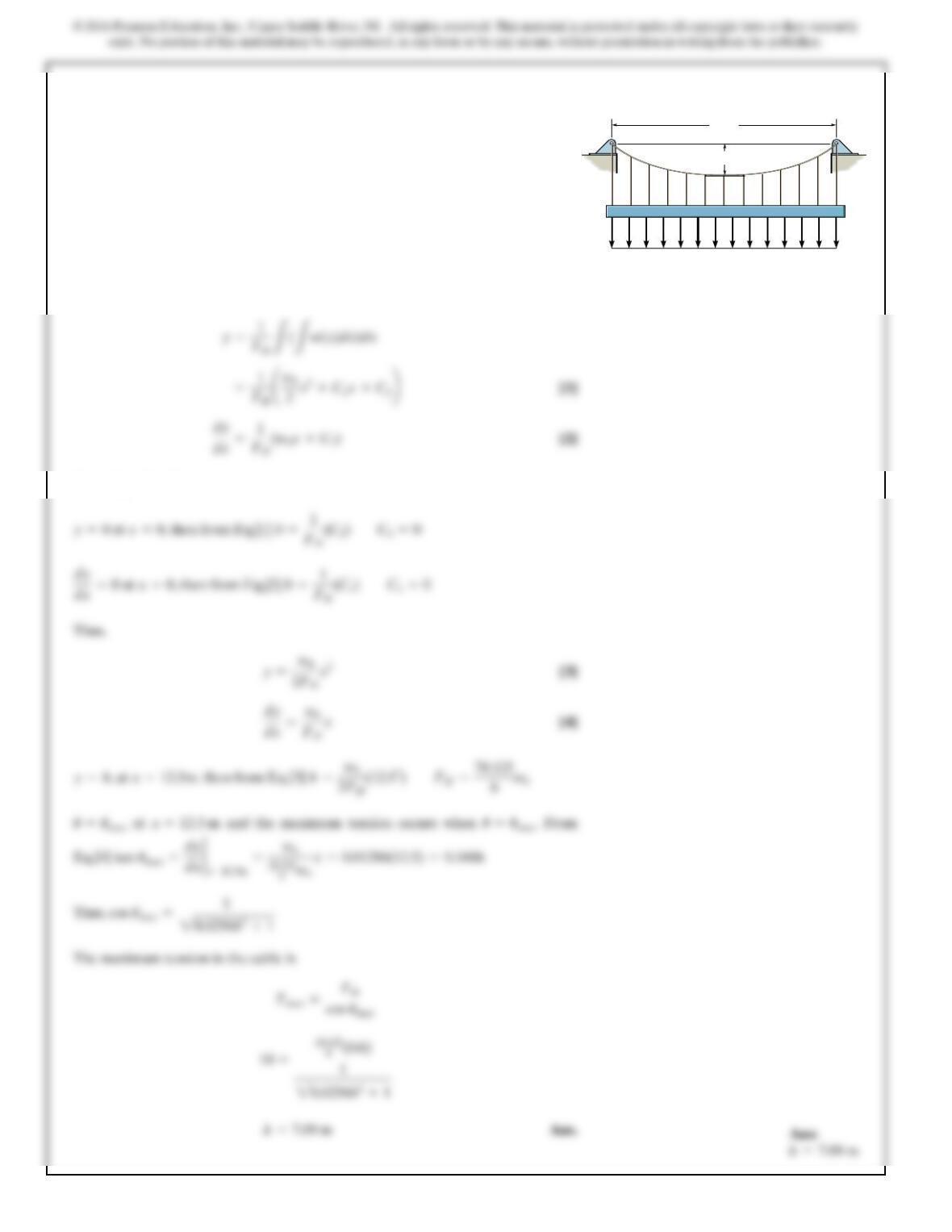
7–111.
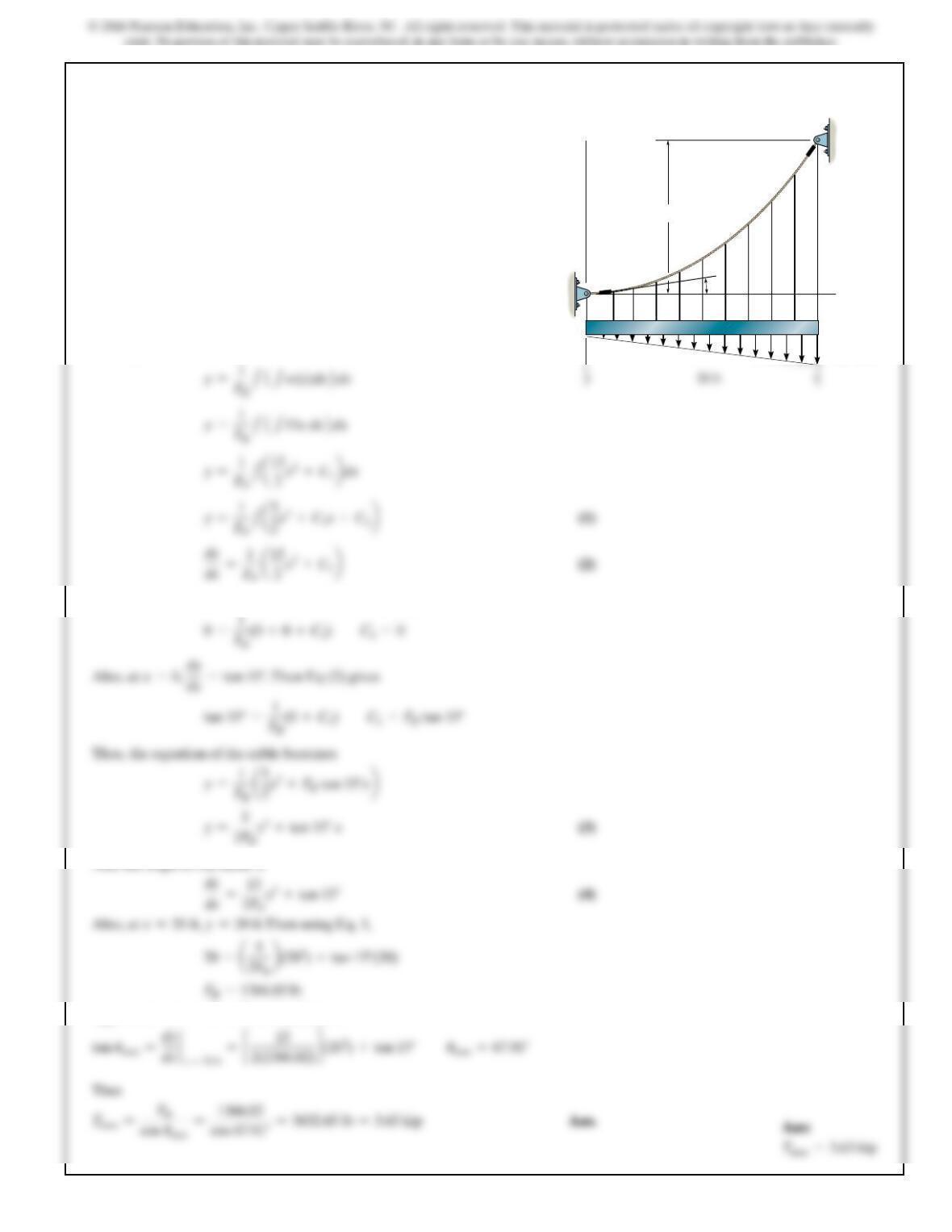
Determine the maximum tension developed in the cable if
it is subjected to the triangular distributed load.
20 ft
15
300 lb/ft
y
x
A
B
734
*7–112.
SOLUTION
The Equation of The Cable:
Boundary Conditions:
T
h
e ca
bl
e w
ill
b
rea
k
w
h
en t
h
e max
i
mum tens
i
on reac
h
es
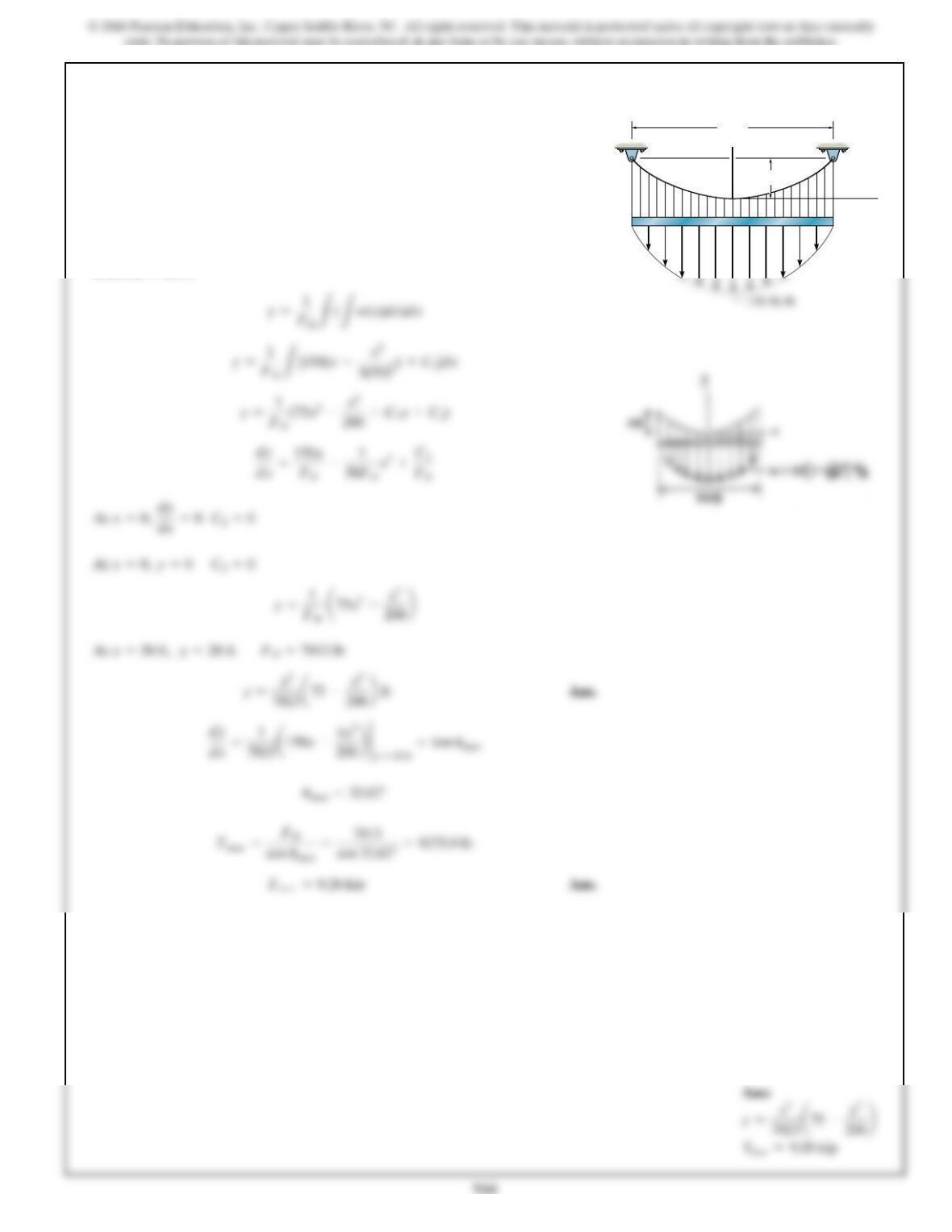
Determine the minimum sag hif it supports
the uniform distributed load of w=600 N>m.
T
max =10 kN.
h
25 m
600N
/m
7–113.
T
h
e ca
bl
e
i
s su
bj
ecte
d
to t
h
e para
b
o
li
c
l
oa
di
ng
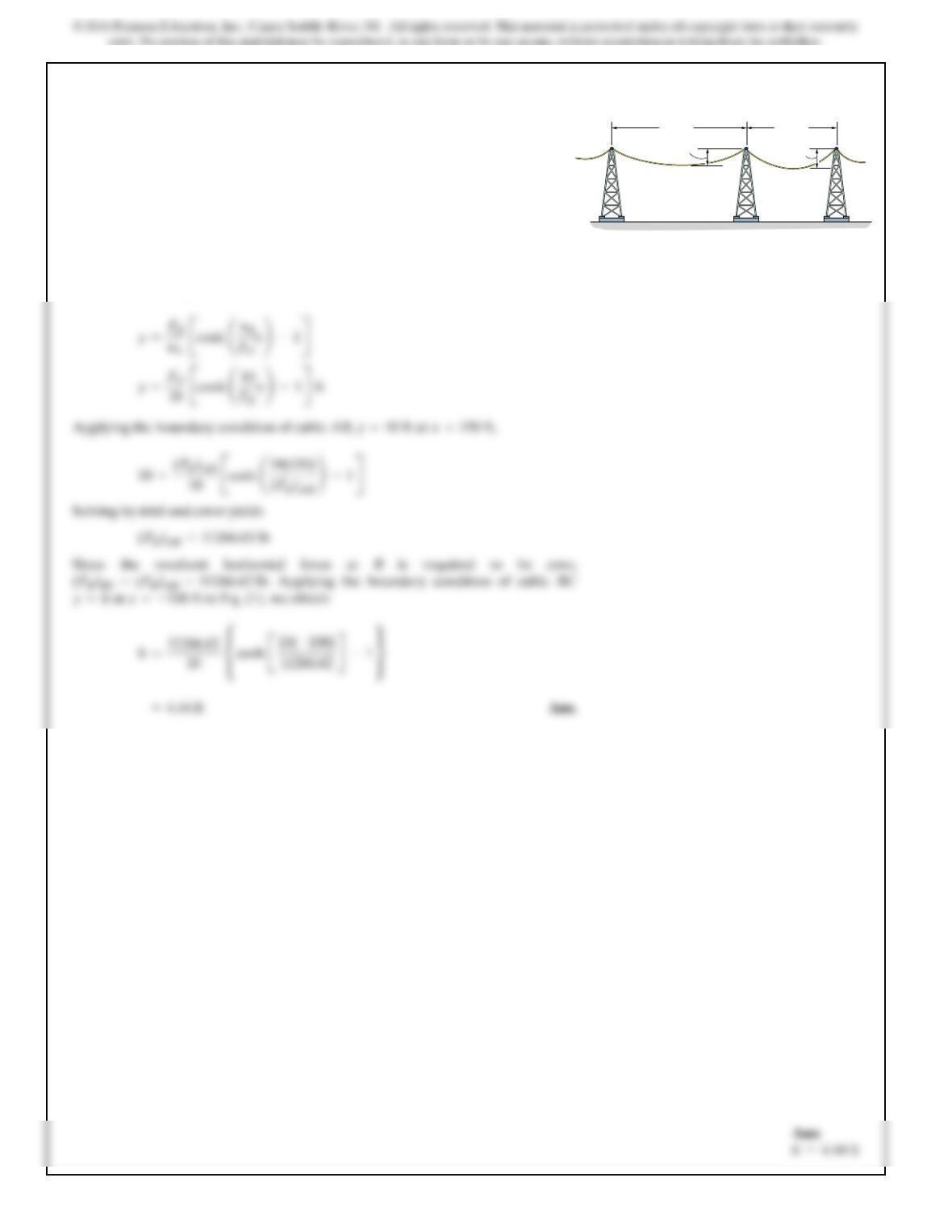
where xis in ft. Determine the
equation
which defines the cable shape AB and
the maximum tension in the cable
.
y=f1x2
w
=15011–1x>50222lb>ft,
SOLUTION
100ft
20 ft
y
x
AB
736
7–114.
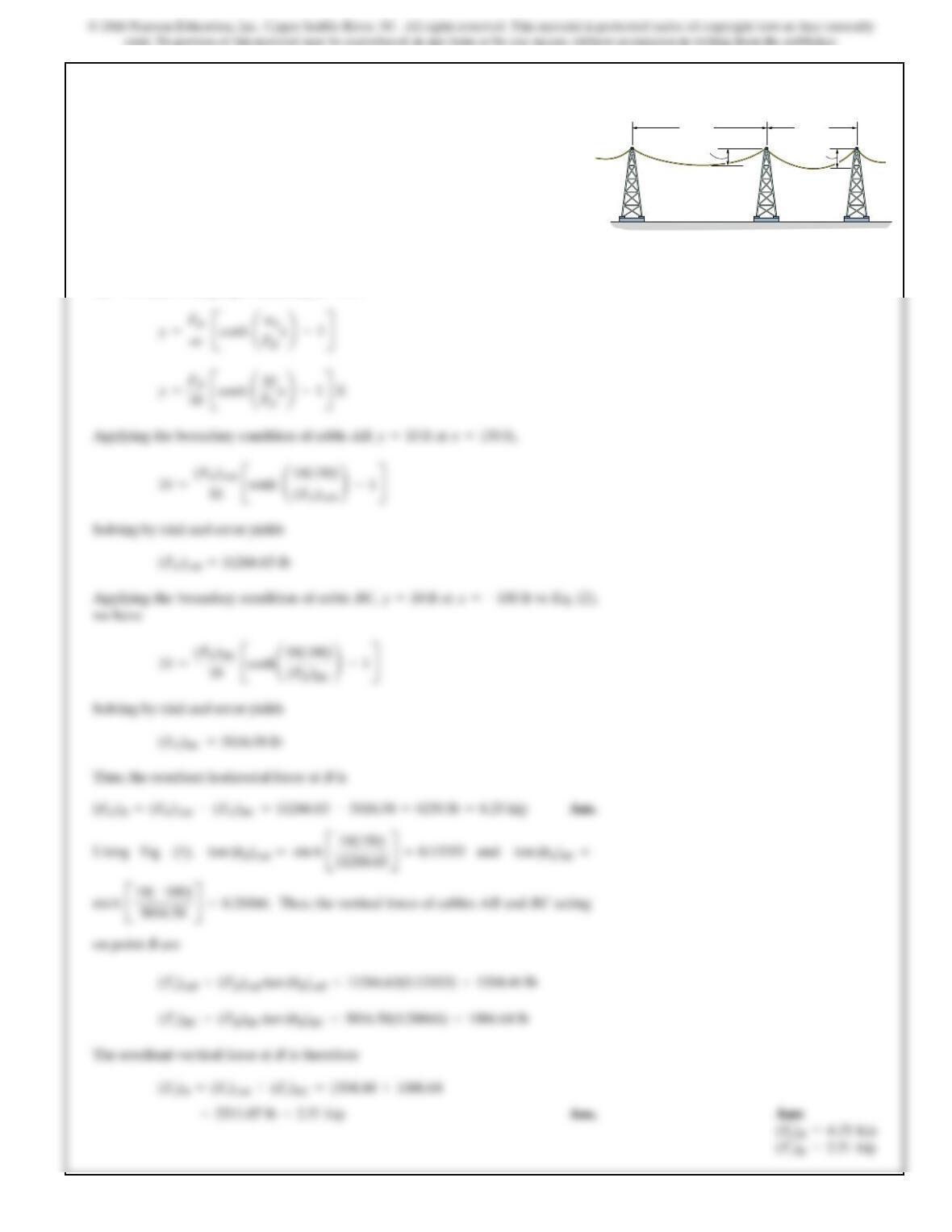
The power transmission cable weighs . If the
resultant horizontal force on tower is required to be
zero, determine the sag hof cable .
SOLUTION
The origin of the x, y coordinate system is set at the lowest point of the cables. Here,
Using Eq. 4 of Example 7–13,
w0=10 lb>ft.
BC
BD
10 lb
>
ft
ABhC
D
300 ft
10 ft
200 ft
737
7–115.
The power transmission cable weighs . If ,
determine the resultant horizontal and vertical forces the
cables exert on tower .
SOLUTION
The origin of the x, y coordinate system is set at the lowest point of the cables. Here,
Using Eq. 4 of Example 7–13,
w0=10 lb>ft.
BD
h=10 ft10 lb
>
ft
ABhC
D
300 ft
10 ft
200 ft
738
*7–116.
SOLUTION
Deflection Curve of The Cable:
Boundary Conditions:
Then, Eq. (2) becomes
at and use the result From Eq. (1)
Rearranging Eq. (1), we have
Substituting Eq. (4) into (3) yields
C
1
=0.x=0s=0
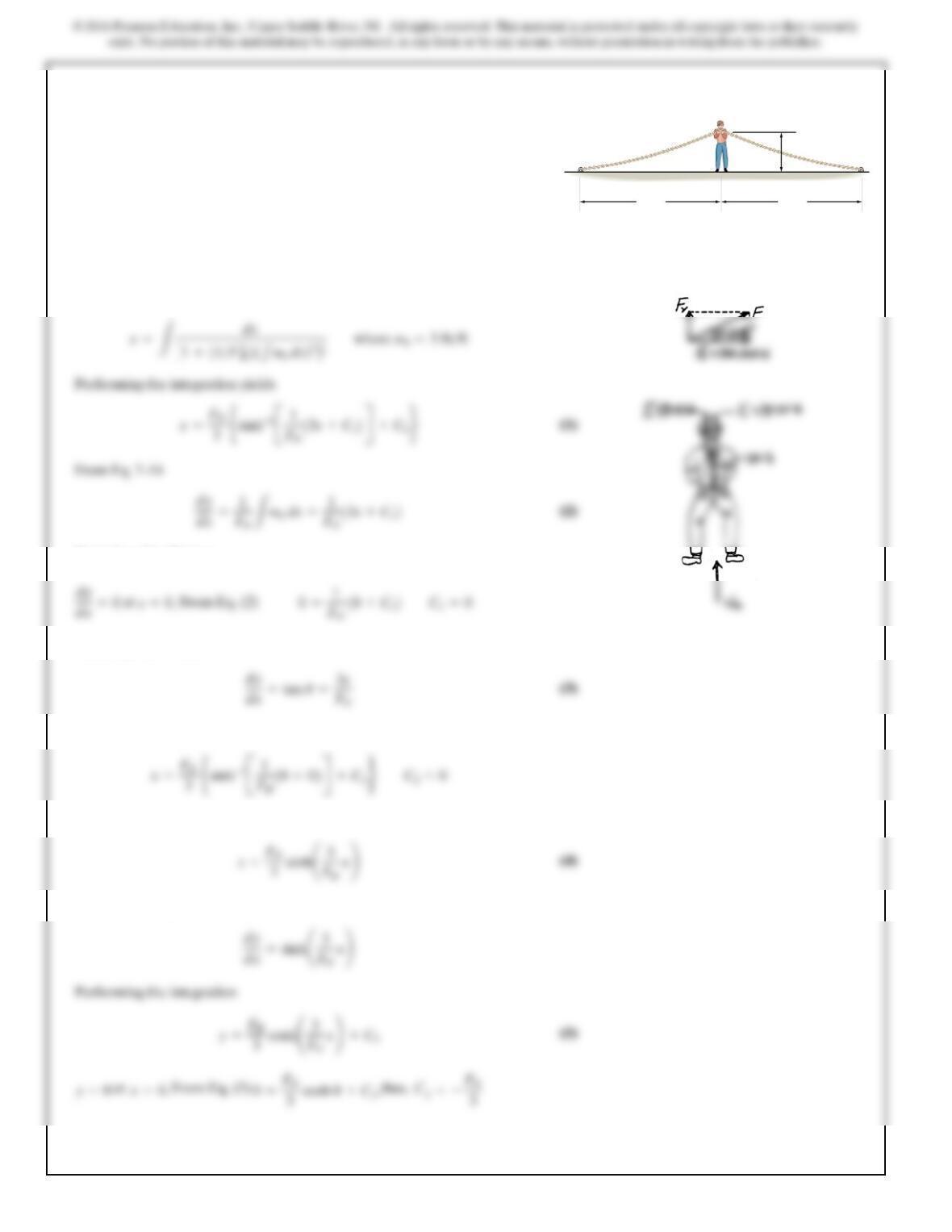
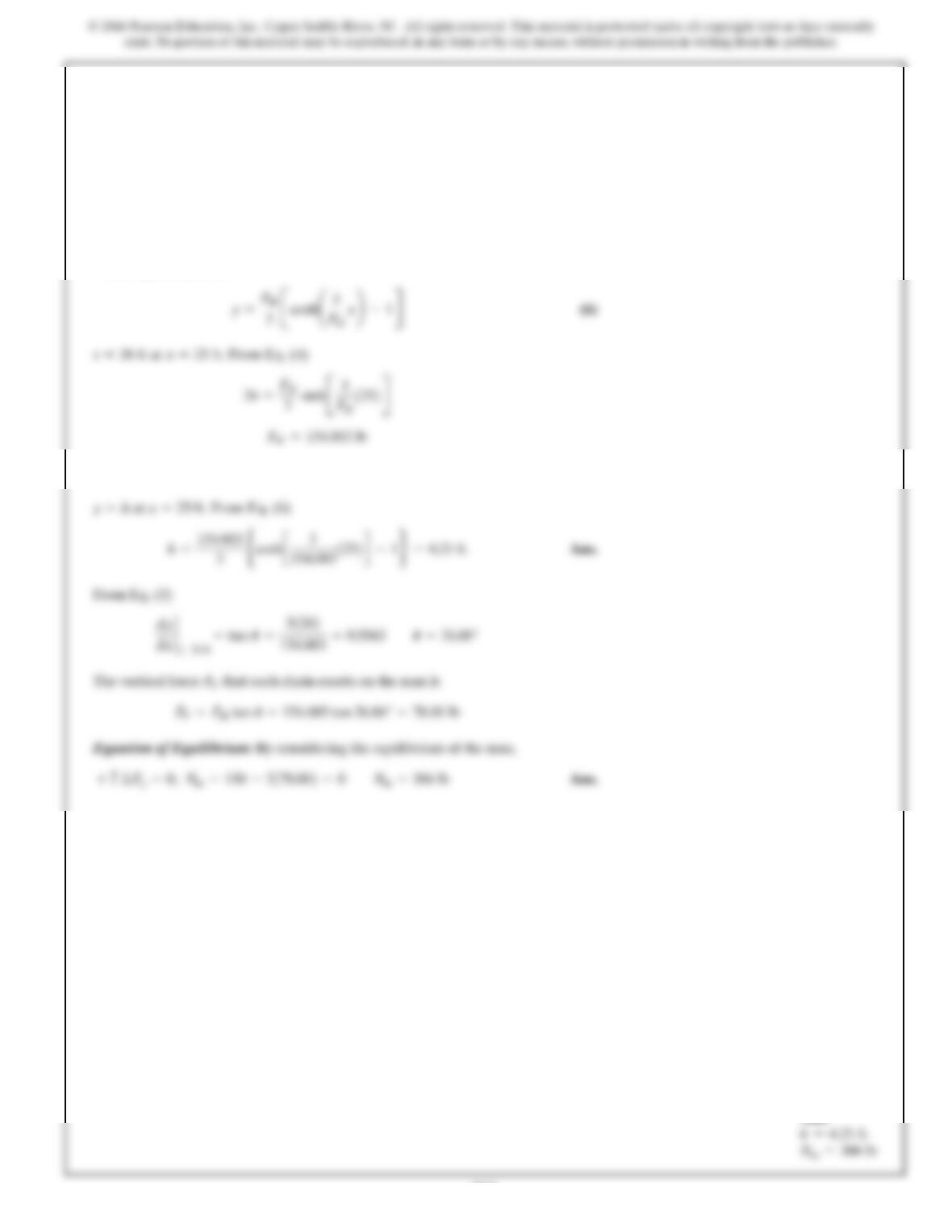
The man picks up the 52-ft chain and holds it just high
enough so it is completely off the ground. The chain has
points of attachment Aand Bthat are 50 ft apart. If the chain
has a weight of 3 lb/ft, and the man weighs 150 lb,determine
the force he exerts on the ground. Also,how high hmust he
lift the chain? Hint:The slopes at Aand Bare zero.
AB
h
25 ft 25 ft
739
*7–116. Continued
Then, Eq. (5) becomes
By trial and error
Ans:
740
7–117.
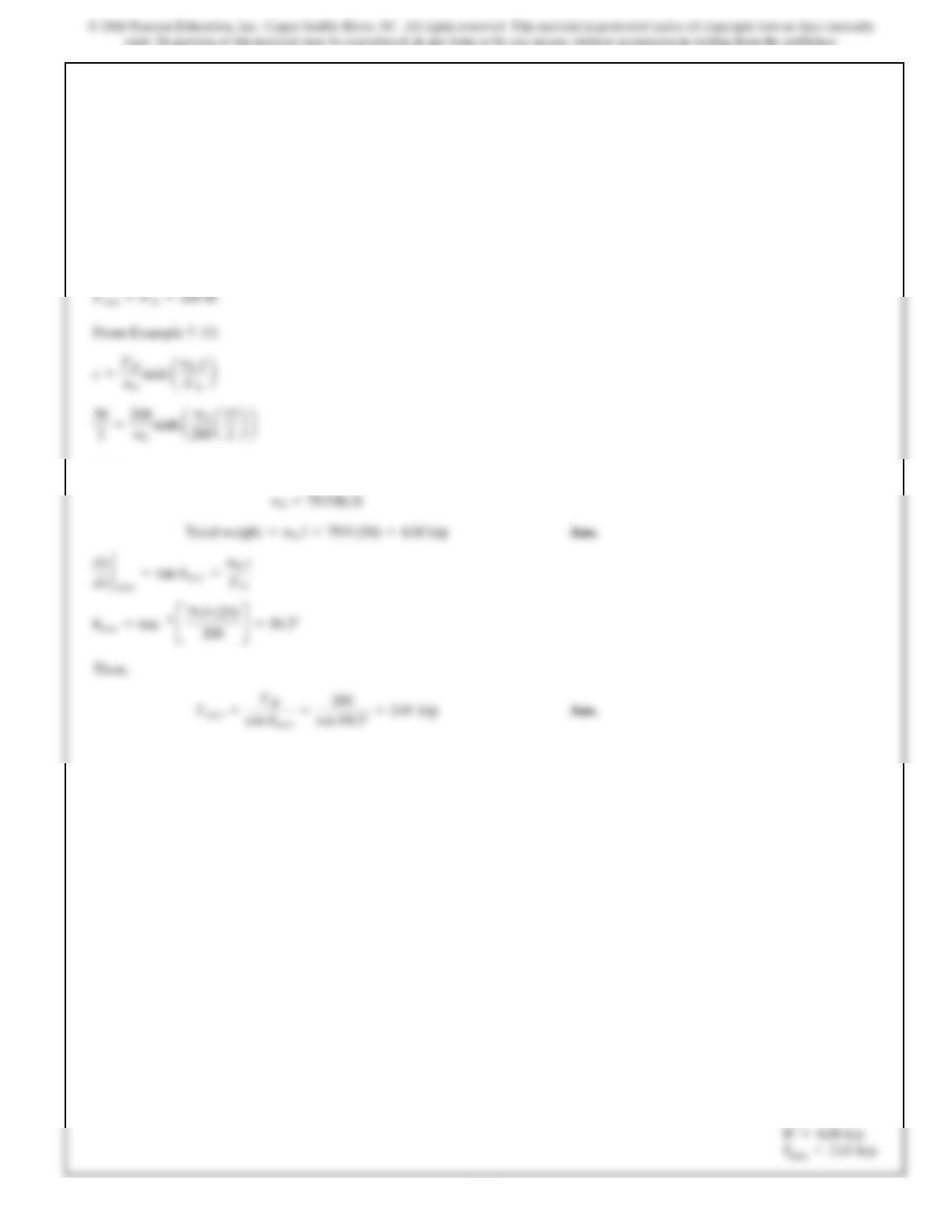
The cable has a mass of 0.5 and is 25 m long.
Determine the vertical and horizontal components of force
it exerts on the top of the tower.
kg
>
m,
SOLUTION
Performing the integration yields:
A
Ans:
741
7–118.
SOLUTION
Solving,
A 50-ft cable is suspended between two points a distance of
15 ft apart and at the same elevation. If the minimum
tension in the cable is 200 lb, determine the total weight of
the cable and the maximum tension developed in the cable.
Ans:
742
7–119.
S
h
ow t
h
at t
h
e
d
ef
l
ect
i
on curve of t
h
e ca
bl
e
di
scusse
d
i
n
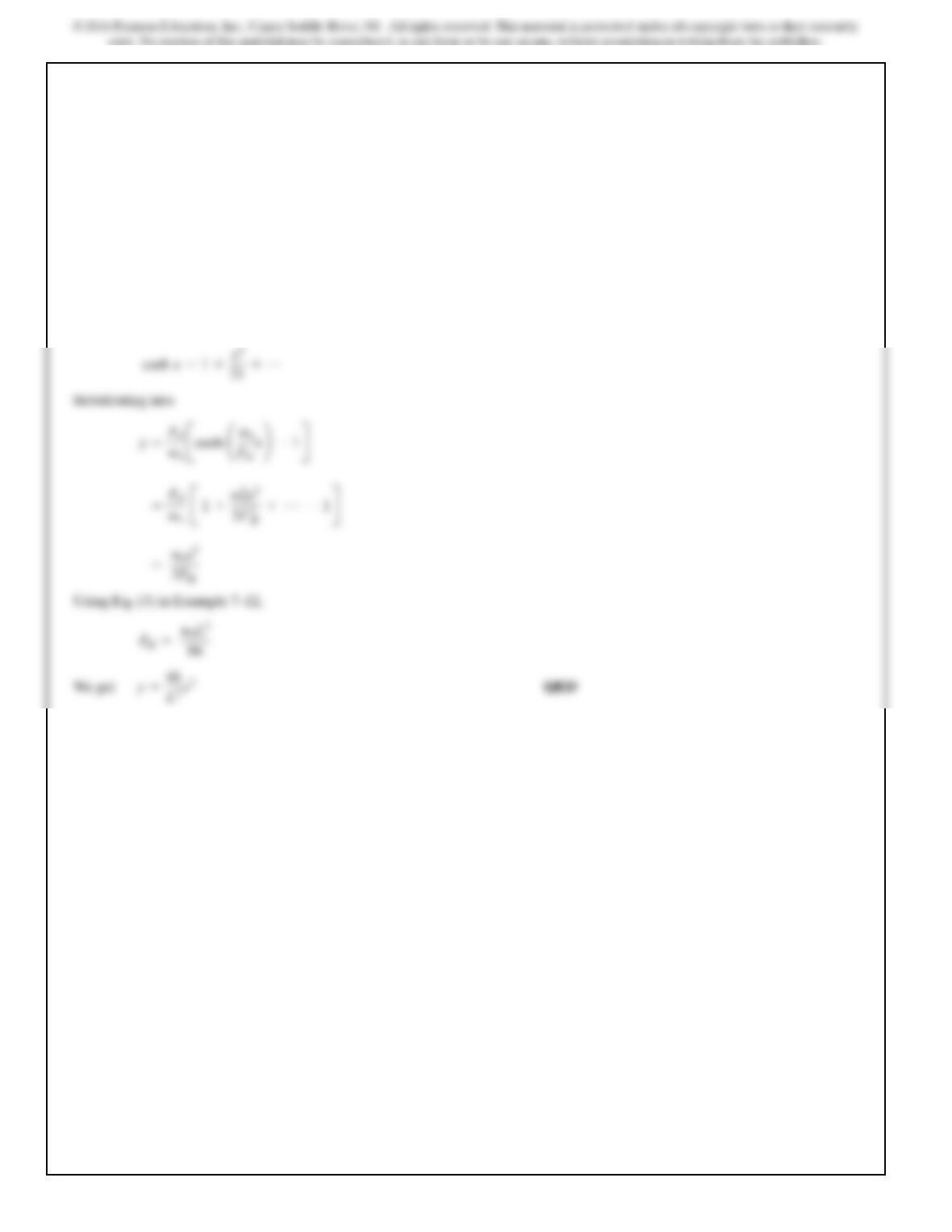
Example 7–13 reduces to Eq. 4 in Example 7–12 when the
hyperbolic cosine function is expanded in terms of a series
and only the first two terms are retained. (The answer
indicates that the catenary may be replaced by a parabola in
the analysis of problems in which the sag is small. In this
case, the cable weight is assumed to be uniformly
distributed along the horizontal.)
SOLUTION
743
*7–120.
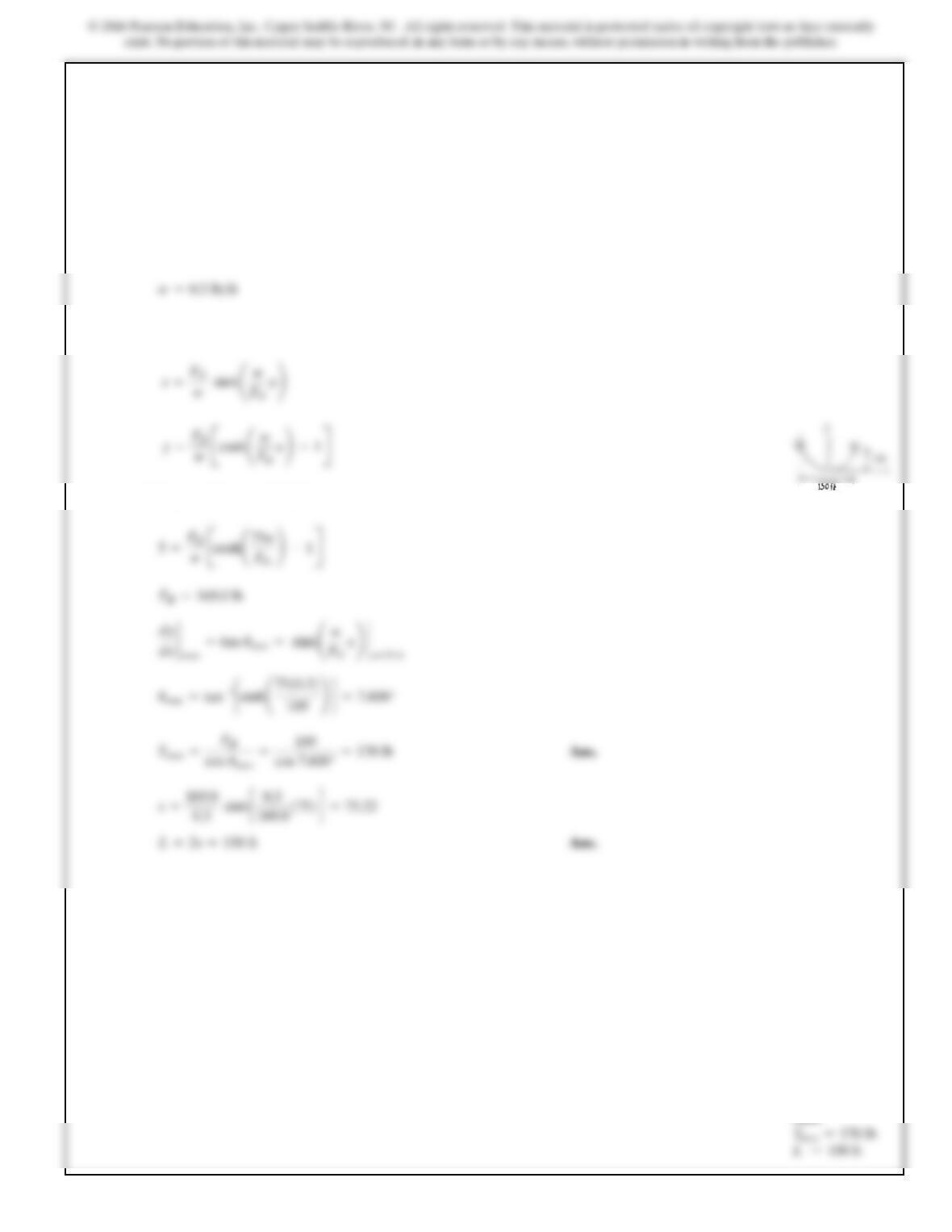
A telephone line (cable) stretches between two points which
are 150 ft apart and at the same elevation.The line sags 5 ft
and the cable has a weight of 0.3 lb ft. Determine the
length of the cable and the maximum tension in the cable.
SOLUTION
From Example 7–13,
w=0.3 lb>fty=5 ft,At x=75 ft,
>
Ans:
7–121.
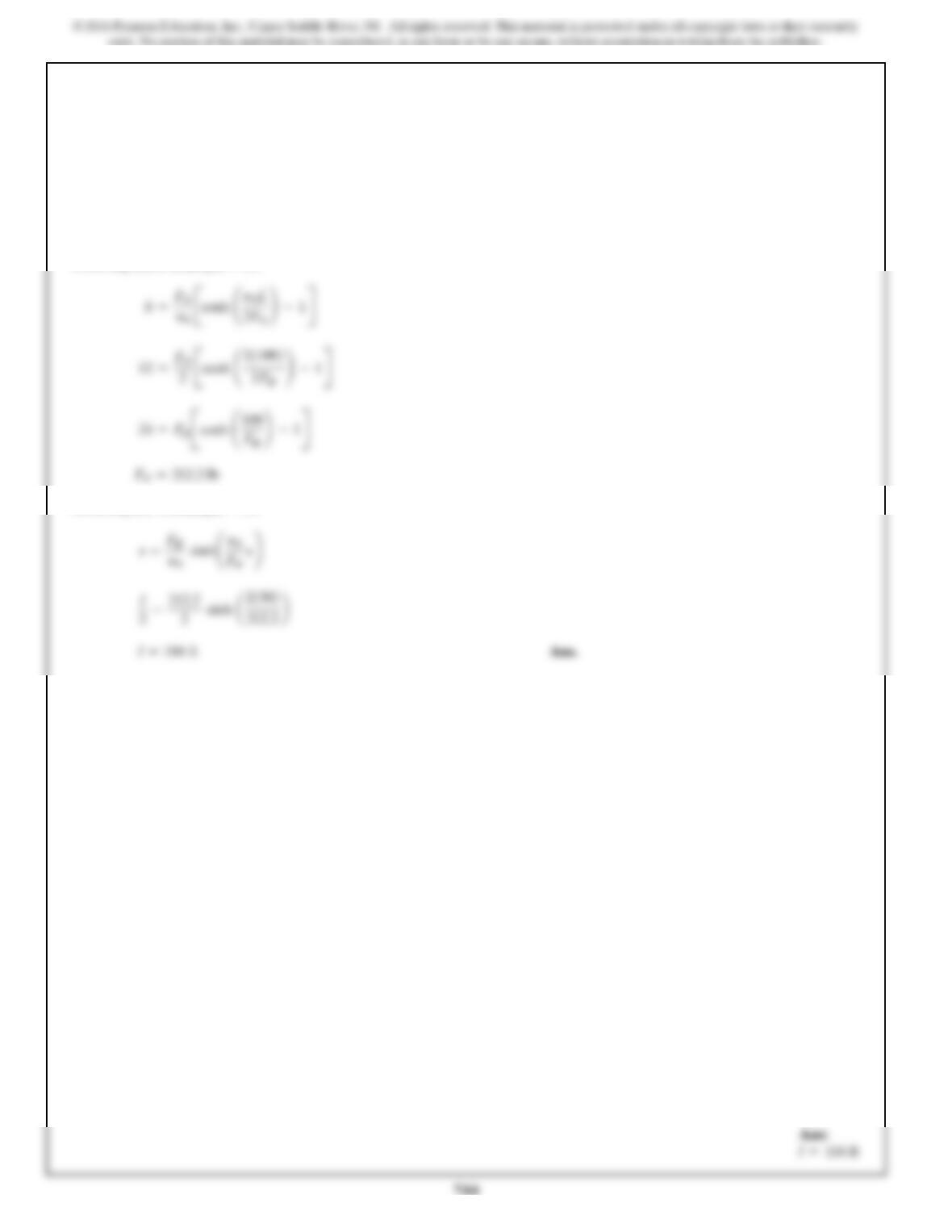
A cable has a weight of 2 lb ft. If it can span 100 ft and has
a sag of 12 ft, determine the length of the cable.The ends of
the cable are supported from the same elevation.
SOLUTION
From Eq. (5) of Example 7–13:
From Eq. (3) of Example 7–13:
>
7–122.
SOLUTION
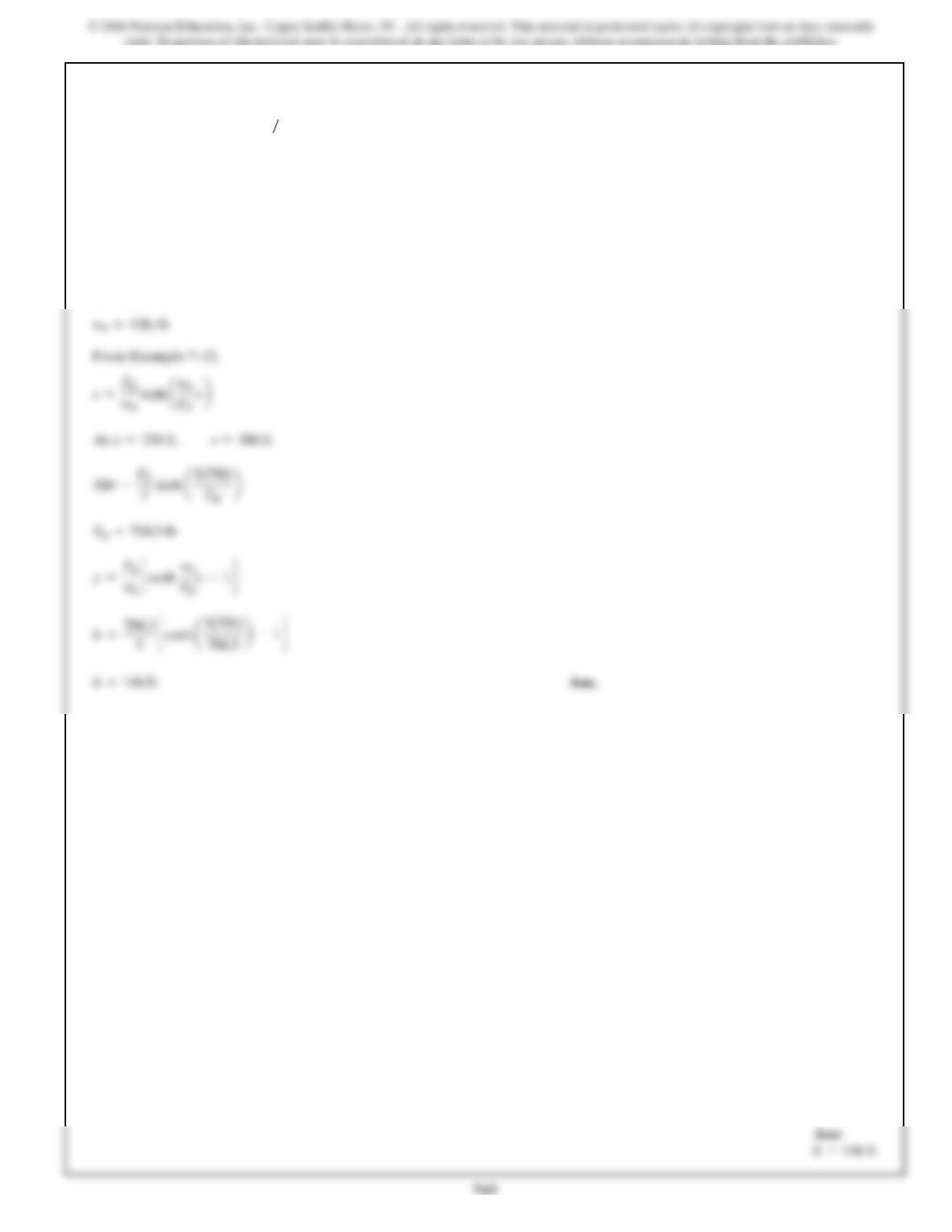
A cable has a weight of 3 lb ft and is supported at points
that are 500 ft apart and at the same elevation. If it has a
length of 600 ft, determine the sag.
7–123.
Acable has a weight of 5 lb/ft.If it can span 300 ft and has a
sag of 15 ft, determine the length of the cable. The ends of the
cable are supported at the same elevation.
SOLUTION
747
*7–124.
The cable is suspended between the supports
and . If the cable can sustain a maximum tension of
and the maximum sag is , determine the
maximum distance between the supports
SOLUTION
The origin of the x, y coordinate system is set at the lowest point of the cable. Here
Solving Eqs. (2) and (3) yields
L
3 m1.5 kN
B
A10 kg m
AB
L
3 m