711
*7–92.
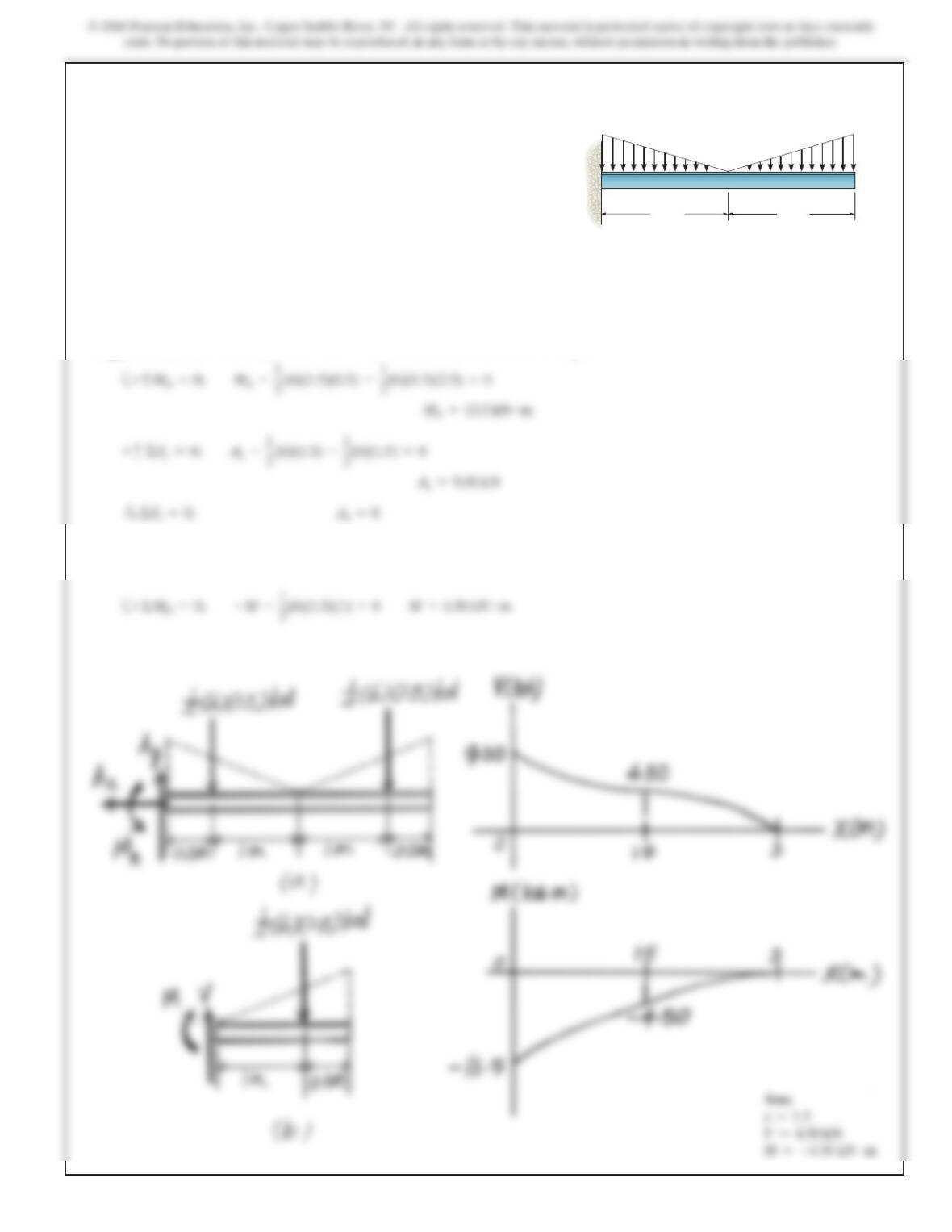
Draw the shear and moment diagrams for the beam.
SOLUTION
Support Reactions. Referring to the FBD of the cantilevered beam shown in Fig. a
Internal loadings. Referring to the FBD of the right segment of the beam sectioned
at
x=1.5 m
,
1.5 m
6 kN/m6 kN/m
1.5 m
A B C
712
7–93.
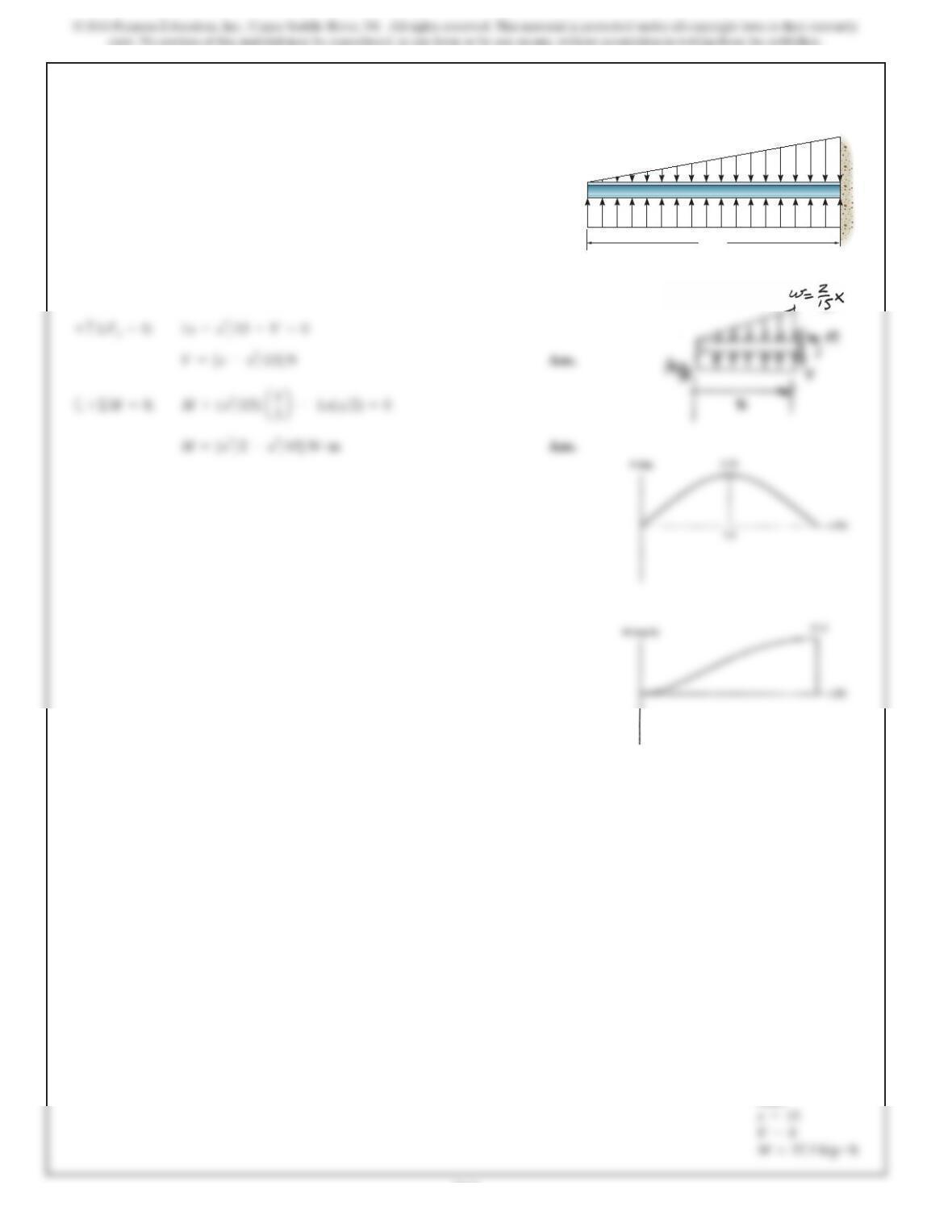
Draw theshear and moment diagramsfor thebeam.
SOLUTION
Shear and Moment Functions: For
0…x615 ft
15 ft
1 kip/ft
2kip/ft
A
Ans:
713
SOLUTION
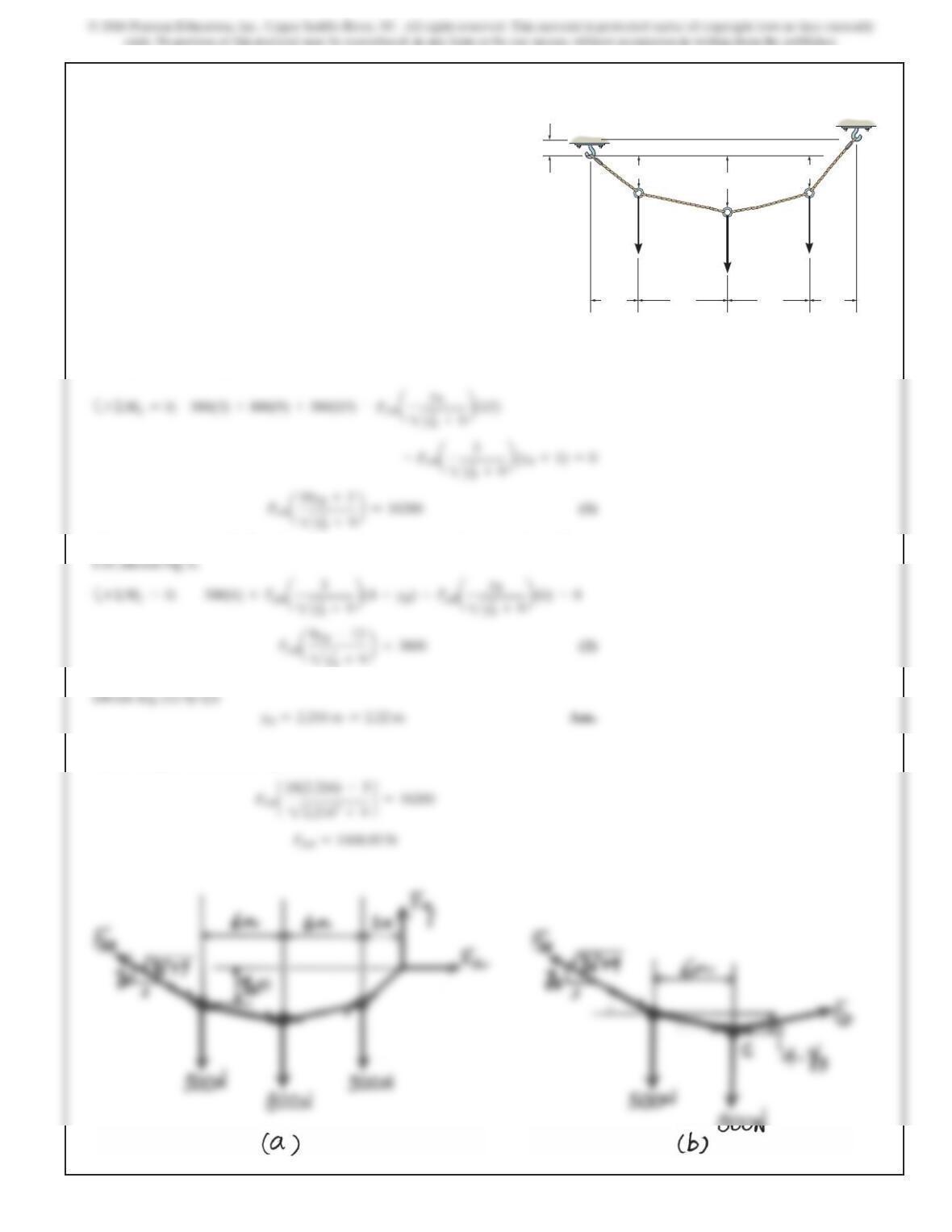
Support Reactions. Referring to the FBD of the cable system sectioned through
cable AB shown in Fig. a,
Also, referring to the FBD of the cable segment sectioned through cables AB and
Substituting this result into Fig. (1)
7–94.
The cable supports the three loads shown. Determine the
sags yB and yD of B and D. Take P1 = 800 N, P2 = 500 N. 1 m
3 m 6 m 6 m 3 m
A
E
B
C
D
yByD
4 m
P2P2
P1
714
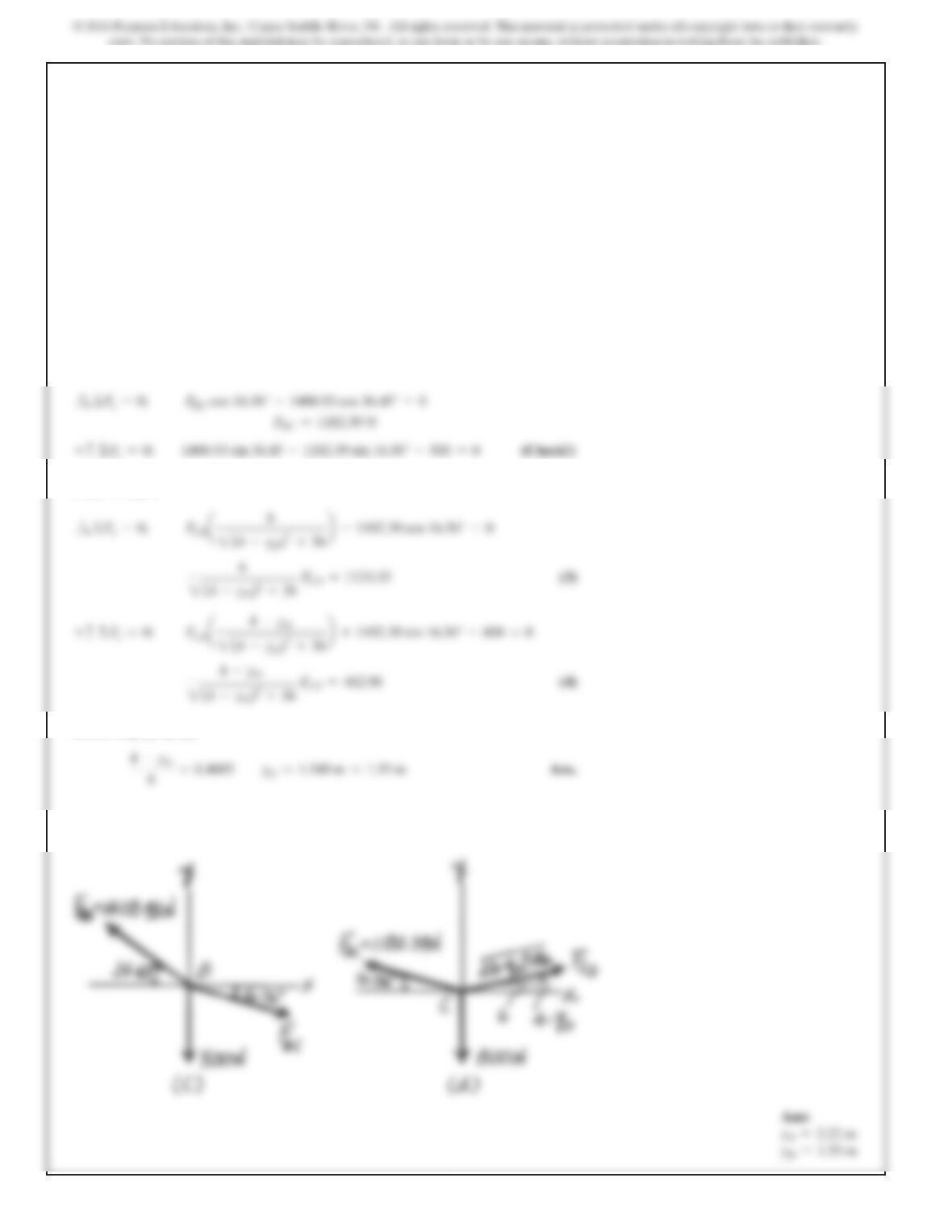
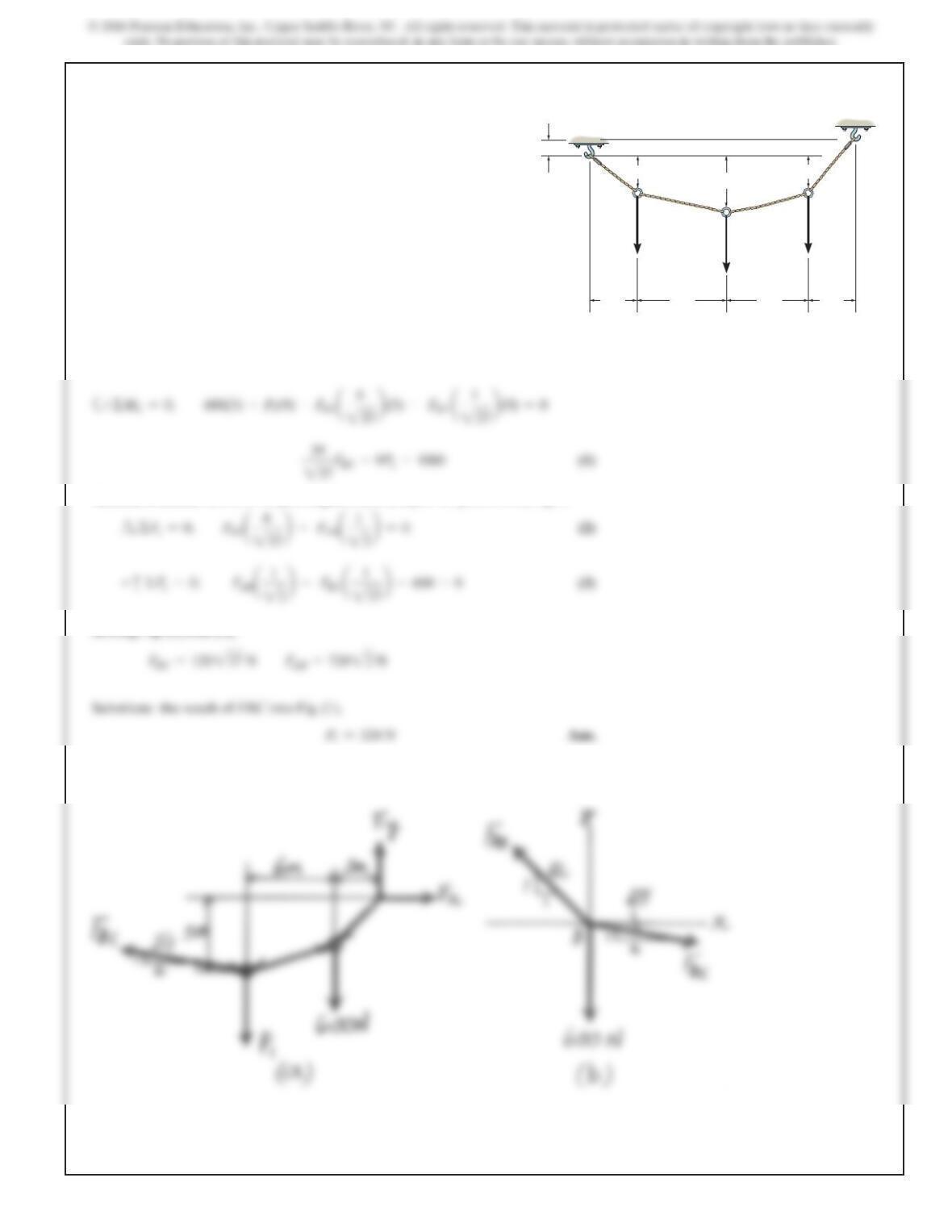
Method of joints. Perform the joint equilibrium analysis first for joint B and then
joint C.
Joint B. Fig. c
Joint C. Fig. d
Divide Eq (4) by (3)
7–94. Continued
715
SOLUTION
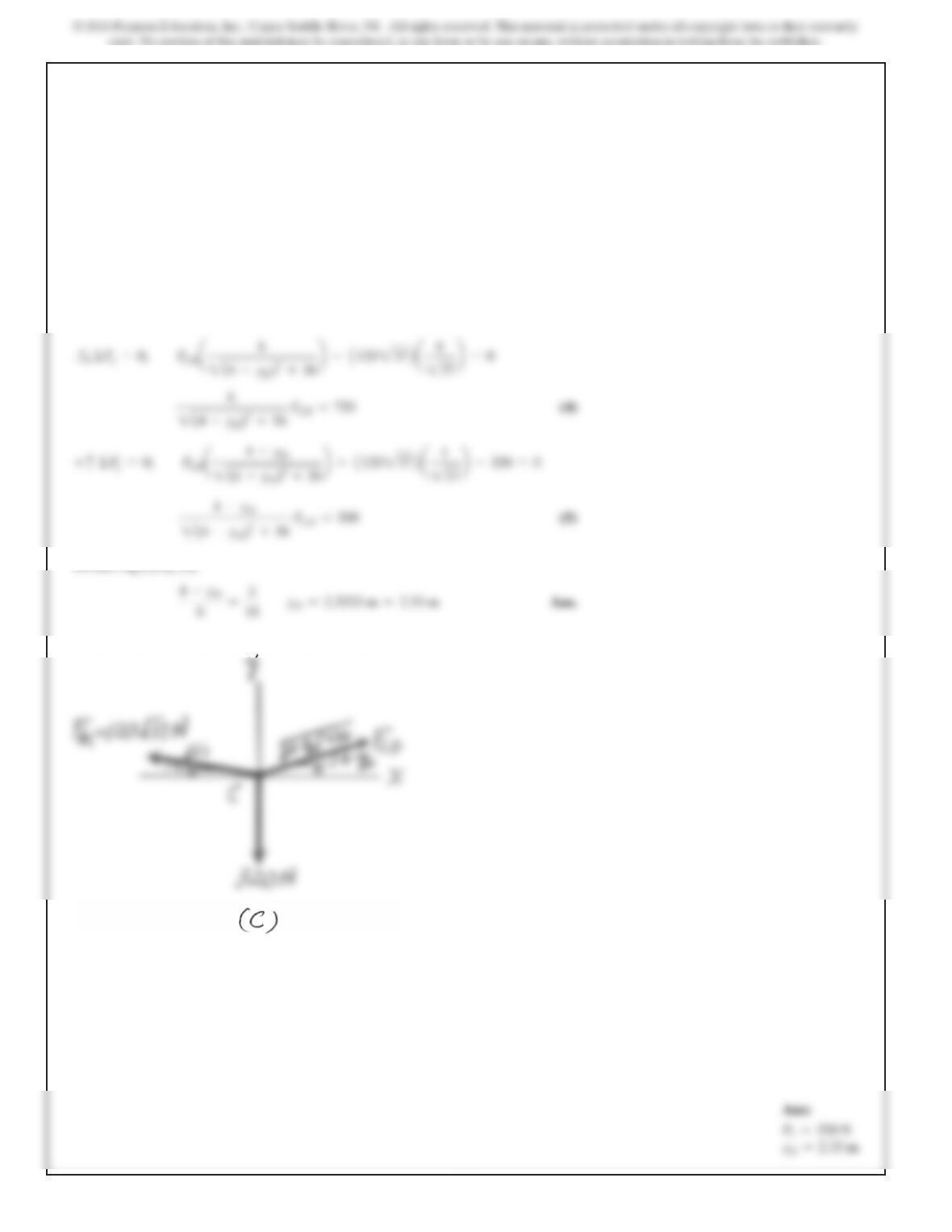
Support Reactions. Referring to the FBD of the cable system sectioned through
cable BC, Fig. a
Method of Joints. Perform the joint equilibrium analysis for joint B first, Fig. b,
7–95.
The cable supports the three loads shown. Determine the
magnitude of P1 if P2 = 600 N and yB = 3 m. Also find sag yD. 1 m
3 m 6 m 6 m 3 m
A
E
B
C
D
yByD
4 m
P2P2
P1
716
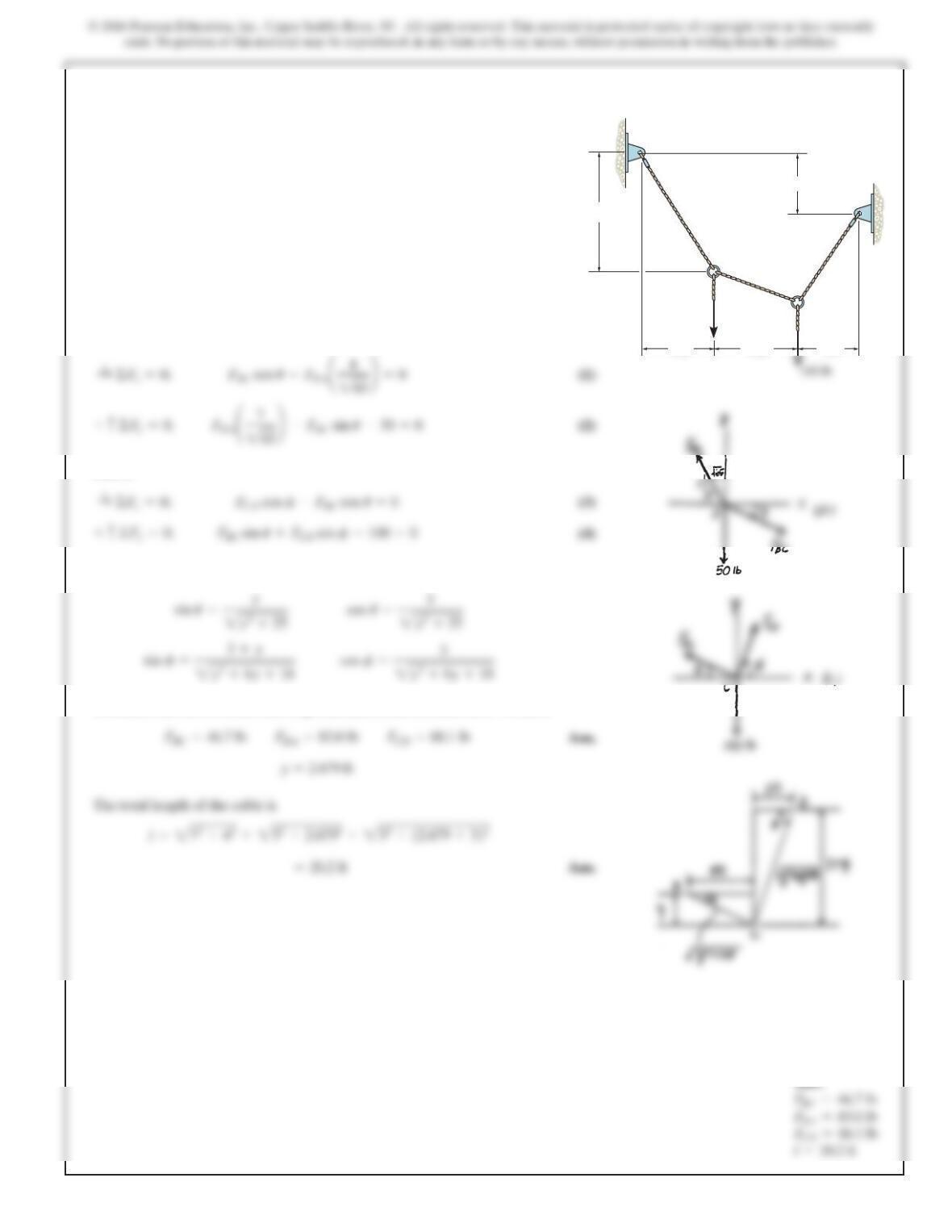
Next. Consider the equilibrium of joint C, Fig. c,
7–95. Continued
717
*7–96.
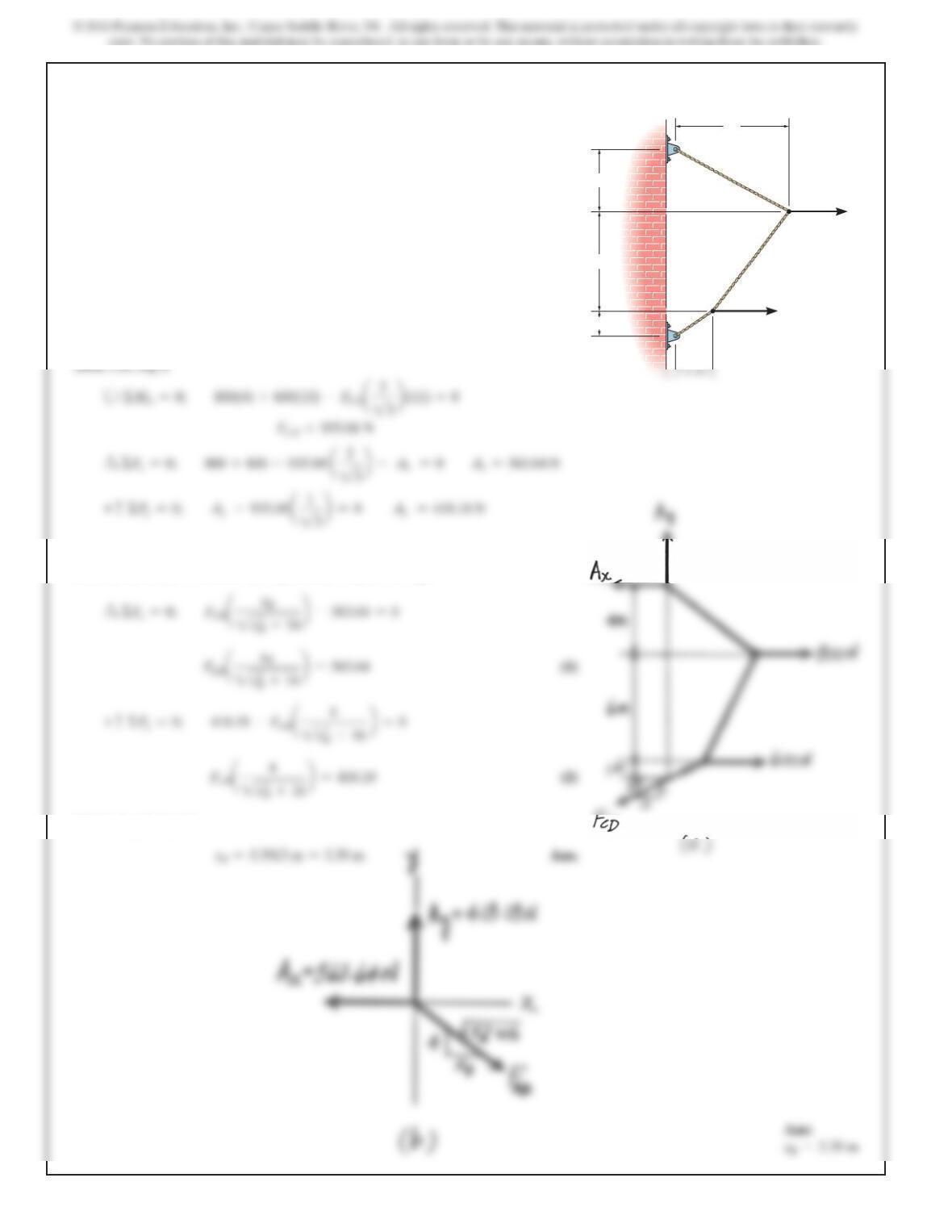
Determine the tension in each segment of the cable and the
cable’s total length.
4ft5ft
A
3ft
B
7ft
4ft
C
D
50 lb
SOLUTION
Equations of Equilibrium: Applying method of joints, we have
Joint B
Joint C
Geometry:
Substitute the above results into Eqs. (1), (2), (3) and (4) and solve.We have
718
7–97.
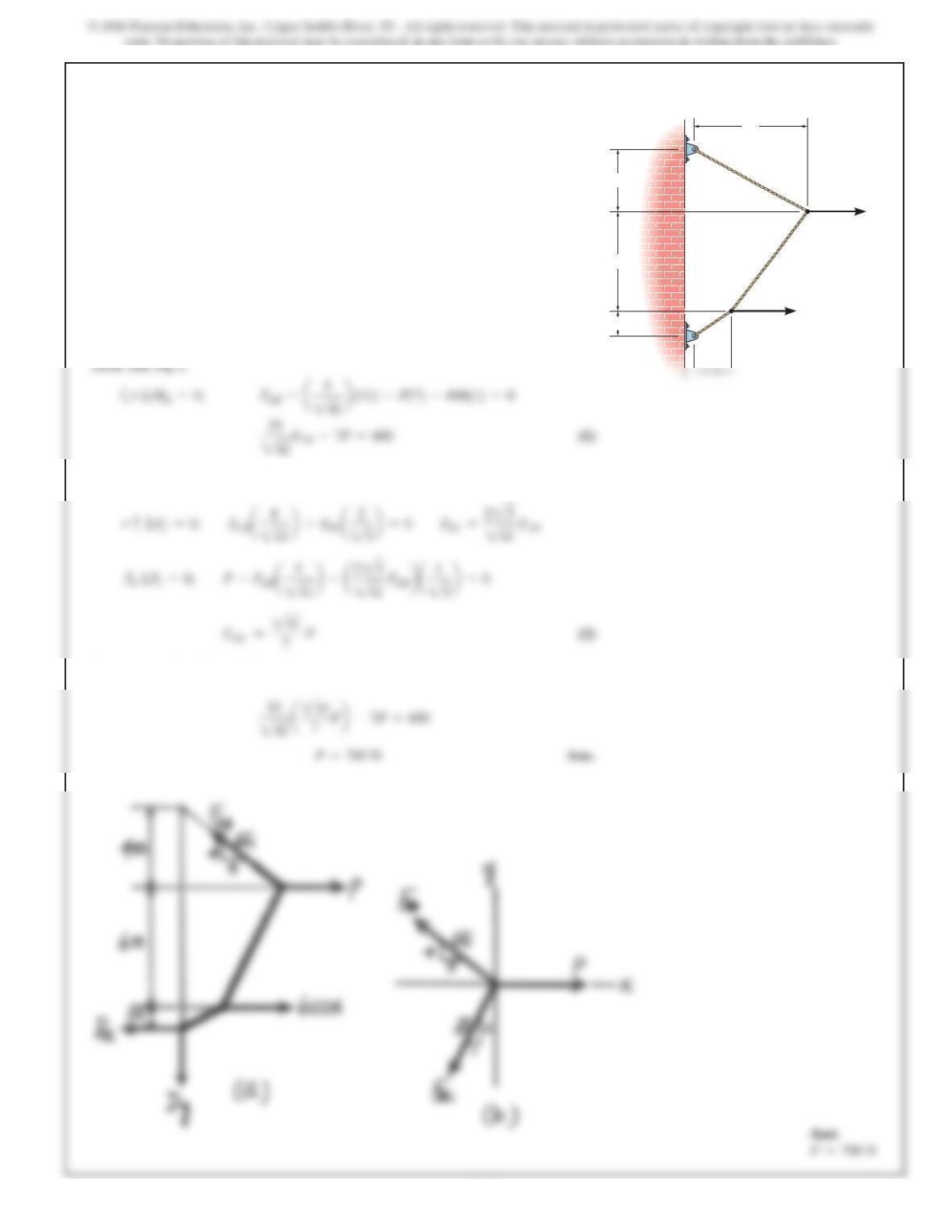
The cable supports the loading shown. Determine the
distance
xB
the force at B acts from A. Set P = 800 N.
4 m
1 m
600 N
D
C
B
A
xB
6 m
P
SOLUTION
Support Reactions. Referring to the FBD of the cable system sectioned through
Method of Joints. Consider the equilibrium of joint A, Fig. b
Divide Eq (1) by (2)
719
SOLUTION
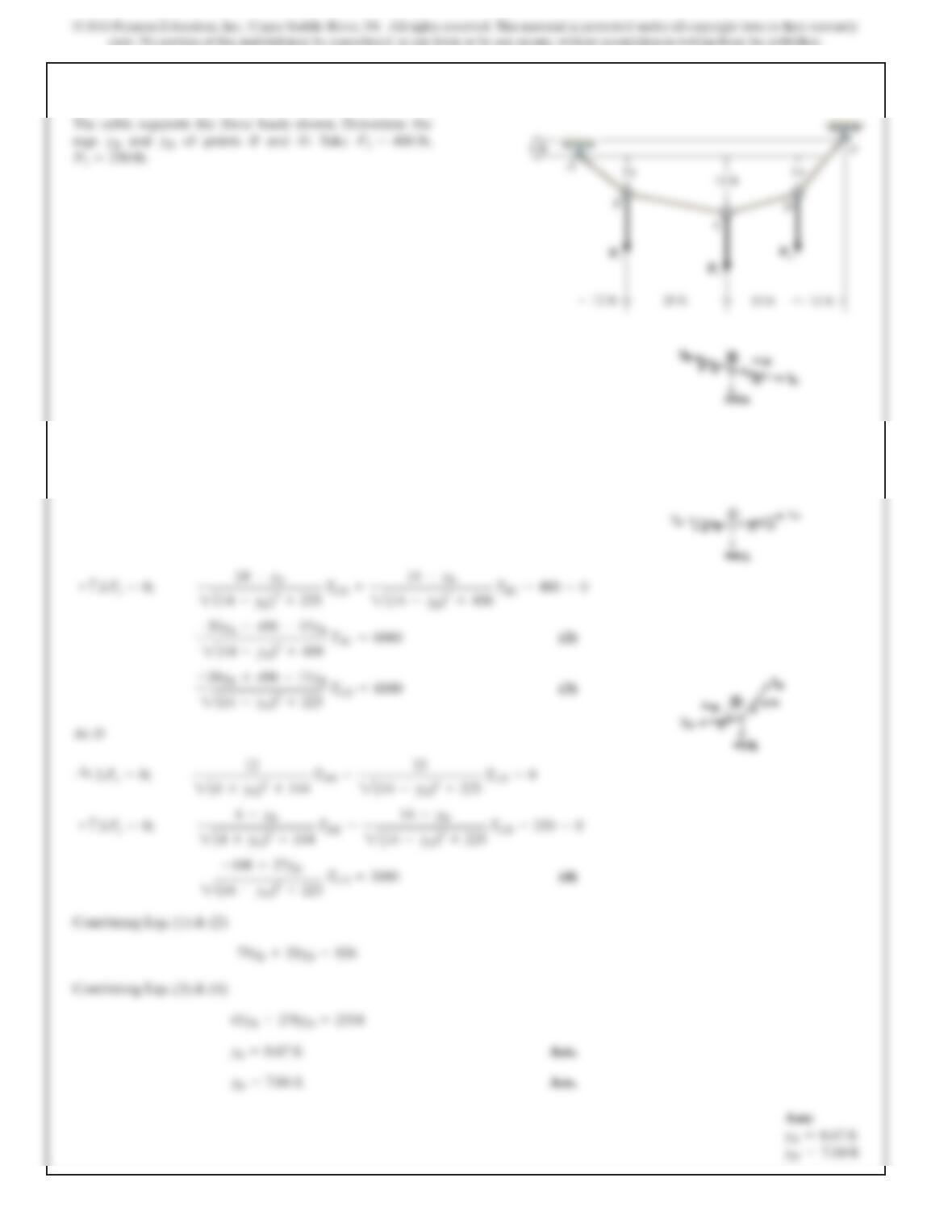
Support Reactions. Referring to the FBD of the cable system sectioned through
Method of Joints. Consider the equilibrium of joint B, Fig. b,
Substituting Eq. (2) into (1)
7–98.
The cable supports the loading shown. Determine the
magnitude of the horizontal force P so that
xB =5 m.
4 m
1 m
600 N
D
C
B
A
xB
6 m
P
720
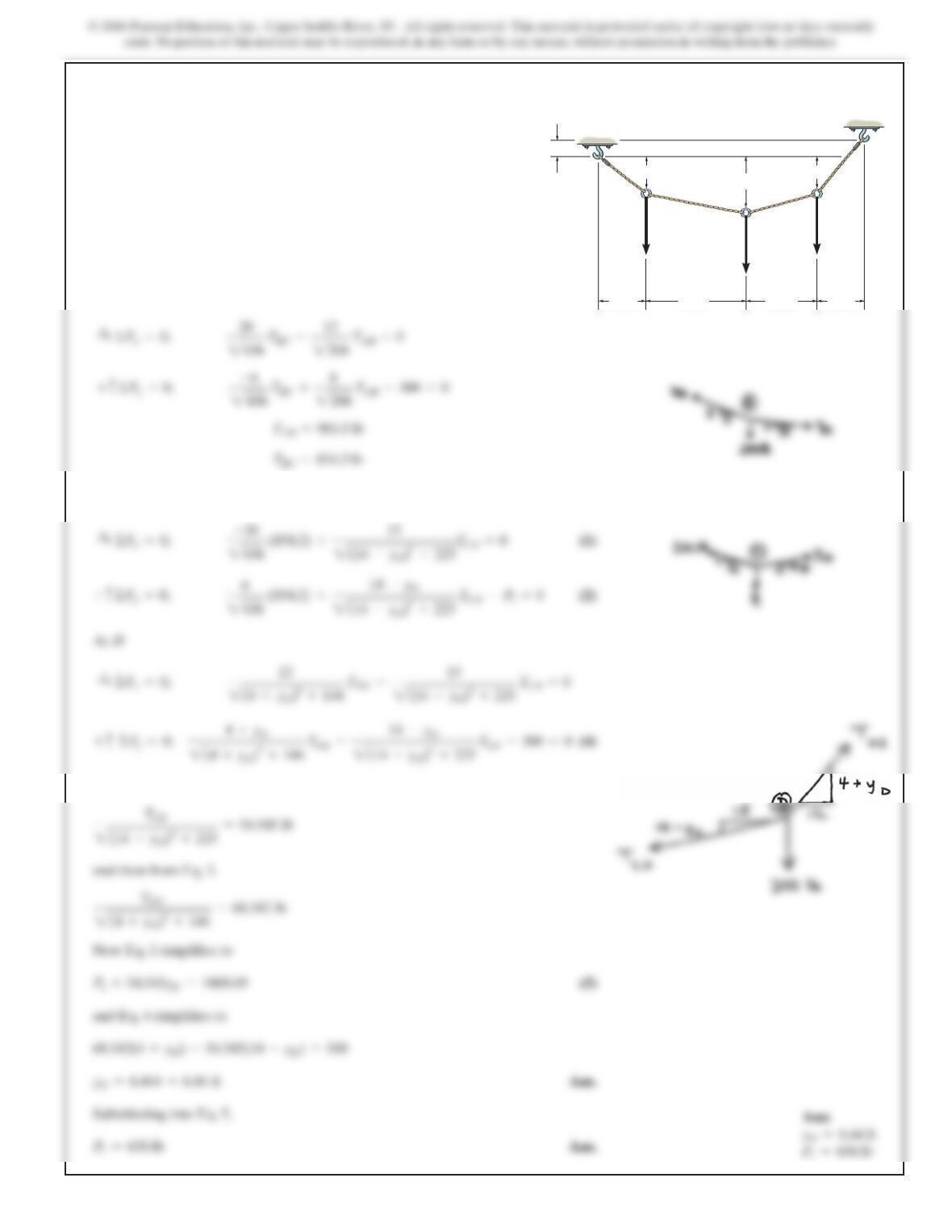
7–99.
721
*7–100.
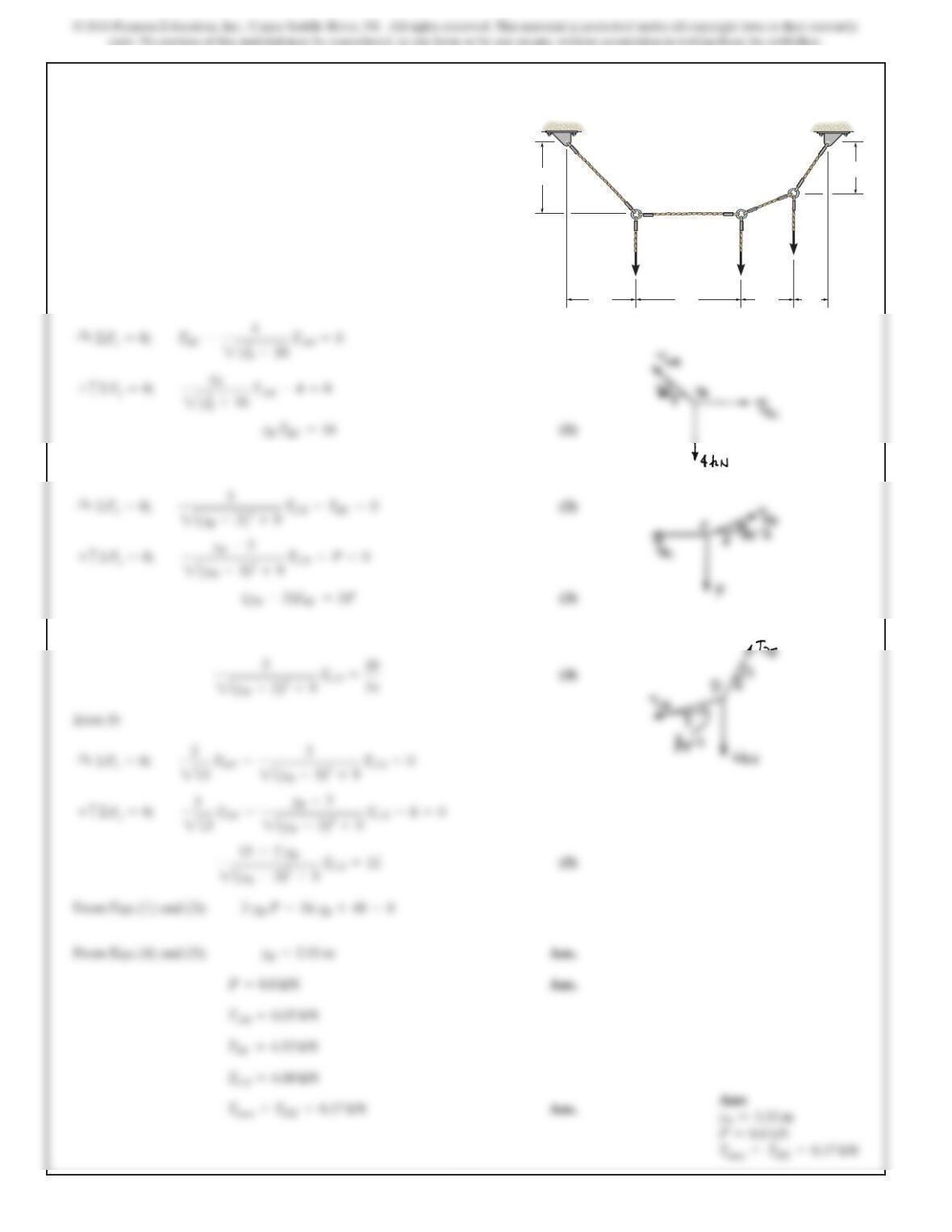
The cable supports the three loads shown. Determine the
magnitude
of if and Also find the
sag
yD.
yB=8ft.P2=300 lbP1
SOLUTION
At
B
At
C
4ft
12 ft 20 ft 15 ft 12 ft
A
E
B
C
D
y
B
y
D
14 ft
P
2
P
2
P
1
From Eq. 1,
722
7–101.
SOLUTION
Joint B:
Joint C:
Combining Eqs. (1) and (2):
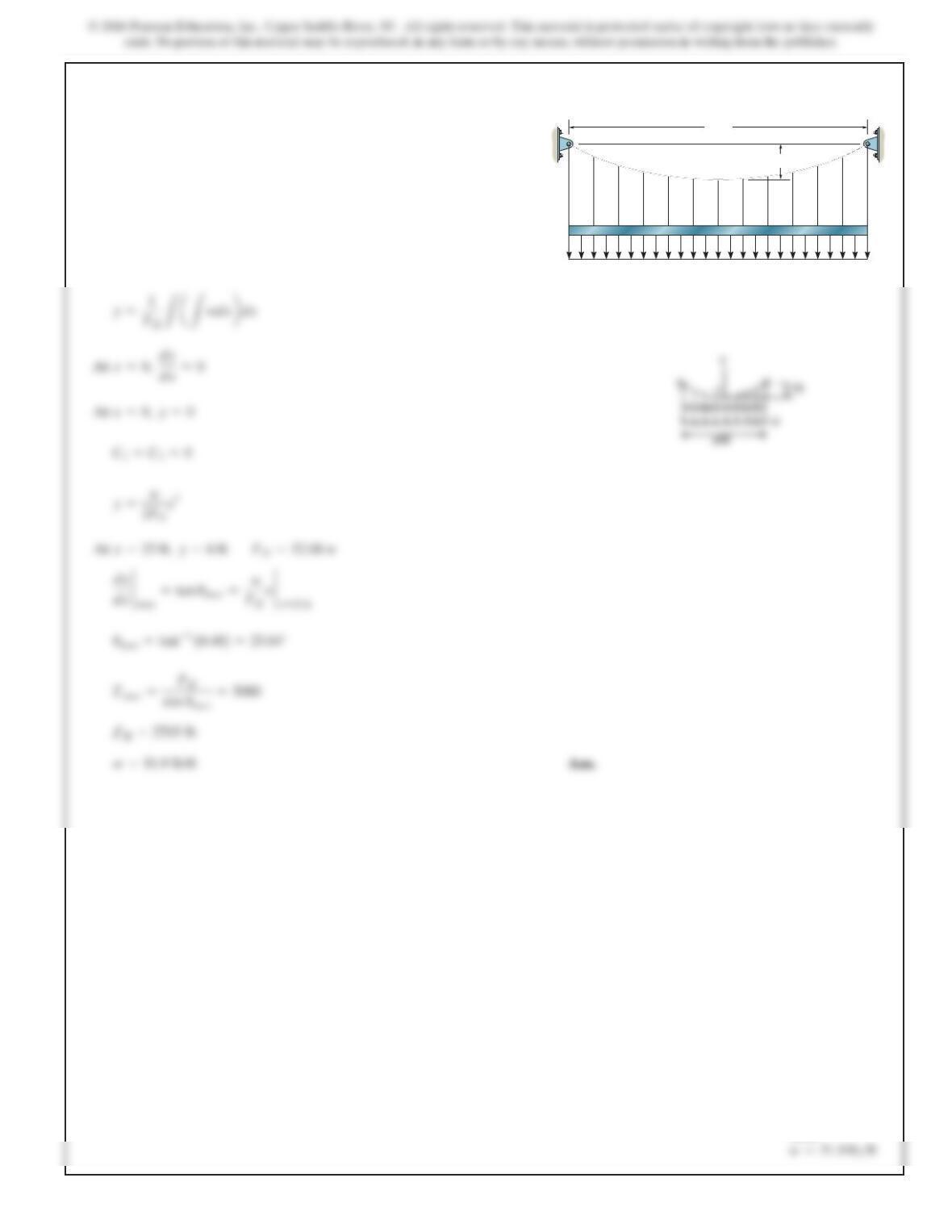
Determine the force Pneeded to hold the cable in the
position shown, i.e., so segment BC remains horizontal.Also,
compute the sag and the maximum tension in the cable.yB
4m 3m 2m6m
4kNP
6kN
y
B
3m
A
BC
D
E
723
7–102.
SOLUTION
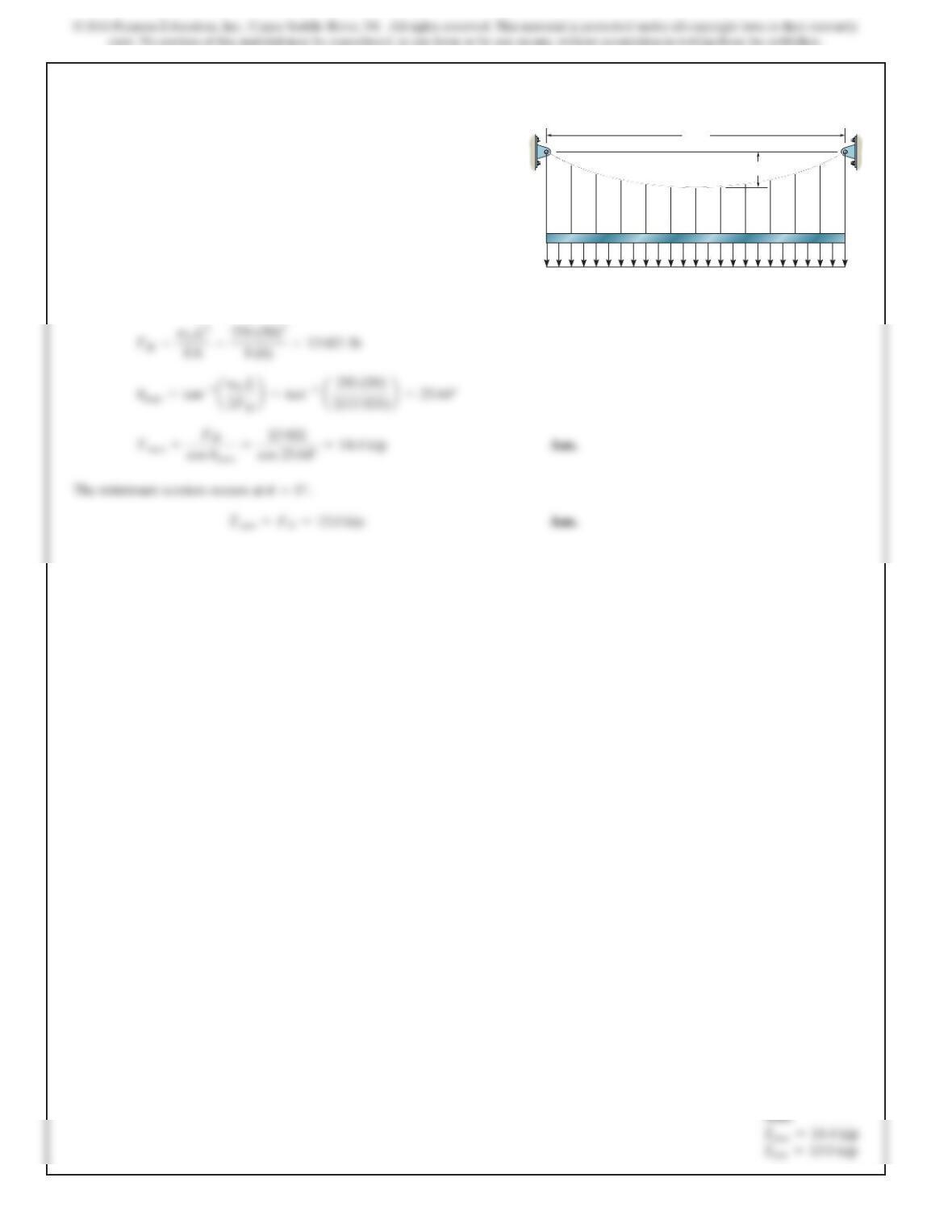
Determine the maximum uniform loading measured in
that the cable can support if it is capable of sustaining
a maximum tension of 3000 lb before it will break.
lb>ft,
w,
50 ft
6ft
w
Ans:
724
7–103.
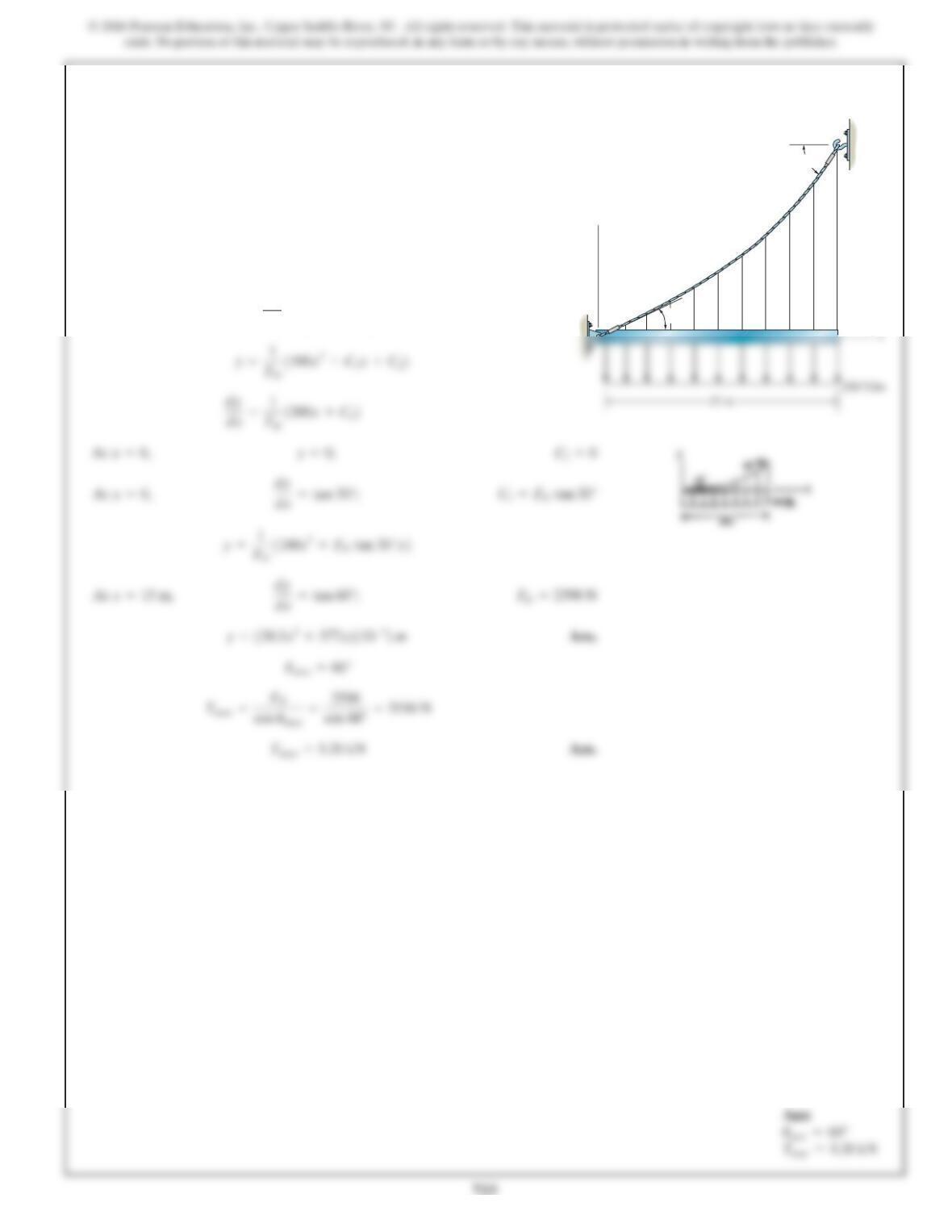
The cable is subjected to a uniform loading of
Determine the maximum and minimum tension in the cable.
w=250 lb
>
ft.
SOLUTION
From Example 7–12:
50 ft
6ft
w
*7–104.
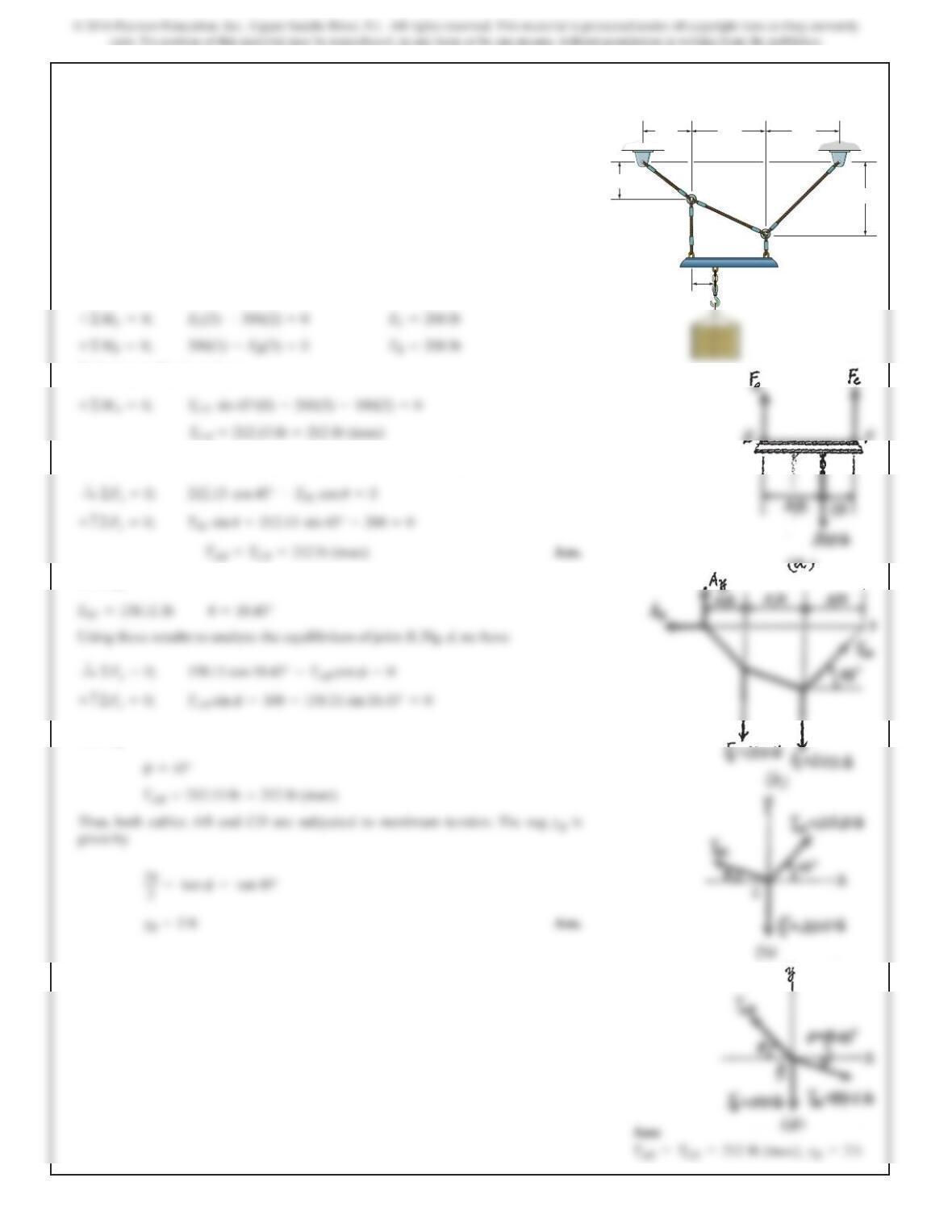
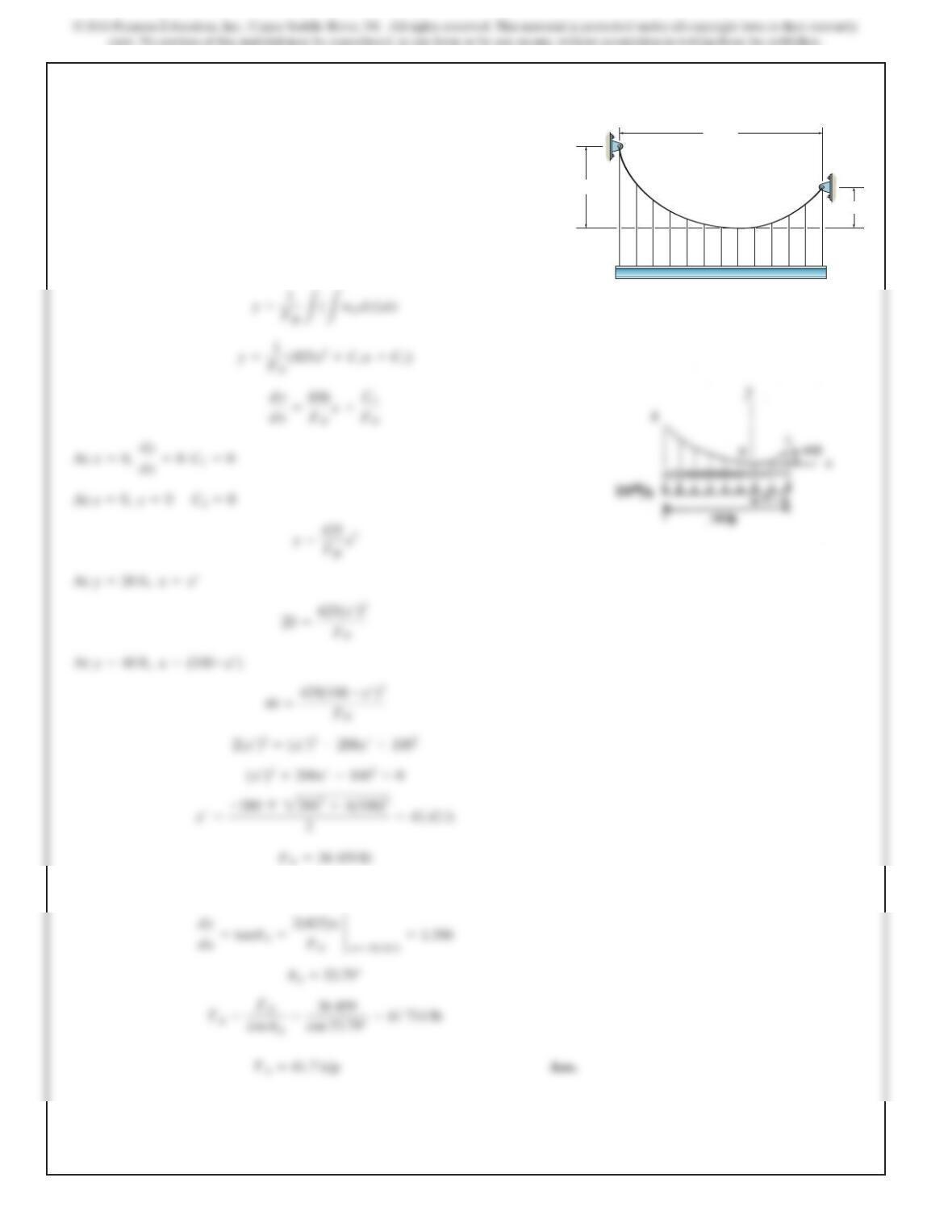
The cable AB is subjected to a uniform loading of 200 N/m.
If the weight of the cable is neglected and the slope angles
at points Aand Bare 30° and 60°, respectively, determine
the curve that defines the cable shape and the maximum
tension developed in the cable.
SOLUTION
y=1
F
H
L
¢
L200 dx
≤
dx
y
A
B
60°
30°
726
7–105.
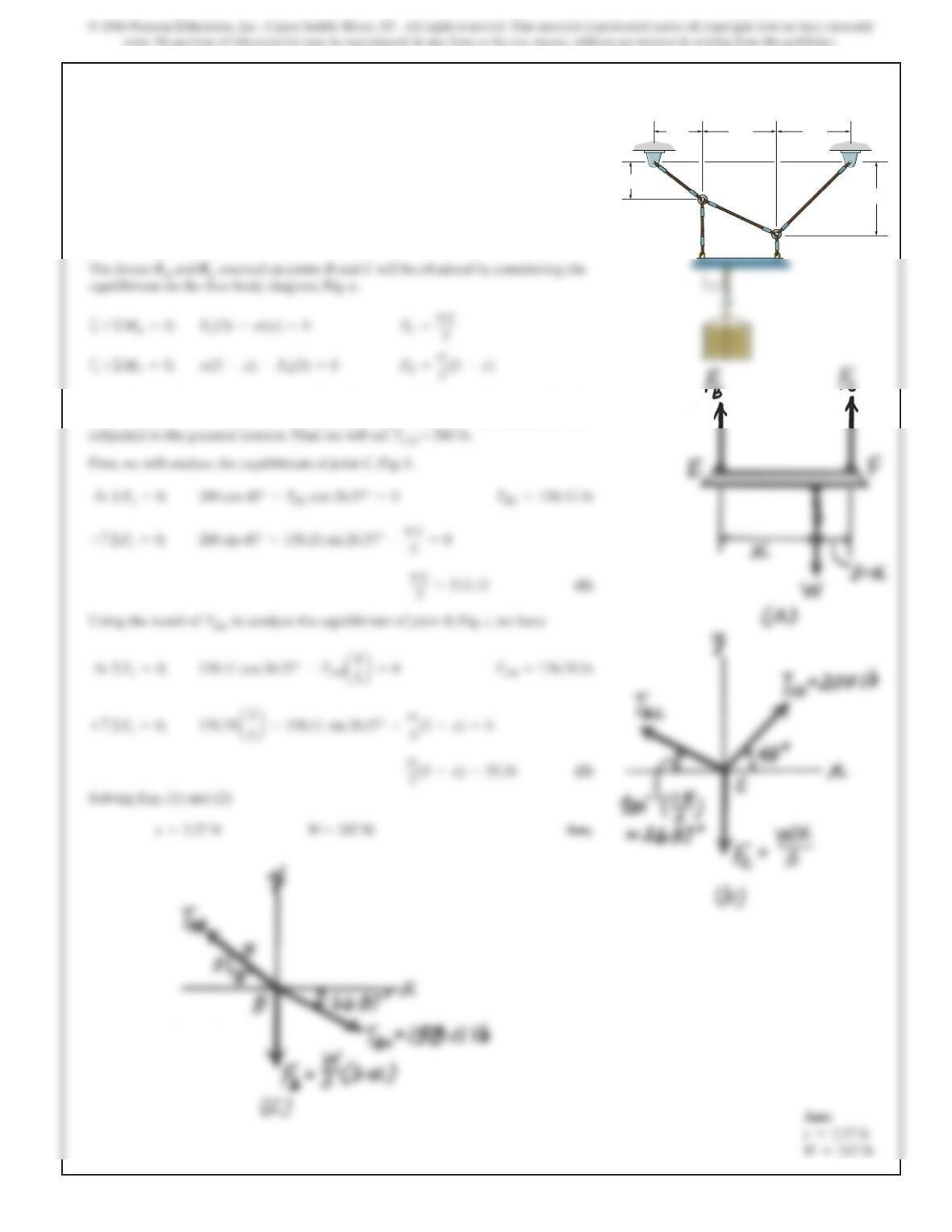
If x=2 ft and the crate weighs 300 lb, which cable segment
AB,BC, or CD has the greatest tension? What is this force
and what is the sag yB?
SOLUTION
The forces FBand FCexerted on joints Band Cwill be obtained by considering the
equilibrium on the free-body diagram, Fig. a.
Referring to Fig. b, we have
Using these results and analyzing the equilibrium of joint C,Fig. c, we obtain
Solving,
Solving,
3 ft 3 ft
3 ft
2 ft
AD
B
x
C
y
B
727
7–106.
If y
B
=1.5 ft, determine the largest weight of the crate and
its placement xso that neither cable segment AB,BC,or
CD is subjected to a tension that exceeds 200 lb.
SOLUTION
Since the horizontal component of tensile force developed in each cable is
constant, cable CD, which has the greatest angle with the horizontal, will be
3 ft 3 ft
3 ft
2 ft
AD
B
C
y
B
728
7–107.
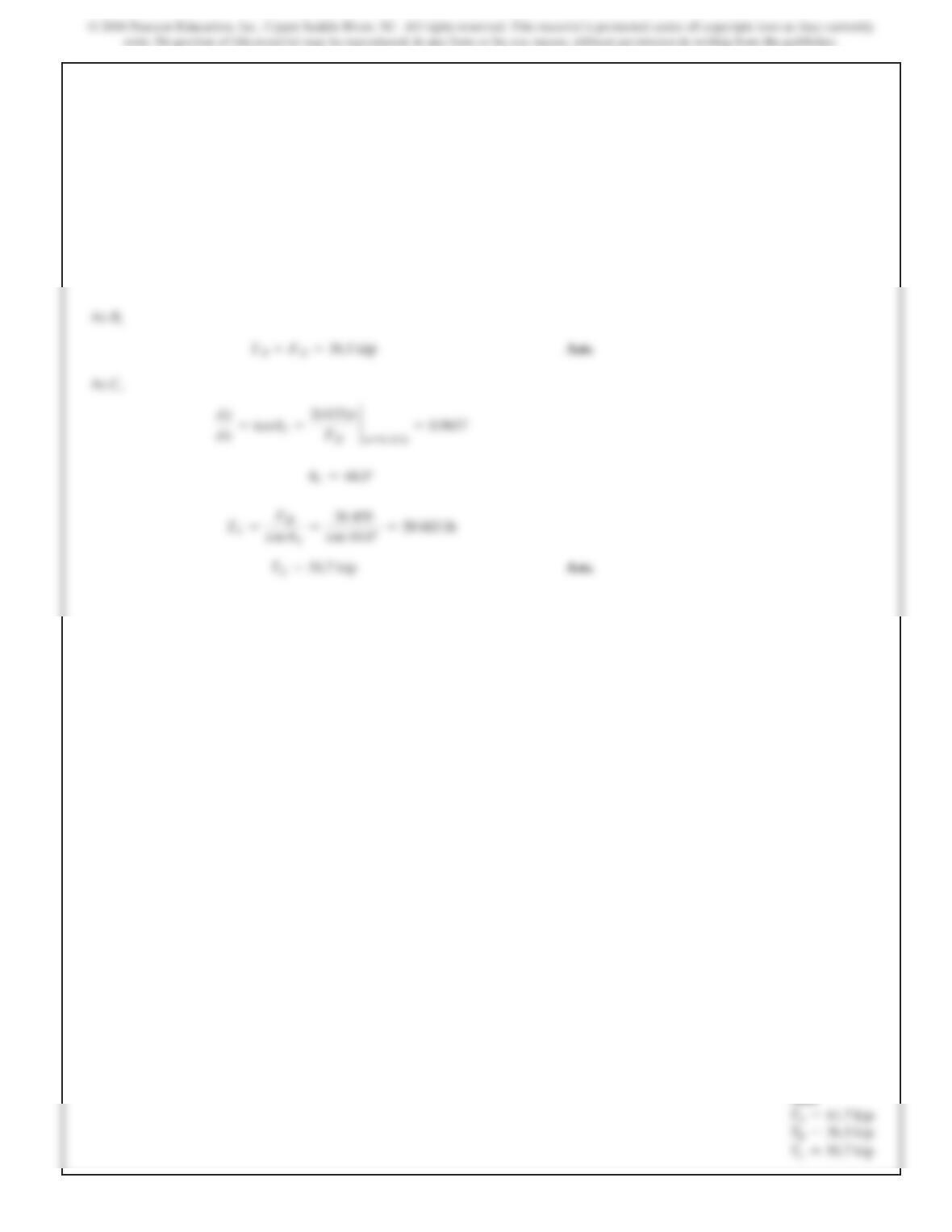
The cable supportsagirder which weighs 850
Determine the tension in the cable at points A, B, and C.
lb>ft.
SOLUTION
At A,
100ft
A
C
B
40 ft
20 ft
729
7–107. Continued