481
SOLUTION
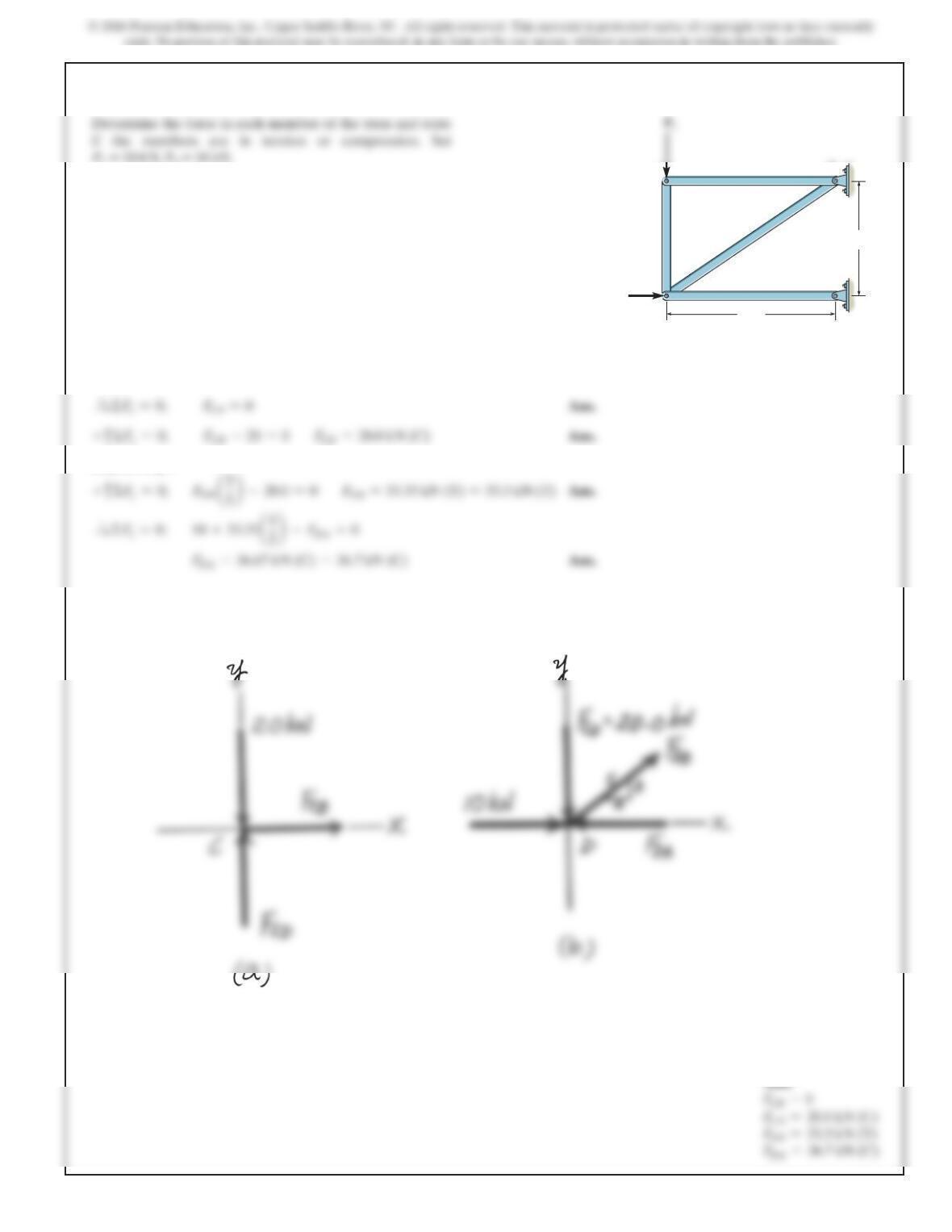
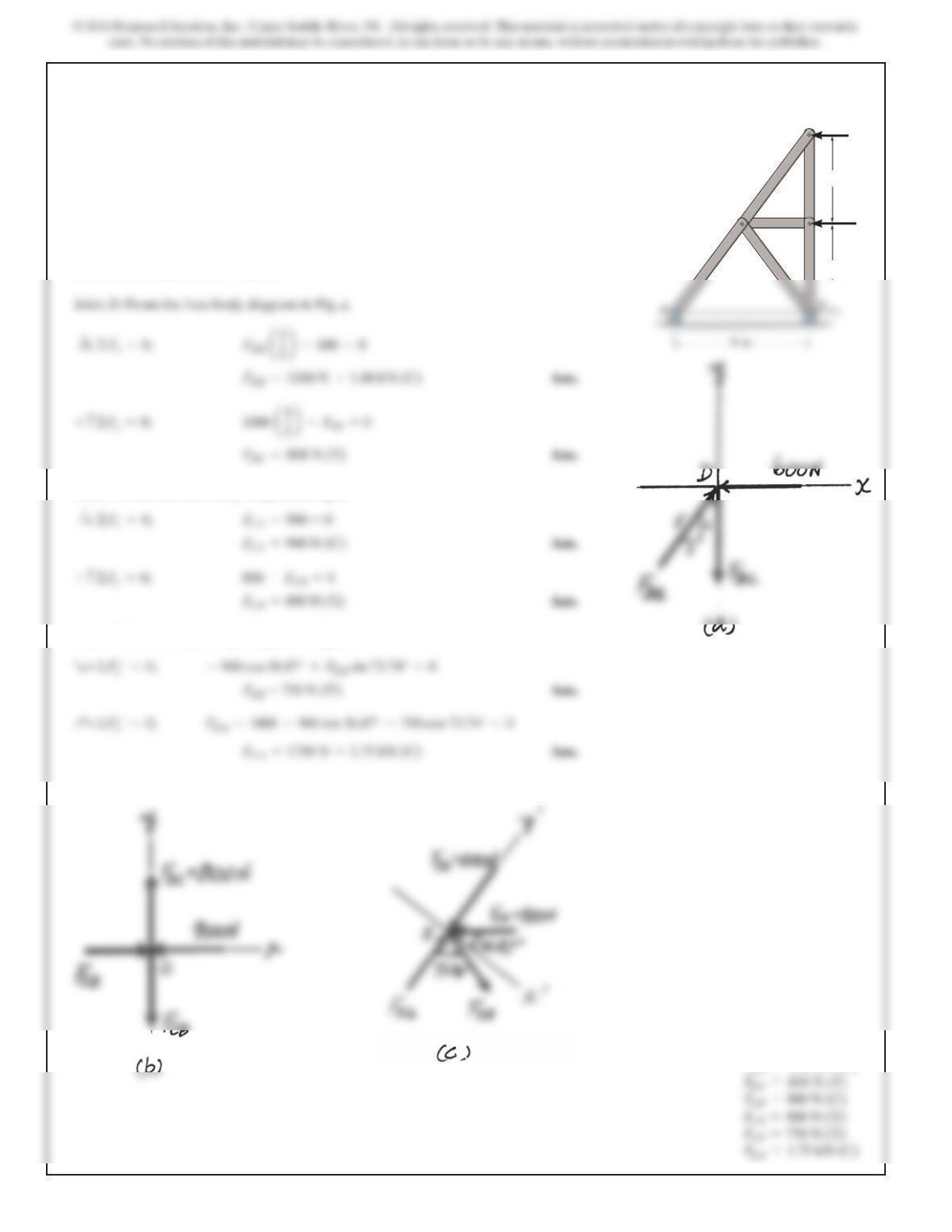
Method of Joints. Start at joint C and then proceed to join D.
Joint C. Fig. a
Joint D. Fig. b
6–1.
CB
A
D
1.5 m
2 m
P2
482
SOLUTION
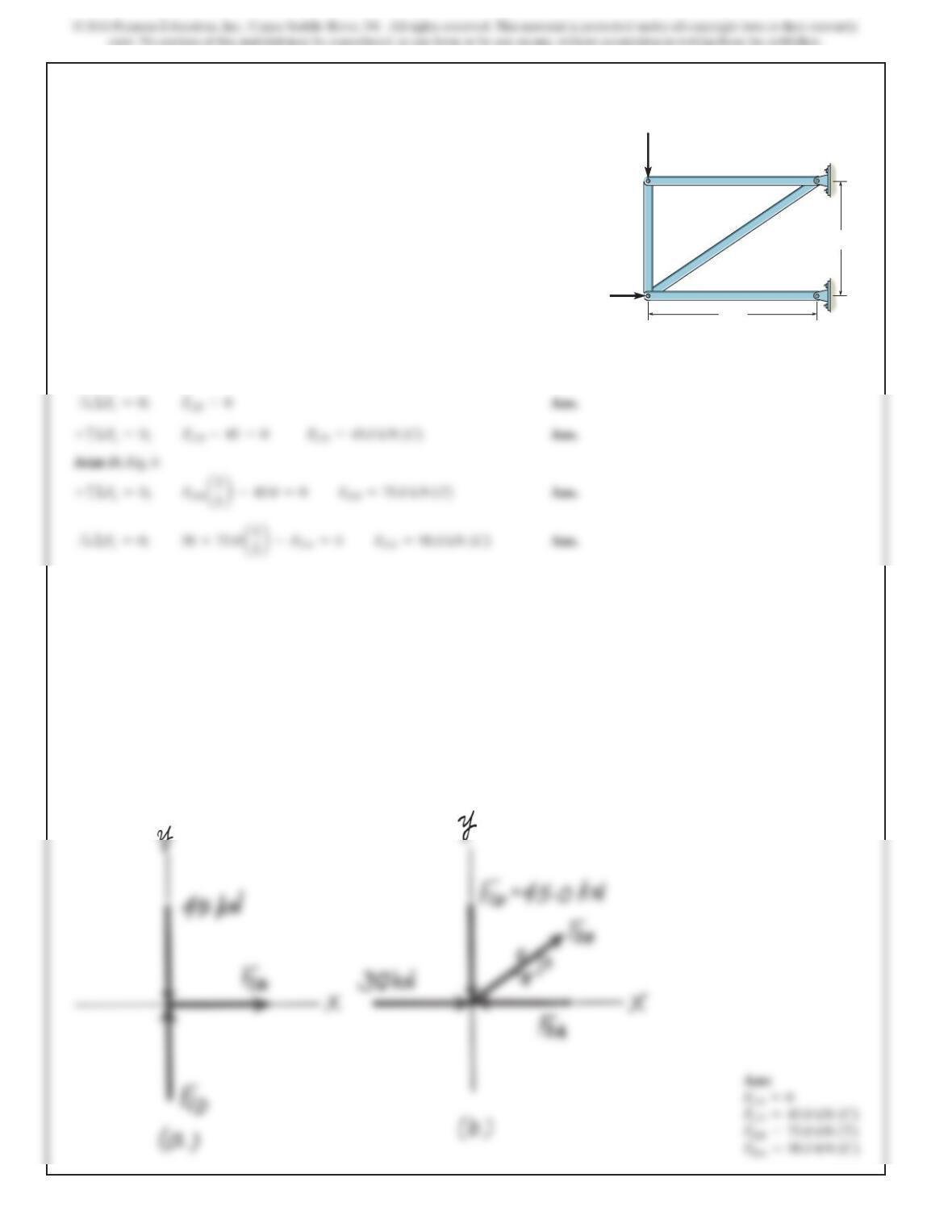
Method of Joints. Start at joint C and then proceed to joint D.
Joint C. Fig. a
6–2.
Determine the force in each member of the truss and state
if the members are in tension or compression. Set
P1 = 45 kN, P2 = 30 kN.
CB
A
D
1.5 m
2 m
P1
P2
483
6–3.
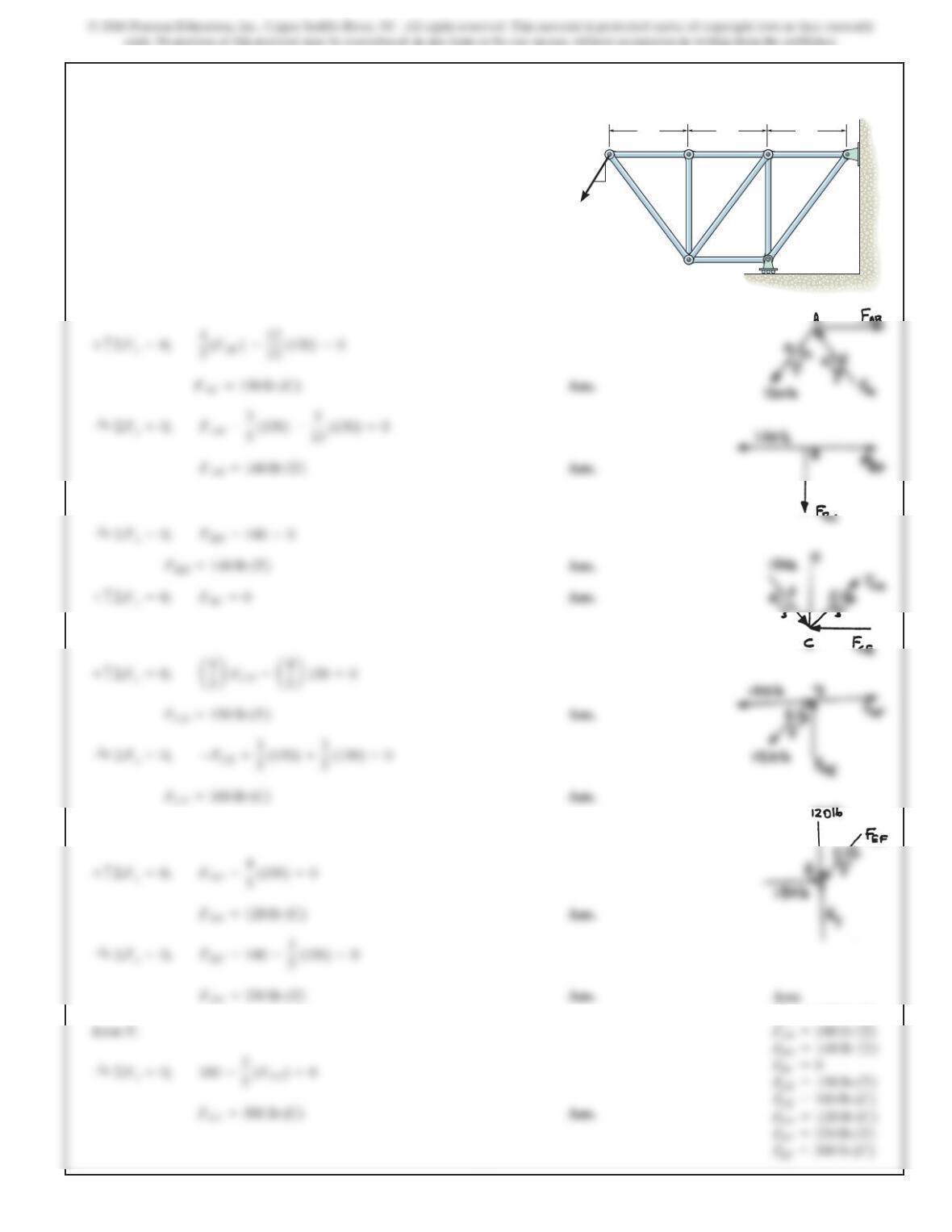
SOLUTION
Joint A:
Joint B:
Joint C:
Joint D:
FAB =140
lb (T)
FBD =140
lb
Determine the force in each member of the truss. State if
the members are in tension or compression.
3ft3ft3ft
12
5
13
130 lb
AB
C
E
D
F
4 ft 4 ft
FAC =150
lb (C)
484
*6–4.
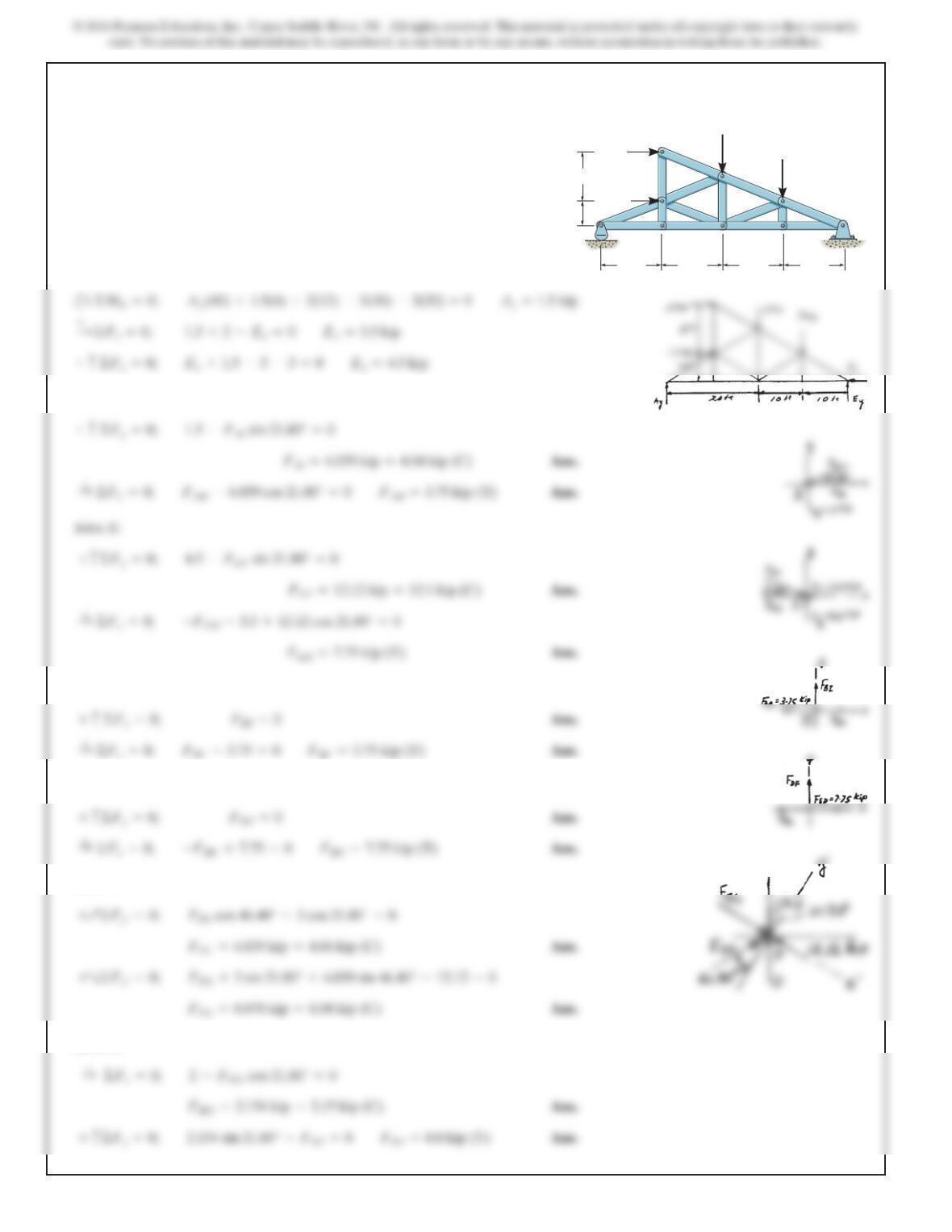
SOLUTION
Joint A:
Joint B:
Joint D:
Joint F:
Joint H:
Determ
i
ne t
h
e force
i
n eac
h
mem
b
er of t
h
e truss an
d
state
if the members are in tension or compression. 2kip
1.5 kip
4ft
10 ft 10 ft 10 ft
3kip
3kip
10 ft
AB
I
H
G
F
CD
E
8ft
485
*6–4. Continued
Joint C:
J
oint G:
Ans:
486
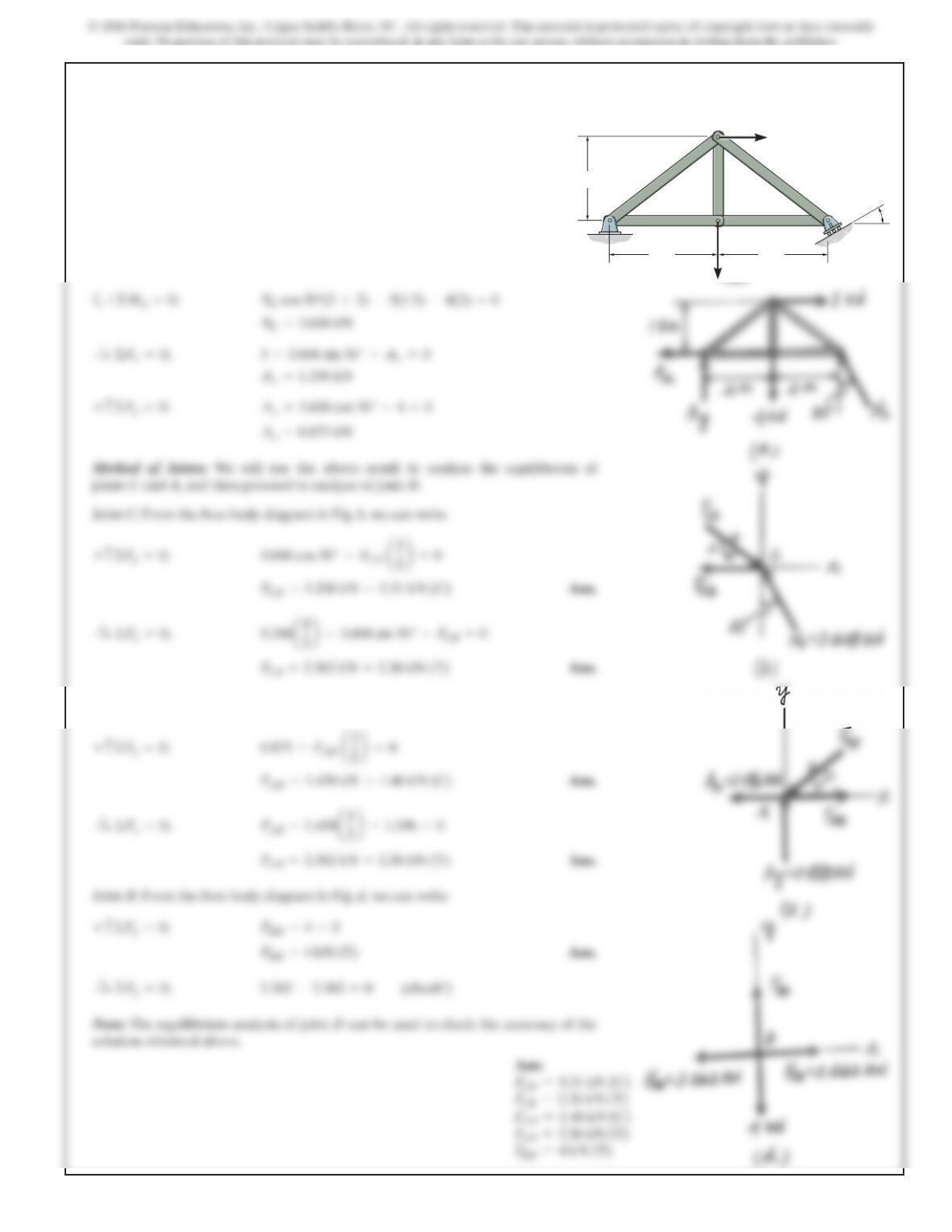
6–5.
Determine the force in each member of the truss, and state
if the members are in tension or compression. Set .
SOLUTION
Support Reactions: Applying the equations of equilibrium to the free-body diagram
of the entire truss,Fig.a, we have
Method of Joints: We will use the above result to analyze the equilibrium of
joints Cand A, and then proceed to analyze of joint B.
Joint A:From the free-body diagram in Fig. c, we can write
Joint B:From the free-body diagram in Fig. d, we can write
u=0°
AC
B
D
2 m
3 kN
2 m
1.5 m
u
487
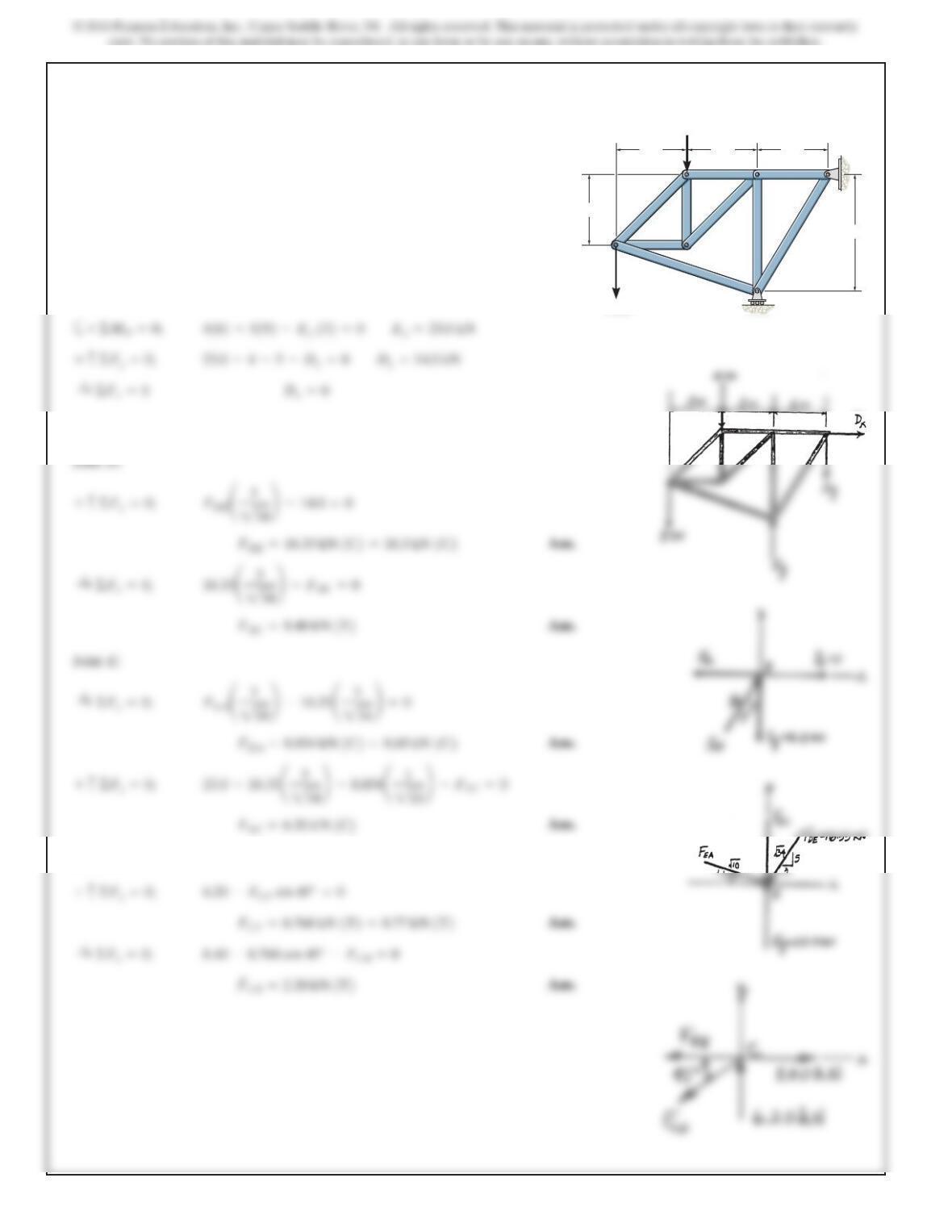
6–6.
Determine the force in each member of the truss, and state
if the members are in tension or compression. Set .
SOLUTION
Support Reactions: From the free-body diagram of the truss,Fig. a, and applying
the equations of equilibrium, we have
Joint A:From the free-body diagram in Fig. c, we can write
u=30°
AC
B
D
2 m
3 kN
2 m
1.5 m
u
488
6–7.
SOLUTION
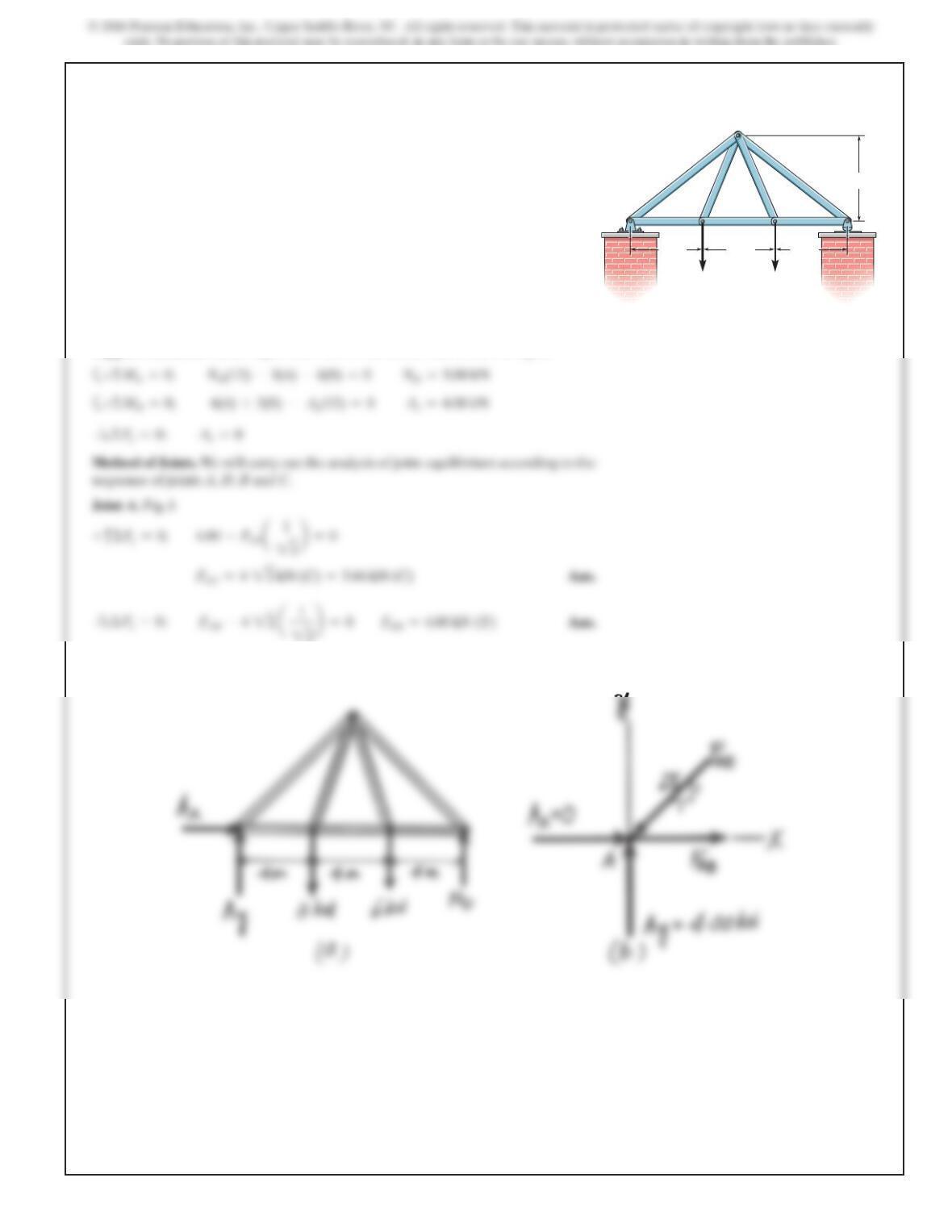
Support Reactions:
Method of Joints:
Joint C:
Determine the force in each member of the truss and state
if the members are in tension or compression.
E
D
C
B
F
A5m
3m
5kN
4kN
3m 3m 3m
489
6–7. Continued
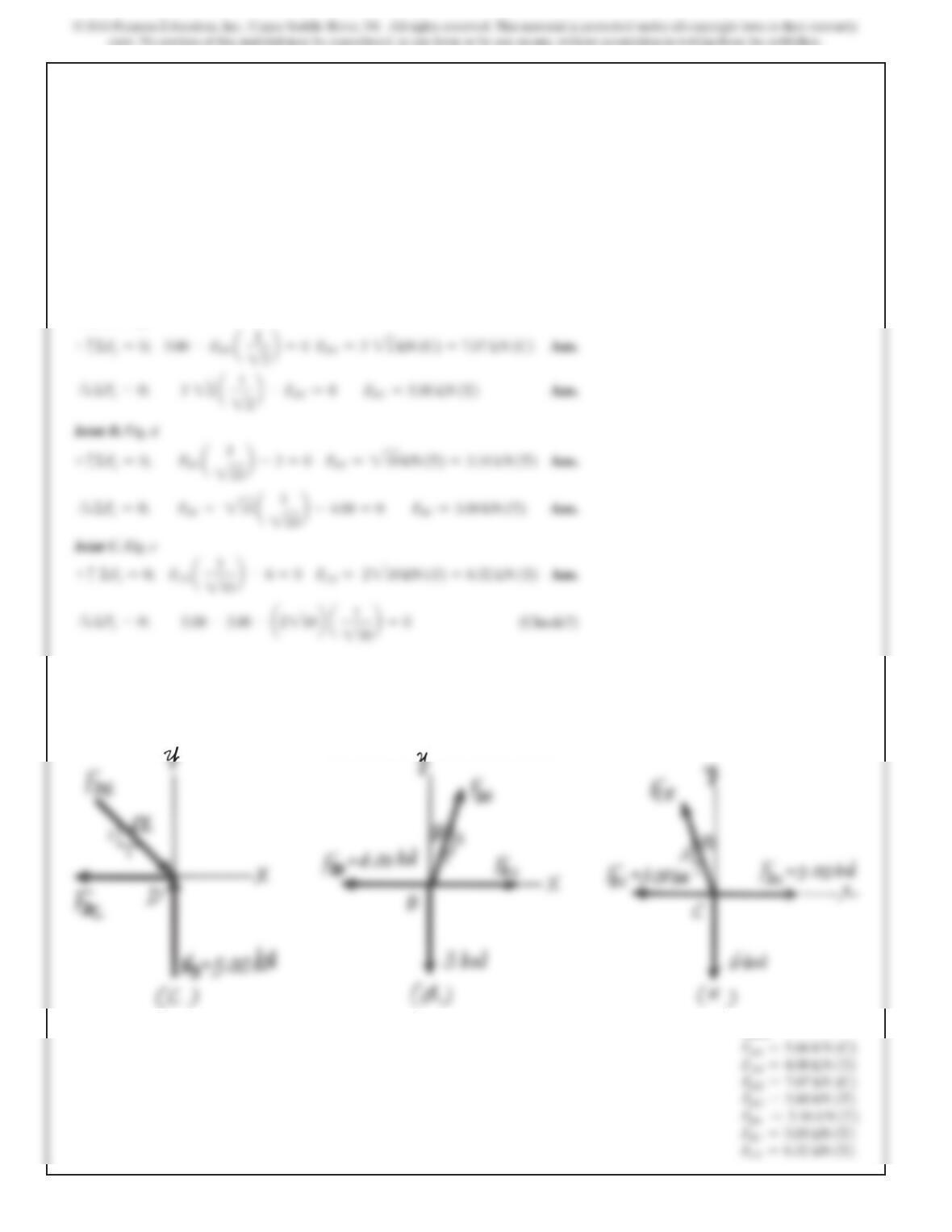
Joint B:
Ans:
490
*6–8.
Determine the force in each member of the truss, and state
if the members are in tension or compression.
SOLUTION
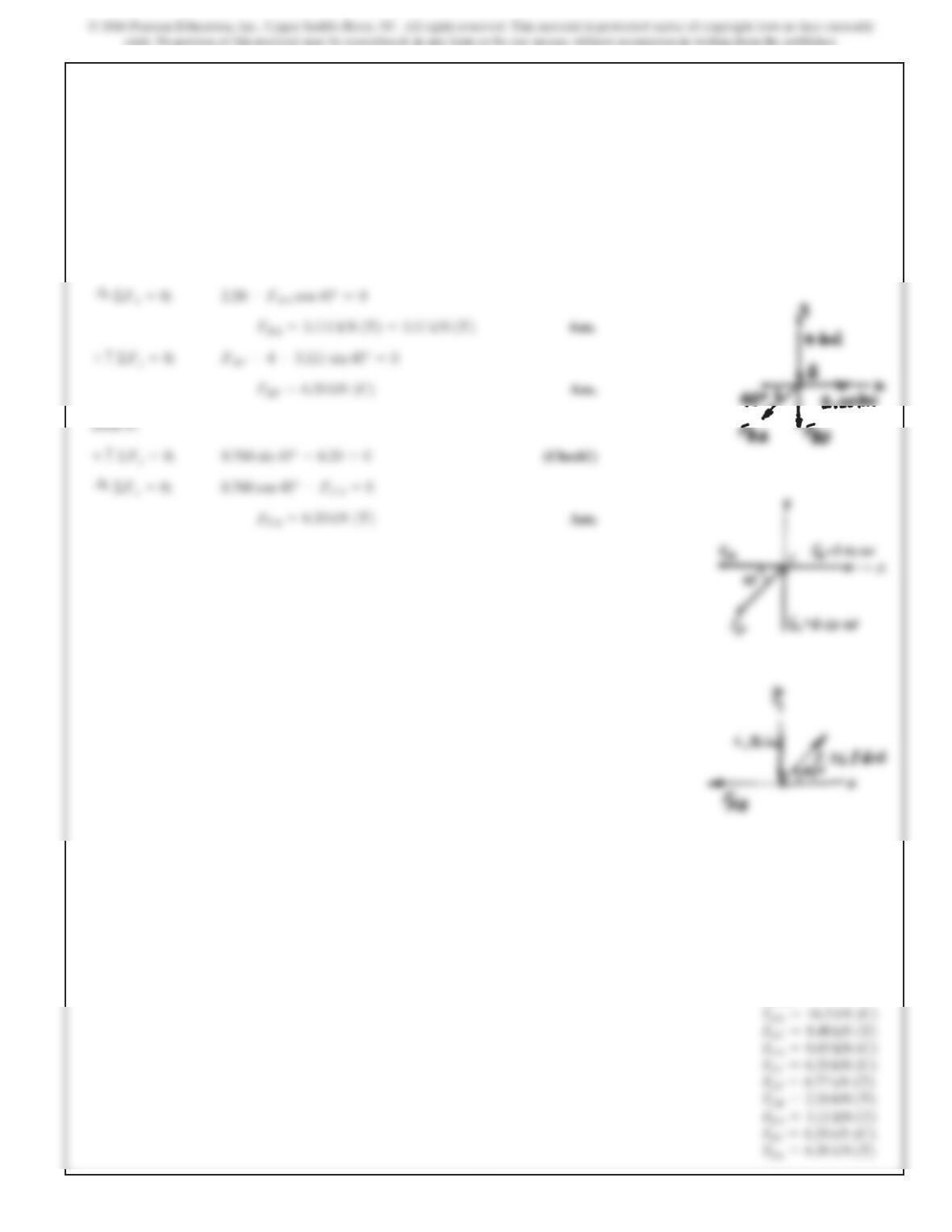
Method of Joints: We will begin by analyzing the equilibrium of joint D, and then
proceed to analyze joints Cand E.
Joint C:From the free-body diagram in Fig. b,
Joint E:From the free-body diagram in Fig. c,
E
D
C
600 N
900 N
4 m
4 m
Ans:
FDE =1.00 kN (C)
491
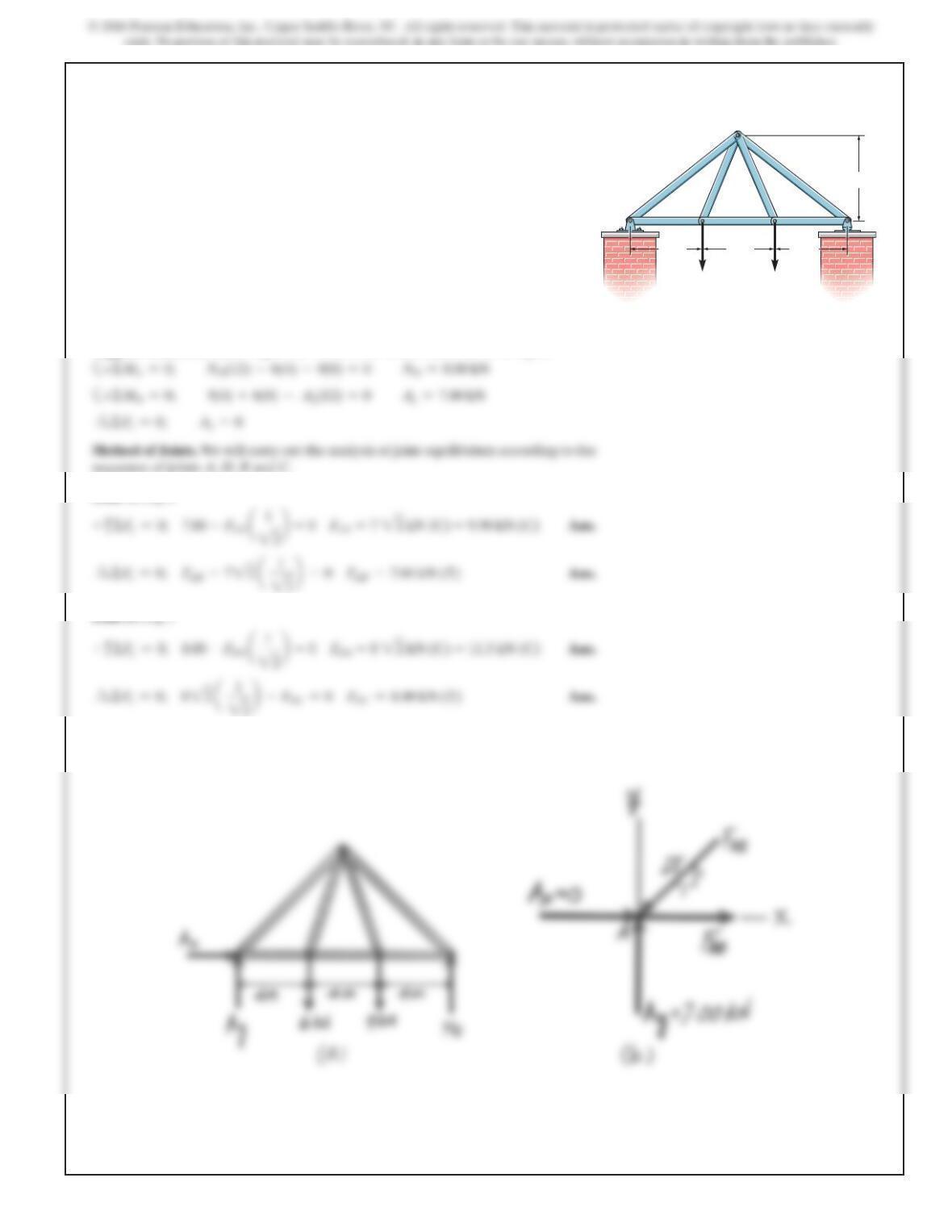
SOLUTION
Support Reactions. Referring to the FBD of the entire truss shown in Fig. a,
6–9.
Determine the force in each member of the truss and state
if the members are in tension or compression. Set
P1 = 3 kN, P2 = 6 kN.
AD
E
B C
P1P2
4 m4 m4 m
6 m
492
6–9. Continued
Joint D. Fig. c
Ans:
493
SOLUTION
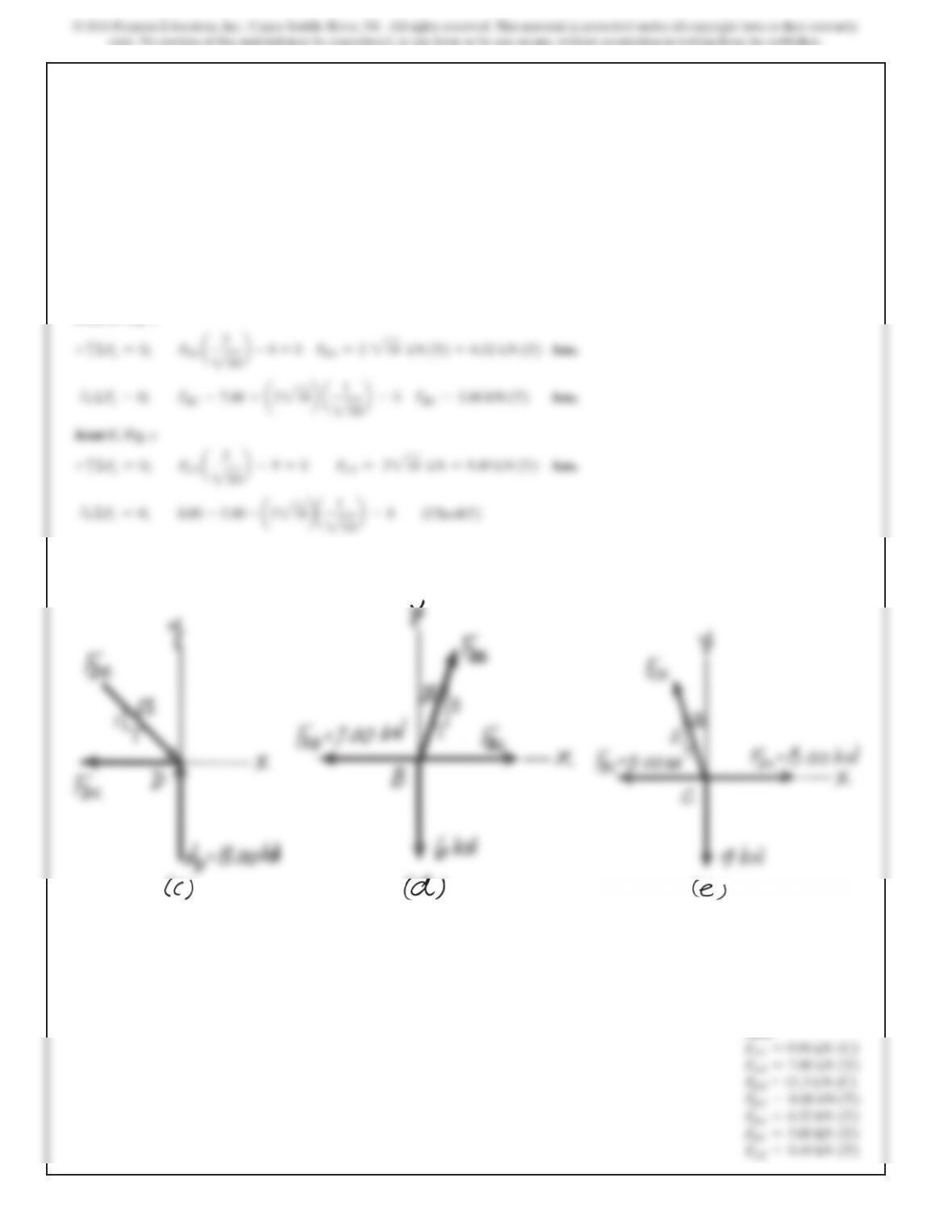
Support Reactions. Referring to the FBD of the entire truss shown in Fig. a,
sequence of joints A, D, B and C.
Joint A. Fig. a
Joint D. Fig. c
6–10.
Determine the force in each member of the truss and state
if the members are in tension or compression. Set P1 = 6 kN,
P2 = 9 kN.
AD
E
B C
P1P2
4 m4 m4 m
6 m
494
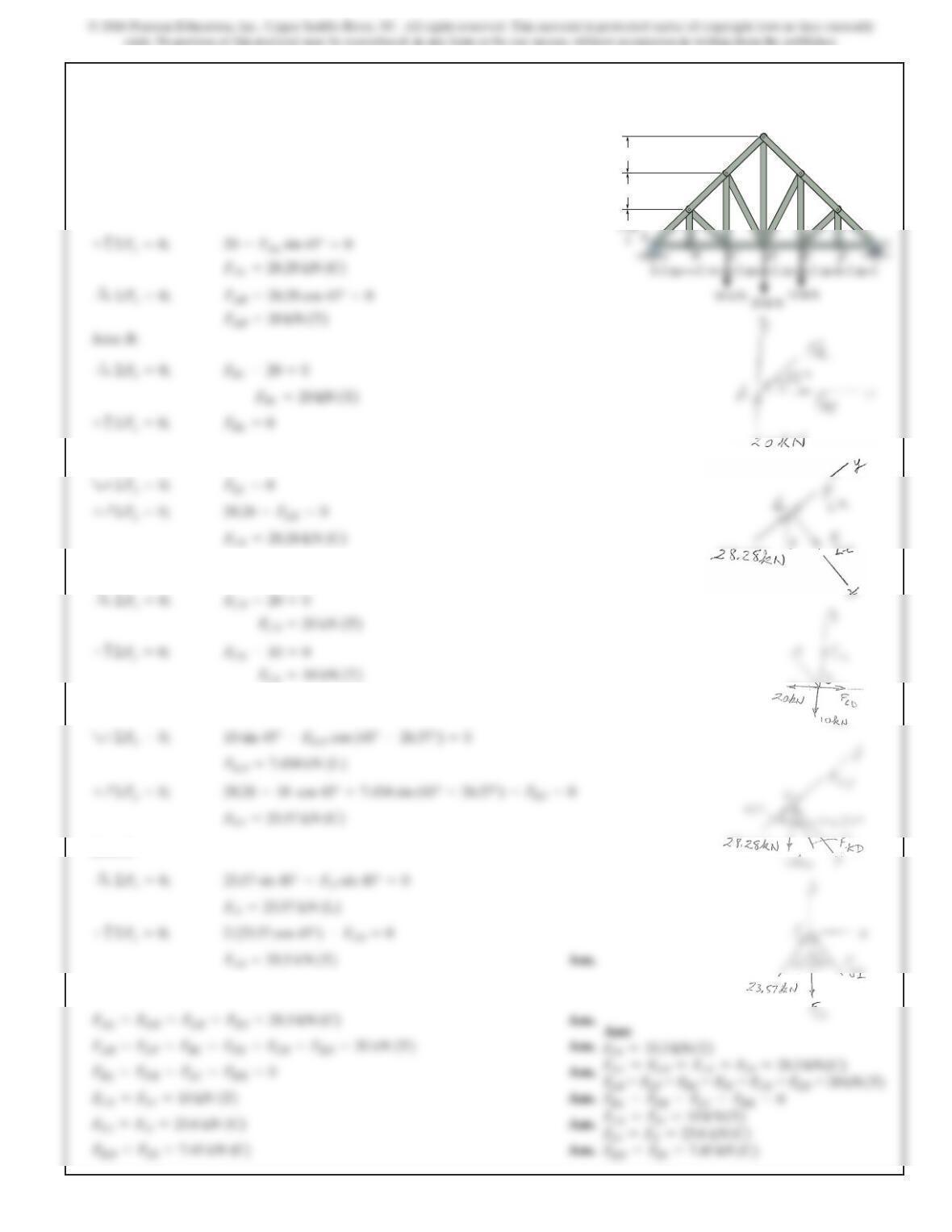
Joint B. Fig. d
6–10. Continued
Ans:
495
6–11.
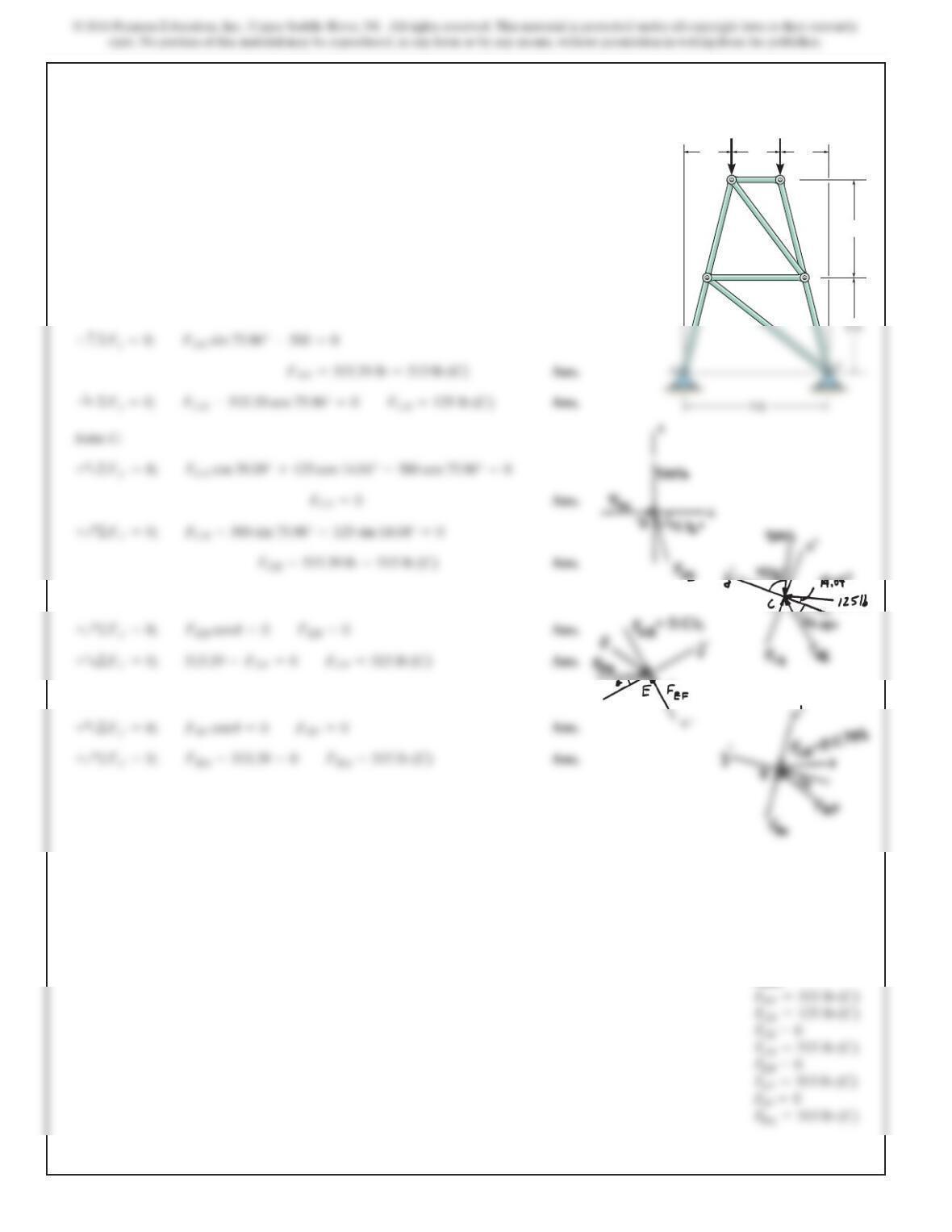
Determine the force in each member of the Pratt truss, and
state if the members are in tension or compression.
SOLUTION
Joint A:
Joint L:
Joint C:
Joint K:
Joint J:
Due to Symmetry
CK =10 kN (T)
H
I
J
K
L
2 m
2 m
496
*6–12.
SOLUTION
Joint D:
Joint E:
Joint B:
Determine the force in each member of the truss and state
if the members are in tension or compression.
500 lb
3 ft
500 lb
C
B
E
D
6 ft
3 ft 3 ft
Ans:
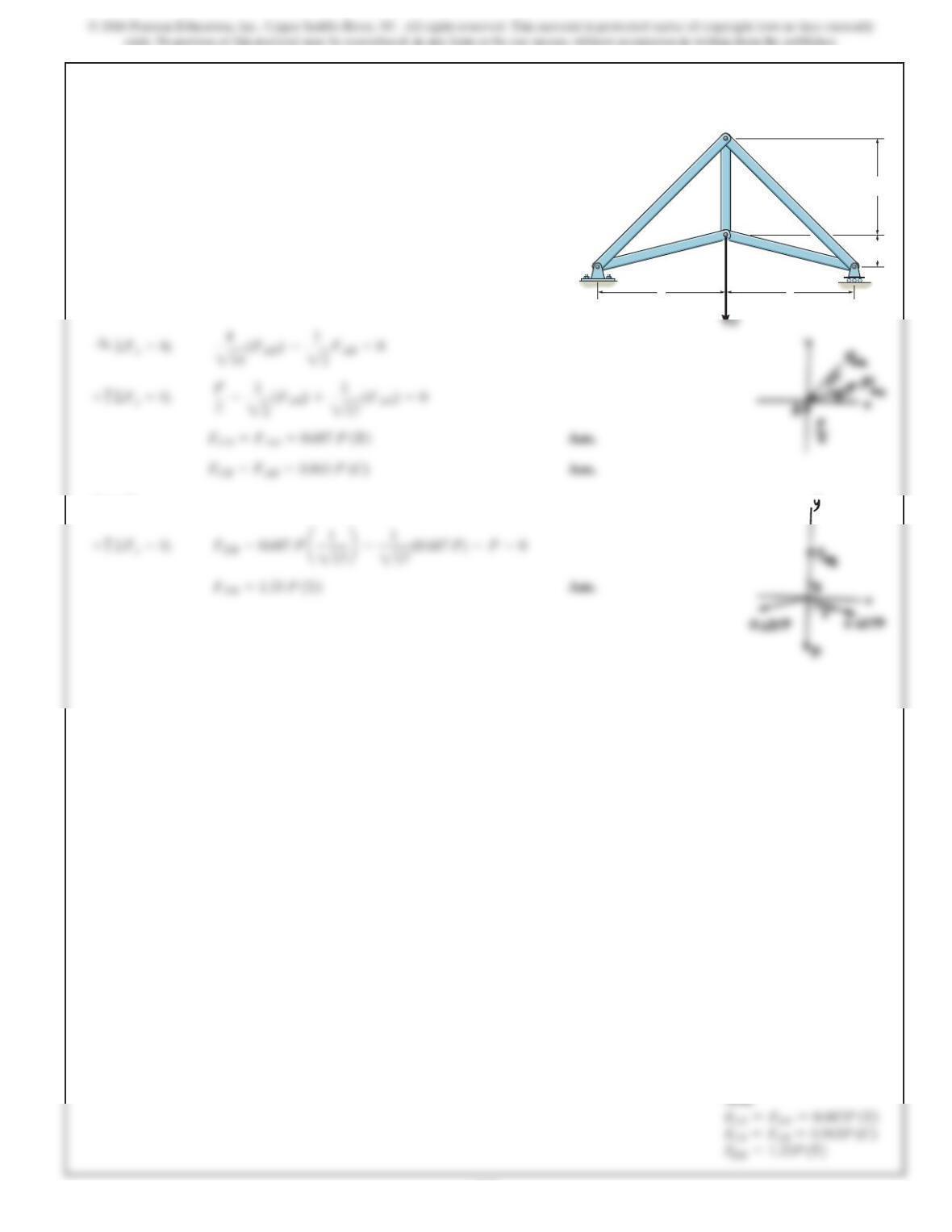
497
6–13.
SOLUTION
Joint A:
Joint D:
Determine the force in each member of the truss in terms of
the load Pand state if the members are in tension or
compression.
B
D
A
C
a a
a
a
3
—
4
1
—
4
498
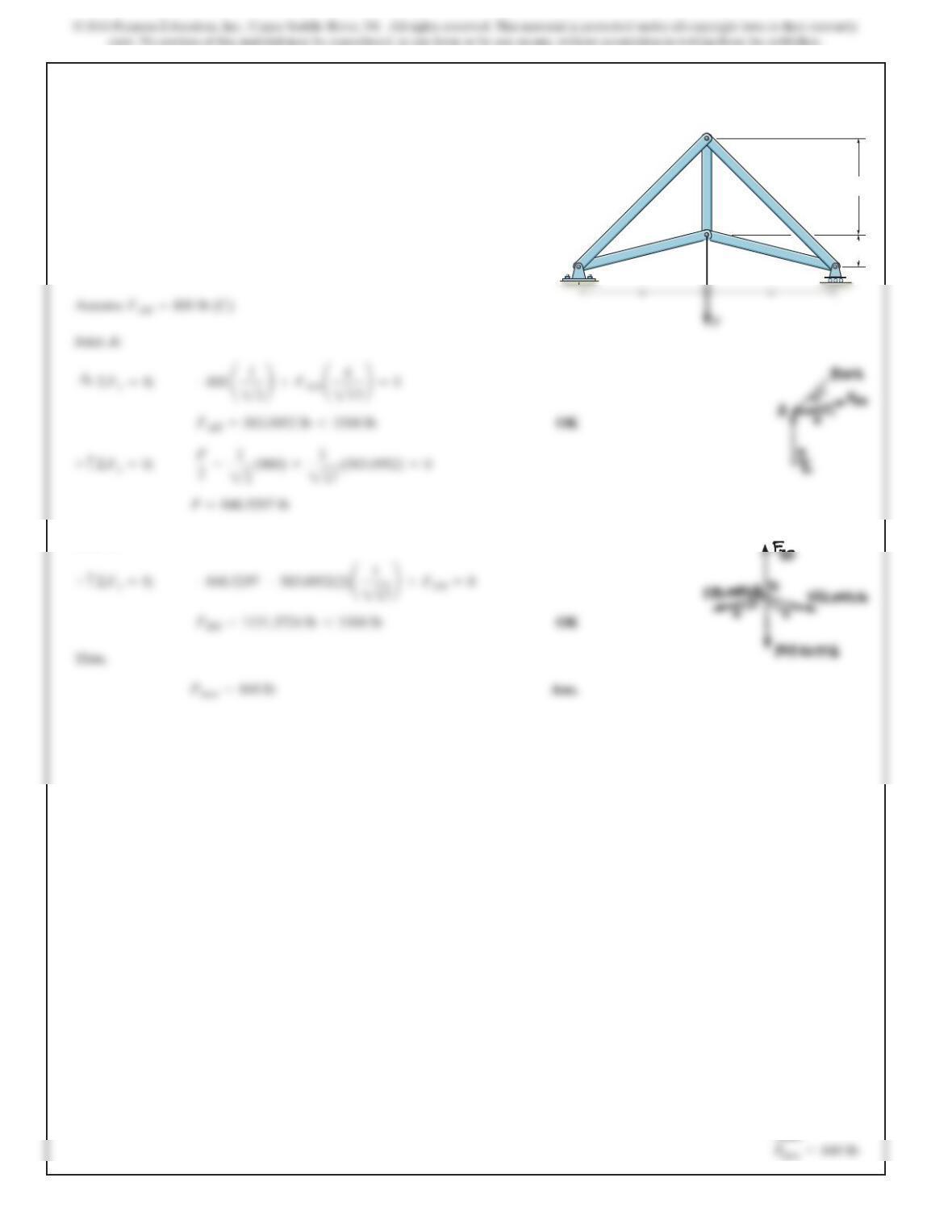
6–14.
Members AB and BC can each support a maximum
compressive force of 800 lb,and members AD,DC,and BD
can support a maximum tensile force of 1500 lb.If ,
determine the greatest load Pthe truss can support.
a=10 ft
SOLUTION
Joint D:
B
D
A
C
a
a
3
—
4
1
—
4
Ans:
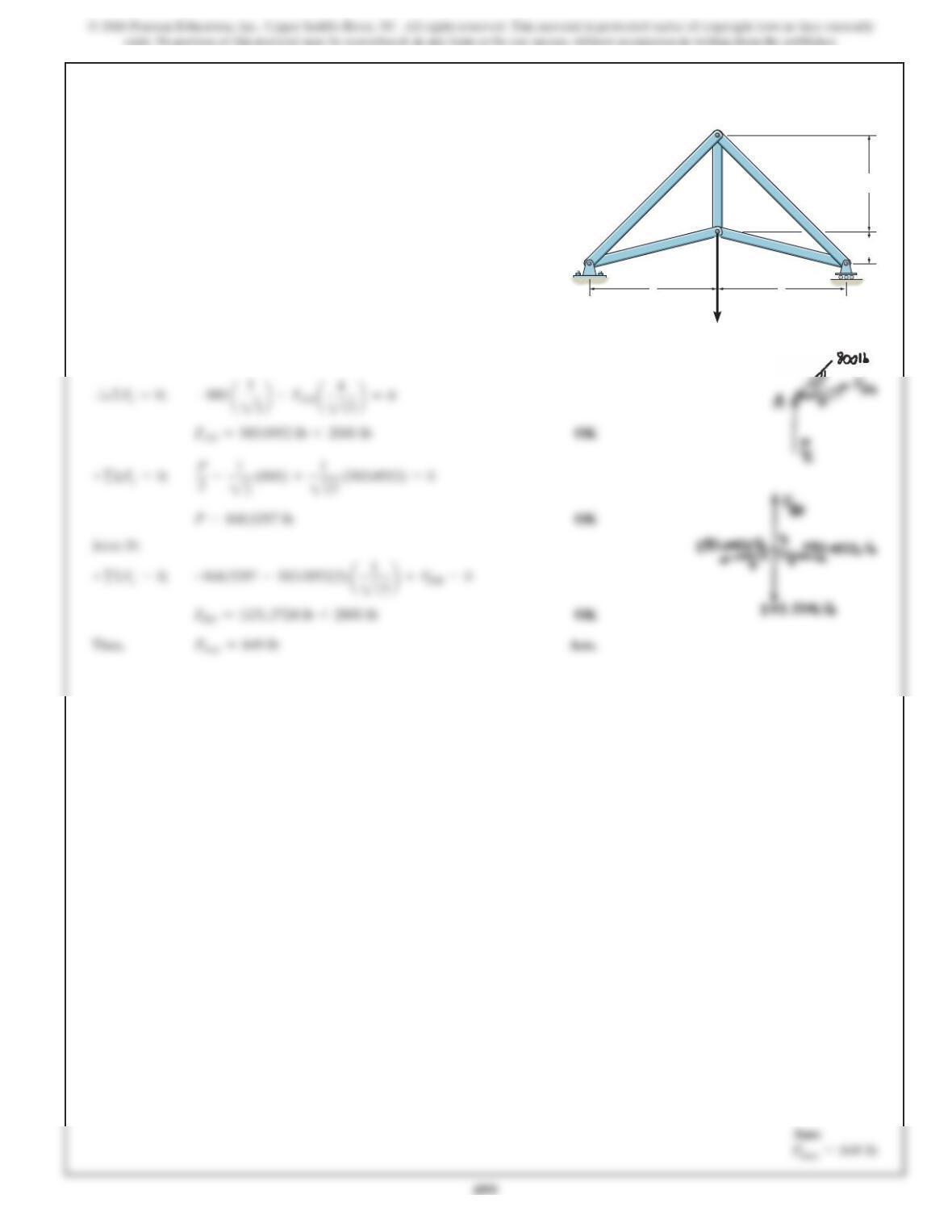
6–15.
Members AB and BC can each support a maximum
compressive force of 800 lb, and members AD, DC, and BD
can support a maximum tensile force of 2000 lb. If a = 6 ft,
determine the greatest load P the truss can support.
B
D
3
A
C
a a
a
a
3
—
4
1
—
4
SOLUTION
1) Assume
FAB =800 lb (C)
Joint A:
500
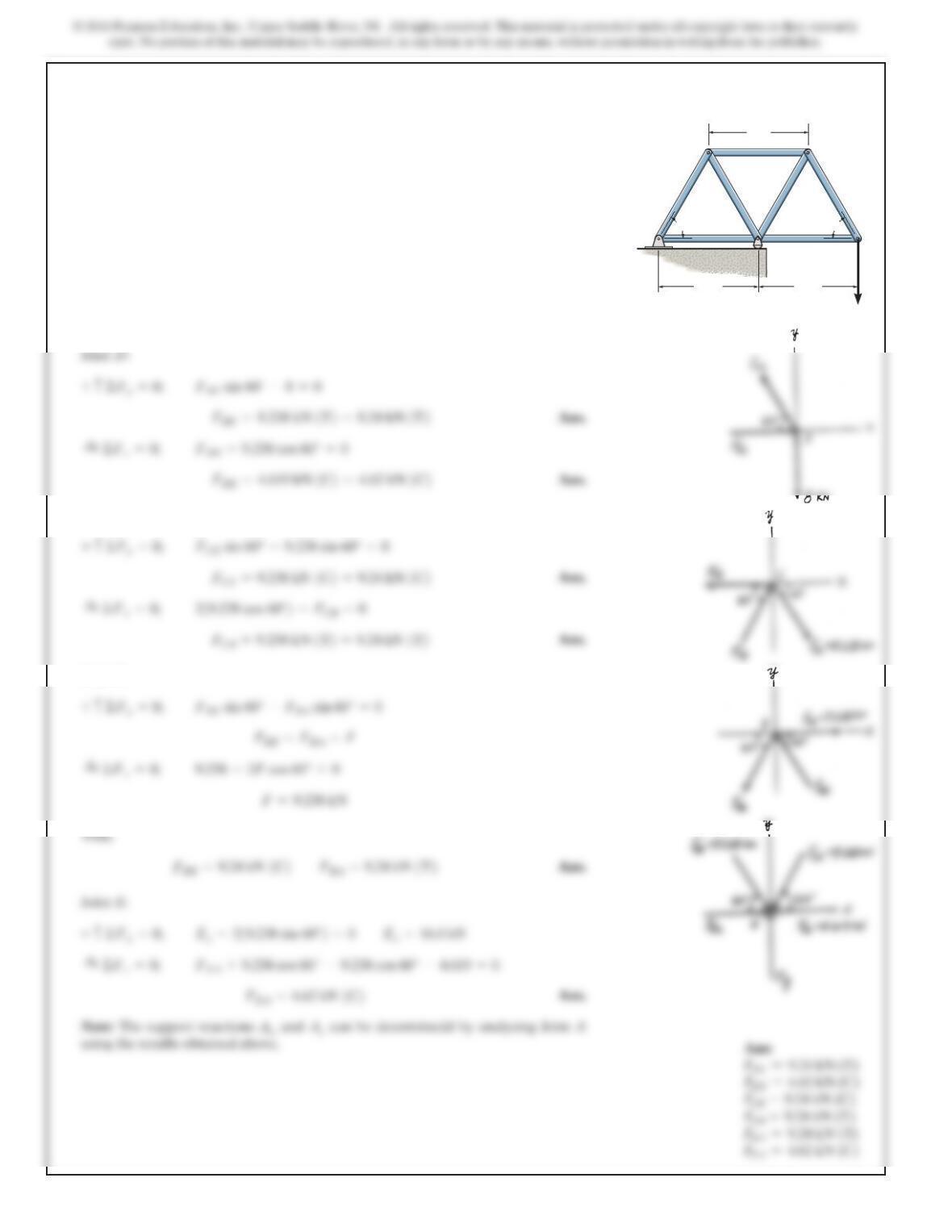
*6–16.
SOLUTION
Method of Joints: In this case, the support reactions are not required for
determining the member forces.
Joint C:
Joint B:
Determine the force in each member of the truss. State
whether the members are in tension or compression. Set
P=8 kN.
60••
60••
4m 4m
B
ED
C
A
4m
P