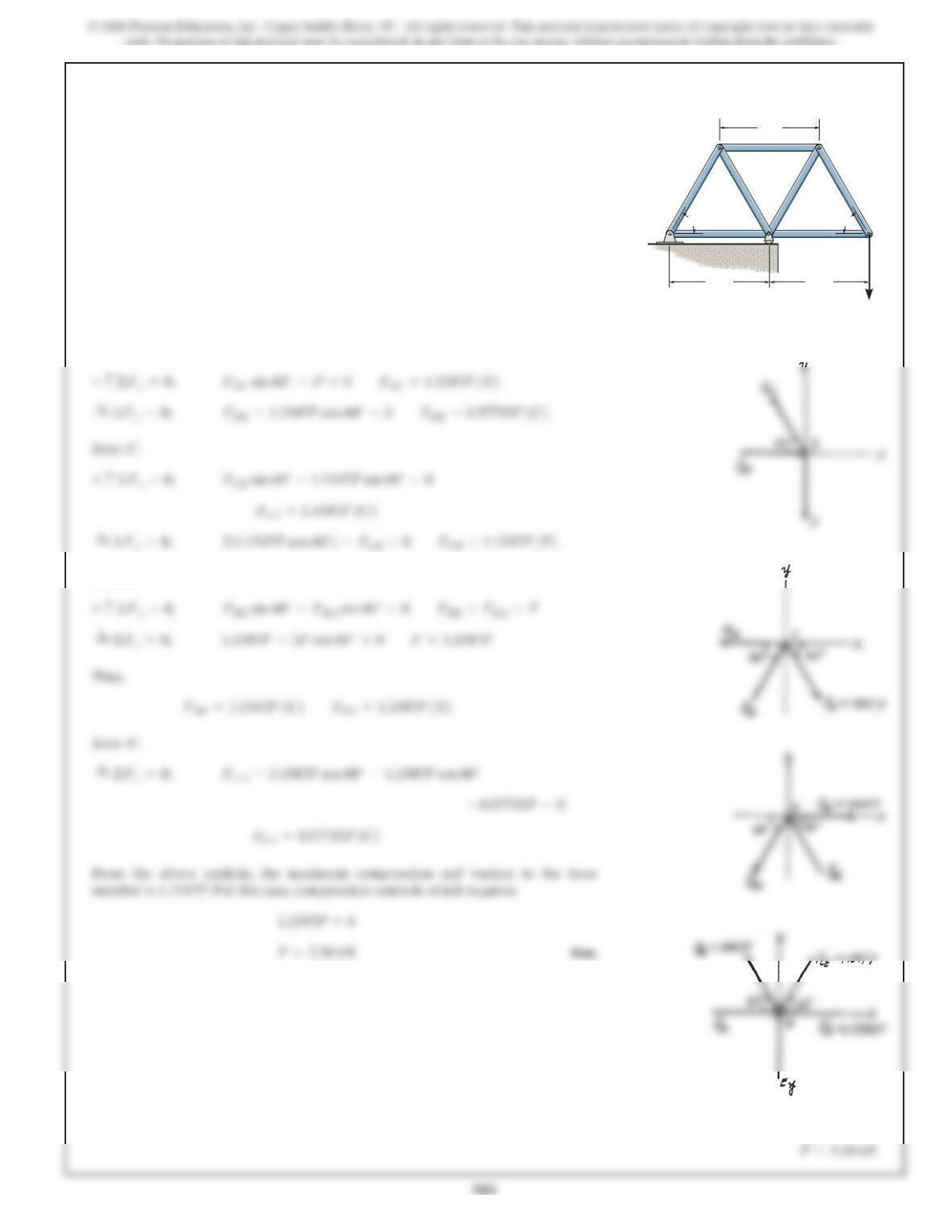
6–17.
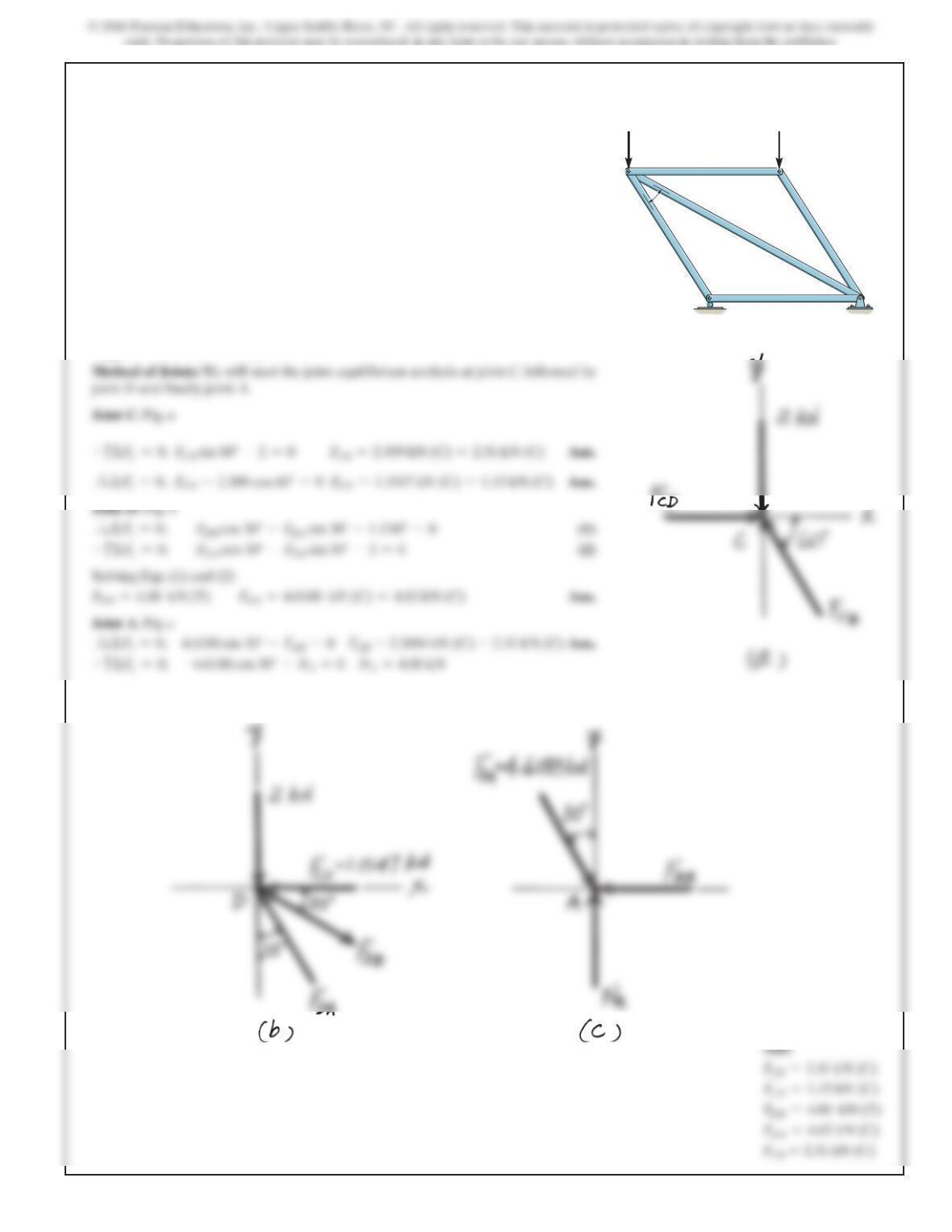
If the maximum force that any member can support is 8 kN
in tension and 6 kN in compression, determine the
maximum force Pthat can be supported at joint D.
SOLUTION
Method of Joints: In this case, the support reactions are not required for
determining the member forces.
Joint D:
Joint B:
60°
60°
4m 4m
B
ED
C
A
4m
P
Ans:
502
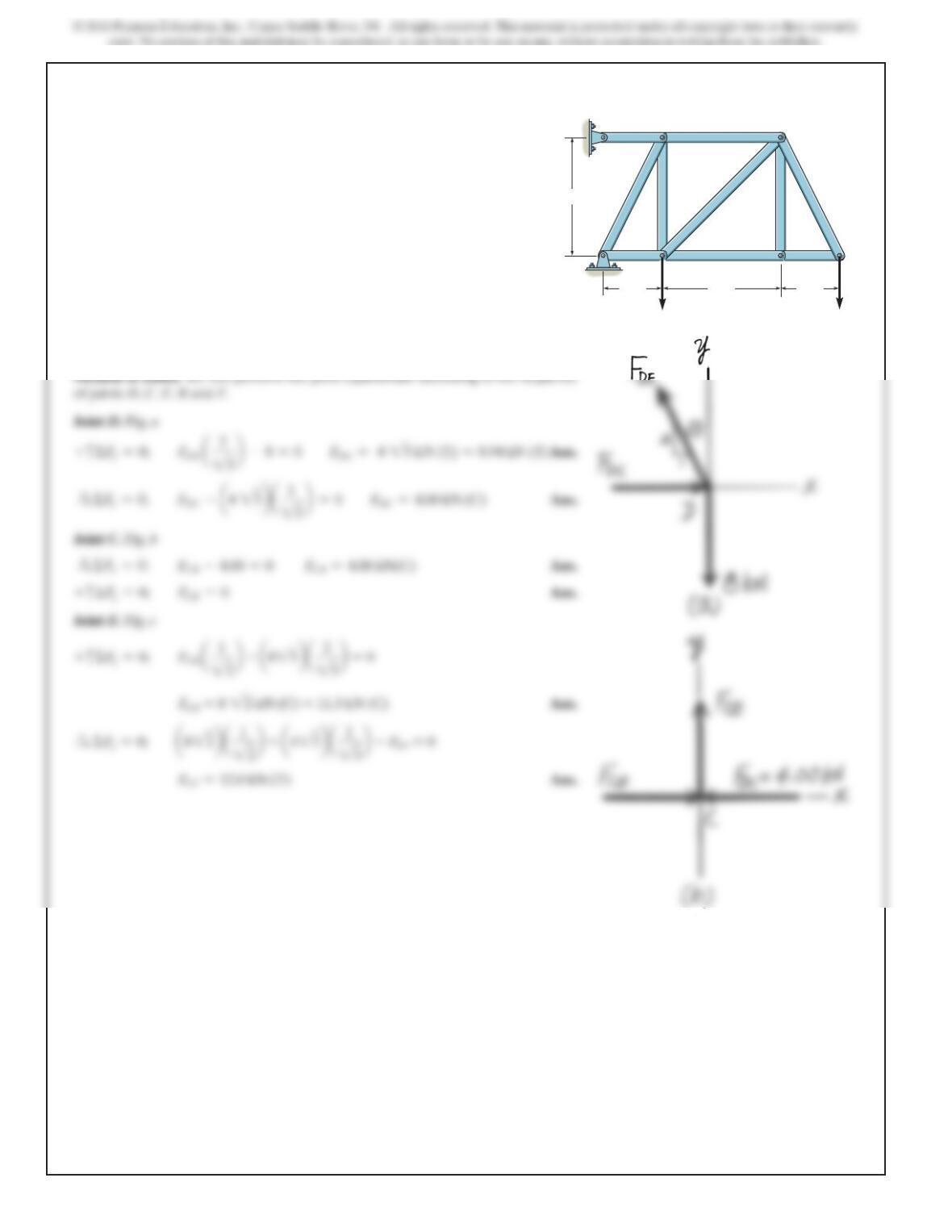
SOLUTION
Support Reactions. Not required.
6–18.
Determine the force in each member of the truss and state
if the members are in tension or compression. Set
P1 = 10 kN, P2 = 8 kN.
1 m 1 m2 m
2 m
A
FE
G
BCD
P1P2
503
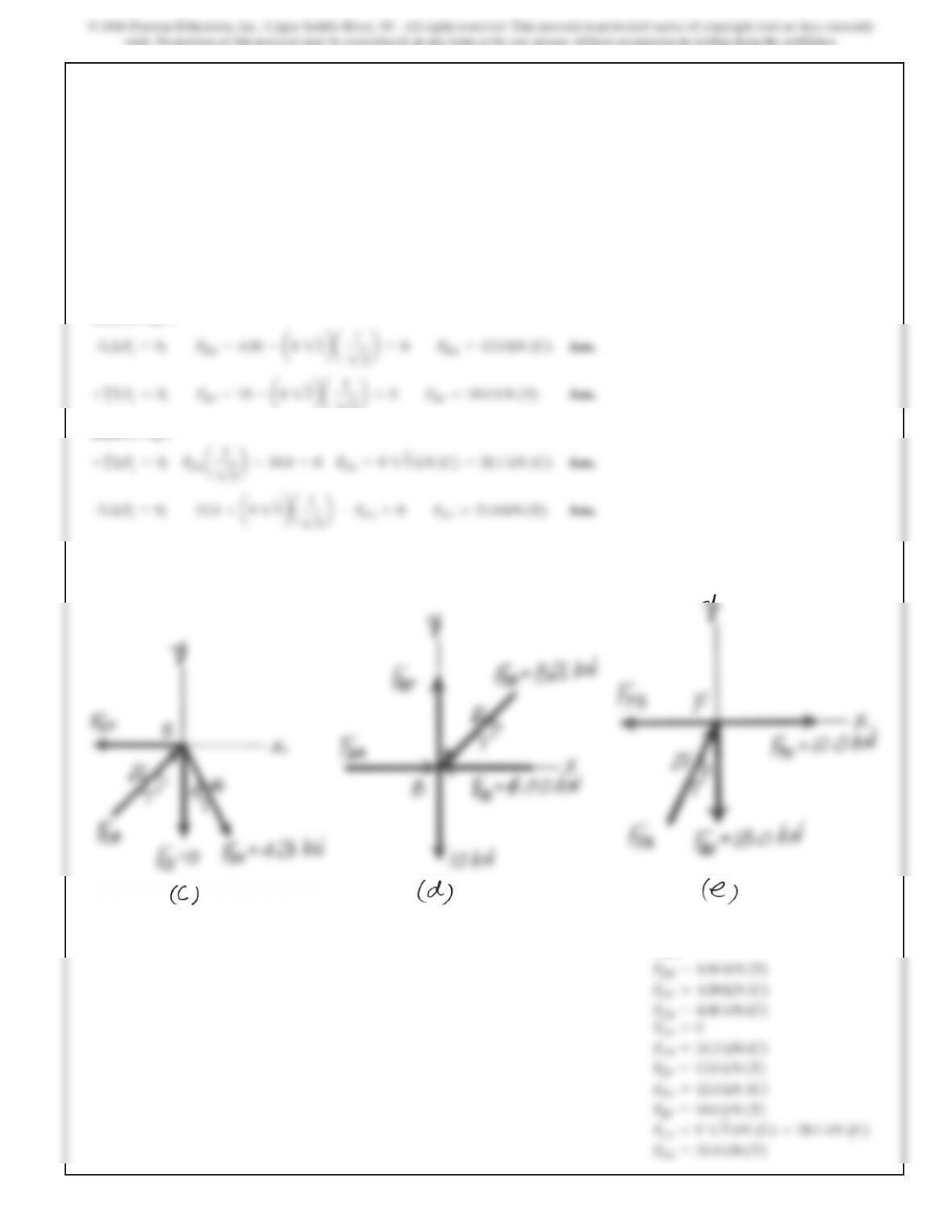
6–18. Continued
Joint B. Fig. d
22b
Joint F. Fig. e
Ans:
504
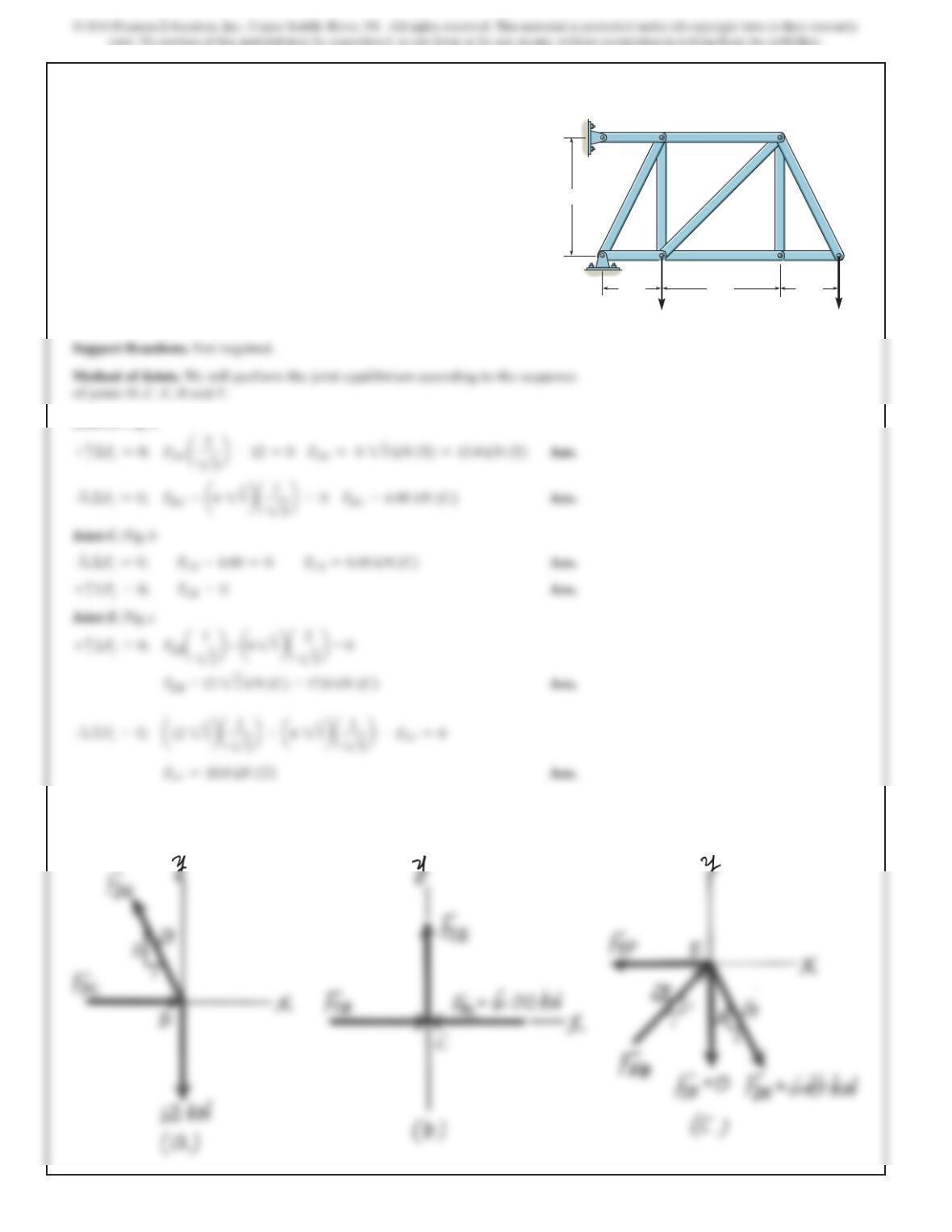
6–19.
Determine the force in each member of the truss and state
if the members are in tension or compression. Set P1 = 8 kN,
P2 = 12 kN.
1 m 1 m2 m
2 m
A
FE
G
BCD
P1P2
SOLUTION
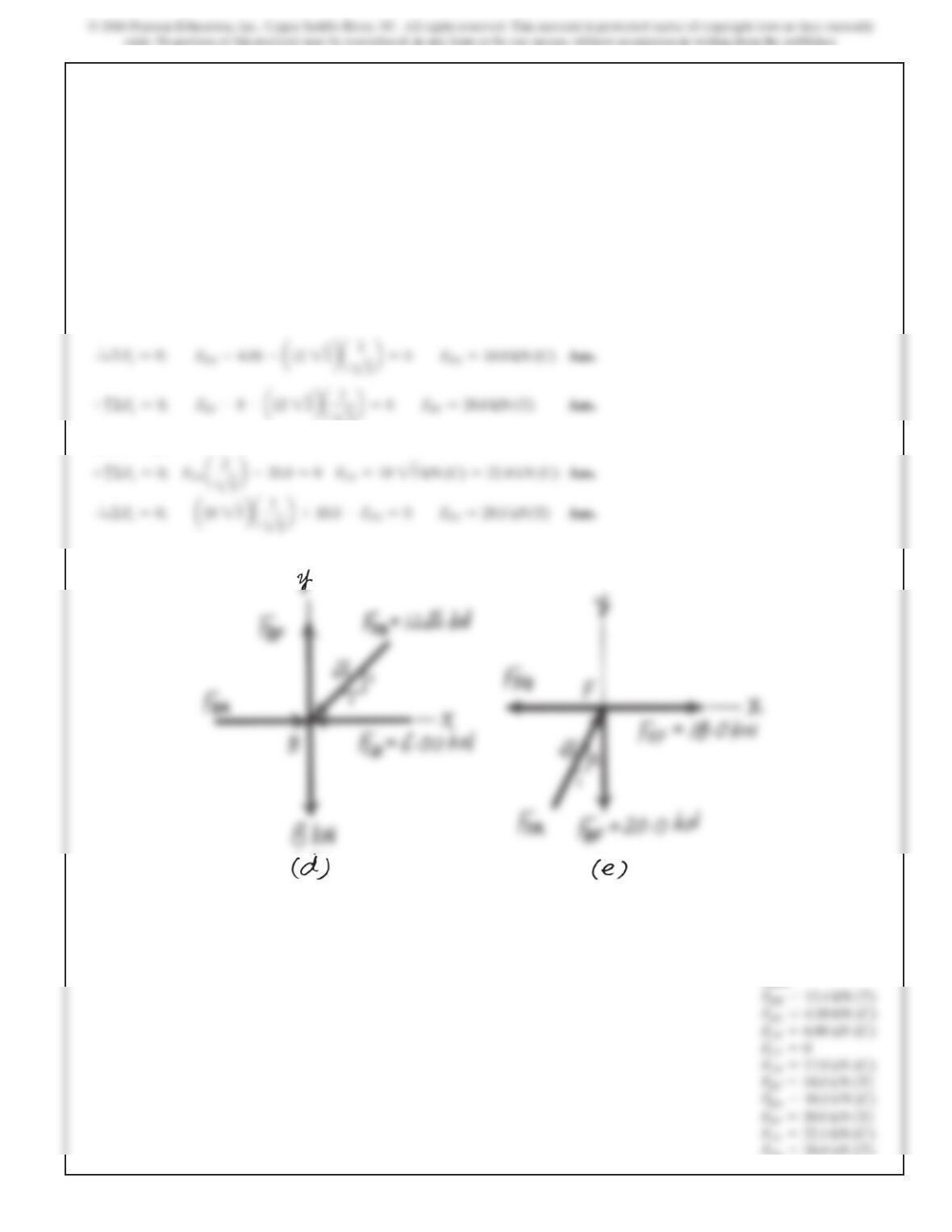
Joint D. Fig. a
505
6–19. Continued
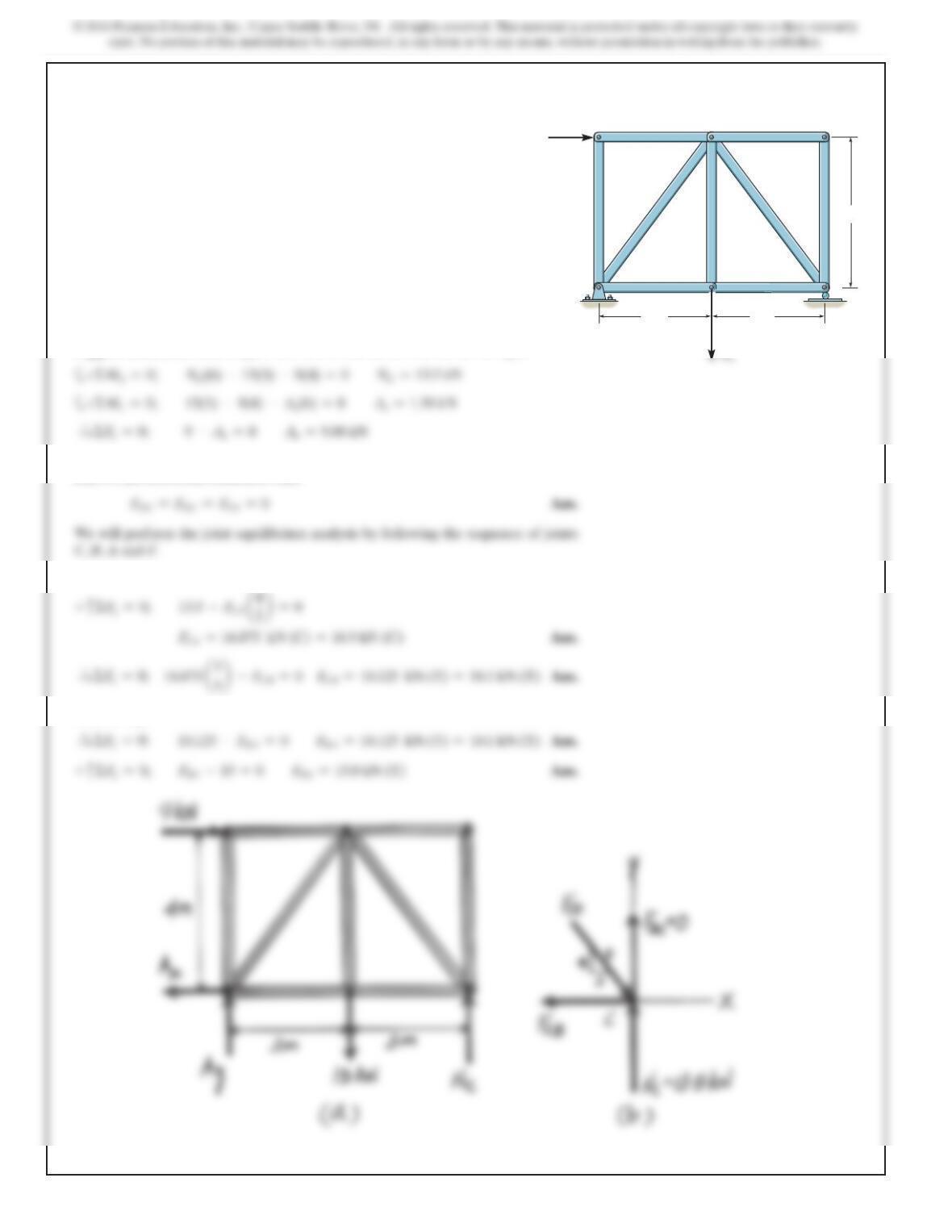
Joint B. Fig. d
22b
Joint F. Fig. e
Ans:
FEF =18.0 kN (T)
FBA =18.0 kN (C)
FBF =20.0 kN (T)
FFA =22.4 kN (C)
FFG =28.0 kN (T)
506
*6–20.
Determine the force in each member of the truss and state
if the members are in tension or compression. Set P1 = 9 kN,
P2 = 15 kN.
3 m
A
BC
D
FE
3 m
4 m
P1
SOLUTION
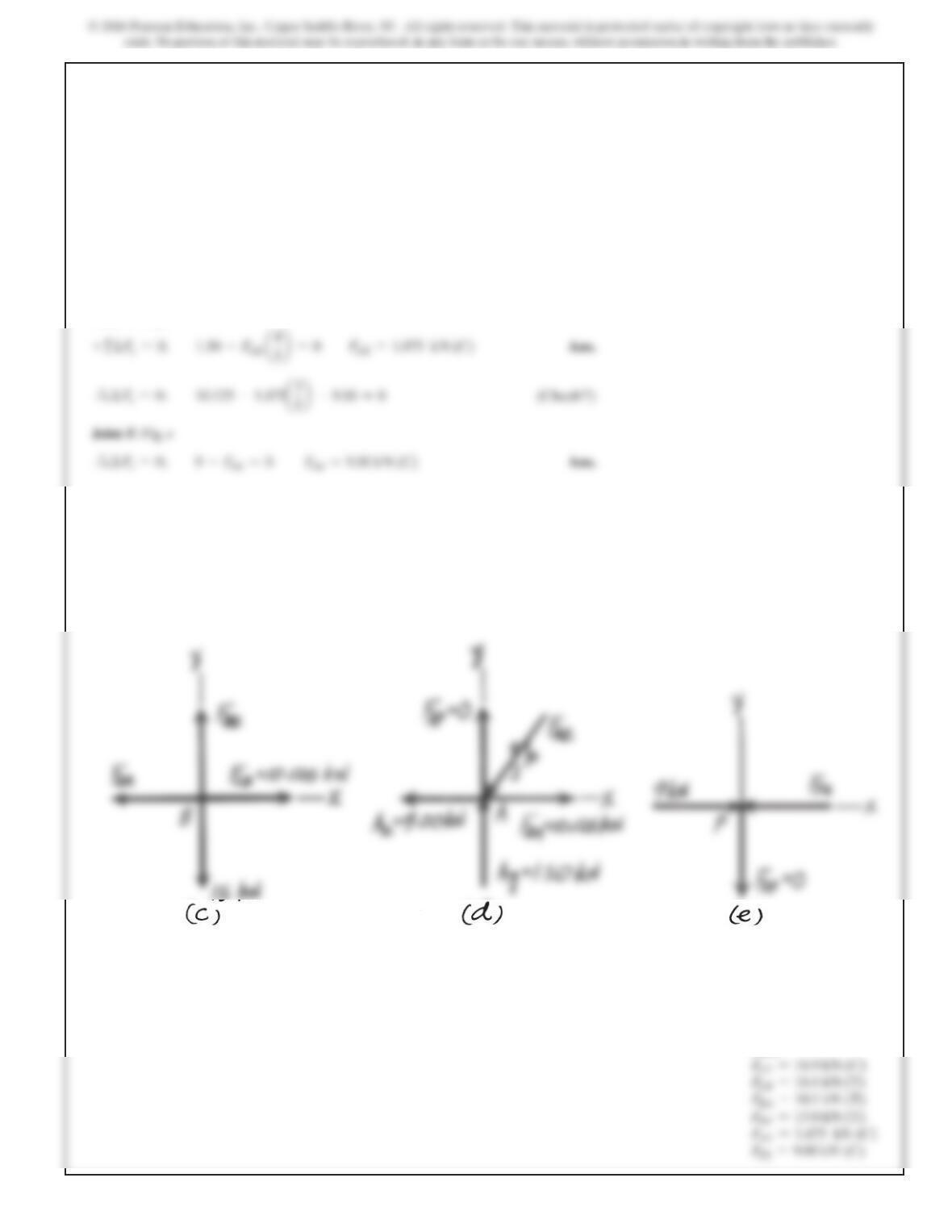
Support Reactions. Referring to the FBD of the entire truss shown in Fig. a
Method of Joints: By inspecting joints D and F, we notice that members DE, DC
and FA are zero force members. Thus
Joint C. Fig. b
Joint B. Fig. c
507
*6–20. Continued
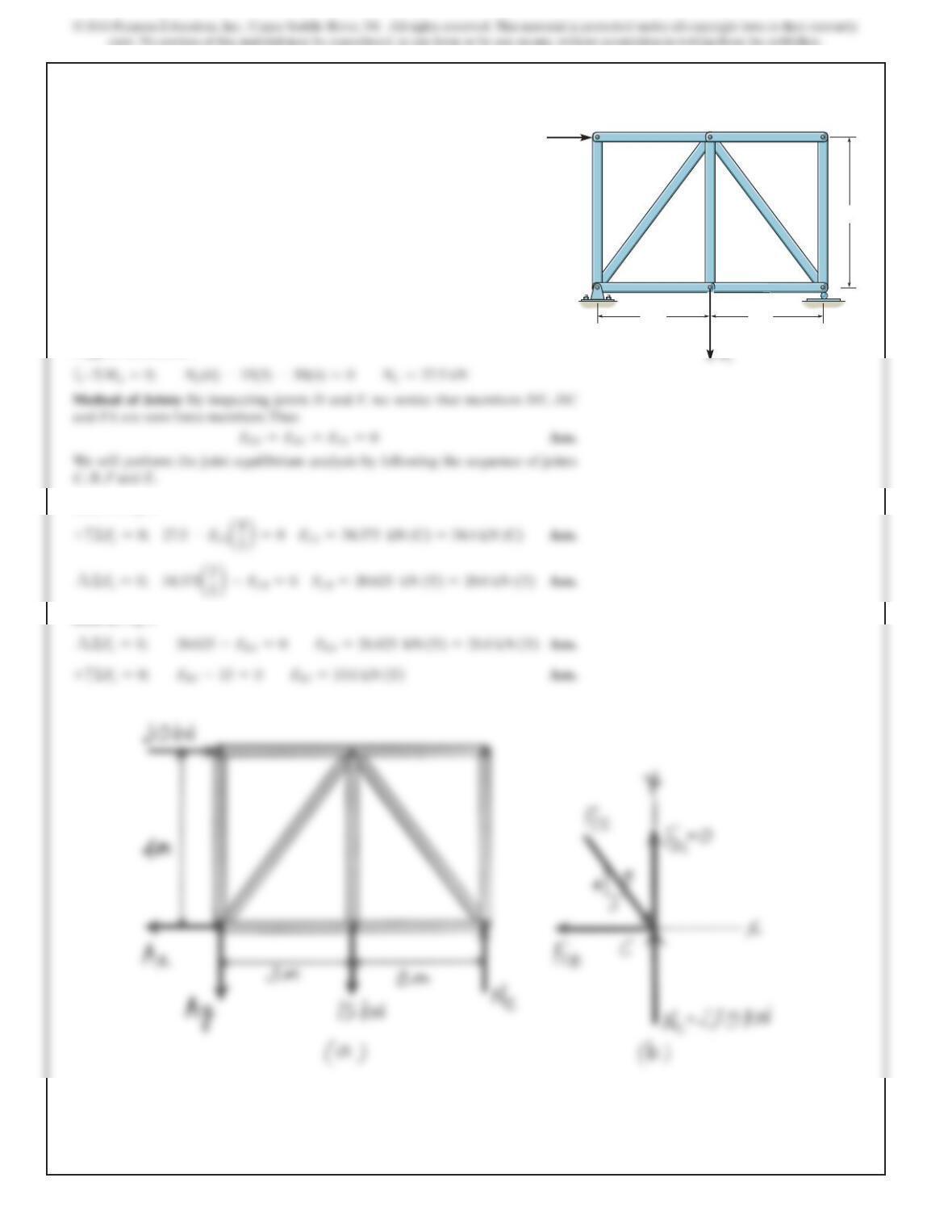
Joint A. Fig. d
Ans:
508
6–21.
Determine the force in each member of the truss and state
if the members are in tension or compression. Set P1 =
30 kN, P2 = 15 kN.
SOLUTION
Support Reactions.
Joint C. Fig. b
Joint B. Fig. c
3 m
A
BC
D
FE
3 m
4 m
P1
509
6–21. Continued
Ans:
510
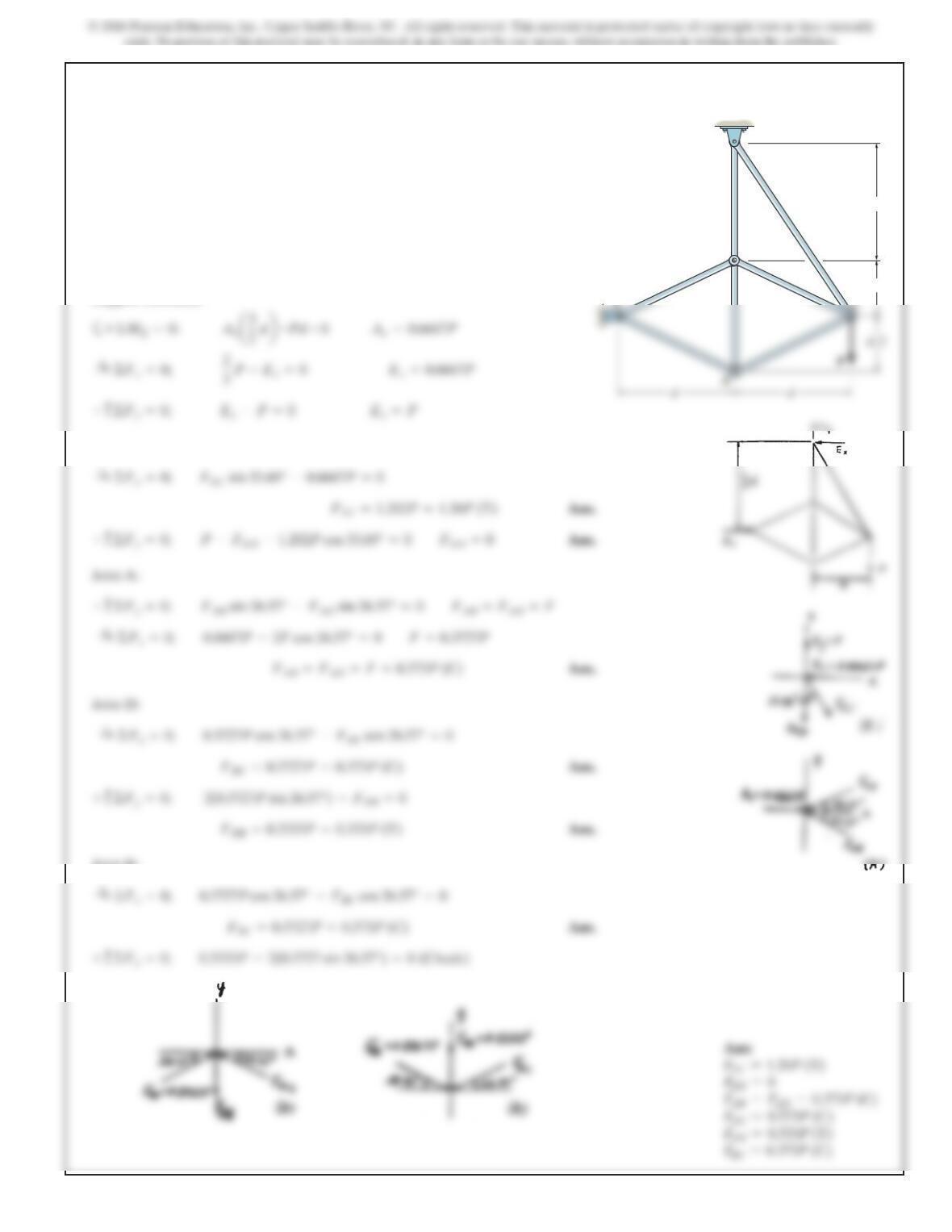
6–22.
Joint C:
F
=0.471 P(C)
D
etermine the force in each member of the double scissors
t
russ in terms of the load P and state if the members are in
t
ension or compression.
Similarly,
BC
L/3
Ans:
511
6–23.
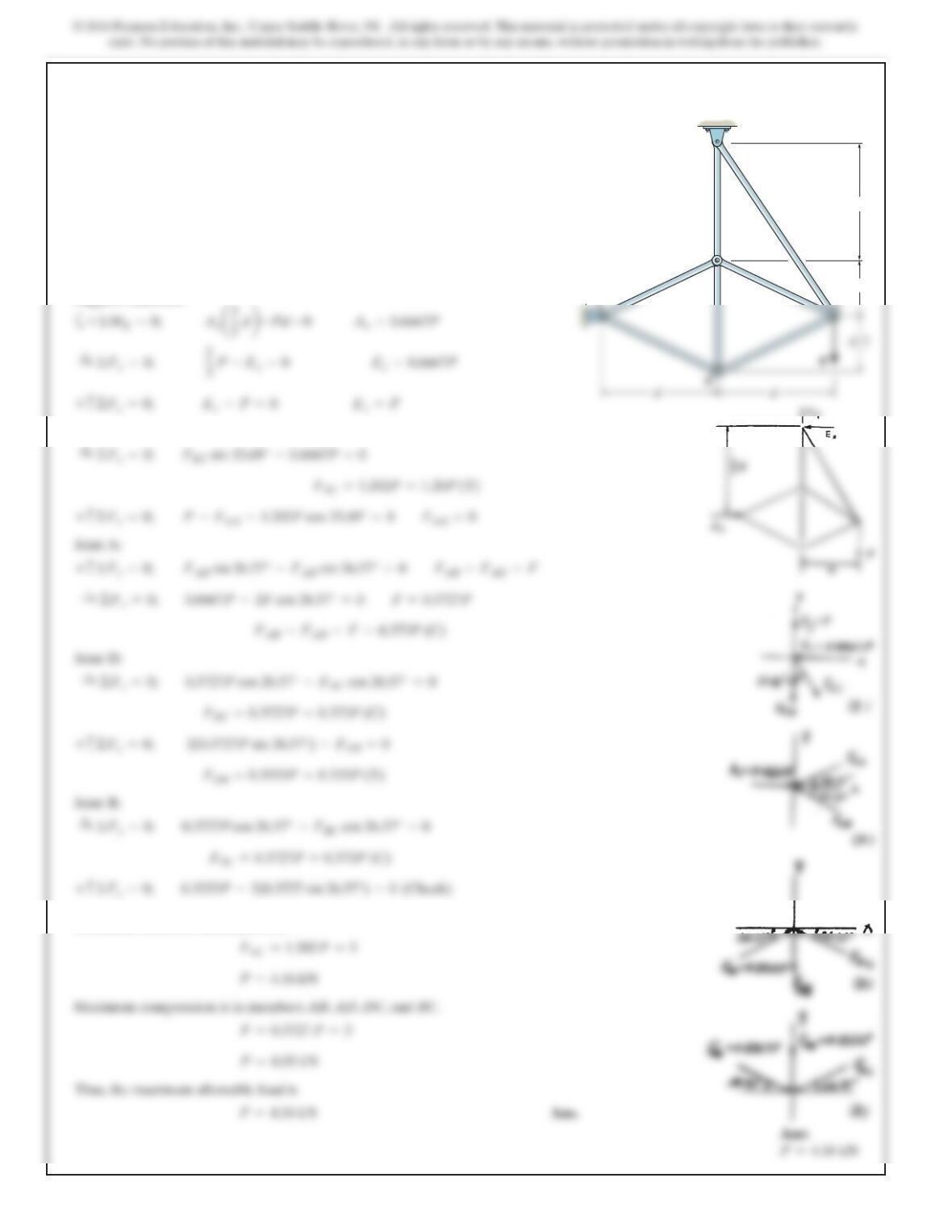
Determine the force in each member of the truss in terms
of the load Pand state if the members are in tension or
compression.
SOLUTION
Support reactions:
Joint E:
Joint B:
D
E
d
d/
2
512
*6–24.
The maximum allowable tensile force in the members of the
truss is and the maximum allowable
compressive force is Determine the
maximum magnitude of the load Pthat can be applied to
the truss.Take d=2m.
1F
c2max =3 kN.
1F
t2max =5 kN,
SOLUTION
Maximum tension is in member EC.
D
E
d
d/2
Support reactions:
Joint E:
513
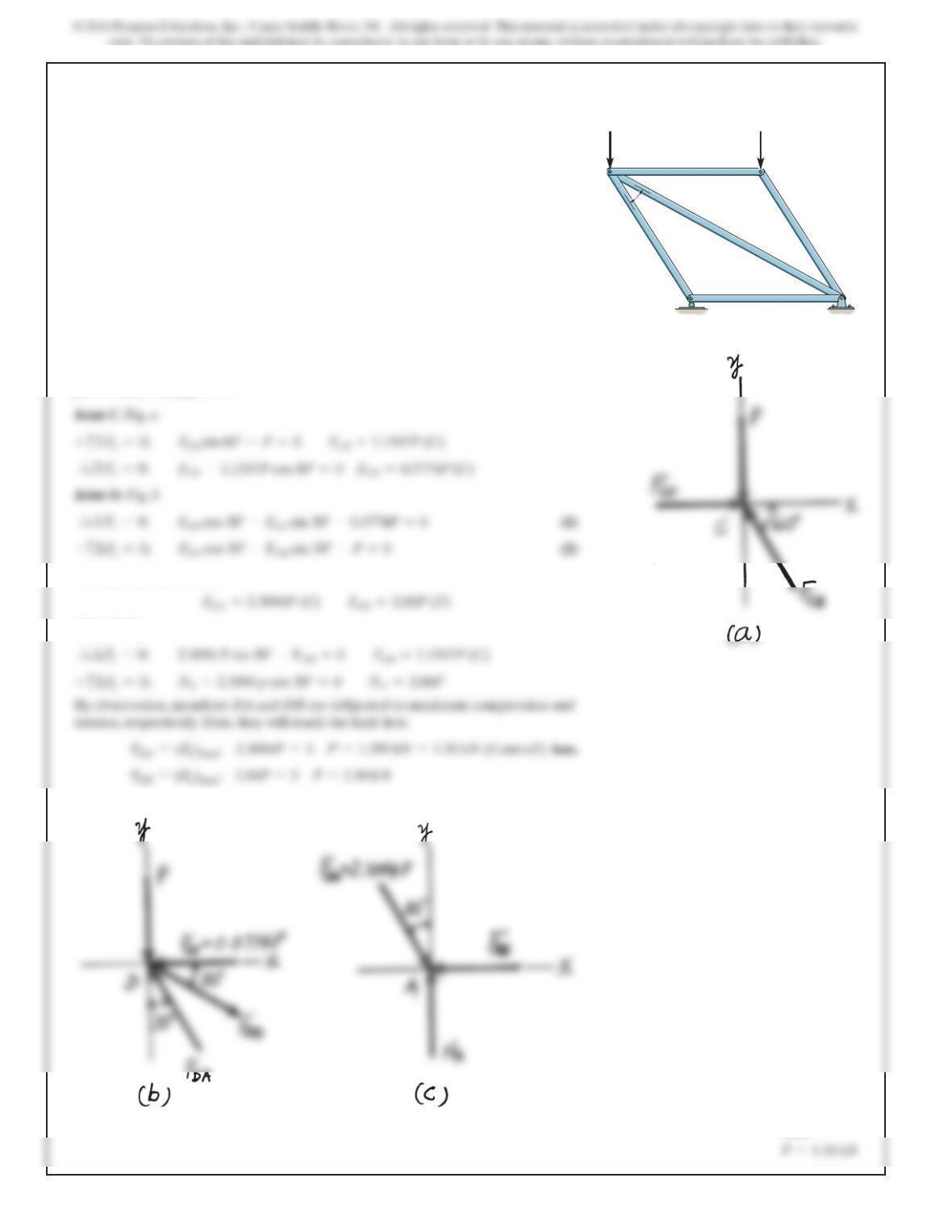
6–25.
Determine the force in each member of the truss in terms of
the external loading and state if the members are in tension
or compression. Take P = 2 kN.
AB
C
D2 m
2 m
2 m
2 m
PP
30fi
SOLUTION
Support Reactions. Not required.
514
6–26.
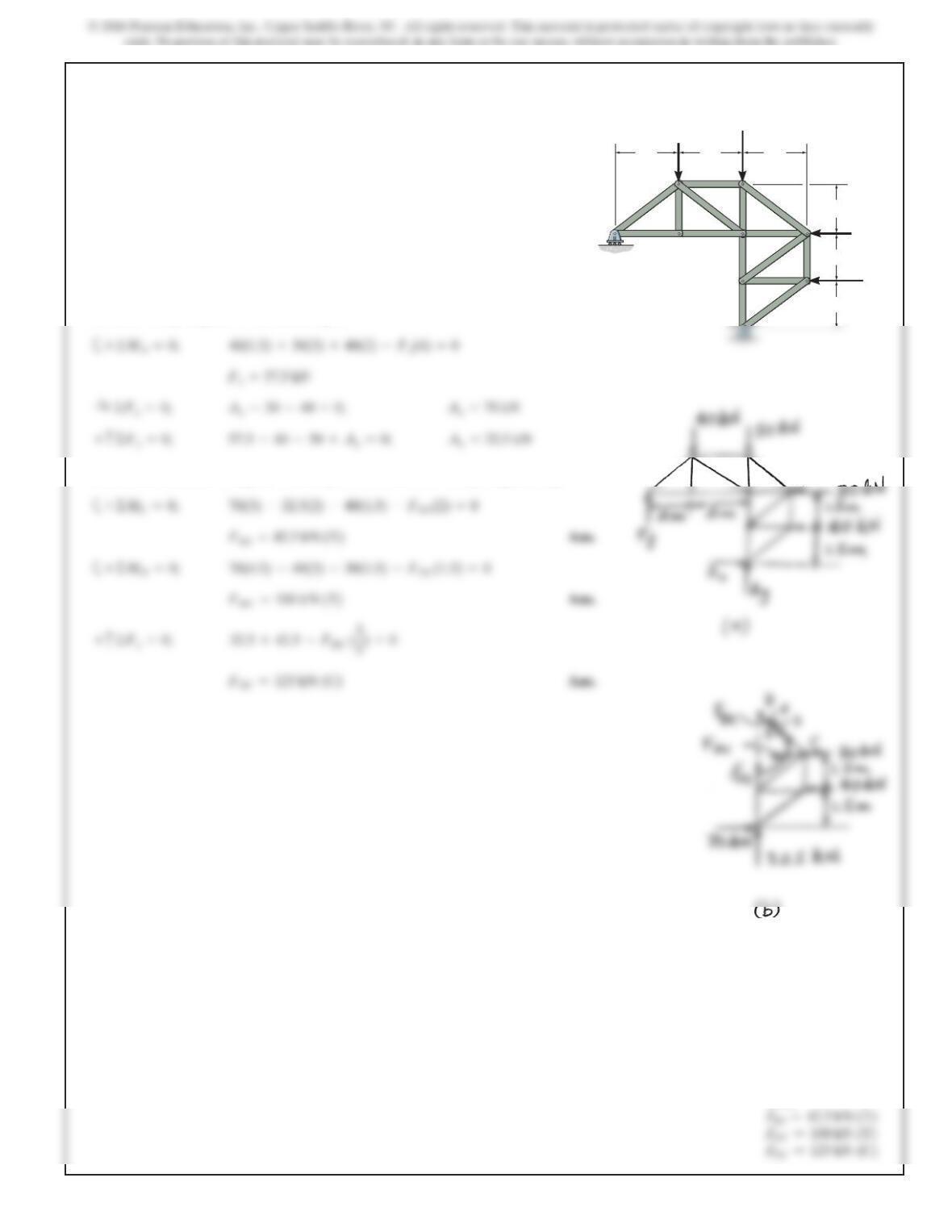
The maximum allowable tensile force in the members of the
truss is
(Ft)max =5 kN,
and the maximum allowable
compressive force is
(Fc)max =3 kN.
Determine the
maximum magnitude P of the two loads that can be applied
to the truss.
A
B
C
D2 m
2 m
2 m
2 m
PP
30fi
SOLUTION
Support Reactions. Not required.
Method of Joints: We will start the joint equilibrium analysis at joint C, followed by
joint D and finally joint A.
Solving Eqs. (1) and (2),
Joint C. Fig. c
Ans:
515
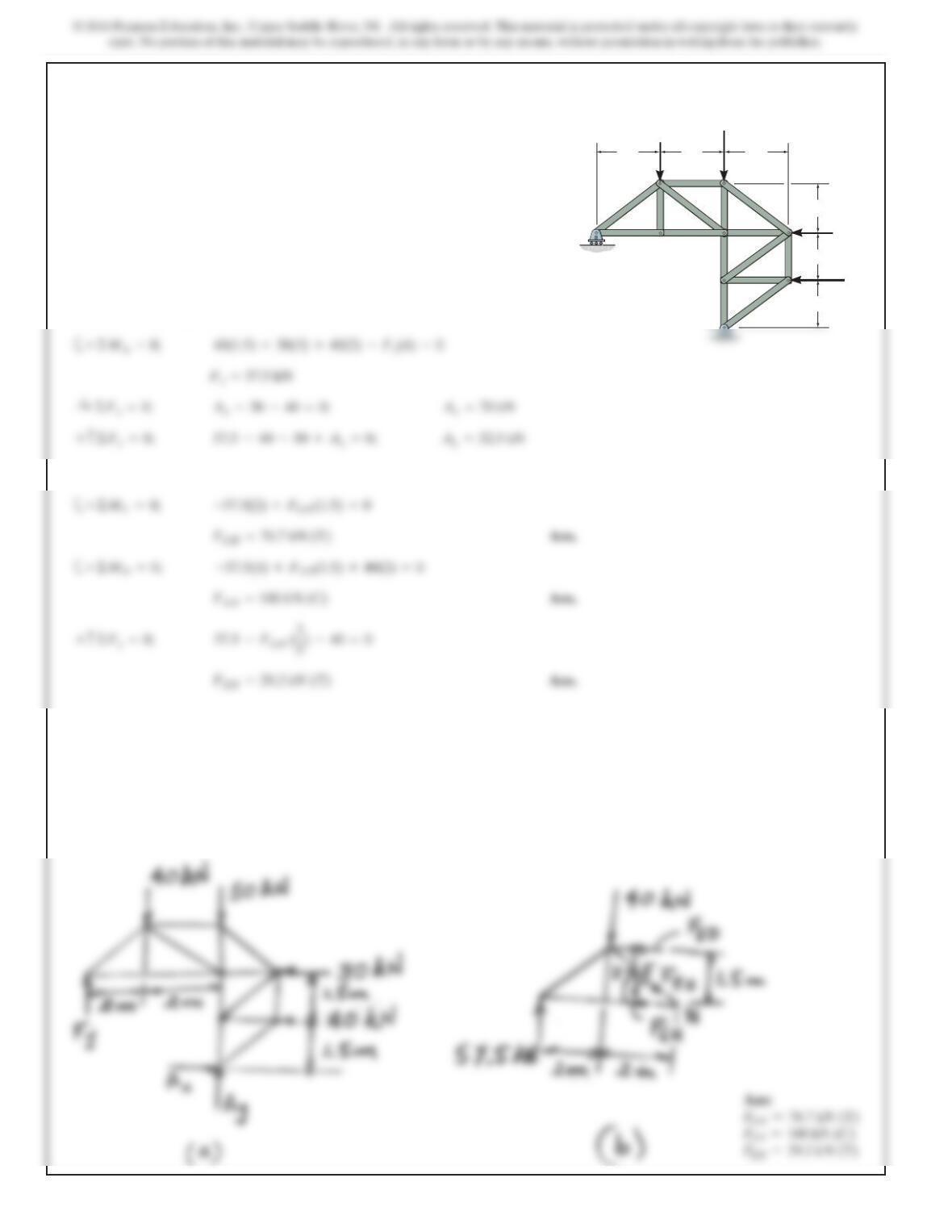
6–27.
Determine the force in members DC,HC, and HI of the
truss, and state if the members are in tension or
compression.
SOLUTION
Support Reactions: Applying the moment equation of equilibrium about point Ato
the free – body diagram of the truss,Fig. a,
Method of Sections: Using the bottom portion of the free – body diagram, Fig. b.
C
G
ED
H
F
I
B
2m 2m 2 m
1.5 m
50 kN
40 kN
40 kN
30 kN
1.5 m
1.5 m
Ans:
516
*6–28.
SOLUTION
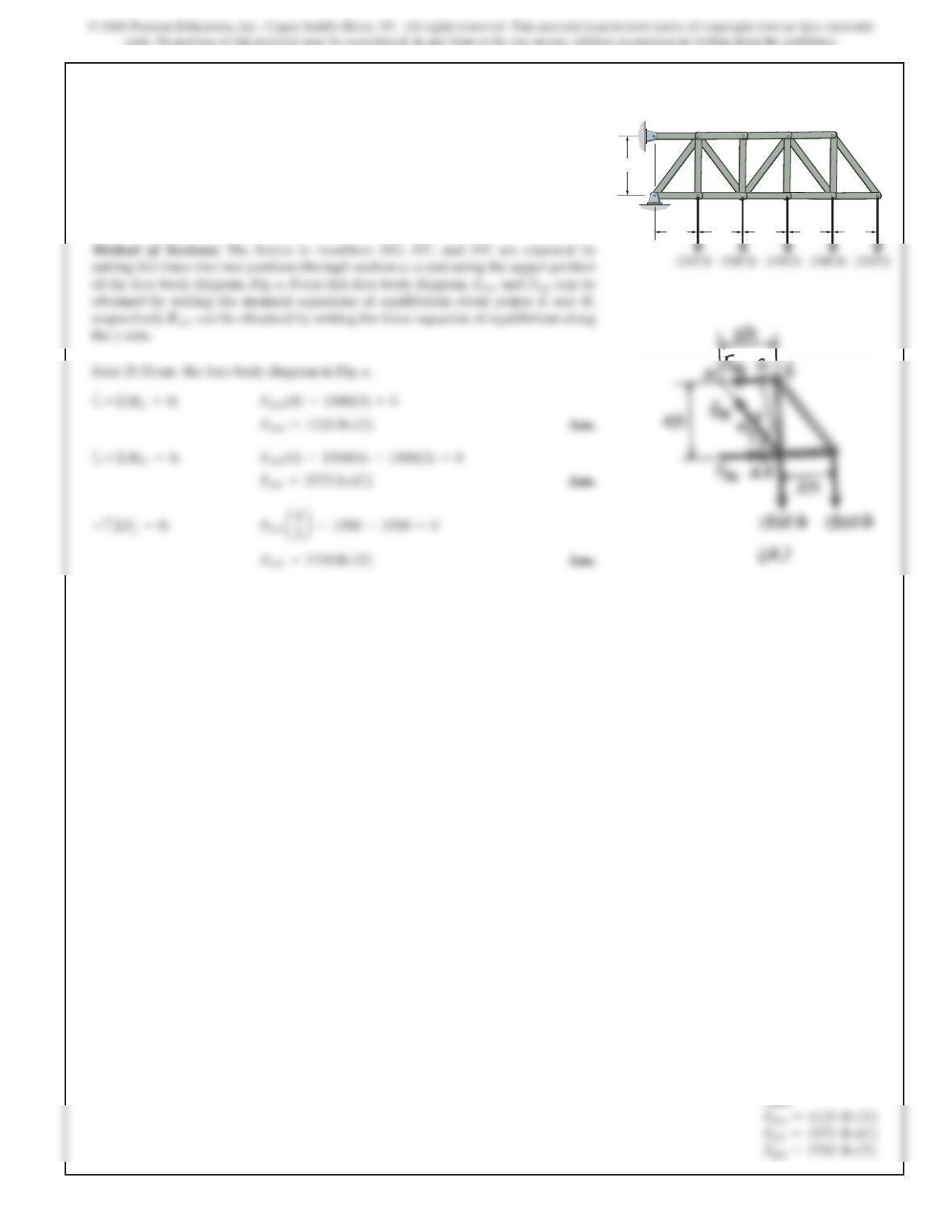
Support Reactions: Applying the moment equation of equilibrium about point Ato
the free – body diagram of the truss,Fig. a,
Method of Sections: Using the left portion of the free – body diagram, Fig. b.
Determine the force in members ED,EH,and GH of the
truss,and state if the members are in tension or compression.
A
C
G
ED
H
F
I
B
2m 2m 2 m
1.5 m
50 kN
40 kN
40 kN
30 kN
1.5 m
1.5 m
517
6–29.
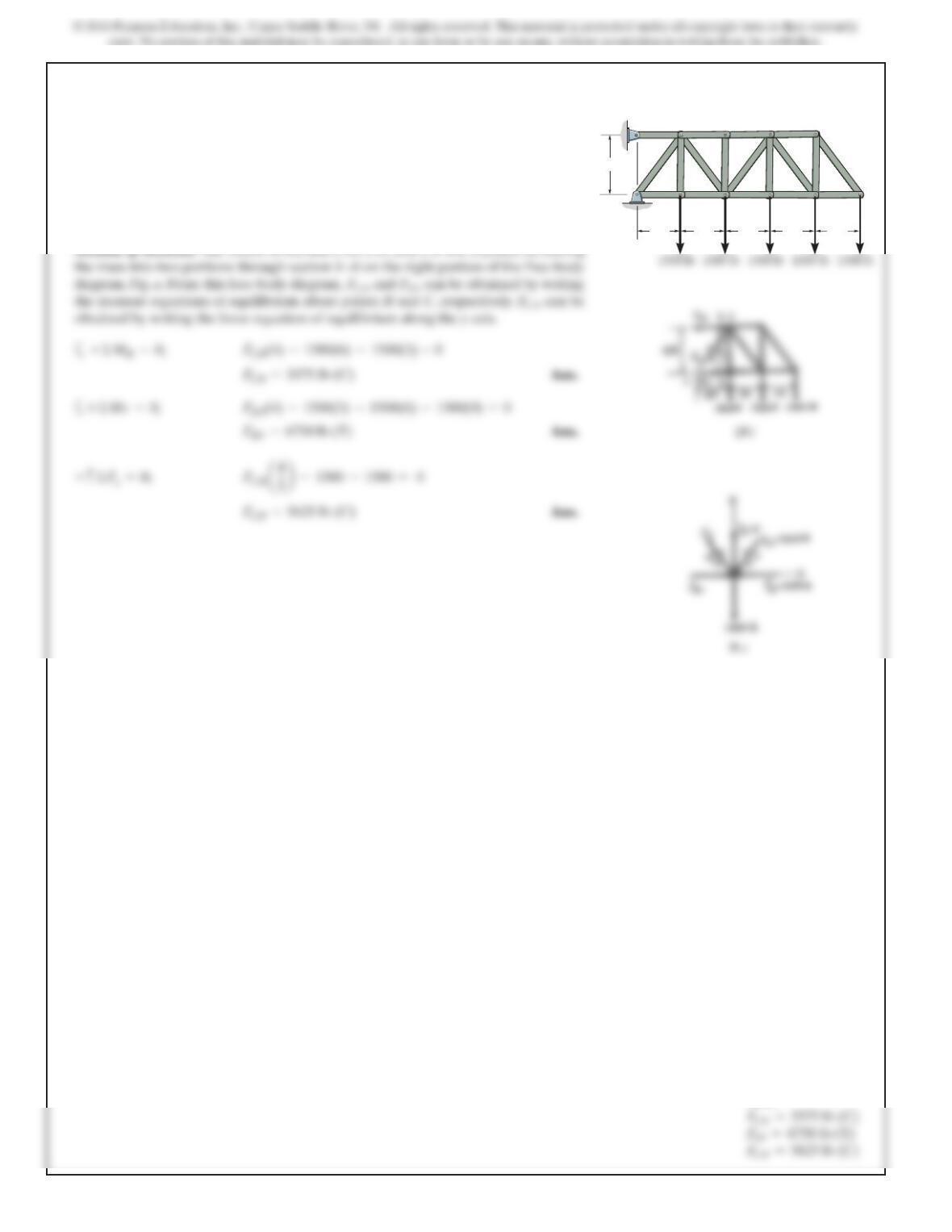
Determine the force in members HG,HE,and DE of the
truss,and state if the members are in tension or compression.
SOLUTION
A
BC D EF
GHIJ
K
4 ft
3 ft 3 ft3 ft3 ft3 ft
Ans:
518
6–30.
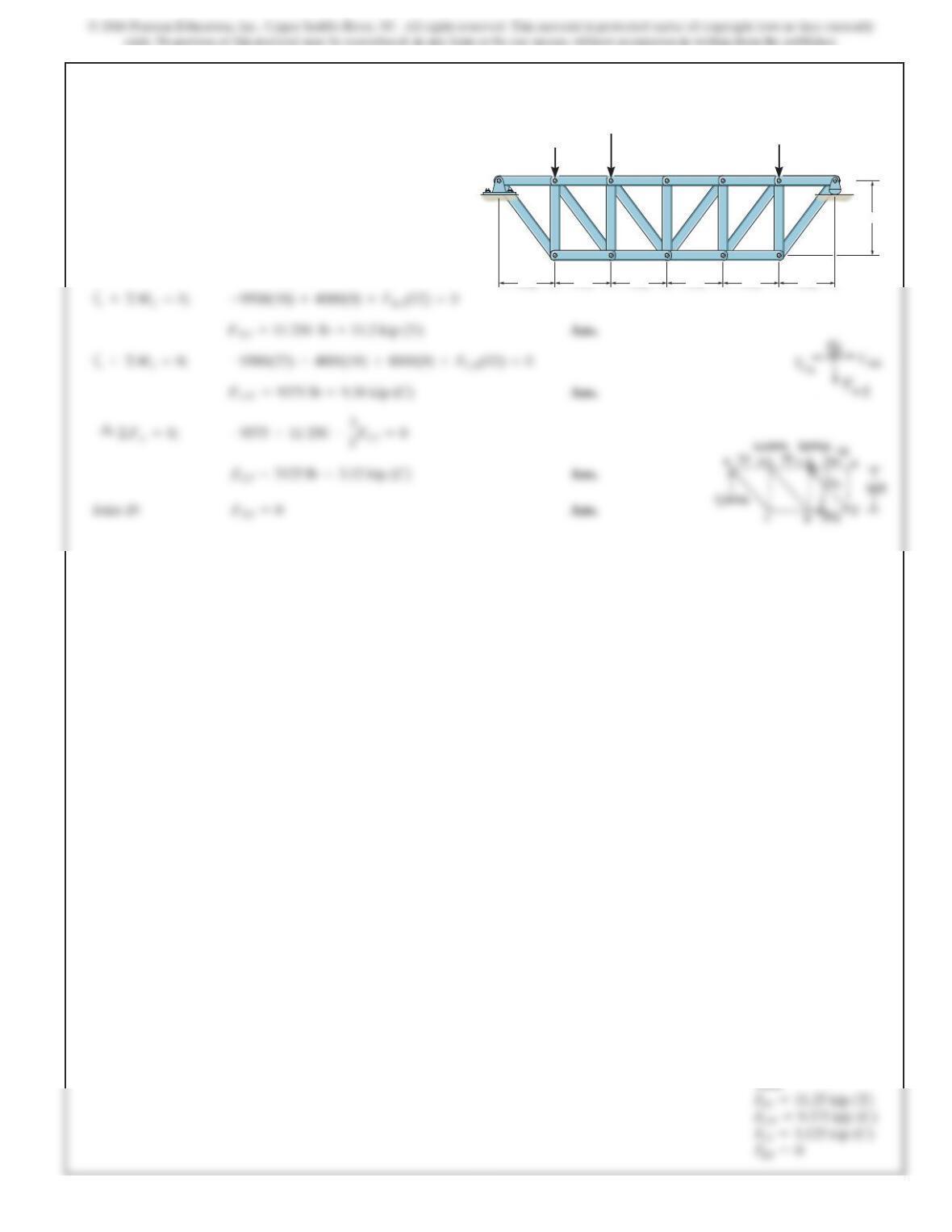
Determine the force in members CD,HI,and CJ of the truss,
and state if the members are in tension or compression.
SOLUTION
A
BCDEF
GHIJ
K
4 ft
3 ft 3 ft3 ft3 ft3 ft
Ans:
519
6–31.
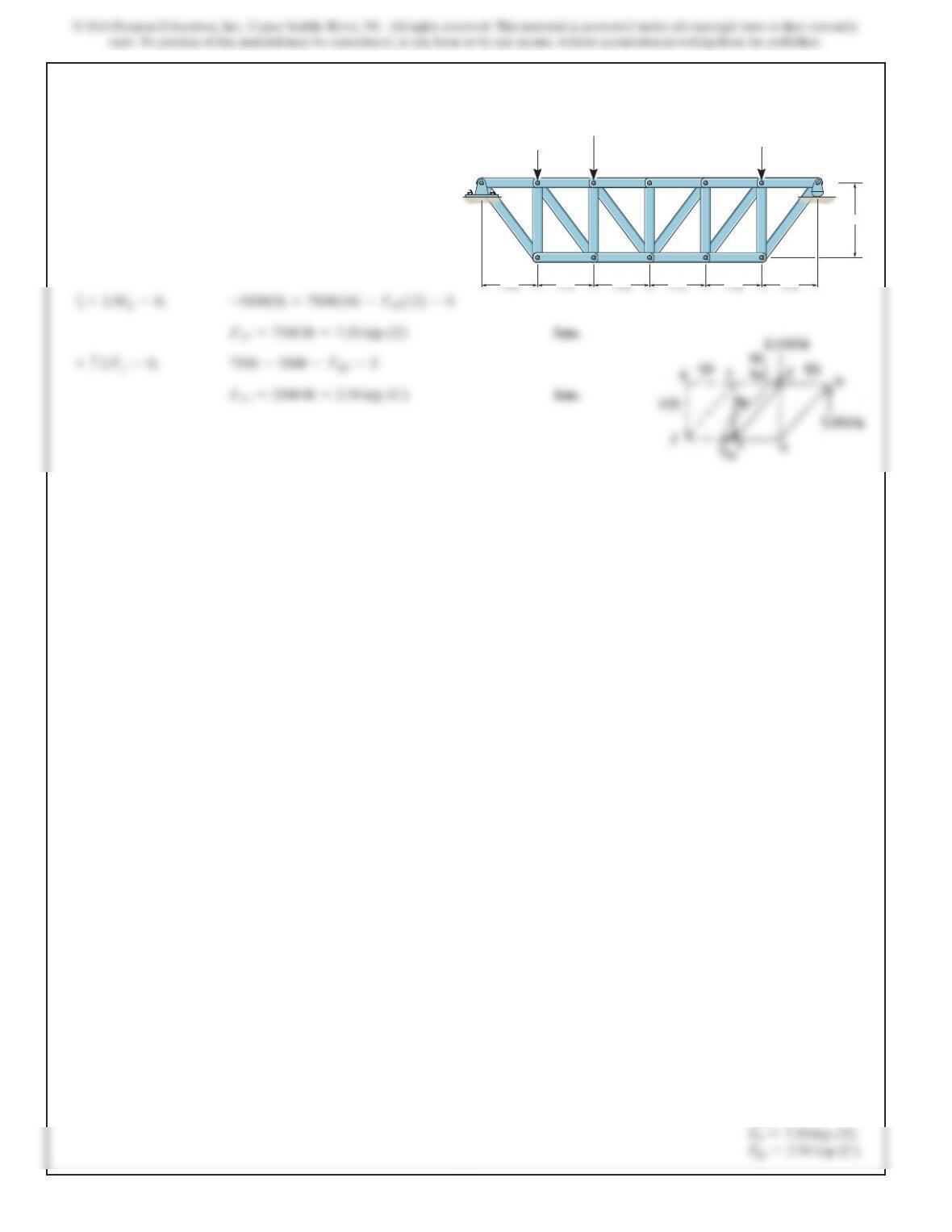
Determine the force in members CD,CJ, KJ,and DJof the
t
russ which serves to support the deck of a bridge. State if
t
hese members are in tension or compression.
SOLUTION
AG
HIJKL
FEDCB
4000 lb
8000 lb 5000 lb
12 ft
Ans:
520
*6–32.
Determine the force in members EI and JI of the truss
w
hich serves to support the deck of a bridge. State if these
m
embers are in tension or compression.
SOLUTION
AG
HIJKL
FEDCB
4000 lb
8000 lb 5000 lb
12 ft
Ans: