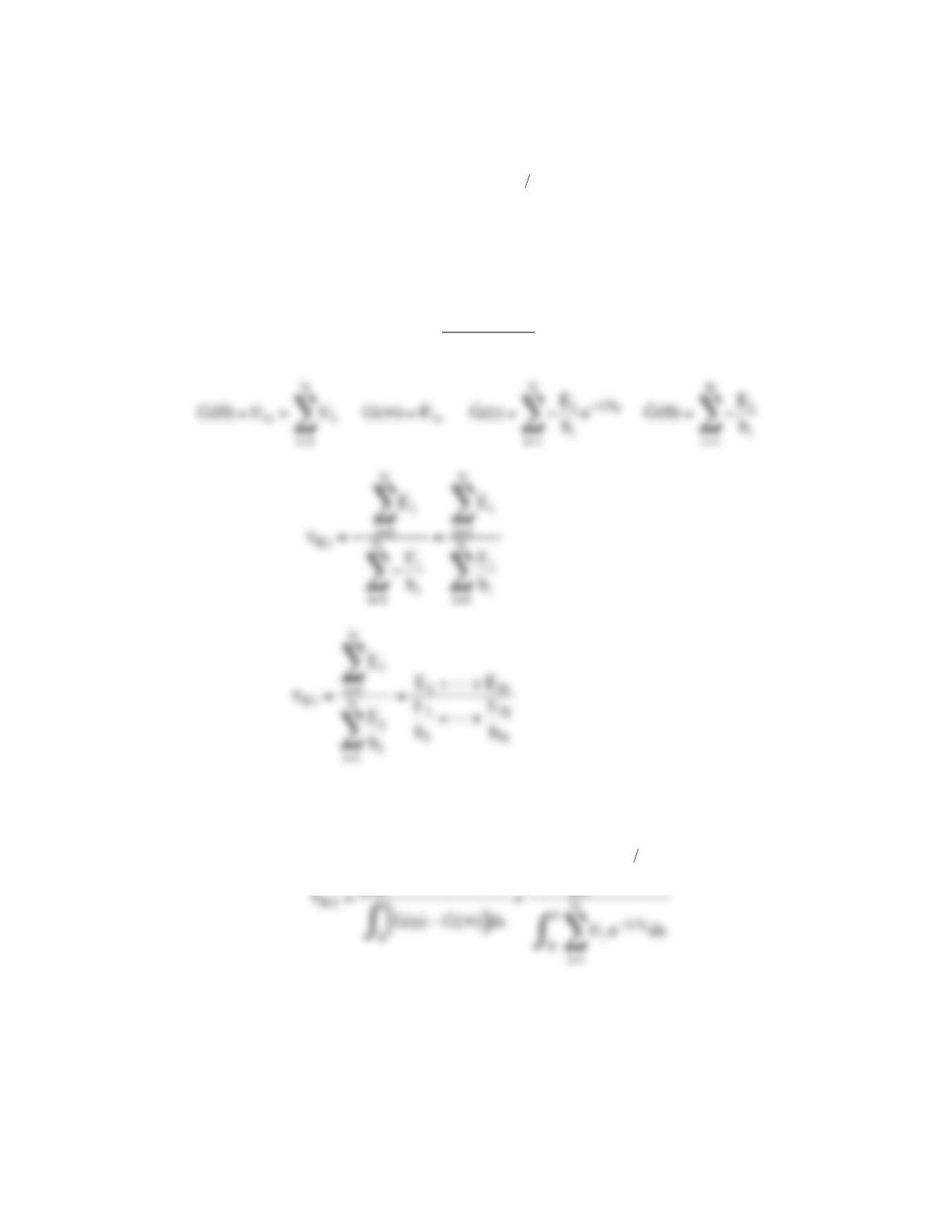
4.10 Repeat Problem 4.9 for a relaxation function of the form
!
G(t) =E“+Ei
i=1
N
#e$t bi
.
SOLUTION
(a) By Definition 1
“R1 =#G(0) #G($)
˙
G (0)
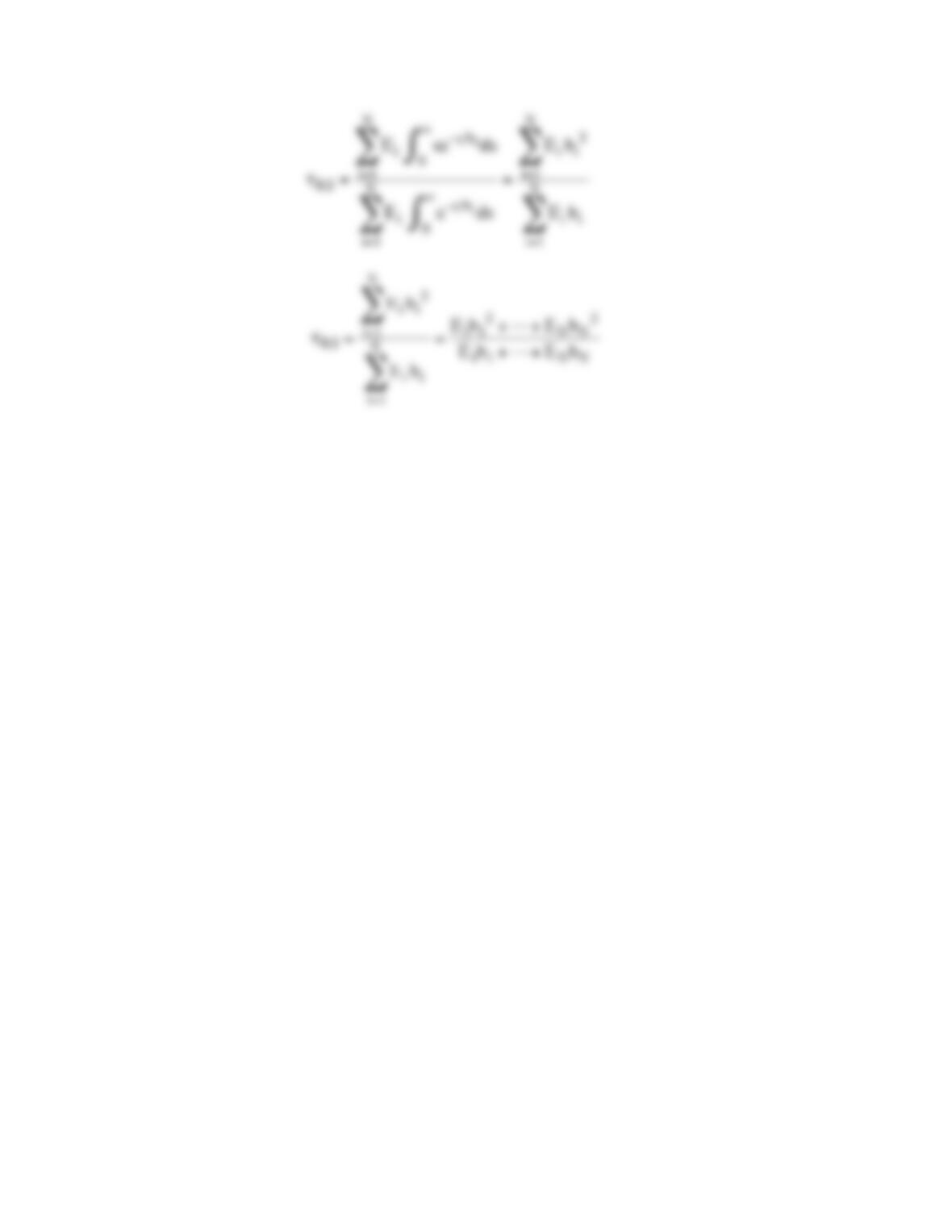
“R 2 =
Ei
i=1
N
#se$s bids
0
%
&
N
=
Ei
i=1
N
#bi
2
N
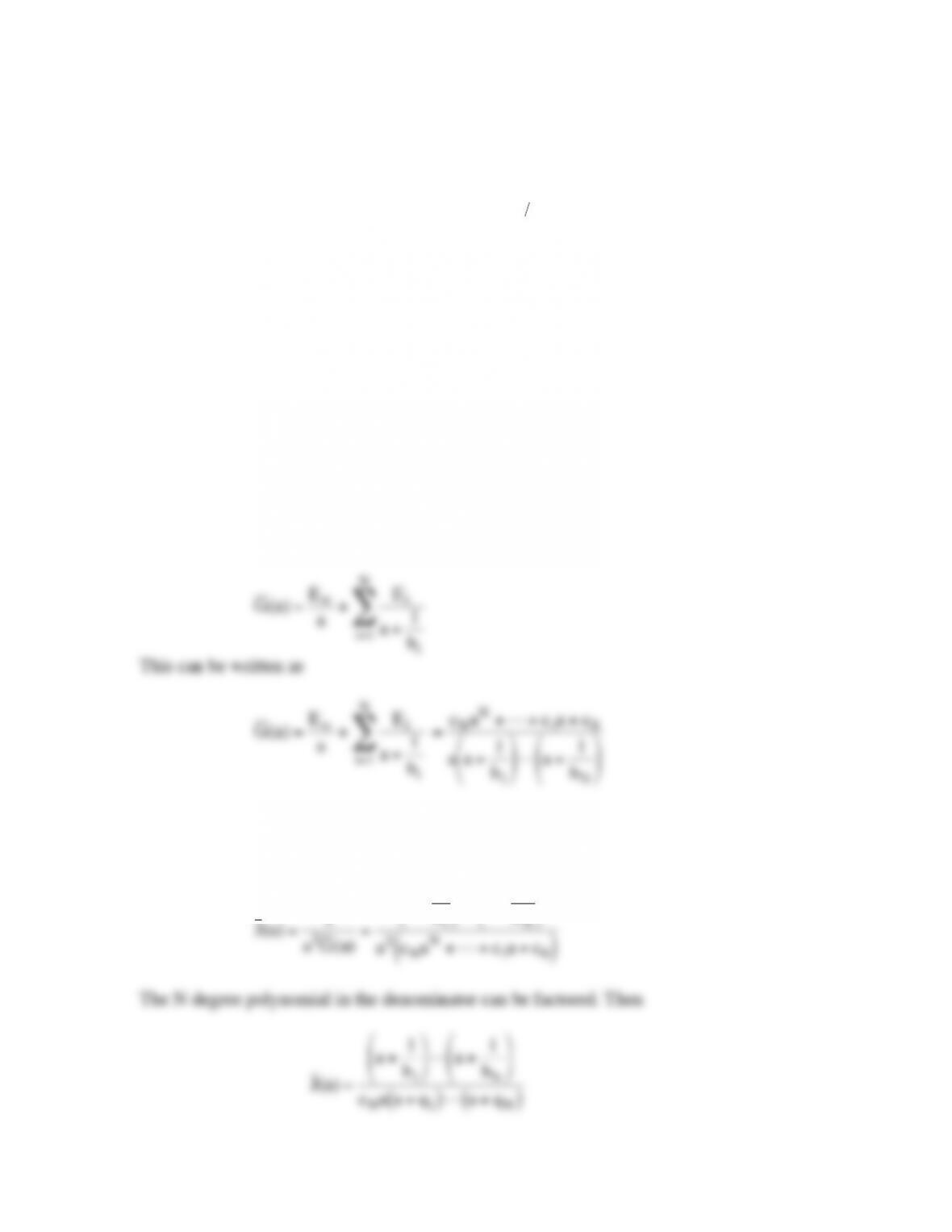
4.11 A linear viscoelastic solid has a relaxation function of the form
!
G(t) =E“+Ei
i=1
N
#e$t bi
.
Show that the corresponding creep compliance has the same form, a sum of N
exponentials,
!
J(t) =B“+Bi
i=1
N
#e$qit
It is not necessary to find constants
!
B“,Bi,qi
SOLUTION
Use the Laplace transform. The Laplace transform of
G(t)
is
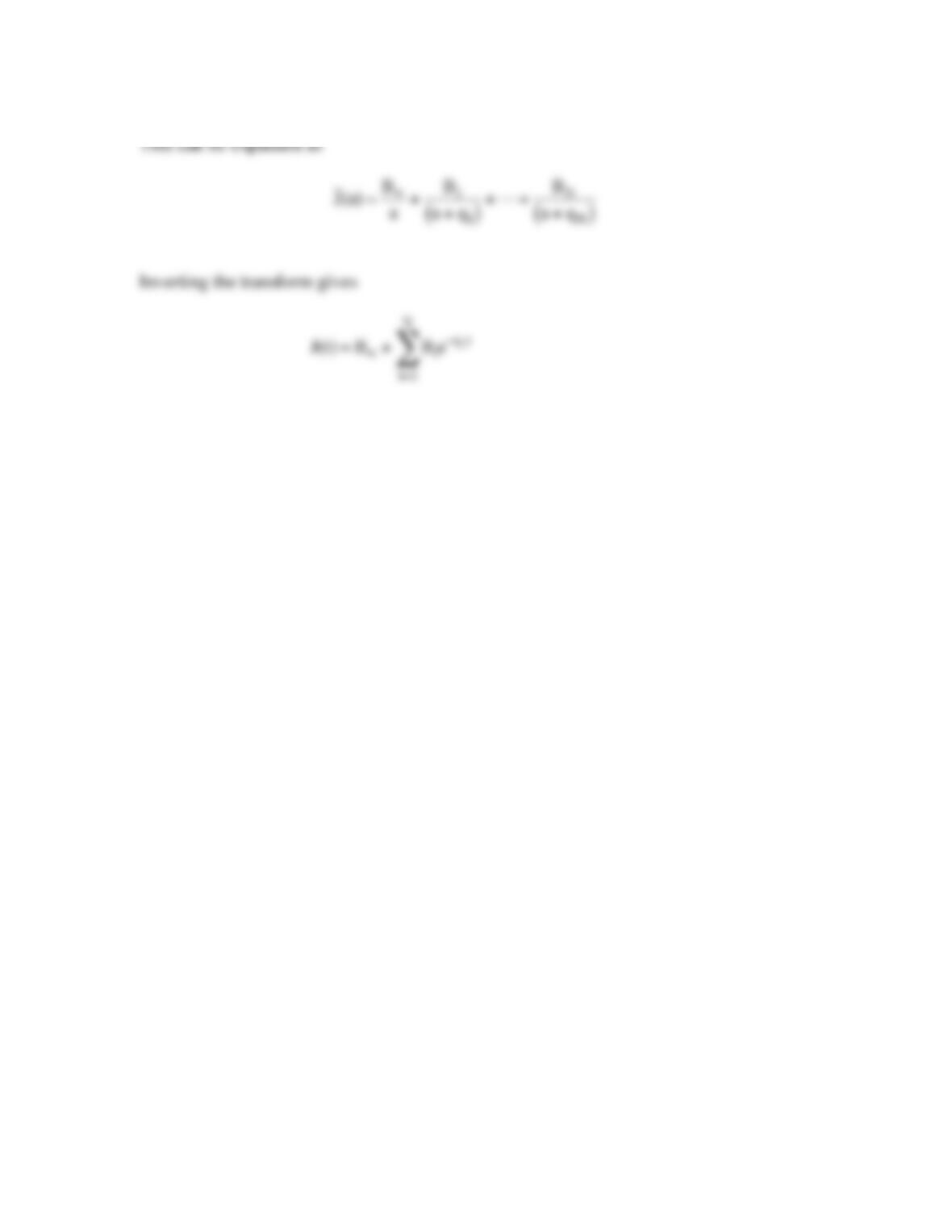
This can be expanded as
!
i=1
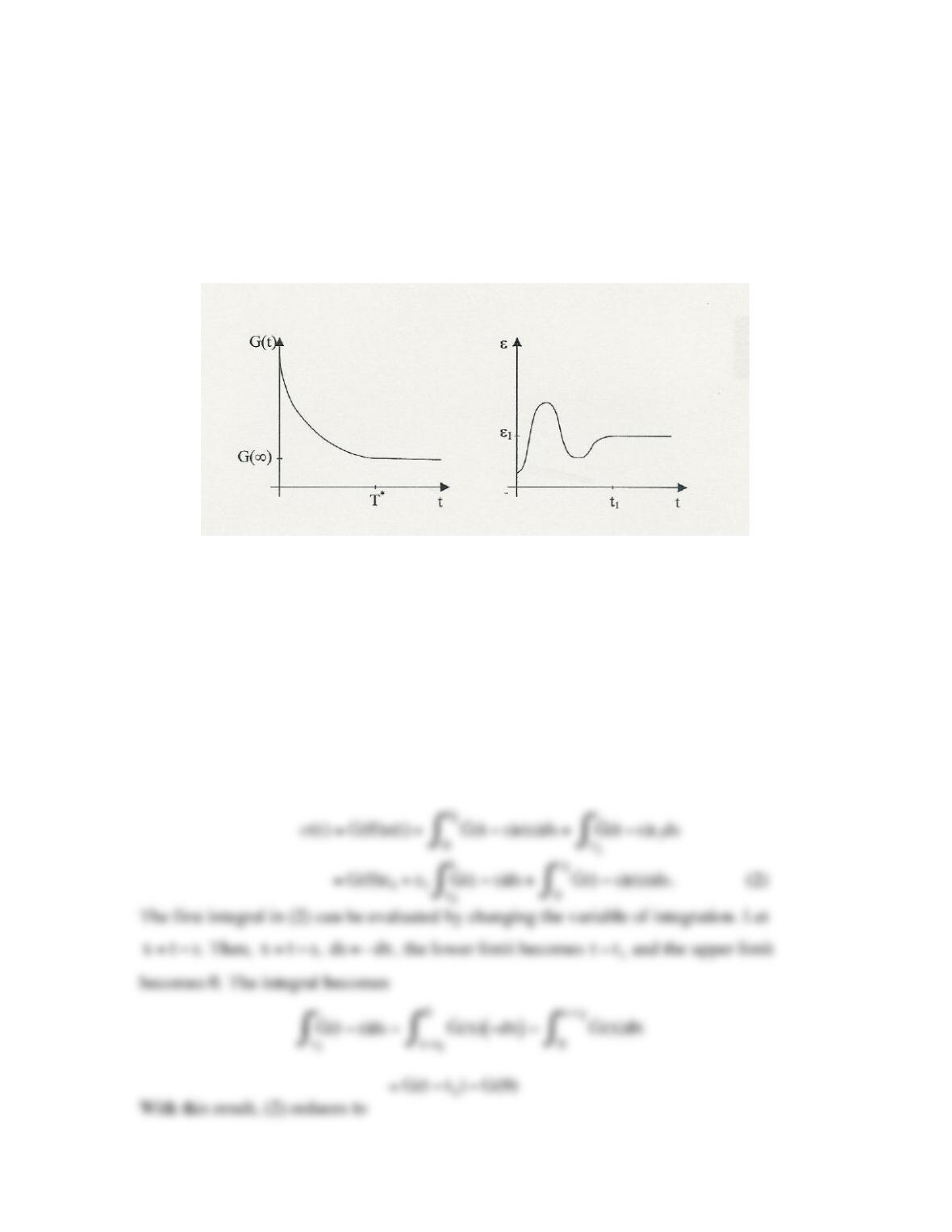
4.12 Consider a linear viscoelastic material for which G(t) reaches G(∞) at a
finite time
!
T*
, as shown in Figure-Problem 4.12a. Suppose that a linear viscoelastic
material is subjected to a strain history which is arbitrary during a time interval
!
0“t“t1
,
and is then held constant at value
!
“1
for
!
t>t1
, as shown in Figure-Problem 4.12b. Show
that after some finite time
!
“ # G($)%1
. Estimate this time.
Figure-Problem 4.12a Figure-Problem 4.12b
SOLUTION
It is convenient to use the constitutive relation in the form
!
“(t) =G(0)#(t) +˙
G (t $s)
0
t
%#(s)ds
(1)
Let
t“t1
. Since
“(s) =“1
for
s“t1
, (1) can be written as
“(t) =G(0)#(t) +˙
G (t $s)
0
t1
%#(s)ds +˙
G (t $s)
t1
t
%#1ds
!
!
=G(t “t1)“G(0)
With this result, (2) reduces to
!
“(t) =G(t #t1)$1+˙
G (t #s)
0
t1
%$(s)ds
(3)
When
!
t“t1#t*
,
!
G(t “t1)=G(#)
. It still has to be shown that the integral equals zero.
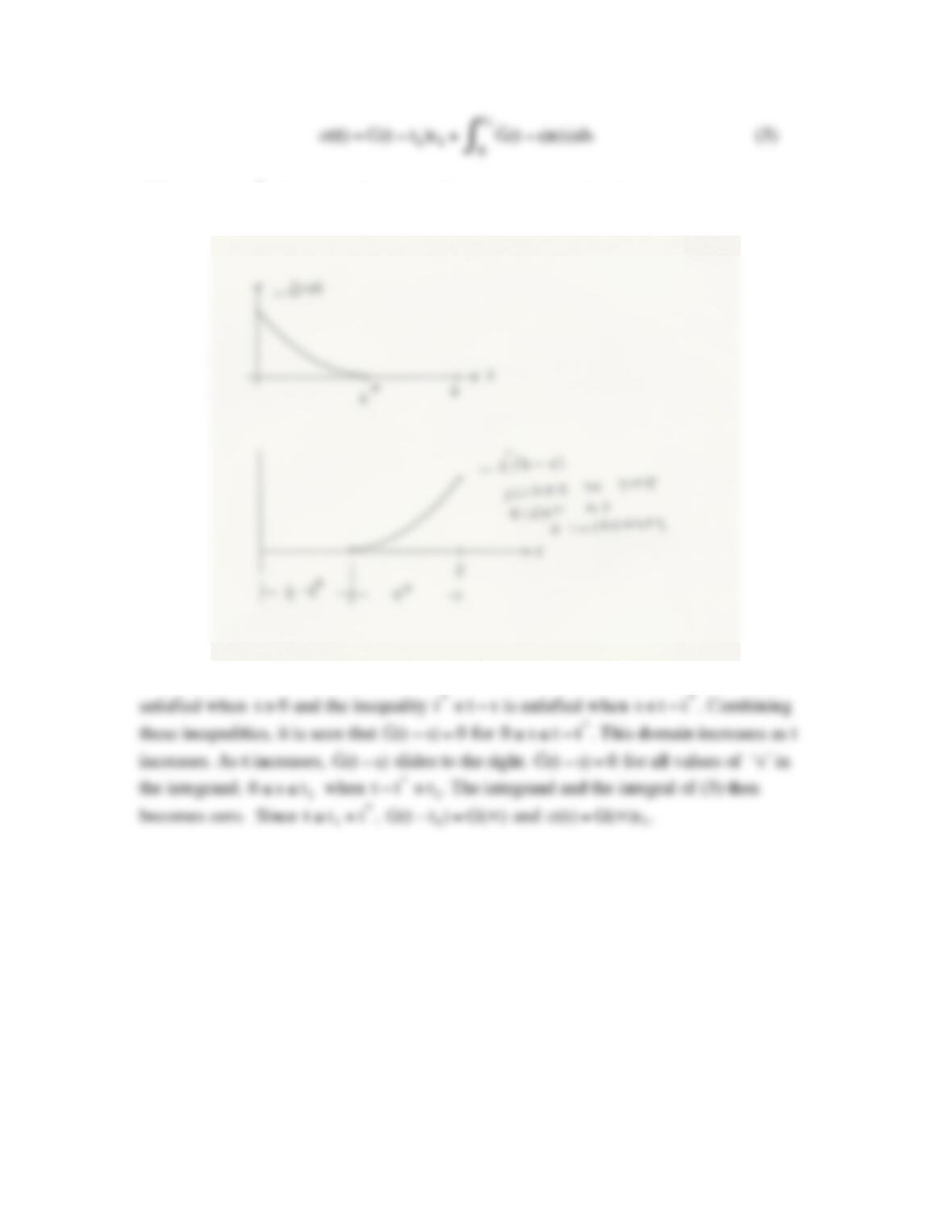
The figure shows the graphs of
!
“˙
G (s)
and
!
“˙
G (t “s)
.
Since
˙
G (s) =0
for
t*“s“t
, then
˙
G (t “s) =0
for
t*“t#s“t
. The inequality
t“s#t
is
satisfied when
s“0
and the inequality
t*“t#s
is satisfied when
s“t#t*
. Combining
!
!
!
!
!
!
!