Solution to Problems of Chapter 4
4.1 Suppose that the relaxation function for a linear viscoelastic material is given
by
!
G(t) =100(1+9e“t 2 )
lb/in2 .
(a) Starting with the integral relation (4.1) or (4.2) between G(t) and J(t), and using the
Laplace transform, derive the corresponding form for J(t).
(b) Verify that J(0) = 1/G(0) and J(∞) = 1/G(∞ ).
(c) Calculate
!
“R
and
!
“C
using Definition 1 for the creep and relaxation times.
Are they related by (4.24)?
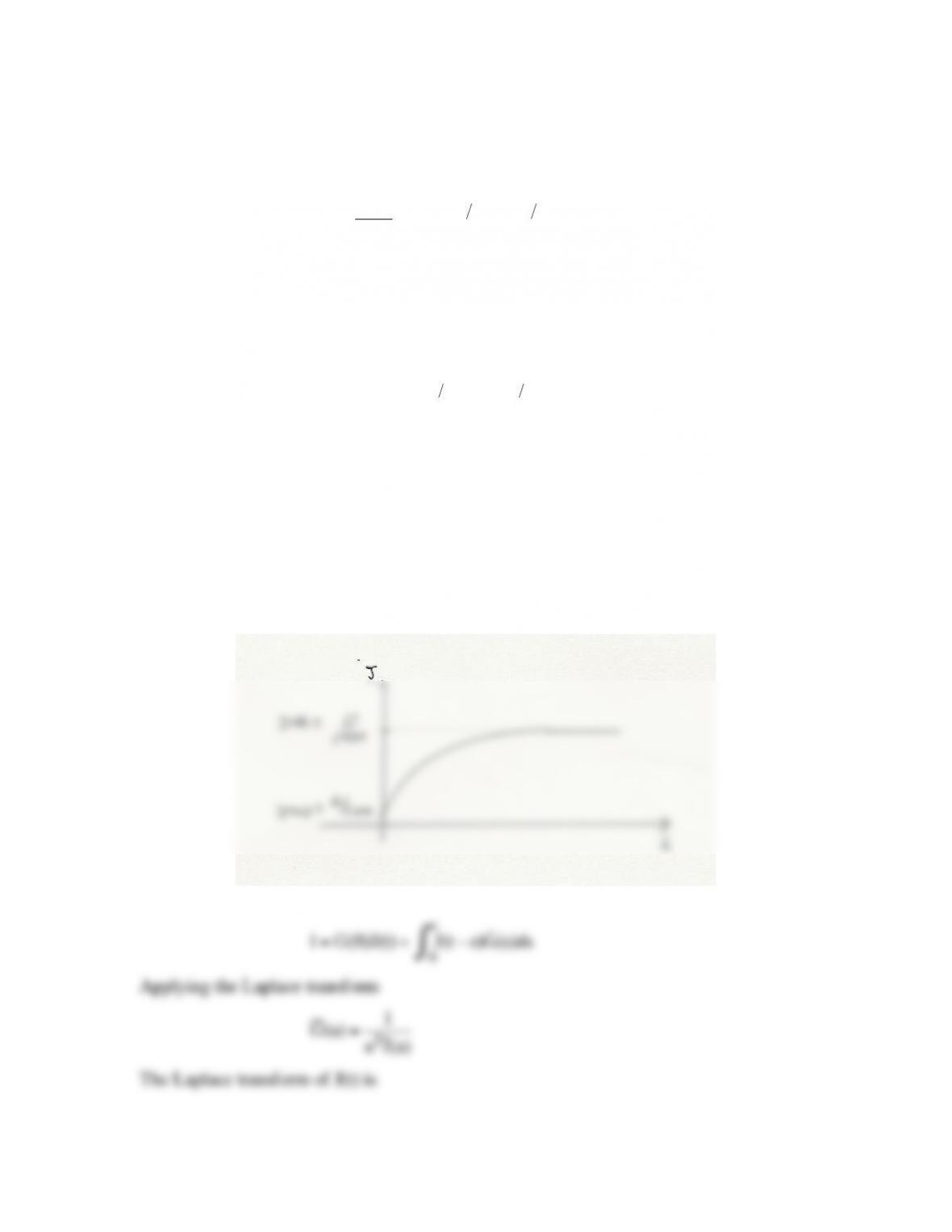
(d) Show that
!
G(t)J(t) “1
by means of a plot.
SOLUTION
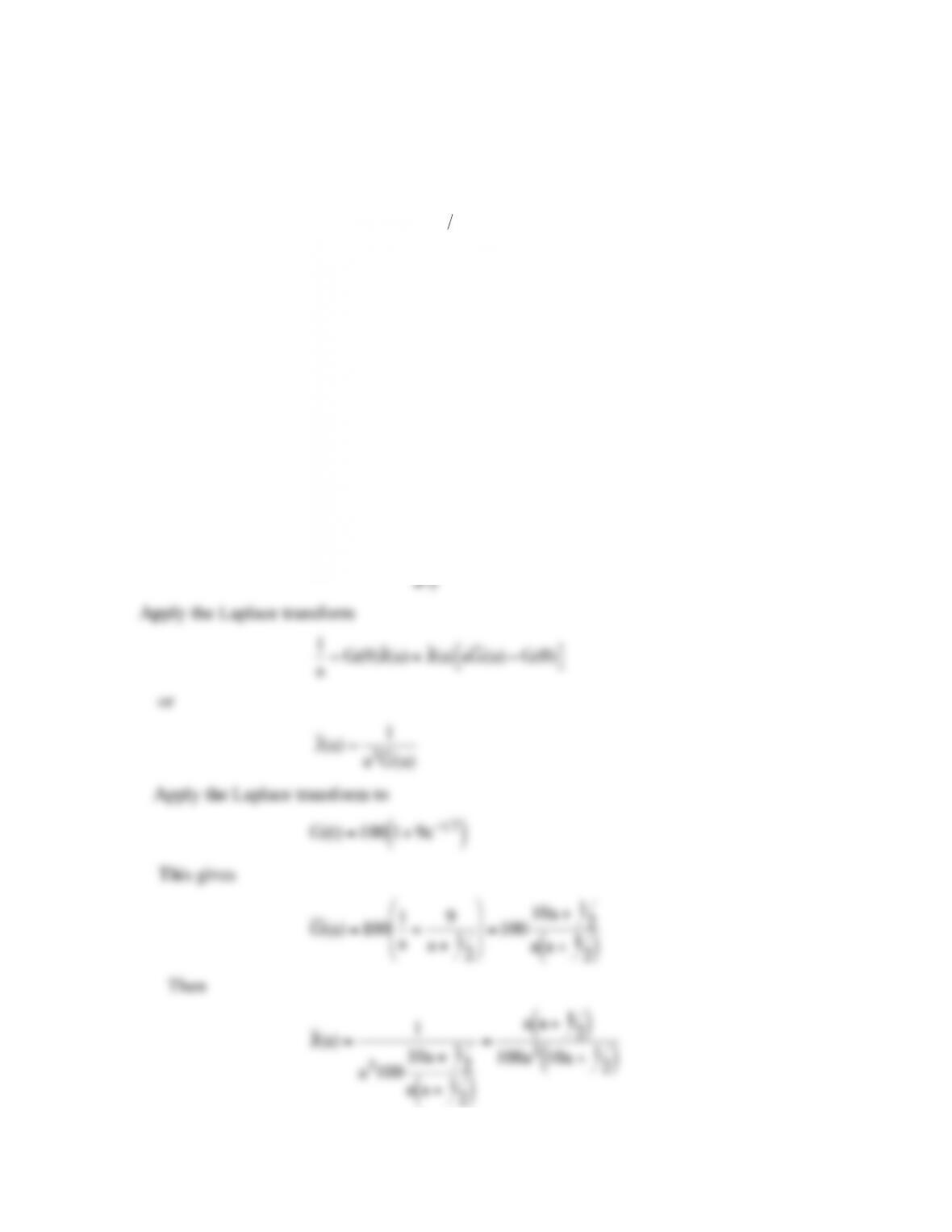
(a) The integral relation between the creep and stress relaxation functions is
1=G(0)J(t) +J(t “s) ˙
G (s)ds
0
t
#
Apply the Laplace transform
!
a2100
a a +12
( )
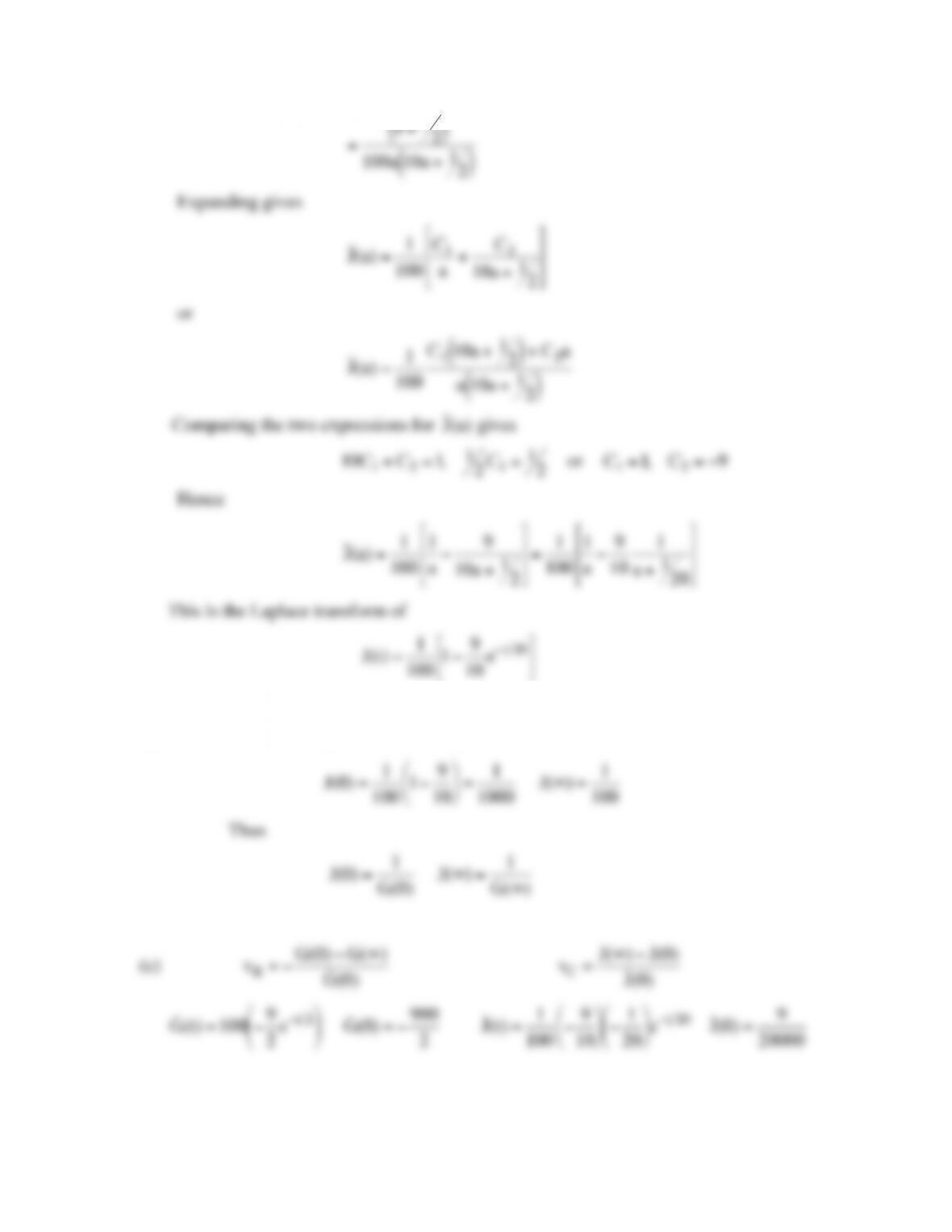
=
a+1
2
( )
!
(b)
G(0) =100 “10 G(#)=100
J(0) =1
100 1“9
10
#
$
% &
‘
( =1
1000 J())=1
100
!
!
!
!
!
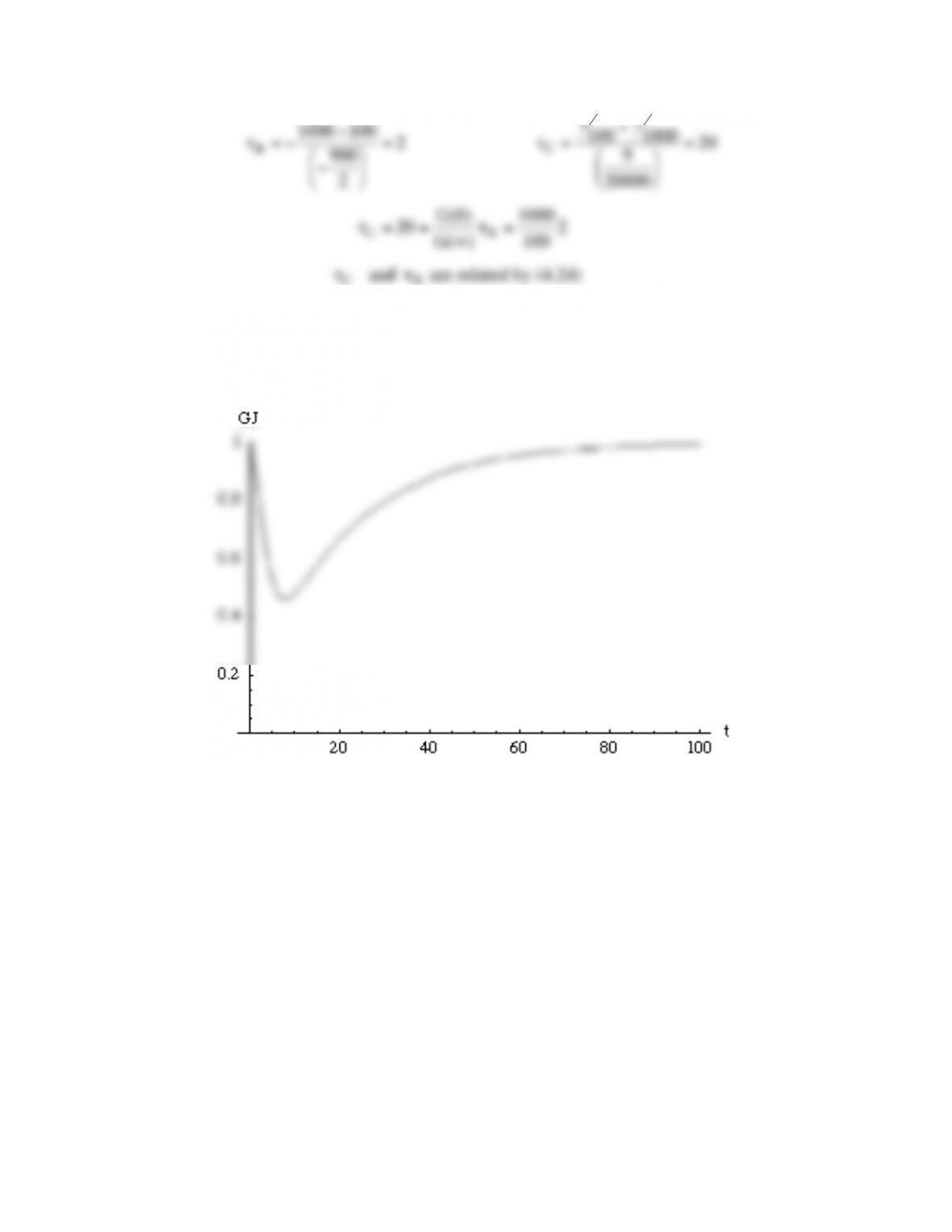
“R=#1000 #100
$
=2
!
“C=
1
100 #1
1000
9
$
=20
!
!
“C
and
!
“R
are related by (4.24)
(d)
4.2 Consider the creep function
!
J(t) =1
1000 10 “5e“t 4 “3e“t 8
[ ]
.
(a) Sketch a graph of
!
J(t)
, and label significant values.
(b) Show that the corresponding stress relaxation function also is the sum of a constant
and two exponentials, i.e. it has the form
!
G(t) =Co+C1e“t#1+C2e“t#2
,
where
!
Co, C1, C2
and
!
“1,“2
are constants. It is not necessary to find them.
(c) Calculate the characteristic creep time
!
“C
, as given by Definition 1. What is the
corresponding value of the characteristic stress relaxation time
!
“R
(d) Calculate the value of
!
Co
and of the sum
!
C1+C2
.
SOLUTION
(a)
(b) The integral relation between the creep and stress relaxation functions is
!
1=G(0)J(t) +J(t “s) ˙
G (s)ds
0
t
#
Applying the Laplace transform
!
G (a) =1
a2J (a)
The Laplace transform of J(t) is
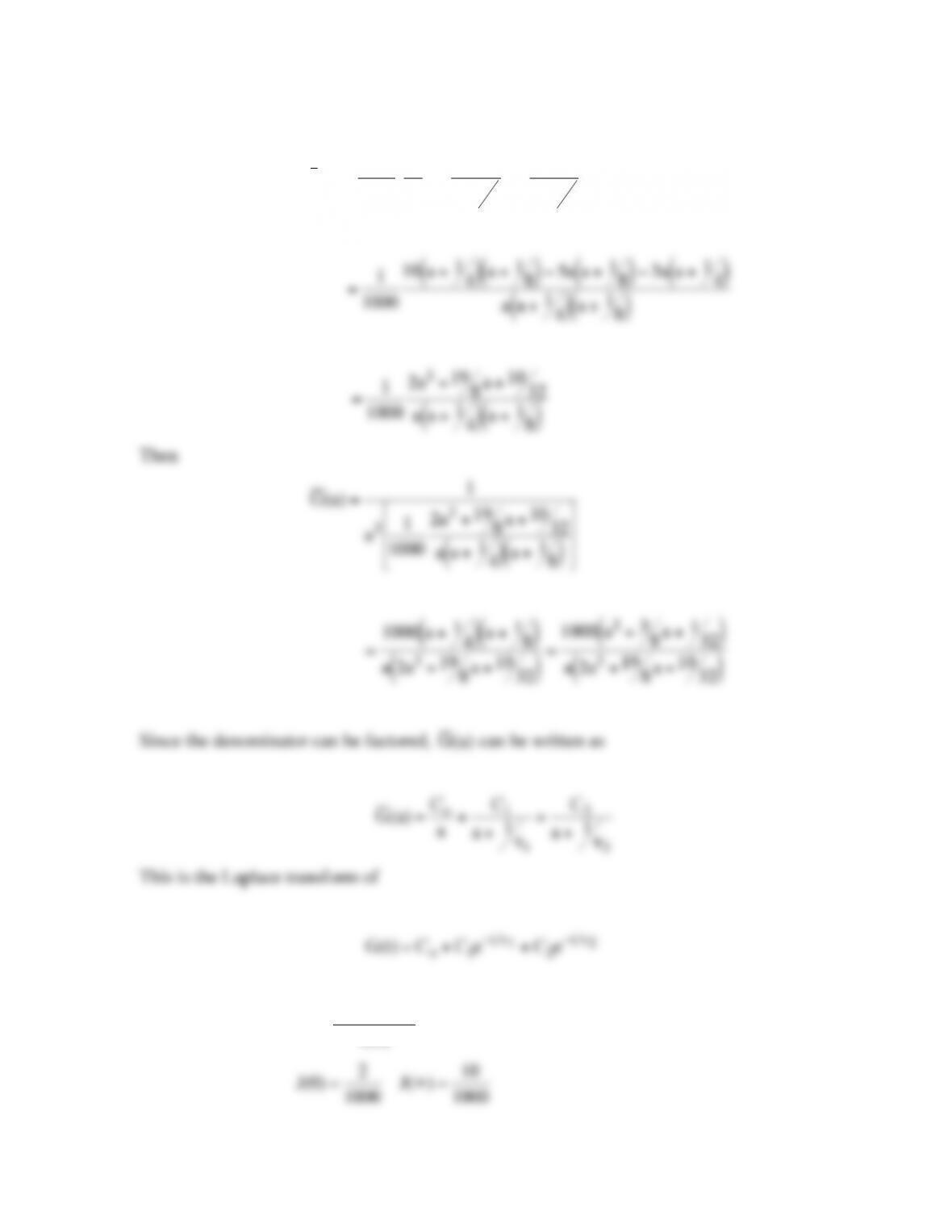
!
J (a) =1
1000
10
a“51
a+14
“31
a+18
#
$
%
%
&
‘
(
(
=1
1000
10 a +1
4
( )
a+1
8
( )
“5a a +1
8
( )
“3a a +1
4
( )
!
G(t) =Co+C1e“t#1+C2e“t#2
(c)
!
“C=J(#)$J(0)
˙
J (0)
!
J(0) =2
1000 J(“)=10
1000
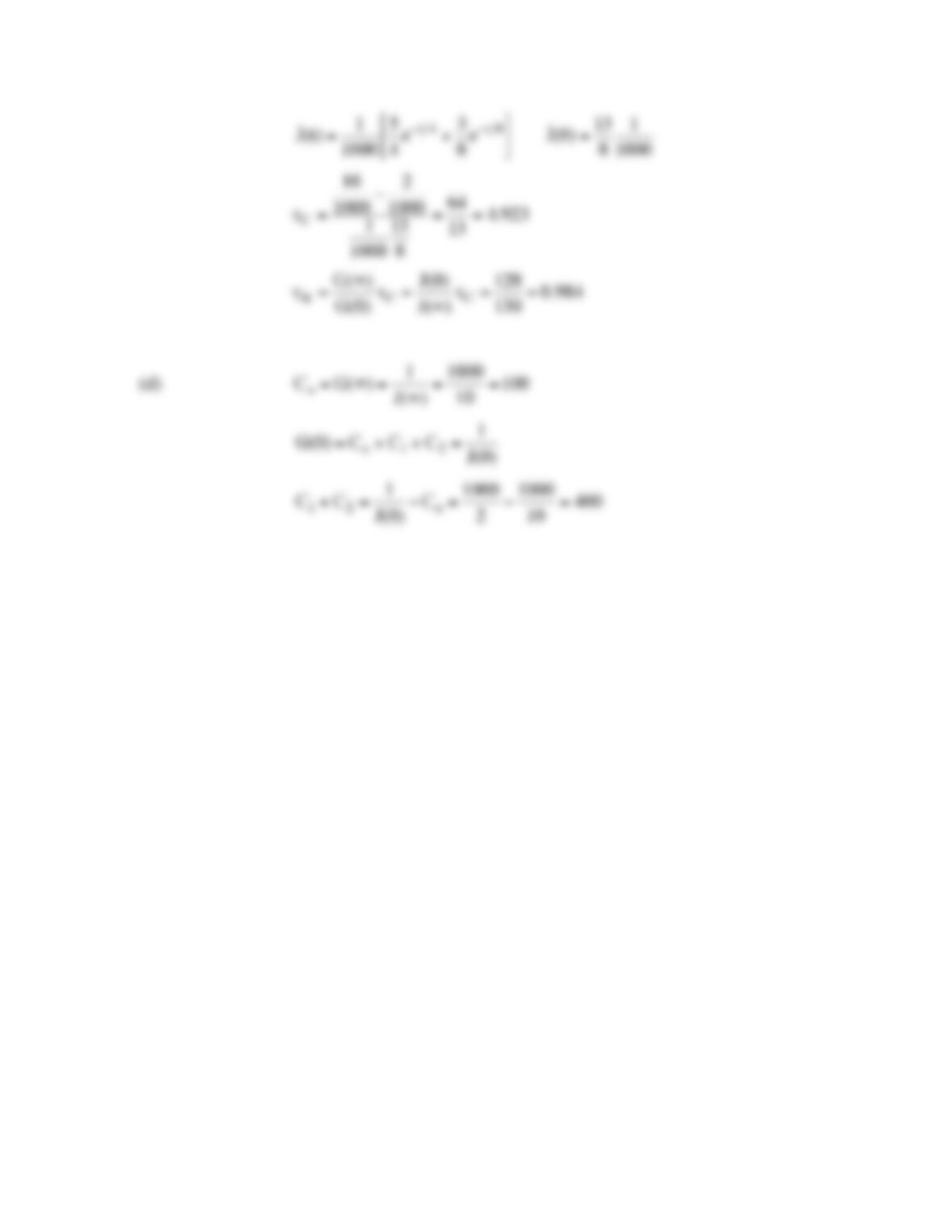
˙
J (t) =1
1000
5
4e“t 4 +3
8e“t 8
#
$
%
&
‘
( ˙
J (0) =13
8
1
1000
!
1000
8
!
“R=G(#)
G(0) “C=J(0)
J(#)“C=128
130 =0.984
(d)
!
Co=G(“)=1
J(“)=1000
10 =100
!
!
C1+C2=1
J(0) “Co=1000
2“1000
10 =400