161
3–1.
SOLUTION
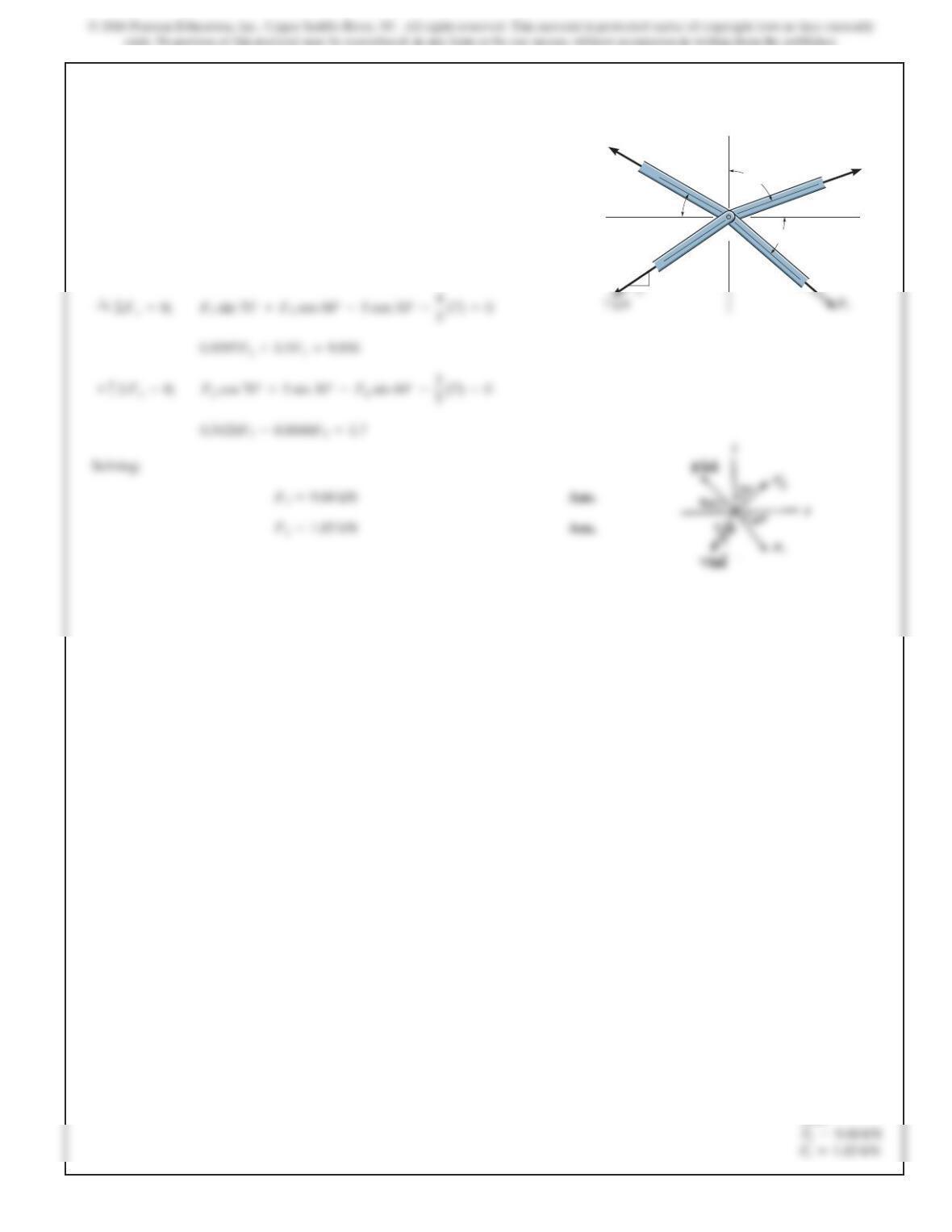
The members of a truss are pin connected at joint O.
Determine the magnitudes of and for equilibrium.
Set .u=60°
F2
F1
u
F2
70fi
30fi
5 kN
y
x
O
3
5
Ans:
162
3–2.
SOLUTION
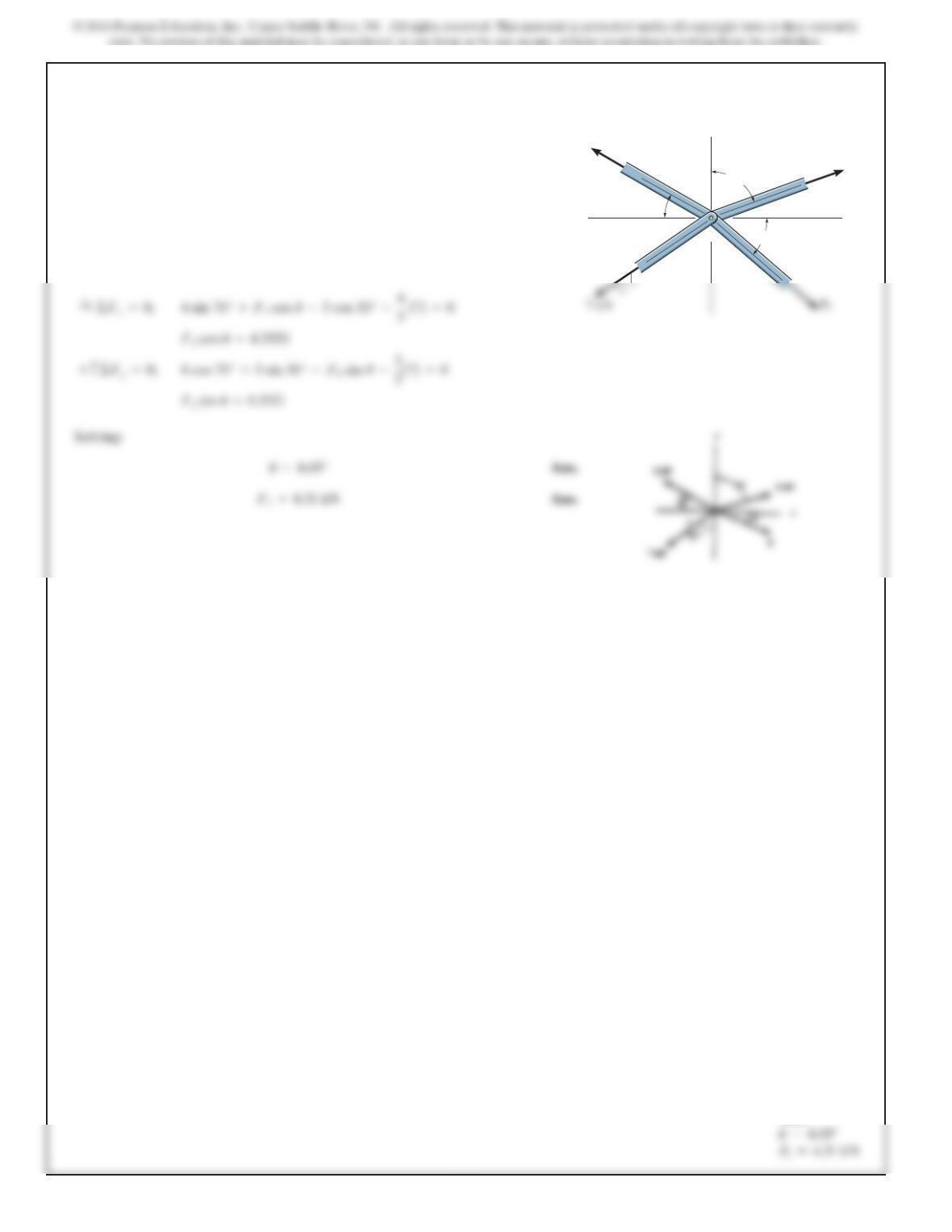
The members of a truss are pin connected at joint O.
Determine the magnitude of and its angle for
equilibrium. Set .F
2=6kN
uF1
u
F2
70fi
30fi
5 kN
y
x
O
3
5
Ans:
163
Ans:
3–3.
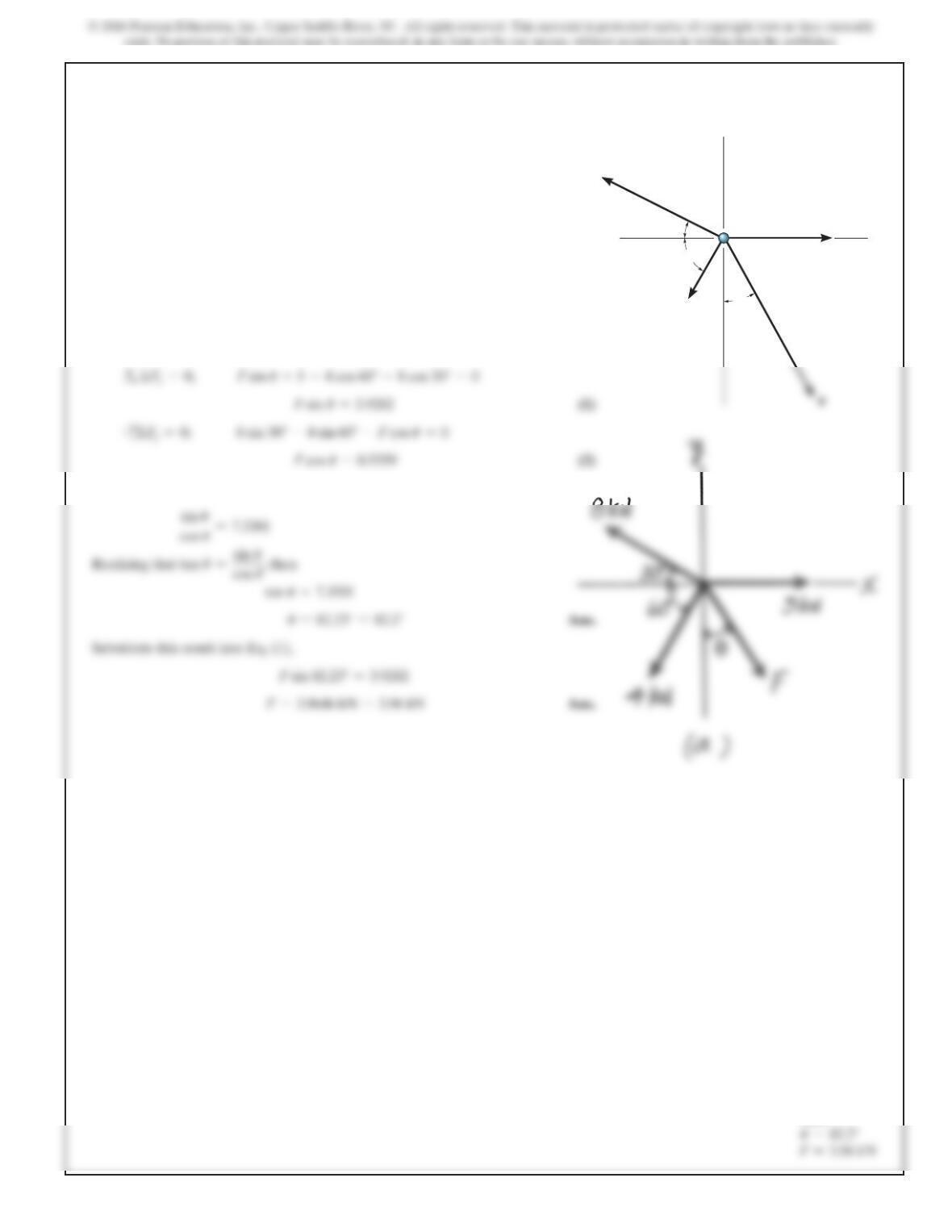
Determine the magnitude and direction
u
of F so that the
particle is in equilibrium.
y
5 kN
8 kN
4 kN
x
60fi
30fi
u
SOLUTION
Equations of Equilibrium. Referring to the FBD shown in Fig. a,
Divide Eq (1) by (2),
164
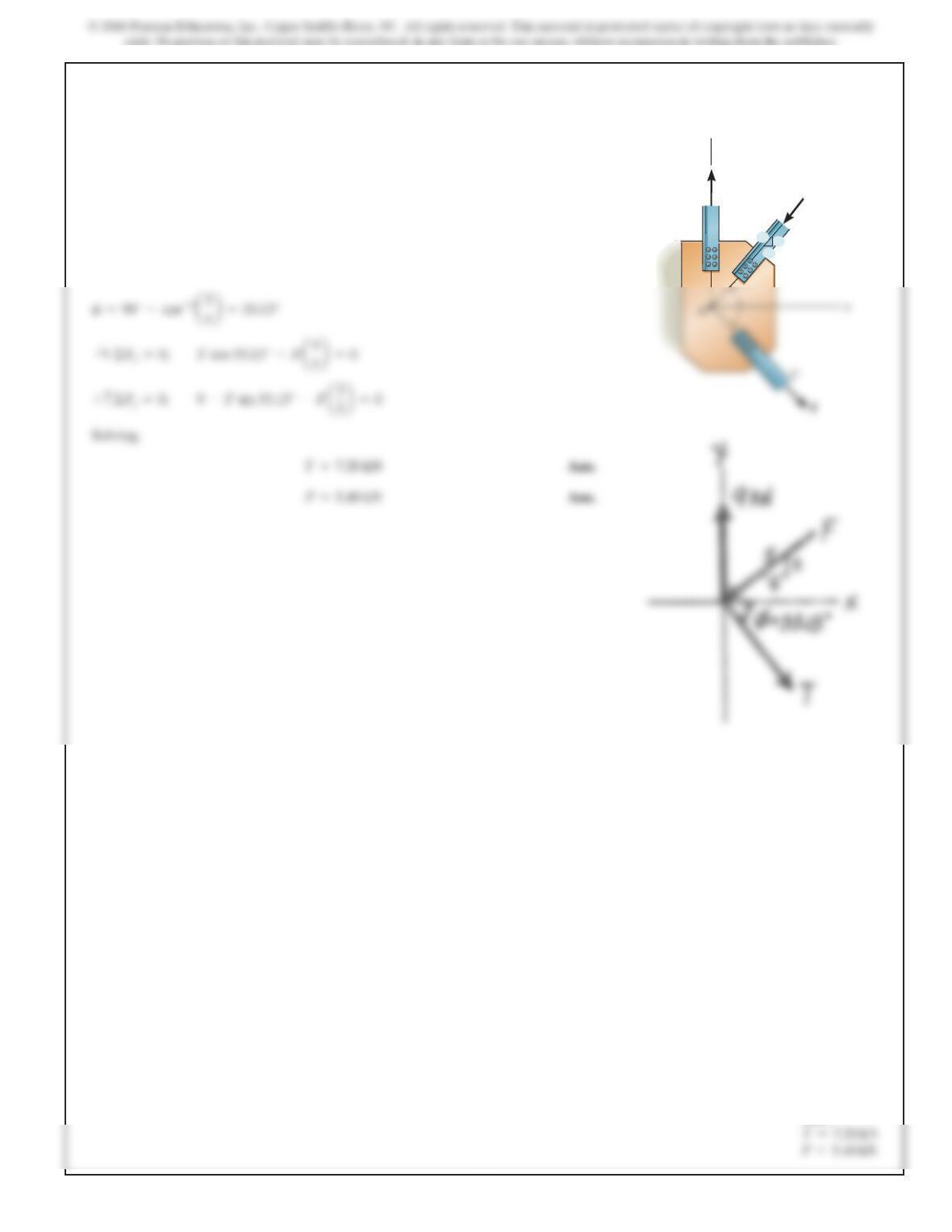
*3–4.
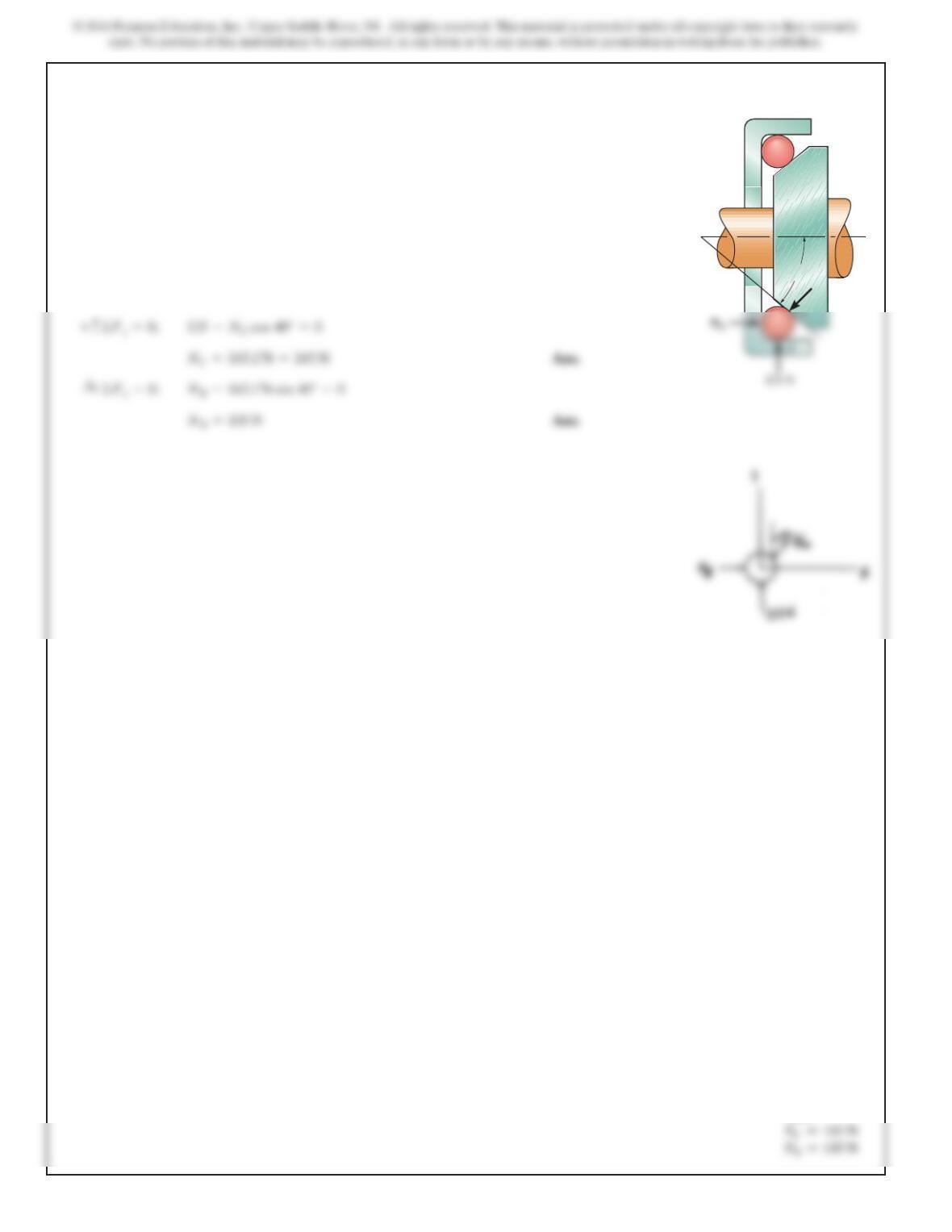
The bearing consists of rollers, symmetrically confined
within the housing.The bottom one is subjected to a 125-N
force at its contact Adue to the load on the shaft.
Determine the normal reactions NBand NCon the bearing
at its contact points Band Cfor equilibrium.
SOLUTION
40°
N
C
Ans:
165
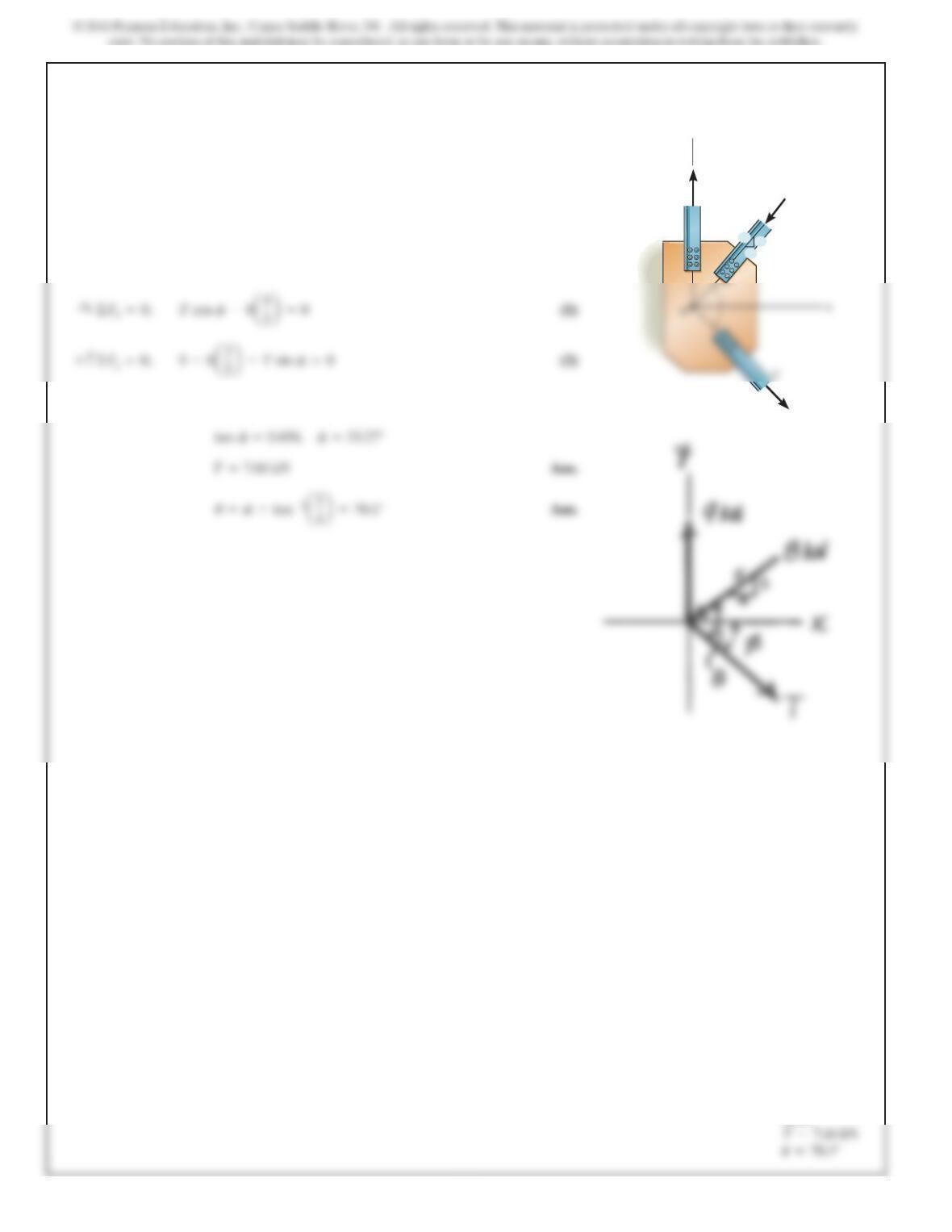
3–5.
SOLUTION
The members of a truss are connected to the gusset plate.If
the forces are concurrent at point O, determine the
magnitudes of Fand Tfor equilibrium. Take .u=90°
y
A
F
B
9kN
4
53
Ans:
166
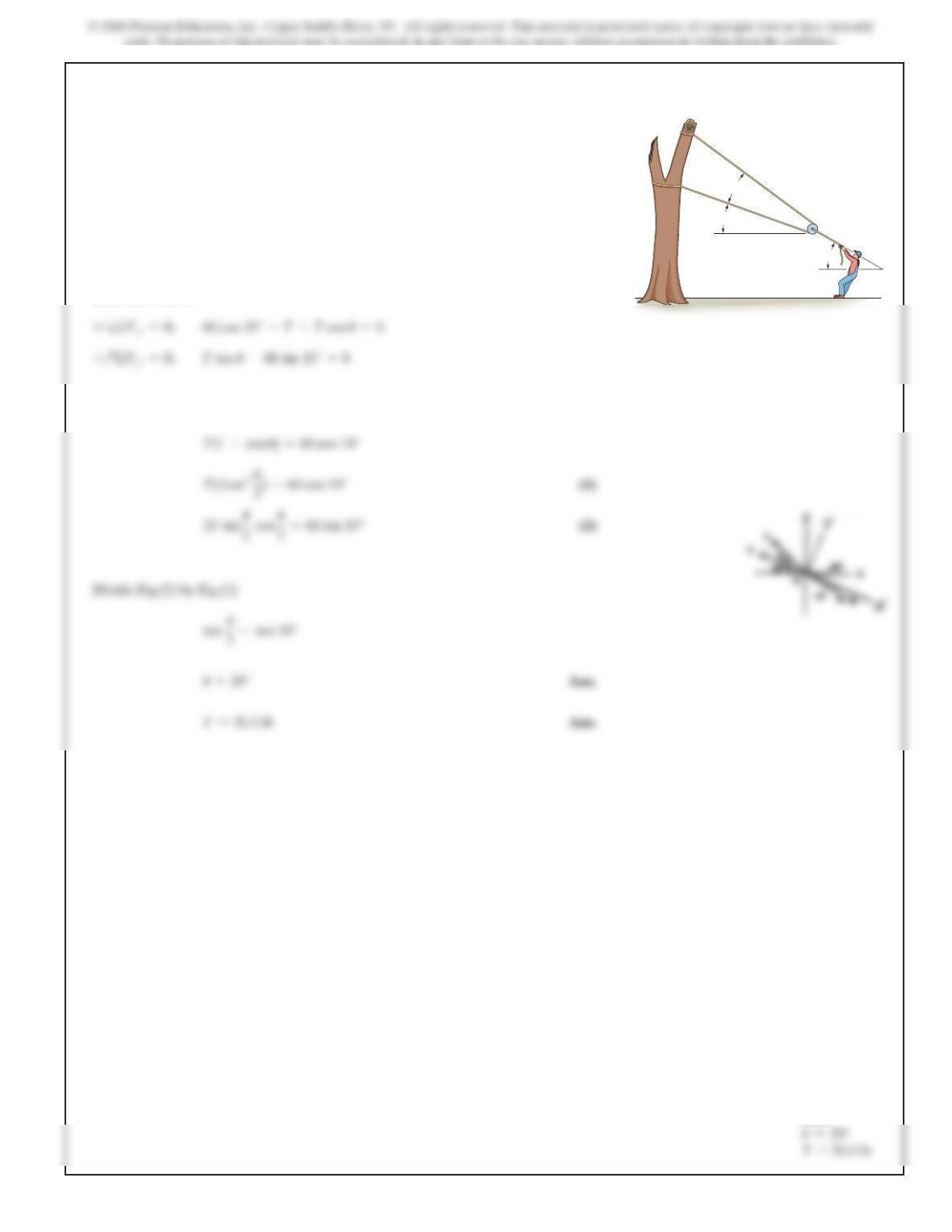
3–6.
SOLUTION
Rearrange then divide Eq. (1) into Eq. (2):
The gusset plate is subjected to the forces of three members.
Determine the tension force in member Cand its angle for
equilibrium. The forces are concurrent at point O.Take
.F=8kN
u
y
A
F
T
B
9kN
4
53
Ans:
167
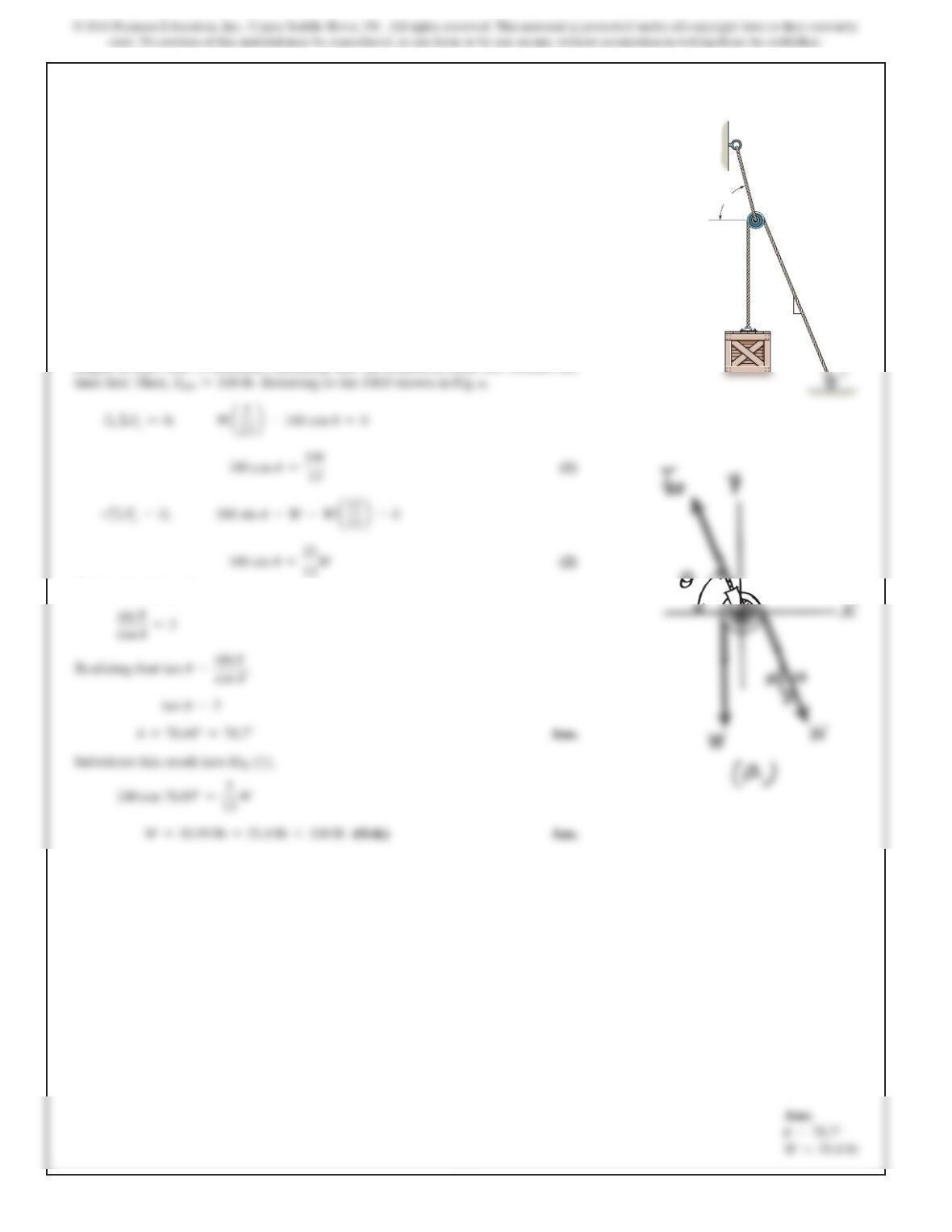
3–7.
SOLUTION
Thus,
The man attempts to pull down the tree using the cable and
small pulley arrangement shown. If the tension in AB is
60 lb, determine the tension in cable CAD and the angle
which the cable makes at the pulley.
u
20°
θ
B
A
C
D
30°
Ans:
168
168
SOLUTION
Equations of Equilibrium. Assume that for equilibrium, the tension along the
length of rope ABC is constant. Assuming that the tension in cable BD reaches the
Divide Eq. (2) by (1),
*3–8.
The cords ABC and BD can each support a maximum load
of 100 lb. Determine the maximum weight of the crate, and
the angle
u
for equilibrium.
12
5
13
B
A
D
u
169
169
3–9.
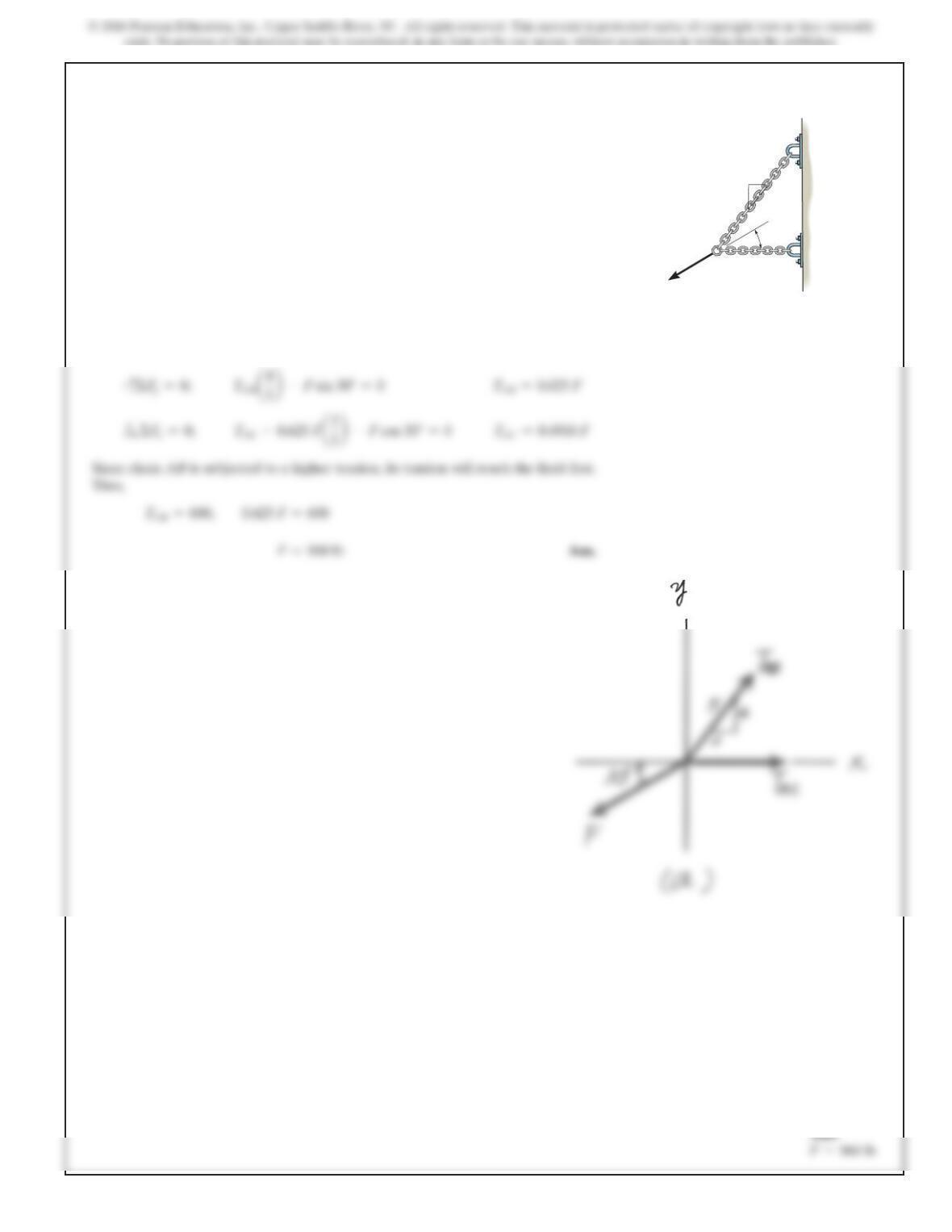
Determine the maximum force F that can be supported in
the position shown if each chain can support a maximum
tension of 600 lb before it fails.
C
A
B
45
3
30fi
F
SOLUTION
Equations of Equilibrium. Referring to the FBD shown in Fig. a,
170
3–10.
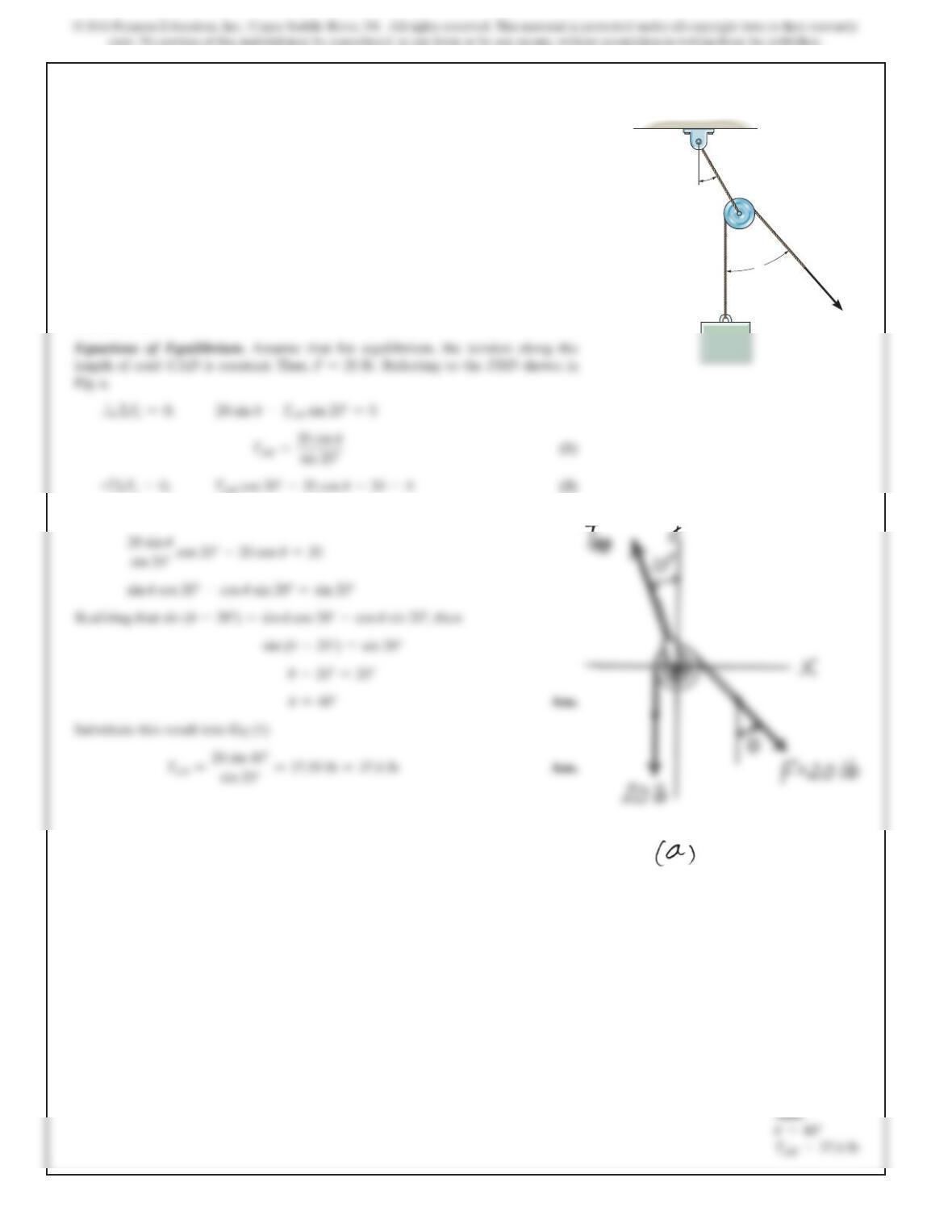
The block has a weight of 20 lb and is being hoisted at
uniform velocity. Determine the angle
u
for equilibrium and
the force in cord AB.B
F
20fiA
C
D
u
SOLUTION
Substitute Eq (1) into (2),
171
Ans:
SOLUTION
3–11.
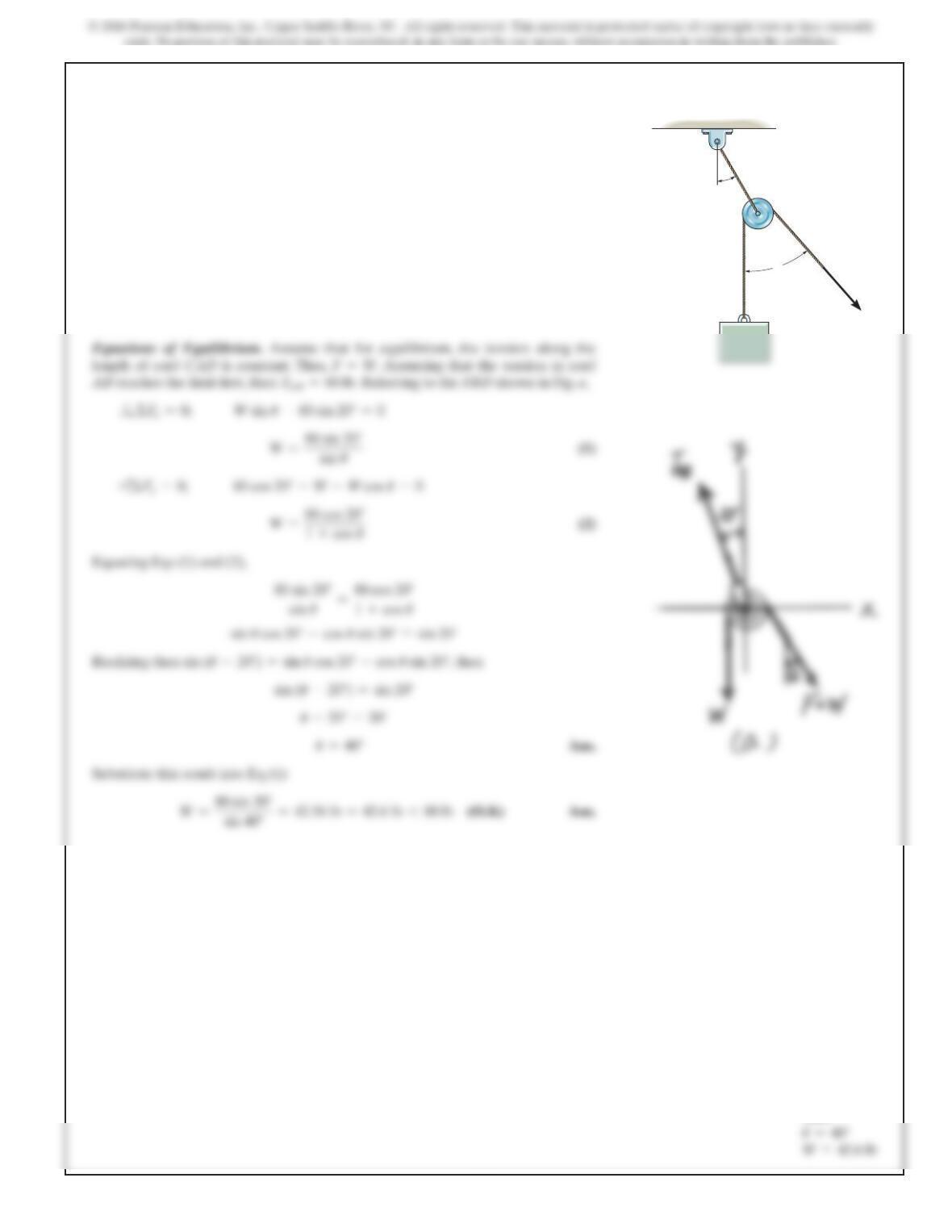
Determine the maximum weight W of the block that can be
suspended in the position shown if cords AB and CAD can
each support a maximum tension of 80 lb. Also, what is the
angle
u
for equilibrium?
B
F
20fiA
C
D
u
172
*3–12.
SOLUTION
Free-Body Diagram: By observation, the force has to support the entire weight
Equations of Equilibrium:
If the maximum allowable tension in the cable is 5 kN,then
F1
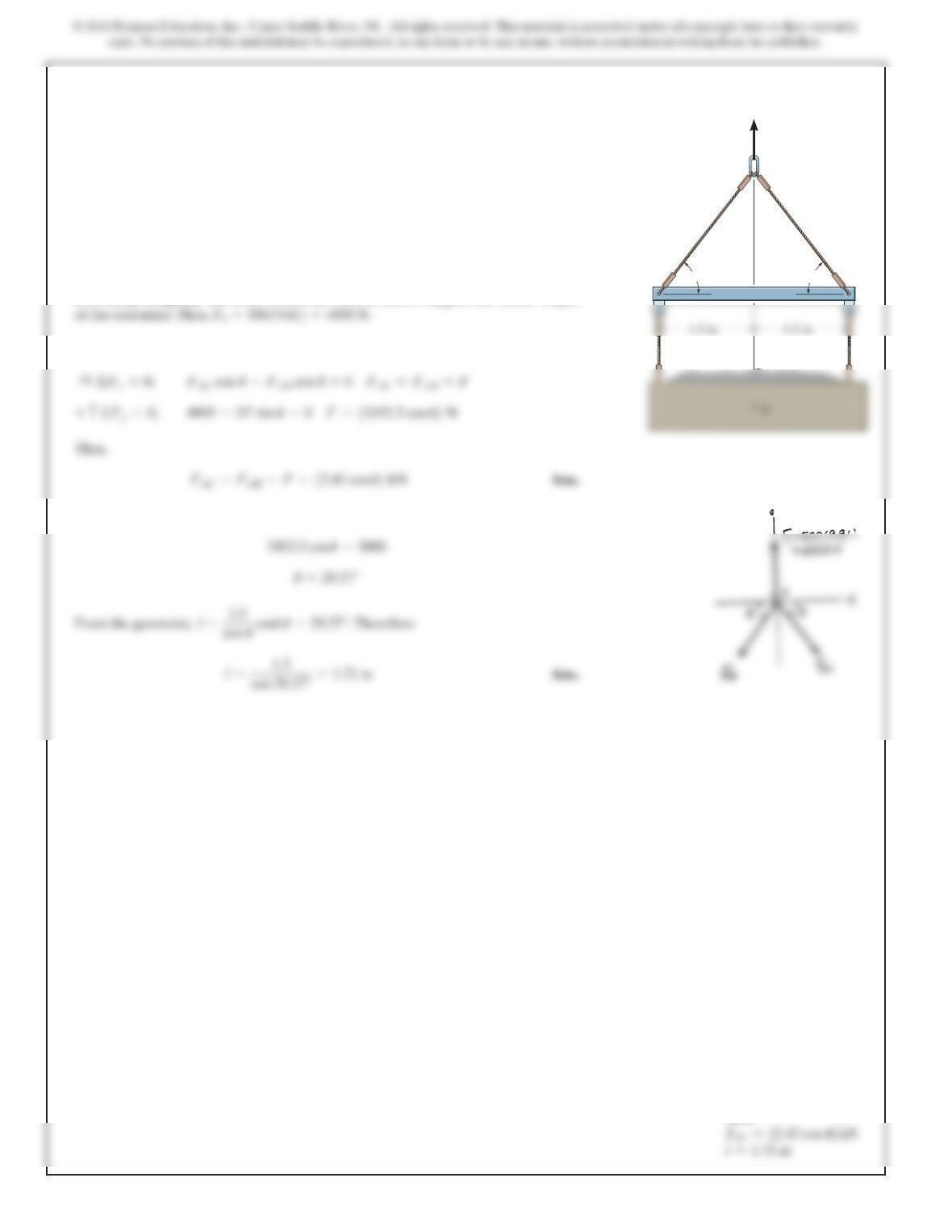
The lift sling is used to hoist a container having a mass of
500 kg.Determine the force in each of the cables AB and
AC as a function of If the maximum tension allowed in
each cable is 5 kN,determine the shortest lengths of cables
AB and AC that can be used for the lift. The center of
gravity of the container is located at G.
u.A
CB
F
θθ
Ans:
173
3–13.
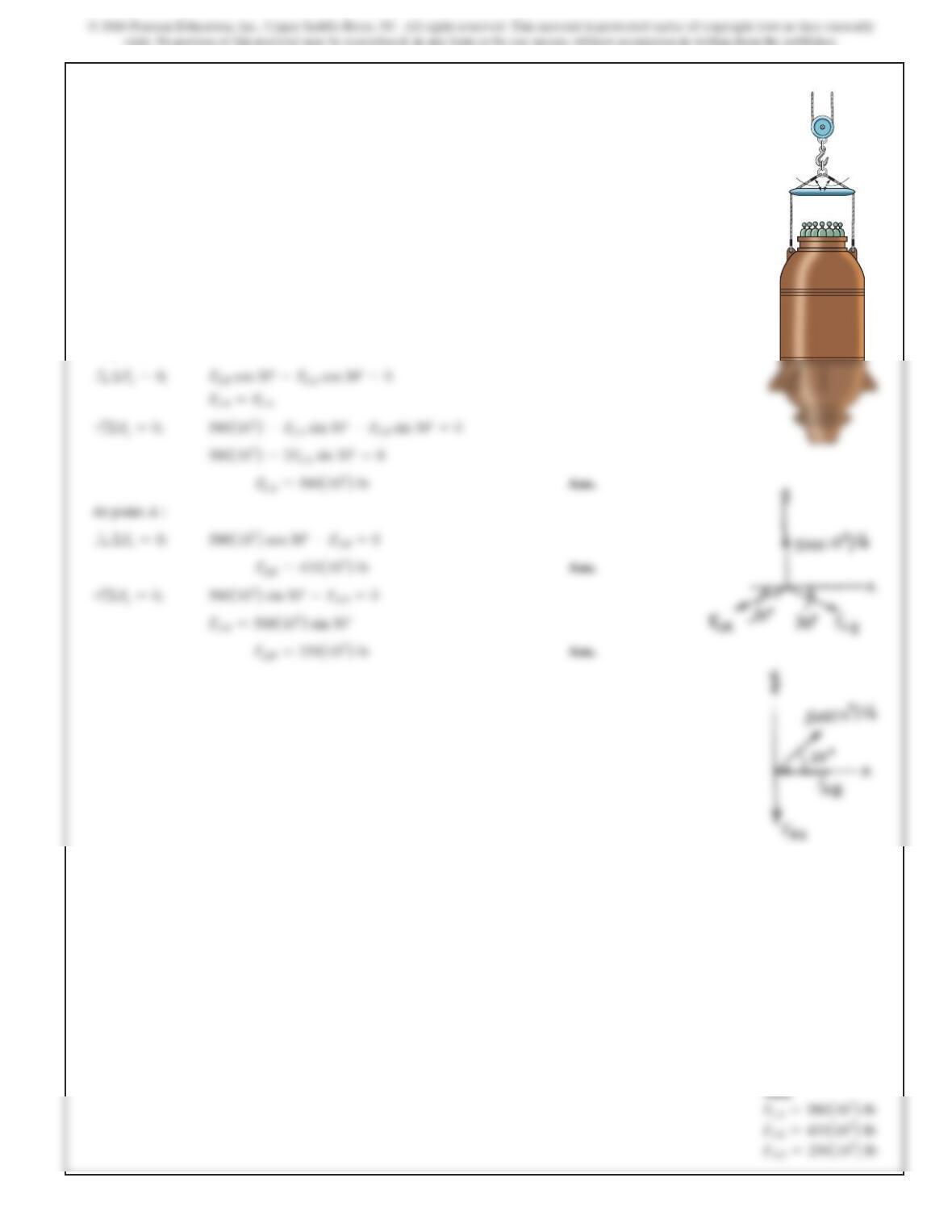
A nuclear-reactor vessel has a weight of 500
(
10
3
)
lb.
Determine the horizontal compressive force that the
spreader bar AB exerts on point A and the force that each
cable segment CA and AD exert on this point while the
vessel is hoisted upward at constant velocity.
SOLUTION
At point C :
AB
C
DE
30fi30fi
174
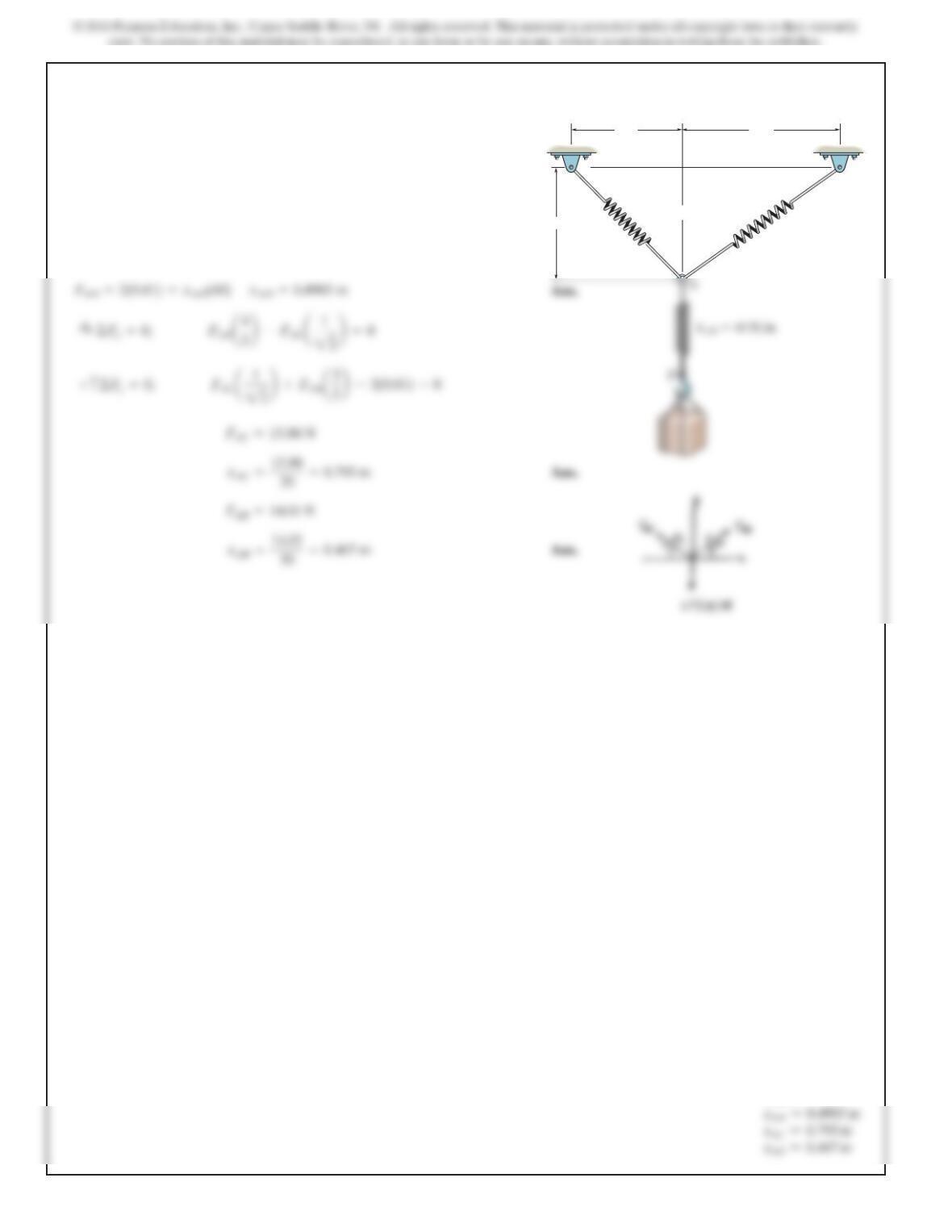
3–14.
Determine the stretch in each spring for equlibrium of the
2-kg block. The springs are shown in the equilibrium
position.
SOLUTION
3 m
3
m4
m
kAB fi 30 N/m
kAC fi 20 N/m
CB
Ans:
175
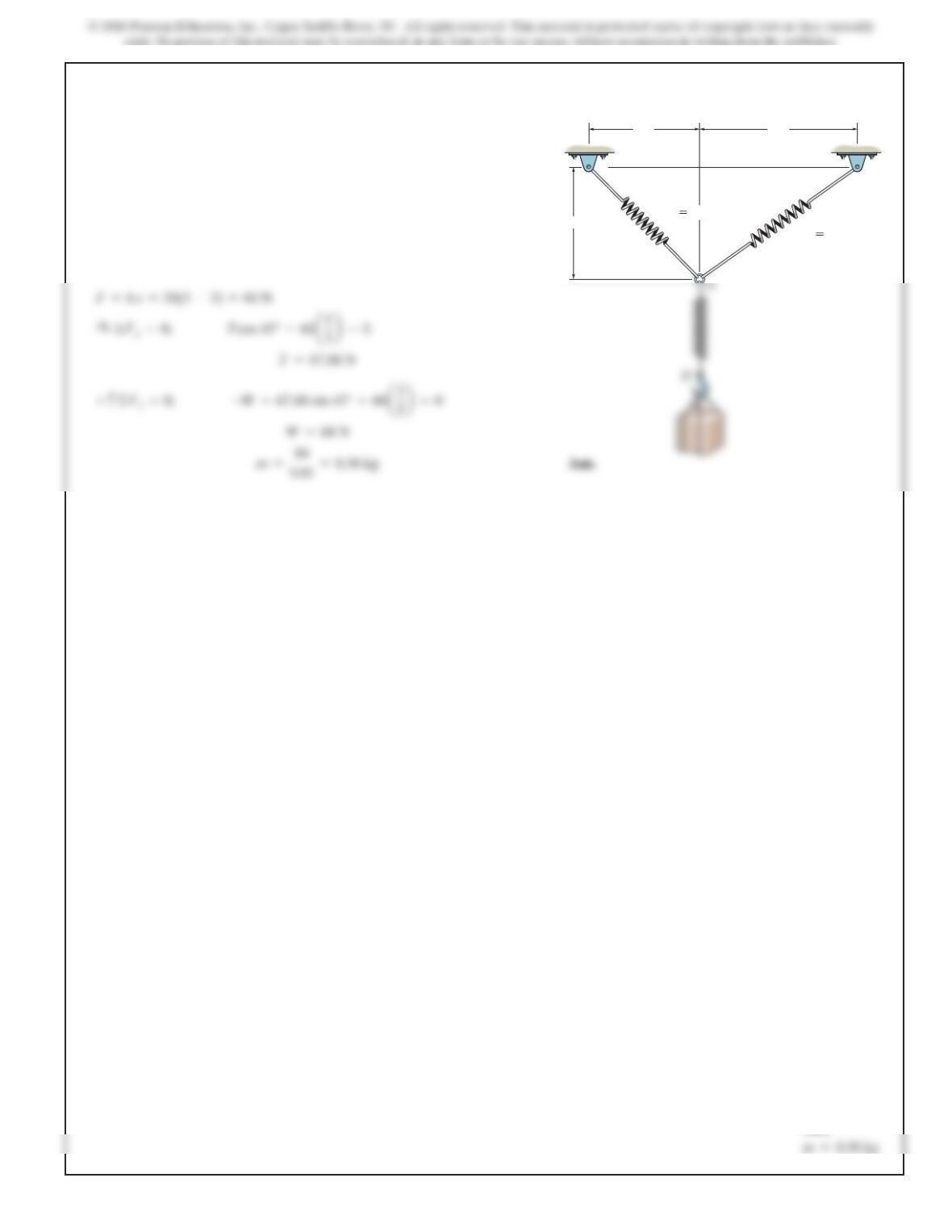
3–15.
The unstretched length of spring AB is 3 m. If the block is
held in the equilibrium position shown, determine the mass
of the block at D.
3m
3m 4 m
k
AC
20 N/m
k
AB
30 N/m
CB
SOLUTION
Ans:
176
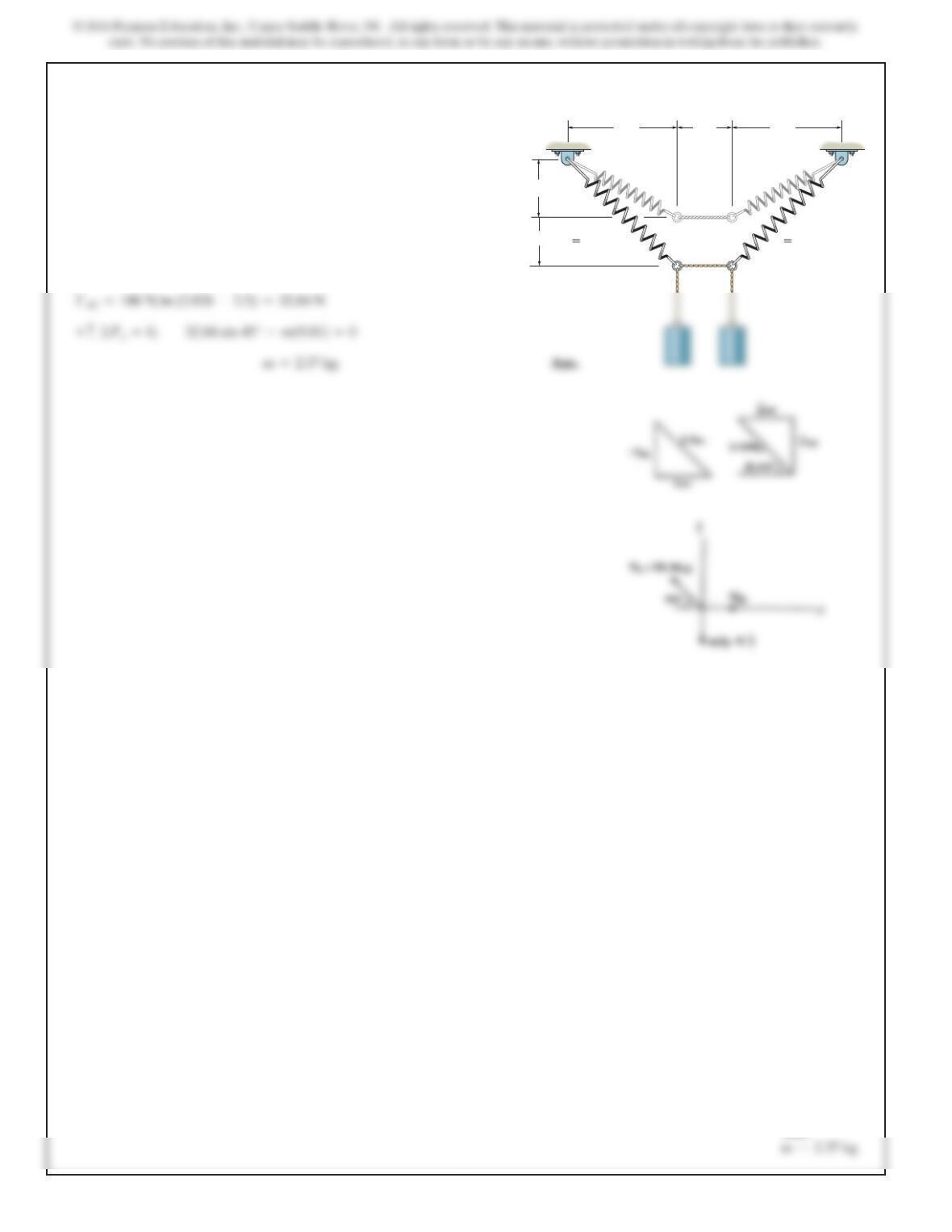
*3–16.
Determine the mass of each of the two cylinders if they
cause a sag of when suspended from the rings at
Aand B.Note that when the cylinders are removed.s=0
s=0.5 m
1m 2 m2m
1.5m
s
BA
CD
k100 N/mk100 N/m
SOLUTION
Ans:
177
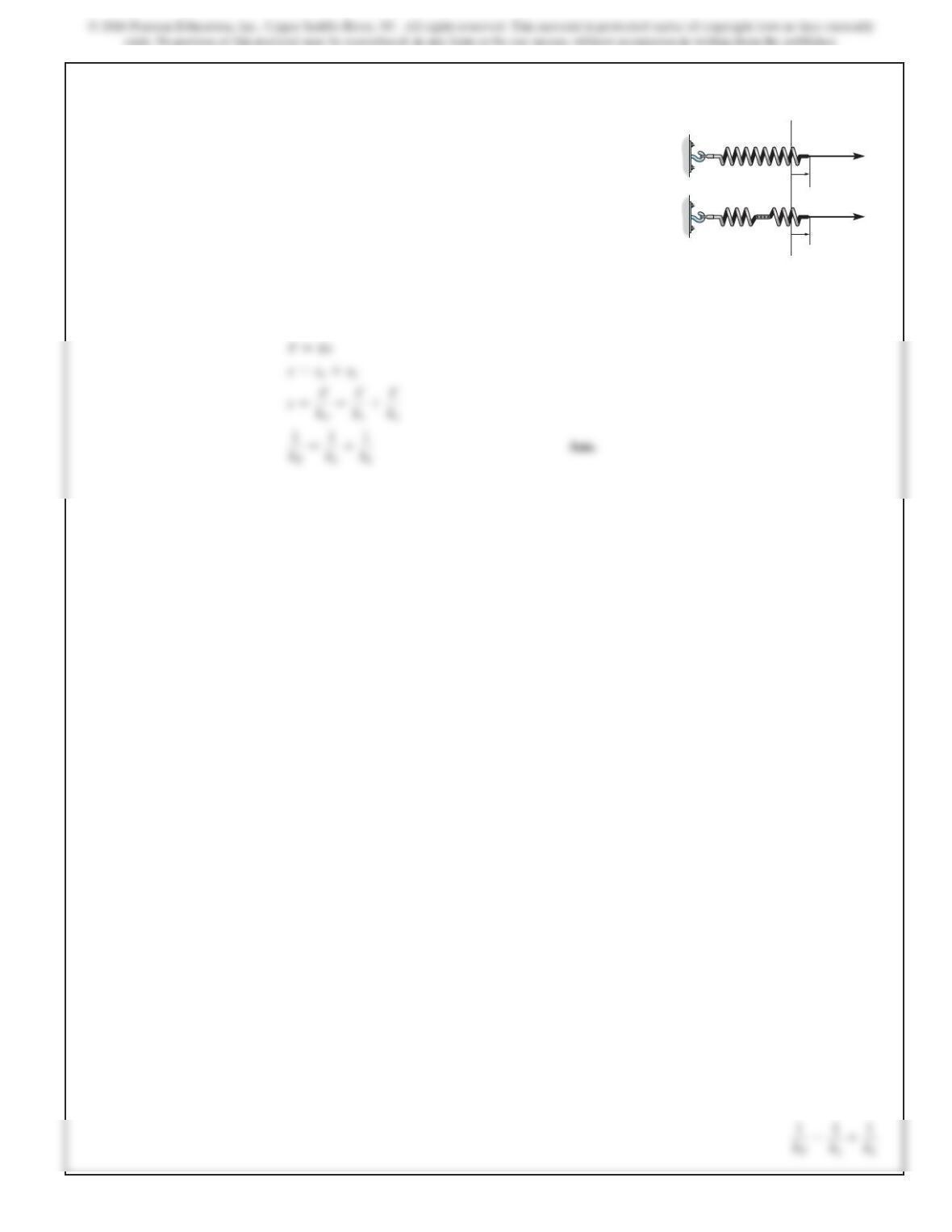
3–17.
Determine the stiffness kT of the single spring such that the
force F will stretch it by the same amount s as the force F
stretches the two springs. Express kT in terms of stiffness k1
and k2 of the two springs.
SOLUTION
s
Unstretched
position
k1
s
k2
kT
F
F
Ans:
178
178
Ans:
SOLUTION
Equations of Equilibrium. Referring to the FBD shown in Fig. a,
Solving Eqs (1) and (2)
The stretched length of the spring is
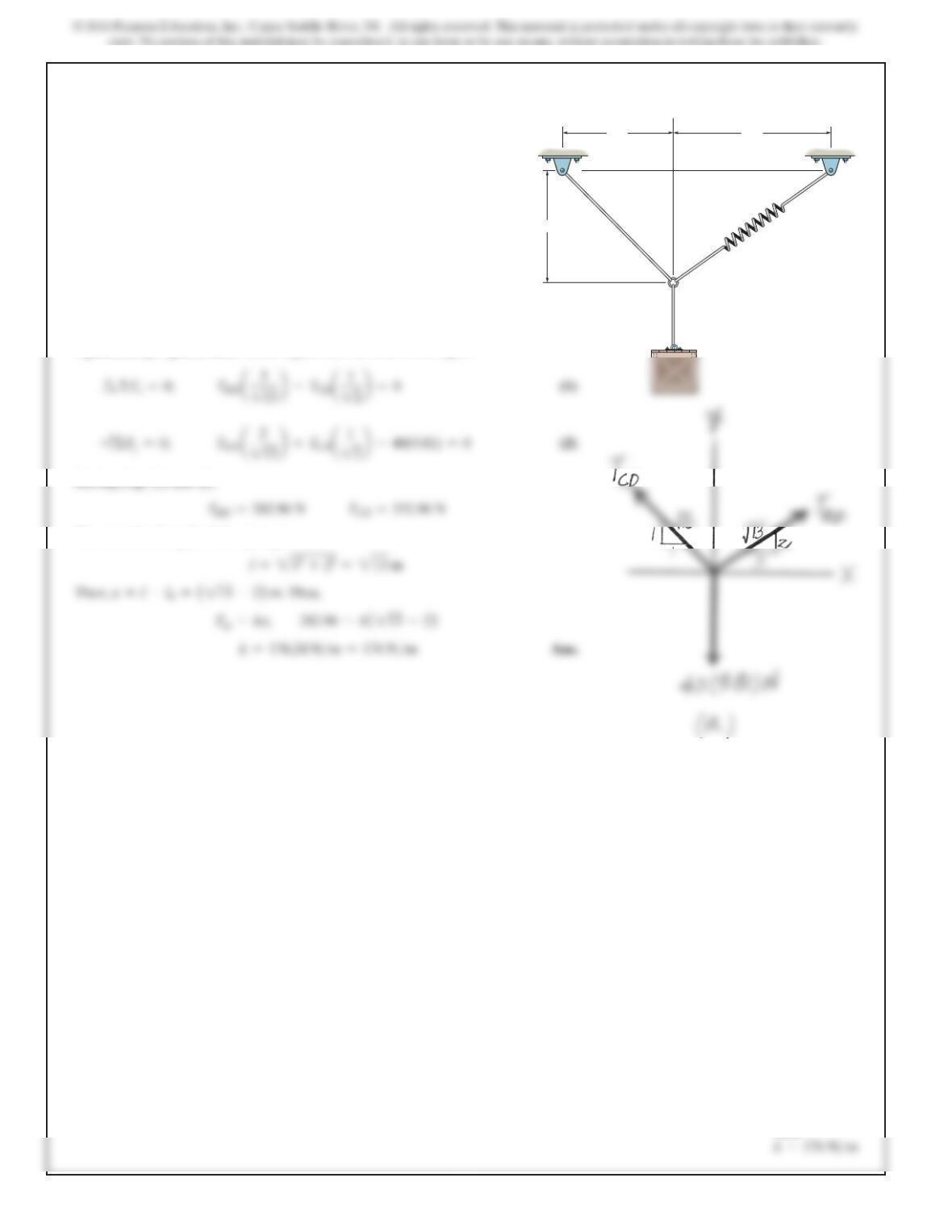
3–18.
If the spring DB has an unstretched length of 2 m, determine
the stiffness of the spring to hold the 40-kg crate in the
position shown.
2 m
2
m3
m
k
CB
A
D
179
179
Ans:
SOLUTION
Equations of Equilibrium. Referring to the FBD shown in Fig. a,
Solving Eqs (1) and (2)
The stretched length of the spring is
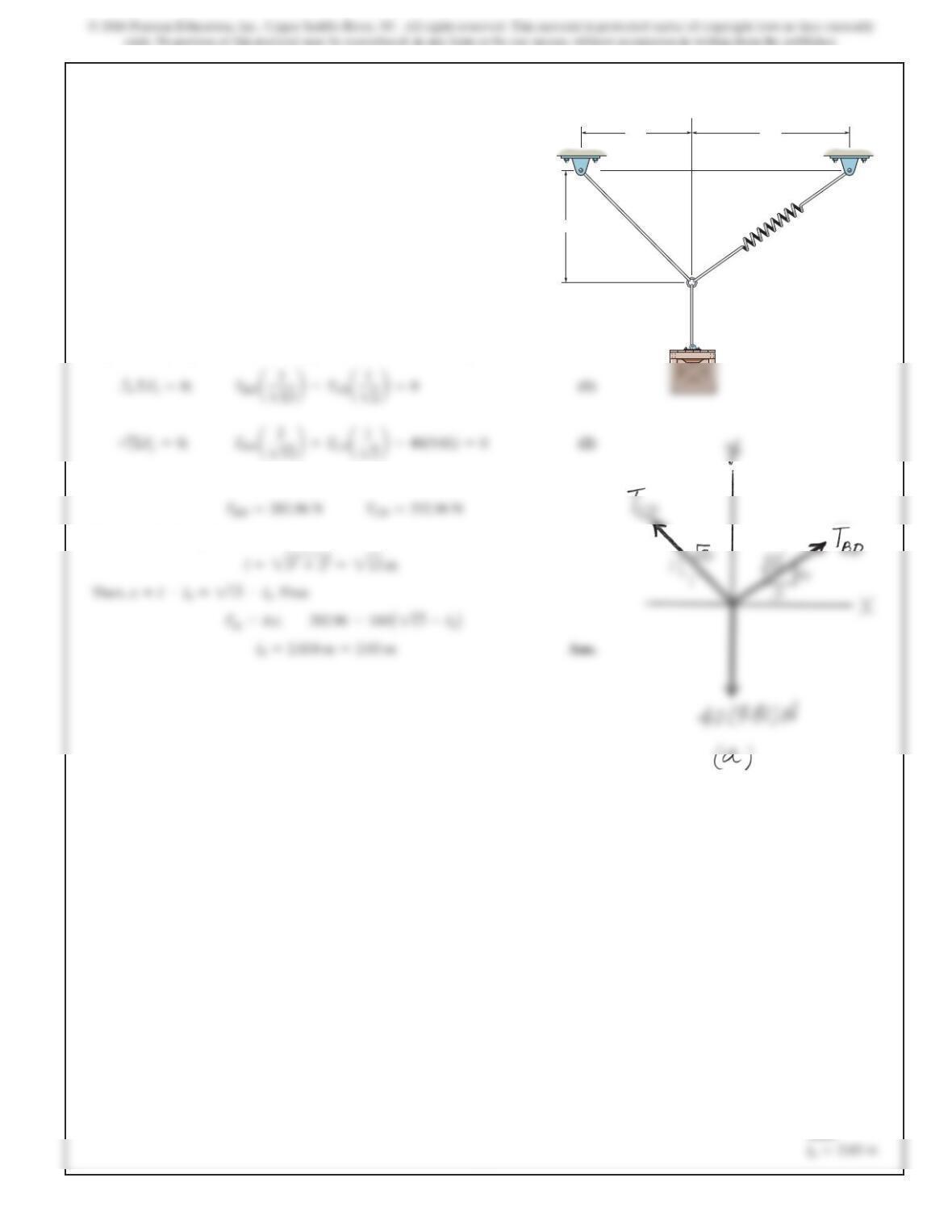
3–19.
Determine the unstretched length of DB to hold the 40-kg
crate in the position shown. Take k = 180 N
>
m.
2 m
2
m3
m
k
CB
A
D
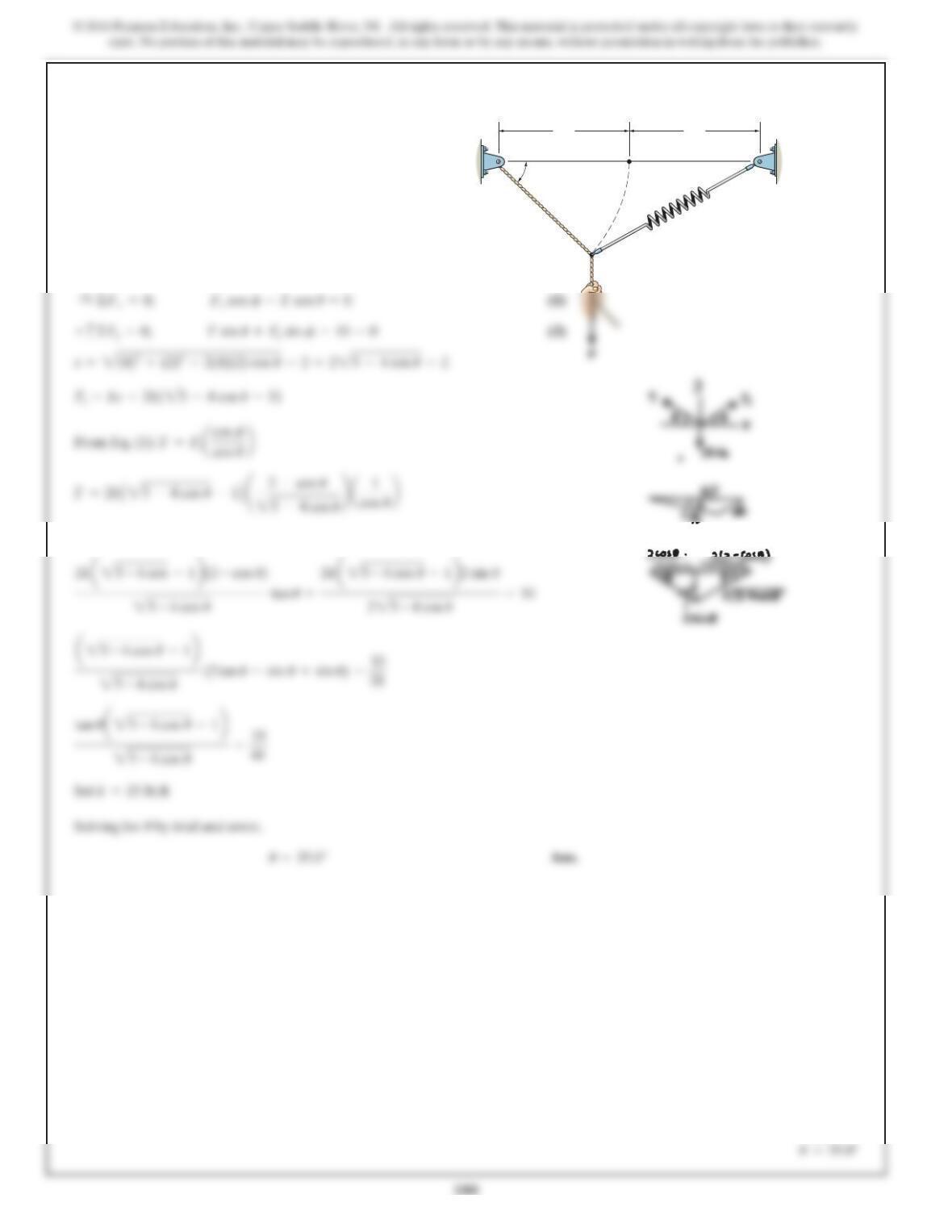
*3–20.
Avertical force is applied to the ends of the 2-ft
cord AB and spring AC.If the spring has an unstretched
length of 2 ft,determine the angle for equilibrium. Take
k=15 lb>ft.
u
P=10 lb
SOLUTION
From Eq.(2):
2 ft
k
2 ft
A
BC
u
Ans: