1261
*22–72.
SOLUTION
Since
the system is underdamped.
F
rom Eq. 22–32
Appling the initial condition at
and .
Solving Eqs
. (1) and (2) yields:
y=0t=0, y=0.62 ft
y=Dce–
A
c
2m
B
tsin (vdt+f)d
c6cc
c=0.7 lb #s>ft
k=53 lb>ft
m=12
32.2 =0.3727 slug
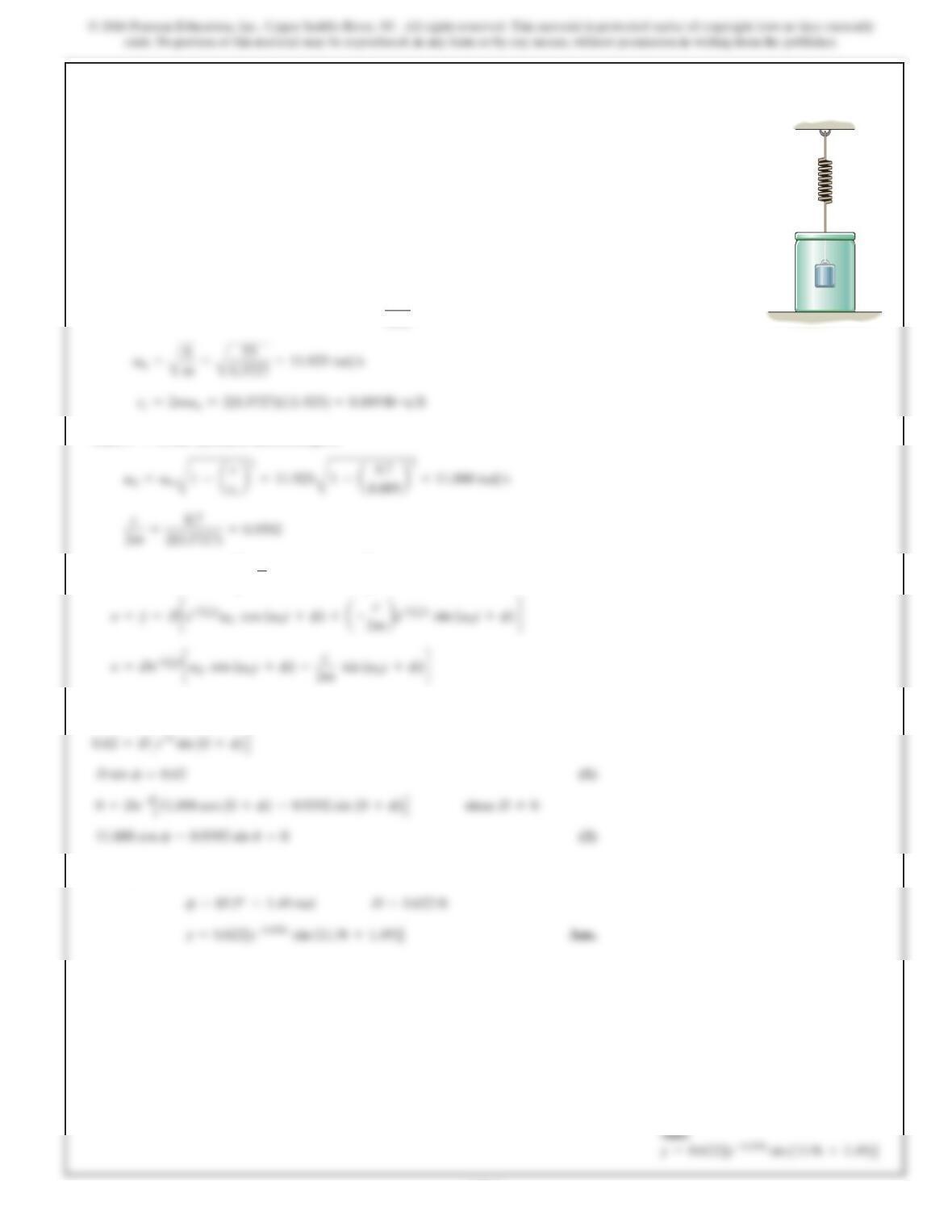
The block, having a weight of 12 lb, is immersed in a liquid
such that the damping force acting on the block has a
magnitude of where is in . If the block
is pulled down 0.62 ft and released from rest, determine the
position of the block as a function of time.The spring has a
stiffness of Assume that positive displacement
is downward.
k=53 lb>ft.
ft>svF =10.7 ƒvƒ2lb,
k
1262
22–73.
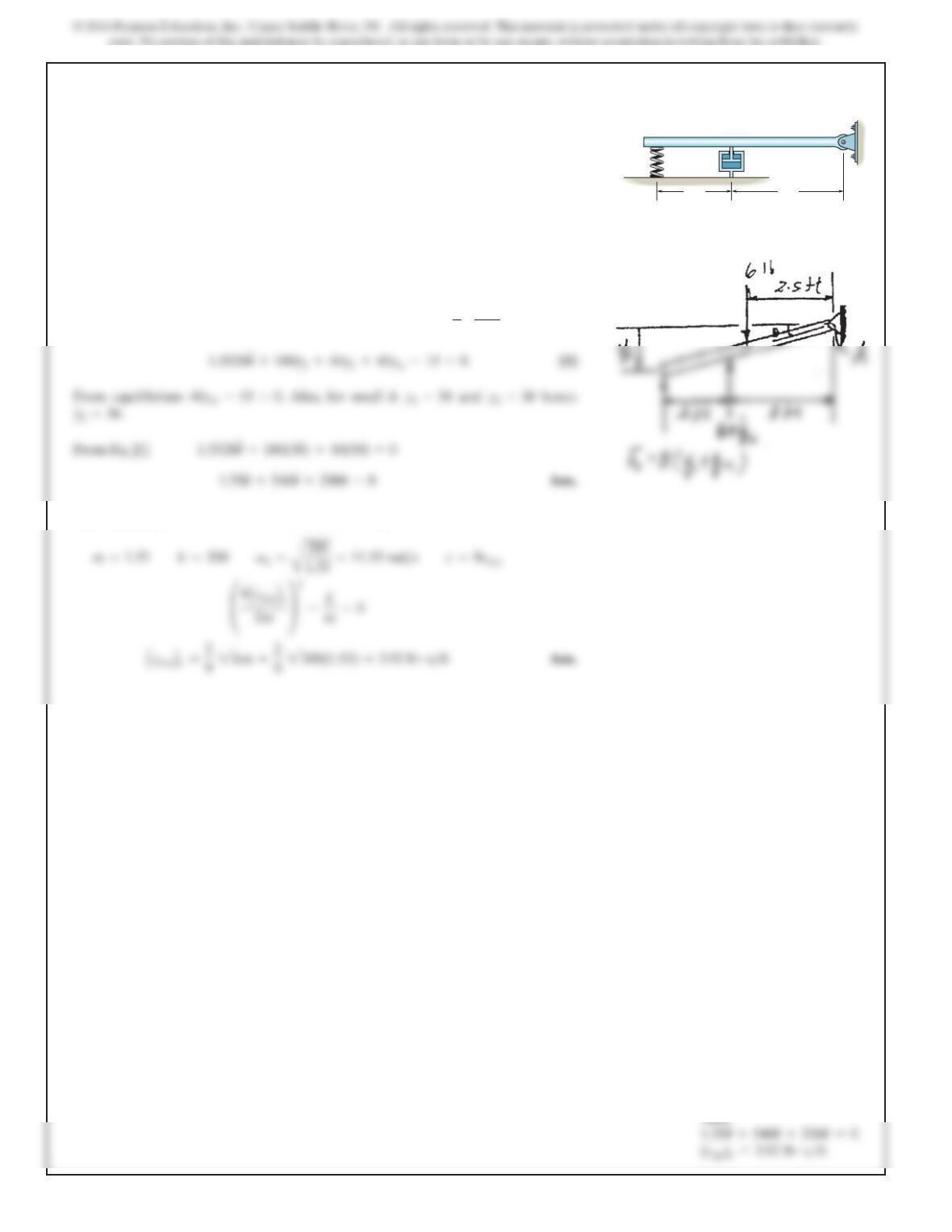
The bar has a weight of 6 lb.If the stiffness of the spring is
and the dashpot has a damping coefficient
determine the differential equation which
describes the motion in terms of the angle of the bar’s
rotation. Also,what should be the damping coefficient of the
dashpot if the bar is to be critically damped?
u
c=60 lb #s>ft,
k=8lb>ft
SOLUTION
a
By comparing the above differential equation to Eq. 22-27
+©MA=IAa; 6(2.5) –(60y
#
2)(3) –8(y1+yst)(5) =c1
3a6
32.2 b(5)2du
$
CA
k
B
c
2ft3ft
Ans:
1263
22–74.
k
c
v0
k
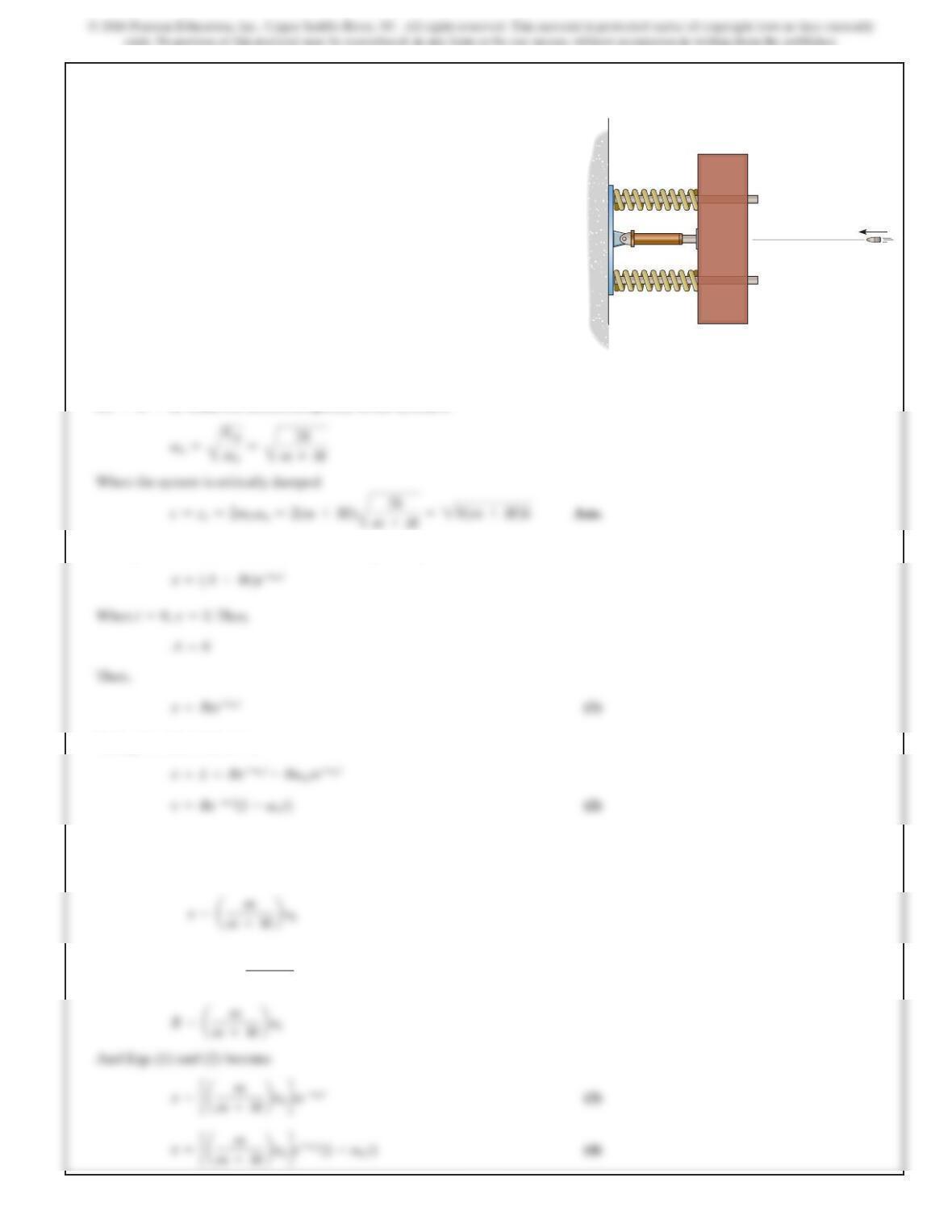
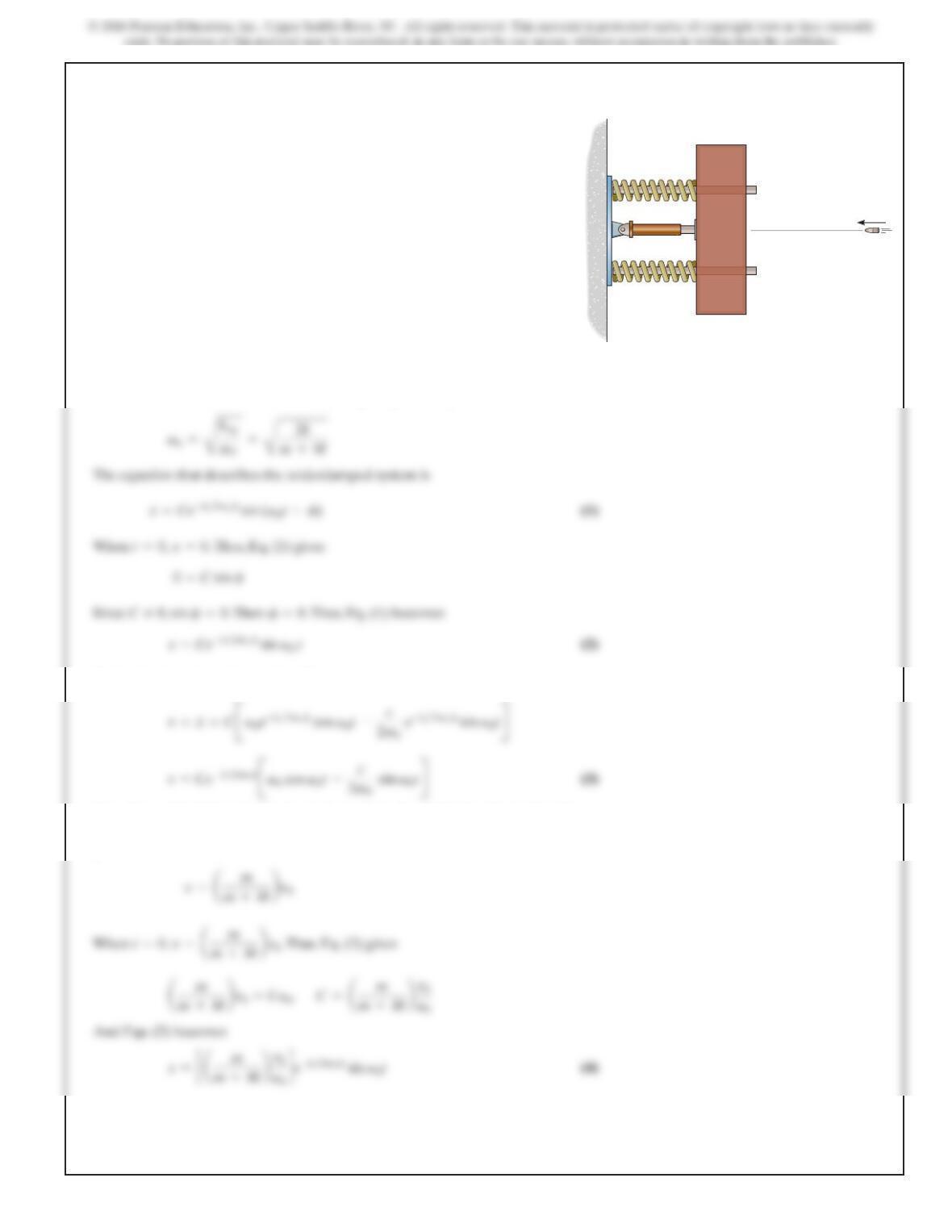
A bullet of mass mhas a velocity of just before it strikes
the target of mass M. If the bullet embeds in the target, and
the vibration is to be critically damped, determine the
dashpot’s critical damping coefficient, and the springs’
maximum compression.The target is free to move along the
two horizontal guides that are “nested” in the springs.
v0
SOLUTION
Since the springs are arranged in parallel, the equivalent stiffness of the single spring
system is .Also, when the bullet becomes embedded in the target,
.Thus, the natural frequency of the system is
The equation that describes the critically dampened system is
Taking the time derivative,
Since linear momentum is conserved along the horizontal during the impact, then
Here, when ,.Thus, Eq. (2) gives
v=am
m+Mbv0
t=0
mv0=(m+M)v
A
;
+
B
mT=m+M
keq =2k
1264
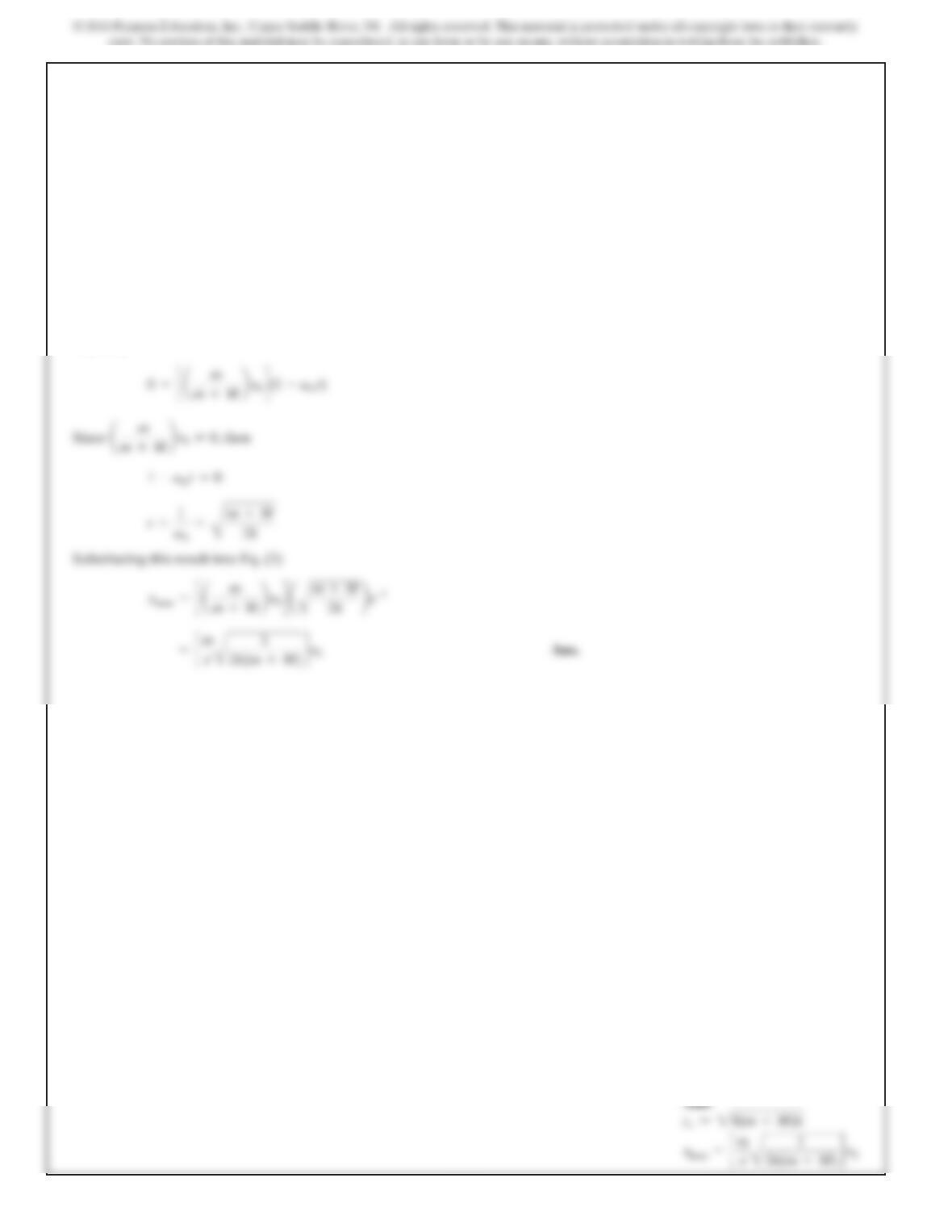
The maximum compression of the spring occurs when the block stops.Thus,
Eq. (4) gives
22–74. Continued
1265
22–75.
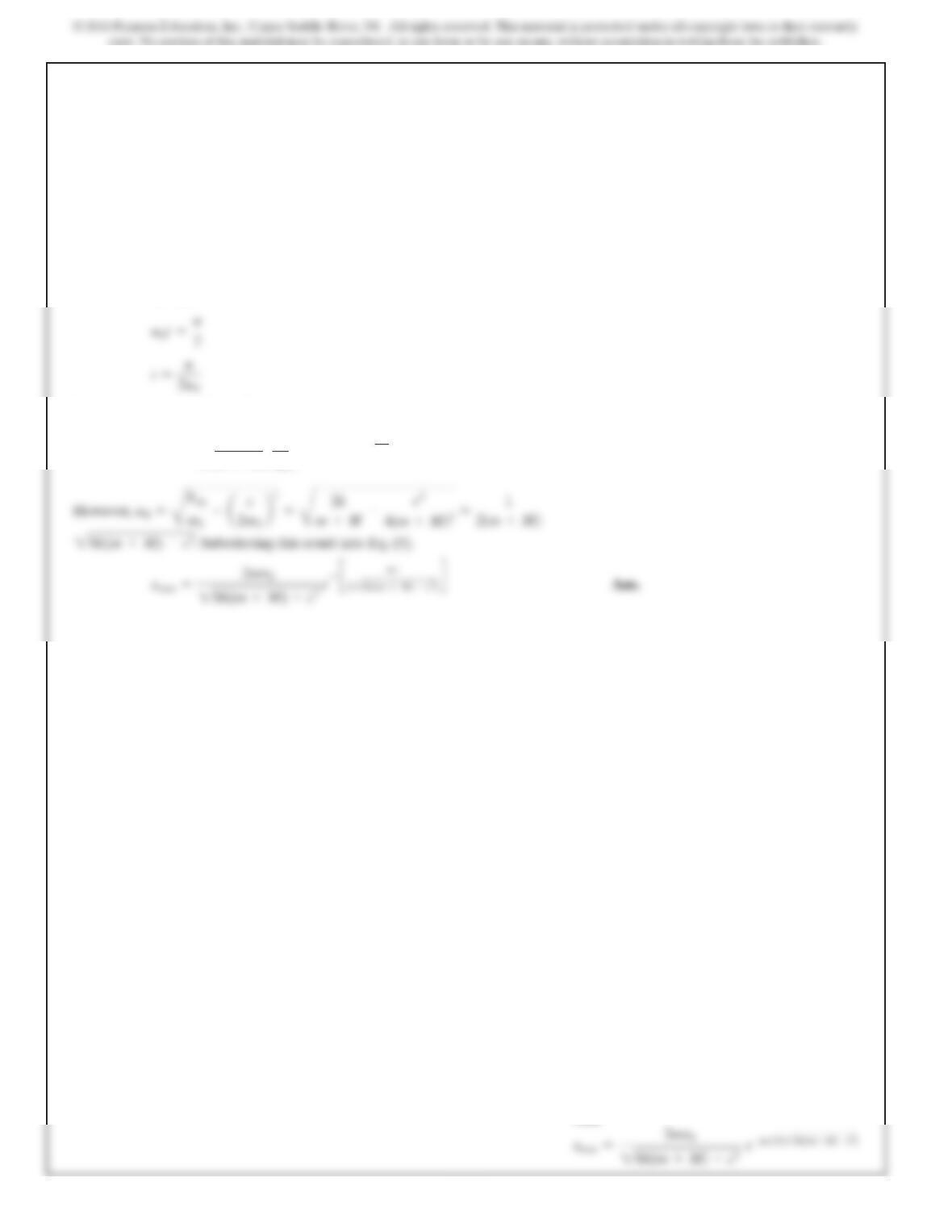
A bullet of mass mhas a velocity just before it strikes the
tar
get of mass M.If the bullet embeds in the target, and the
da
shpot’s damping coefficient is , determine
the
springs’ maximum compression. The target is free to
mo
ve along the two horizontal guides that are“nested” in
the
springs.
06cVcc
v
0
SOLUTION
S
ince the springs are arranged in parallel, the equivalent stiffness of the single spring
s
ystem is .Also, when the bullet becomes embedded in the target,
.Thus, the natural circular frequency of the system
T
aking the time derivative of Eq. (2),
S
ince linear momentum is conserved along the horizontal during the impact, then
mv0=(m+M)v
A
;
+
B
m
T=m+M
keq =2k
k
c
v0
k
1266
The maximum compression of the spring occurs when
Substituting this result into Eq. (4),
B
p
2vd
A
–[c>2(m + M)]
xmax =ca m
m+Mbv0
vdde
sin vdt=1
22–75. Continued
Ans:
1267
*22–76.
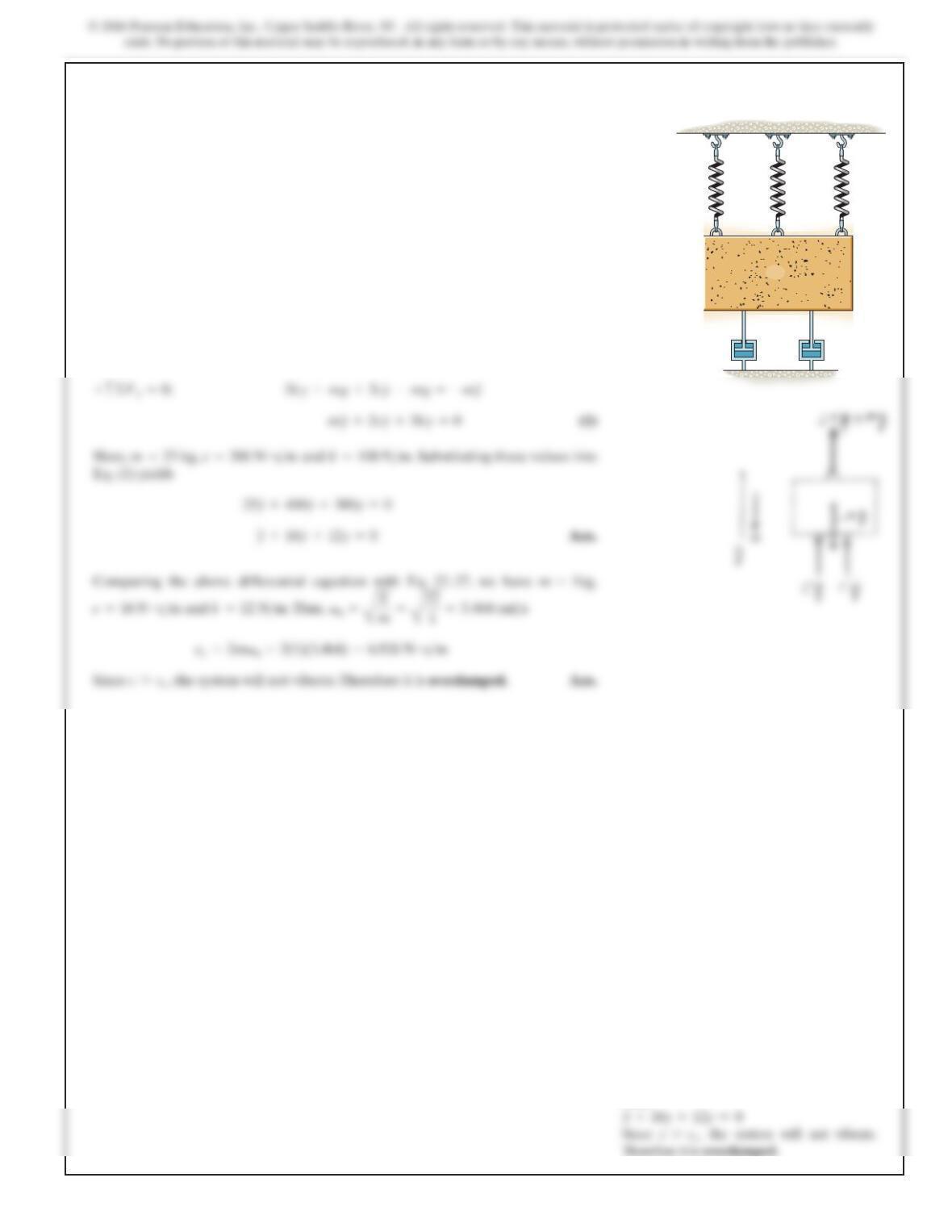
Determine the differential equation of motion for the
damped vibratory system shown. What type of motion
occurs? Take ,,.m=25 kgc=200 N #s>mk=100 N>m
SOLUTION
Free-body Diagram: When the block is being displaced by an amount yvertically
downward, the restoring force is developed by the three springs attached the block.
Equation of Motion:
kk k
cc
m
Ans:
1268
22–77.
SOLUTION
For the block,
Using Table 22–1,
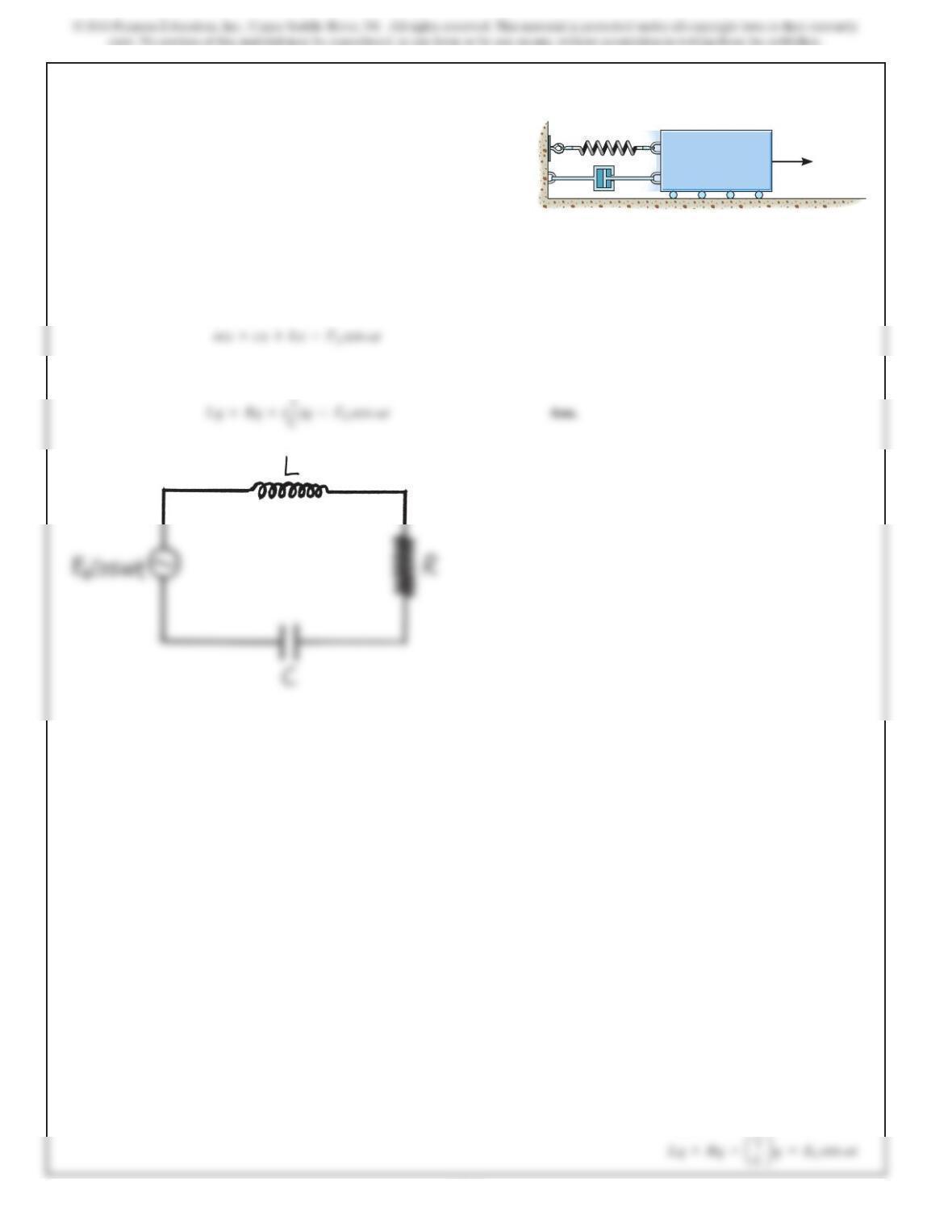
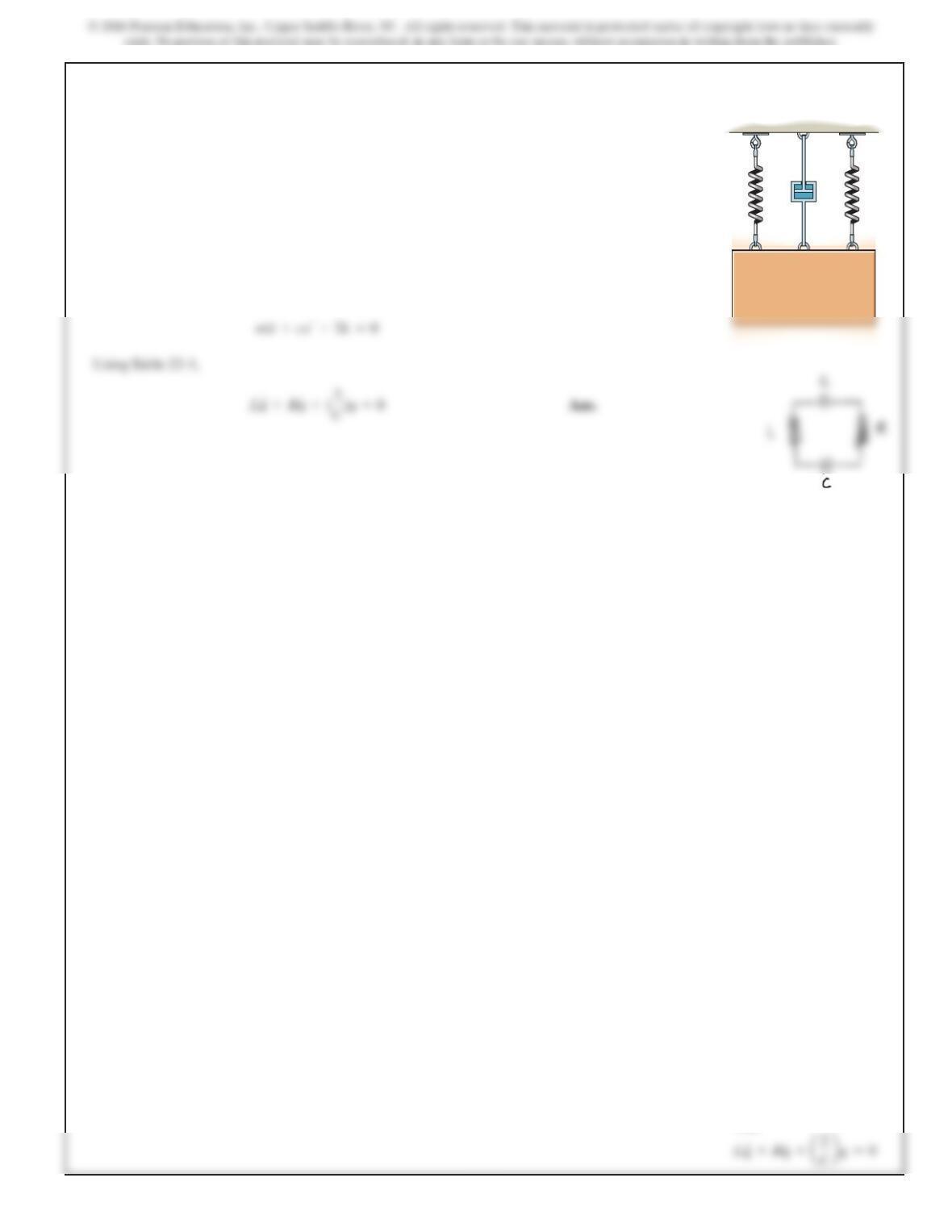
Draw the electrical circuit that is equivalent to the
mechanical system shown. Determine the differential
equation which describes the charge qin the circuit.
k
m
FF0cos vt
c
Ans:
1269
22–78.
SOLUTION
F
or the block,
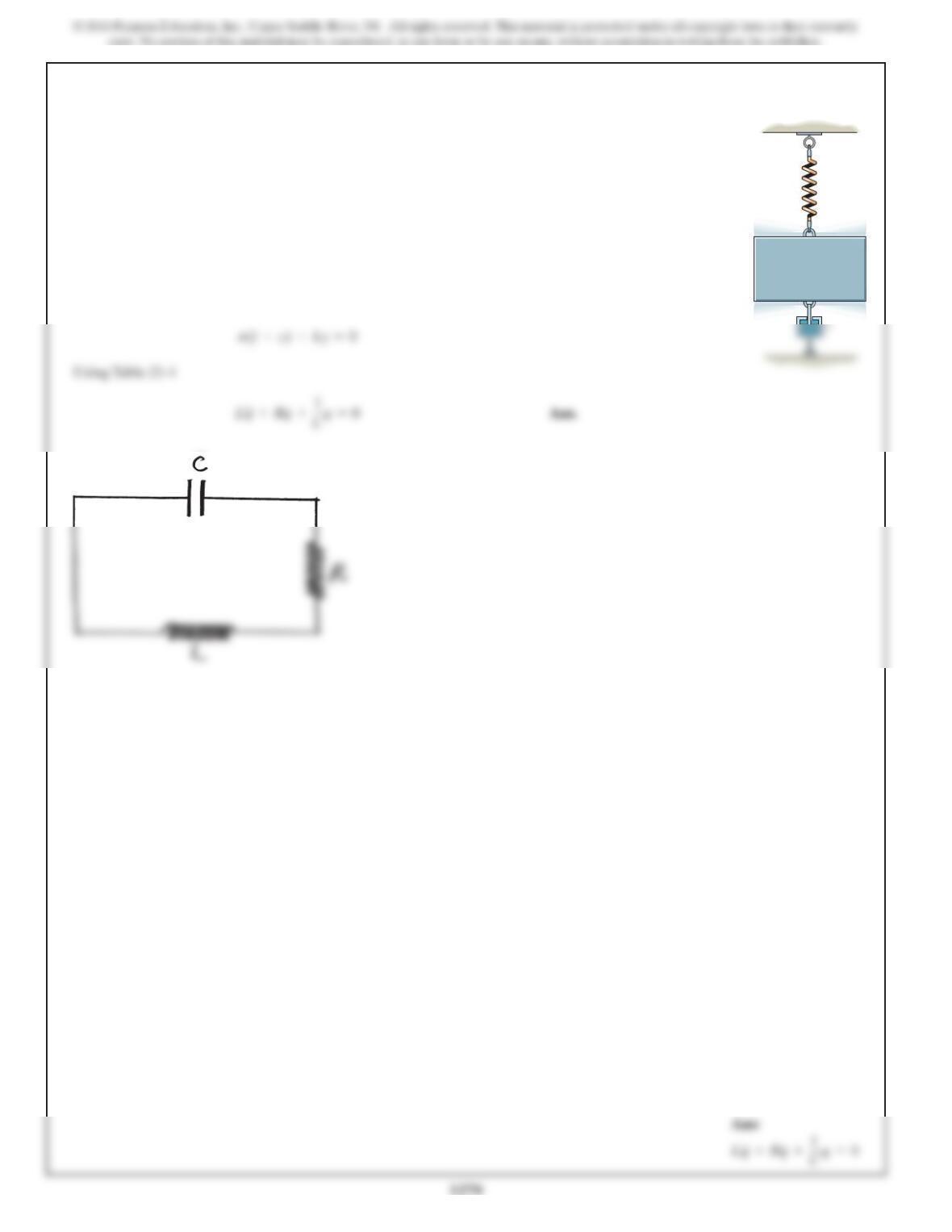
Draw the electrical circuit that is equivalent to the
mechanical system shown. What is the differential equation
which describes the charge qin the circuit?
kk
c
m
Ans:
22–79.
Draw the electrical circuit that is equivalent to the
mechanical system shown. Determine the differential
equation which describes the charge qin the circuit.
SOLUTION
For the block
k
m