1109
21–1.
SOLUTION
Show that the sum of the moments of inertia of a body,
, is independent of the orientation of the
x,y,zaxes and thus depends only on the location of its
Ixx +Iyy +Izz
origin.
1110
21–2.
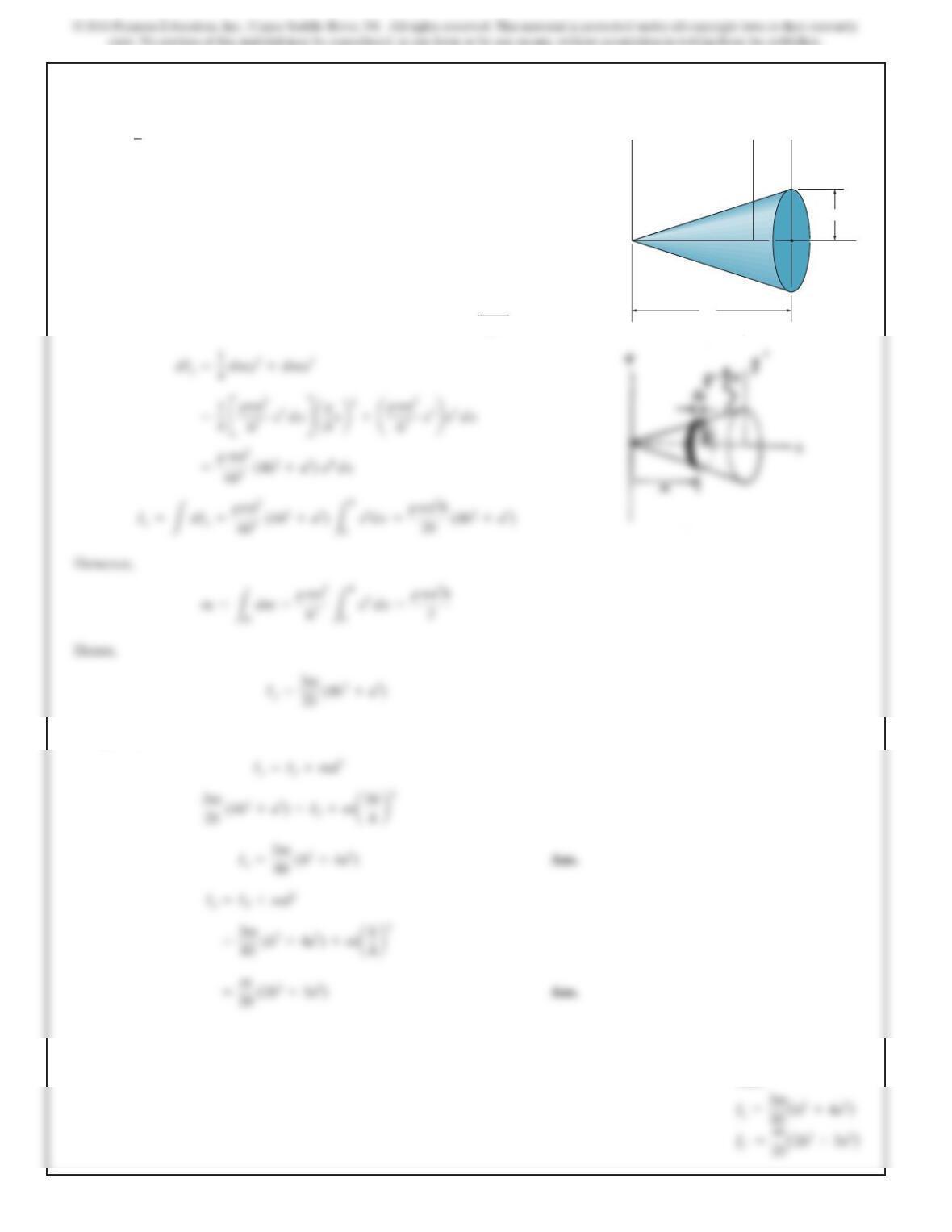
Determine the moment of inertia of the cone with respect to
avertical axis passing through the cone’s center of mass.
What is the moment of inertia about a parallel axis that
passes through the diameter of the base of the cone? The
cone has a mass m.
y¿
y
SOLUTION
The mass of the differential element is .
Using the parallel axis theorem:
dm =rdV =r(py2)dx =rpa2
h2x2dx h
x
y
a
yy¿
–
Ans:
1111
21–3.
SOLUTION
. si tnemele laitnereffid eht fo ssam ehT
dIy=1
2dmy2+dmx2
dm =rdV =r
A
py2
B
dx =rpxdx
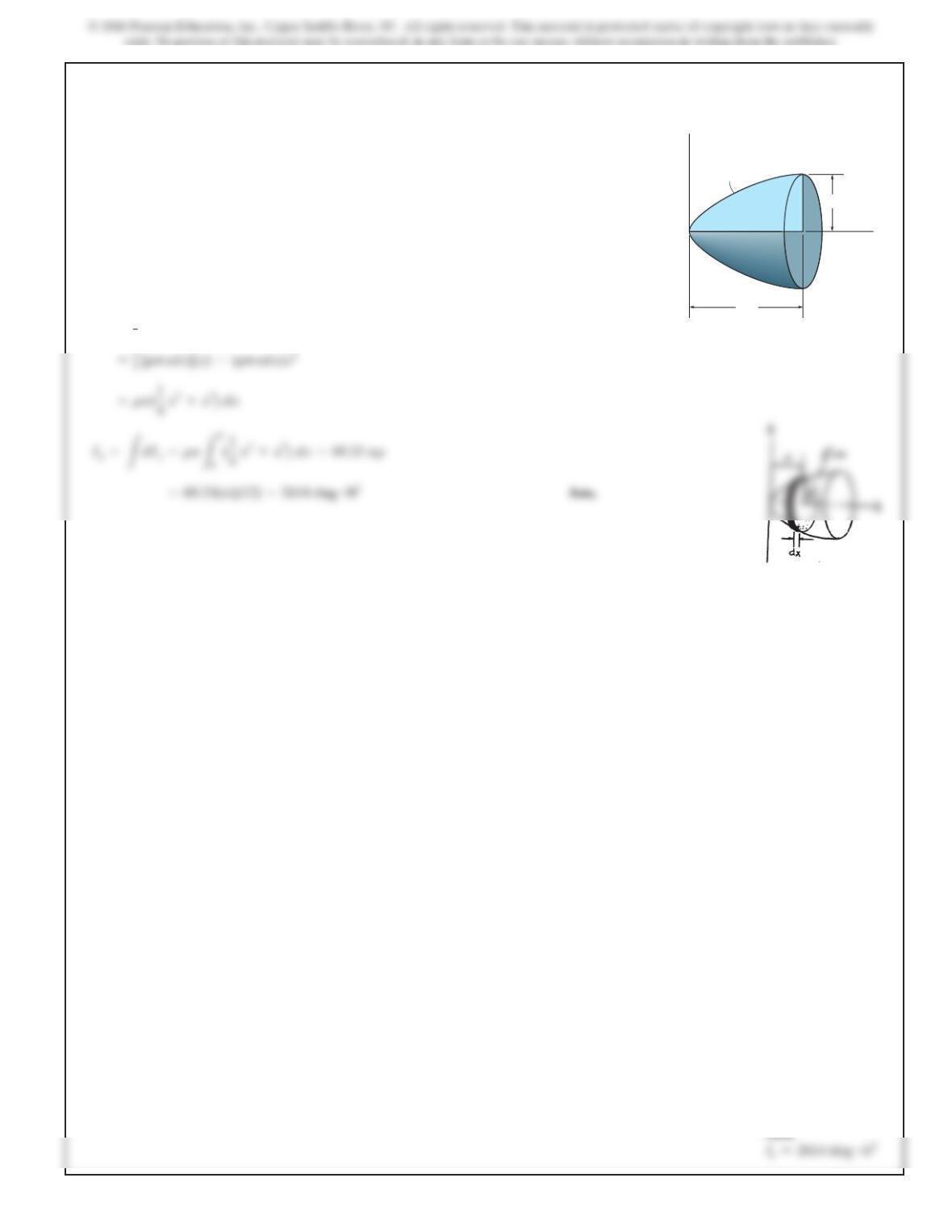
Determine moment of inertia of the solid formed by
revolving the shaded area around the xaxis. The density of
the material is r=12 slug/ft3.
Iy
4ft
2ft
y
x
y2=x
1112
*21–4.
SOLUTION
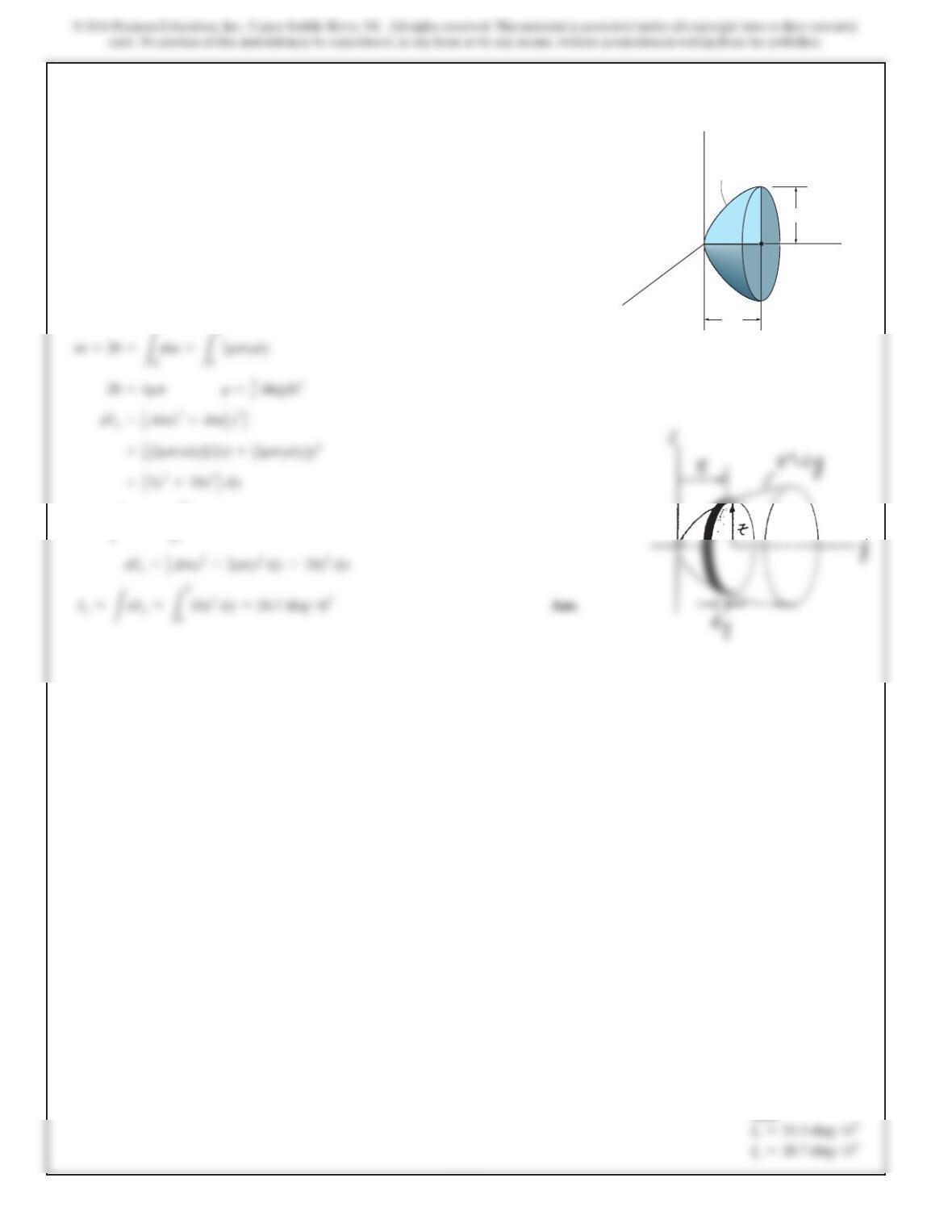
The mass of the differential element is .
Ans.
Ix=LdIx=L2
A
5y2+10y3
B
dy =53.3 slug #ft2
dm =rdV =r
A
pz2
B
dy =2rpydy
Determine the moments of inertia and of the paraboloid
of revolution. The mass of the paraboloid is 20 slug.
Iy
Ix
2ft
2ft
z
x
y
z22y
Ans:
1113
21–5.
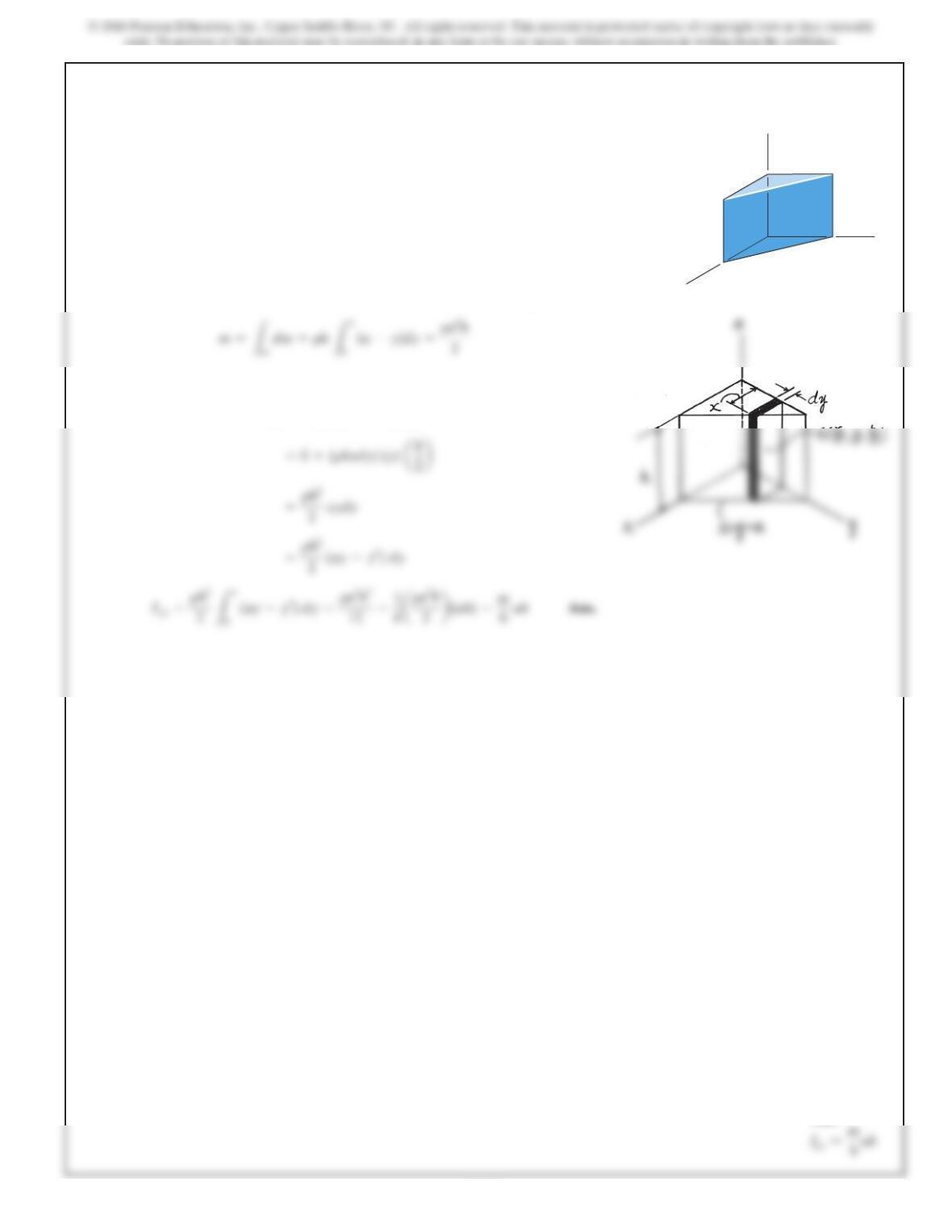
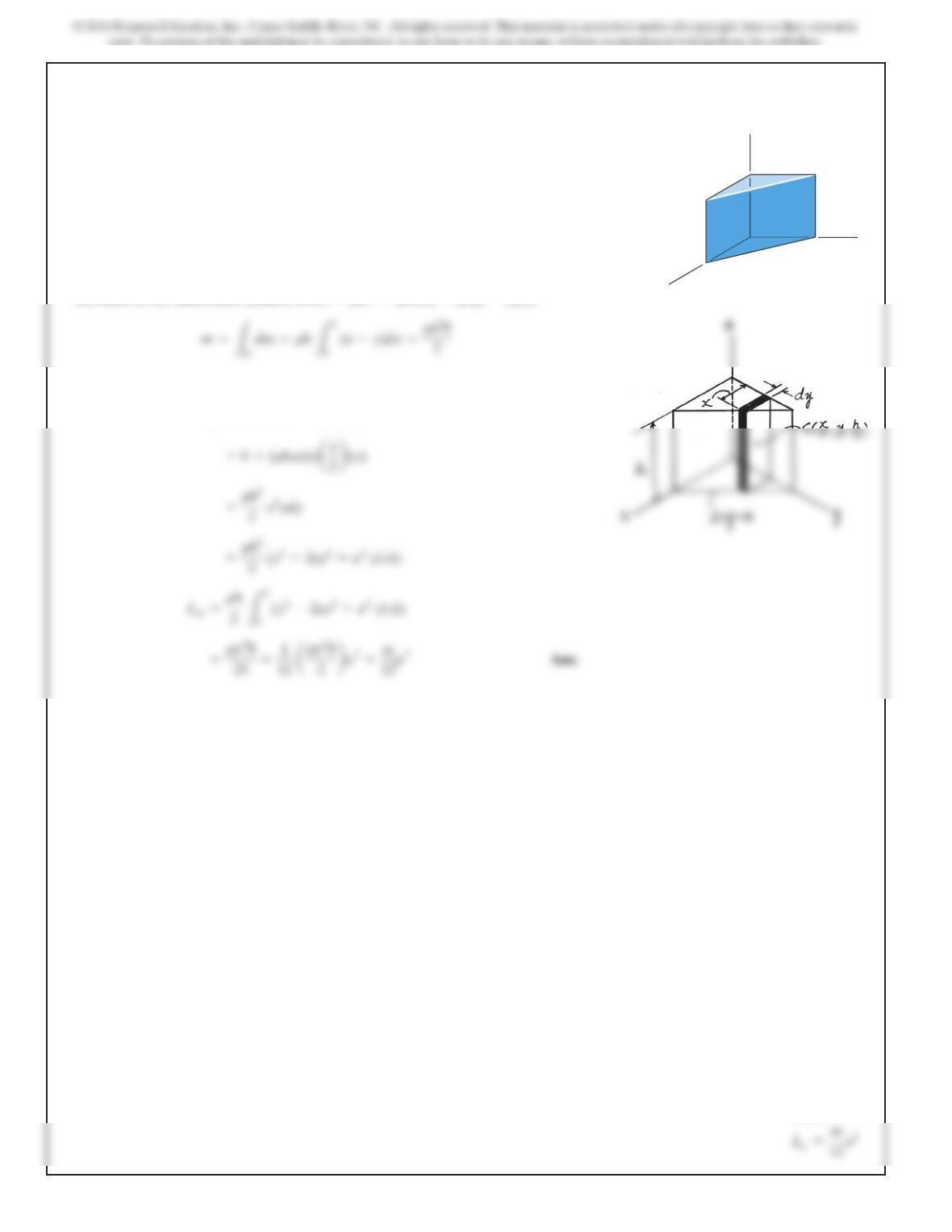
Determine by direct integration the product of inertia for
the homogeneous prism. The density of the material is .
Express the result in terms of the total mass mof the prism.
r
I
yz
SOLUTION
The mass of the differential element is .
Using the parallel axis theorem:
dIyz =(dIy¿z¿)G+dmyGzG
dm =rdV =rhxdy =rh(a–y)dy
a
x
y
z
a
h
Ans:
1114
21–6.
SOLUTION
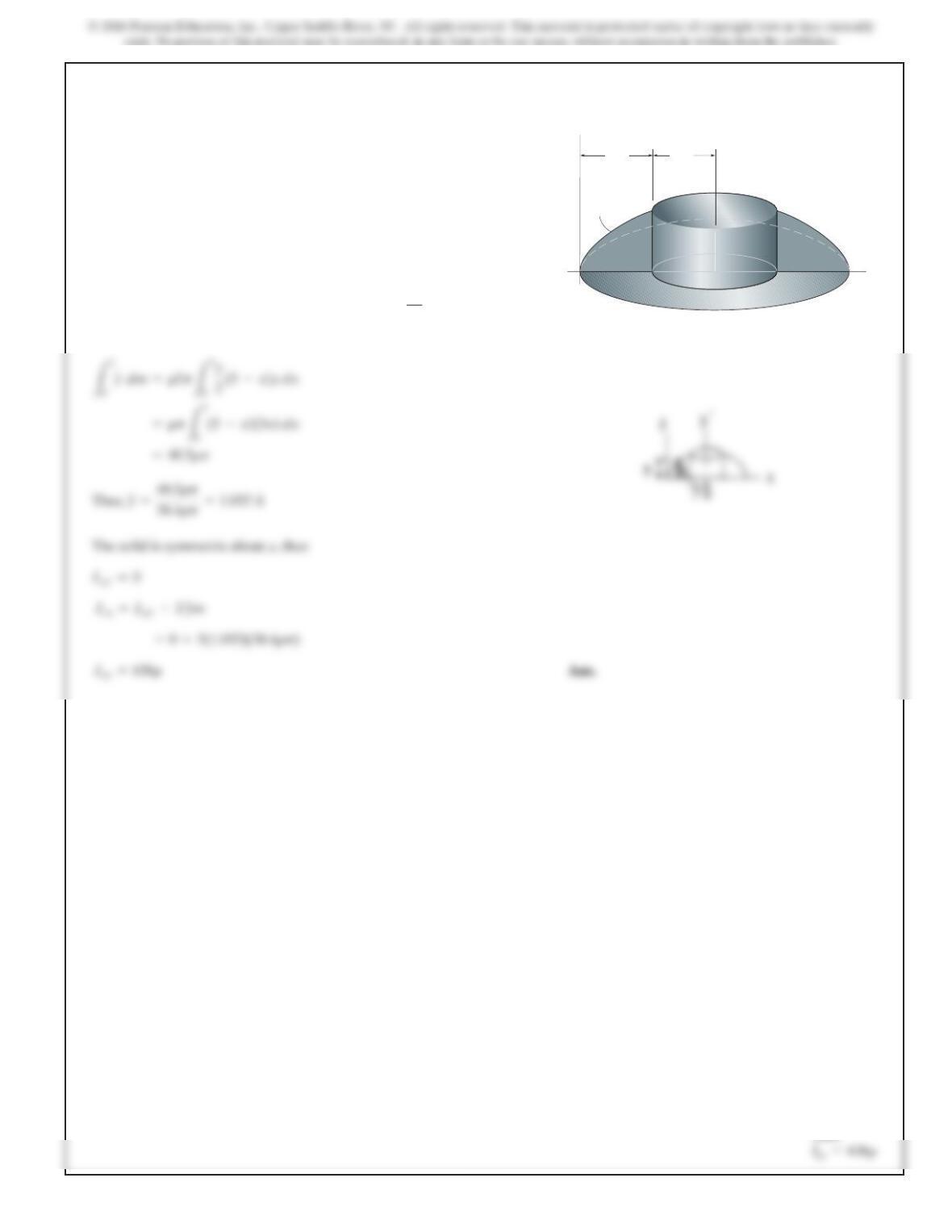
The mass of the differential element is .
Using the parallel axis theorem:
dIxy =(dIx¿y¿)G+dmxGyG
dm =rdV =rhxdy =rh(a–y)dy
Determine by direct integration the product of inertia for
the homogeneous prism. The density of the material is .
Express the result in terms of the total mass mof the prism.
r
Ixy
a
x
y
z
a
h
Ans:
1115
21–7.
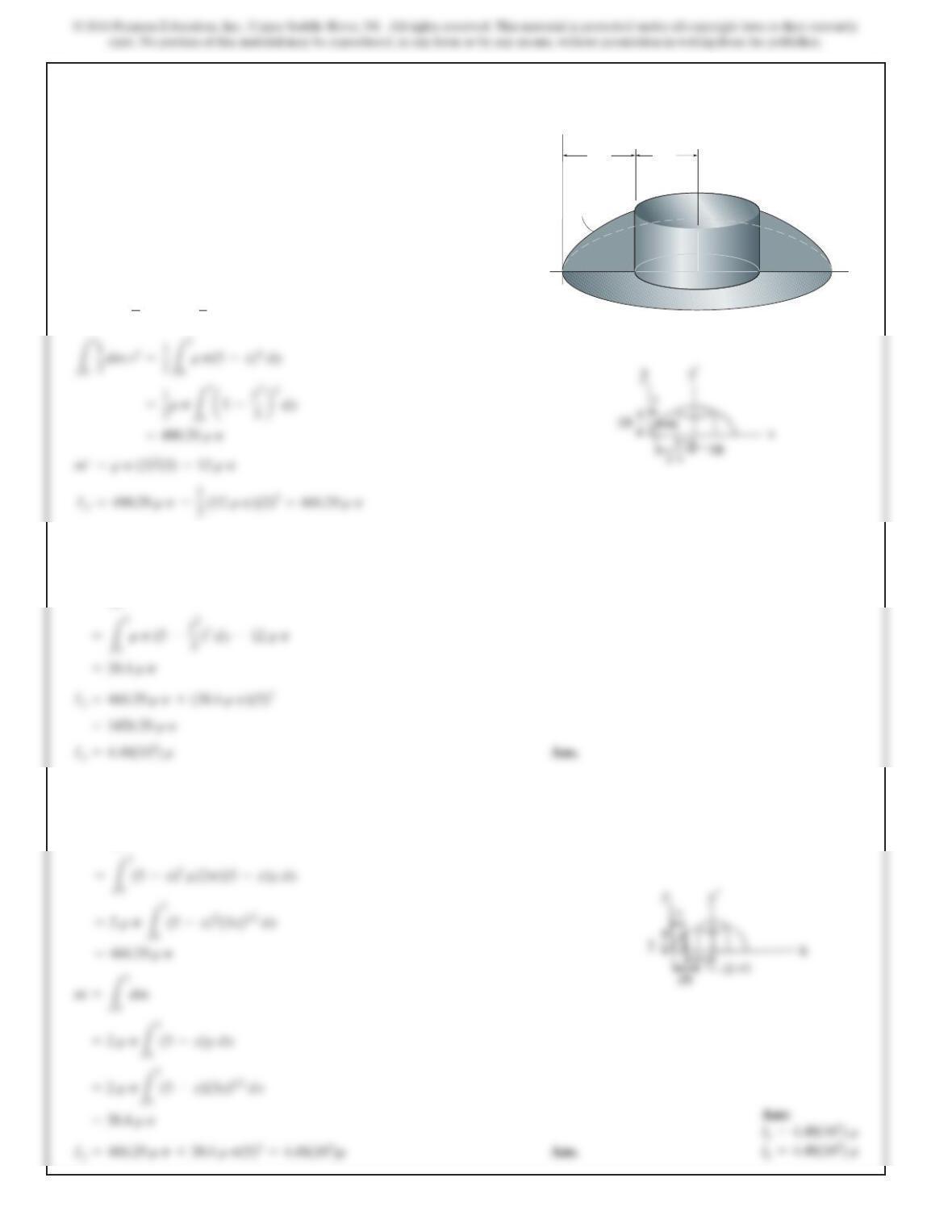
Determine the product of inertia of the object formed
by revolving the shaded area about the line
Express the result in terms of the density of the material, r.
x=5 ft.
Ixy
SOLUTION
L3
0
dm =r2pL3
0
(5 –x)ydx=r2pL3
0
(5 –x)23xdx =38.4rp
3ft2ft
y
x
y
2
3x
Ans:
1116
*21–8.
SOLUTION
Mass of body;
Also,
Iy¿=L3
0
r2dm
m=L3
0
rp(5 –x)2dy –m¿
Iy¿=L3
0
1
2dm r2–1
2(m¿)(2)2
Determine the moment of inertia of the object formed by
revolving the shaded area about the line Express
the result in terms of the density of the material, r.
x=5ft.
Iy
3ft2ft
y
x
y
2
3x
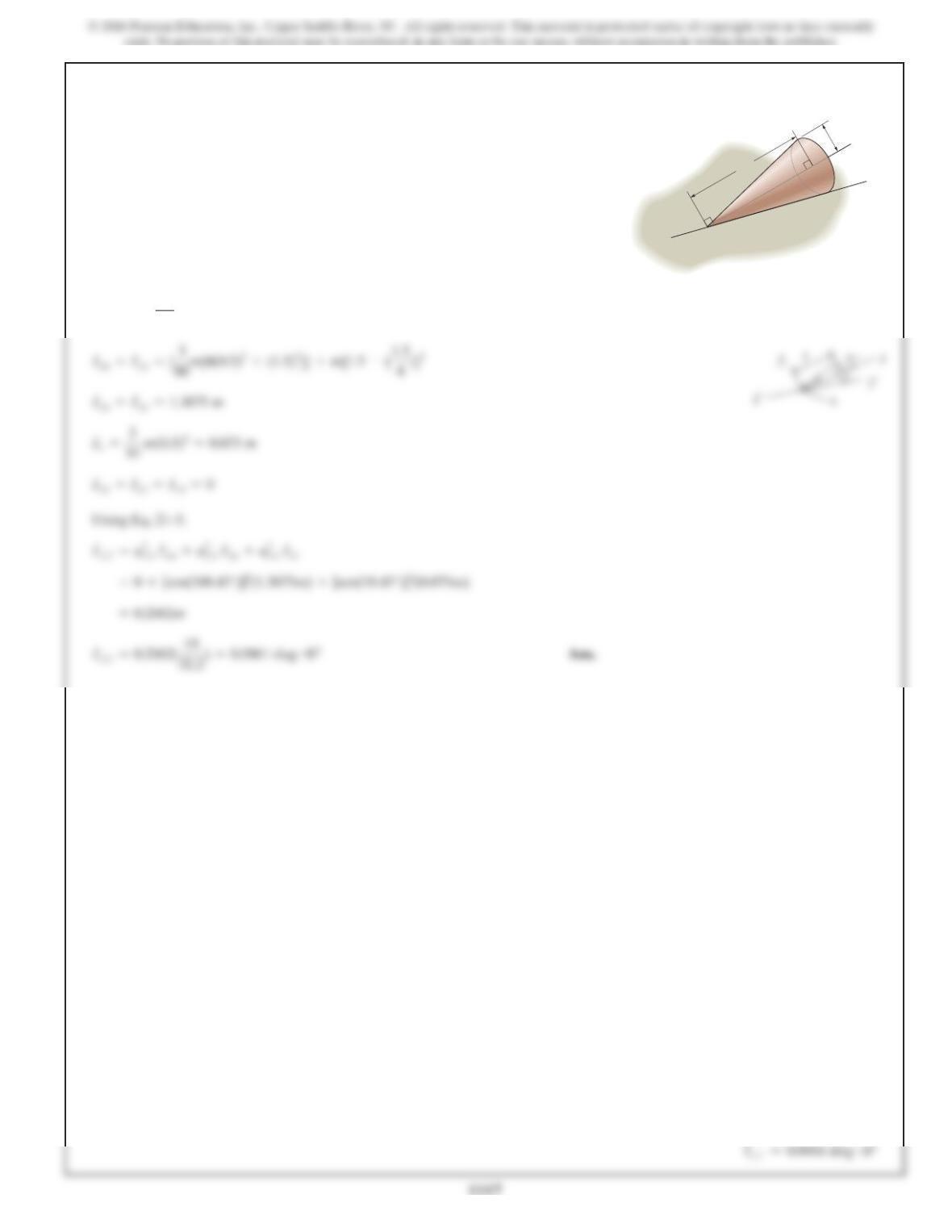
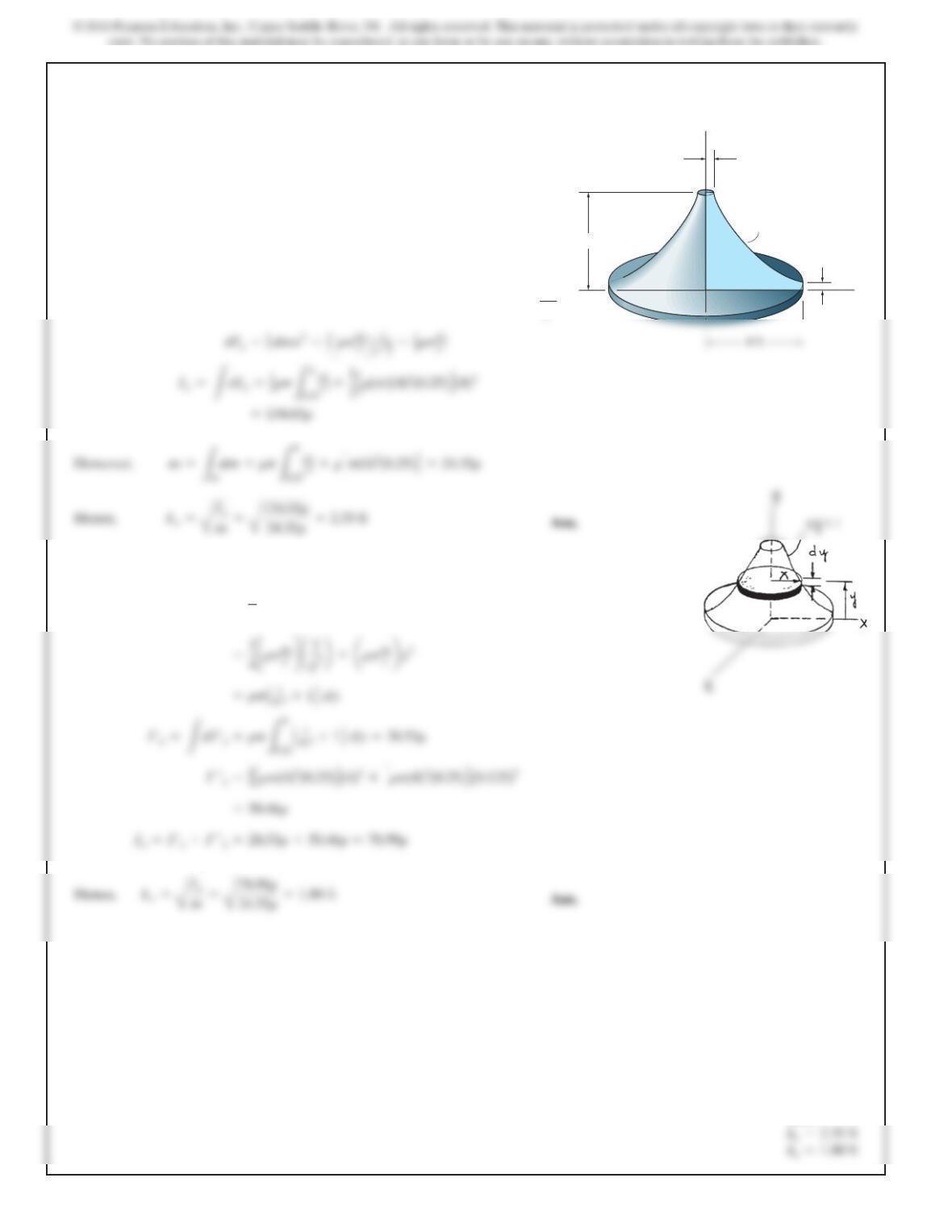
21–9.
Determine the moment of inertia of the cone about the
axis.The weight of the cone is 15 lb, the height is
and the radius is r=0.5 ft.h=1.5 ft,
z¿
SOLUTION
u=tan–1(0.5
1.5)=18.43°
z¿
z¿
z
r
h
Ans:
1118
21–10.
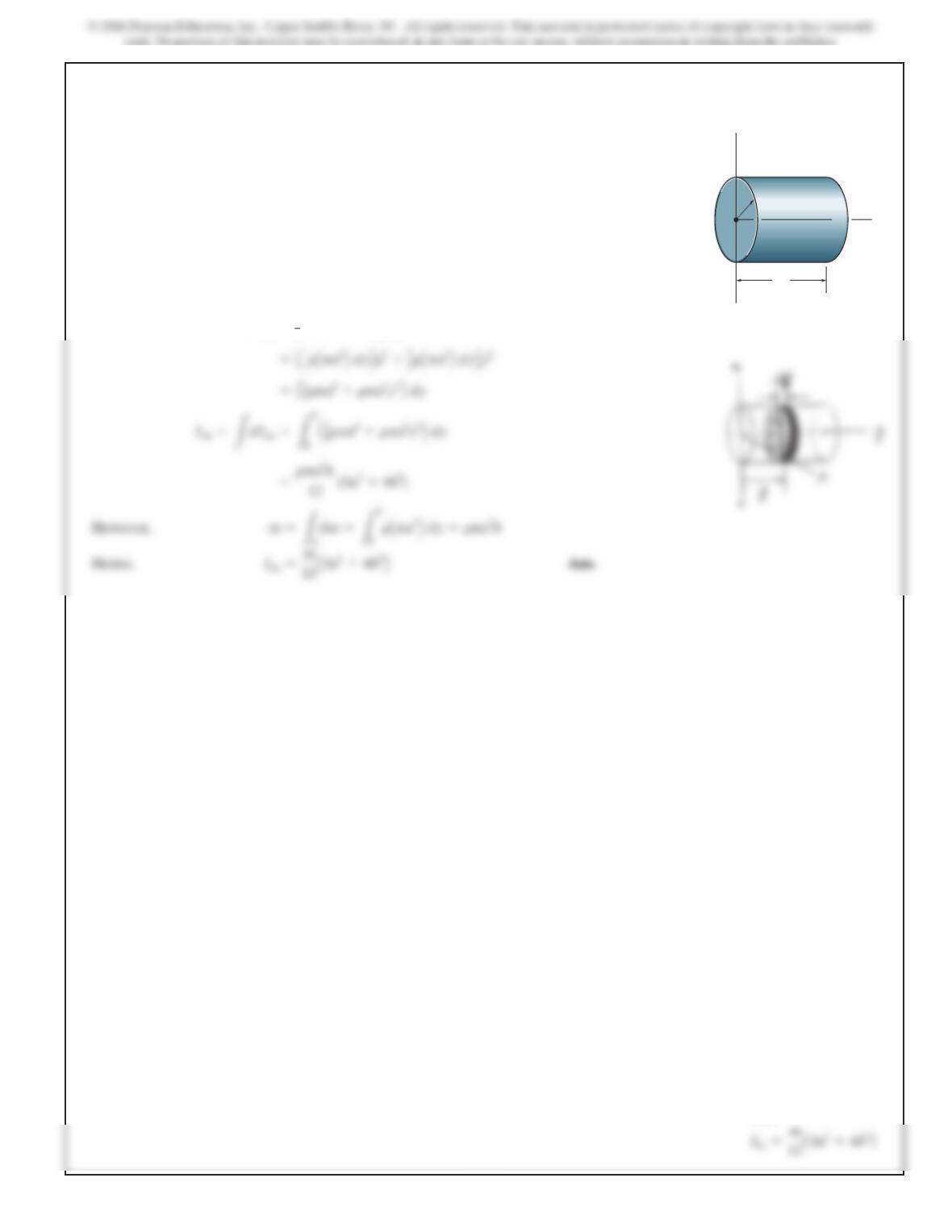
Determine the radii of gyration and for the solid
formed by revolving the shaded area about the yaxis.The
density of the material is r.
ky
kx
SOLUTION
For :The mass of the differential element is .
For :
dI¿
x=1
4dmx2+dmy2
0.25 ft 6y…4ftkx
dm =rdV =r(px2)dy =rpdy
y2
ky
4ft
0.25 ft
0.25 ft
y
x
xy 1
Ans:
1119
21–11.
Determine the moment of inertia of the cylinder with
respect to the a–a axis of the cylinder.The cylinder has a
mass m.
SOLUTION
The mass of the differential element is .
dIaa =1
4dma2+dm
A
y2
B
dm =rdV =r
A
pa2
B
dy
a
a
a
h
Ans:
*21–12.
SOLUTION
Horizontial plate:
Vertical plates:
Using Eq. 21–5,
lxx¿=0.707,
lxy¿=0.707,
lxz¿=0
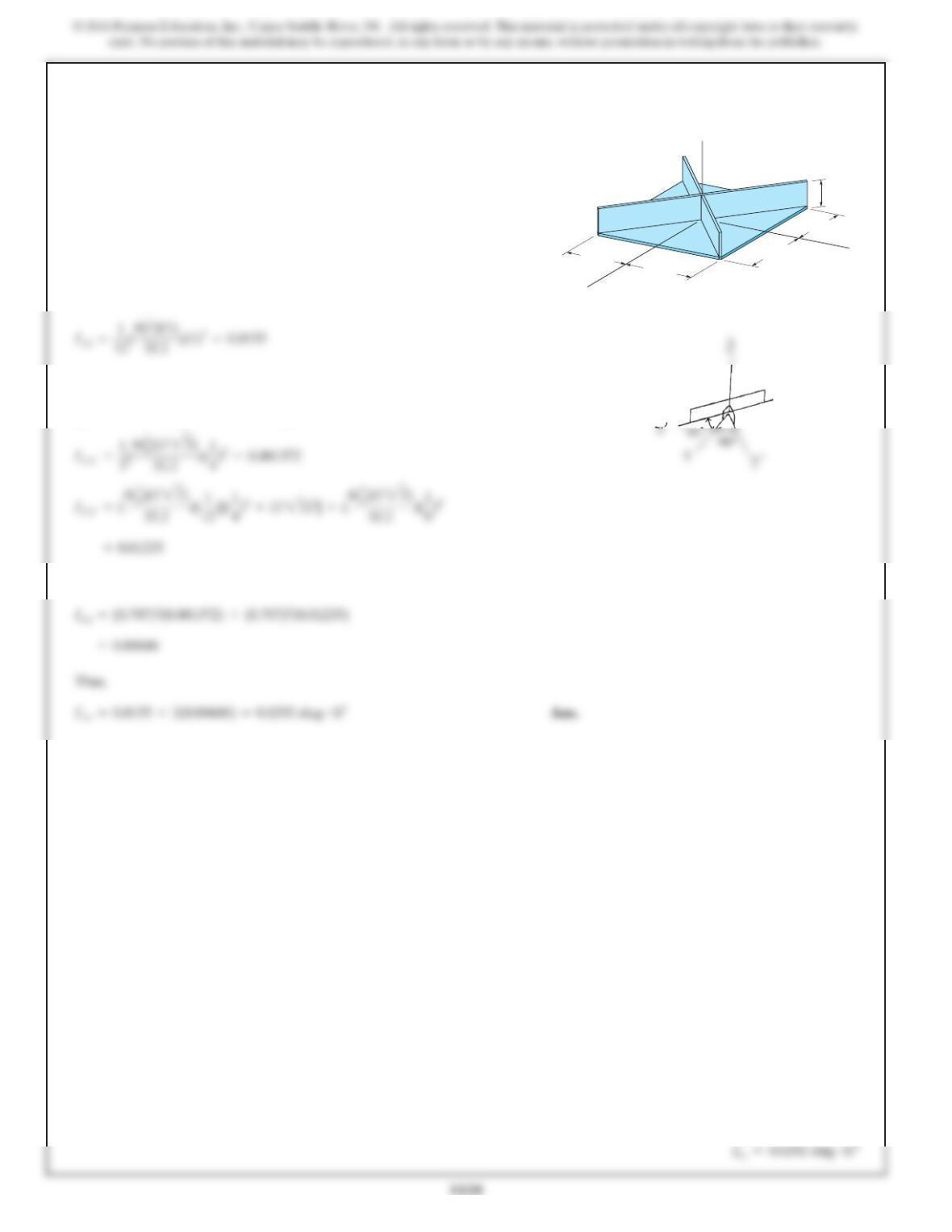
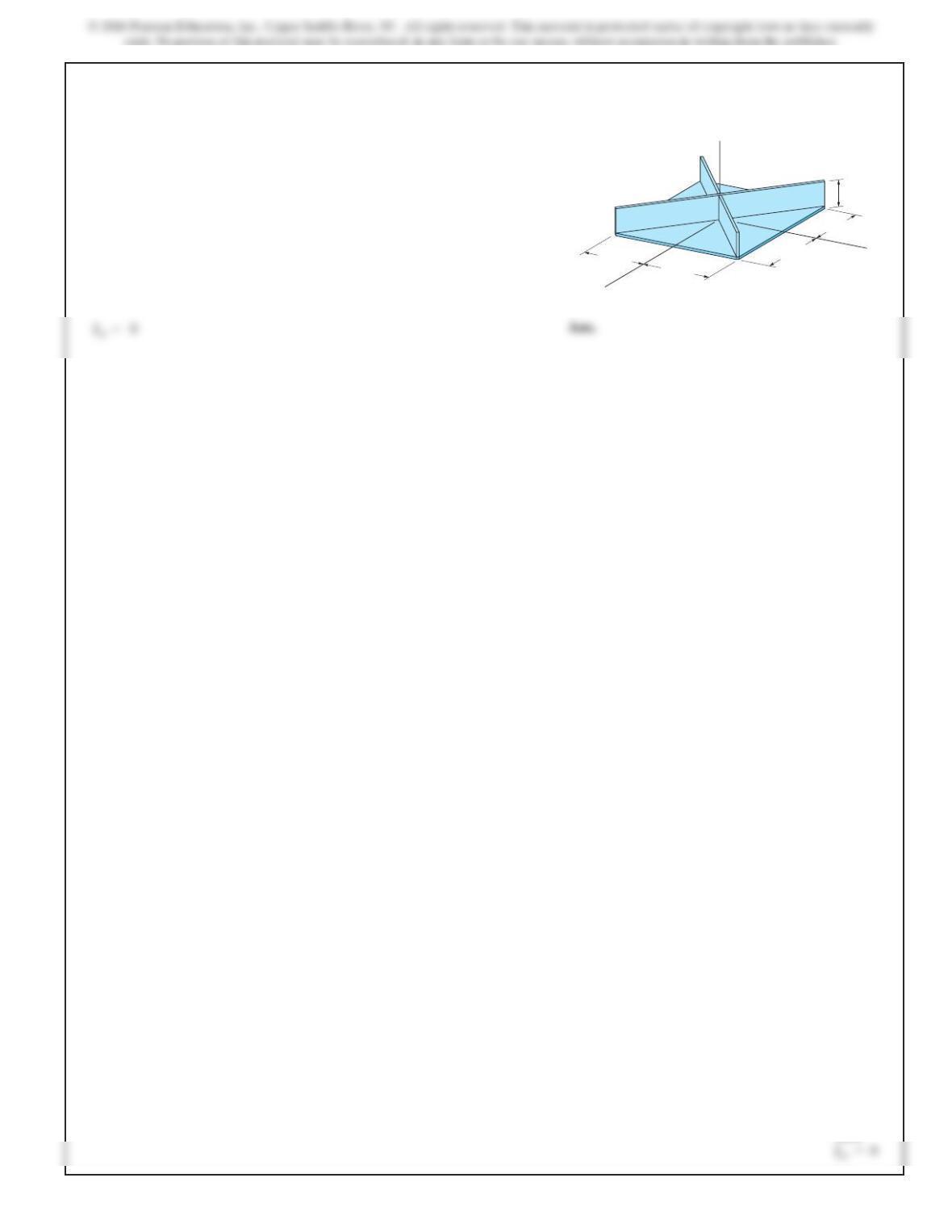
Determine the moment of inertia of the composite plate
assembly.The plates have a specific weight of 6lb>ft2.
Ix
0.5 ft
0.5 ft
0.5 ft
0.5 ft
z
y
x
0.25 ft
Ans:
1121
21–13.
SOLUTION
Due to symmetry,
0.5 ft
0.5 ft
0.5 ft
0.5 ft
z
y
x
0.25 ft
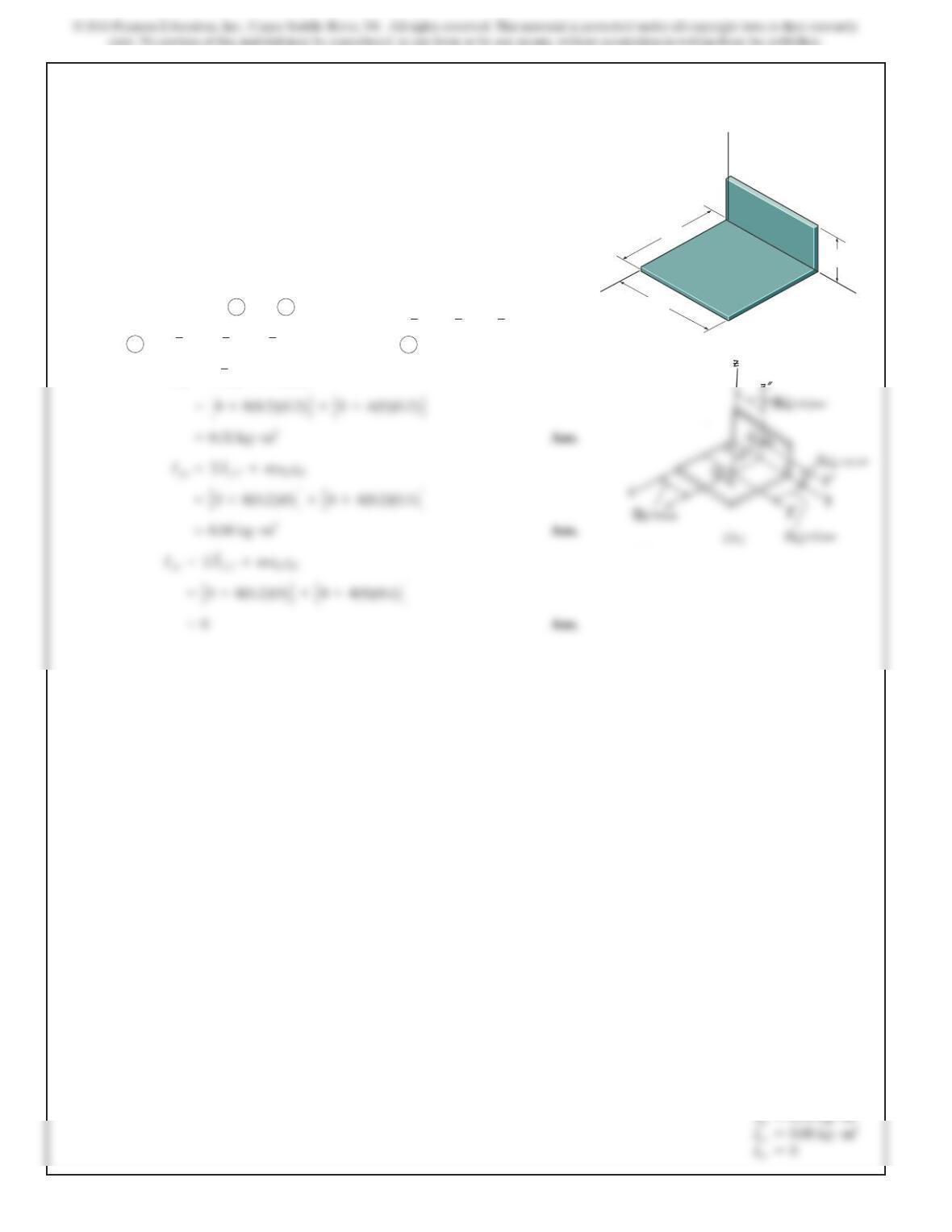
Determine the product of inertia of the composite
plate assembly. The plates have a weight of 6 lb>ft
2.
Iyz
Ans:
1122
21–14.
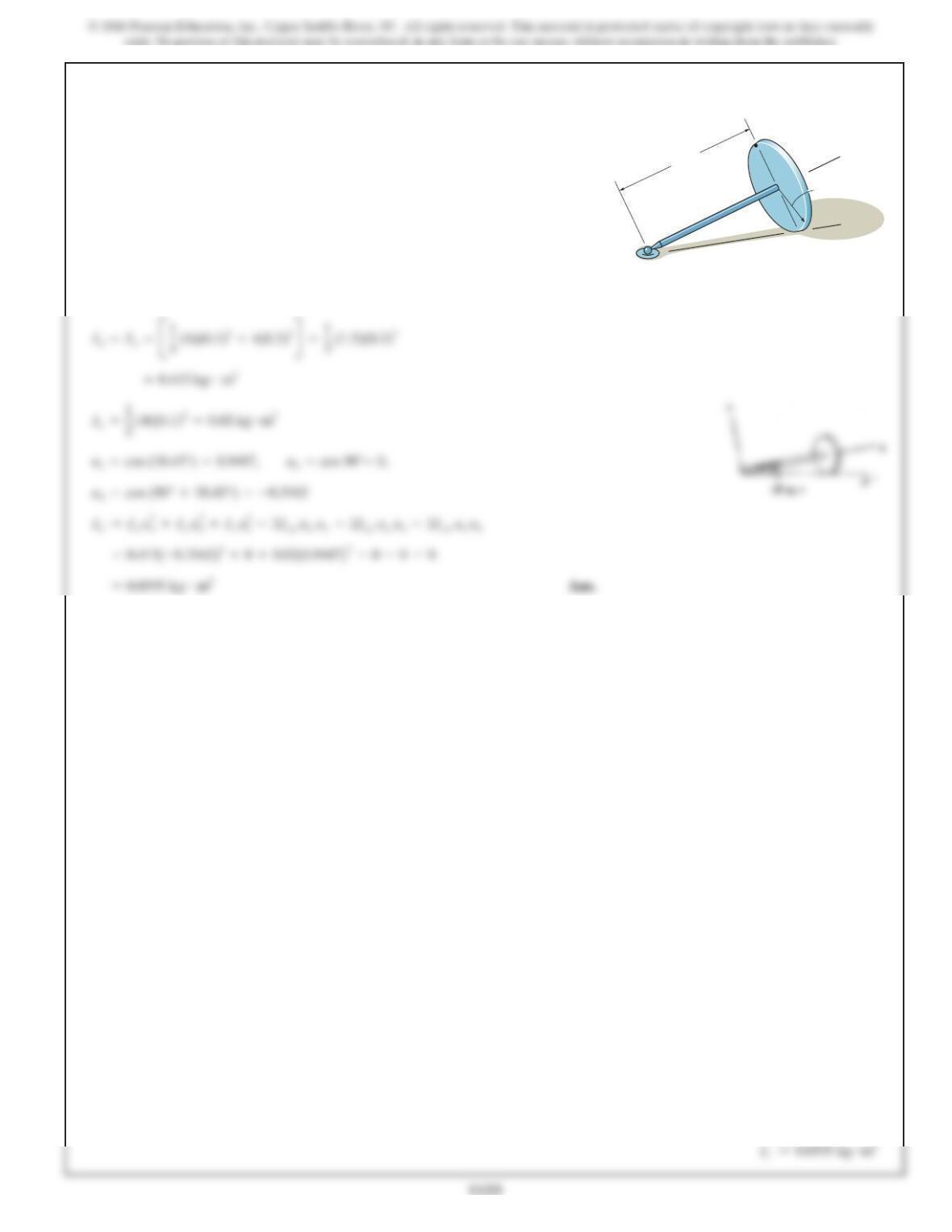
Determine the products of inertia ,,and ,of the
thin plate.The material has a density per unit area of
.50 kg>m2
Ixz
Iyz
Ixy
SOLUTION
The masses of segments 1 and 2 shown in Fig. aare
and . Due to symmetry for
segment 1 and for segment 2 .
Ixy =©Ix¿y¿+mxGyG
Ix–y–=Iy–z–=Ix–z–=0
Ix¿y¿=Iy¿z¿=Ix¿z¿=0m2=50(0.4)(0.2) =4kg
m1=50(0.4)(0.4) =8kg
200 mm
400 mm
400 mm
z
y
x
Ans:
#
2
21–15.
SOLUTION
Due to symmetry
Ixy =Iyz +Izx =0
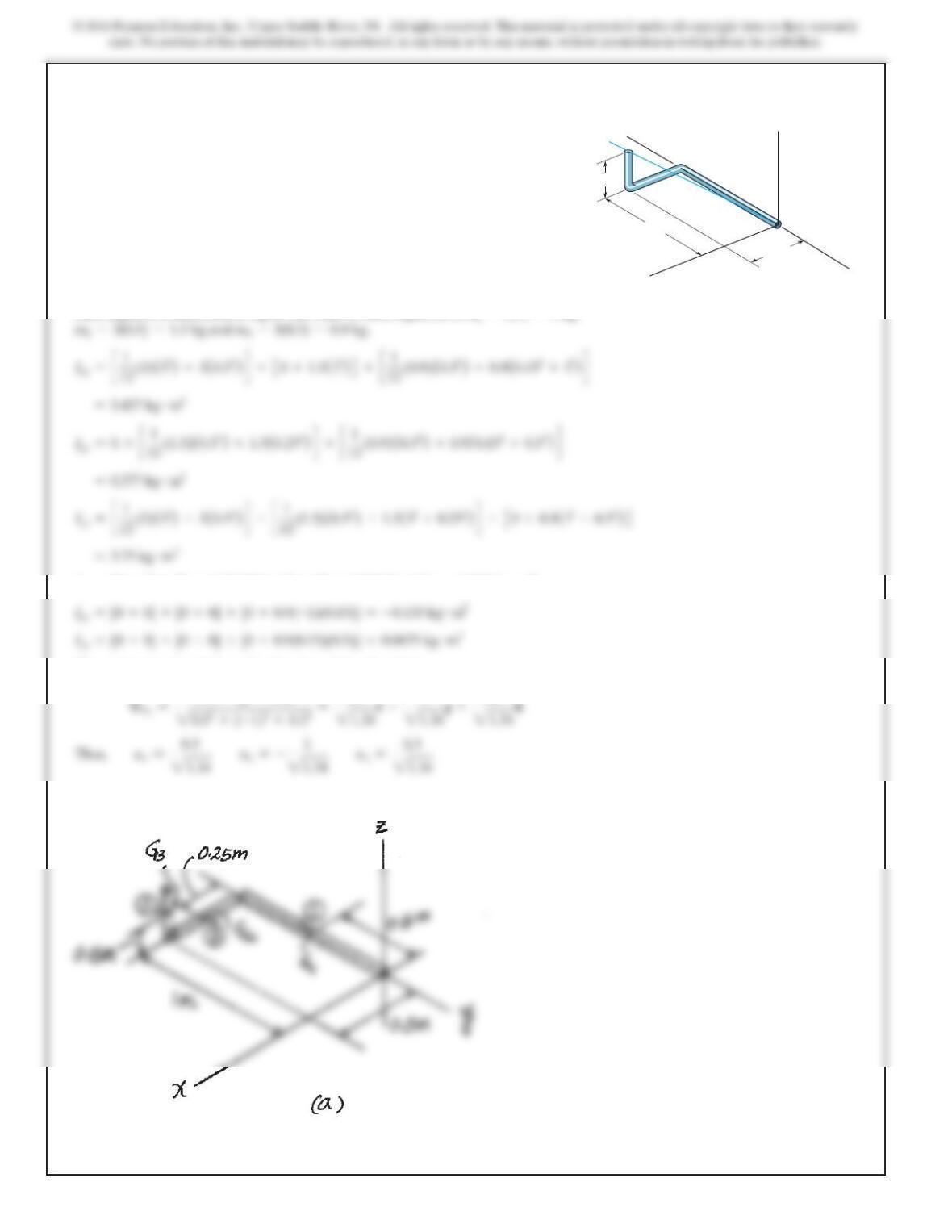
Determine the moment of inertia of both the 1.5-kg rod
and 4-kg disk about the axis.z¿
300 mm z
z’
100 mm
Ans:
1124
*21–16.
The bent rod has a mass of
3 kg>m
. Determine the moment
of inertia of the rod about the O–a axis.
SOLUTION
The bent rod is subdivided into three segments and the location of center of mass for
each segment is indicated in Fig. a. The mass of each segments is
m1=3(1) =3 kg
,
m2=3(0.5) =1.5 kg
m3=3(0.3) =0.9 kg
Ixy =[0 +0] +[0 +1.5(0.25)(–1)] +[0 +0.9(0.5)(–1)] =–0.825 kg
#
m
2
The unit vector that denes the direction of the
Oa
axis is
0.5i–1j+0.3k
0.5
1
0.3
xy
0.5 m
0.3 m
1 m
a
O
z
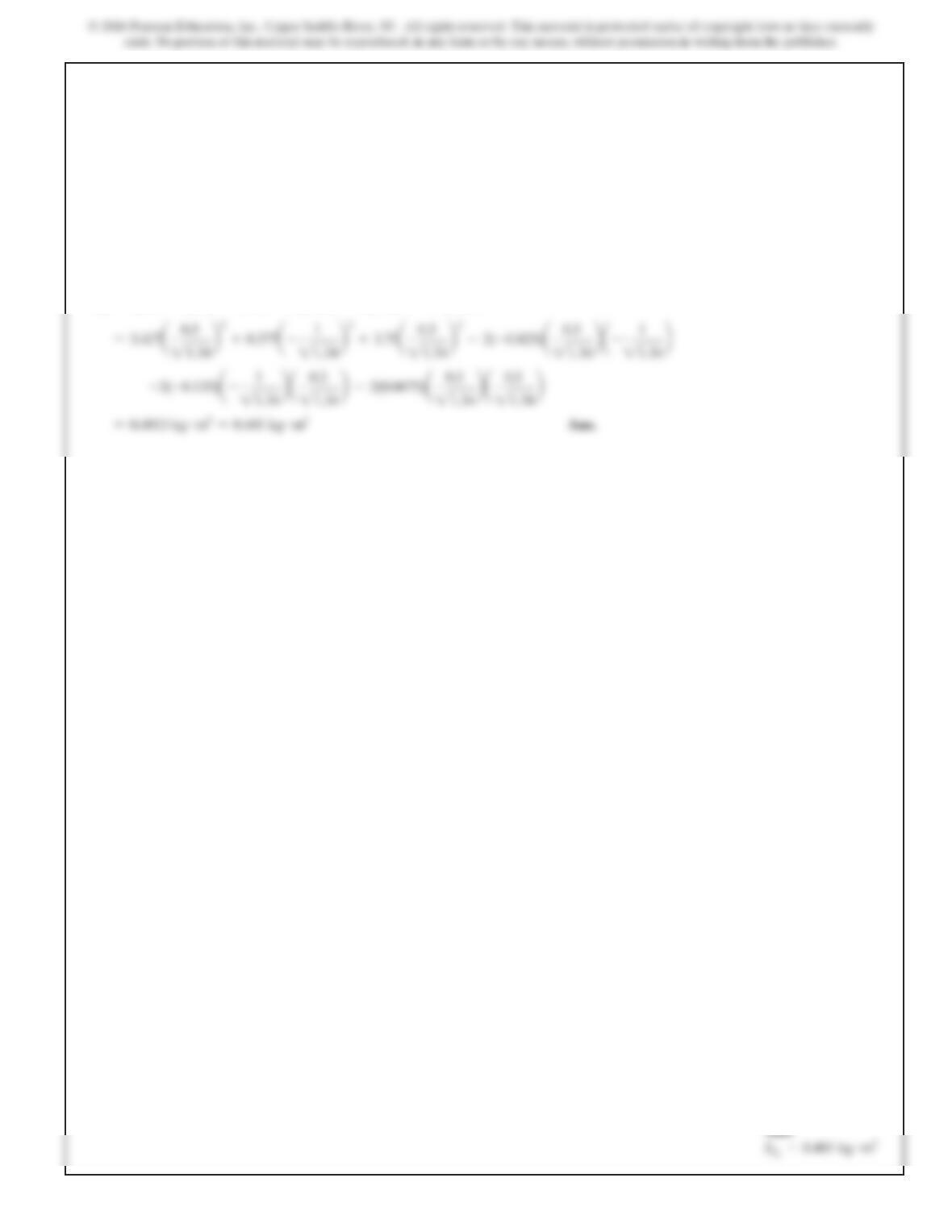
1125
*21–16. Continued
Then
IOa
=Ixx ux
2
+Iyy u
2
y+Izz u
2
z–2Ixy uxuy–2Iyz uyuz–2Izx uzux
1126
21–17.
SOLUTION
Due to symmetry
Iy¿=2c1
12 a1.5
32.2 b(1)2+a1.5
32.2 b(0.667 –0.5)2d+a1.5
32.2 b(1 –0.667)2
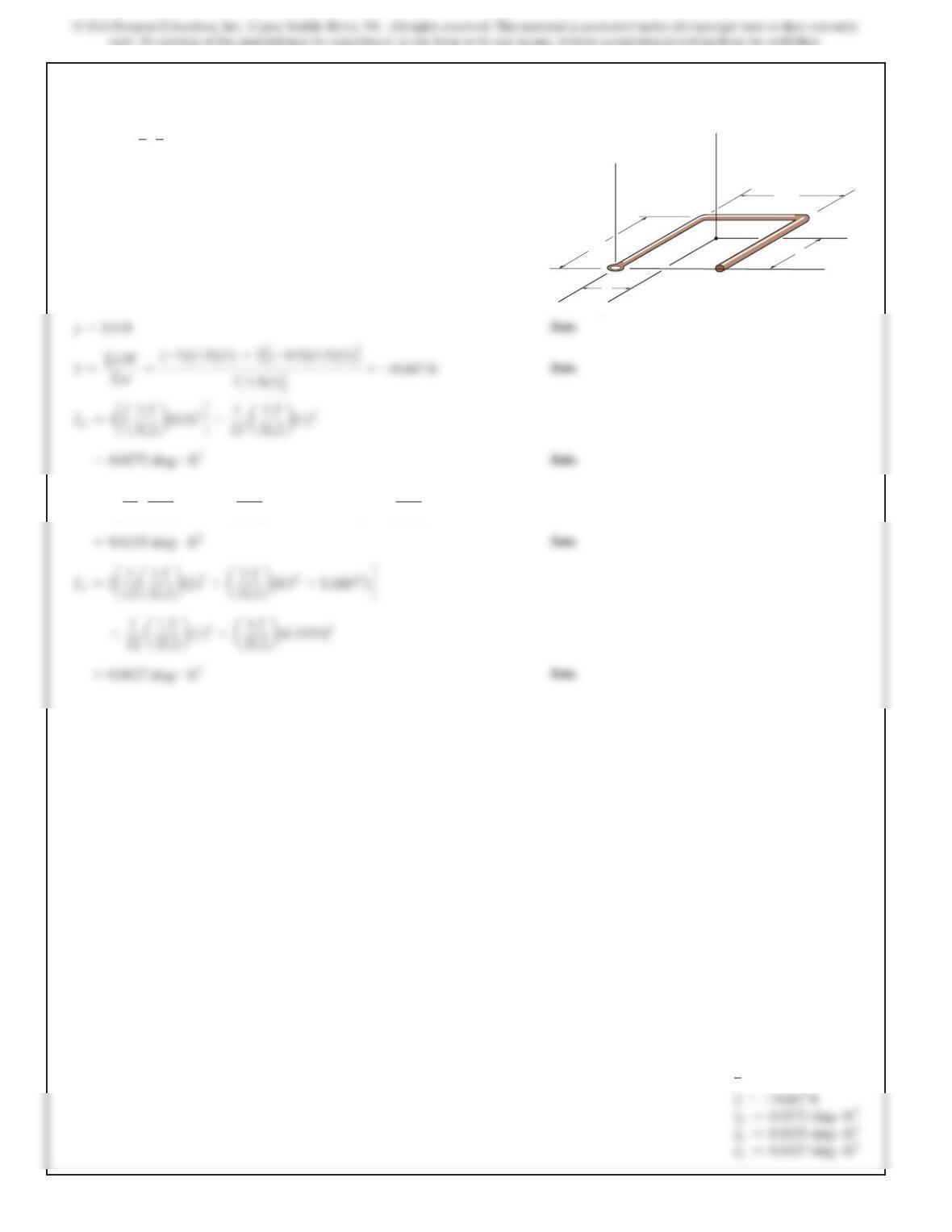
The bent rod has a weight of Locate the center of
gravity G() and determine the principal moments of
inertia and of the rod with respect to the
axes.z¿
y¿,x¿,Iz¿
Iy¿,Ix¿,
y
x,
1.5 lb
>
ft.
x
y
z
x¿
y¿
z¿
1ft
1ft
G
A
_
x
_
y
Ans:
y=0.5 ft
21–18.
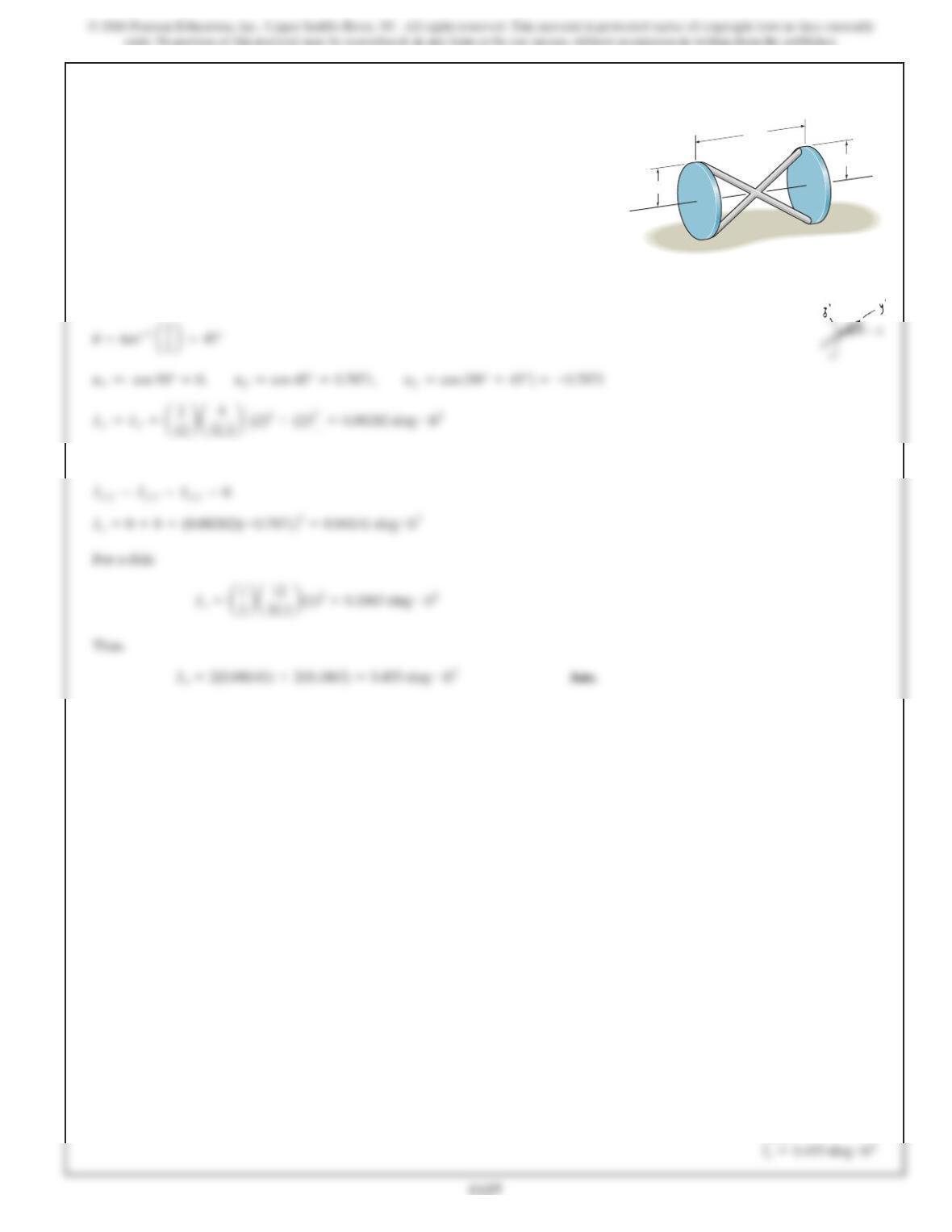
Determine the moment of inertia of the rod-and-disk
assembly about the xaxis.The disks each have a weight of
12 lb.The two rods each have a weight of 4 lb, and their
ends extend to the rims of the disks.
SOLUTION
For a rod:
Iy¿=0
2ft
1ft
x
1ft
Ans:
21–19.
SOLUTION
uax =0
uaz =0.707
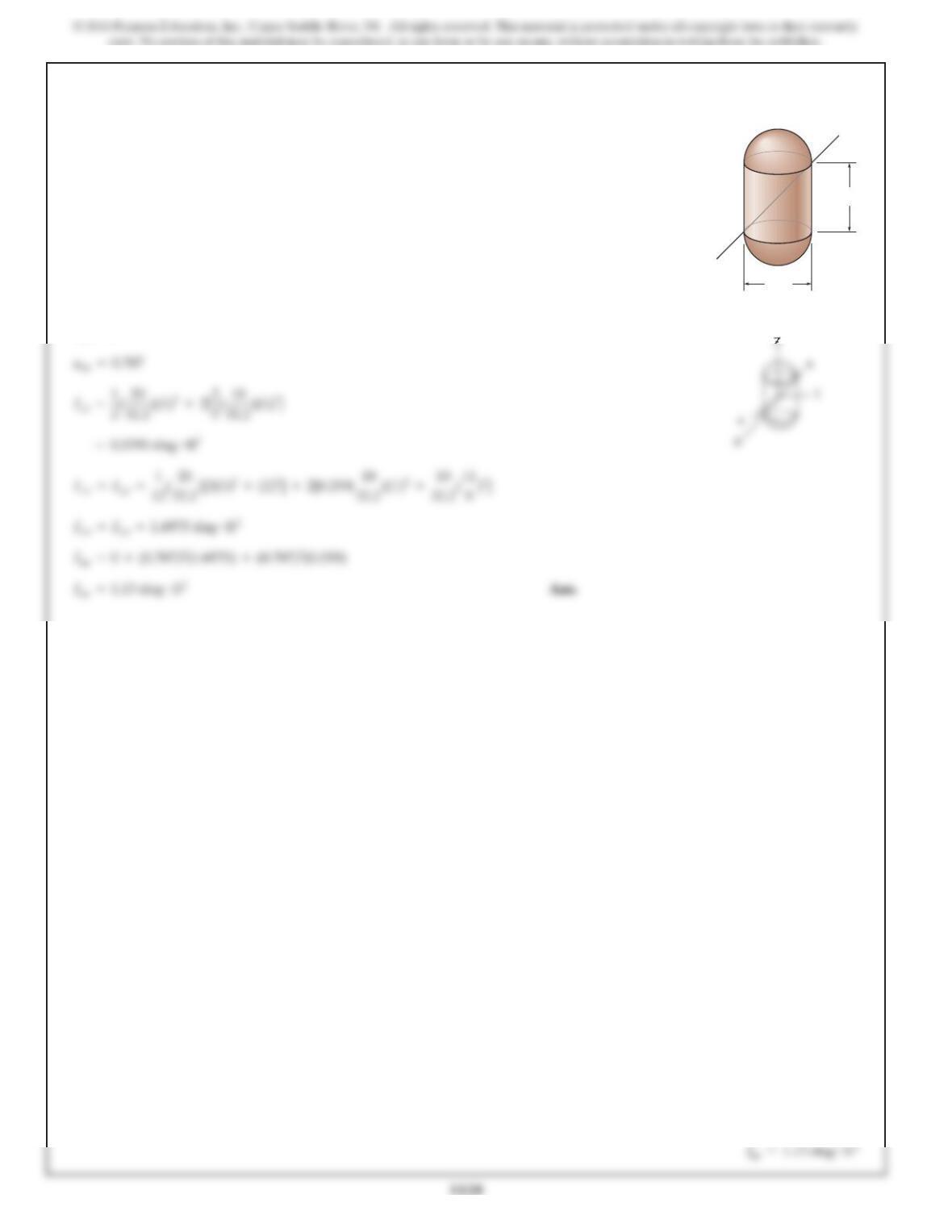
Determine the moment of inertia of the composite body
about the aa axis.The cylinder weighs 20 lb, and each
hemisphere weighs 10 lb.
2ft
2ft
a
a
Ans: