1149
*21–40.
SOLUTION
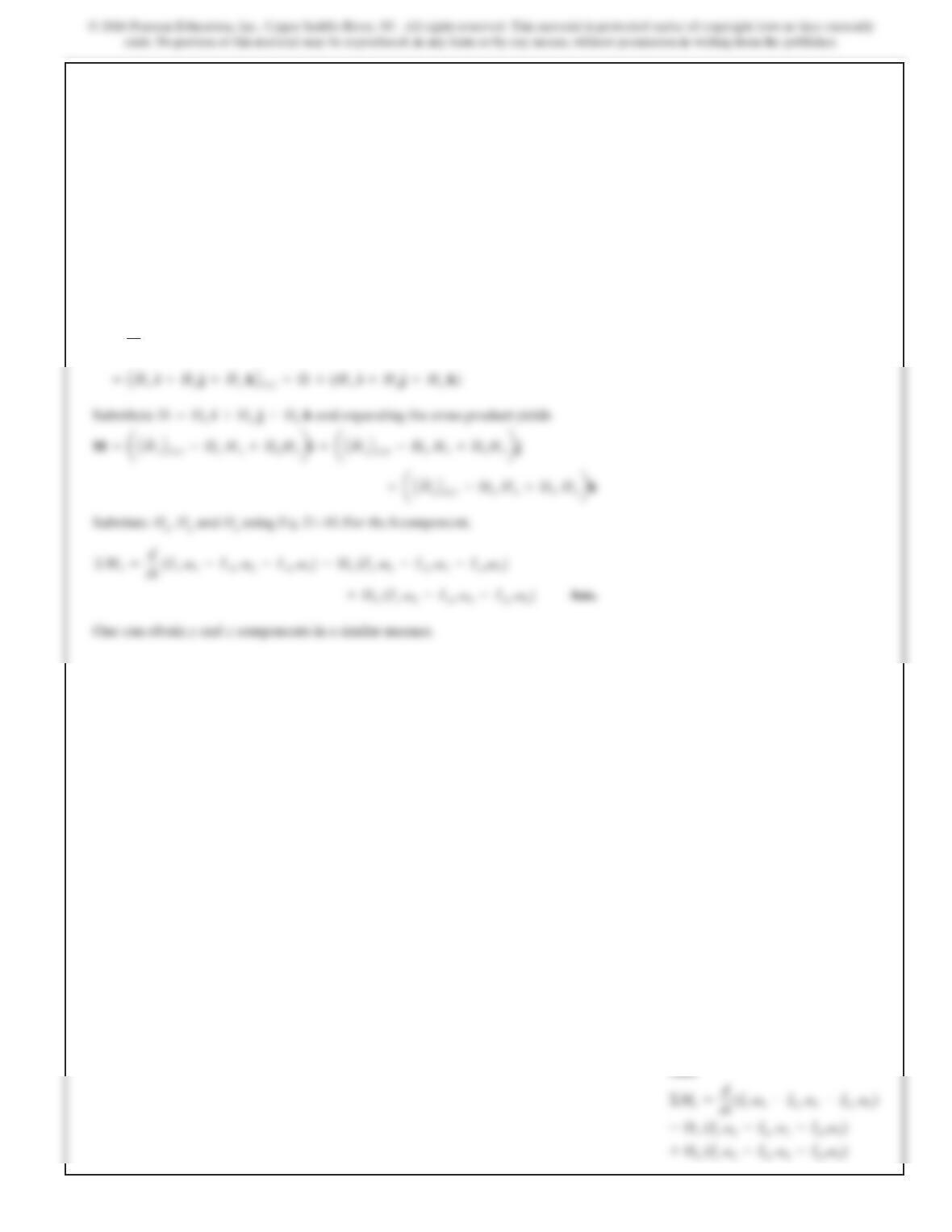
In general
M=d
dt (Hxi+Hyj+Hzk)
Derive the scalar form of the rotational equation of motion
about the xaxis if and the moments and products of
inertia of the body are not constant with respect to time.
æZV
Ans:
1150
21–41.
Der
i
ve t
h
e sca
l
ar form of t
h
e rotat
i
ona
l
equat
i
on of
motion about the xaxis if and the moments and
products of inertia of the body are constant with respect
to time.
æZV
SOLUTION
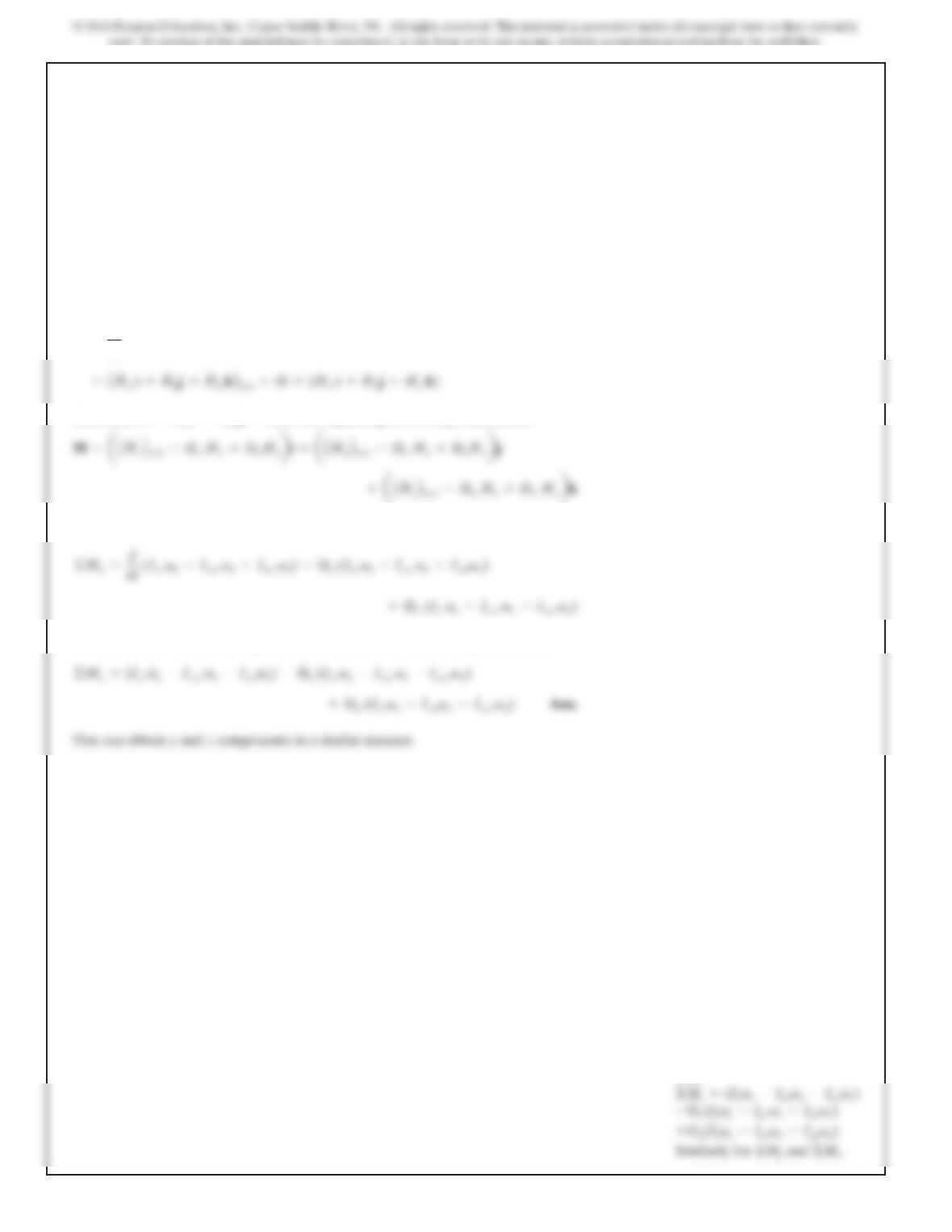
In general
Substitute and expanding the cross product yields
Substitute Hx,Hyand Hzusing Eq. 21–10. For the icomponent
For constant inertia, expanding the time derivative of the above equation yields
Æ=Æ
xi+Æ
yj+Æ
zk
M=d
dt (Hxi+Hyj+Hzk)
Ans:
1151
21–42.
SOLUTION
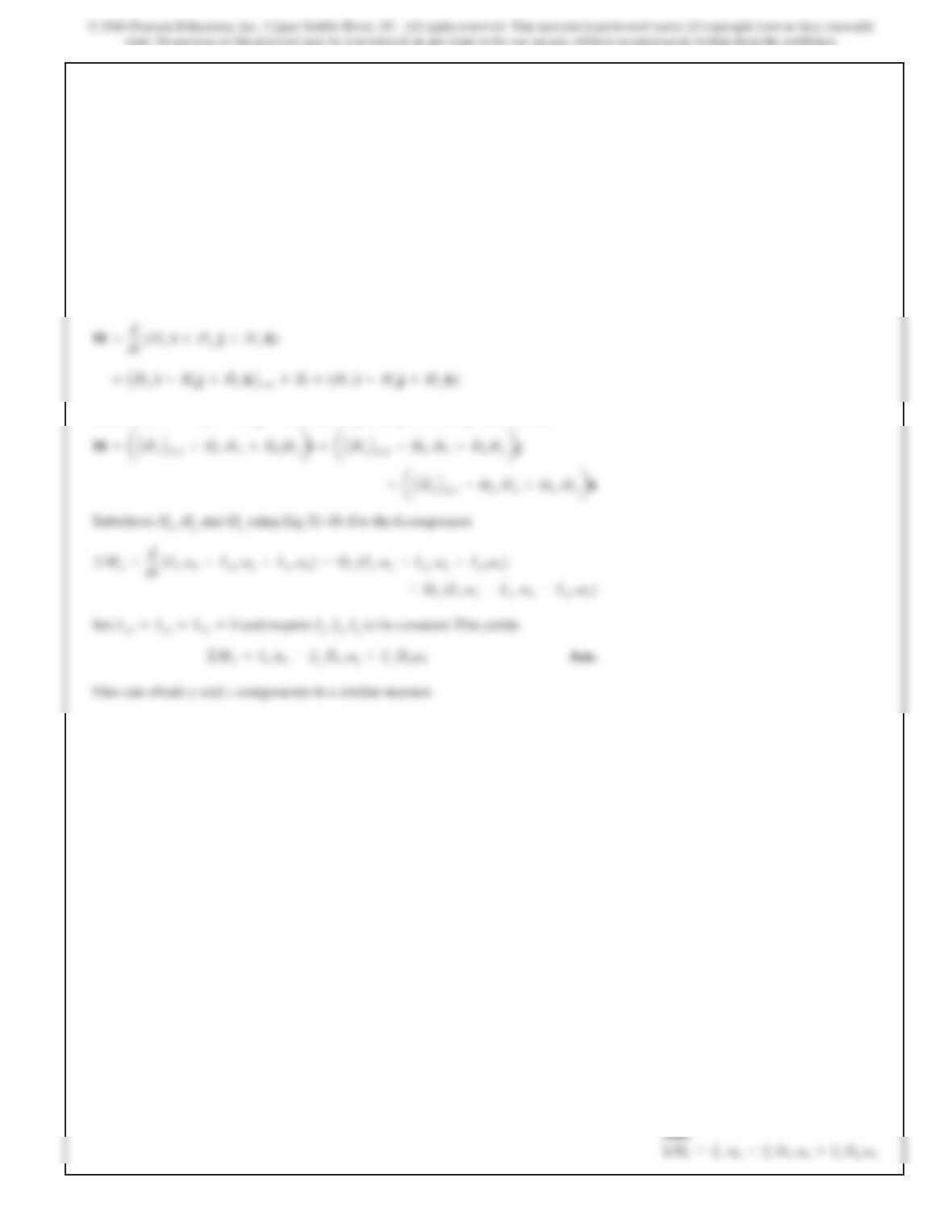
In general
Substitute and expanding the cross product yields
Æ=Æ
xi+Æ
yj+Æ
zk
Derive the Euler equations of motion for , i.e.,
Eqs
. 21–26.
æZ
V
1152
21–43.
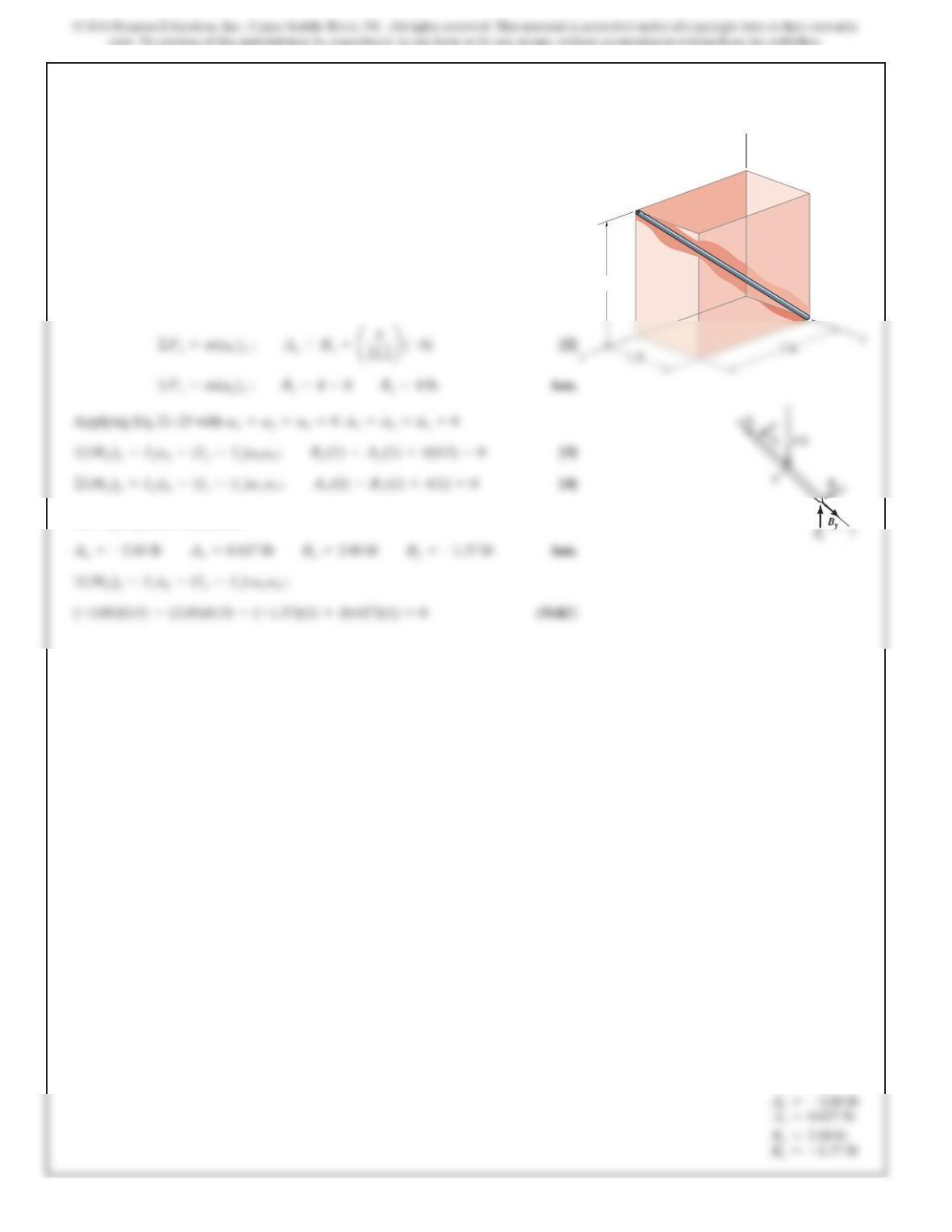
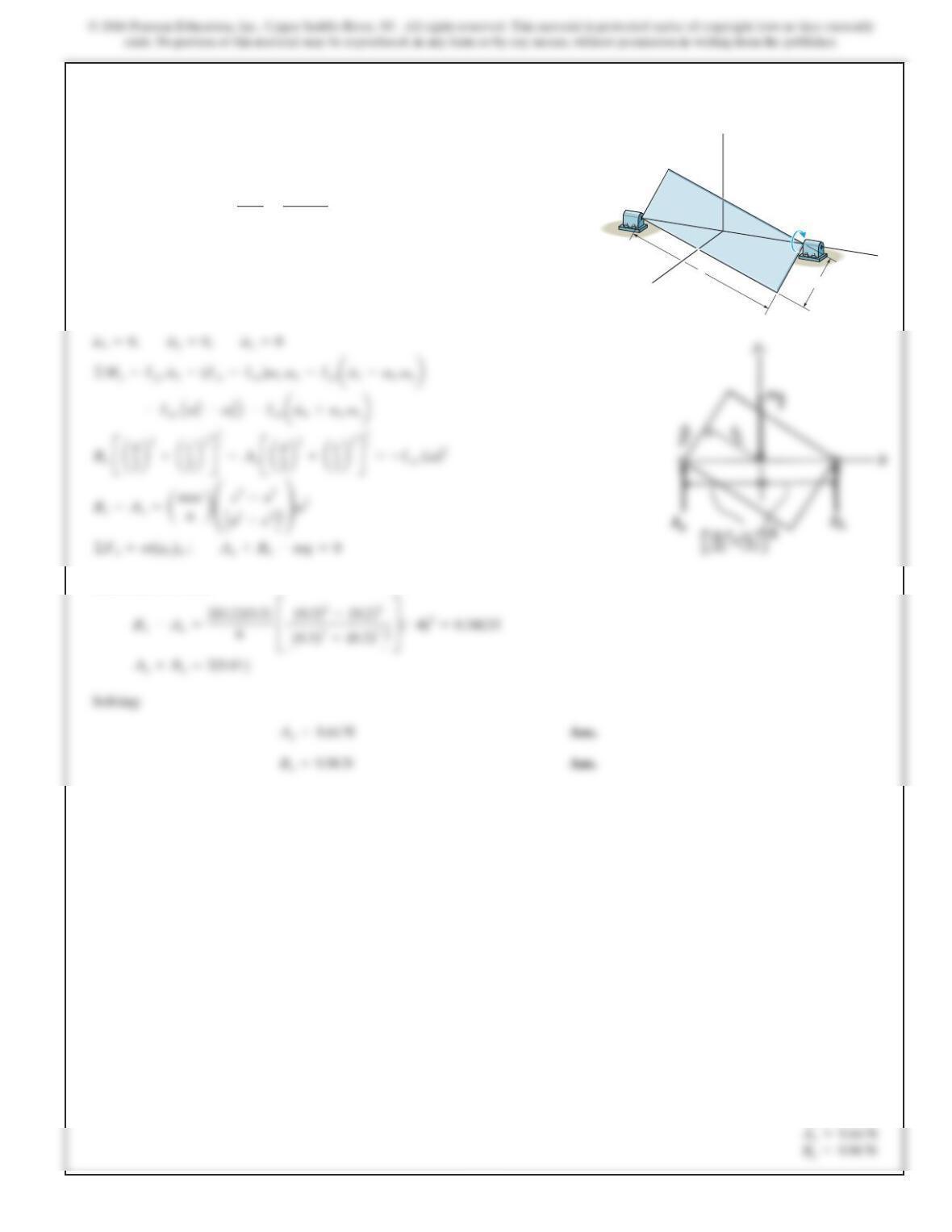
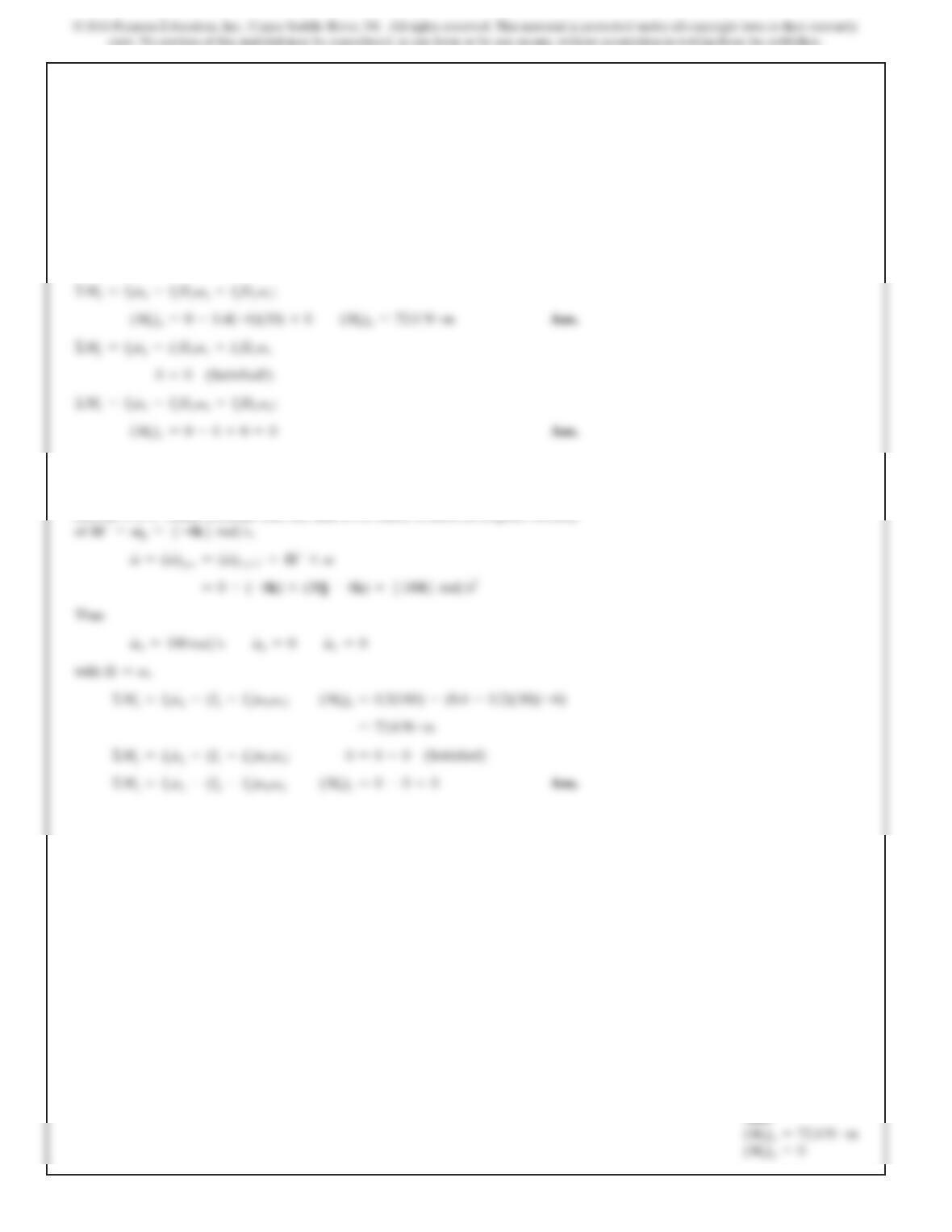
The 4-lb bar rests along the smooth corners of
an open box. At the instant shown, the box has a
velocity and an acceleration
Determine the x, y, zcomponents of force which the corners
exert on the bar.
a=5–6j6ft>s2.v=53j6ft>s
SOLUTION
[1]
Solving Eqs. [1] to [4] yields:
©Fx=m(aG)x;Ax+Bx=0
z
2ft
B
A
Ans:
Bz=4 lb
1153
*21–44.
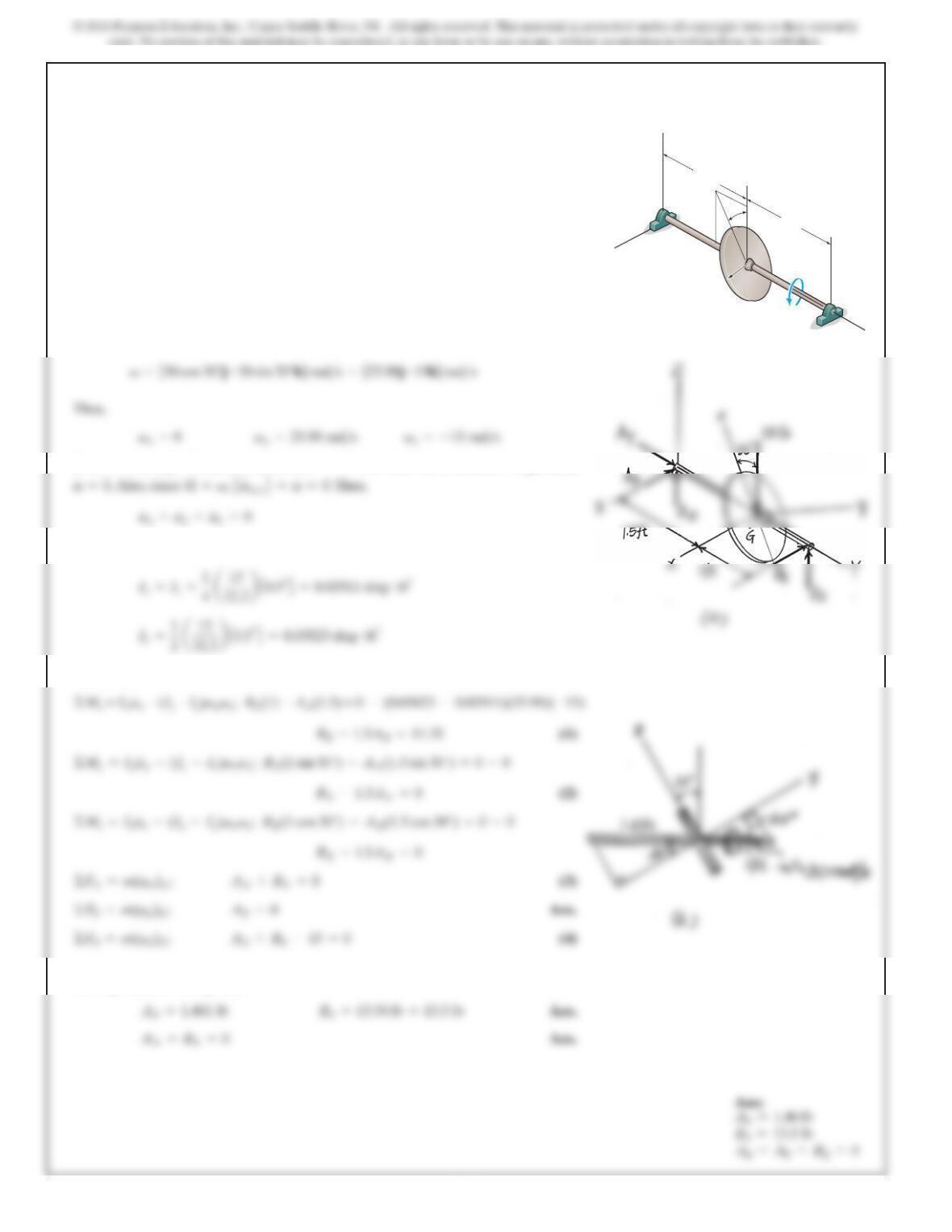
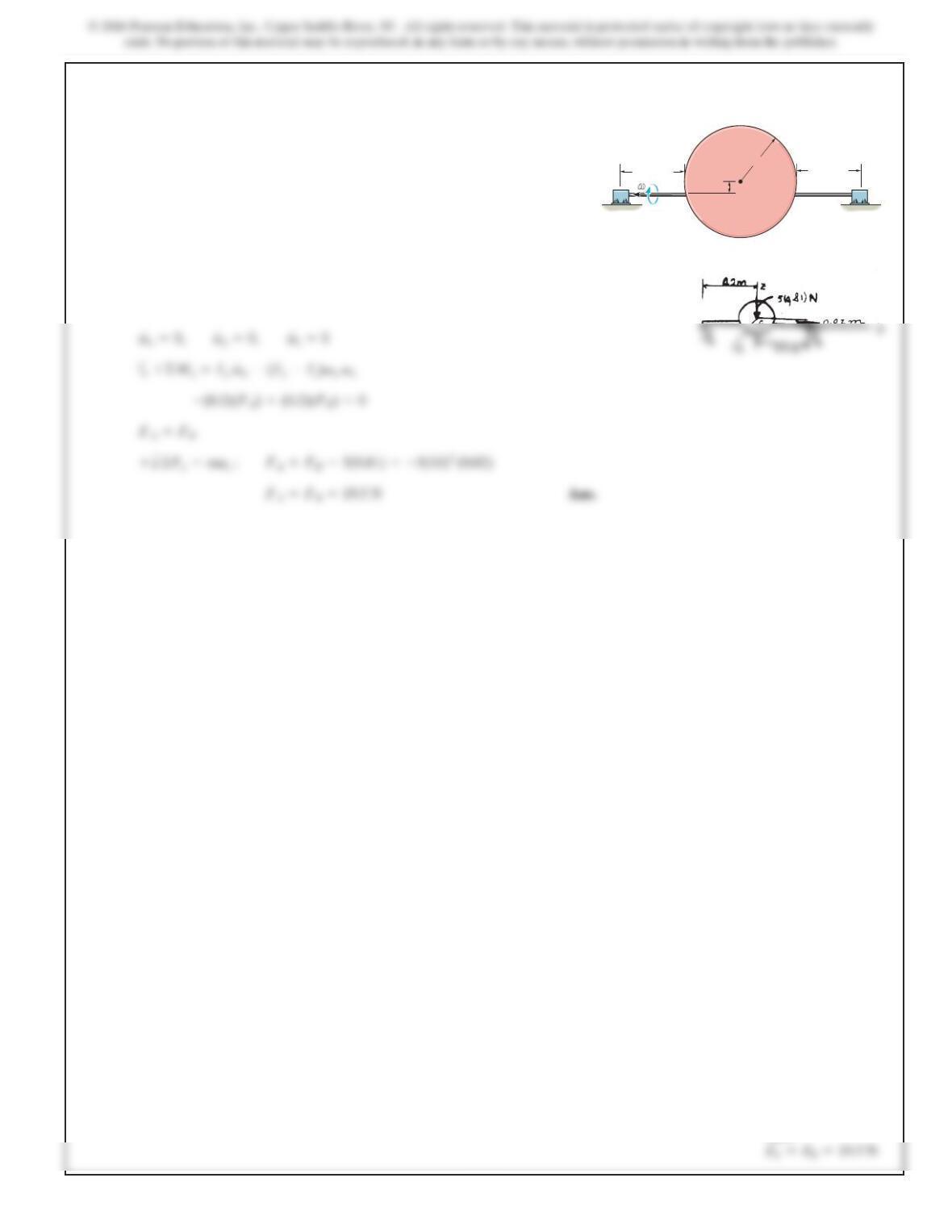
The uniform rectangular plate has a mass of and
is given a rotation of about its bearings at A
and B. If and , determine the vertical
reactions at the instant shown. Use the x,y,zaxes shown
and note that Izx =-
amac
12 bac2–a2
c2+a2b.
c=0.3 ma=0.2 m
v=4 rad>s
m
=2kg
SOLUTION
Substitute the data,
vx=0,
vy=0, vz=-4
x
A
B
V
ca
y
z
Ans:
1154
21–45.
z
A
B
y
x
1.5 ft
1 ft
v fi 30 rad/s
30
0.5 ft
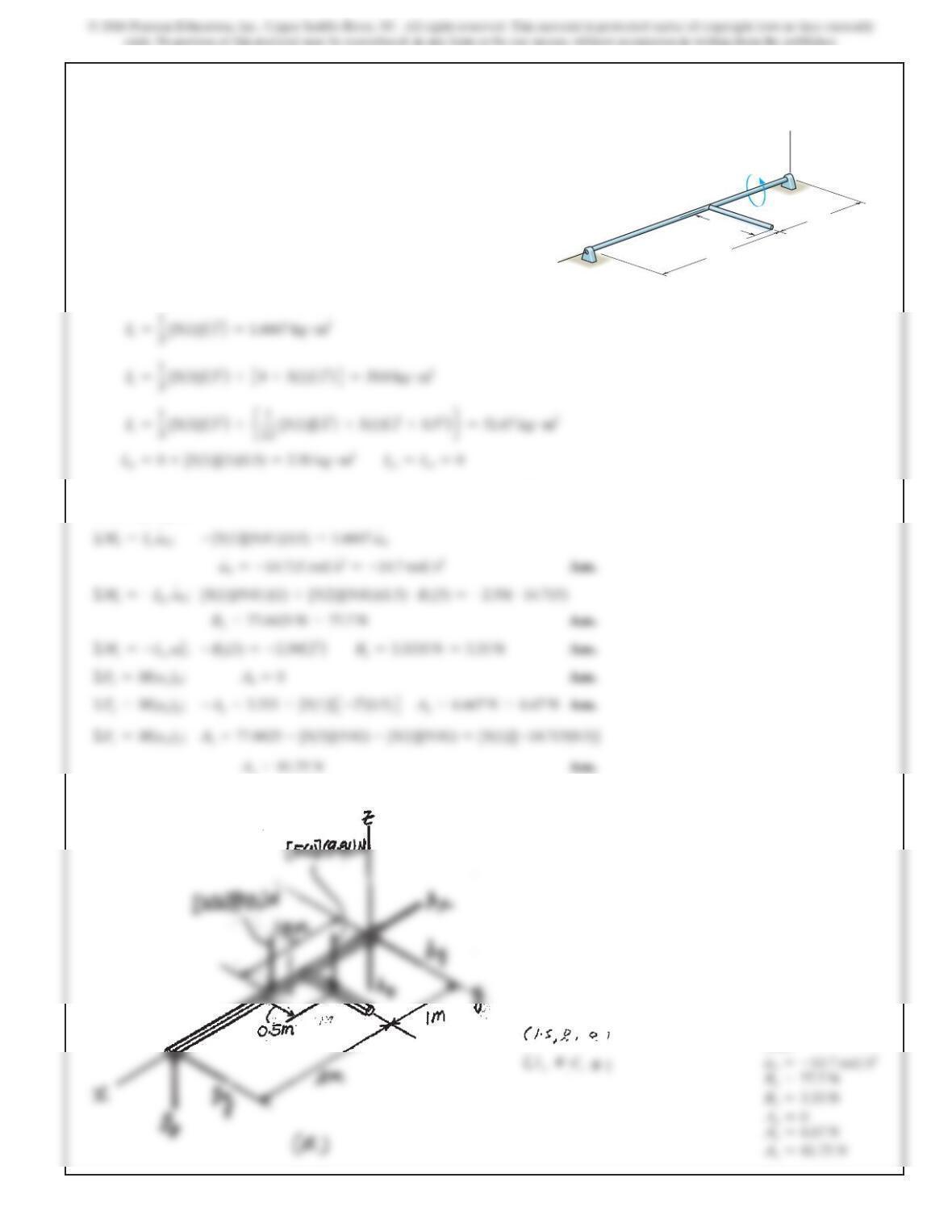
If the shaft AB is rotating with a constant angular velocity
of , determine the X,Y,Zcomponents of
reaction at the thrust bearing Aand journal bearing Bat
the instant shown. The disk has a weight of 15 lb.Neglect
the weight of the shaft AB.
v=30 rad>s
SOLUTION
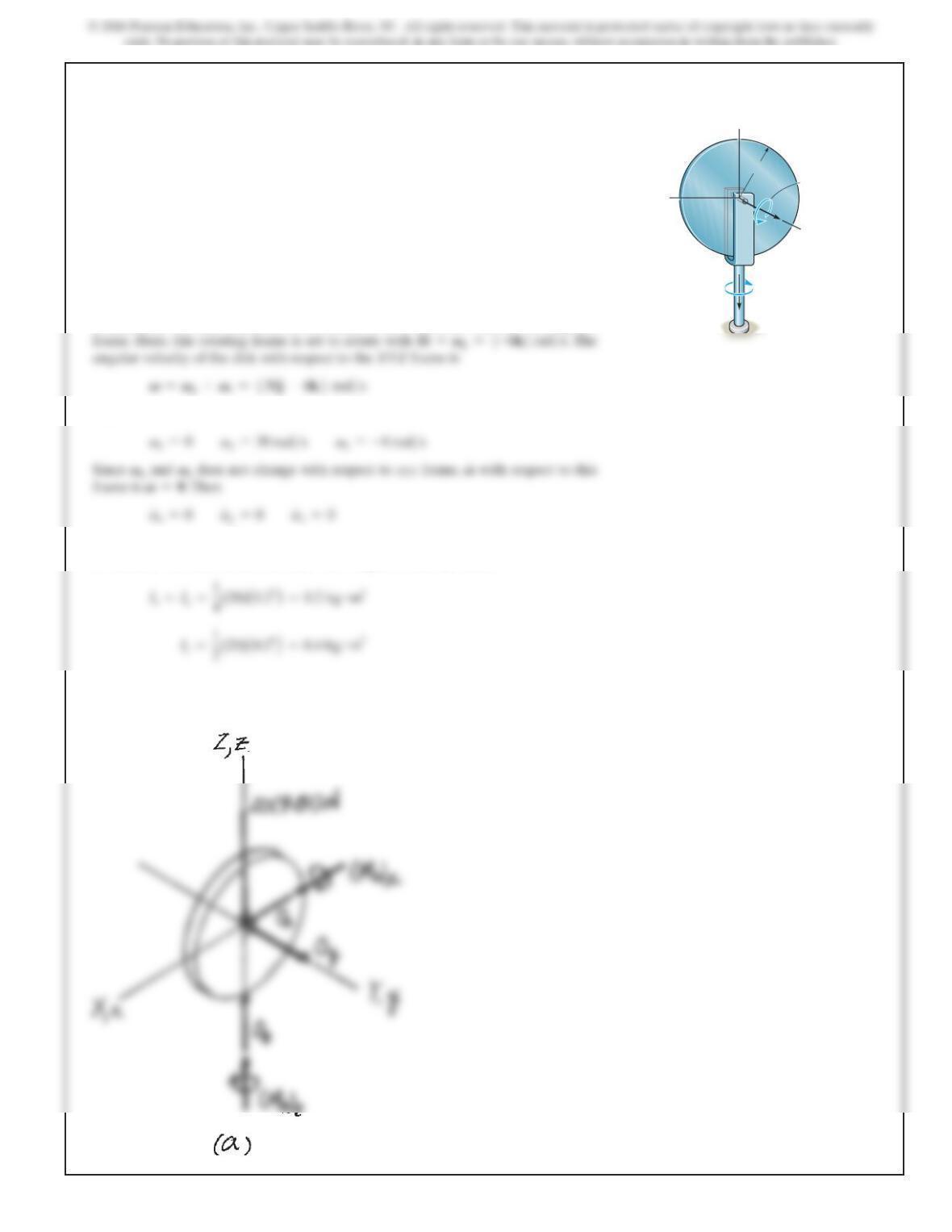
The rotating xyz frame is set with its origin at the plate’s mass center,Fig. a.This
frame will be fixed to the disk so that its angular velocity is and the x,y, and
zaxes will always be the principle axes of inertia of the disk. Referring to Fig. b,
Since is always directed towards the axis and has a constant magnitude,
The mass moments of intertia of the disk about the x,y,zaxes are
Applying the equations of motion,
+Yv
Æ=v
Solving Eqs. (1) through (4),
1155
1 m
2 m
1 m
A
x
y
B
z
v
21–46.
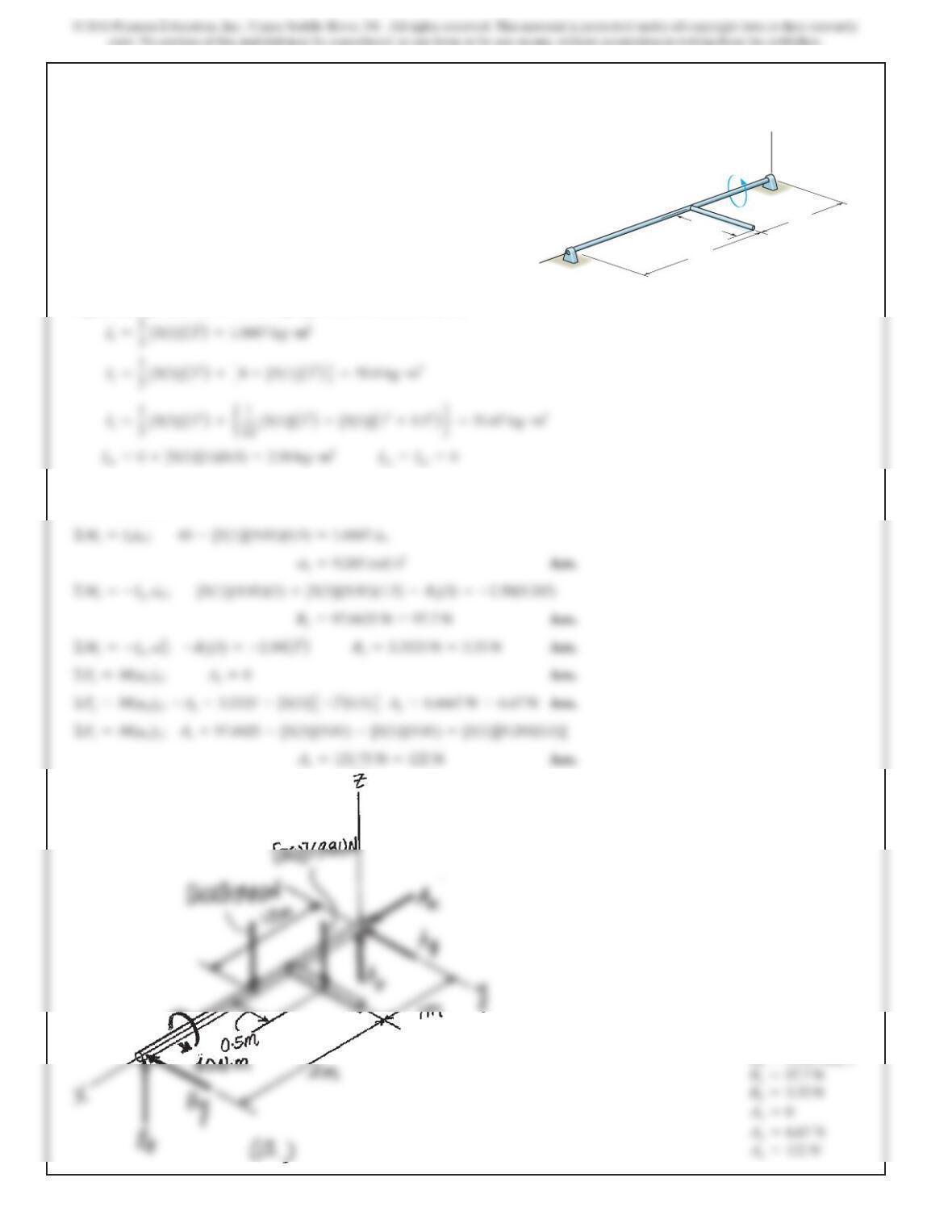
The assembly is supported by journal bearings at A and B,
which develop only y and z force reactions on the shaft. If
the shaft is rotating in the direction shown at
V
=52i6 rad>s,
determine the reactions at the bearings
when the assembly is in the position shown. Also, what is
the shaft’s angular acceleration? The mass per unit length of
each rod is
5 kg>m.
SOLUTION
Equations of Motion. The inertia properties of the assembly are
with v
#
x=2 rad>s
, vy
=
vz
=0
and v
#
y=v
#
z=0 by referring to the FBD of the
assembly, Fig. a,
Ans:
#
1156
21–47.
The assembly is supported by journal bearings at A and B,
which develop only y and z force reactions on the shaft. If
the shaft A is subjected to a couple moment
M=540i6 N #m,
and at the instant shown the shaft has an
angular velocity of V
=52i6 rad>s,
determine the
reactions at the bearings of the assembly at this instant.
Also, what is the shaft’s angular acceleration? The mass per
unit length of each rod is
5 kg>m.
1 m
2 m
1 m
A
x
y
B
z
v
SOLUTION
Equations of Motions. The inertia properties of the assembly are
with v
x=2 rad>s
, vy
=
vz
=0
and v
#
y
=
v
#
z
=0
by referring to the FBD of the
assembly, Fig. a,
Ans:
v
#
=
9.285 rad
>
s
2
1157
*21–48.
SOLUTION
©Fz=m(aG)z;–5+Az=5
Æ
#=(v
#
xyz)+Æ*v=-2i+0
Ix=Iz=1
12
A
5
32.2
B
(3)2=0.1165 ft4
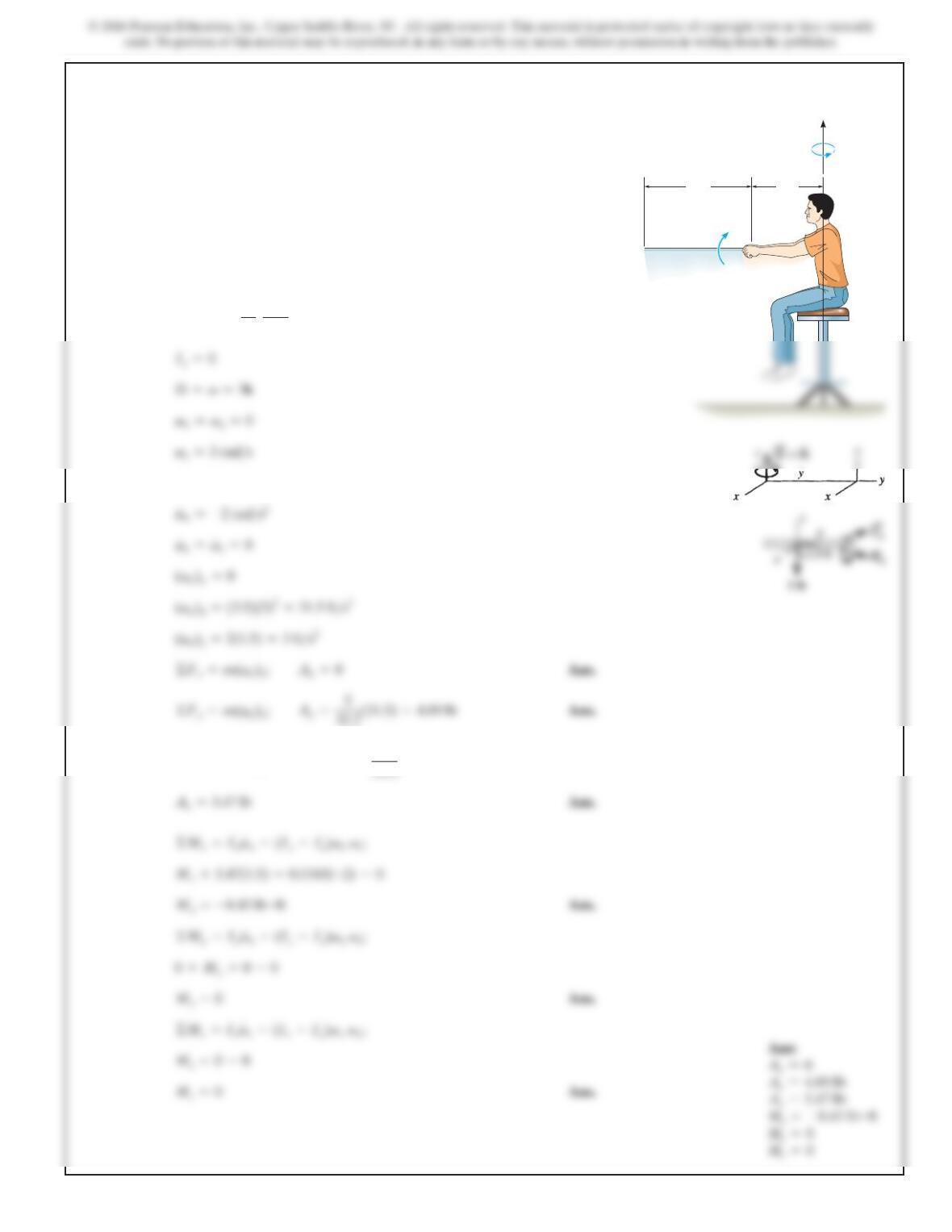
The man sits on a swivel chair which is rotating with a
constant angular velocity of . He holds the uniform
5-lb rod AB horizontal. He suddenly gives it an angular
acceleration of measured relative to him, as
shown. Determine the required force and moment
components at the grip, A, necessary to do this. Establish
axes at the rod’s center of mass G, with upward, and
directed along the axis of the rod towards A.
+y+z
2 rad>s2,
3 rad>s
3 ft 2 ft
A
B
3 rad/s
2 rad/s2
1158
21–49.
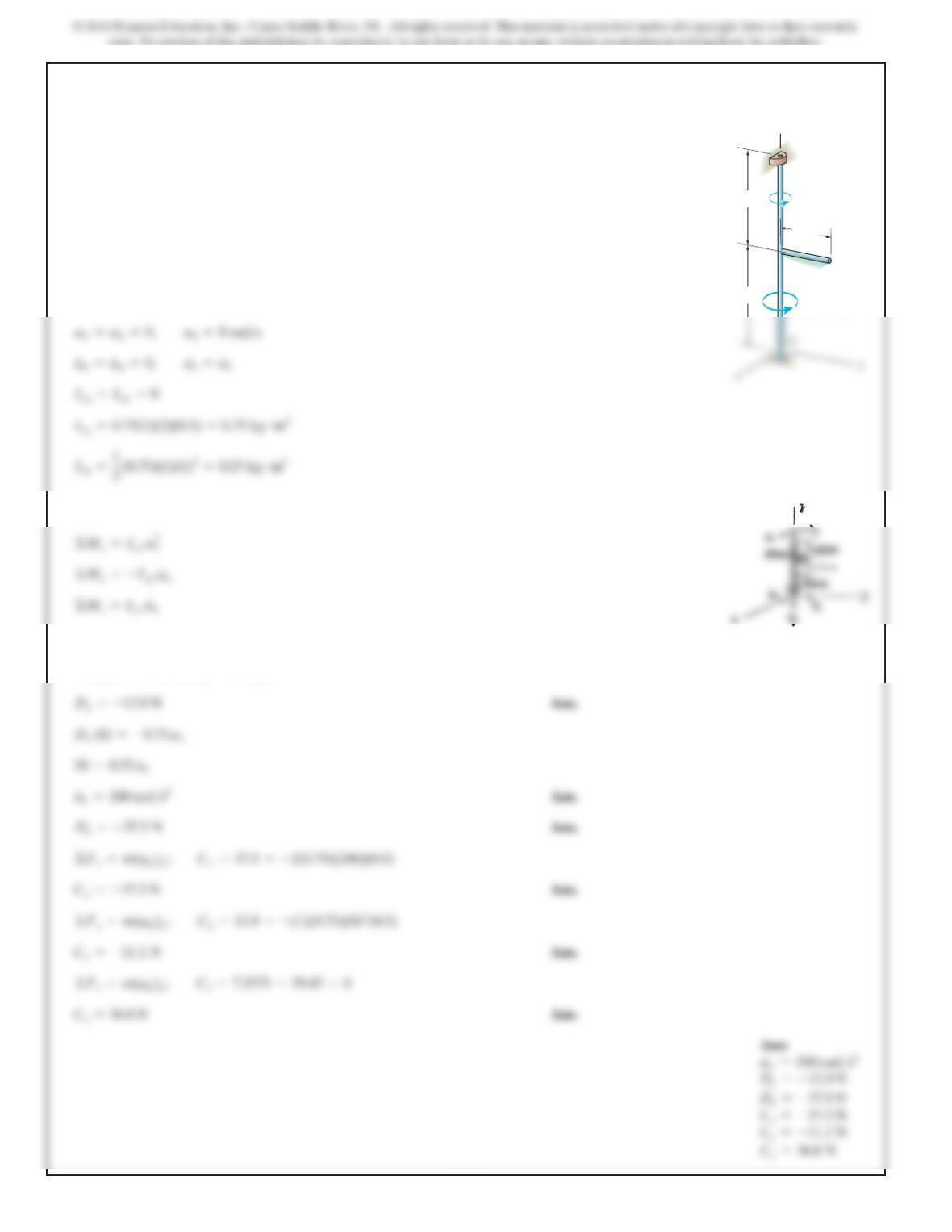
The rod assembly is supported by a ball-and-socket joint at
Cand a journal bearing at D, which develops only xand y
force reactions.The rods have a mass of 0.75 kg/m.
Determine the angular acceleration of the rods and the
components of reaction at the supports at the instant
as shown.v=8 rad>s
SOLUTION
Eqs. 21–24 become
Thus,
–Dy(4) –7.3575(0.5) =0.75(8)2
Æ=v=8k
=8rad/s
ω
2m
1m
2m
z
B
A
D
50 N ⋅m
1159
21–50.
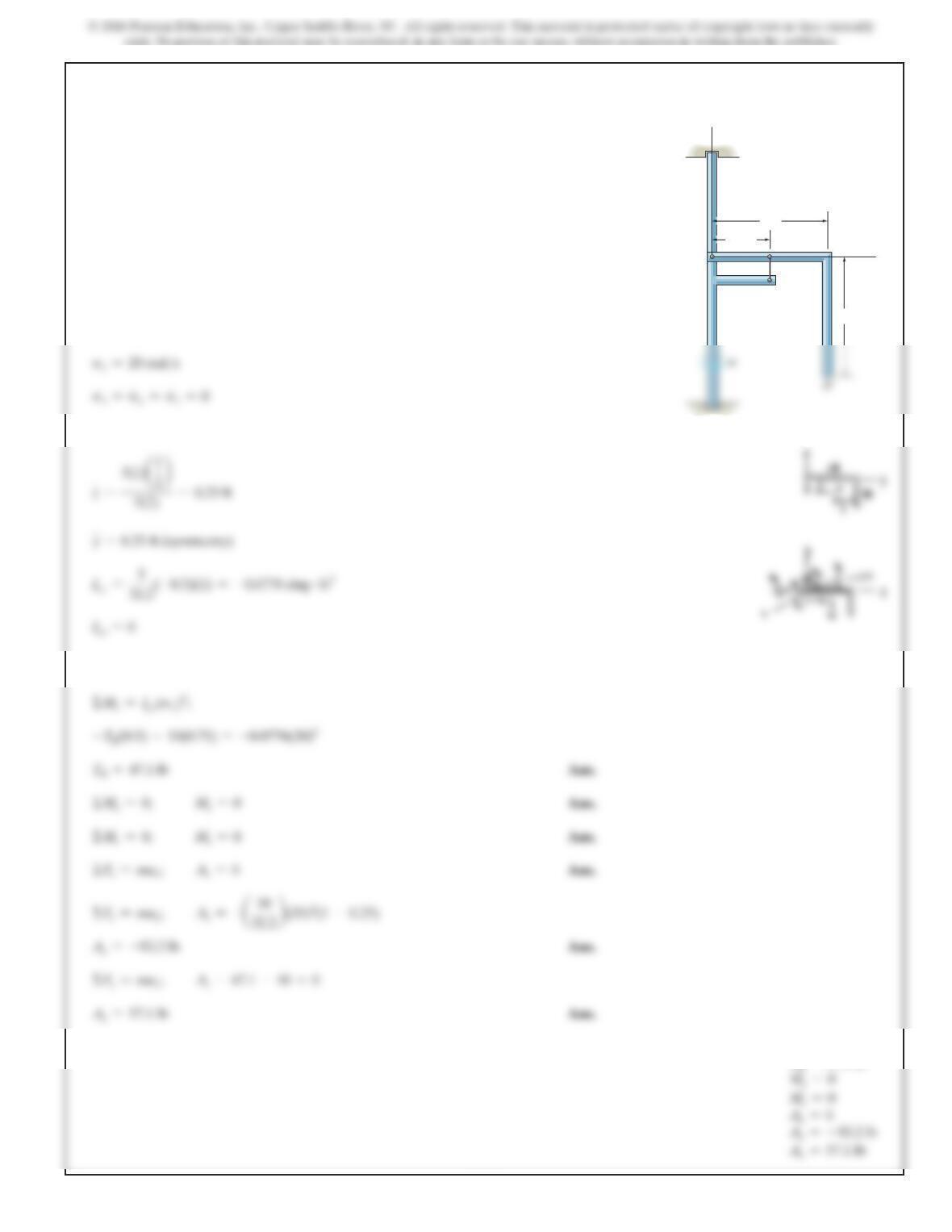
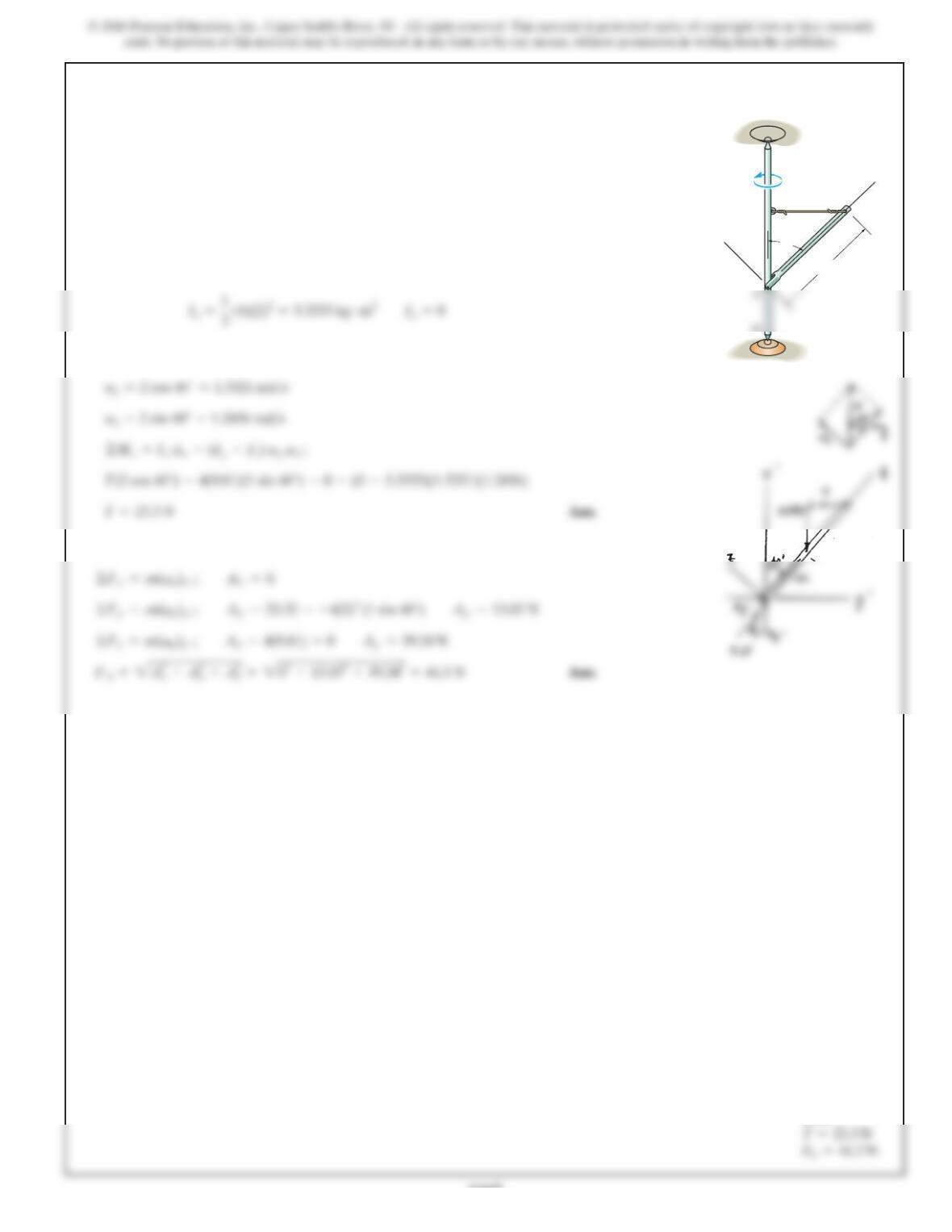
The bent uniform rod ACD has a weight of 5 lb
>
ft and is
supported at A by a pin and at B by a cord. If the vertical
shaft rotates with a constant angular velocity v=20 rad>s,
determine the x, y, z components of force and moment
developed at A and the tension in the cord.
SOLUTION
wx=wy=0
The center of mass is located at
Eqs. 21–24 reduce to
1 ft
0.5 ft
1 ft
y
C
B
A
z
Ans:
TB=47.1 lb
1160
21–51.
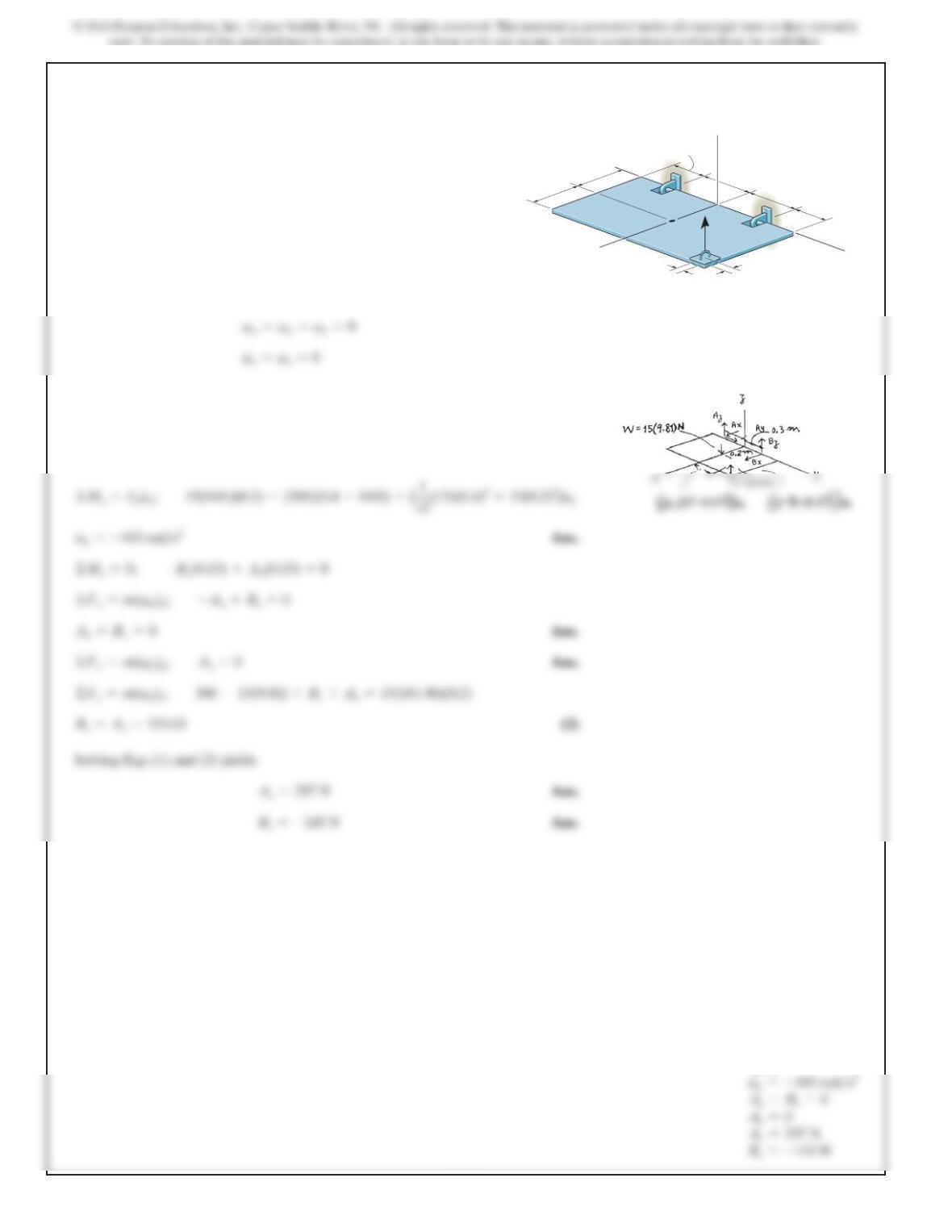
The uniform hatch door,having a mass of 15 kg and a mass
center at G,issupported in the horizontal plane by bearings at
Aand B.If a vertical force is applied to the door
as shown, determine the components of reaction at the
bearings and the angular acceleration of the door.The bearing
at Awill resist a component of force in the ydirection,
whereas the bearing at Bwill not. For the calculation, assume
the door to be a thin plate and neglect the size of each
bearing.The door is originally at rest.
F=300 N
SOLUTION
Eqs. 21–25 reduce to
(1)
Bz–Az=-440
©Mx=0; 300(0.25 –0.03) +Bz(0.15) –Az(0.15) =0
y
30 mm
z
x
G
B
A
30 mm
100 mm
150 mm
150 mm
100 mm
200 mm
200 mm
F
Ans:
1161
*21–52.
SOLUTION
vx=0, vy=-10 rad/s,
vz=0
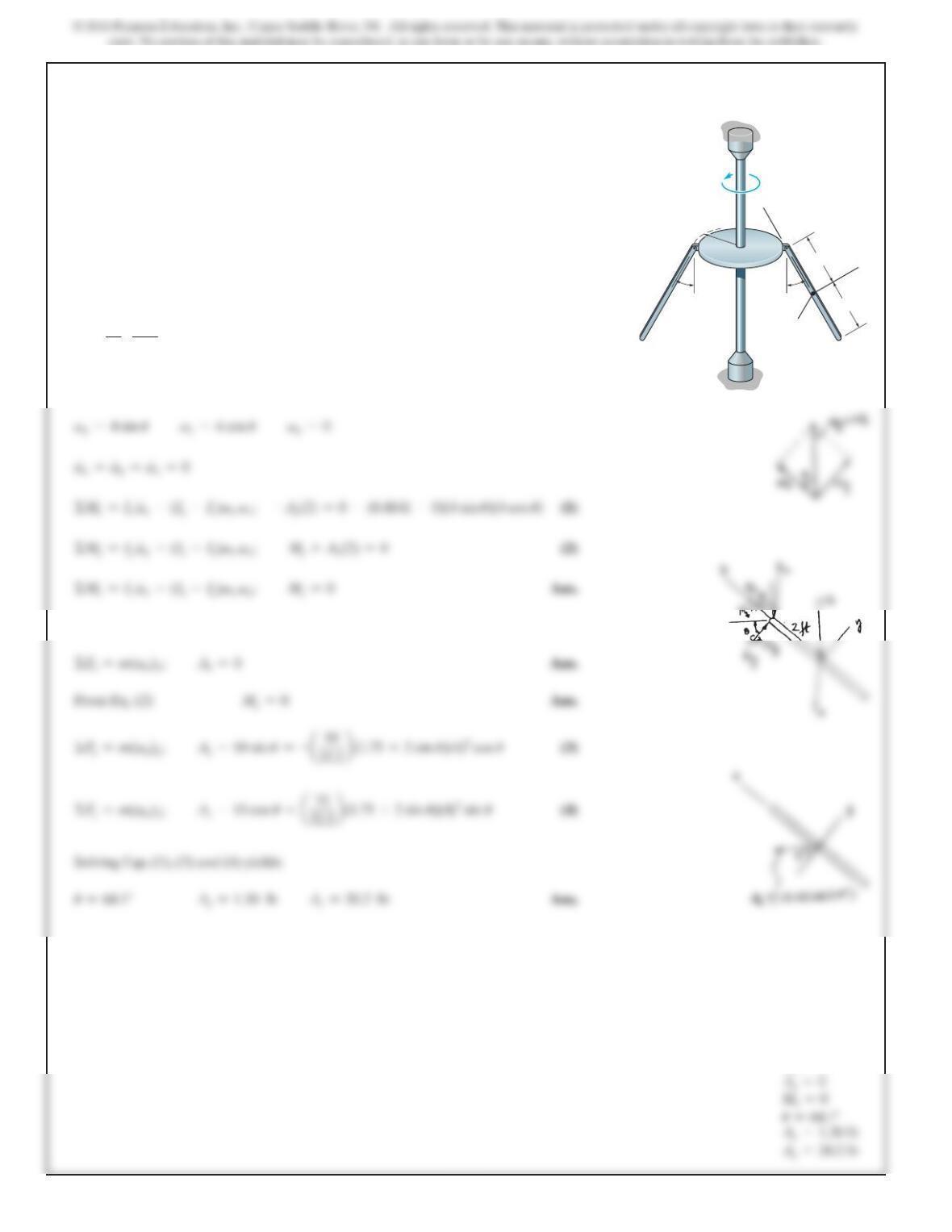
The 5-kg circular disk is mounted off center on a shaft
which is supported by bearings at Aand B. If the shaft is
rotating at a constant rate of , determine the
vertical reactions at the bearings when the disk is in the
position shown.
v=10 rad>s
100 mm
20 mm
BA
G
100mm
100 mm
ω
Ans:
1162
21–53.
SOLUTION
Iy=
1
12 a10
32.2b(4)2=0.4141 slug #ft2 Iz=0
Applying Eq. 21–25 with
Also,
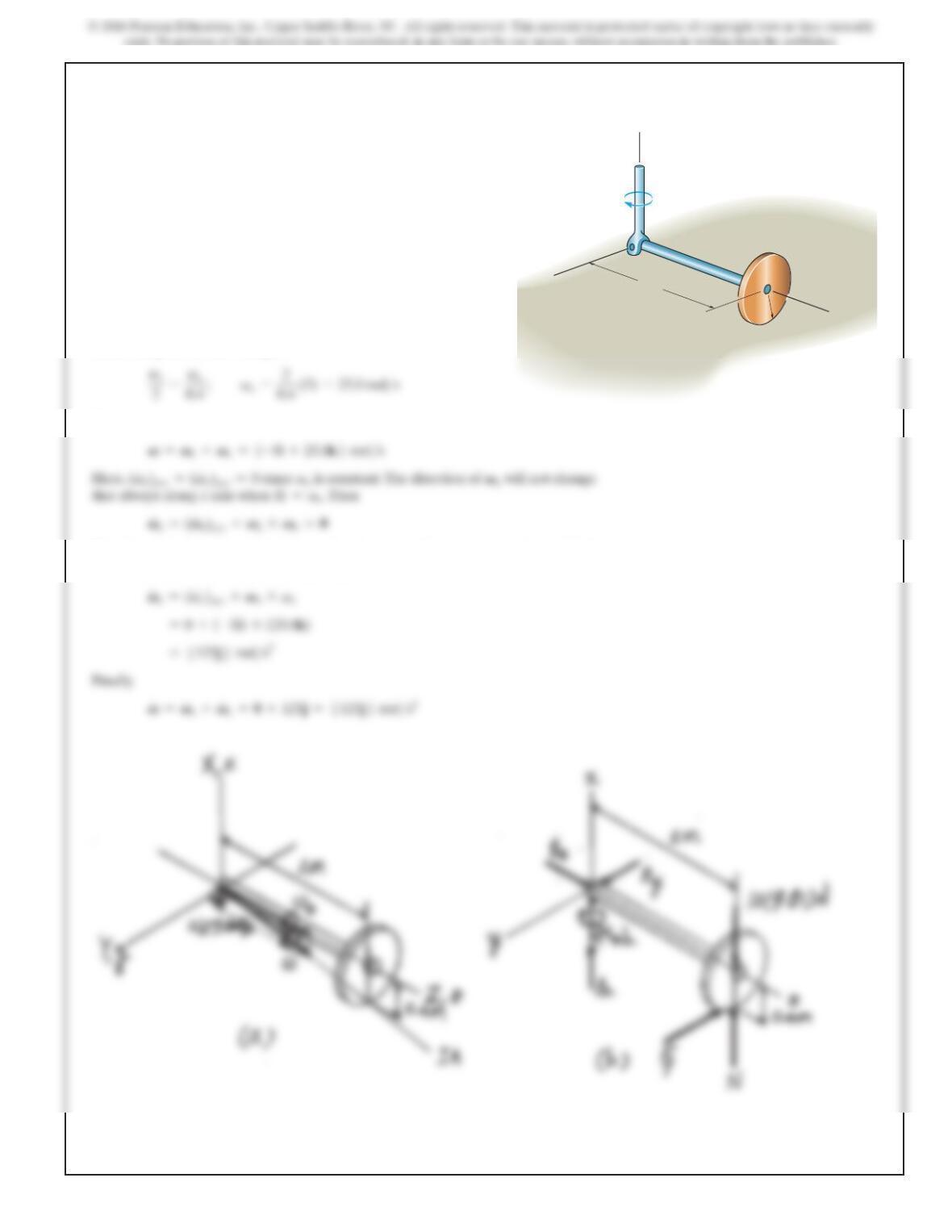
Two uniform rods, each having a weight of 10 lb, are pin
connected to the edge of a rotating disk. If the disk has
a constant angular velocity vD=4
rad>s, determine
the angle u made by each rod during the motion, and the
components of the force and moment developed at the
pin A. Suggestion: Use the x, y, z axes oriented as shown.
θ
ω
D = 4 rad/s
y
θ
2 ft
2 ft
x
z
A
G
B
1.75 ft
Ans:
Mz=0
1163
21–54.
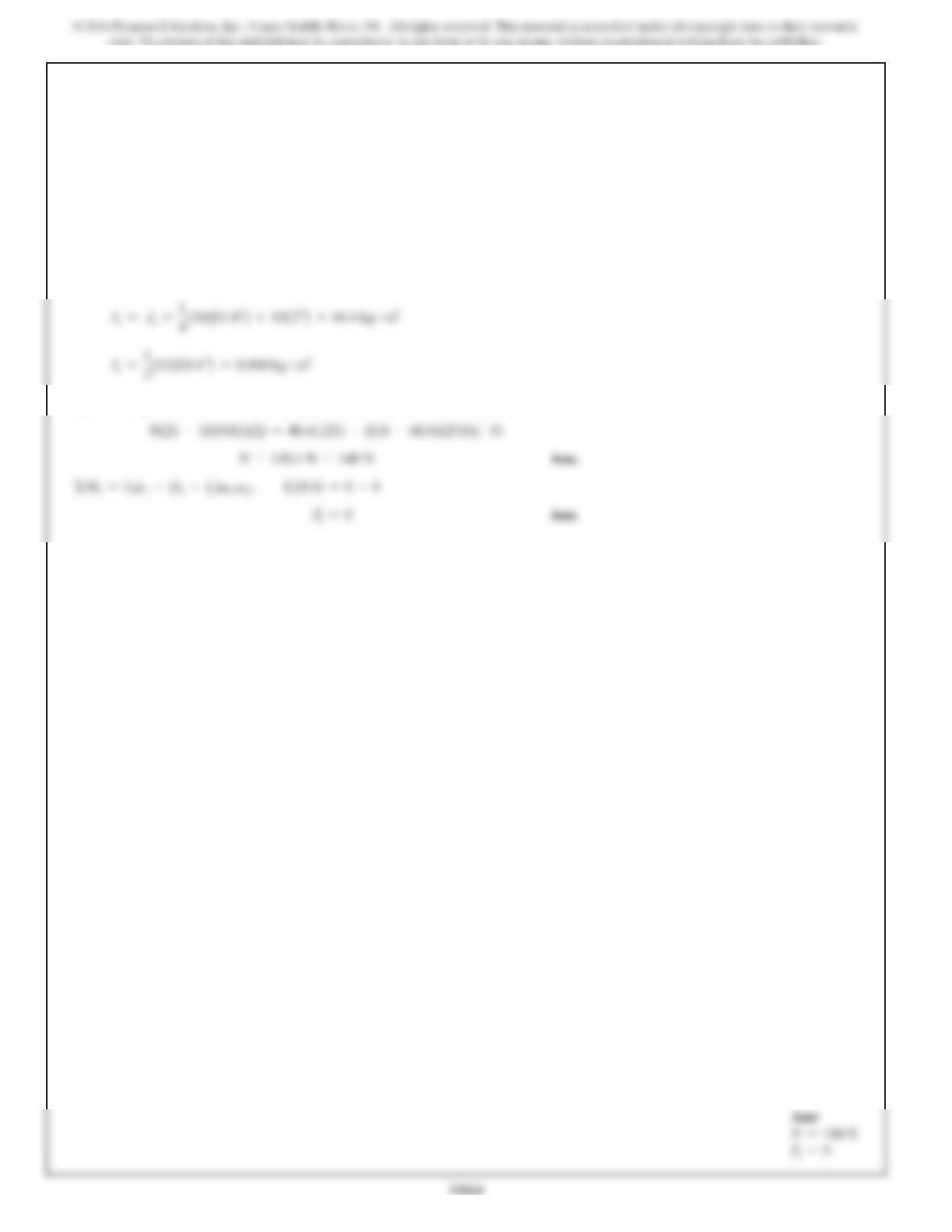
The 10-kg disk turns around the shaft AB, while the shaft
rotates about BC at a constant rate of vx
=5 rad>s.
If the
disk does not slip, determine the normal and frictional force
it exerts on the ground. Neglect the mass of shaft AB.
SOLUTION
Kinematics. The instantaneous axis of zero velocity (IA) is indicated
in Fig. a. Here the resultant angular velocity is always directed along
IA. The fixed reference frame is set to coincide with the rotating xyz
frame using the similar triangle,
Thus,
Vx
The direction of
Vb
does not change with reference to the xyz rotating frame if this
frame rotates with
Ω=
vx
=5–5i6 rad>s
. Then
x
0.4 m
y
z
2 m A
C
B
vx fi 5 rad/s
21–54. Continued
Equations of Motion. The mass moments of inertia of the disk about the x, y and
zaxes are
By referring to the FBD of the disk, Fig. b,
ΣM
y
=I
y
v
#
y
–(I
z
–I
x
)
vzvx;
ΣM
1165
21–55.
The 20-kg disk is spinning on its axle at vs
=30 rad>s,
while the forked rod is turning at v
1=6 rad>s.
Determine
the x and z moment components the axle exerts on the disk
during the motion.
SOLUTION
Solution I
Kinematics. The fixed reference XYZ frame is set coincident with the rotating xyz
Then
Equation of Motion. Although the disk spins about the y axis, but the mass moment
of inertia of the disk remain constant with respect to the xyz frame.
x
O
y
200 mm
z
A
vs fi 30 rad/s
v1 fi 6 rad/s
1166
21–55. Continued
With
𝛀 ≠ V
with
Ωx=0
,
Ω
y
=0
and
Ωz=–6 rad>s
Solution II
Here, the xyz frame is set to rotate with
𝛀=
V
=530j–6k6 rad>s
. Setting
another
x′y′z′
frame coincide with xyz and XYZ frame to have an angular velocity
Ans:
1167
*21–56.
SOLUTION
Applying the third of Eq. 21–25 with
Also,
The 4-kg slender rod AB is pinned at Aand held at Bby a
cord.The axle CD is supported at its ends by ball-and-socket
joints and is rotating with a constant angular velocity of
. Determine the tension developed in the cord and
the magnitude of force developed at the pin A.
2 rad>s
ω
D
2m
C
B
y
z40°
Ans:
1168
21–57.
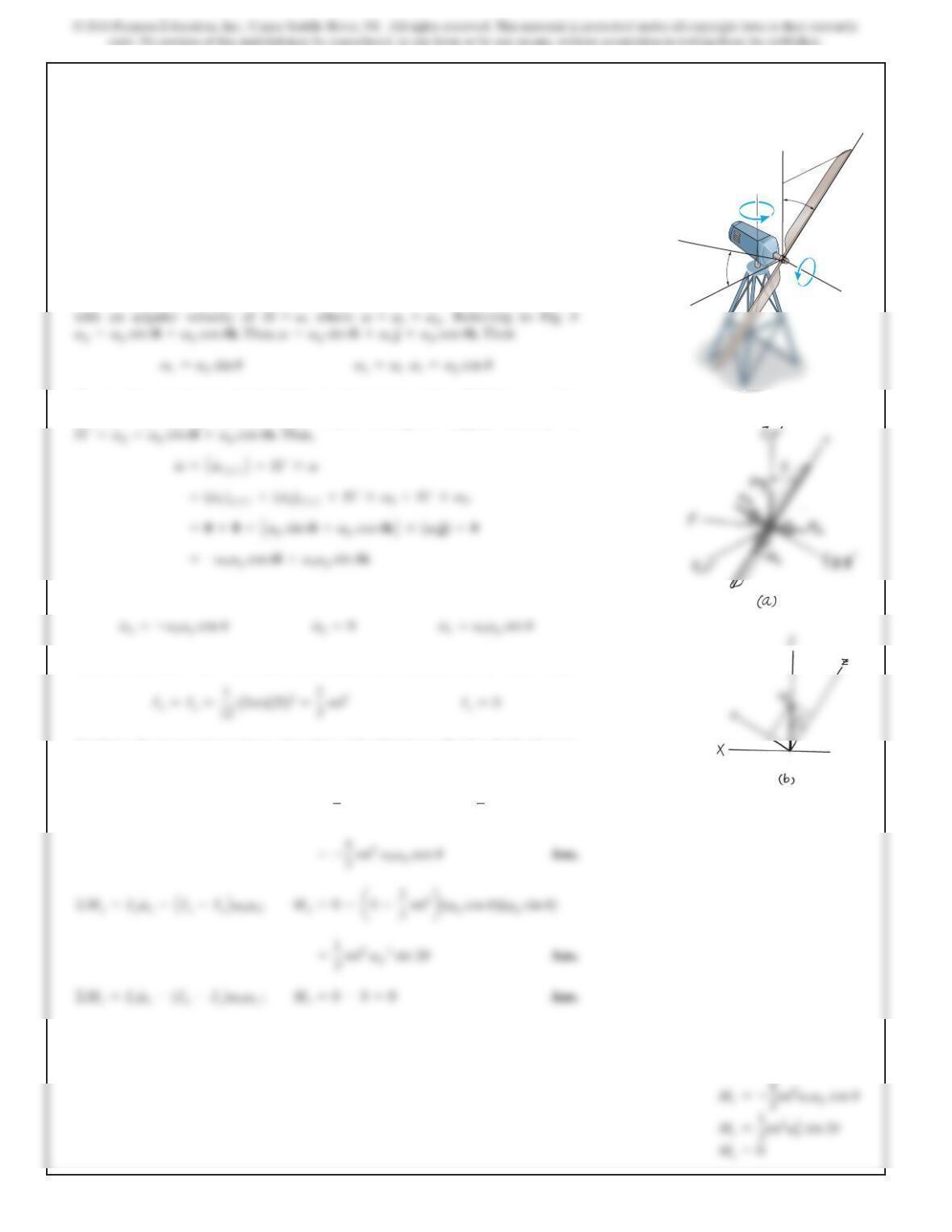
The blades of a wind turbine spin about the shaft Swith a
constant angular speed of , while the frame precesses
about the vertical axis with a constant angular speed of .
Determine the x,y, and zcomponents of moment that the
shaft exerts on the blades as a function of . Consider each
blade as a slender rod of mass mand length l.
u
vp
vs
SOLUTION
The rotating xyz frame shown in Fig. awill be attached to the blade so that it rotates
The angular acceleration of the blade with respect to the XYZ frame can be
obtained by setting another frame having an angular velocity of
Since ,.Thus,
Also, the x,y, and zaxes will remain as principle axes of inertia for the blade.Thus,
Applying the moment equations of motion and referring to the free-body diagram
shown in Fig. a,
v
#
x¿y¿z¿=v
#
Æ=v
x¿y¿z¿
v
#
z
x
y
S
u
u
s
p
©Mx=Ixv
#
x–
A
Iy–Iz
B
vyvz;Mx=2
3ml2(–vsvpcos u)–a2
3ml2–0b(vs)(vpcos u)
v
v
Ans: