Problem 20.104 The inertia matrix of a rigid body in
terms of a body-fixed coordinate system with its origin
at the center of mass is
[I]=41−1
12 0
−10 6
kg-m2.
If the rigid body’s angular velocity is ω=10i−5j+
10k(rad/s), what is its angular momentum about its cen-
ter of mass?
Problem 20.105 What is the moment of inertia of the
rigid body in Problem 20.104 about the axis that passes
through the origin and the point (4, −4, 7) m?
Strategy: Determine the components of a unit vector
parallel to the axis, and use Eq. (20.43).
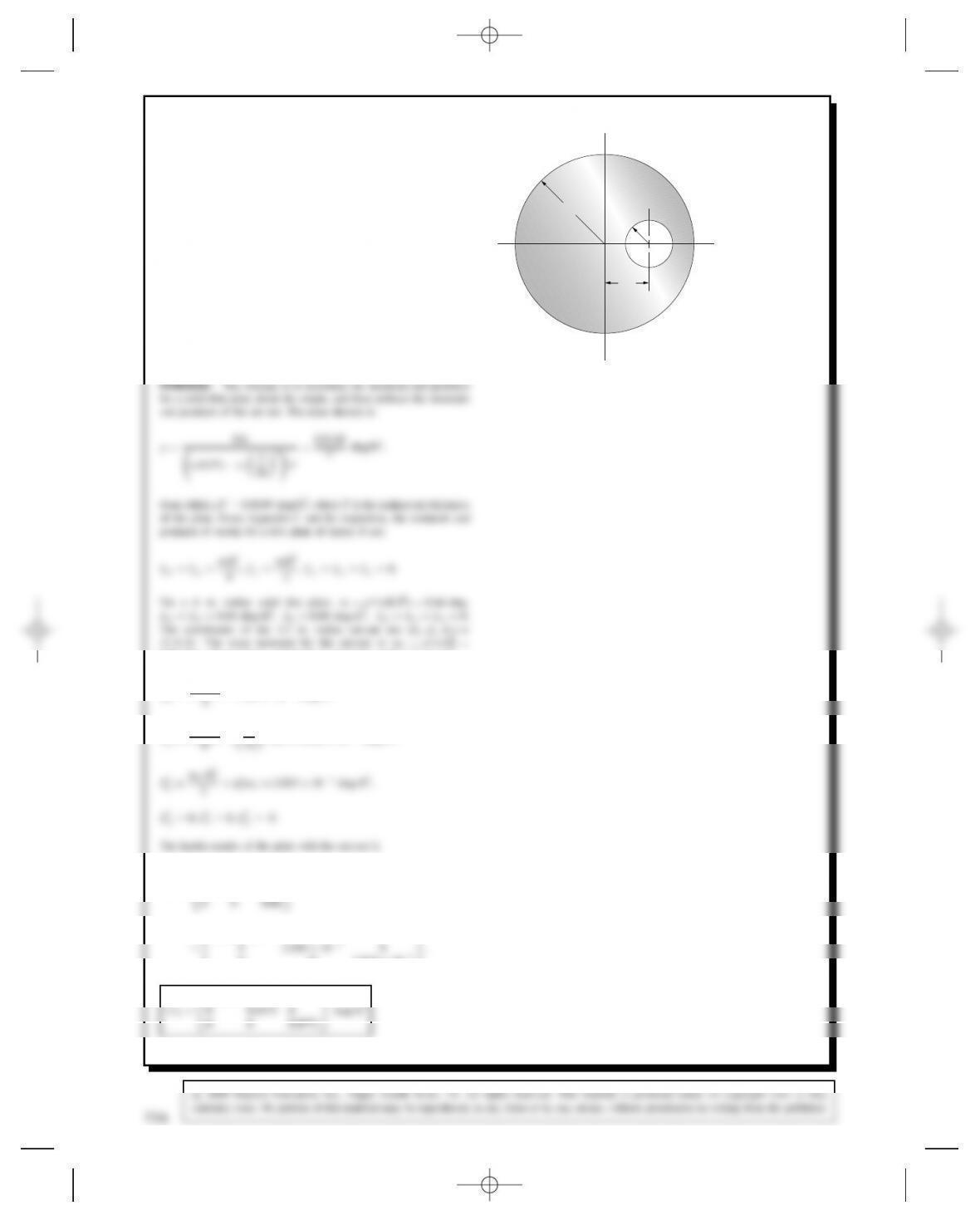
Problem 20.106 Determine the inertia matrix of the
0.6-slug thin plate in terms of the coordinate system
shown.
y
x
6 in 1.5 in
3 in
0.04 slug. The moments and products of inertia of the cut-out are
IC
xx =mCR2
C
IC
yy =mCR2
C
mC=2.656 ×10⁻³slug-ft2,
C
[I]0=
0.04 0 0
00.04 0
1.563 ×10−400
714
Problem 20.107 At t=0, the plate in Problem 20.106
has angular velocity ω=10i+10j(rad/s) and is sub-
jected to the force F=−10k(lb) acting at the point
(0, 6, 0) in. No other forces or couples act on the plate.
What are the components of its angular acceleration at
that instant?
Solution: The coordinates of the center of mass are (−0.01667, 0,
0) ft. The vector from the center of mass to the point of application of
the force is rF/G =0.01667i+0.5j(ft). The moment about the center
of mass of the plate is
ijk
Problem 20.108 The inertia matrix of a rigid body in
terms of a body-fixed coordinate system with its origin
mass?
Solution: Use general motion, Eq. (20.19),
with α=dω
dt =0. The coordinate system is rotating with angular
velocity ω, from which ω=ω. Eq. (20.19) reduces to
Mφx
Problem 20.109 If the total moment about the center
of mass of the rigid body described in Problem 20.108
is zero, what are the components of its angular acceler-
ation?
716
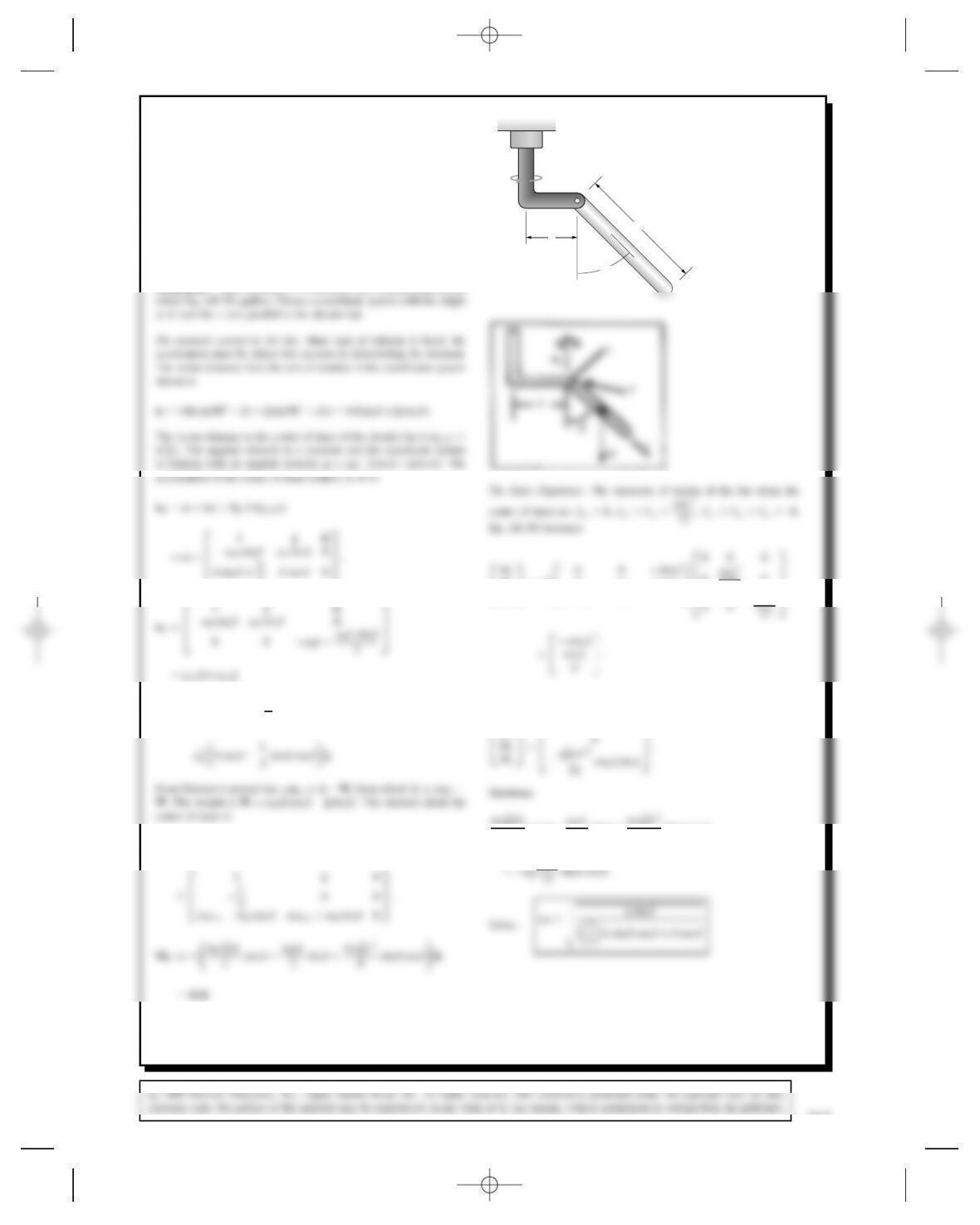
Problem 20.110 The slender bar of length land
mass mis pinned to the L-shaped bar at O. The L-
shaped bar rotates about the vertical axis with a constant
angular velocity ω0. Determine the value of ω0necessary
for the bar to remain at a constant angle βrelative to
the vertical.
β
O
ω0
ω
b
l
Solution: Since the point Ois not fixed, this is general motion, in
aG=−ω2
0+bsin β+L
2sin2βi
MG=rO/G ×A=rO/G ×(maG−W)
Carry out the matrix multiplication:
Mx
0
mω2
0bL
2cos β−mgL
2sin β+mω2
0L2
4sin βcos β
mL2
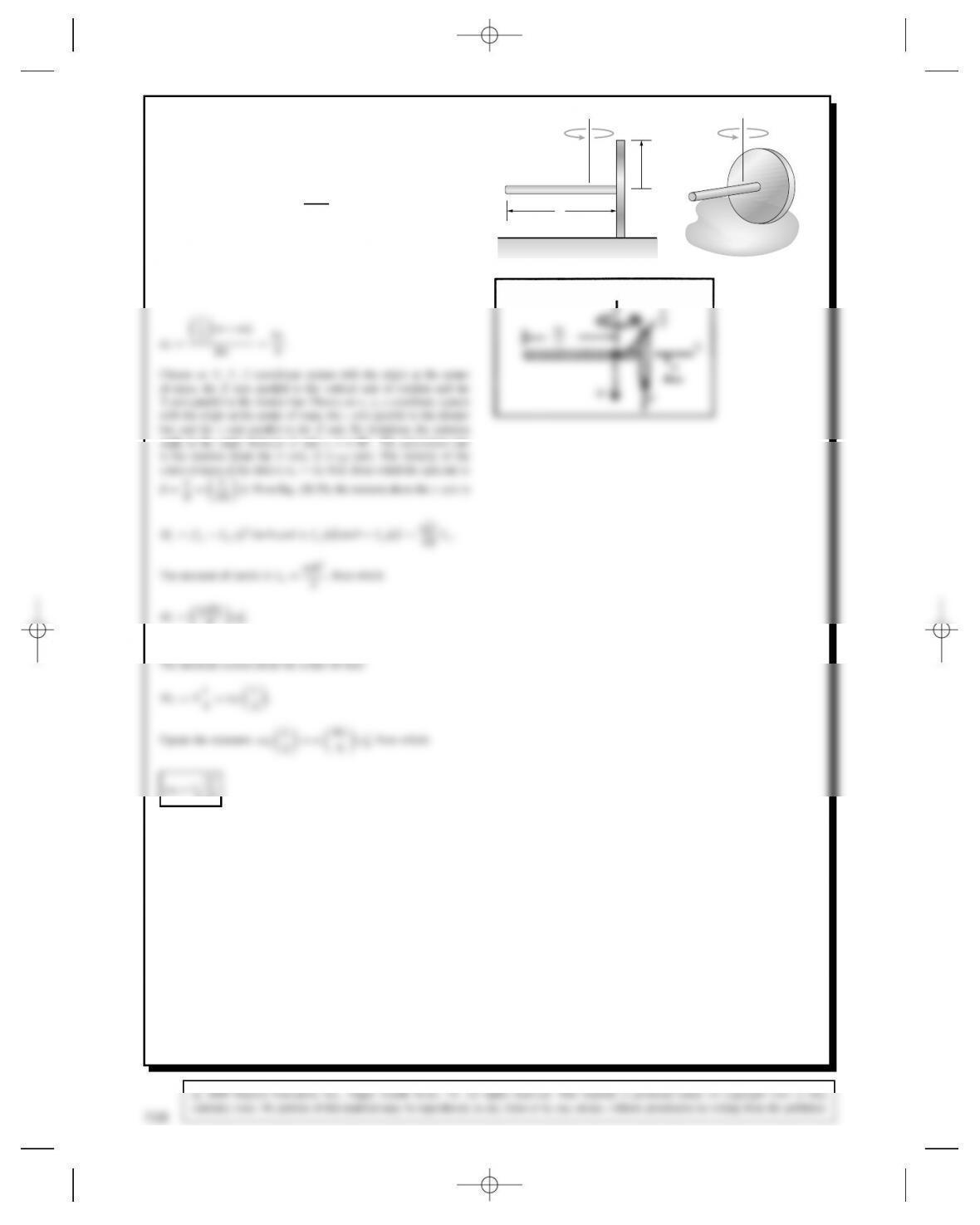
Problem 20.111 A slender bar of length land mass m
is rigidly attached to the center of a thin circular disk of
radius Rand mass m. The composite object undergoes
a motion in which the bar rotates in the horizontal plane
with constant angular velocity ω0about the center of
mass of the composite object and the disk rolls on the
floor. Show that ω0=2√g/R.
R
l
0
ω
0
ω
Solution: Measuring from the left end of the slender bar, the dis-
tance to the center of mass is
2m+mL
y, Z
3L
L
4
718
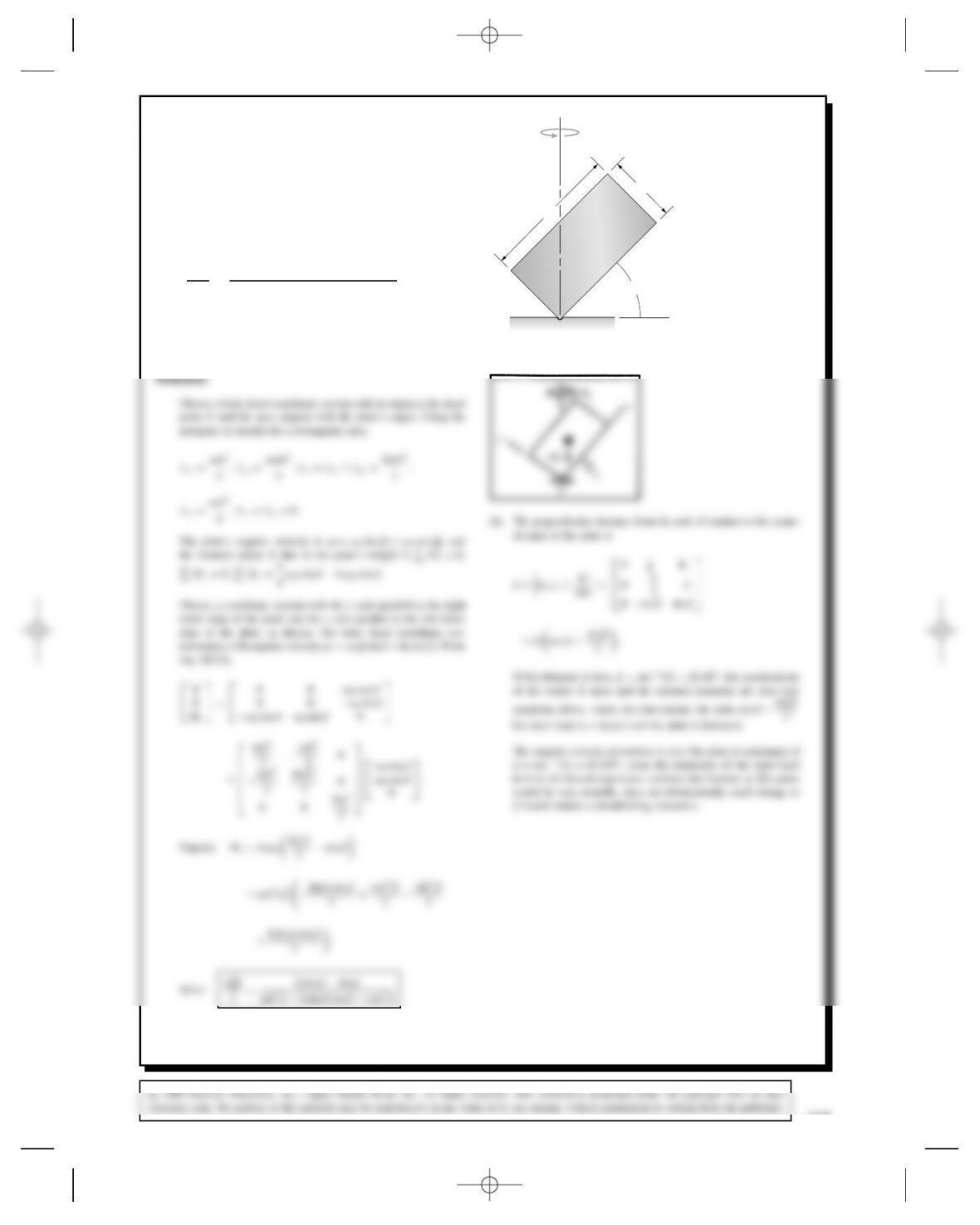
Problem 20.112* The thin plate of mass mspins
about a vertical axis with the plane of the plate
perpendicular to the floor. The corner of the plate at
Orests in an indentation, so that it remains at the same
point on the floor. The plate rotates with constant angular
velocity ω0and the angle βis constant.
(a) Show that the angular velocity ω0is related to the
angle βby
hω2
0
g=2 cos β−sin β
sin2β−2 sin βcos β−cos2β
(b) The equation you obtained in (a) indicates that
ω0=0 when 2 cos β−sin β=0. What is the
interpretation of this result?
2h
O
h
β
ω
0
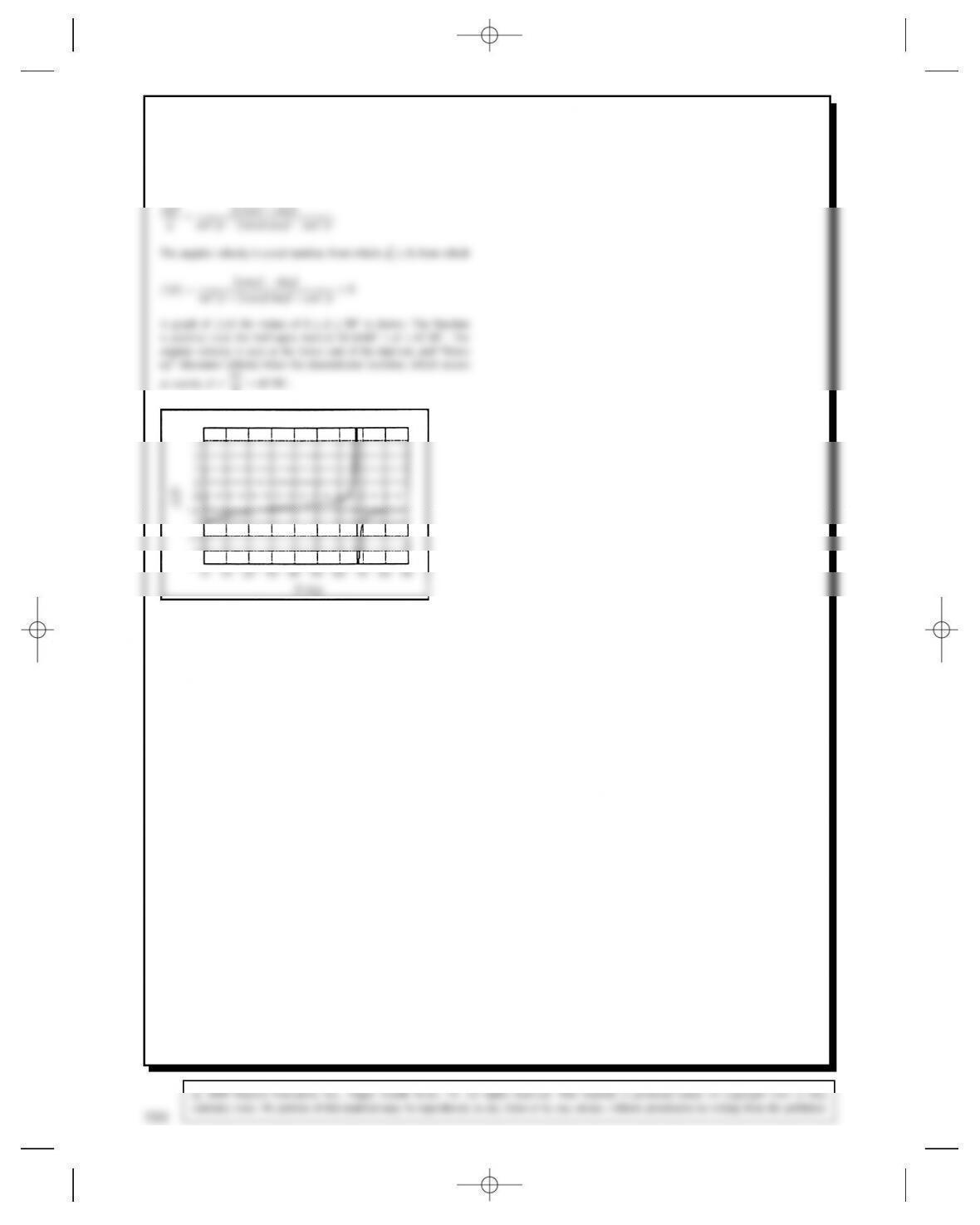
Problem 20.113* In Problem 20.112, determine the
range of values of the angle βfor which the plate will
remain in the steady motion described.
Solution: From the solution to Problem 20.112
8=67.50◦.
f( ) vs
β
β
0 10
20 30 40 50 60 70 80 90
–2
–4
–5
1
2
3
4
5
720
c
2008 Pearson Education, Inc., Upper Saddle River, NJ. All rights reserved. This material is protected under all copyright laws as they
currently exist. No portion of this material may be reproduced, in any form or by any means, without permission in writing from the publisher.
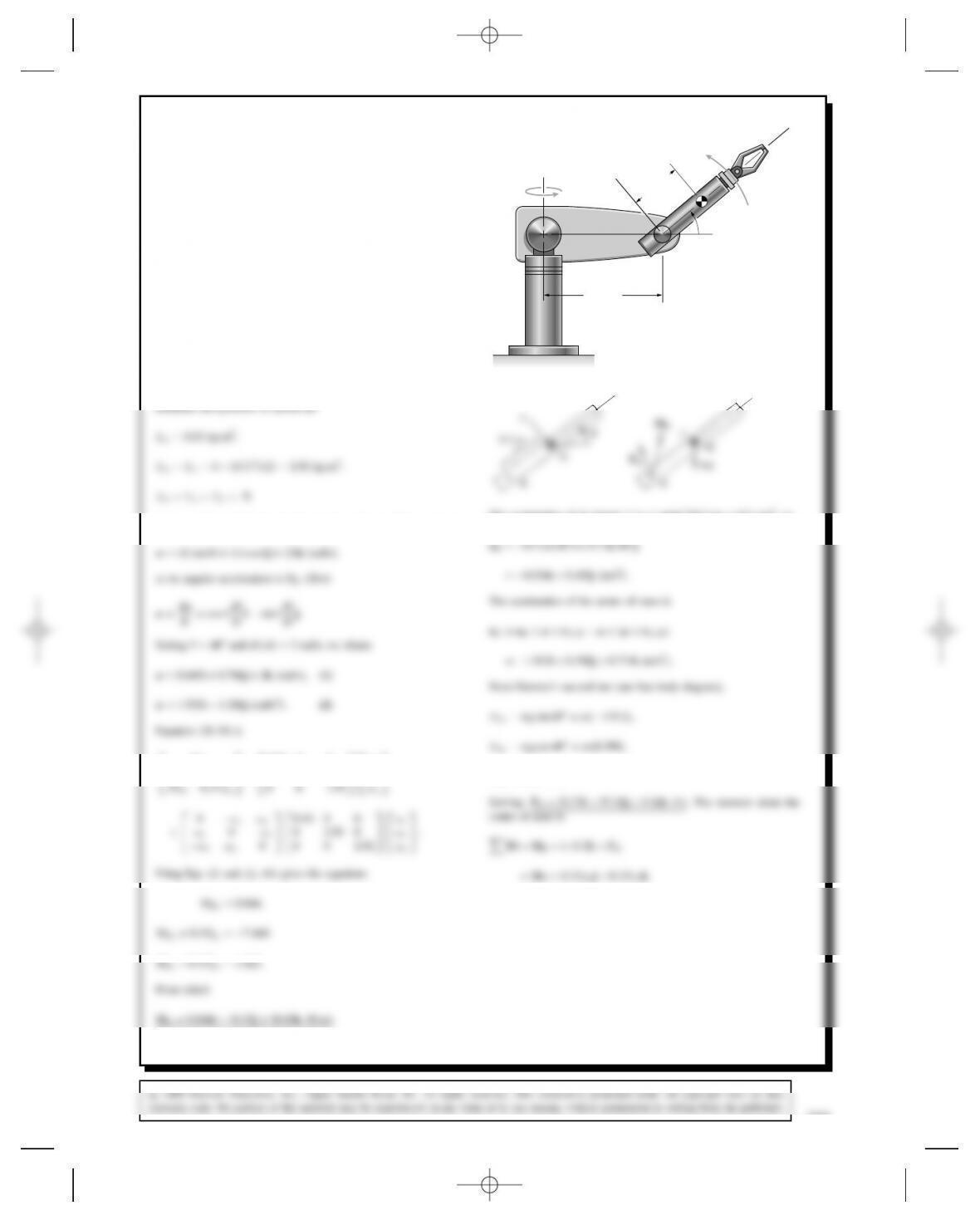
Problem 20.114* Arm BC has a mass of 12 kg, and
its moments and products of inertia, in terms of the coor-
dinate system shown, are Ixx =0.03 kg-m2,Iyy =Izz =
4 kg-m2, and Ixy =Iyz =Ixz =0. At the instant shown,
arm AB is rotating in the horizontal plane with a con-
stant angular velocity of 1 rad/s in the counterclockwise
direction viewed from above. Relative to arm AB, arm
BC is rotating about the zaxis with a constant angu-
lar velocity of 2 rad/s. Determine the force and couple
exerted on arm BC at B.
2 rad/s
C
BA
x
y
1 rad/s
40°
700 mm
300 mm
Solution: In terms of the body-fixed coordinate system shown, the
In terms of the angle θ, the angular velocity of the coordinate system is
MBx
MBy +0.3FBz
=
0.03 0 0
02.92 0
αx
αy
xx
The acceleration of Btoward Ais (1 rad/s)2(0.7m)=0.7 m/s2,so
FBz =m(0.771).
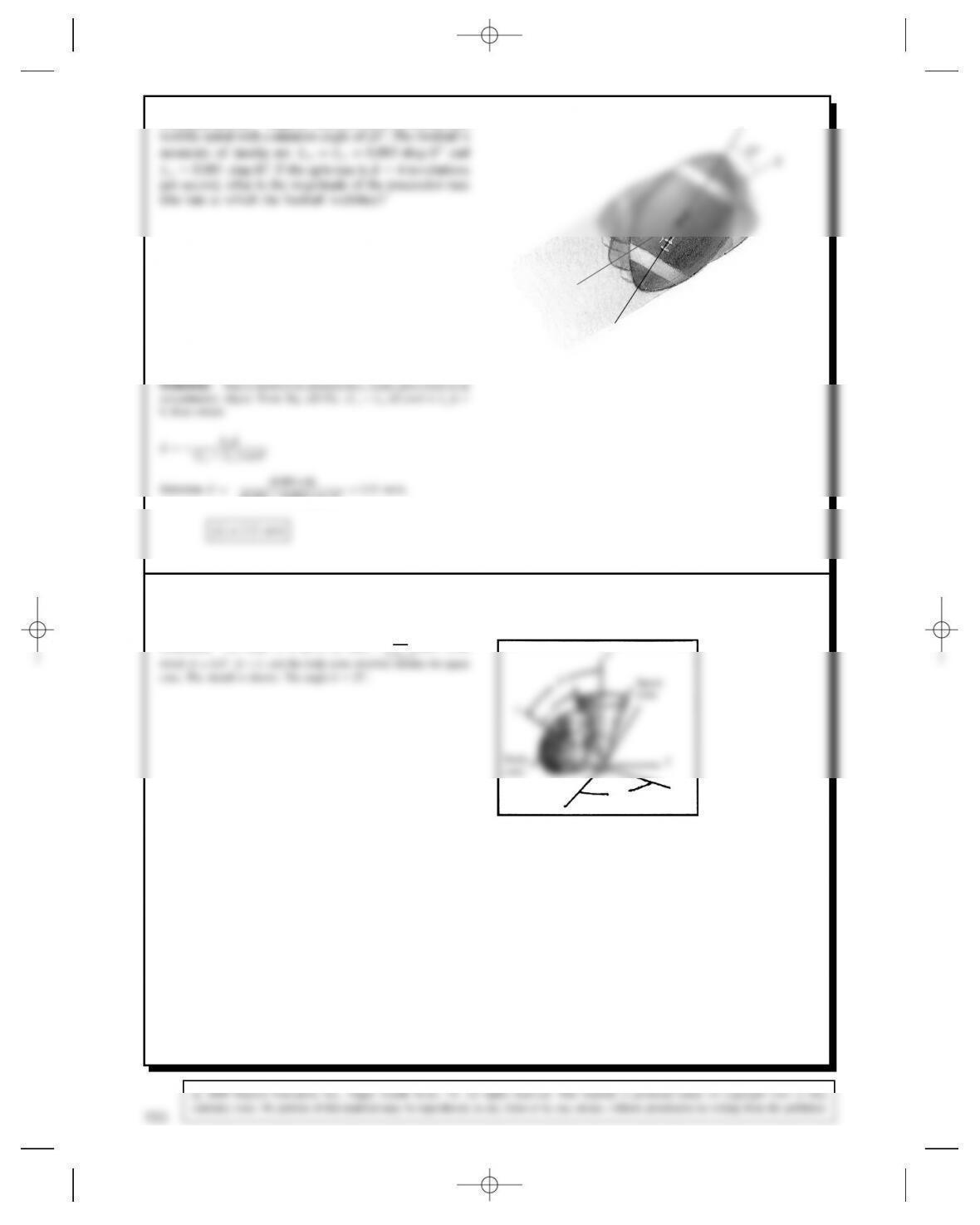
Problem 20.115 Suppose that you throw a football in a
z
(0.001 −0.003)cos 25◦=2.21 rev/s.
Problem 20.116 Sketch the body and space cones for
the motion of the football in Problem 20.115.
Solution: The angle βis given by tan β=Izz
x
X
cone
ψ
722
c
2008 Pearson Education, Inc., Upper Saddle River, NJ. All rights reserved. This material is protected under all copyright laws as they
currently exist. No portion of this material may be reproduced, in any form or by any means, without permission in writing from the publisher.
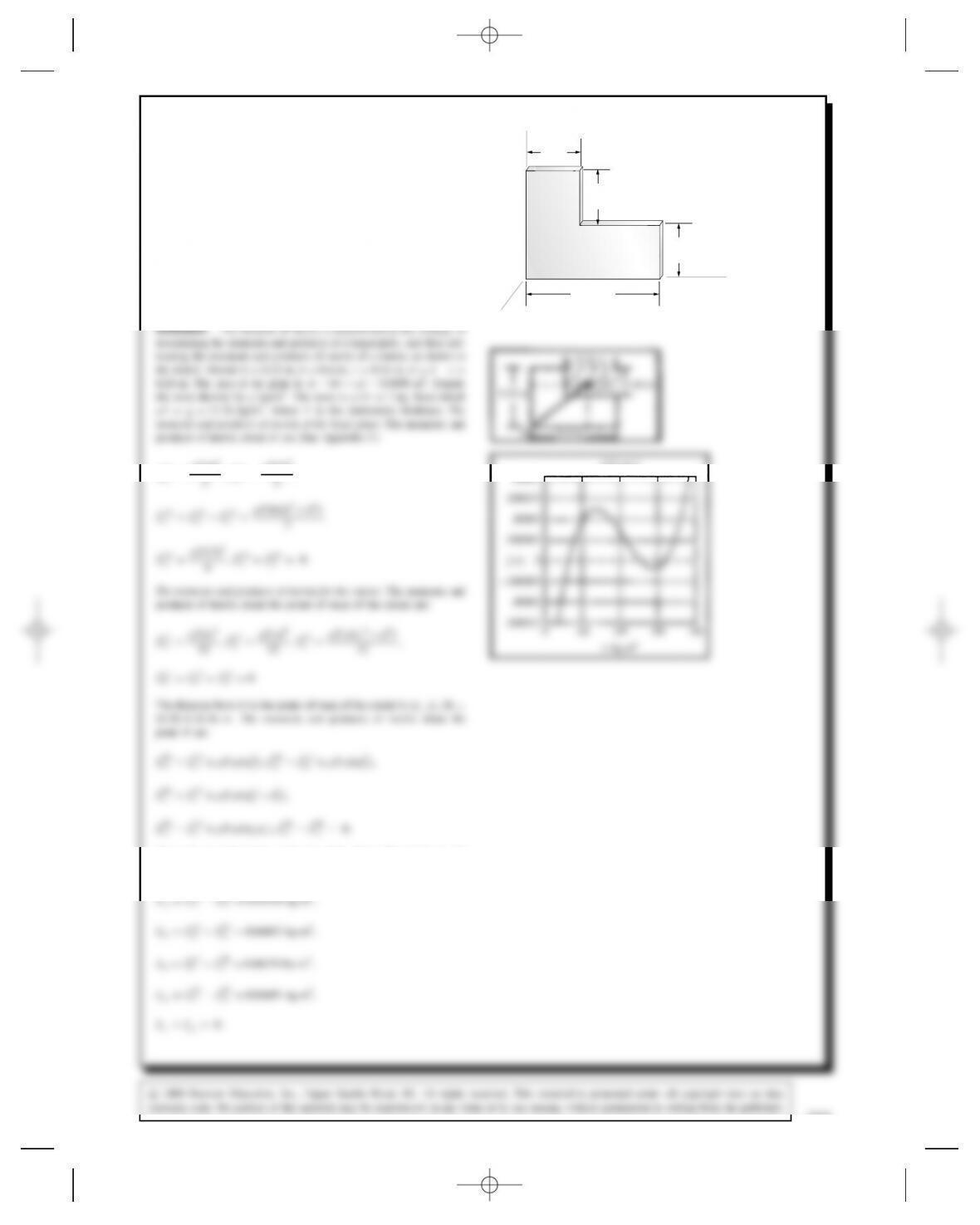
Problem 20.117 The mass of the homogeneous thin
plate is 1 kg. For a coordinate system with its origin at
O, determine the plate’s principal moments of inertia
and the directions of unit vectors parallel to the corre-
sponding principal axes.
x’
y’
z’
160
mm
160
mm
160
mm
O
400 mm
I(p)
xx =ρT bh3
yy =ρT hb3
The moments and products of inertia of the object : The moments and
products of inertia about Oare
Ixx =I(p)
xx −I(0)
xx =0.02316 kg-m2,
Iyy =I(p)
yy −I(0)
yy =0.04053 kg-m2,
Izz =I(p)
zz −I(0)
zz =0.06370 kg-m2,
Ixy =I(p)
xy −I(0)
xy =0.01691 kg-m2,
Ixz =Iyz =0.
f (I) vs I
.00002
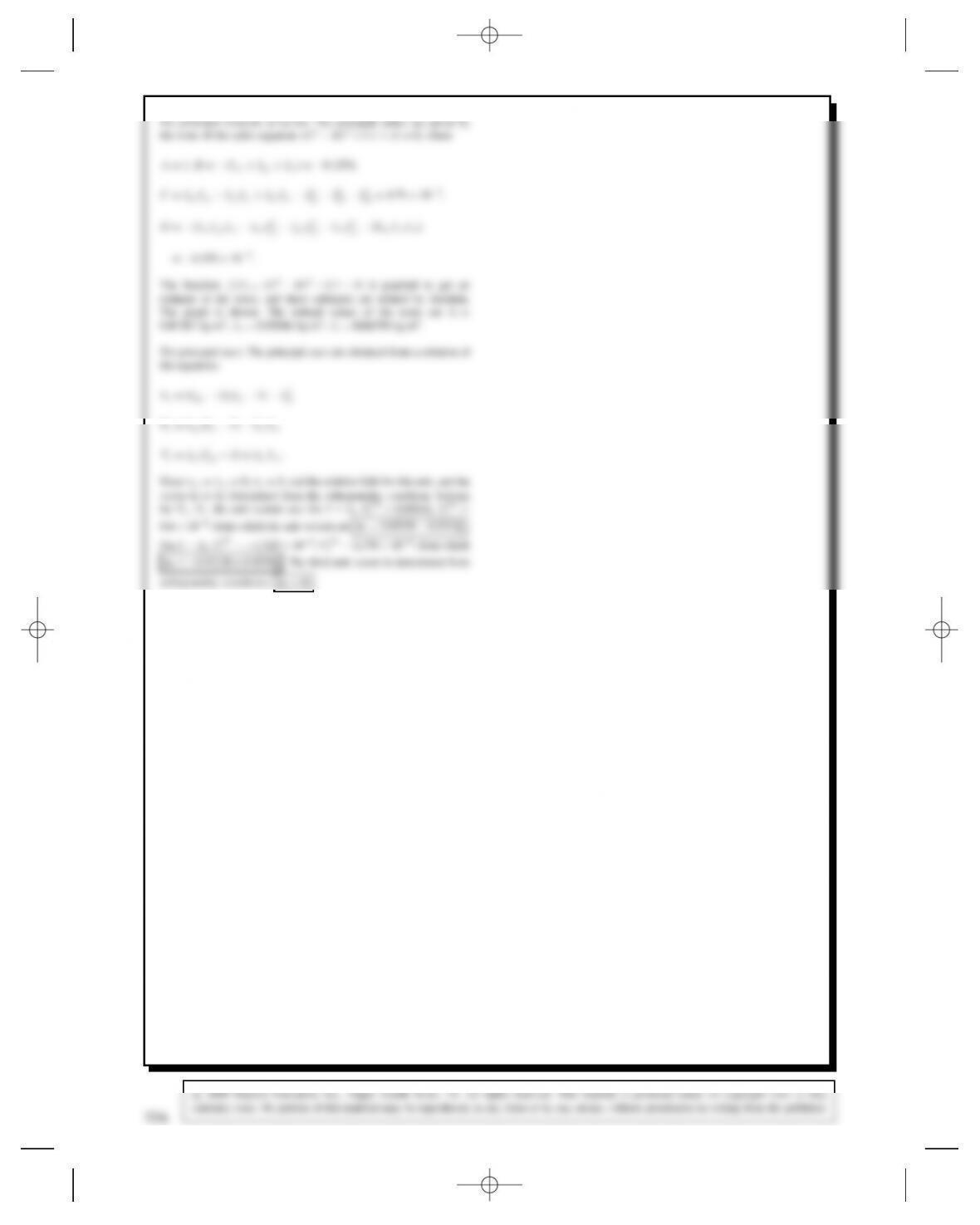
724
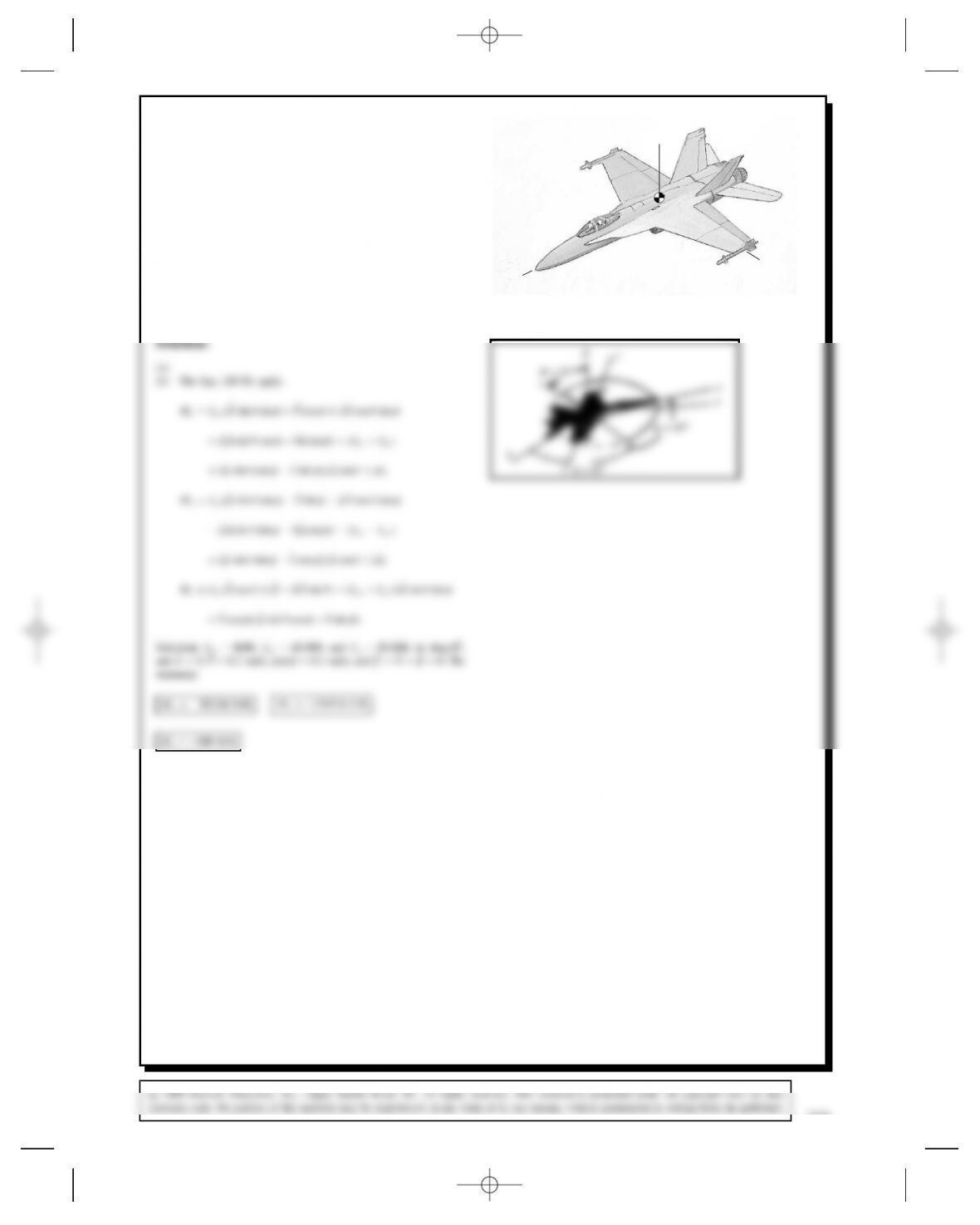
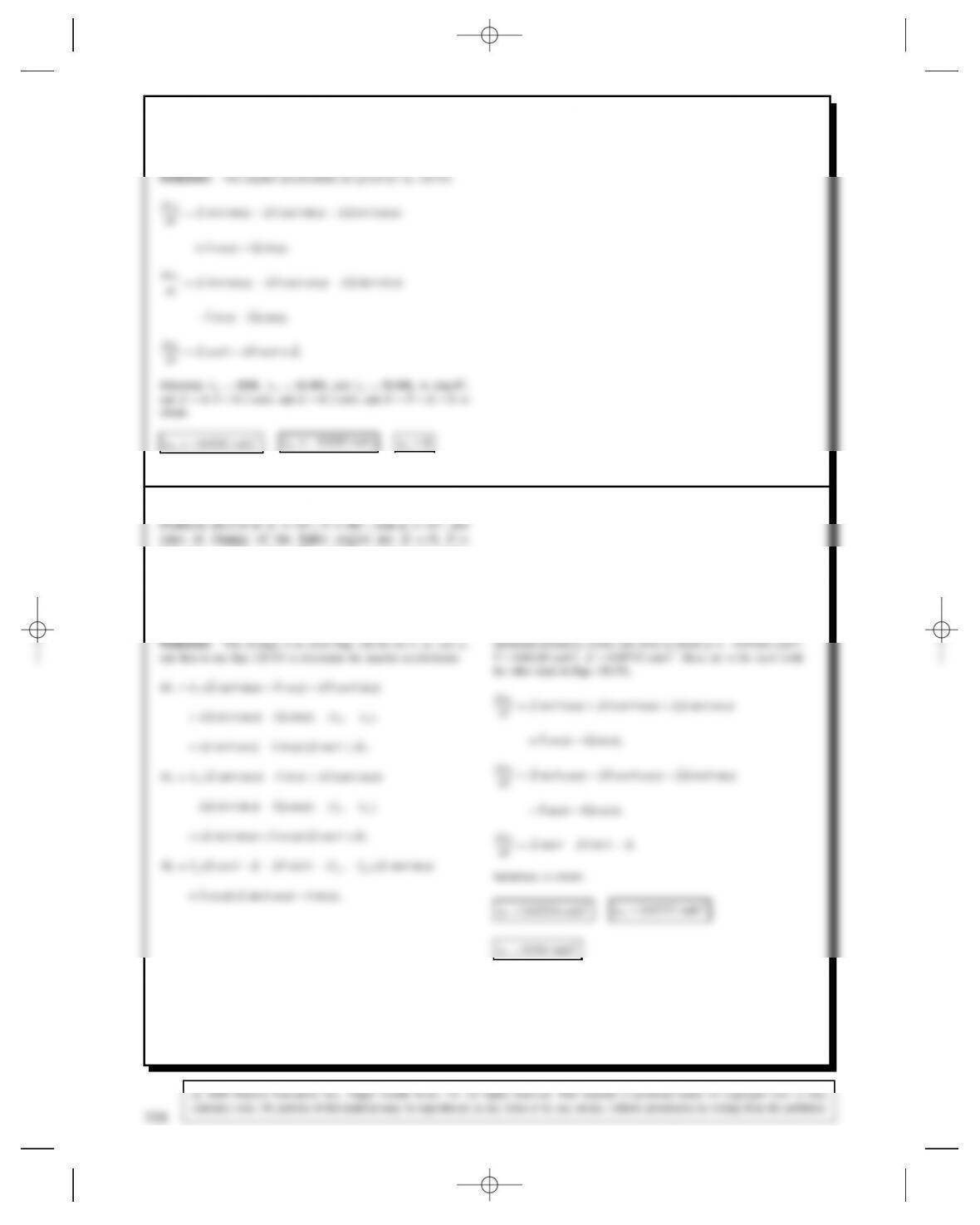
Problem 20.118 The airplane’s principal moments of
inertia, in slug-ft2, are Ixx =8000, Iyy =48,000, and
Izz =50,000.
(a) The airplane begins in the reference position shown
and maneuvers into the orientation ψ=θ=φ=
45◦. Draw a sketch showing the plane’s orientation
relative to the XY Z system.
(b) If the airplane is in the orientation described in (a),
the rates of change of the Euler angles are ˙
ψ=0,
˙
θ=0.2 rad/s, and ˙
φ=0.2 rad/s, and the second
derivatives of the angles with respect to time are
zero, what are the components of the total moment
about the airplane’s center of mass?
Z, z
X, x
Y, y
Problem 20.119 What are the x,y, and zcomponents
of the angular acceleration of the airplane described in
Problem 20.118?
Problem 20.120 If the orientation of the airplane in
0.2 rad/s, and ˙
φ=0.1 rad/s, and the components of the
total moment about the center of mass of the plane
are Mx=400 ft-lb, My=1200 ft-lb, and Mz=
0, what are the x,y, and zcomponents of the airplane’s
angular acceleration?
726