985
19–1.
SOLUTION
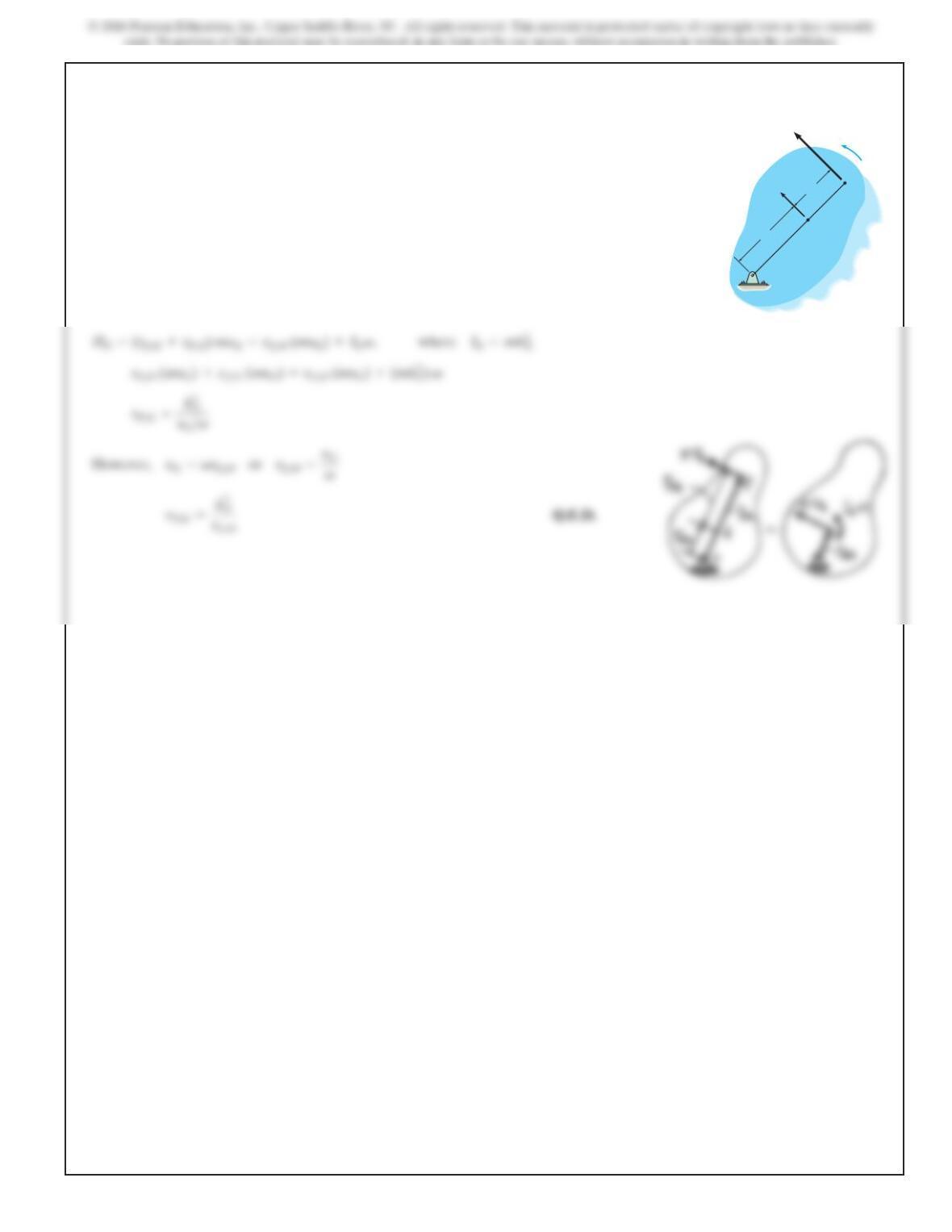
The rigid body (slab) has a mass mand rotates with an
angular velocity about an axis passing through the fixed
point O.Show that the momenta of all the particles
composing the body can be represented by a single vector
having a magnitude and acting through point P,called
the center of percussion,which lies at a distance
from the mass center G.Here is the
radius of gyration of the body,computed about an axis
perpendicular to the plane of motion and passing through G.
kG
rP>G=k2
G>rG>O
mvG
V
mv
G
vG
G
V
P
rP/G
rG/O
O
986
19–2.
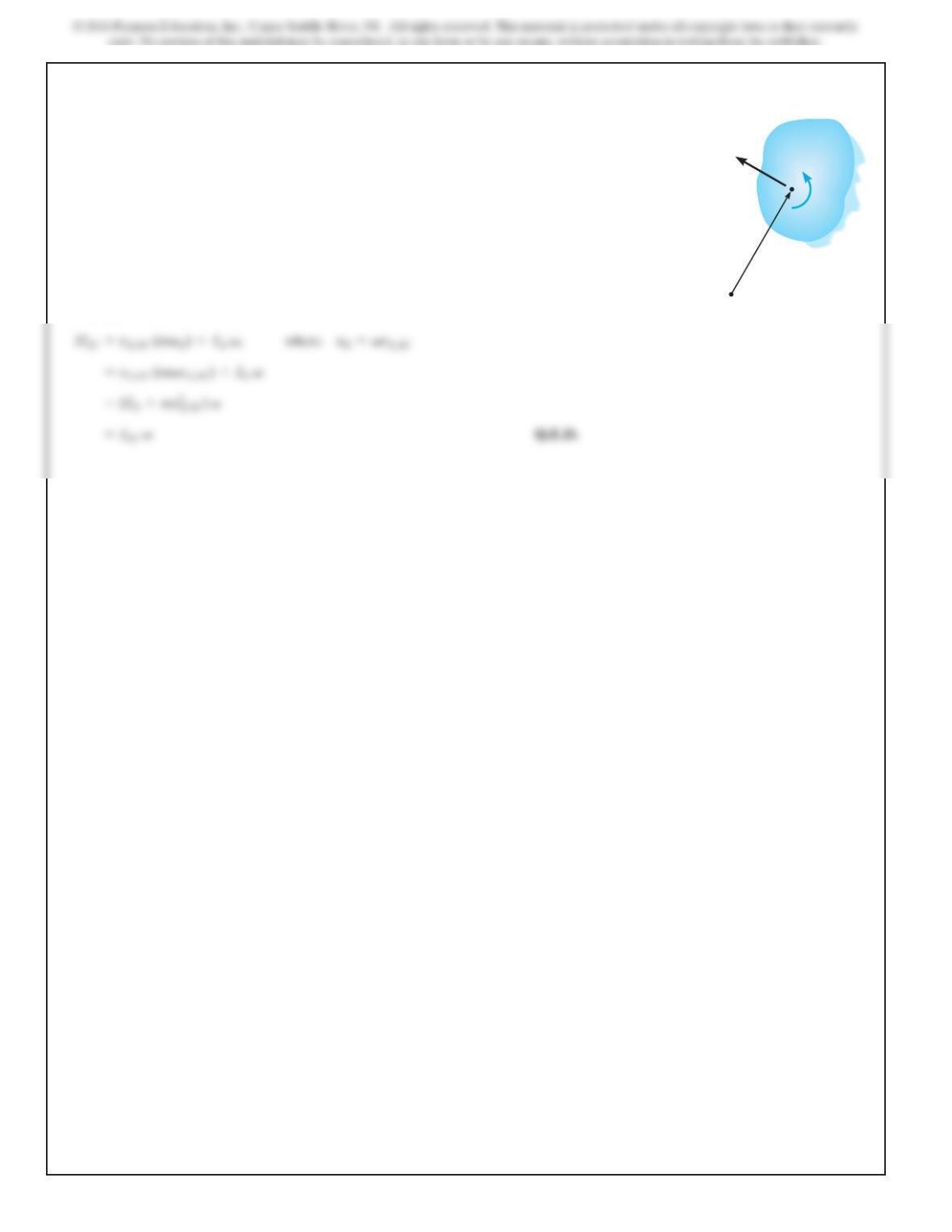
At a given instant, the body has a linear momentum
and an angular momentum computed
about its mass center. Show that the angular momentum of
the body computed about the instantaneous center of zero
velocity IC can be expressed as , where
represents the body’s moment of inertia computed about
the instantaneous axis of zero velocity. As shown, the IC is
located at a distance away from the mass center G.rG>IC
IIC
HIC =IICV
HG=IGVL=mvG
SOLUTION
GIGV
rG/IC
IC
mvG
987
19–3.
SOLUTION
Since , the linear momentum . Hence the angular momentum
L=myG=0yG=0
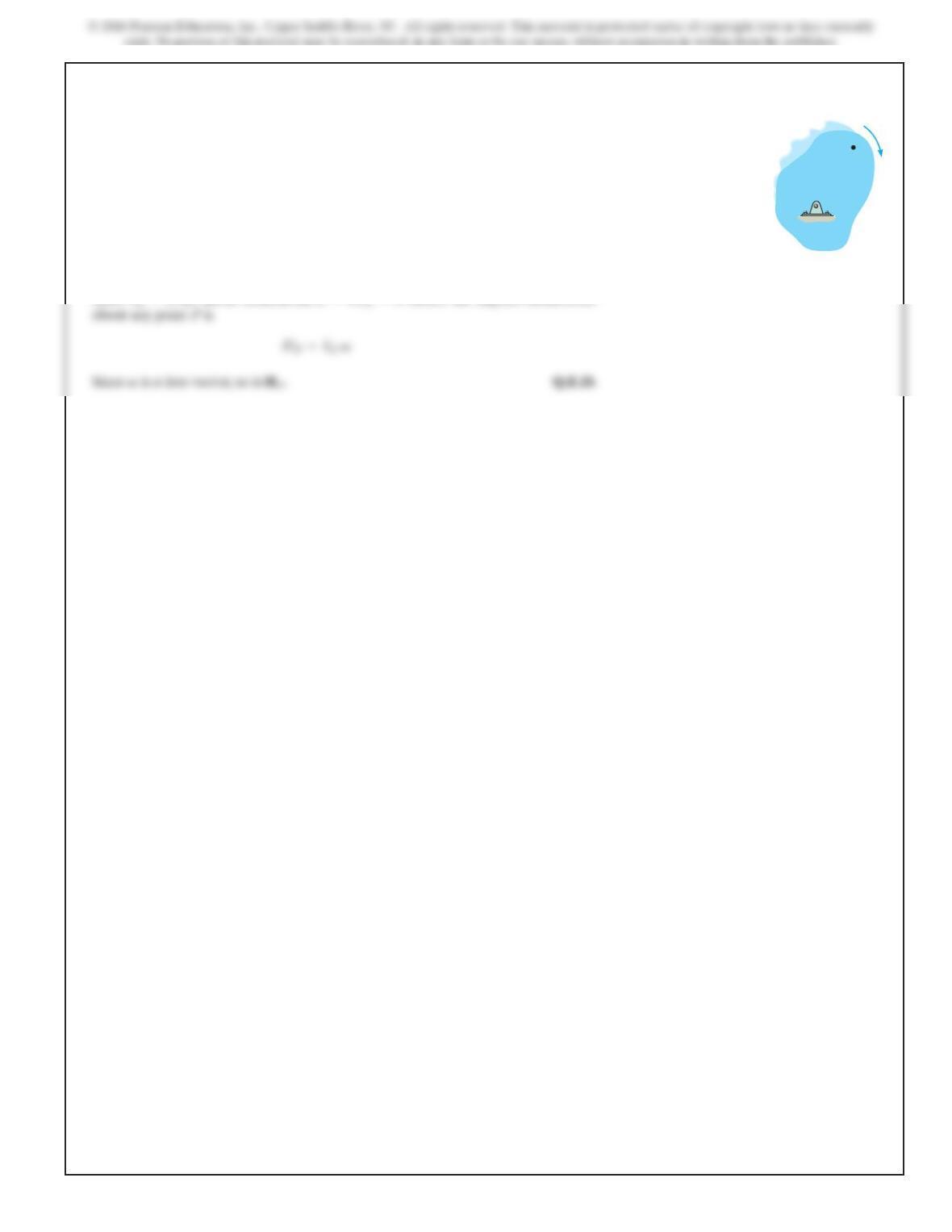
Show that if a slab is rotating about a fixed axis perpendicular
to the slab and passing through its mass center G,the angular
momentum is the same when computed about any other
point P.
P
G
V
988
SOLUTION
Equilibrium. Since slipping occurs at brake pad,
F
f
=
mk
N=0.3 N
.
F
Principle of Impulse and Momentum. The mass moment of inertia of the disk about
1
It is required that v
2=0
. Assuming that
t72 s
,
Since
t72 s
, the assumption was correct.
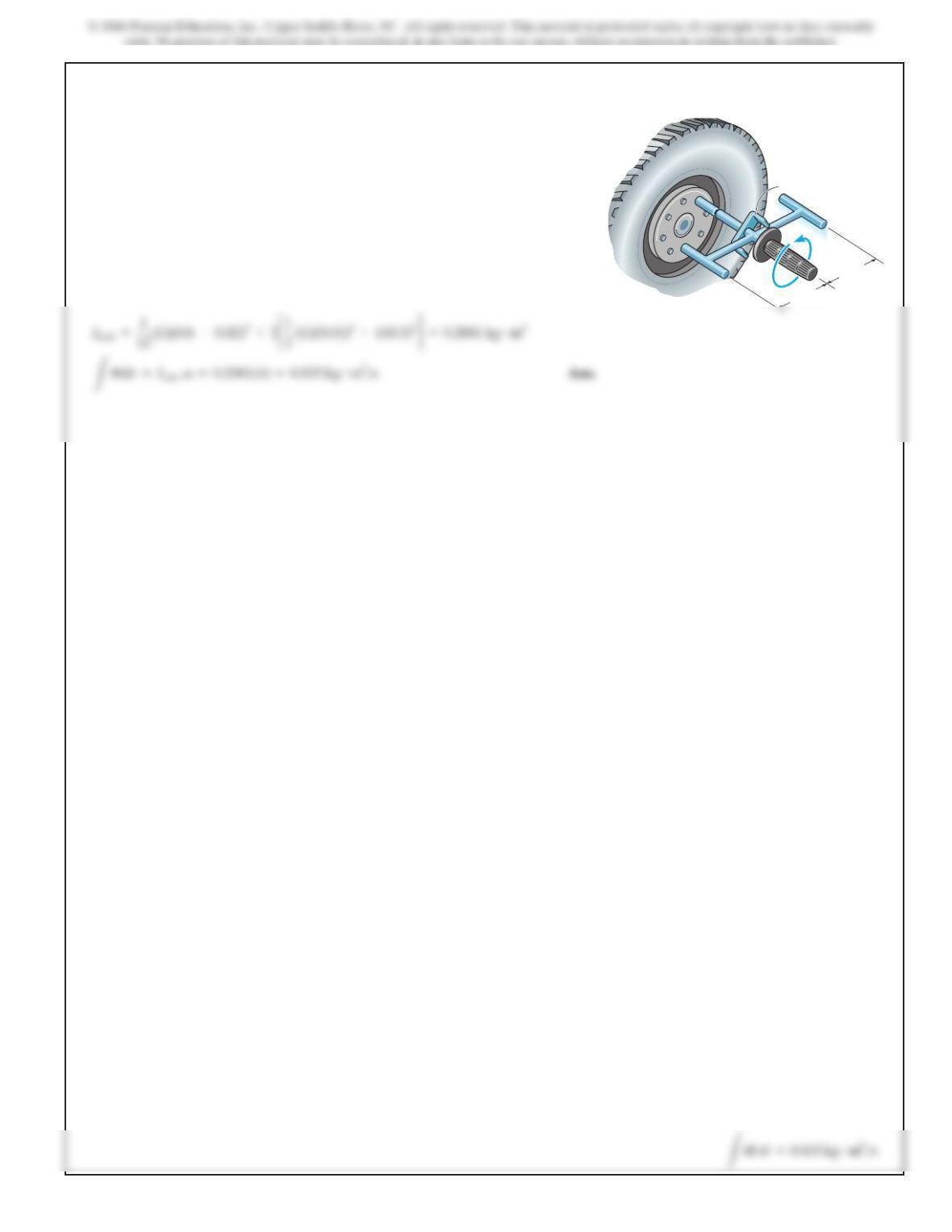
*19–4.
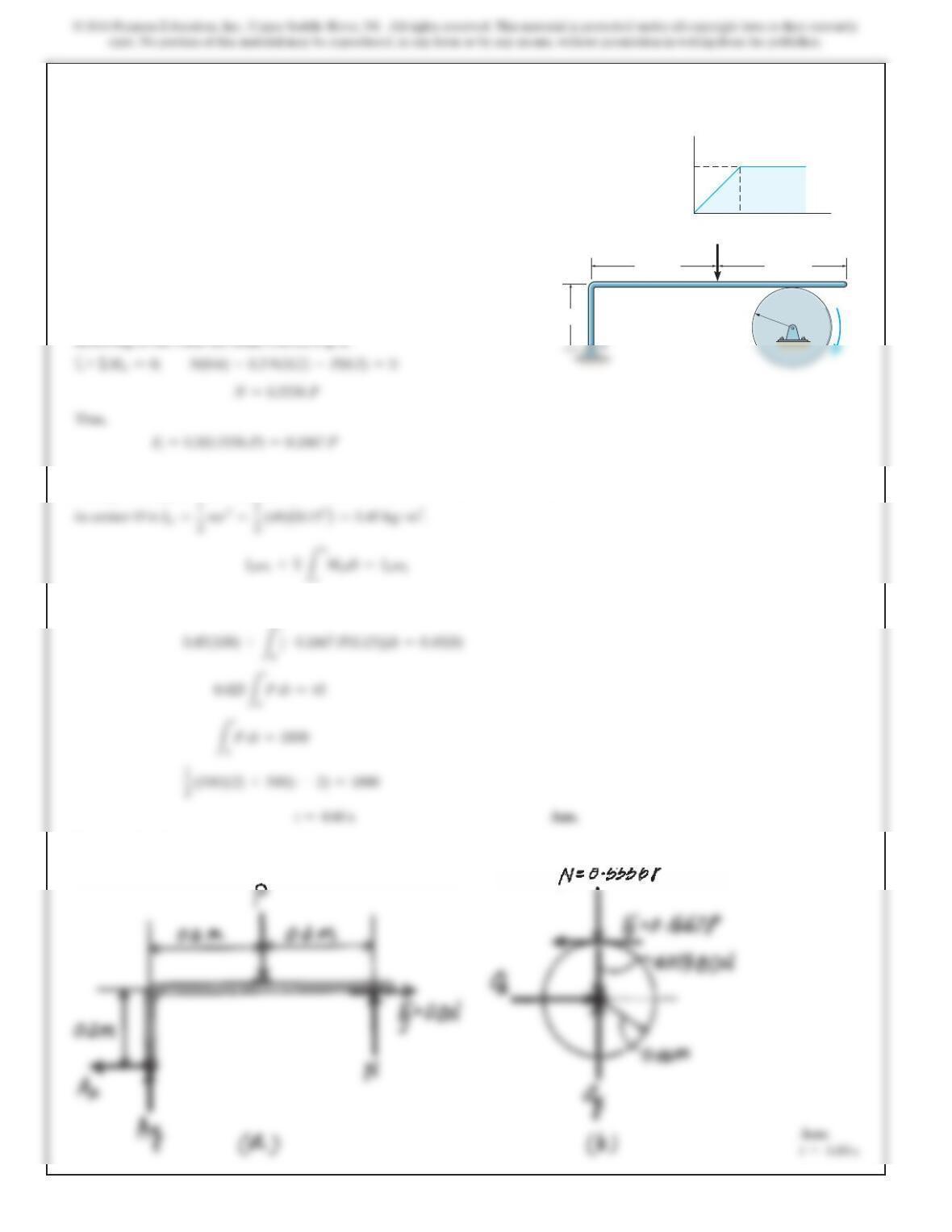
The 40-kg disk is rotating at V
=100 rad>s.
When the force
P is applied to the brake as indicated by the graph. If the
coefficient of kinetic friction at B is m
k=0.3,
determine
thetime t needed to stay the disk from rotating. Neglect the
thickness of the brake.
150 mm
O
300 mm
300 mm
200 mm
P
B
P (N)
500
2t
(s)
V
989
19–5.
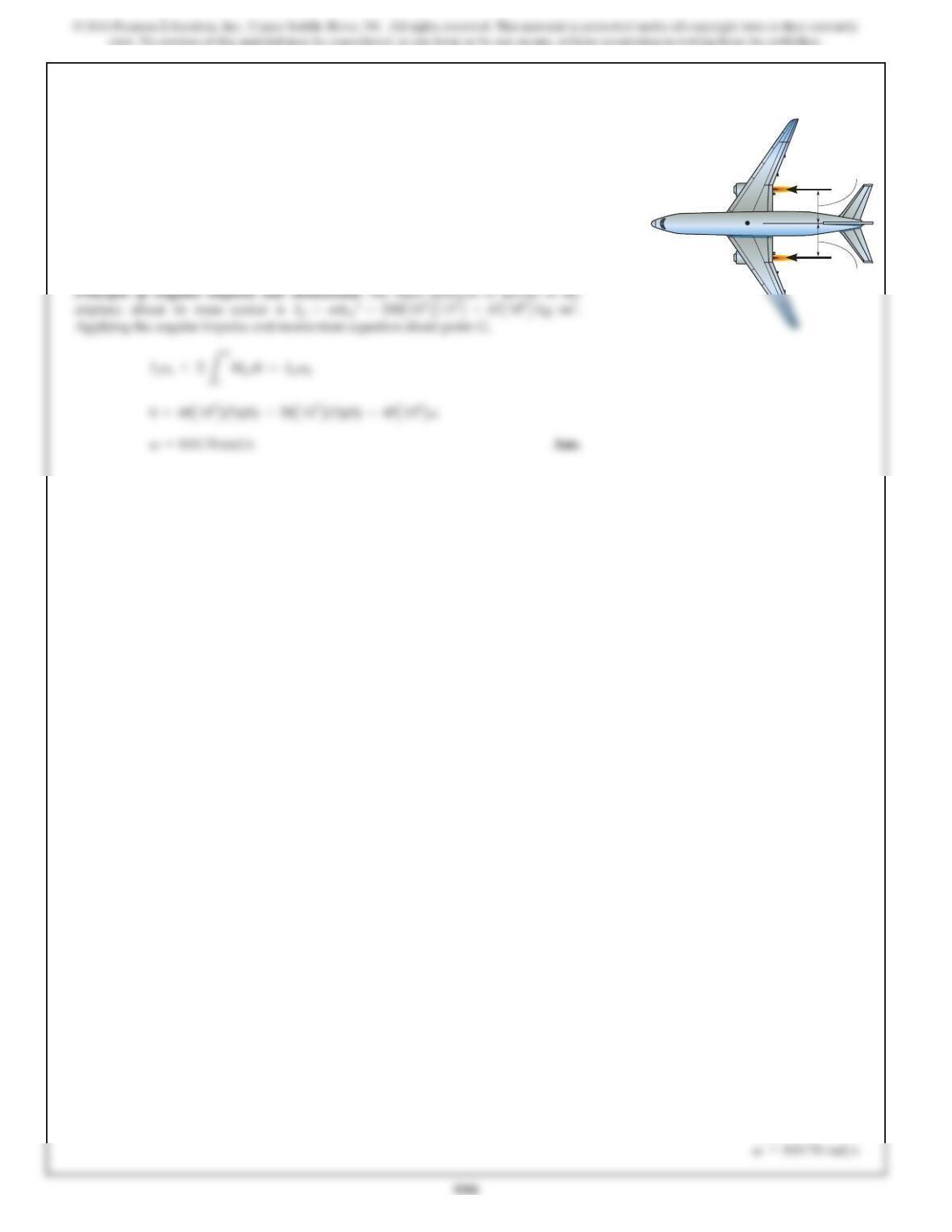
The impact wrench consists of a slender 1-kg rod AB which
is 580 mm long, and cylindrical end weights at Aand Bthat
each have a diameter of 20 mm and a mass of 1 kg.This
which are attached to the lug nut on the wheel of a car.If
the rod AB is given an angular velocity of 4 and it
strikes the bracket Con the handle without rebounding,
determine the angular impulse imparted to the lug nut.
rad>s
SOLUTION
A
B
300 mm
300 mm
C
assembly is free to turn about the handle and socket,
Ans:
19–6.
8 m
8 m
A
G
B
T
A
40 kN
TB 20 kN
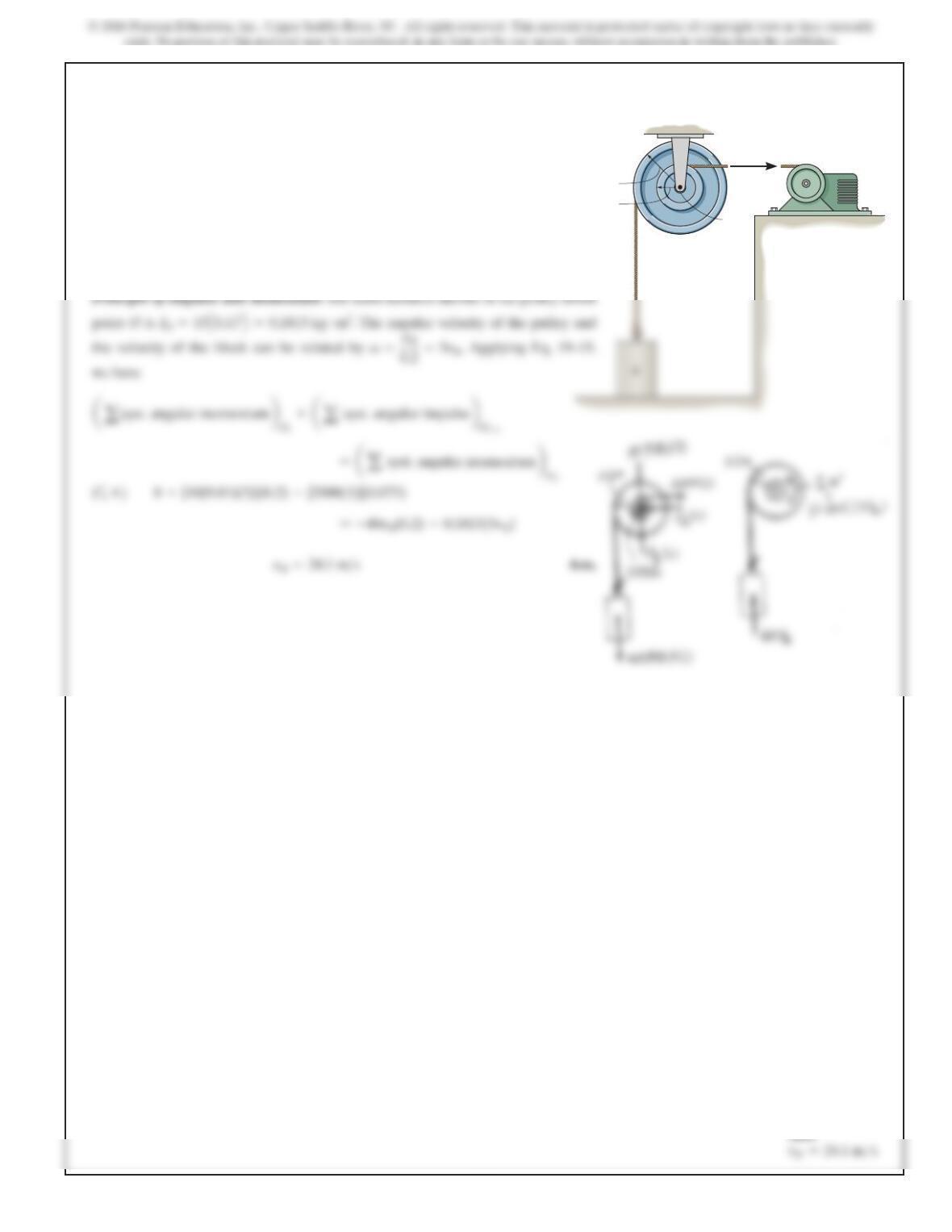
The airplane is traveling in a straight line with a speed of
300 kmh, when the engines Aand Bproduce a thrust of
and , respectively. Determine the
angular velocity of the airplane in .The plane has a
mass of 200 Mg, its center of mass is located at G,and its
radius of gyration about Gis .kG=15 m
t=5 s
T
B=20 kNT
A=40 kN
>
SOLUTION
Ans:
991
19–7.
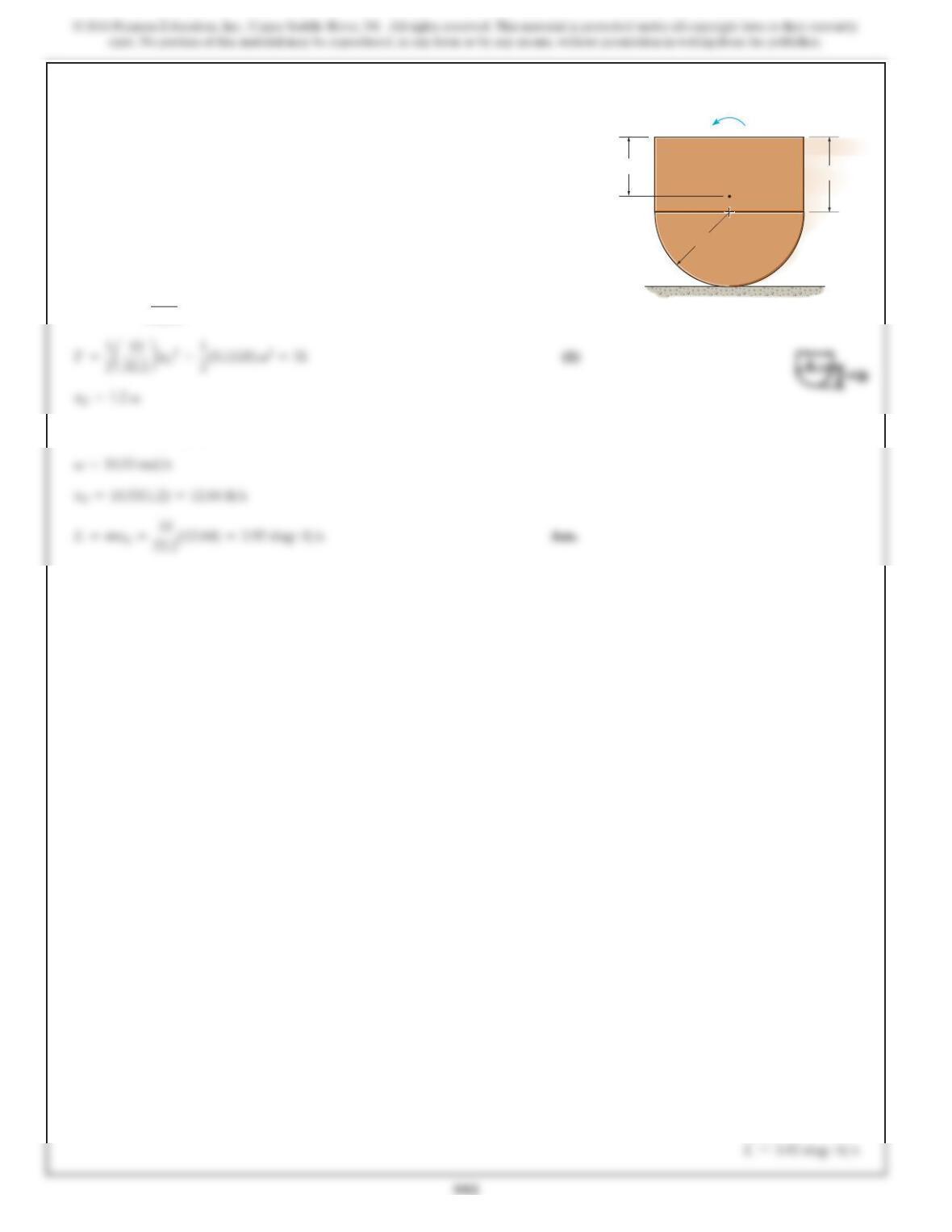
The double pulley consists of two wheels which are attached
to one another and turn at the same rate.The pulley has a
mass of 15 kg and a radius of gyration of If
the block at Ahas a mass of 40 kg, determine the speed
of the block in 3 s after a constant force of 2 kN is applied
to the rope wrapped around the inner hub of the pulley.The
block is originally at rest.
kO=110 mm.
200 mm
75 mm
O
2kN
SOLUTION
Ans:
*19–8.
1 ft
1 ft
0.8 ft
G
The assembly weighs 10 lb and has a radius of gyration
about its center of mass G.The kinetic energy
of the assembly is when it is in the position shown.
If it is rolling counterclockwise on the surface without
slipping,determine its linear momentum at this instant.
31 ft#lb
kG=0.6 ft
SOLUTION
Substitute into Eq.(1),
IG=(0.6)2a10
32.2b=0.1118 slug #ft2
Ans:
993
19–9.
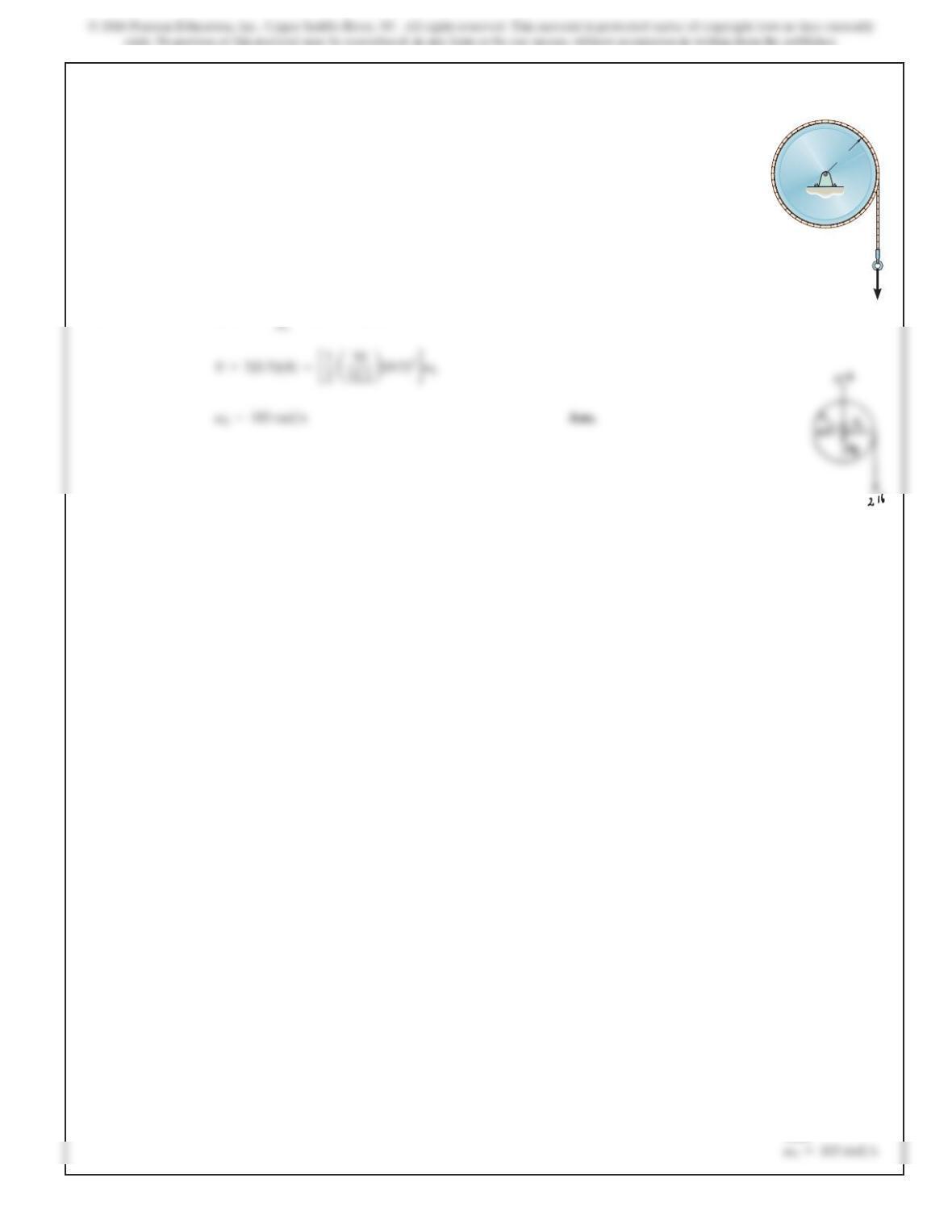
The disk has a weight of 10 lb and is pinned at its center O.
If a vertical force of is applied to the cord wrapped
around its outer rim, determine the angular velocity of the
disk in four seconds starting from rest. Neglect the mass of
the cord.
P=2lb
SOLUTION
c
+)IOv1+©
MOdt =IOv2
(
0.5 ft
O
P
Ans:
994
19–10.
P 200 N
BA
O
0.15 m
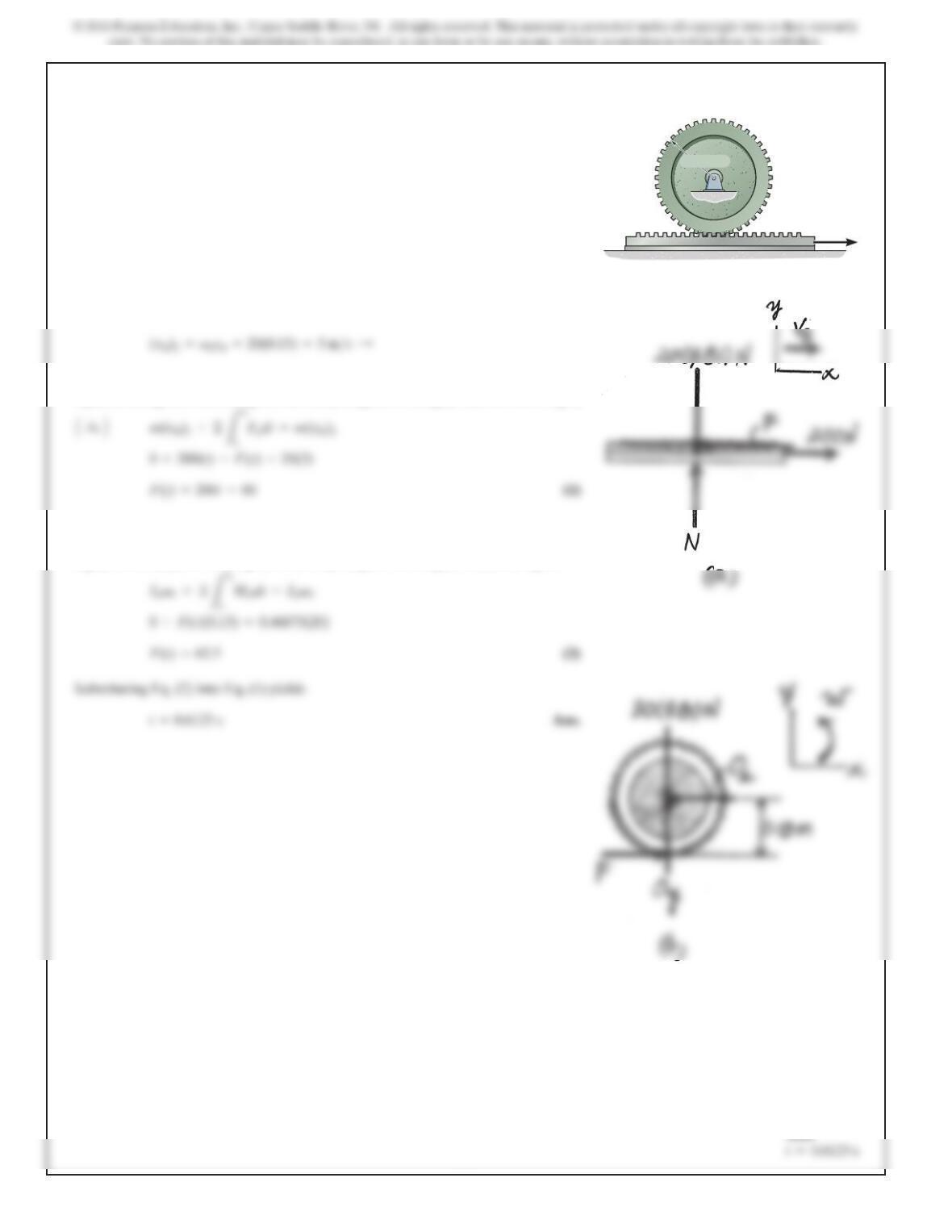
The 30-kg gear Ahas a radius of gyration about its center of
mass Oof .If the 20-kg gear rack Bis
subjected to a force of , determine the time
required for the gear to obtain an angular velocity of
,starting from rest.The contact surface between the
gear rack and the horizontal plane is smooth.
20 rad>s
P=200 N
kO=125 mm
SOLUTION
Kinematics: Since the gear rotates about the fixed axis,the final velocity of the gear
rack is required to be
Principle of Impulse and Momentum: Applying the linear impulse and momentum
equation along the xaxis using the free-body diagram of the gear rack shown in Fig.a,
The mass moment of inertia of the gear about its mass center is
.Writing the angular impulse and momentum
equation about point Ousing the free-body diagram of the gear shown in Fig. b,
mkO
2=30(0.1252)=0.46875 kg#m2
IO =
Ans:
19–11.
SOLUTION
Principle of Impulse and Momentum: The mass moment inertia of the pulley about its
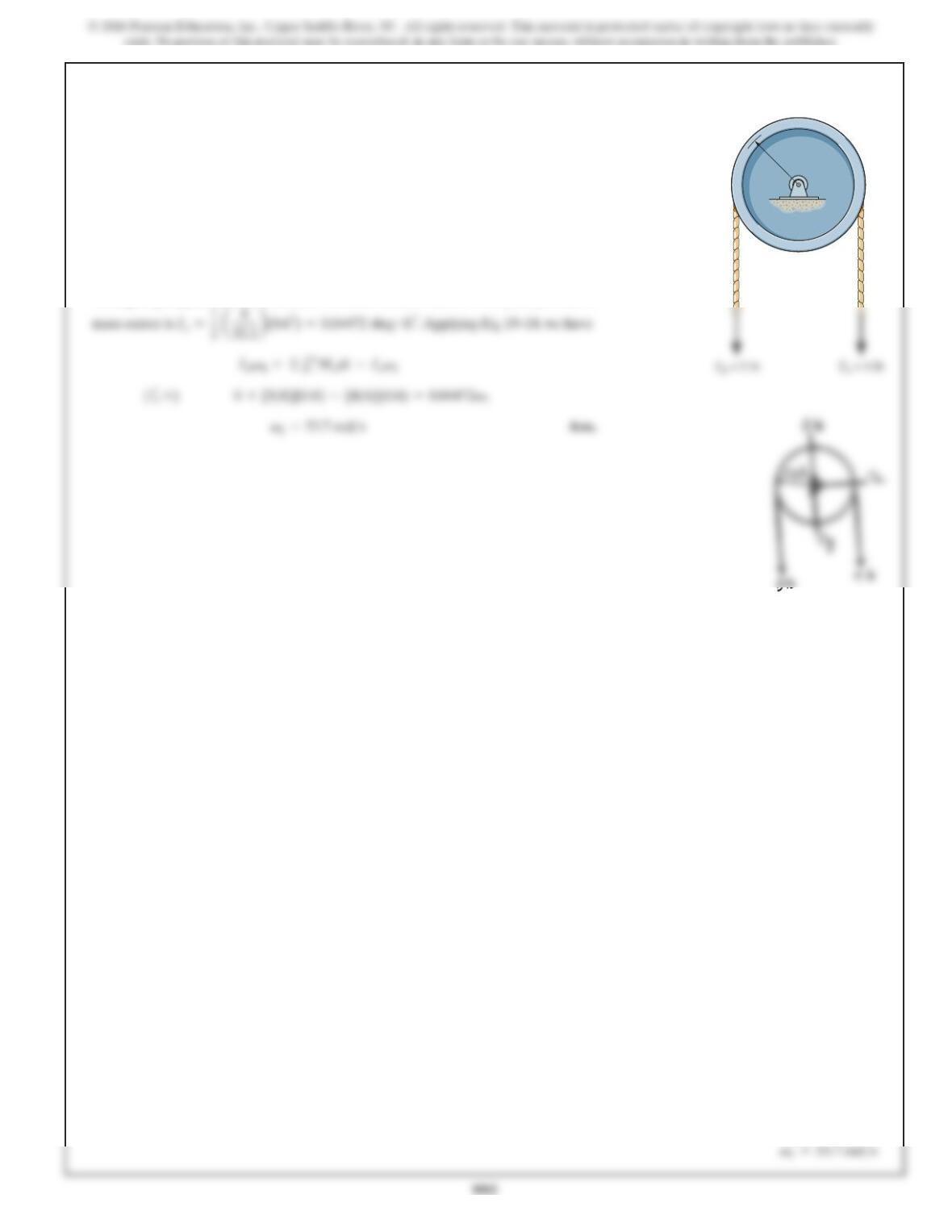
The pulley has a weight of 8 lb and may be treated as a thin
disk. A cord wrapped over its surface is subjected to forces
and Determine the angular velocity
of the pulley when if it starts from rest when
Neglect the mass of the cord.
t=0.t=4s
TB=5 lb.TA=4lb
0.6ft
Ans:
996
*19–12.
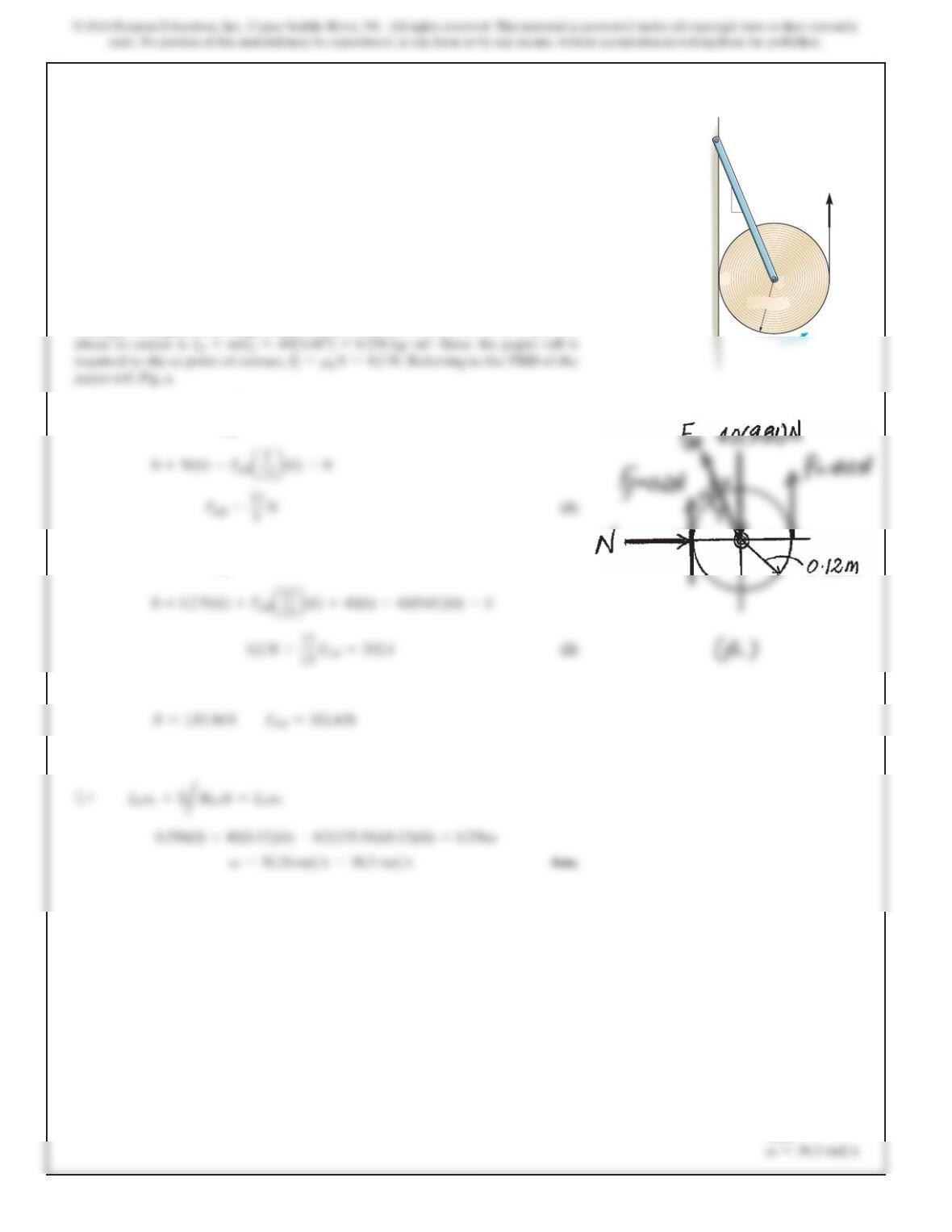
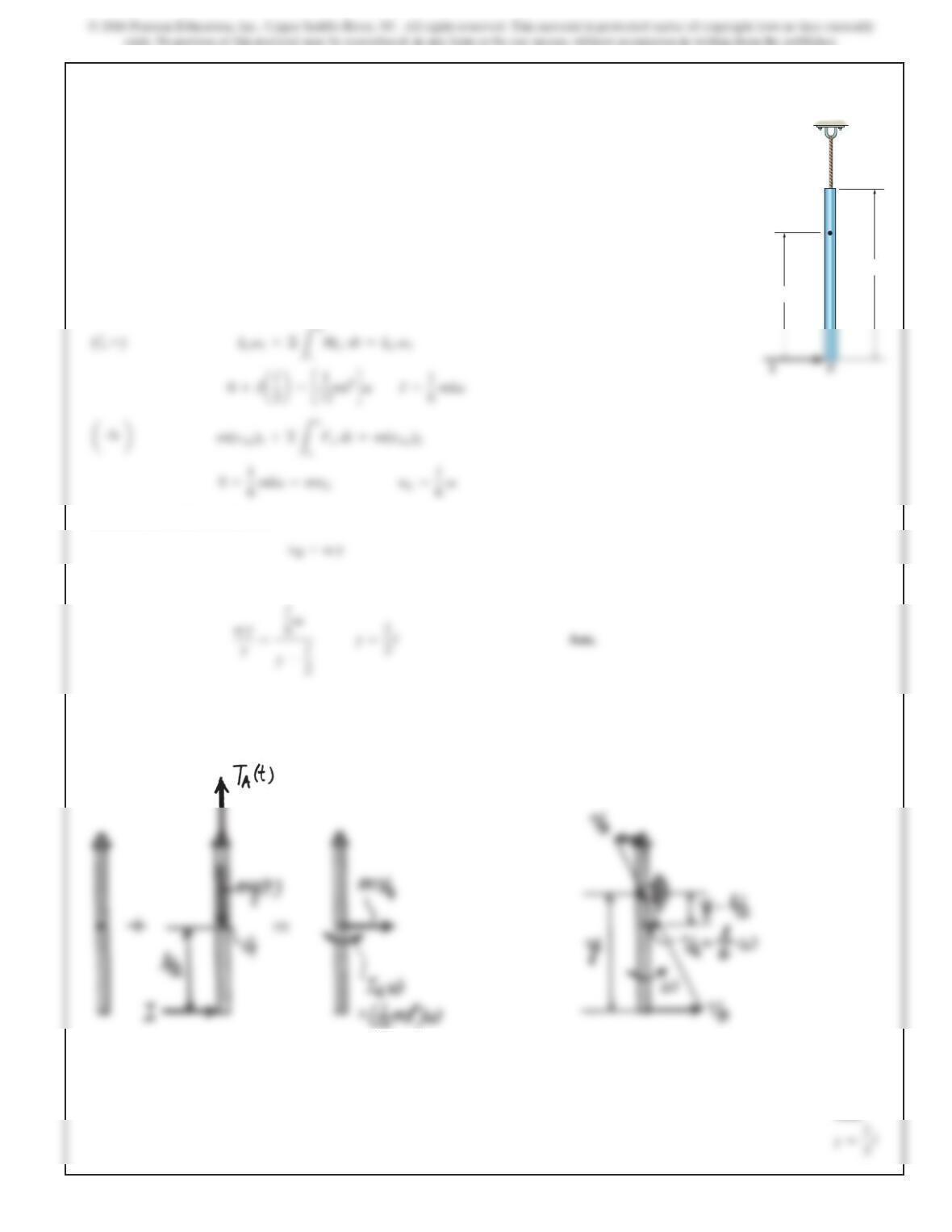
The 40-kg roll of paper rests along the wall where the
coefficient of kinetic friction is m
k=0.2.
If a vertical force
of
P=40 N
is applied to the paper, determine the angular
velocity of the roll when
t=6 s
starting from rest. Neglect
the mass of the unraveled paper and take the radius of
gyration of the spool about the axle O to be
kO=80 mm.
12
5
13
O
B
120 mm
P 40 N
A
SOLUTION
Principle of Impulse and Momentum. The mass moment of inertia of the paper roll
(
S
+
)
m[(vO)x]1+Σ
L
t
2
t
Fx dt =m[(vO)x]2
(+
c
)
m[(vO)y]1+ΣL
t
2
t
1
Fy dt =m[(vO)y]2
Solving Eqs. (1) and (2)
Subsequently
Ans:
997
19–13.
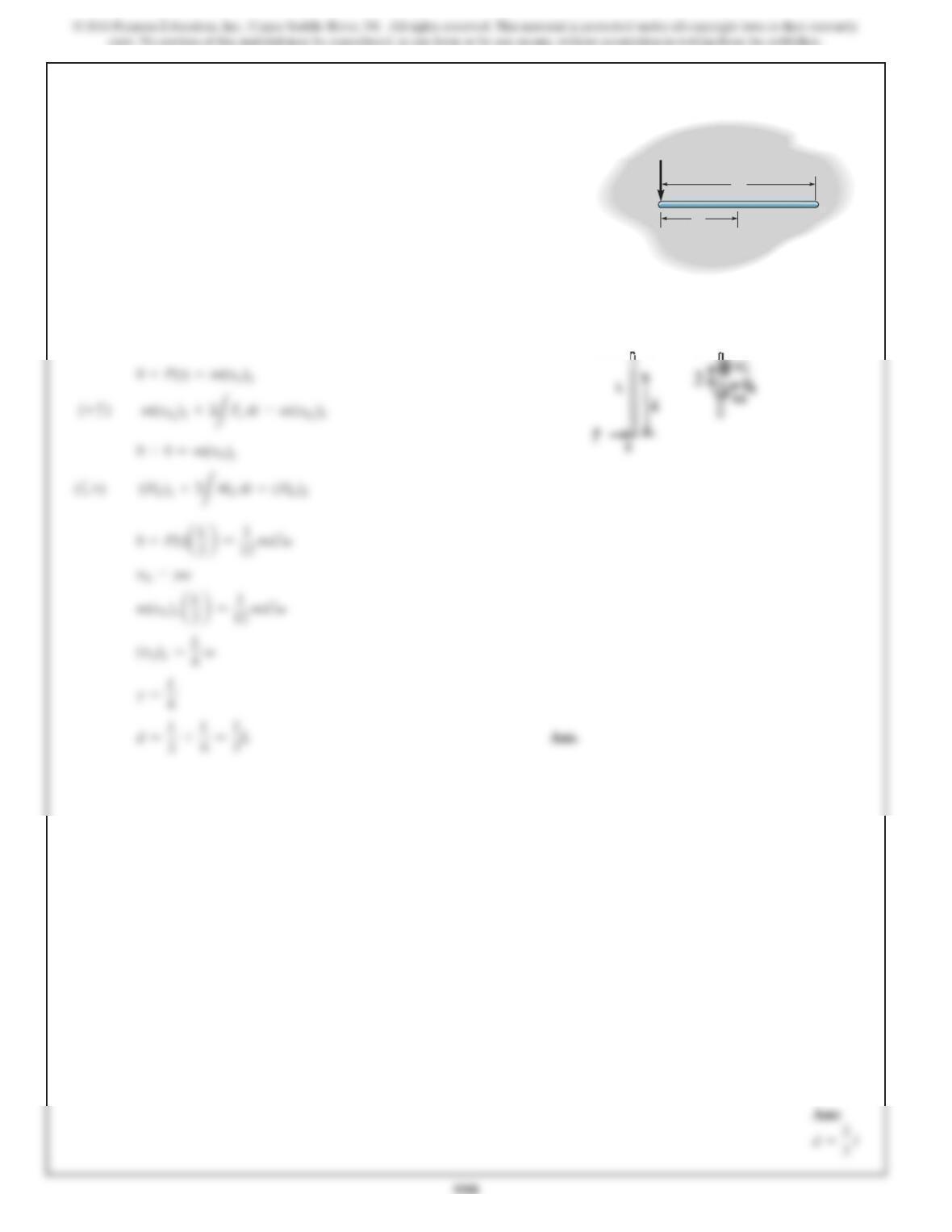
The slender rod has a mass mand is suspended at its end A
byacord. If the rod receives a horizontal blow giving it an
impulse Iat its bottom B, determine the location yof the
point Pabout which the rod appears to rotate during the
impact.
SOLUTION
Principle of Impulse and Momentum:
Kinematics: Point Pis the IC.
Using similar triangles,
A
P
l
y
Ans:
19–14.
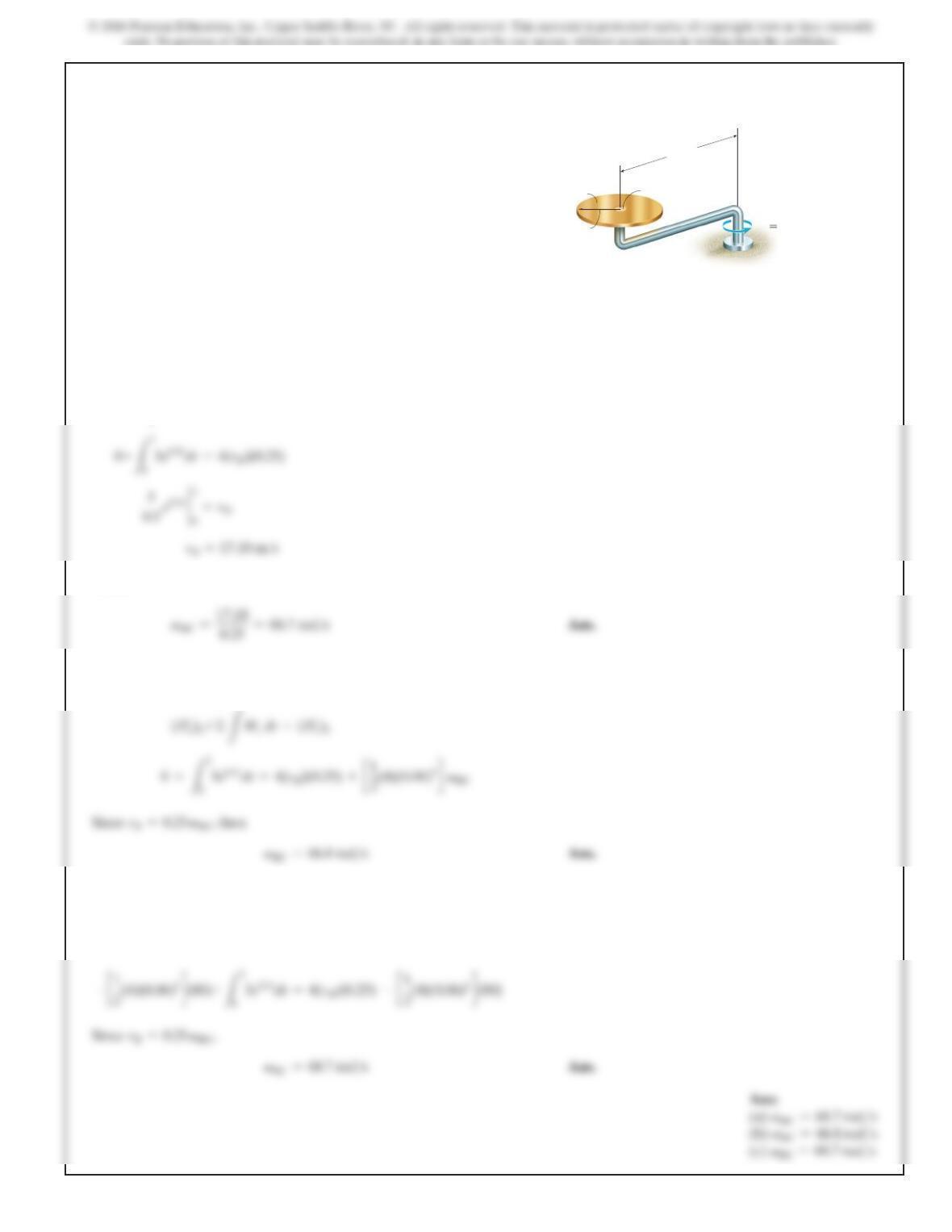
The rod of length L and mass m lies on a smooth horizontal
surface and is subjected to a force P at its end A as shown.
Determine the location d of the point about which the rod
begins to turn, i.e, the point that has zero velocity.
A
P
L
d
SOLUTION
(
S
+
)
m(vGx)1+Σ
L
Fx dt =m(vGx)2
999
19–15.
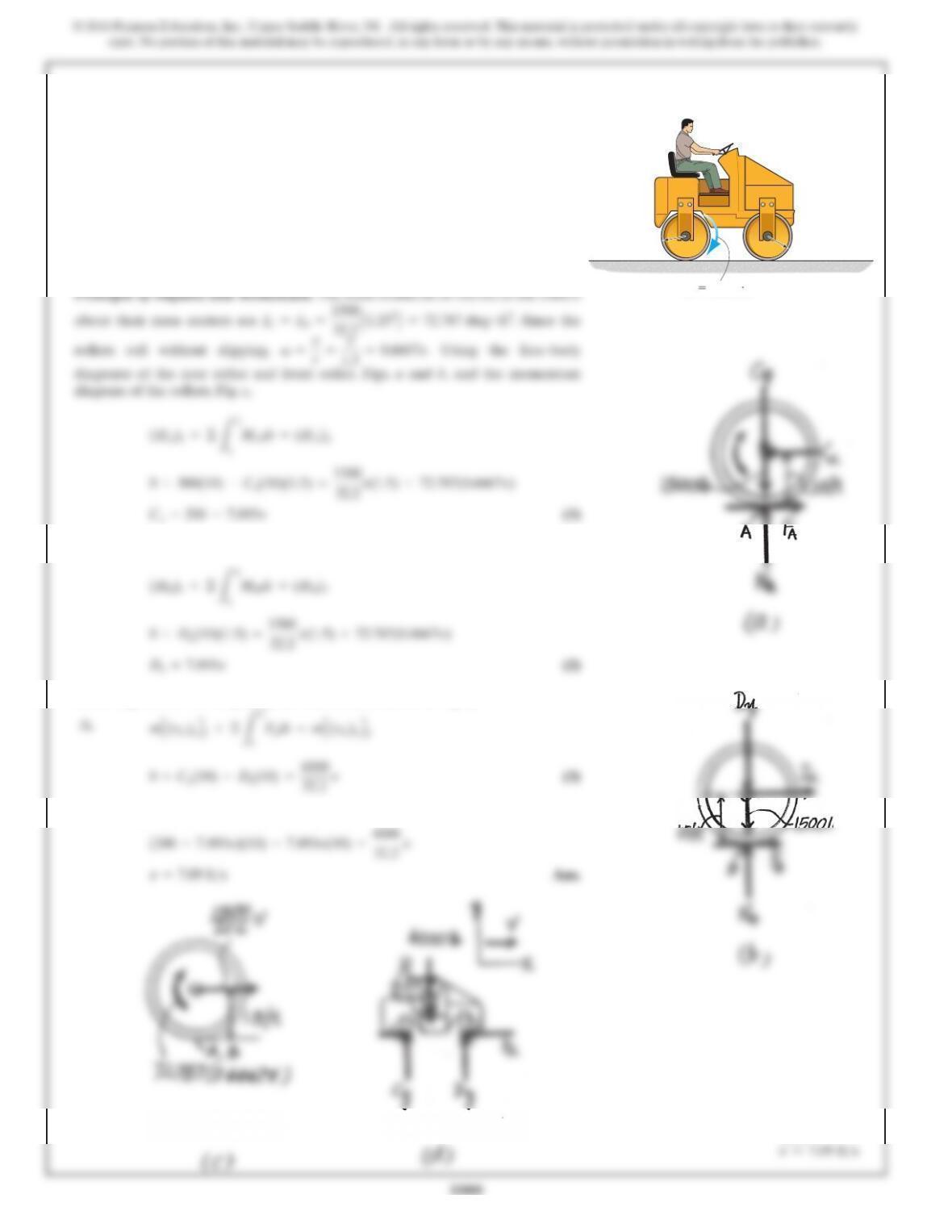
A 4-
k
g
di
s
k
A
i
s mounte
d
on arm BC,w
hi
c
h
h
as a neg
li
g
ibl
e
mass. If a torque of where tis in seconds,
is applied to the arm at C, determine the angular velocity of
BC in 2 s starting from rest. Solve the problem assuming
that (a) the disk is set in a smooth bearing at Bso that it
rotates with curvilinear translation, (b) the disk is fixed to
the shaft BC, and (c) the disk is given an initial freely
spinning angular velocity of prior to
application of the torque.
VD=5–80k6 rad>s
M=15e0.5t2 N #m,
SOLUTION
a)
Thus,
b)
c)
(Hz)1+©LMz dt =(Hz)2
(Hz)1+©LMz dt =(Hz)2
250 mm
M (5e
0.5 t
) N m
60 mm
z
C
AB
#
*19–16.
1.5 ft
1.5 ft
AB
M 300 lb ft
The frame of a tandem drum roller has a weight of 4000 lb
excluding the two rollers. Each roller has a weight of 1500 lb
and a radius of gyration about its axle of 1.25 ft.If a torque
of is supplied to the rear roller A,determine
the speed of the drum roller 10 s later, starting from rest.
M=300 lb #ft
SOLUTION
and
Referring to the free-body diagram of the frame shown in Fig. d,
Substituting Eqs. (1) and (2) into Eq.(3),
Ans:
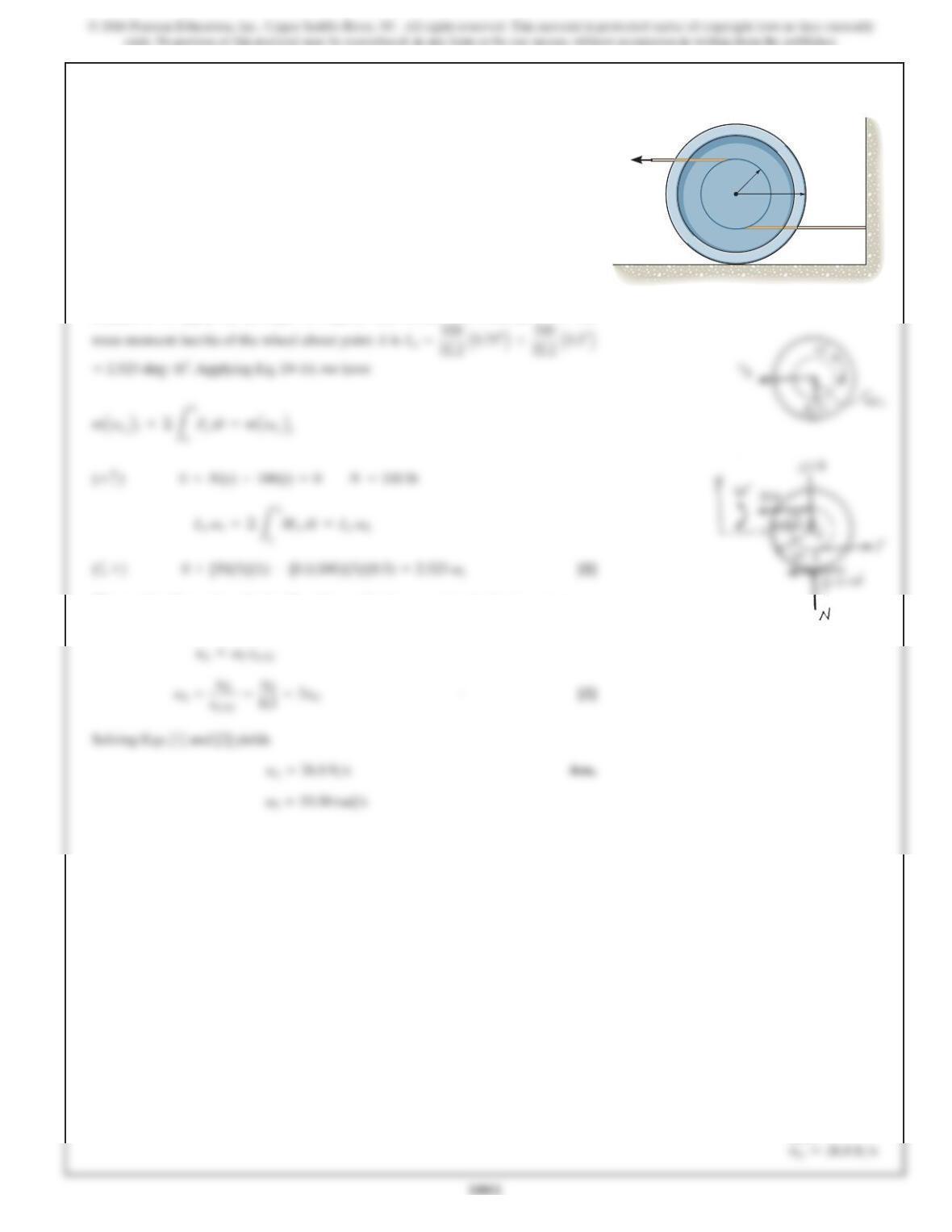
19–17.
SOLUTION
Principle of Impulse and Momentum: We can eliminate the force Ffrom the
analysis if we apply the principle of impulse and momentum about point A.The
Kinematics: Since the wheel rolls without slipping at point A, the instantaneous
center of zero velocity is located at point A.Thus,
The 100-lb wheel has a radius of gyration of
If the upper wire is subjected to a tension of
determine the velocity of the center of the wheel in 3 s,
starting from rest.The coefficient of kinetic friction between
the wheel and the surface is mk=0.1.
T=50 lb,
kG
=0.75 ft.
1ft
T
G
0.5ft
Ans:
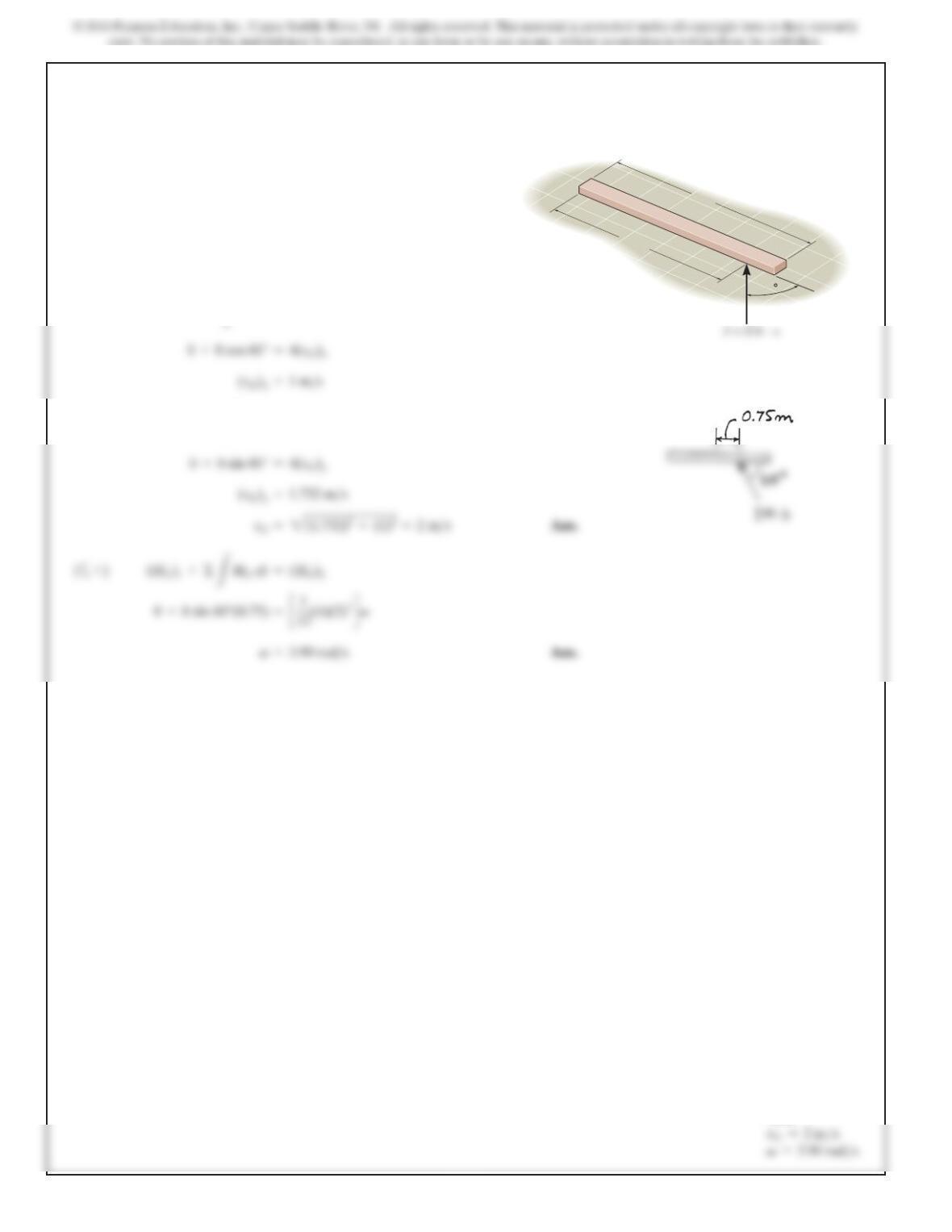
1002
19–18.
SOLUTION
(+c)
m(vGy)1+©
LF
y dt =m(vGy)2
1;
+2
m(vGx)1+©
x dt =m(vGx)2
The 4-kg slender rod rests on a smooth floor. If it is kicked
so as to receive a horizontal impulse at point A
as shown, determine its angular velocity and the speed of its
mass center.
I=8 N #s
2 m
1.75 m
60
A
Ans:
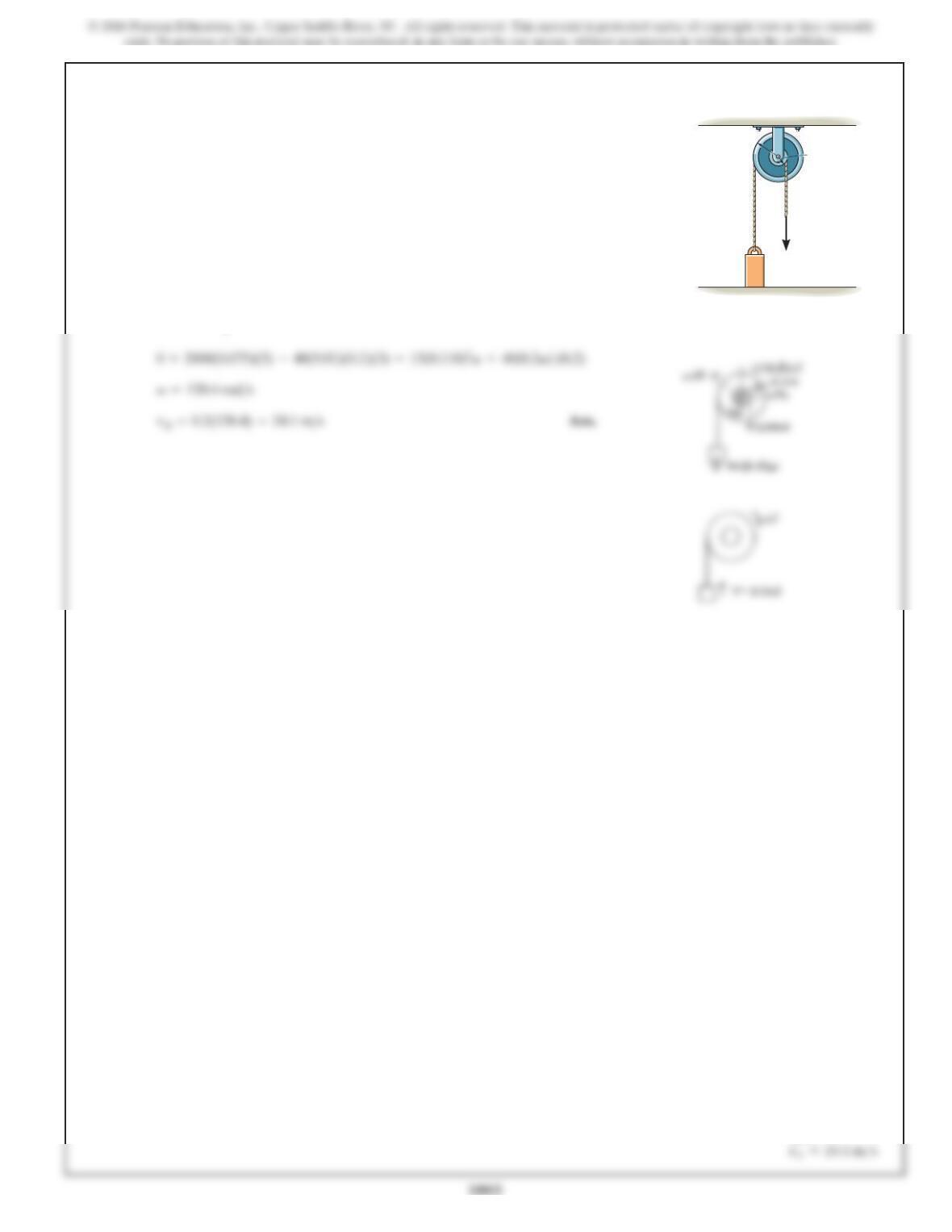
19–19.
The double pulley consists of two wheels which are
attached to one another and turn at the same rate.The
pulley has a mass of 15 kg and a radius of gyration
If the block at Ahas a mass of 40 kg,
determine the speed of the block in 3 s after a constant
force is applied to the rope wrapped around the
inner hub of the pulley.The block is originally at rest.
Neglect the mass of the rope.
F=2 kN
kO=110 mm.
SOLUTION
c
+)
(H
O)1+©
LMO dt =(H
O)2
(
O
200 mm
75 mm
F
A
Ans:
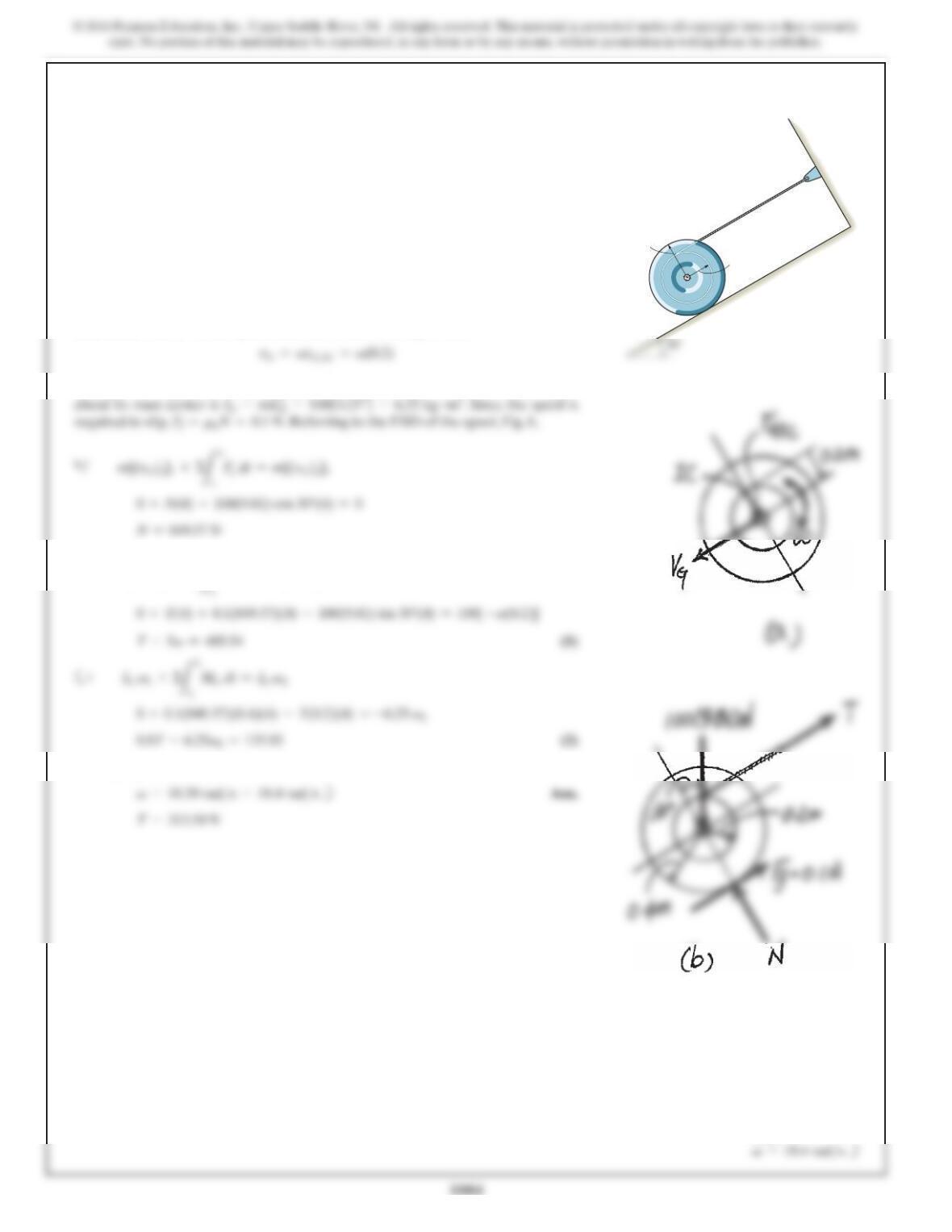
*19–20.
The 100-kg spool is resting on the inclined surface for which
the coefficient of kinetic friction is m
k=0.1.
Determine the
angular velocity of the spool when
t=4 s
after it is released
from rest. The radius of gyration about the mass center is
kG=0.25 m.
G
A
0.2 m
0.4 m
SOLUTION
Kinematics. The IC of the spool is located as shown in Fig. a. Thus
Principle of Impulse and Momentum. The mass moment of inertia of the spool
Q
+
m[(vG)x]1+Σ
t
2
Fx dt =m[(vG)x]2
Solving Eqs. (1) and (2),
Ans: