1025
*19–40.
l
ω
0
P
SOLUTION
(a)
©(HP)0=©(HP)1
vl=1.5 m.
0=4 rad>s,m=2 kg,
V0
A
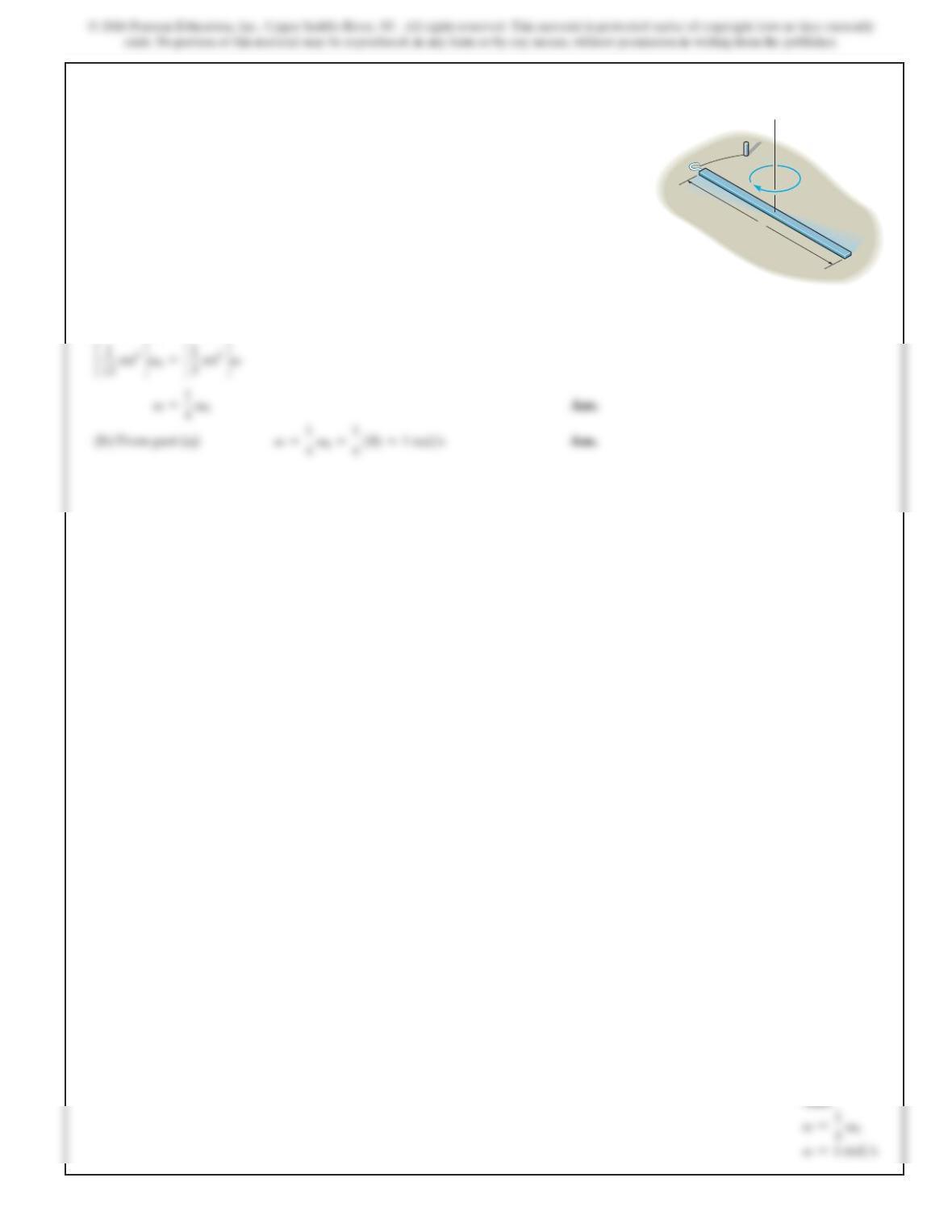
thin rod of mass m has an angular velocity while
rotating
on a smooth surface. Determine its new angular
velocity
just after its end strikes and hooks onto the peg and
the
rod starts to rotate about P without rebounding. Solve
the
problem (a) using the parameters given, (b) setting
Ans:
1026
19–41.
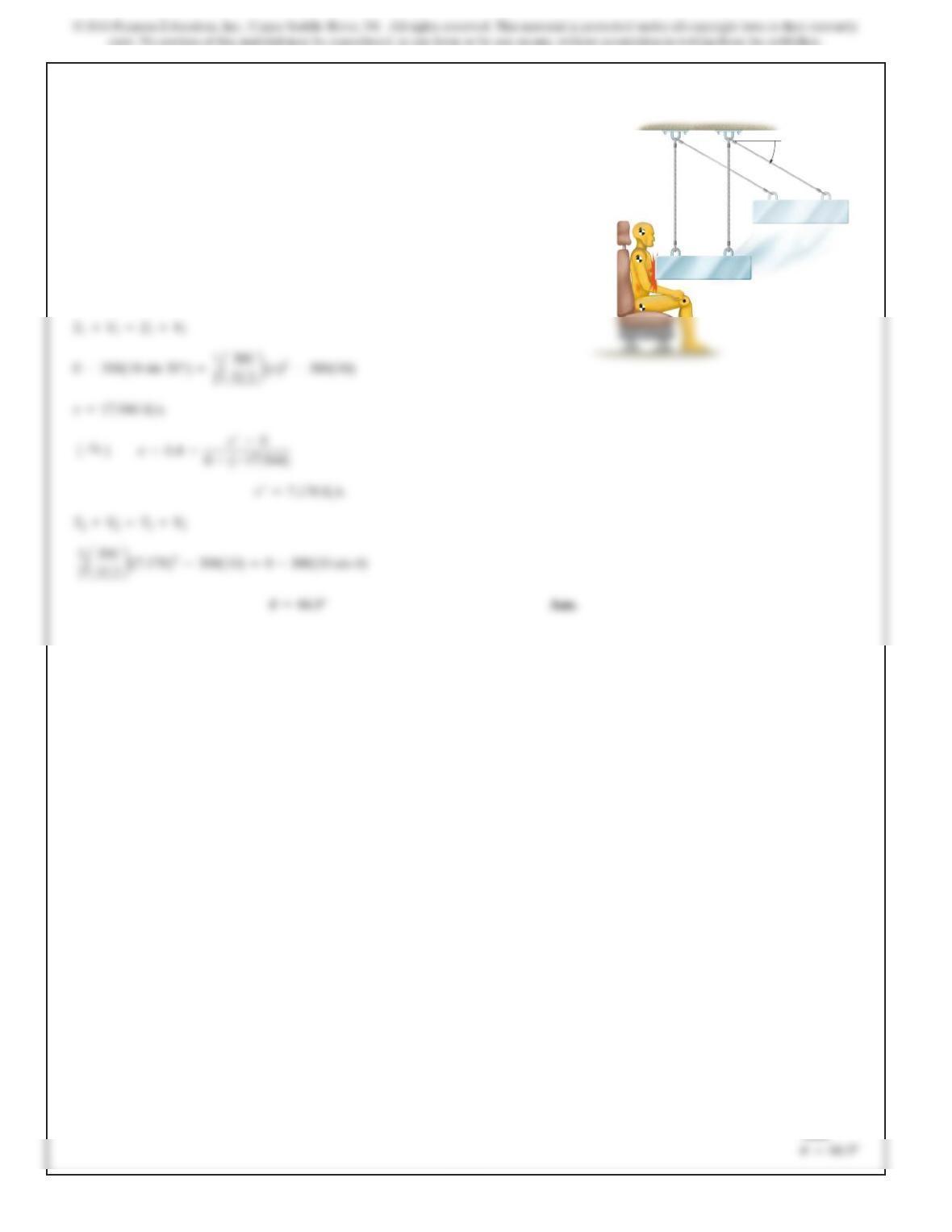
Tests of impact on the fixed crash dummy are conducted
using the 300-lb ram that is released from rest at
and allowed to fall and strike the dummy at If the
coefficient of restitution between the dummy and the ram is
determine the angle to which the ram will
rebound before momentarily coming to rest.
ue=0.4,
u=90°.
u=30°,
SOLUTION
Datum through pin support at ceiling.
u
10 ft 10 ft
Ans:
1027
19–42.
z
A
G
HF
D
E
C
B
I
0.3 m 0.3 m
0.3 m 0.3 m
J
0.1 m
0.1 m
v
uu
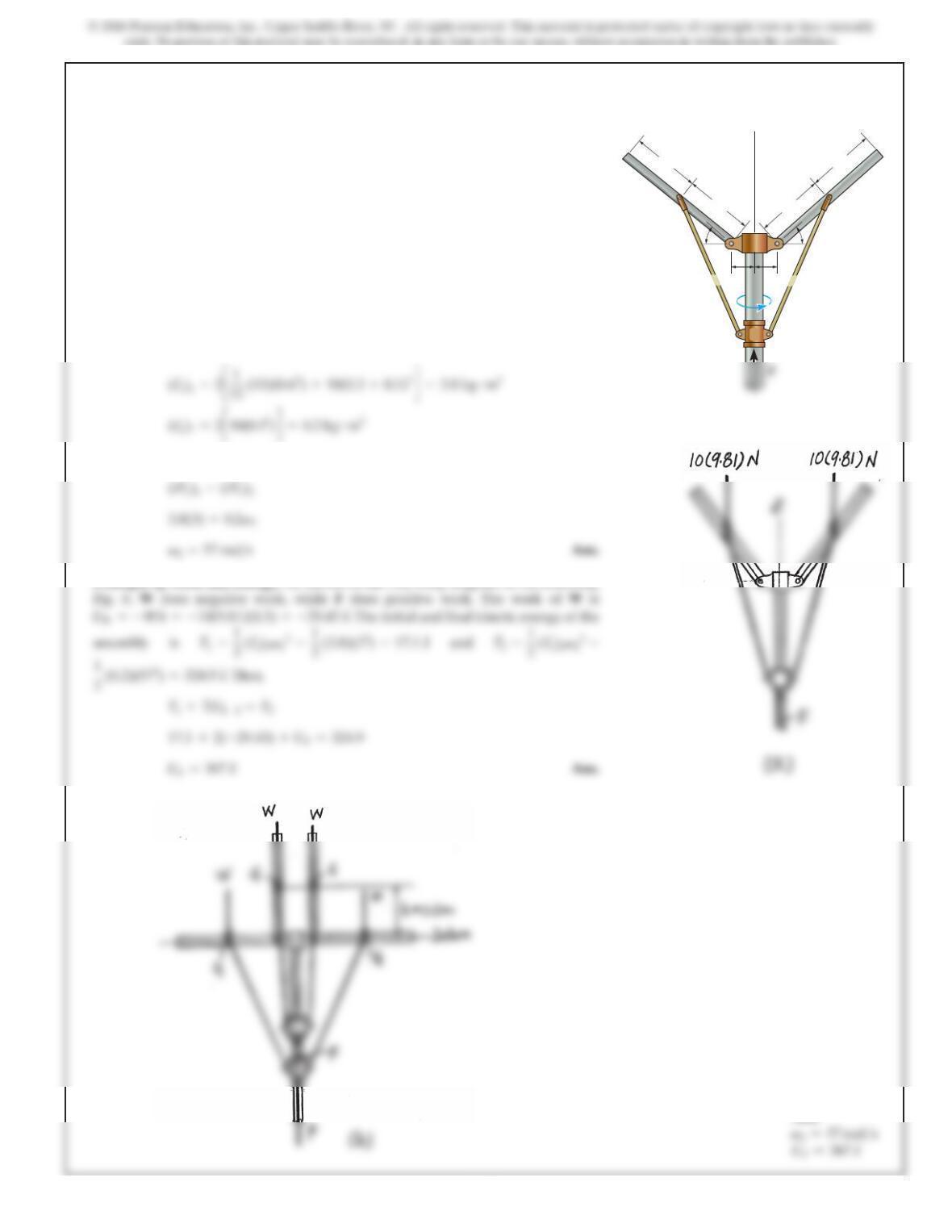
The vertical shaft is rotating with an angular velocity of
when .If a force Fis applied to the collar so
that ,determine the angular velocity of the shaft.
Also, find the work done by force F.Neglect the mass of
rods GH and EF and the collars Iand J.The rods AB and
CD each have a mass of 10 kg.
u=90°
u=0°3 rad>s
SOLUTION
Conservation of Angular Momentum: Referring to the free-body diagram of the
assembly shown in Fig. a,the sum of the angular impulses about the zaxis is zero.
Thus,the angular momentum of the system is conserved about the axis.The mass
moments of inertia of the rods about the zaxis when and are
Thus,
Principle of Work and Energy: As shown on the free-body diagram of the assembly,
90°u=0°
Ans:
19–43.
SOLUTION
Conservation of Angular Momentum:Since force Fdue to the impact is internal to
the system consisting of the slender bar and the ball, it will cancel out. Thus, angular
Coefficient of Restitution:Applying Eq. 19–20, we have
Solving Eqs. (1) and (2) yields
Thus, the angular velocity of the slender rod is given by
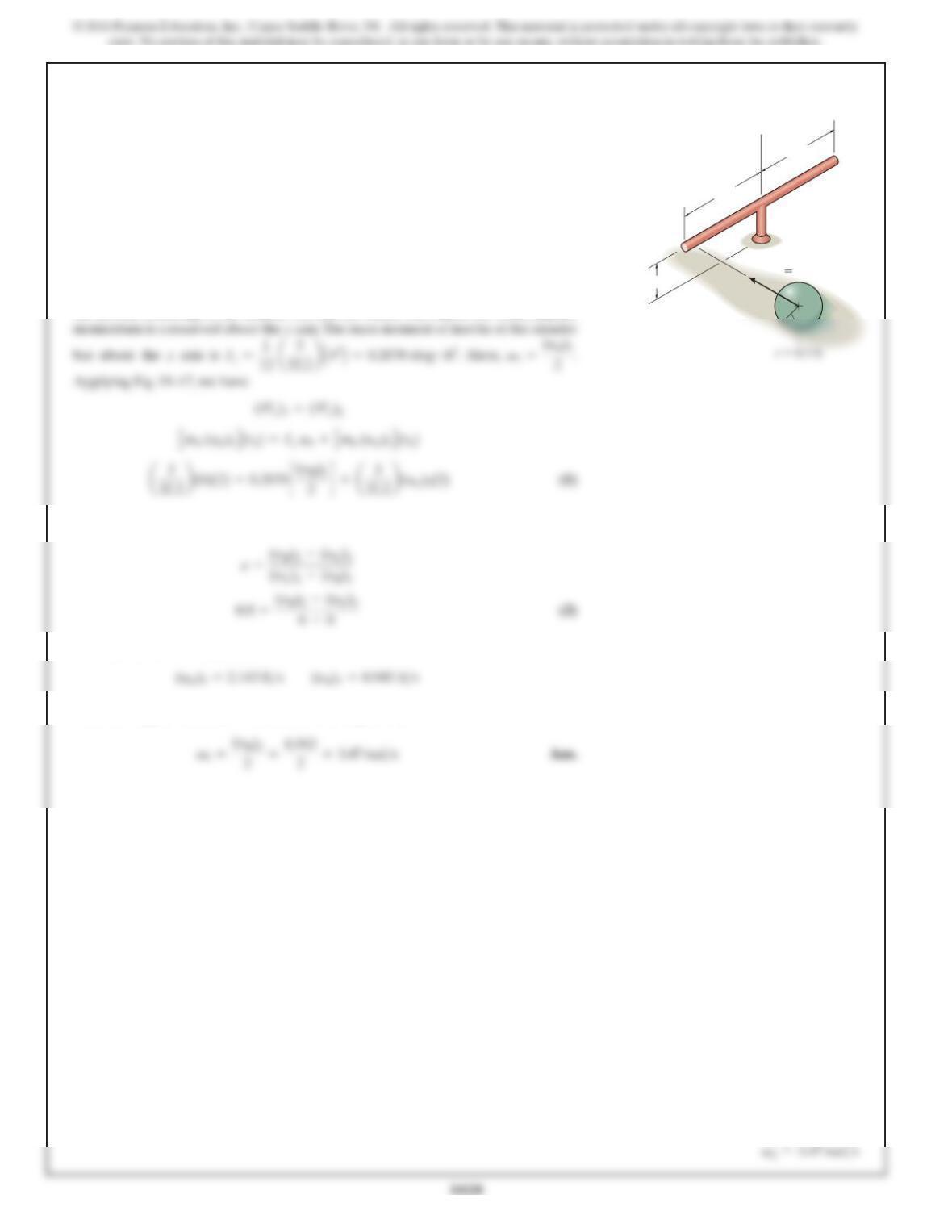
The mass center of the 3-lb ball has a velocity of
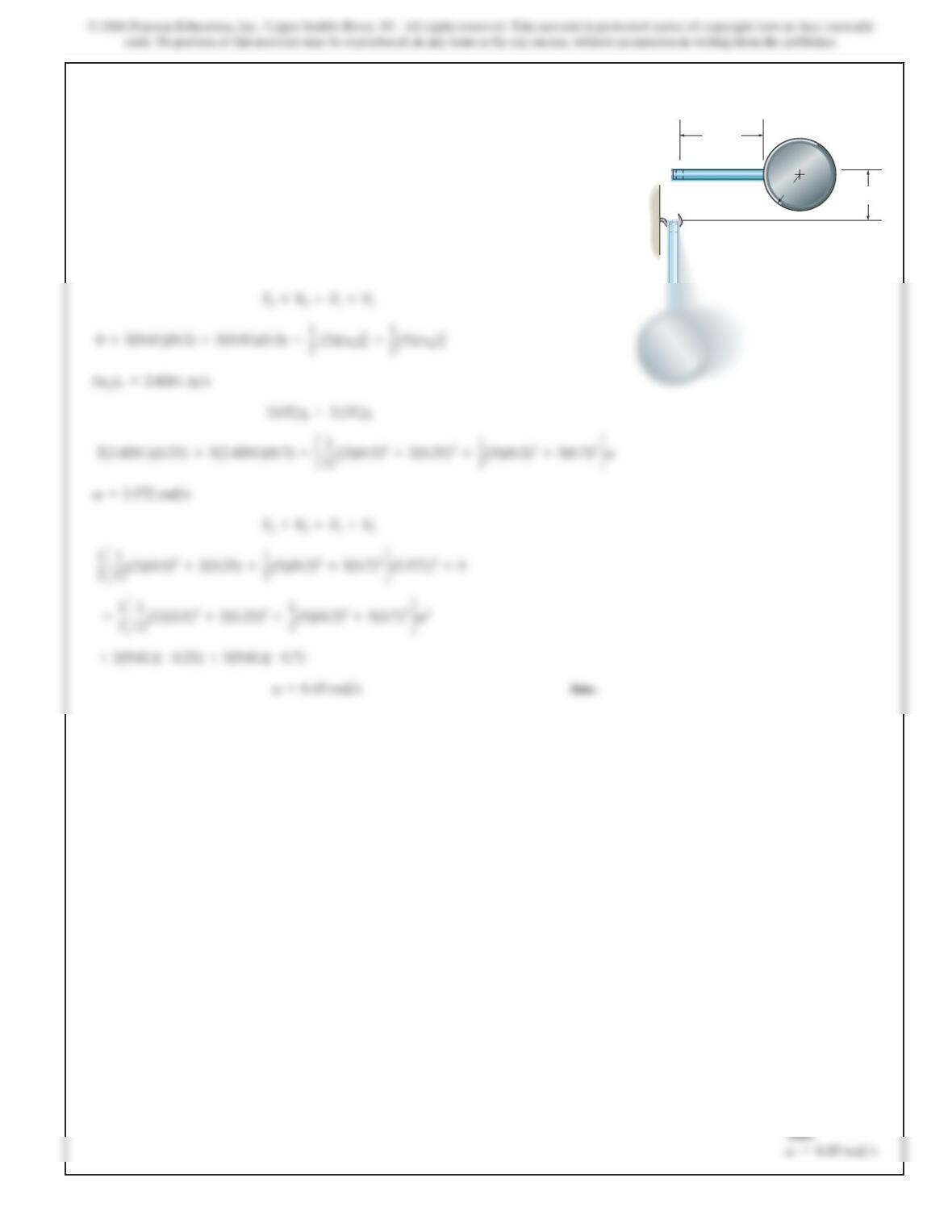
when it strikes the end of the smooth 5-lb
slender bar which is at rest. Determine the angular velocity
of the bar about the zaxis just after impact if .e=0.8
(vG)1=6ft>s
(vG)16ft/s
G
2ft
0.5 ft
z
2ft
O
B
A
Ans:
1029
*19–44.
SOLUTION
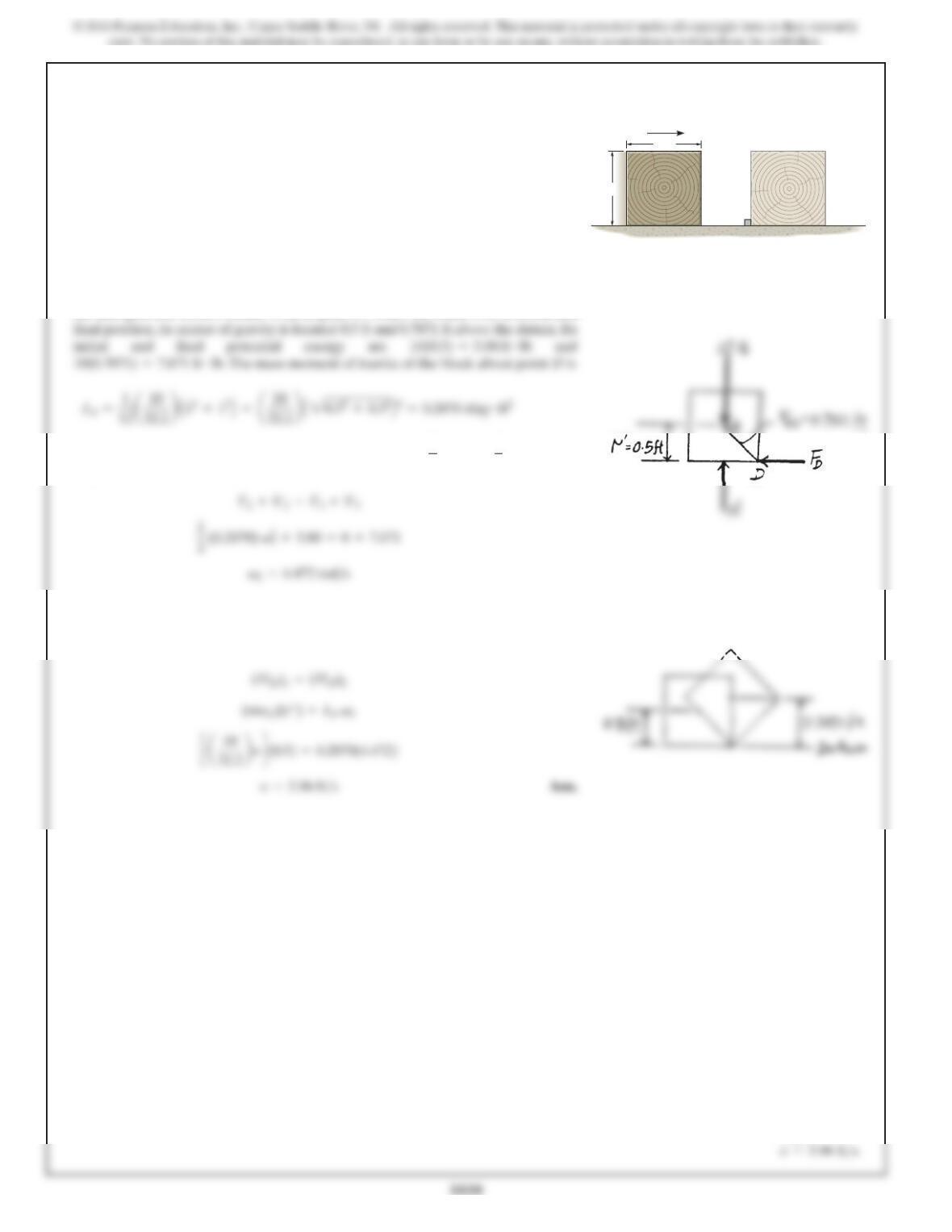
The pendulum consists of a slender 2-kg rod AB and 5-kg
disk. It is released from rest without rotating.When it falls
0.3 m, the end Astrikes the hook S, which provides a
permanent connection. Determine the angular velocity of
the pendulum after it has rotated .Treat the pendulum’s
weight during impact as a nonimpulsive force.
90°
AB0.2 m 0.3 m
0.5 m
S
19–45.
SOLUTION
Conservation of Energy:If the block tips over about point D, it must at least achieve
the dash position shown. Datum is set at point D.When the block is at its initial and
. si )tcapmi eht retfa( kcolb eht fo ygrene citenik laitini ehT
Applying Eq. 18–18, we have
Conservation of Angular Momentum:Since the weight of the block and the normal
reaction Nare nonimpulsive forces, the angular momentum is conserves about
point D. Applying Eq. 19–17, we have
1
2IDv2
2=1
2(0.2070) v2
2
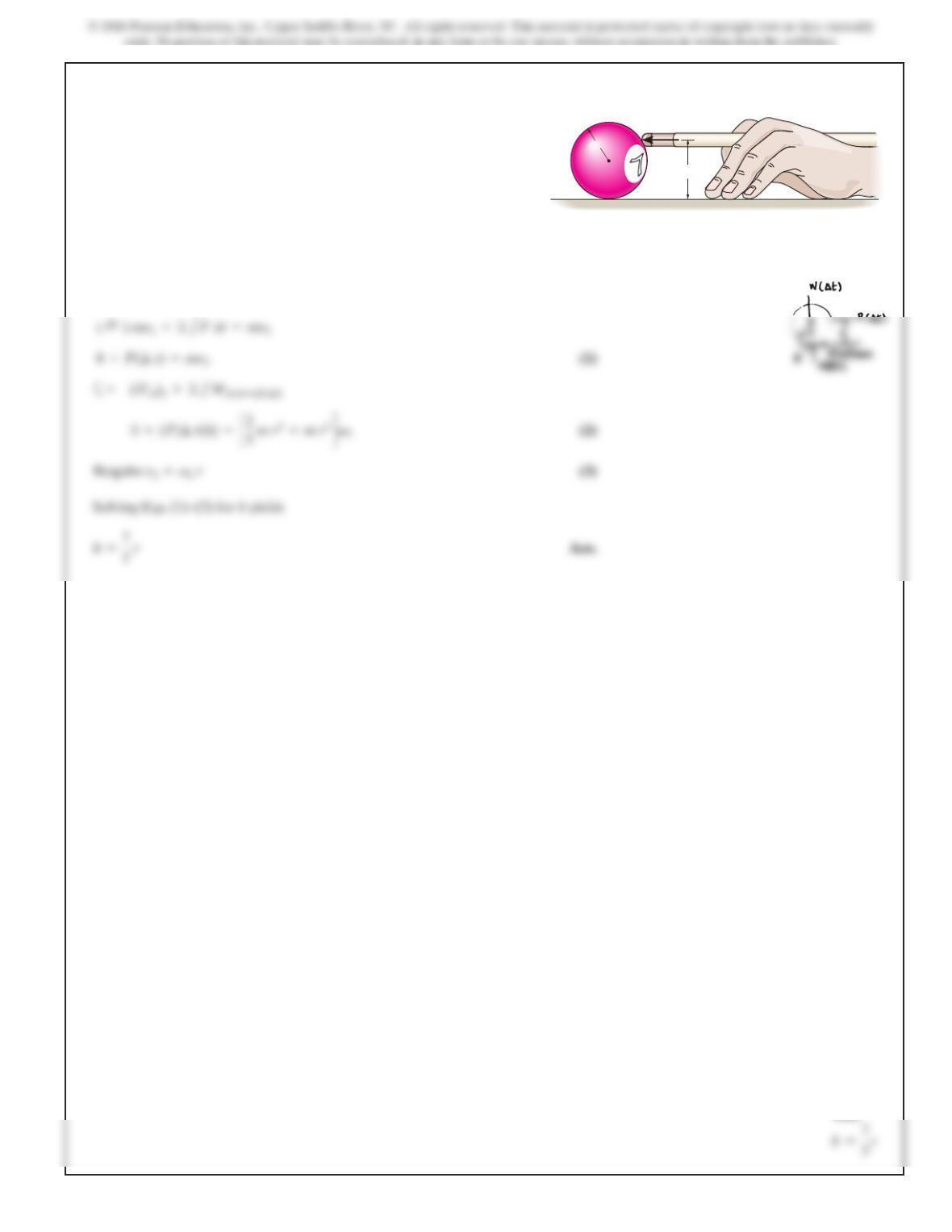
The 10-lb block slides on the smooth surface when the
corner Dhits a stop block S. Determine the minimum
velocity vthe block should have which would allow it to tip
over on its side and land in the position shown. Neglect the
size of S.Hint: During impact consider the weight of the
block to be nonimpulsive.
1ft
v
A
AB
CDS
BC
D
1ft
Ans:
1031
19–46.
SOLUTION
For the ball
A
P
h
C
r
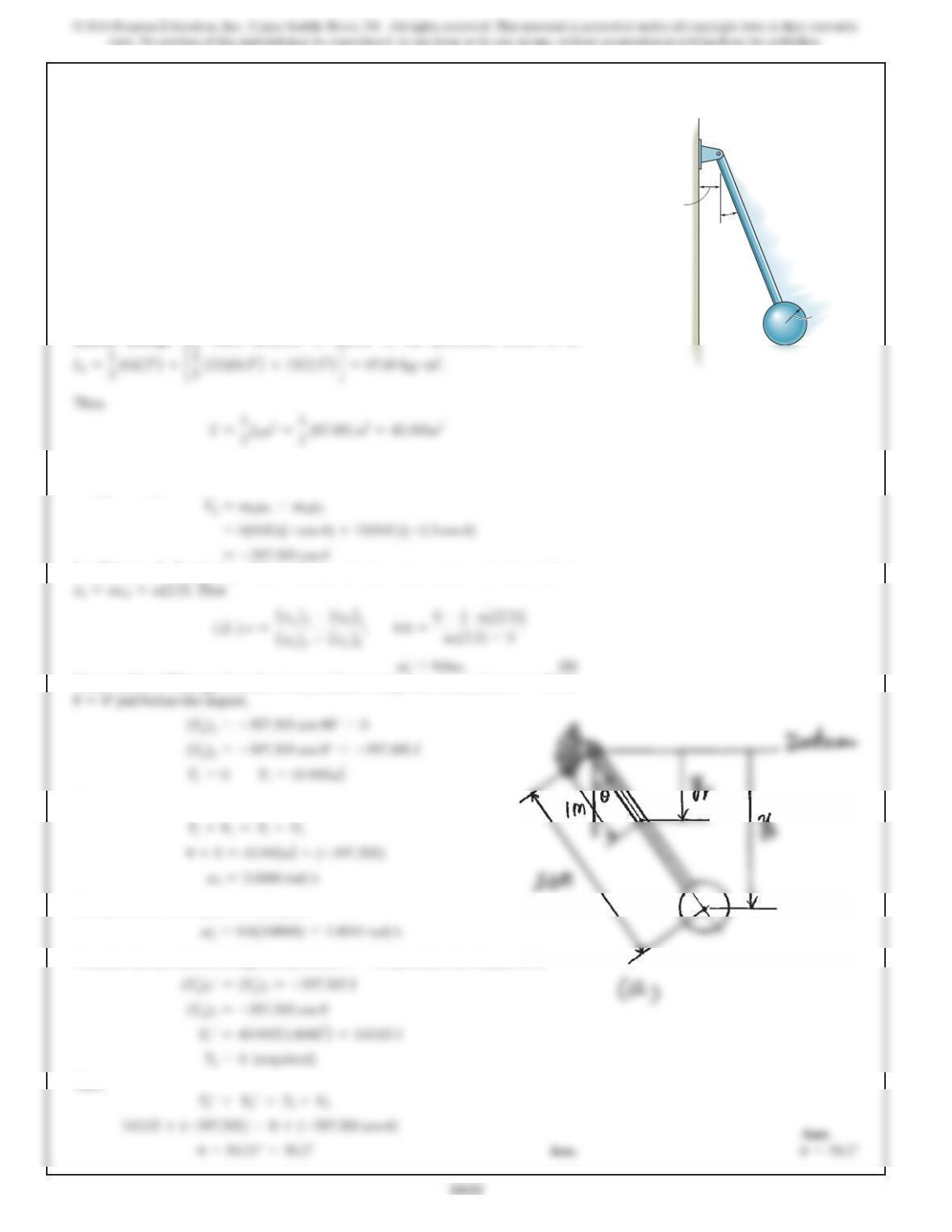
Determine the height hat which a billiard ball of mass m
must be struck so that no frictional force develops between
it and the table at A. Assume that the cue Conly exerts a
horizontal force Pon the ball.
Ans:
19–47.
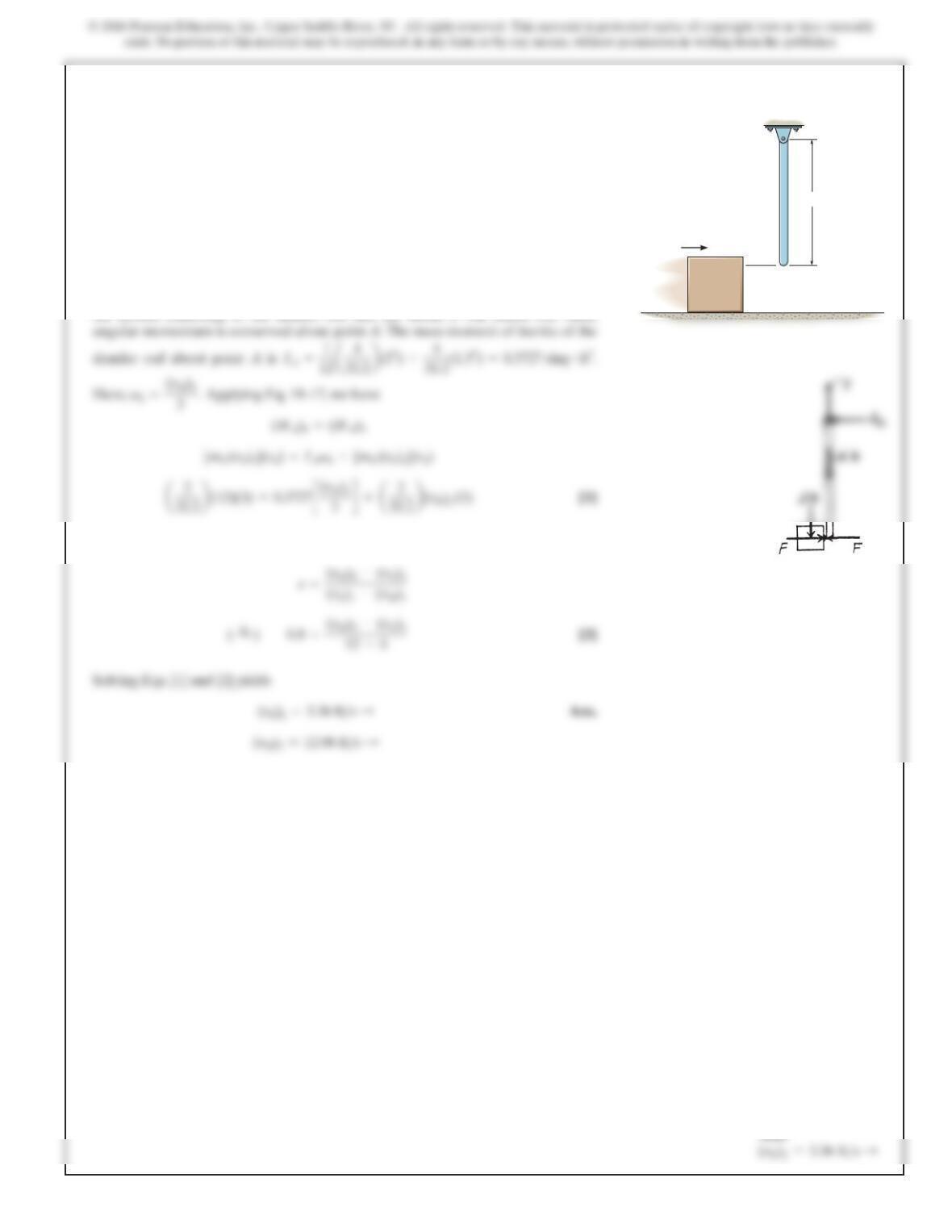
The pendulum consists of a 15-kg solid ball and 6-kg rod. If it
is released from rest when u
1=90°,
determine the angle u
2
after the ball strikes the wall, rebounds, and the pendulum
swings up to the point of momentary rest. Take
e=0.6.
100 mm
300 mm
2 m
A
u
SOLUTION
Kinetic Energy. The mass moment of inertia of the pendulum about A is
Potential Energy. With reference to datum set in Fig. a, the gravitational potential
energy of the pendulum is
Coefficient of Restitution. The velocity of the mass center of the ball is
Conservation of Energy. Consider the pendulum swing from the position
u=90°
to
u=0°
Then
Thus, just after the impact, from Eq. (1)
Consider the pendulum swing from position
u=90°
just after the impact to
u
,
1033
*19–48.
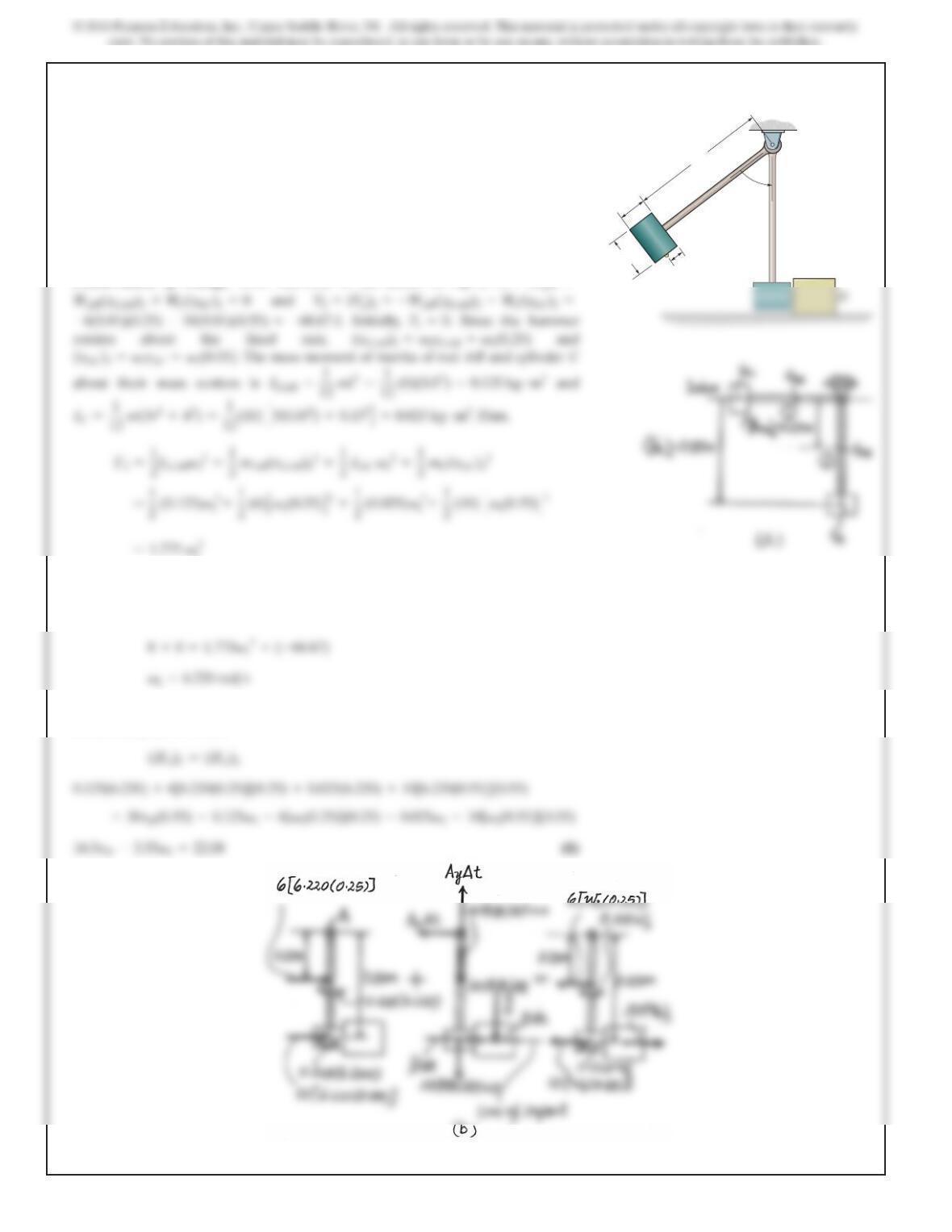
The 4-lb rod AB is hanging in the vertical position. A 2-lb
block, sliding on a smooth horizontal surface with a velocity
of 12 ft/s, strikes the rod at its end B. Determine the velocity of
the block immediately after the collision. The coefficient
of restitution between the block and the rod at Bis e=0.8.
SOLUTION
Conservation of Angular Momentum:Since force Fdue to the impact is internal to
the system consisting of the slender rod and the block, it will cancel out. Thus,
Coefficient of Restitution:Applying Eq. 19–20, we have
B
A
3ft
12 ft/s
Ans:
1034
19–49.
A
B
C
500 mm
100 mm
50 mm
150 mm
u
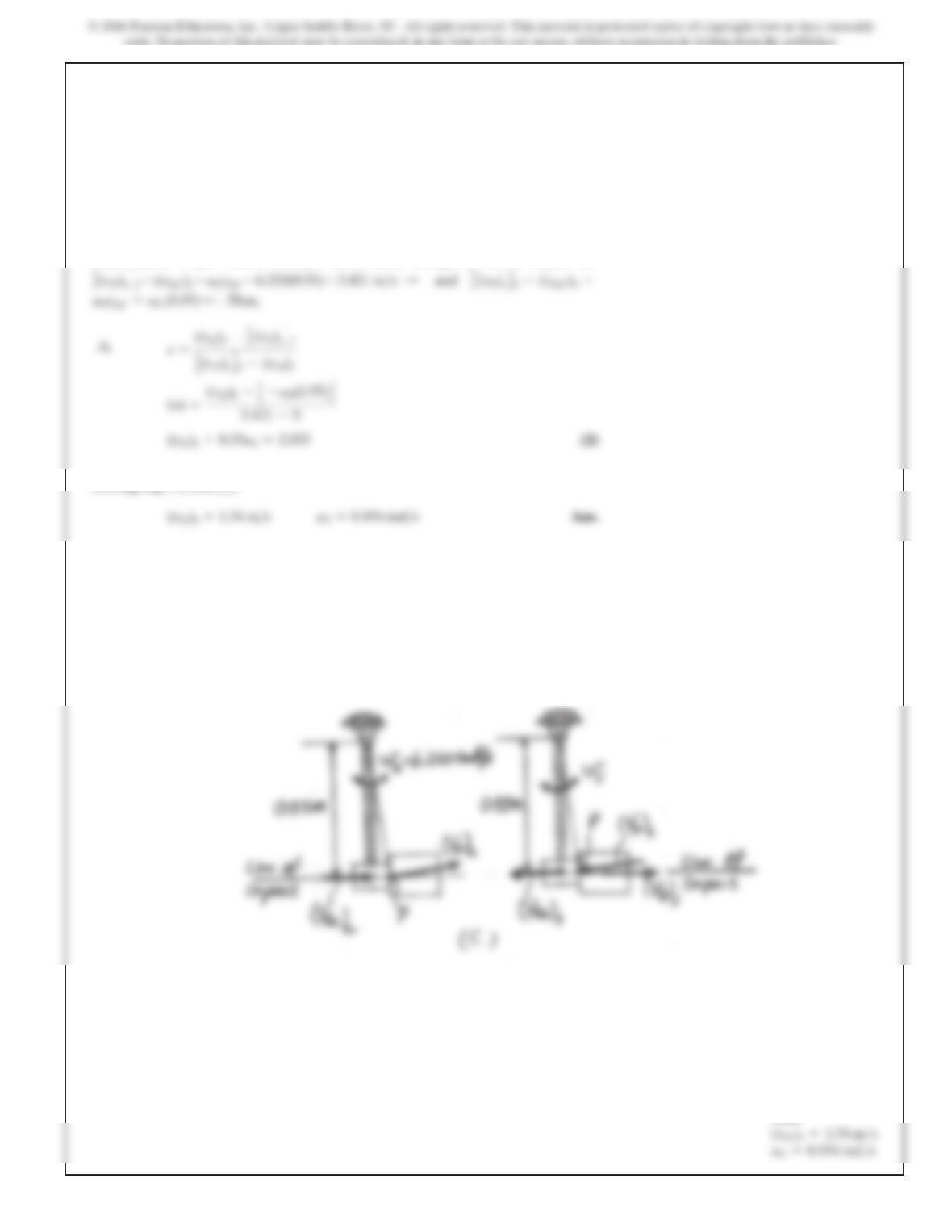
The hammer consists of a 10-kg solid cylinder
C
and 6-kg
uniform slender rod AB.If the hammer is released from rest
when and strikes the 30-kg block Dwhen ,
determine the velocity of block Dand the angular velocity of
the hammer immediately after the impact.The coefficient of
restitution between the hammer and the block is .e=0.6
u=0°u=90°
SOLUTION
Conservation of Energy: With reference to the datum in Fig. a,
Then,
Conservation of Angular Momentum: The angular momentum of the system is
conserved point A.Then,
T
1+V
1=T
2+V
2
V
1035
Coe
ff
icient o
f
Restitution: Referring to Fig. c,the components of the velocity of the
imp
act point Pjust before and just after impact along the line of impact are
S
olving Eqs. (1) and (2),
19–49. Continued
Ans:
1036
19–50.
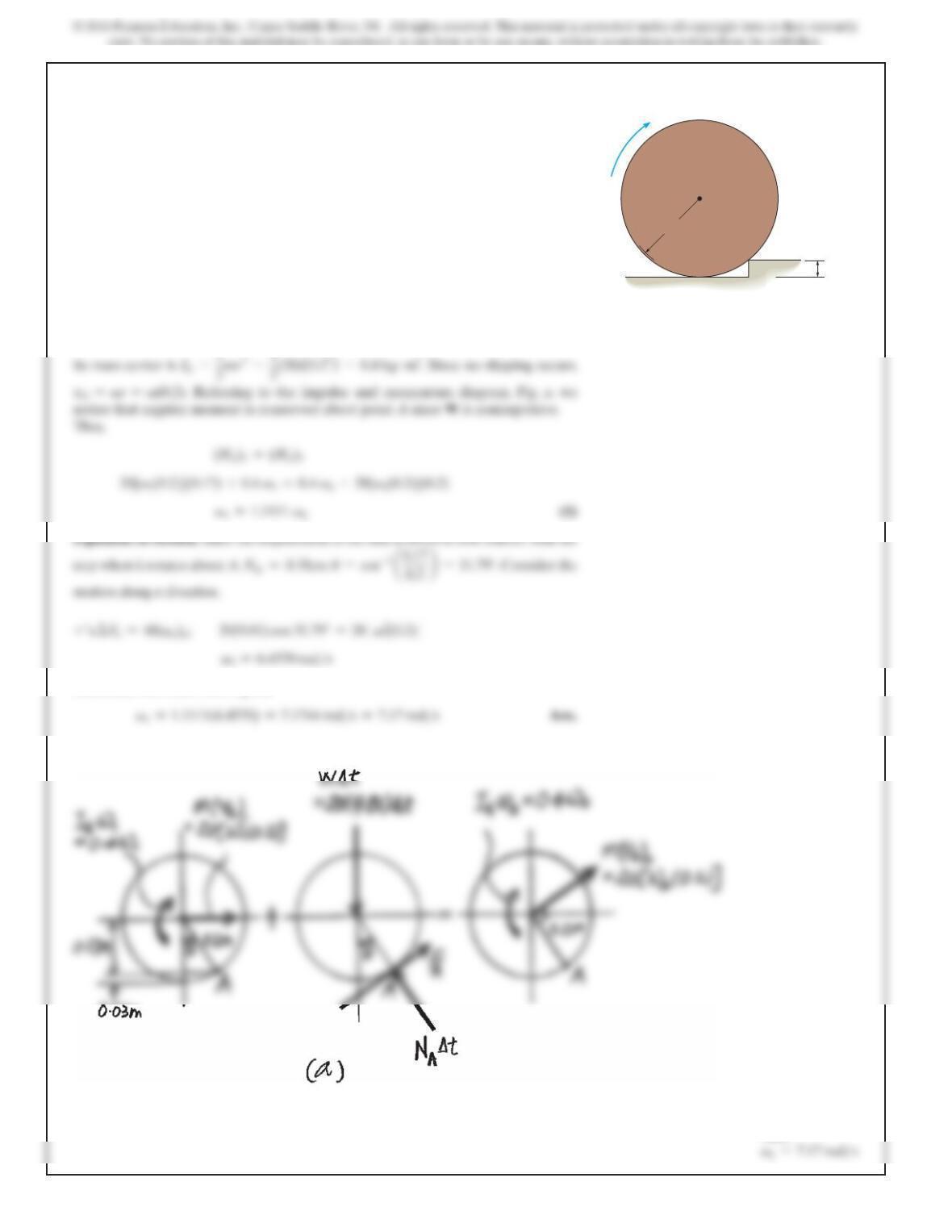
The 20-kg disk strikes the step without rebounding.
Determine the largest angular velocity
v1
the disk can have
and not lose contact with the step, A.
200 mm
◊1
30 mm
A
SOLUTION
Conservation of Angular Momentum. The mass moment of inertia of the disk about
Substitute this result into Eq. (1)
Ans:
1037
19–51.
SOLUTION
Conservation of Angular Momentum:Since the weight of the solid ball is a
nonimpulsive force, then angular momentum is conserved about point A.The mass
moment of inertia of the solid ball about its mass center is . Here,
. Applying Eq. 19–17, we have
Coefficient of Restitution:Applying Eq. 19–20, we have
Equating Eqs. (1) and (2) yields
v2=y2cos u
IG=2
5mr2
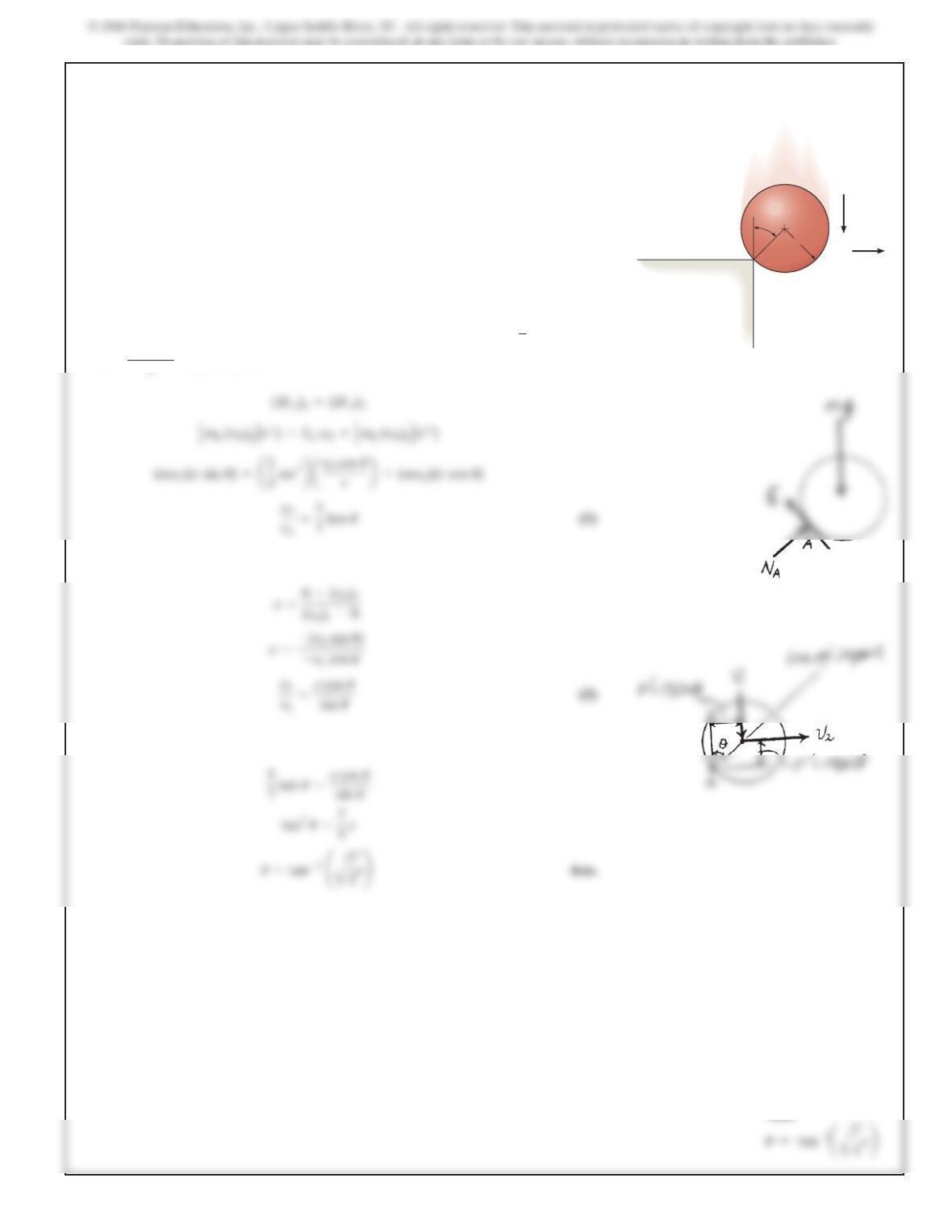
The solid ball of mass mis dropped with a velocity onto
the edge of the rough step. If it rebounds horizontally off
the step with a velocity , determine the angle at which
contact occurs. Assume no slipping when the ball strikes the
step.The coefficient of restitution is e.
uv2
v
1
r
v1
v2
u
Ans:
1038
*19–52.
25 mm
150 mm
A
G
1
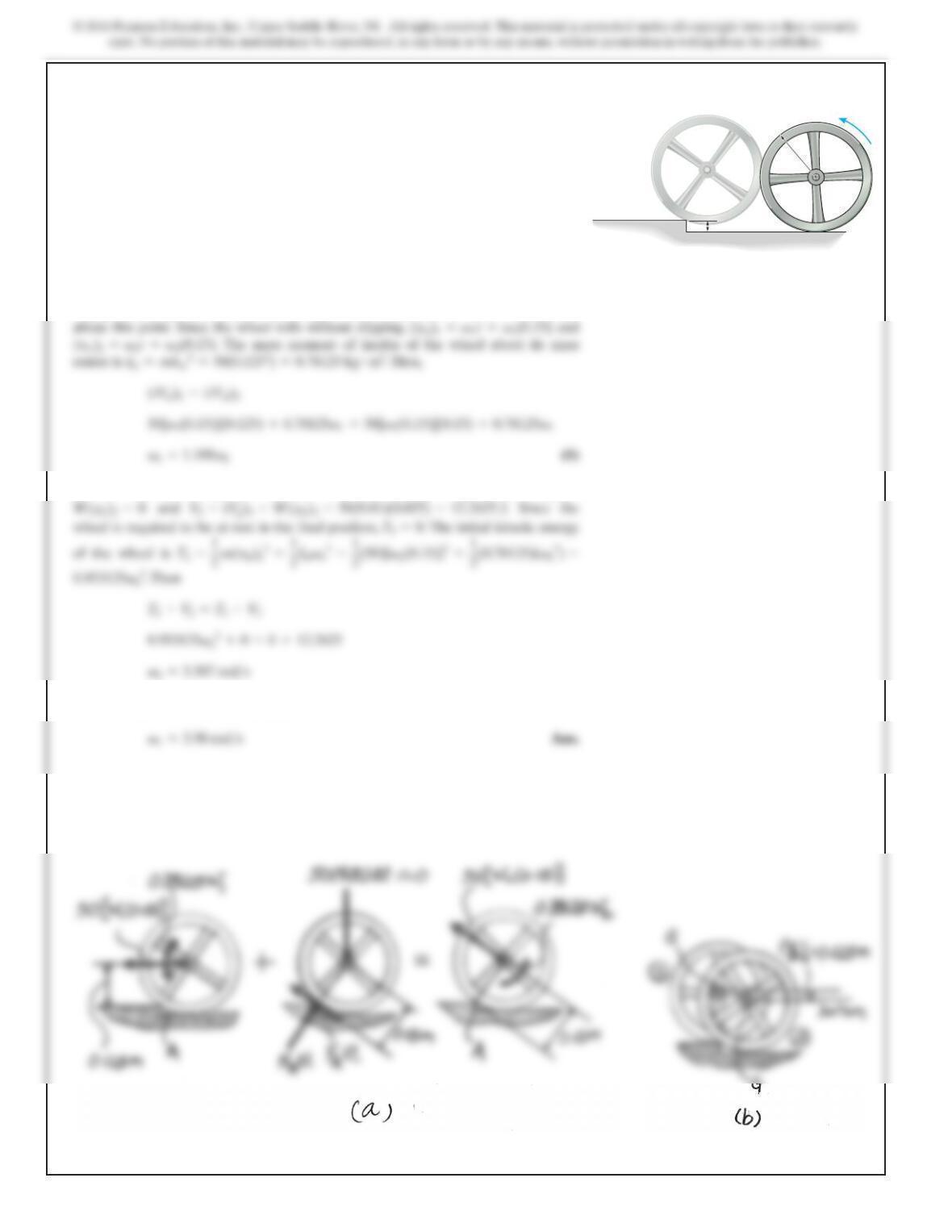
The wheel has a mass of 50 kg and a radius of gyration of
125 mm about its center of mass G. Determine the
minimum value of the angular velocity of the wheel, so
that it strikes the step at Awithout rebounding and then
rolls over it without slipping.
1
SOLUTION
Conservation of Angular Momentum: Referring to Fig. a,the sum of the angular
impulses about point Ais zero. Thus,angular momentum of the wheel is conserved
Conservation of Energy: With reference to the datum in Fig. a,
Substituting this result into Eq.(1),we obtain
V
2=(V
g)2 =
V
V
1039
19–53.
25 mm
150 mm
A
G
1
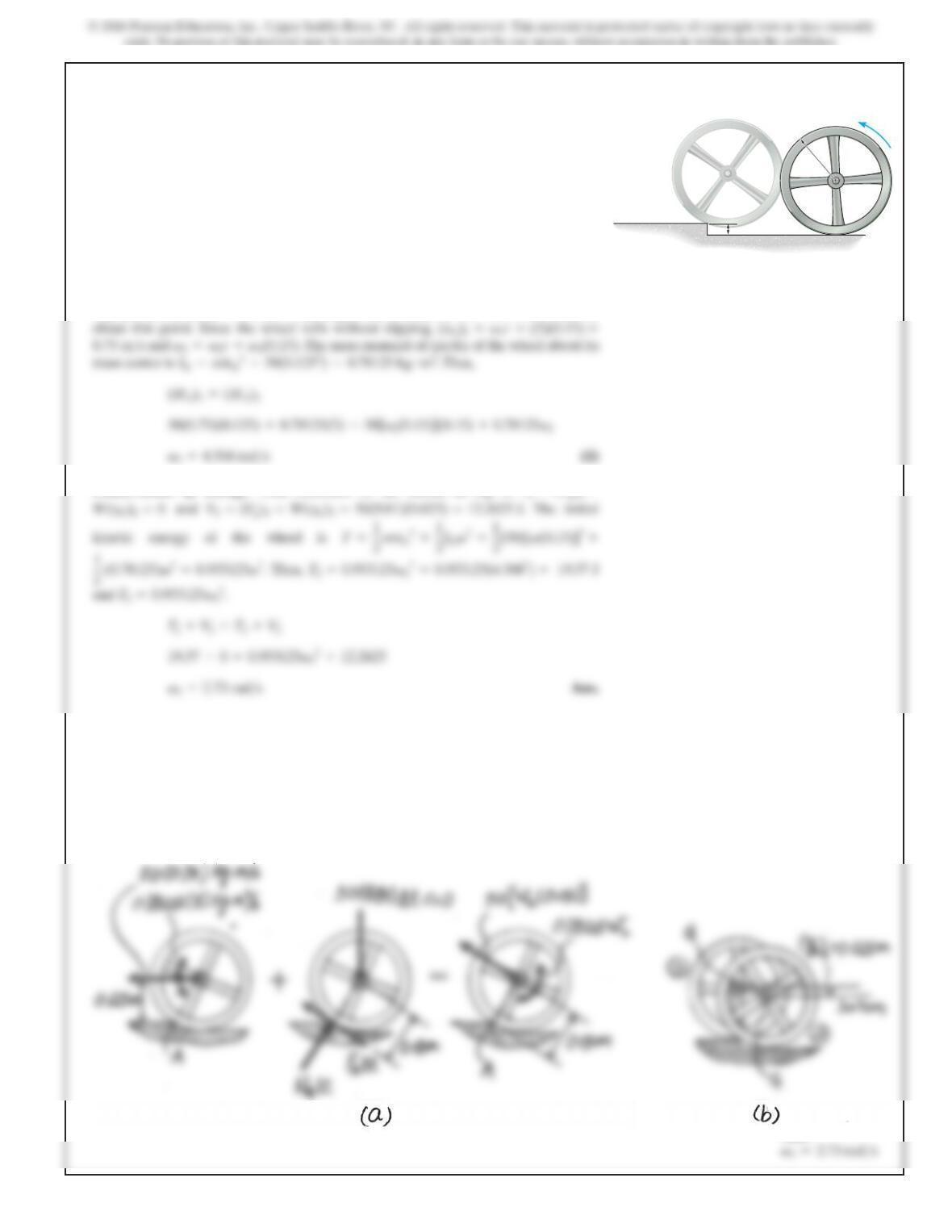
The wheel has a mass of 50 kg and a radius of gyration of
125 mm about its center of mass G.If it rolls without
slipping with an angular velocity of before it
strikes the step at A,determine its angular velocity after it
rolls over the step.The wheel does not loose contact with
the step when it strikes it.
1=5 rad>s
SOLUTION
Conservation of Angular Momentum: Referring to Fig. a,the sum of the angular
impulses about point Ais zero.Thus,angular momentum of the wheel is conserved
Conservation of Energy: With reference to the datum in Fig. a,
V
V
V
Ans:
1040
19–54.
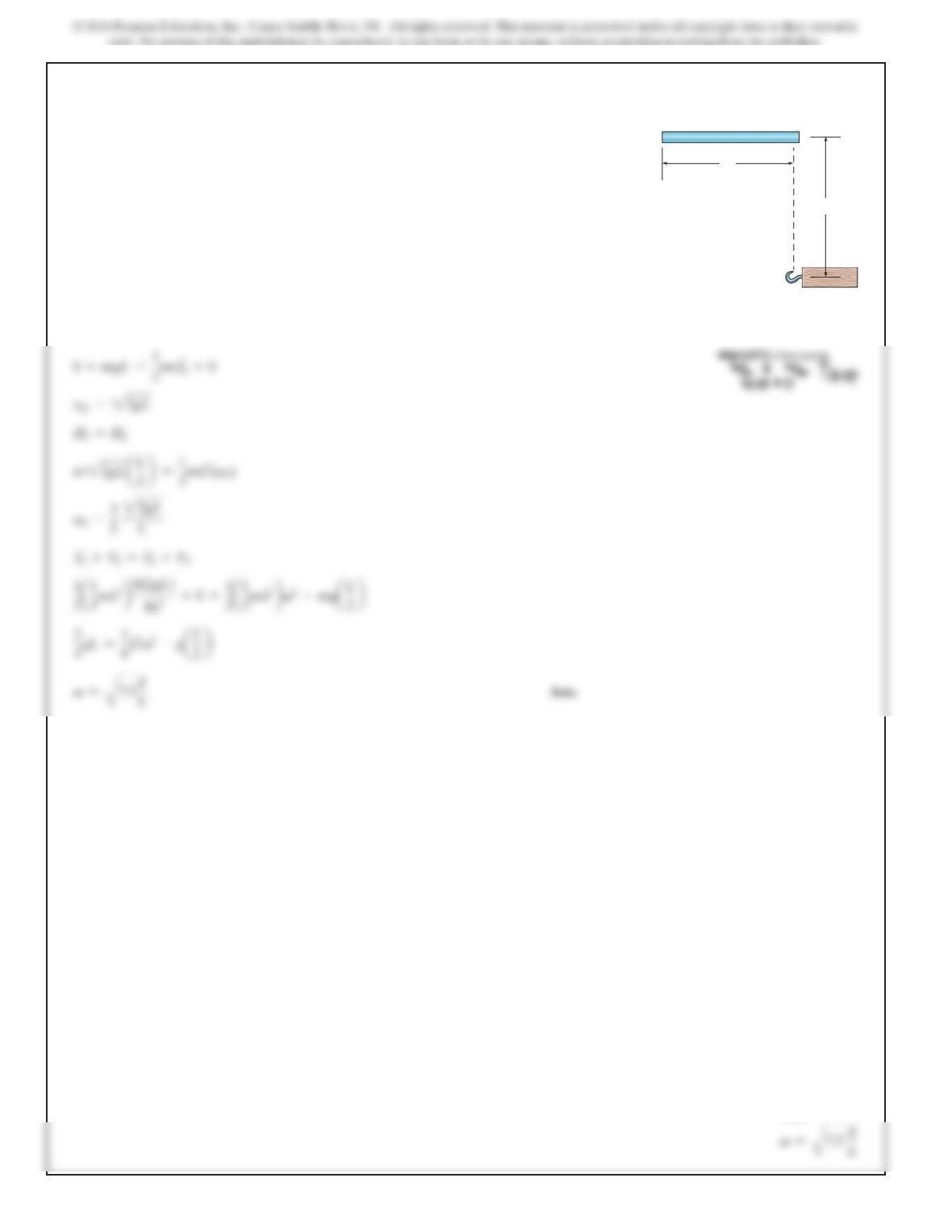
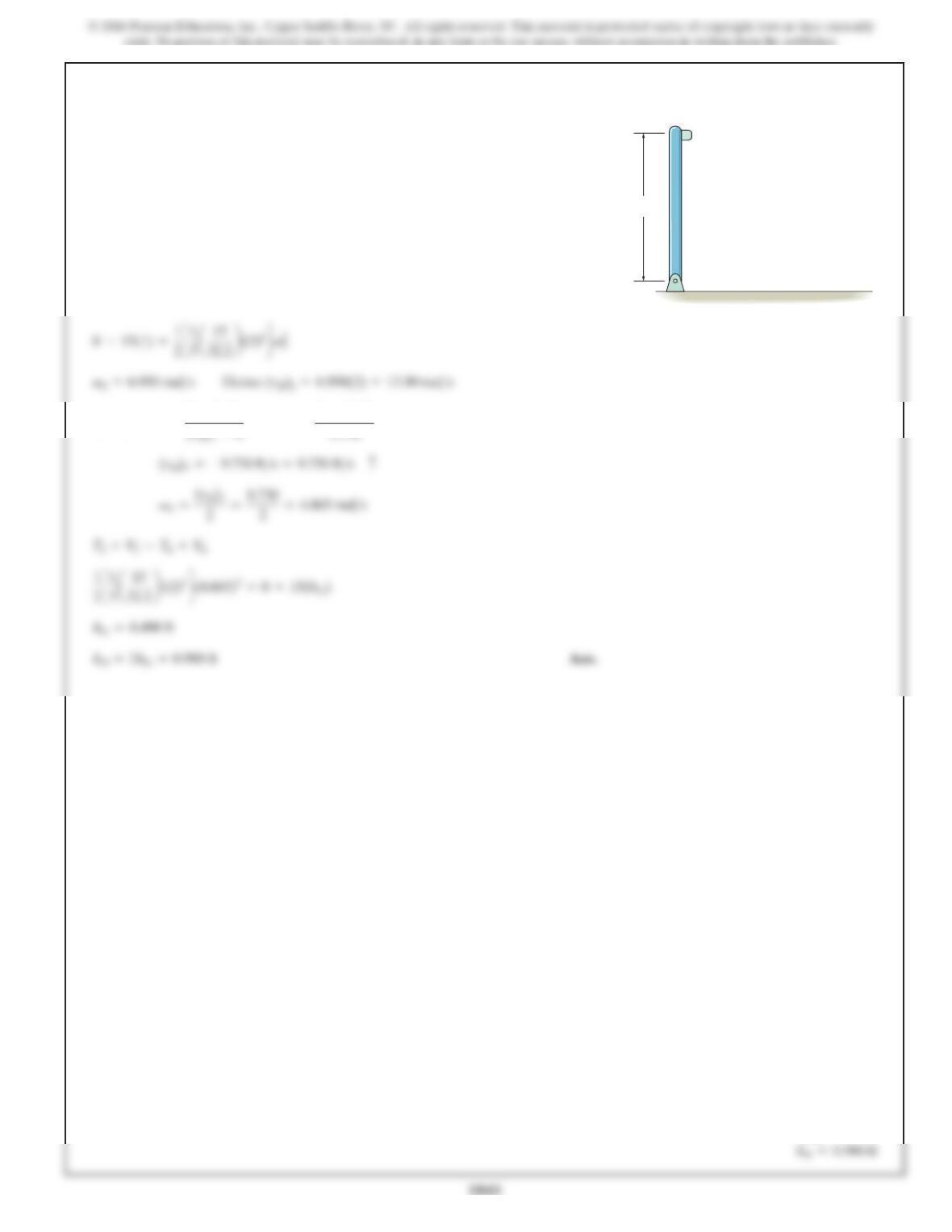
The rod of mass m and length L is released from rest
without rotating. When it falls a distance L, the end A strikes
the hook S, which provides a permanent connection.
Determine the angular velocity
v
of the rod after it has
rotated
90°.
Treat the rod’s weight during impact as a
nonimpulsive force.
A
L
L
S
SOLUTION
T1+V1=T2+V2
Ans:
19–55.
SOLUTION
A
+T
B
e=0–(v
B
)3
0.7 =0–(v
B
)3
T
1=V
1=T
2+V
2
T
he 1
5
-lb rod AB is released from rest in the vertical
position.
If the coefficient of restitution between the floor
and
the cushion at Bis determine how high the end
of the rod rebounds after impact with the floor
.
e=0.7,
2 ft
A
B
Ans:
1042
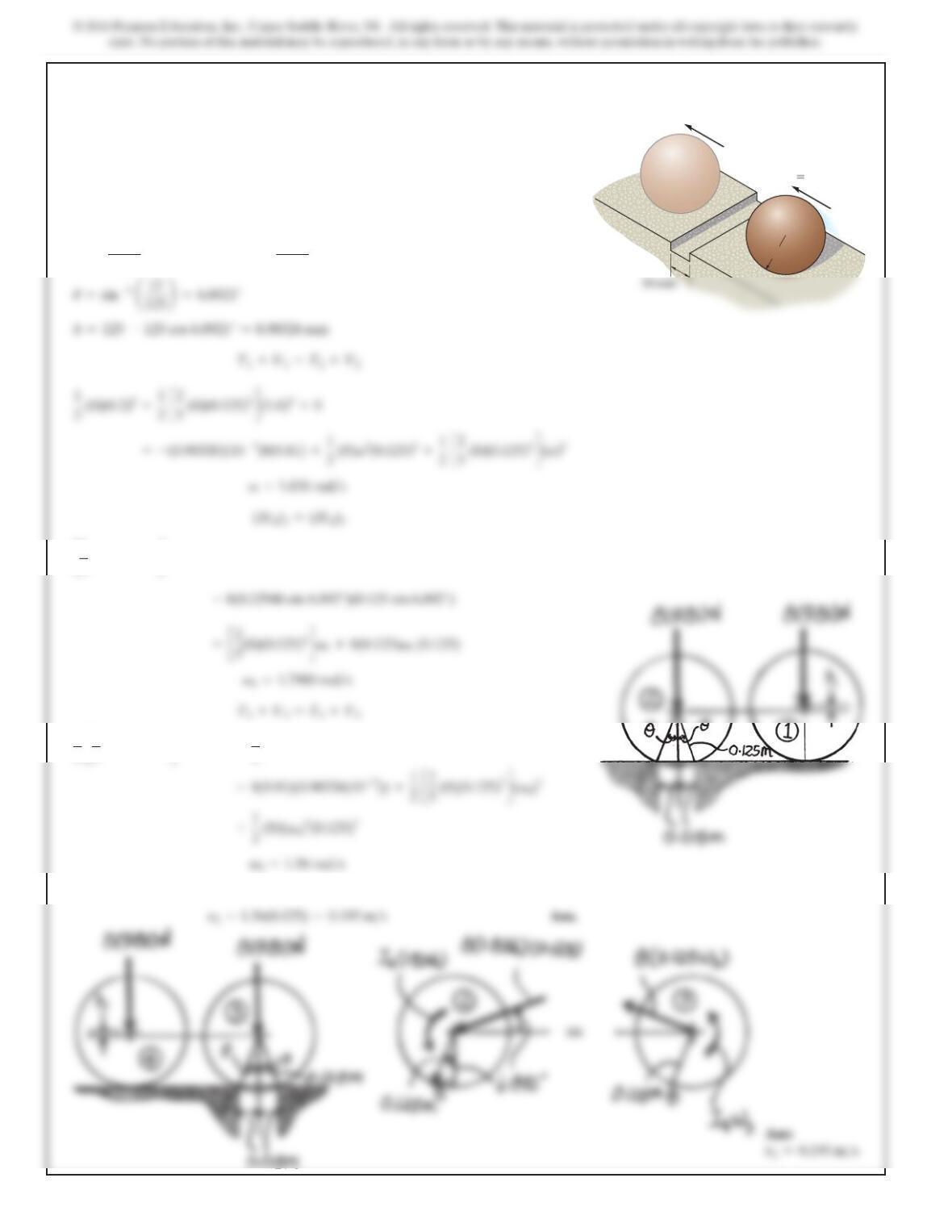
*19–56.
Aball having a mass of 8 kg and initial speed of
rolls over a 30-mm-long depression.Assuming
that the ball rolls off the edges of contact first A,then B,
without slipping,determine its final velocity when it
reaches the other side.
v2
v1=0.2 m>s
A
B
v2
v10.2 m/s
125 mm
SOLUTION
So that
1
2c2
5(8)(0.125)2d(1.7980)2+1
2(8)(1.7980)2(0.125)2+0
c2
5(8)(0.125)2d(1.836) +8(1.836)(0.125) cos 6.892°(0.125 cos 6.892°)
v2=y2
0.125 =8y2
v1=0.2
0.125 =1.6 rad>s
1043
19–57.
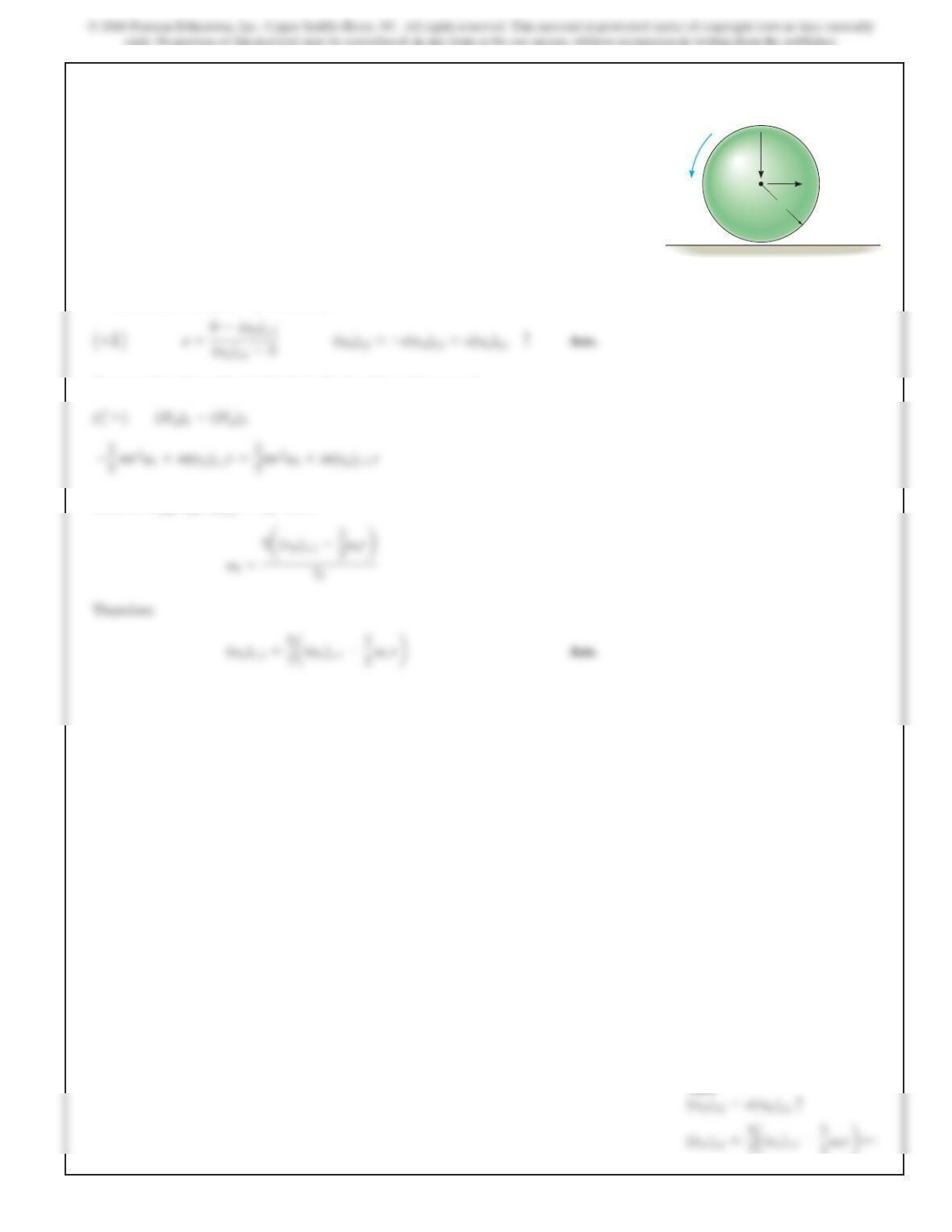
A
so
lid
b
a
ll
w
i
t
h
a mass m
i
s t
h
rown on t
h
e groun
d
suc
h
t
h
at
at the instant of contact it has an angular velocity and
velocity components and as shown. If the
ground is rough so no slipping occurs, determine the
components of the velocity of its mass center just after
impact. The coefficient of restitution is e.
1vG2y1
1vG2x1
V1
SOLUTION
Coefficient of Restitution
(ydirection):
Conservation of angular momentum about point on the ground:
Since no slipping
, then,
(vG)x2=v2 r
(v
G
)
y1
(v
G
)
x1
r
G
V
1
Ans:
7a
5
19–58.
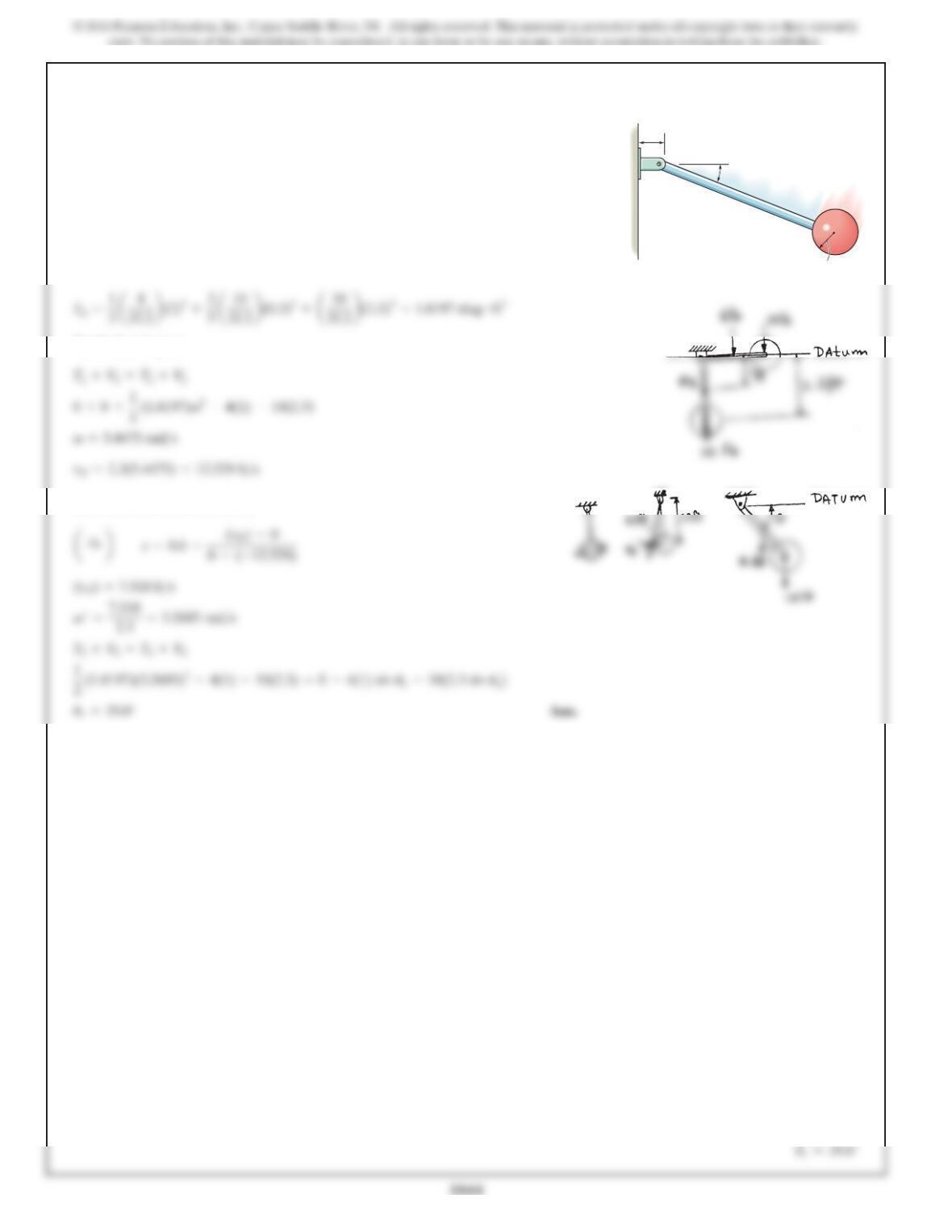
The pendulum consists of a 10-lb solid ball and 4-lb rod. If
it is released from rest when determine the angle
of rebound after the ball strikes the wall and the
pendulum swings up to the point of momentary rest. Take
e=0.6.
u1
u0=0°,
0.3 ft
0.3 ft
2ft
A
θ
SOLUTION
Just before impact:
Since the wall does not move,
Ans: