952
18–41.
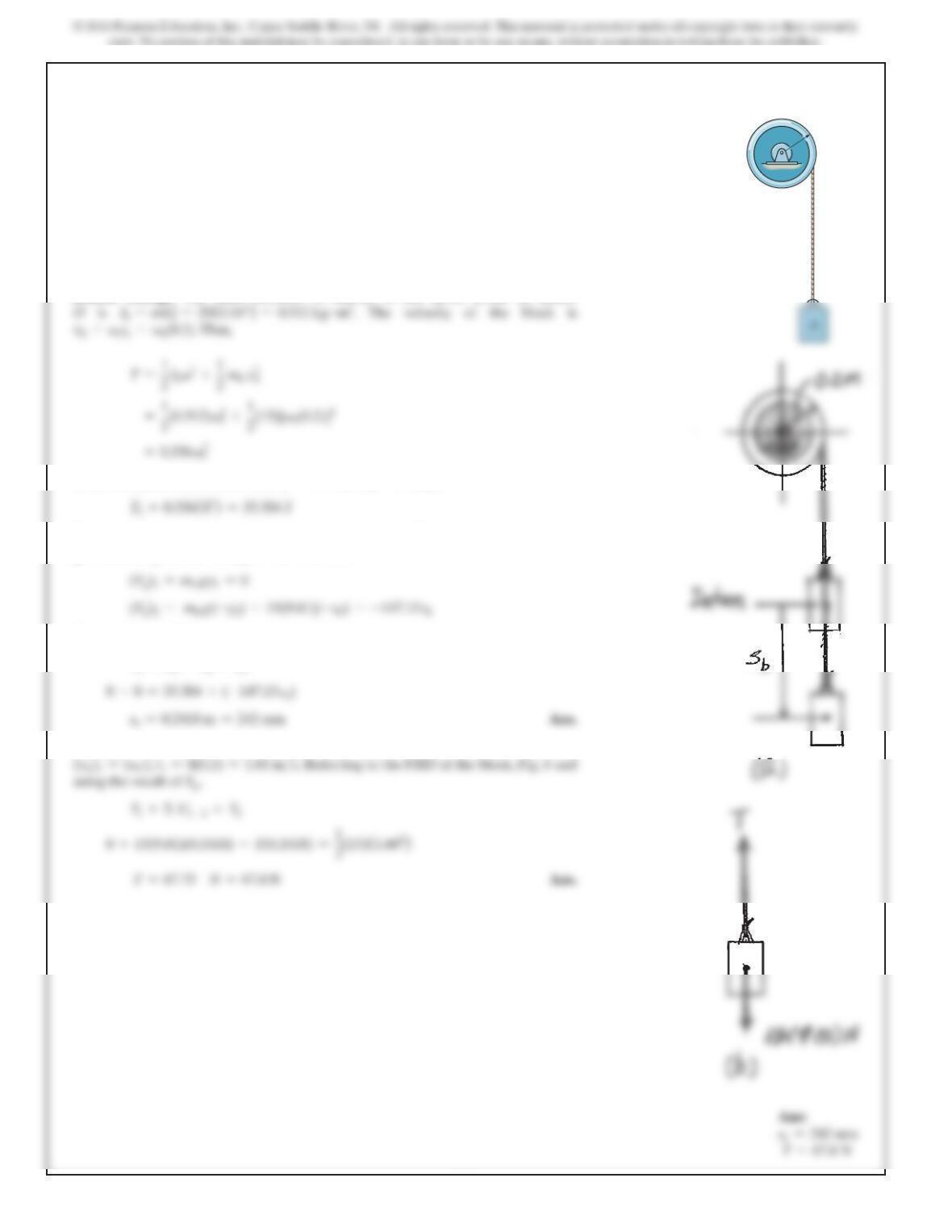
The spool has a mass of 20 kg and a radius of gyration of
kO=160 mm
. If the 15-kg block A is released from rest,
determine the distance the block must fall in order for the
spool to have an angular velocity v
=8 rad>s
. Also, what is
the tension in the cord while the block is in motion? Neglect
the mass of the cord.
SOLUTION
Kinetic Energy. The mass moment of inertia of the spool about its center
Since the system starts from rest,
T1=0
. When v
s=8 rad>s
,
Potential Energy. With reference to the datum set in Fig. a, the initial and final
gravitational potential energy of the block are
Conservation of Energy.
T1+V1=T2+V2
sb=0.2418 m =242 mm
Principle of Work and Energy. The final velocity of the block is
200 mm
O
953
18–42.
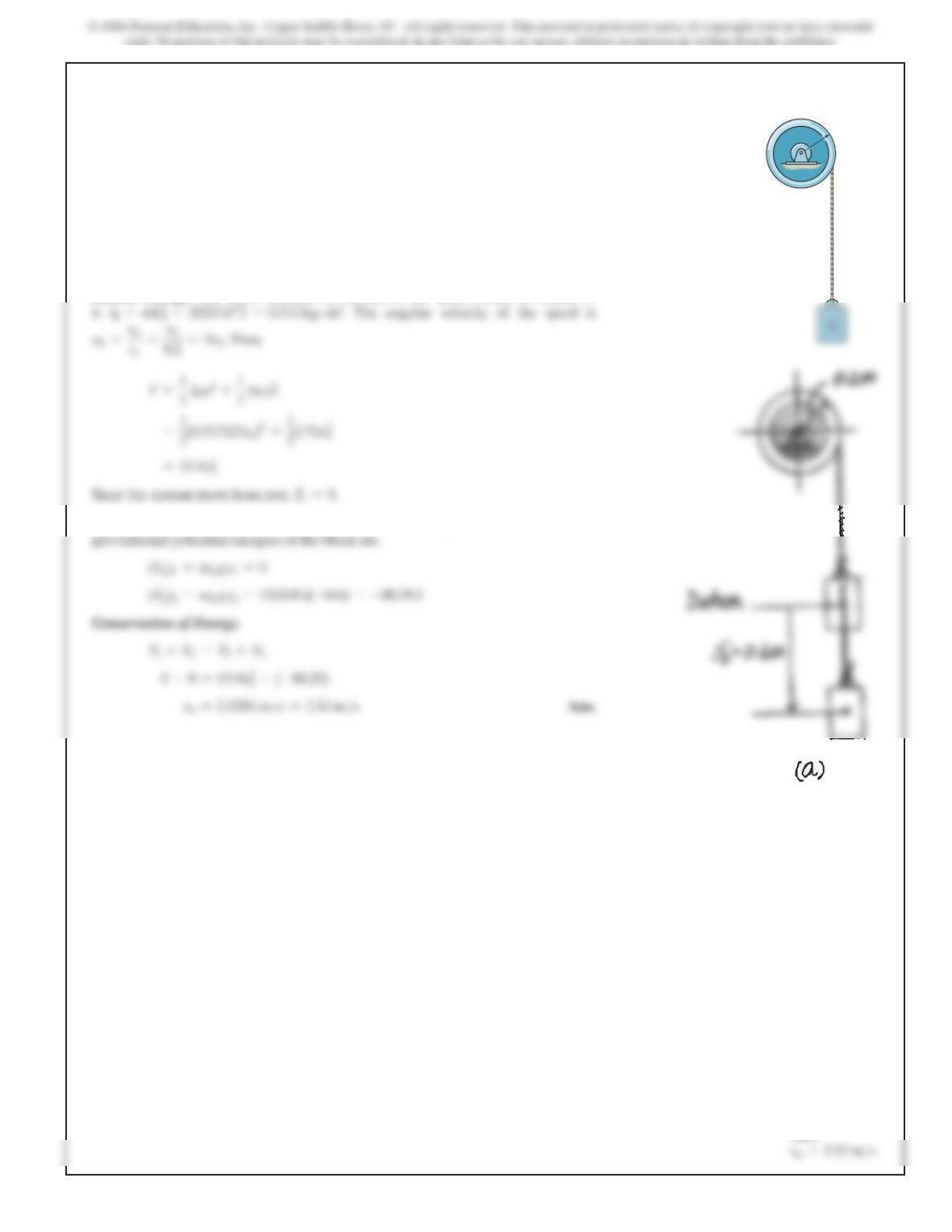
The spool has a mass of 20 kg and a radius of gyration of
kO=160 mm
. If the 15-kg block A is released from rest,
determine the velocity of the block when it descends
600mm.
SOLUTION
Kinetic Energy. The mass moment of inertia of the spool about its center O
Potential Energy. With reference to the datum set in Fig. a, the initial and final
200 mm
O
Ans:
18–43.
SOLUTION
Potential Energy:Datum is set at point A.When the ladder is at its initial and final
position, its center of gravity is located 5 ft and above the datum. Its
Kinetic Energy:The mass moment inertia of the ladder about point Ais
Conservation of Energy:Applying Eq. 18–18, we have
Equation of Motion:The mass moment inertia of the ladder about its mass center is
If the ladder begins to slide, then .Thus, for u>0,
(5 cos u)ftA
10 ft
u
A
un
if
orm
l
a
dd
er
h
av
i
ng a we
i
g
h
t o
f
30
lb
i
s re
l
ease
d
f
rom
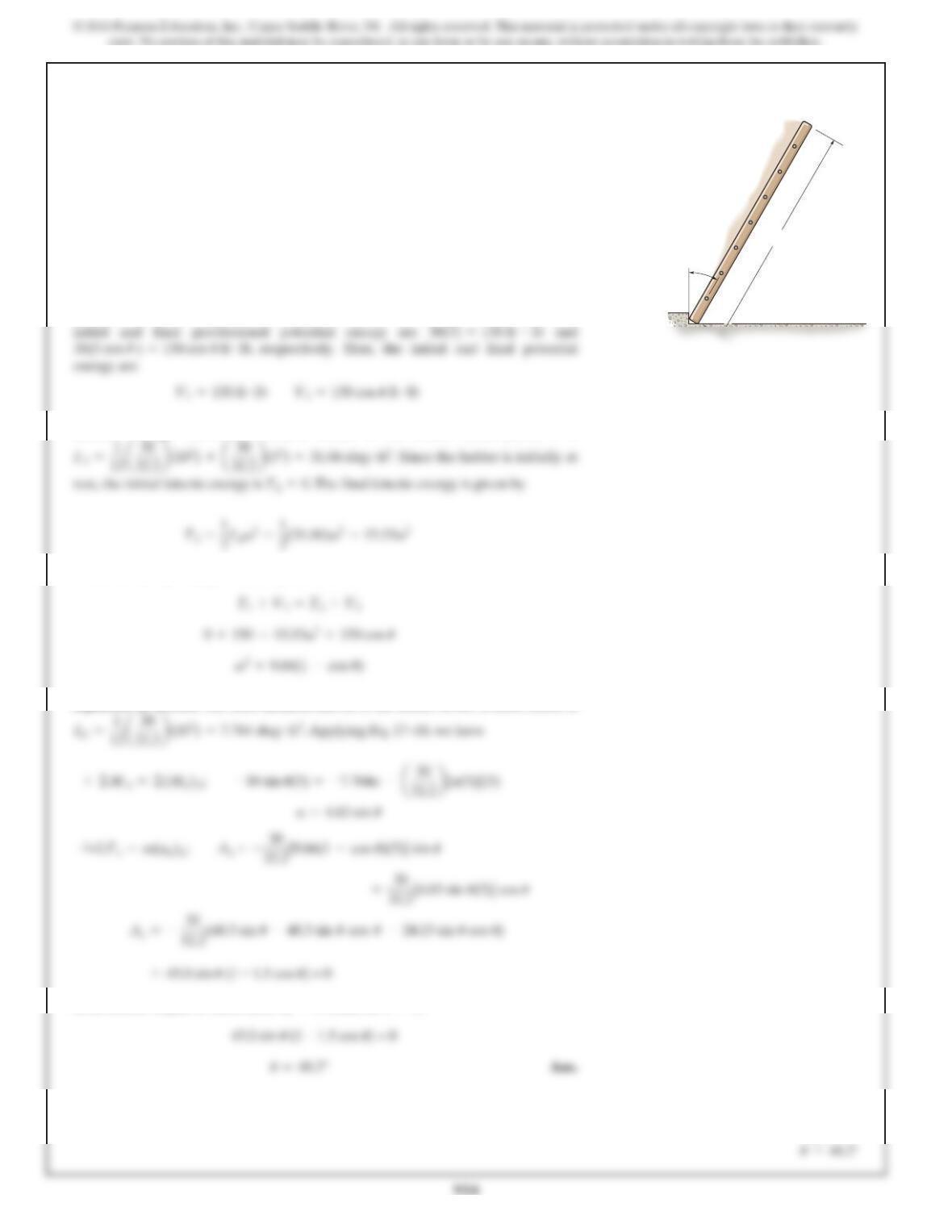
rest when it is in the vertical position. If it is allowed to fall
freely, determine the angle u at which the bottom end A
starts to slide to the right of A.For the calculation, assume
the ladder to be a slender rod and neglect friction at A.
Ax=0
Ans:
955
*18–44.
AB
C
150 mm
100 mm
200 mm
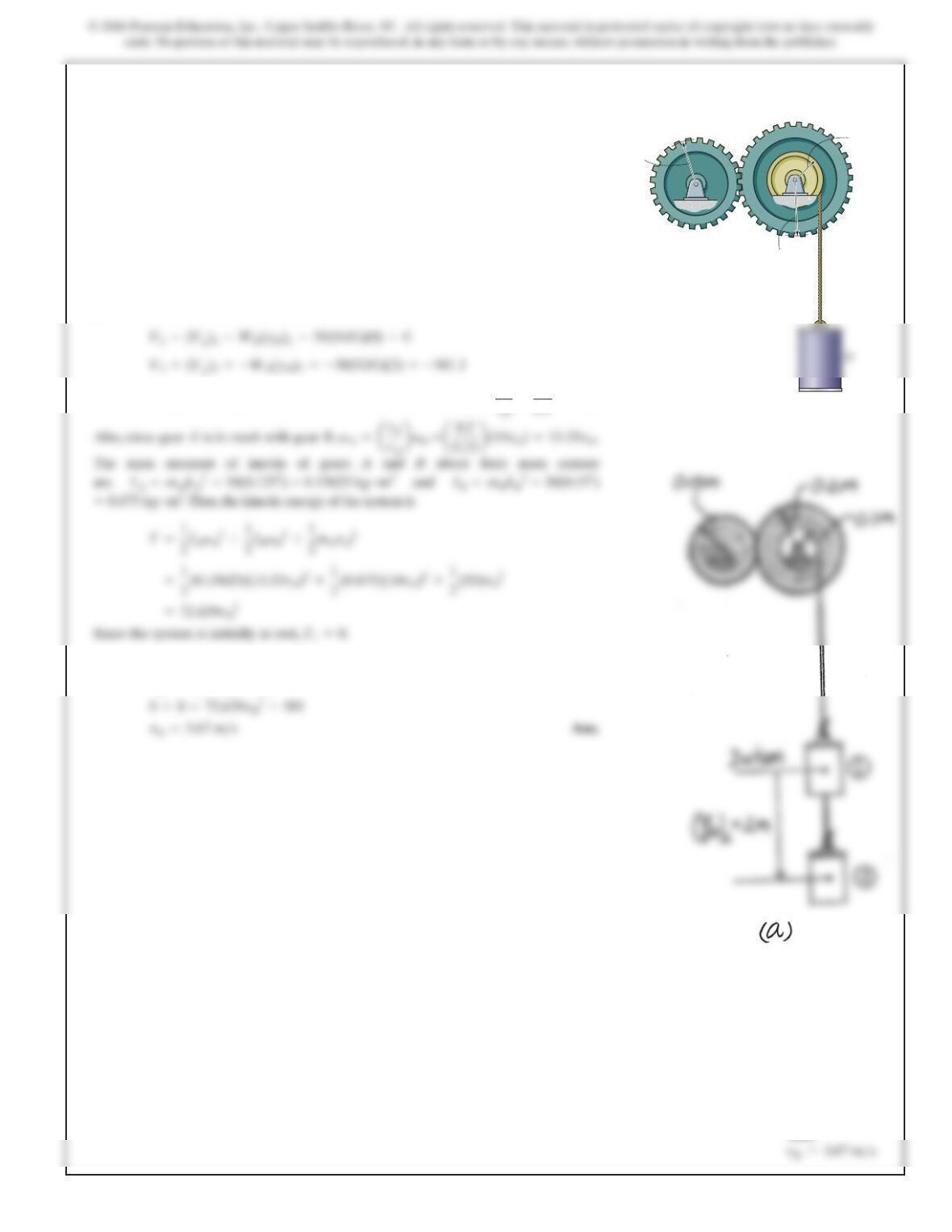
Determine the speed of the 50-kg cylinder after it has
descended a distance of 2 m, starting from rest. Gear Ahas
a mass of 10 kg and a radius of gyration of 125 mm about its
center of mass. Gear Band drum Chave a combined mass
of 30 kg and a radius of gyration about their center of mass
of 150 mm.
SOLUTION
Potential Energy: With reference to the datum shown in Fig.a, the gravitational
potential energy of block Dat position (1) and (2) is
Kinetic Energy: Since gear Brotates about a fixed axis,.
Conservation of Energy:
T1+V1=T2+V2
vB=vD
=vD
Ans:
18–45.
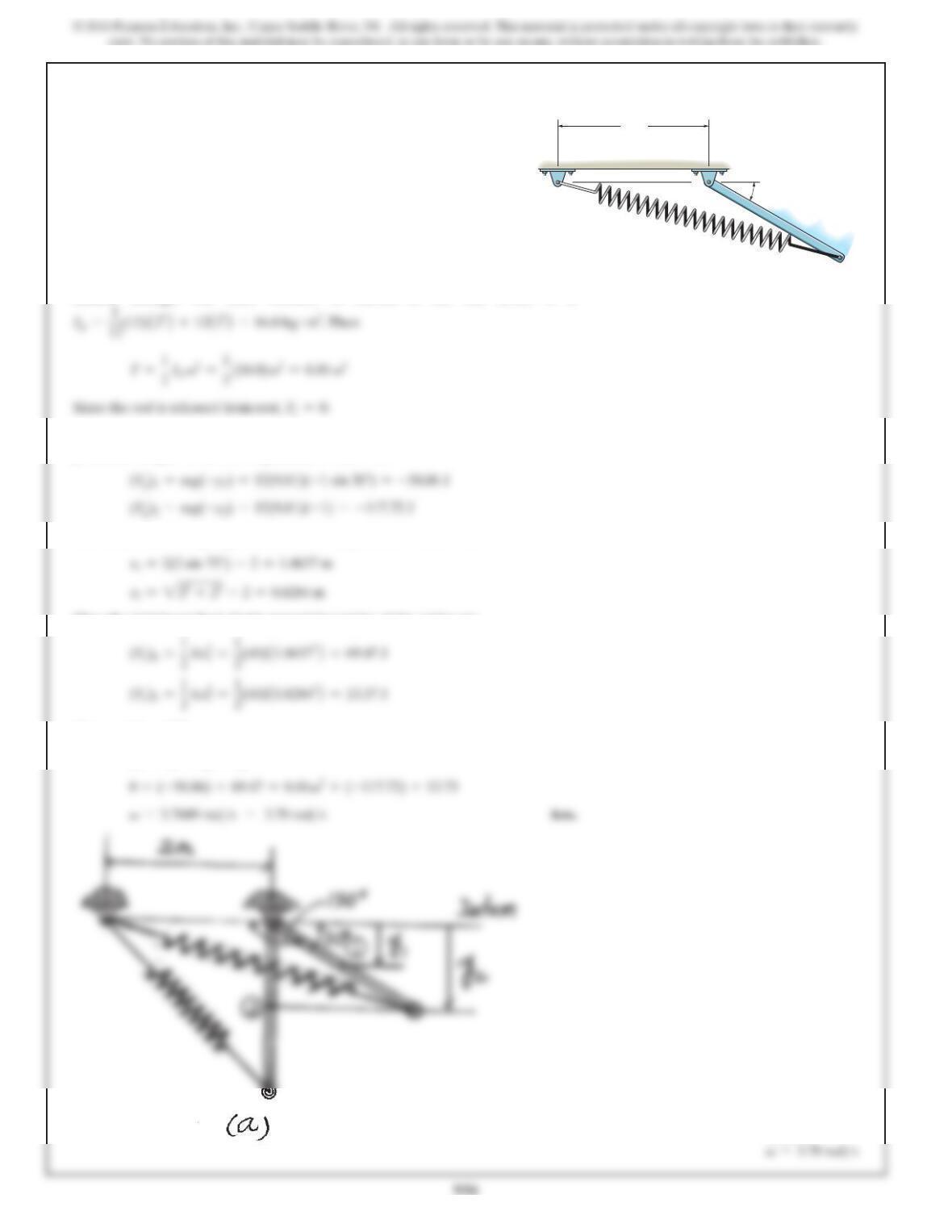
The 12-kg slender rod is attached to a spring, which has an
unstretched length of 2 m. If the rod is released from rest
when
u=30°
, determine its angular velocity at the instant
u=90°
.
SOLUTION
Kinetic Energy. The mass moment of inertia of the rod about A is
Potential Energy. With reference to the datum set in Fig. a, the gravitational
potential energies of the rod at positions ➀ and ➁ are
The stretches of the spring when the rod is at positions ➀ and ➁ are
Thus, the initial and final elastic potential energies of the spring are
Conservation of Energy.
T1+V1=T2+V2
2 m
u
2 m
A
C
k 40 N/m
B
Ans:
18–46.
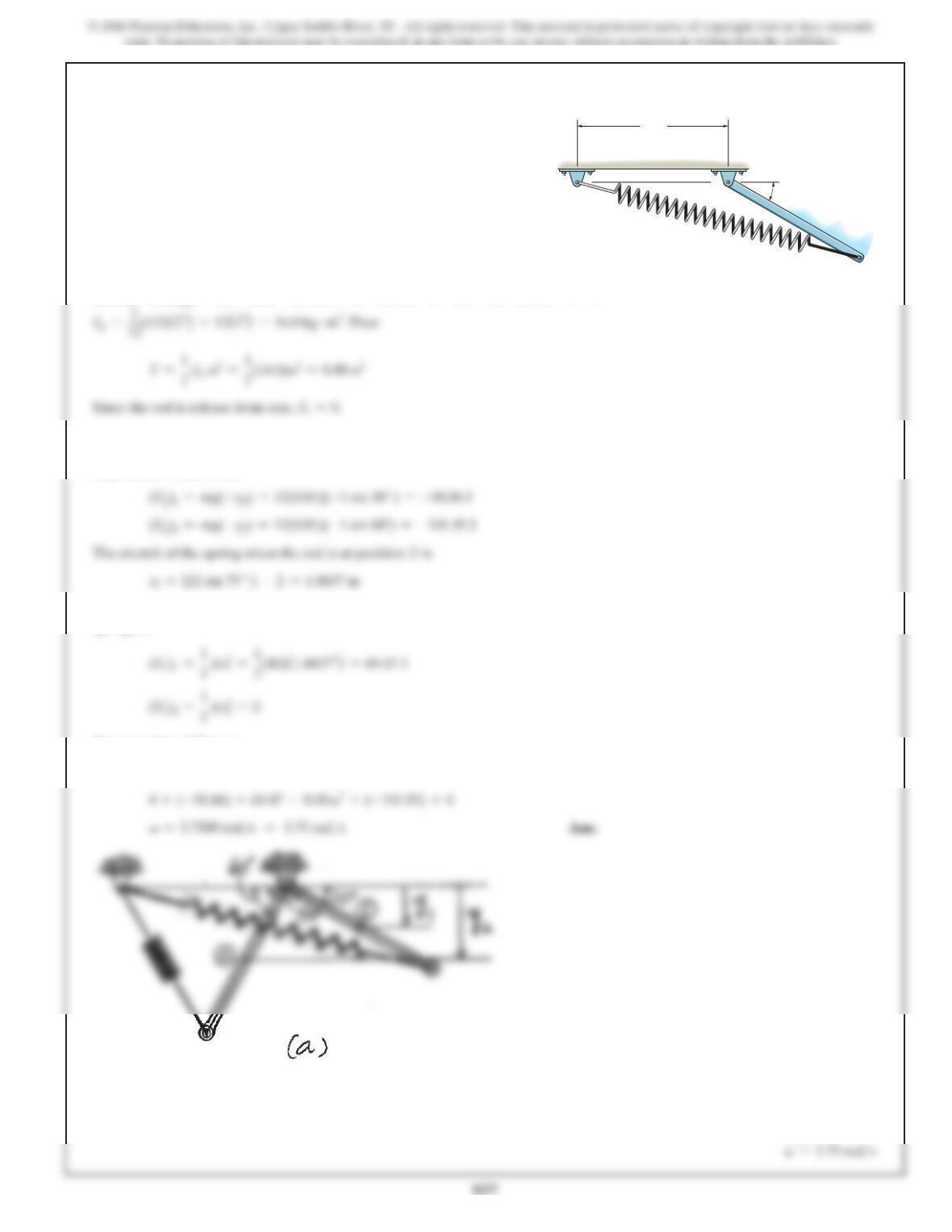
The 12-kg slender rod is attached to a spring, which has an
unstretched length of 2 m. If the rod is released from rest
when
u=30°
, determine the angular velocity of the rod the
instant the spring becomes unstretched.
SOLUTION
Kinetic Energy. The mass moment of inertia of the rod about A is
T1=0
Potential Energy. When the spring is unstretched, the rod is at position ➁ shown in
Fig. a. with reference to the datum set, the gravitational potential energies of the rod
at positions ➀ and ➁ are
It is required that
x2=0
. Thus, the initial and final elastic potential energy of the
spring are
Conservation of Energy.
T1+V1=T2+V2
Ans:
2 m
u
2 m
A
C
k 40 N/m
B
958
18–47.
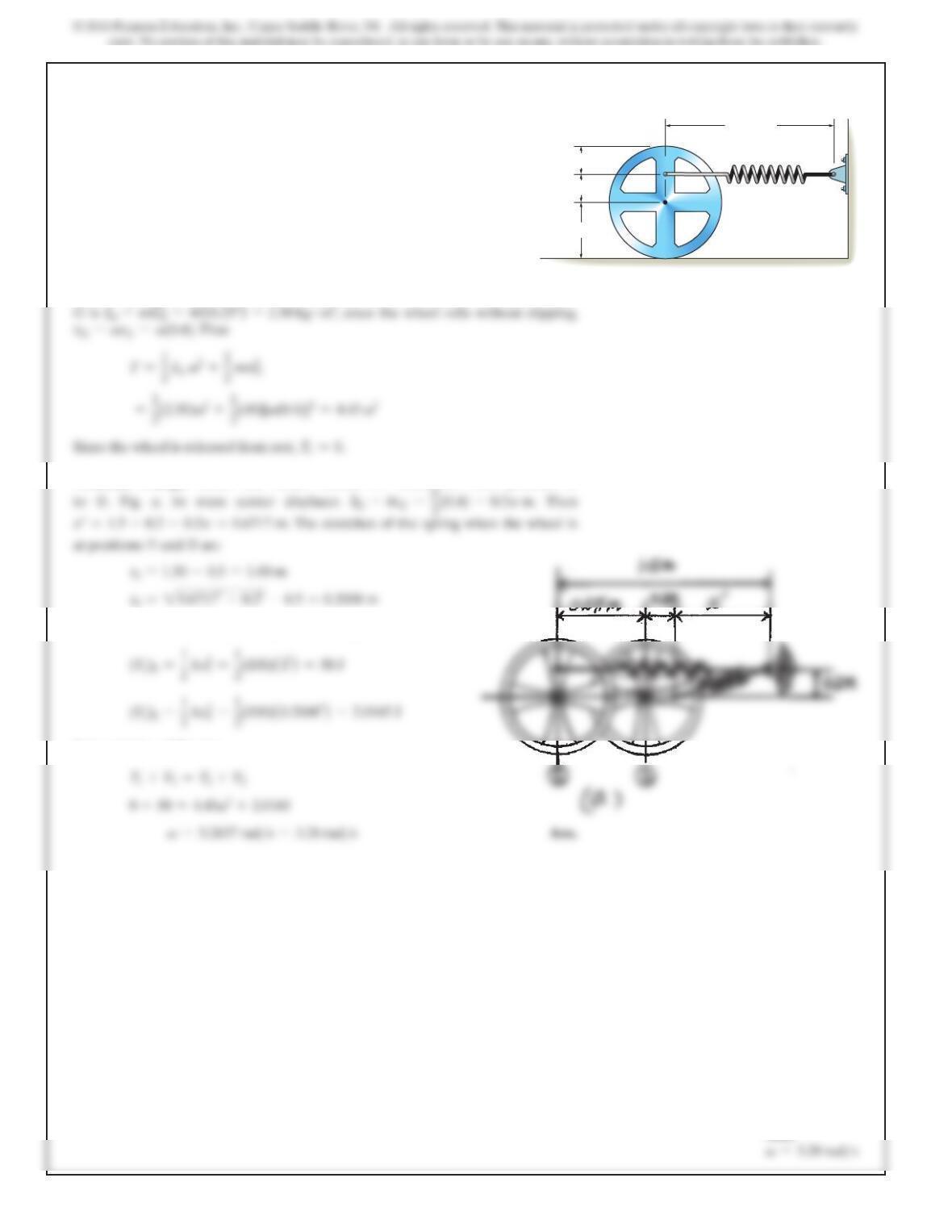
The 40-kg wheel has a radius of gyration about its center of
gravity G of
kG=250 mm
. If it rolls without slipping,
determine its angular velocity when it has rotated clockwise
90° from the position shown. The spring AB has a stiffness
k=100 N>m
and an unstretched length of 500 mm. The
wheel is released from rest.
SOLUTION
Kinetic Energy. The mass moment of inertia of the wheel about its center of mass
Potential Energy. When the wheel rotates
90°
clockwise from position ➀
Thus, the initial and final elastic potential energies are
Conservation of Energy.
Ans:
G
B
A
k 100 N/m
1500 mm
400 mm
200 mm
200 mm
18–48.
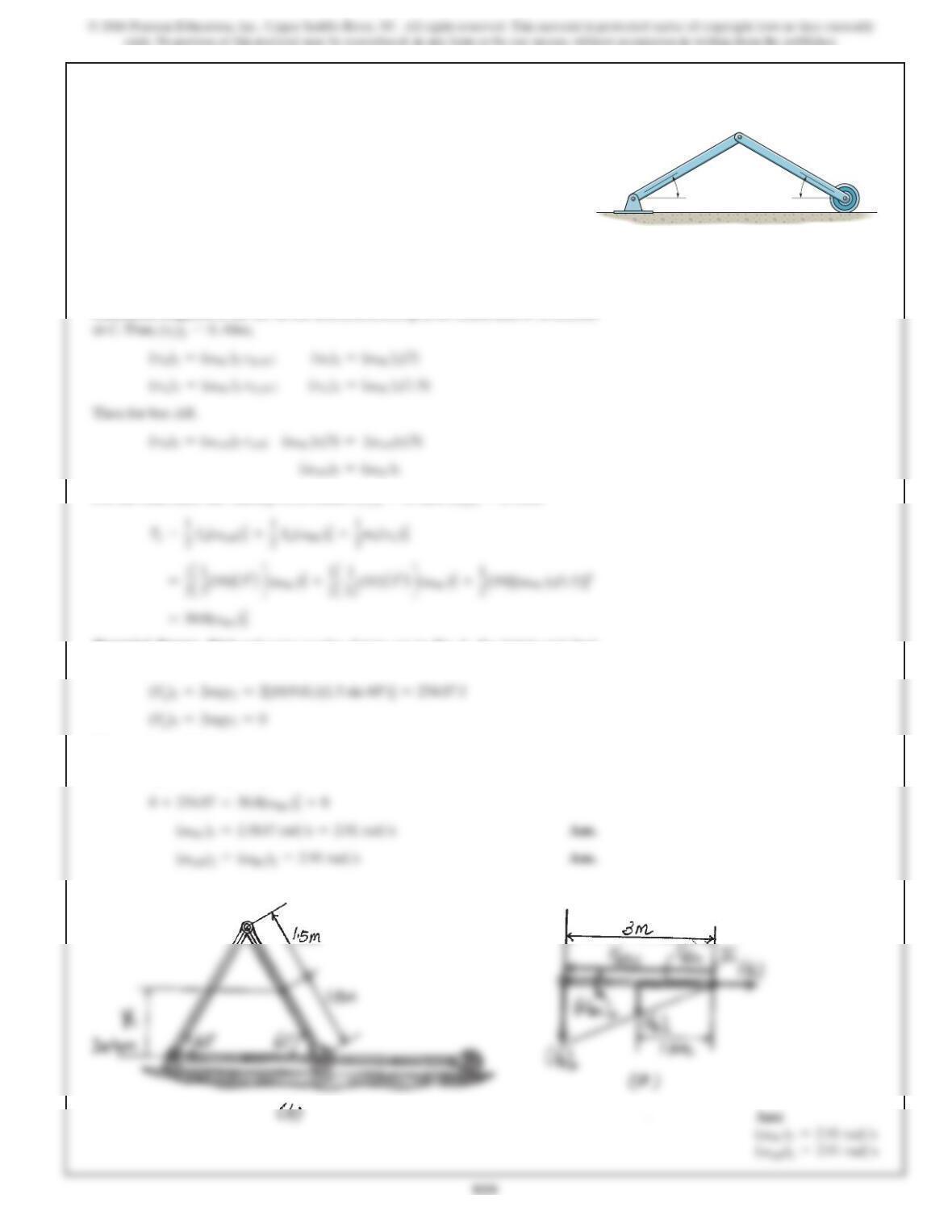
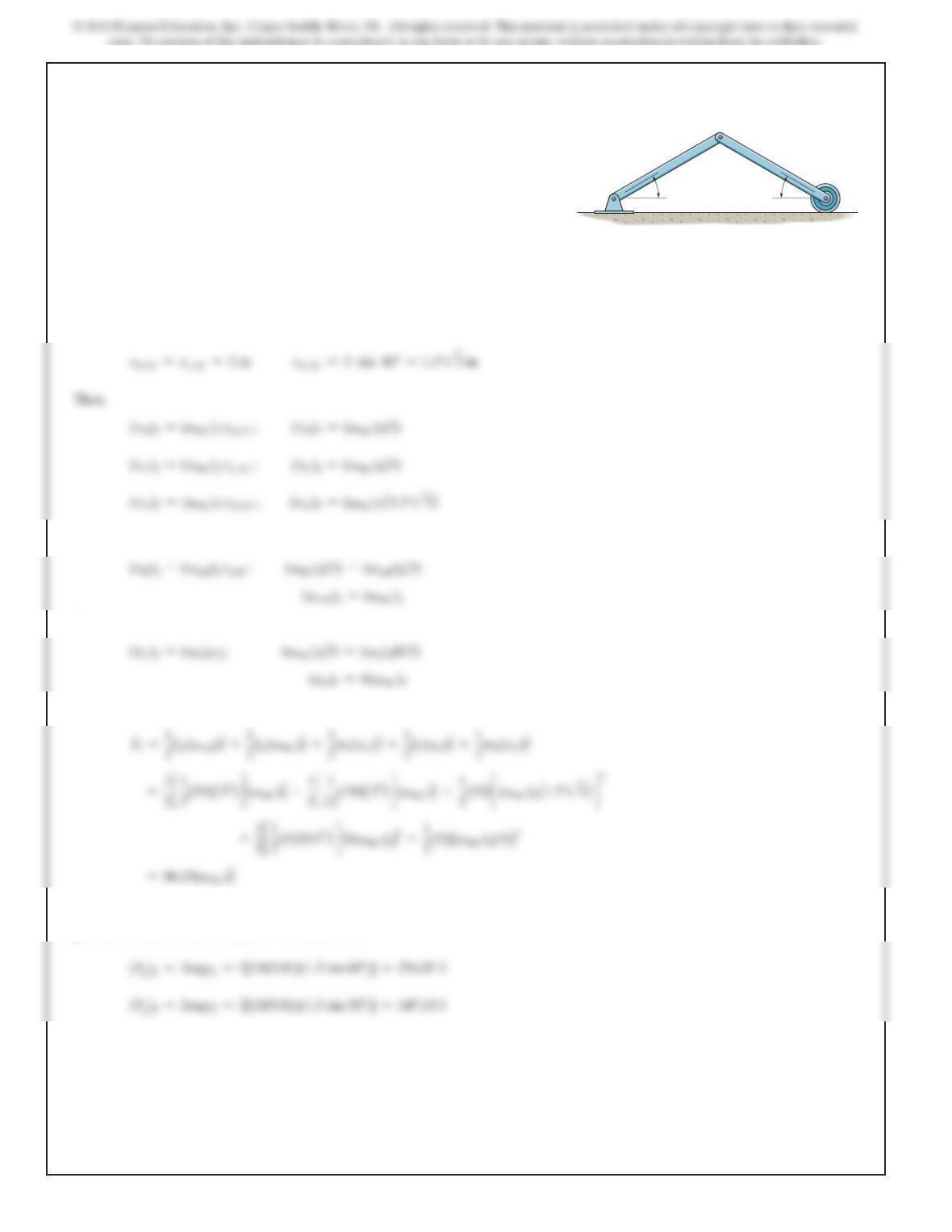
The assembly consists of two 10-kg bars which are pin
connected. If the bars are released from rest when
u=60°
,
determine their angular velocities at the instant
u=0°
. The
5-kg disk at C has a radius of 0.5 m and rolls without slipping.
A
3 m3 m
C
B
uu
SOLUTION
Kinetic Energy. Since the system is released from rest,
T1=0
. Referring to the
kinematics diagram of bar BC at the final position, Fig. a, we found that IC is located
(vb)2=(
(
(vB)2=(
(
(
For the disk, since the velocity of its center
(vc)2=0
, then
(
v
. Thus
Potential Energy. With reference to the datum set in Fig. b, the initial and final
gravitational potential energies of the system are
Conservation of Energy.
T1+V1=T2+V2
960
18–49.
The assembly consists of two 10-kg bars which are pin
connected. If the bars are released from rest when
u=60°
, determine their angular velocities at the instant
u=30°
. The 5-kg disk at C has a radius of 0.5 m and rolls
without slipping. A
3 m3 m
C
B
uu
SOLUTION
Kinetic Energy. Since the system is released from rest,
T1=0
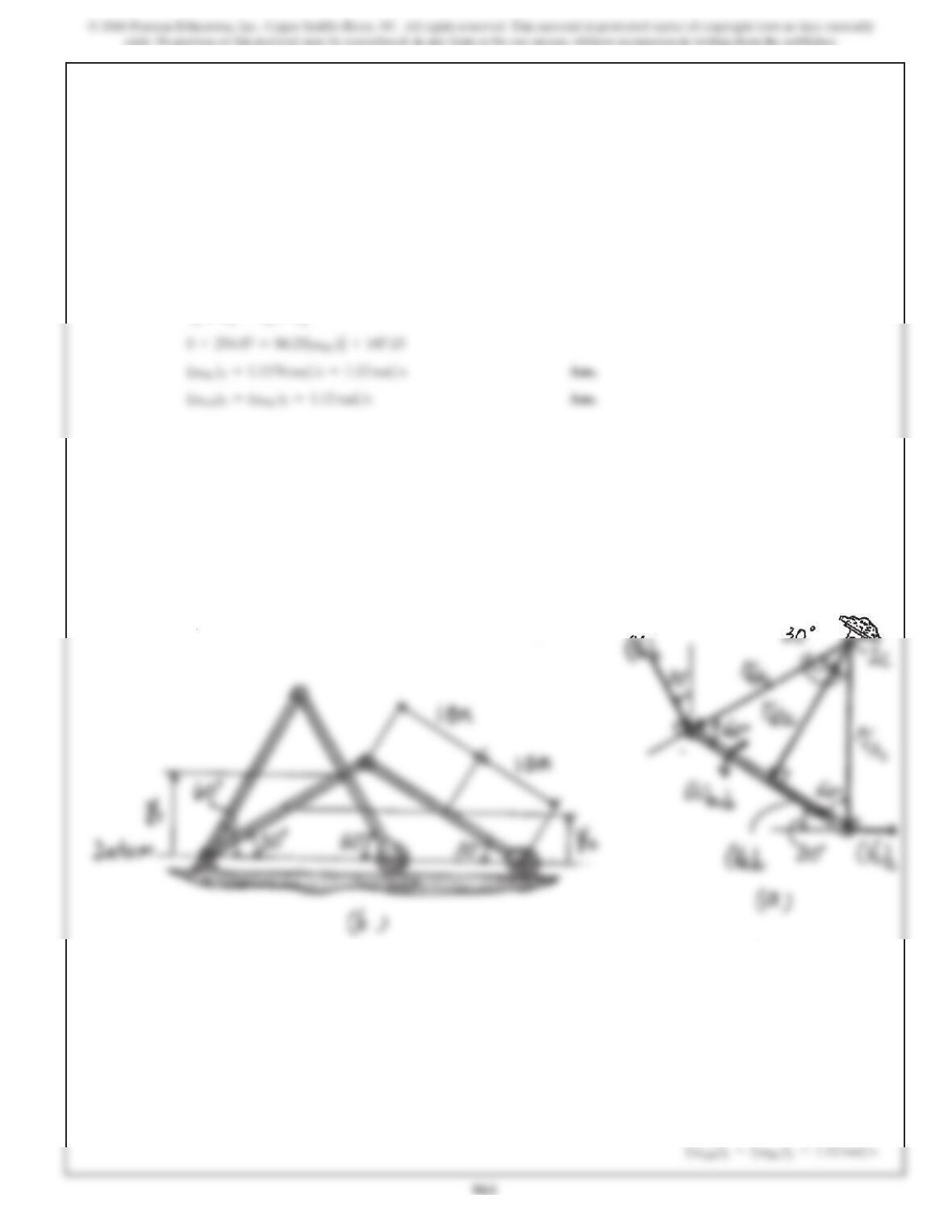
. Referring to the
kinematics diagram of bar BC at final position with IC so located, Fig. a,
Then for rod AB,
For the disk, since it rolls without slipping,
Thus, the kinetic energy of the system at final position is
Potential Energy. With reference to the datum set in Fig. b, the initial and final
gravitational potential energies of the system are
Conservation of Energy.
T1+V1= T2+V2
18–49. Continued
Ans:
18–50.
SOLUTION
T1+V1=T2+V2
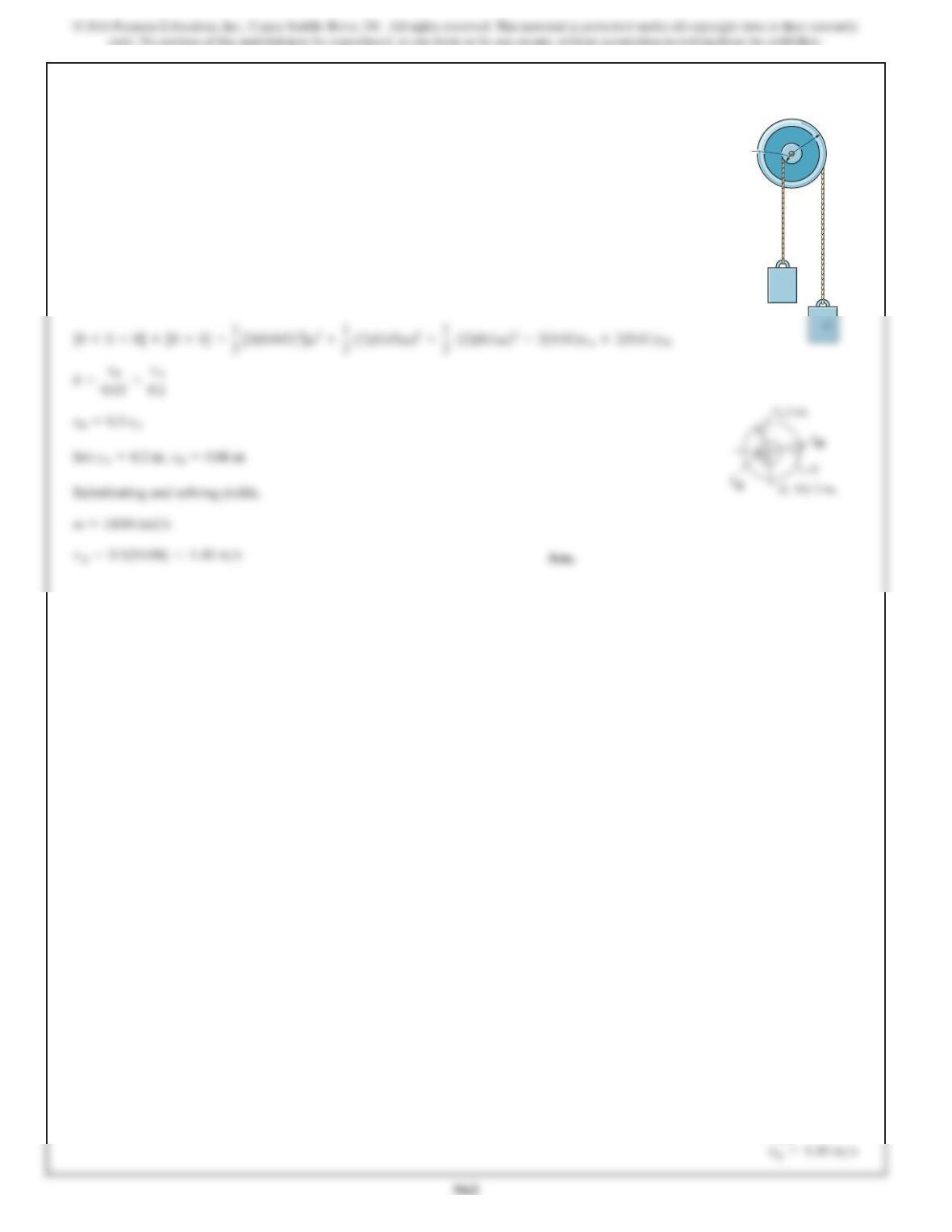
The compound disk pulley consists of a hub and attached
outer rim. If it has a mass of 3 kg and a radius of gyration
determine the speed of block Aafter A
descends 0.2 m from rest. Blocks Aand Beach have a mass
of 2 kg. Neglect the mass of the cords.
kG=45 mm,
B
100 mm
30 mm
Ans:
963
18–51.
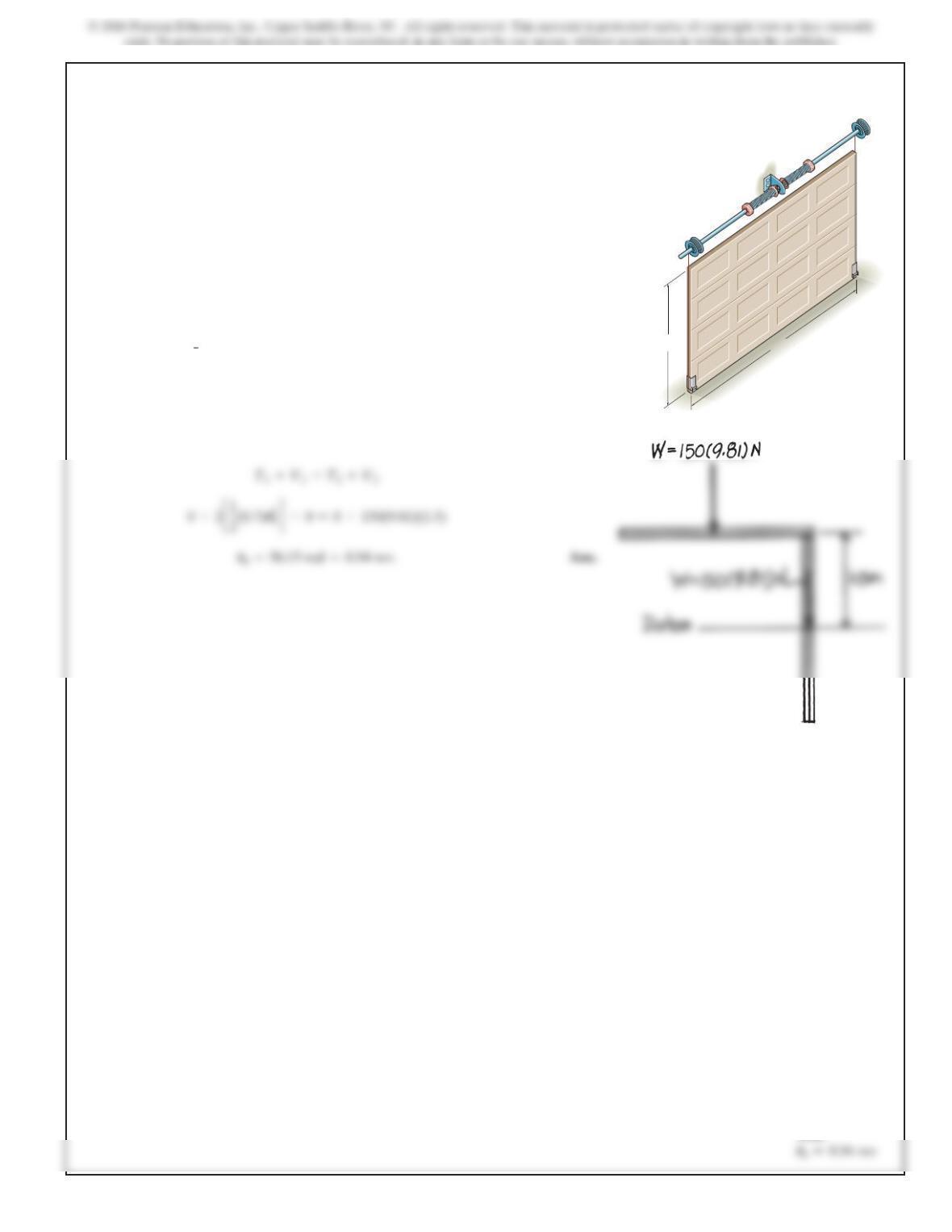
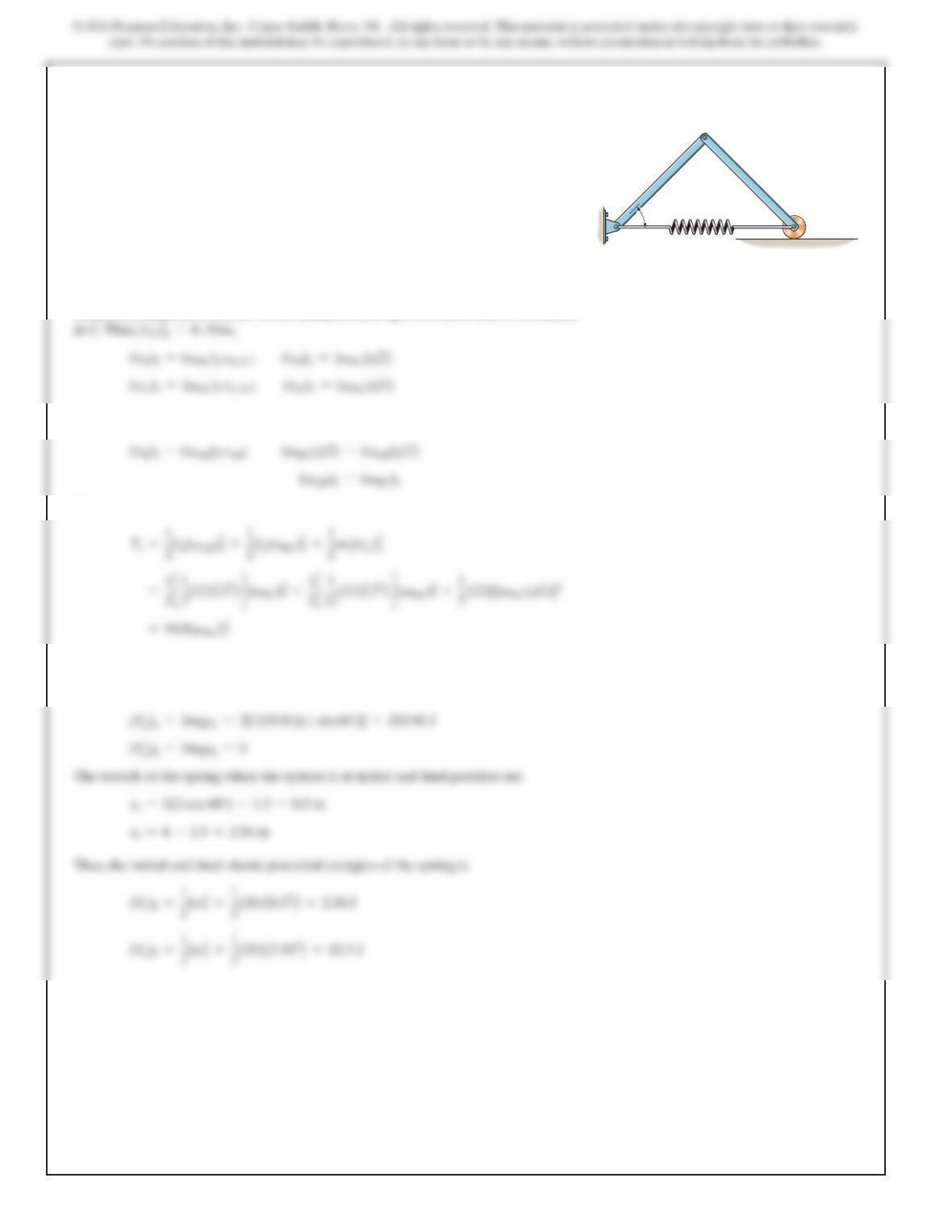
The uniform garage door has a mass of 150 kg and is guided
a
long smooth tracks at its ends.Lifting is done using the two
springs
,each of which is attached to the anchor bracket at A
and
to the counterbalance shaft at Band C.As the door is
raised,
the springs begin to unwind from the shaft, thereby
a
ssisting the lift. If each spring provides a torsional moment of
,where is in radians,determine the angle
at which both the left-wound and right-wound spring
should be attached so that the door is completely balanced by
the springs
,i.e., when the door is in the vertical position and is
g
iven a slight force upwards,the springs will lift the door along
the
side tracks to the horizontal plane with no final angular
velocity
.Note: The elastic potential energy of a torsional
spring
is ,where and in this case
.
k
=0.7 N #m>rad
M=kuV
e=1
2ku2
u
0
u
M
=(0.7u)N
#m
SOLUTION
Datum at initial position.
3m 4m
C
A
B
Ans:
964
*18–52.
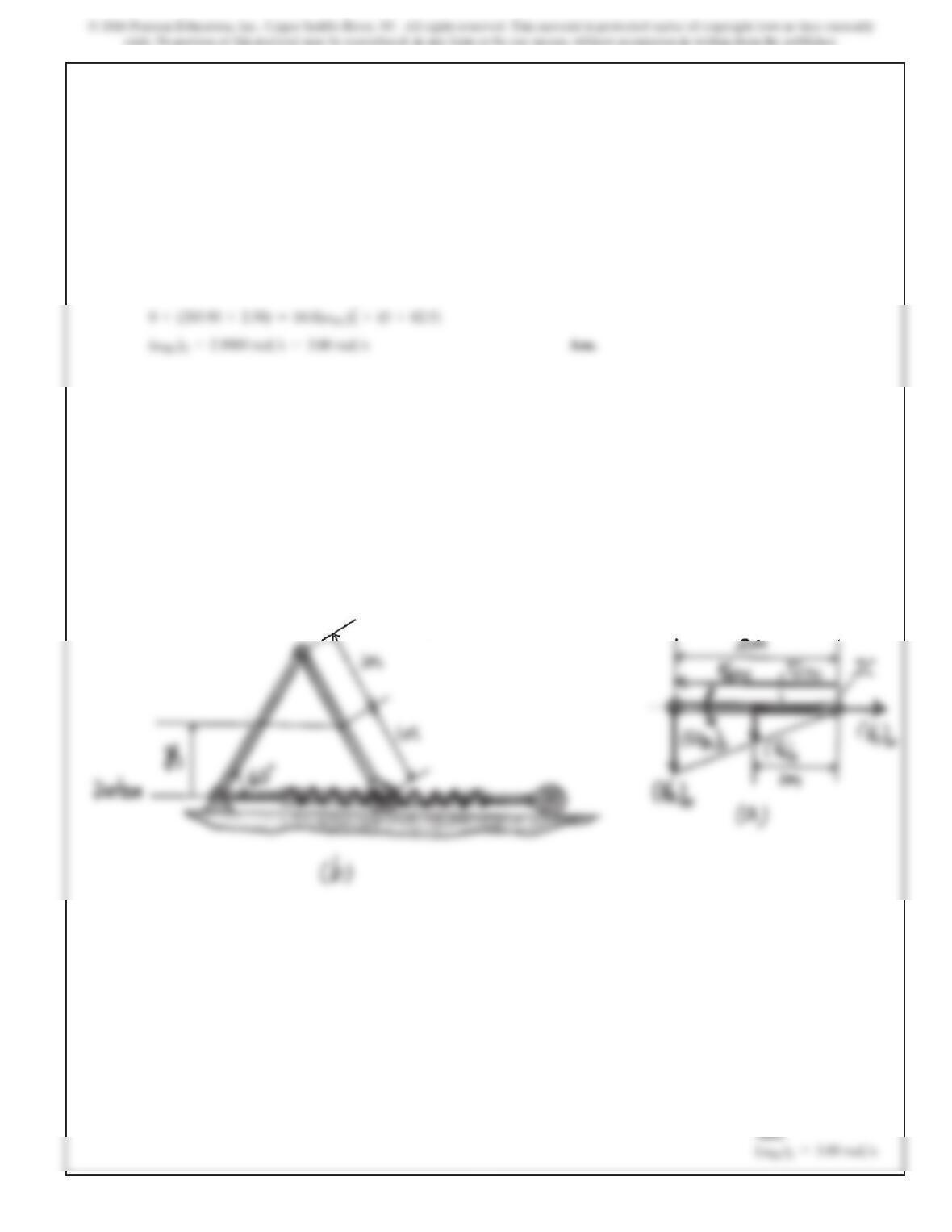
The two 12-kg slender rods are pin connected and released
from rest at the position
u=60°
. If the spring has an
unstretched length of 1.5 m, determine the angular velocity
of rod BC, when the system is at the position
u=0°
. Neglect
the mass of the roller at C.
A
C
B
2 m
k 20 N/m
2 m
u
SOLUTION
Kinetic Energy. Since the system is released from rest,
T1=0
. Referring to the
kinematics diagram of rod BC at the final position, Fig. a we found that IC is located
Then for rod AB,
Thus,
Potential Energy. With reference to the datum set in Fig. b, the initial and final
gravitational potential energies of the system are
x2=4–1.5 =2.50 m
965
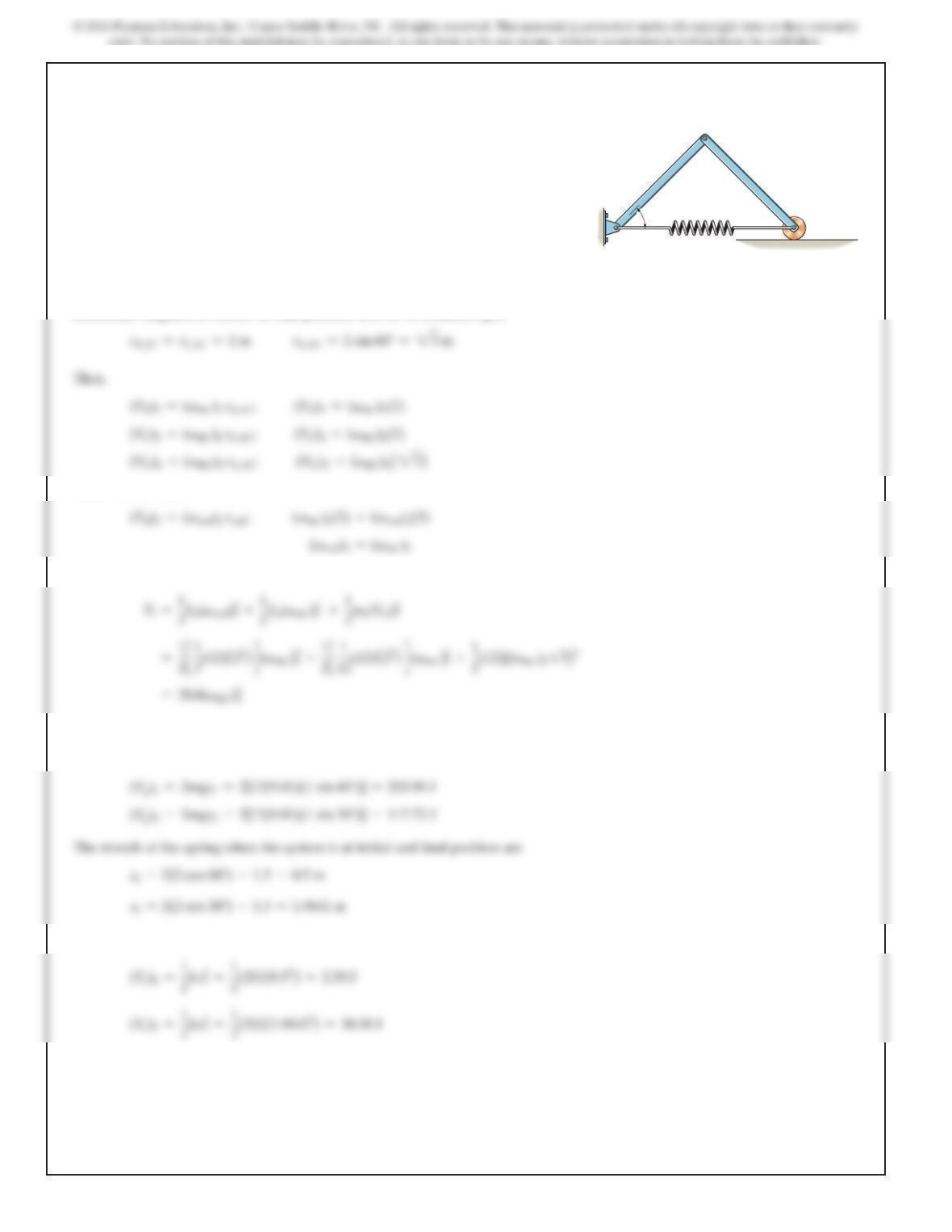
Conservation of Energy.
T1+V1= T2+V2
18–52. Continued
966
18–53.
The two 12-kg slender rods are pin connected and released
from rest at the position
u=60°
. If the spring has an
unstretched length of 1.5 m, determine the angular velocity
of rod BC, when the system is at the position
u=30°
.
SOLUTION
Kinetic Energy. Since the system is released from rest,
T1=0
. Referring to the
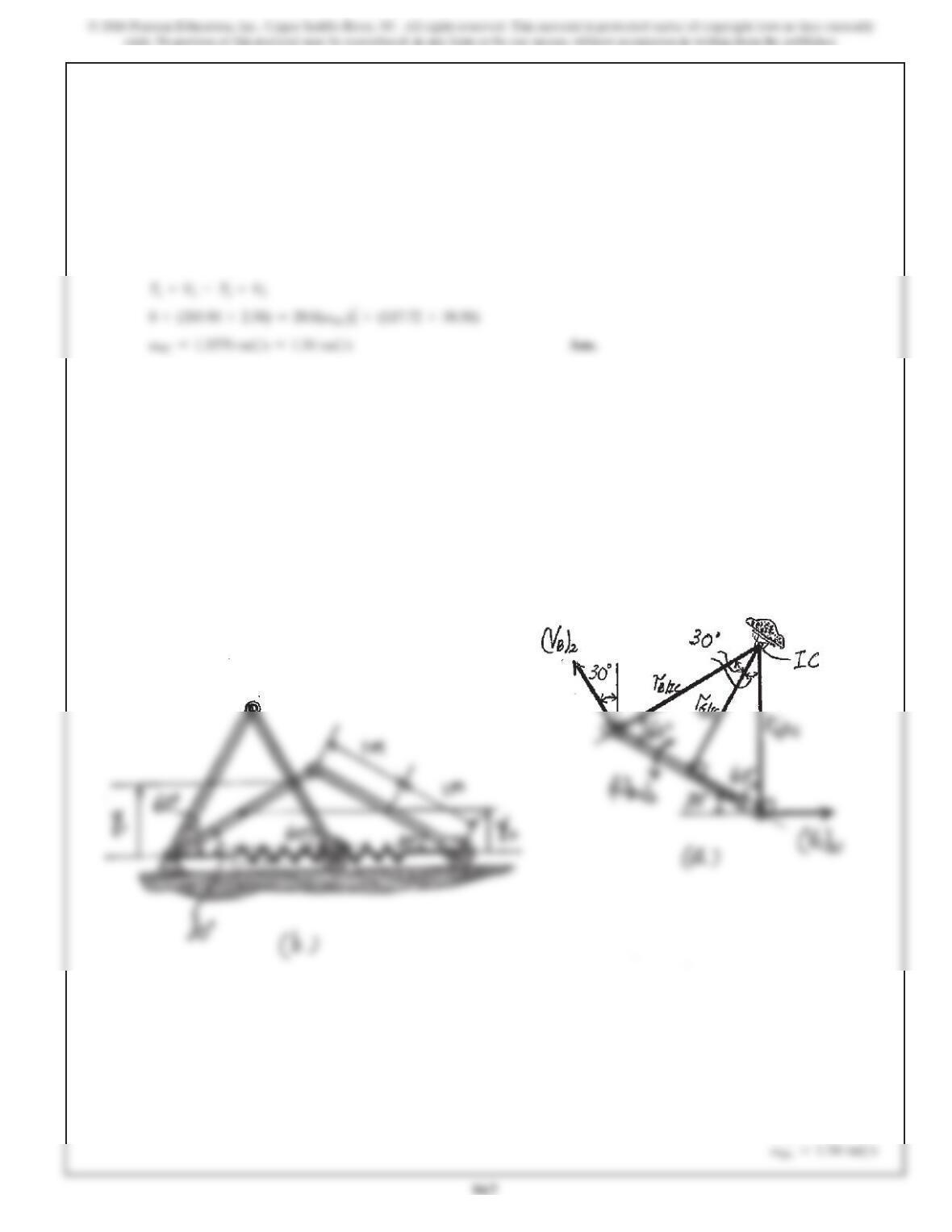
kinematics diagram of rod BC at final position with IC so located, Fig. a
Then for rod AB,
Thus,
Potential Energy. With reference to the datum set in Fig. b, the initial and final
gravitational potential energy of the system are
Thus, the initial and final elastic potential energy of the spring are
A
C
B
2 m
k 20 N/m
2 m
u
Conservation of Energy.
18–53. Continued
Ans:
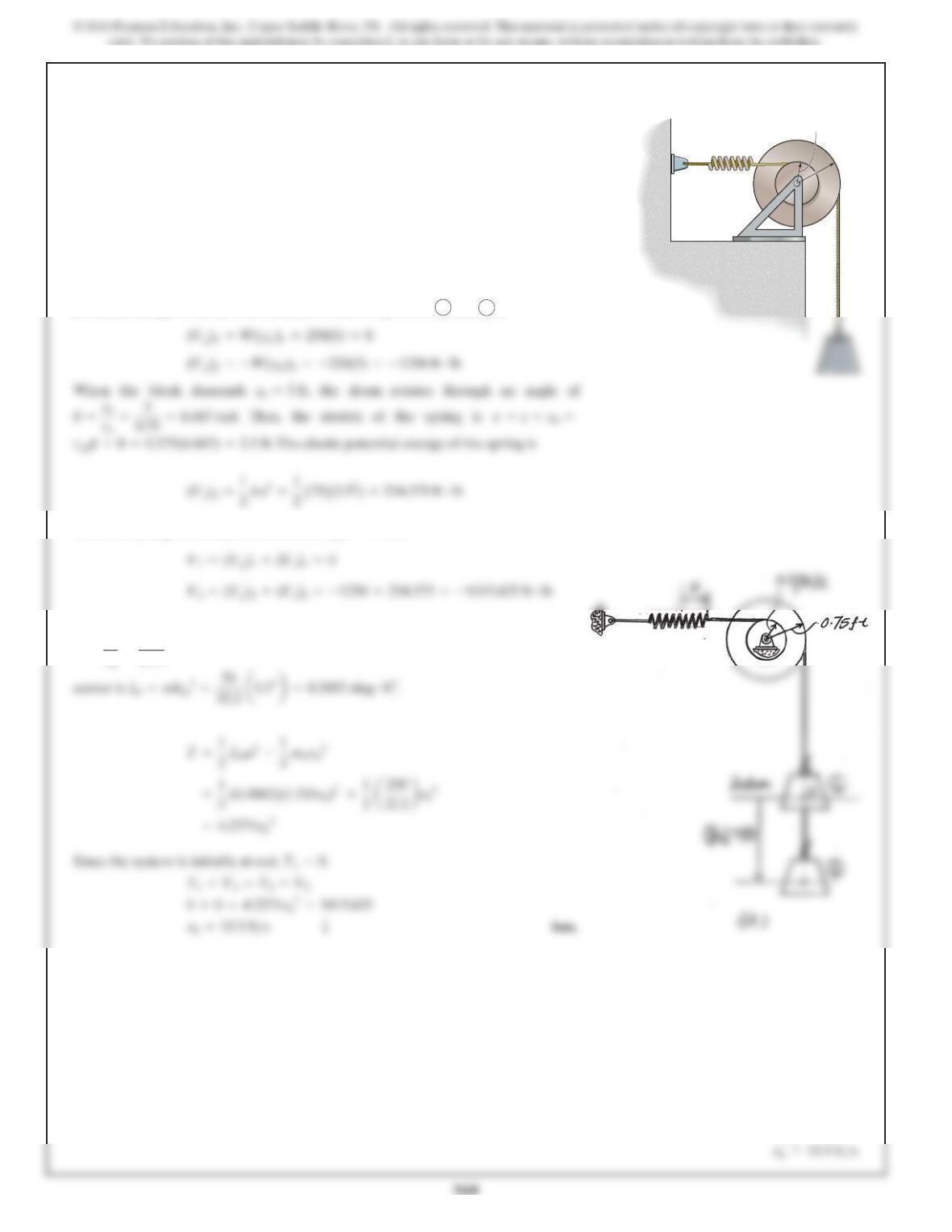
18–54.
k 75 lb/ft
0.75 ft
0.375 ft
O
If the 250-lb block is released from rest when the spring is
unstretched, determine the velocity of the block after it has
descended 5 ft. The drum has a weight of 50 lb and a radius
of gyration of about its center of mass O.kO=0.5 ft
SOLUTION
Potential Energy: With reference to the datum shown in Fig.a, the gravitational
potential energy of the system when the block is at position 1 and 2 is
Since the spring is initially unstretched, .Thus,
Kinetic Energy: Since the drum rotates about a fixed axis passing through point O,
.The mass moment of inertia of the drum about its mass
v=vb
rb
=vb
0.75 =1.333vb
(Ve)1=0
Ans: