871
17–81.
Ans:
SOLUTION
a
+aMA=IAa; 1.5(1400 –245.25) =c1
3(25)(3)2da
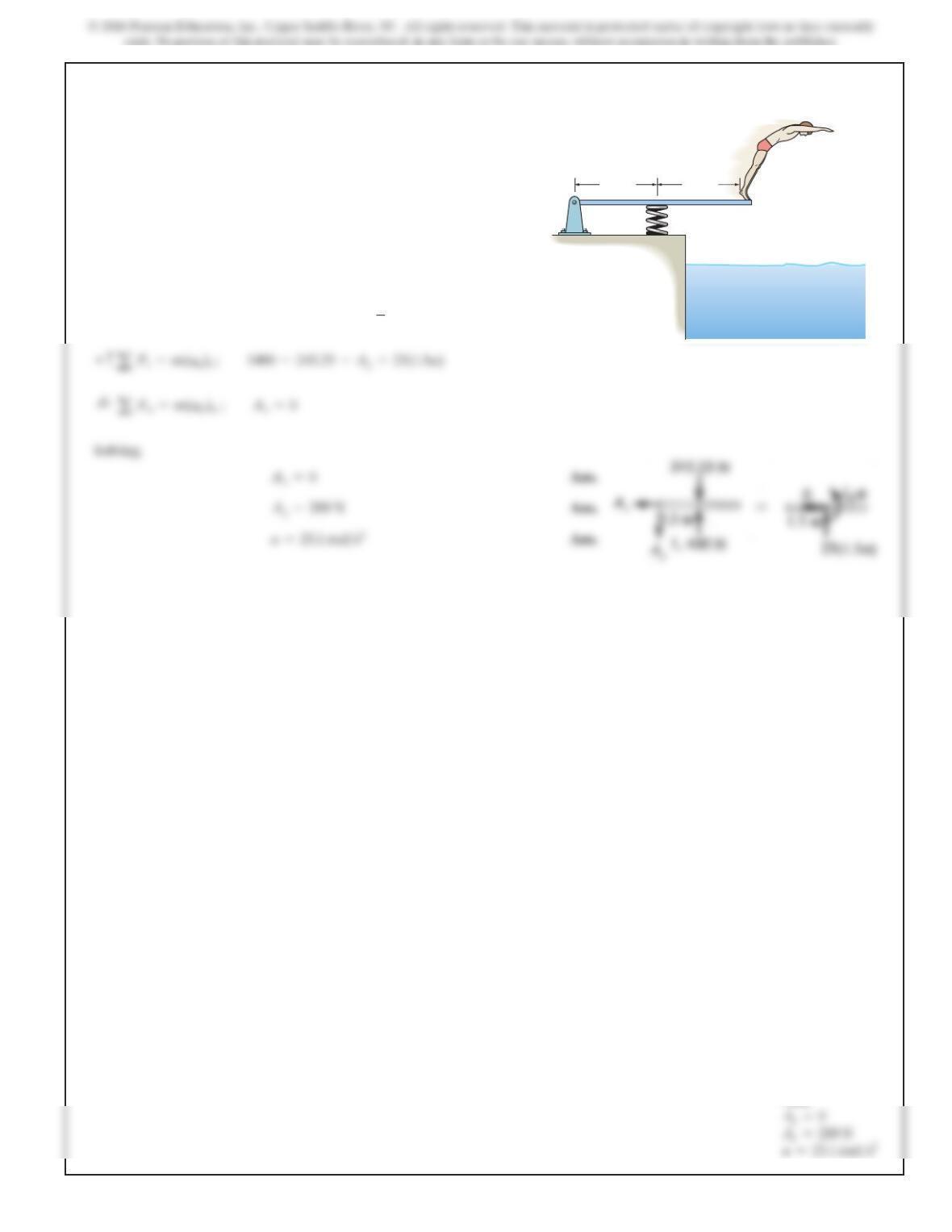
Determine the angular acceleration of the 25-kg diving
board and the horizontal and vertical components of
reaction at the pin Athe instant the man jumps off.Assume
that the board is uniform and rigid, and that at the instant
he jumps off the spring is compressed a maximum amount
of 200 mm, and the board is horizontal. Take
k=7kN>m.
v=0, k
A
1.5 m 1.5 m
872
17–82.
Ans:
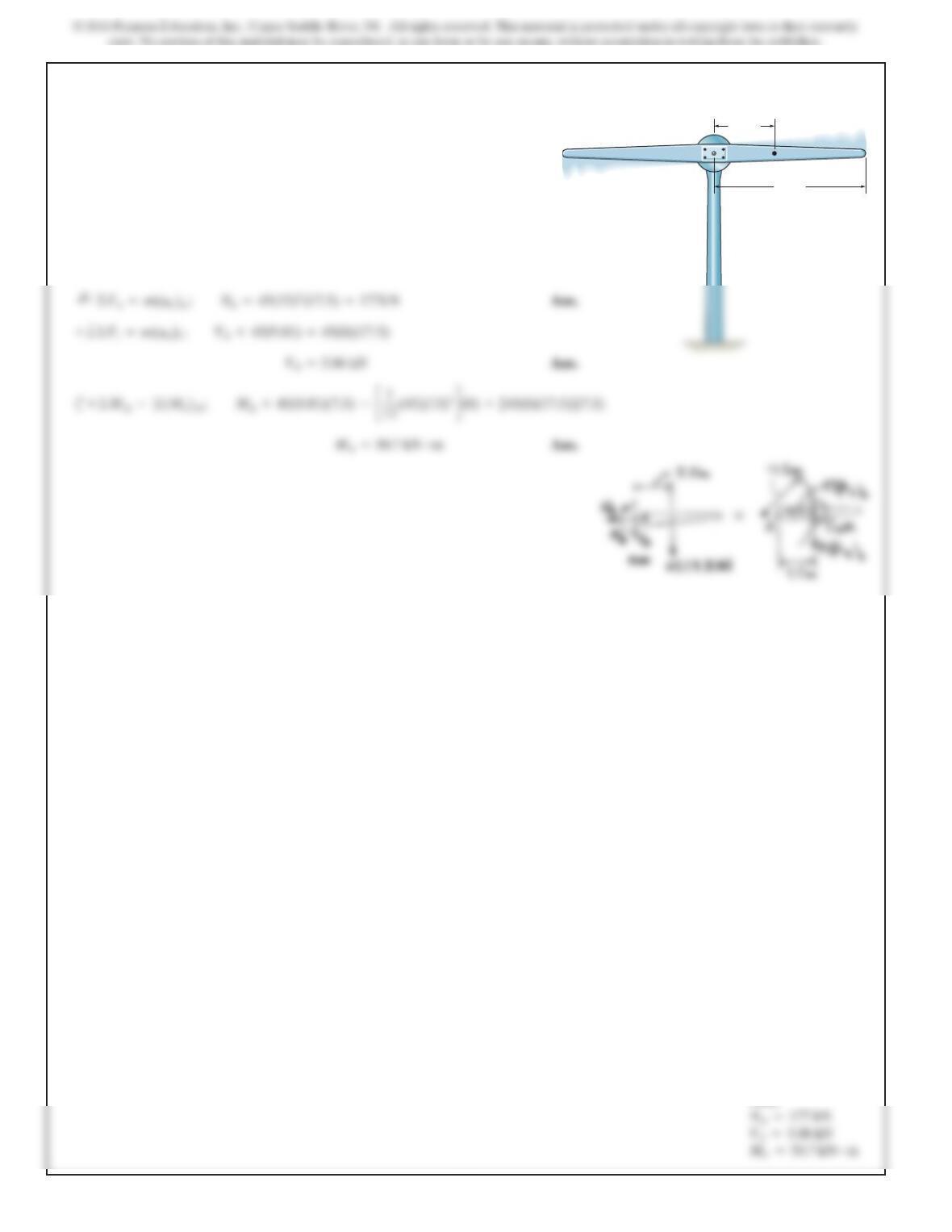
The lightweight turbine consists of a rotor which is powered
from a torque applied at its center. At the instant the rotor
is horizontal it has an angular velocity of 15 rad/s and a
clockwise angular acceleration of Determine the
internal normal force, shear force, and moment at a section
through A.Assume the rotor is a 50-m-long slender rod,
having a mass of 3 kg/m.
8 rad>s2.25 m
A
10 m
SOLUTION
873
17–83.
SOLUTION
Assembly:
Segment BC:
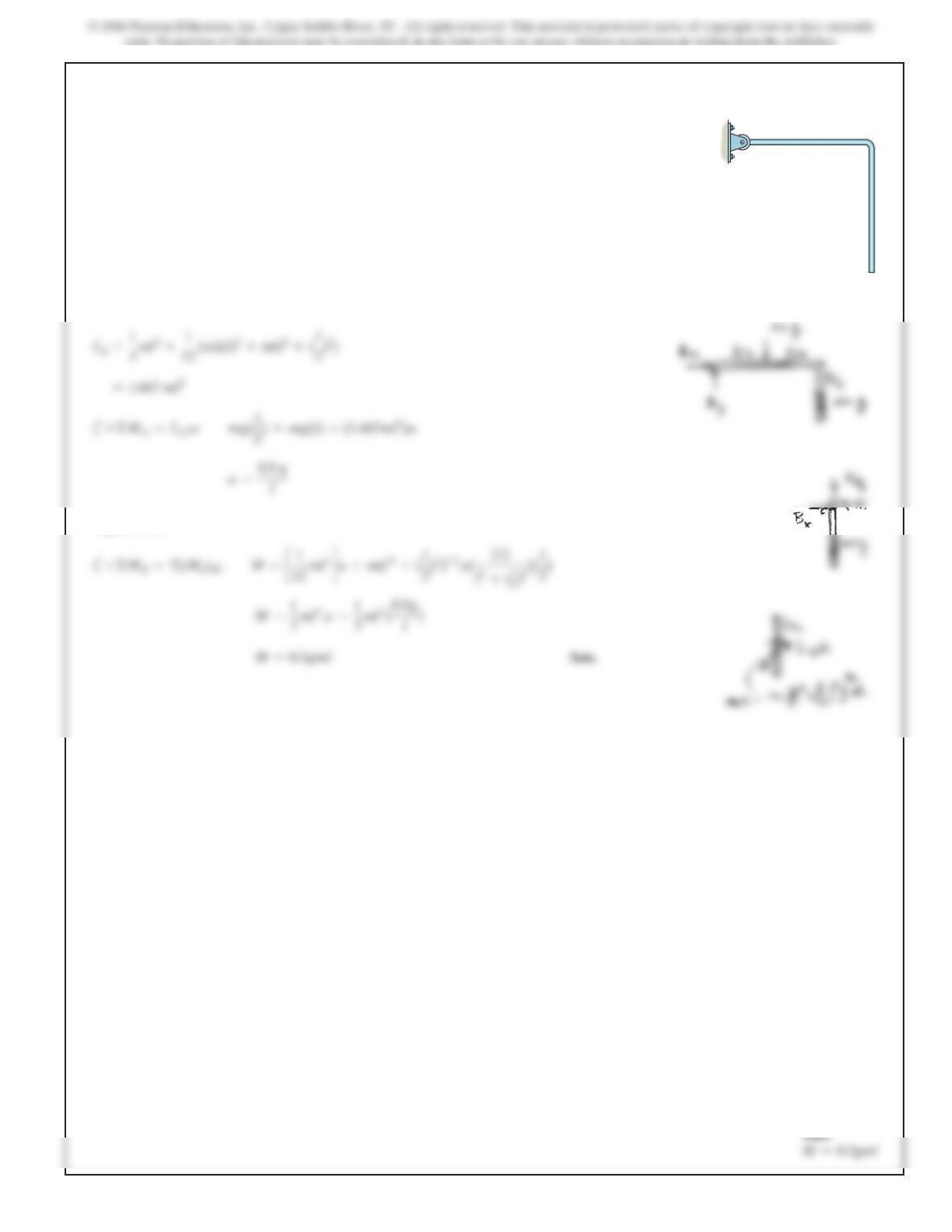
The two-bar assembly is released from rest in the position
shown. Determine the initial bending moment at the fixed
joint B. Each bar has a mass mand length l.
Al
l
B
C
*17–84.
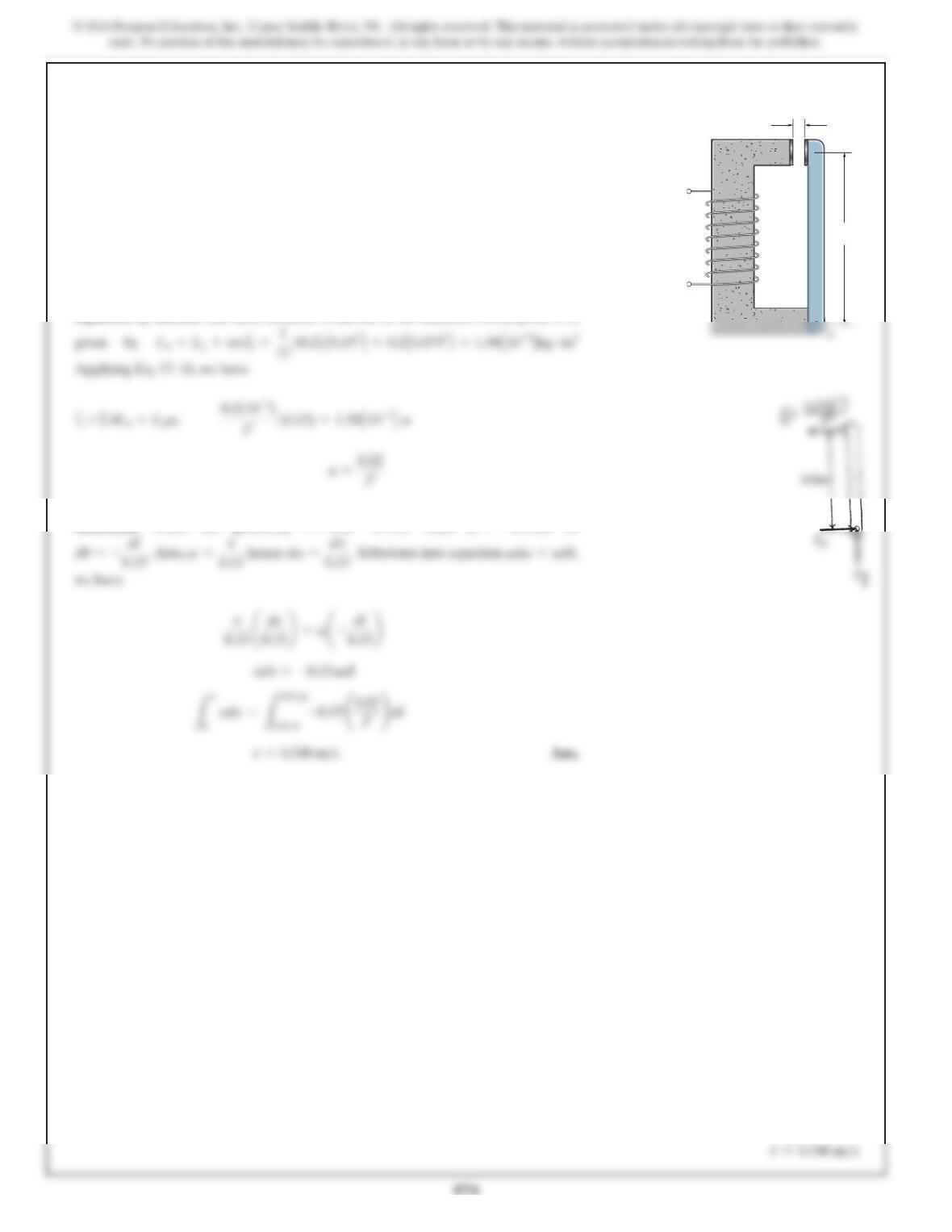
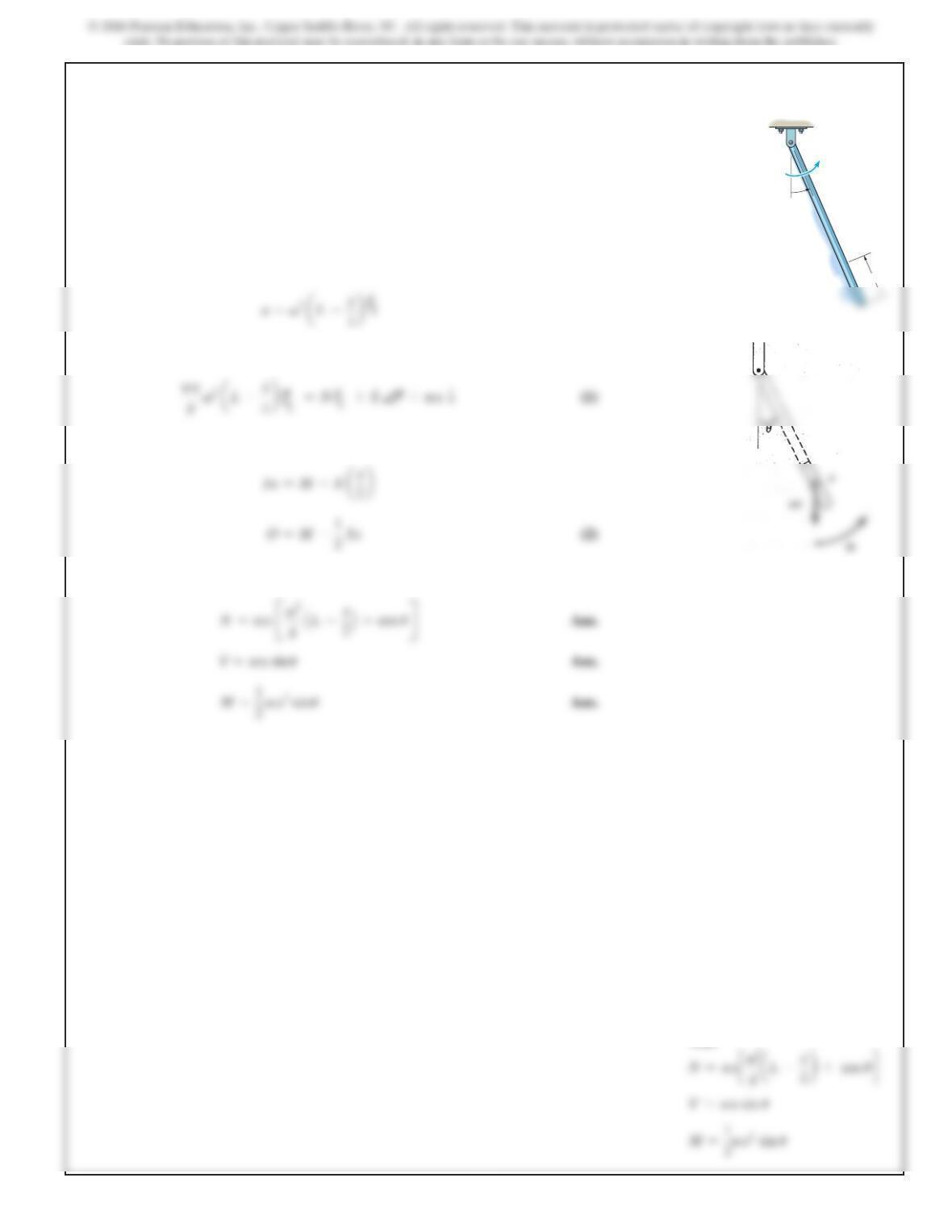
The armature (slender rod) AB has a mass of 0.2 kg and
can pivot about the pin at A.Movement is controlled by the
electromagnet E, which exerts a horizontal attractive force
on the armature at B erehw fo lin
meters is the gap between the armature and the magnet at
any instant. If the armature lies in the horizontal plane, and
is originally at rest, determine the speed of the contact at B
the instant Originally l=0.02 m.l=0.01 m.
FB=10.2110–32l–22N,
SOLUTION
Equation of Motion:The mass moment of inertia of the armature about point Ais
Kinematic: From the geometry,.Then or
dl =-0.15 dul=0.02 –0.15 u
B
150 mm
E
l
Ans:
875
17–85.
SOLUTION
Forces:
Moments:
Solving (1) and (2),
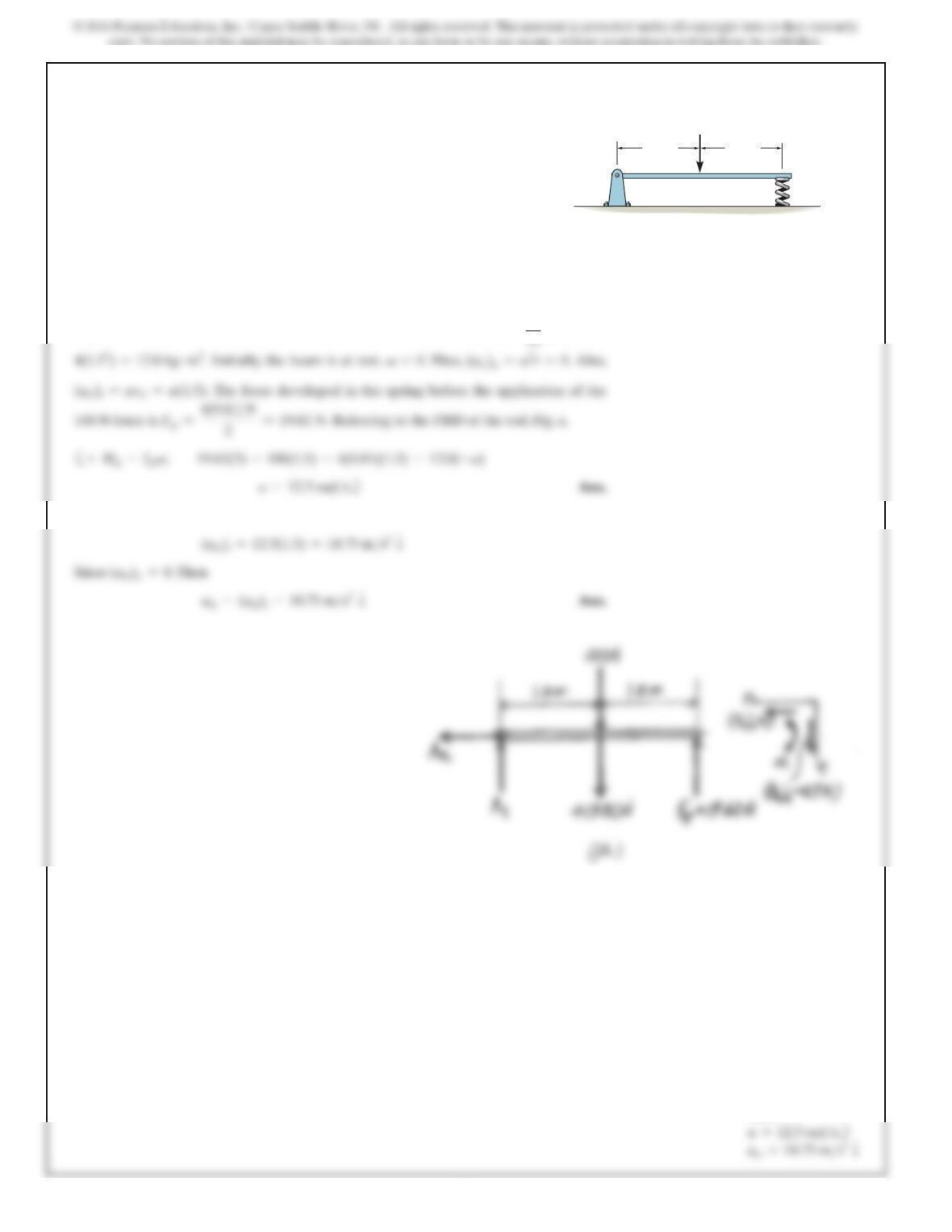
The bar has a weight per length of If it is rotating in the
vertical plane at a constant rate about point O, determine
the internal normal force, shear force, and moment as a
function of xand u.
v
w.
x
L
O
v
u
Ans:
876
17–86.
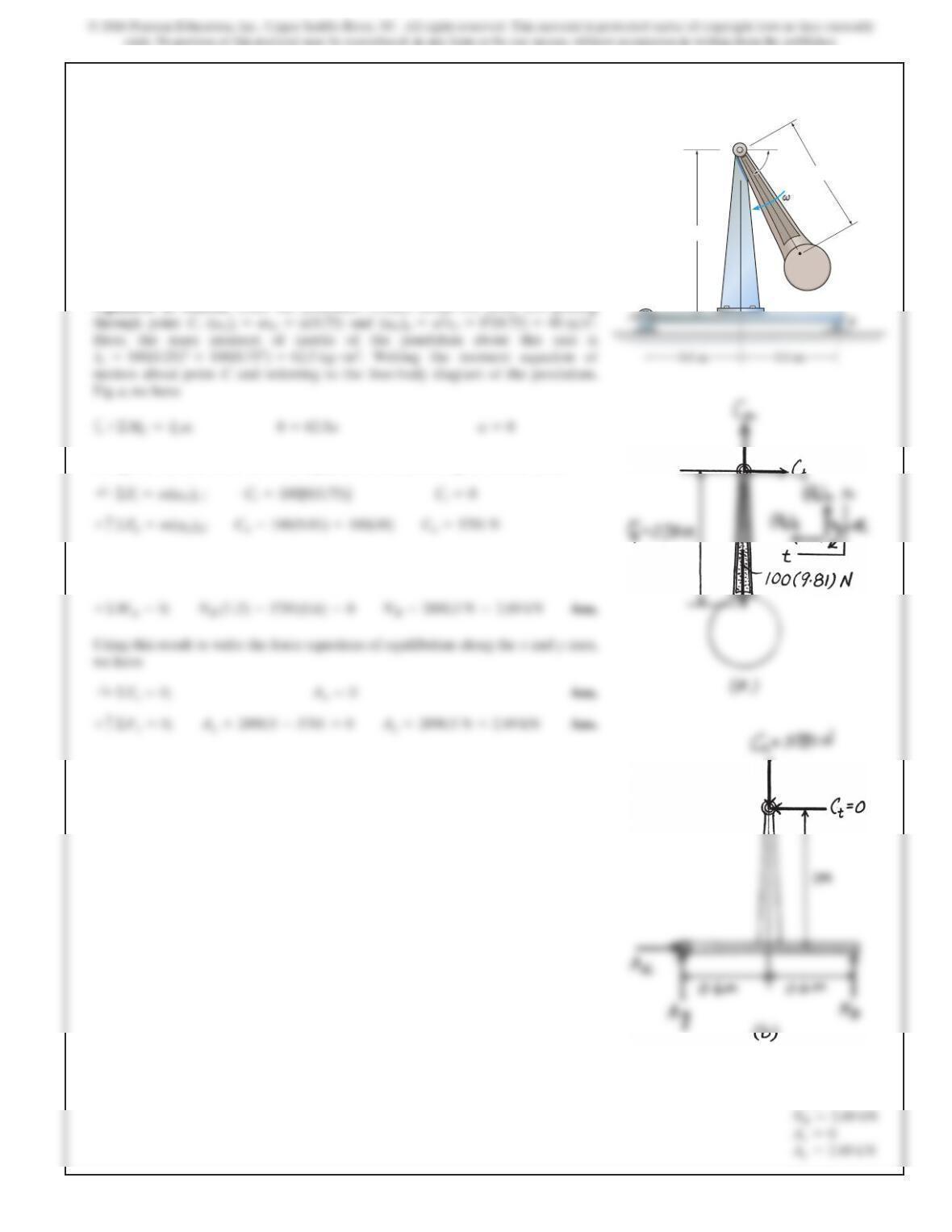
The 4-kg slender rod is initially supported horizontally by a
spring at B and pin at A. Determine the angular acceleration
of the rod and the acceleration of the rod’s mass center at
the instant the 100-N force is applied.
SOLUTION
Equation of Motion. The mass moment of inertia of the rod about A is IA=
1
(4)(32)+
Then
A
1.5 m 1.5 m
100 N
k 20 N/m
B
Ans:
877
17–87.
SOLUTION
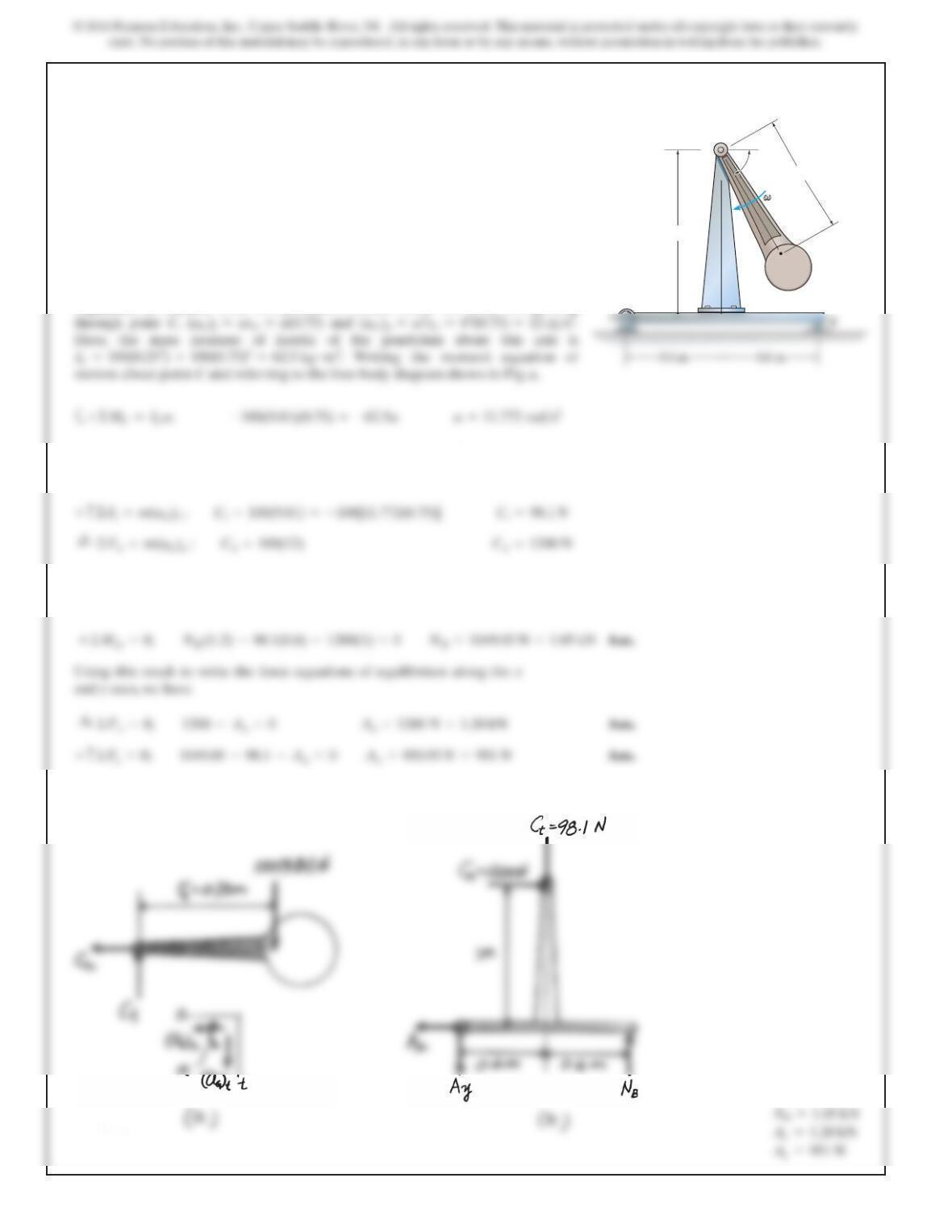
Equations of Motion: Since the pendulum rotates about the fixed axis passing
Using this result to write the force equations of motion along the nand taxes,
Equilibrium: Writing the moment equation of equilibrium about point Aand using
the free-body diagram of the beam in Fig. b, we have
The 100-kg pendulum has a center of mass at Gand a radius
of gyration about Gof . Determine the
horizontal and vertical components of reaction on the beam
by the pin Aand the normal reaction of the roller Bat the
instant when the pendulum is rotating at
.Neglect the weight of the beam and the
support.
v=8 rad>s
u=90°
kG=250 mm
C
0.75 m
1m
G
v
u
Ans:
878
*17–88.
The 100-kg pendulum has a center of mass at Gand a radius
of gyration about Gof .Determine the
horizontal and vertical components of reaction on the beam
by the pin Aand the normal reaction of the roller Bat the
instant when the pendulum is rotating at .
Neglect the weight of the beam and the support.
v=4 rad>su=0°
kG=250 mm
C
0.75 m
1m
G
v
u
Using this result to write the force equations of motion along the nand t
axes, we have
SOLUTION
Equations of Motion: Since the pendulum rotates about the fixed axis passing
Equilibrium: Writing the moment equation of equilibrium about point A
and using the free-body diagram of the beam in Fig. b,
Ans:
879
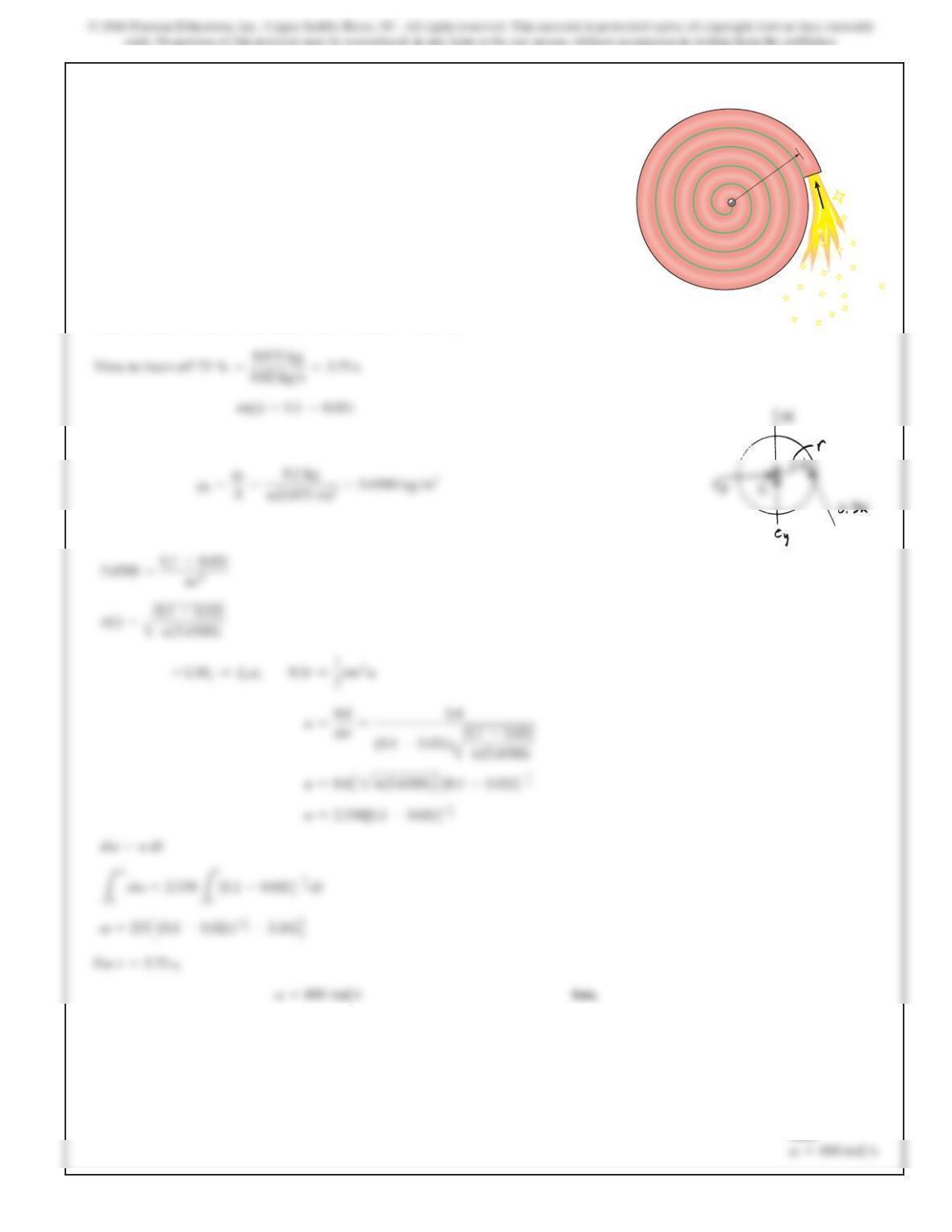
17–89.
SOLUTION
Mass of wheel when 75% of the powder is burned = 0.025 kg
Mass of disk per unit area is
At any time t,
1
U
&
The “Catherine wheel” is a firework that consists of a coiled
tube of powder which is pinned at its center. If the powder
burns at a constant rate of 20 g>s such as that the exhaust
gases always exert a force having a constant magnitude of
0.3 N, directed tangent to the wheel, determine the angular
velocity of the wheel when 75% of the mass is burned off.
Initially, the wheel is at rest and has a mass of 100 g and a
radius of r = 75 mm. For the calculation, consider the wheel
to always be a thin disk.
Ans:
880
17–90.
SOLUTION
If the disk in Fig. 17–21arolls without slipping,show that
when moments are summed about the instantaneous center
of zero velocity, IC, it is possible to use the moment
equation where represents the moment
of inertia of the disk calculated about the instantaneous axis
of zero velocity.
IIC
©MIC =IICa,
Ans:
881
17–91.
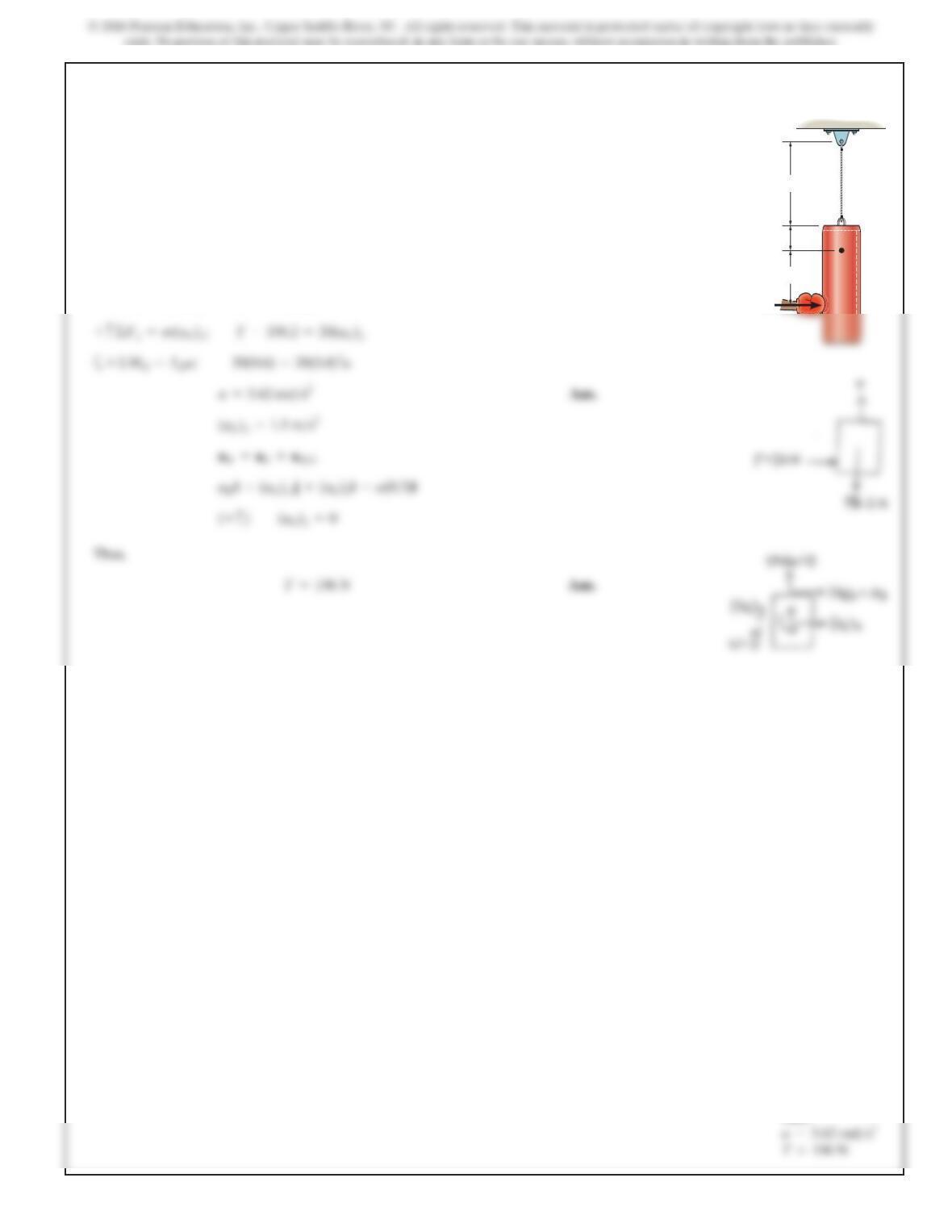
The 20-kg punching bag has a radius of gyration about its
center of mass Gof If it is initially at rest and is
subjected to a horizontal force determine the
initial angular acceleration of the bag and the tension in the
supporting cable AB.
F=30 N,
kG=0.4 m.
SOLUTION
:
+©Fx=m(aG)x;30=20(aG)x
B
A
1m
0.6 m
0.3 m
F
G
Ans:
882
*17–92.
B
A
F
A
100 lb
FB 200 lb
60
12 ft
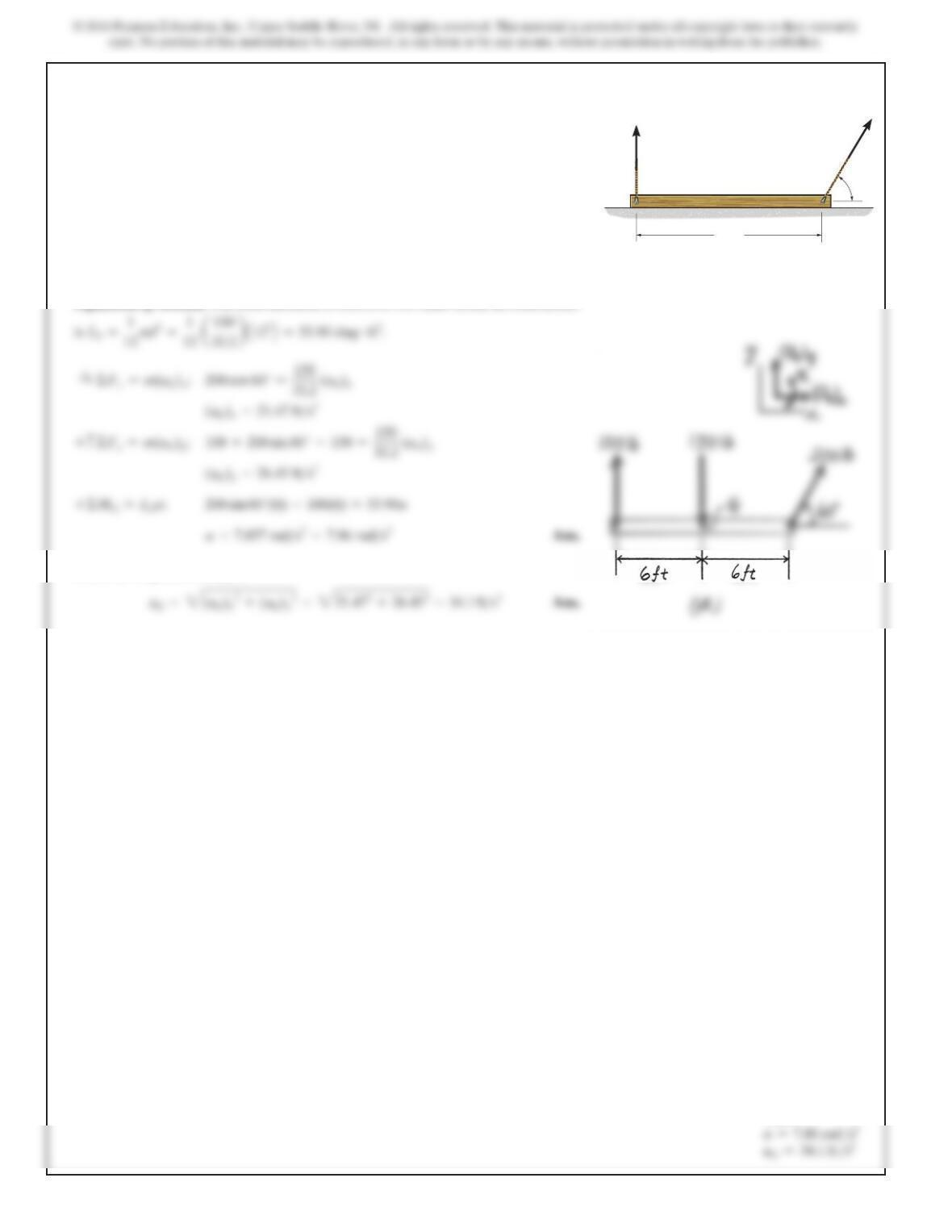
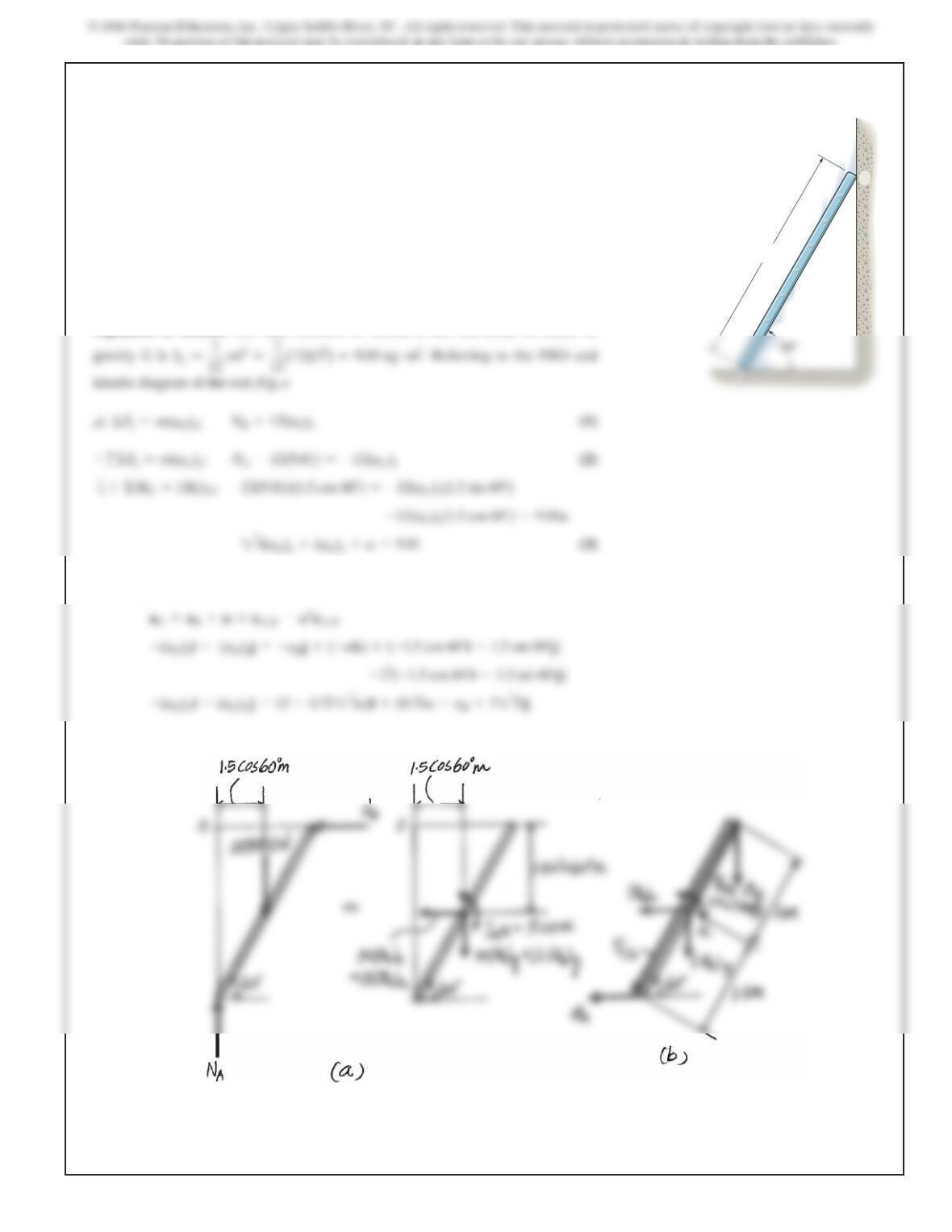
The uniform 150-lb beam is initially at rest when the forces
are applied to the cables. Determine the magnitude of the
acceleration of the mass center and the angular acceleration
of the beam at this instant.
SOLUTION
Equations of Motion: The mass moment of inertia of the beam about its mass center
Thus, the magnitude of is
aG
Ans:
883
17–93.
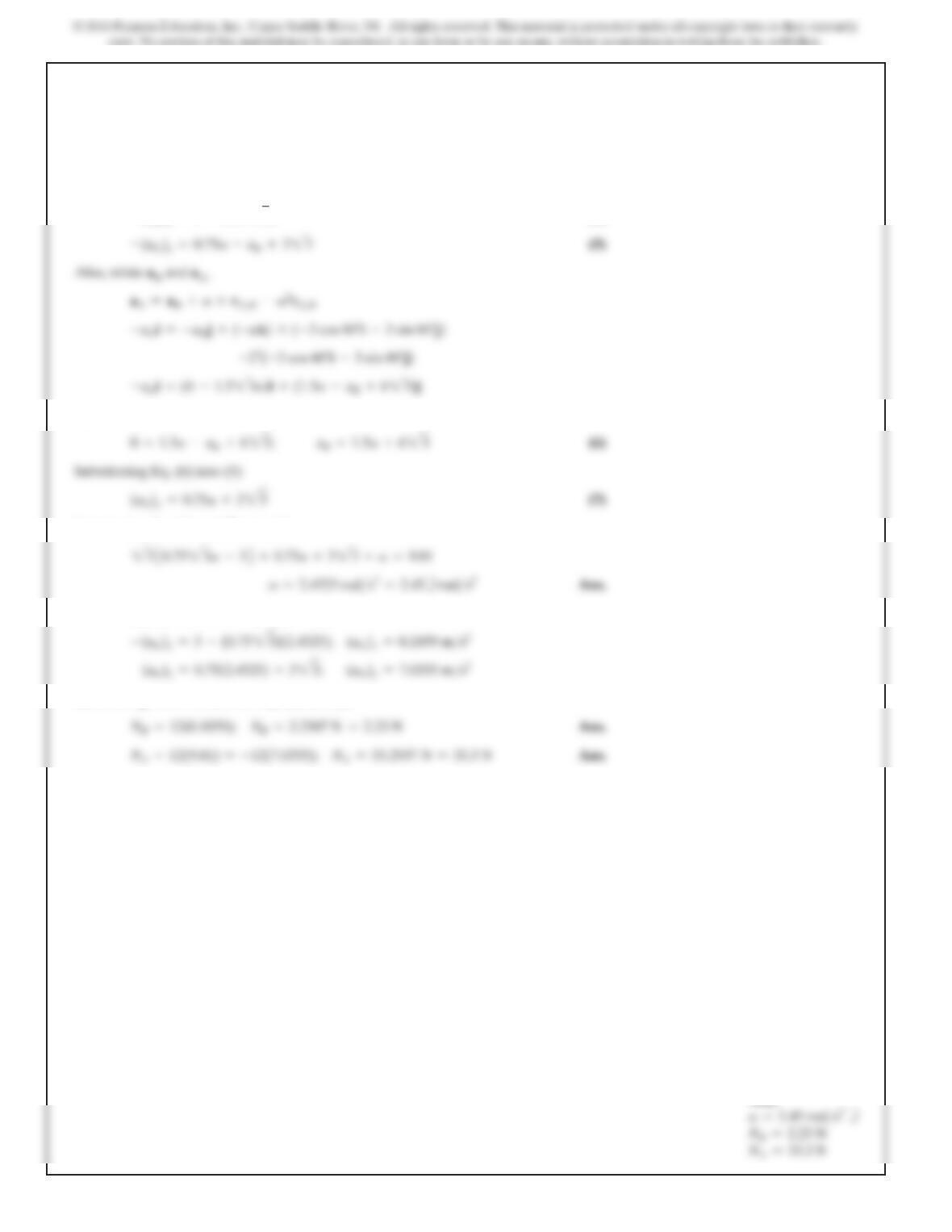
The slender 12-kg bar has a clockwise angular velocity of
v
= 2 rad
>
s when it is in the position shown. Determine its
angular acceleration and the normal reactions of the smooth
surface A and B at this instant.
SOLUTION
Equations of Motion. The mass moment of inertia of the rod about its center of
Kinematics. Applying the relative acceleration equation relating aG and aB by
referring to Fig. b,
B
3 m
884
17–93. Continued
Ans:
Equating i and j components,
–
(a
G
)
x=
3
–
0.75
2
3a (4)
Equating j components,
Substituting Eq. (4) and (7) into (3)
Substituting this result into Eqs. (4) and (7)
–
G
–
Substituting these results into Eqs. (1) and (2)
885
17–94.
SOLUTION
Assume the wheel does not slip.
Solving:
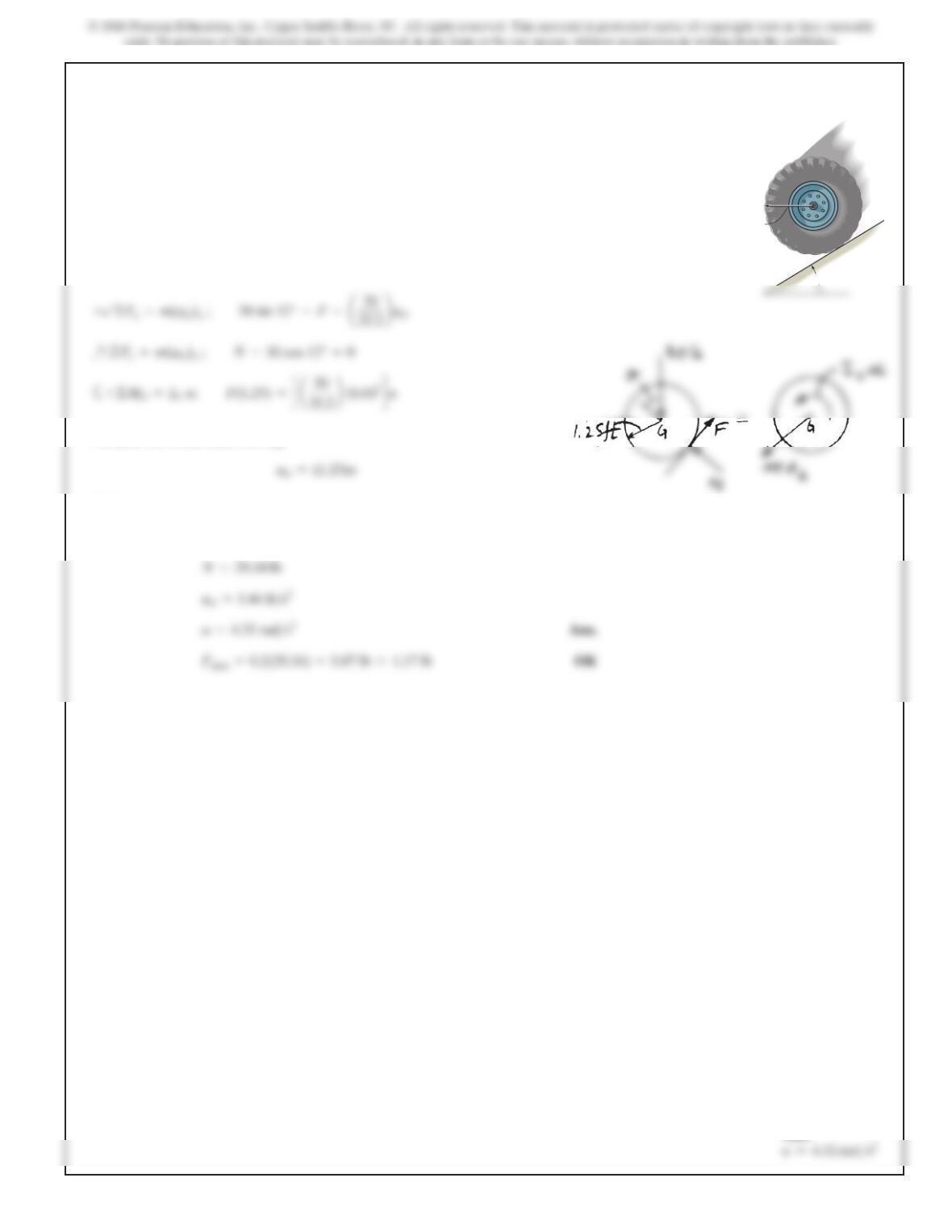
F=1.17 lb
If the coefficients of static and kinetic friction
between the wheel and the plane are and
rolls down the incline. Set u=12°.
mk=0.15,
ms=0.2
kG=0.6 ft.
1.25 ft
G
u
The tire has a weight of 30 lb and a radius of gyration of
determine the tire’s angular acceleration as it
Ans:
17–95.
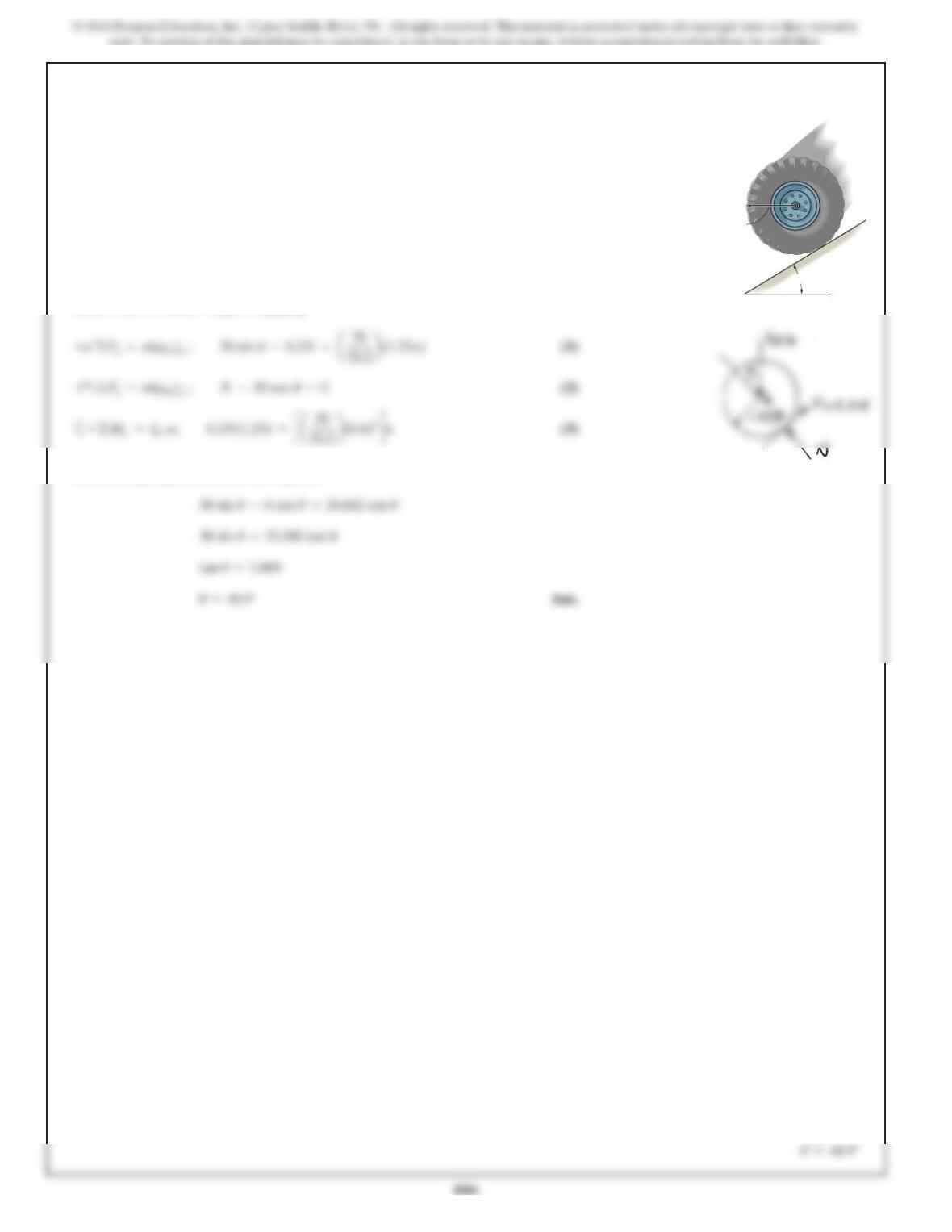
If the coefficients of static and kinetic friction
between the wheel and the plane are and
determine the maximum angle of the inclined
plane so that the tire rolls without slipping.
umk=0.15,
ms=0.2
kG=0.6 ft.
SOLUTION
Since wheel is on the verge of slipping:
Substituting Eqs.(2) and (3) into Eq. (1),
1.25 ft
G
u
The tire has a weight of 30 lb and a radius of gyration of
Ans:
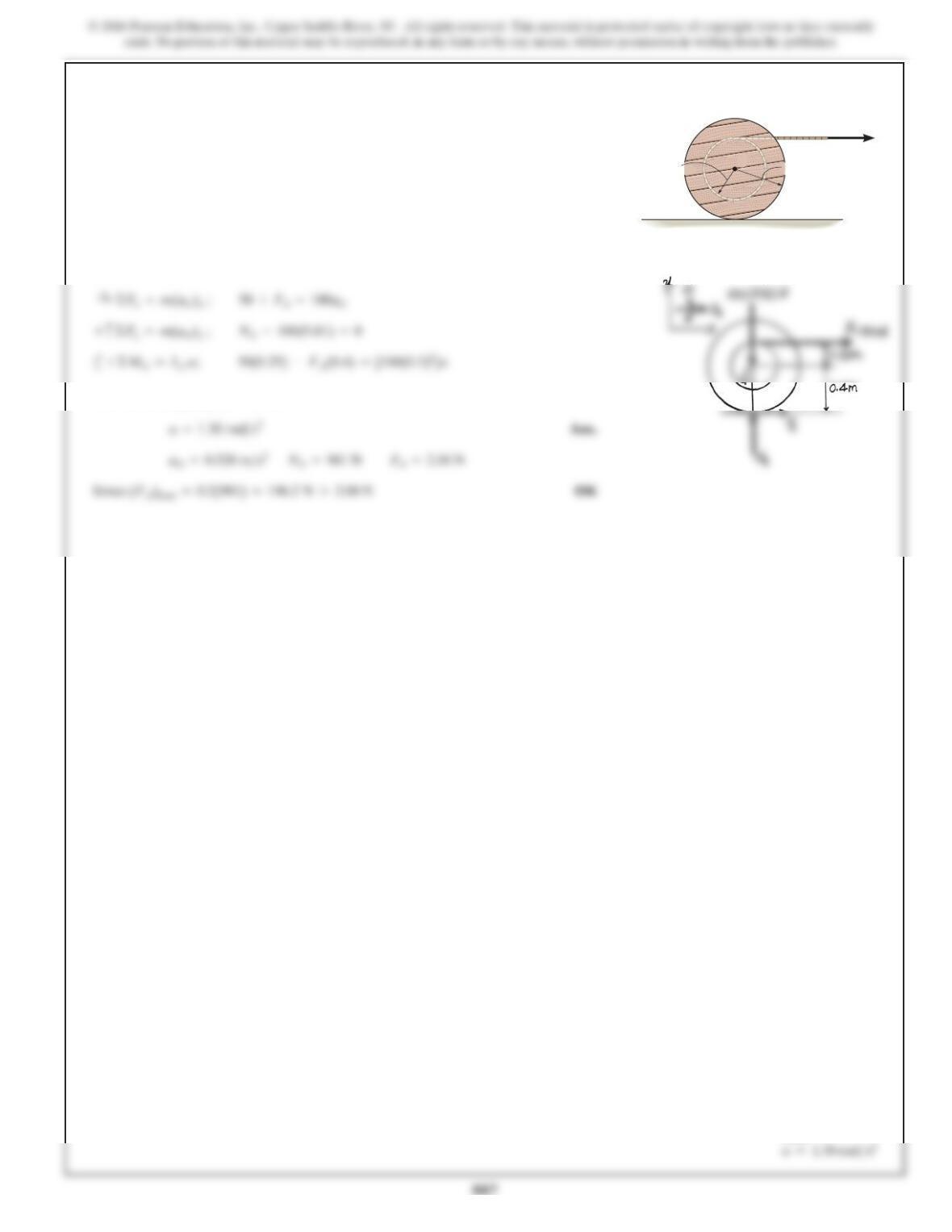
*17–96.
SOLUTION
Assume no slipping:
aG=0.4a
The spool has a mass of 100 kg and a radius of gyration of
. If the coefficients of static and kinetic friction
at Aare and , respectively, determine the
angular acceleration of the spool if .P=50 N
mk=0.15ms=0.2
kG=0.3 m
250 mm 400 mm
G
A
P
Ans:
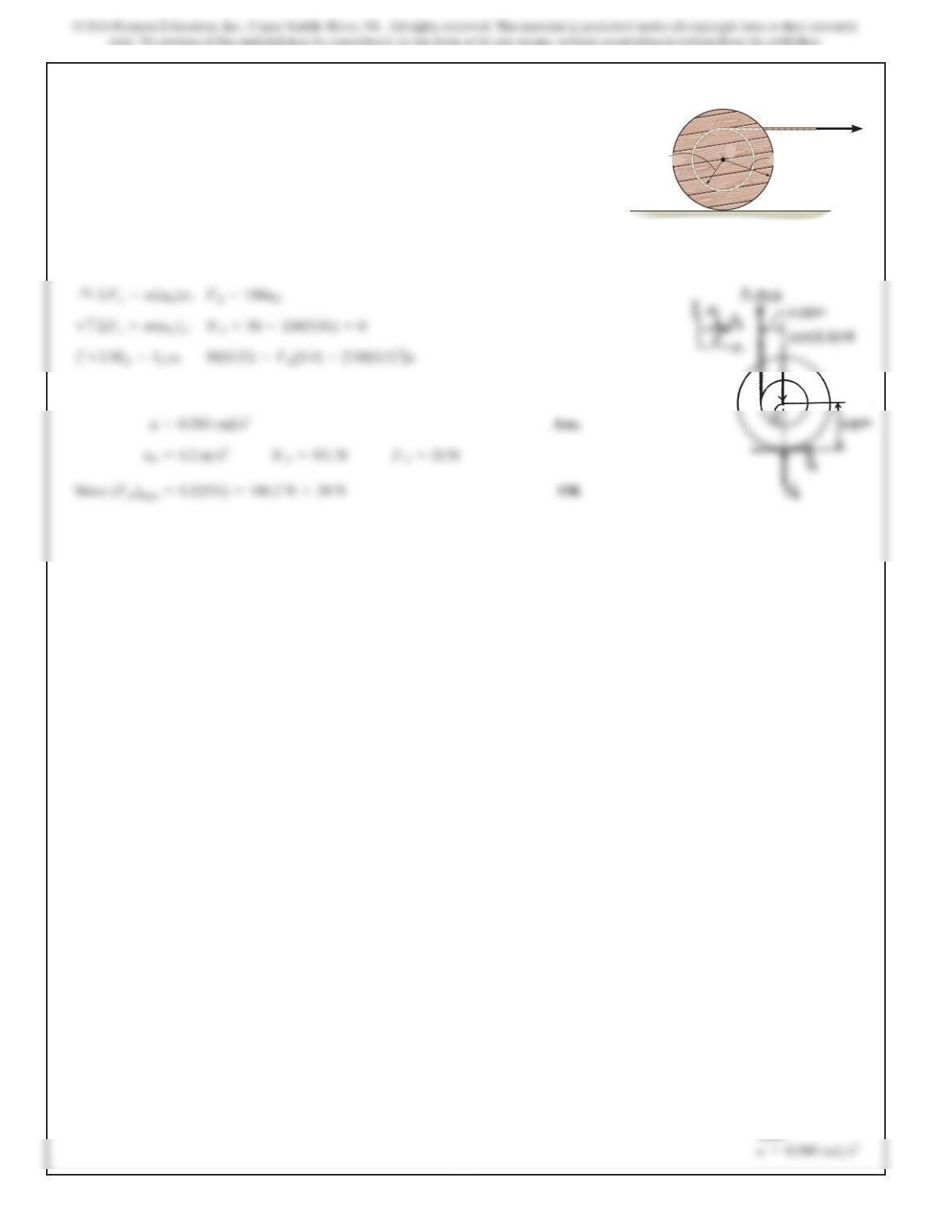
888
17–97.
P
250 mm 400 mm
G
A
Solve Prob. 17–96 if the cord and force are
directed vertically upwards.
P=50 N
SOLUTION
Assume no slipping:
aG=0.4 a
889
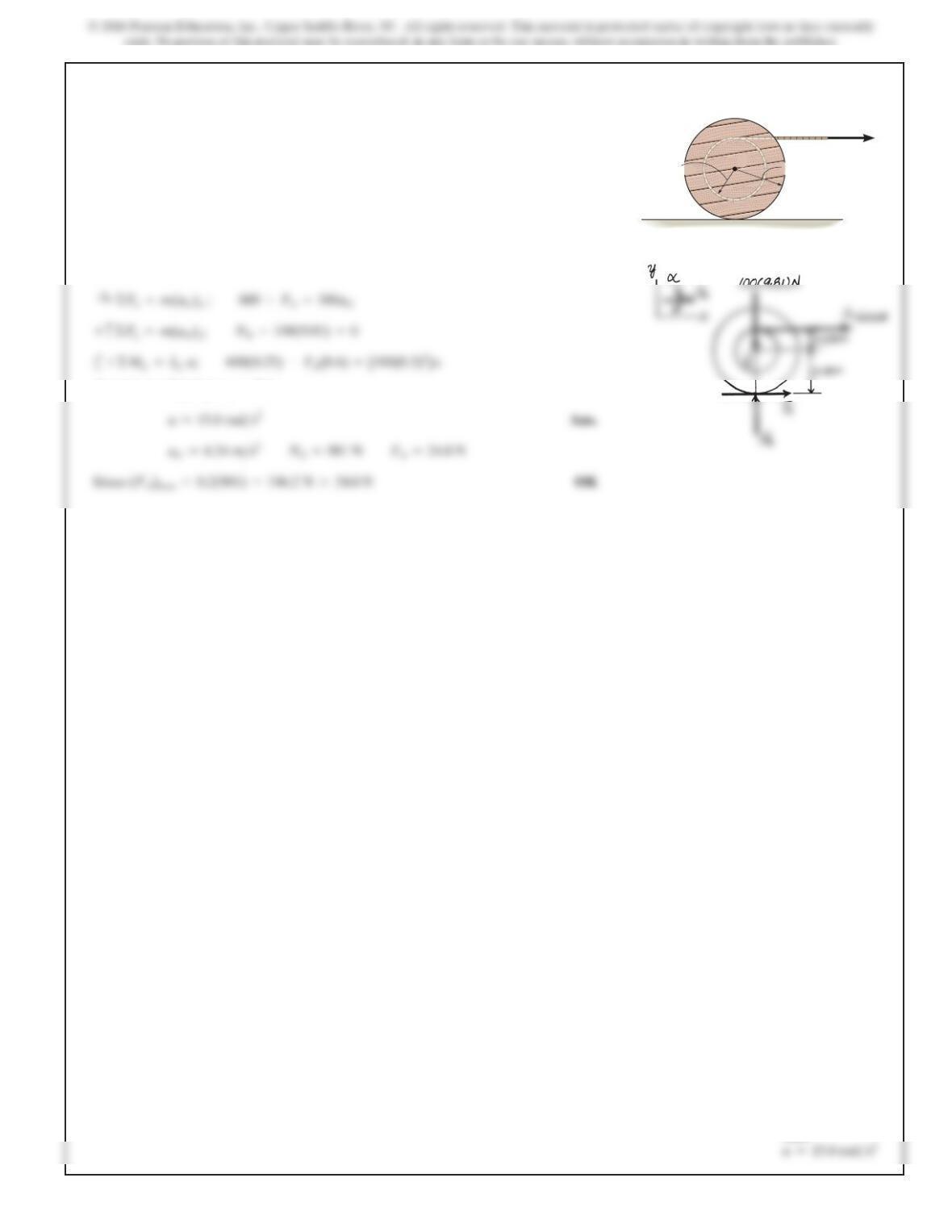
17–98.
SOLUTION
Assume no slipping:
aG=0.4a
The spool has a mass of 100 kg and a radius of gyration
. If the coefficients of static and kinetic friction
at Aare and , respectively, determine the
angular acceleration of the spool if .P=600 N
mk=0.15ms=0.2
kG=0.3 m
250 mm 400 mm
G
A
P
Ans:
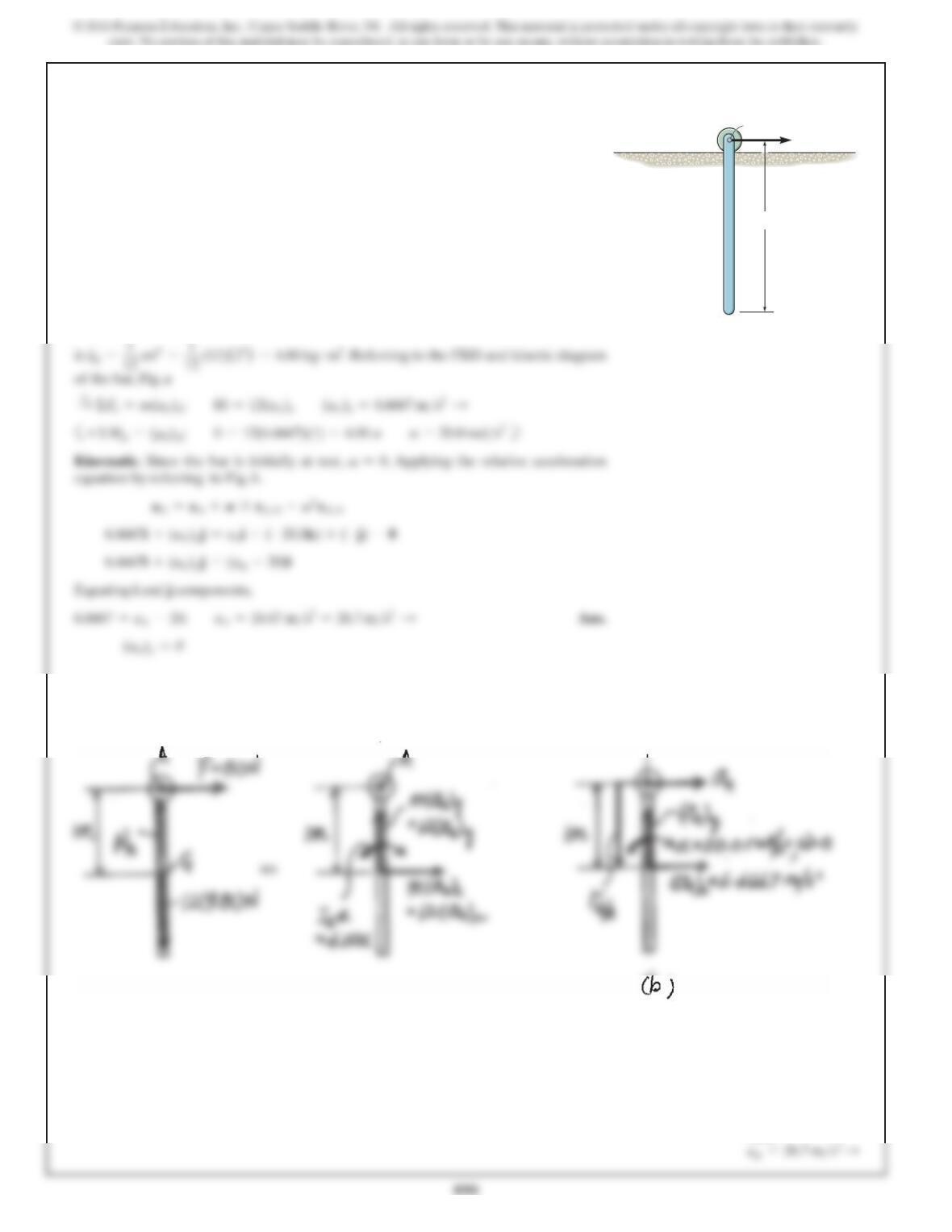
17–99.
The 12-kg uniform bar is supported by a roller at A. If a
horizontal force of F = 80 N is applied to the roller,
determine the acceleration of the center of the roller at the
instant the force is applied. Neglect the weight and the size
of the roller.
SOLUTION
Equations of Motion. The mass moment of inertia of the bar about its center of gravity G
F 80 N
A
2 m
Ans: