397
14–21.
SOLUTION
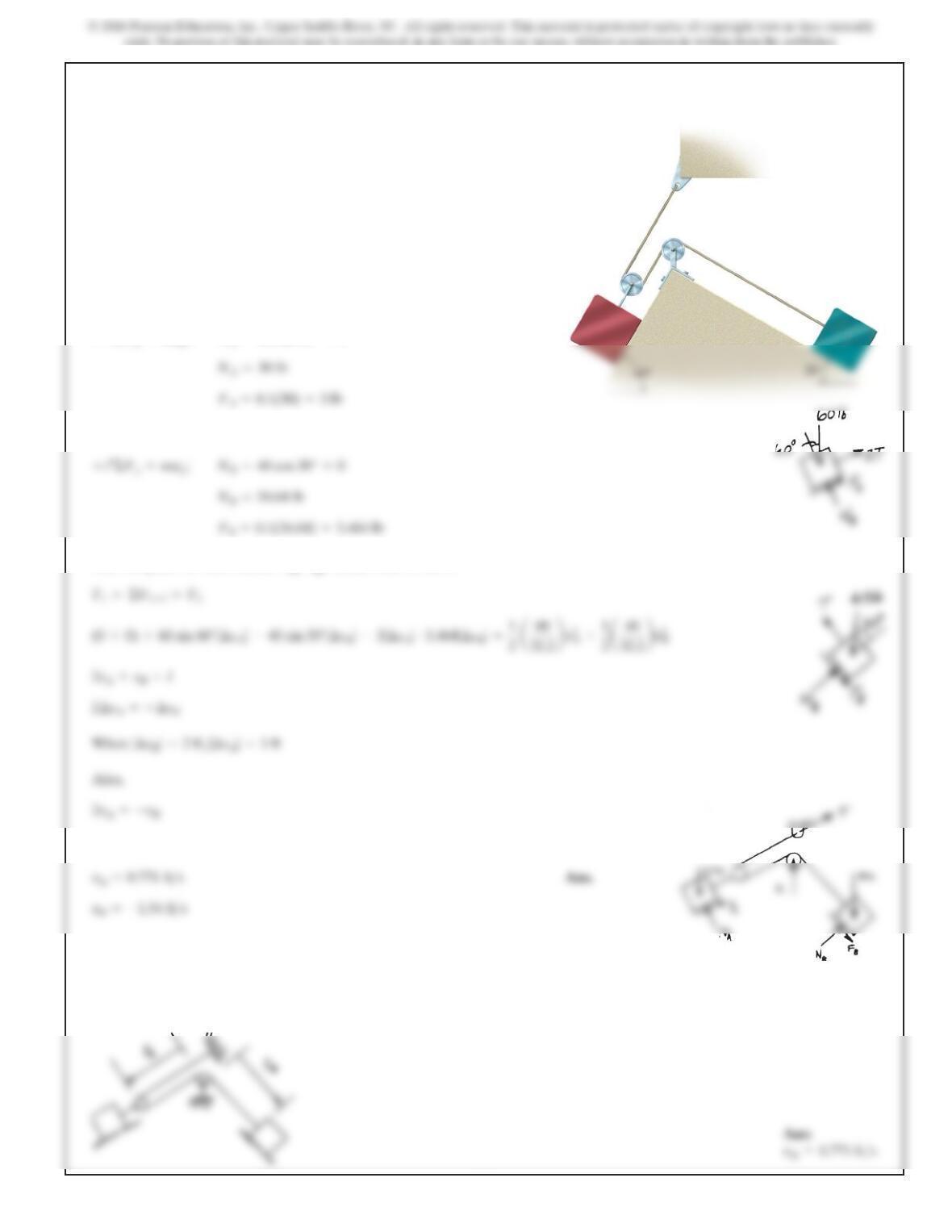
Block A:
Block B:
Use the system of both blocks. NA,NB,T, and Rdo no work.
Substituting and solving,
+a©Fy=may;NA–60 cos 60° =0
Determine the velocity of the 60-lb block Aif the two
blocks are released from rest and the 40-lb block Bmoves
2 ft up the incline.The coefficient of kinetic friction
between both blocks and the inclined planes is mk=0.10.
A
B
398
14–22.
SOLUTION
Principle of Work and Energy: Here, the friction force
. Since the friction force is always opposite the motion,it does negative work.
Assume the block bounces back and stops without striking spring A.The spring
Since , the block stops before it strikes spring A.Therefore, the
s2=1.227 ft 62ft
10.0 lb
Ff=mkN=0.4(25) =
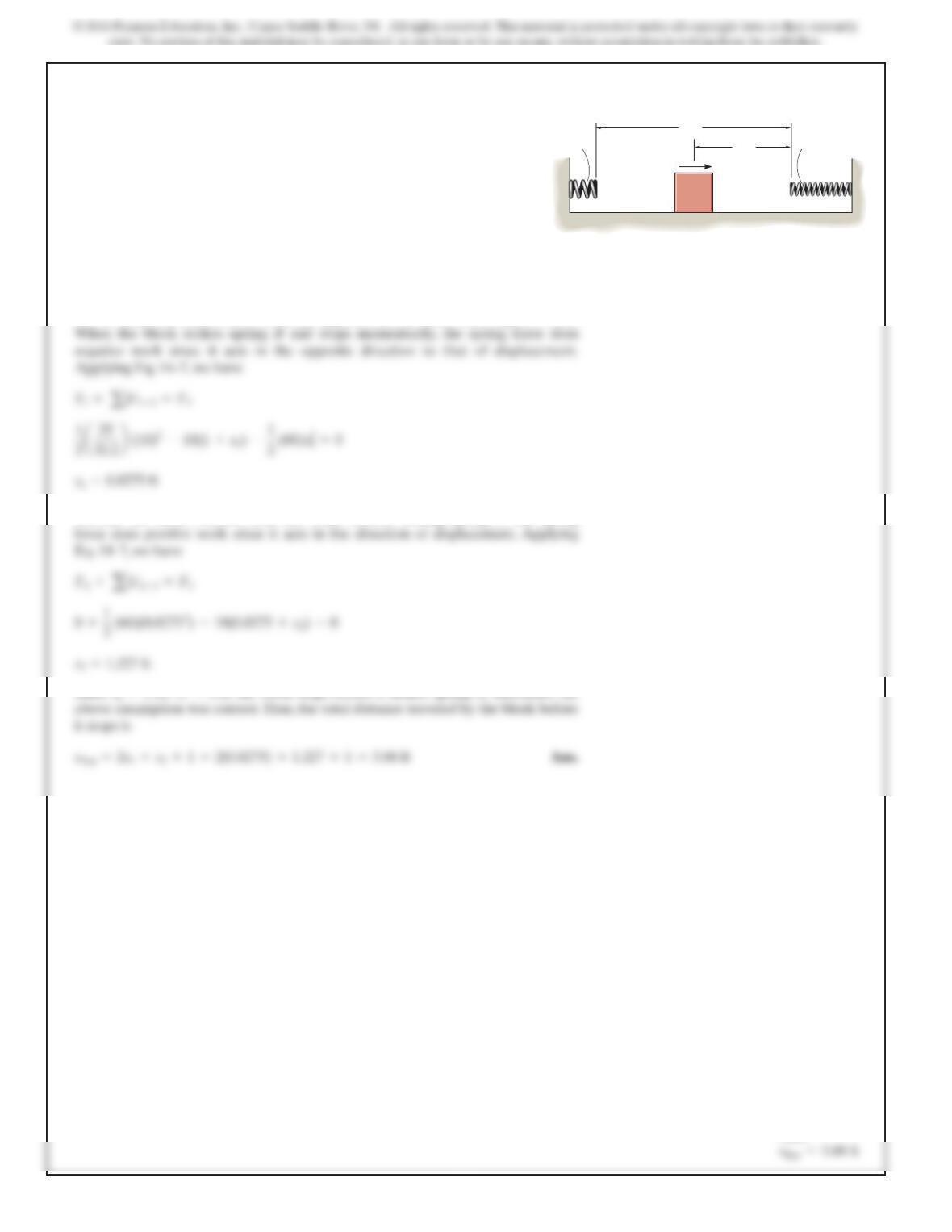
The 25-lb block has an initial speed of when it
is midway between springs Aand B. After striking spring B
it rebounds and slides across the horizontal plane toward
spring A, etc. If the coefficient of kinetic friction between
the plane and the block is determine the total
distance traveled by the block before it comes to rest.
mk=0.4,
v0=10 ft
>
s2ft
1ft
v0=10ft/s
kA=10 lb/in. kB=60lb/in.
BA
,
Ans:
399
14–23.
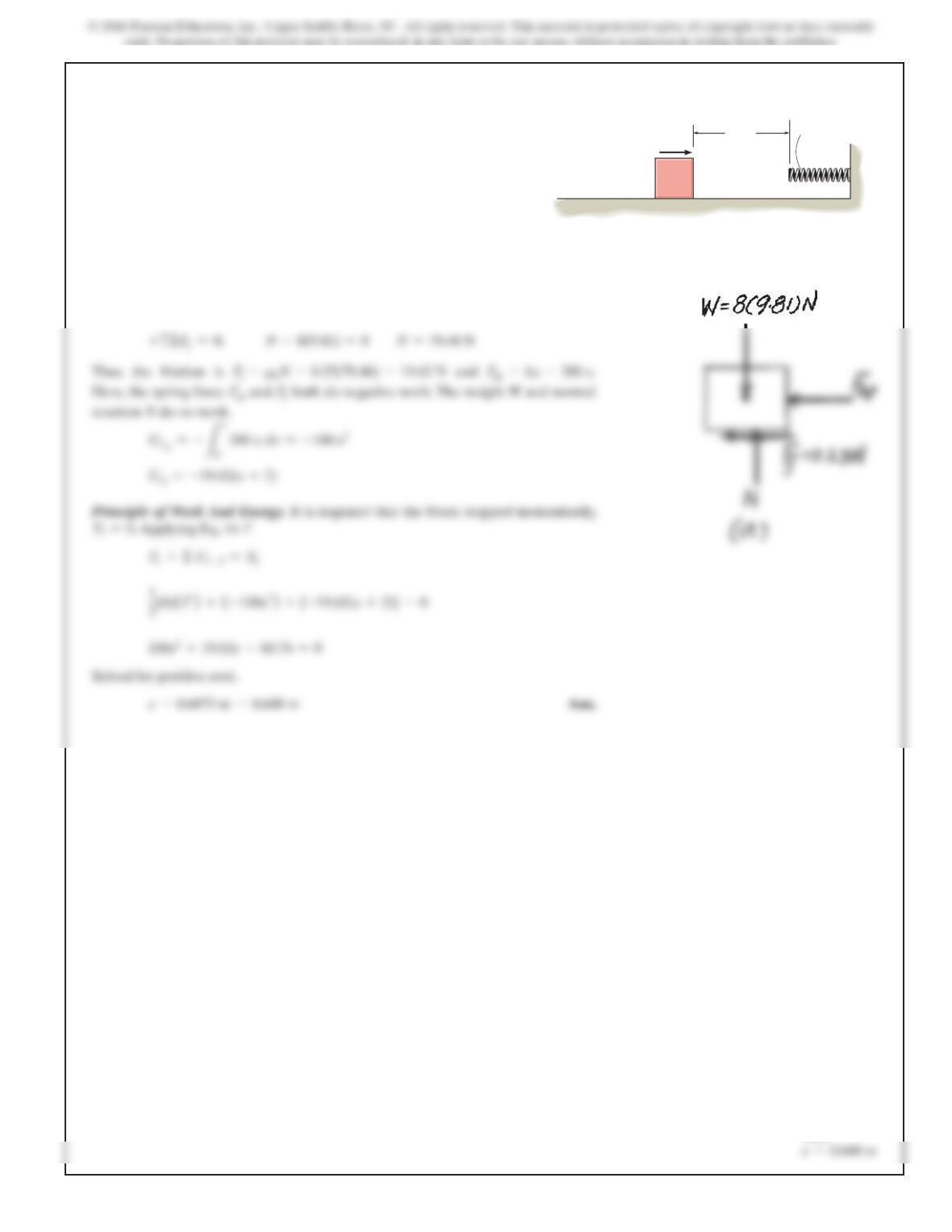
The 8-kg block is moving with an initial speed of 5 m
>
s. If
the coefficient of kinetic friction between the block and
plane is m
k=0.25,
determine the compression in the spring
when the block momentarily stops.
SOLUTION
Work. Consider the force equilibrium along y axis by referring to the FBD of the
block, Fig. a
Ans:
2 m
5 m/s
kA 200 N/m
A
B
400
*14–24.
SOLUTION
Kinematics: The speed of the block Aand Bcan be related by using the position
coordinate equation.
Equation of Motion:
Principle of Work and Energy: By considering the whole system, ,which acts
From Eq. [1], . Also,
¢sA=c(yA)0+yA
WA
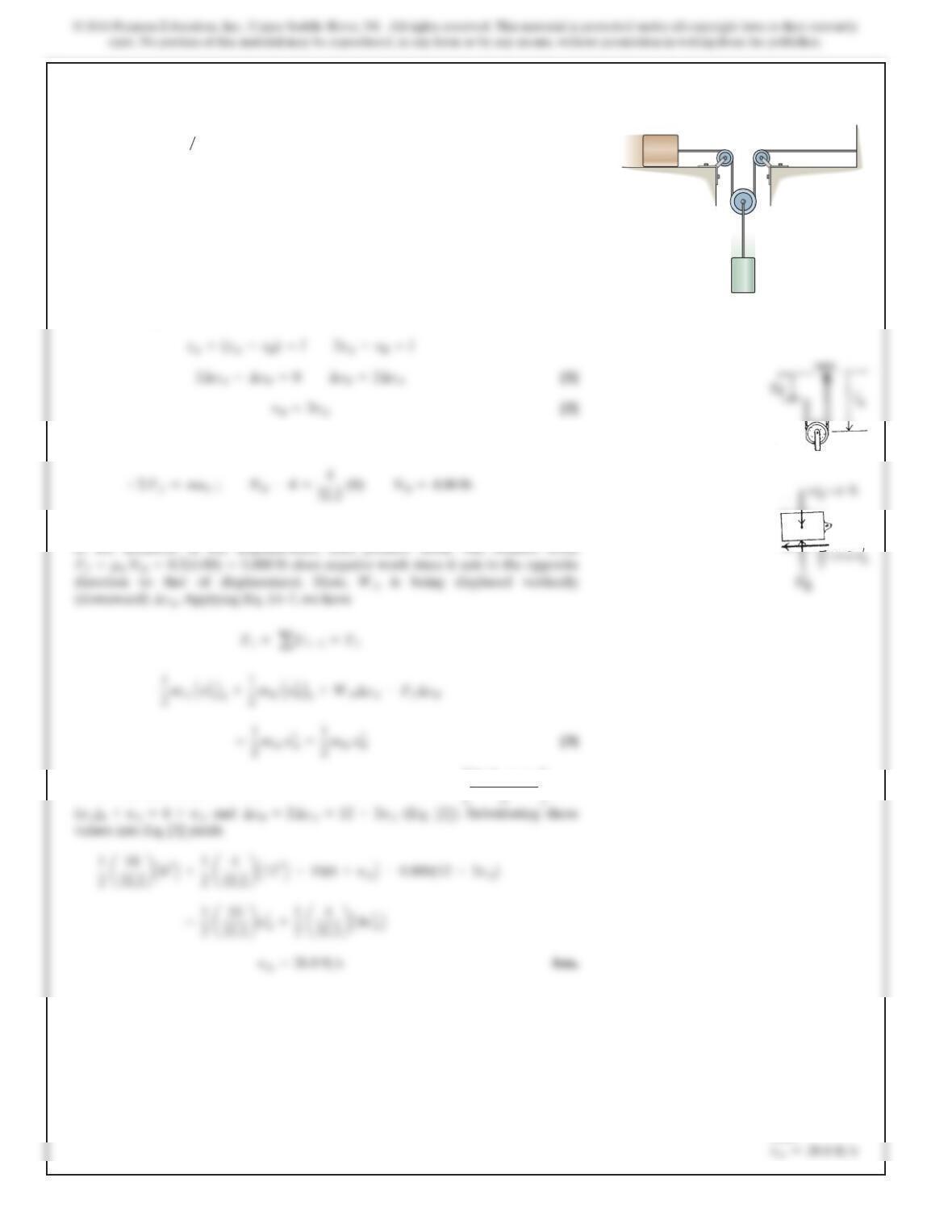
At a given instant the 10-lb block Ais moving downward
with a speed of 6 ft s. Determine its speed 2 s later. Block B
has a weight of 4 lb, and the coefficient of kinetic friction
between it and the horizontal plane is . Neglect the
mass of the cord and pulleys.
mk=0.2
A
B
Ans:
401
14–25.
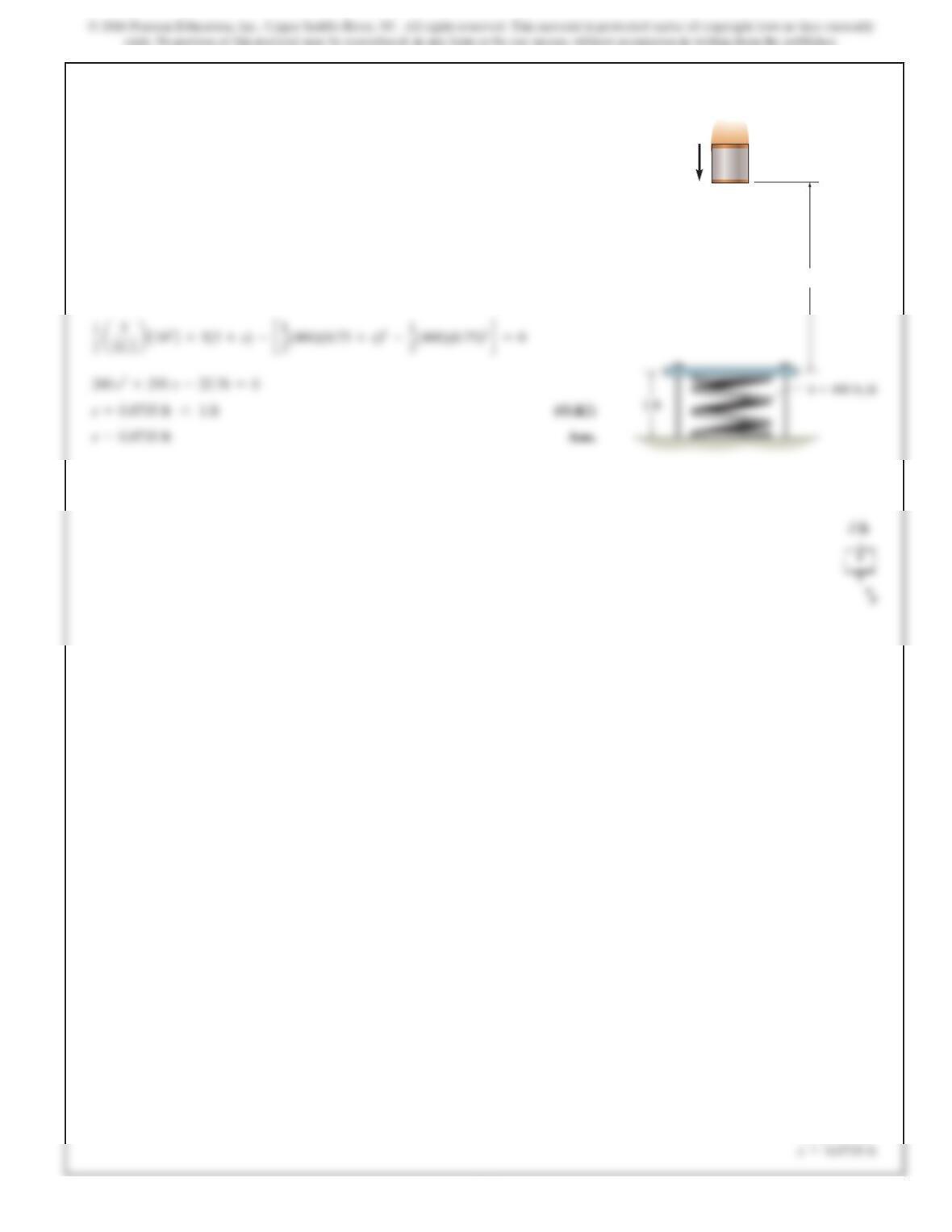
The 5-lb cylinder is falling from A with a speed vA
=10 ft>s
onto the platform. Determine the maximum displacement
of the platform, caused by the collision. The spring has an
unstretched length of 1.75 ft and is originally kept in
compression by the 1-ft long cables attached to the platform.
Neglect the mass of the platform and spring and any energy
lost during the collision.
SOLUTION
T1+Σ U1–2=T2
Ans:
A
3 ft
vA 10 ft/s
14–26.
SOLUTION
2sC+sA=l
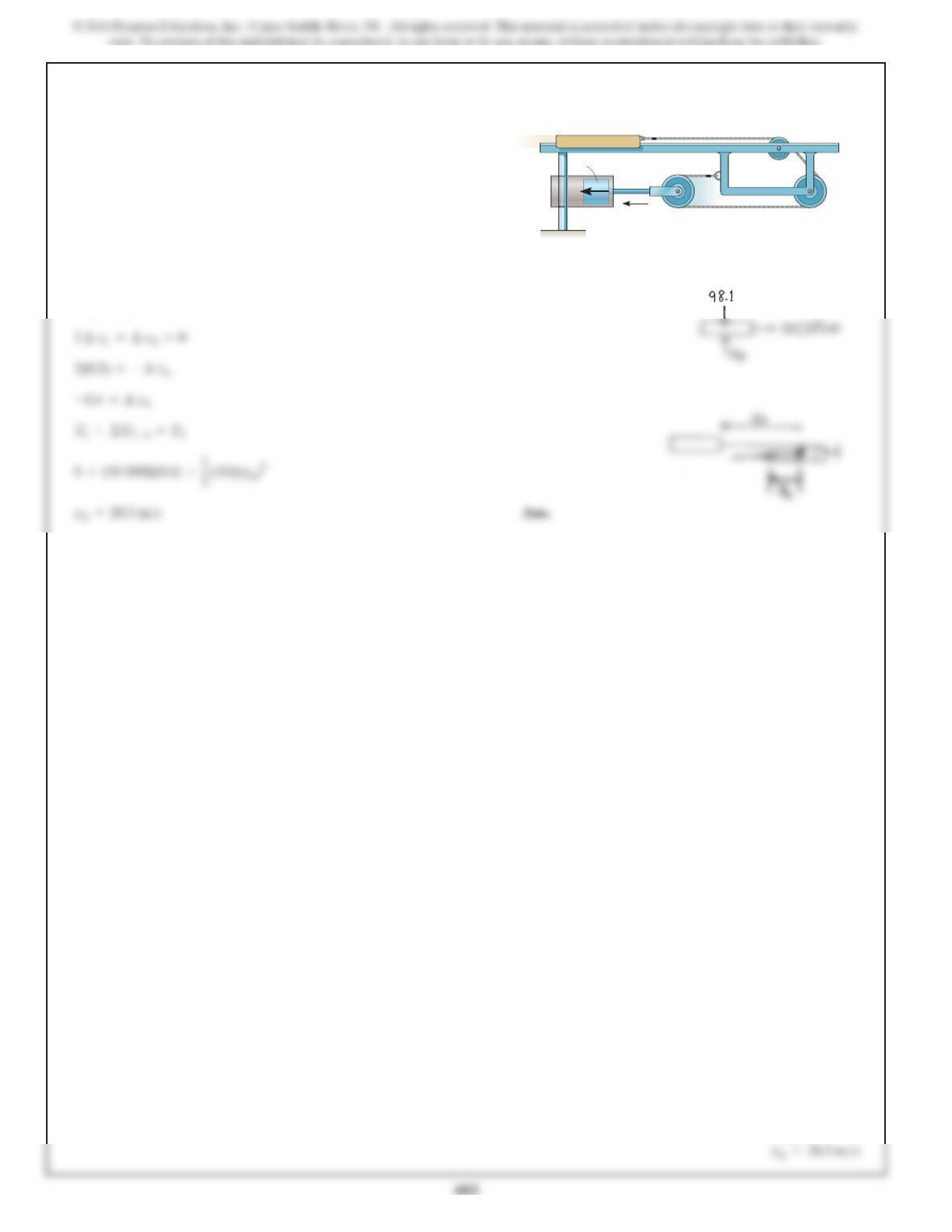
The catapulting mechanism is used to propel the 10-kg
slider Ato the right along the smooth track. The propelling
action is obtained by drawing the pulley attached to rod BC
rapidly to the left by means of a piston P. If the piston
applies a constant force to rod BC such that it
moves it 0.2 m, determine the speed attained by the slider if
it was originally at rest. Neglect the mass of the pulleys,
cable, piston, and rod BC.
F=20 kN
FBC
A
P
Ans:
403
14–27.
SOLUTION
TA+©UA–B=TB
T
h
e “f
l
y
i
ng car”
i
s a r
id
e at an amusement par
k
w
hi
c
h
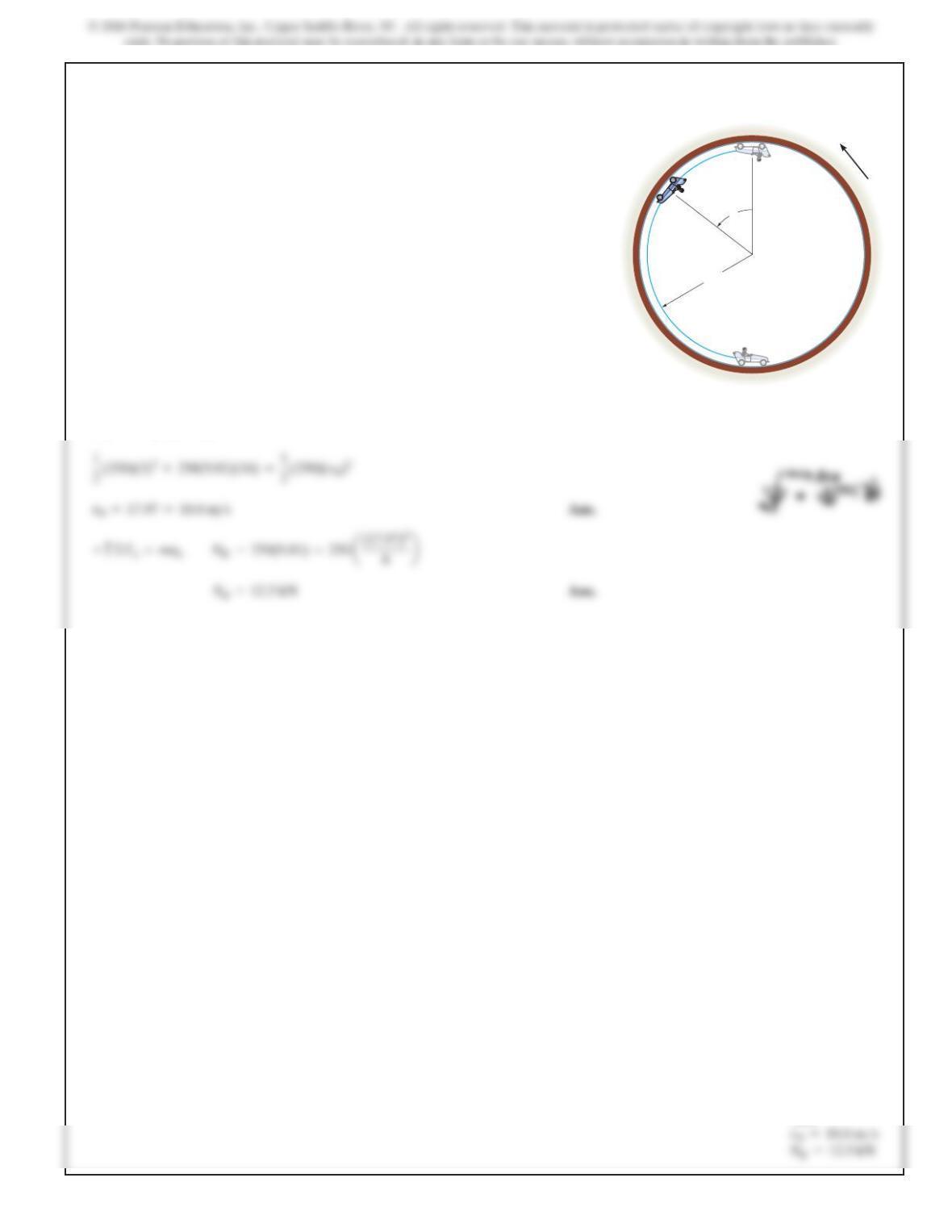
consists of a car having wheels that roll along a track
mounted inside a rotating drum. By design the car cannot
fall off the track, however motion of the car is developed by
applying the car’s brake, thereby gripping the car to the
track and allowing it to move with a constant speed of the
track, If the rider applies the brake when going
from Bto Aand then releases it at the top of the drum, A,
so that the car coasts freely down along the track to B
determine the speed of the car at Band the
normal reaction which the drum exerts on the car at B.
Neglect friction during the motion from Ato B.The rider
and car have a total mass of 250 kg and the center of mass of
the car and rider moves along a circular path having a
radius of 8 m.
1u=prad2,
vt=3m>s.
A
B
8m
v
t
u
Ans:
404
*14–28.
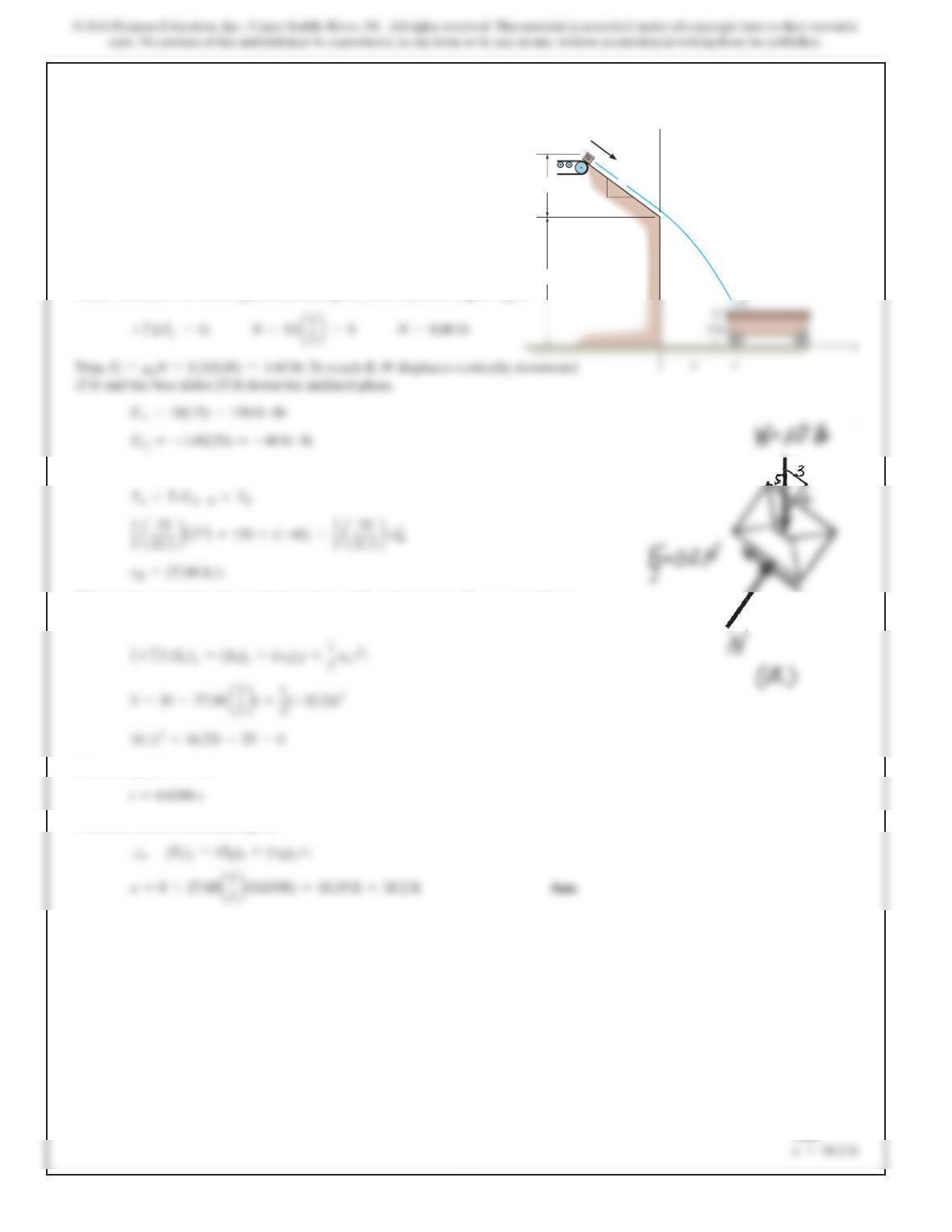
The 10-lb box falls off the conveyor belt at 5-ft
>
s. If the
coefficient of kinetic friction along AB is m
k=0.2,
determine the distance x when the box falls into the cart.
SOLUTION
Work. Consider the force equilibrium along the y axis by referring to Fig. a,
Principle of Work And Energy. Applying Eq. 14–7
Kinematics. Consider the vertical motion with reference to the x–y coordinate
system,
Solve for positive root,
Then, the horizontal motion gives
5 ft/s
30 ft
15 ft
B
y
4
35
A
Ans:
14–29.
SOLUTION
T1+©U1–2=T2
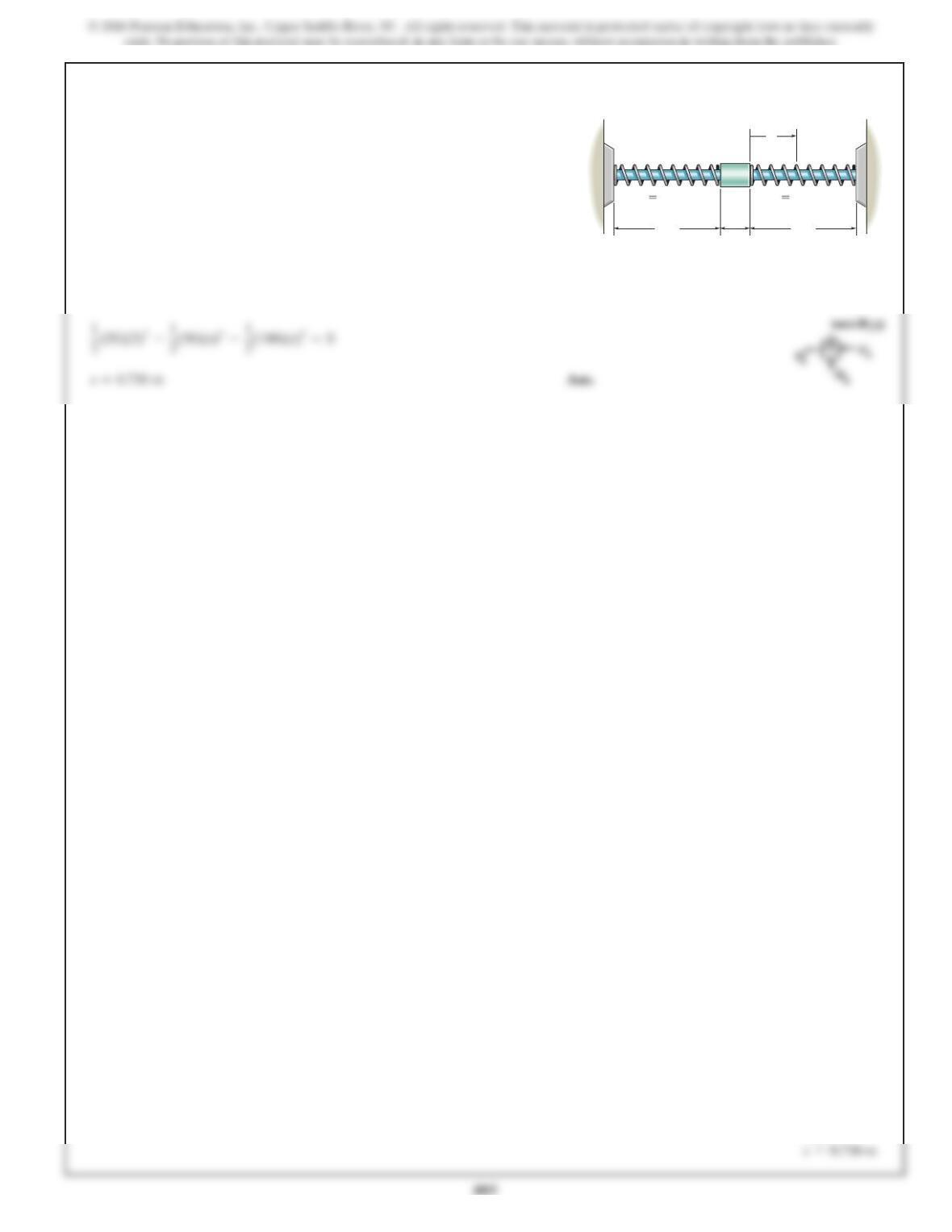
The collar has a mass of 20 kg and slides along the smooth
rod.Two springs are attached to it and the ends of the rod as
shown. If each spring has an uncompressed length of 1 m
and the collar has a speed of when determine
the maximum compression of each spring due to the back-
and-forth (oscillating) motion of the collar.
s=0,2m>s
s
0.25 m
1m 1m
k
A
50 N/mk
B
100 N/m
Ans:
406
14–30.
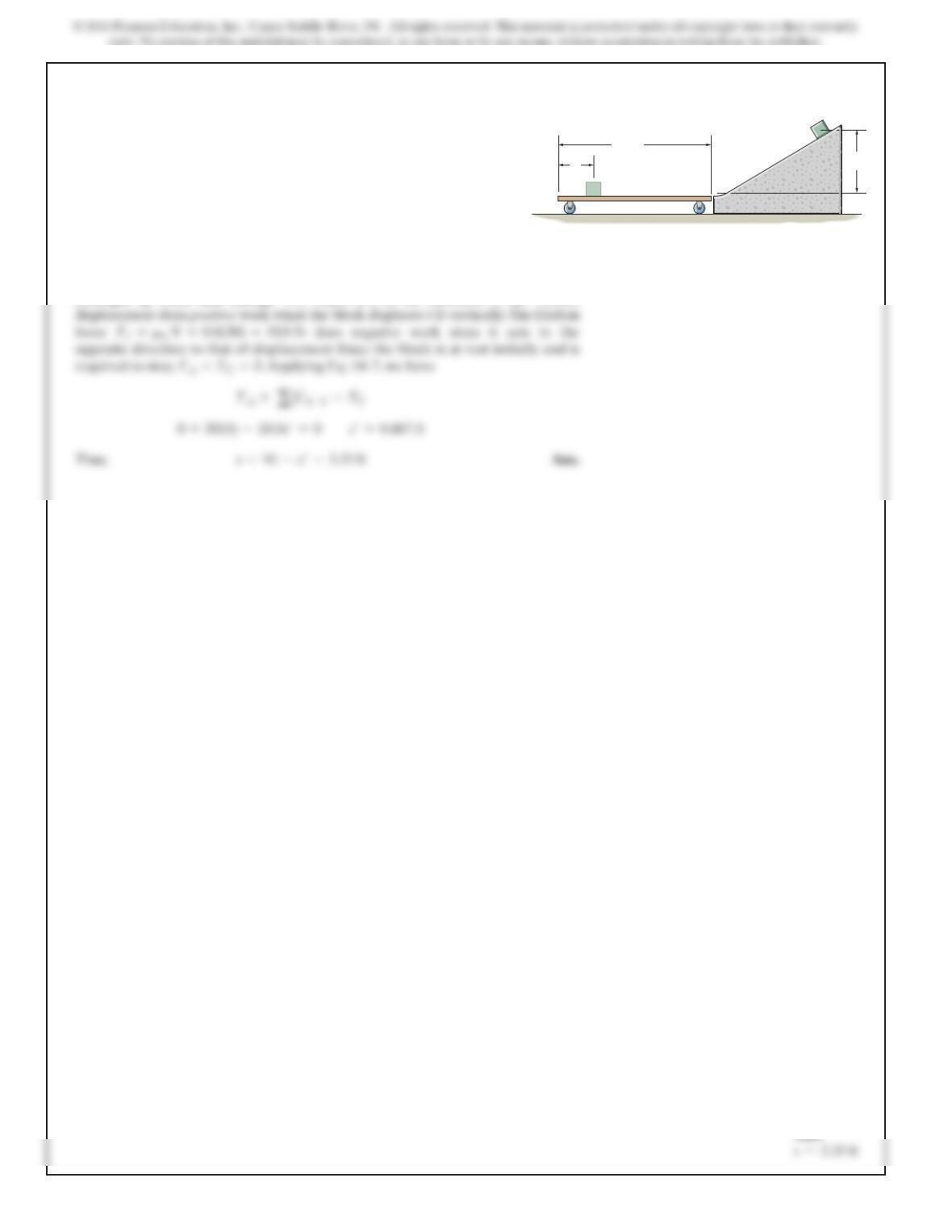
The 30-lb box Ais released from rest and slides down along
the smooth ramp and onto the surface of a cart. If the cart
is prevented from moving, determine the distance sfrom the
end of the cart to where the box stops.The coefficient of
kinetic friction between the cart and the box is mk=0.6.
SOLUTION
Principle of Work and Energy: which acts in the direction of the vertical
WA
10 ft
4ft
s
A
BC
Ans:
407
14–31.
SOLUTION
TA+©
UA–B=TB
2m
3m
A
B
C
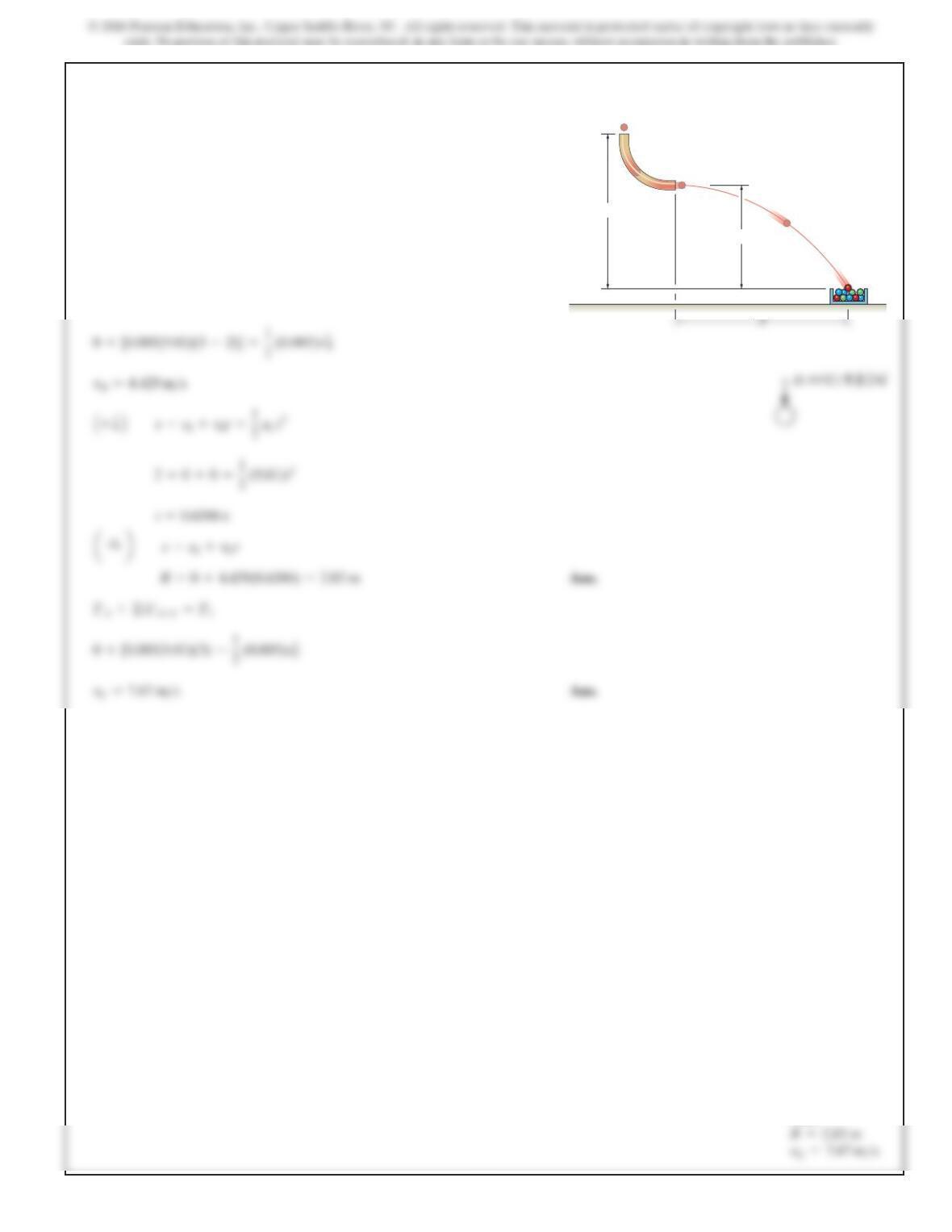
Marbles having a mass of 5 g are dropped from rest at A
through the smooth glass tube and accumulate in the can
at
C.
Determine
the
placement
R
of
the
can
from
the
end
of the tube and the speed at which the marbles fall into the
can. Neglect the size of the can.
Ans:
408
*14–32.
SOLUTION
lAC =2(0.3)2+(0.4)2=0.5 m
T
h
e
bl
oc
k
h
as a mass of 0.8
k
g an
d
moves w
i
t
hi
n t
h
e smoot
h
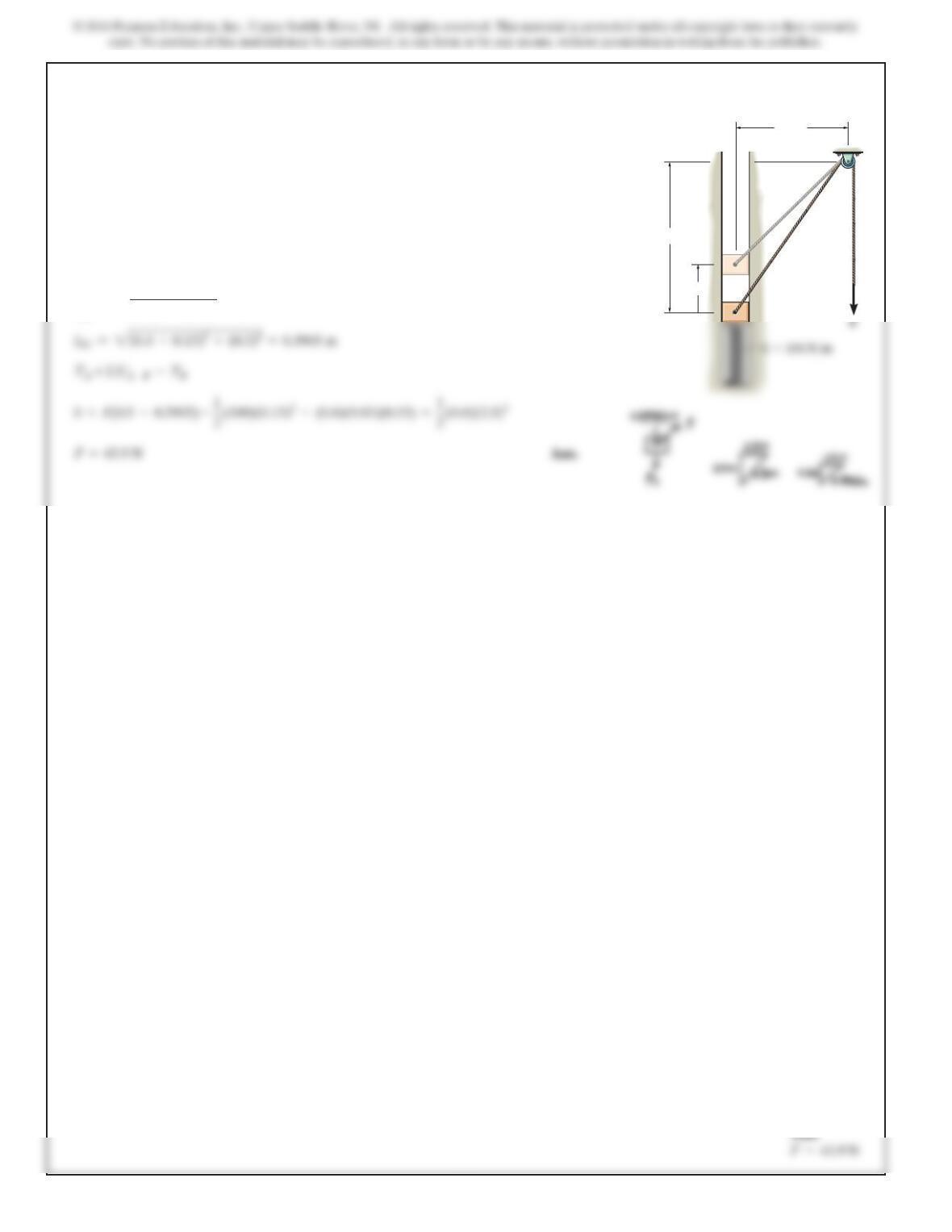
vertical slot. If it starts from rest when the attached spring is
in the unstretched position at A, determine the constant
vertical force Fwhich must be applied to the cord so that
the block attains a speed when it reaches B;
Neglect the size and mass of the pulley. Hint:
The work of Fcan be determined by finding the difference
in cord lengths AC and BC and using U
F=F¢l.¢l
sB=0.15 m.
vB=2.5 m>s
B
C
A
0.4 m
0.3 m
s
B
409
14–33.
SOLUTION
Solving for the positive root,
TA+©UA–B=TB
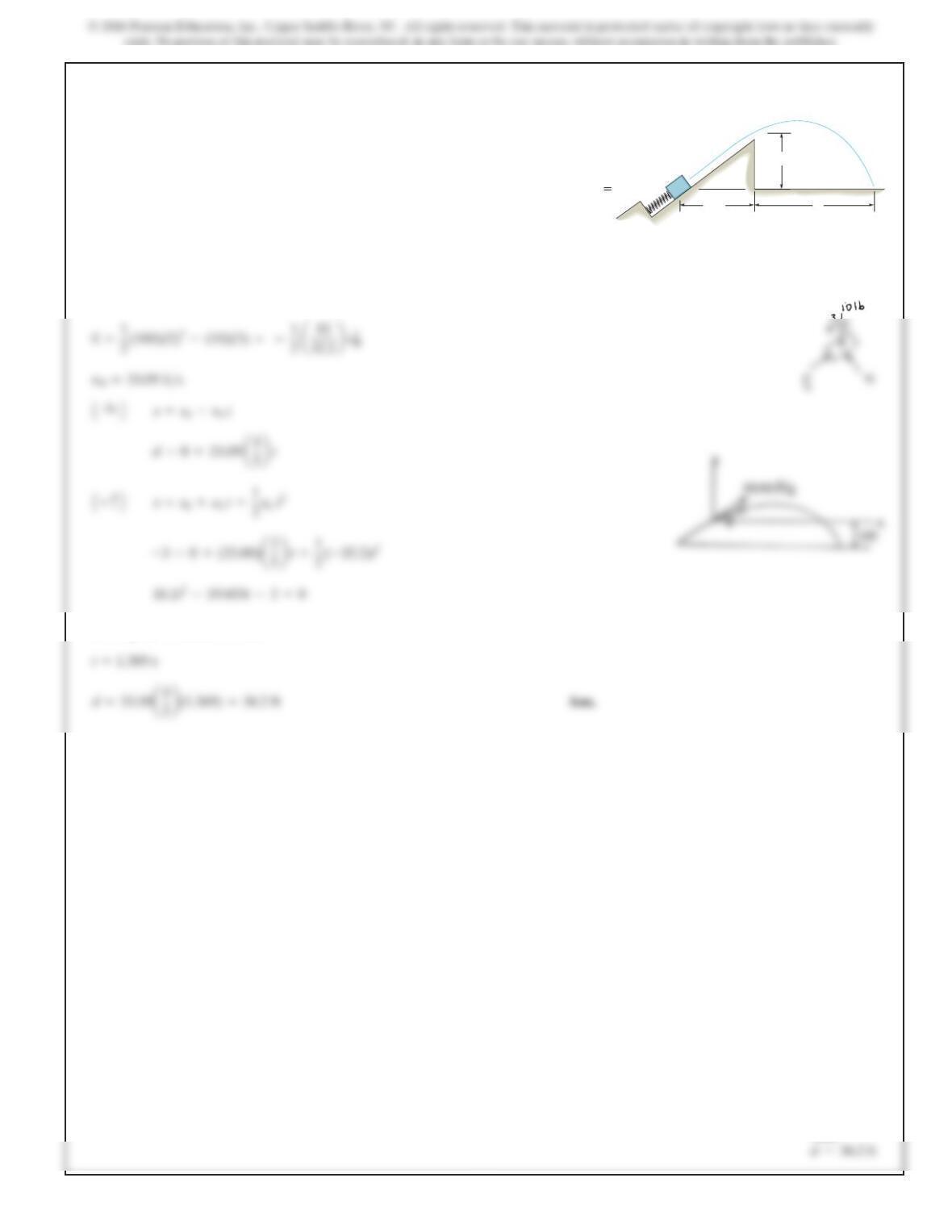
The 10-lb block is pressed against the spring so as to
compress it 2 ft when it is at A. If the plane is smooth,
determine the distance d, measured from the wall, to where
the block strikes the ground. Neglect the size of the block.
3ft
4ftd
B
A
k100 lb/ft
Ans:
410
14–34.
SOLUTION
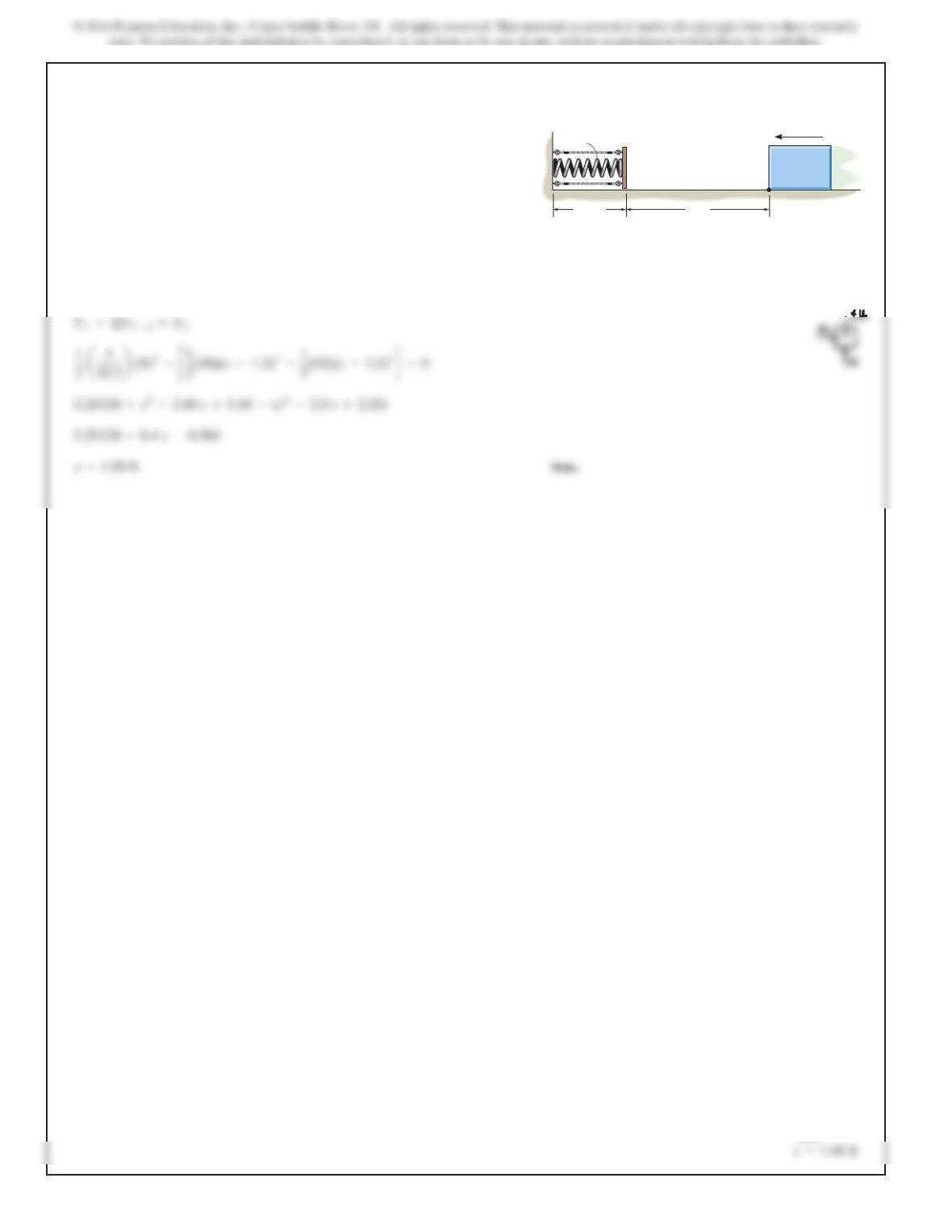
The spring bumper is used to arrest the motion of the
4-lb block, which is sliding toward it at As
shown, the spring is confined by the plate Pand wall using
cables so that its length is 1.5 ft. If the stiffness of the
spring is determine the required unstretched
length of the spring so that the plate is not displaced more
than 0.2 ft after the block collides into it. Neglect friction,
the mass of the plate and spring,and the energy loss
between the plate and block during the collision.
k=50 lb>ft,
v=9ft>s. P
k
v
A
1.5 ft. 5 ft.
A
Ans:
411
14–35.
SOLUTION
y=50 cos ap
100 bx
`
x=35
=22.70 ft
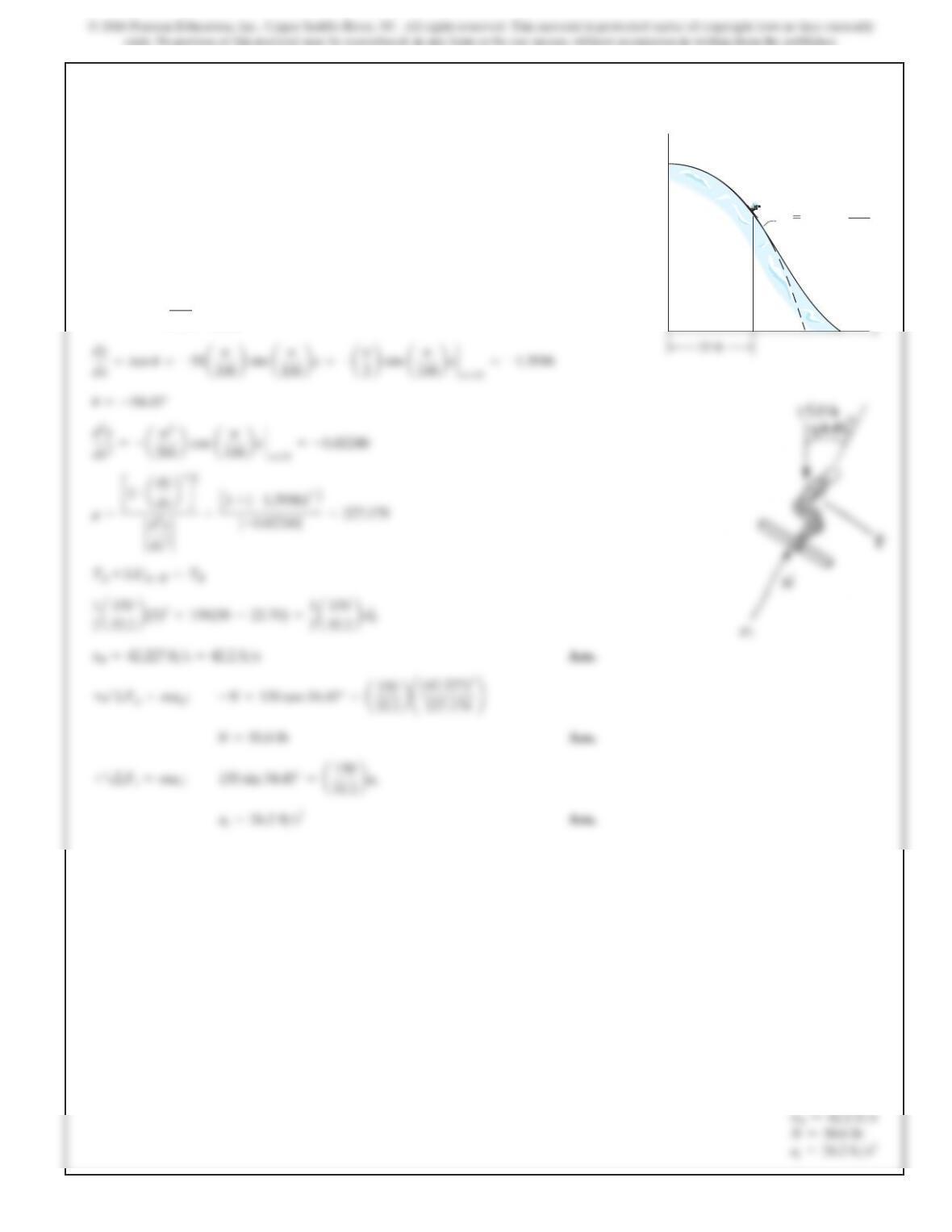
When the 150-lb skier is at point Ahe has a speed of
Determine his speed when he reaches point Bon the
smooth slope.For this distance the slope follows the cosine
curve shown. Also, what is the normal force on his skis at B
and his rate of increase in speed? Neglect friction and air
resistance.
5ft
>
s.
A
B
y
y50 cos ( x)
100
p
Ans:
412
*14–36.
SOLUTION
+a©Fy=0; NB–4a4
5b=0
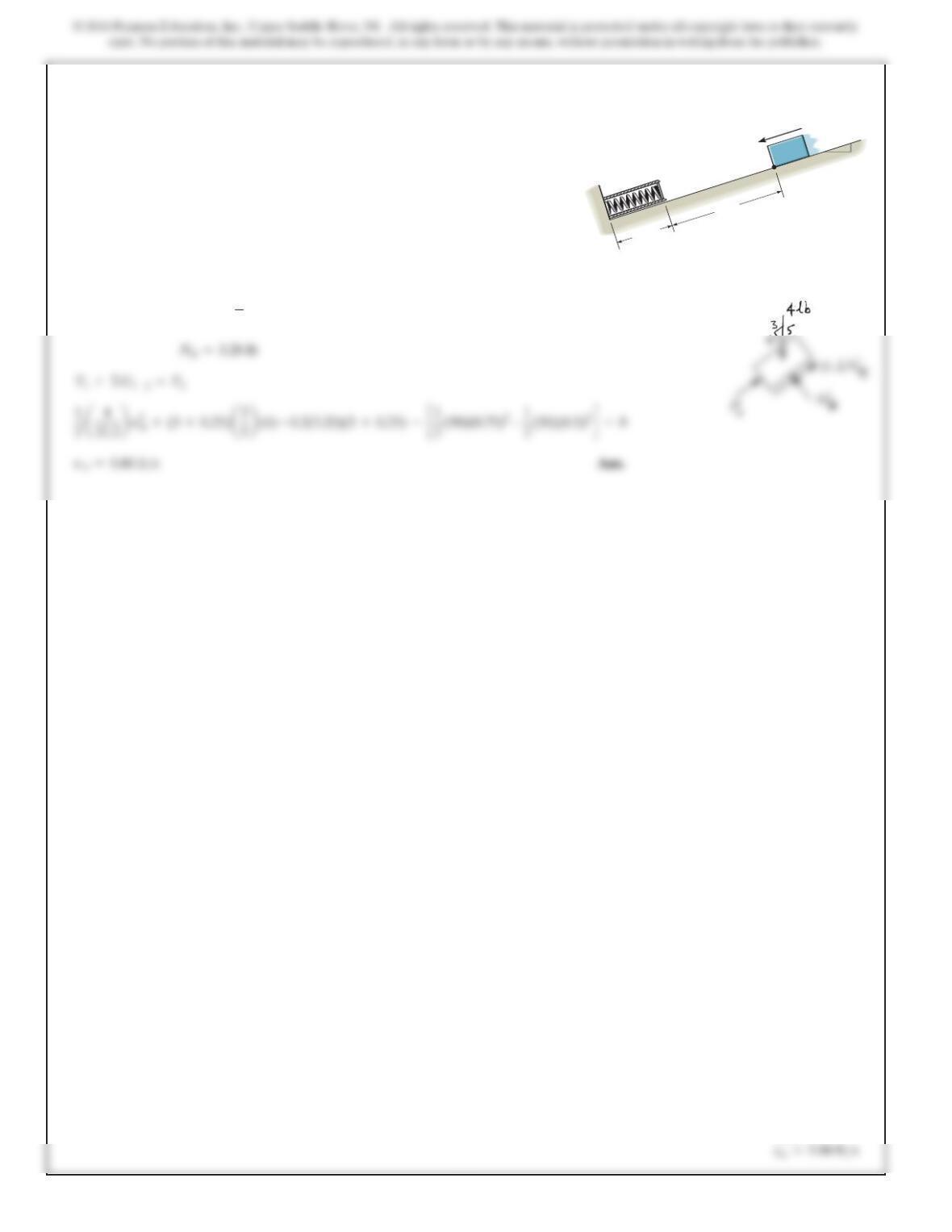
The spring has a stiffness and an unstretched
length of2ft. As shown, it is confined by the plate and wall
using cables so that its length is 1.5 ft. A 4-lb block is given a
speed when it is at A,and it slides down the incline having
acoefficient of kinetic friction If it strikes the plate
and pushes it forward 0.25 ft before stopping,determine its
speed at A.Neglect the mass of the plate and spring.
mk=0.2.
vA
k=50 lb>ft
3ft
1.5 ft
A
k50 lb/ft
3
4
5
v
A
Ans:
413
14–37.
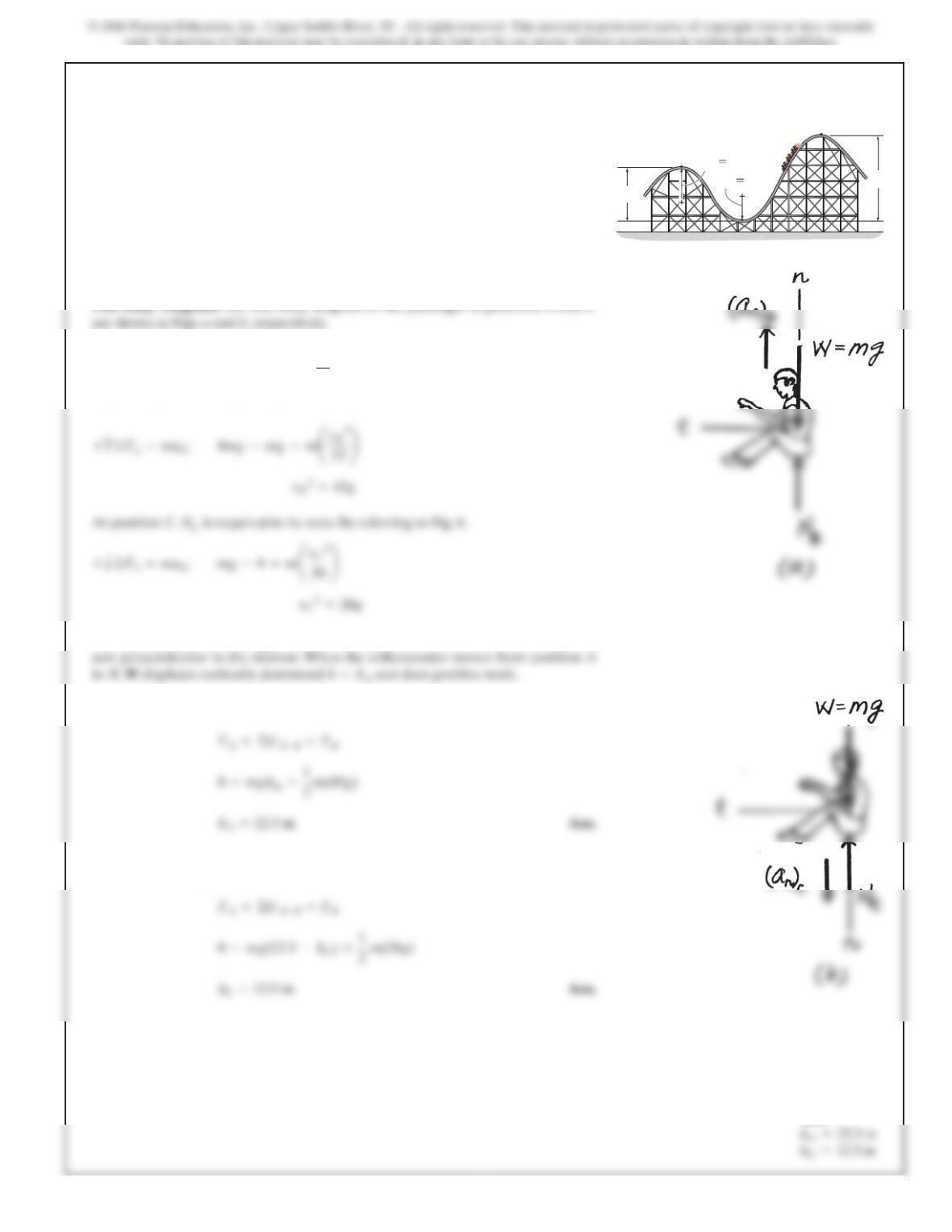
If the track is to be designed so that the passengers of the
roller coaster do not experience a normal force equal to
zero or more than 4 times their weight, determine the
limiting heights and so that this does not occur.The
roller coaster starts from rest at position A. Neglect friction.
hC
hA
SOLUTION
Equations of Motion: Here,.The requirement at position Bis that
. By referring to Fig. a,
Principle of Work and Energy: The normal reaction Ndoes no work since it always
We have
When the rollercoaster moves from position Ato C,Wdisplaces vertically
downward
h=hA–hC=(22.5 –hC)m.
NB=4mg
an=v2
r
A
hA
C
B
hC
rC20 m
rB15 m
Ans:
414
14–38.
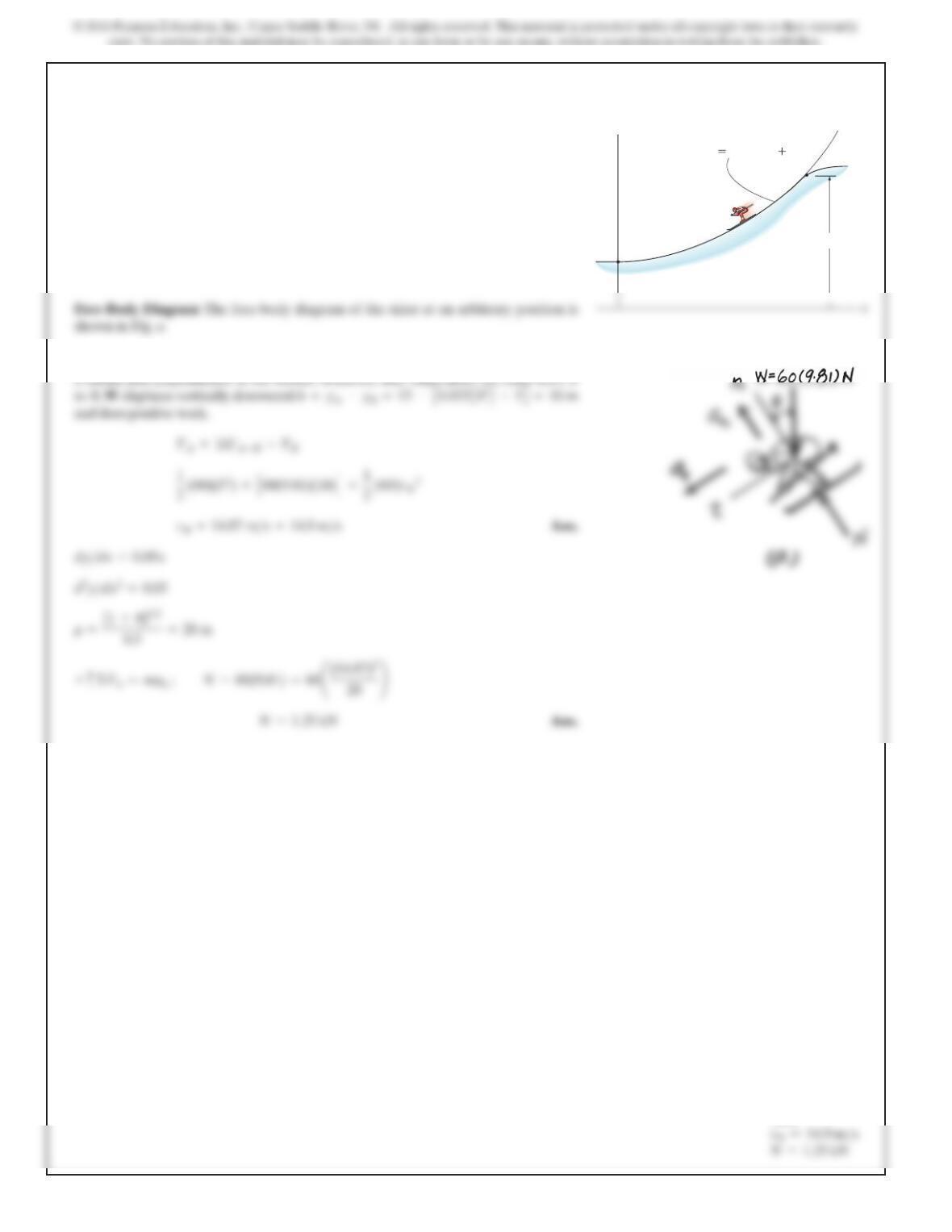
SOLUTION
Principle of Work and Energy: By referring to Fig. a,we notice that Ndoes no work since
If the 60-kg skier passes point Awith a speed of ,
determine his speed when he reaches point B. Also find the
normal force exerted on him by the slope at this point.
Neglect friction.
5m>s
y
B
A
15 m
y(0.025x25) m
Ans:
14–39.
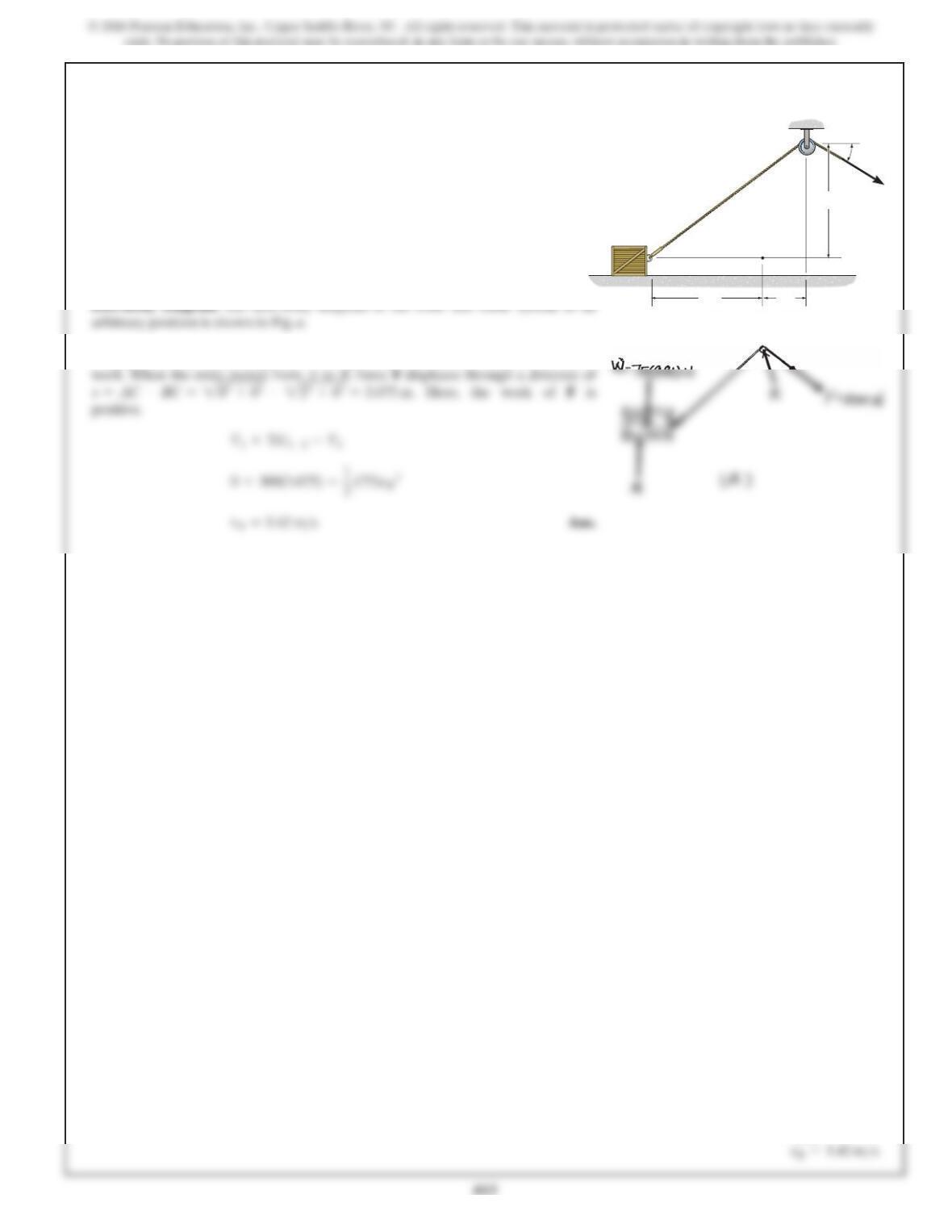
If the 75-kg crate starts from rest at A, determine its speed
when it reaches point B.The cable is subjected to a constant
force of . Neglect friction and the size of the
pulley.
F=300 N
B
C
A
6m 2 m
6m
30
F
SOLUTION
Principle of Work and Energy: By referring to Fig. a, notice that N,W, and Rdo no
Ans:
416
*14–40.
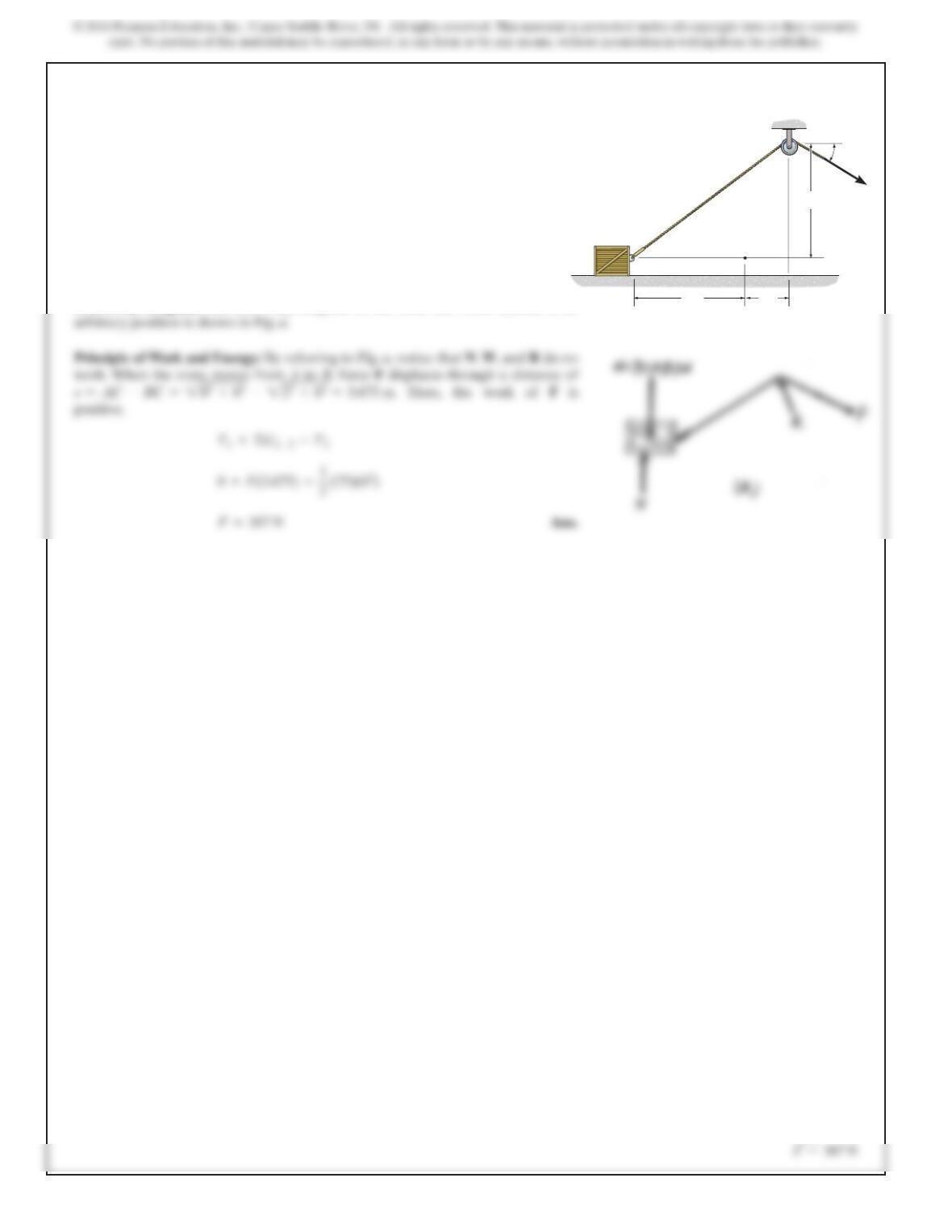
If the 75-kg crate starts from rest at A, and its speed is
when it passes point B, determine the constant force F
exerted on the cable. Neglect friction and the size of the
pulley.
6m>s
B
C
A
6m 2 m
6m
30
F
SOLUTION
Free-Body Diagram: The free-body diagram of the crate and cable system at an
Ans: