377
14–1.
SOLUTION
Equation of Motion: Since the crate slides, the friction force developed between the
crate and its contact surface is . Applying Eq. 13–7, we have
Principle of Work and Energy: The horizontal component of force Fwhich acts
Ff=mkN=0.25N
30°
F
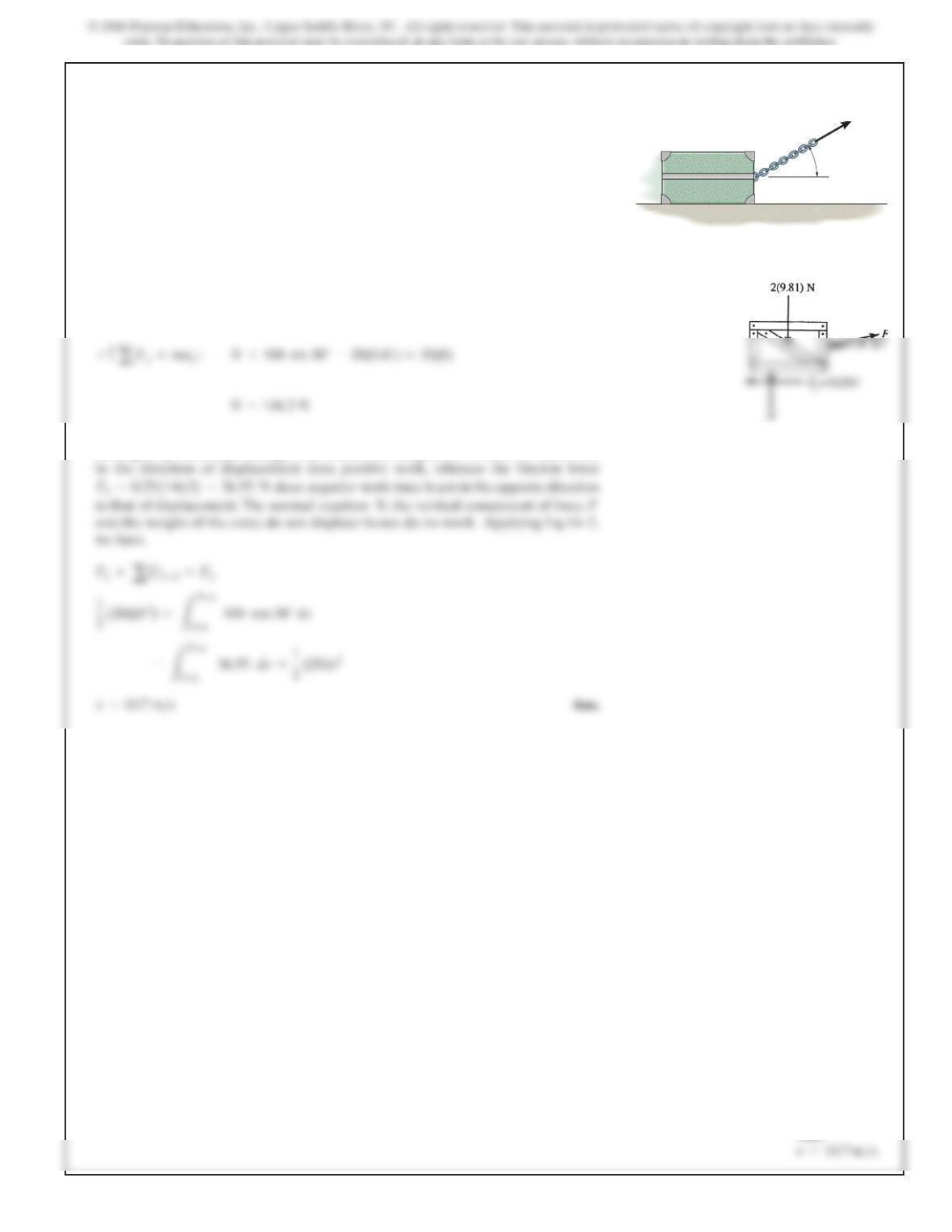
The 20-kg crate is subjected to a force having a constant
direction and a magnitude F = 100 N. When s = 15 m, the
crate is moving to the right with a speed of 8 m/s. Determine
its speed when s = 25 m. The coefficient of kinetic friction
between the crate and the ground is mk = 0.25.
Ans:
378
14–2.
F (lb)
F 90(10)3 x1/2
x (ft)
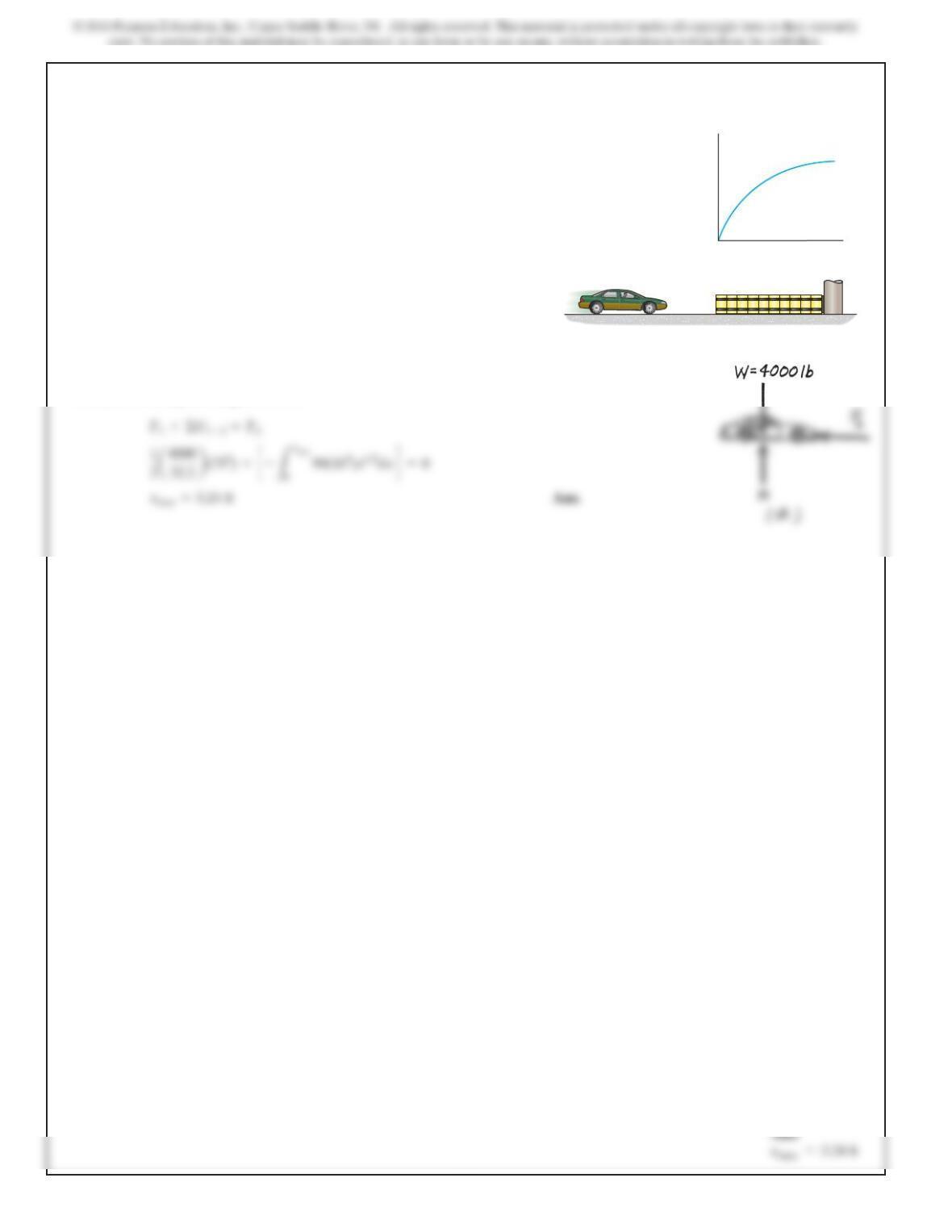
For protection, the barrel barrier is placed in front of the
bridge pier. If the relation between the force and deflection
of the barrier is lb, where is in ft,
determine the car’s maximum penetration in the barrier.
The car has a weight of 4000 lb and it is traveling with a
speed of just before it hits the barrier.75 ft>s
xF =(90(103)x1>2)
SOLUTION
Principle of Work and Energy:The speed of the car just before it crashes into the
barrier is .The maximum penetration occurs when the car is brought to a
stop,i.e., .Referring to the free-body diagram of the car,Fig.a,Wand Ndo no
work;however,does negative work.
Fb
v2=0
v1=75 ft>s
379
14–3.
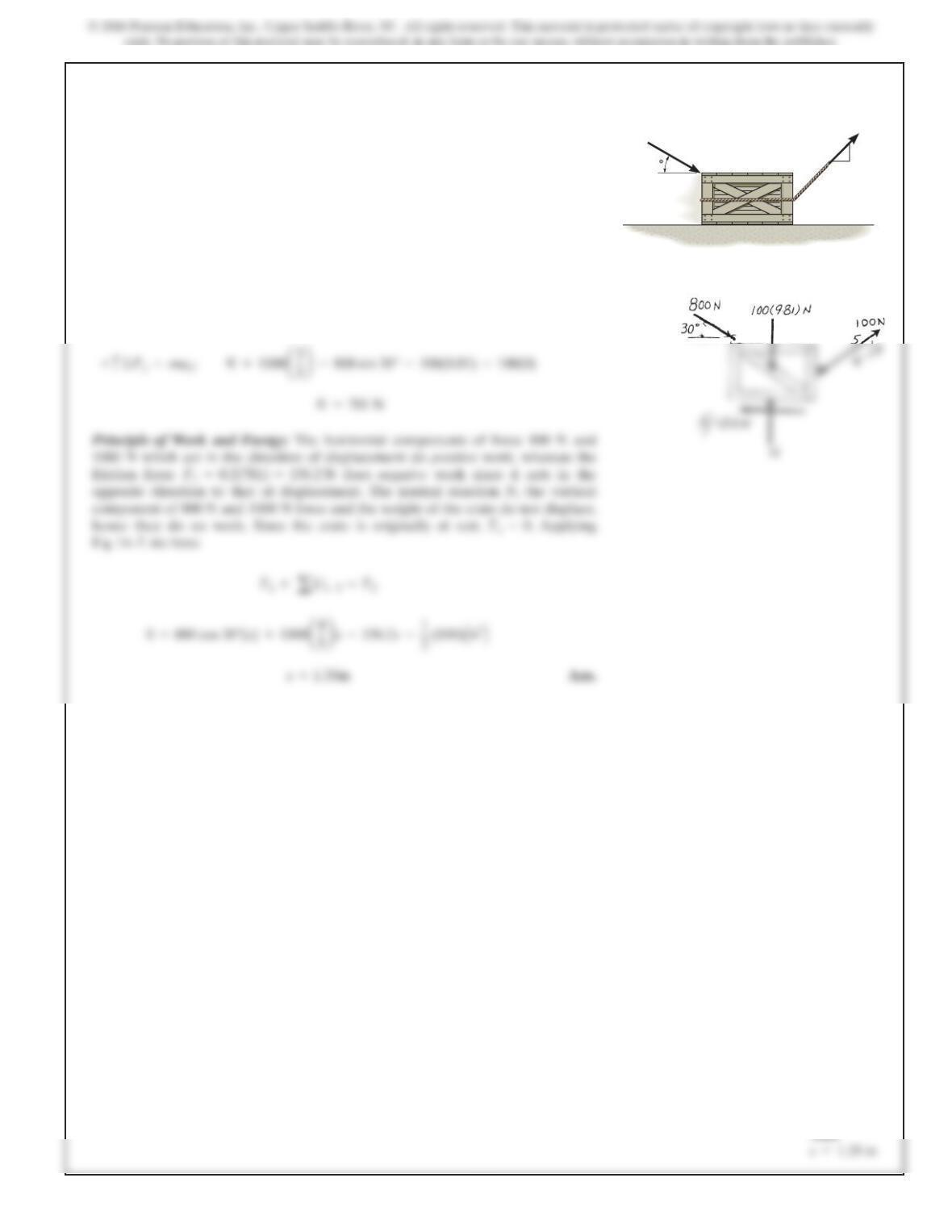
The crate, which has a mass of 100 kg, is subjected to the
action of the two forces. If it is originally at rest, determine
the distance it slides in order to attain a speed of The
coefficient of kinetic friction between the crate and the
surface is .mk=0.2
6m>s.
SOLUTION
Equations of Motion: Since the crate slides, the friction force developed between
the crate and its contact surface is . Applying Eq. 13–7, we have
Ff=mkN=0.2N
3
4
5
1000 N
30
800 N
Ans:
380
*14–4.
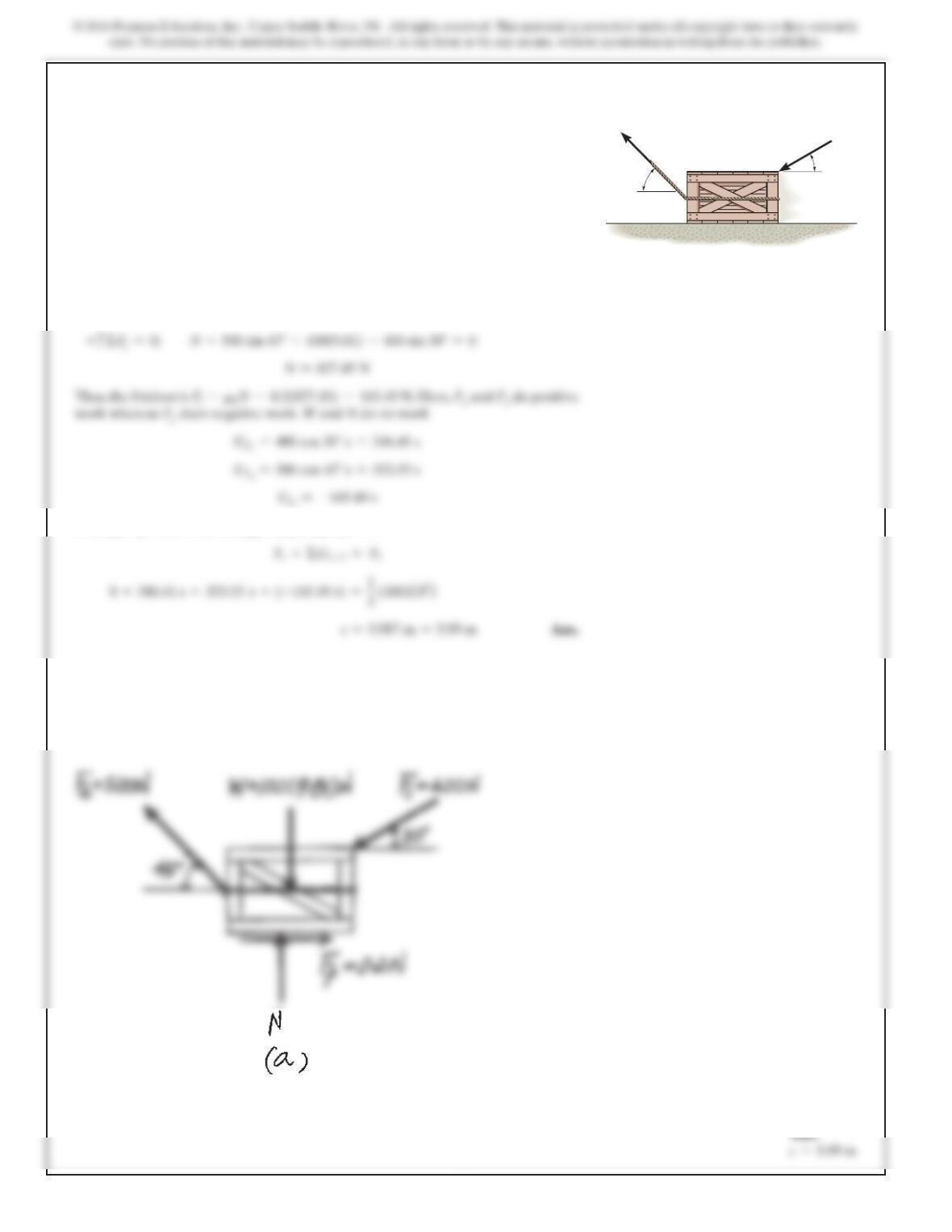
The 100-kg crate is subjected to the forces shown. If it is
originally at rest, determine the distance it slides in order to
attain a speed of v
=8 m>s.
The coefficient of kinetic
friction between the crate and the surface is m
k=0.2.
SOLUTION
Work. Consider the force equilibrium along the y axis by referring to the FBD of
the crate, Fig. a,
Principle of Work And Energy. Applying Eq. 14–7,
400 N
30
45
500 N
381
14–5.
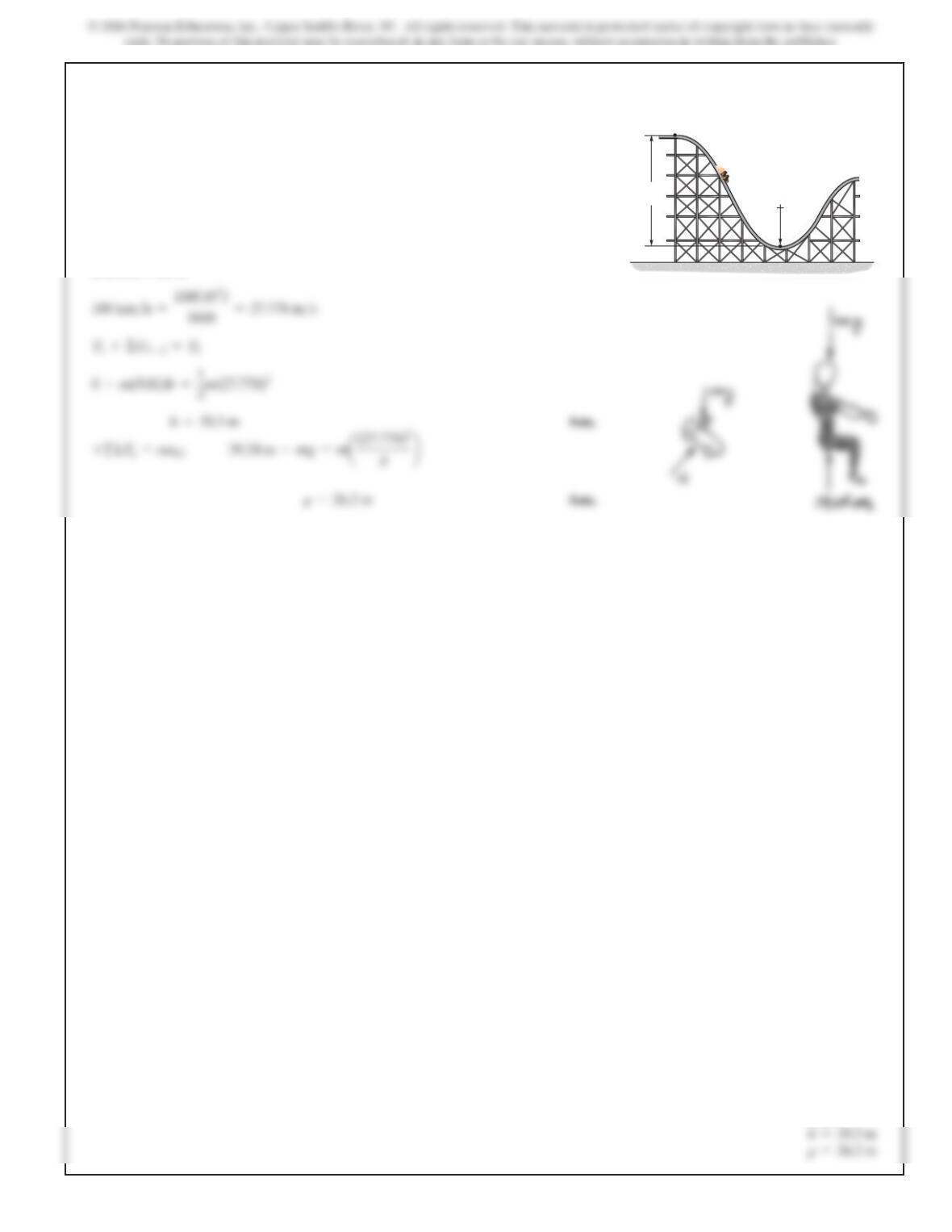
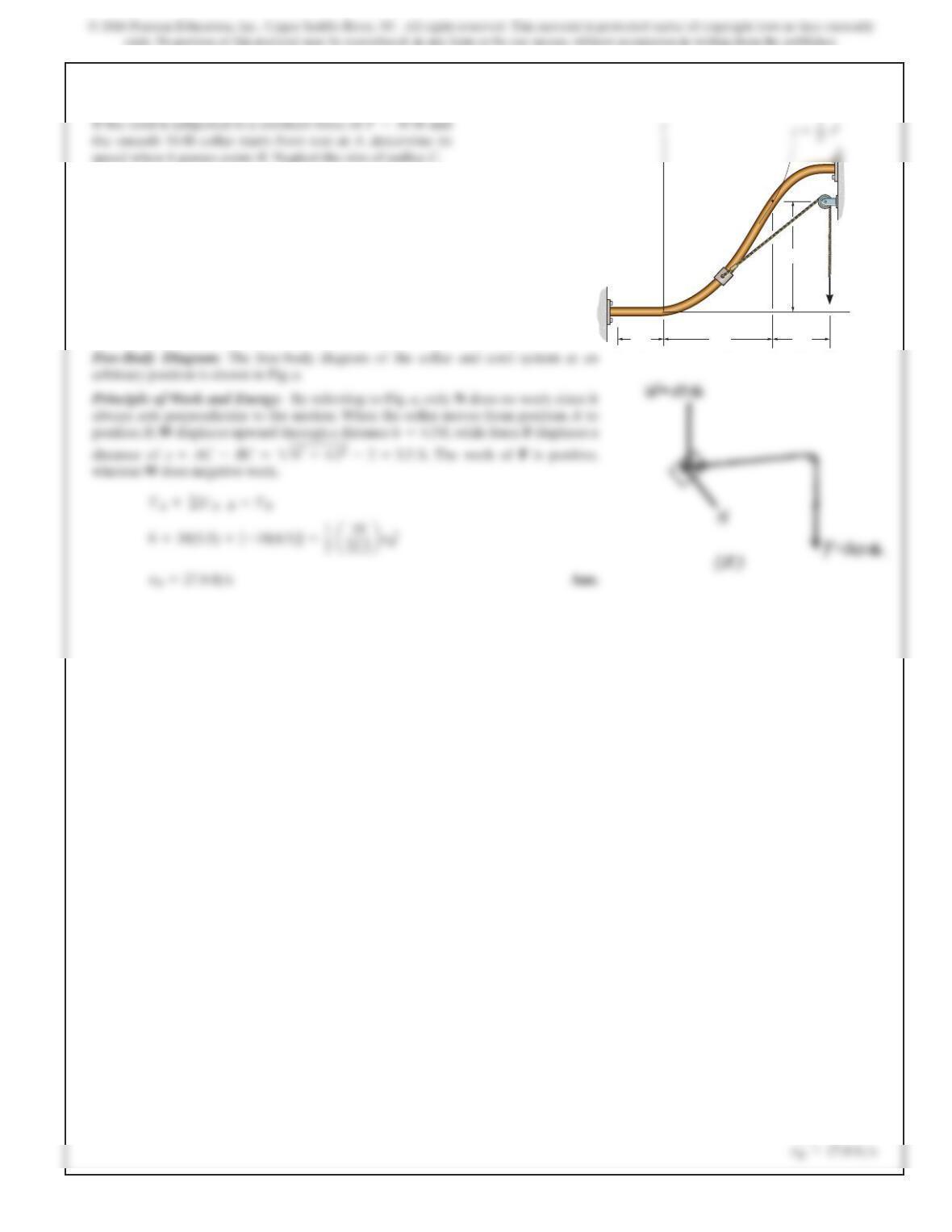
Determine the required height h of the roller coaster so that
when it is essentially at rest at the crest of the hill A it will
reach a speed of 100 km
>
h when it comes to the bottom B.
Also, what should be the minimum radius of curvature
r
for
the track at B so that the passengers do not experience a
normal force greater than
4mg =(39.24m) N?
Neglect the
size of the car and passenger.
SOLUTION
A
h
B
r
Ans:
382
14–6.
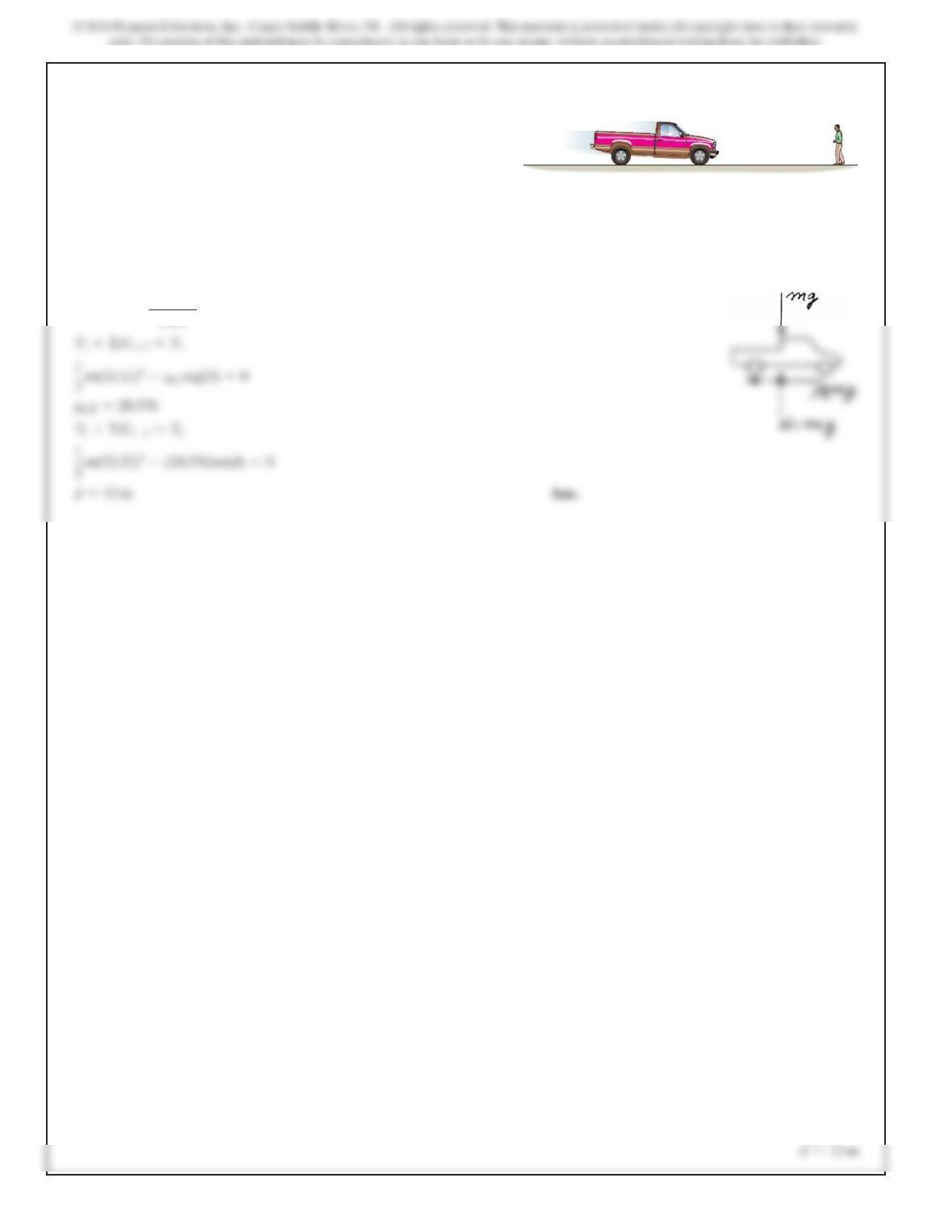
When the driver applies the brakes of a light truck traveling
40 km
>
h, it skids 3 m before stopping. How far will the truck
skid if it is traveling 80 km
>
h when the brakes are applied?
SOLUTION
40 km
>
h=
40
(
10
3
)
3600
=11.11 m
>
s 80 km
>
h=22.22 m
>
s
Ans:
383
14–7.
SOLUTION
Observer A:
Observer B:
F=ma
T1+©U1–2=T2
As indicated by the derivation, the principle of work and
energy is valid for observers in any inertial reference frame.
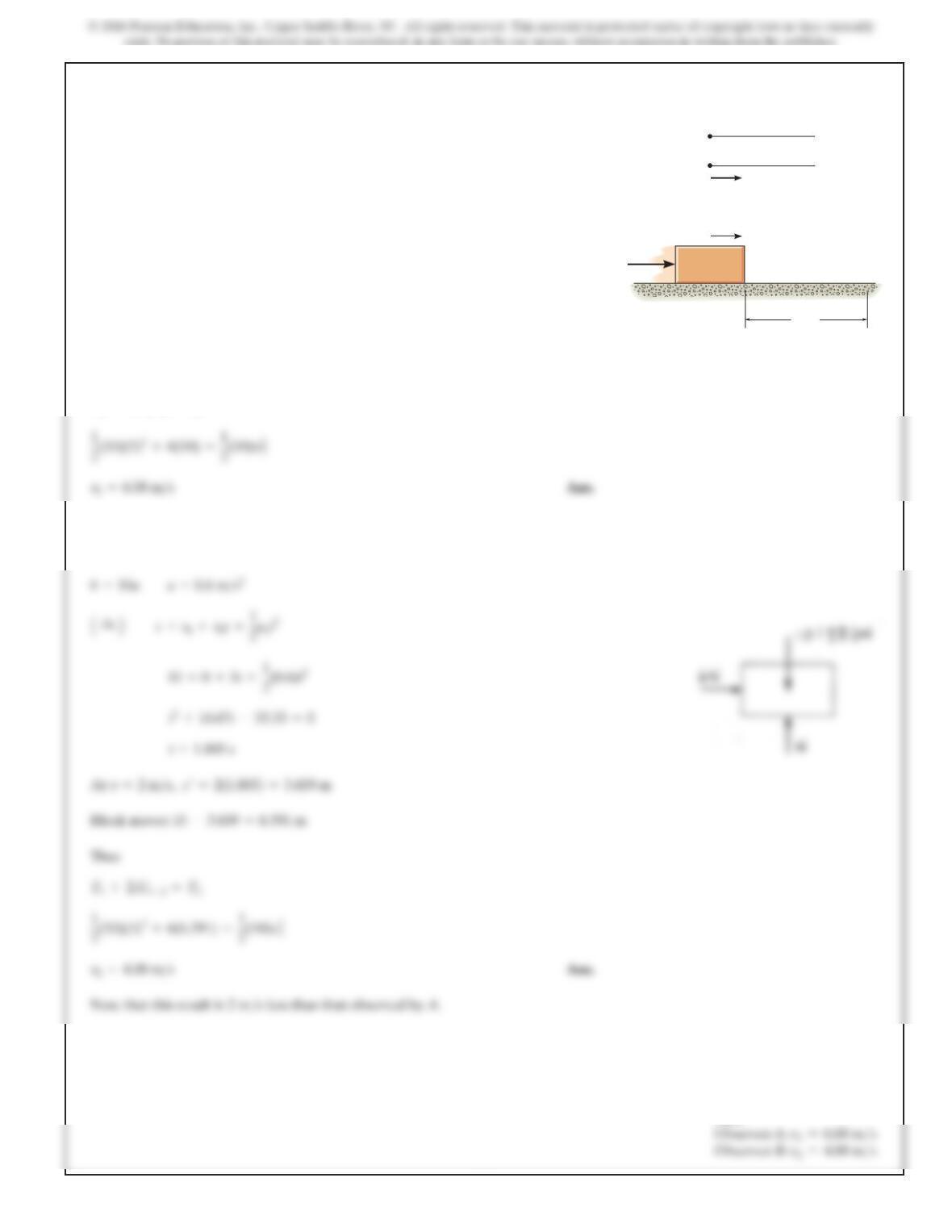
Show that this is so,by considering the 10-kg block which
rests on the smooth surface and is subjected to a horizontal
force of 6 N. If observer Ais in a fixed frame x,determine the
final speed of the block if it has an initial speed of and
travels 10 m, both directed to the right and measured from
the fixed frame.Compare the result with that obtained by an
observer B,attached to the axis and moving at a constant
velocity of relative to A.Hint: The distance the block
travels will first have to be computed for observer Bbefore
applying the principle of work and energy.
2m>s
x¿
5m>s
6N
5m/s
2m/s
10 m
B
x
x¿
A
Ans:
384
*14–8.
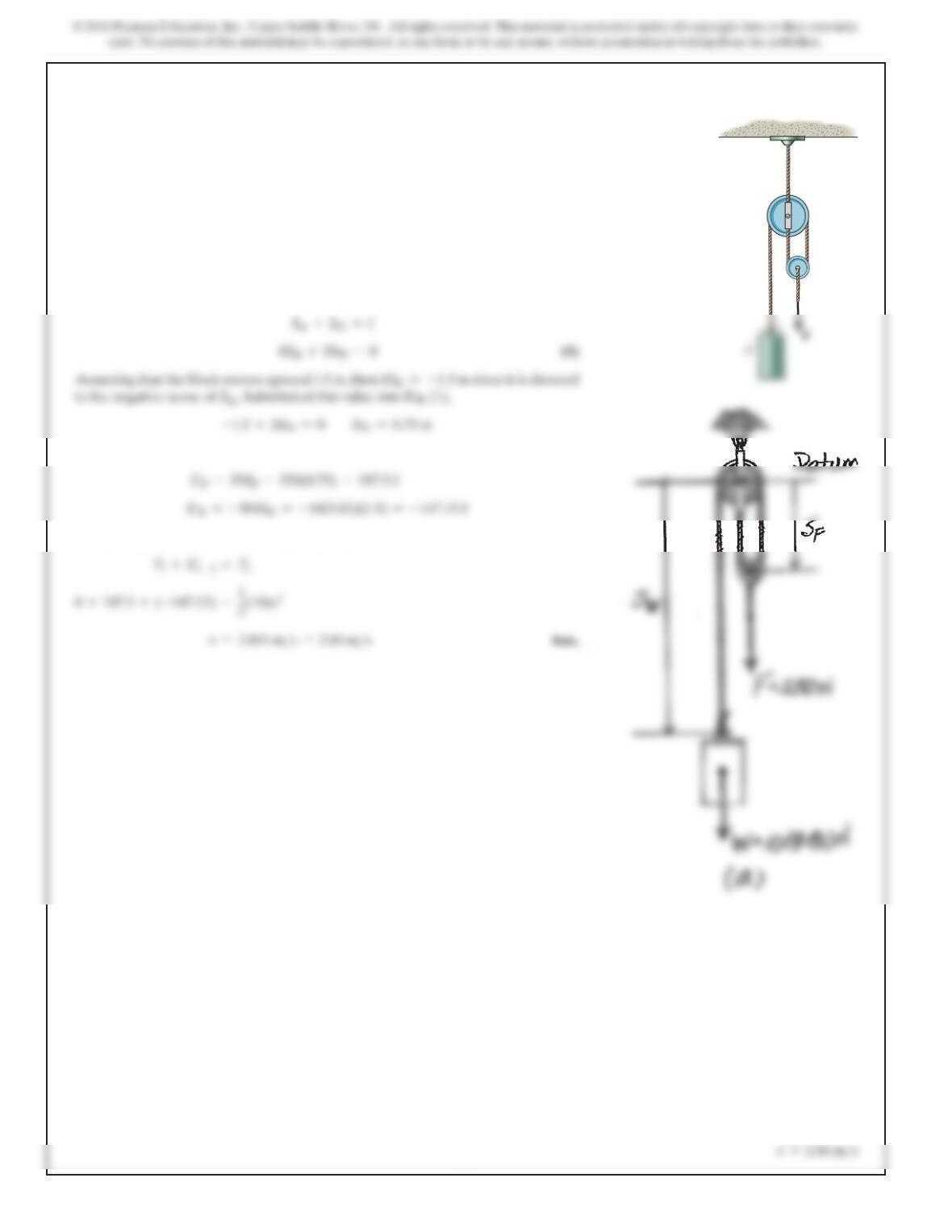
A force of
F=250 N
is applied to the end at B. Determine
the speed of the 10-kg block when it has moved 1.5 m,
starting from rest.
SOLUTION
Work. with reference to the datum set in Fig. a,
Thus,
Principle of Work And Energy. Applying Eq. 14–7,
B
Ans:
385
14–9.
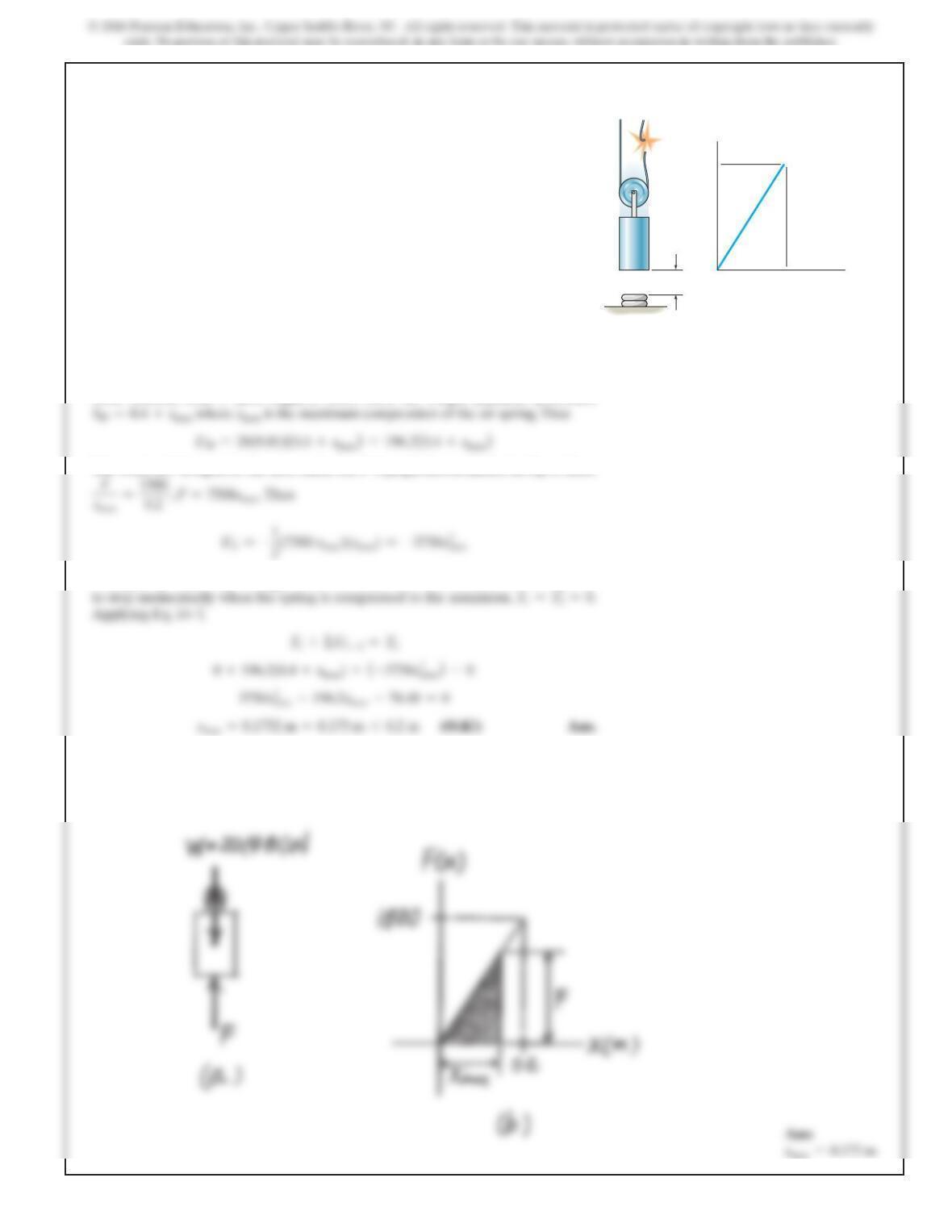
The “air spring” A is used to protect the support B and
prevent damage to the conveyor-belt tensioning weight C
in the event of a belt failure D. The force developed by
the air spring as a function of its deection is shown by the
graph. If the block has a mass of 20 kg and is suspended
a height
d=0.4 m
above the top of the spring, determine
the maximum deformation of the spring in the event the
conveyor belt fails. Neglect the mass of the pulley and belt.
SOLUTION
Work. Referring to the FBD of the tensioning weight, Fig. a, W does positive
work whereas force F does negative work. Here the weight displaces downward
The work of F is equal to the area under the F–S graph shown shaded in Fig. b, Here
Principle of Work And Energy. Since the block is at rest initially and is required
d
B
A
DF (N)
s (m)
C
1500
0.2
386
14–10.
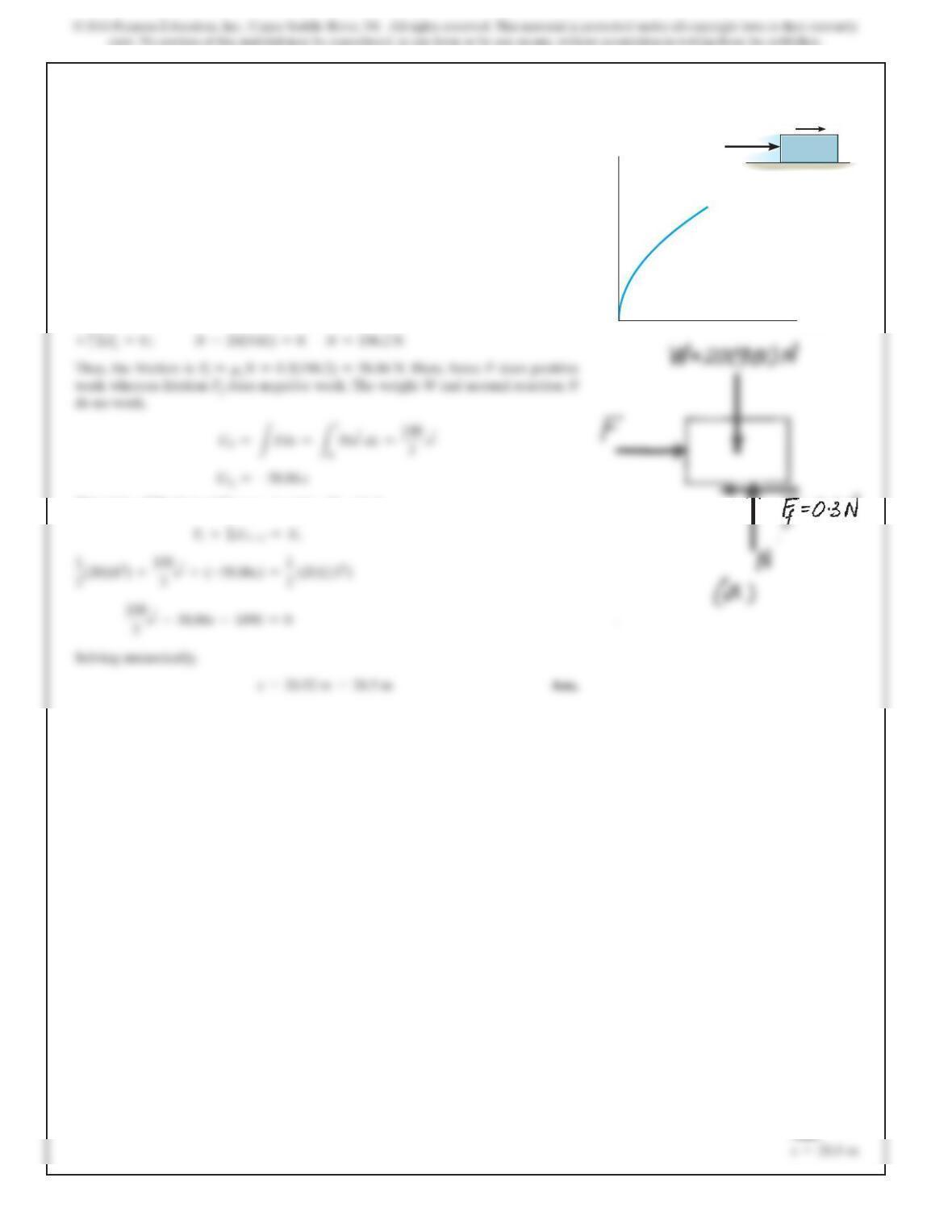
The force F, acting in a constant direction on the 20-kg
block, has a magnitude which varies with the position s of
the block. Determine how far the block must slide before its
velocity becomes 15 m
>
s. When
s=0
the block is moving
to the right at v
=6 m>s.
The coefficient of kinetic friction
between the block and surface is m
k=0.3.
SOLUTION
Work. Consider the force equilibrium along y axis, by referring to the FBD of the
block, Fig. a,
Principle of Work And Energy. Applying Eq. 14–7,
s=20.52
F (N)
F 50s1/2
s (m)
F
v
Ans:
387
14–11.
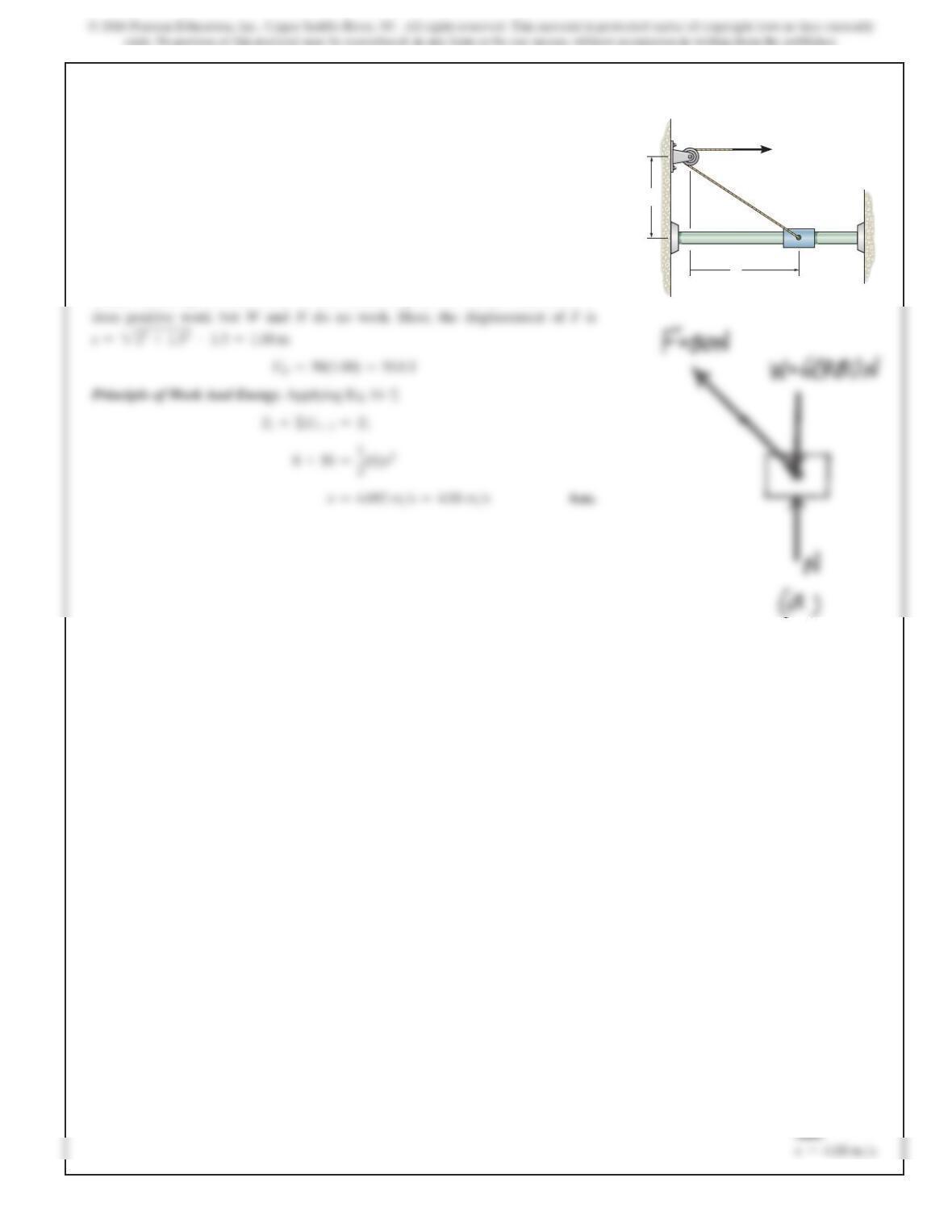
The force of
F=50 N
is applied to the cord when
s=2 m.
If the 6-kg collar is orginally at rest, determine its velocity at
s=0.
Neglect friction.
SOLUTION
Work. Referring to the FBD of the collar, Fig. a, we notice that force F
A
s
1.5 m
F
388
*14–12.
SOLUTION
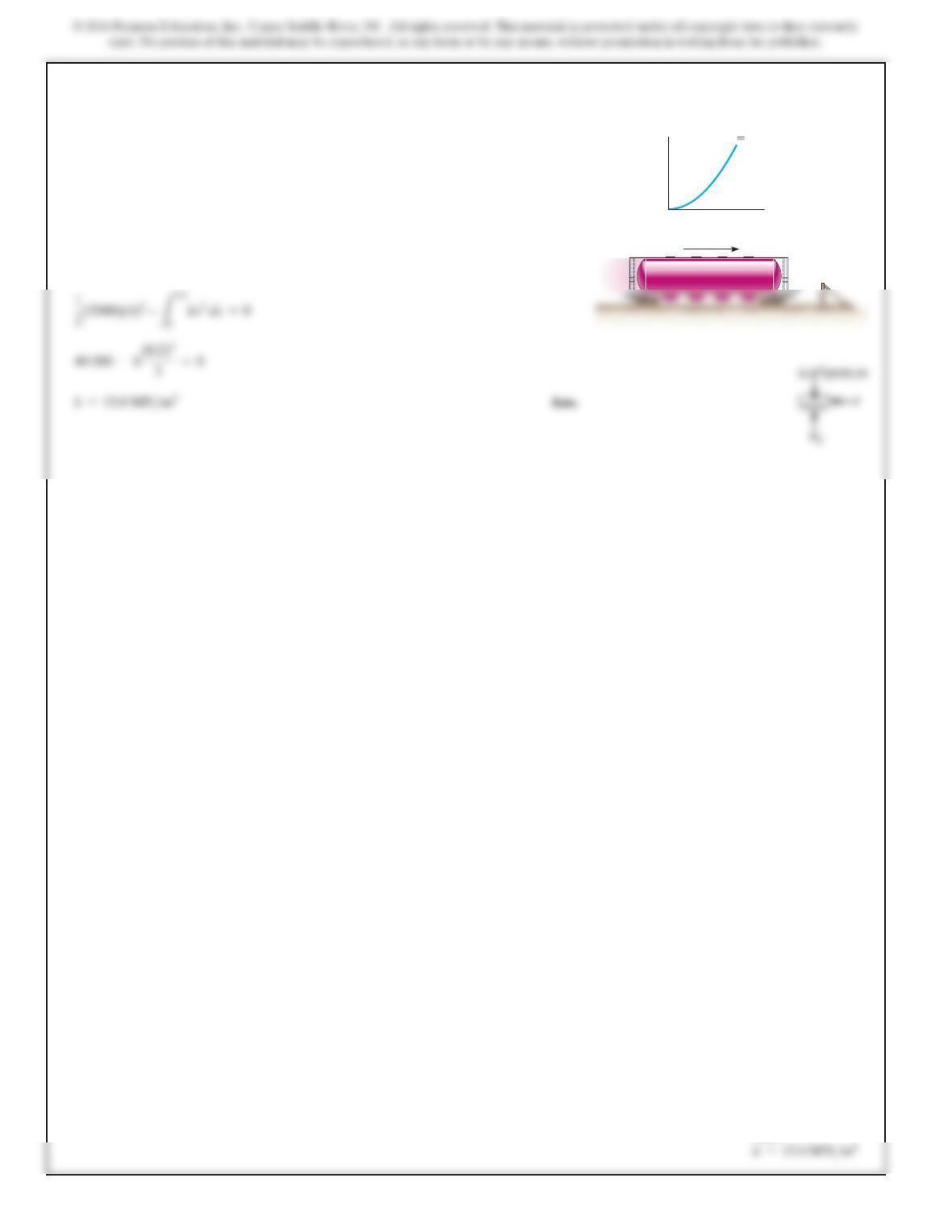
Design considerations for the bumper Bon the 5-Mg train
car require use of a nonlinear spring having the load-
deflection characteristics shown in the graph. Select the
proper value of kso that the maximum deflection of the
spring is limited to 0.2 m when the car, traveling at
strikes the rigid stop. Neglect the mass of the car wheels.
4m>s,
F(N) Fks
2
s(m)
Ans:
389
14–13.
SOLUTION
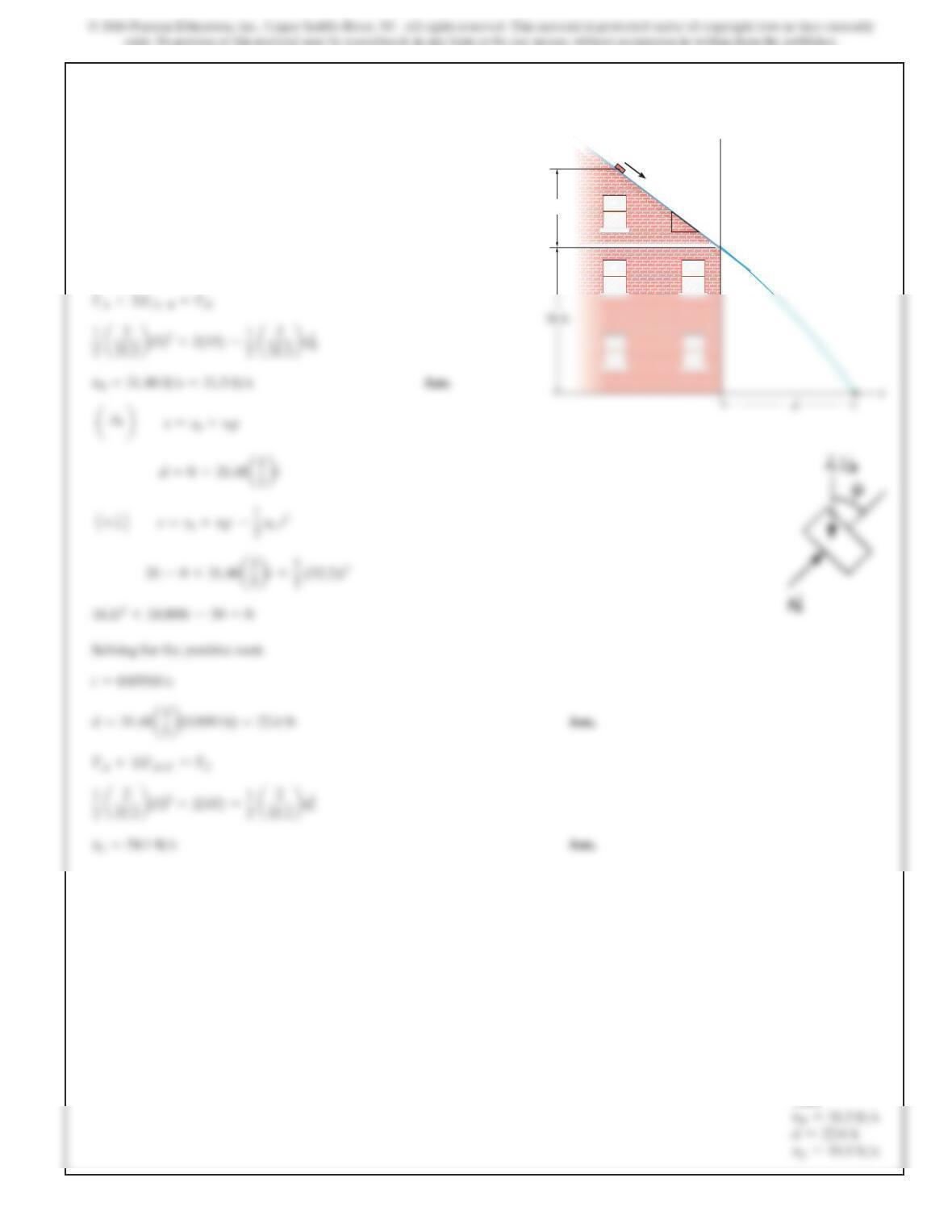
The 2-lb brick slides down a smooth roof, such that when it
is at Ait has a velocity of Determine the speed of the
brick just before it leaves the surface at B, the distance d
from the wall to where it strikes the ground, and the speed
at which it hits the ground.
5ft>s.
A
B
15 ft
5ft/s
5
y
3
4
Ans:
390
14–14.
SOLUTION
B
A
5
4
3
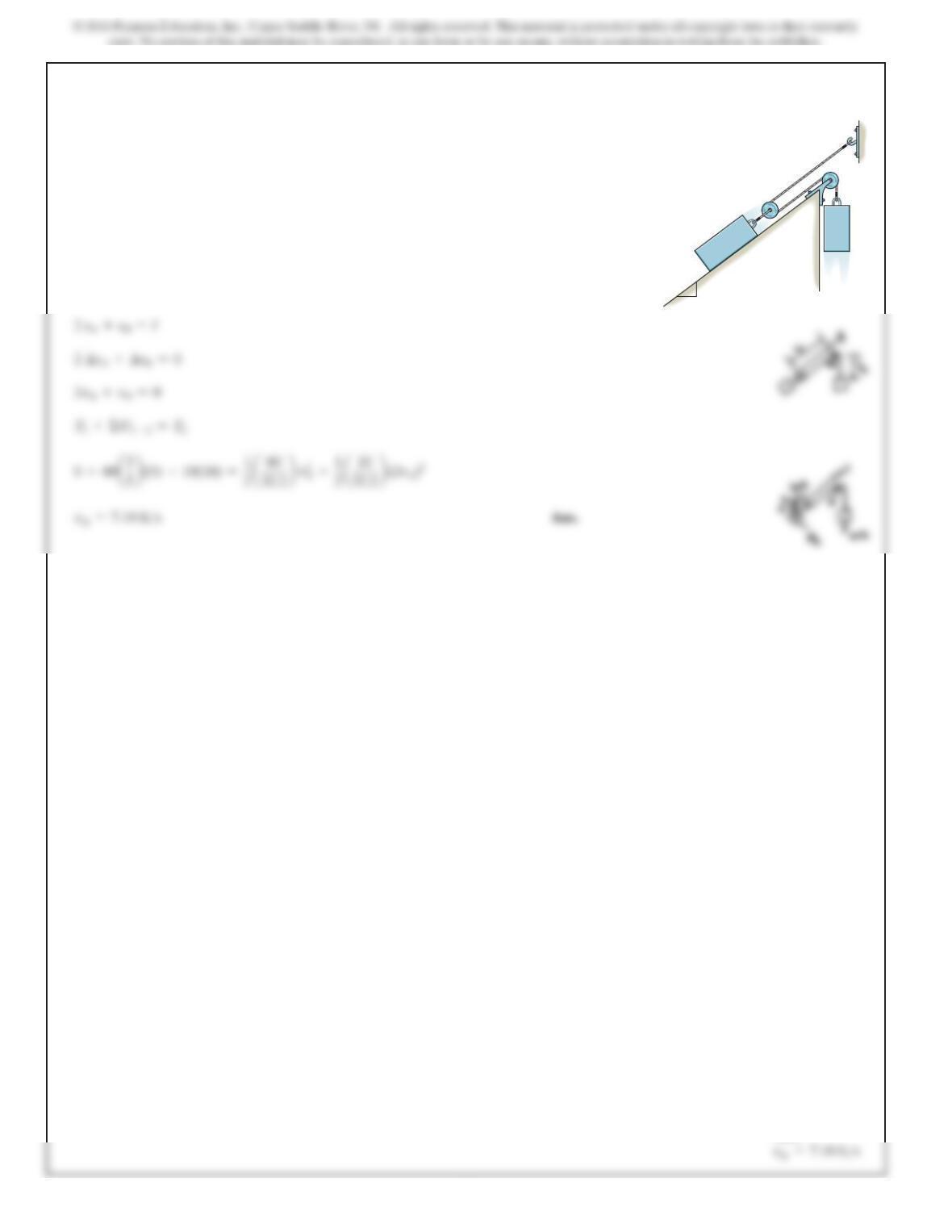
Block A has a weight of 60 lb and block B has a weight of
10 lb. Determine the speed of block A after it moves 5 ft
down the plane, starting from rest. Neglect friction and the
mass of the cord and pulleys.
Ans:
391
14–15.
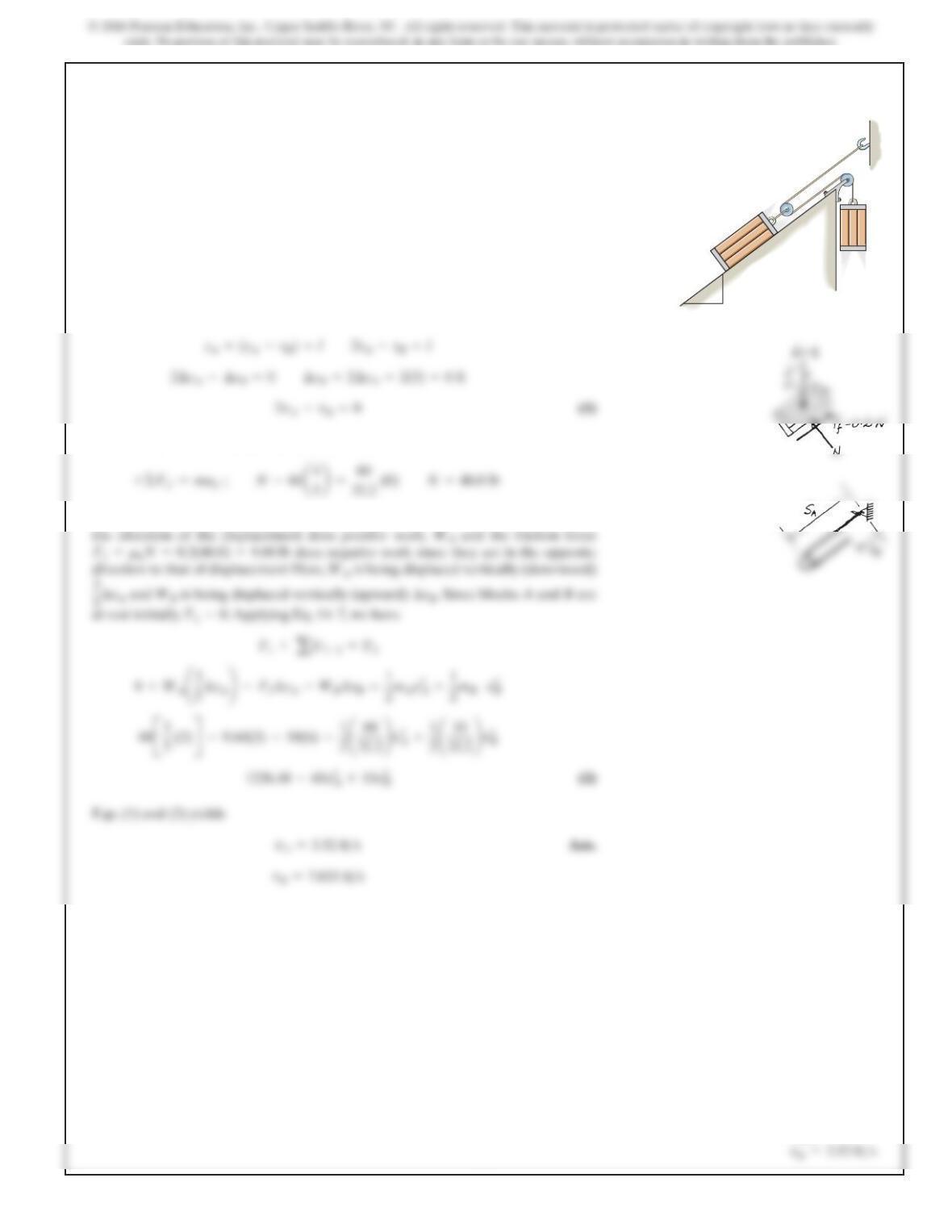
The two blocks Aand Bhave weights and
If the kinetic coefficient of friction between the
incline and block Ais determine the speed of A
after it moves 3 ft down the plane starting from rest. Neglect
the mass of the cord and pulleys.
mk=0.2,
WB=10 lb.
WA
=60 lb
SOLUTION
Kinematics: The speed of the block Aand Bcan be related by using position
coordinate equation.
Equation of Motion: Applying Eq. 13–7, we have
Principle of Work and Energy: By considering the whole system, which acts in
WA
B
A
5
4
3
Ans:
392
*14–16.
SOLUTION
Principle of Work and Energy: By referring to the free-body diagram of the block,
Fig. a, notice that Ndoes no work, while Wdoes positive work since it displaces
downward though a distance of .
Equations of Motion: Here,.By
an=v2
r
=
gra9
4–2 cos ub
r=ga9
4–2 cos ub
h=r–rcos u
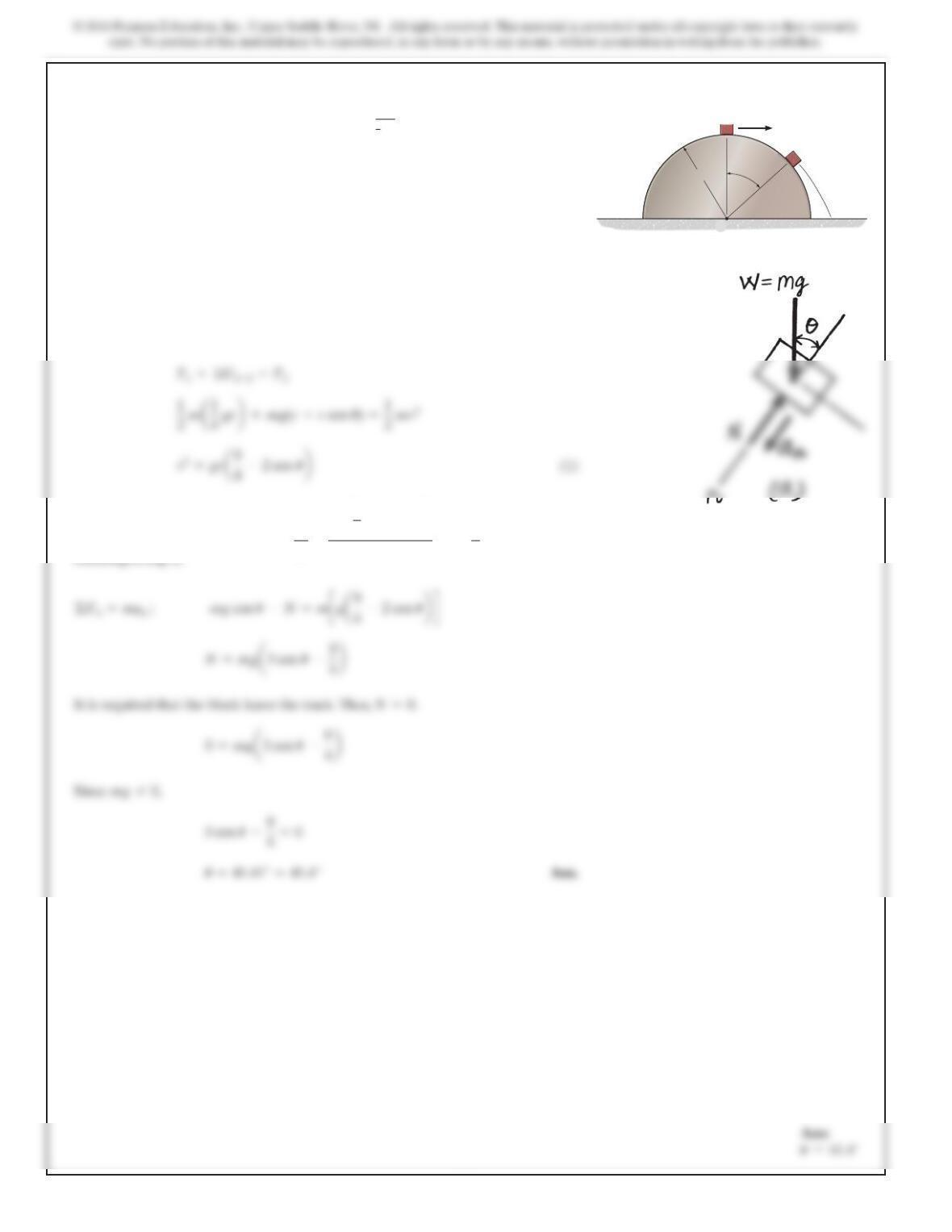
A small box of mass mis given a speed of at the
top of the smooth half cylinder. Determine the angle at
which the box leaves the cylinder.
u
v=2
1
4gr
r
O
A
u
393
14–17.
F 30 lb
A
C
B
x
4.5 ft
3 ft1 ft 2 ft
SOLUTION
Ans:
394
14–18.
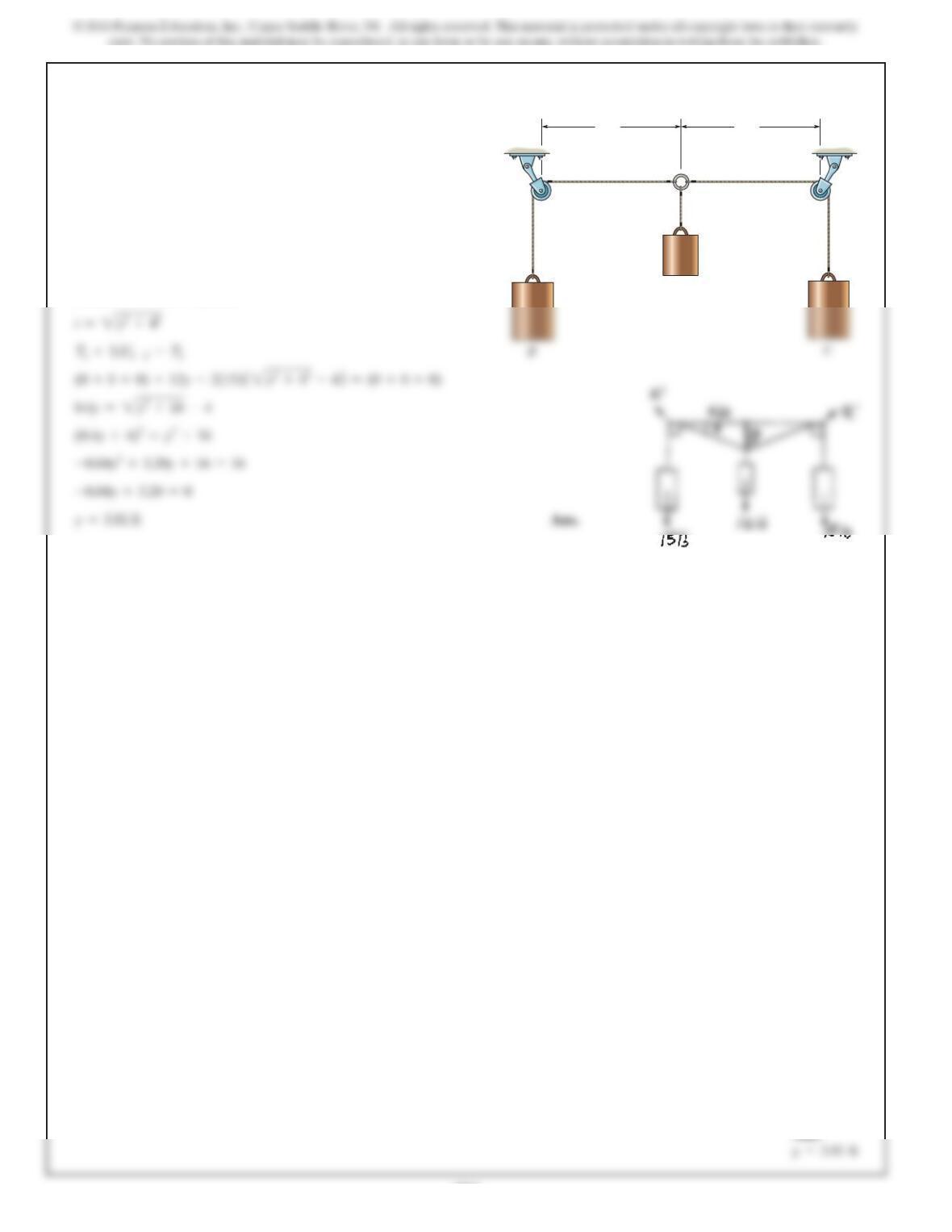
When the 12-lb block A is released from rest it lifts the two
15-lb weights B and C. Determine the maximum distance
A will fall before its motion is momentarily stopped.
Neglect the weight of the cord and the size of the pulleys.
SOLUTION
Consider the entire system:
A
4 ft 4 ft
395
14–19.
A
B
C
300 mm
200 mm
200 mm
200 mm
F 300 N
30
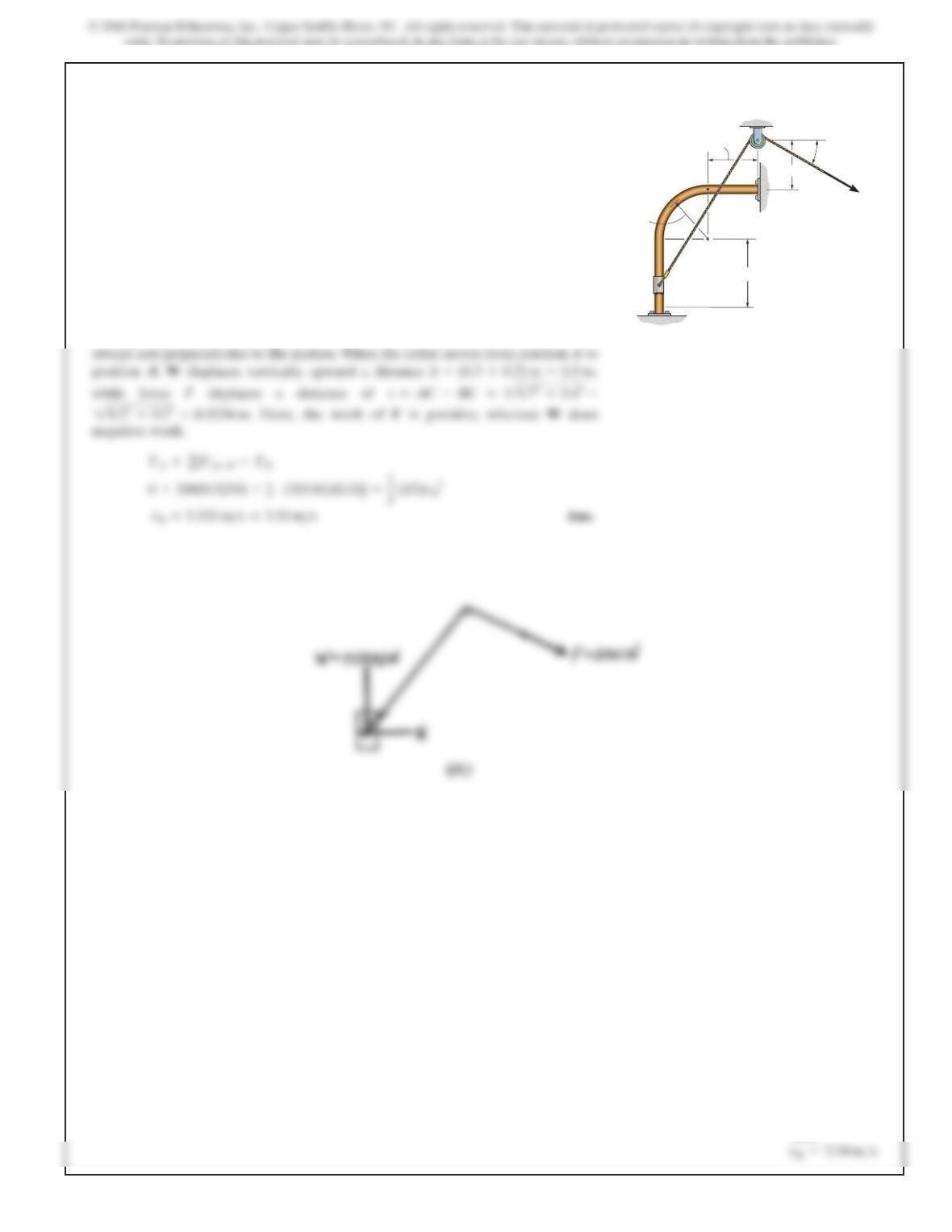
If the cord is subjected to a constant force of
and the 15-kg smooth collar starts from rest at A, determine
the velocity of the collar when it reaches point B.Neglect
the size of the pulley.
F=300 N
SOLUTION
Free-Body Diagram:The free-body diagram of the collar and cord system at an
arbitrary position is shown in Fig. a.
Principle of Work and Energy:Referring to Fig. a, only Ndoes no work since it
Ans:
396
*14–20.
SOLUTION
T1+©U1–2=T2
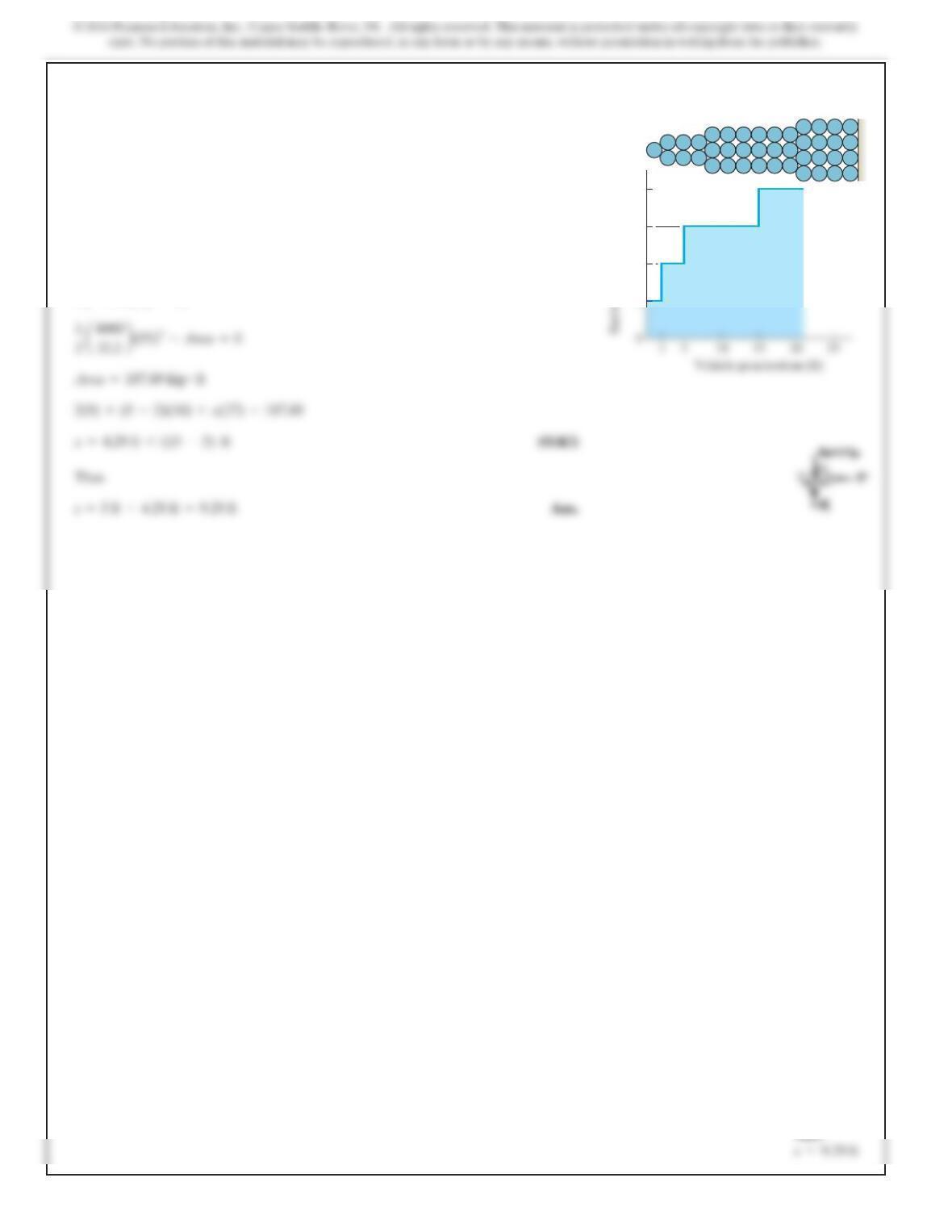
The crash cushion for a highway barrier consists of a nest of
barrels filled with an impact-absorbing material.The barrier
stopping force is measured versus the vehicle penetration
into the barrier. Determine the distance a car having a
weight of 4000 lb will penetrate the barrier if it is originally
traveling at when it strikes the first barrel.55 ft>s
36
27
18
9