361
13–117.
SOLUTION
From Eq. 13–19,
For and ,
From Eq. 13–31,
u=180°u=0°
Prove Kep
l
er’s t
hi
r
d
l
aw of mot
i
on. Hint: Use Eqs. 13–19,
13–28, 13–29, and 13–31.
362
13–118.
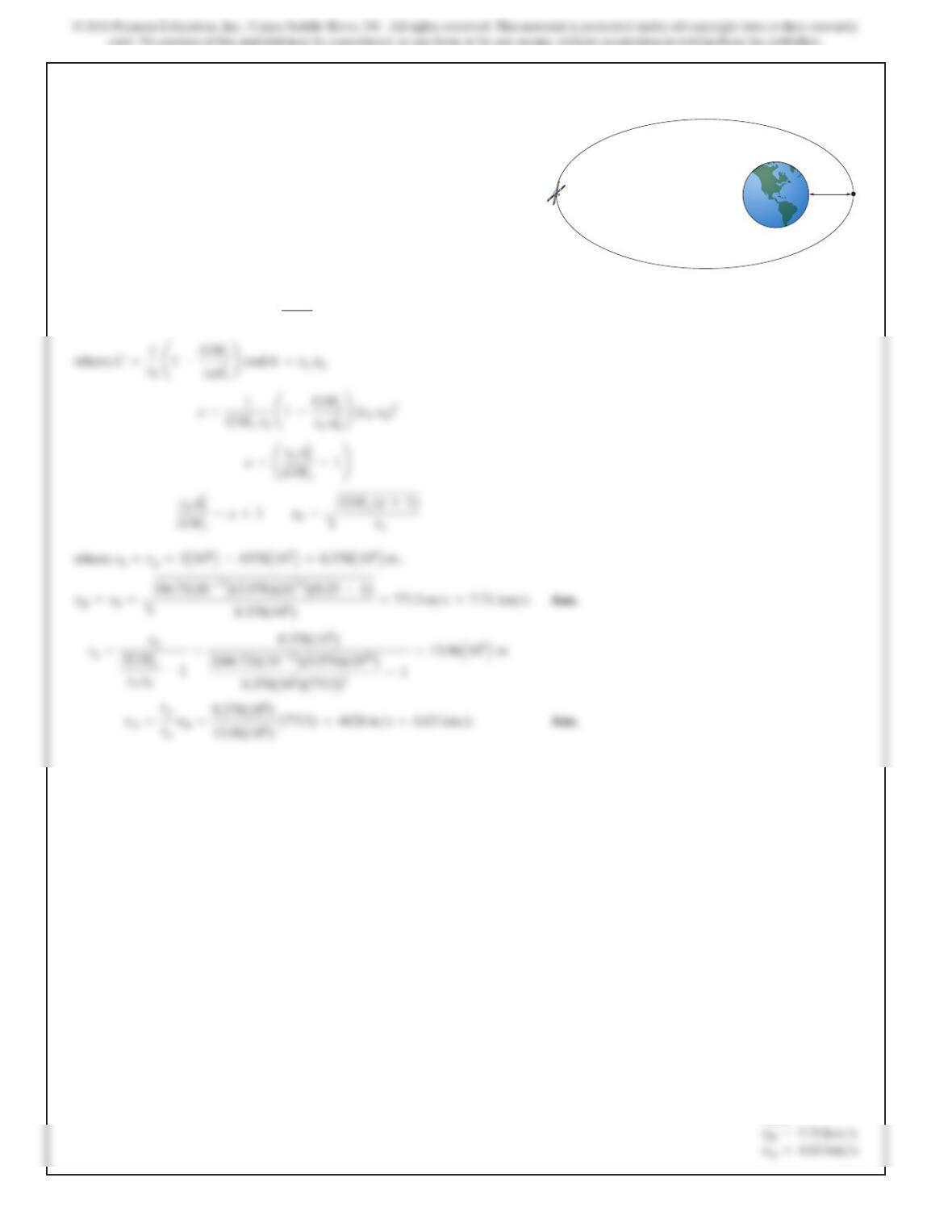
The satellite is moving in an elliptical orbit with an eccentricity
.Determine its speed when it is at its maximum
distance Aand minimum distance Bfrom the earth.
e=0.25
SOLUTION
e=Ch2
GMe
B
A2Mm
Ans:
363
13–119.
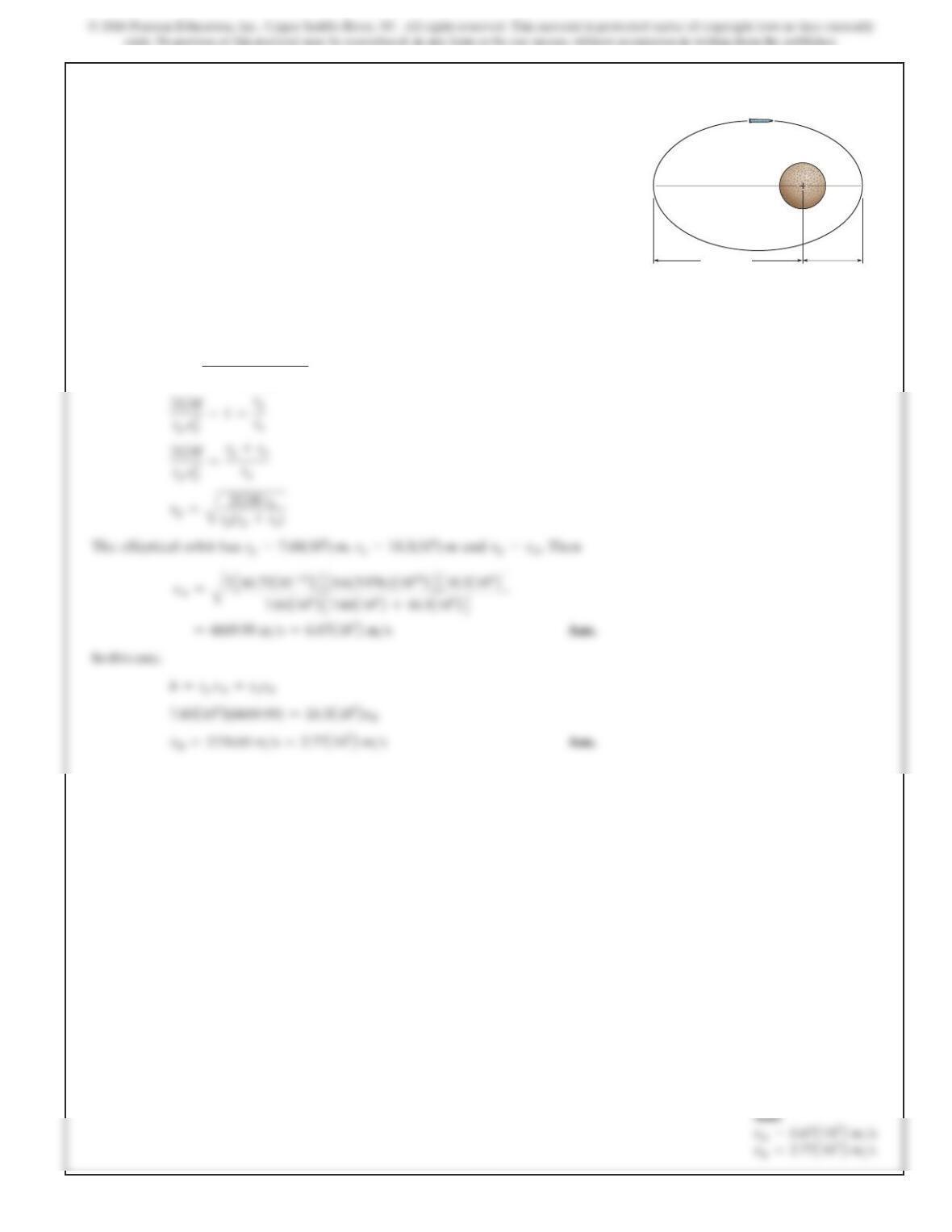
The rocket is traveling in free flight along the elliptical orbit.
The planet has no atmosphere, and its mass is 0.60 times that
of the earth. If the rocket has the orbit shown, determine the
rocket’s speed when it is at A and at B.
SOLUTION
Applying Eq. 13–27,
ra=
r
p
(
2GM
>
rpv2
p
)
–1
18.3 Mm 7.60 Mm
BA
O
364
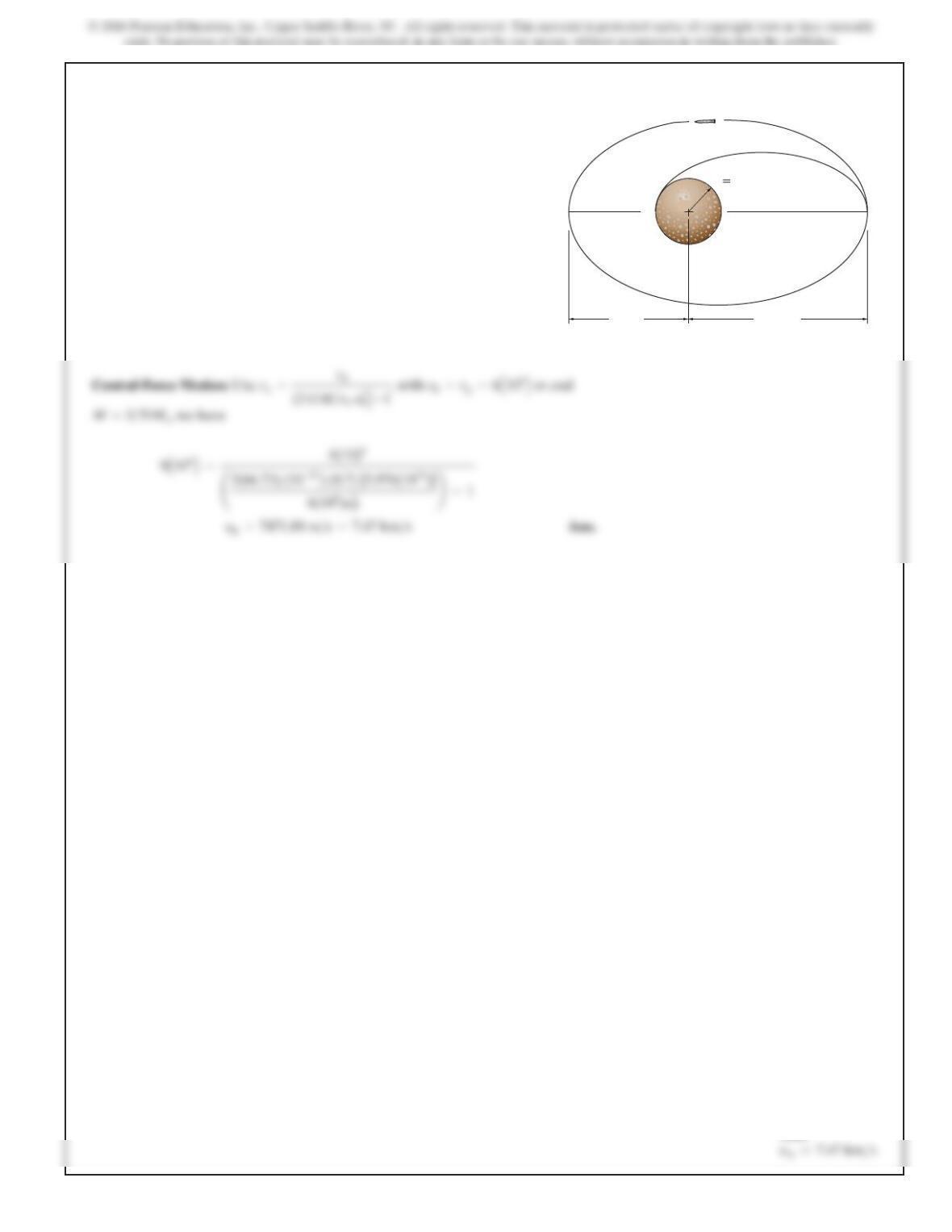
*13–120.
D
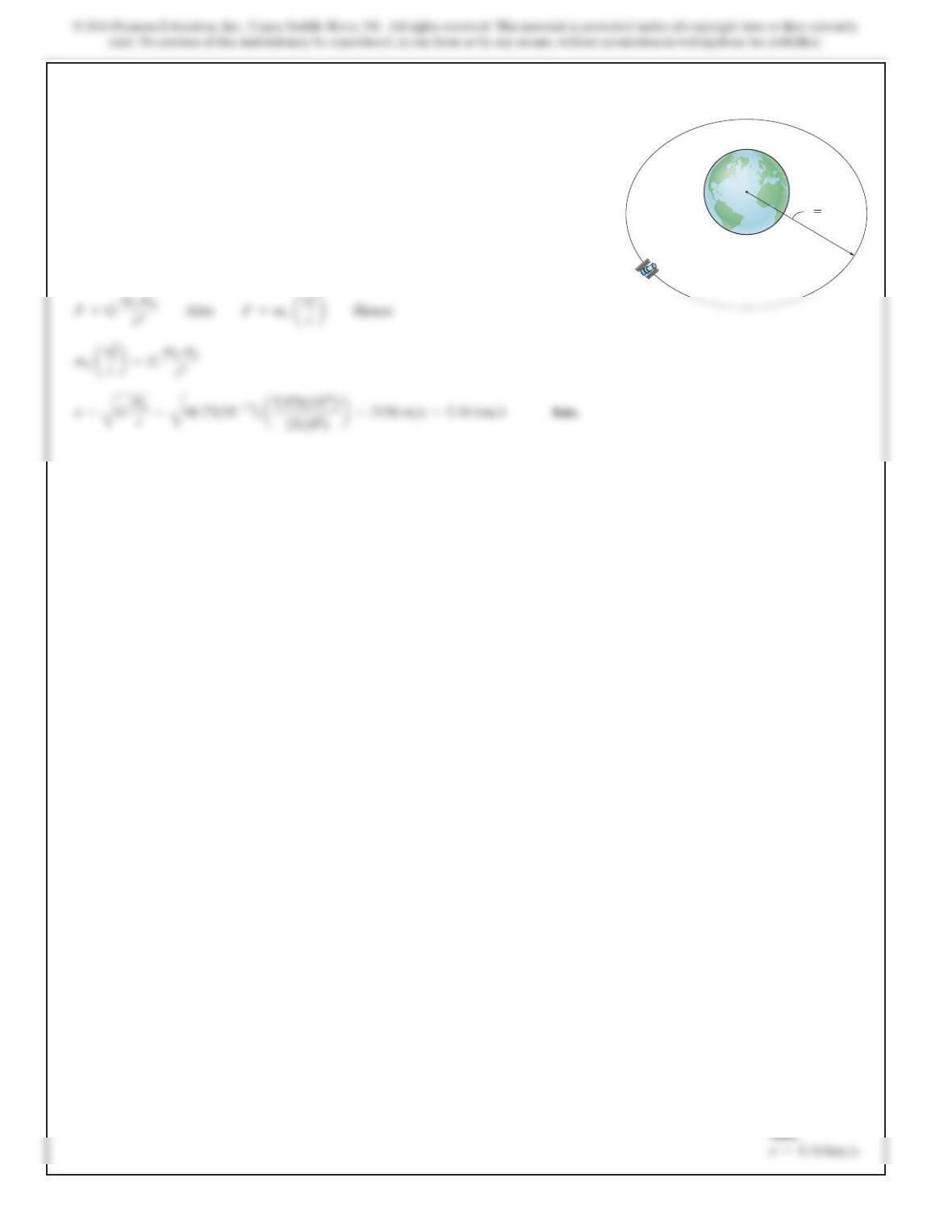
etermine the constant speed of satellite Sso that it
circles the earth with an orbit of radius . Hint:
Use Eq. 13–1.
r=15 Mm
SOLUTION
S
r15 Mm
365
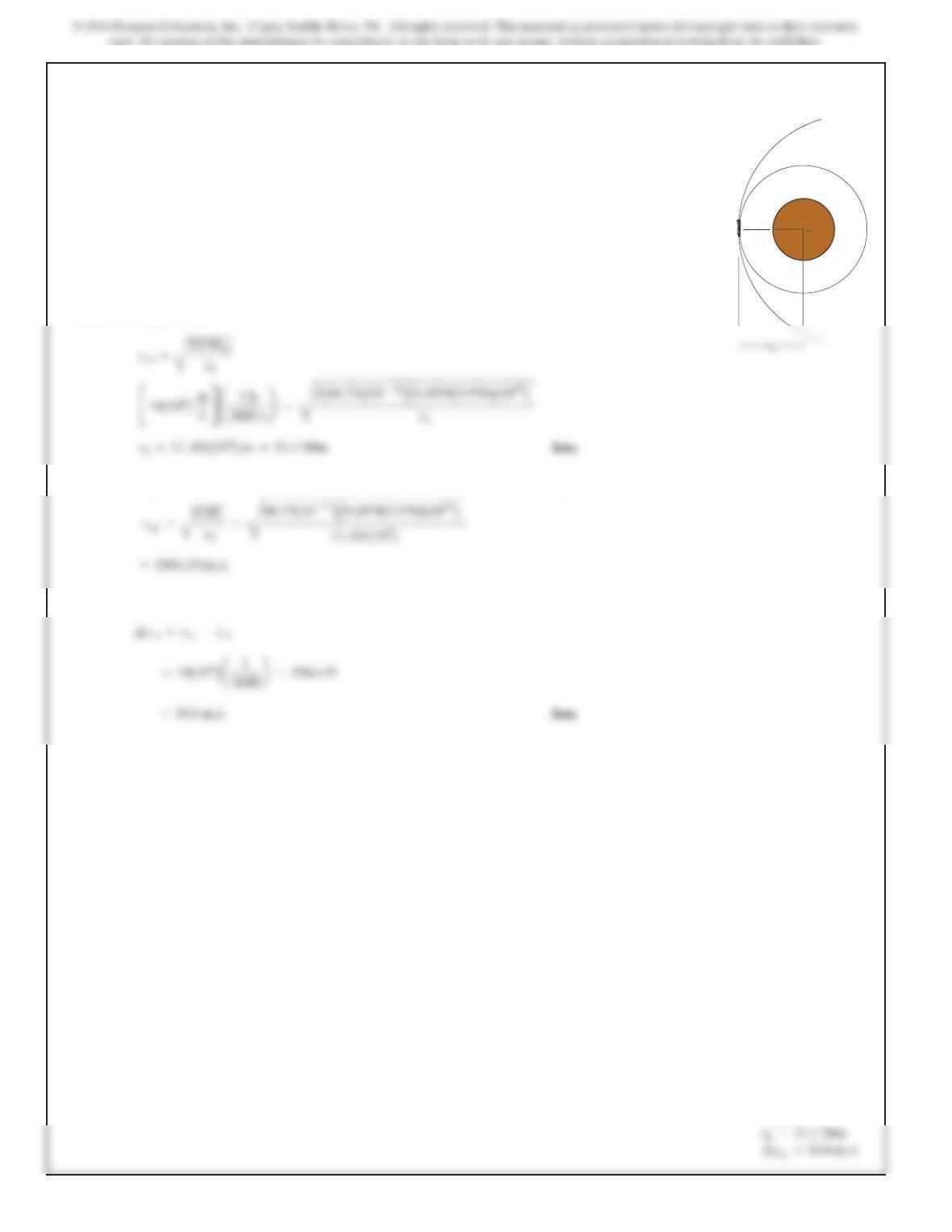
13–121.
The rocket is in free flight along an elliptical trajectory .
The planet has no atmosphere,and its mass is 0.70 times that
of the earth.If the rocket has an apoapsis and periapsis as
shown in the figure,determine the speed of the rocket when
it is at point A.
A
¿
A
SOLUTION
6M
m9
Mm
BA A¿
r3Mm
O
Ans:
366
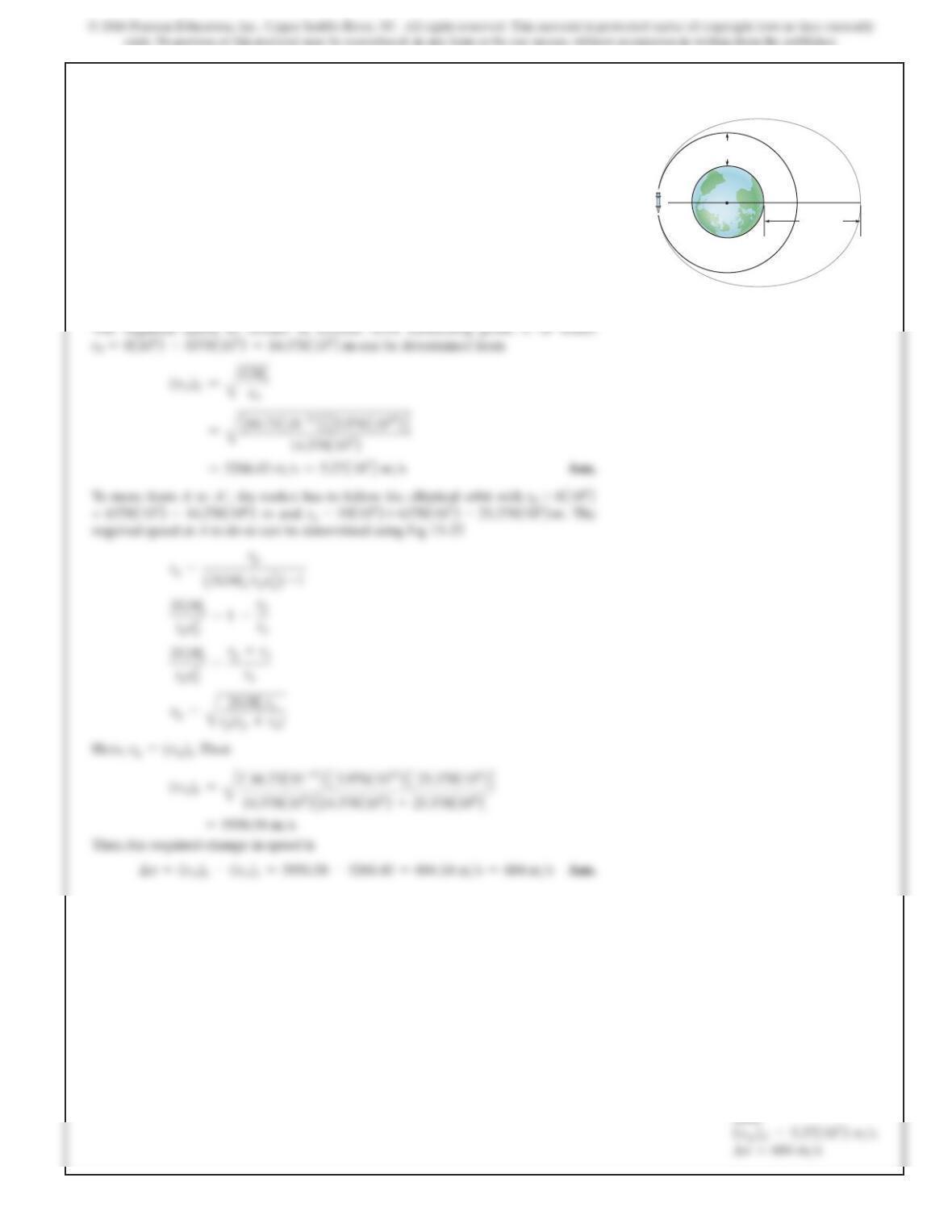
13–122.
The Viking Explorer approaches the planet Mars on a
parabolic trajectory as shown. When it reaches point Aits
velocity is 10 Mm h. Determine and the required velocity
at Aso that it can then maintain a circular orbit as shown.
The mass of Mars is 0.1074 times the mass of the earth.
r0
>
SOLUTION
When the Viking explorer approaches point A on a parabolic trajectory, its velocity
at point Ais given by
When the explorer travels along a circular orbit of , its velocity is
Thus, the required sudden decrease in the explorer’s velocity is
r0=11.101(106)m
A
Ans:
367
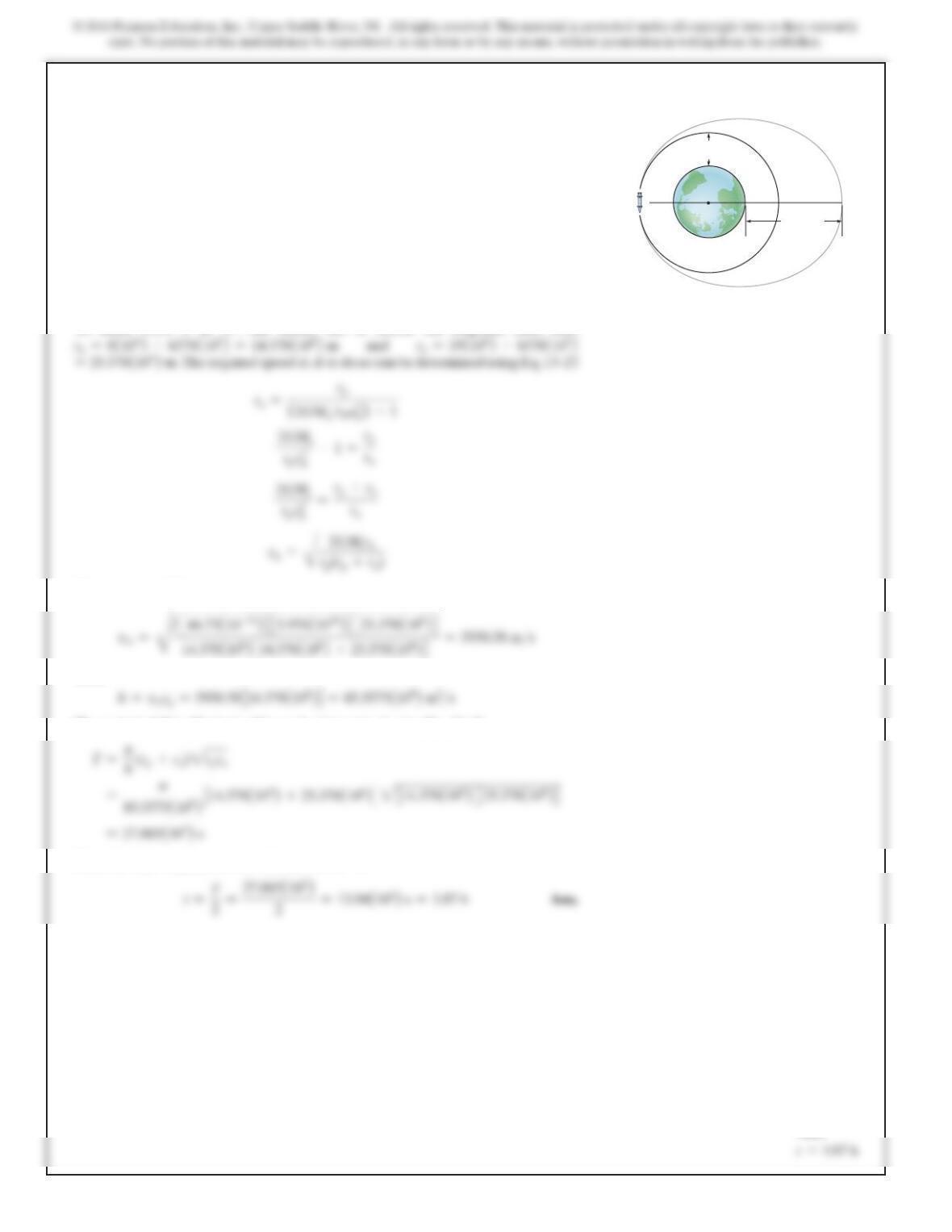
13–123.
The rocket is initially in free-flight circular orbit around the
earth. Determine the speed of the rocket at A. What change
in the speed at A is required so that it can move in an
elliptical orbit to reach point
A′
?
A¿
A
O
8 Mm
19 Mm
SOLUTION
Ans:
368
SOLUTION
To move from A to
A′
, the rocket has to follow the elliptical orbit with
Here,
v
p
=v
A. Then
Then
The period of this elliptical orbit can be determined using Eq. 13–31.
Thus, the time required to travel from A to
A′
is
*13–124.
The rocket is in free-flight circular orbit around the earth.
Determine the time needed for the rocket to travel from the
inner orbit at A to the outer orbit at
A′
.
A
¿
A
O
8 Mm
19 Mm
Ans:
369
13–125.
SOLUTION
(a)
(b)
e=C2h
GMe
=1
e=C2h
GMe
=0 or C=0
A satellite is launched with an initial velocity
parallel to the surface of the earth.
Determine the required altitude (or range of altitudes)
above the earth’s surface for launching if the free-flight
trajectory is to be (a) circular, (b) parabolic, (c) elliptical,
and (d) hyperbolic. Take
the earth’s radius and
1mi=5280 ft.
re=3960 mi,Me=409110212slug,
G=34.4110–921lb #ft22>slug2,
v0=2500 mi>h
Ans:
370
SOLUTION
Here rp=20
(
10
6
)
m and r
a=
30
(
10
6
)
m. Applying Eq. 13–27,
Here
v
p
=v
A. Then
For the same orbit h is constant. Thus,
13–126.
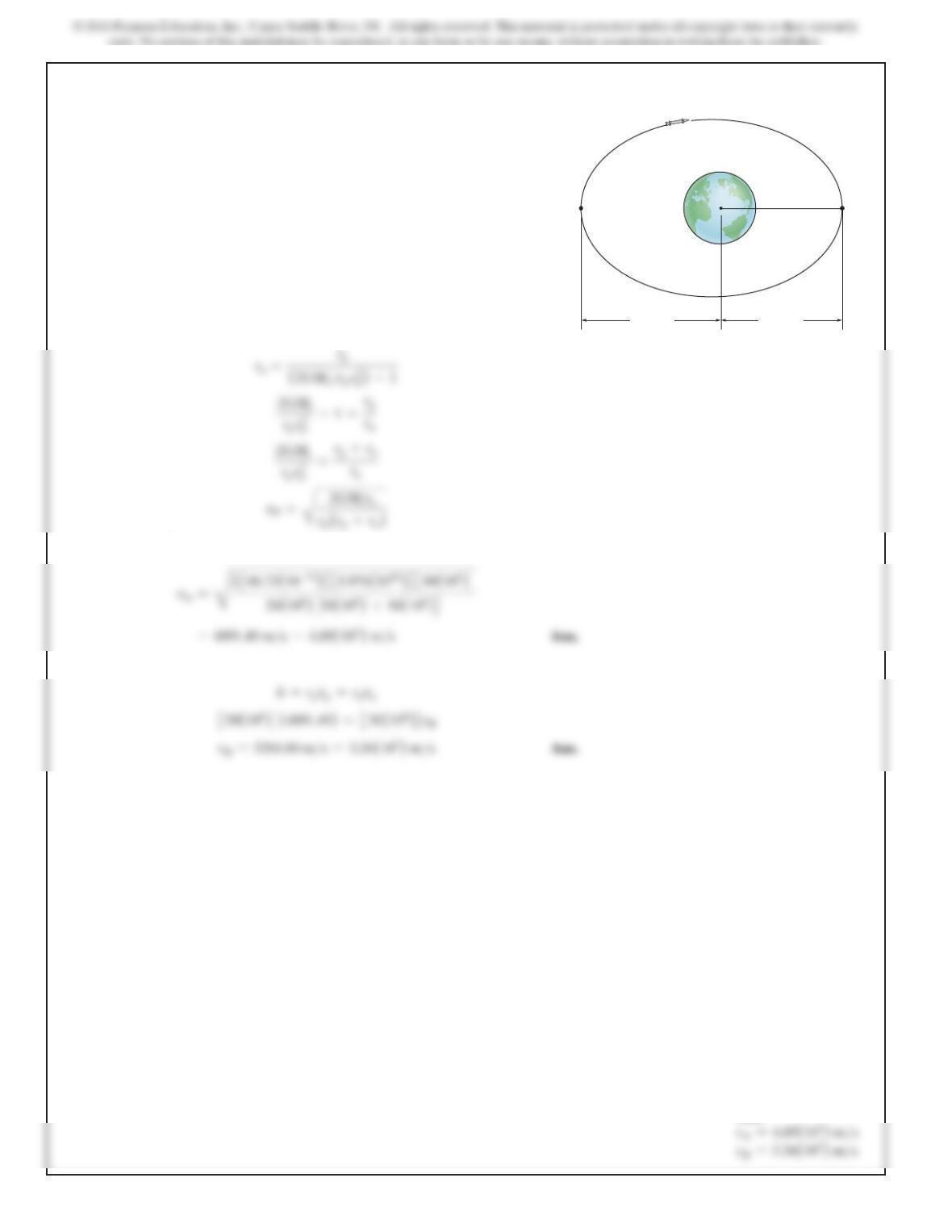
The rocket is traveling around the earth in free flight along
the elliptical orbit. If the rocket has the orbit shown,
determine the speed of the rocket when it is at A and at B.
20 Mm30 Mm
B
A
Ans:
371
13–127.
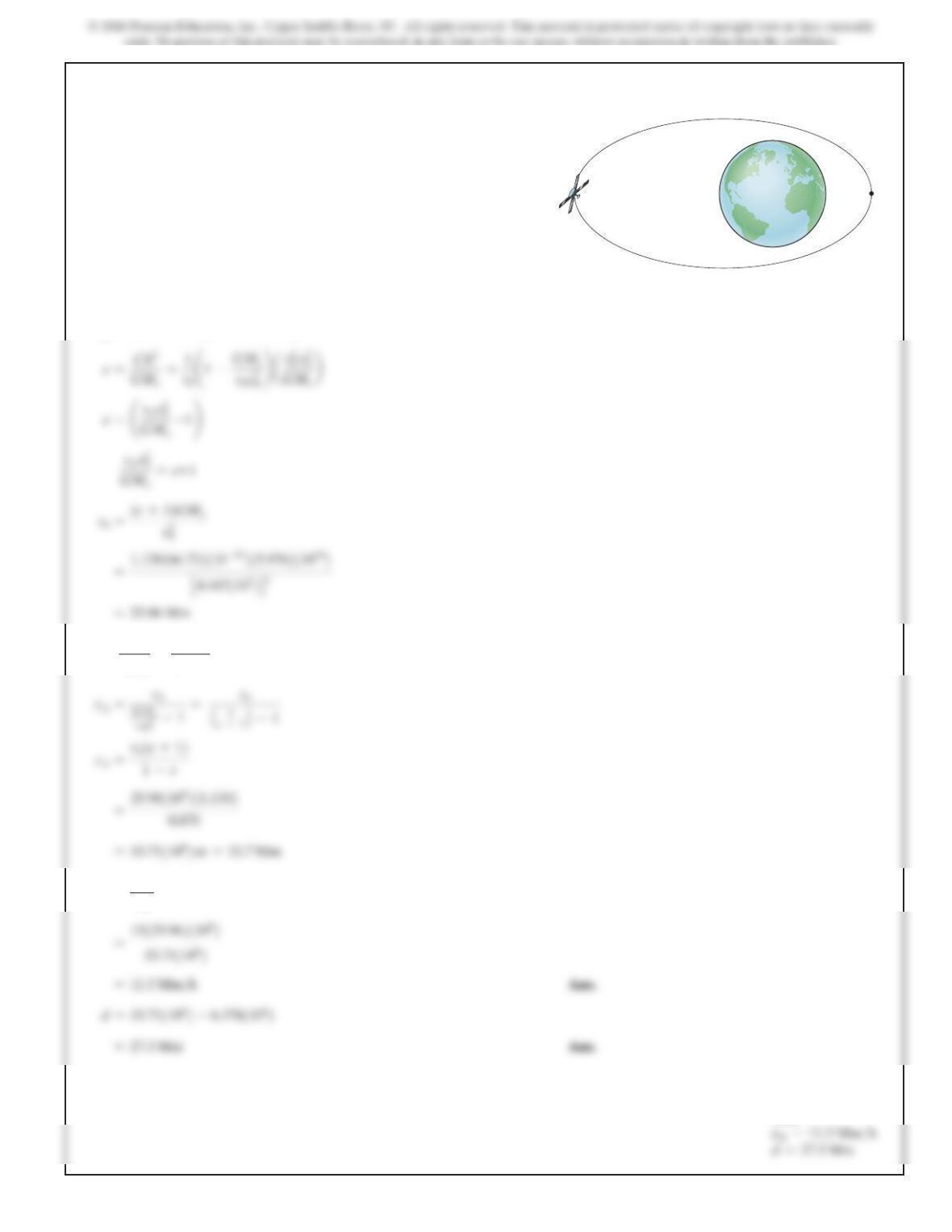
An elliptical path of a satellite has an eccentricity
If it has a speed of when it is at perigee,
P, determine its speed when it arrives at apogee, A.Also,
how far is it from the earth’s surface when it is at A?
15 Mm>he=0.130.
SOLUTION
nA=
n0r0
rA
GMe
r0 n2
0
=1
e+1
np=n0=15 Mm>h=4.167 km>s
e=0.130
P
A
Ans:
372
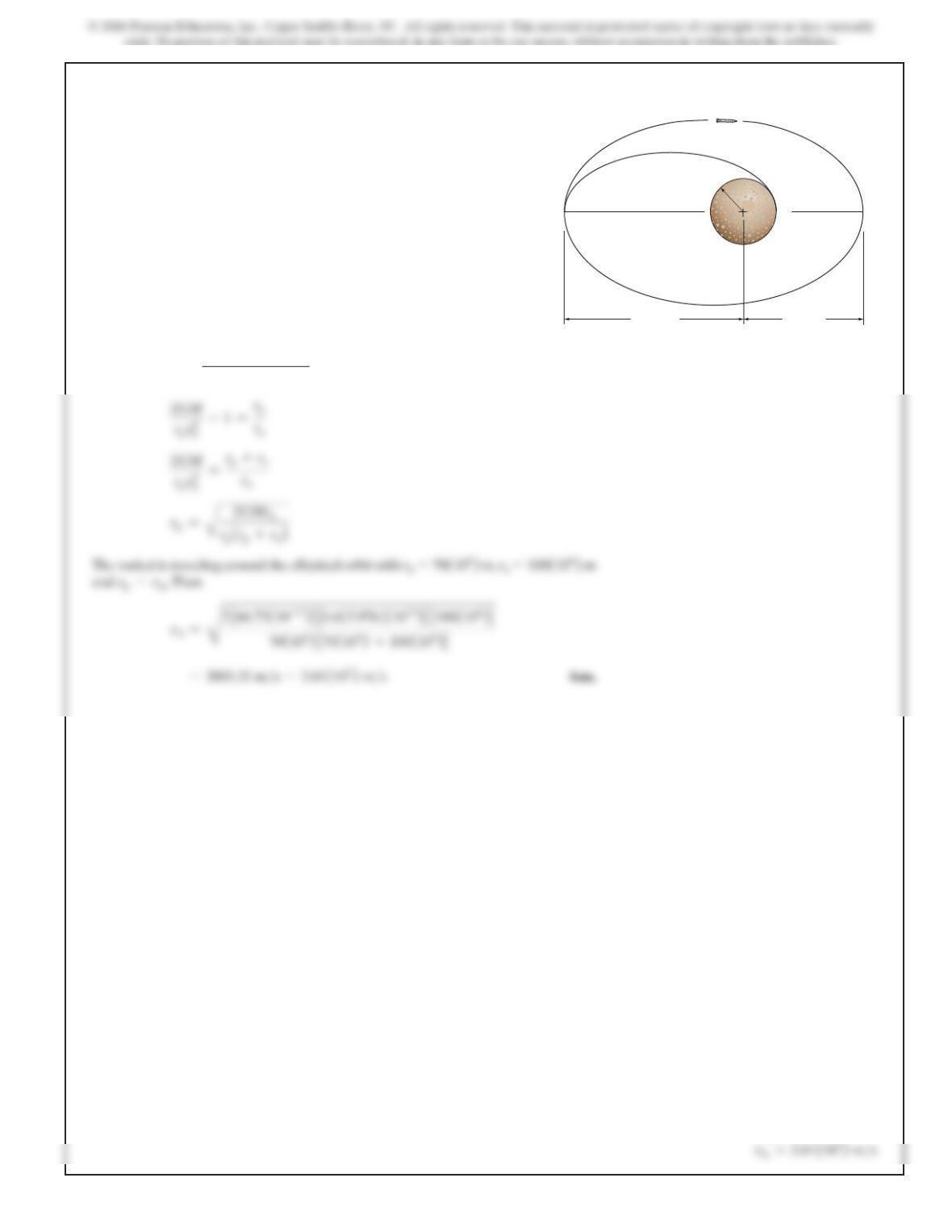
*13–128.
SOLUTION
a)
b)
c)
Circular orbit:
Elliptic orbit:
Mn=0.81615.9761102422 =4.876110242
A rocket is in free-flight elliptical orbit around the planet
Venus. Knowing that the periapsis and apoapsis of the orbit
are 8 Mm and 26 Mm, respectively, determine (a) the speed
of the rocket at point (b) the required speed it must
attain at Ajust after braking so that it undergoes an 8-Mm
free-flight circular orbit around Venus, and (c) the periods
of both the circular and elliptical orbits.The mass of Venus
is 0.816 times the mass of the earth.
A¿,
A¿A
O
8 Mm
18 Mm
Ans:
373
SOLUTION
Applying Eq. 13–27,
ra=
r
p
(
2GM
>
rpvp
2
)
–1
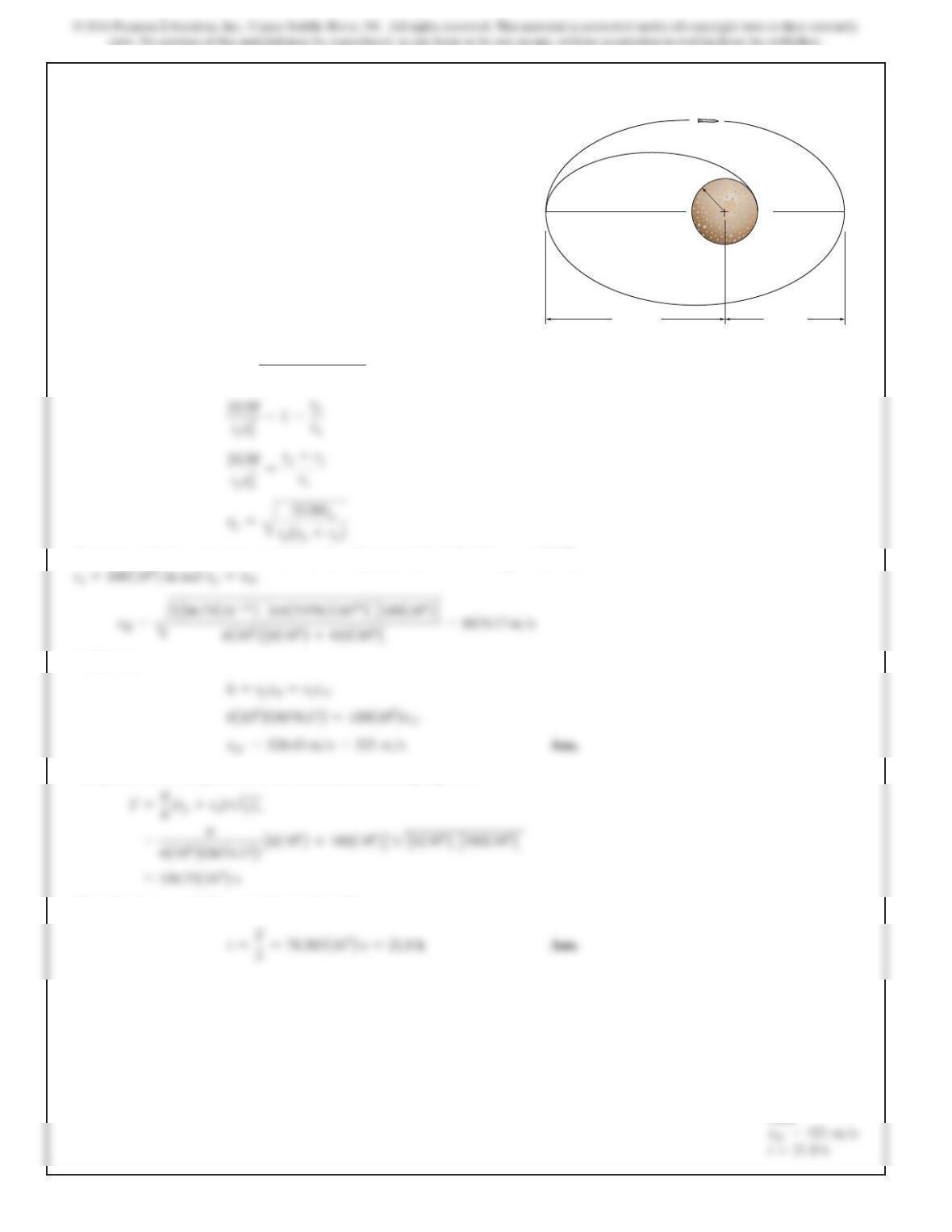
13–129.
The rocket is traveling in a free flight along an elliptical
trajectory
A′A.
The planet has no atmosphere, and its mass
is 0.60 times that of the earth. If the rocket has the orbit
shown, determine the rocket’s velocity when it is at point A.
100 Mm 70 Mm
BAA¿
r 6 Mm
O
Ans:
374
SOLUTION
Applying Eq. 13–27,
ra=
r
p
(
2GM
>
rpvp
2
)
–1
To land on B, the rocket has to follow the elliptical orbit
A′B
with rp=6
(
10
6
)
,
In this case
The period of the elliptical orbit can be determined using Eq. 13–31.
Thus, the time required to travel from A′ to B is
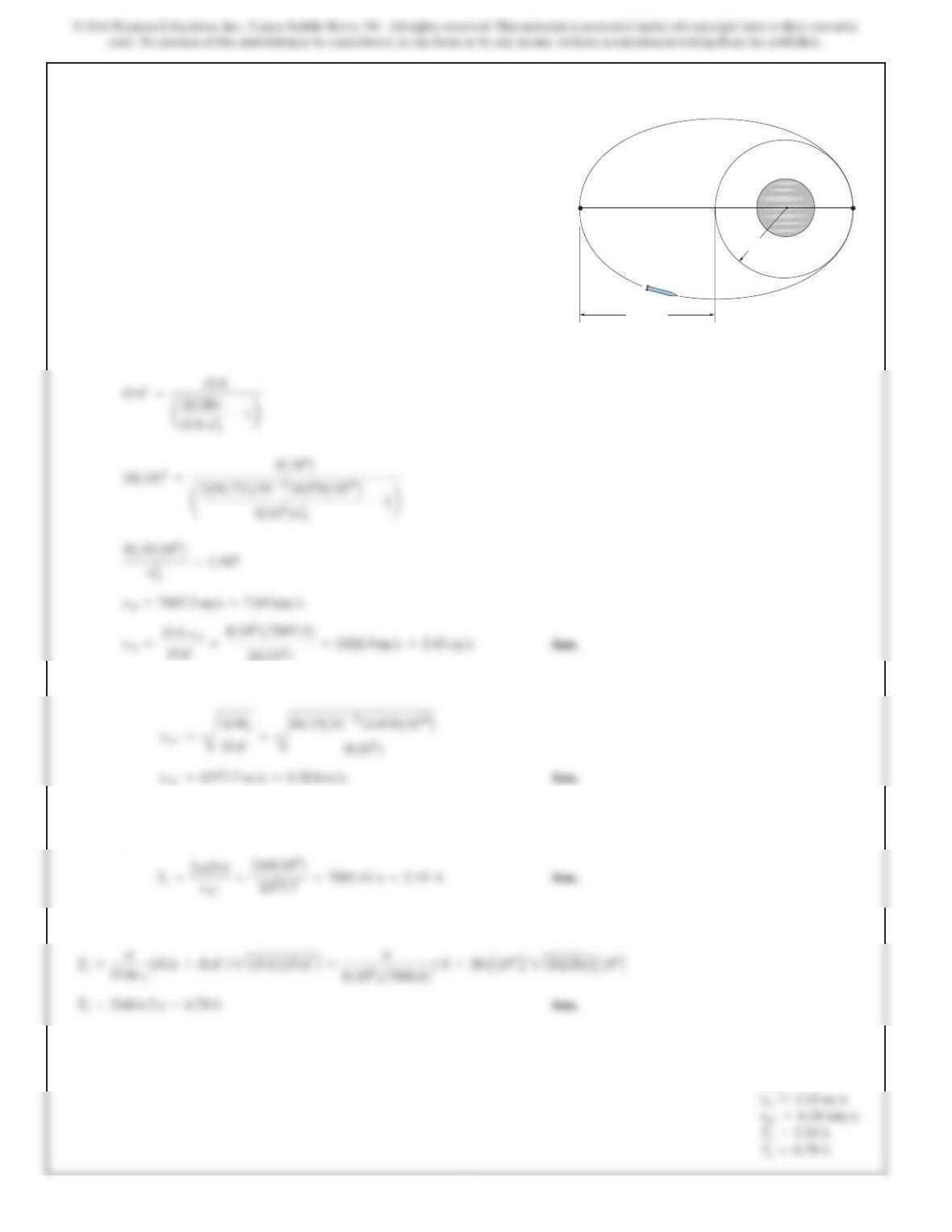
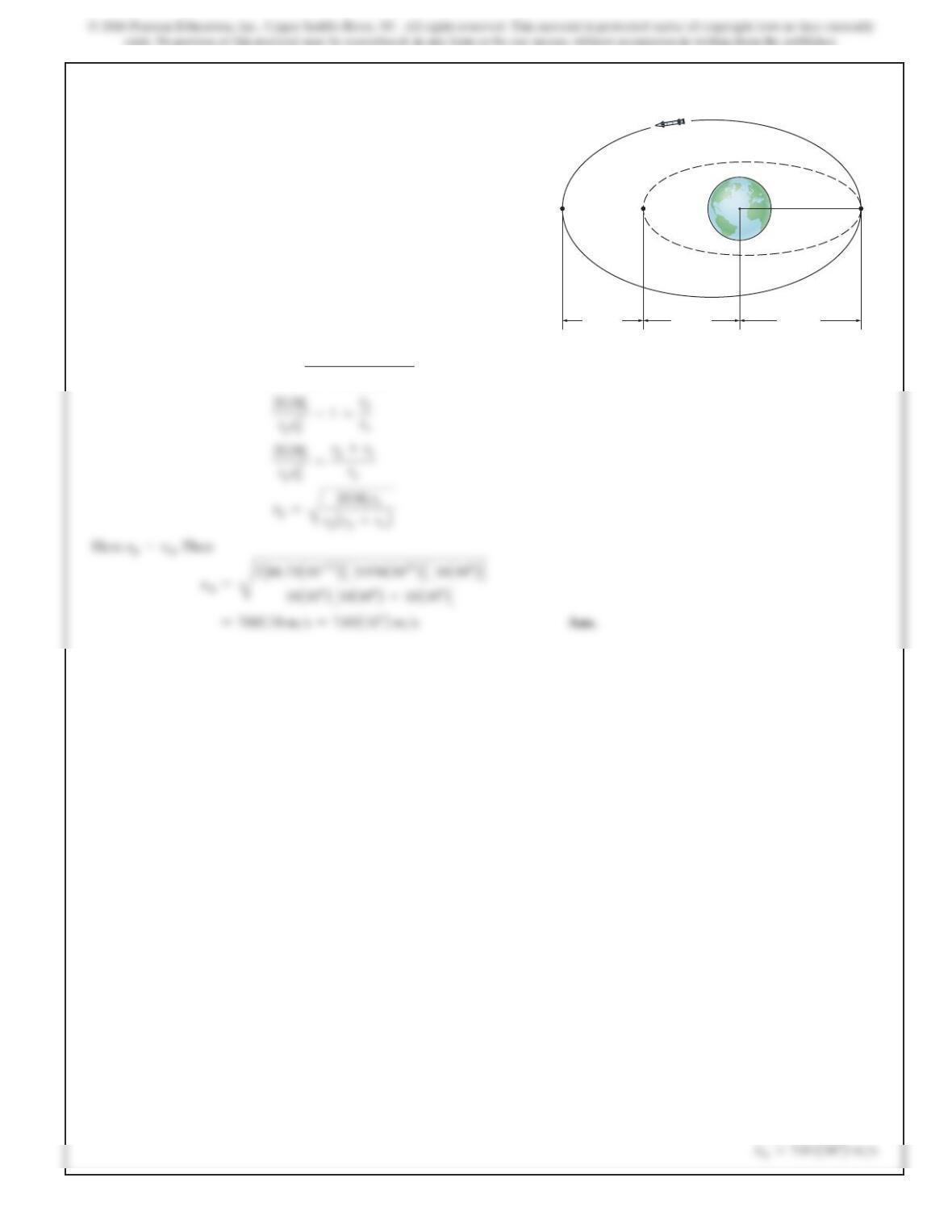
13–130.
If the rocket is to land on the surface of the planet,
determine the required free-flight speed it must have at
A′
so that the landing occurs at B. How long does it take for
the rocket to land, going from
A′
to B? The planet has no
atmosphere, and its mass is 0.6 times that of the earth.
100 Mm 70 Mm
BAA¿
r 6 Mm
O
Ans:
375
SOLUTION
For orbit AC, rp=10
(
10
6
)
m and r
a=
16
(
10
6
)
m. Applying Eq. 13–27
ra=
r
p
(
2GMe
>
rpvp
2
)
–1
13–131.
The rocket is traveling around the earth in free flight along
an elliptical orbit AC. If the rocket has the orbit shown,
determine the rocket’s velocity when it is at point A.
10 Mm8 Mm
8 Mm
A
CB
Ans:
376
SOLUTION
Applying Eq. 13–27,
For orbit AC, rp=10
(
10
6
)
m, r
a=
16
(
10
6
)
m and
v
p
=(v
A
)
AC. Then
For orbit AB, rp
=
8
(
10
6
)
m, r
a=
10
(
10
6
)
m and
v
p
=v
B. Then
Since h is constant at any position of the orbit,
h=r
p
v
p
=r
a
v
a
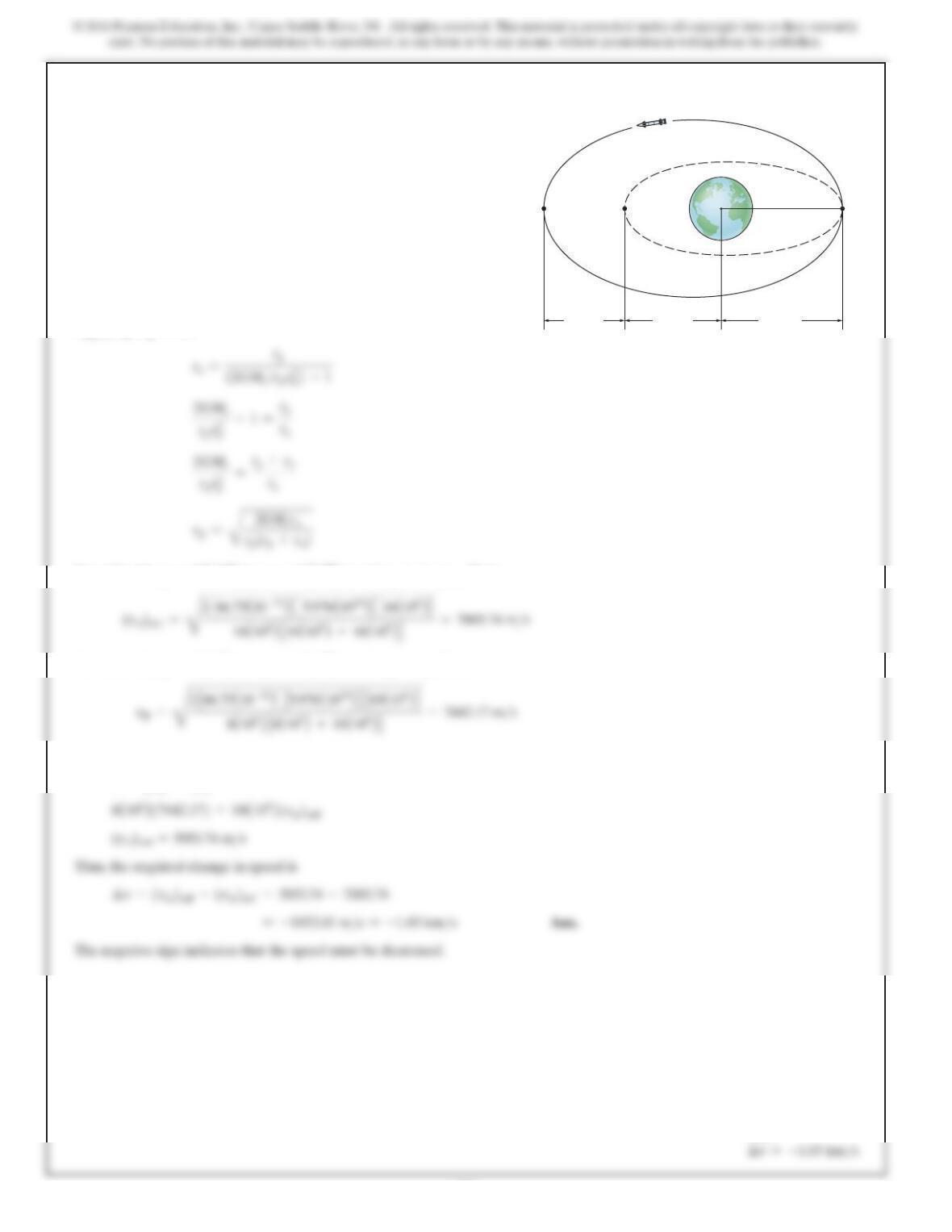
*13–132.
The rocket is traveling around the earth in free flight along
the elliptical orbit AC. Determine its change in speed when
it reaches A so that it travels along the elliptical orbit AB.
10 Mm8 Mm
8 Mm
A
CB
Ans: