325
Ans:
SOLUTION
Equation of Motion. The FBD of the bob at an arbitrary position
u
is shown in
Fig. a. Here, it is required that
T=0.
Kinematics. The velocity of the bob at an arbitrary position
u
can be determined by
Equating Eqs. (1) and (2)
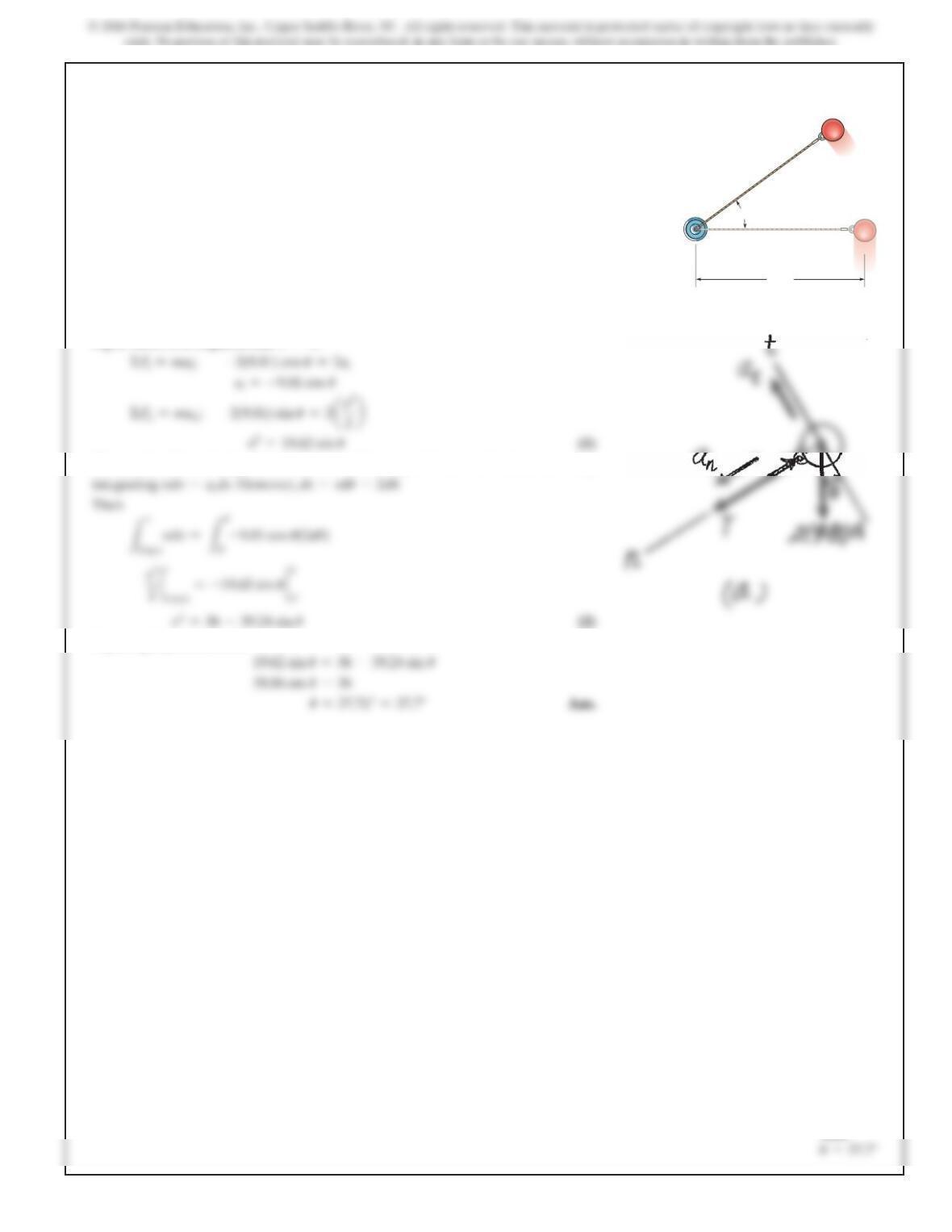
13–81.
The 2–kg pendulum bob moves in the vertical plane
with a velocity of 6 m
>
s when
u=0°.
Determine the angle
u
where the tension in the cord becomes zero.
2 m
fi
326
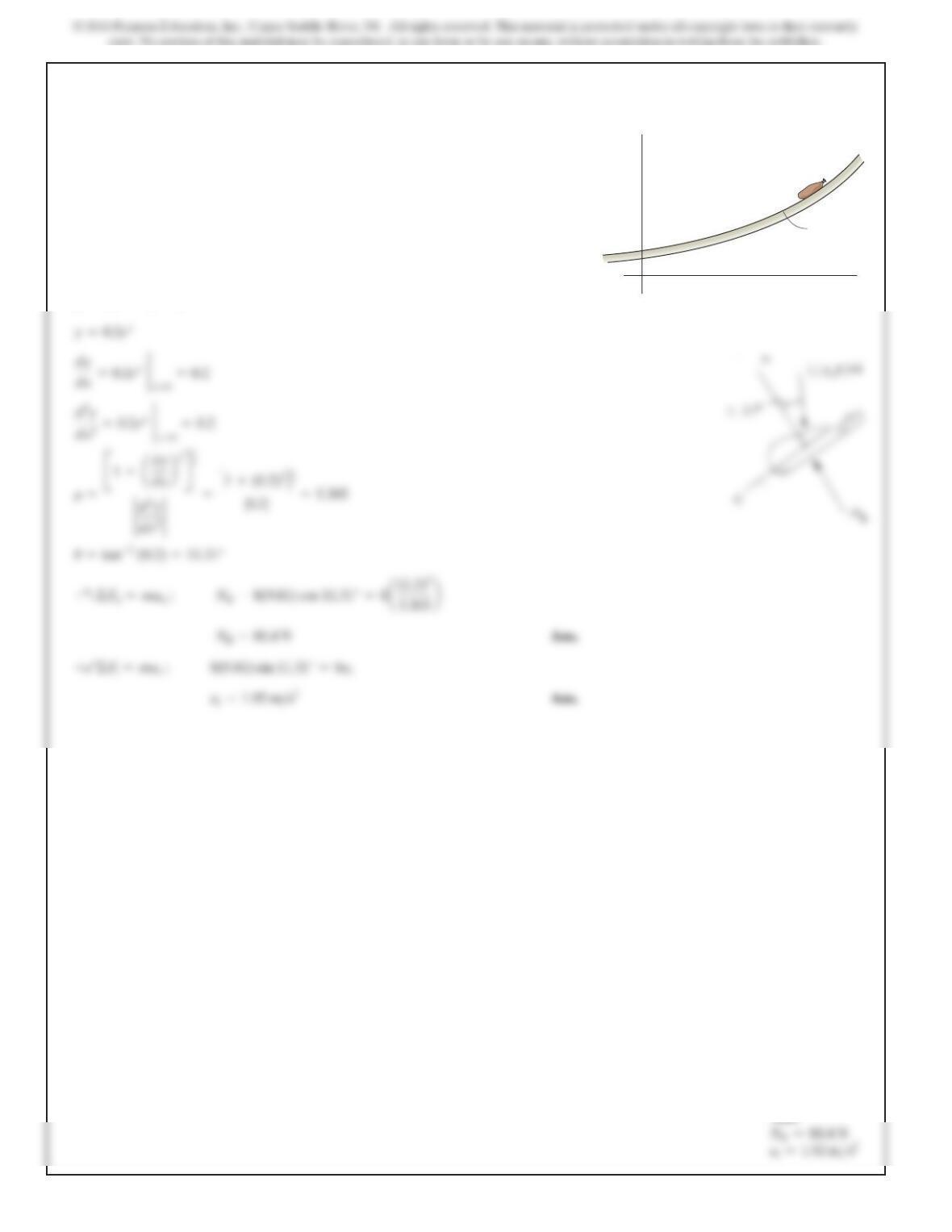
13–82.
SOLUTION
y=0.2 x=0
The 8-kg sack slides down the smooth ramp. If it has a speed
of when , determine the normal reaction
the ramp exerts on the sack and the rate of increase in the
speed of the sack at this instant.
y=0.2 m1.5 m>s
y
x
y= 0.2e
x
Ans:
327
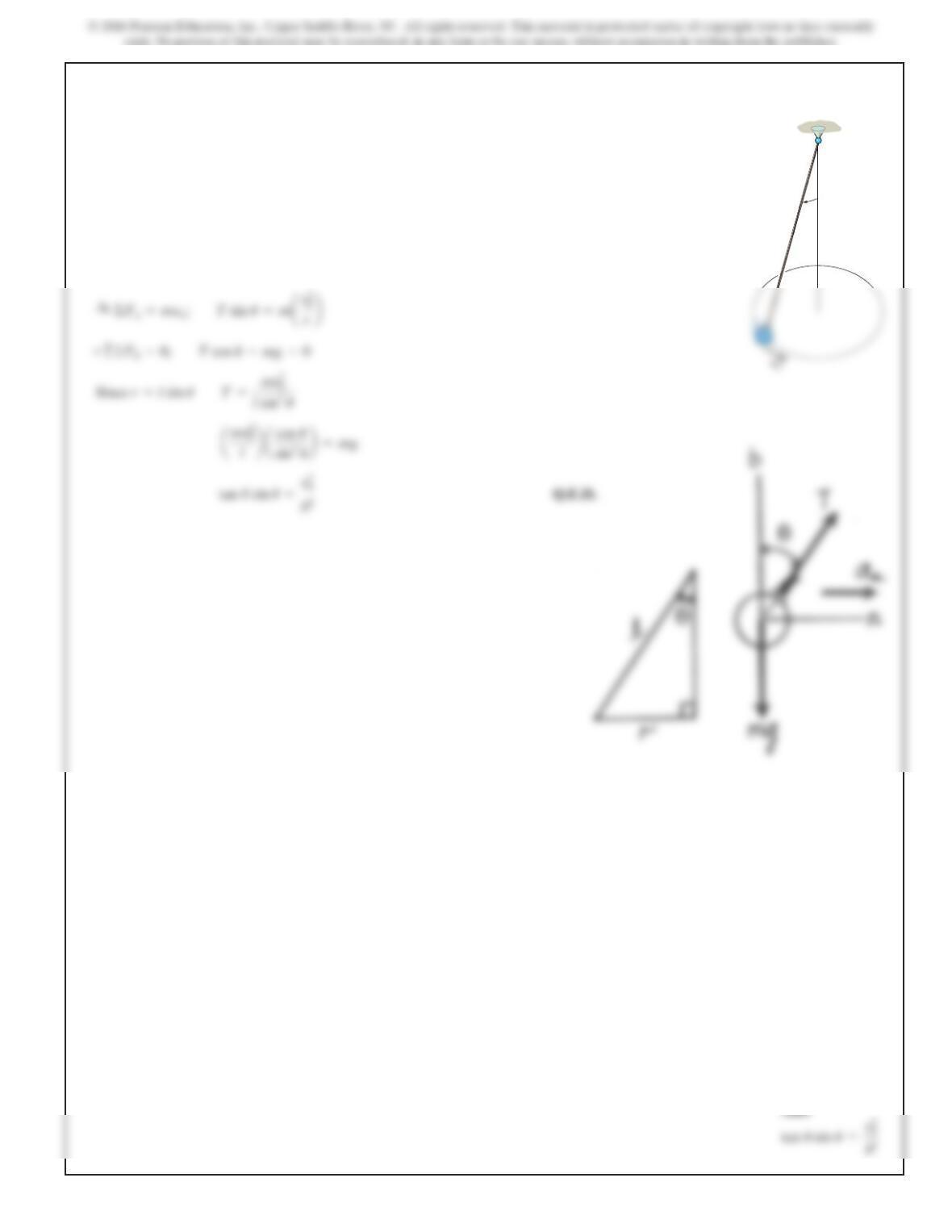
13–83.
The ball has a mass mand is attached to the cord of length l.
The cord is tied at the top to a swivel and the ball is given a
velocity . Show that the angle which the cord makes with
the vertical as the ball travels around the circular path
must satisfy the equation .Neglect air
resistance and the size of the ball.
tan usin u=v2
0>gl
uv0
O
u
l
SOLUTION
328
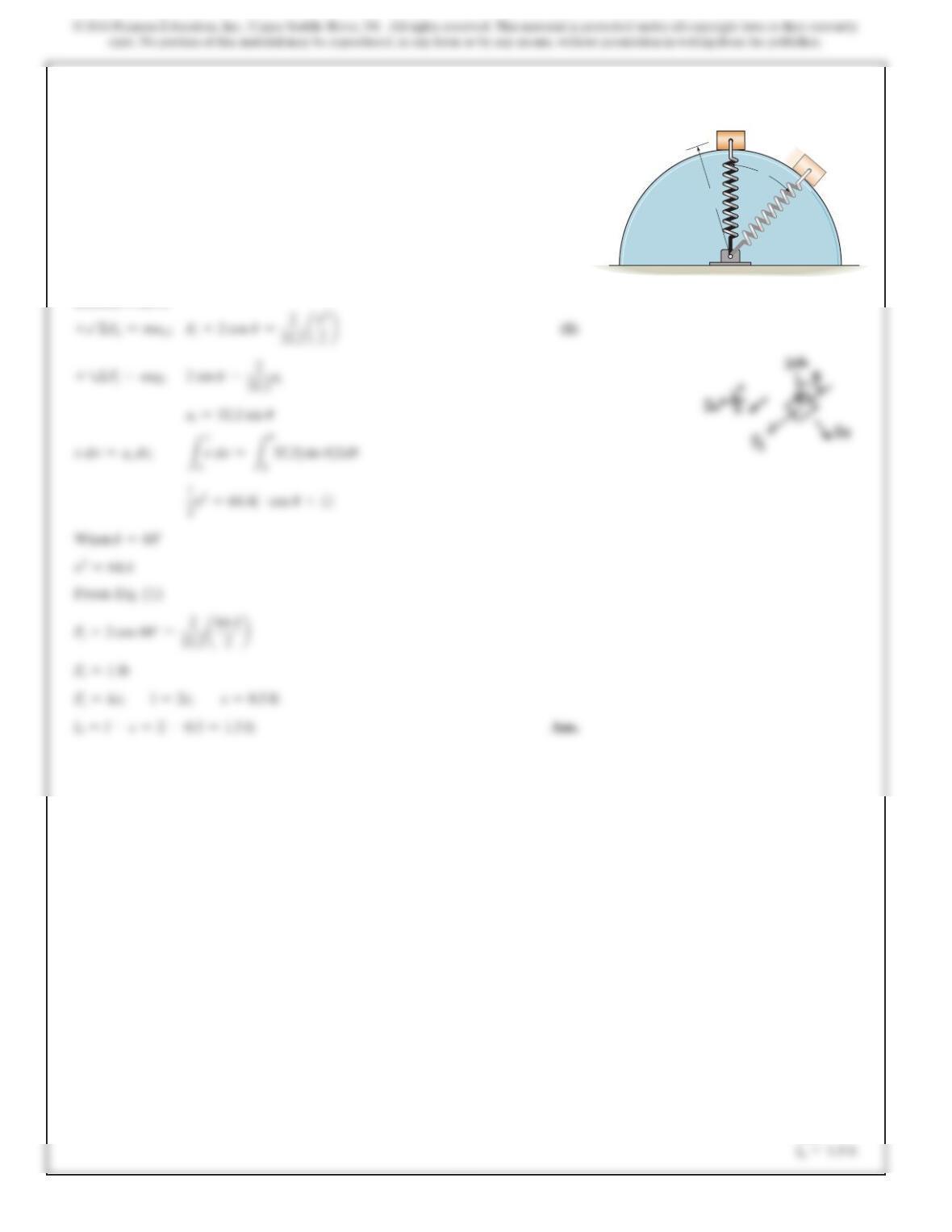
*13–84.
The 2-lb block is released from rest at A and slides down
along the smooth cylindrical surface. If the attached spring
has a stiffness k
=
2 lb
>
ft, determine its unstretched length
so that it does not allow the block to leave the surface until
u=60°.
SOLUTION
u=60°
k fi 2 lb/ft
A
2 ft
u
Ans:
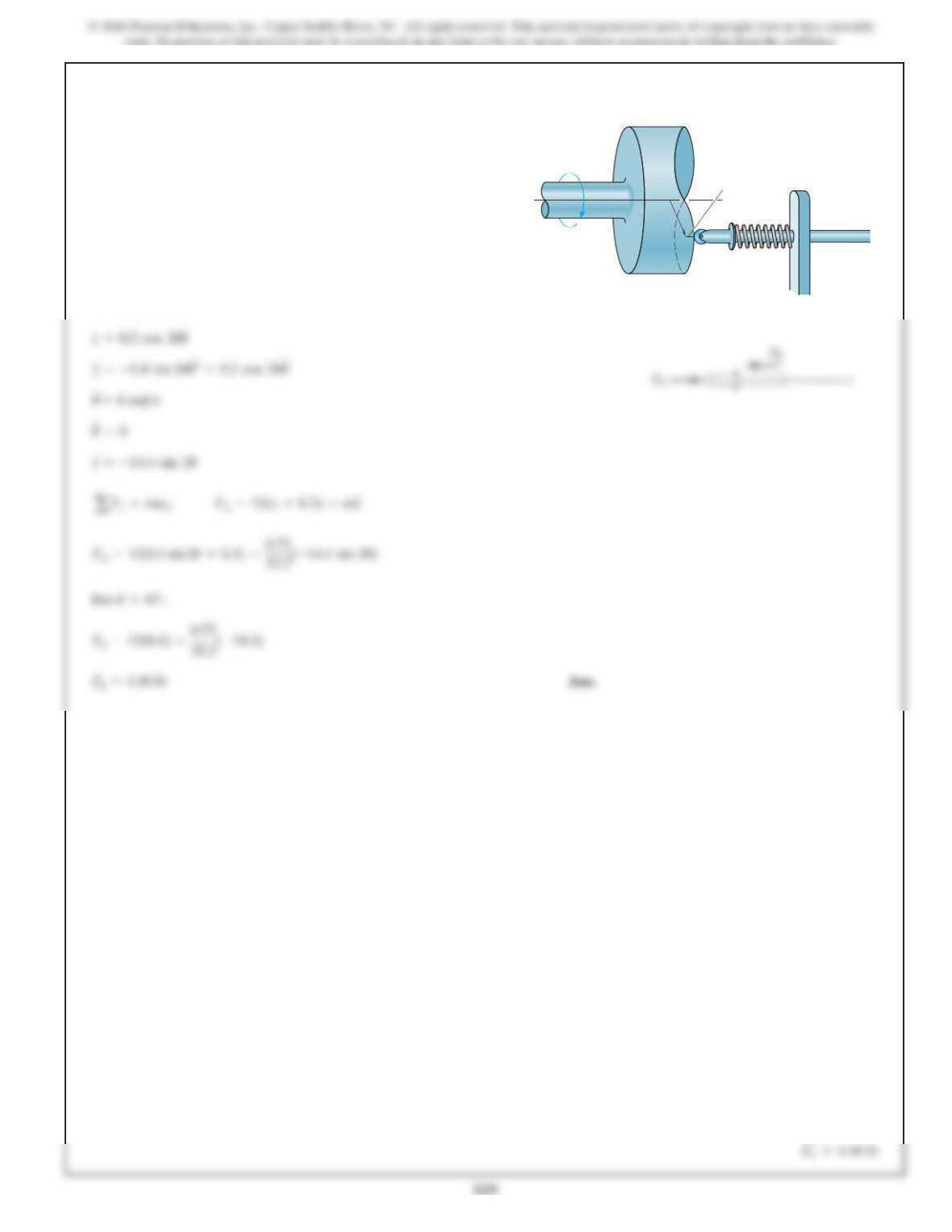
13–85.
SOLUTION
z=0.1 sin 2u
The spring-held follower AB has a weight of 0.75 lb and
moves back and forth as its end rolls on the contoured
surface of the cam, where and If
the cam is rotating at a constant rate of determine
the force at the end Aof the follower when In this
position the spring is compressed 0.4 ft. Neglect friction at
the bearing C.
u=90°.
6 rad>s,
z=10.1 sin u2 ft.r=0.2 ft
z
z fi 0.1 sin 2u
0.2 ft
k fi 12 lb/ft
A
C
B
u fi 6 rad/s
·
Ans:
330
13–86.
Determ
i
ne t
h
e magn
i
tu
d
e of t
h
e resu
l
tant force act
i
ng on a
5-kg particle at the instant ,if the particle is moving
along a horizontal path defined by the equations
and rad, where tis in
seconds.
u=(1.5t2–6t)r=(2t+10)m
t=2s
SOLUTION
r=2t+10|t=2s =14
Ans:
331
13–87.
SOLUTION
r=2t+1|t=2s=5ft
r
#=2ft>sr
$=0
The path of motion of a
5
-lb particle in the horizontal plane
is described in terms of polar coordinates as
and rad, where tis in seconds.Determine
the magnitude of the unbalanced force acting on the particle
when .t=2s
u=(0.5t2–t)
r=(2t+1) ft
Ans:
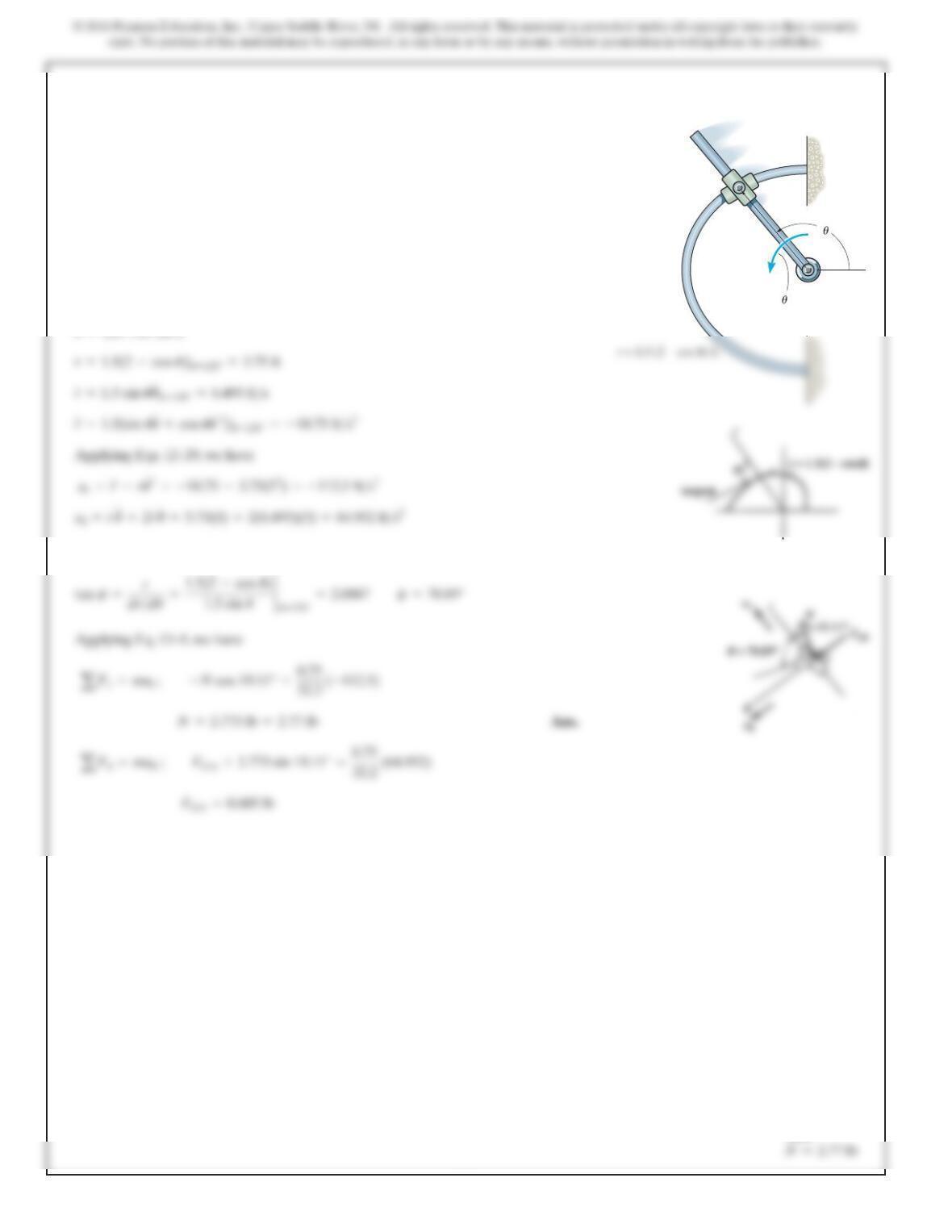
332
*13–88.
SOLUTION
Kinematic: Here, and .Taking the required time derivatives at
, we have
Equation of Motion: The angle must be obtained first.
c
u=120°
u
$=0u
#=5 rad>s
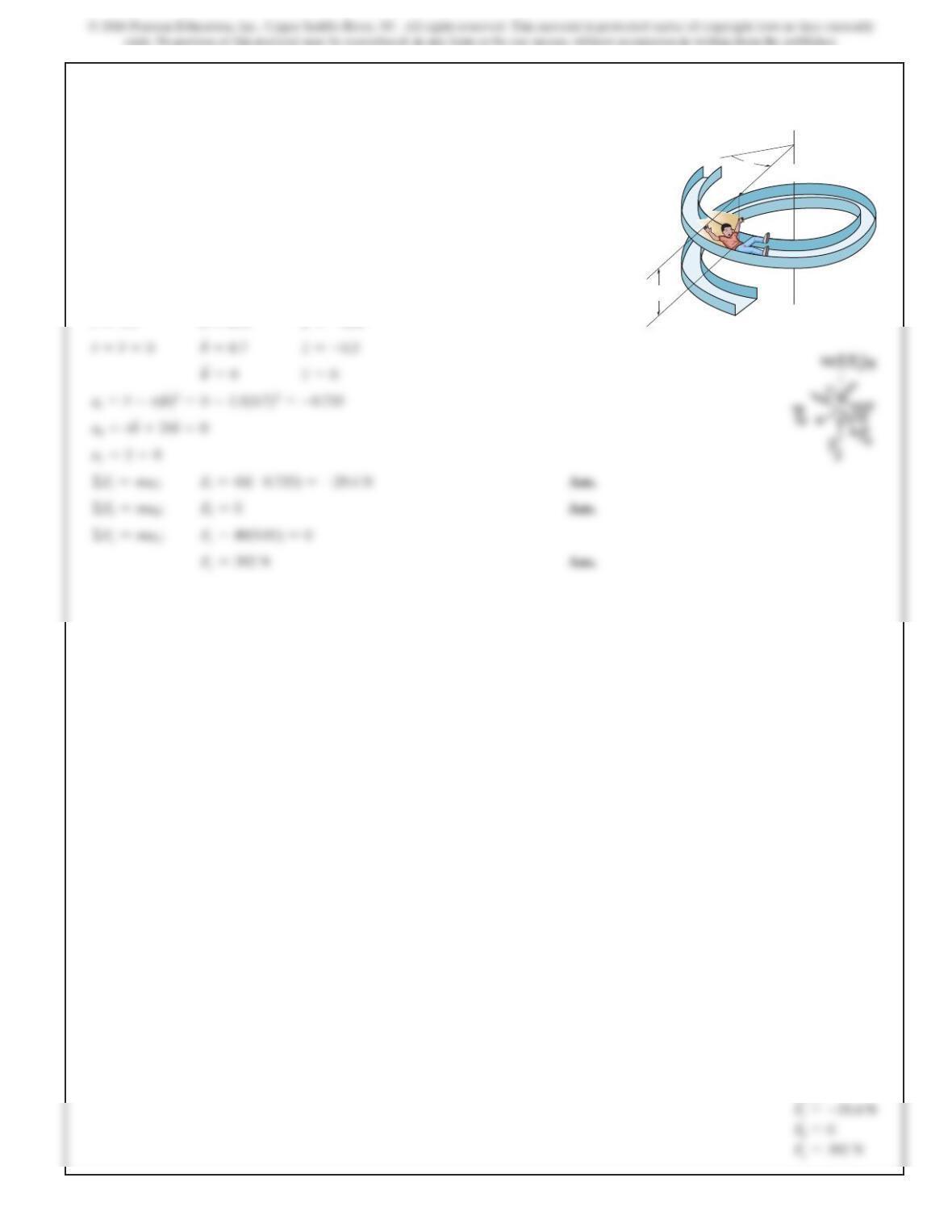
Rod OA rotates counterclockwise with a constant angular
velocity of The double collar Bis pin-
connected together such that one collar slides over the
rotating rod and the other slides over the horizontal curved
rod, of which the shape is described by the equation
If both collars weigh 0.75 lb,
determine the normal force which the curved rod exerts on
one collar at the instant Neglect friction.u=120°.
r=1.512–cos u2ft.
u
#=5 rad>s.
r
O
=5rad/s
·
B
A
Ans:
333
Ans:
SOLUTION
r=1.5
u=0.7t
z=–0.5t
13–89.
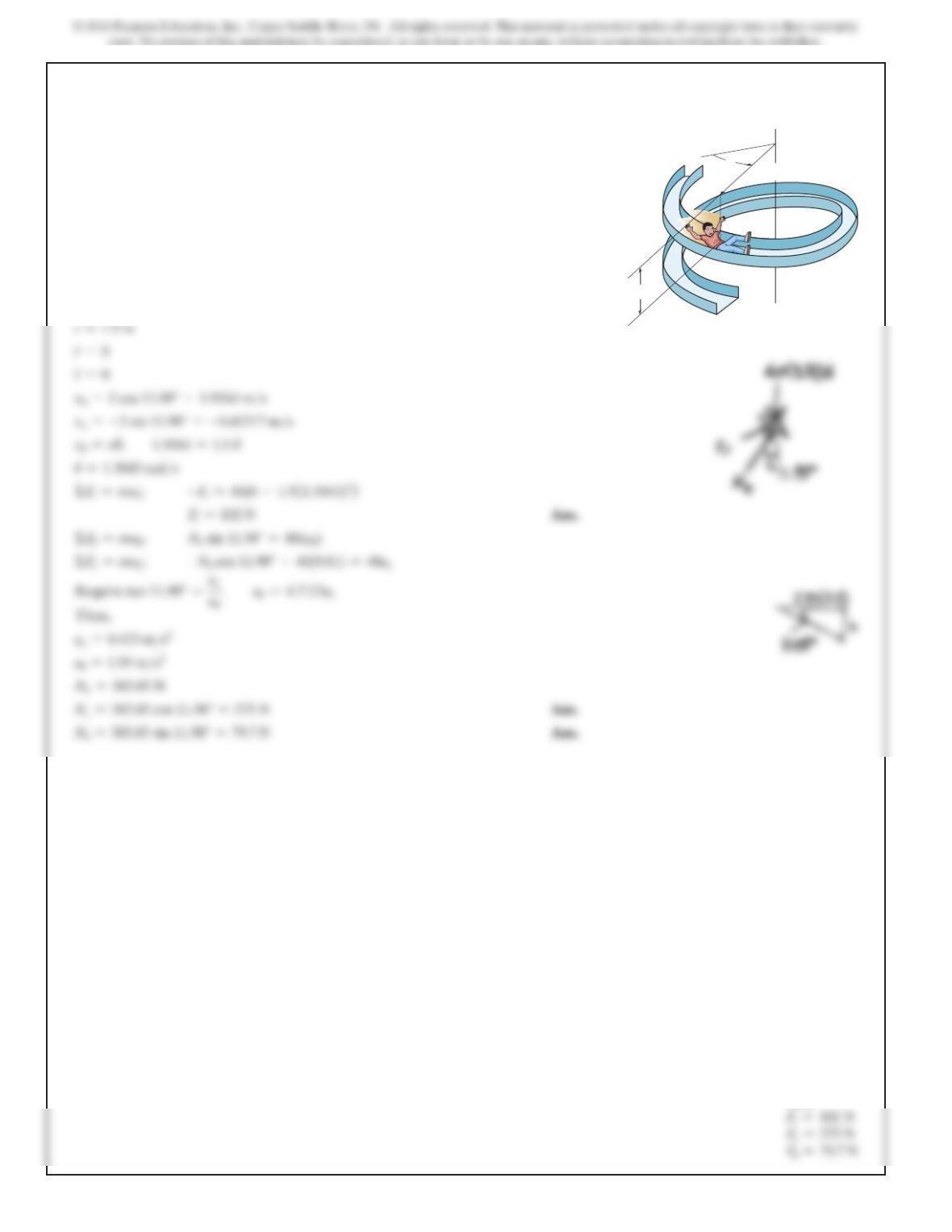
The boy of mass 40 kg is sliding down the spiral slide at a
constant speed such that his position, measured from the
top of the chute, has components
r=1.5 m,
u
=(0.7t) rad,
and
z=(–0.5t) m,
where t is in seconds. Determine the
components of force
Fr,
Fu,
and
Fz
which the slide exerts on
him at the instant
t=2 s.
Neglect the size of the boy.
z
z
r fi 1.5 m
u
334
Ans:
13–90.
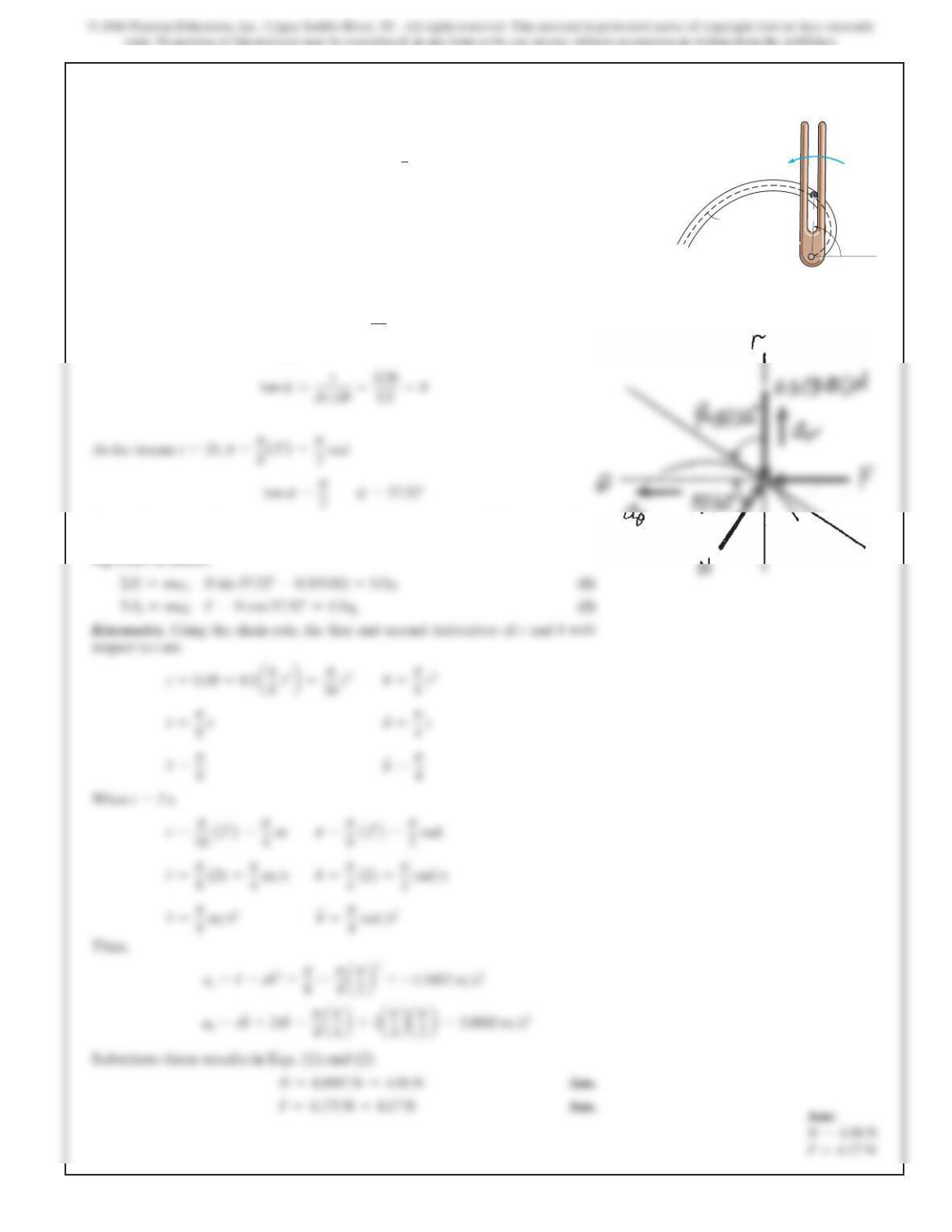
The 40-kg boy is sliding down the smooth spiral slide such
that z
=
–2 m>s
and his speed is 2 m
>
s. Determine the r,
u
, z
components of force the slide exerts on him at this instant.
Neglect the size of the boy.
SOLUTION
z
z
r fi 1.5 m
u
335
13–91.
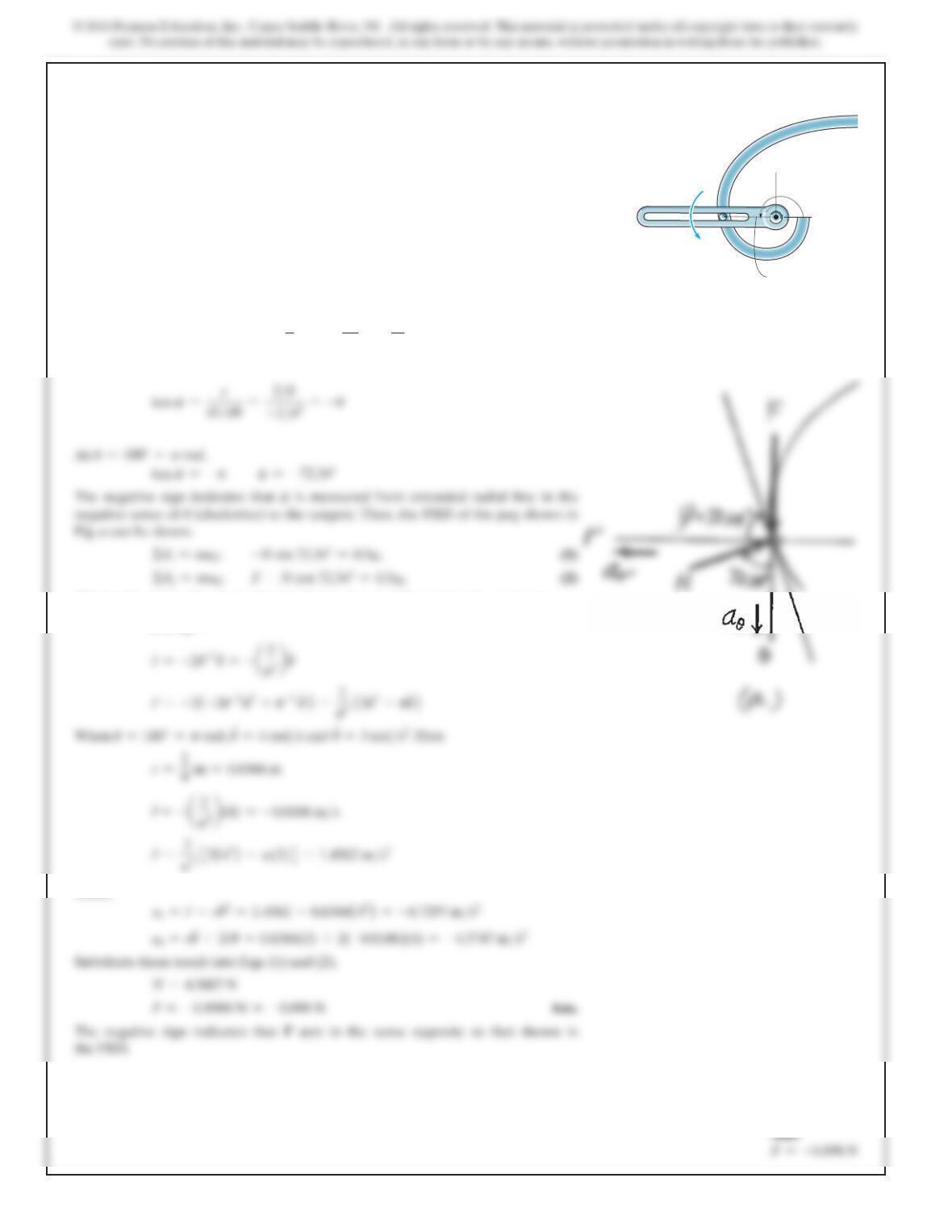
Using a forked rod, a 0.5-kg smooth peg P is forced to move
along the vertical slotted path
r=(0.5
u
) m,
where
u
is in
radians. If the angular position of the arm is u
=
(p
8
t
2
) rad,
where t is in seconds, determine the force of the rod on the
peg and the normal force of the slot on the peg at the instant
t=2 s.
The peg is in contact with only one edge of the rod
and slot at any instant.
u
r
P
r fi (0.5 ) m
SOLUTION
Equation of Motion. Here,
r=0.5u
. Then
dr
du
=0.5. The angle
c
between the
extended radial line and the tangent can be determined from
The positive sign indicates that
c
is measured from extended radial line in positive
sense of
u
(counter clockwise) to the tangent. Then the FBD of the peg shown in
336
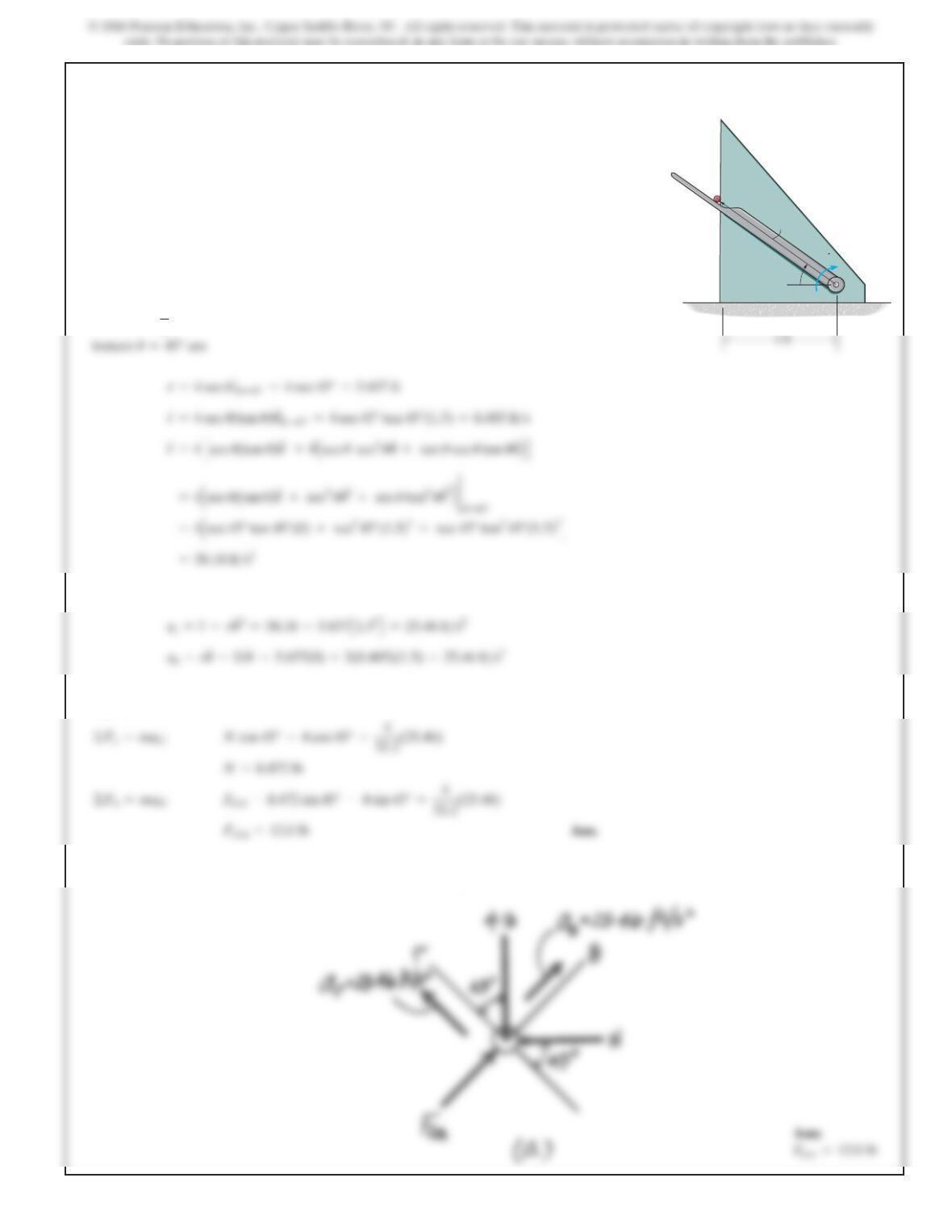
*13–92.
The arm is rotating at a rate of u
#
=
4 rad
>
s when
u
$
=
3 rad
>
s
2
and
u=180°.
Determine the force it must
exert on the 0.5-kg smooth cylinder if it is confined to move
along the slotted path. Motion occurs in the horizontal plane.
SOLUTION
Equation of Motion. Here, r=
2
u
. Then
dr
du
=–
2
u
2. The angle
c
between the
extended radial line and the tangent can be determined from
u=180°=p rad
Kinematics. Using the chain rule, the first and second time derivatives of r are
r=2u–1
u=180°=p rad
>
Thus,
r fi ( ) m
2
—
fi 4 rad/s,
·
fi 180
fi 3 rad/s2
· · r
337
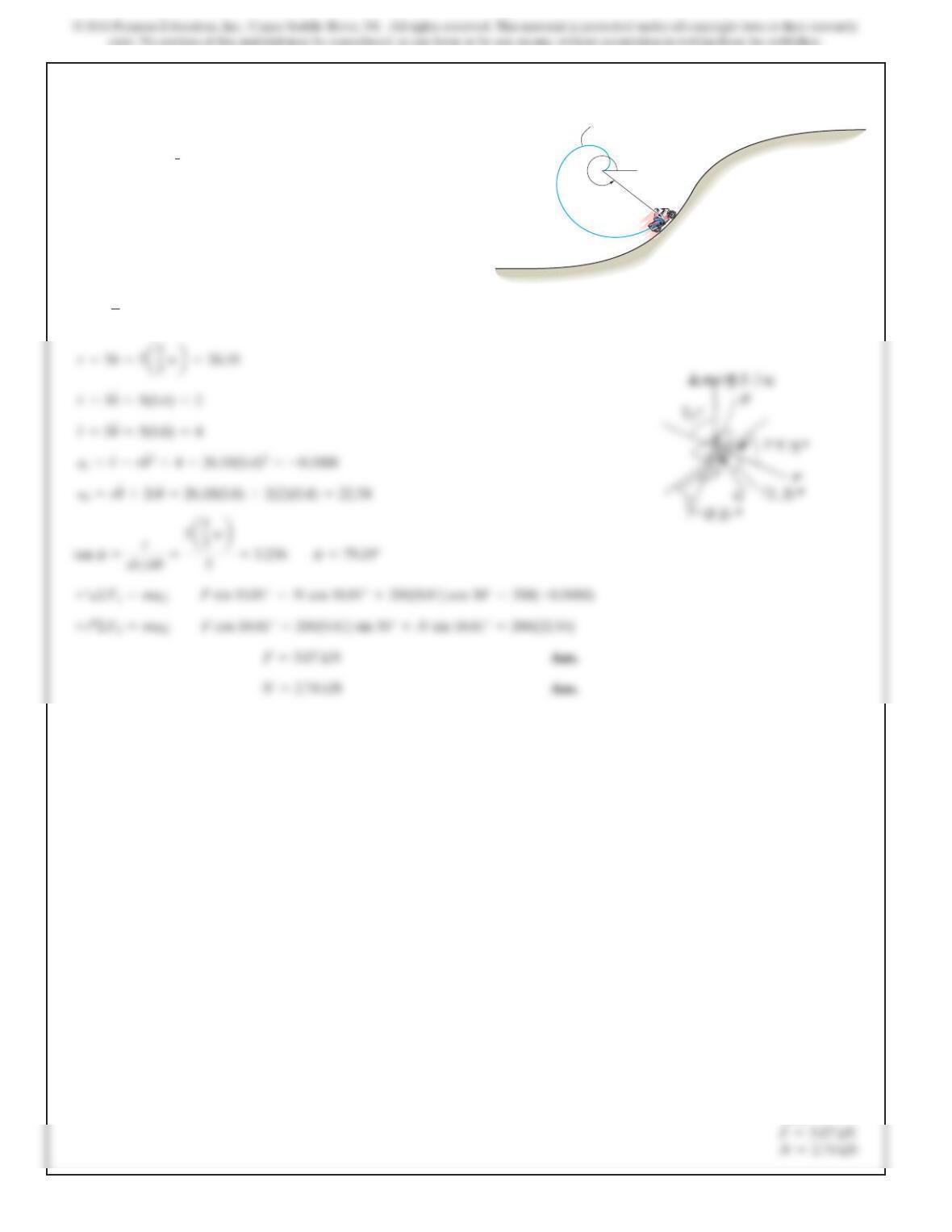
13–93.
If arm OA rotates with a constant clockwise angular
velocity of . determine the force arm OA
exerts on the smooth 4-lb cylinder Bwhen = 45°.u
u
.=1.5 rad>s
SOLUTION
Kinematics: Since the motion of cylinder Bis known, and will be determined
first. Here, or .The value of rand its time derivatives at the
Using the above time derivatives,
Equations of Motion: By referring to the free-body diagram of the cylinder shown in
Fig. a,
r=4 sec u ft
4
r=cos u
au
ar
A
B
O
r
u
u
338
13–94.
SOLUTION
u=a5
3pb=300°
u
#=0.4
u
$=0.8
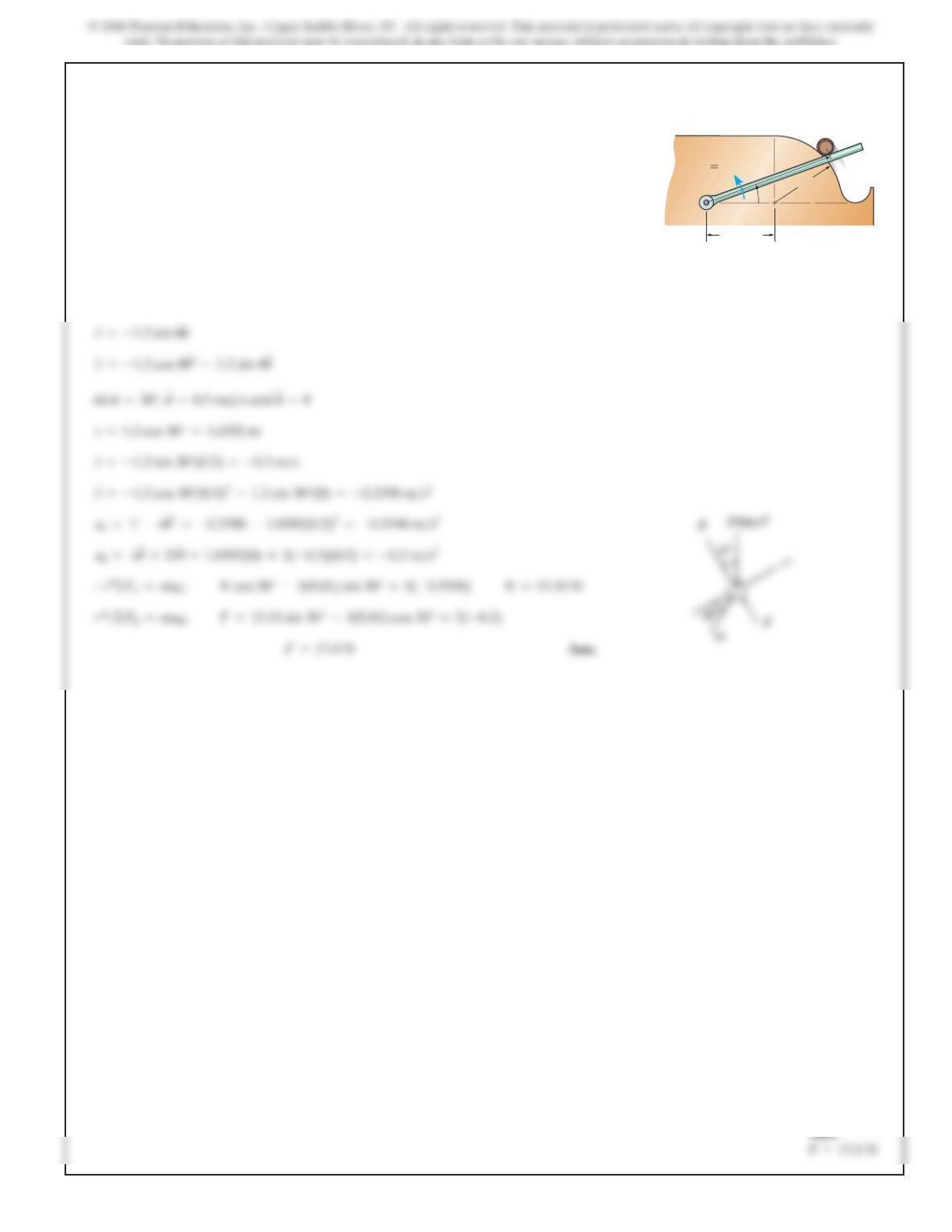
Determine the normal and frictional driving forces that
the partial spiral track exerts on the 200-kg motorcycle at
the instant and
Neglect the size of the motorcycle.
u
$=0.8 rad>s2.u
#=0.4 rad>s,
u=5
3 p rad,
r
r
fi
(5
u
) m
u
Ans:
339
13–95.
SOLUTION
r=2(0.6 cos u)=1.2 cos u
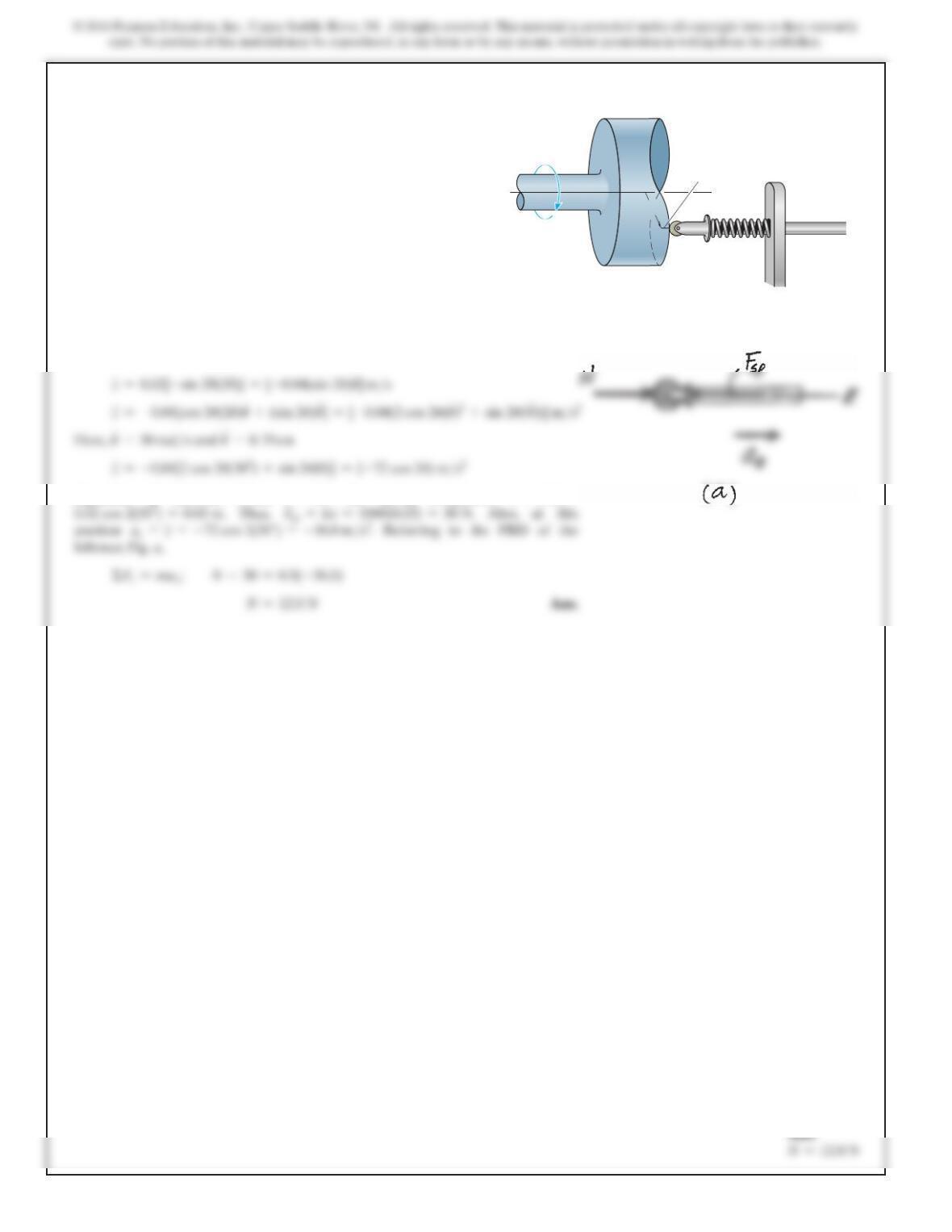
A smooth can C, havingamass of3kg, is lifted fromafeed
at Ato a ramp at Bby a rotating rod. If the rod maintains a
constant angular velocity of determine the
force which the rod exerts on the can at the instant
Neglect the effects of friction in the calculation and the size
of the can so that The ramp from Ato B
is circular, havingaradius of 600 mm.
r=11.2 cos u2 m.
u=30°.
u
#=0.5 rad>s,
600 mm
600 mm
B
A
C
u 0.5 rad/s
· r
u
340
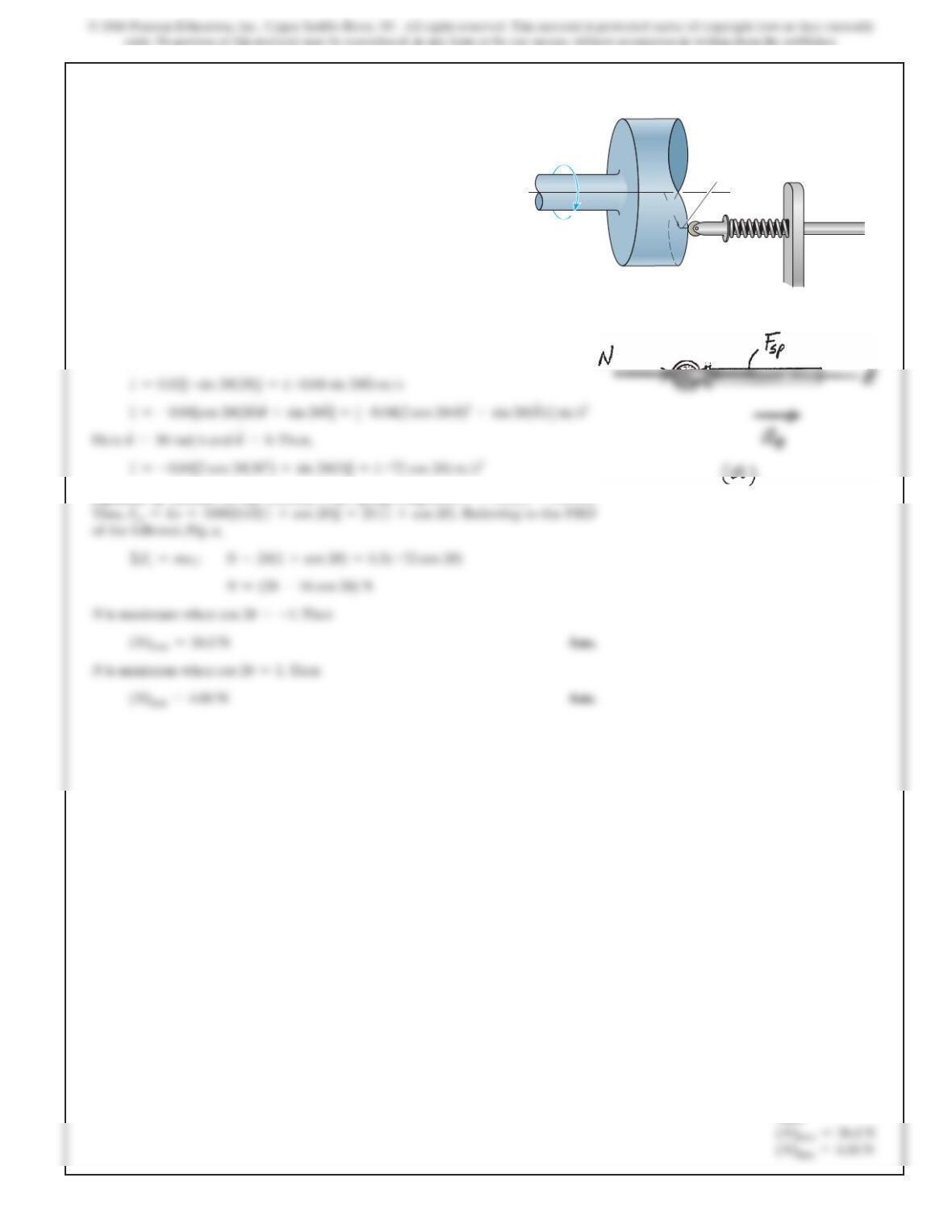
*13–96.
The spring-held follower AB has a mass of 0.5 kg and moves
back and forth as its end rolls on the contoured surface of
the cam, where
r=0.15 m
and
z=(0.02 cos 2
u
) m.
If the
cam is rotating at a constant rate of 30 rad
>
s, determine the
force component Fz at the end A of the follower when
u=30°.
The spring is uncompressed when
u=90°.
Neglect
friction at the bearing C.
z
0.15 m
z fi (0.02 cos 2 ) m
k fi 1000 N/m
A
C
B
·
fi 30 rad/s
SOLUTION
Kinematics. Using the chain rule, the first and second time derivatives of z are
z=(0.02 cos 2
u
) m
Equation of Motion. When
u=30°
, the spring compresses
x=0.02 +
341
Ans:
13–97.
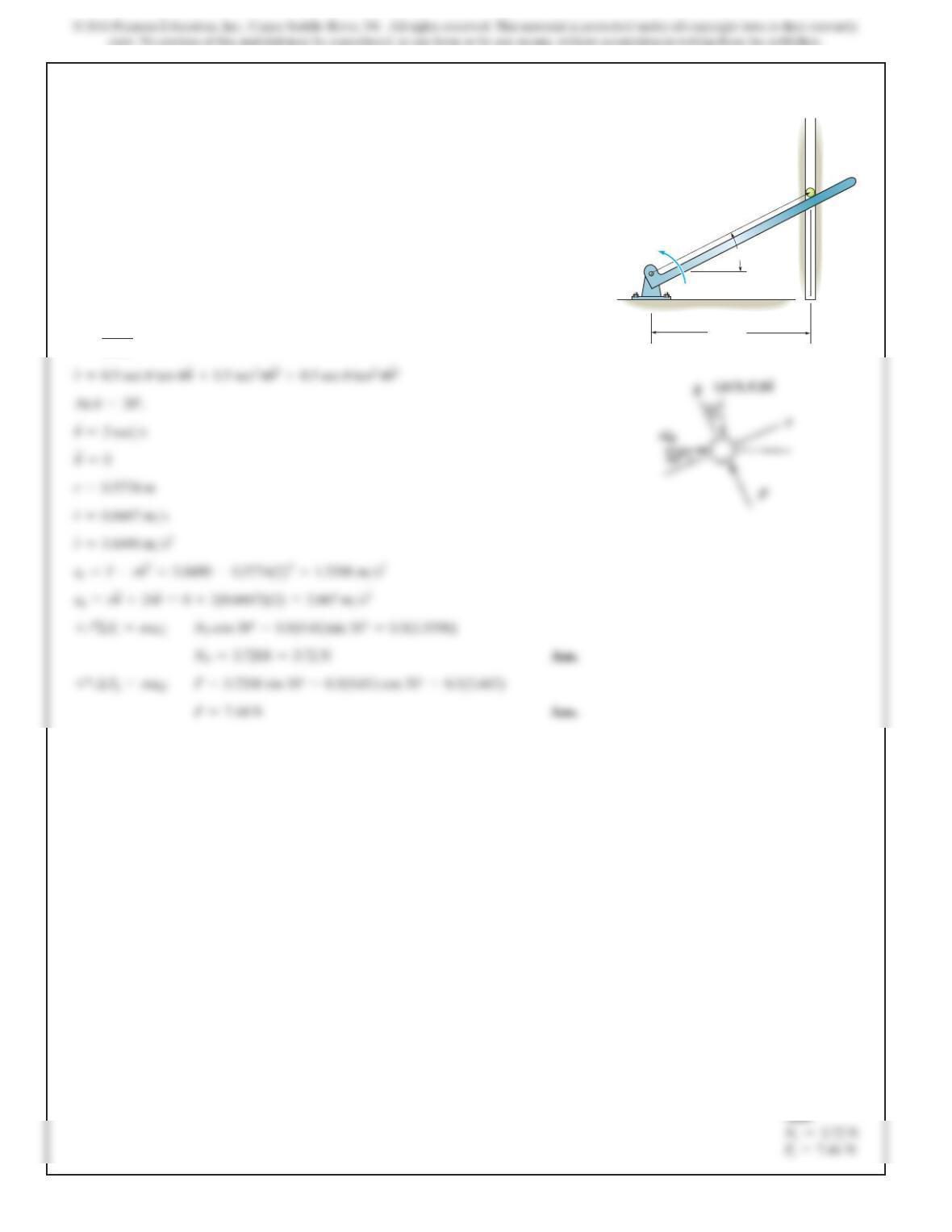
The spring-held follower AB has a mass of 0.5 kg and moves
back and forth as its end rolls on the contoured surface of
the cam, where
r=0.15 m
and
z=(0.02 cos 2
u
) m.
If the
cam is rotating at a constant rate of 30 rad
>
s, determine the
maximum and minimum force components Fz the follower
exerts on the cam if the spring is uncompressed when
u=90°.
SOLUTION
Kinematics. Using the chain rule, the first and second time derivatives of z are
z=(0.02 cos 2
u
) m
u
Equation of Motion. At any arbitrary
u
, the spring compresses
x=0.02(1 +cos 2
u
)
.
z
0.15 m
z fi (0.02 cos 2 ) m
k fi 1000 N/m
A
C
B
·
fi 30 rad/s
342
SOLUTION
r=
0.5
cos u
=0.5 sec u,
r
#
=0.5 sec u tan uu
#
r
=0.5 sec u tan uu
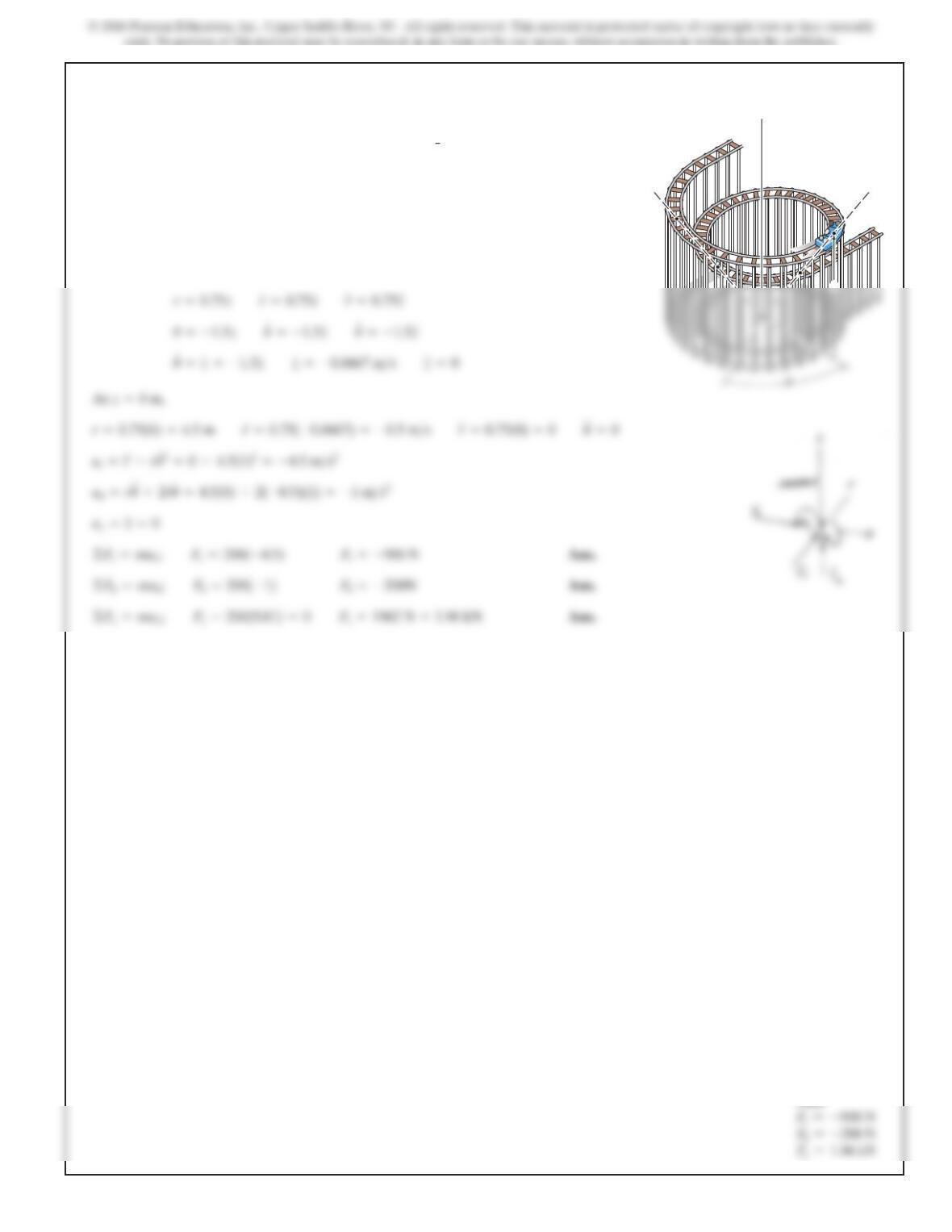
13–98.
The particle has a mass of 0.5 kg and is confined to move
along the smooth vertical slot due to the rotation of the arm
OA. Determine the force of the rod on the particle and the
normal force of the slot on the particle when
u=30°.
The
rod is rotating with a constant angular velocity u
.
=
2
rad>s.
Assume the particle contacts only one side of the slot at any
instant.
0.5 m
O
A
r
u = 2 rad/s
u
343
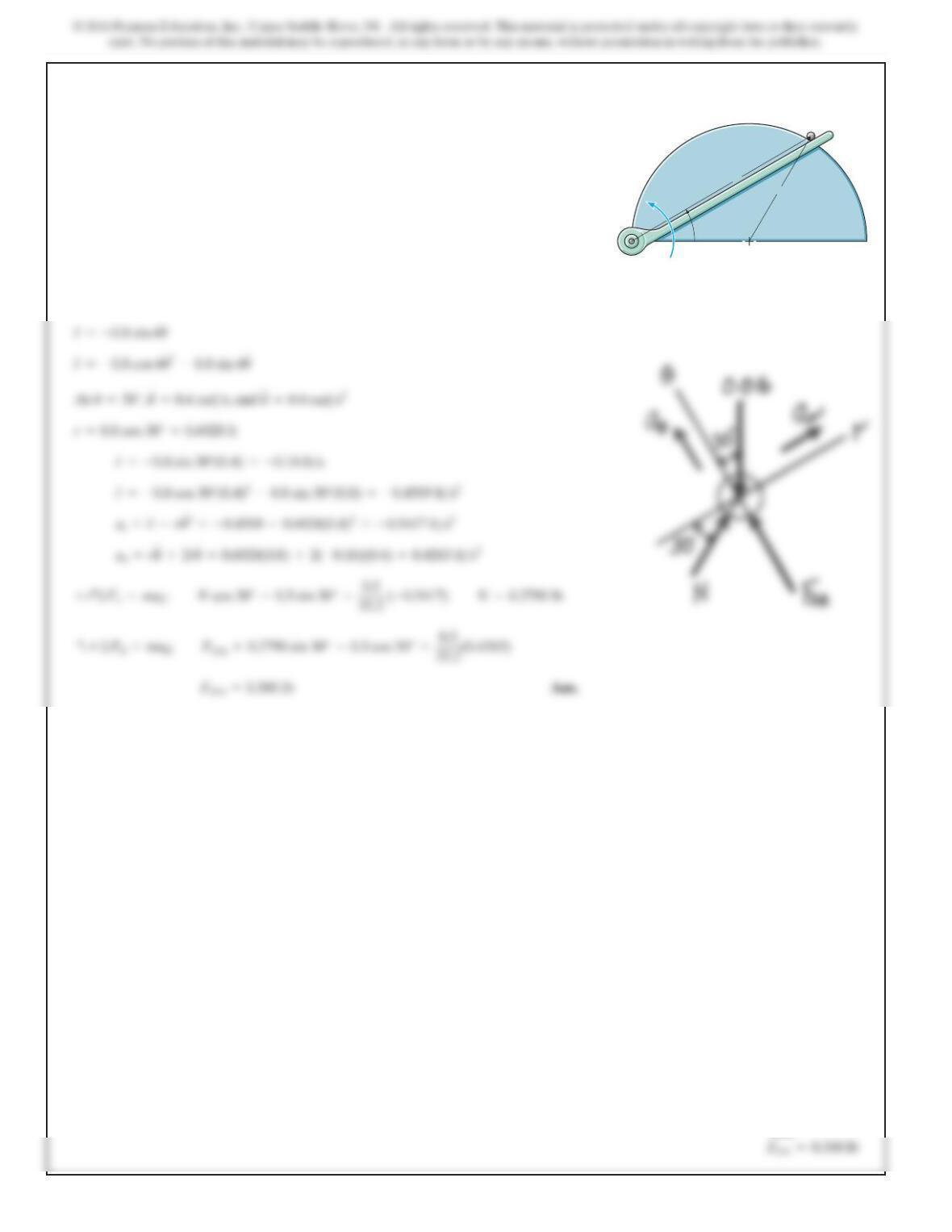
13–99.
A car of a roller coaster travels along a track which for a
short distance is defined by a conical spiral, ,
, where rand zare in meters and in radians.If
the angular motion is always maintained,
determine the components of reaction exerted on the
car by the track at the instant .The car and
passengers have a total mass of 200 kg.
z=6m
r,u,z
u
#=1 rad>s
uu =-1.5z
r=3
4z
SOLUTION
Ans:
344
*13–100.
SOLUTION
r=2(0.4) cos u=0.8 cos u
The 0.5-lb ball is guided along the vertical circular path
using the arm OA.If the arm has an angular
velocity and an angular acceleration
at the instant ,determine the force of
the arm on the ball.Neglect friction and the size of the ball.
Set .rc=0.4 ft
u=30°u
$=0.8 rad>s2
u
#=0.4 rad>s
r=2rccos u
P
r
u
A
O
rc
Ans: