141
12–133.
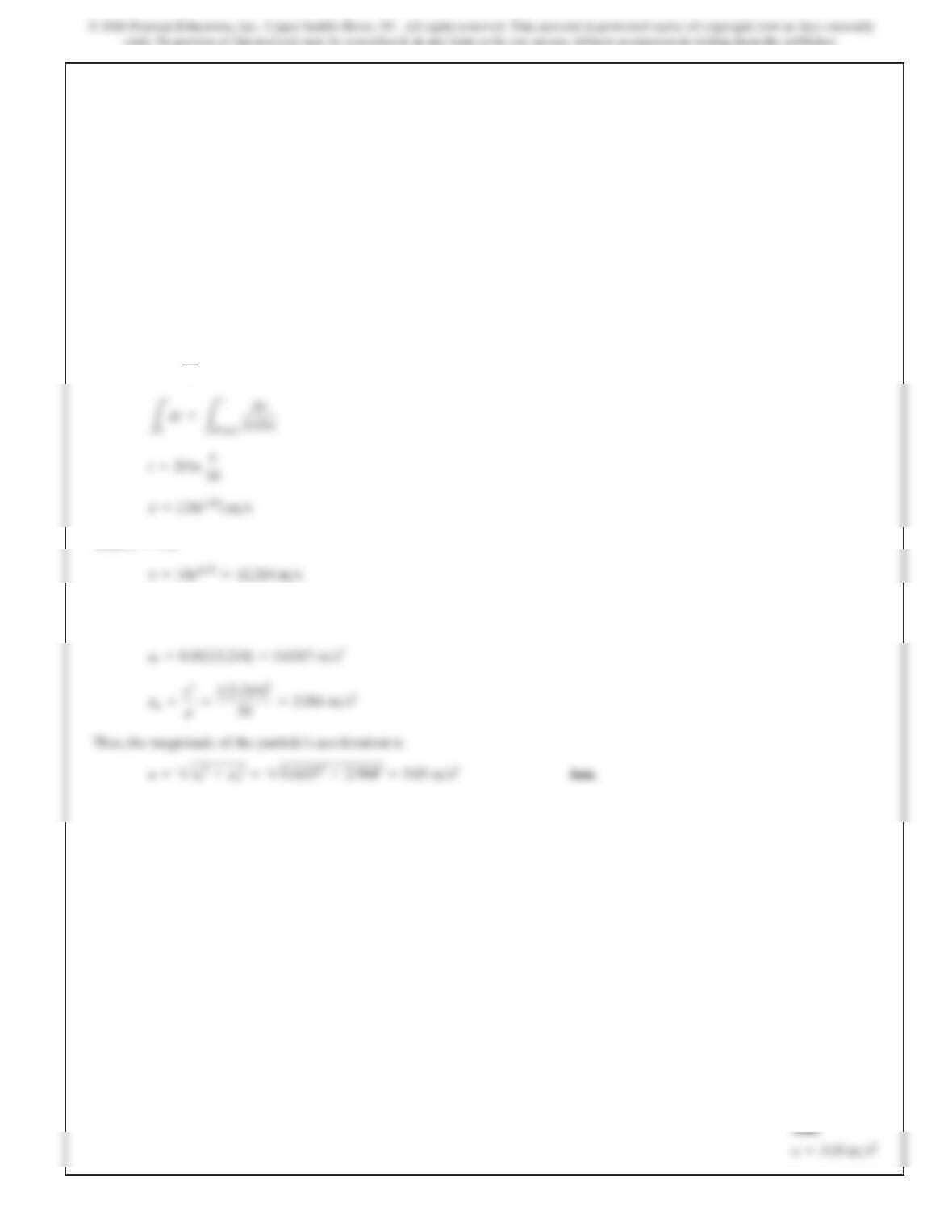
A particle travels around a circular path having a radius of
50 m. If it is initially traveling with a speed of 10 m s and its
speed then increases at a rate of
determine the magnitude of the particle’s acceleraton four
seconds later.
v
#=10.05 v2 m>s2,
>
SOLUTION
Velocity: Using the initial condition
When
Acceleration: When
v=12.214 m>s (t=4 s),
t=4 s,
dt =dv
a
v=10 m>s at t=0 s,
142
12–134.
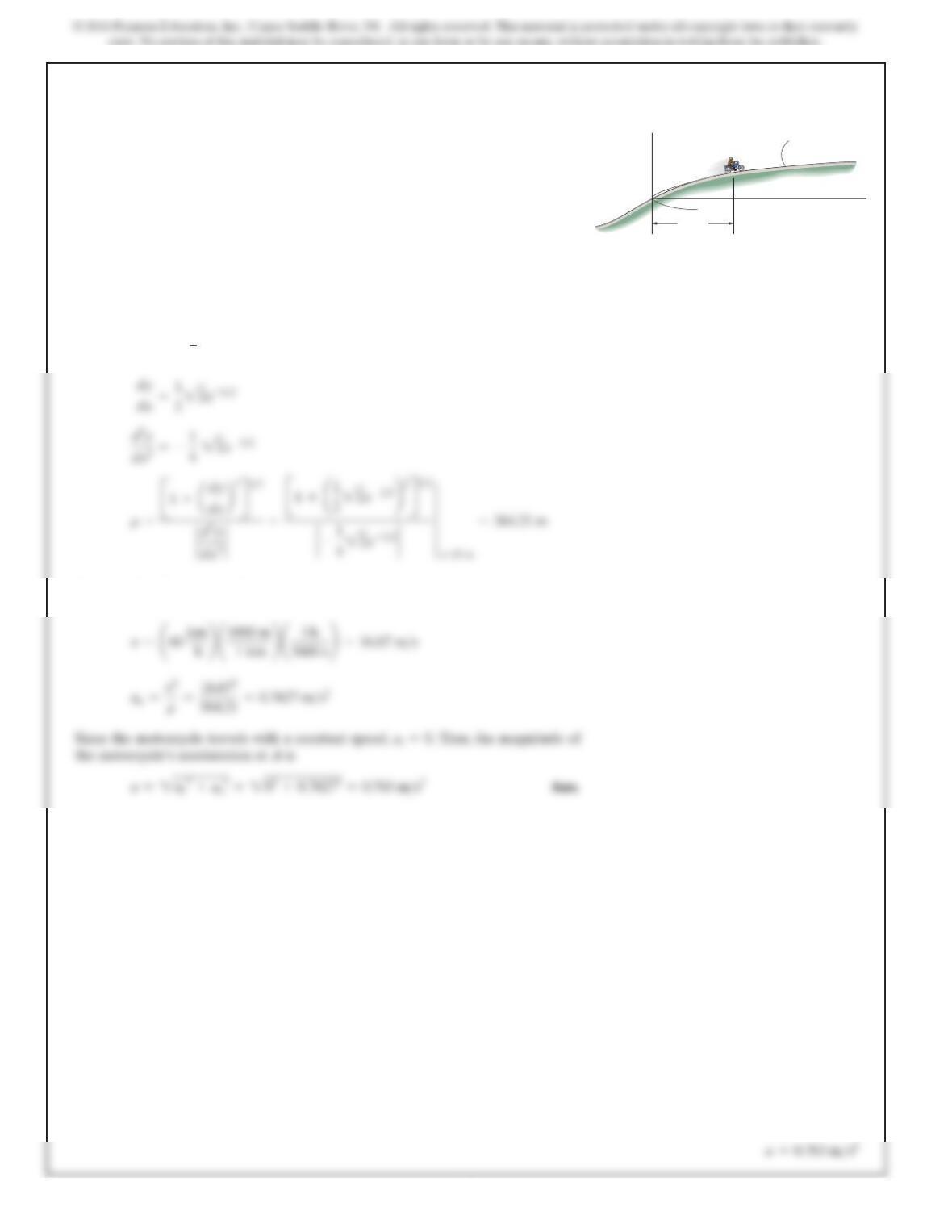
The motorcycle is traveling at a constant speed of 60 km h.
Determine the magnitude of its acceleration when it is at
point .A
>
SOLUTION
Radius of Curvature:
Acceleration: The speed of the motorcycle at ais
y=22x1>2
y
y2 2x
x
25 m
A
Ans:
12–135.
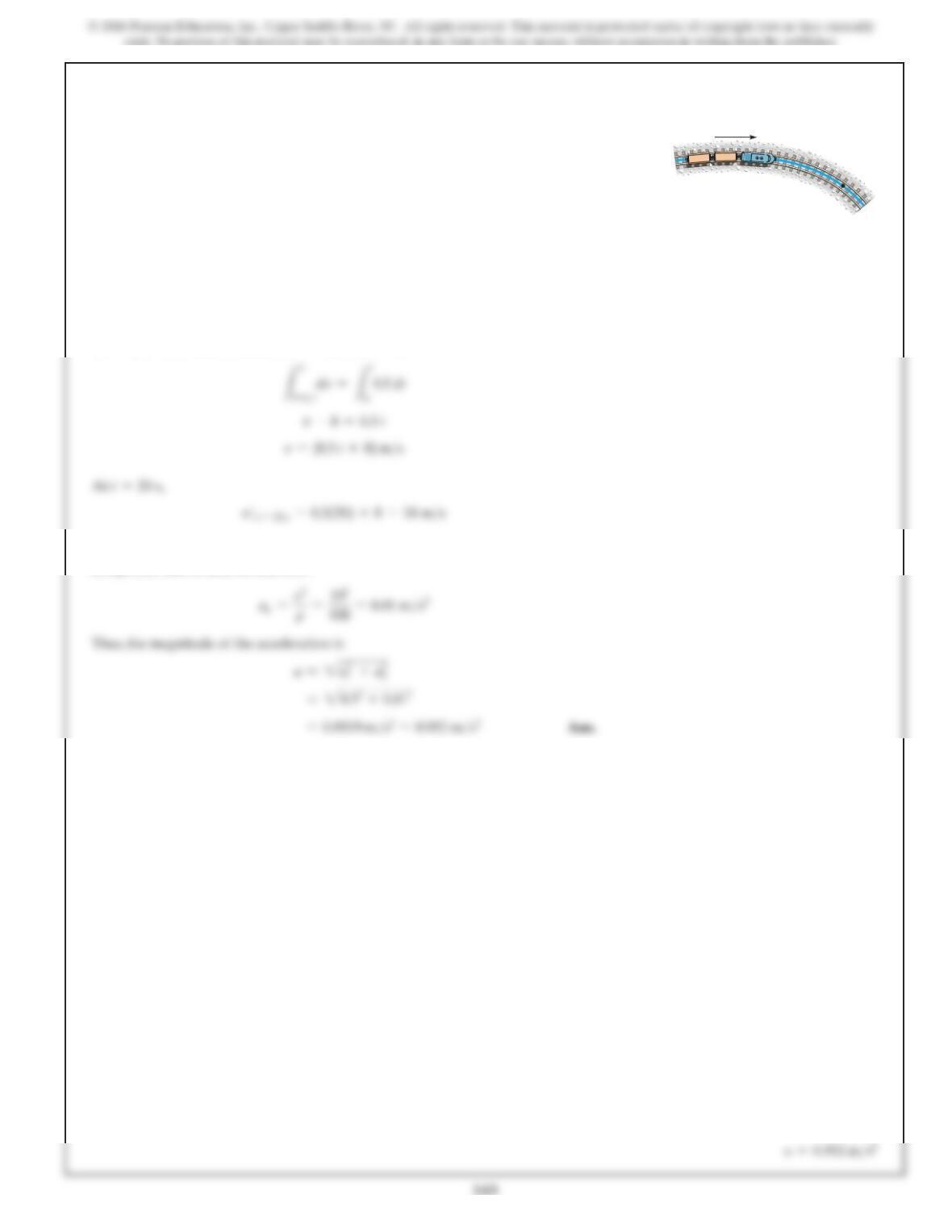
When t = 0, the train has a speed of 8 m
>
s, which is increasing
at 0.5 m
>
s2. Determine the magnitude of the acceleration of
the engine when it reaches point A, at t = 20 s. Here the radius
of curvature of the tracks is
r
A = 400 m.
SOLUTION
Velocity. The velocity of the train along the track can be determined by integrating
dv=at dt
with initial condition
v=8 m>s at t=0
.
Acceleration. Here, the tangential component is
at=0.5 m>s2.
The normal
component can be determined from
Ans:
vt
8 m
/
s
A
144
*12–136.
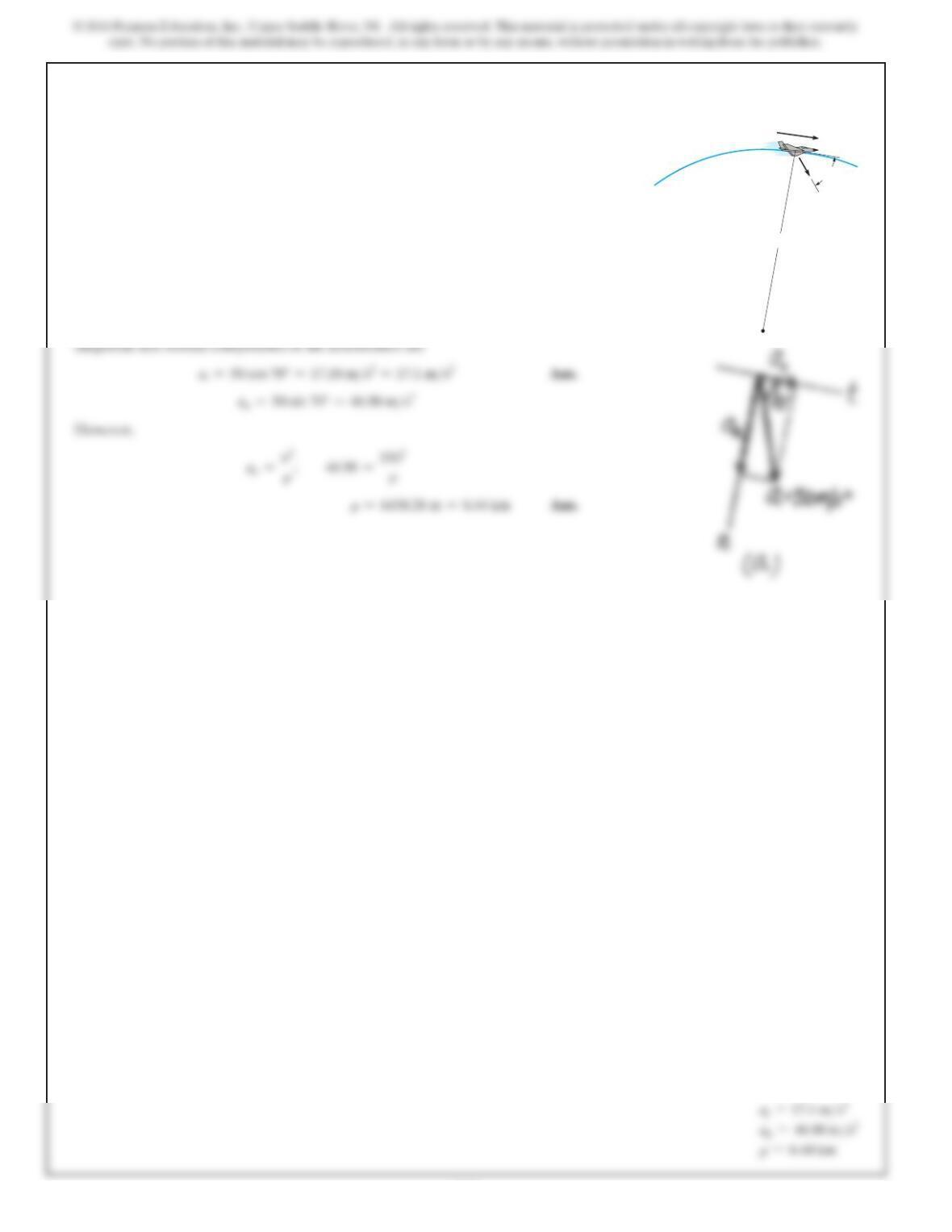
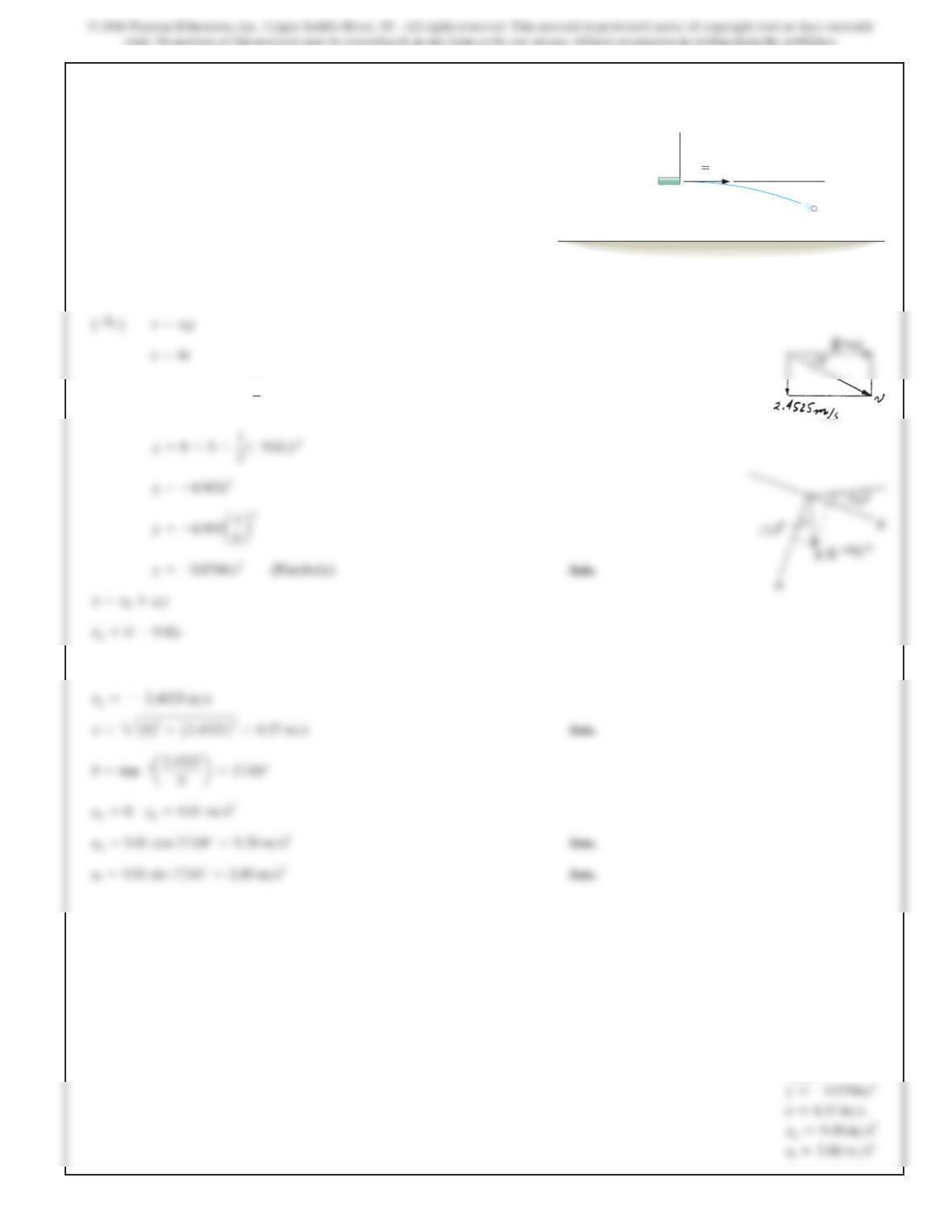
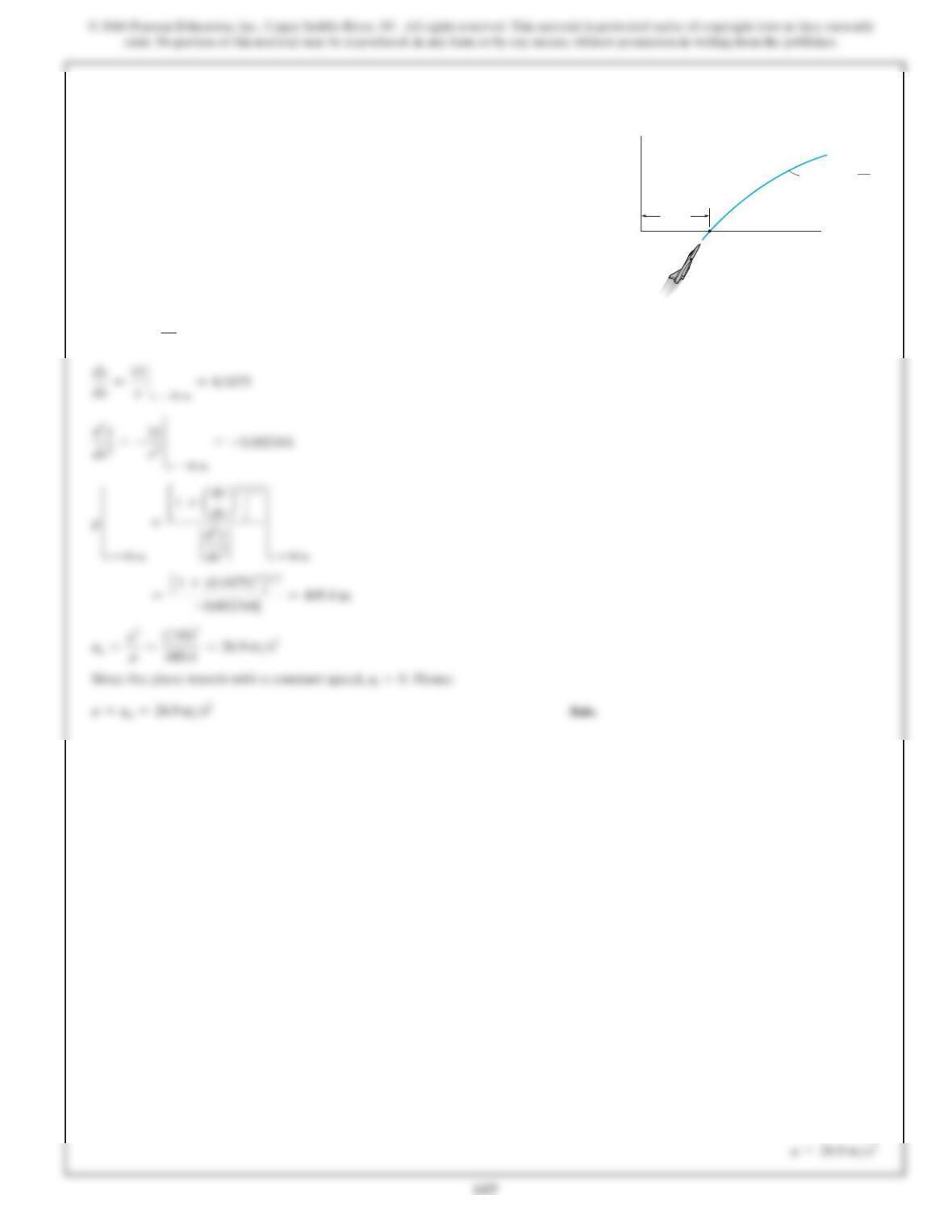
At a given instant the jet plane has a speed of
550 m
>
s and an acceleration of 50 m
>
s2 acting in the
direction shown. Determine the rate of increase in the
plane’s speed, and also the radius of curvature
r
of the path.
SOLUTION
Acceleration. With respect to the n–t coordinate established as shown in Fig. a, the
550 m/s
70
a fi 50 m/s2
r
Ans:
145
12–137.
SOLUTION
When ,
t=0.25 s
A
+c
B
s=s0+v0t+1
2act2
vx=8m>s
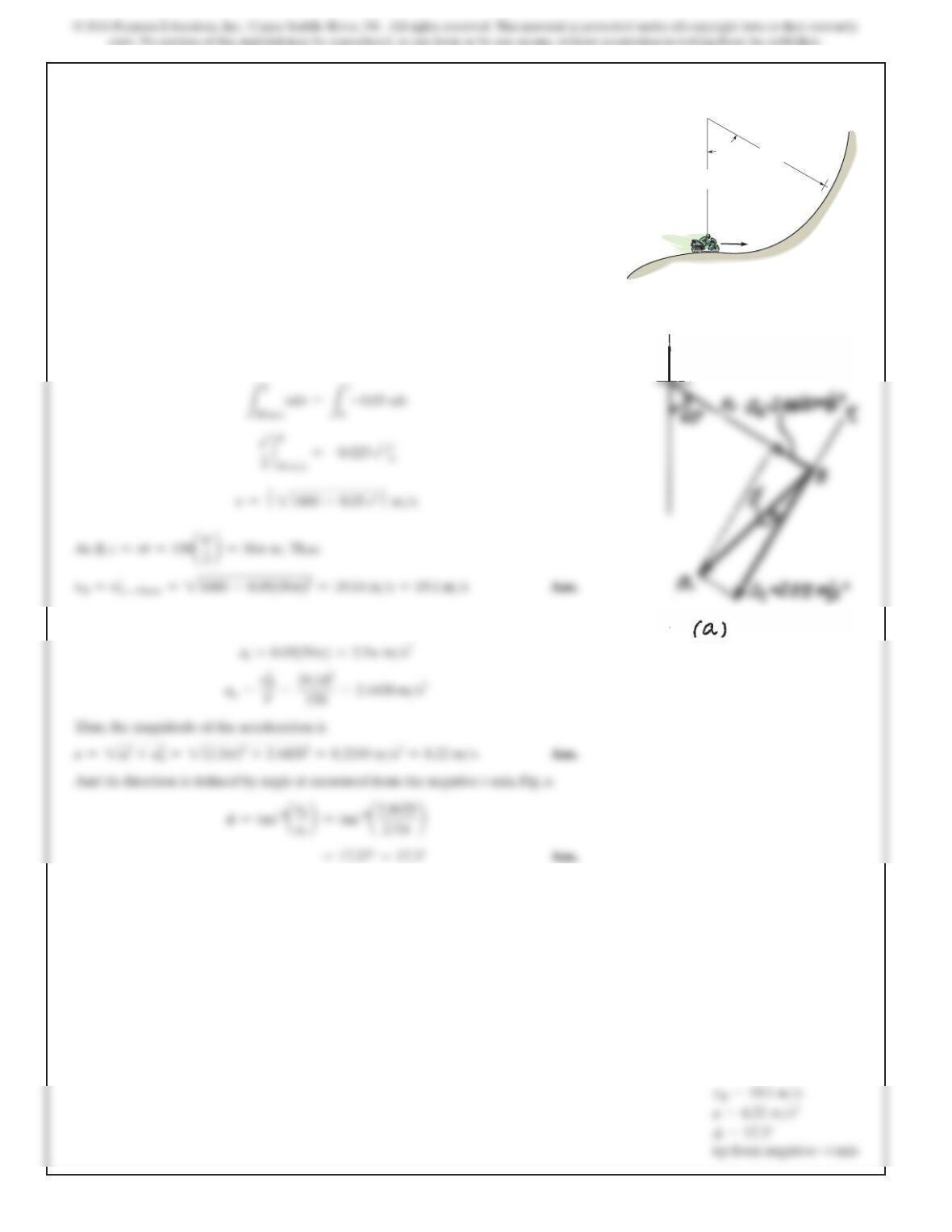
The ball is ejected horizontally from the tube with a speed
of Find the equation of the path, and then
find the ball’s velocity and the normal and tangential
components of acceleration when t=0.25 s.
y=f1x2,8m>s.
v
A
8m/s
y
x
A
Ans:
146
12–138.
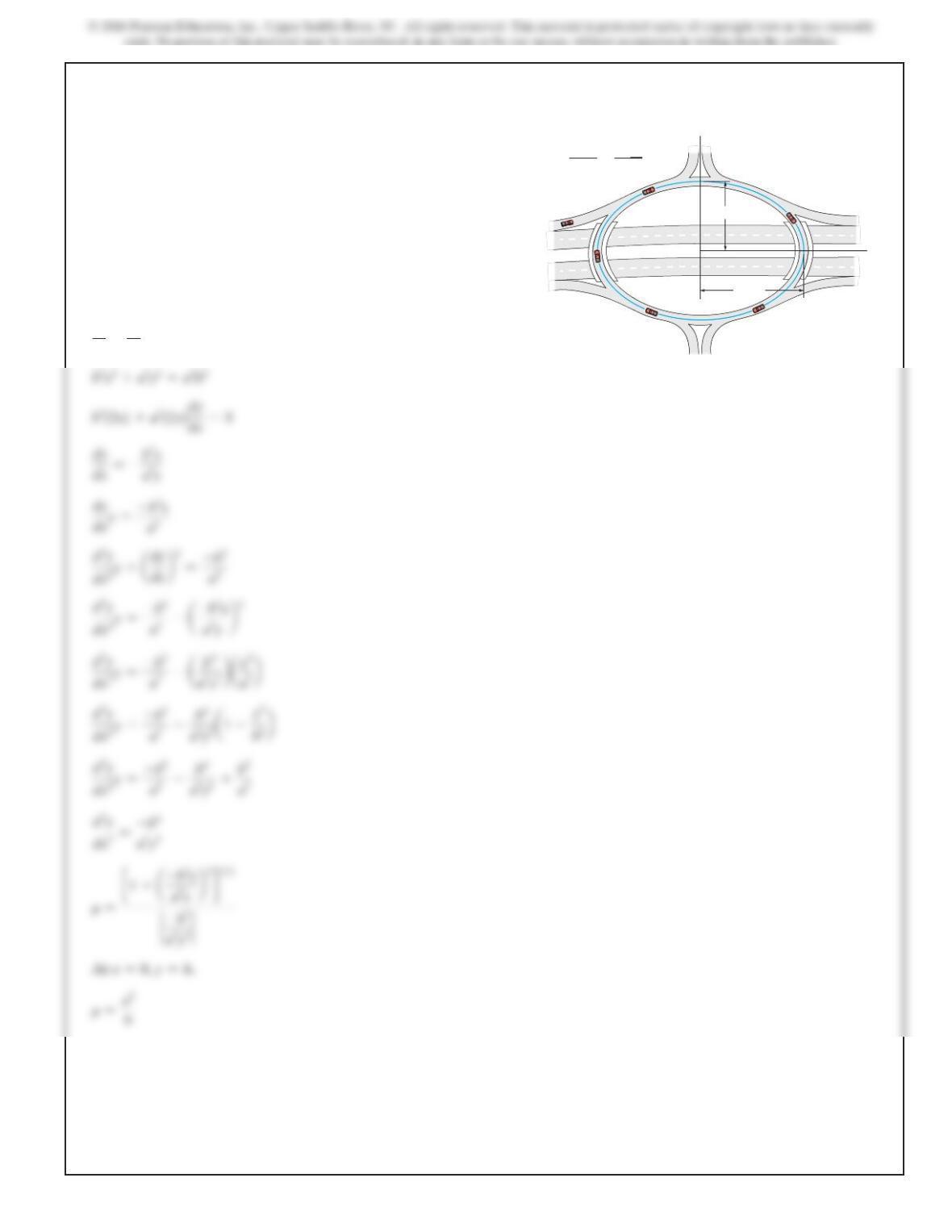
The motorcycle is traveling at 40 m
>
s when it is at A. If the
speed is then decreased at
v
#
= – (0.05 s) m
>
s2, where s is in
meters measured from A, determine its speed and
acceleration when it reaches B.
SOLUTION
Velocity. The velocity of the motorcycle along the circular track can be determined
by integrating
vdv=ads
with the initial condition
v=40 m>s at s=0.
Here,
at=–0.05s.
Acceleration. At B, the tangential and normal components are
A
B
150 m
150 m
60
Ans:
147
12–139.
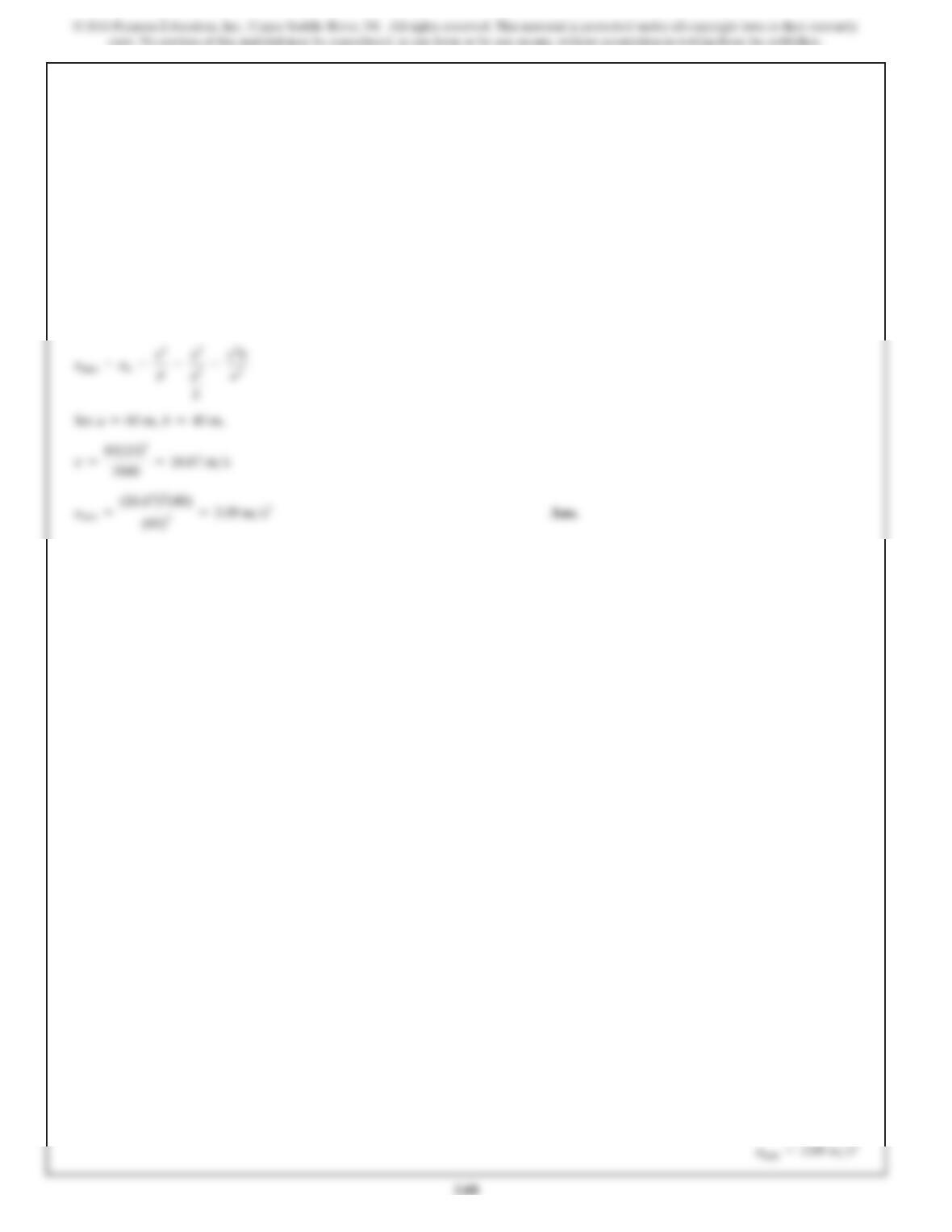
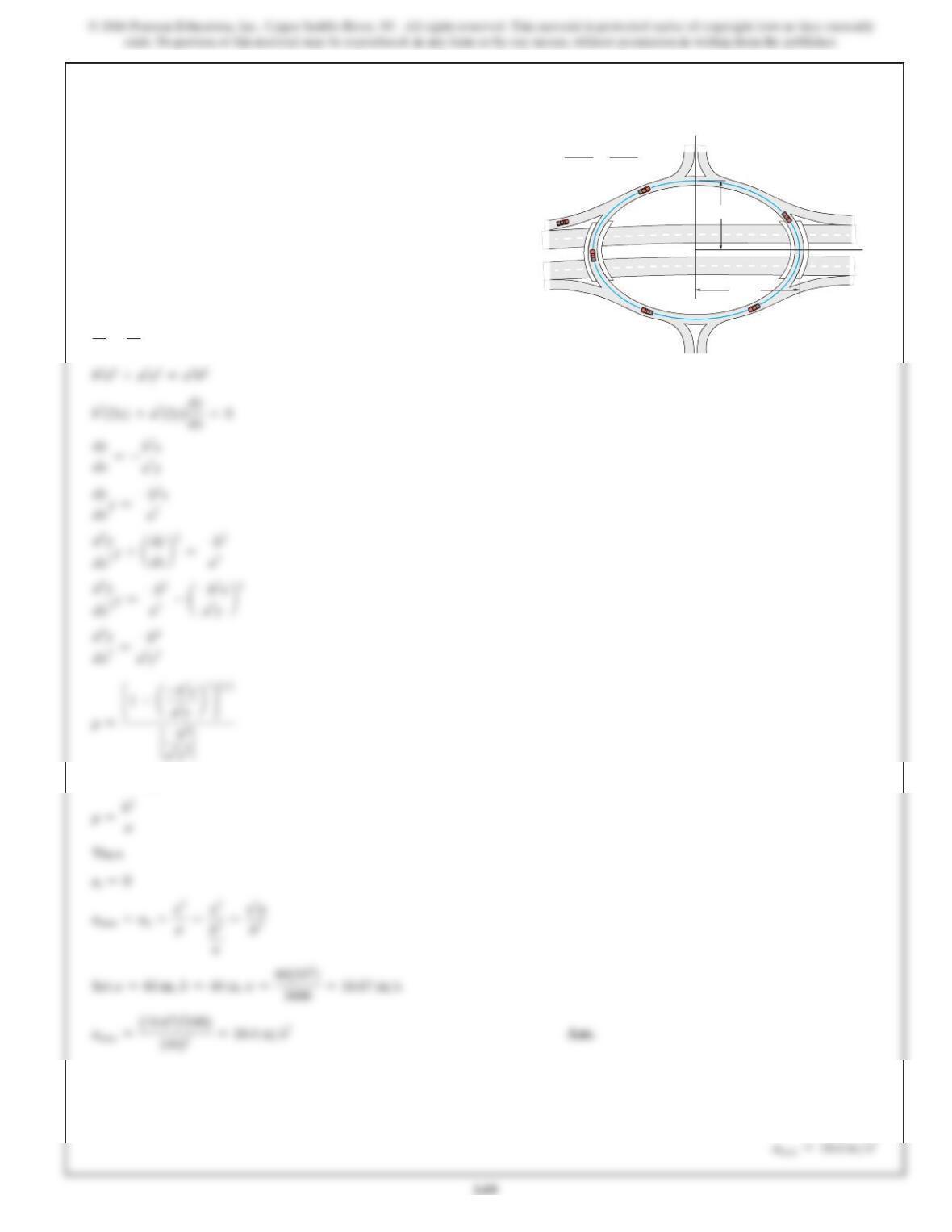
Cars move around the “traffic circle” which is in the shape of
an ellipse. If the speed limit is posted at 60 km
>
h, determine
the minimum acceleration experienced by the passengers.
SOLUTION
x
2
a
2+y
2
b
2=1
x
60 m
40 m
y
(40)2 1y2
(60)2
x2
(60
)
2
x
40
y
0)
2
1
2
12–139. Continued
Thus
at=0
Ans:
*12–140.
Cars move around the “traffic circle” which is in the shape of
an ellipse. If the speed limit is posted at 60 km
>
h, determine
the maximum acceleration experienced by the passengers.
SOLUTION
x
2
a
2+y
2
b
2=1
At
x=a, y=0,
x
60 m
40 m
y
(40)2 1y2
(60)2
x2
(60
)
2
x
40
y
0)
2
1
2
Ans:
150
12–141.
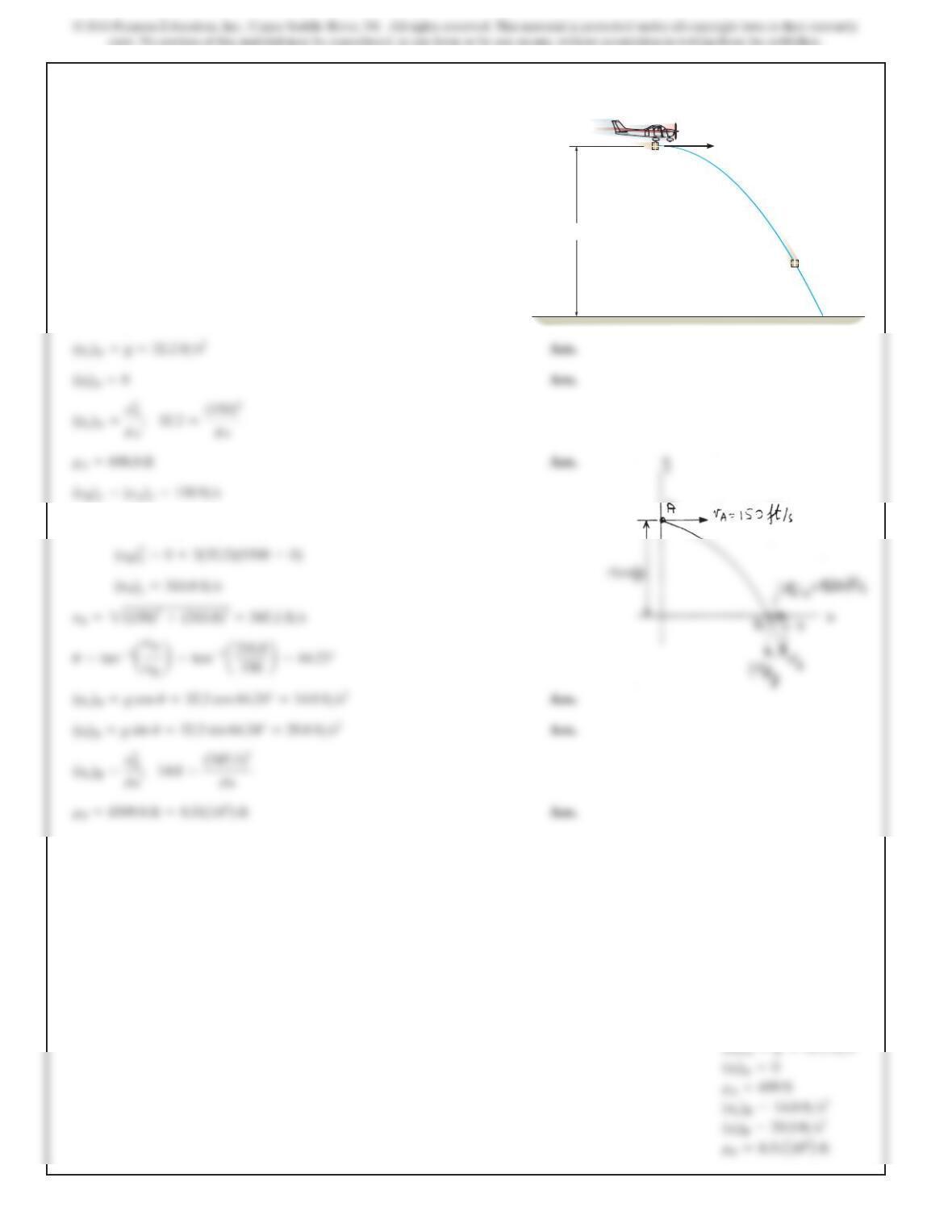
A package is dropped from the plane which is flying with a
constant horizontal velocity of Determine
the normal and tangential components of acceleration and
the radius of curvature of the path of motion (a) at the
moment the package is released at A, where it has a
horizontal velocity of and (b) just before it
strikes the ground at B.
vA=150 ft>s,
vA=150 ft>s.
v
A
A
B
1500 ft
SOLUTION
Initially (Point A):
(+T)n2=n0
2+2ac(s–s0)
Ans:
12–142.
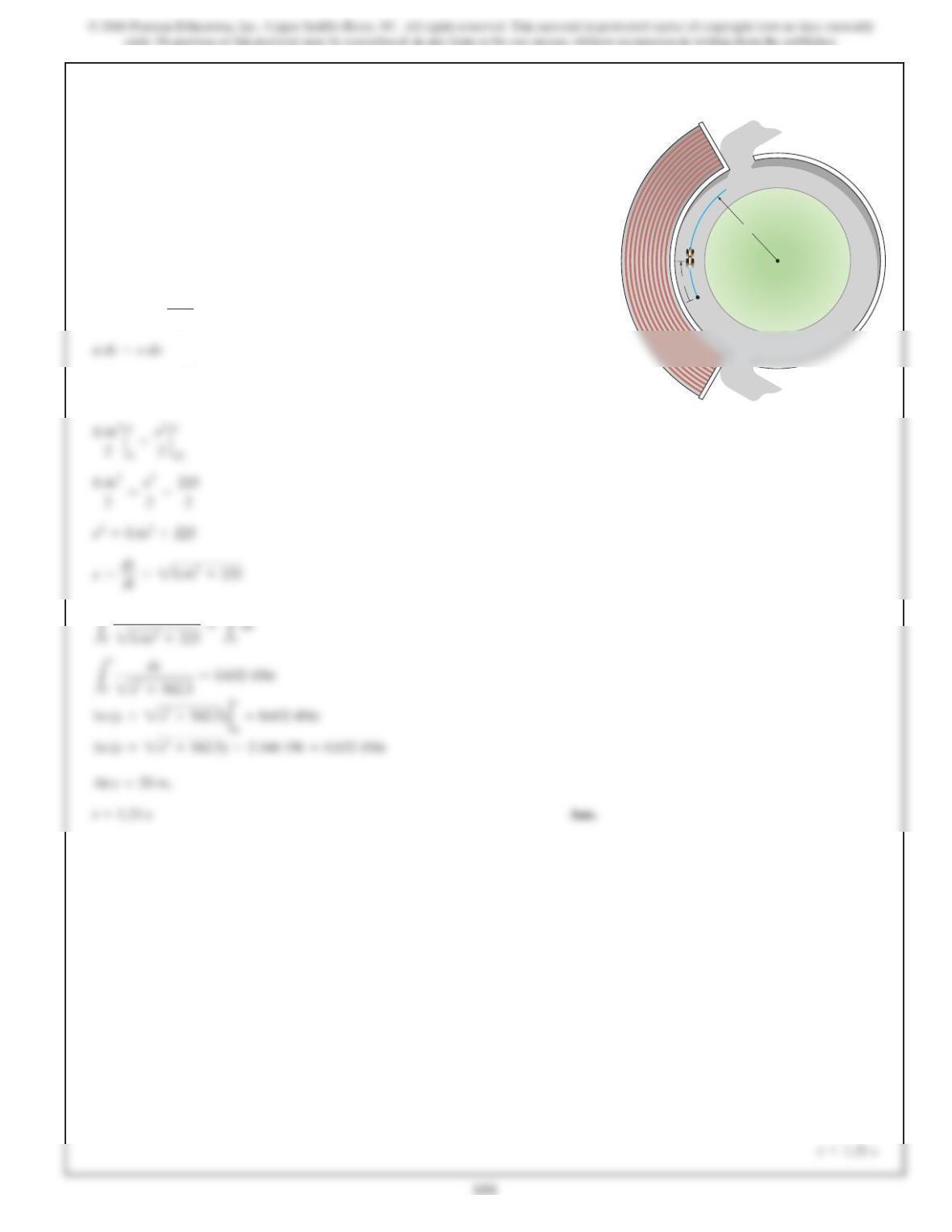
The race car has an initial speed at A. If it
increases its speed along the circular track at the rate
where sis in meters, determine the time
needed for the car to travel 20 m. Take r=150 m.
at=10.4s2m>s2,
vA=15 m
>
s
SOLUTION
ds
Ls
0
0.4sds=Ln
15
ndn
at=0.4s=ndn
ds
A
s
r
Ans:
152
12–143.
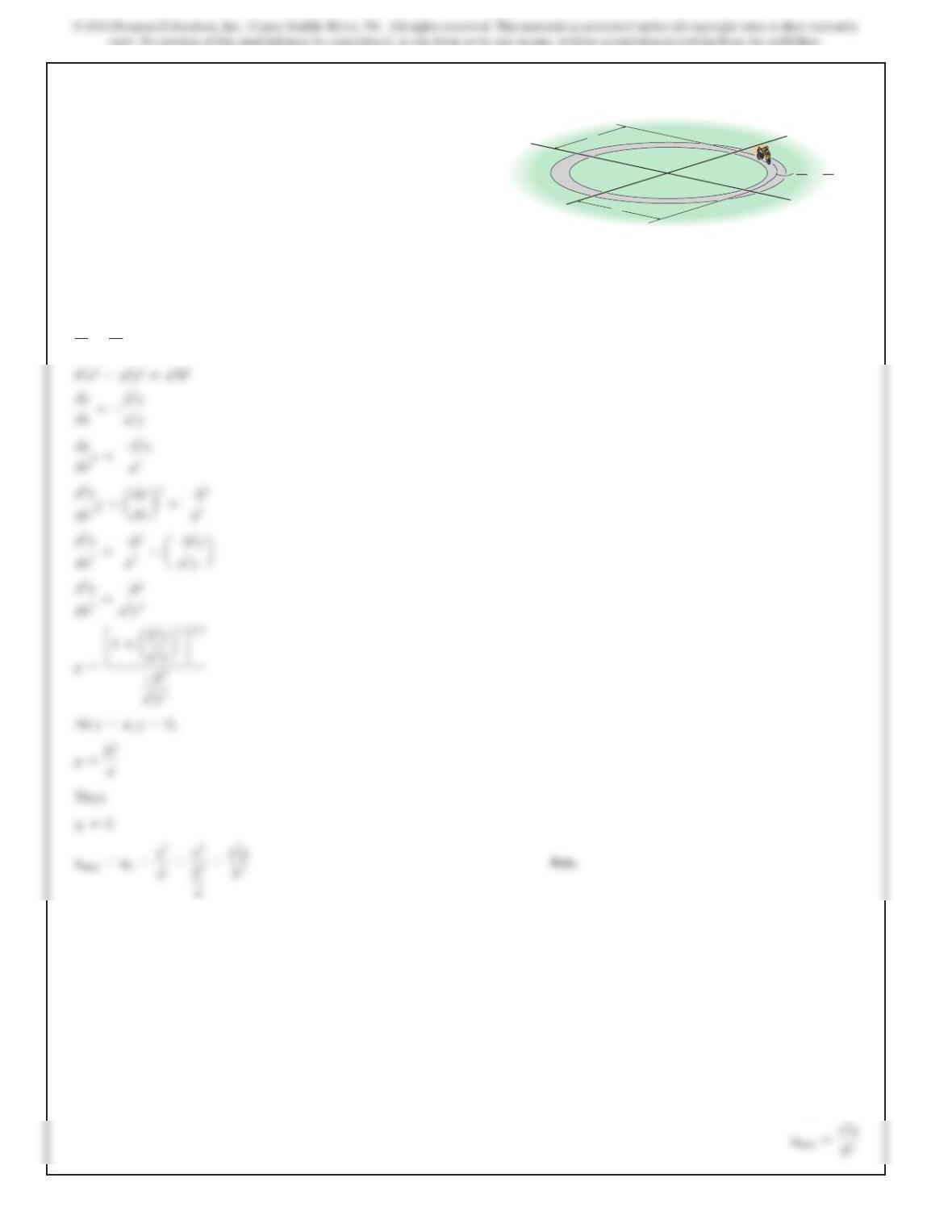
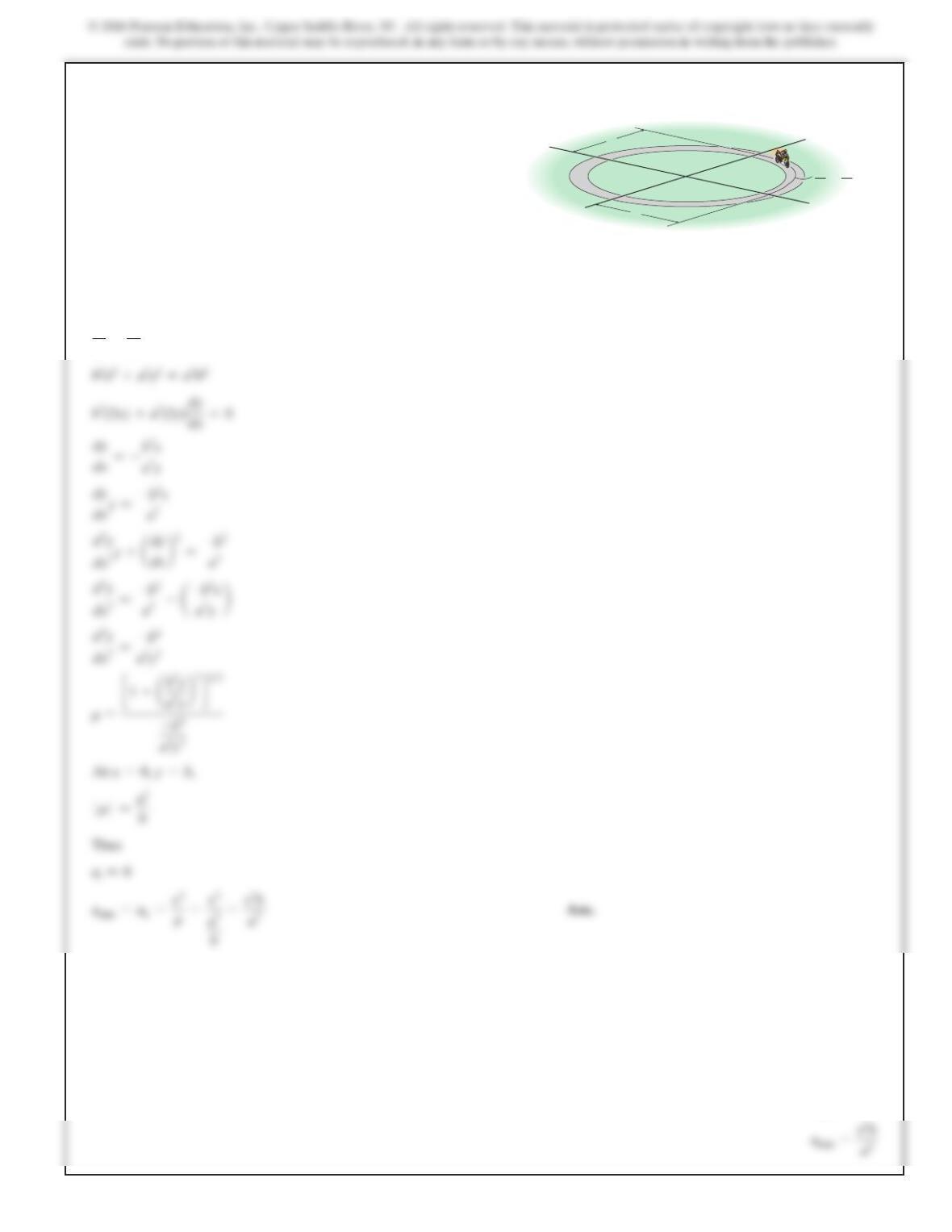
The motorcycle travels along the elliptical track at a
constant speed v. Determine its greatest acceleration if
a7b
.
SOLUTION
x
2
a
2+y
2
b
2=1
b
a
y
x
fi 1
x2
a2
y2
b2
Ans:
153
*12–144.
The motorcycle travels along the elliptical track at a
constant speed v. Determine its smallest acceleration if
a7b
.
SOLUTION
x
2
a
2+y
2
b
2=1
b
a
y
x
fi 1
x2
a2
y2
b2
Ans:
154
12–145.
SOLUTION
Distance Traveled: Initially the distance between the particles is
The distance traveled by particle Ais determined as follows:
Thus the distance between the two cyclists after is
Acceleration:
For A, when ,
The magnitude of the A’s acceleration is
t=1s
t=1s
vdv=ads
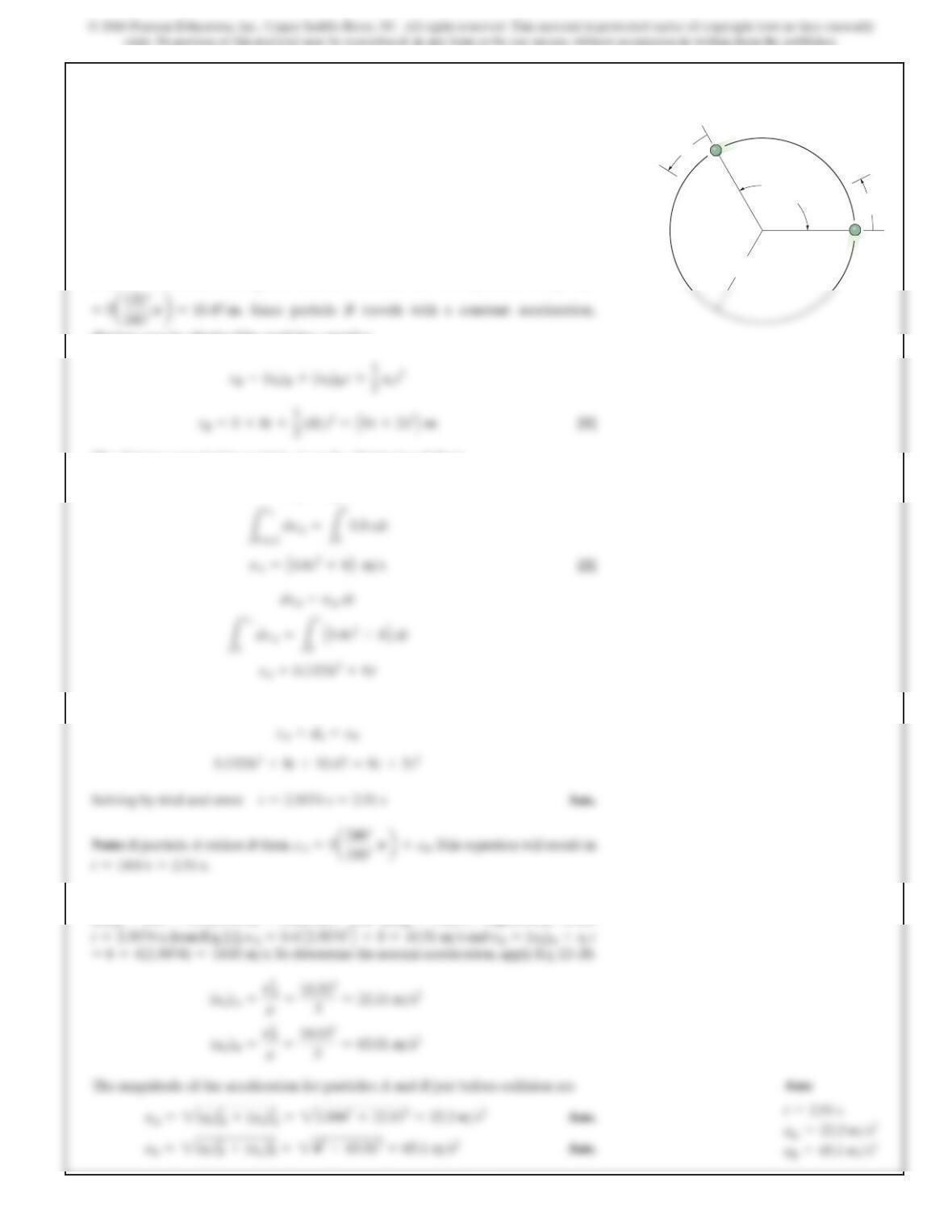
Particles Aand Bare traveling counter-clockwise around a
circular track at a constant speed of 8 . If at
the instant shown the speed of Abegins to increase by
where sAis in meters, determine the
distance measured counterclockwise along the track from B
to Awhen .What is the magnitude of the
acceleration of each particle at this instant?
t=1s
(at)A=(0.4sA)m>s2,
m>s
r5m
120fi
sB
sA
A
B
u
155
12–146.
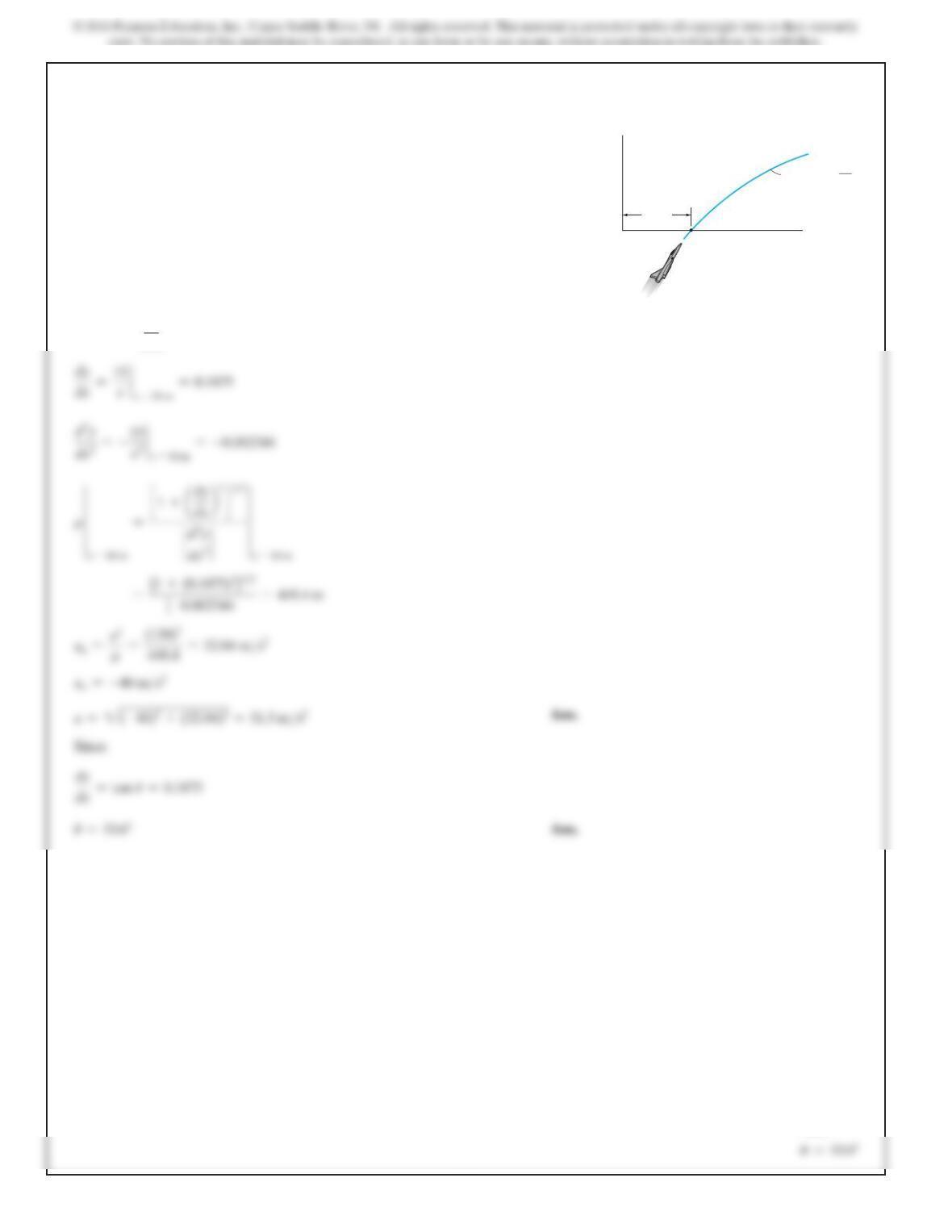
Particles Aand Bare traveling around a circular track at a
speed of 8 at the instant shown. If the speed of Bis
increasing by ,and at the same instant Ahas an
increase in speed of ,determine how long it
takes for a collision to occur.What is the magnitude of the
acceleration of each particle just before the collision occurs?
(at)A=0.8tm>s2
(at)B=4m>s2
m>s
SOLUTION
Distance Traveled: Initially the distance between the two particles is
distance can be obtained by applying equation
The distance traveled by particle Acan be obtained as follows.
In order for the collision to occur
Acceleration: The tangential acceleration for particle Aand Bwhen are
and ,respectively.When
(at)B=4m>s2
(at)A=0.8 t=0.8 (2.5074) =2.006 m>s2
t=2.5074
dyA=aAdt
d0=ru
r5m
120fi
sB
sA
A
B
u
156
12–147.
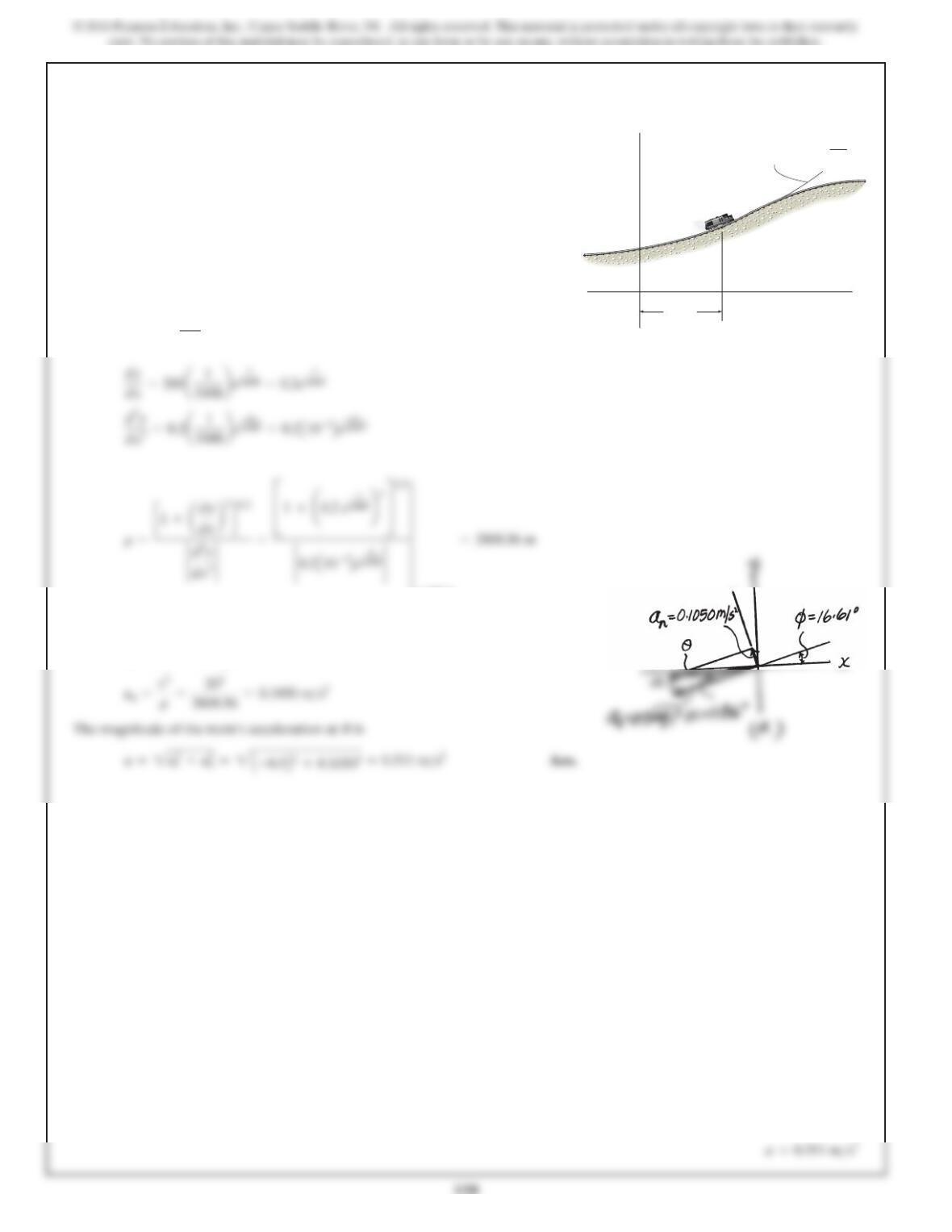
The jet plane is traveling with a speed of 120 m
>
s which is
decreasing at 40 m
>
s2 when it reaches point A. Determine
the magnitude of its acceleration when it is at this point.
Also, specify the direction of flight, measured from the
x axis.
SOLUTION
y=15 ln
a
x
80 b
y fi 15 lnQ
R
80 m
y
x
A
x
80
Ans:
y fi 15 lnQ R
80 m
y
x
A
x
80
*12–148.
The jet plane is traveling with a constant speed of 110 m
>
s
along the curved path. Determine the magnitude of the
acceleration of the plane at the instant it reaches
point A(y = 0).
SOLUTION
y=15 ln
a
x
80 b
Ans:
12–149.
SOLUTION
Radius of Curvature:
Acceleration:
at=v
#=-0.5 m>s2
y=200e
x
1000
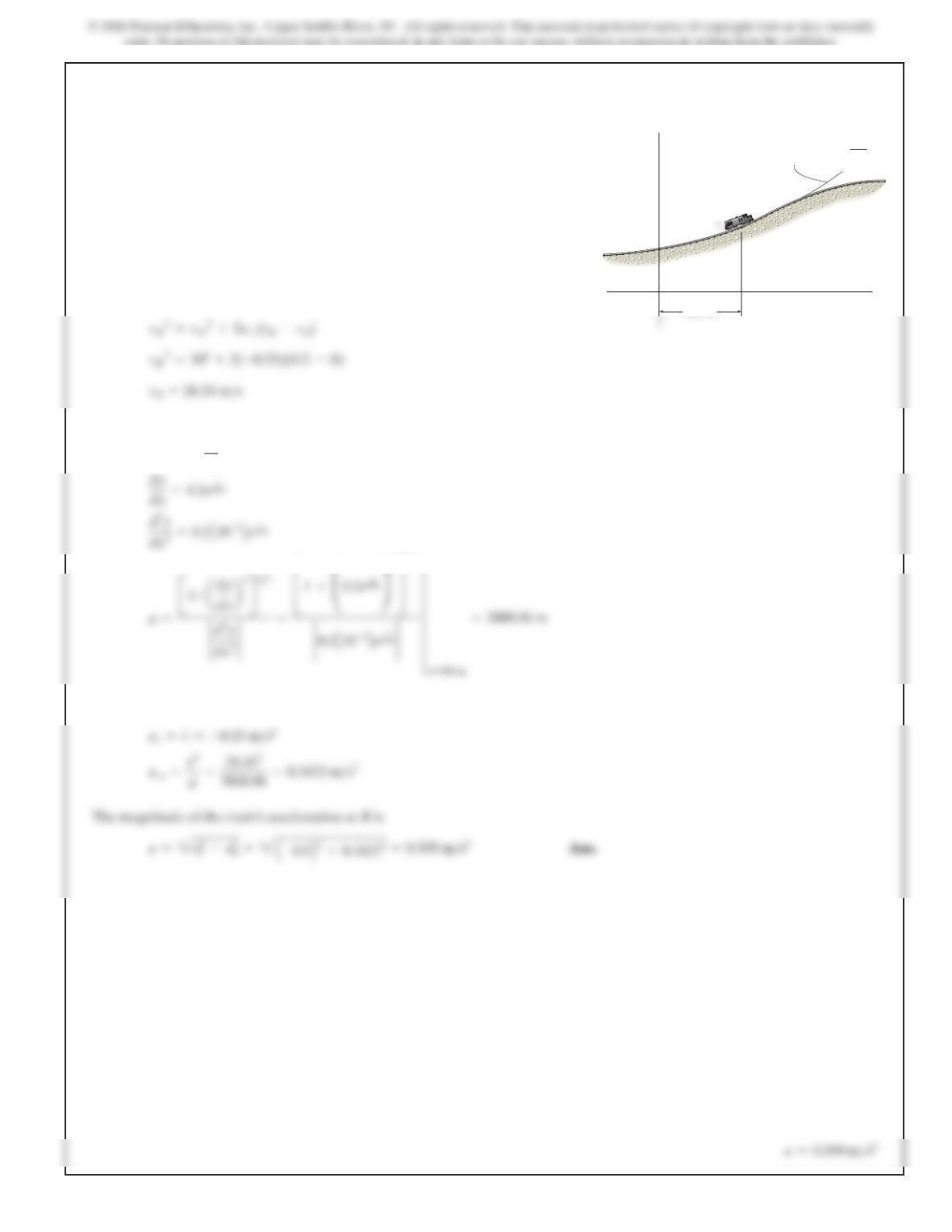
The train passes point Bwith a speed of which is
decreasing at . Determine the magnitude of
acceleration of the train at this point.
=– 0.5 m>s2
at
20 m>sy
x
400 m
y200 e
x
1000
B
A
Ans:
159
12–150.
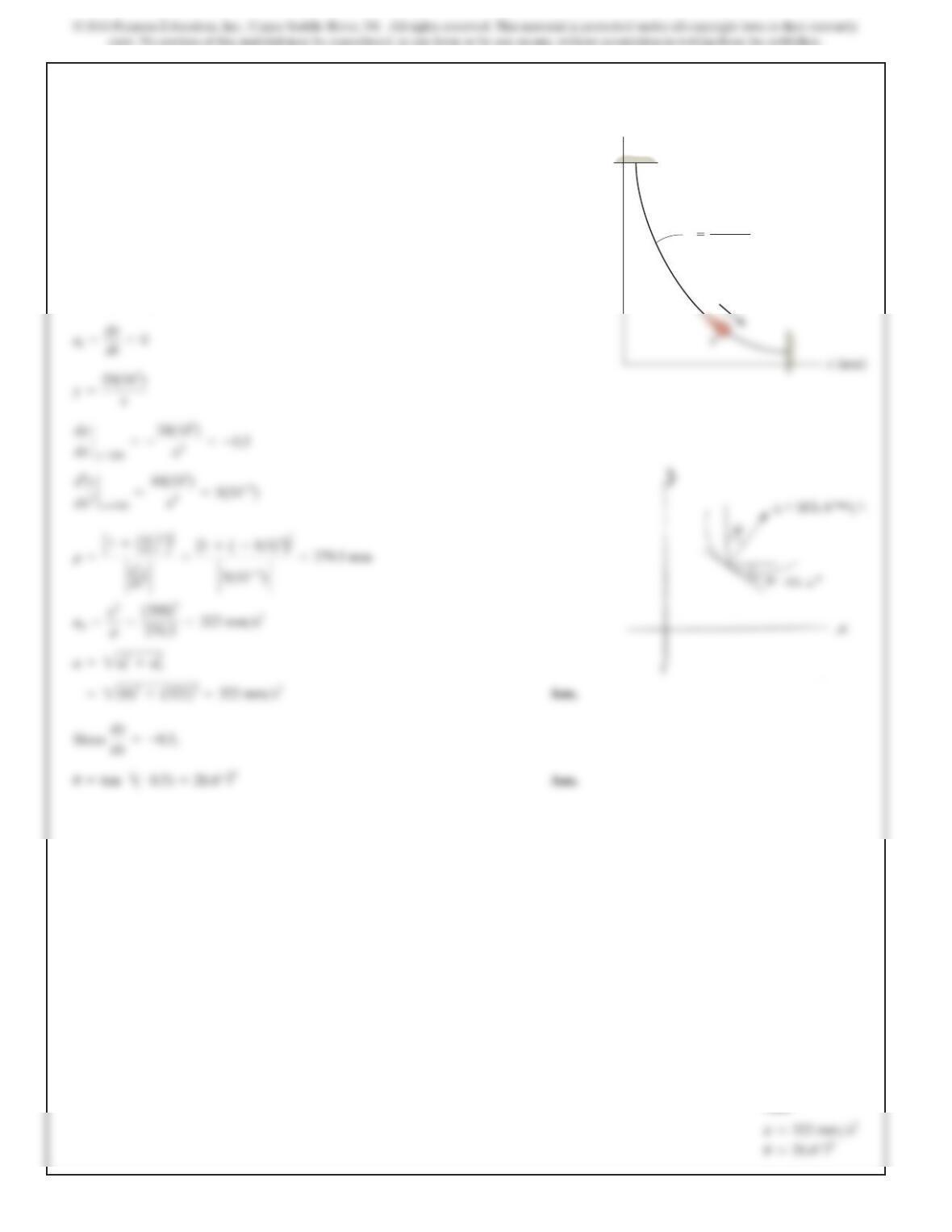
The train passes point Awith a speed of and begins
to
decrease its speed at a constant rate of .
Determine
the magnitude of the acceleration of the train
when it reaches point
B, where .sAB =412 m
at=– 0.25 m>s2
30 m>s
SOLUTION
V
elocity: The speed of the train at Bcan be determined from
Radius of Curv
ature:
Acceleration:
y=200ex
1000
y
x
400 m
y200 e
x
1000
B
A
Ans:
160
12–151.
SOLUTION
n=300 mm>s
The particle travels with a constant speed of
along the curve. Determine the particle’s acceleration when
it is located at point (200 mm, 100 mm) and sketch this
vector on the curve.
300 mm
>
s
y
(mm)
v
y20(10
3
)
x
Ans: