233
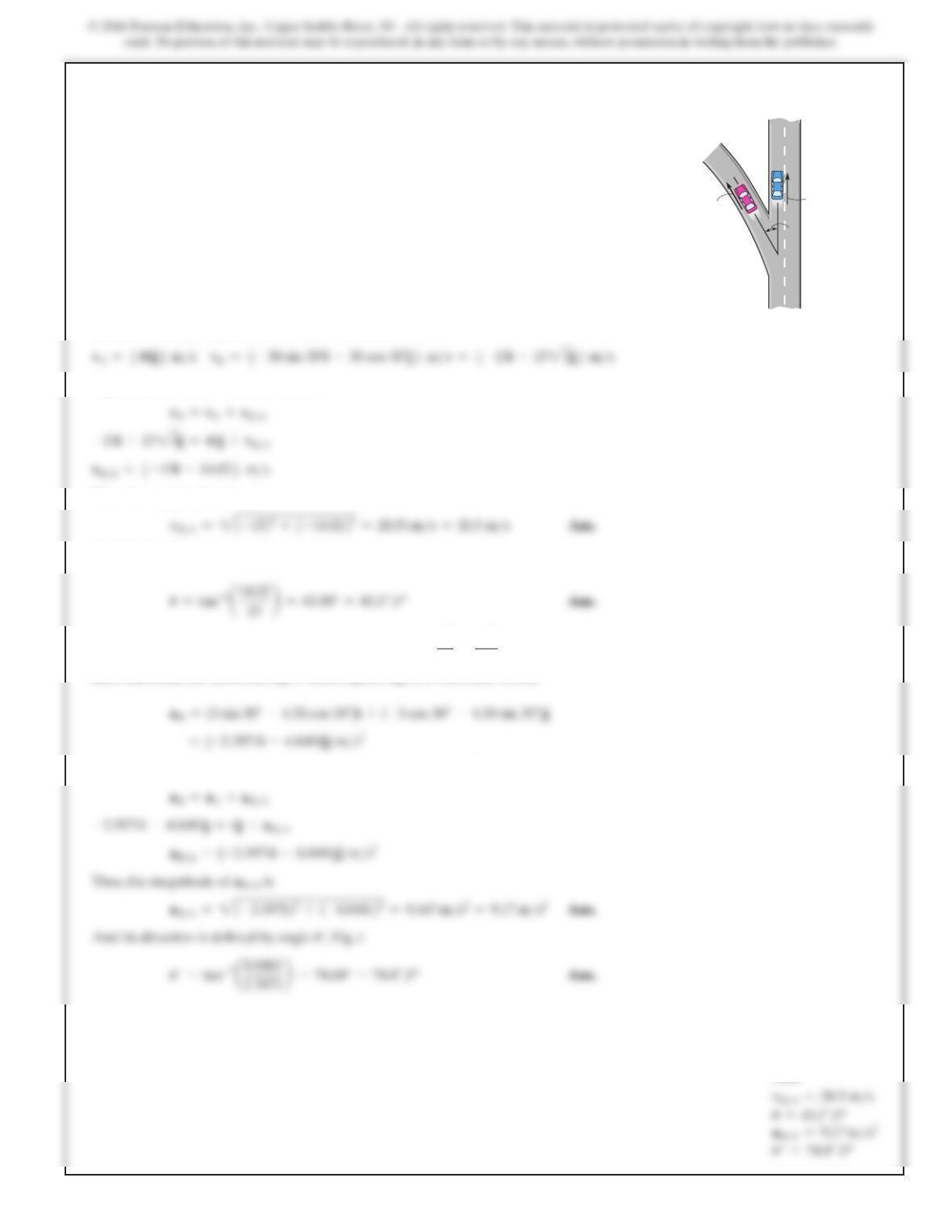
*12–224.
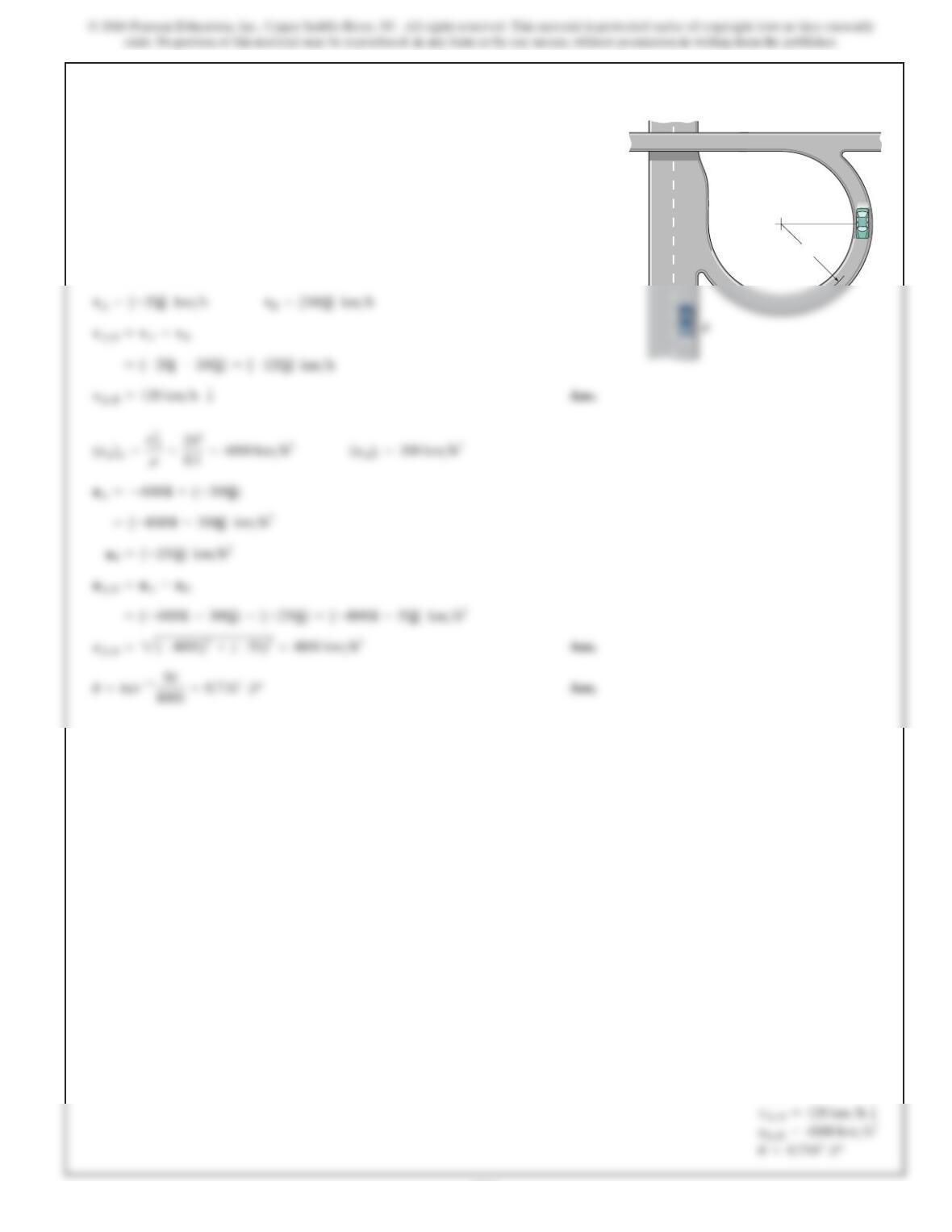
At the instant shown, car Ahas a speed of , which is
being increased at the rate of as the car enters an
expressway. At the same instant, car Bis decelerating at
while traveling forward at . Determine
the velocity and acceleration of Awith respect to B.
100 km>h250 km>h2
300 km>h2
20 km
>
h
SOLUTION
A
100 m
Ans:
234
12–225.
Cars Aan
d
Bare trave
li
ng aroun
d
t
h
e c
i
rcu
l
ar race trac
k
.
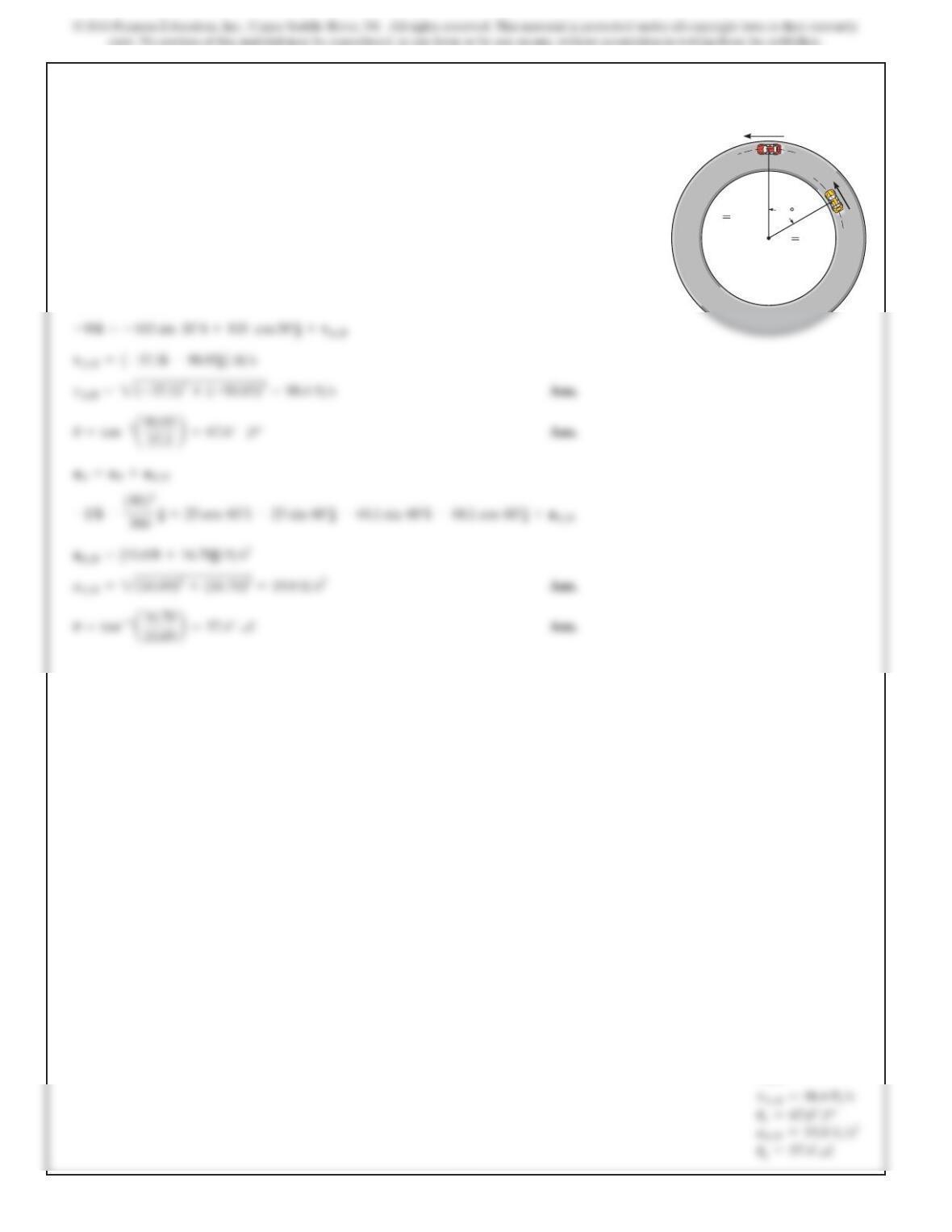
At the instant shown, Ahas a speed of and is
increasing its speed at the rate of whereas Bhas a
speed of and is decreasing its speed at
Determine the relative velocity and relative acceleration of
car Awith respect to car Bat this instant.
25 ft>s2.105 ft>s
15 ft>s2,
90 ft>s
SOLUTION
vA=vB+vA>B
A
B
v
A
v
B
r
B
250 ft
r
A
300 ft 60
Ans:
235
12–226.
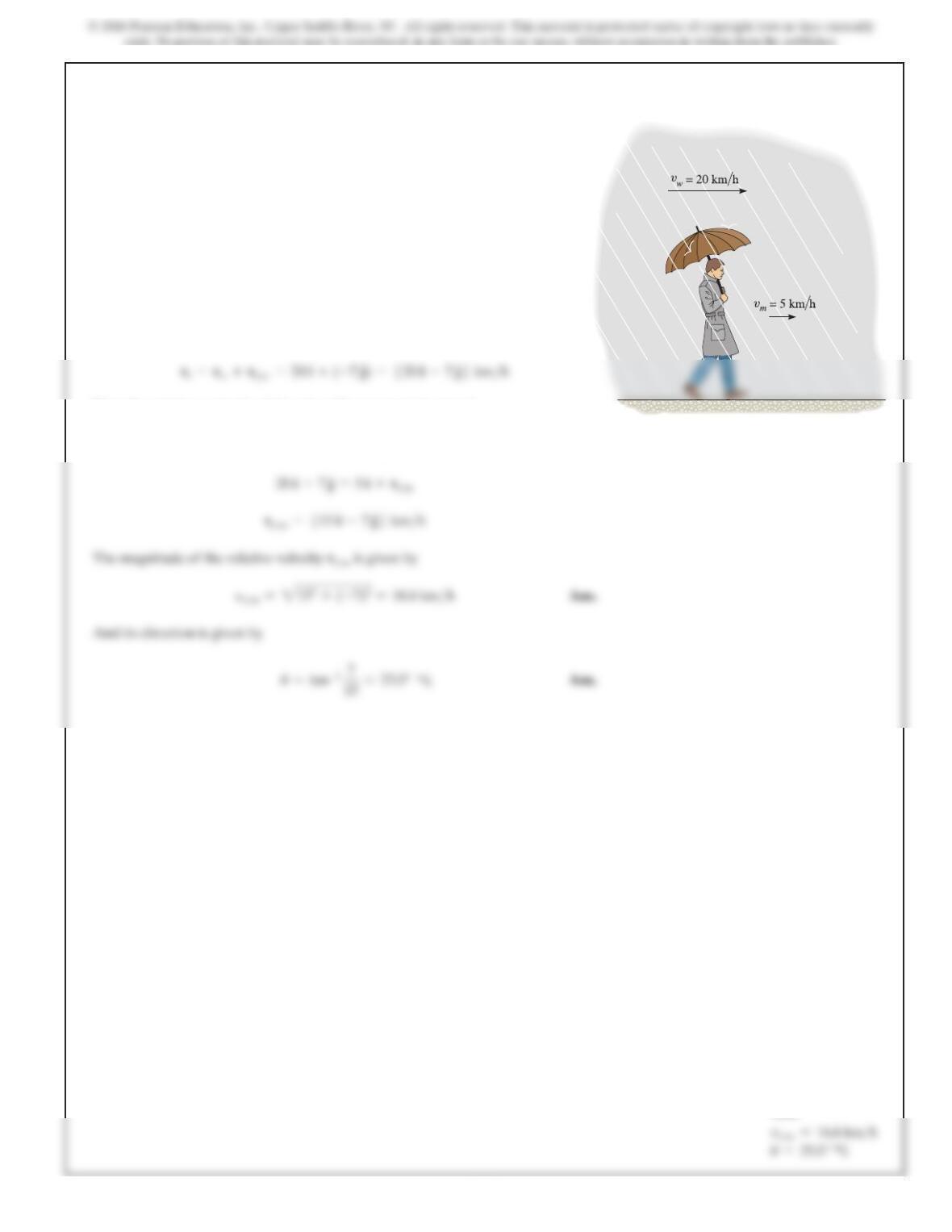
A man walks at 5 k
m
>
h in the direction of a 20-km
>
h wind.
If
raindrops fall vertically at 7 km>h in still air, determine
the
direction in which the drops appear to fall with respect
to the man.
SOLUTION
Relative Velocity:
The velocity of the rain must be determined first. Applying
Eq. 12–34 gives
Th
us, the relatives velocity of the rain with respect to the man is
vr=vm+vr>m
Ans:
236
12–227.
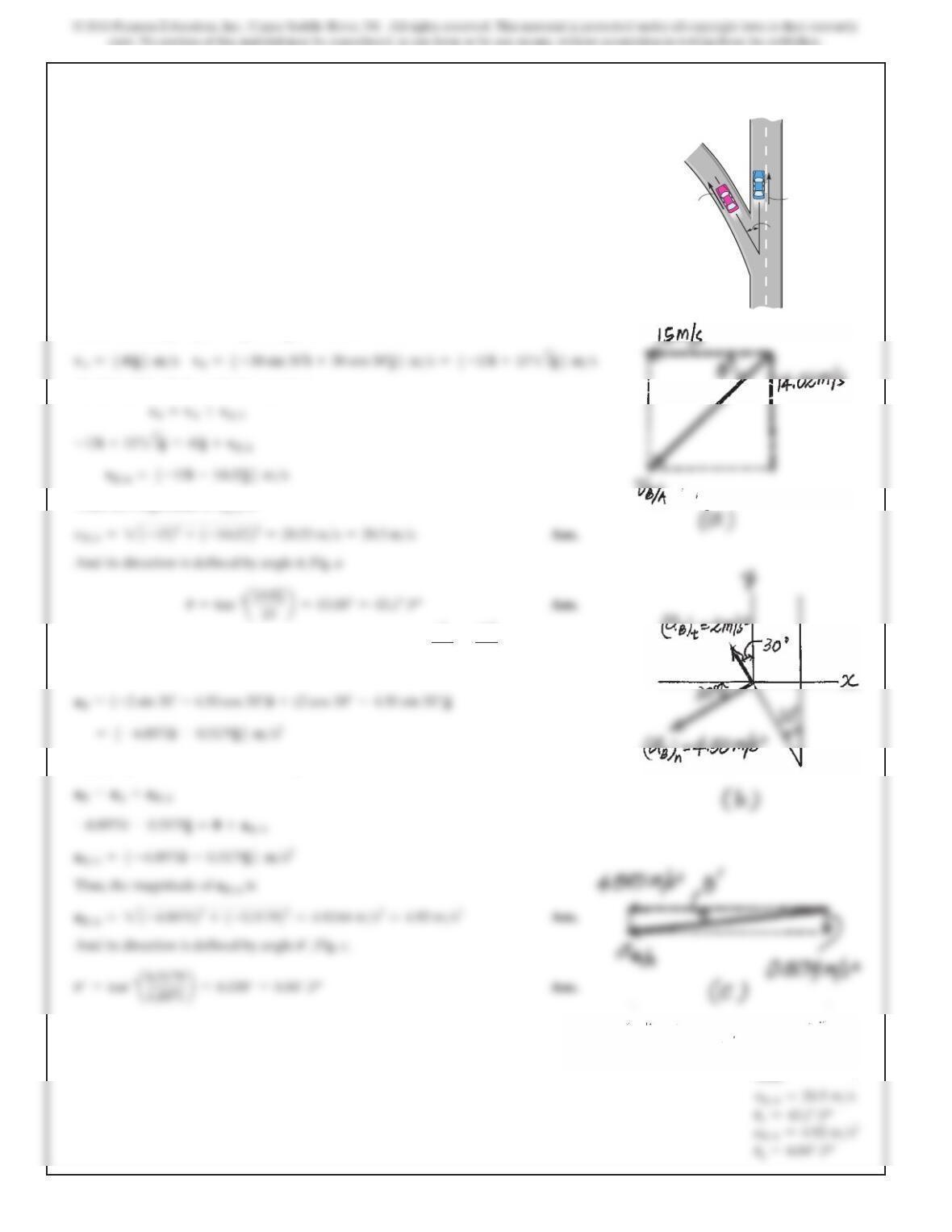
At the instant shown, cars A and B are traveling at velocities
of 40 m
>
s and 30 m
>
s, respectively. If B is increasing its
velocity by 2 m
>
s2, while A maintains a constant velocity,
determine the velocity and acceleration of B with respect
toA. The radius of curvature at B is
r
B = 200 m.
BA
30fi
vA 40 m/
s
vB 30 m/s
SOLUTION
Relative velocity. Express vA and vB as Cartesian vectors.
Applying the relative velocity equation,
v
v
Thus, the magnitude of
v
Relative Acceleration. Here,
(aB)t=2 m>s2
and (aB)n=
v
2
B
r=
30
2
200
=4.50 m
>
s2
and their directions are shown in Fig. b. Then, express
aB
as a Cartesian vector,
Applying the relative acceleration equation with
aA=0
,
a
a
a
Ans:
237
SOLUTION
Relative velocity. Express
vA
and
vB
as Cartesian vector.
Applying the relative velocity equation,
v
v
>
*12–228.
At the instant shown, cars A and B are traveling at velocities
of 40 m
>
s and 30 m
>
s, respectively. If A is increasing its speed
at 4 m
>
s2, whereas the speed of B is decreasing at 3 m
>
s2,
determine the velocity and acceleration of B with respect
toA. The radius of curvature at B is
r
B = 200 m.
BA
30fi
vA 40 m/s
vB 30 m/s
Thus the magnitude of
v
B
>
A is
>
And its direction is defined by angle
u
, Fig a.
Relative Acceleration. Here
(aB)t=3 m>s2
and (aB)n=
v
2
B
r=
30
2
200
=4.5 m
>
s2 and
their directions are shown in Fig. b. Then express aB as a Cartesian vector,
Applying the relative acceleration equation with aA
=
{4j} m
>
s
2
,
a
>
a
>
>
Ans:
>
>
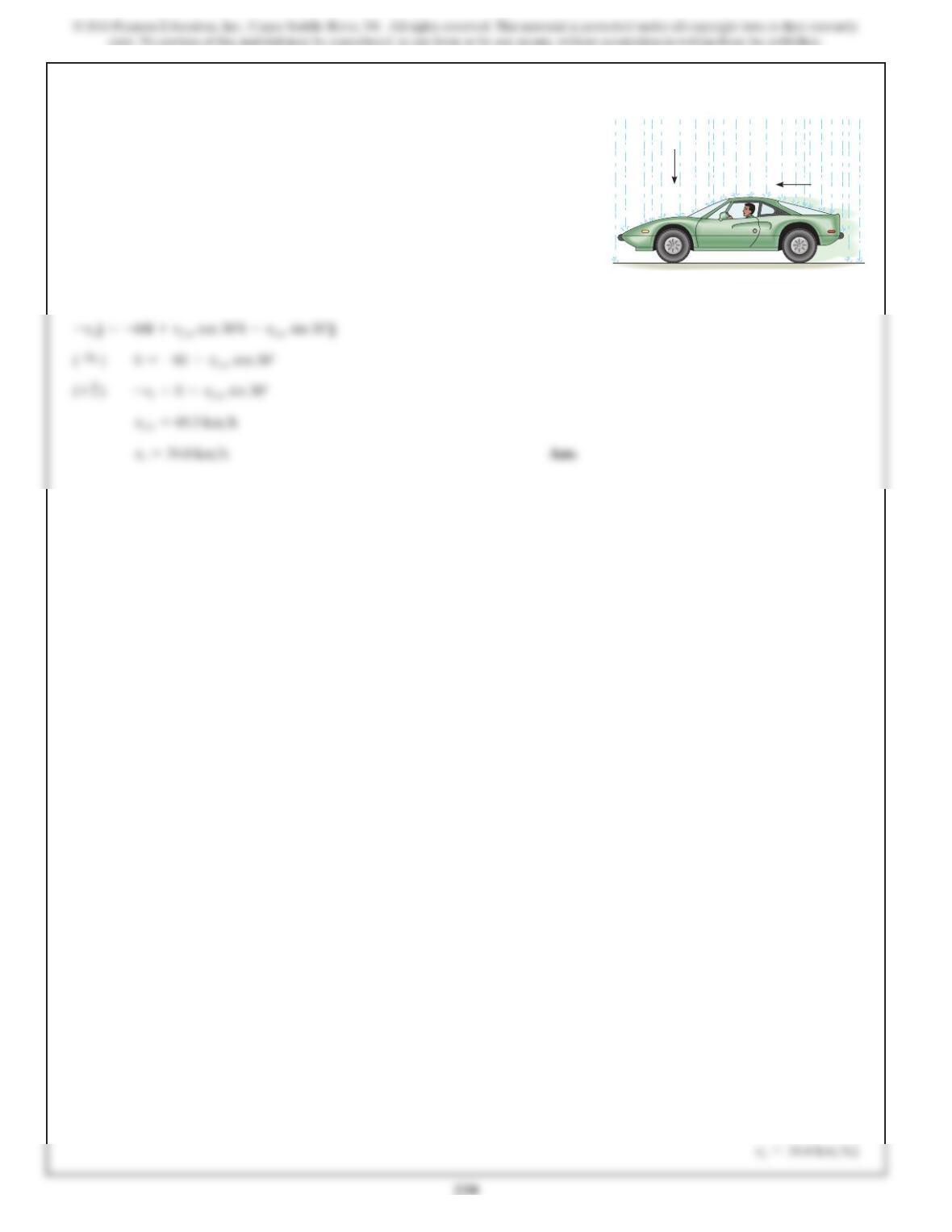
12–229.
A passenger in an automobile observes that raindrops make
an angle of 30° with the horizontal as the auto travels
forward with a speed of 60 km/h. Compute the terminal
(constant) velocity of the rain if it is assumed to fall
vertically.
vr
SOLUTION
vr=va+vr>a
vr
va=60 km/h
Ans:
239
12–230.
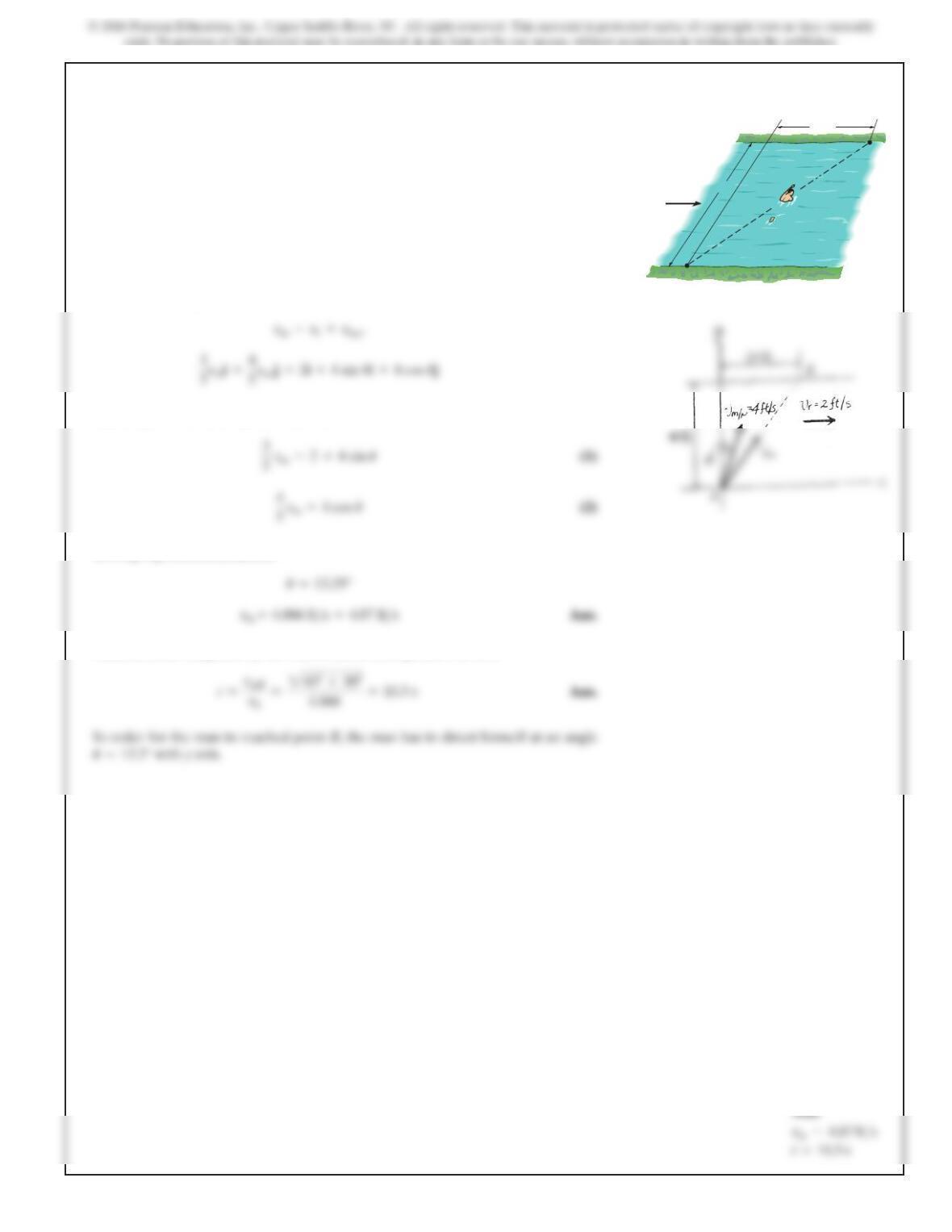
A man can swim at 4 ft
/
s in still water. He wishes to cross
the 40-ft-wide river to point B, 30 ft downstream. If the river
flows with a velocity of 2 ft/s, determine the speed of the
man and the time needed to make the crossing. Note:While
in the water he must not direct himself toward point Bto
reach this point. Why?
SOLUTION
Relative Velocity:
Equating the i and j components, we have
Solving Eqs. (1) and (2) yields
Thus, the time trequired by the boat to travel from points Ato Bis
B
A
30 ft
vr=2ft/s 40 ft
240
12–231.
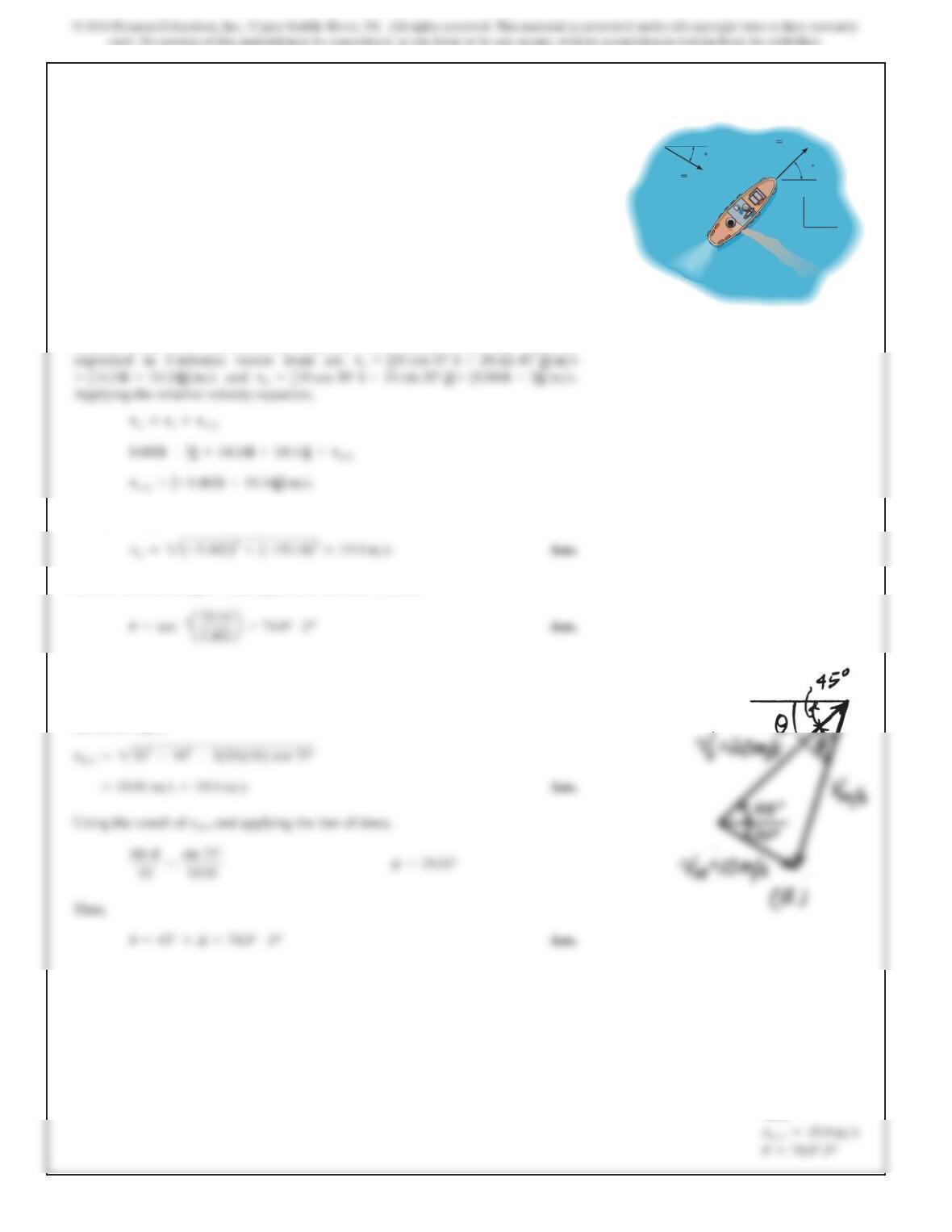
The ship travels at a constant speed of and the
wind is blowing at a speed of ,as shown.
Determine the magnitude and direction of the horizontal
component of velocity of the smoke coming from the smoke
stack as it appears to a passenger on the ship.
vw=10 m>s
vs=20 m
>
s
SOLUTION
Solution I
Vector Analysis: The velocity of the smoke as observed from the ship is equal to the
velocity of the wind relative to the ship. Here, the velocity of the ship and wind
Thus, the magnitude of is given by
and the direction angle that makes with the xaxis is
Solution II
Scalar Analysis:Applying the law of cosines by referring to the velocity diagram
shown in Fig. a,
vw/s
u
vw/s
vs20 m/s
vw10 m/s
y
x
30
45
Ans:
SOLUTION
1
+
S
2
s=s0+v0 t
*12–232.
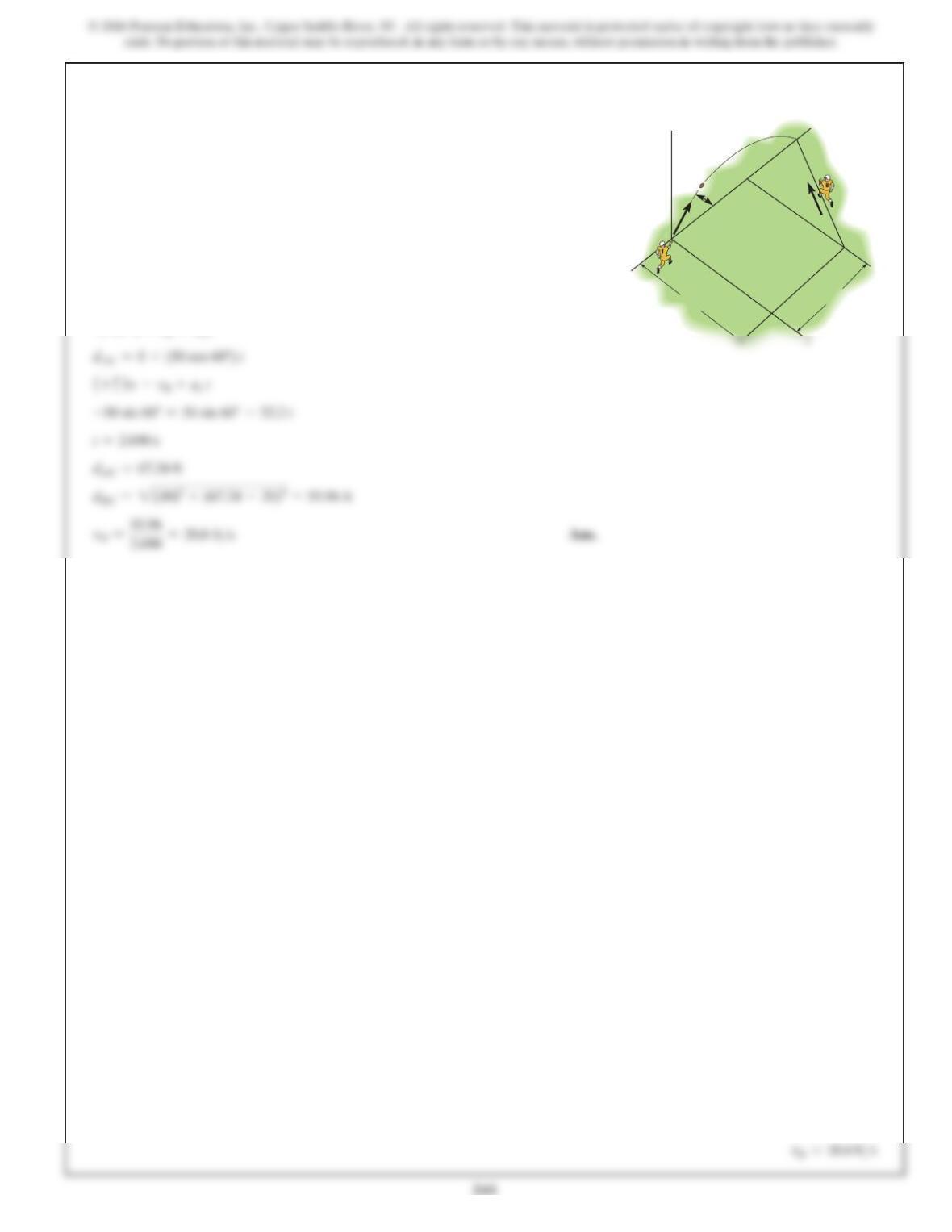
The football player at A throws the ball in the y–z plane at a
speed vA = 50 ft
>
s and an angle
u
A = 60° with the horizontal.
At the instant the ball is thrown, the player is at B and is
running with constant speed along the line BC in order to
catch it. Determine this speed, vB, so that he makes the
catch at the same elevation from which the ball
was thrown.
y
z
30 ft 20 ft
AB
C
vAvB
uA
Ans:
242
SOLUTION
1
+
S
2
s=s0+v0 t
12–233.
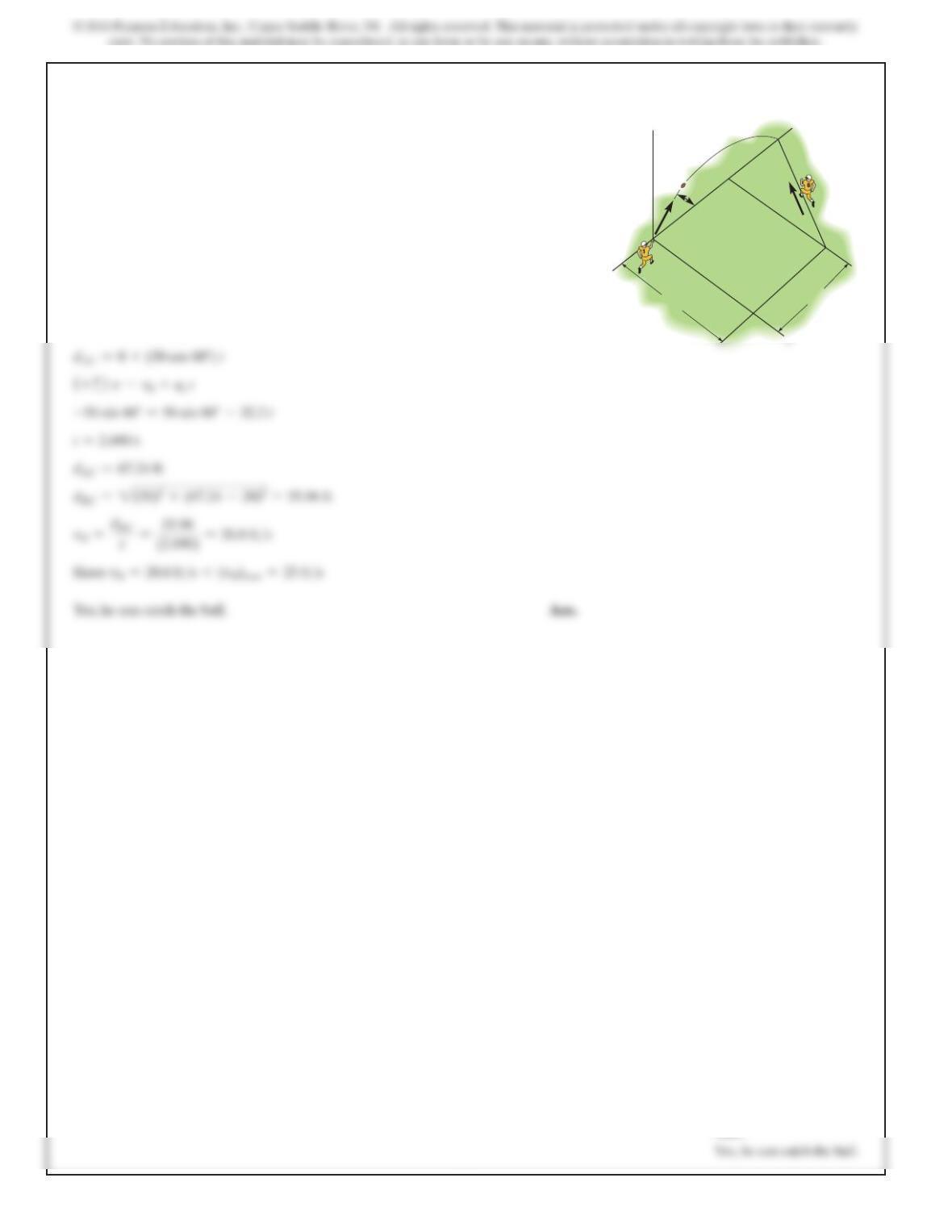
The football player at A throws the ball in the
y–z plane with a speed vA = 50 ft
>
s and an angle
u
A = 60° with
the horizontal. At the instant the ball is thrown, the player is
at B and is running at a constant speed of vB = 23 ft
>
s along
the line BC. Determine if he can reach point C, which has the
same elevation as A, before the ball gets there.
y
z
30 ft 20 ft
AB
C
vAvB
uA
Ans:
243
12–234.
SOLUTION
Ball:
Player B:
At the time of the catch
(:
+)s=s0+v0t
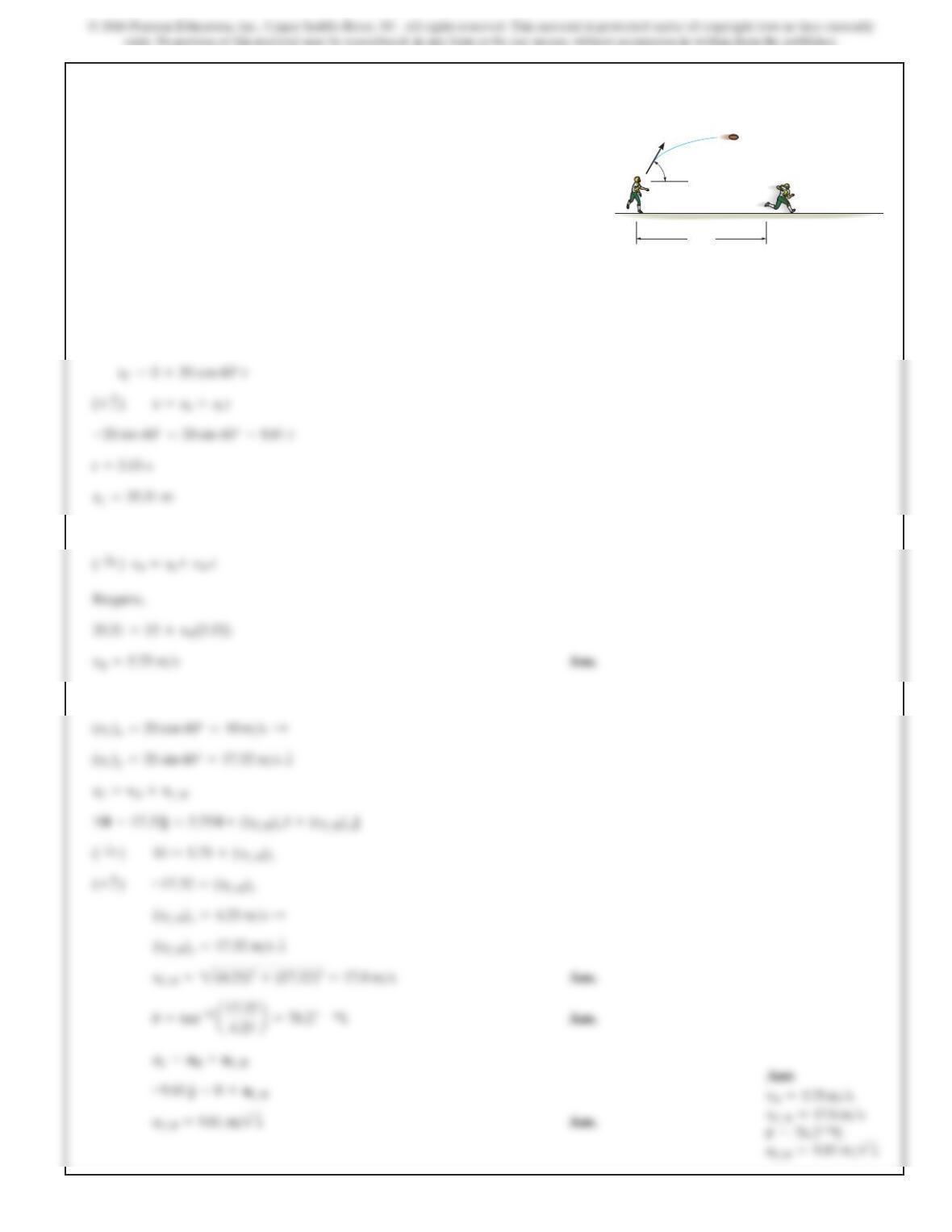
At a given instant the football player at
A
throws a football
C
with a velocity of 20 m/sin the direction shown. Determine
the constant speed at which the player at Bmust run so that
he can catch the football at the same elevation at which it was
thrown. Also calculate the relative velocity and relative
acceleration of the football with respect to Bat the instant the
catch is made.Player Bis 15 m away from Awhen Astarts to
throw the football. 15 m
A
B
C
20 m/s
60°
244
12–235.
SOLUTION
Velocity:Referring to Fig. a, the velocity of cars Aand Bexpressed in Cartesian
vector form are
Applying the relative velocity equation,
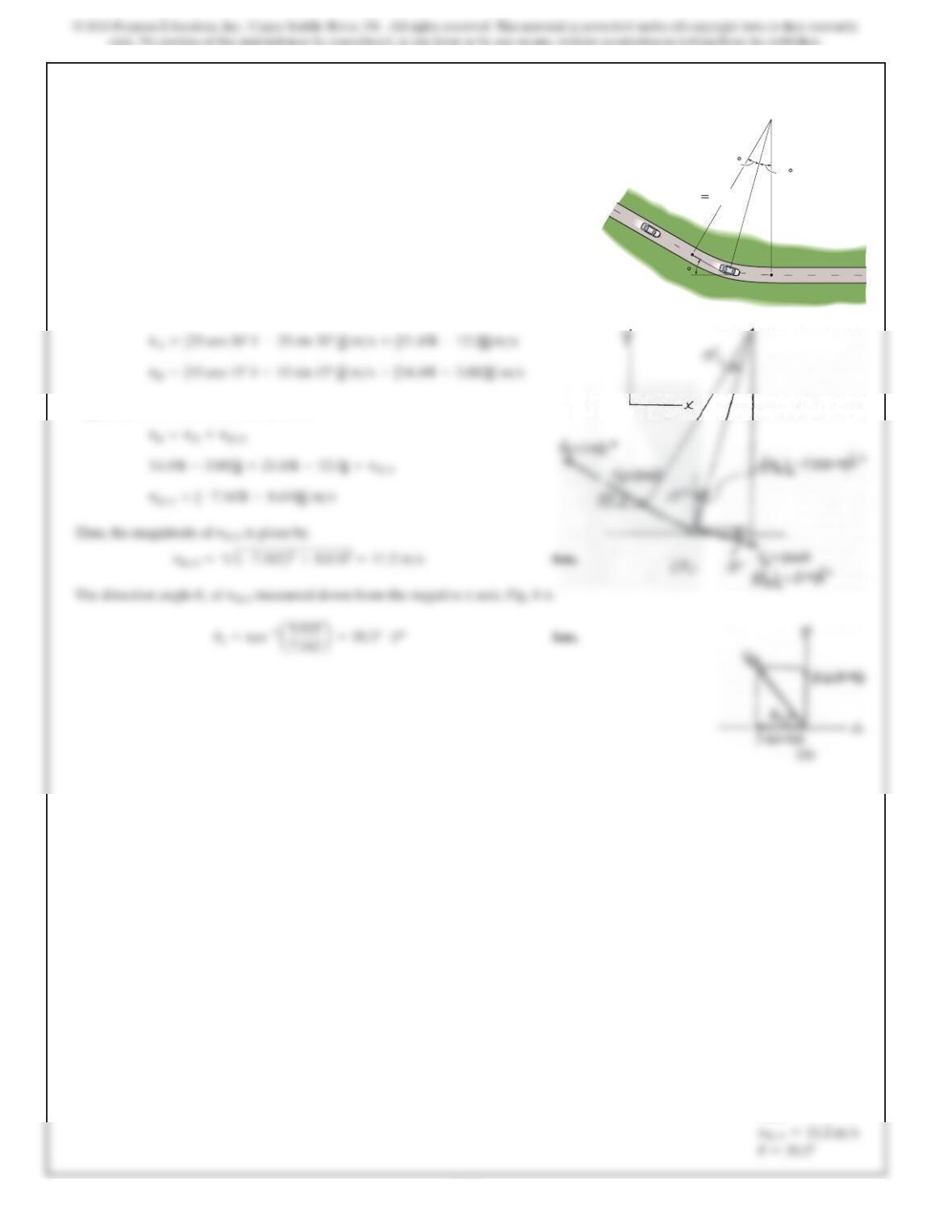
At the instant shown, car Atravels along the straight
portion of the road with a speed of . At this same
instant car Btravels along the circular portion of the road
with a speed of . Determine the velocity of car B
relative to car A.
15 m>s
25 m>s
A
B
r200 m
C
30
15 15
Ans: