121
SOLUTION
v
0
t=1=
1.83879i
+
4j
a=4 sin ri +4j
12–113.
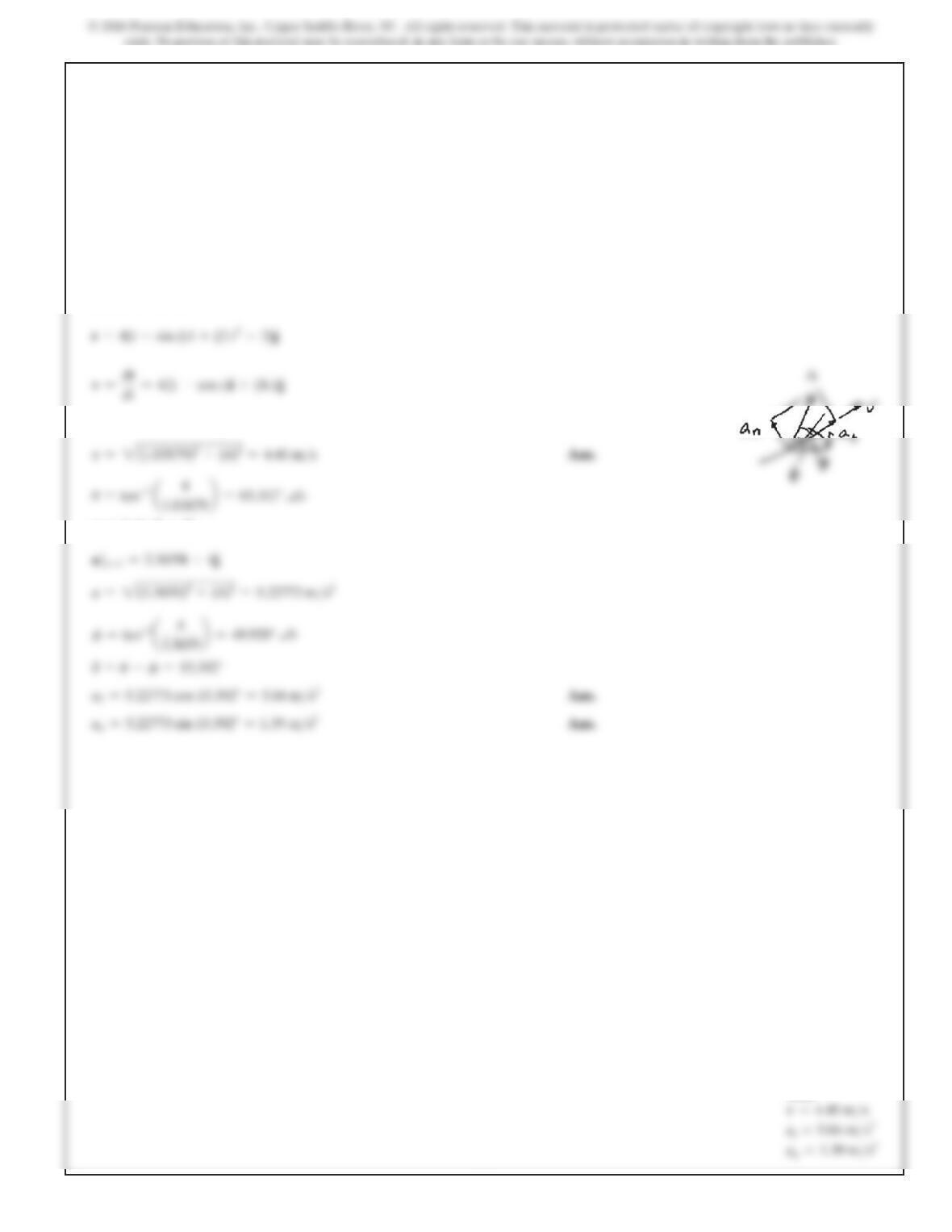
The position of a particle is defined by r = {4(t – sin t)i
+ (2t2 – 3)j} m, where t is in seconds and the argument for
the sine is in radians. Determine the speed of the particle and
its normal and tangential components of acceleration when
t = 1 s.
Ans:
122
12–114.
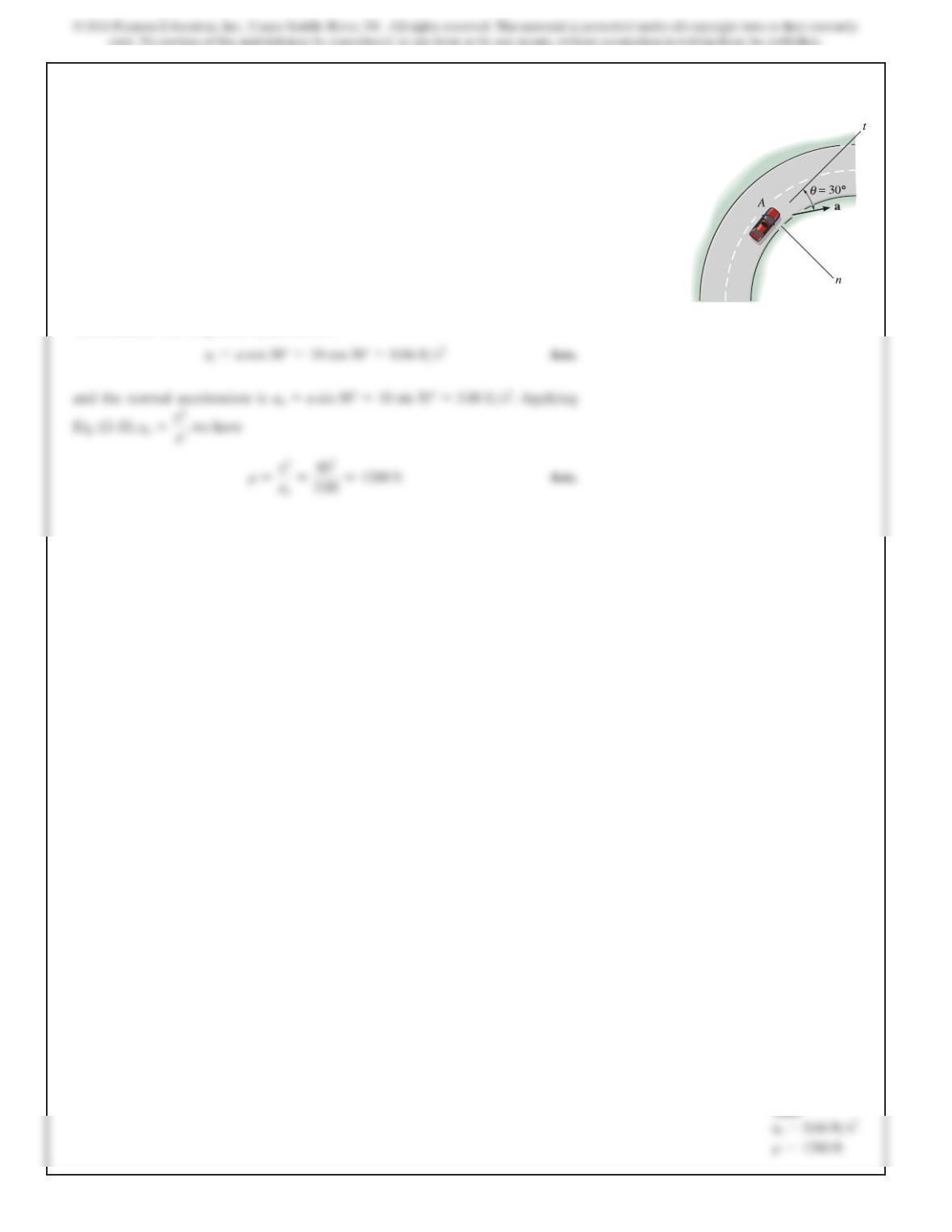
The automobile has a speed of 80 ft
>
s at point A and an
acceleration a having a magnitude of 10 ft>s2, acting in
the direction shown. Determine the radius of curvature
of the path at point A and the tangential component of
acceleration.
SOLUTION
Acceleration: The tangential acceleration is
Ans:
12–115.
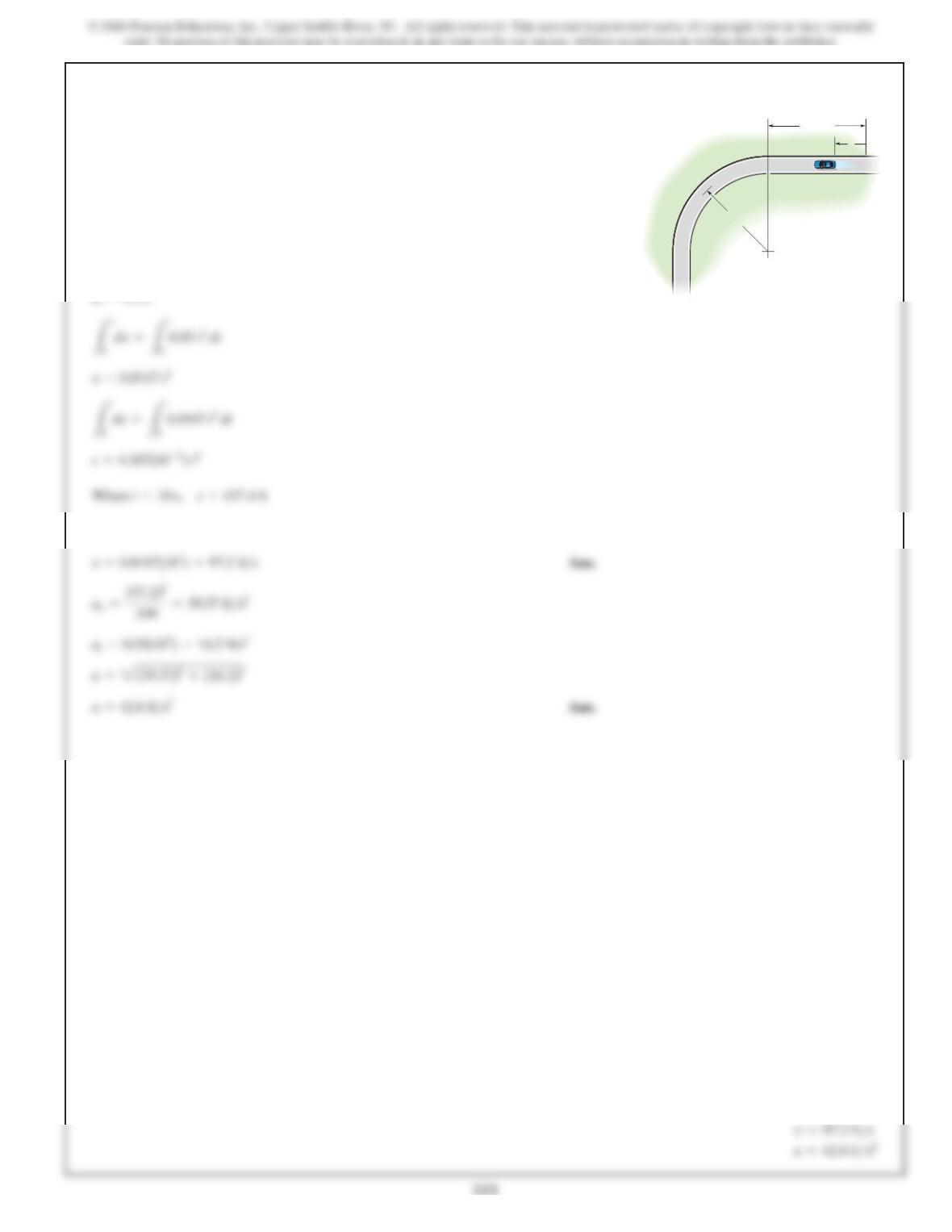
The automobile is originally at rest at If its speed is
increased by where tis in seconds,
determine the magnitudes of its velocity and acceleration
when t=18 s.
v
#=10.05t22ft>s2,
s=0.
SOLUTION
Therefore the car is on a curved path.
at=0.05t2
s
240 ft
300 ft
Ans:
124
*12–116.
SOLUTION
The car is on the curved path.
So that
v=0.0167(19.06)3=115.4
at=0.05 t2
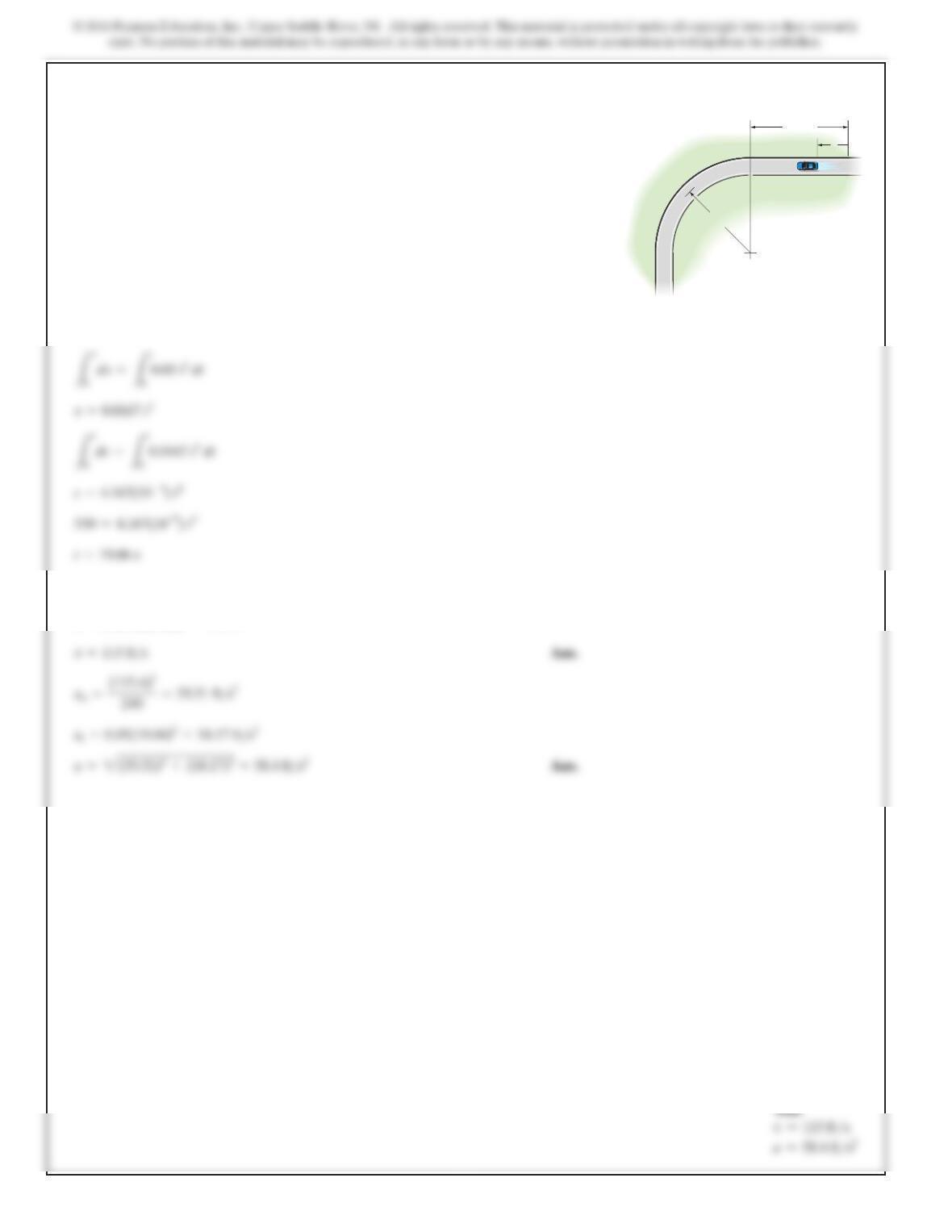
The automobile is originally at rest If it then starts to
increase its speed at where tis in seconds,
determine the magnitudes of its velocity and acceleration at
s=550 ft.
v
#=10.05t22ft>s2,
s
=0.
s
240 ft
300 ft
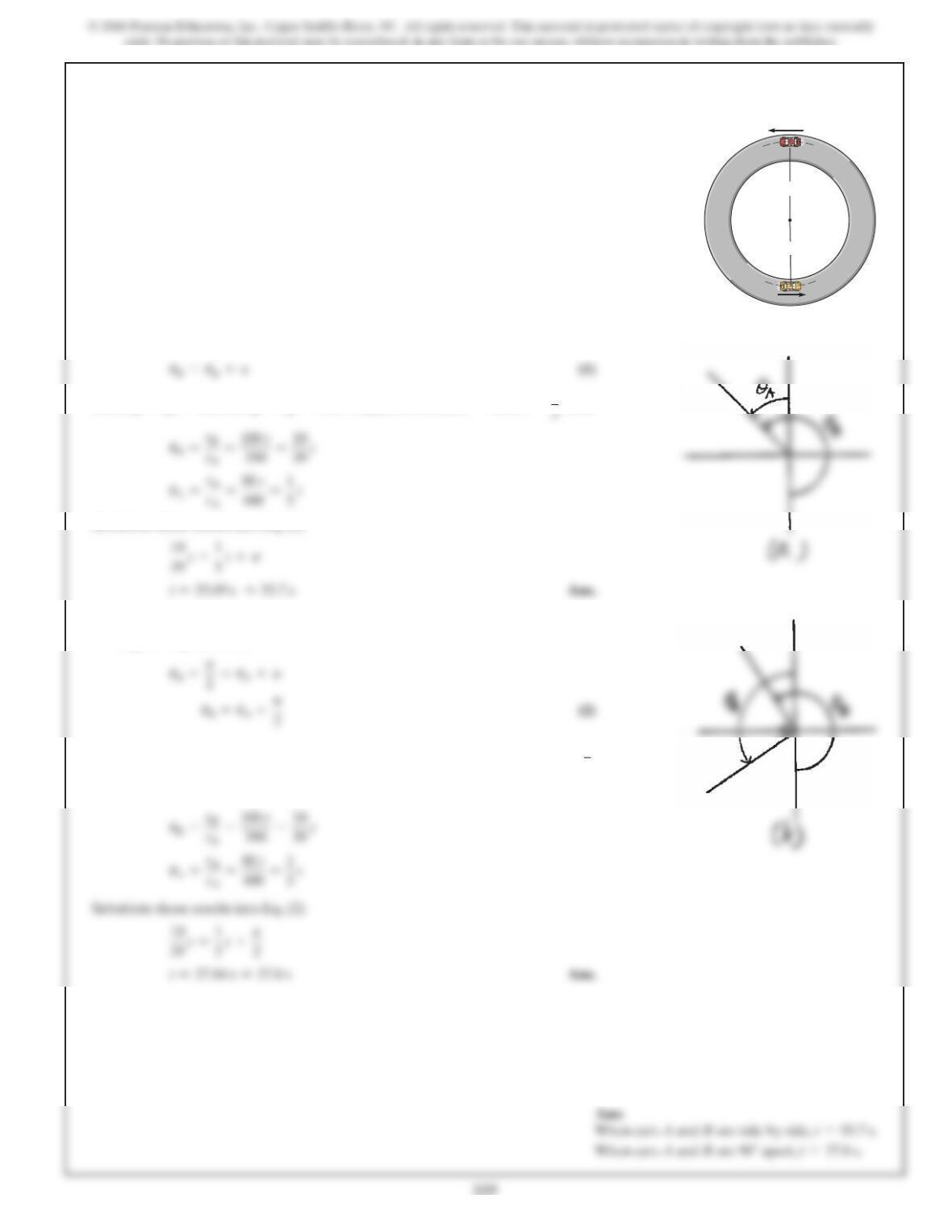
12–117.
The two cars A and B travel along the circular path at
constant speeds vA = 80 ft
>
s and vB = 100 ft
>
s, respectively.
If they are at the positions shown when t = 0, determine the
time when the cars are side by side, and the time when they
are 90° apart.
A
B
v
A
vB
rB 390 ft
r
A 400 ft
SOLUTION
a) Referring to Fig. a, when cars A and B are side by side, the relation between
their angular displacements is
Here,
sA=vA t=80 t
and
sB=vB t=100 t
. Apply the formula
s=ru
or u=
r
s
. Then
Substitute these results into Eq. (1)
(b) Referring to Fig. a, when cars A and B are
90°
apart, the relation between their
angular displacements is
Here,
sA=vA t=80 t
and
sB=vB t=100 t
. Applying the formula
s=ru
or u=
s
r
.
Then
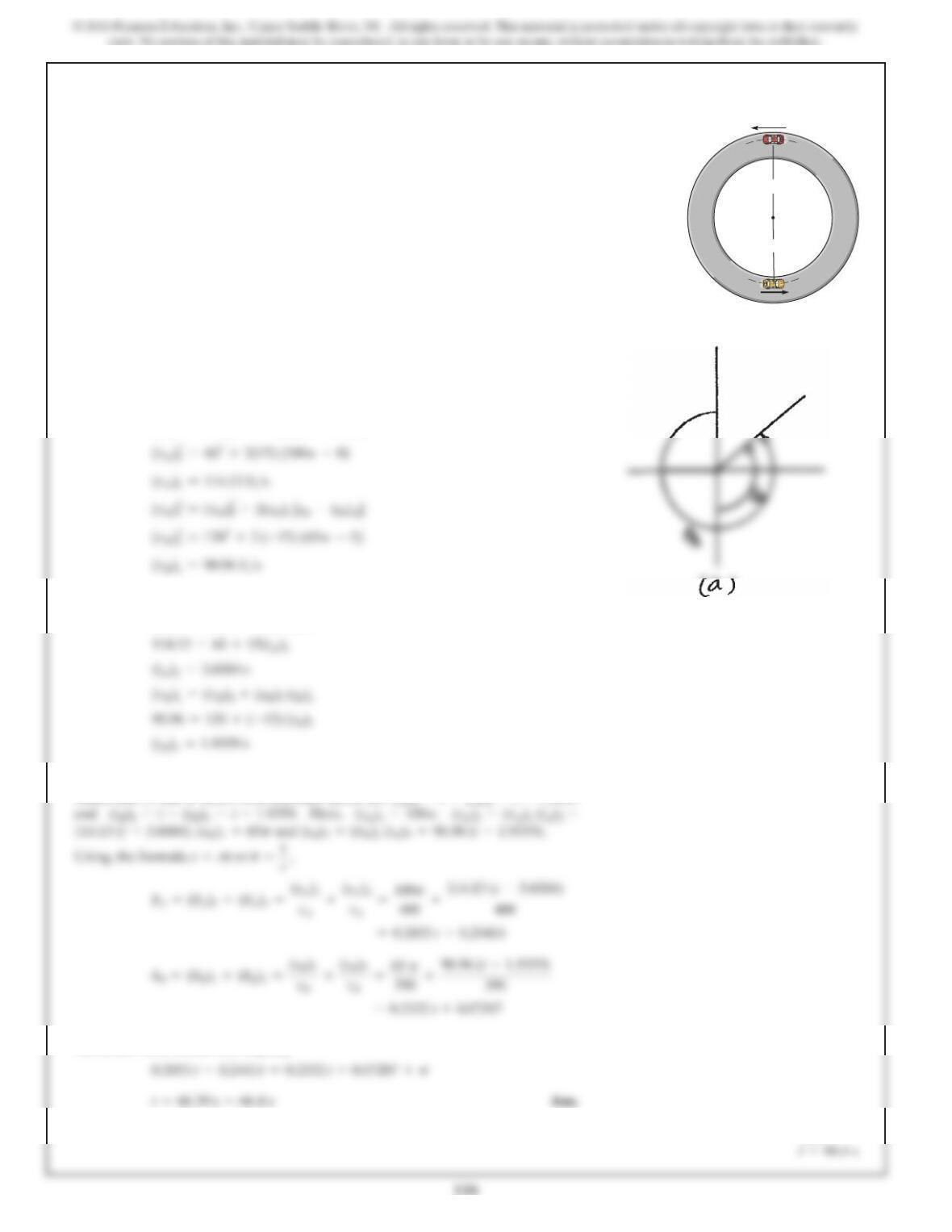
12–118.
Cars A and B are traveling around the circular race track. At
the instant shown, A has a speed of 60 ft
>
s and is increasing
its speed at the rate of 15 ft
>
s2 until it travels for a distance of
100p ft, after which it maintains a constant speed. Car B has
a speed of 120 ft
>
s and is decreasing its speed at 15 ft
>
s2 until
it travels a distance of 65p ft, after which it maintains a
constant speed. Determine the time when they come side by
side.
A
B
v
A
vB
rB 390 ft
r
A 400 ft
Ans:
SOLUTION
Referring to Fig. a, when cars A and B are side by side, the relation between their
angular displacements is
u
A=
u
B+
p (1)
The constant speed achieved by cars A and B can be determined from
(
v
A)c
2=(
v
A)0
2+2(
a
A)t [
s
A–(
s
0)A]
(
(
2=(
2+2(
(
The time taken to achieve these constant speeds can be determined from
(vA)c=(vA)0+(aA)t (tA)1
(tA)1=3.6084 s
(vB)c=(vB)0+(aB)t (tB)1
(tB)1=1.9359 s
Let t be the time taken for cars A and B to be side by side. Then, the times at
which cars A and B travel with constant speed are
(tA)2=t–(tA)1=t–3.6084
(tB)2=t–(tB)1=t–1.9359
(sA)1=100
(sA)2=(vA)c (tA)2 =
(sB)1=65
(sB)2=(vB)c (tB)2=90.96 (t–1.9359)
Substitute these results into Eq. (1),
127
12–119.
SOLUTION
n=20 Mm>h=20(106)
3600 =5.56(103)m>s
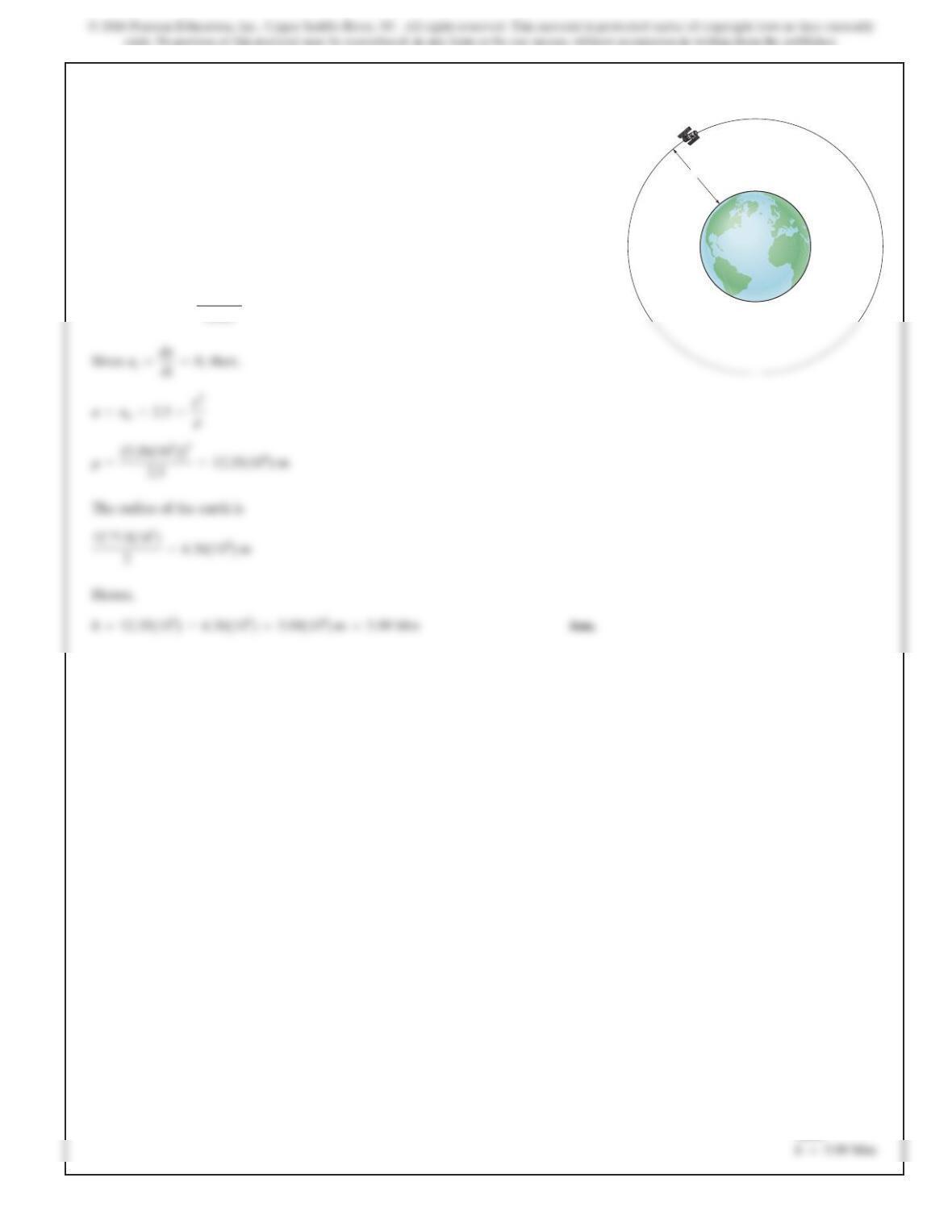
The satellite Stravels around the earth in a circular path
with a constant speed of If the acceleration is
determine the altitude h. Assume the earth’s
diameter to be 12 713 km.
2.5 m>s2,
20 Mm>h.
h
S
Ans:
128
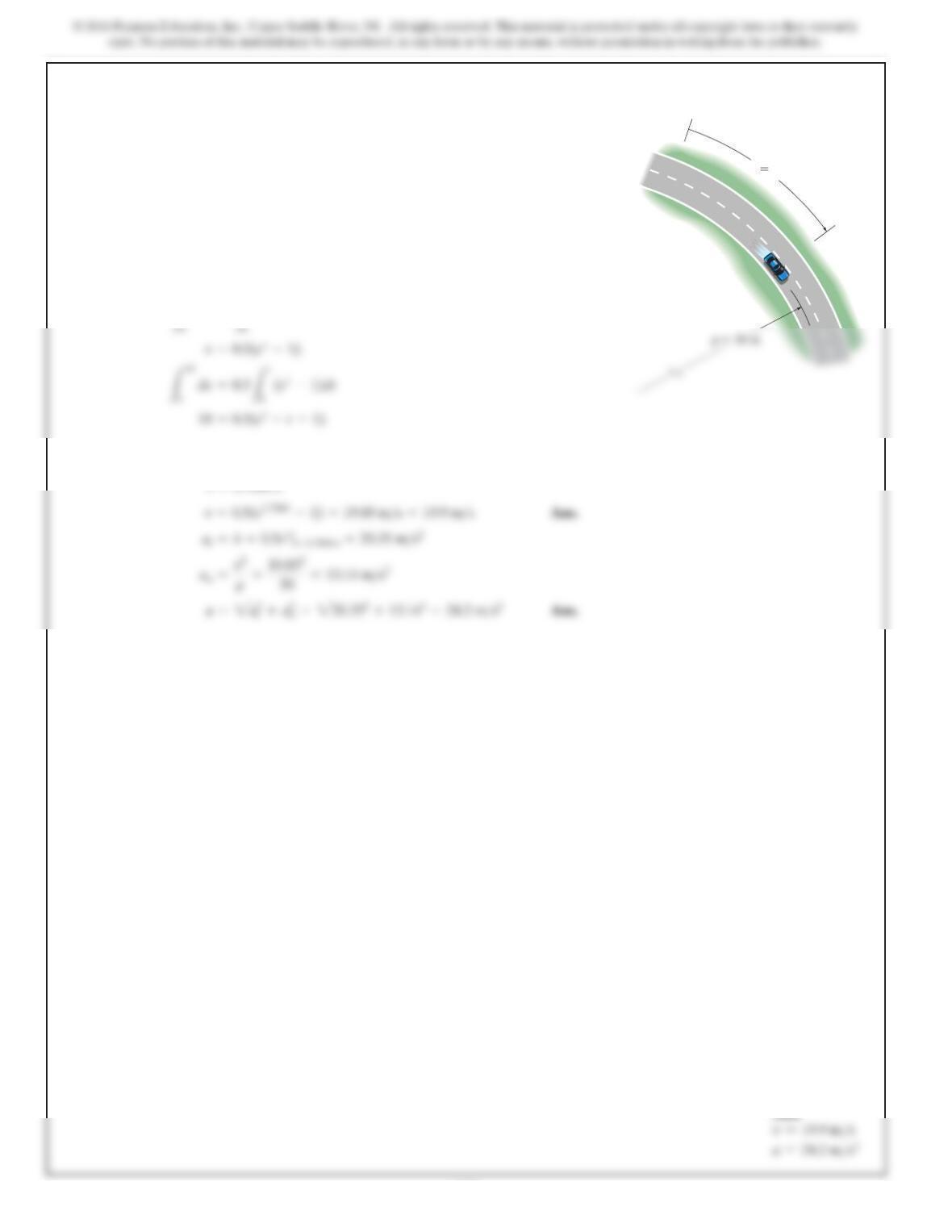
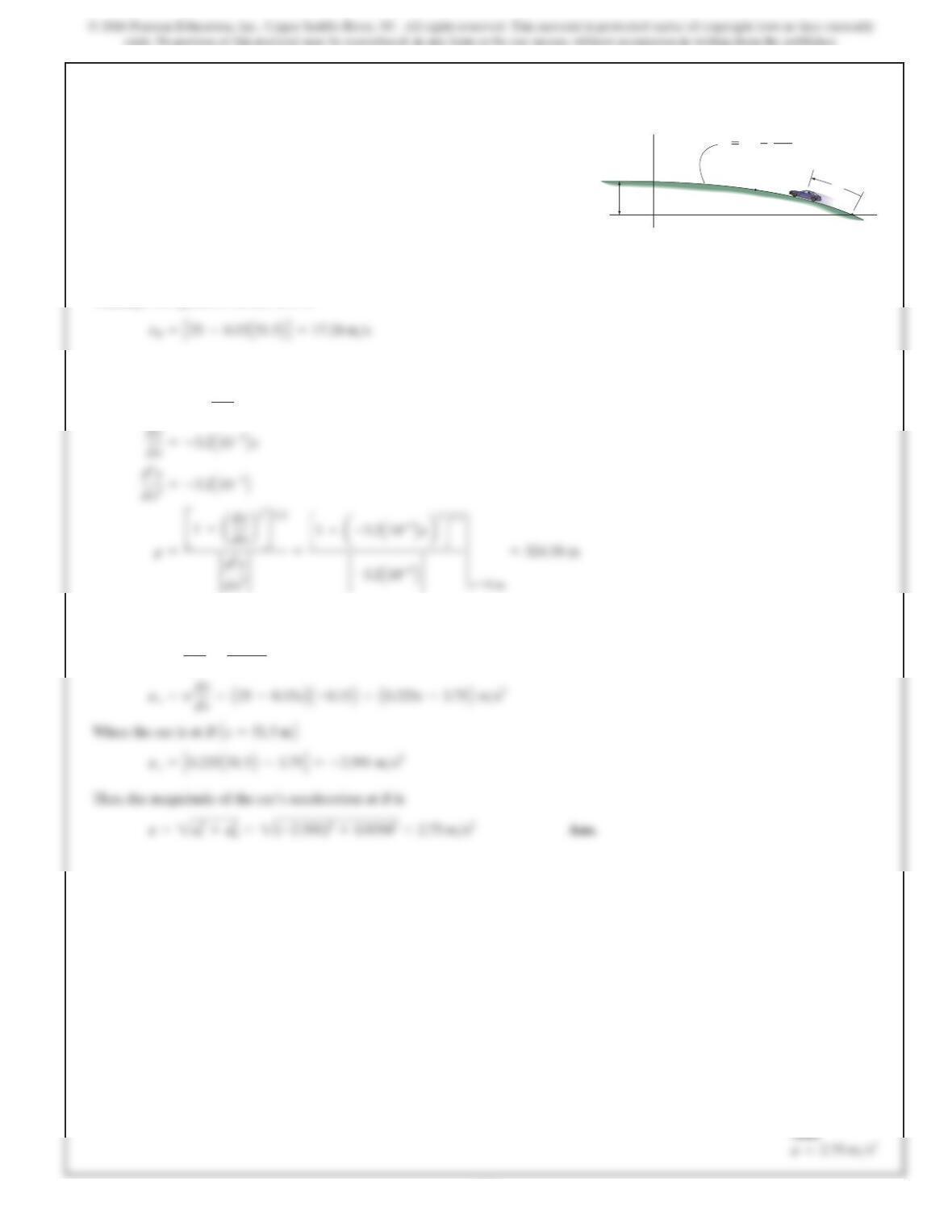
*12–120.
The car travels along the circular path such that its speed is
increased by , where tis in seconds.
Determine the magnitudes of its velocity and acceleration
after the car has traveled starting from rest.
N
eglect the size of the car.
s=18 m
at=(0.5et)m>s2
SOLUTION
Solving,
dv =Lt
0.5etdt
s18 m
Ans:
129
12–121.
SOLUTION
Velocity:The speed of the car at Bis
Radius of Curvature:
Acceleration:
an=vB2
r
=17.282
324.58 =0.9194 m>s2
y=16 –1
625 x2
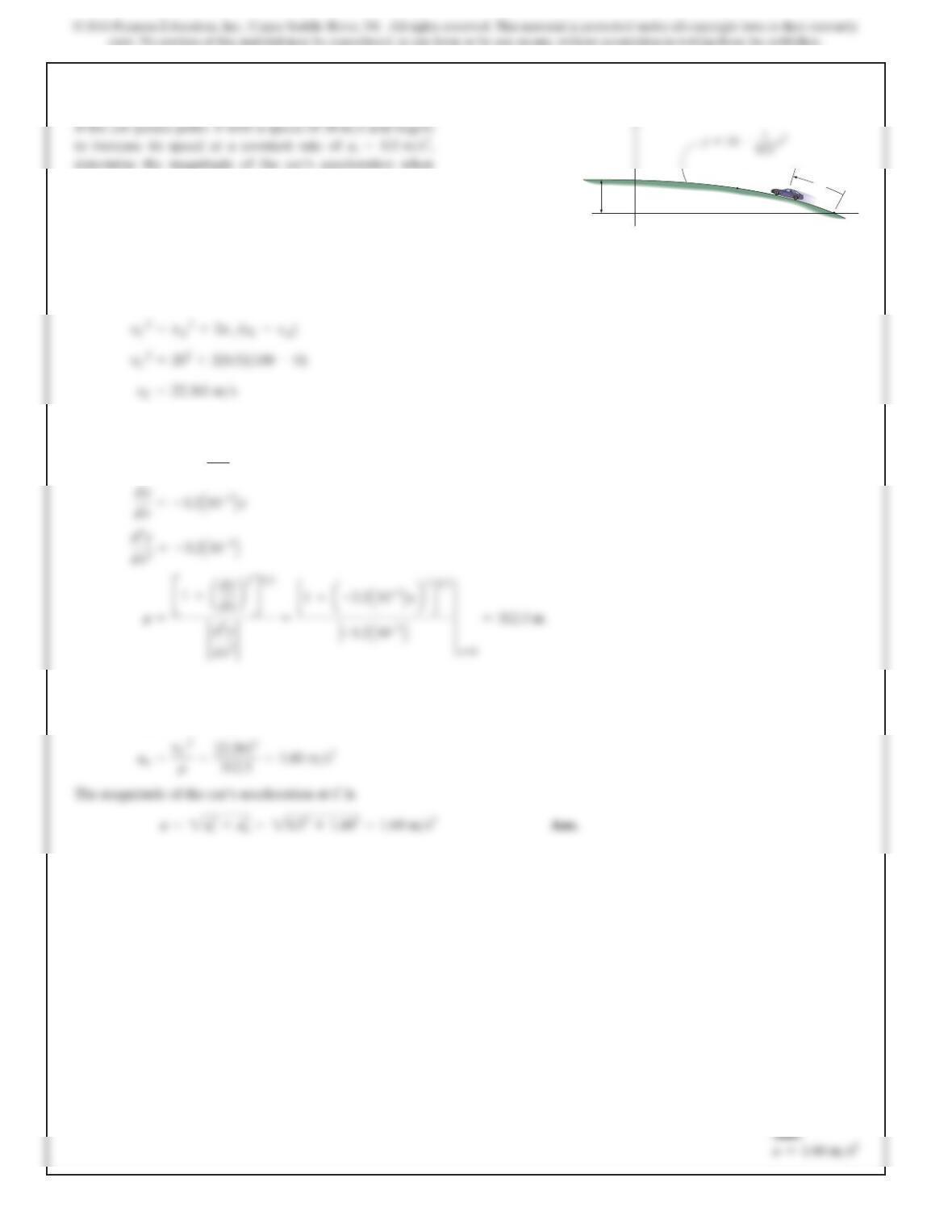
The car passes point Awith a speed of after which its
speed is defined by . Determine the
magnitude of the car’s acceleration when it reaches point B,
where and x = 50 m.s=51.5 m
v=(25 –0.15s)m>s
25 m
>
s
y16 x2
1
625
y
s
x
16 m
B
A
130
12–122.
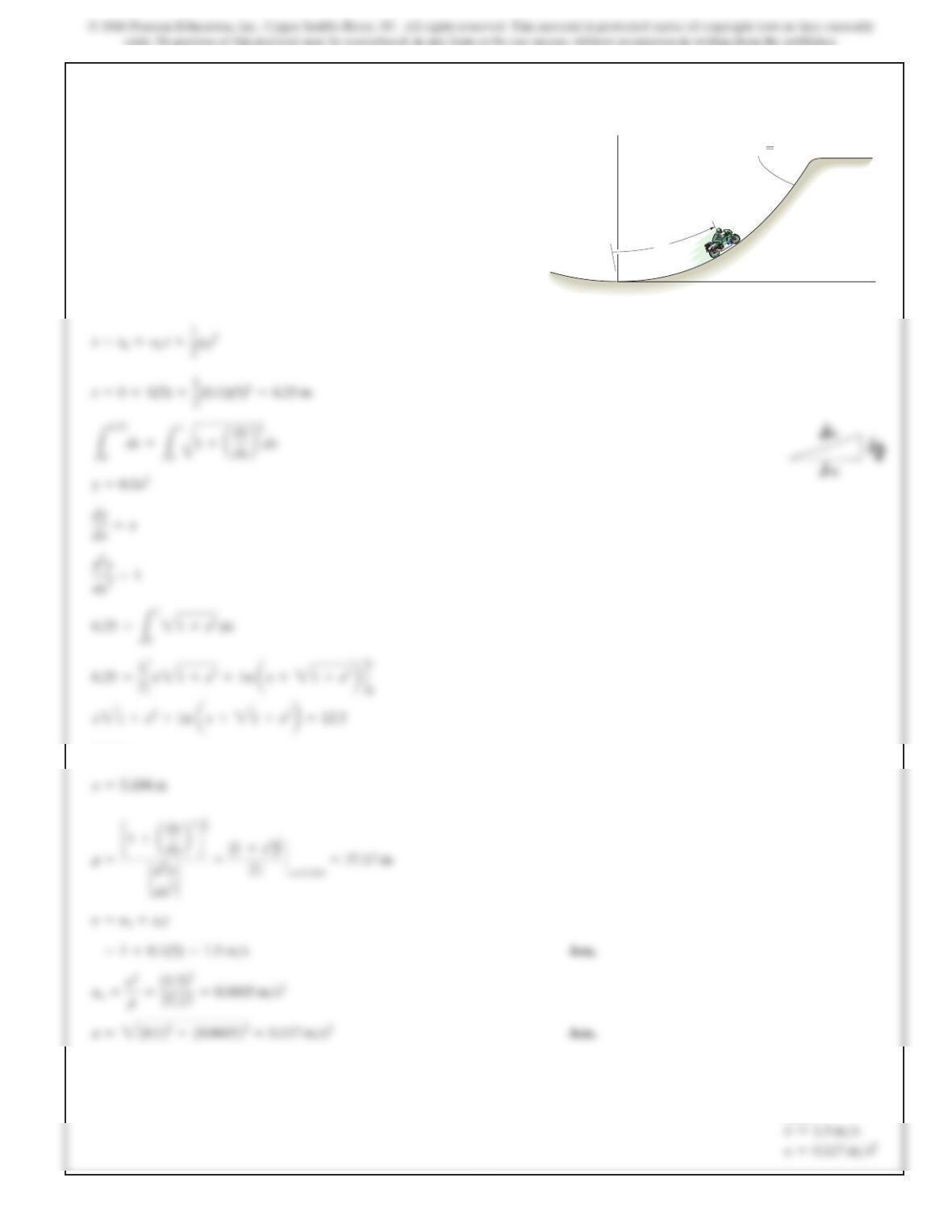
s=101.68 m and x = 0.
SOLUTION
Velocity: The speed of the car at Cis
Radius of Curvature:
Acceleration:
at=v
#=0.5 m>s
y=16 –1
625 x2
s
x
16 m
B
A
131
12–123.
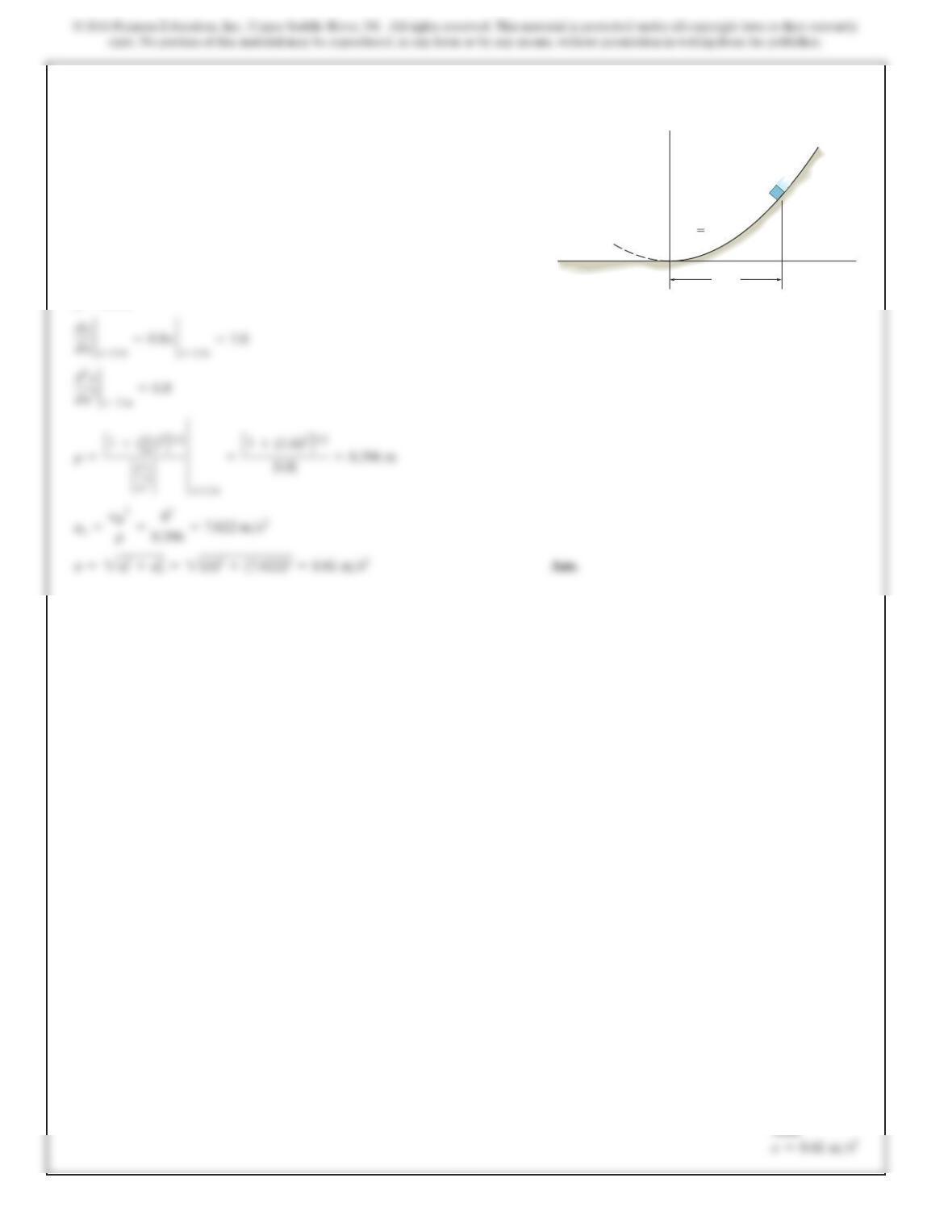
The motorcycle is traveling at when it is at A. If the
speed is then increased at determine its speed
and acceleration at the instant t=5s.
v
#=0.1 m>s2,
1m>s
x
s
A
y
y0.5x
2
SOLUTION
Solving,
at=n=0.1
Ans:
132
*12–124.
SOLUTION
y=0.4 x2
The box of negligible size is sliding down along a curved
path defined by the parabola .When it is at A
(, ), the speed is and the
increase in speed is . Determine the
magnitude of the acceleration of the box at this instant.
dv >dt =4m>s2
v=8m>syA=1.6 mxA=2m
y=0.4x2
y
x
2m
y0.4x
2
A
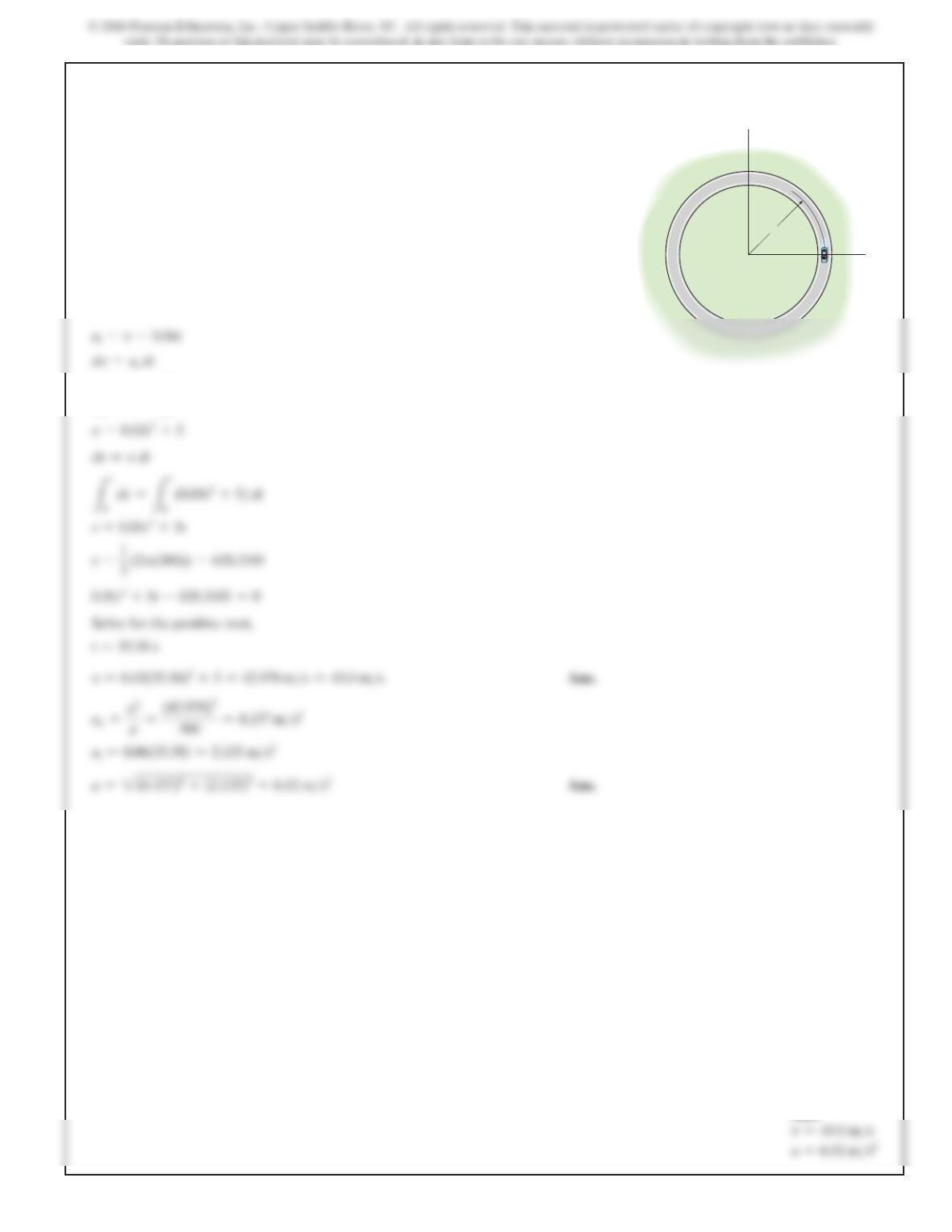
133
SOLUTION
Lv
s
dv=
Lt
0
0.06t dt
12–125.
The car travels around the circular track having a radius of r= 300 m
such that when it is at point A it has a velocity of 5 m
>
s, which is
increasing at the rate of
v
#
= (0.06t) m
>
s2, where t is in seconds.
Determine the magnitudes of its velocity and acceleration when it
has traveled one-third the way around the track.
y
x
r
A
Ans:
134
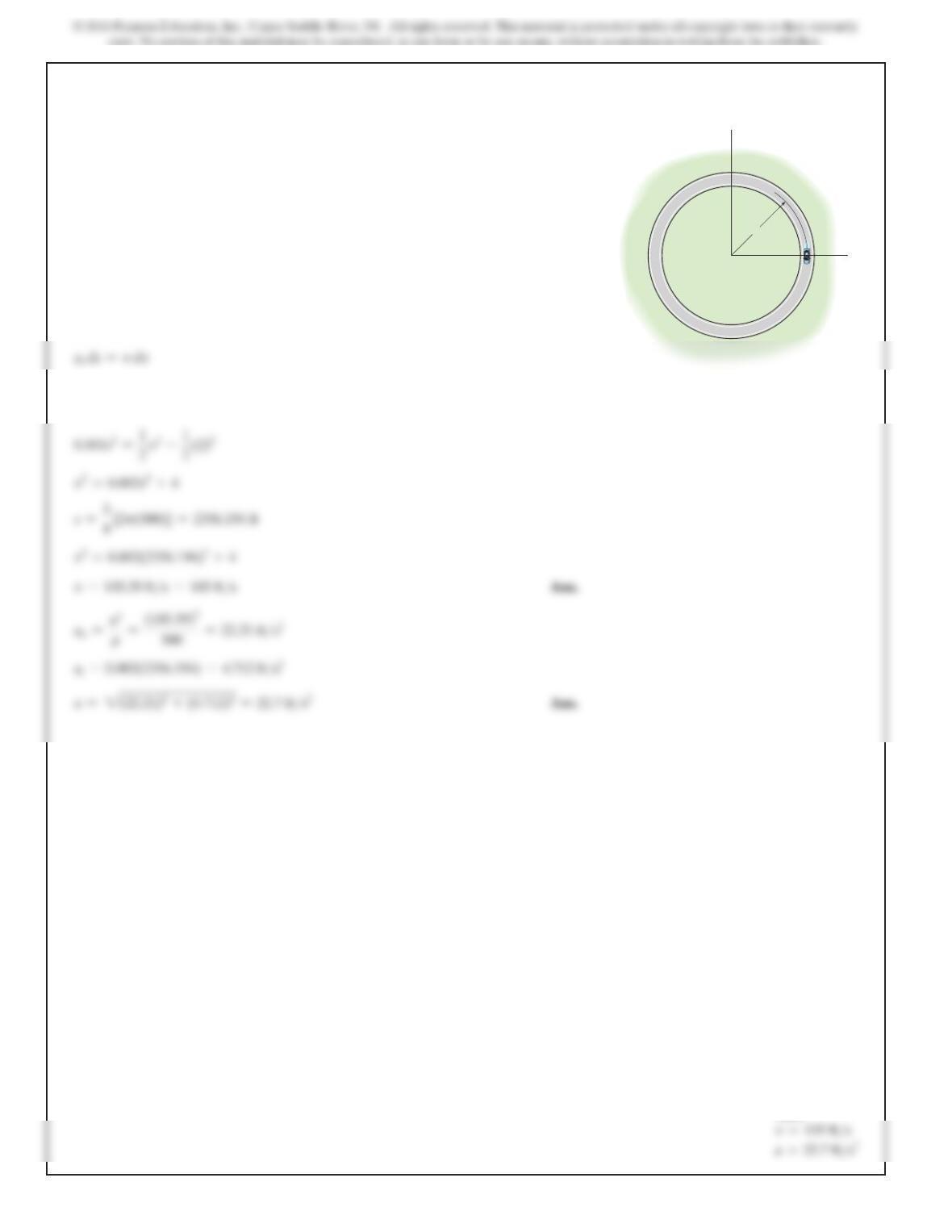
12–126.
The car travels around the portion of a circular track having
a radius of r = 500 ft such that when it is at point A it has a
velocity of 2 ft
>
s, which is increasing at the rate of
v
#
=
(0.002t) ft
>
s2, where t is in seconds. Determine the
magnitudes of its velocity and acceleration when it has
traveled three-fourths the way around the track.
Ans:
y
x
r
A
SOLUTION
at=0.002 s
at ds =v dv
Ls
0
0.002s ds =
Lv
2
v dv
135
12–127.
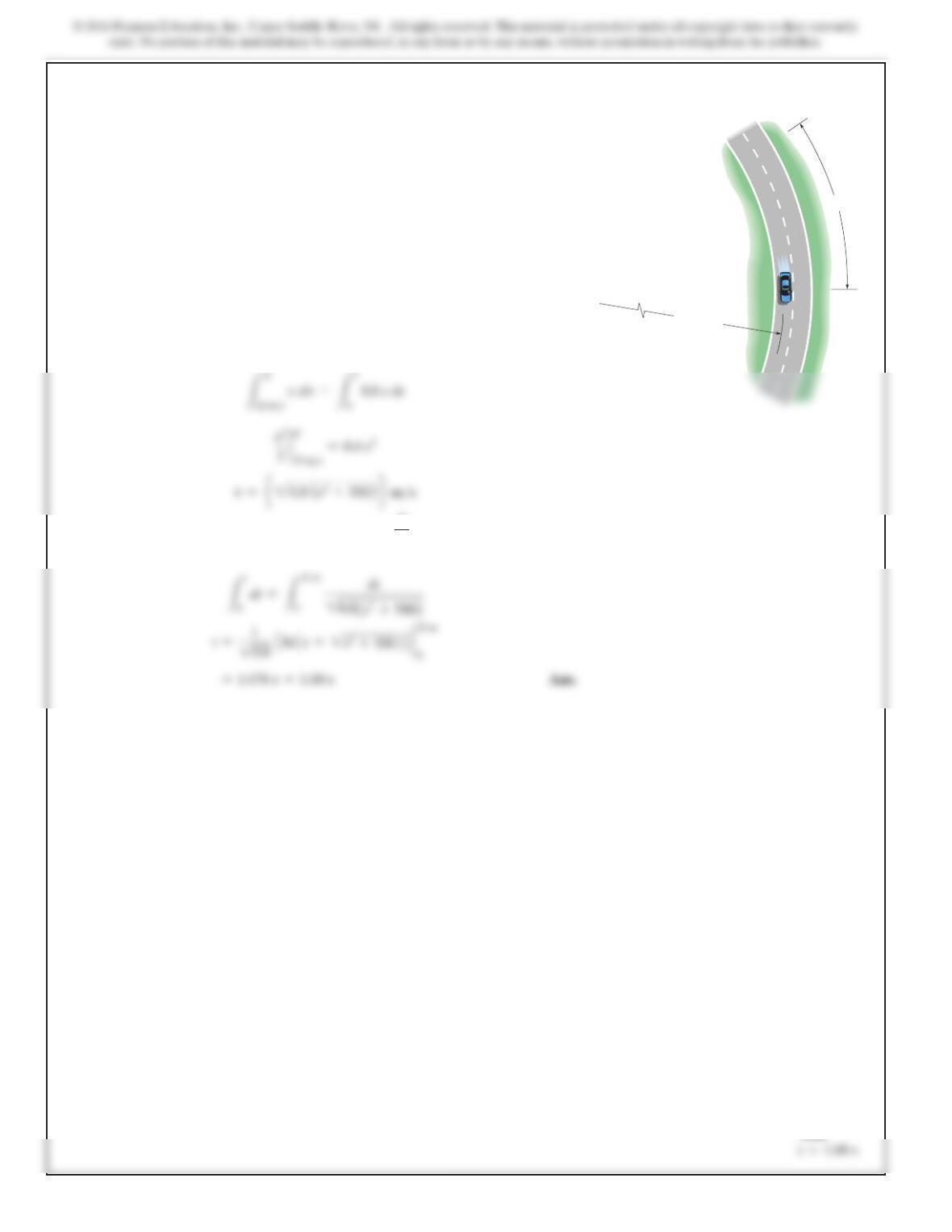
At a given instant the train engine at Ehas a speed of
and an acceleration of acting in the
direction shown. Determine the rate of increase in the
train’s speed and the radius of curvature of the path.r
14 m>s2
20 m>s
v20 m/s
a14 m/s
2
E
75
r
SOLUTION
136
SOLUTION
The distance traveled by the car along the circular track can be determined by
integrating
v dv=at ds
. Using the initial condition
v=20 m>s
at
s=0
,
The time can be determined by integrating dt =
ds
v
with the initial condition
s=0
at
t=0
.
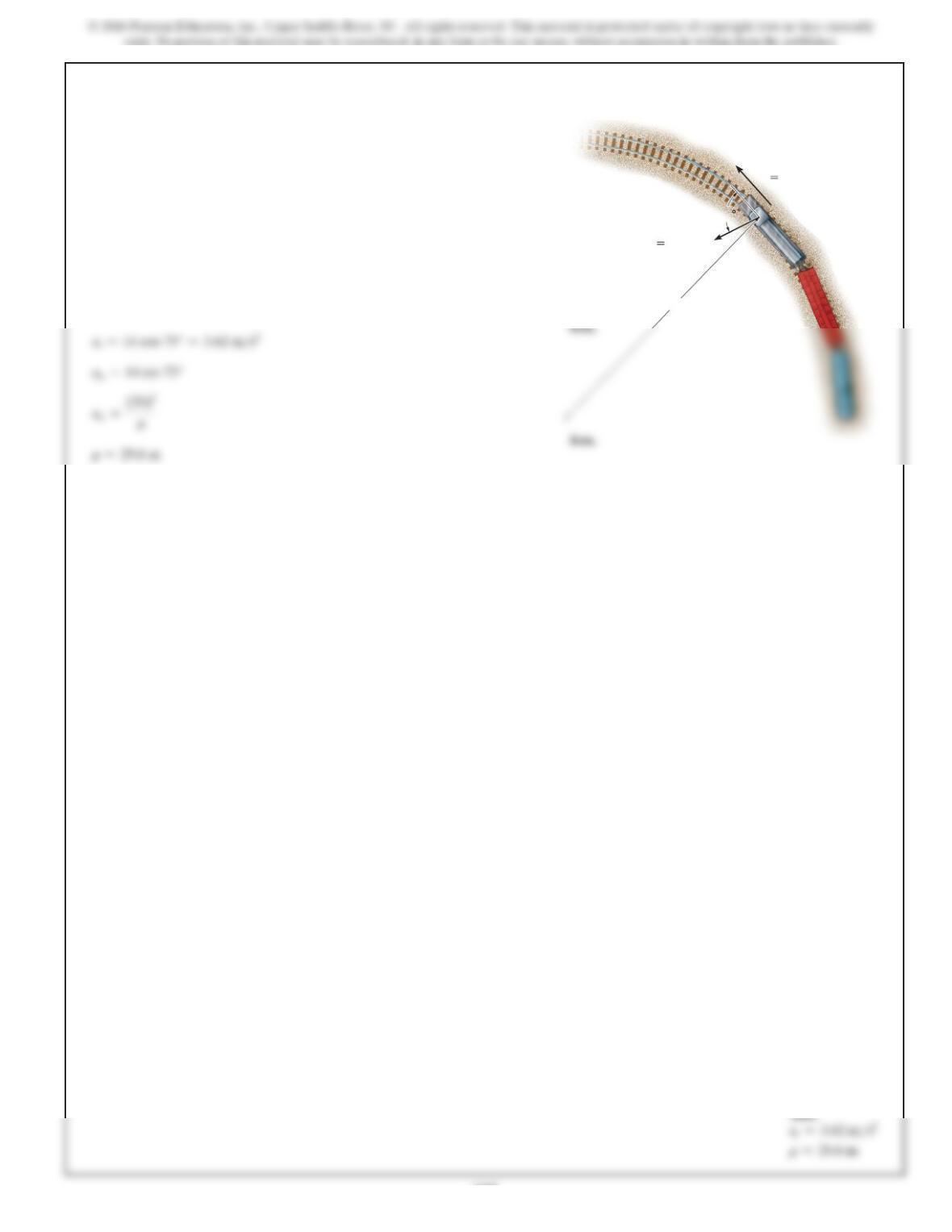
*12–128.
The car has an initial speed v0 = 20 m
>
s. If it increases its
speed along the circular track at s = 0, a
t=
(0.8s) m
>
s
2
,
where s is in meters, determine the time needed for the car
to travel s = 25 m.
s
r 40 m
Ans:
137
s
r 40 m
12–129.
The car starts from rest at s = 0 and increases its speed at
at = 4 m
>
s2. Determine the time when the magnitude of
acceleration becomes 20 m
>
s2. At what position s does this
occur?
SOLUTION
Acceleration. The normal component of the acceleration can be determined from
Ans:
138
12–130.
SOLUTION
Lv
15
dv =L5
0
0.8tdt
A boat is traveling along a circular curve having a radius of
100 ft. If its speed at is 15 ft/s and is increasing at
determine the magnitude of its acceleration
at the instant t=5s.
v
#=10.8t2ft>s2,
t=0
Ans:
139
12–131.
SOLUTION
at=2m>s2
A boat is traveling along a circular path having a radius of
20 m. Determine the magnitude of the boat’s acceleration
when the speed is and the rate of increase in the
speed is v
#
=2m>s2.
v=5m>s
Ans:
140
*12–132.
Starting from rest, a bicyclist travels around a horizontal circular
path, at a speed of
where tis in seconds.Determine the magnitudes of his velocity
and acceleration when he has traveled s=3m.
v=10.09t2+0.1t2m>s,r=10 m,
SOLUTION
Solving,
t=4.147 s
Ls
0
ds =Lt
010.09t2+0.1t2dt