1090
The orientation of the principal axes can be determined from the geometry of the
shaded triangle on the circle.
10–77. Continued
Ans:
1091
10–78.
SOLUTION
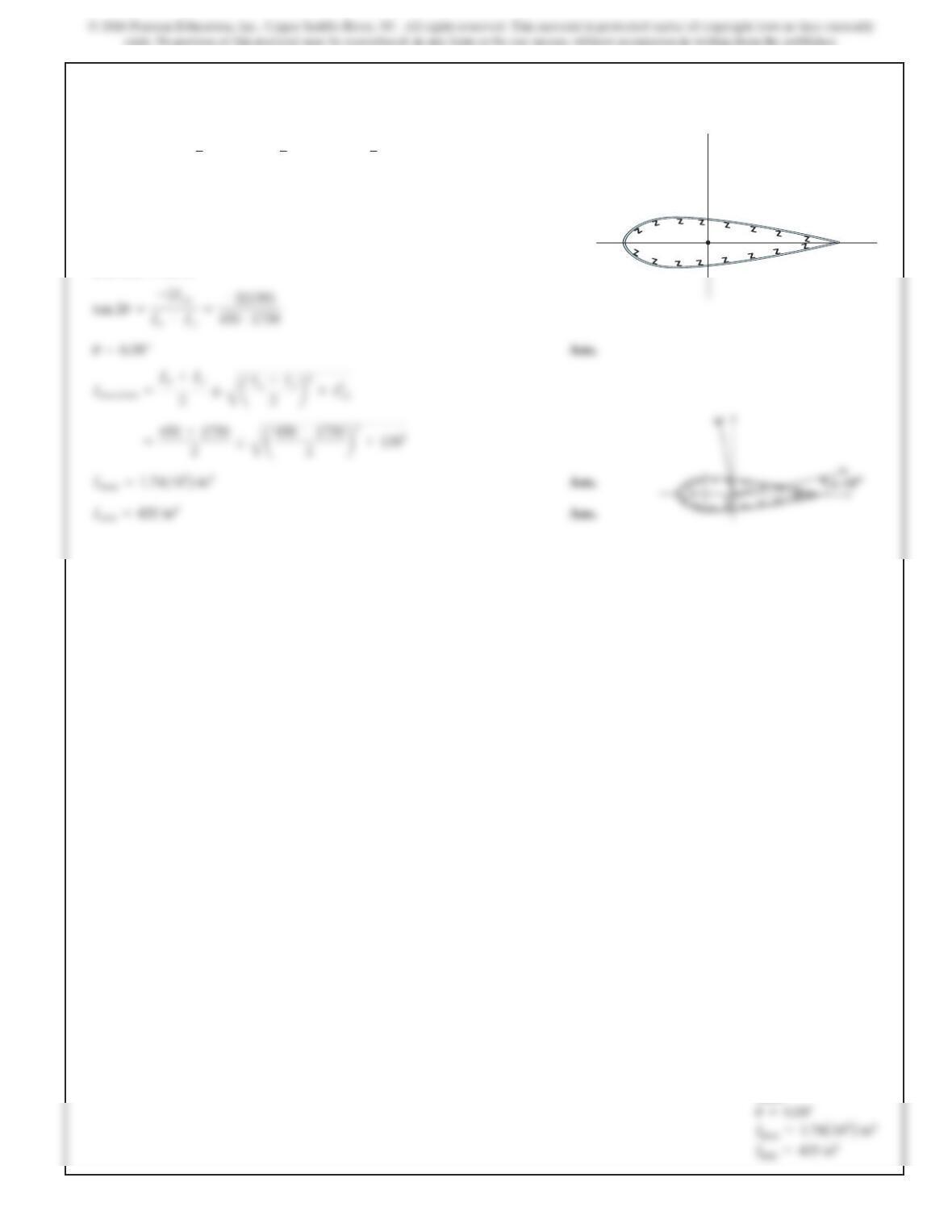
The area of the cross section of an airplane wing has the
f
ollowing properties about the xand yaxes passing through
t
he centroid C:
D
etermine the orientation of the principal axes and the
prin
cipal moments of inertia.
Ixy =138 in4.Iy=1730in4,Ix=450 in4,
y
x
C
Ans:
1092
10–79.
SOLUTION
y
x
C
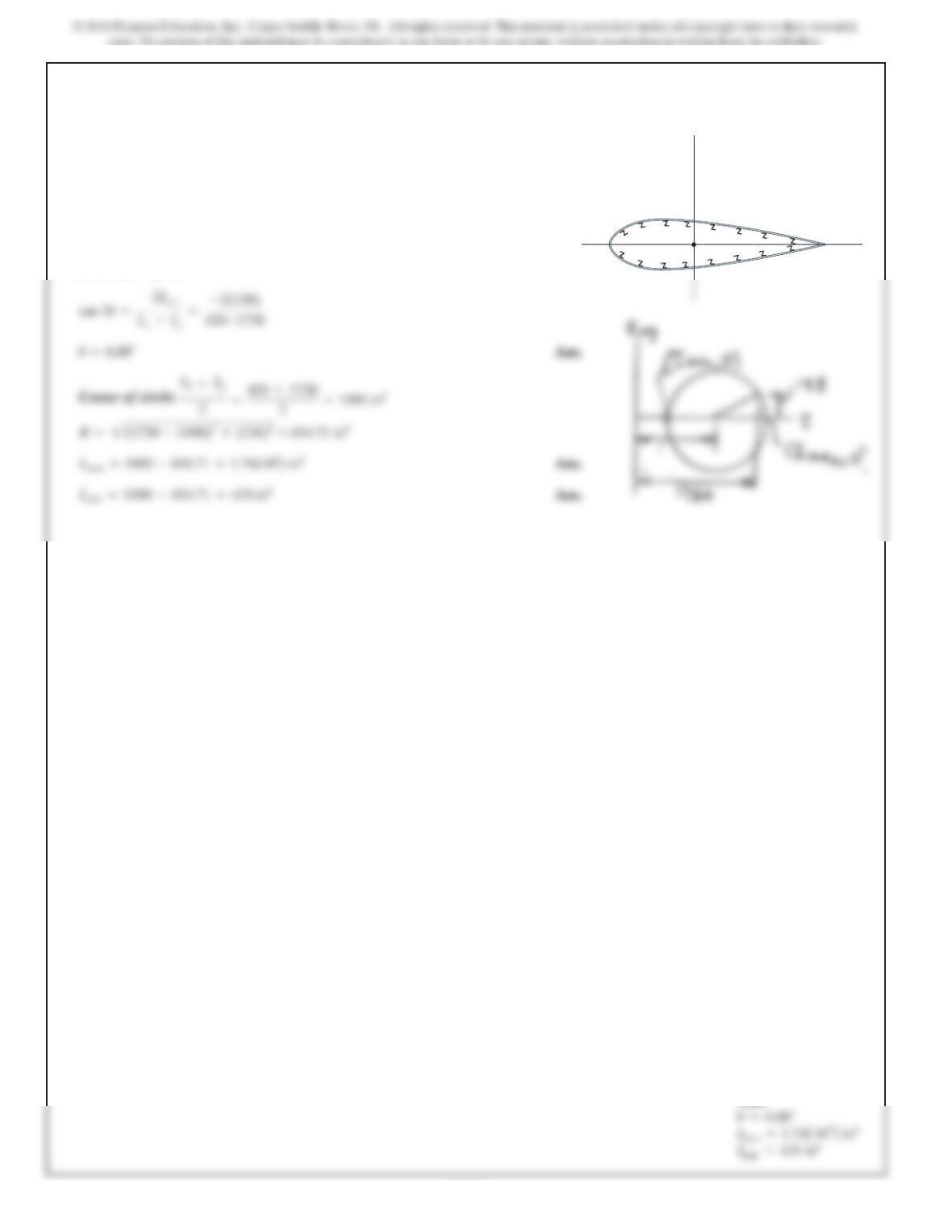
Solve Prob. 10–78 using Mohr’s circle.
Ans:
1093
*10–80.
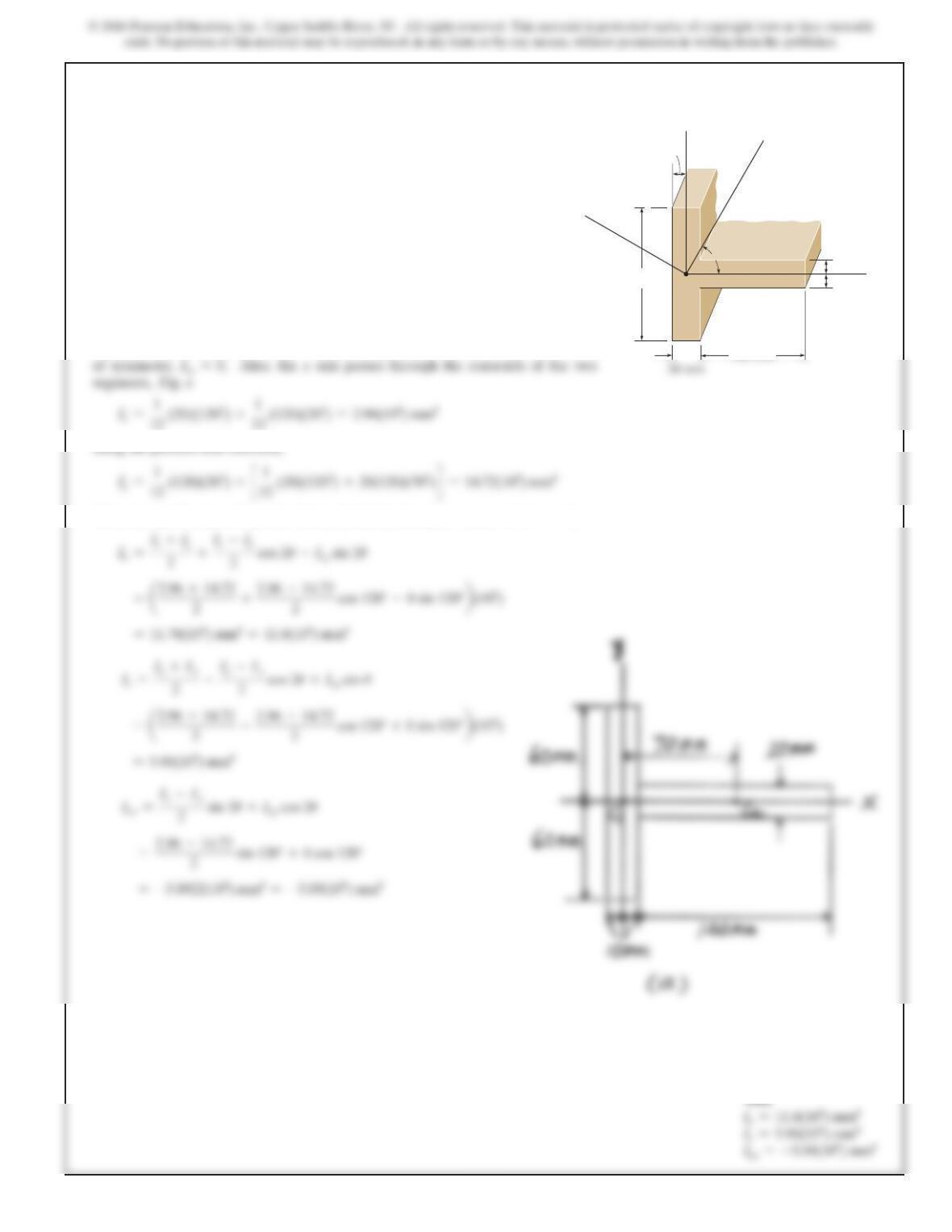
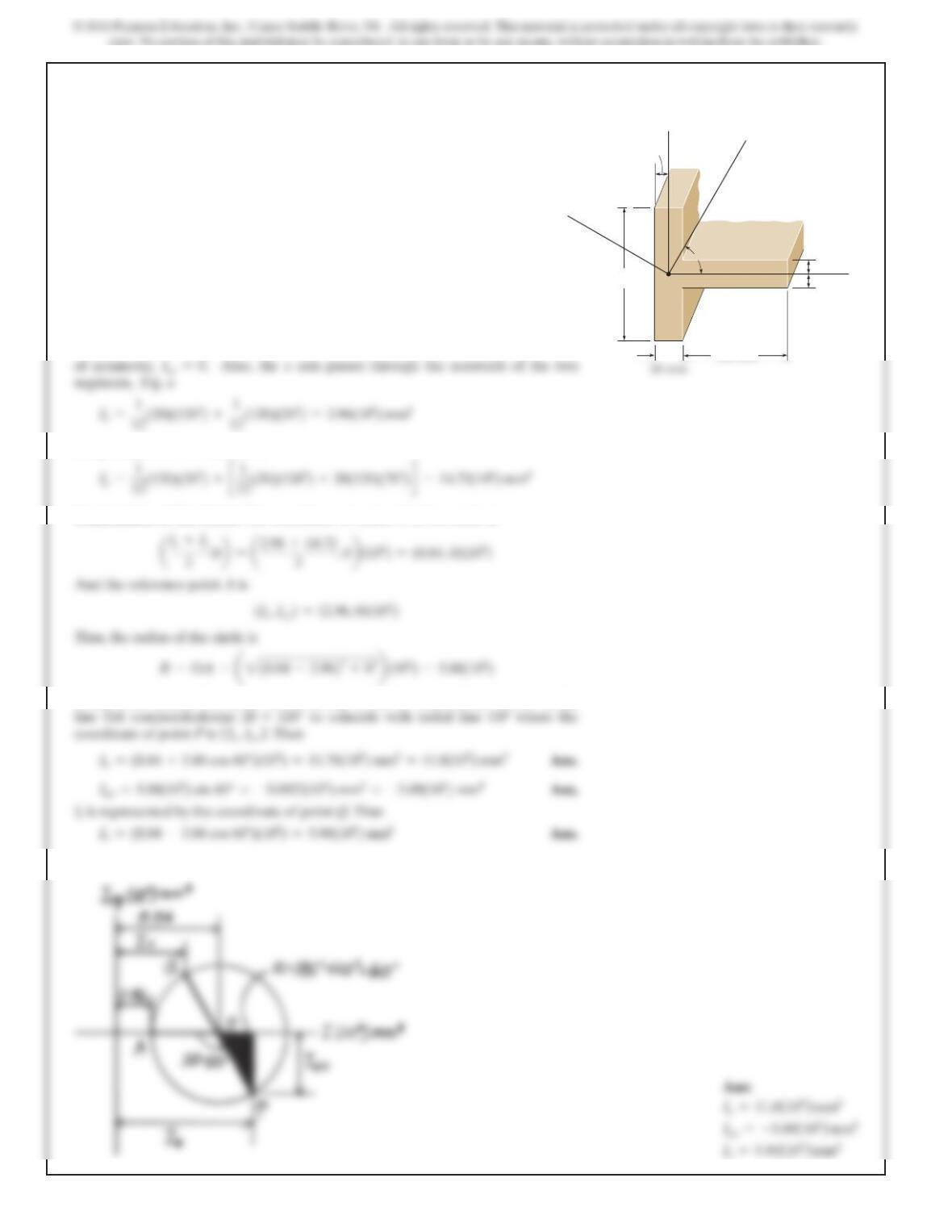
Determine the moments and product of inertia for the
shaded area with respect to the u and v axes.
SOLUTION
Moment And Product of Inertia About x and y Axes. Since the x axis is an axis
Moment And Product of Inertia About the Inclined u and v Axes. with
u=60°
,
y
x
v
u
10 mm
10 mm
10 mm
120 mm
60
1094
10–81.
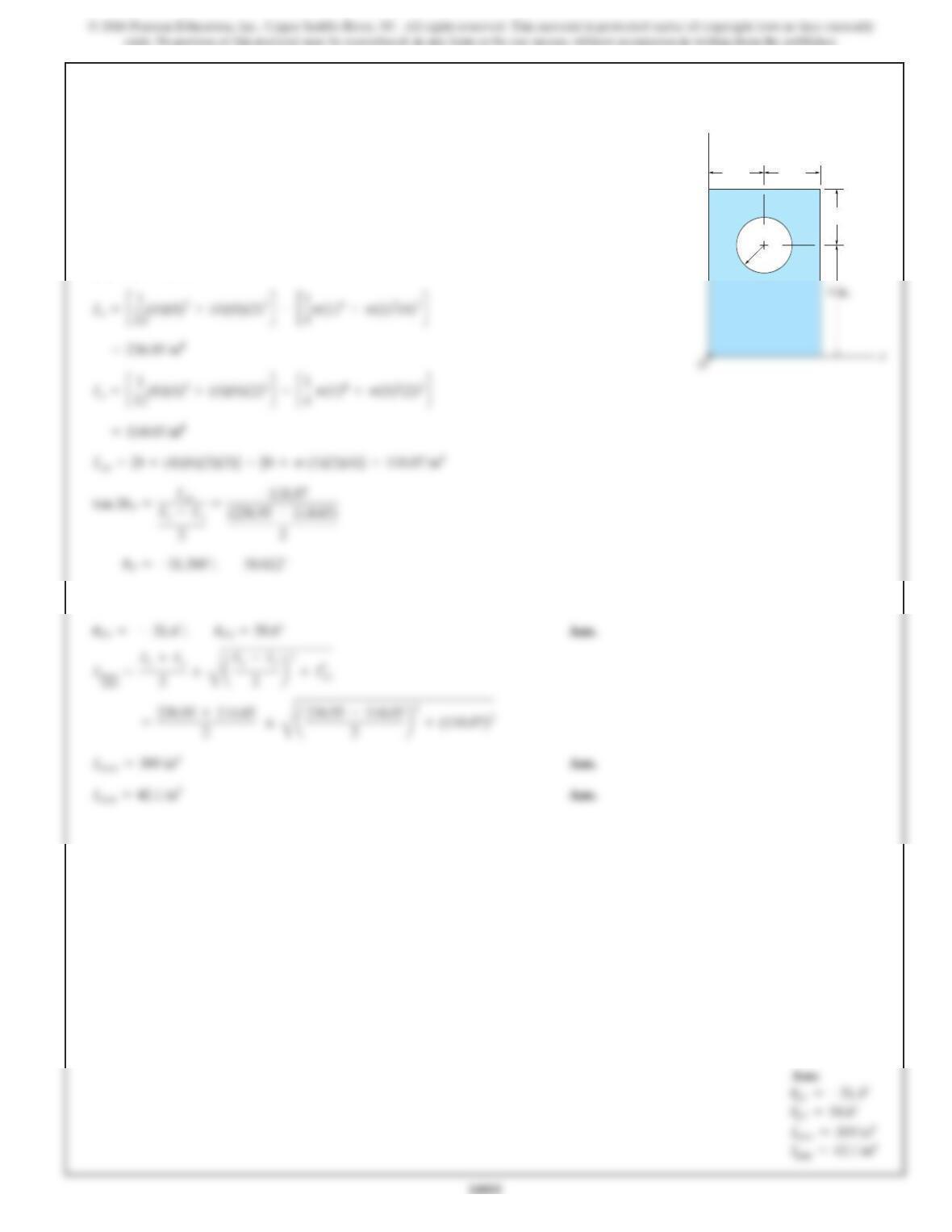
Solve Prob. 10–80 using Mohr’s circle.
SOLUTION
Moment And Product of Inertia About x and y Axes. Since the x axis is an axis
using the parallel-axis theorem,
Construction of The Circle. The coordinate of center O of the circle is
Using these results, the circle shown in Fig. b can be constructed. Rotate radial
y
x
v
u
10 mm
10 mm
10 mm
120 mm
120 mm
60
10–82.
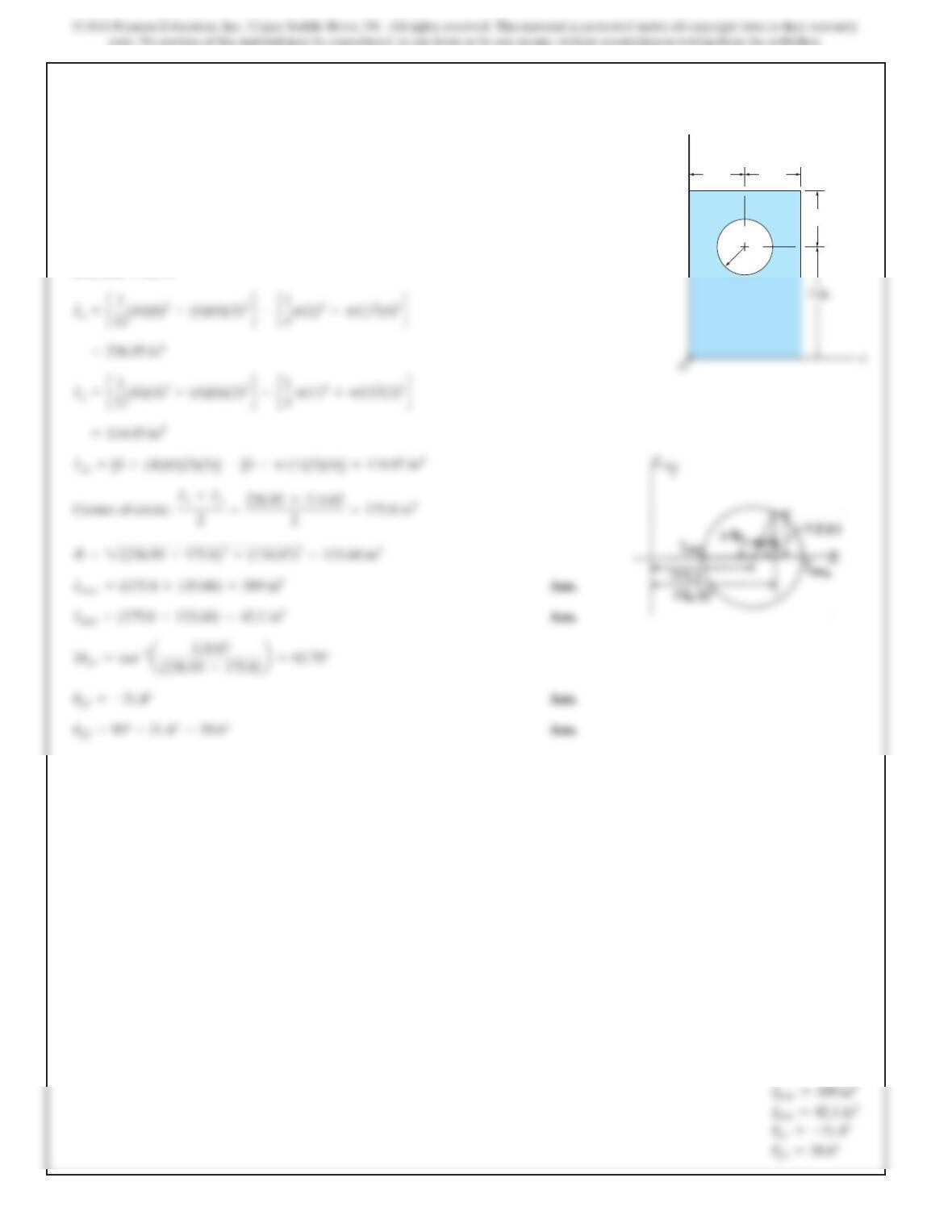
Determine the directions of the principal axes with origin
located at point
O, and the principal moments of inertia for
the area about these axes
.
SOLUTION
T
hus,
2 in.
y
2in.
2in.
1 in.
1096
10–83.
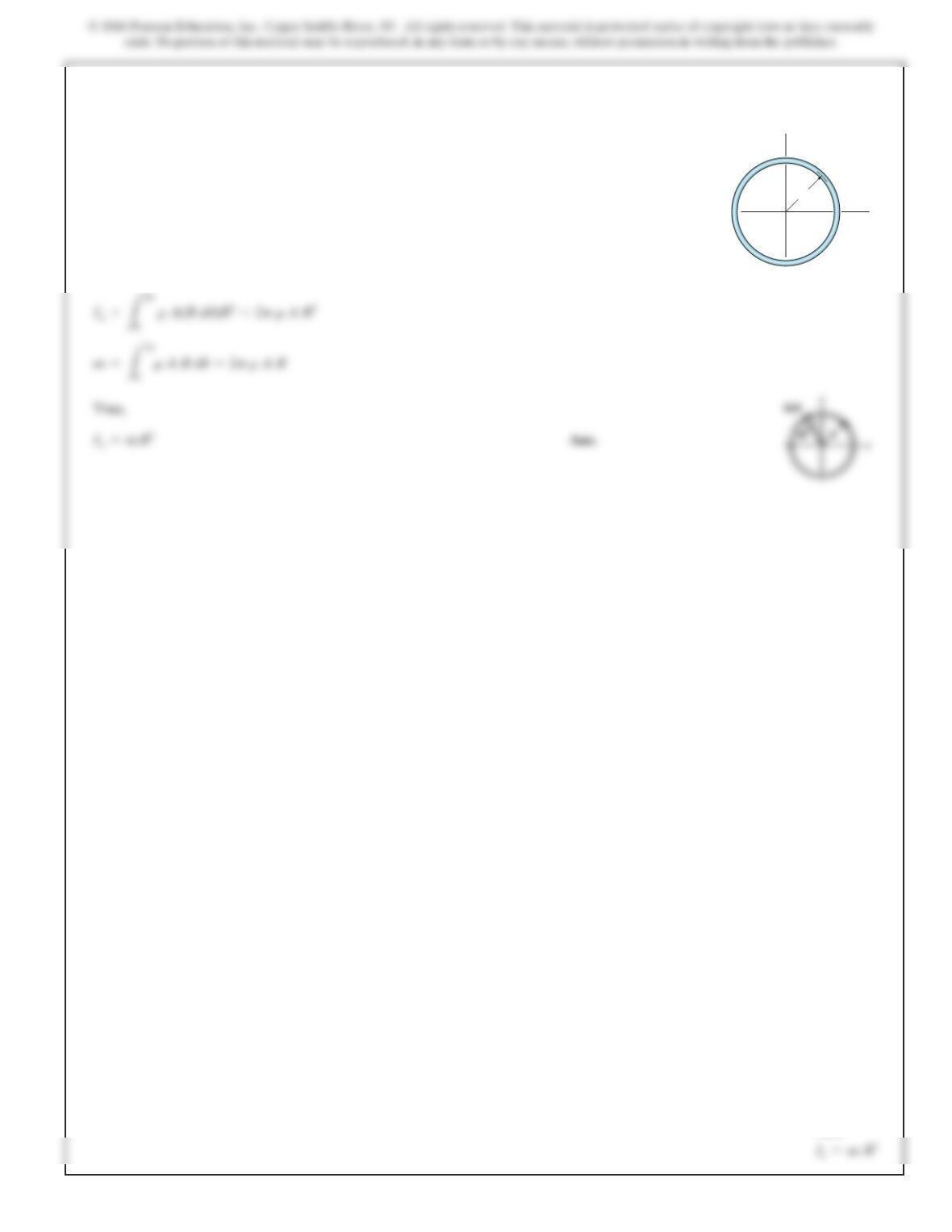
Solve Prob. 10–82 using Mohr’s circle.
SOLUTION
2 in.
y
2in.
2in.
1 in.
Ans:
1097
*10–84.
SOLUTION
Determine
the moment of inertia of the thin ring about the
z
axis.The ring has a mass m.
x
y
R
Ans:
1098
10–85.
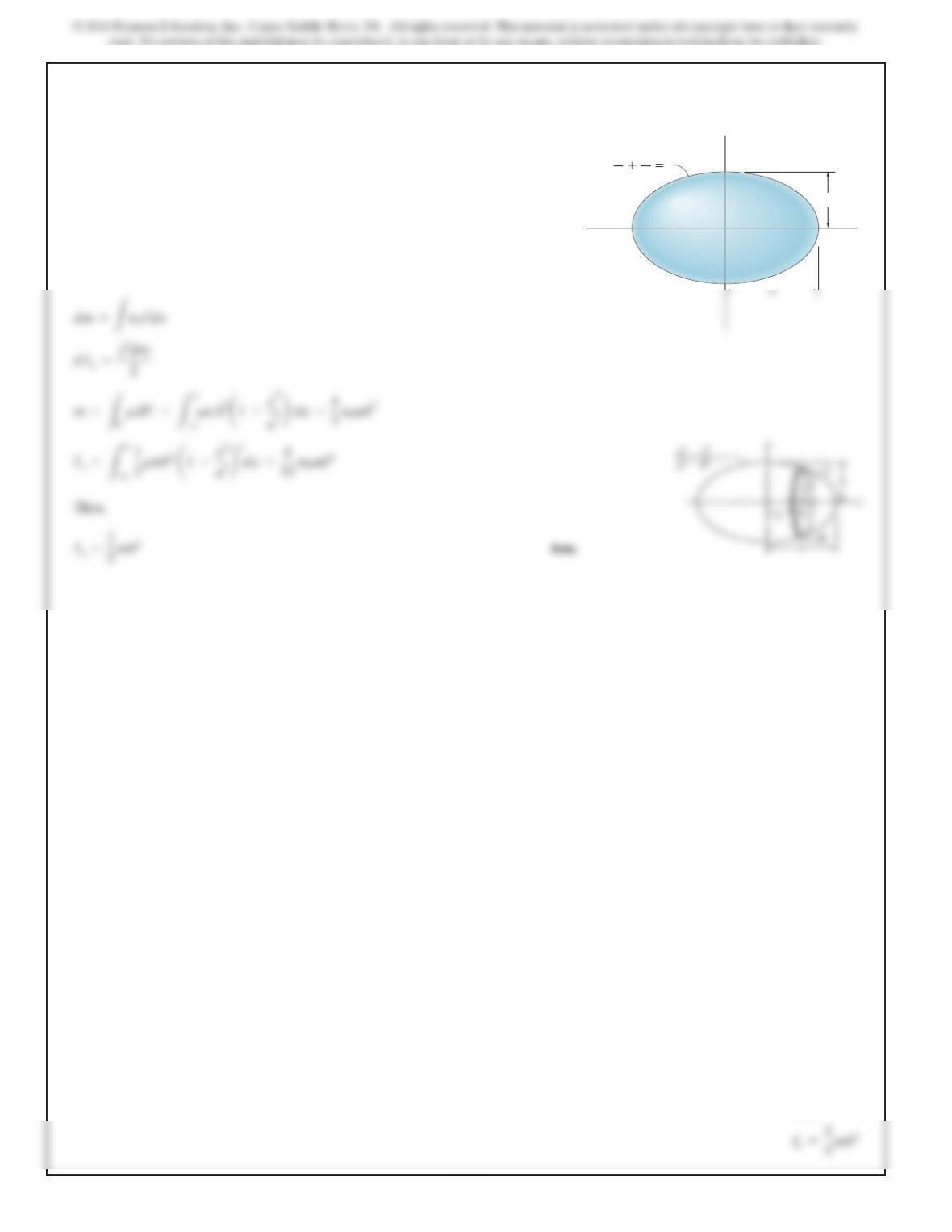
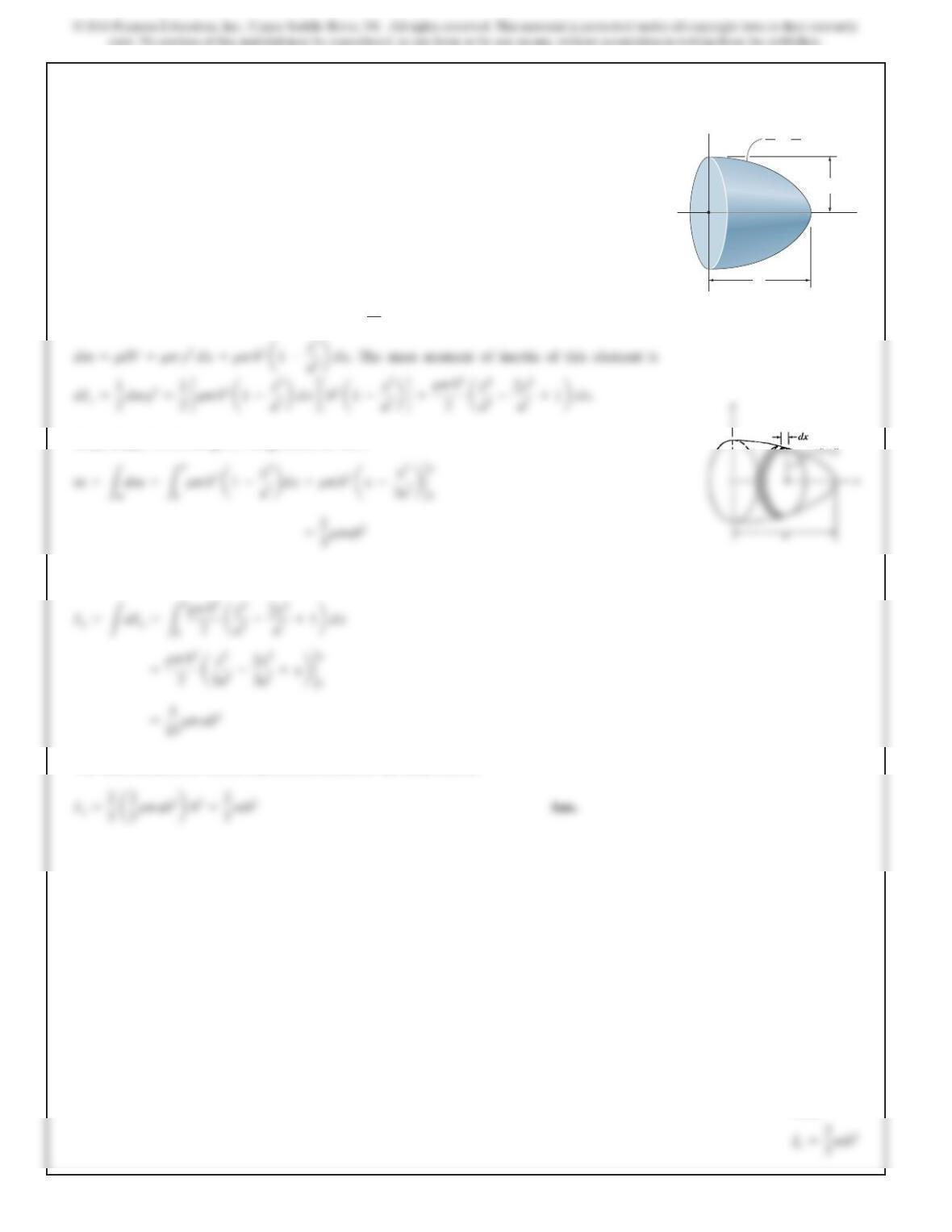
Determine the moment of inertia of the ellipsoid with respect
to the xaxis and express the result in terms of the mass mof
the ellipsoid.Thematerial has aconstant density r.
SOLUTION
y
x
b
1
b
2
y
2
a
2
x
2
Ans:
1099
10–86.
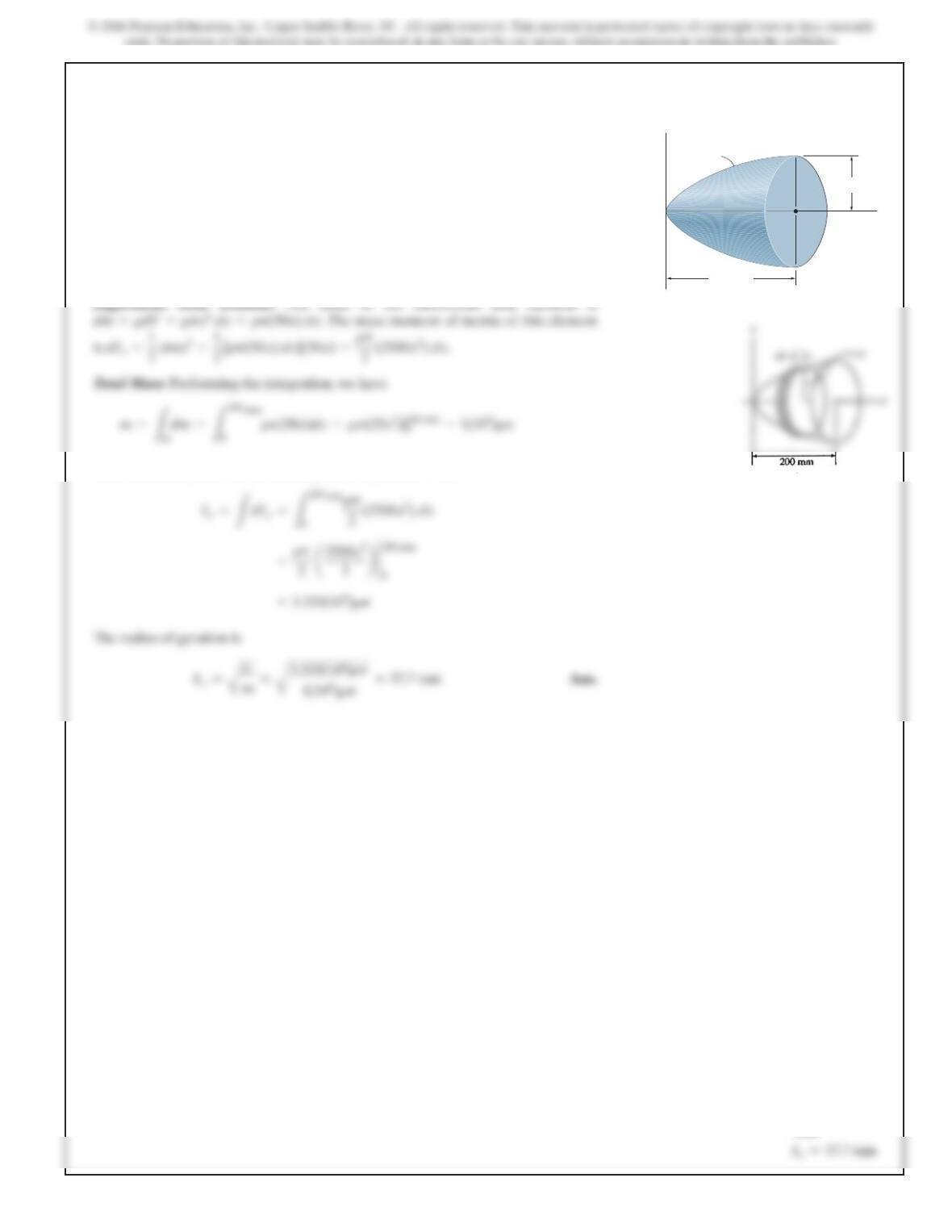
SOLUTION
Mass Moment of Inertia: Performing the integration, we have
Determ
i
ne t
h
e ra
di
us of gyrat
i
on of t
h
e para
b
o
l
o
id
.T
h
e
density of the material is r=5Mg>m3.
kx
y
x
100mm
y
2
50 x
200mm
Ans:
1100
10–87.
SOLUTION
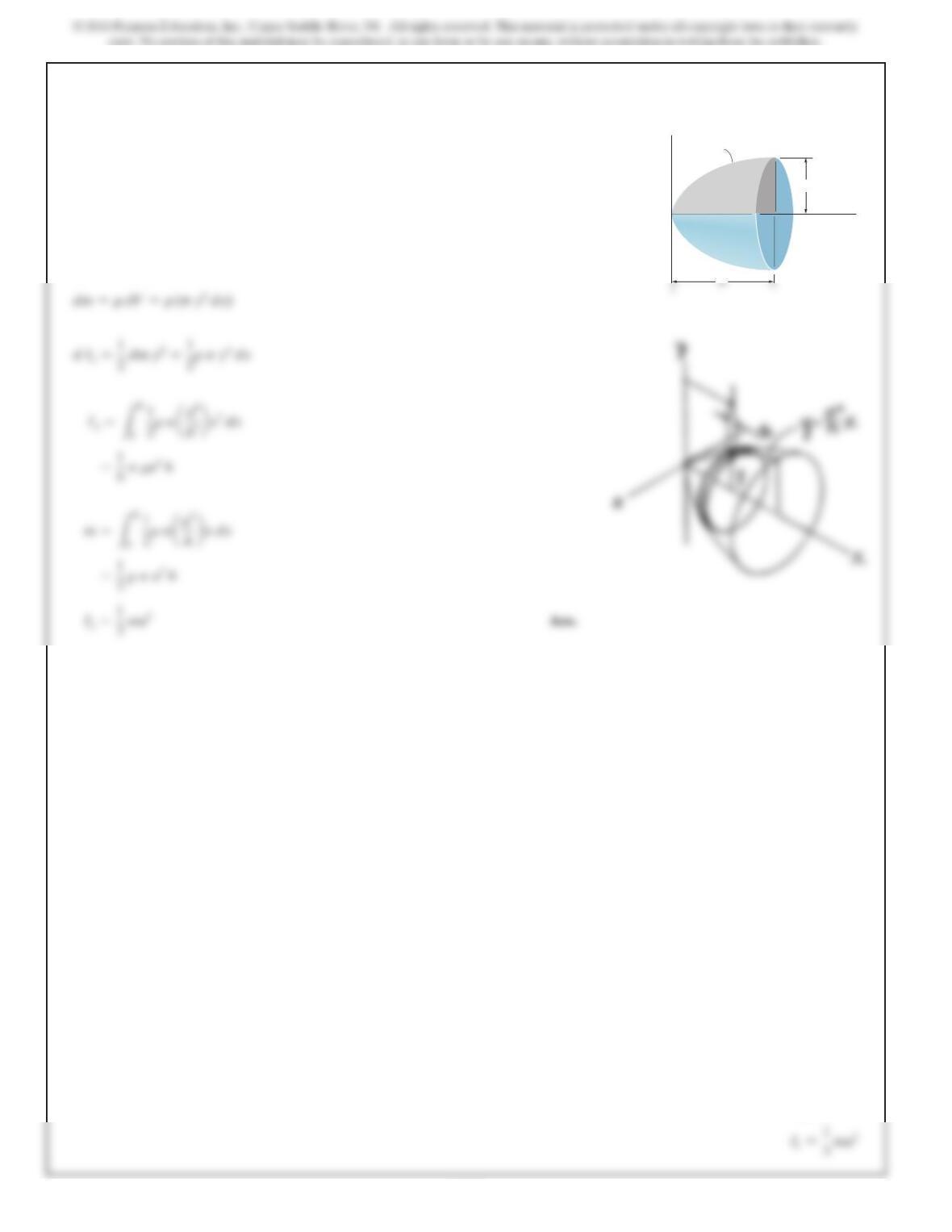
The paraboloid is formed by revolving the shaded area
around the xaxis. Determine the moment of inertia about
the xaxis and express the result in terms of the total mass m
of the paraboloid. The material has a constant density .r
y
x
a
a2
–
hxy2=
Ans:
1101
*10–88.
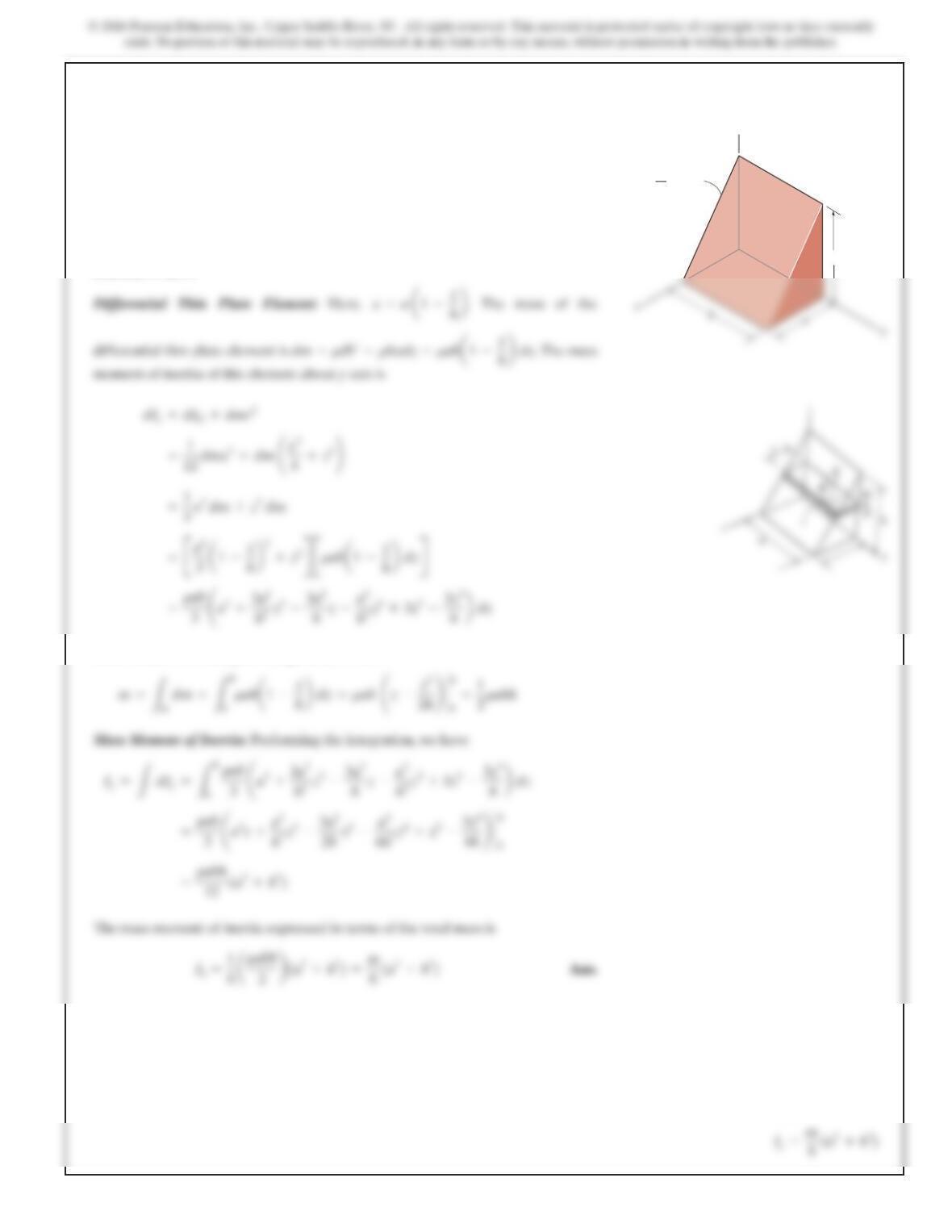
Determine the moment of inertia of the homogenous
triangular prism with respect to the yaxis. Express the
result in terms of the mass mof the prism. Hint: For
integration, use thin plate elements parallel to the x-y plane
having a thickness of dz.
SOLUTION
Total Mass: Performing the integration, we have
z
–h
a(x–a)z=
h
Ans:
1102
10–89.
Determ
i
ne t
h
e moment of
i
nert
i
a of t
h
e sem
i
–e
lli
pso
id
w
i
t
h
respect to the xaxis and express the result in terms of the
mass mof the semiellipsoid. The material has a constant
density r.
SOLUTION
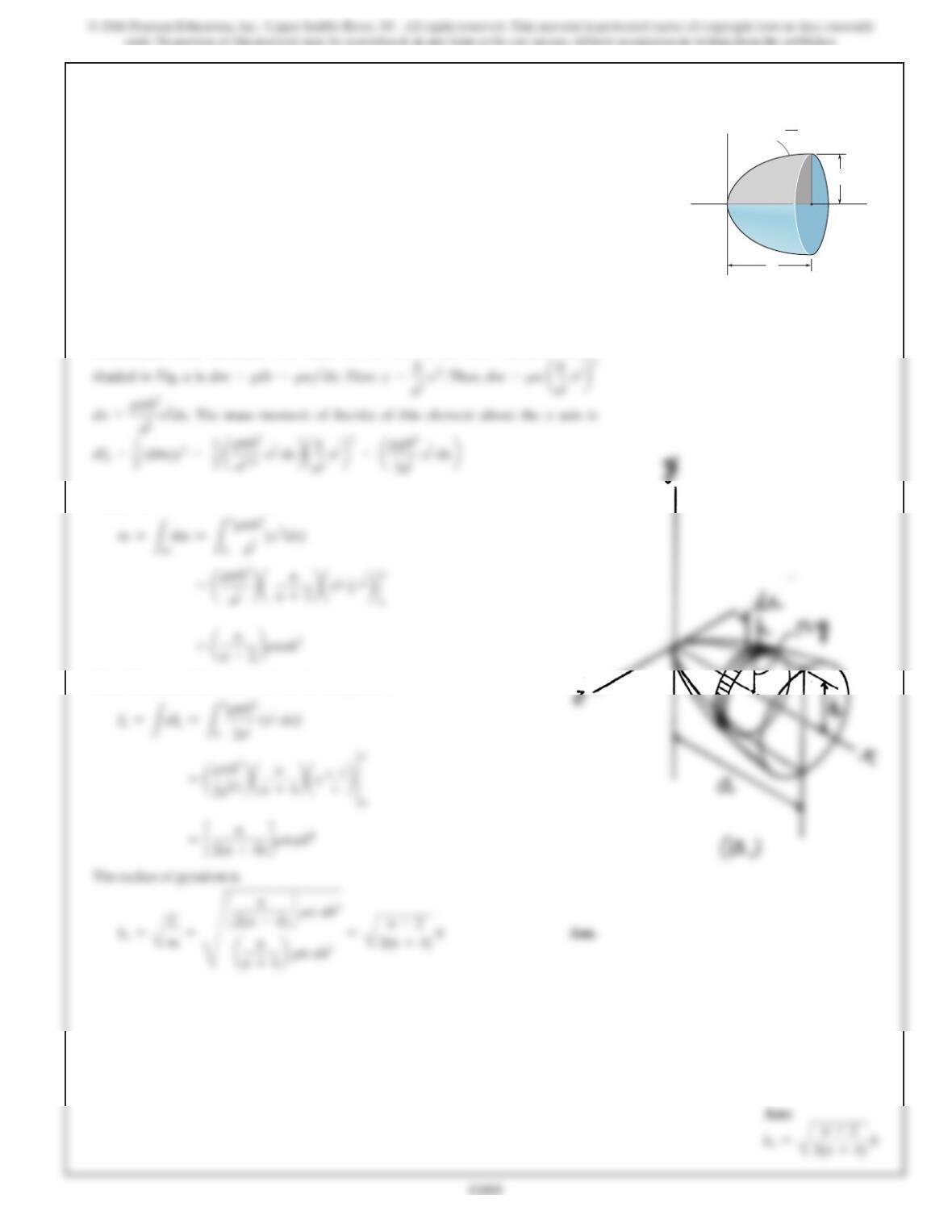
Differential Disk Element: Here, .The mass of the differential disk element is
Total Mass: Performing the integration,we have
Mass Moment of Inertia: Performing the integration,we have
The mass moment of inertia expressed in terms of the total mass is.
y2=b2a1–x2
a2b
y
x
b
a
1
b
2
y
2
a
2
x
2
Ans:
10–90.
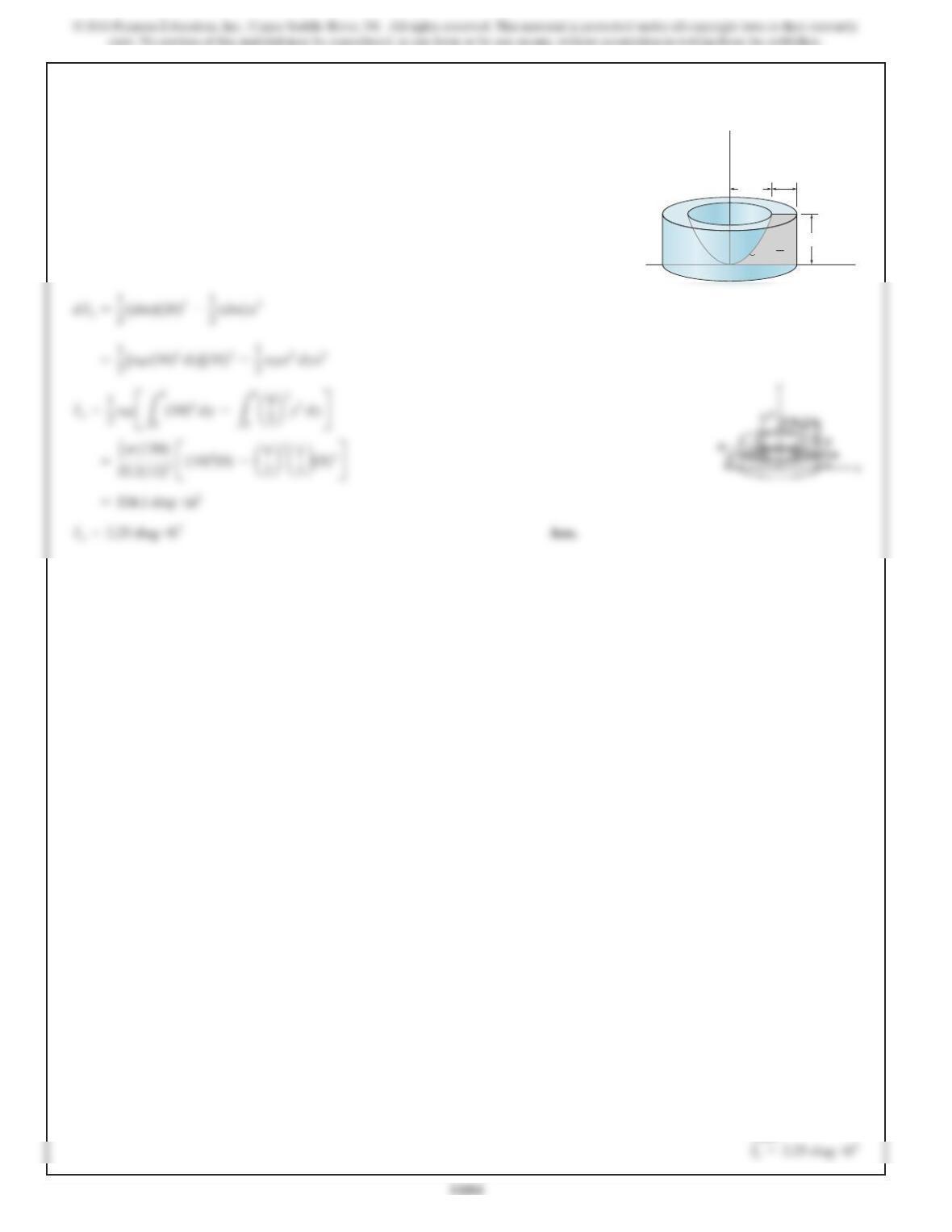
Determine the radius of gyration kx of the solid formed by
revolving the shaded area about x axis. The density of the
material is
r.
SOLUTION
Differential Disk Element. The mass of the differential disk element shown
Total Mass. Perform the integration,
Mass Moment of Inertia. Perform the integration,
y
x
h
a
yn x
a
hn
10–91.
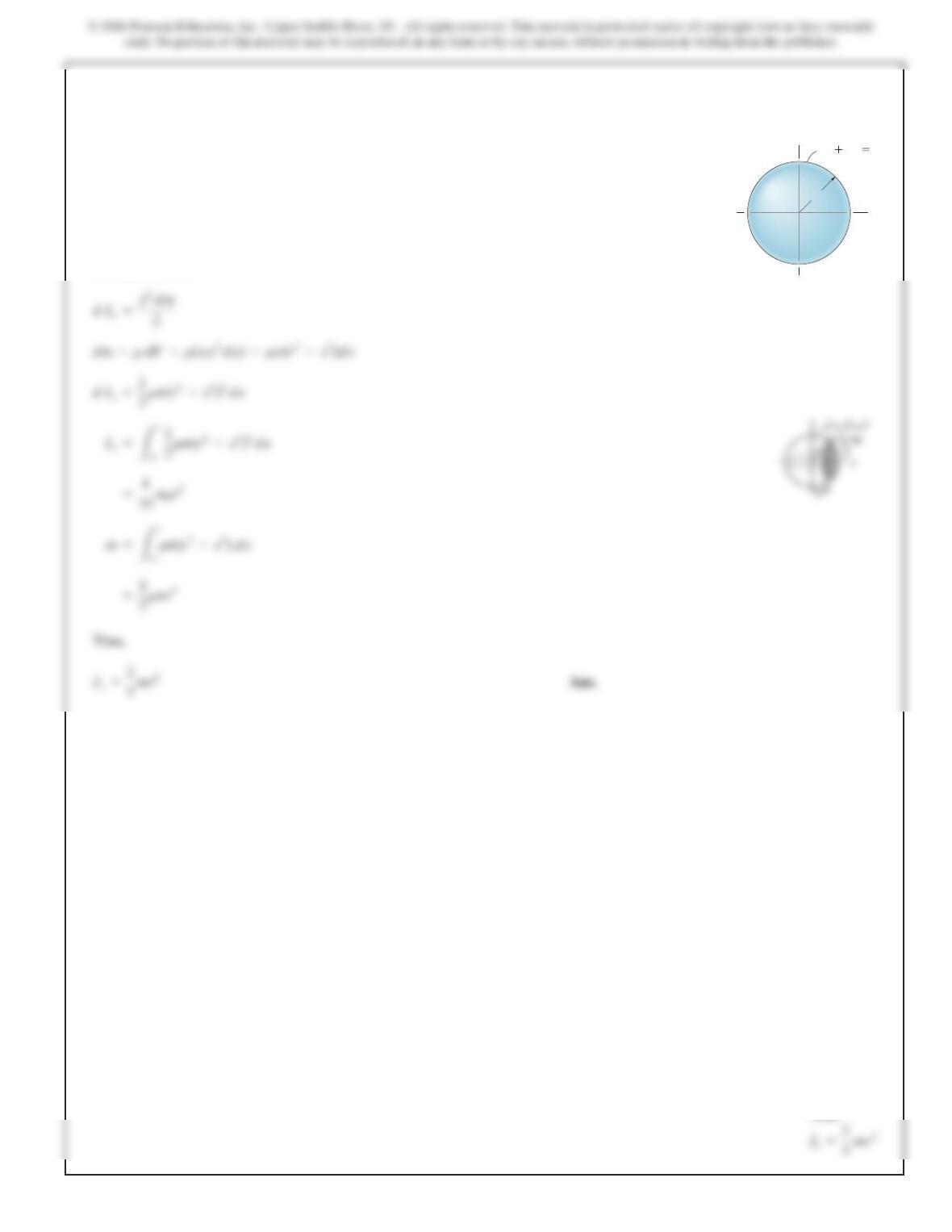
The concrete shape is formed by rotating the shaded area
about the yaxis.Determine the moment of inertia The
specific weight of concrete is g=150 lb>ft3.
Iy.
SOLUTION
y
x
8in.
6in. 4in.
2
9x
2
y
Ans:
1105
*10–92.
Determine the moment of inertia of the sphere and
express the result in terms of the total mass mof the sphere.
The sphere has a constant density r.
Ix
SOLUTION
x
y
r
x
2
y
2
r
2
Ans:
10–93.
The right circular cone is formed by revolving the shaded
area around the xaxis. Determine the moment of inertia
and express the result in terms of the total mass mof the
cone.The cone has a constant density .r
Ix
SOLUTION
y
x
r
r
–
hxy