SOLUTION
Moment of Inertia. The moment of inertia about the y axis for each segment can
Segment A
i
(in
2
)
(dx)i
(in.)
(Iy′)i
(in
4
)(Ad
x
2
)
i
(in
4
) (Iy)i
(in
4
)
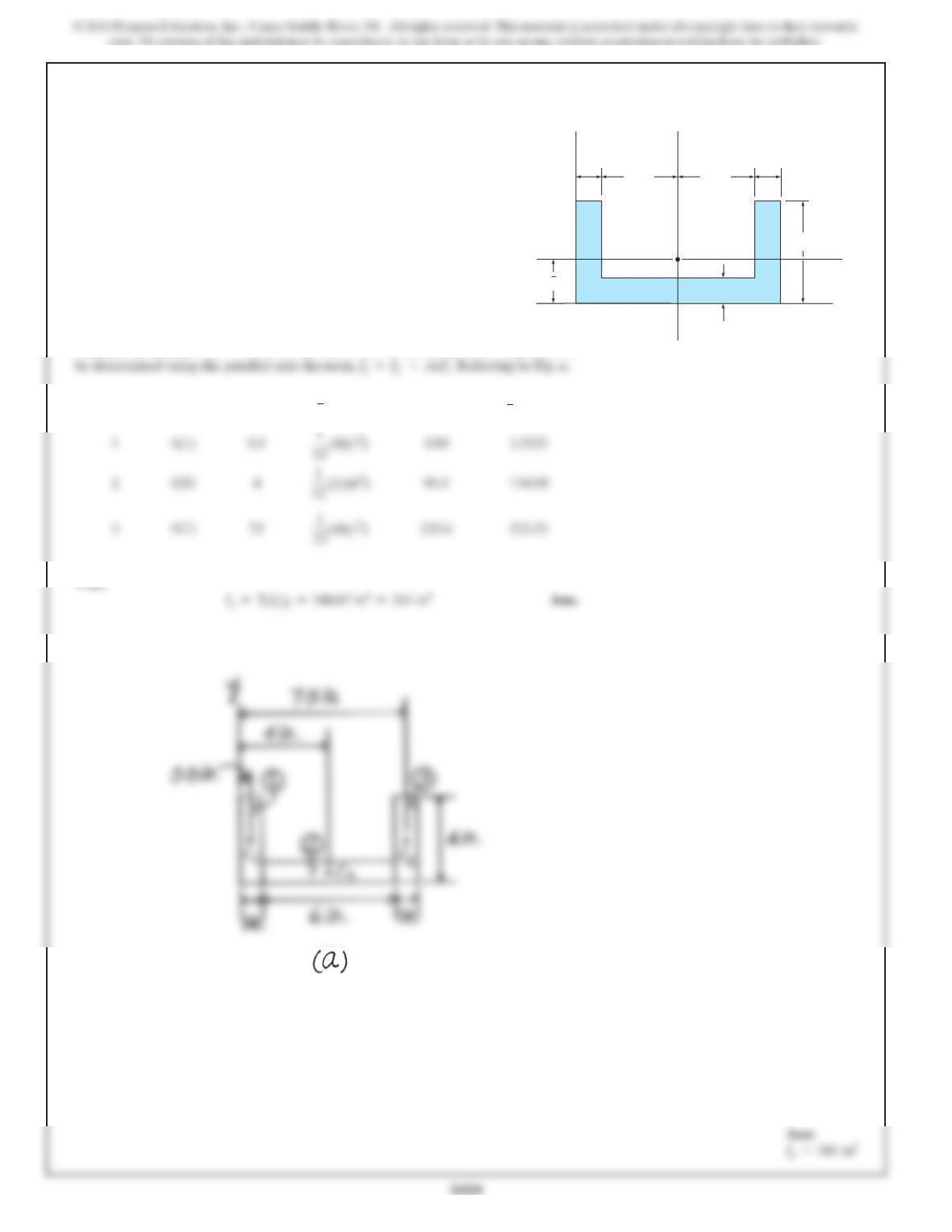
10–41.
Determine the moment of inertia for the beam’s cross-
sectional area about the y axis.
y
x
3 in. 1 in.
1 in.
4 in.
1 in.
y¿
x ¿
C
y
3 in.
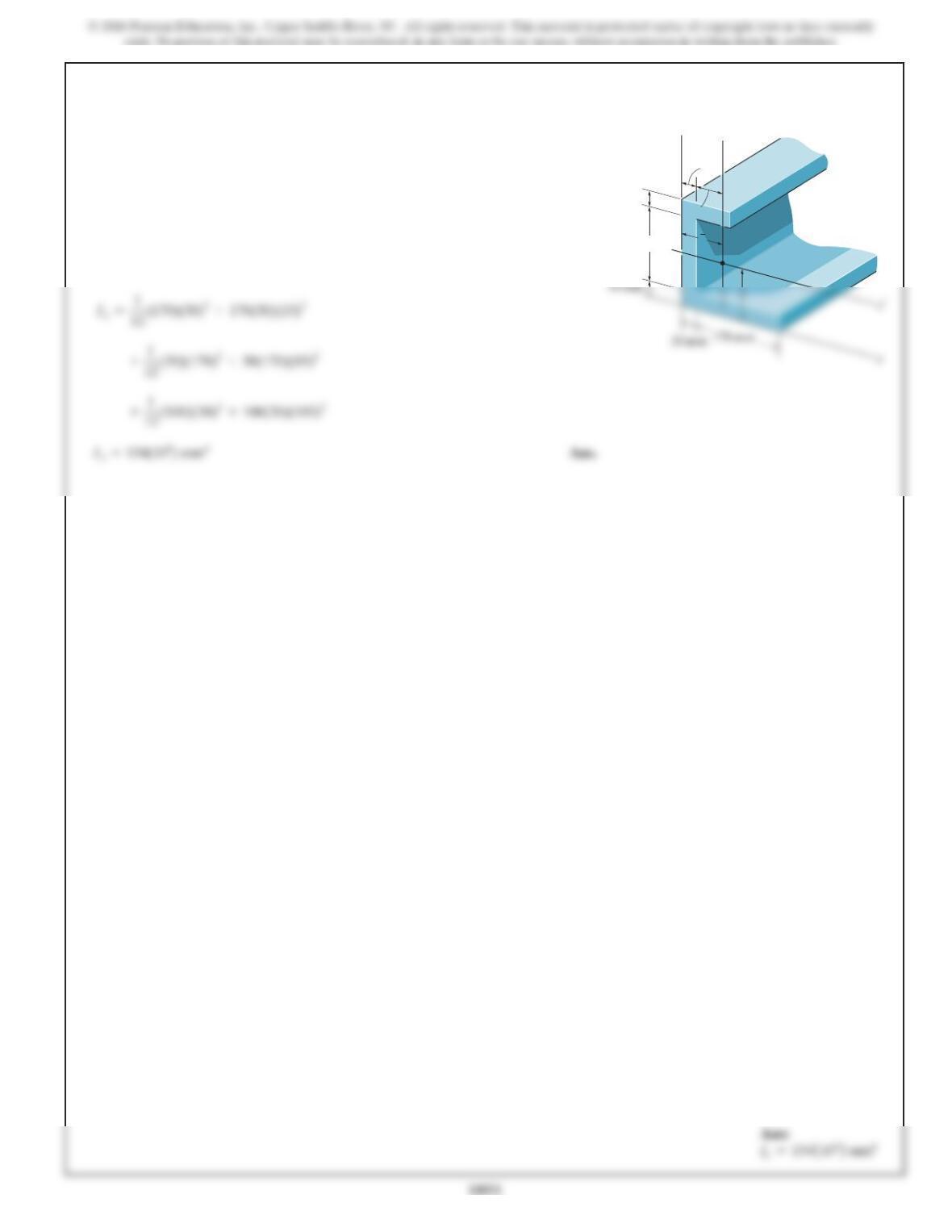
10–42.
SOLUTION
30 mm
70 mm
140 mm
30 mm
y
y¿
C
x
Determine the moment of inertia of the beam’s cross-
sectional area about the x axis.
1052
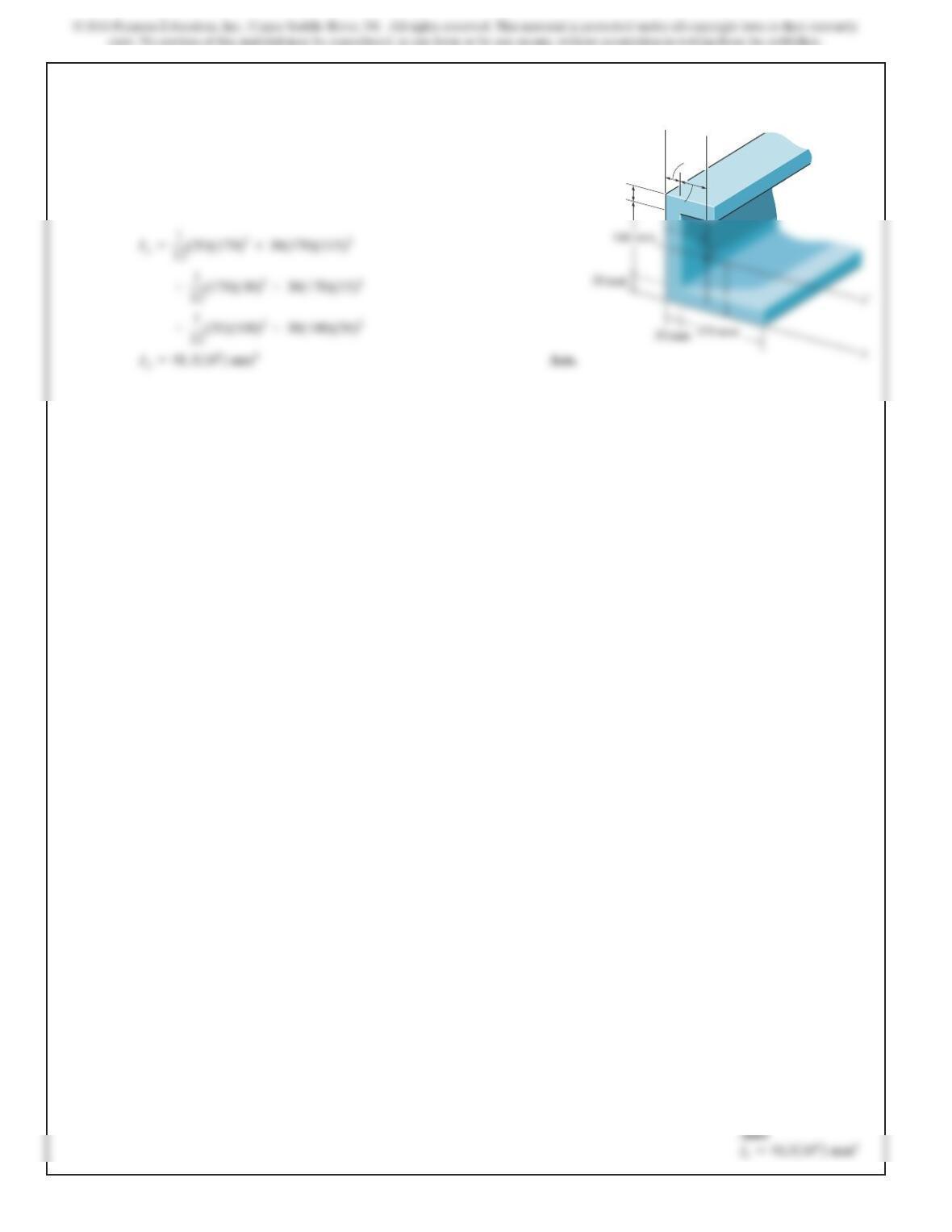
10–43.
Determine the moment of inertia of the beam’s cross-
sectional area about the yaxis.
SOLUTION
30 mm
70 mm
30 mm
y
y¿
1053
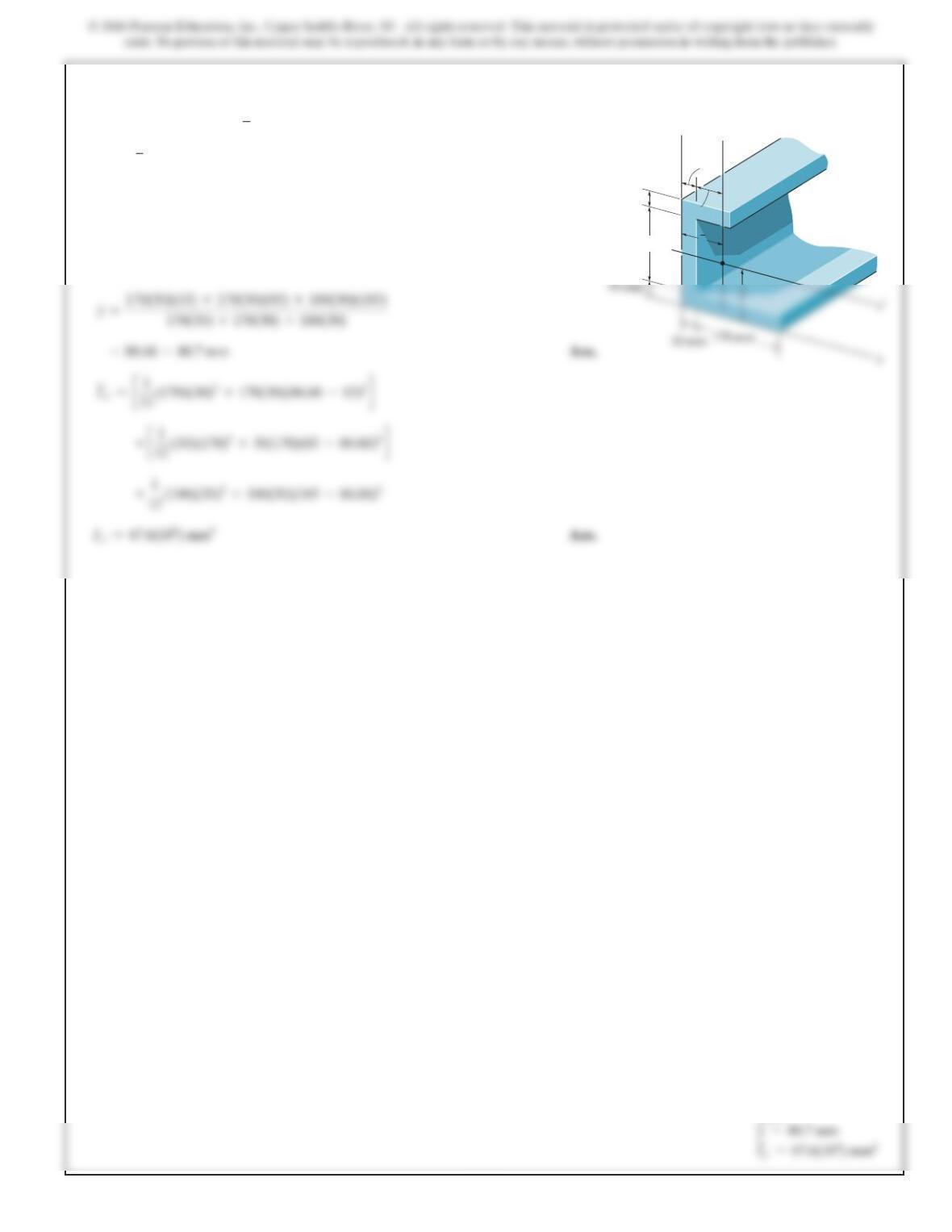
*10–44.
SOLUTION
Determ
i
ne t
h
e
di
stance to t
h
e centro
id
Cof t
h
e
b
eam’s
cro
ss–sectional area and then compute the moment of
inertia
about the axis.x¿Ix¿
y
30 mm
70 mm
140 mm
30 mm
y
y¿
C
x
Ans:
1054
10–45.
Determine the distance to the centroid Cof the beam’s
cross-sectional area and then compute the moment of
inertia about the axis.y¿Iy¿
x
SOLUTION
30 mm
70 mm
140 mm
30 mm
y
y¿
C
x
Ans:
SOLUTION
Segment A
i
(in
2
)
(d
y
)
i
(in.)
(
I
x′)i
(in4)
(Ady
2
)i
(in
4
) (I
x
)
i
(in
4
)
Thus,
10–46.
Determine the moment of inertia for the shaded area about
the
x
axis.
x
y
3 in. 3 in.
6 in.
3 in.
3 in.
3 in.
2 in.
1056
SOLUTION
Segment A
i
(in
2
)
(dx)i
(in.)
(
I
x′)i
(in4)
(Ad
x
2
)
i
(in
4
) (Iy)i
(in
4
)
10–47.
Determine the moment of inertia for the shaded area about
the y axis.
x
y
3 in. 3 in.
6 in.
3 in.
3 in.
3 in.
2 in.
Ans:
1057
*10–48.
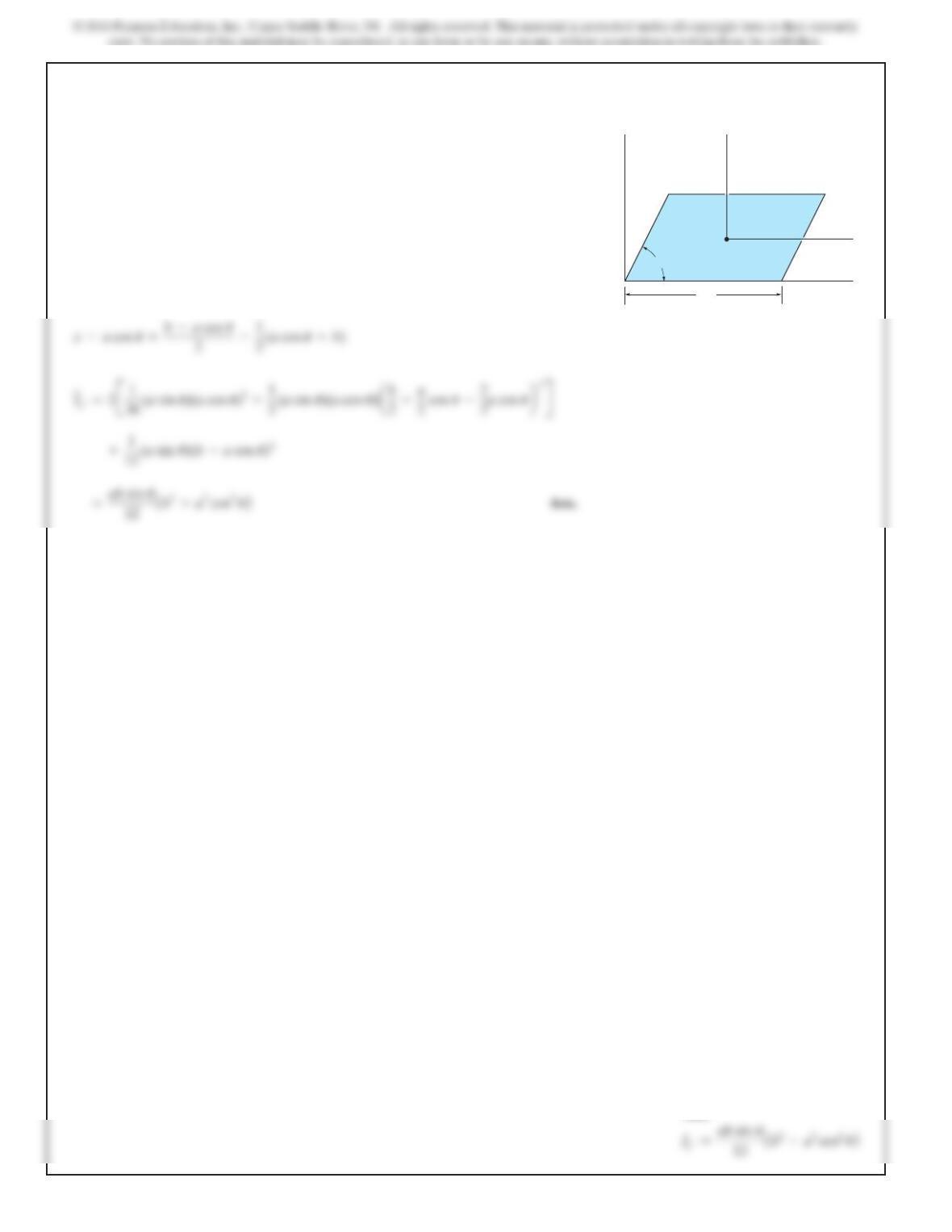
Determine the moment of inertia of the parallelogram
about the x′ axis, which passes through the centroid C of
the area.
y
b
x
C
a
θ
‘
x
‘
y
Ans:
1058
10–49.
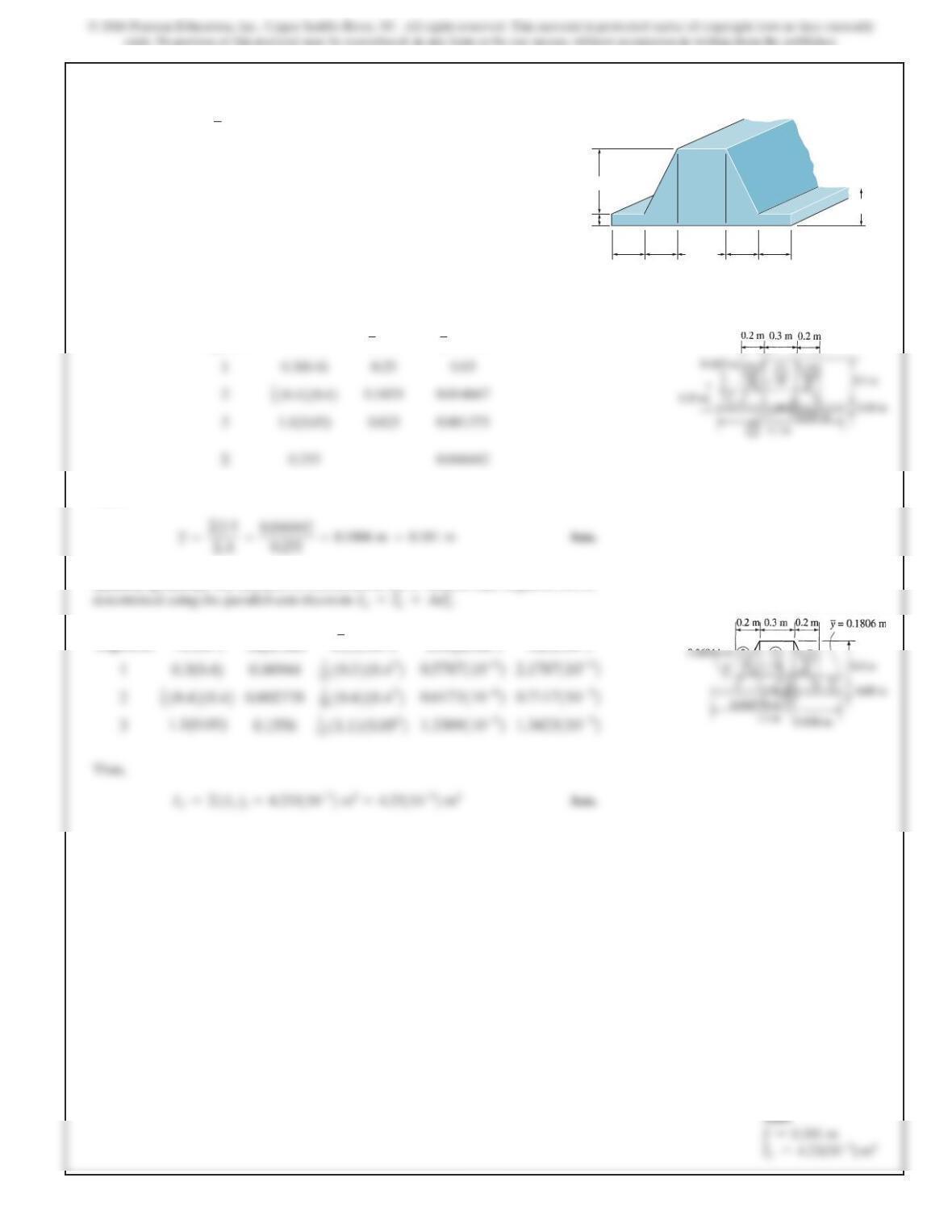
Determine the moment of inertia of the parallelogram
about the y′ axis, which passes through the centroid C of
the area.
SOLUTION
y
b
x
C
a
θ
‘
x
‘
y
Ans:
1059
10–50.
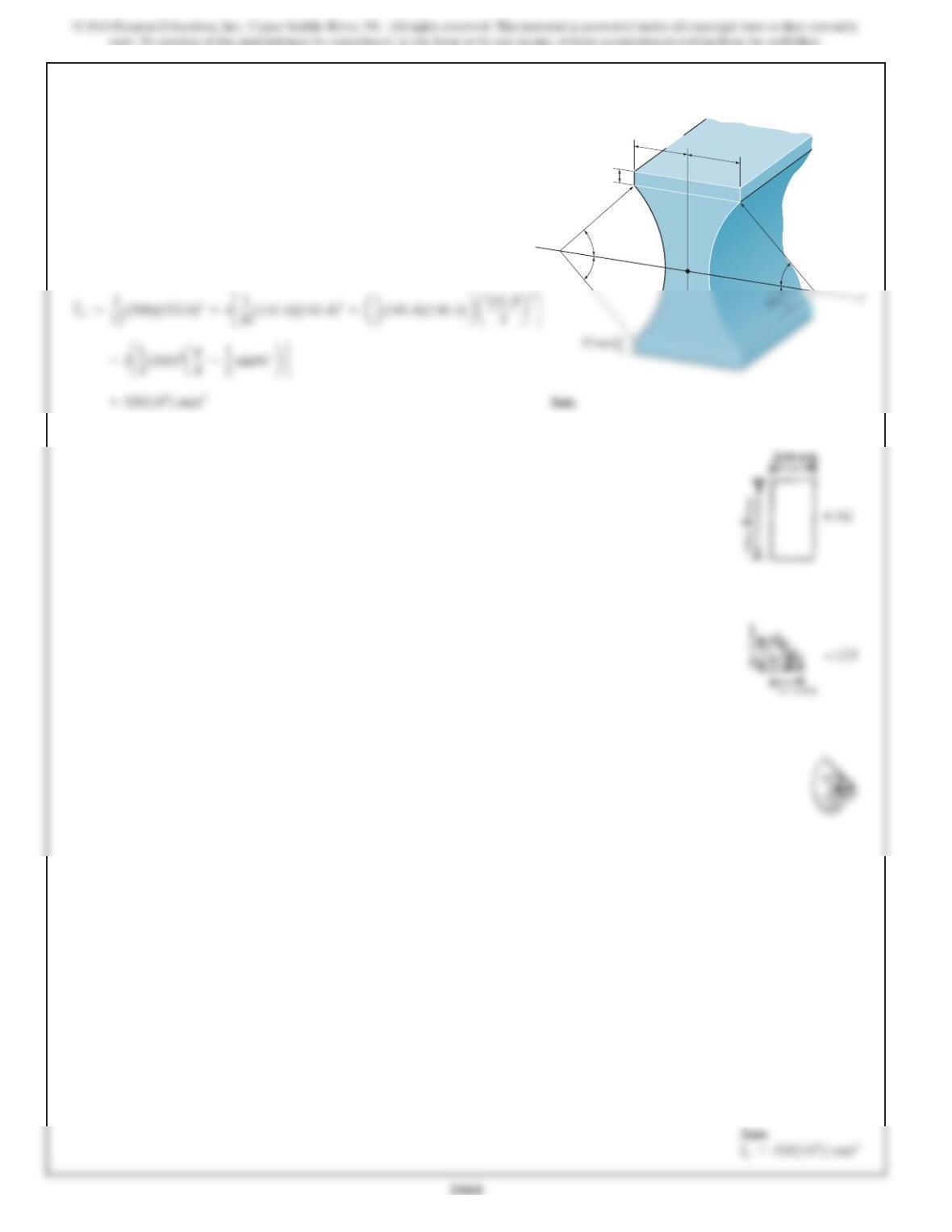
Locate the centroid of the cross section and determine the
moment of inertia of the section about the axis.x¿
y
SOLUTION
Centroid:The area of each segment and its respective centroid are tabulated below.
0.2 m
0.05 m
0.4 m
0.2 m 0.2 m 0.2 m
0.3 m
x’
–
y
Th
us,
Moment
of Inertia:The moment of inertia about the axis for each segment can be
x¿
Segment A (m2)y (m) yA (m3)
Segment Ai (m2)(dy)i (m) (Ady
2)i(m4)(Ix¿)i(m4)
(Ix¿)i (m4)
10–51.
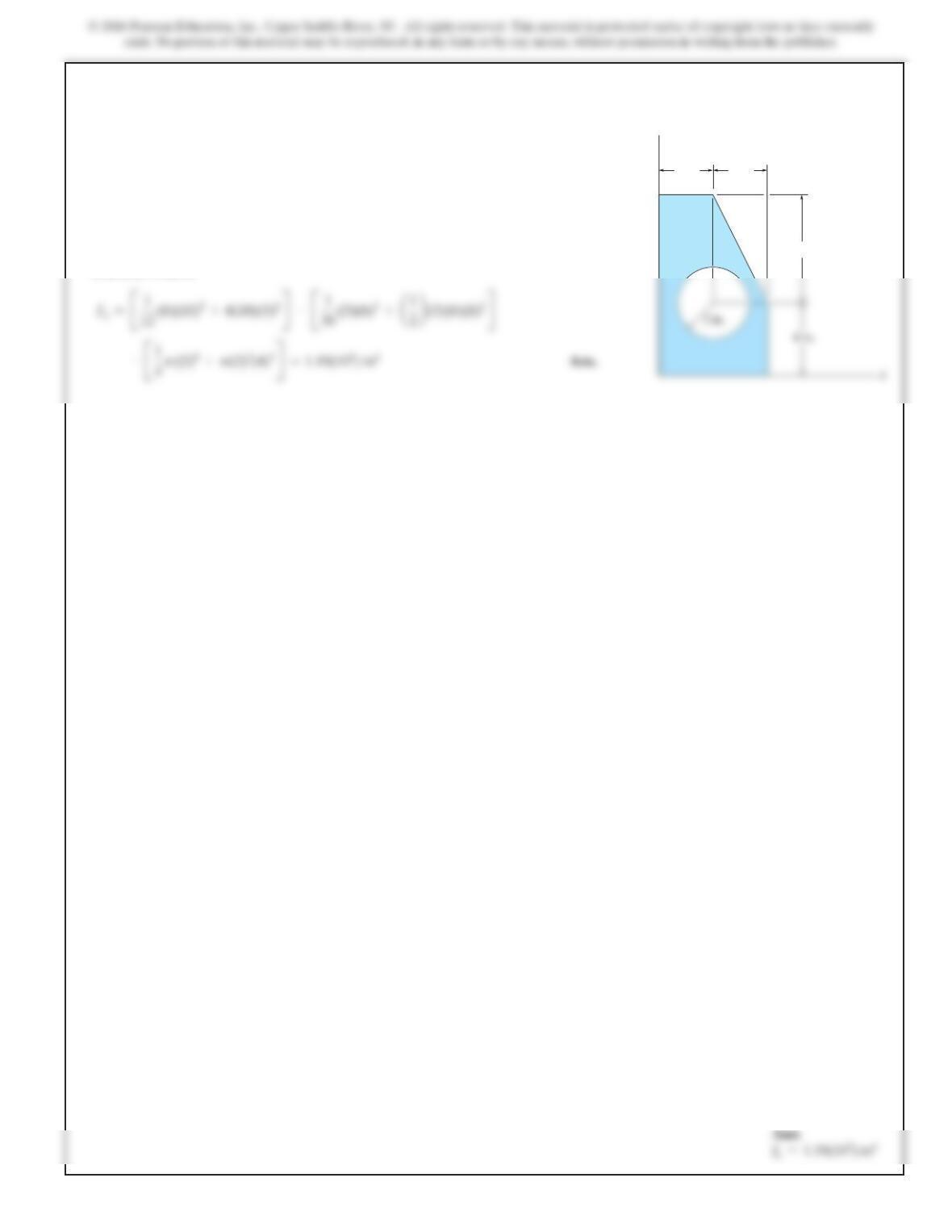
Determine the moment of inertia for the beam’s cross-
sectional area about the axis passing through the centroid
Cof the cross section.
x¿
SOLUTION
100mm100mm
200mm
200mm
C
25 mm
45
4545
1061
*10–52.
SOLUTION
y
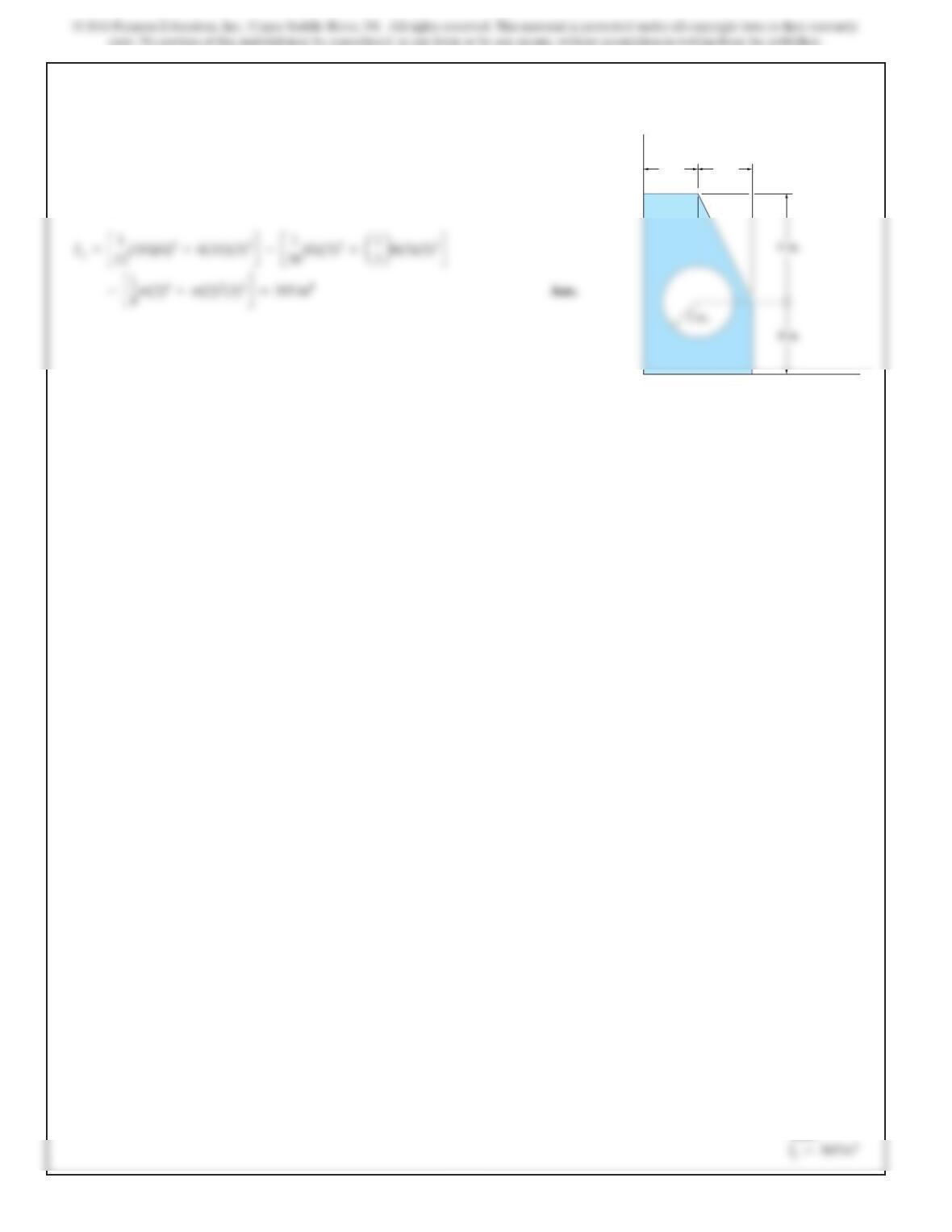
3in. 3in.
6in.
Determine the moment of inertia of the area about
the x axis.
1062
10–53.
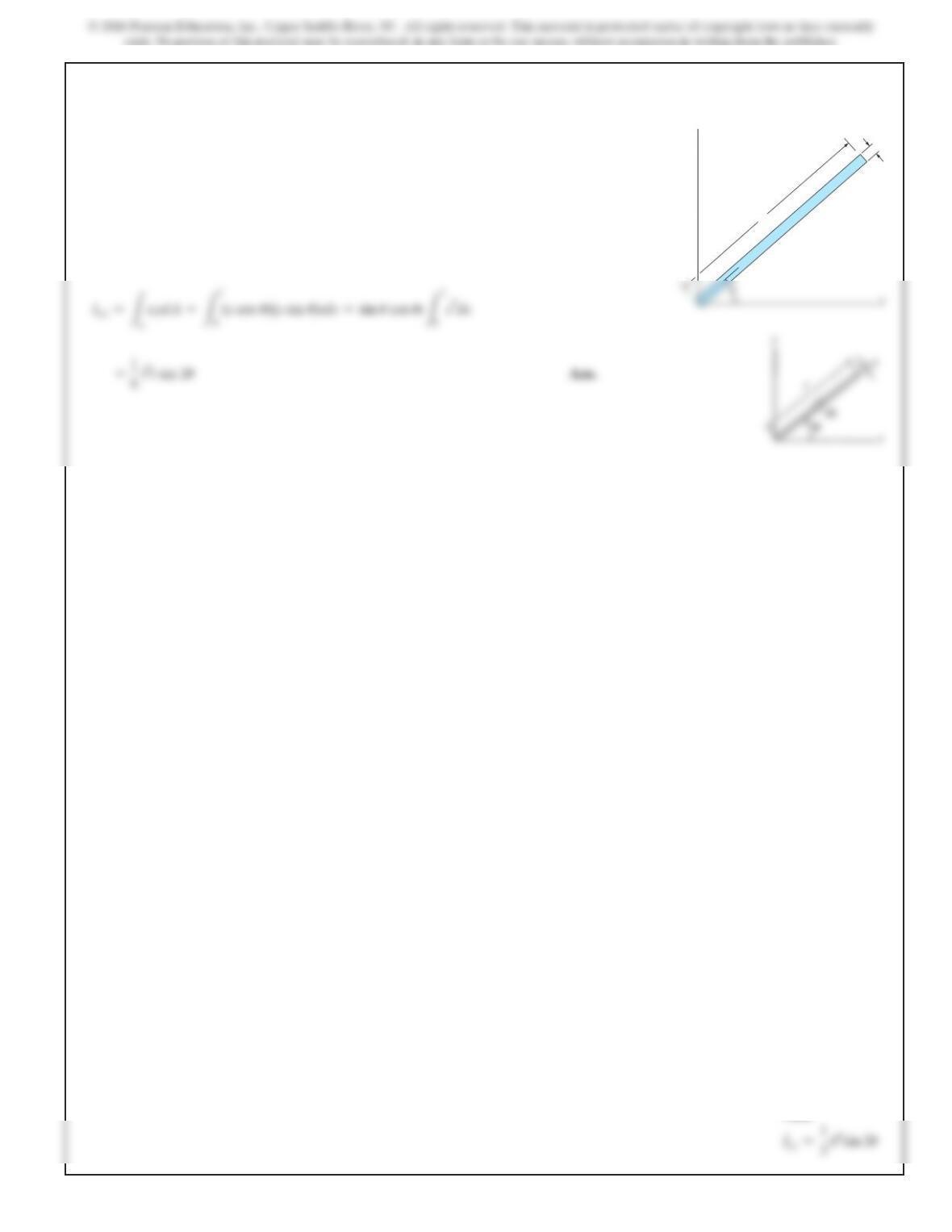
Determine the moment of inertia of the area about the
yaxis.
SOLUTION
y
x
3 in. 3 in.
Ans:
1063
10–54.
y
l
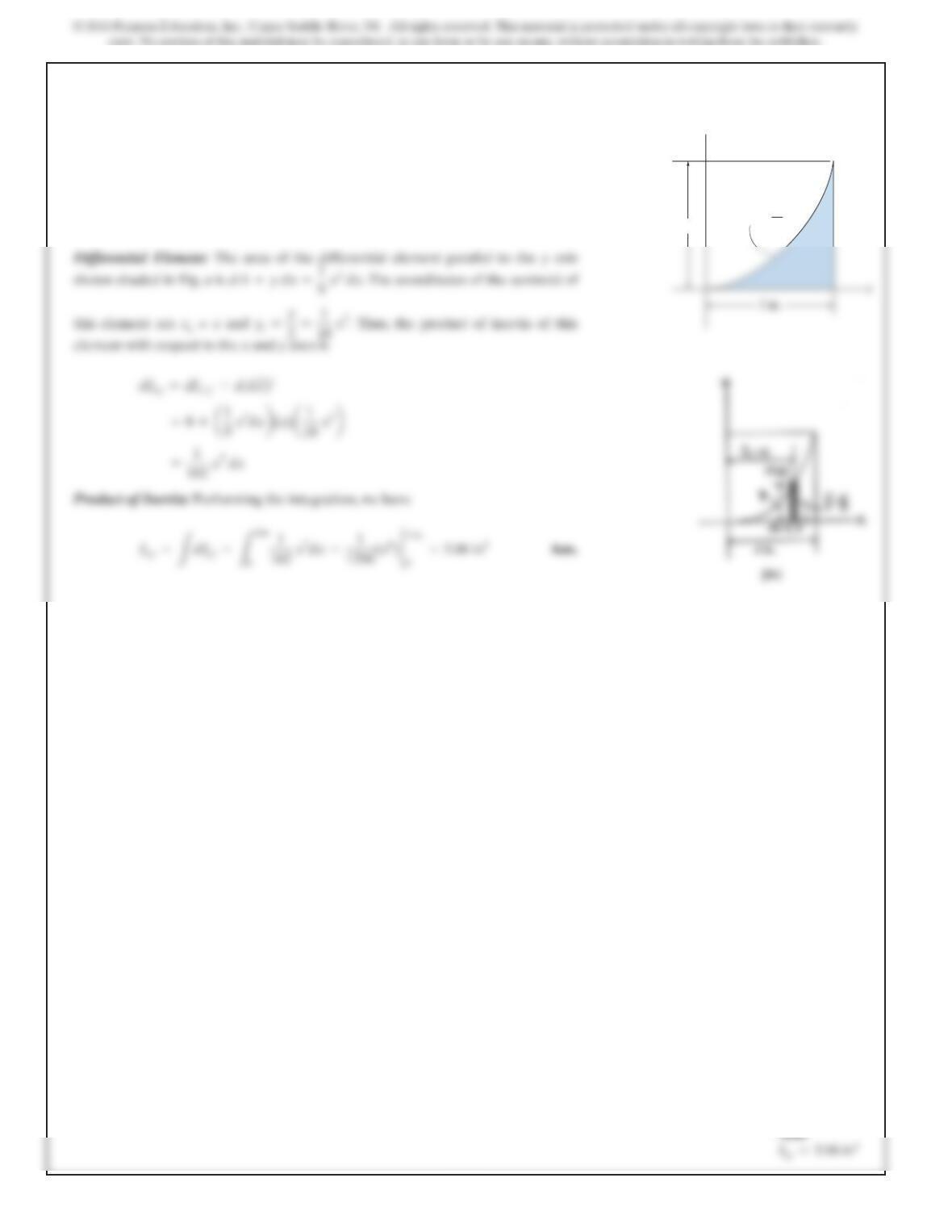
t
Determine
the product of inertia of the thin strip of area
w
ith respect to the and axes.The strip is oriented at an
angle
from the axis. Assume that .
SOLUTION
tVlxu
yx
Ans:
1064
10–55.
y x
3
1
9
3 in.
y
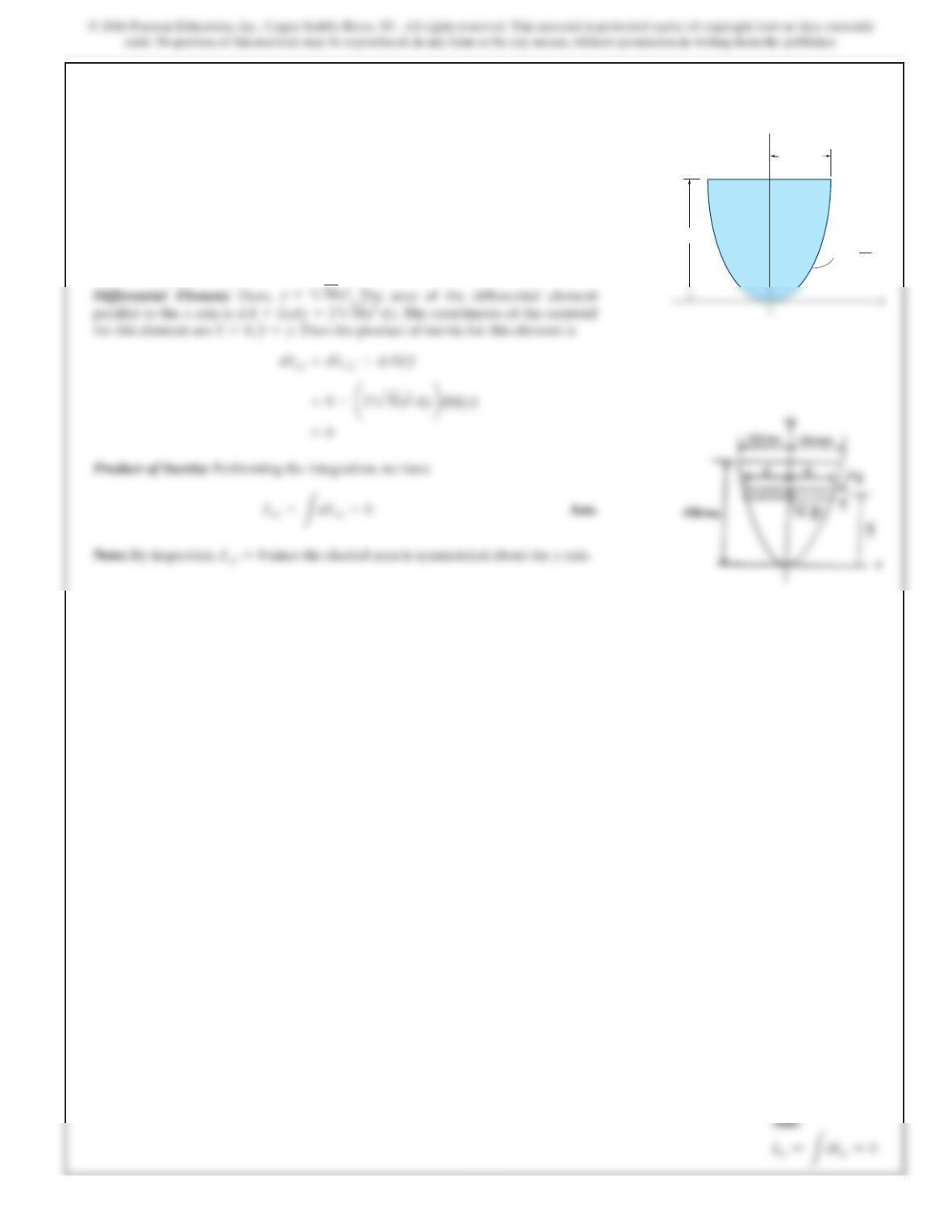
Determine the product of inertia of the shaded area with
respect to the xand yaxes.
SOLUTION
1065
*10–56.
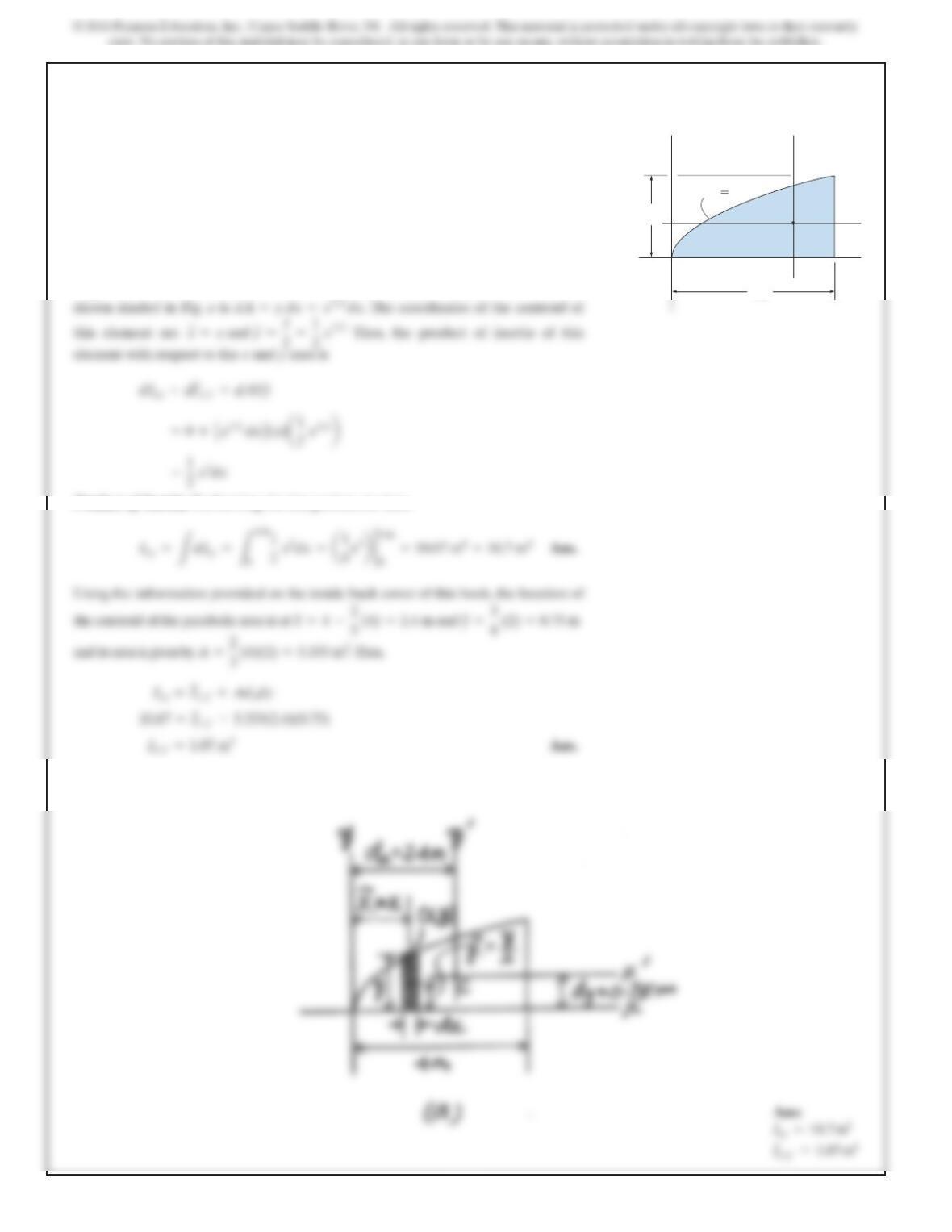
Determine the product of inertia for the shaded portion of
the parabola with respect to the xand yaxes.
SOLUTION
200 mm
100 mm
y
yx
2
1
50
1066
10–57.
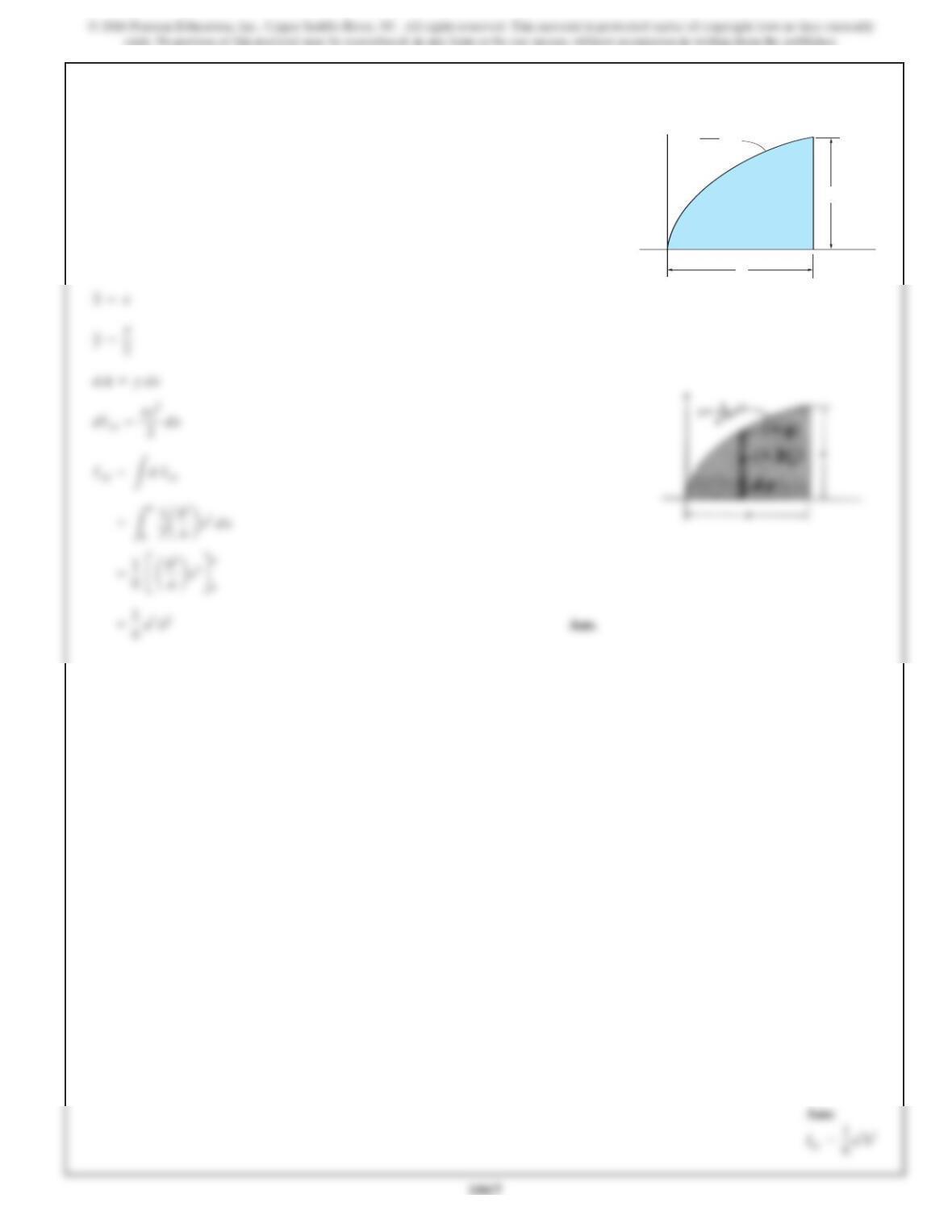
Determine the product of inertia of the shaded area with
respect to the xand yaxes, and then use the parallel-axis
theorem to find the product of inertia of the area with
respect to the centroidal and axes.
SOLUTION
Differential Element: The area of the differential element parallel to the yaxis
Product of Inertia: Performing the integration, we have
y¿x¿
y2 x
2 m
y y¿
x
4 m
Cx¿
10–58.
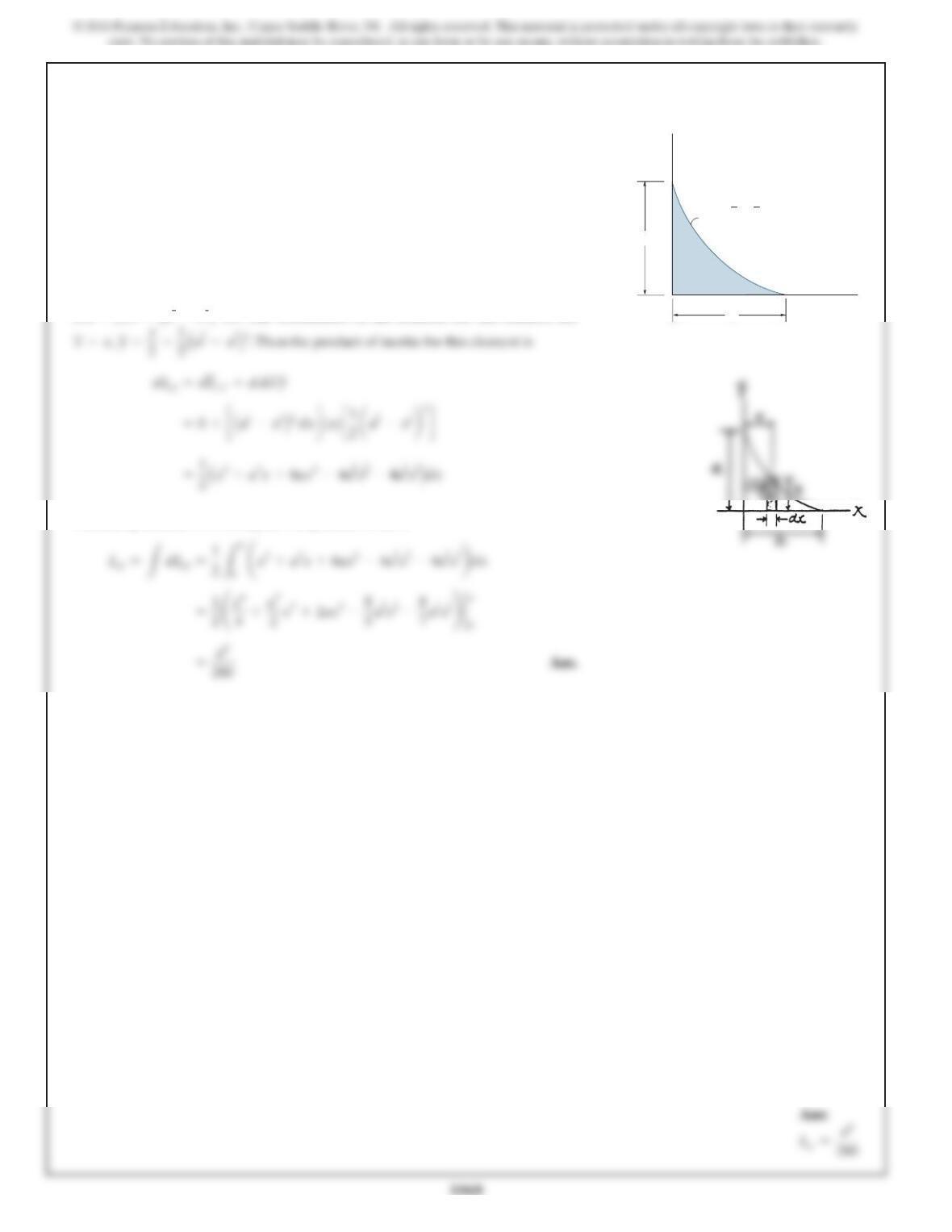
SOLUTION
Determ
i
ne t
h
e pro
d
uct of
i
nert
i
a for t
h
e para
b
o
li
c area w
i
t
h
respect to the xand yaxes.
y
x
a
b
yx
1/2
b
a
1/2
10–59.
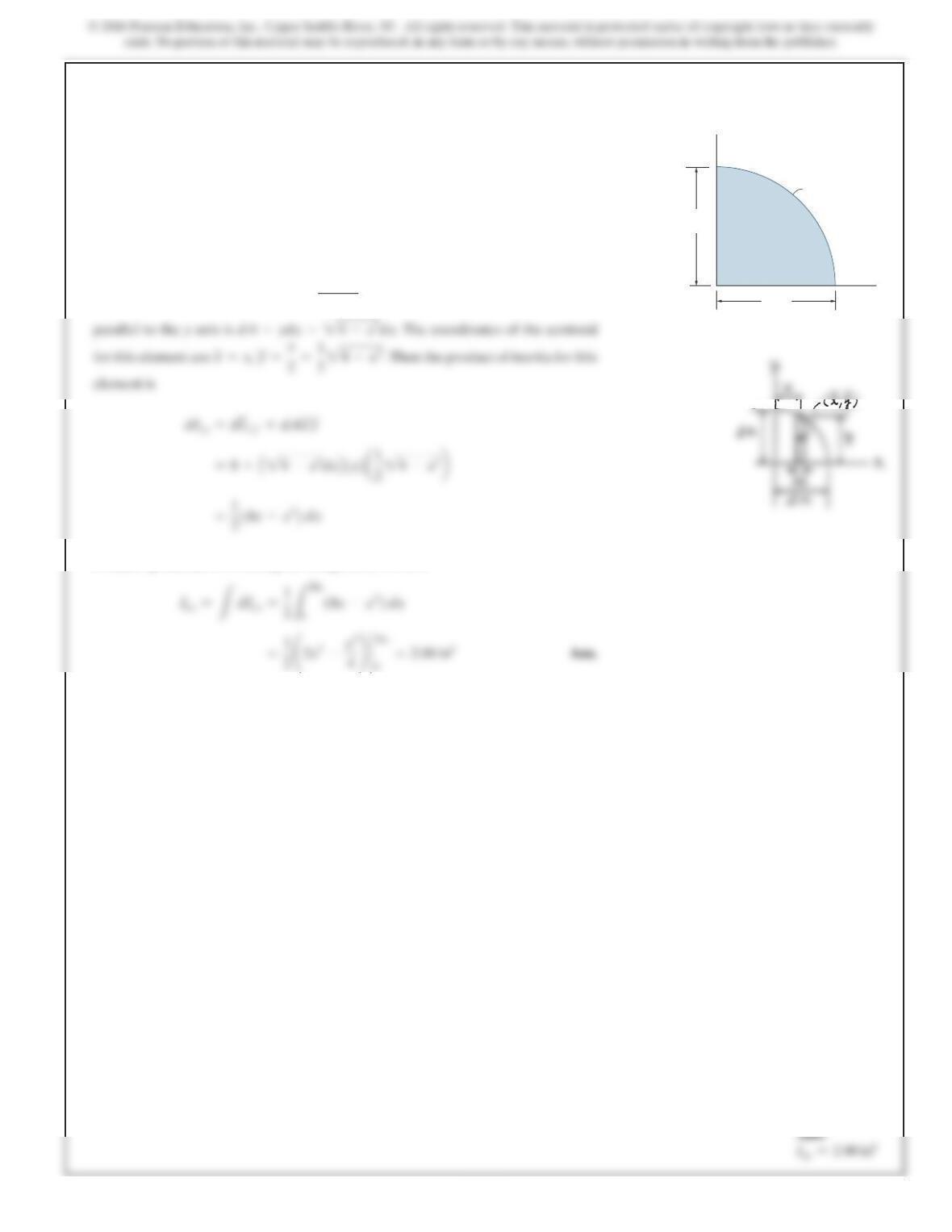
Determine the product of inertia of the shaded area with
respect to the xand yaxes.
SOLUTION
Differential Element: The area of the differential element parallel to the yaxis is
The coordinates of the centroid for this element are
Product of Inertia: Performing the integration, we have
dA =ydx =
A
a1
2–x1
2
B
2dx.
x
y
Oa
a
y=(a2–x
2)2
1
1
1069
*10–60.
SOLUTION
Differential Element: Here,The area of the differential element
Product of Inertia: Performing the integration, we have
y=24–x2.
Determine the product of inertia of the shaded area with
respect to the xand yaxes.
2in.
2in.
y
x
x2+y
2=4