1030
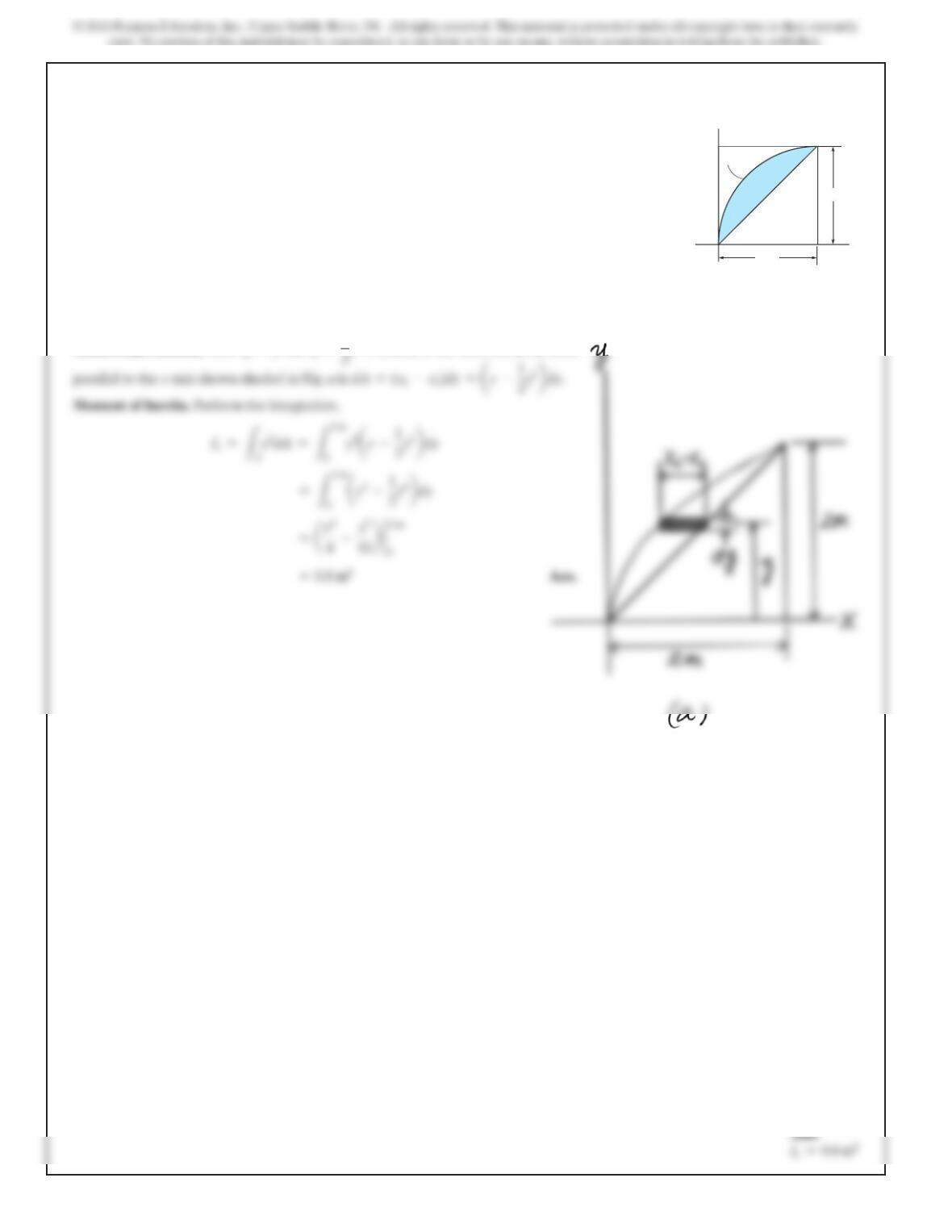
10–21.
Determine the moment of inertia for the shaded area about
the x axis.
SOLUTION
Differential Element. Here
x2=y
and x1=
1
y2. The area of the differential element
y
x
2 m
2 m
y2 2x
y x
1031
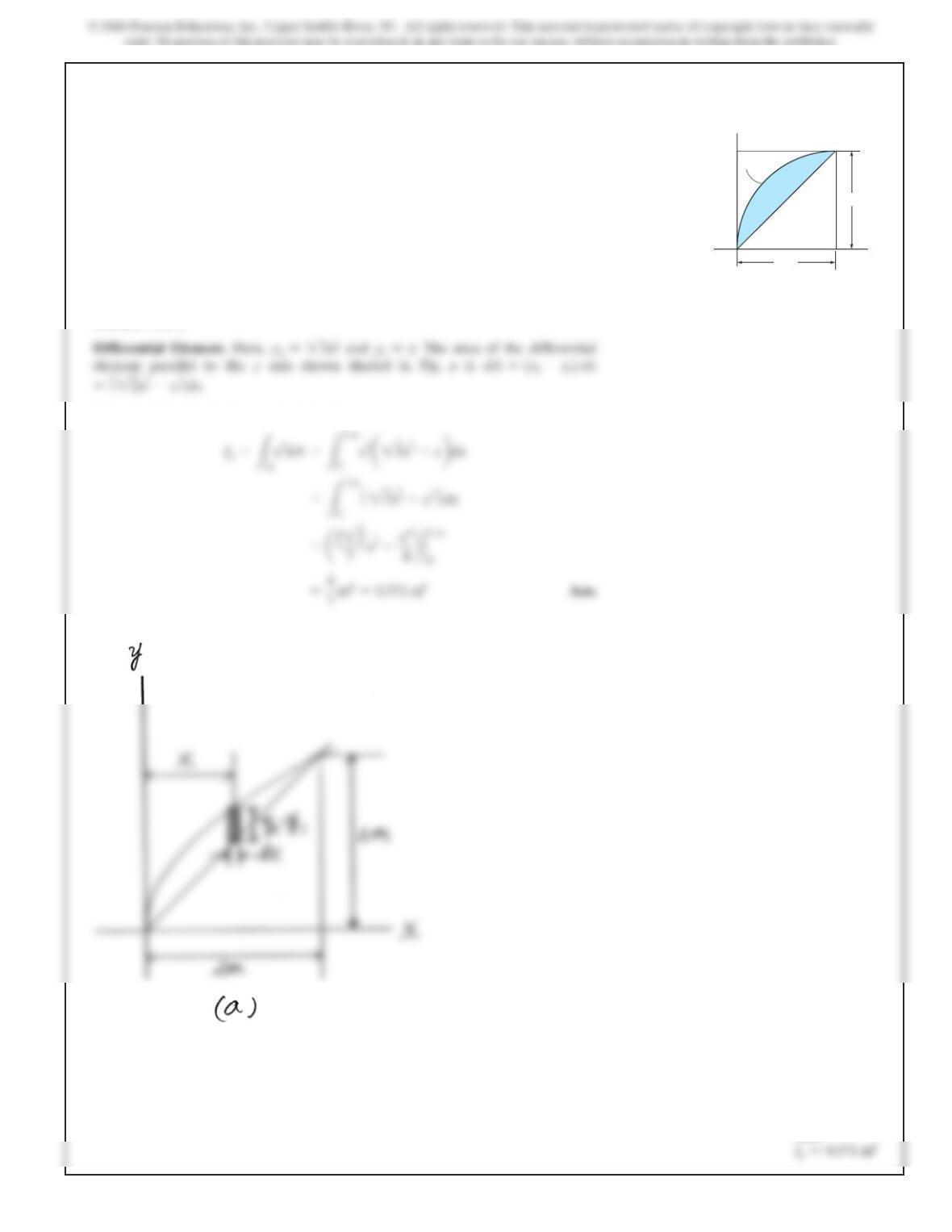
10–22.
Determine the moment of inertia for the shaded area about
the y axis.
SOLUTION
Moment of Inertia. Perform the integration,
y
x
2 m
2 m
y2 2x
y x
Ans:
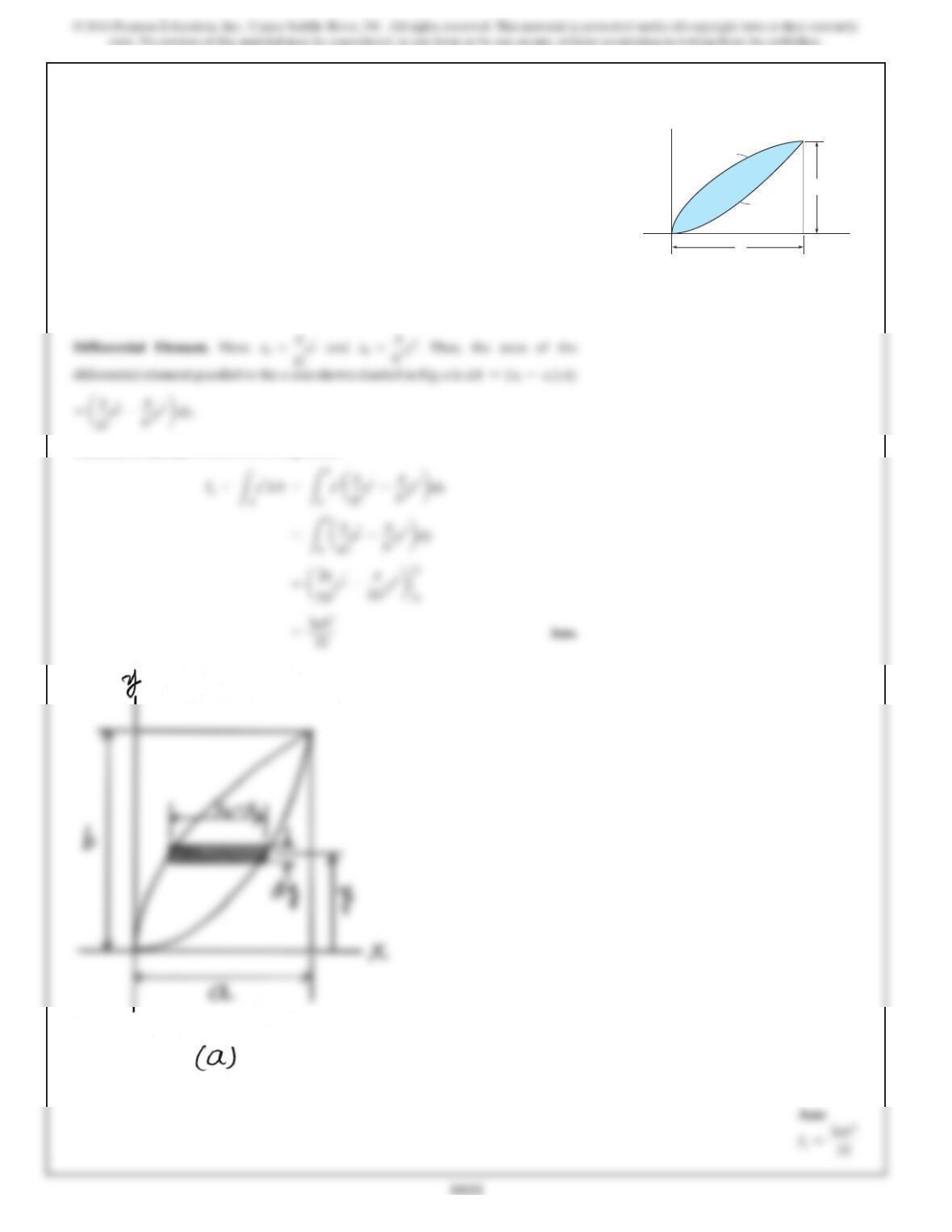
10–23.
Determine the moment of inertia for the shaded area about
the x axis.
SOLUTION
Moment of Inertia. Perform the integration,
b
x
y
a
y2 —x
b2
a
y — x2
b
a2
1033
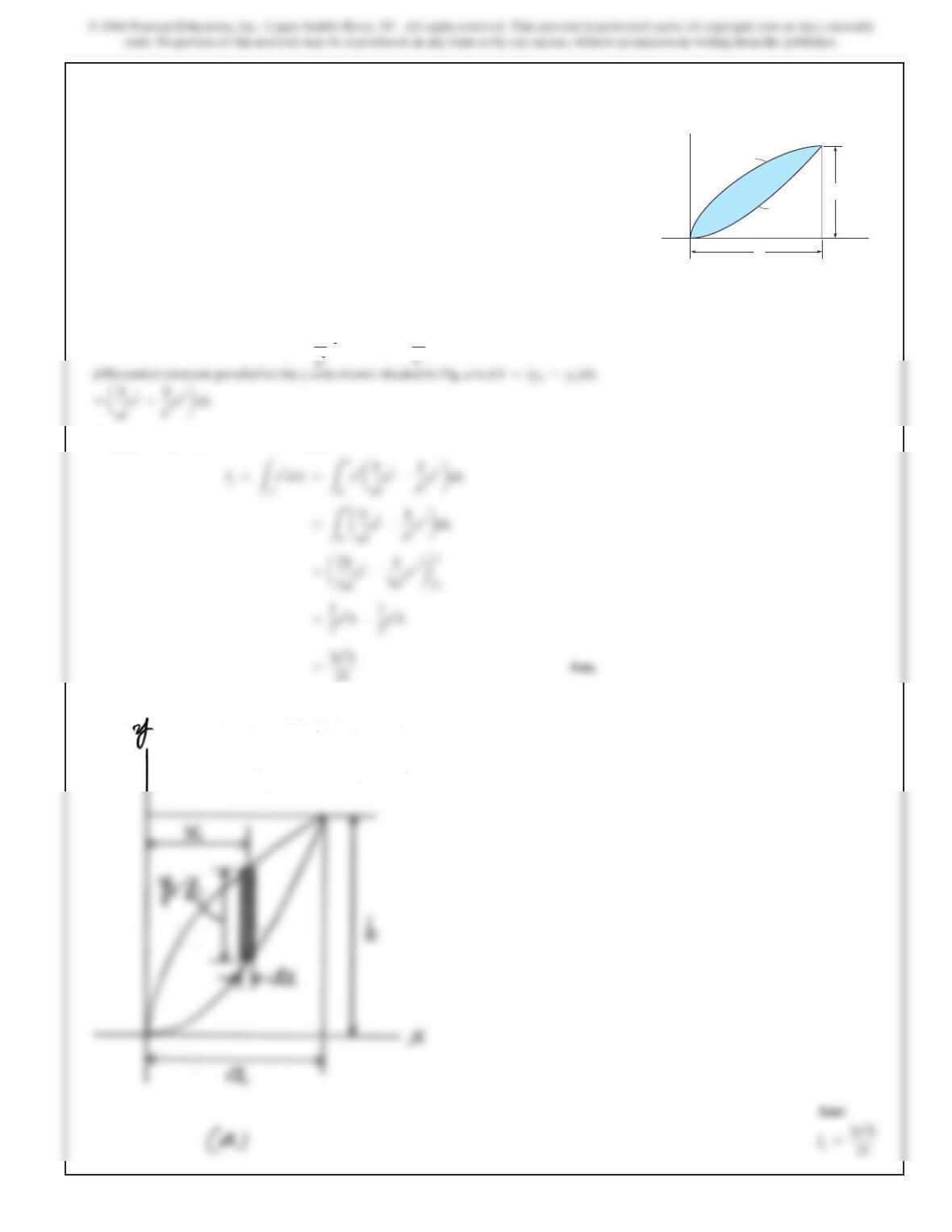
*10–24.
Determine the moment of inertia for the shaded area about
the y axis.
SOLUTION
Differential Element. Here, y2=
b
1
x1
2 and y1=
b
2
x2. Thus, the area of the
Moment of Inertia. Perform the integration,
b
x
y
a
y2 —x
b2
a
y — x2
b
a2
10–25.
Determine the moment of inertia of the composite area
about the xaxis.
SOLUTION
Composite Parts: The composite area can be subdivided into three segments as
Moment of Inertia: The moment of inertia of each segment about the xaxis can be
determined using the parallel-axis theorem. Thus,
y
x
6 in.
3 in.
3 in.
10–26.
Determine
the moment of inertia of the composite area
about the
yaxis.
SOLUTION
Composite
Parts: The composite area can be subdivided into three segments as
M
oment of Inertia: The moment of inertia of each segment about the yaxis can be
determined using the parallel-axis theorem.
Thus,
y
6 in.
3 in.
3 in.
1036
10–27.
The polar moment of inertia for the area is
JC
= 642 (106) mm4, about the z
′
axis passing through the
centroid C. The moment of inertia about the y
′
axis is
264 (106) mm4, and the moment of inertia about the x axis is
938 (106) mm4. Determine the area A.
SOLUTION
Applying the parallel-axis theorem with
d
y
=200 mm
and I
x=
938
(
10
6
)
mm
4
,
I
y
200 mm
Cx
¿
x
¿
1037
*10–28.
50 mm
50 mm
x
–
y
50 mm
350 mm
250 mm
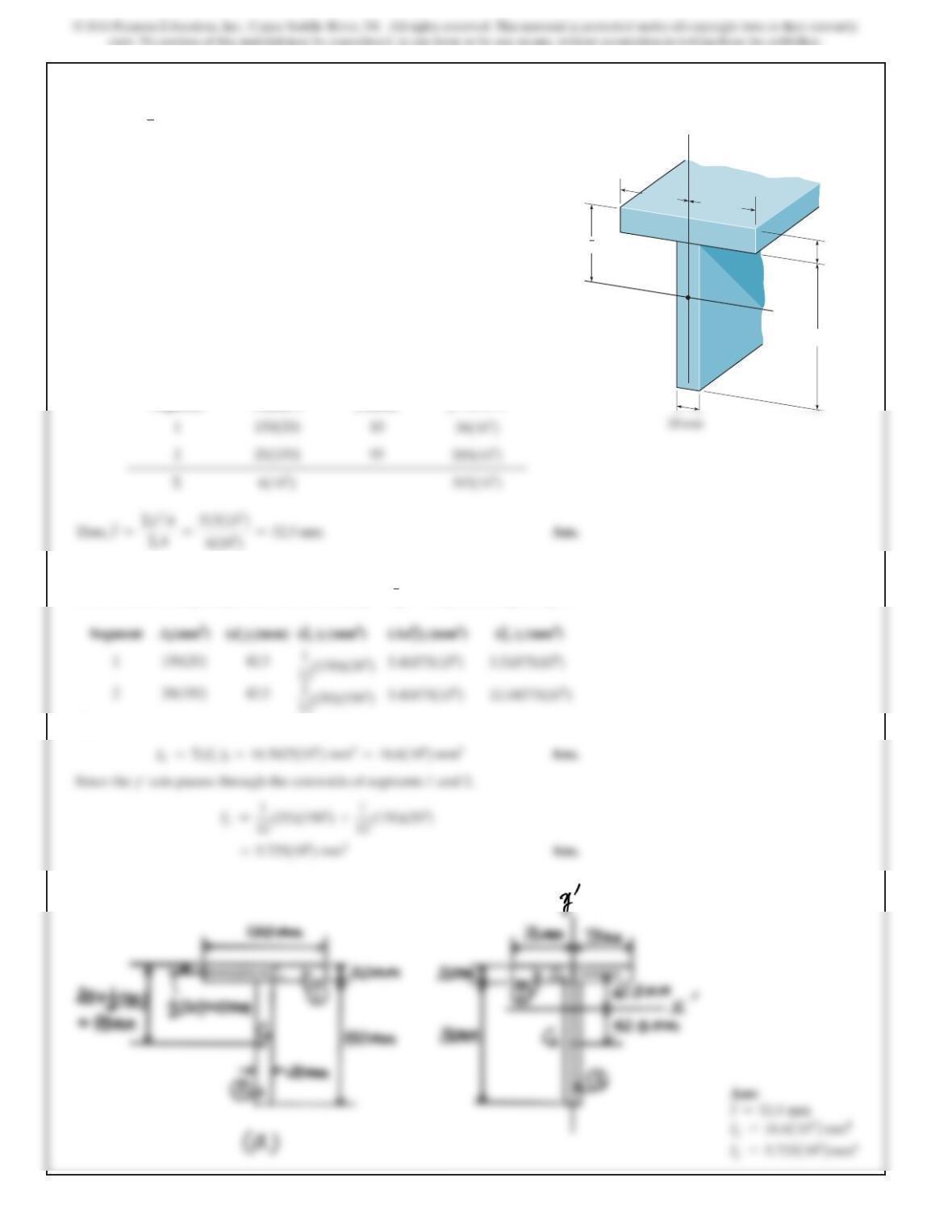
Determine the location of the centroid of the channel’s
cross-sectional area and then calculate the moment of
inertia of the area about this axis.
y
SOLUTION
Centroid: The area of each segment and its respective centroid are tabulated below.
Segment A(mm2)y
‘(mm) y
‘A(mm3)
Segment Ai(mm2)(dy)i(mm) (Ix¿)i(mm4)(Ady
2)i(mm4)(Ix¿)i(mm4)
Thus,
Ans:
1038
10–29.
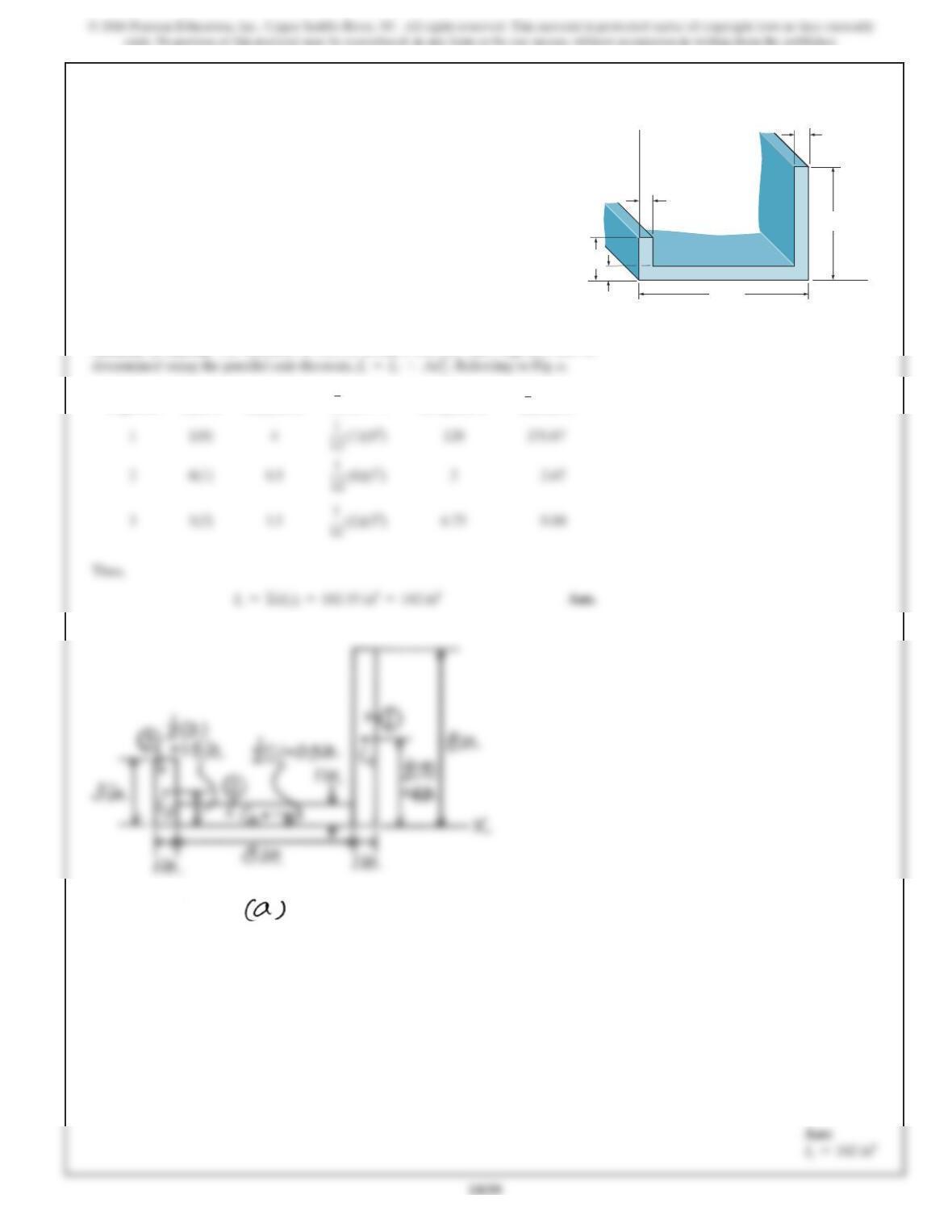
Determine
y
, which locates the centroidal axis
x′
for the
cross-sectional area of the T-beam, and then find the
moments of inertia
Ix′
and
I
y
′
.
SOLUTION
Centroid. Referring to Fig. a, the areas of the segments and their respective centroids
are tabulated below.
Segment
A(mm2)
y
∼(mm)
y
∼A(mm3)
Moment of Inertia. The moment of inertia about the
x′
axis for each segment can
be determined using the parallel axis theorem, Ix′=Ix′+Ad
2
y. Referring to Fig. b,
Thus
75 mm
x¿
y¿
C
75 mm
150 mm
20 mm
y
10–30.
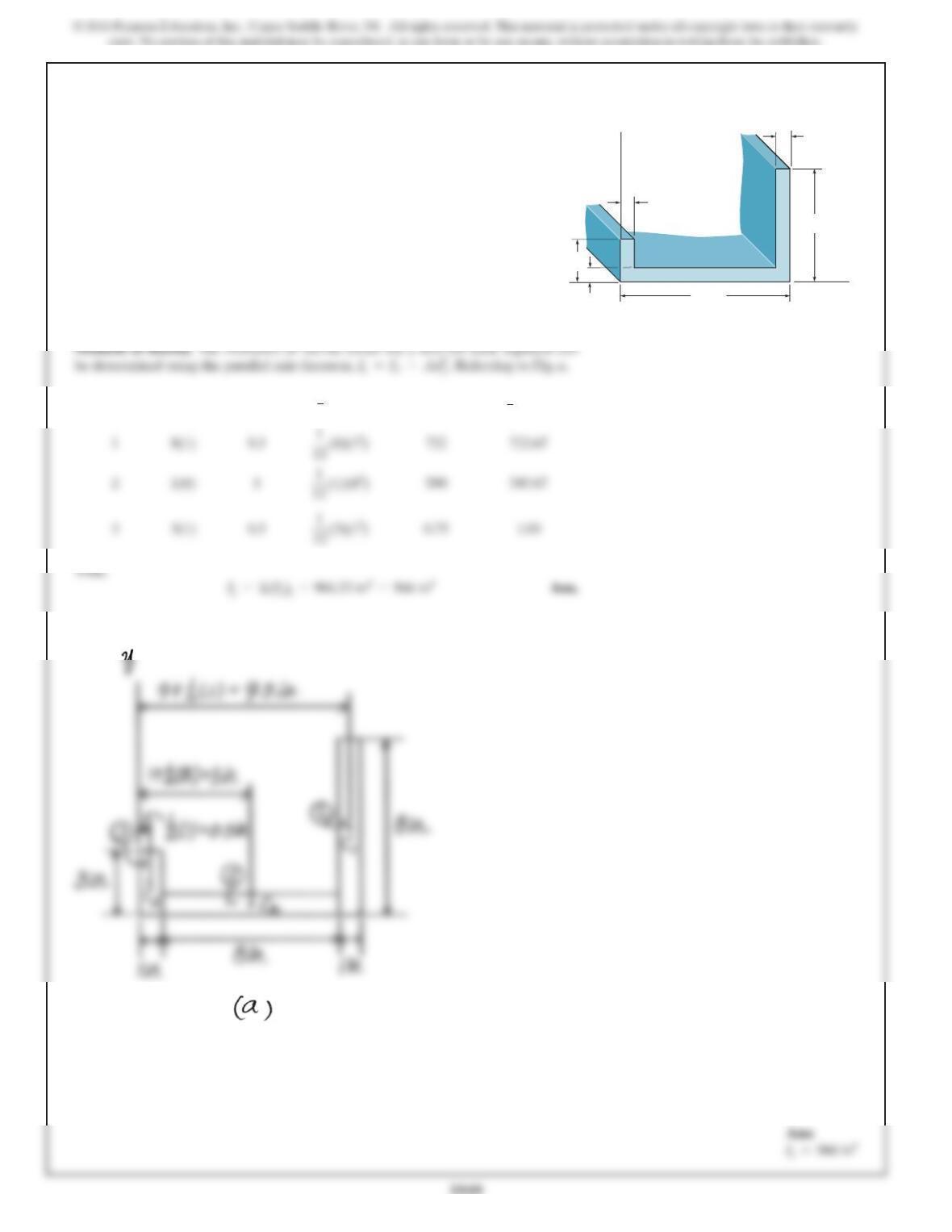
Determine the moment of inertia for the beam’s cross-
sectional area about the x axis.
SOLUTION
Moment of Inertia. The moment of inertia about x axis for each segment can be
Segment A
i
(in
2
)
(d
y
)
i
(in.)
(
I
x′)i
(in4)
(Ady
2
)i
(in
4
) (I
x
)
i
(in
4
)
8 in.
y
x
10 in.
3 in.
1 in.
1 in.
1 in.
SOLUTION
Segment A
i
(in
2
)
(dx)i
(in.)
(Iy‘)i
(in
4
)(Adx
2
)
i
(in
4
) (Iy)i
(in
4
)
10–31.
Determine the moment of inertia for the beam’s cross-
sectional area about the y axis.
8 in.
y
x
10 in.
3 in.
1 in.
1 in.
1 in.
SOLUTION
Segment A
i
(mm
2
)
(d
y
)
i
(mm)
(I
x′
)
i
(mm
4
) (Ady)
2
i
(mm
4
) (I
x
)
i
(mm
4
)
*10–32.
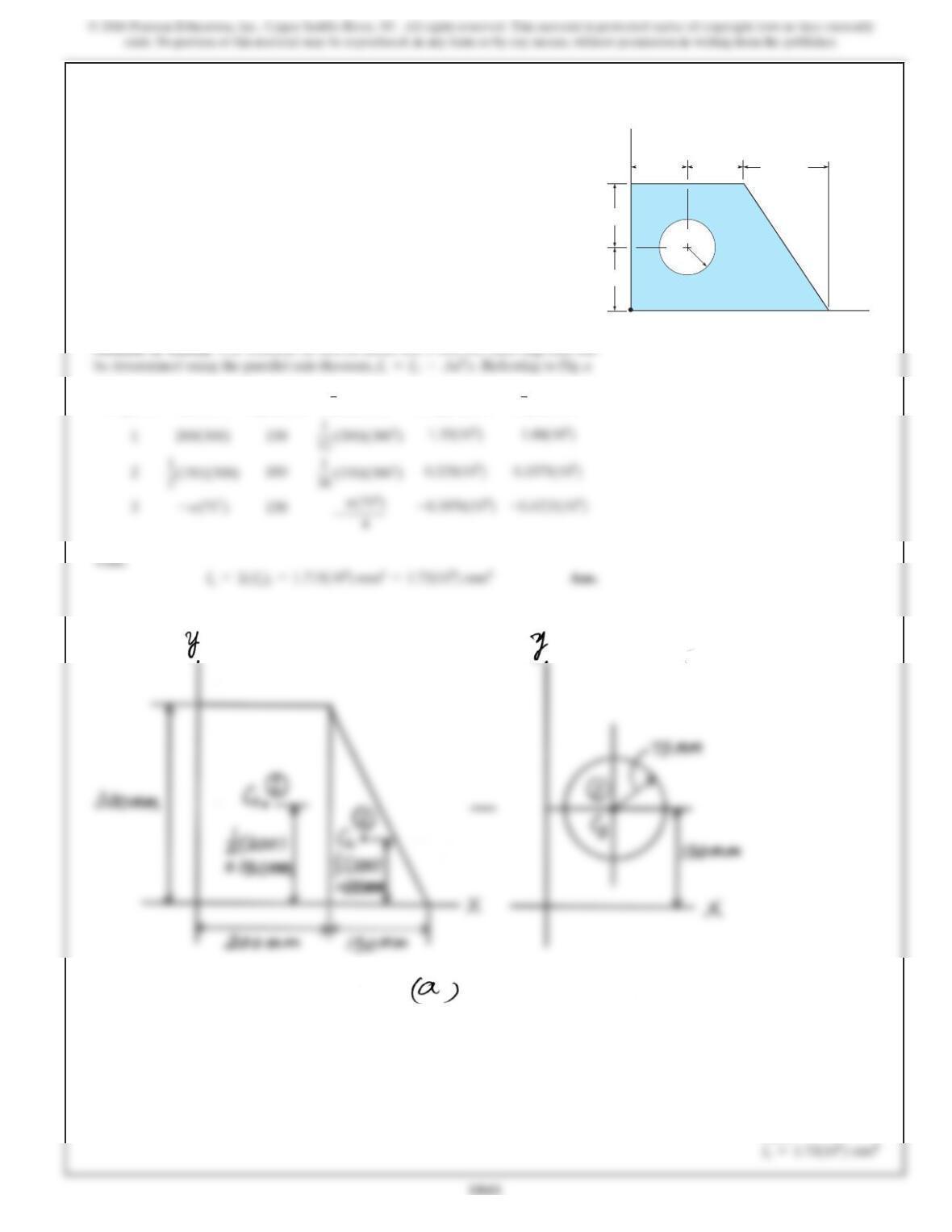
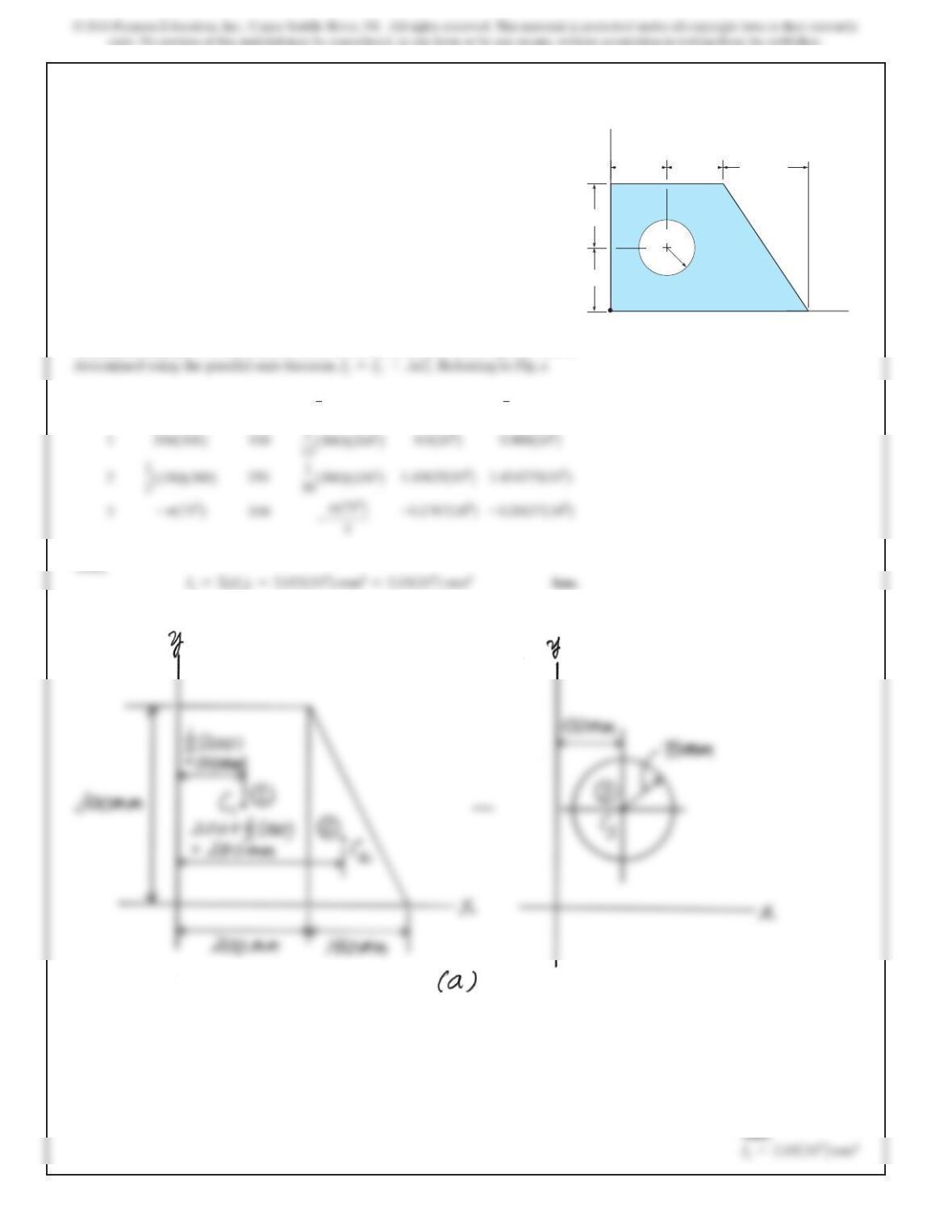
Determine the moment of inertia Ix of the shaded area
about the x axis.
Ox
150 mm
150 mm
100 mm 100 mm
75 mm
150 mm
y
Ans:
1042
SOLUTION
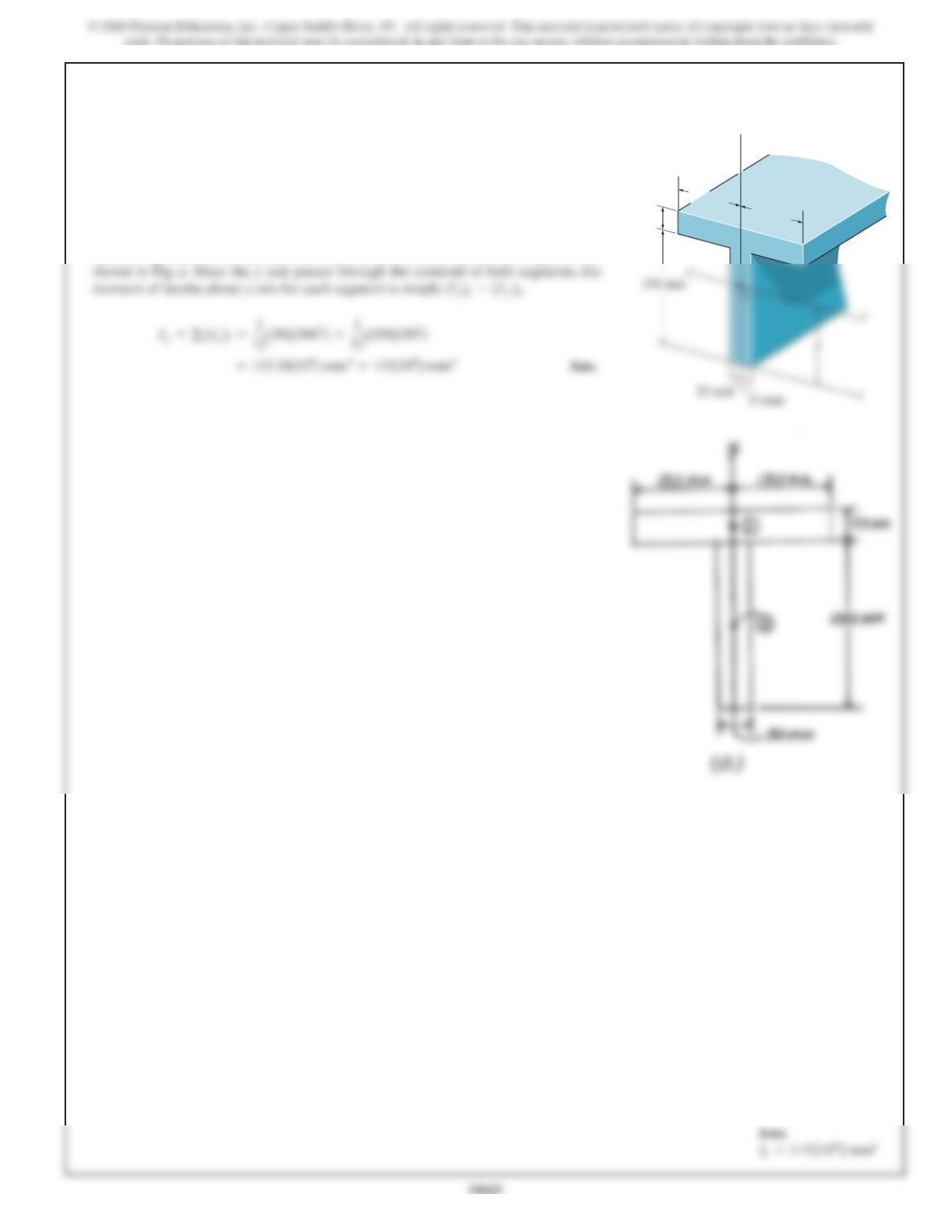
Moment of Inertia. The moment of inertia about the y axis for each segment can be
Segment A
i
(mm
2
)
(dx)i
(mm)
Iy
′
(mm
4
) (Ad
2
x
)
i
(mm
4
) (Iy)i
(mm
4
)
Thus,
10–33.
Determine the moment of inertia Ix of the shaded area
about the x axis.
Ox
150 mm
150 mm
100 mm 100 mm
75 mm
150 mm
y
10–34.
y
50 mm
150 mm
150 mm
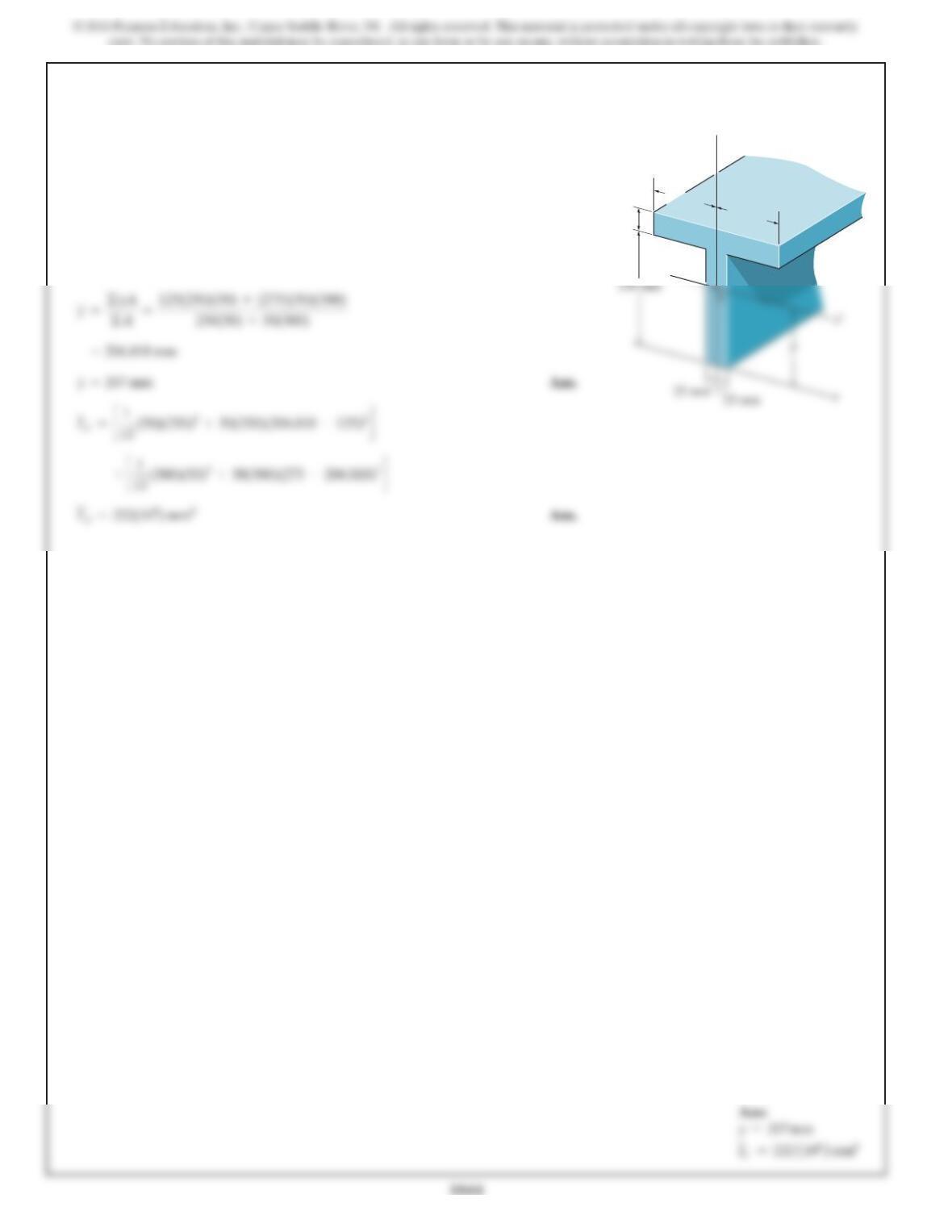
Determine
the moment of inertia of the beam’s cross-
sectional area about the
yaxis.
SOLUTION
M
oment of Inertia: The dimensions and location of centroid of each segment are
10–35.
Determine which locates the centroidal axis for the
cross–sectional area of the T-beam, and then find the
moment of inertia about the x¿ axis.
x
¿
y
,
SOLUTION
y
x¿
50 mm
150 mm
150 mm
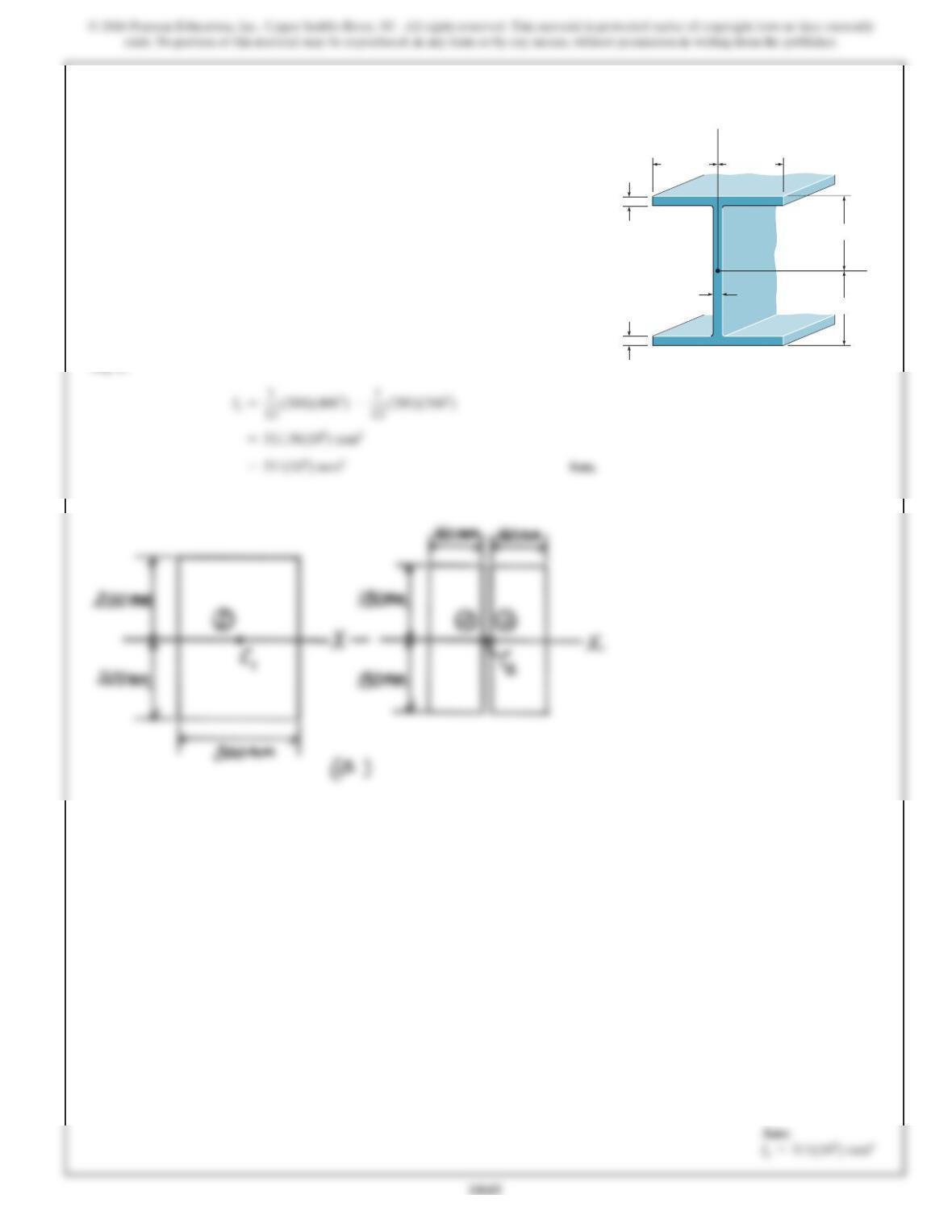
SOLUTION
Moment of Inertia. Since the x axis passes through the centroids of the two segments,
Fig. a,
*10–36.
Determine the moment of inertia about the x axis.
150 mm
150 mm
y
x
C
200 mm
200 mm
20 mm
20 mm
20 mm
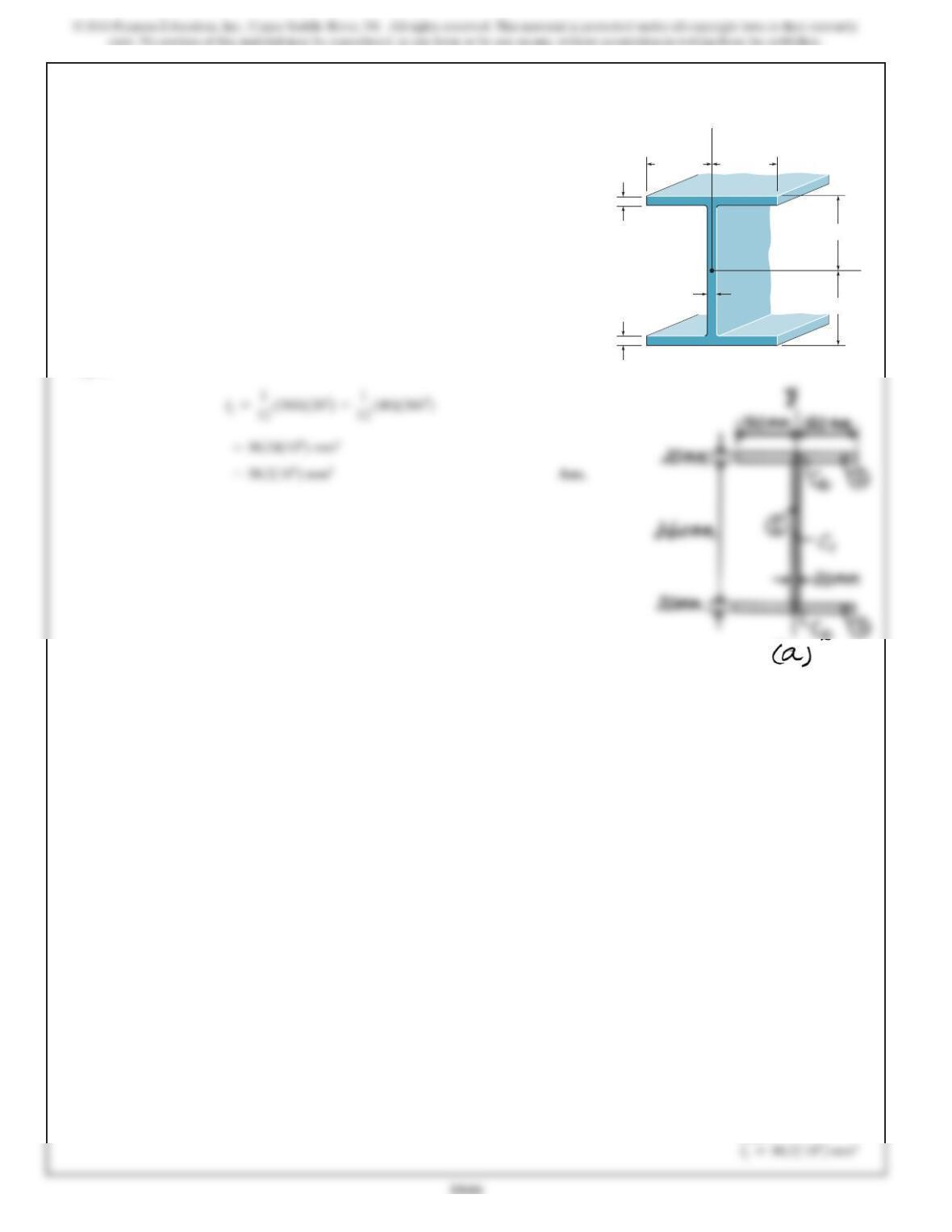
10–37.
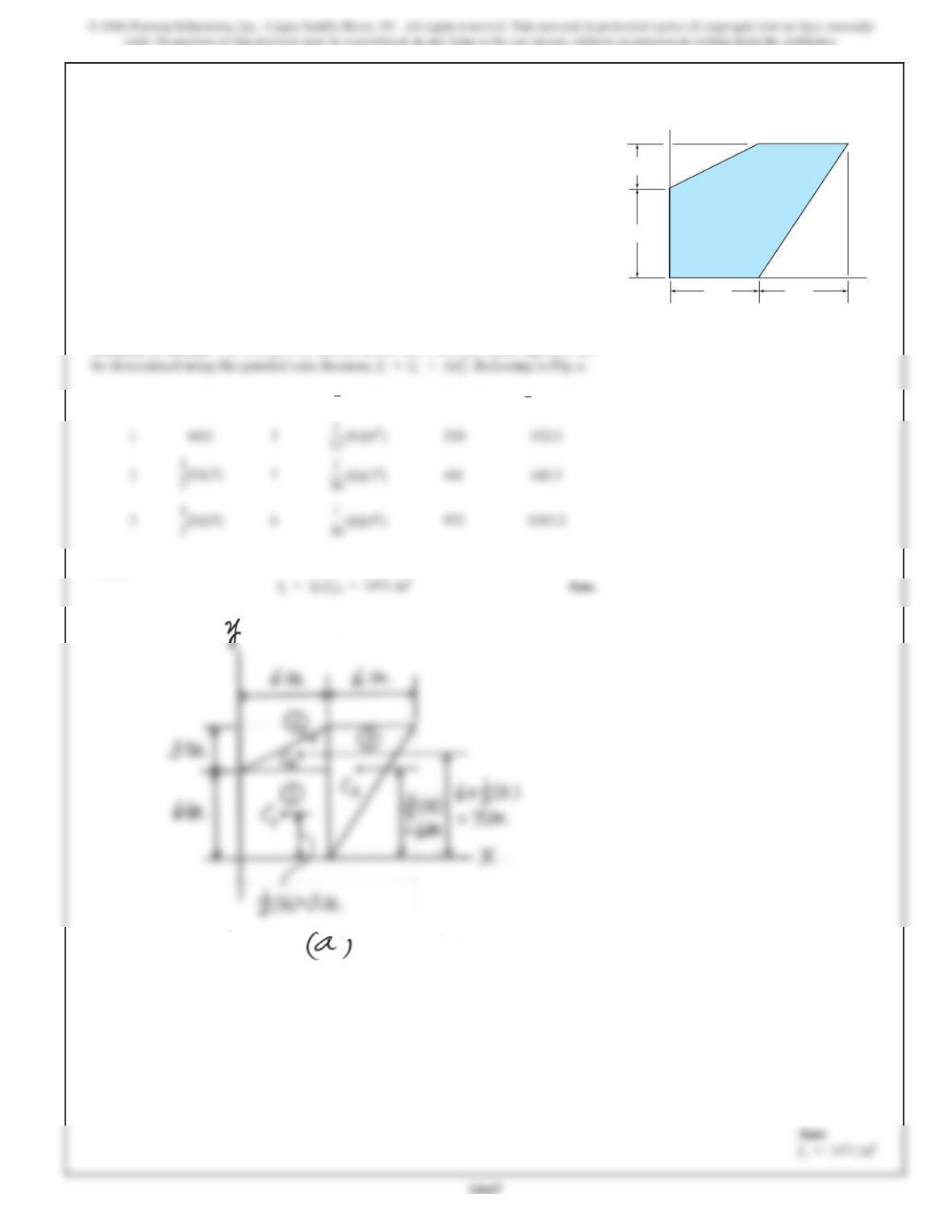
Determine the moment of inertia about the y axis.
SOLUTION
Moment of Inertia. Since the y axis passes through the centroid of the two segments,
Fig. a,
150 mm
150 mm
y
x
C
200 mm
200 mm
20 mm
20 mm
20 mm
Ans:
SOLUTION
Moment of Inertia. The moment of inertia about the x axis for each segment can
Segment A
i
(in
2
)
(d
y
)
i
(in.)
(
I
x′)i
(in4)
(Ady
2
)i
(in
4
) (I
x
)
i
(in
4
)
Thus,
10–38.
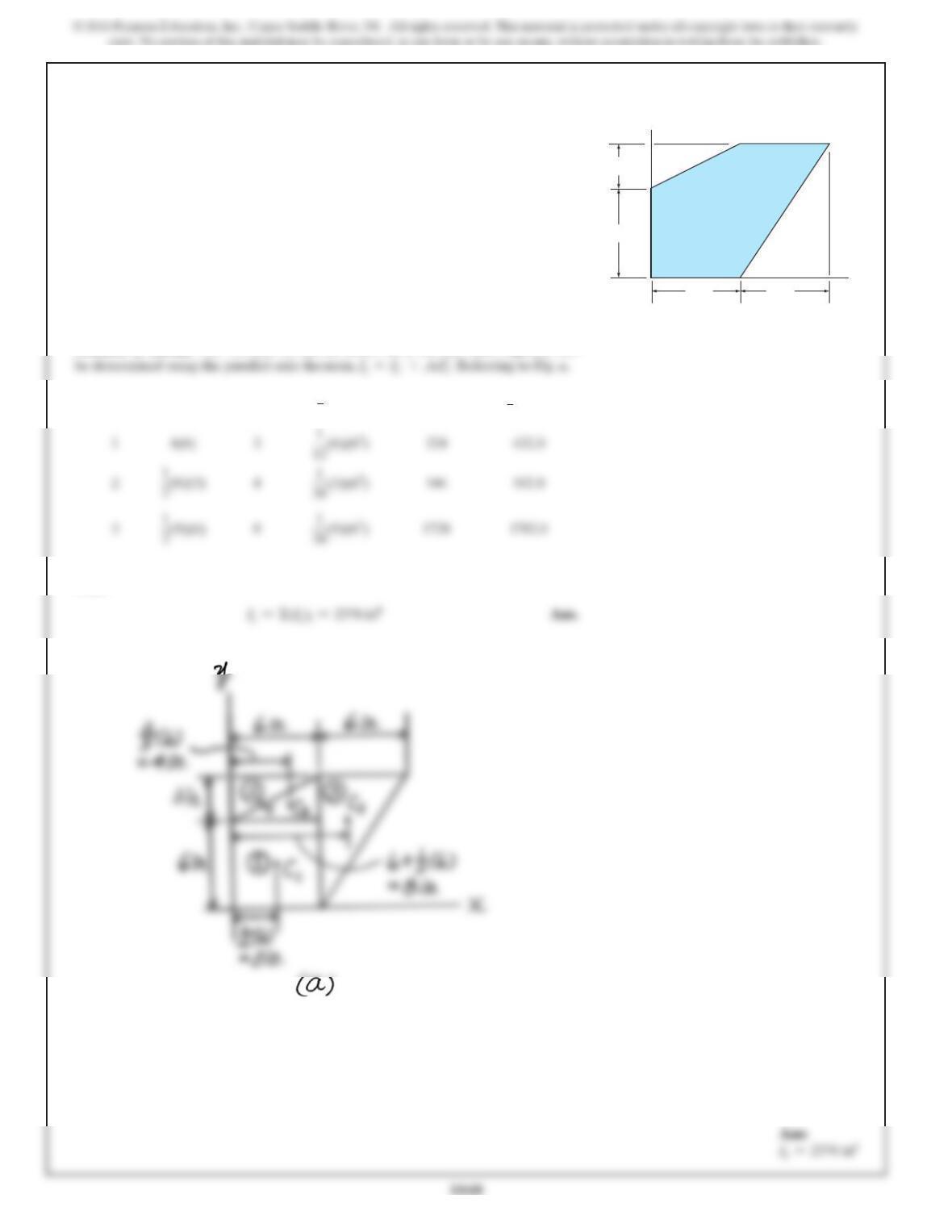
Determine the moment of inertia of the shaded area about
the x axis.
x
6 in.
3 in.
6 in.
y
6 in.
SOLUTION
Moment of Inertia. The moment of inertia about the y axis for each segment can
Segment A
i
(in
2
)
(dx)i
(in.)
(Iy′)i
(in
4
)(Ad
x
2
)
i
(in
4
) (Iy)i
(in
4
)
Thus,
10–39.
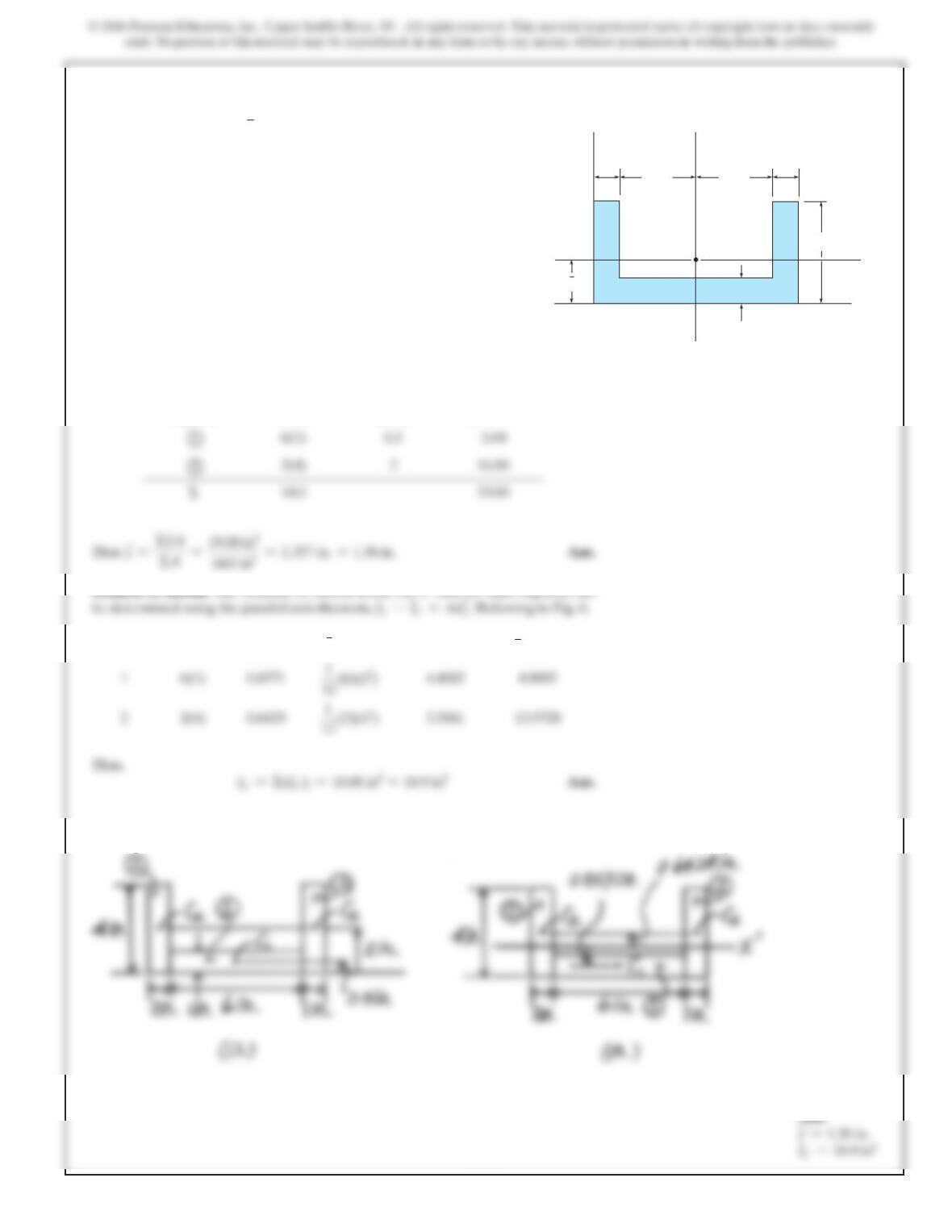
Determine the moment of inertia of the shaded area about
the y axis.
x
6 in.
3 in.
6 in.
y
6 in.
1049
SOLUTION
Centroid. Referring to Fig. a, the areas of the segments and their respective centroids
are tabulated below.
Segment
A(in2)
y
∼(in.)
y
∼A(in3)
Segment A
i(in2)
(d
y
)
i
(in.)
(
I
x′)i
(in4)
(
Ady
2)
i
(in4)
(
I
x′)i
(in4)
*10–40.
Determine the distance
y
to the centroid of the beam’s
cross-sectional area; then find the moment of inertia about
the centroidal
x′
axis.
y
x
3 in. 1 in.
1 in.
4 in.
1 in.
y¿
x ¿
C
y
3 in.