1
[]J
( 1) ( 1)
44
44
( 1) ( 1) ( 1) ( 1)
4 4 4 4
col(1) col(2)
0
0
a t b s
c s d t a t b s
(1 ) (1 )
44
44
(1 ) ( 1 ) ( 1 ) (1 )
4 4 4 4
cos(7) cos(8)
0
0
a t b s
c s d t a t b s
By Equation (10.2.19)
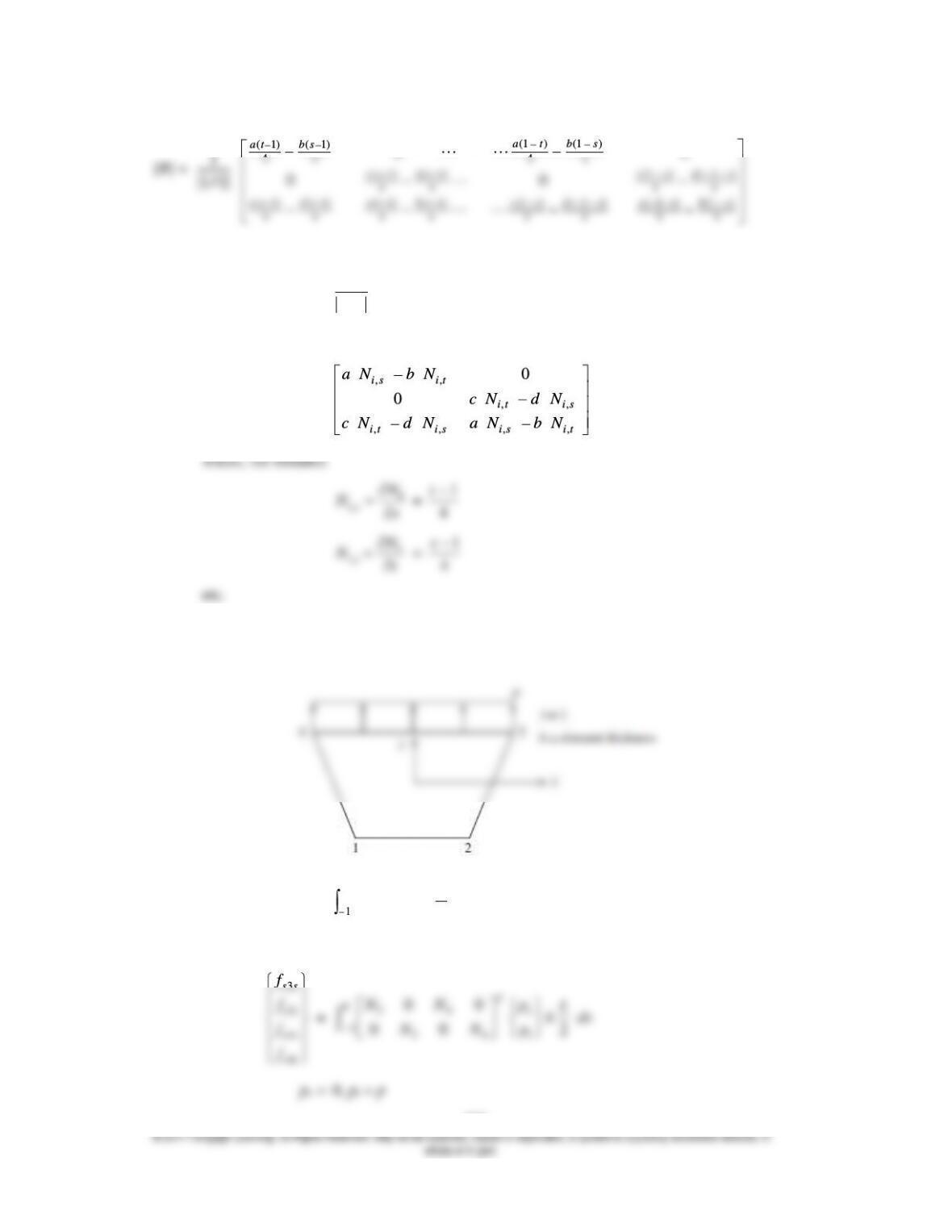
[B] =
1
[]J
=[[B1] [B2] [B3] [B4]]
where the submatrices are
[Bi] =
,,
,,
, , , ,
0
0
i s i t
i t i s
i t i s i s i t
a N b N
c N d N
c N d N a N b N
10.13
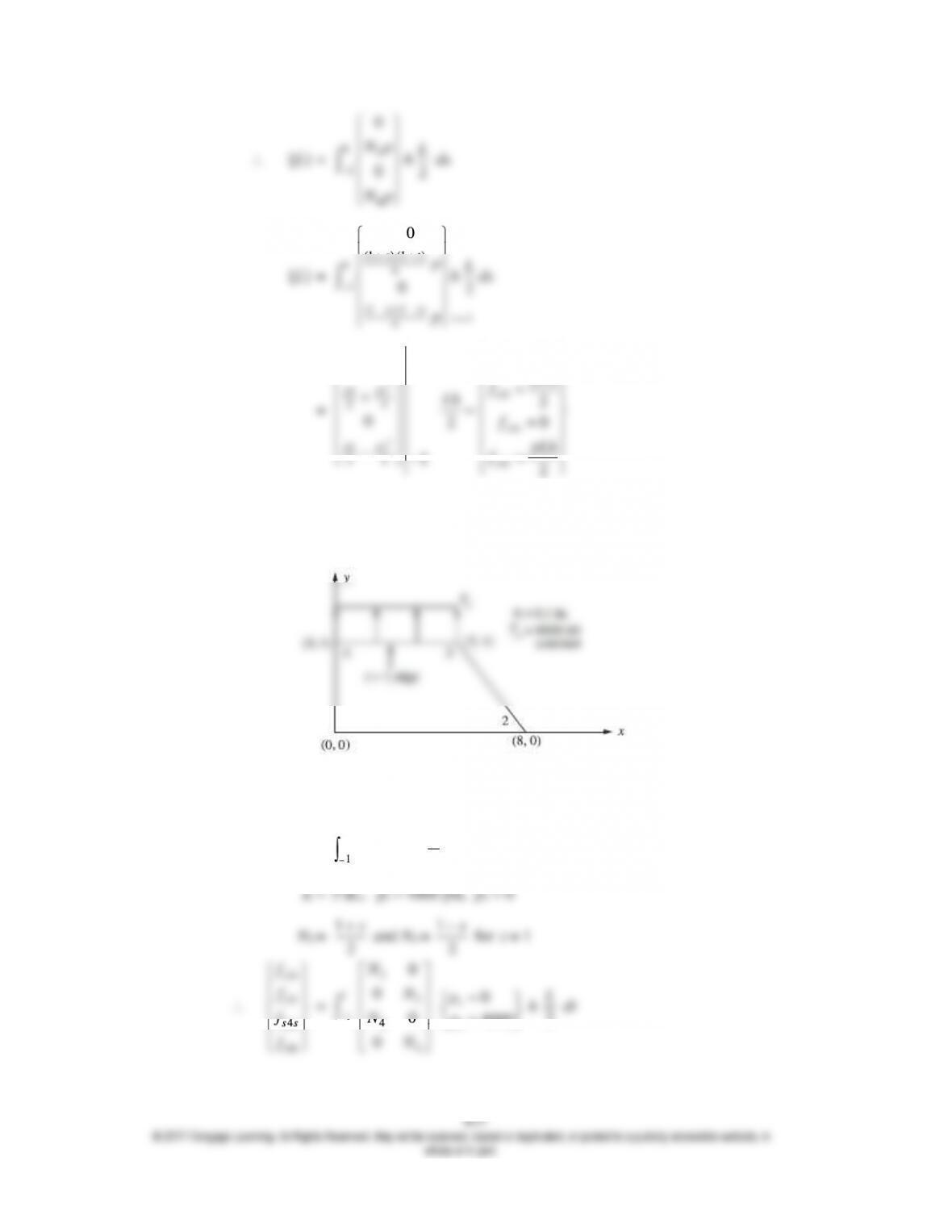
{fs} =
1
1
[Ns]T {T} h
2
L
ds
At t = 1
3
3
ss
st
f
f
134
00
T
s
N N p L
13
0
Np L
438
=
115
22
1
115
22
1
0
0
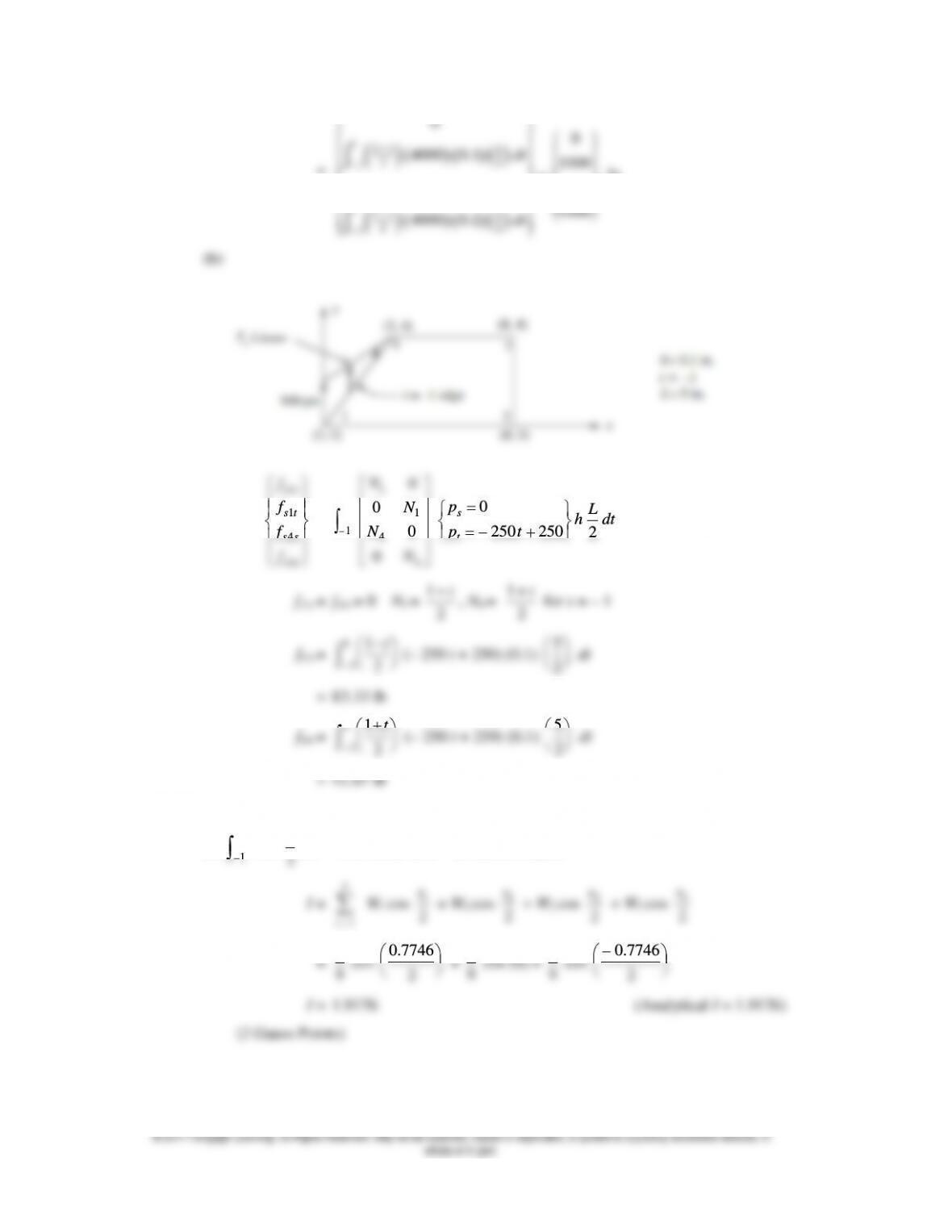
4000 0.1 1000 lb
00
1000
4000 0.1
s
s
dt
dt
11
11
44
44
s s
s t
s s
s t
ff
ff
ff
ff
=
1
1
1
1
4
4
0
0
0
0
N
N
N
N
0
250 250 2
s
t
pL
h dt
pt
1
t
1
t
10.15
(a)
1
1
cos
2
s
ds Use Table 10.1 (3 Gauss Points)
3
i
s
1
s
2
s
3
s
9
2
9
9
2
I = 1.9176 (Analytical I = 1.9176)
(2 Gauss Points)
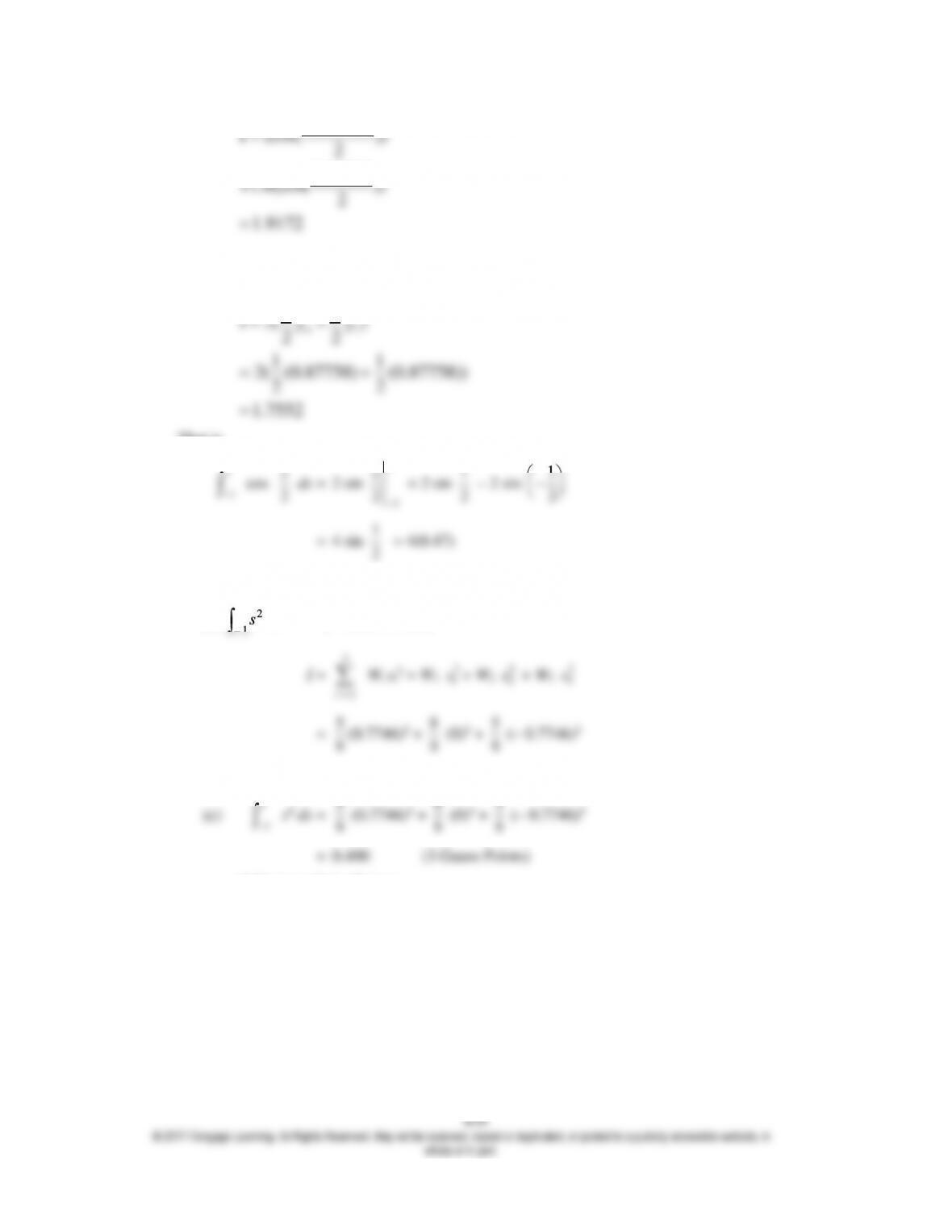
0.57735
I (cos( ))
2
0.57735
2
1.9172
(2 Newton-Cotes Points)
o1
11
I 2( y y )
22
11
o 1 2
4
o
1
1 4 1
I 2( y y y )
6 6 6
y ( 1) 1
y0
1 3 2 1 3 2
0.7746
Three Gauss Points
0.77460, 0, 0.5555, 0.8888
x x x W W W

442
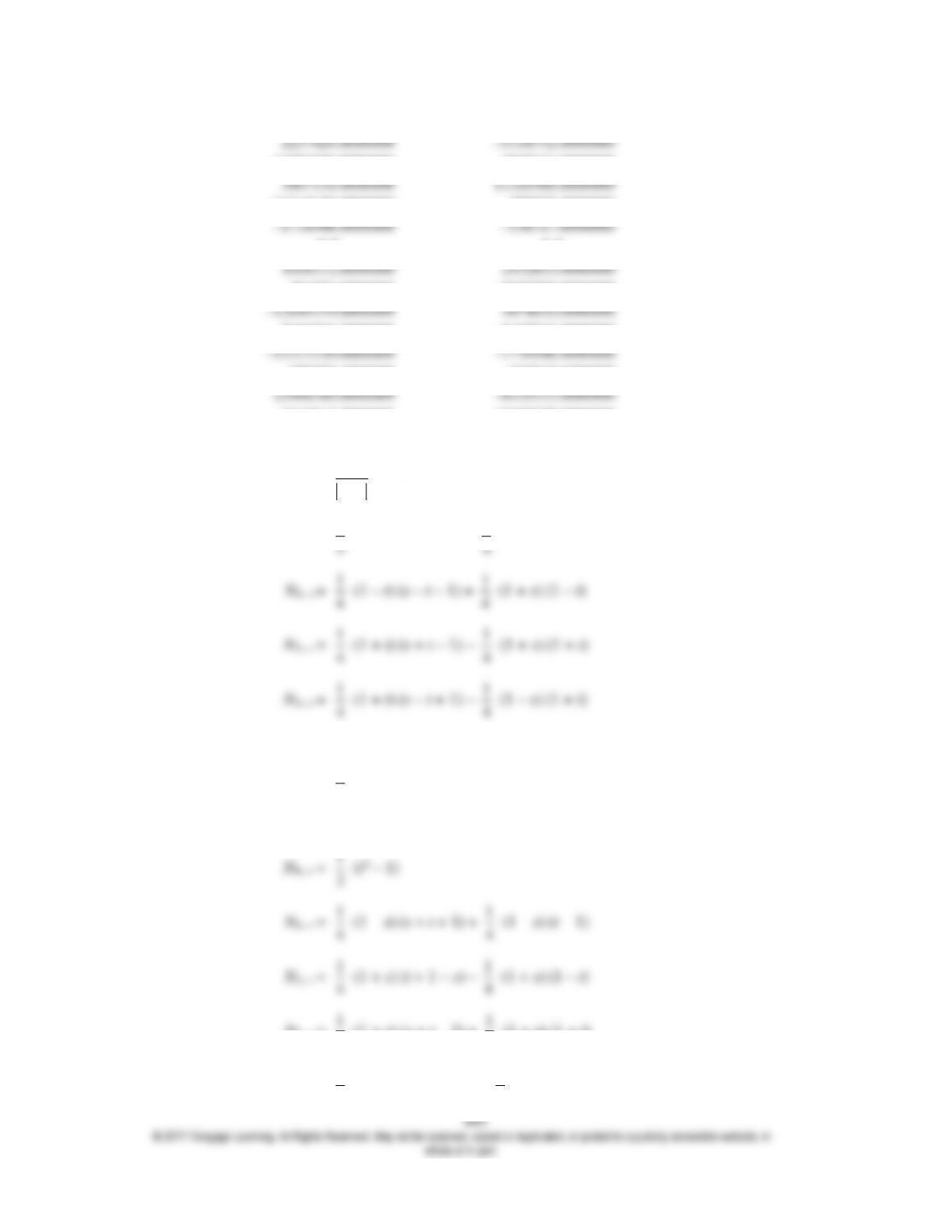
Using computer program
(a)
ENTER THE WEIGHT FOR POINT 1
ENTER THE NODAL VALUES X AND Y FOR POINT 1
ENTER THE WEIGHT FOR POINT 3
5.0, 4.0
ENTER THE GAUSS POINTS S AND T FOR POINT 4
1.0
ENTER THE NODAL VALUES X AND Y FOR POINT 4
30000000.0
ENTER THE VALUE FOR POISSONS RATIO
1.0

2 5.773500E–001 –5.773500E–001 1.0000000
3 5.773500E–001 5.773500E–001 1.0000000
4 –5.773400E–001 5.773400E–001 1.0000000
THE NODAL COORDINATE VALUES ARE
NODE X Y
2 5.0000000 2.0000000
4 3.0000000 4.0000000
30000000.0000000 2.500000E–001 1.0000000
DO YOU WISH TO VIEW THE VALUES OF J (Y/N)?
1.0000000
THE VALUE OF J 2
1.0000000
THE VALUE OF J 4
1.0000000
DO YOU WITH TO VIEW THE B MATRIX (Y/N)?
– 3.943 E–1 –1.0566 E–1 –1.0566 E–1 1.0566 E–1
0 1.0566 E–1 0 3.943E–1 1.0566 E–1
3.943 E–1 3.943 E–1 –3.943 E–1
DO YOU WISH TO VIEW THE D MATRIX (Y/N)?
8000000.0000000 32000000.0000000 0.0000000
0.0000000 0.0000000 12000000.0000000
DO YOU WISH TO VIEW THE K MATRIX (Y/N)?

5000015.0000000 14666610.0000000 1000001.0000000 1333353.0000000
–1000005.0000000 1333353.0000000 –5000011.0000000 14666690.0000000
–4999981.0000000 –7333369.0000000 –1000005.0000000 –8666672.0000000
999970.6000000 –8666592.0000000 5000015.0000000 –7333369.0000000
–4999991.0000000 –7333369.0000000 –1000025.0000000 –8666592.0000000
1000001.0000000 –8666672.0000000 5000015.0000000 –7333369.0000000
5000015.0000000 14666660.0000000 999970.6000000 1333383.0000000
–1000025.0000000 1333383.0000000 –4999961.0000000 14666580.0000000
(b)
THE K MATRIX VALUES ARE
14990860.0000000 3483641.0000000
–11385300.0000000 370145.5000000
–4661870.0000000 –4327808.0000000
1056312.0000000 474022.0000000
8-3 8-4
370145.6000000 –565783.1000000
–6267461.0000000 14127760.0000000
222705.5000000 –5114752.0000000
5674610.0000000 –8447218.0000000
–4661870.0000000 –4309764.0000000
4403076.0000000 222705.4000000
11571920.0000000 3807131.0000000
–11313130.0000000 279927.3000000
8-7 8-8
474021.9000000 –7652789.0000000
5656566.0000000 –8447218.0000000
279927.4000000 –538717.6000000
–6410515.0000000 16638720.0000000
10.18
[B (s, t)] =
1
[]J
[B1] [B2] [B3] [B4] [B5] [B6] [B7] [B8]
N1, s =
1
4
(1 – t) (s + t + 1) –
1
4
(1 – s) (1 – t)
1
1
1
1
4
4
1
1
4
4
N5, s = (t – 1)s
N6, s =
1
2
(1 – t2)
N7, s = – (1 + t)s
1
2
1
1
4
4
1
1
4
4
N3, t =
1
4
(1 + s) (s + t – 1) +
1
4
(1 + s) (1 + t)
N4, t =
1
4
(1 – s) (– s + t – 1) +
1
4
(1 – s) (1 + t)
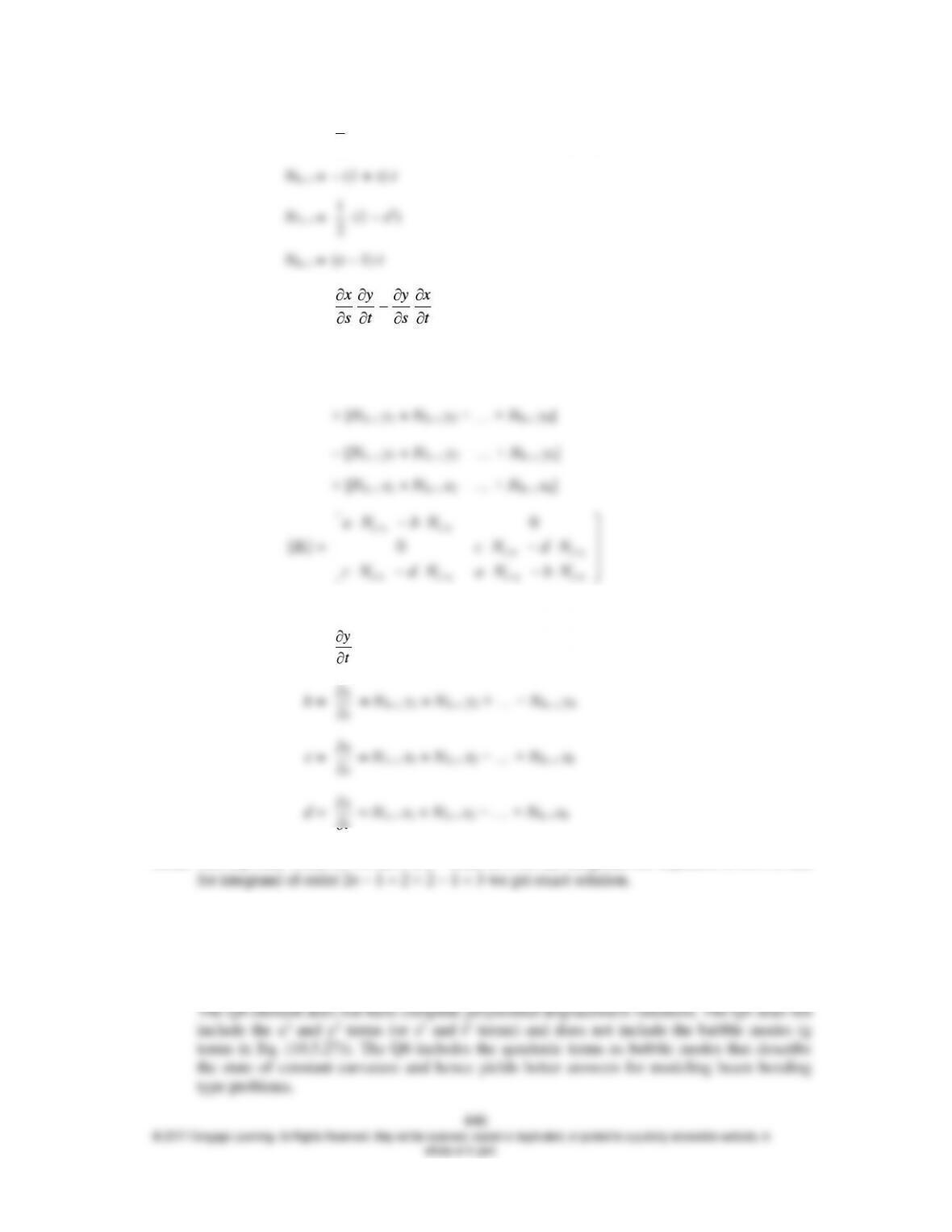
N5, t =
1
2
(1 + s) (s – 1)
1
2
| [ J ] | =
x y y x
s t s t
= [N1, s x1 + N2, s x2 + … + N8, s x8]
, , , ,
i t i s
i t i s i s i t
c N d N a N b N
where
a =
y
t
= N1, t y1 + N2, t y2 + … + N8, t y8
y
s
c =
x
s
= N1, s x1 + N2, s x2 + … + N8, s x8
x
t
10.21 The 2-pt rule works as we have a 2nd order in s for the integrand see Equation (10.6.19) and
10.22 Compare the Q4 and Q6 elements. What property makes the Q6 element better in modeling
beam bending? What is the weakness of the Q6 element that is not inherent in the Q4
element?
10.23 Compare the Q4 and Q8 elements. What makes the Q8 a better element to model beam
bending?