1
Problem Statements and Solutions
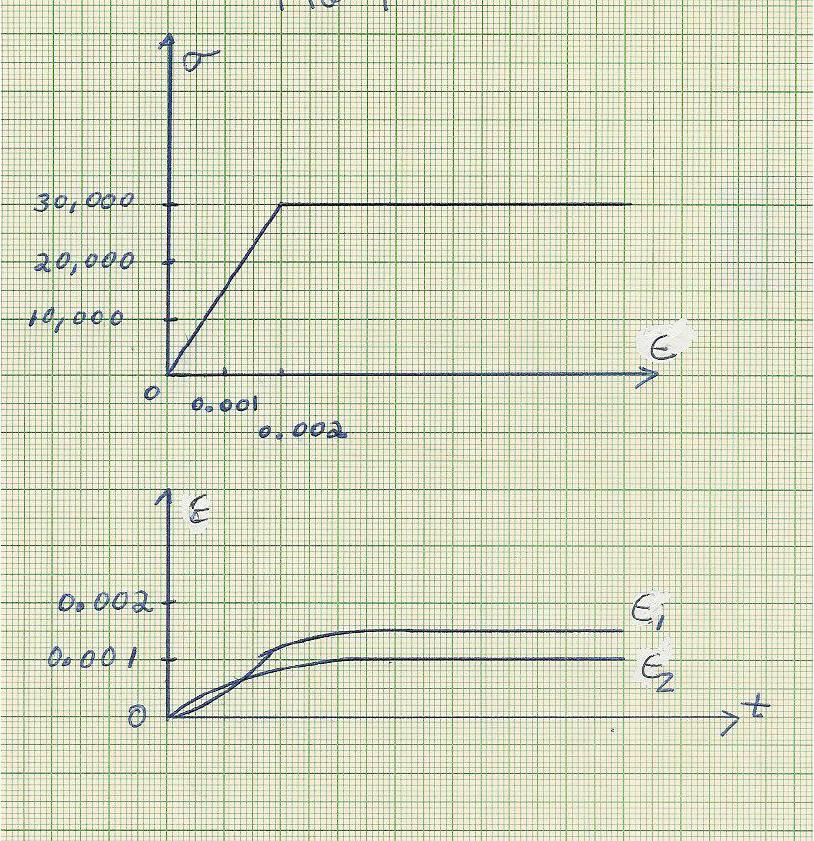
1.1 The one – dimensional theory of plasticity is time -independent in the sense
that there is a relation between stress and strain which is independent of the rate of
loading, as in Figure-Problem 1.1a. Plasticity is a theory for materials which do not
exhibit linearity of response. In order to see this, consider the strain histories shown in
Figure-Problem 1.1b. Plot the stress histories
!
“1(t)
,
!
“2(t)
,
!
“(t)
corresponding to
!
“1(t)
,
!
“2(t)
,
!
“(t) =“1(t) +“2(t)
. Is the stress history for
!
“(t)
given by
!
“1(t) +“2(t)
?
Figure-Problem 1.1a
Figure-Problem 1.1b
2
Solution
Table
t
!
“1(t)
!
“1(t)
!
“2(t)
!
“2(t)
!
“1(t) +“2(t)
!
“(t)
0 0 0 0 0 0 0
0.5 0.0004 6000 0.0005 7500 13500 13500
1.0 0.0012 18000 0.0008 12000 30000 30000
2.0 0.0015 22500 0.001 15000 37500 30000
3.0 0.0015 22500 0.001 15000 37500 30000
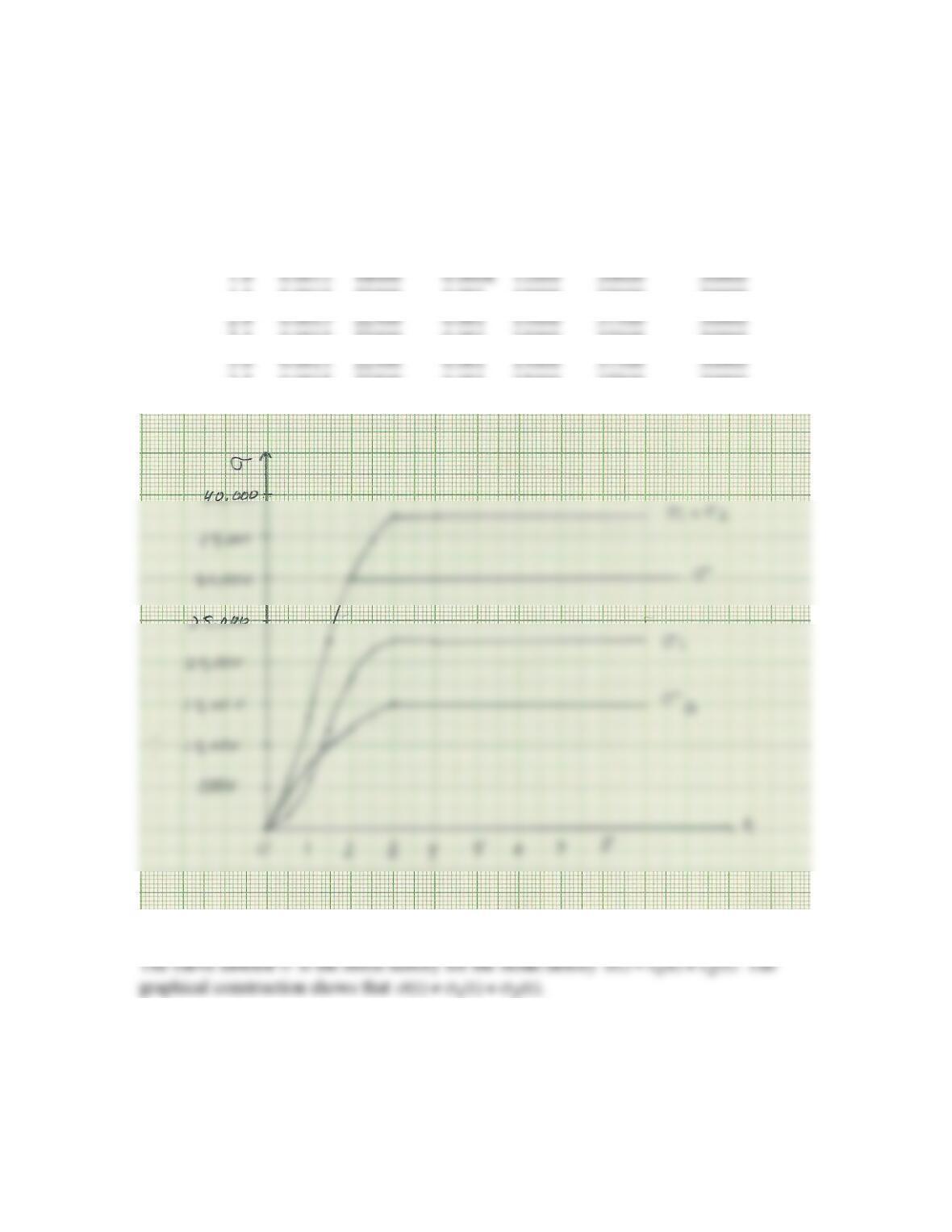
The curve labeled
!
“
is the stress history for the strain history
!
“(t) =“1(t) +“2(t)
. The
graphical construction shows that
!
“(t) # “1(t) +“2(t)
.
3
4
(b)
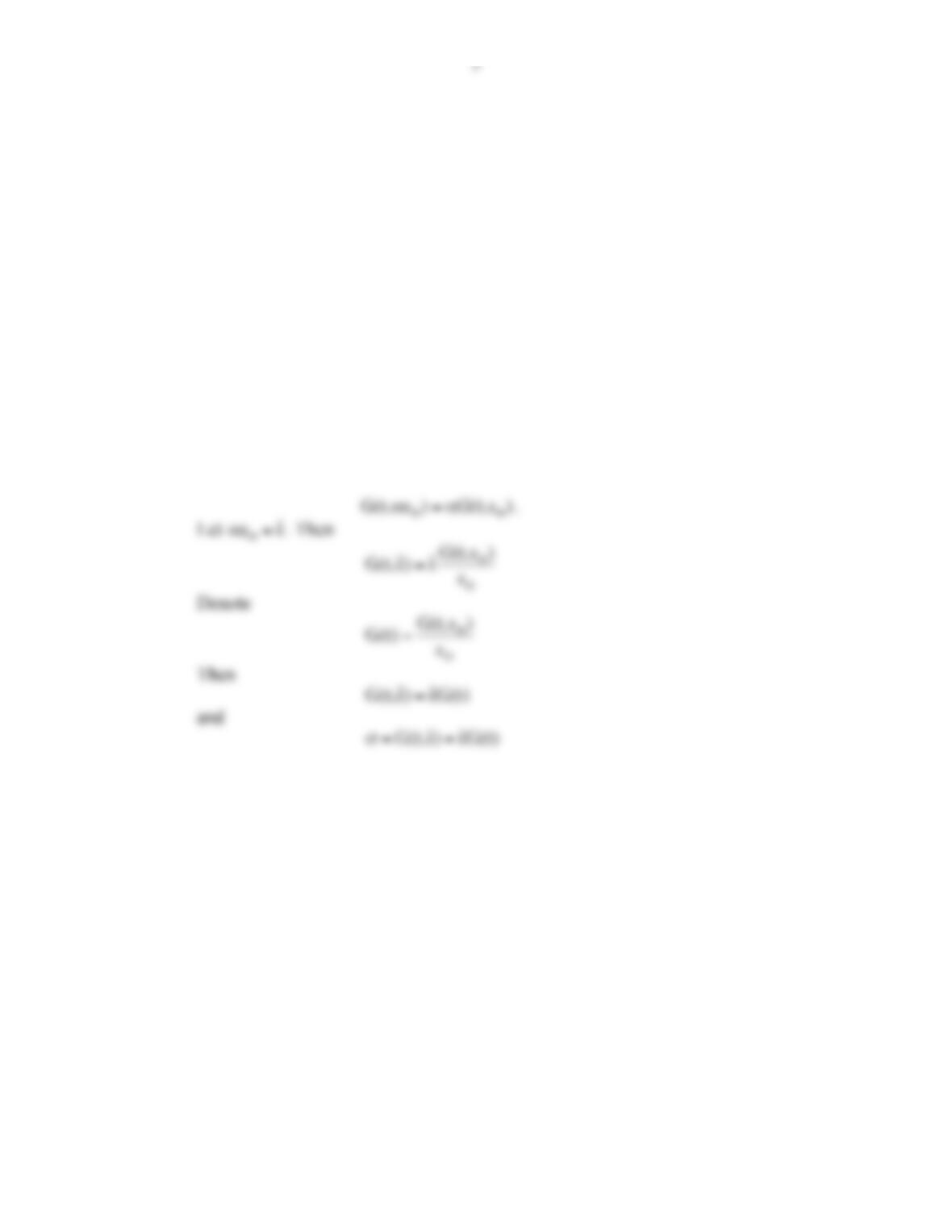
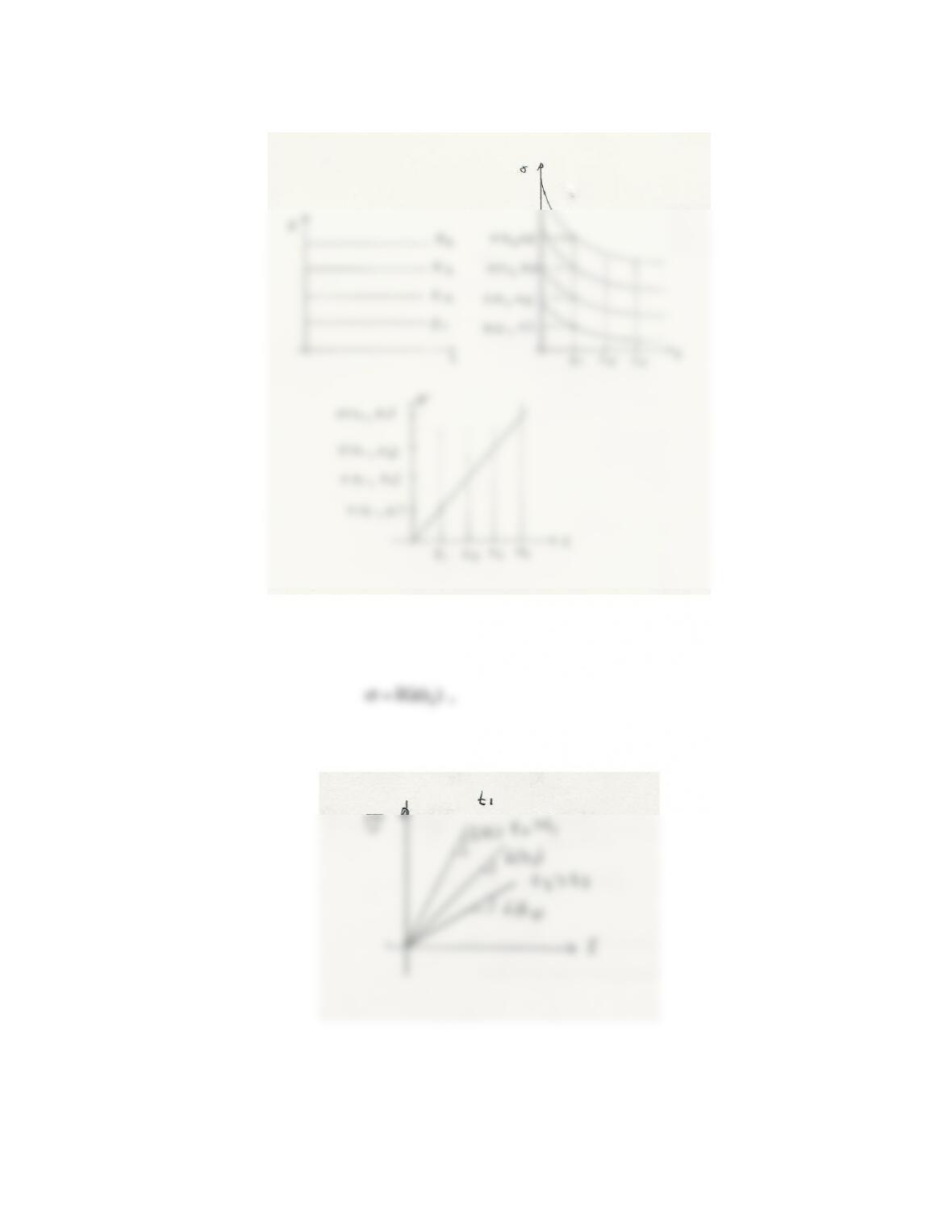
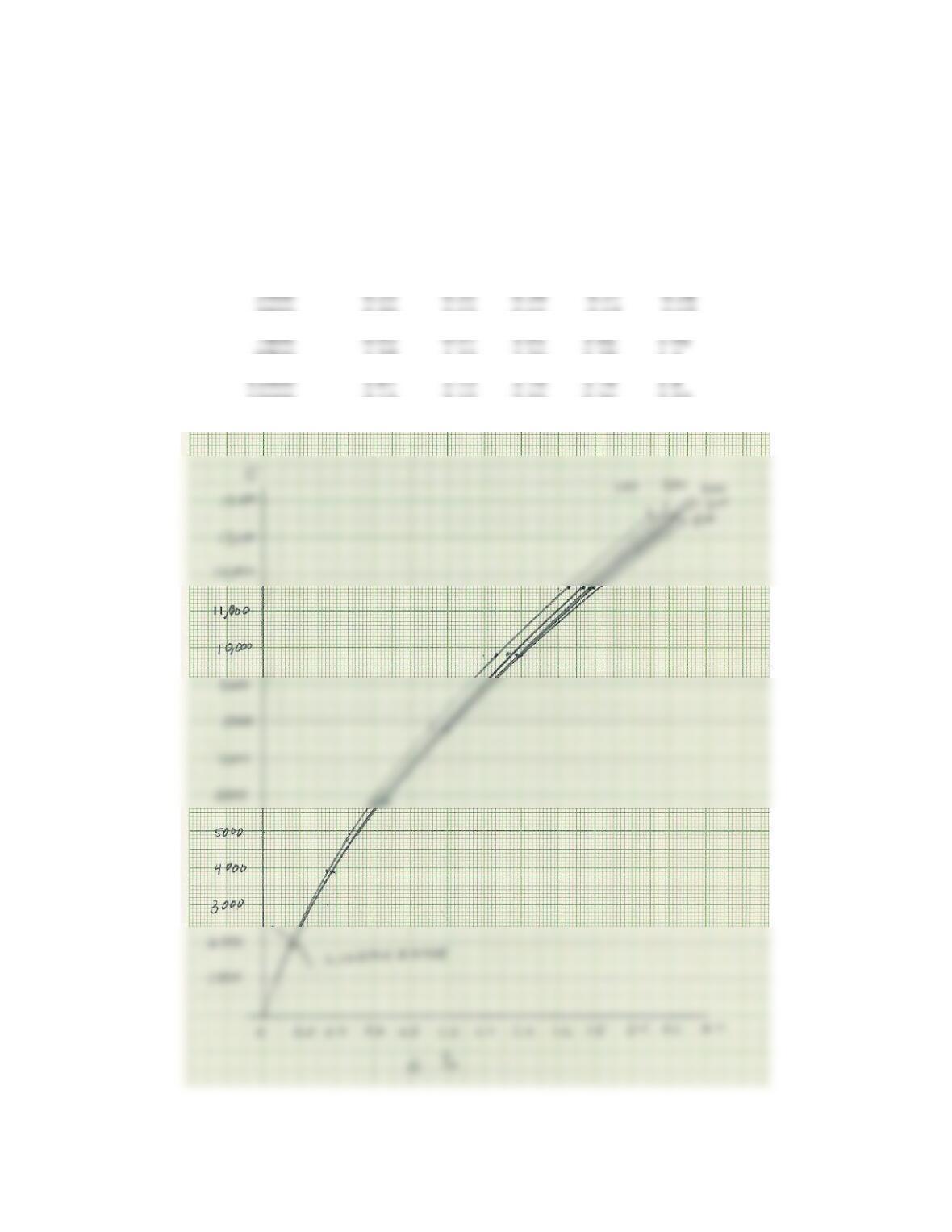
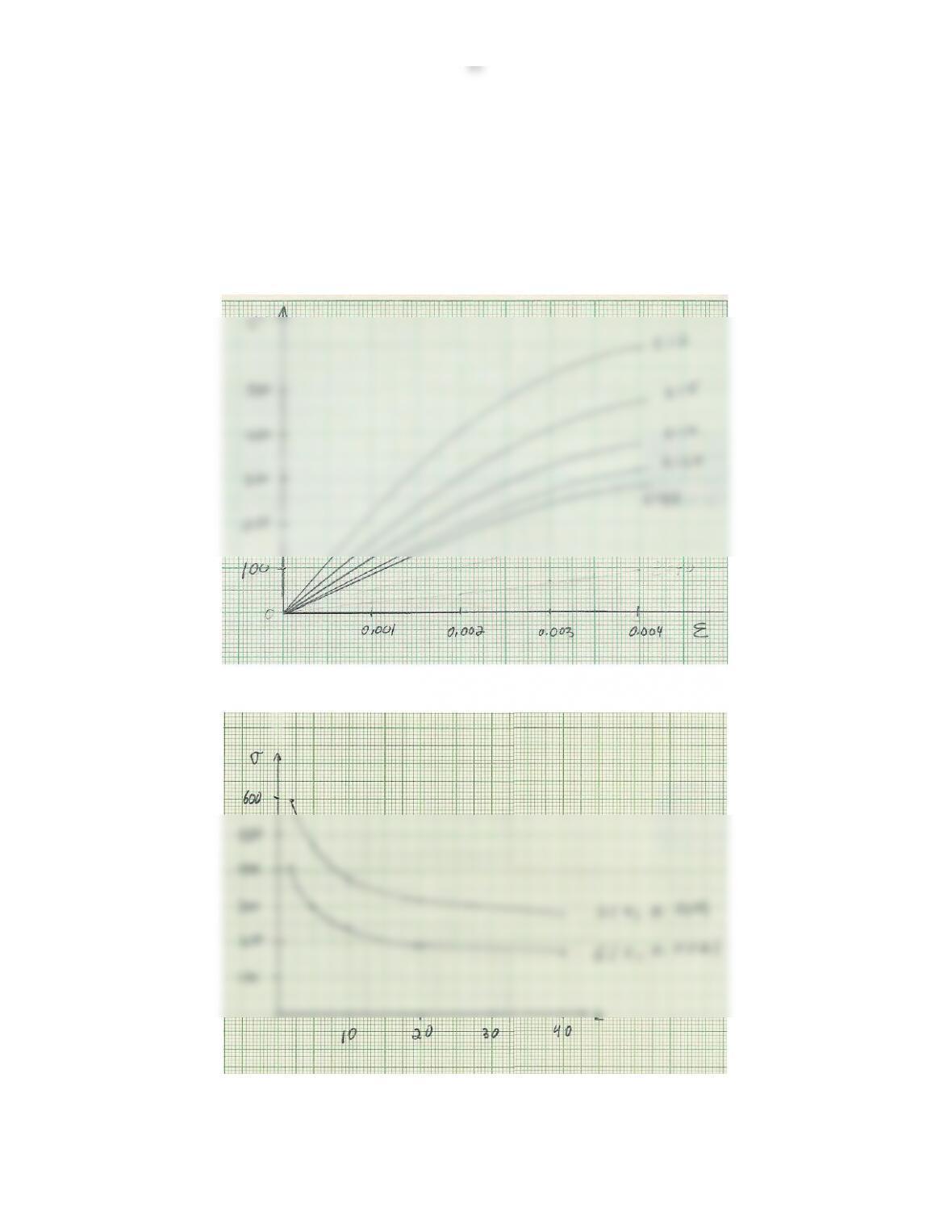
The stress- strain isochrone at time
!
ti
in stress relaxation is
!
“=ˆ
# G(t i)
,
a straight line with slope
!
G(t i)
. As
!
ti
increases, the slope decreases.
5
6
Solution
Table
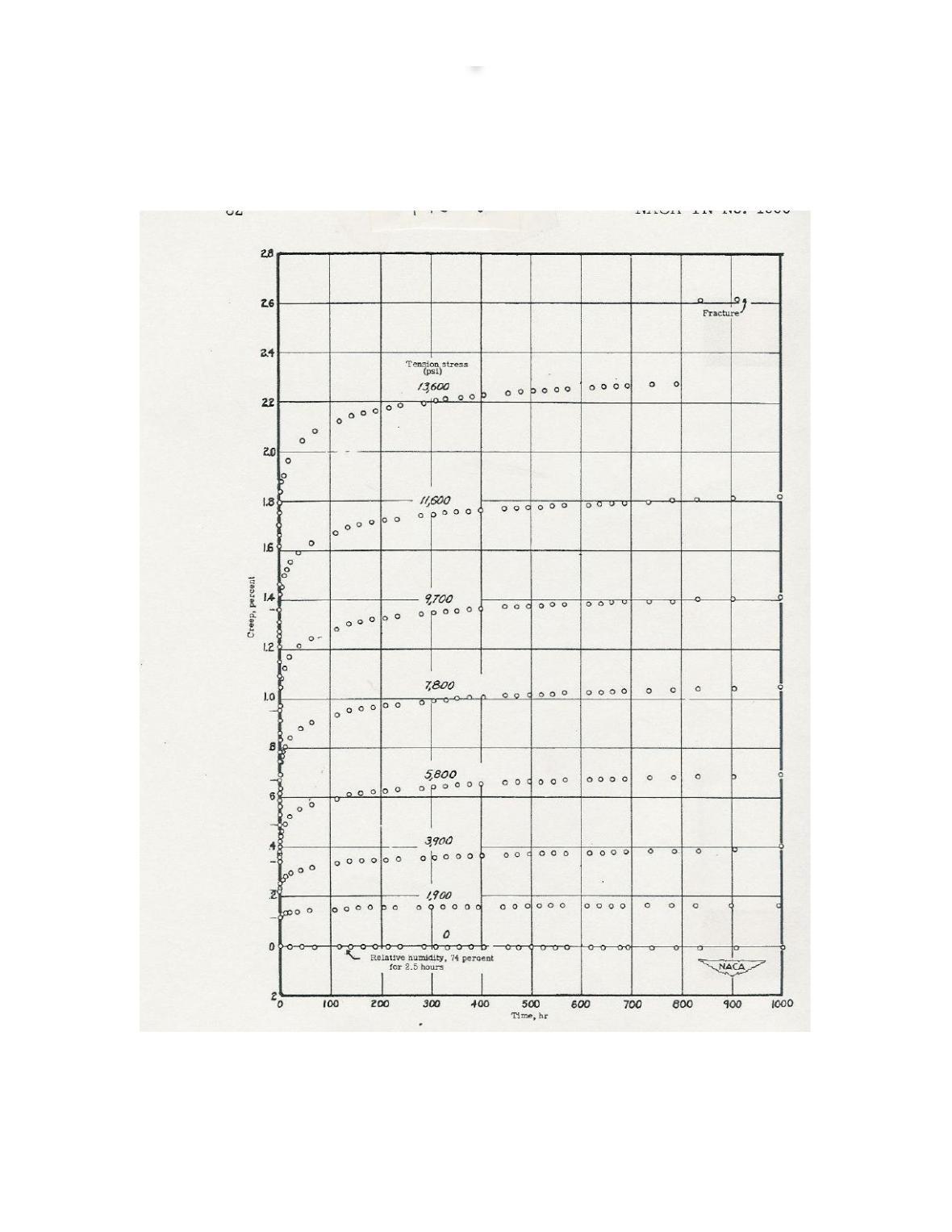
Creep %
Stress 100 hr 200 hr 400 hr 600 hr 800 hr
0 0 0 0 0 0
1900 0.15 0.16 0.16 0.16 0.16
3900 0.33 0.35 0.36 0.37 0.38
7800 0.93 0.97 1.01 1.02 1.02
11600 1.67 1.73 1.76 1.78 1.8
7
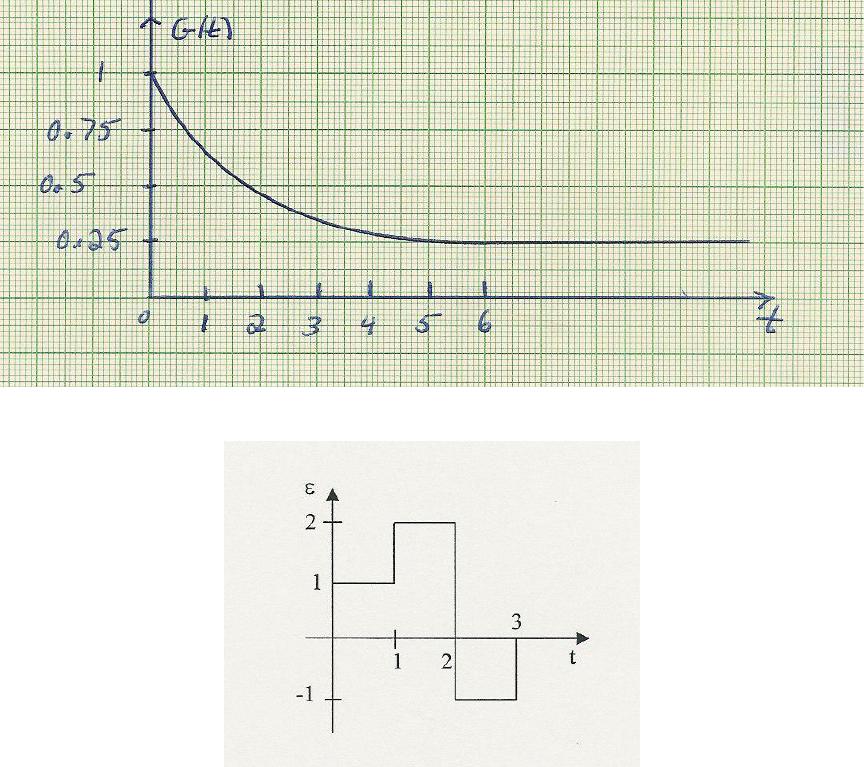
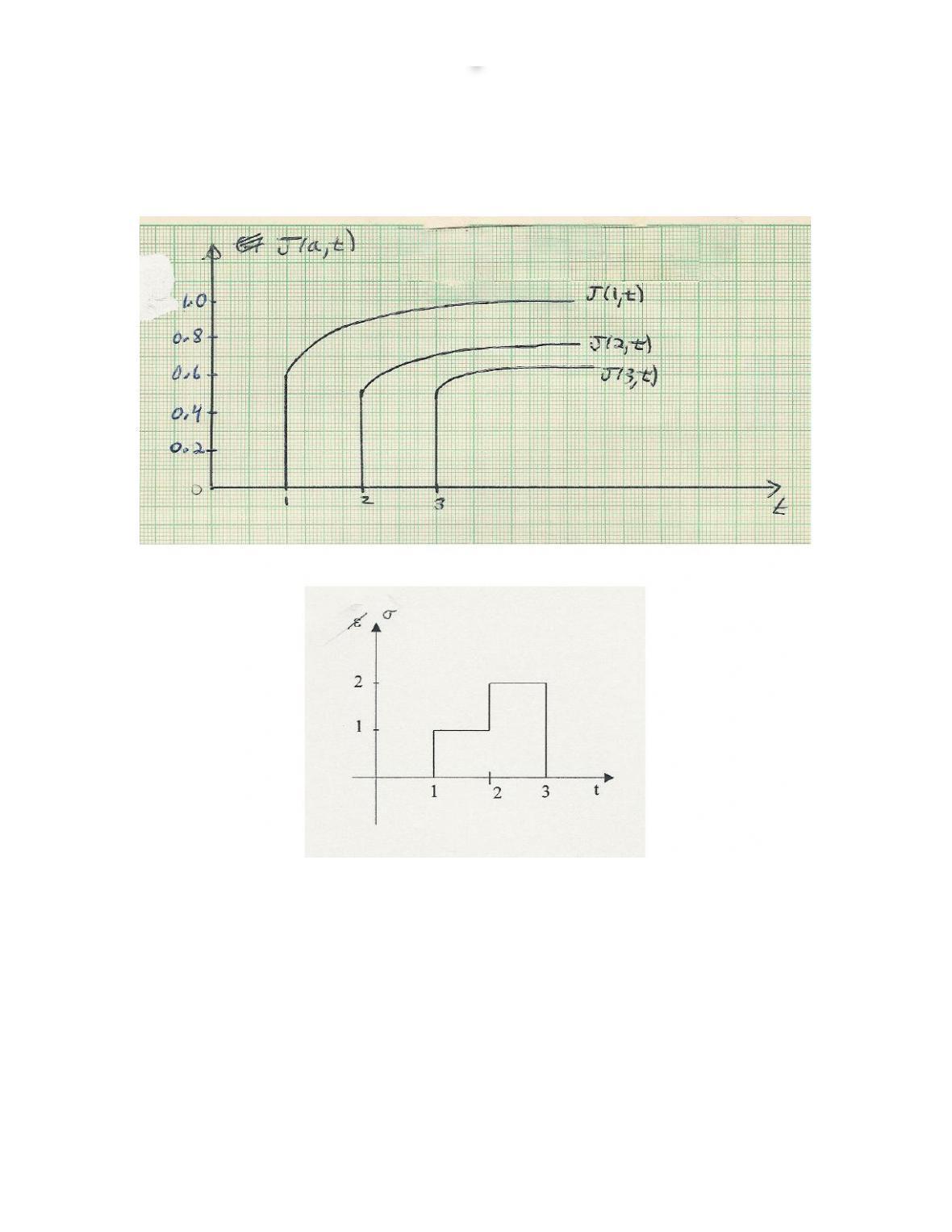
1.4 A material with linear response has the stress relaxation function
!
G(t)
shown
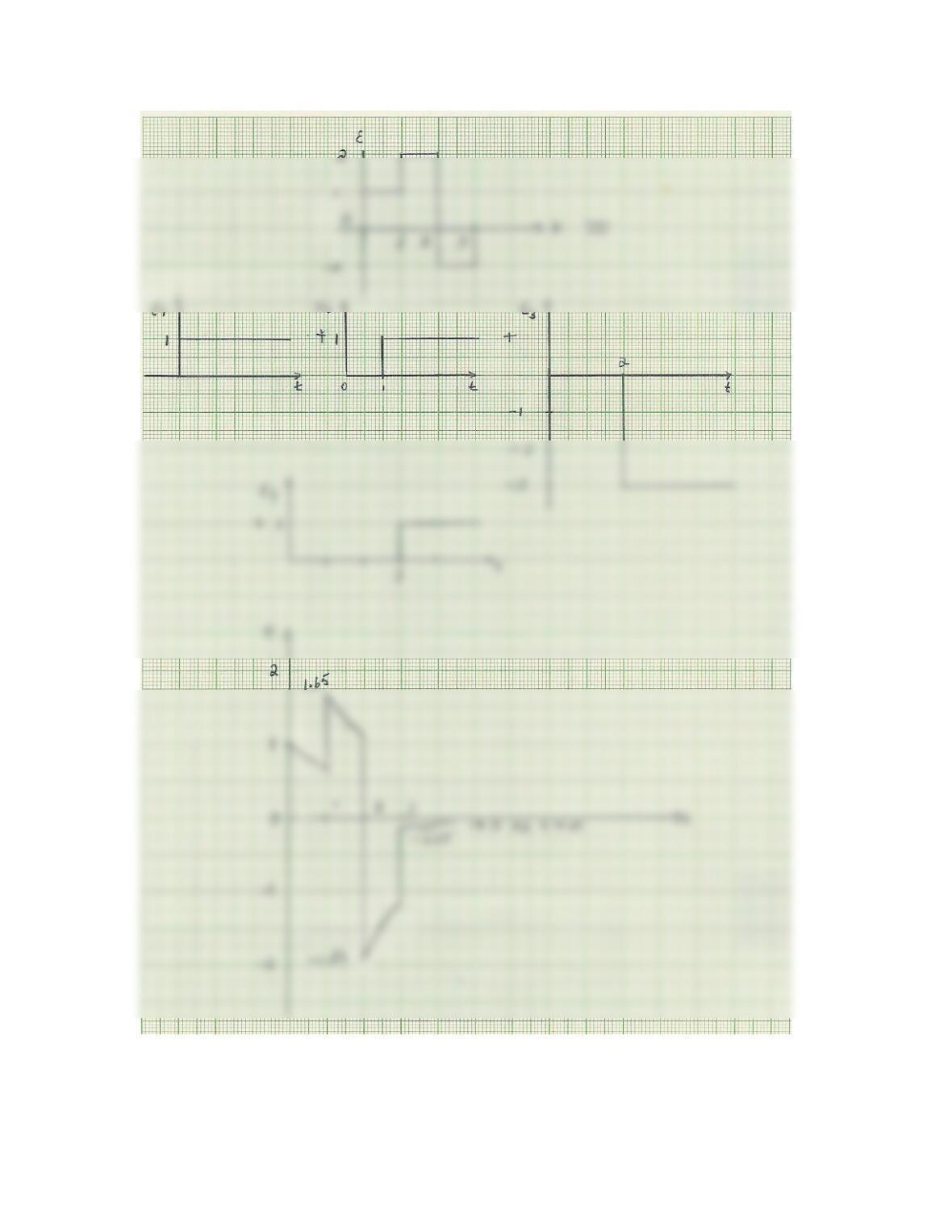
in Figure-Problem 1.4a . Construct the stress history corresponding to the strain history
shown in Figure-Problem 1.4b.
Figure- Problem 1.4a
Figure- Problem 1.4b
8
9
10
11
12
1.7 Figure-Problem 1.7 shows a stress relaxation and a creep isochrone for a
linear viscoelastic material. Both isochrones are for the same time
!
ˆ
t
. Indicate which is
the creep and which is the stress relaxation isochrone, and give reasons for your choices.
The background for this problem is in Chapter 4. No solution is provided.
Figure-Problem 1.7