1
1–1.
What is the weight in newtons of an object that has a mass
of (a) 8 kg, (b) 0.04 kg, and (c) 760 Mg?
(a)
W=9.81(8) =78.5 N
Ans.
(b) W
=
9.81(0.04)
(
10
–3
)
=
3.92
(
10
–4
)
N
=
0.392 mN Ans.
(c) W
=
9.81(760)
(
10
3
)
=
7.46
(
10
6
)
N
=
7.46 MN Ans.
Ans:
1–2.
Represent each of the following combinations of units in
the correct SI form: (a)
>
KN>
m
s,
(b)
Mg>mN,
and
(c)
MN>(kg #ms).
SOLUTION
(a) kN
>
ms
=
10
3
N
>
(
10
–6
)
s
=
GN
>
s Ans.
(b) Mg
>
mN
=
10
6
g
>
10
–3
N
=
Gg
>
N Ans.
(c) MN
>
(kg
#
ms)
=
10
6
N
>
kg(10
–3
s)
=
GN
>
(kg
#
s) Ans.
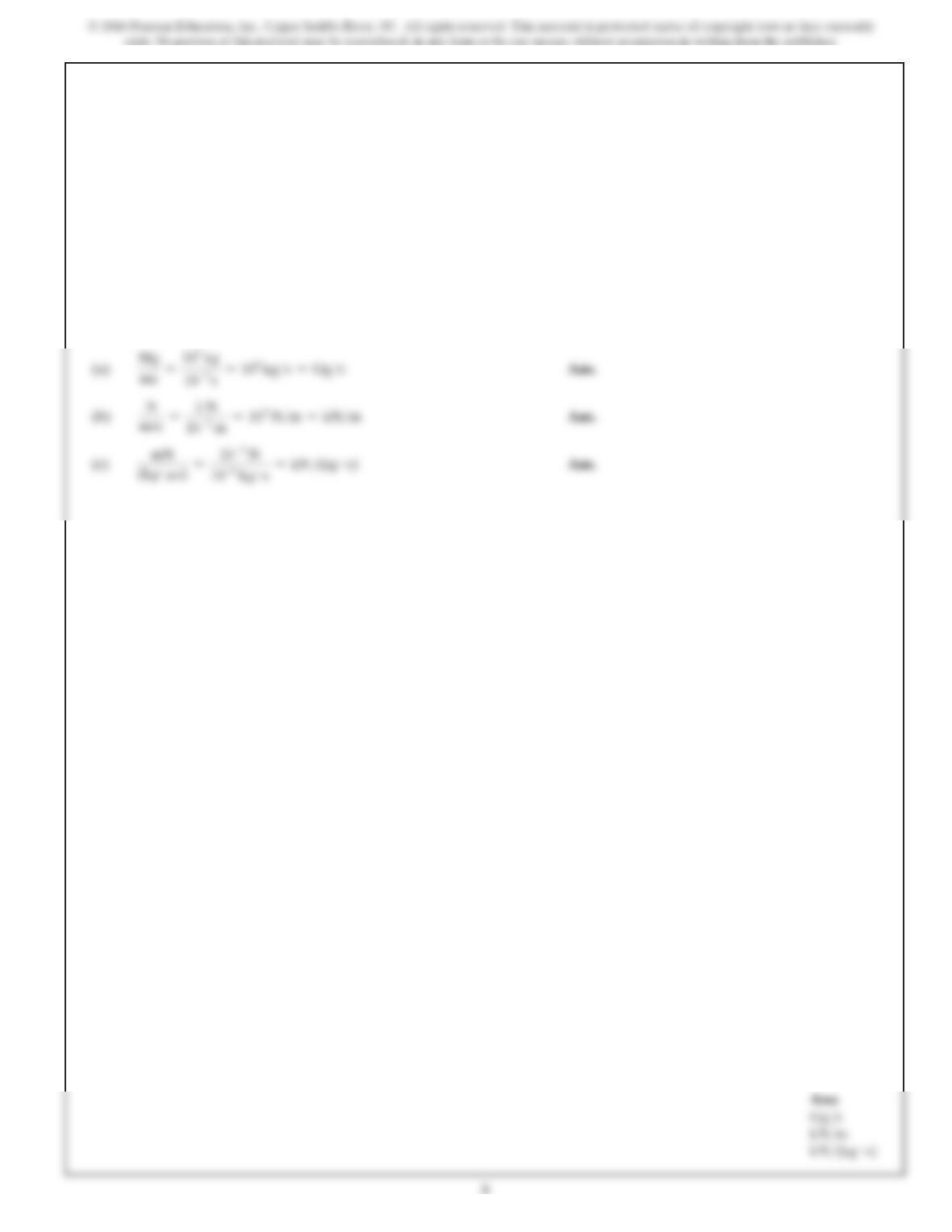
1–3.
Represent each of the following combinations of unit in the
correct SI form: (a)
Mg>ms,
(b)
N>mm,
(c)
mN>(kg #
m
s).
SOLUTION
4
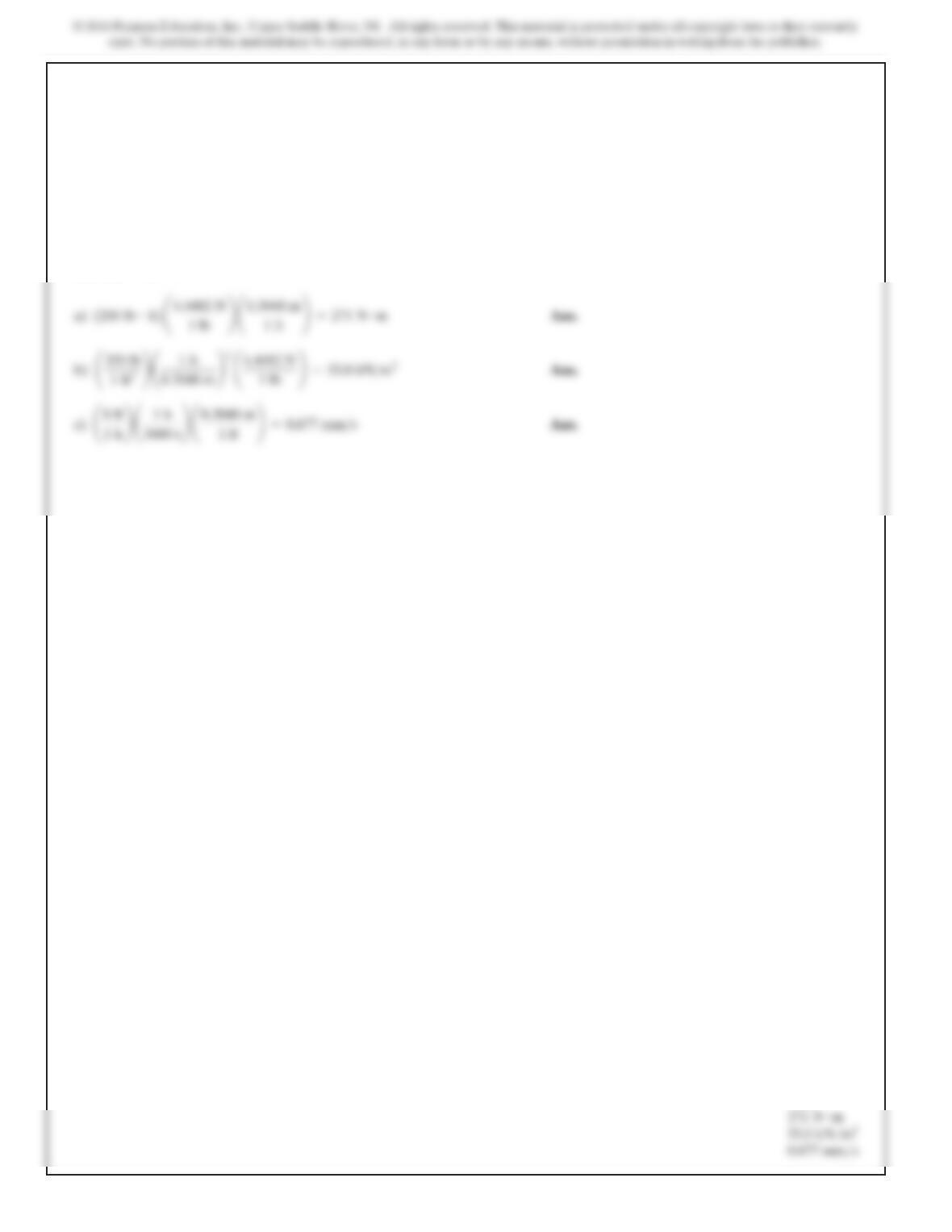
*1–4.
SOLUTION
Convert: (a) to (b) to
(c) Express the result to three significant
figures.Use an appropriate prefix.
8ft>h to mm>s.
kN>m3,350 lb>ft3
N#m,200 lb #ft
Ans:
5
1–5.
Represent each of the following as a number between 0.1
and 1000 using an appropriate prefix: (a) 45 320 kN,
(b) 568(105) mm, and (c) 0.00563 mg.
SOLUTION
Ans:
6
1–6.
Round off the following numbers to three significant
figures: (a) 58 342 m, (b) 68.534 s, (c) 2553 N, and
(d) 7555 kg.
SOLUTION
Ans:
7
1–7.
Represent each of the following quantities in the correct
SI form using an appropriate prefix: (a) 0.000 431 kg,
(b) ,and (c) 0.005 32 km.35.3(10
3
)N
SOLUTION
Ans:
8
*1–8.
SOLUTION
Represent each of the following combinations of units in
the correct SI form using an appropriate prefix: (a) Mg/mm,
(b) (c) mm#Mg.mN>ms,
Ans:
9
1–9.
SOLUTION
Represent each of the following combinations of units in
the correct SI form using an appropriate prefix: (a)
(b) (c) ks and (d) km
#
mN.mkm,
>mg,
m>ms,
Ans:
1–10.
Represent each of the following combinations of units in the
correct SI form: (a)
GN #
m
m,
(b)
kg>
m
m,
(c) N
>
ks
2
, and
(d)
KN>
m
s.
SOLUTION
kg>
kN>
1 1
1–11.
Represent each of the following with SI units having an
appropriate prefix: (a) 8653 ms, (b) 8368 N, (c) 0.893 kg.
SOLUTION
Ans:
8.653 s