Appendix B
B.1 Given:
12
12
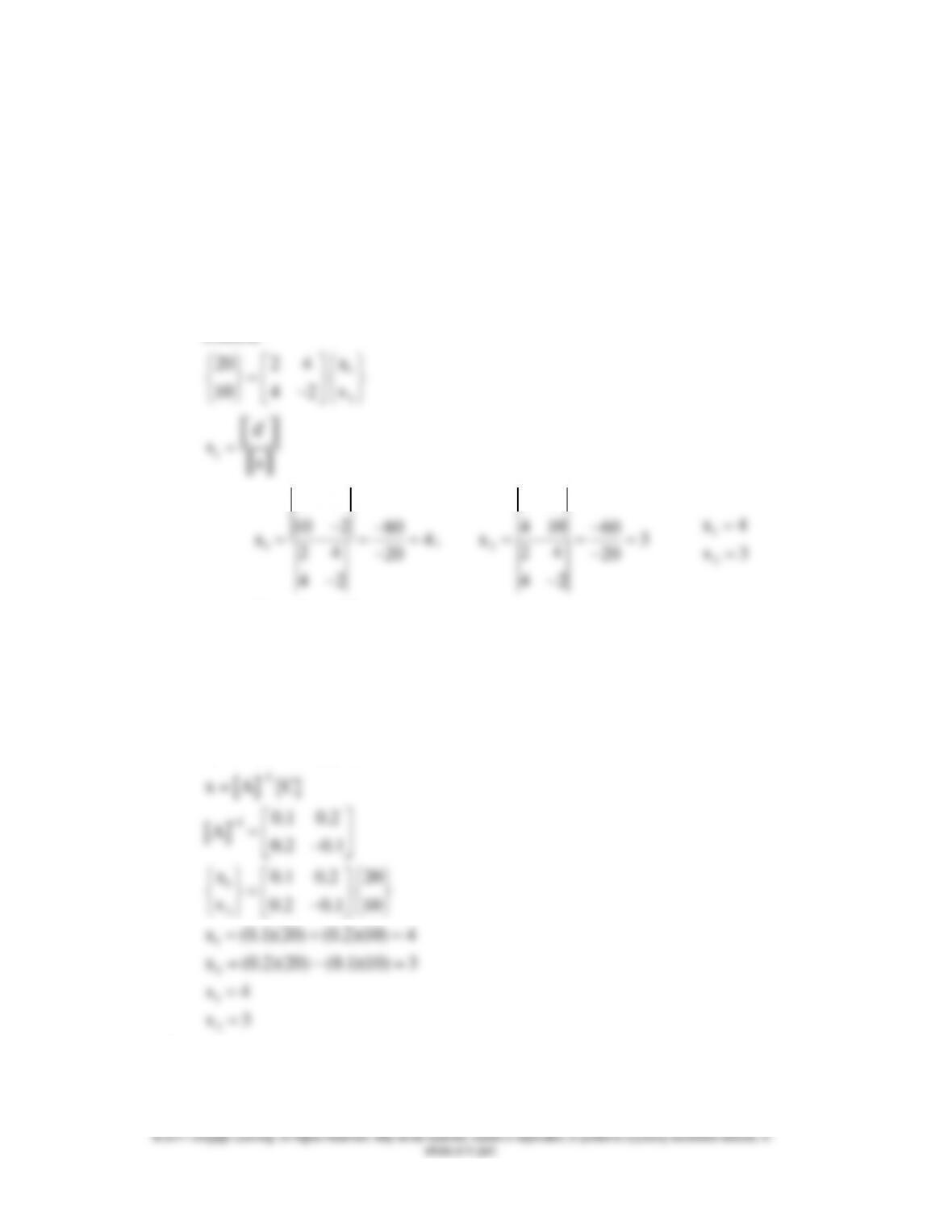
2x 4x 20
4x 2x 10
Find: Determine the solution of the simultaneous eq. by Cramer’s Rule.
Solution:
1
x
20 2 4
12
12
2x 4x 20
4x 2x 10
1
x
20 2 4
23
1
2
3
x 2 4 5 6
x 1 1 2 2
1 2 3
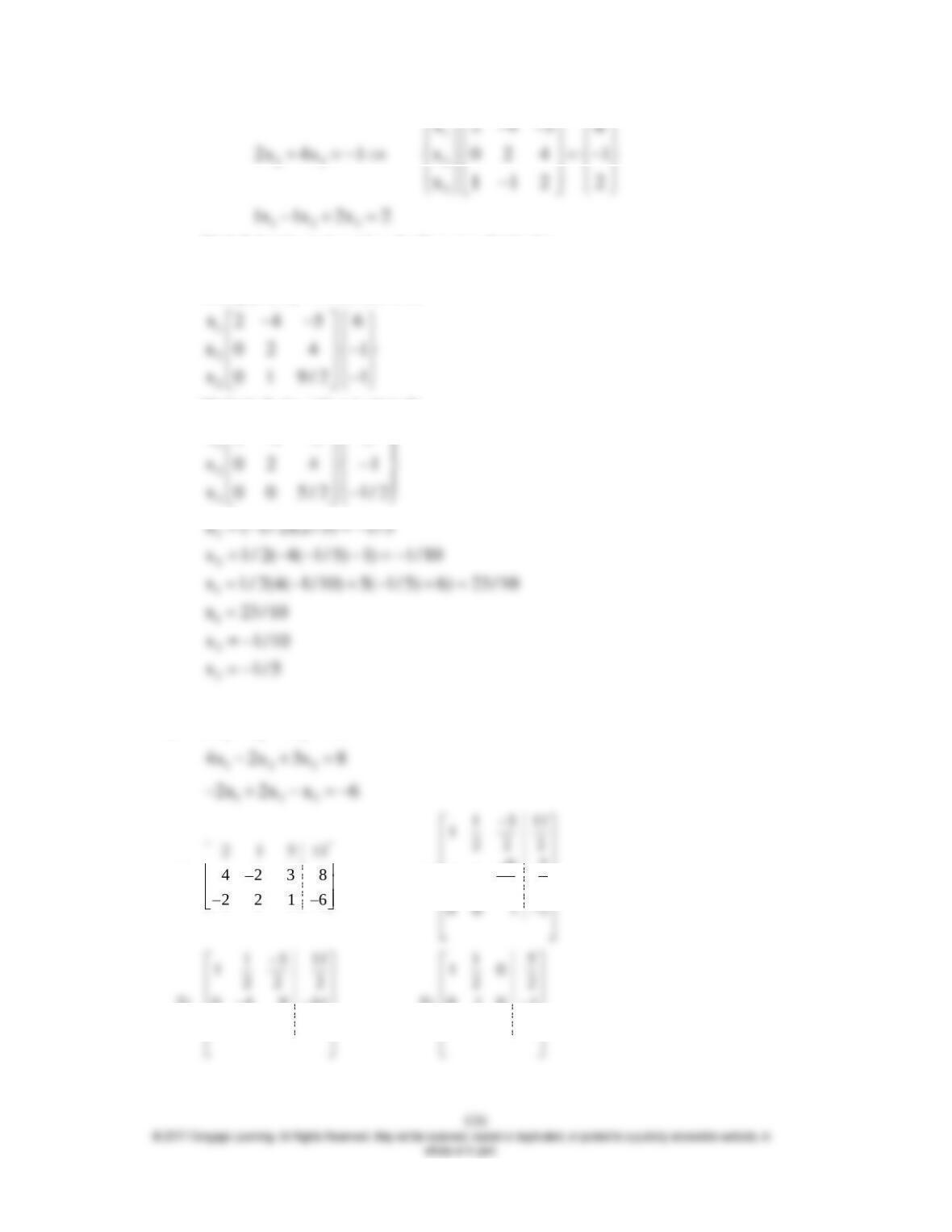
1x 1x 2x 2
Find: Solve the system of eq. by Gaussian elimination.
Solution:
Multiply R1 by -1/2 and add to R3
1
2
3
x 2 4 5 6
x 0 1 9 / 2 1
Multiply R2 by -1/2 and add to R3
1
x 2 4 5 6
3)
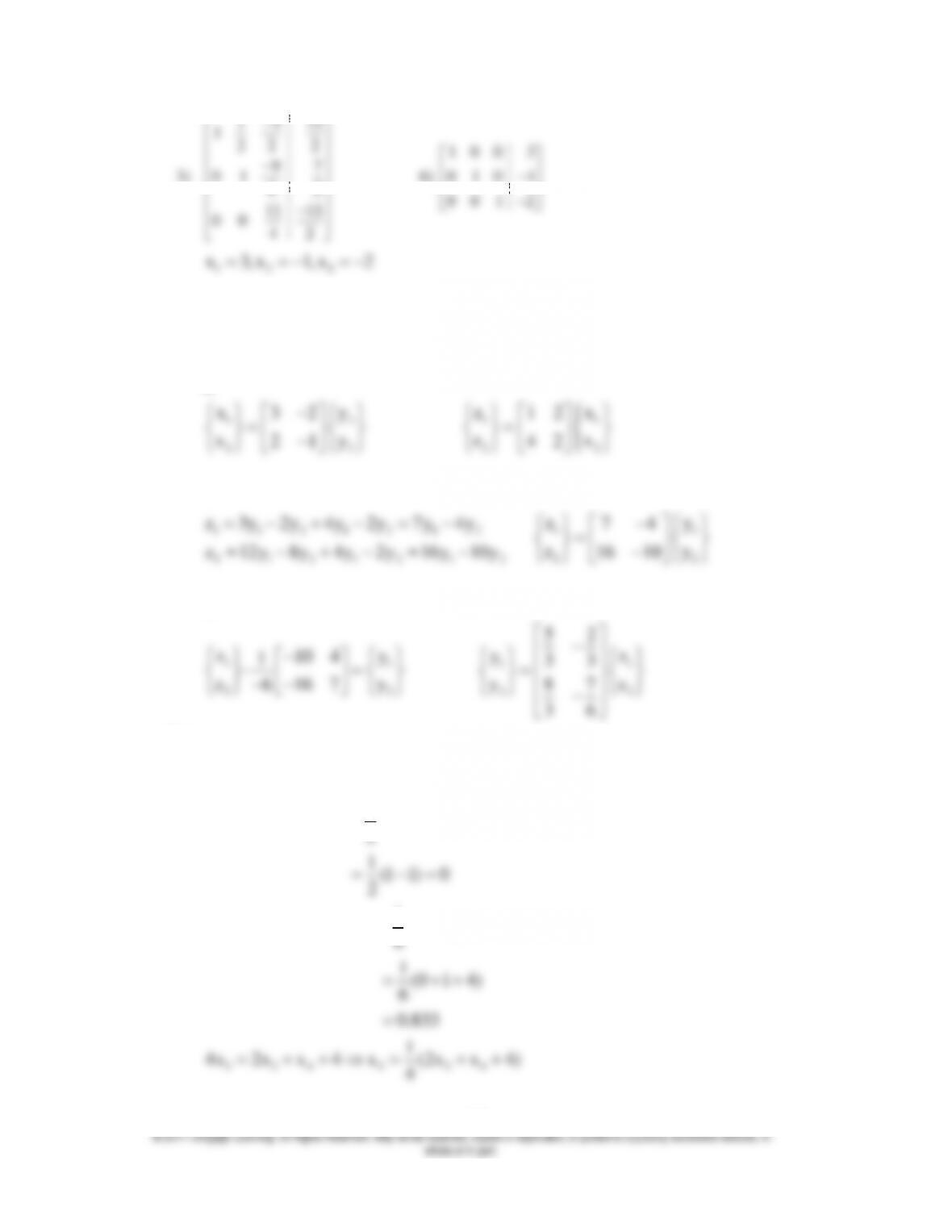
1 3 11
12 2 2
97
0142
11 11
00 42
6)
1 0 0 3
0 1 0 1
0 0 1 2
B.5
a)
11
22
xy
32
xy
21
11
22
zx
12
zx
42
b)
1 1 2 1 2 1 2
z 3y 2y 4y 2y 7y 4y
11
zy
74
c)
11
22
zy
10 4
1
zy
16 7
6
11
22
52
yz
33
yz
87
36
B.6
XT = (1, 1, 1, 1, 1)
First iteration:
1 2 1 2
1
2x x 1 x (x 1)
2
1(1 1) 0
2
2 1 3 2 1 3
1
6x x x 4 x (x x 4)
6
6
1(0 1 4)
3 2 4 3 2 4
4
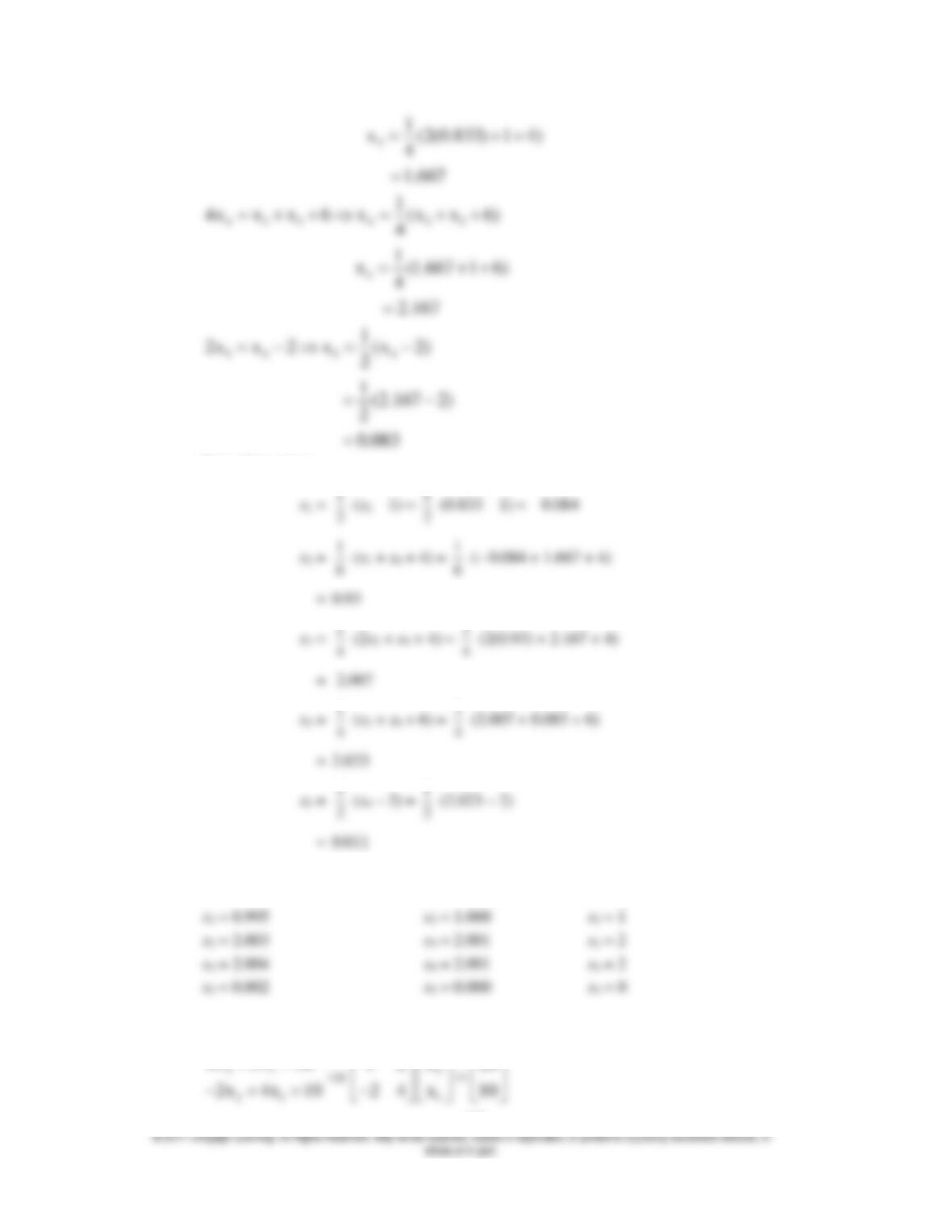
Second iteration:
1
1
1
1
Third iteration: Fourth iteration: Fifth iteration:
x1 = – 0.035 x1 = – 0.003 x1 = 0
B.7 Given: Solve Problem B.1 by Gauss-Seidel iteration.
21
4x 2x 20
2
x
4 2 20
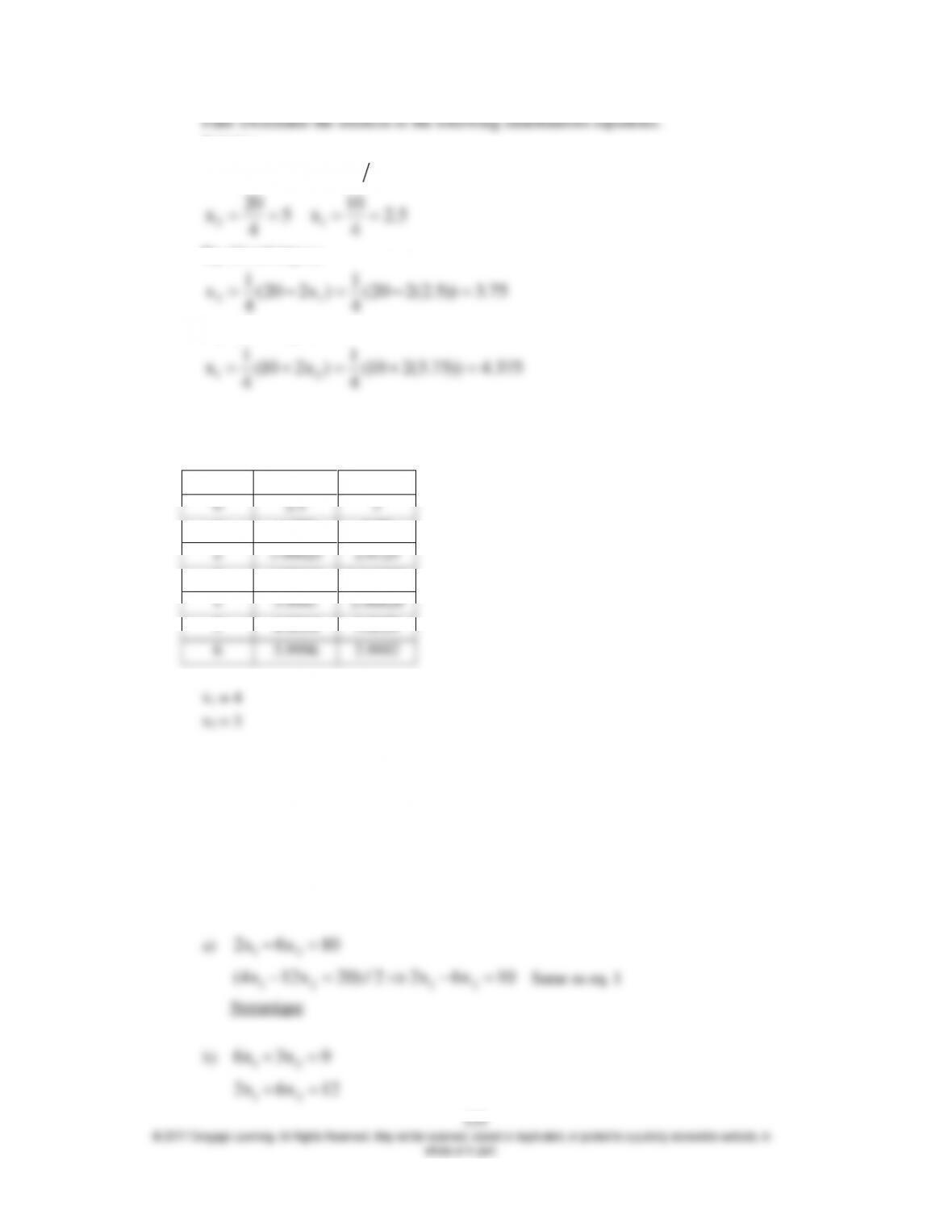
Solution:
Initial Guesses:
i i ii
x L a
220
4
110
4
Eq. (1) solving x2:
21
11
44
Eq. (2) solving x1:
12
11
44
Gauss-Seidel Method Table
Iteration
x1
x2
0
2.5
5
1
4.375
3.75
2
3.90625
2.8125
3
4.02344
3.046875
4
3.9941
2.98828
5
4.0014
3.0029
6
3.9996
2.9992
x1 = 4
x2 = 3
B.8 Given: a)
12
12
2x 6x 10
4x 12x 20
b)
12
12
6x 3x 9
2x 6x 12
c)
12
12
8x 4x 32
4x 2x 8
Find: Classify the system of equations according to Section B.2 as unique, nonunique, or
nonexistent.
Solution:
12
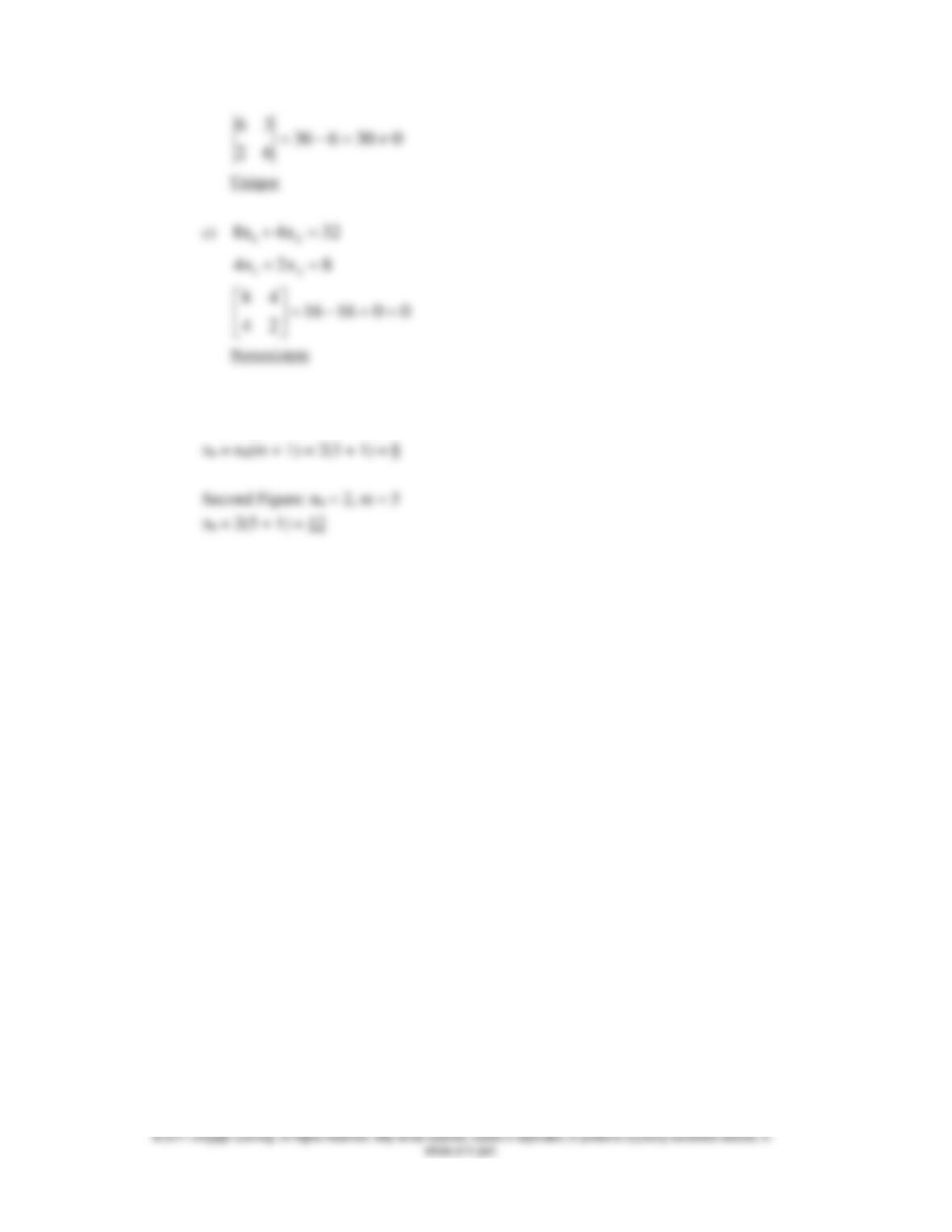
640
63 36 6 30 0
26
Unique
c)
12
8x 4x 32
12
4x 2x 8
84 16 16 0 0
42
Nonexistent
B.9 First Figure: nd = 2, m = 3