General Procedures
A. Do not lay visuals on table when discussing them.
B. Turn visual towards buyer, not towards yourself.
C. Hold up visual and point to what you are discussing.
D. Do not lean on buyer’s desk.
E. Sit up straight, with both feet on floor.
F. Use appropriate vocal tone.
G. Demonstrate natural level of enthusiasm regarding what you are discussing.
1. Move arms and hands, giving green signals.
2. Smile; be happy, glad to be talking about your great product.
3. Remember your customer needs this product and you are there to help them.

Marketing 335
Evaluation/Scorecard
for Closing Sales Presentation*
Salesperson: ___________________________ Total Score: _____________________
Point
Value
Your
Score
Comments
Business proposition (features, advantages,
benefits)
Incorporated key SELL Sequence(s) in discussion of
business proposition
Effective justification for suggested order
Correctly used pricing data to show cost(s), ROI, and
other prices
Close
Quality of closing techniques
Active listening of concern; asked questions to
understand concern
Correctly used first closing technique, including good
reason(s) to buy
Correctly used objection handling technique
Confirms that the objection is no longer a concern of
the buyer
Correctly used second closing technique, including
good reason(s) to buy
Presentation mix
Effectively answered objection using objection
handling technique
Confirms that the objection is no longer a concern of
the buyer
Quality of visual aids
Effectively used visual aids
If buyer does not buy
Correctly responds in a positive manner
Overall
Well-rehearsed
Quality level of preparation

Marketing 335
Evaluation/Scorecard: Final Sales Presentation
Salesperson: ___________________________ Total Score: _____________________
Point
Value
Your
Score
Comments
Approach (attention, interest, transition)
Professional, enthusiastic introduction (enthusiastic
introduction, good handshake looking in eyes, waited
to be asked to be seated, gave and ask for business
card)
Asked for approval to take notes
Correctly used approach technique(s), gaining
attention, interest and made a smooth transition into
presentation
Set agenda
Asked for permission to ask questions;
Identified needs and confirmed needs with customer
Made smooth transition into presentation
Product (matched product’s benefits to buyer’s needs)
Identified key FABs related to needs
Stressed benefits
Overall quality of FAB 1
Overall quality of FAB 2
Incorporated trial closes after each FAB
Marketing plan (features, advantages, benefits)
Identified key FABs related to needs
Stressed benefits
Overall quality of FAB 1
Overall quality of FAB 2
Incorporated trial closes
Business proposition (features, advantages,
benefits)
Incorporated key SELL Sequence(s) in discussion of
business proposition
Effective justification for suggested order
Correctly used pricing data to show cost(s), ROI, and
other prices
Ask appropriate trial close after each FAB

Presentation mix
Correctly used proof statement
Quality of visuals
Effectively used visuals
Incorporated effective demonstration in presentation
Appropriate non-verbal communication
Verification
Ask trial close before closing
Closing
Correctly used first closing technique, including good
reason(s) to buy
If objection(s) occurs, correctly used objection
handling technique(s)
Ask appropriate trial close after responding to
determine if answered objection(s) and if there are
other objections and/or questions
Correctly used second closing technique, if needed,
including good reason(s) to buy
Expected objection
Effectively answered objections using objection
handling techniques
Confirmed each objection is no longer a concern of
buyer
If make the sale
Slow, professional, enthusiastic exit, good handshake
looking in eyes, reflecting ‘green’ signals
If does not buy
Slow, professional, enthusiastic exit, good handshake
looking in eyes, reflecting ‘green’ signals, correctly
used ‘exit script
Overall
Well-rehearsed
Quality level of preparation

Example of Class Syllabus Template:
Professional Selling
Class #
Pre-requisites:
Time and Dates
Instructor:
E-mail:
Office #:
Office Hours:
Course Description (per your institution):
Learning Objectives (per your institution):
Course Objectives and Outcomes
The basic objectives for this course are to:
• Apply the Core Principles of Professional Selling to the sales workplace and
marketplace
• Gain an understanding of personal selling as a major function within the marketing
and promotional mix of a firm.
• Improve your communication ability.
• Familiarize yourself with the principles of selling.
• Prepare and present a sales presentation, visually, verbally, and nonverbally
communicate your information using the selling skills discussed in class and in your
textbook.
• Consider a career in sales.
Course Approach
Classes will be a combination of discussion, various exercises (conducted both inside and outside
of the classroom), and lectures. You will participate in several role-playing exercises. The
purpose of these activities is to provide you with an opportunity to practice your communication
and selling skills. Your class participation is expected and appreciated.
While some will feel this is a large class size, we treat it as a smaller class. Tests and
assignments are graded in a timely manner; there is ample opportunity for interaction in
classroom discussions, and your professor is always available to work with you.
Required Text

discussions. You have up to one week after receiving your test grade to review a test.
Role Plays:
We will use the role plays in the textbook. You will be assigned a role play and be responsible
for developing a full role play. We will utilize the sales labs. Your role play will be recorded
and evaluated.
Quizzes:
We will have quizzes at the end of each week. The quizzes will cover the chapters we reviewed
during the week.
Policies (per your institution):
• ADA (Accommodation for Disabilities)
• Class Behavior:
• Class Participation
• Honor Code
• Attendance:
• Veteran/Active Military Status:
• Learning Accommodations:
• Communication/E-mail
Schedule:
Meeting
Overview
Key Items
1
Introduction
Review Syllabus
Bring textbook to class
Bring syllabus to class
Bring textbook to class
2
Chapter 1
End of week quiz
In-class: Be prepared to answer Sales Application
Questions
3
Chapter 2
Discuss Assignment (Interview)
End of week quiz
In-class: Be prepared to answer Sales Application
Questions
In-class: Be prepared to answer case 2.1 and 2.2
4
Chapter 3
End of week quiz
In-class: Be prepared to answer Sales Application
Questions
In-class: Be prepared to answer case 3.2 and 2.3
5
Chapter 4
End of week quiz
In-class: Be prepared to answer Sales Application
Questions
In-class: Be prepared to answer case 4.1 and 4.2
6
Chapter 5
End of week quiz
In-class: Be prepared to answer Sales Application
Questions
In-class: Be prepared to answer case 5.1 and 5.3

7
Sell Yourself on A Job
interview role play
8
Sell Yourself On A Job
interview role play
9
Debrief on role play
10
Test Review
11
Test 1 (Cumulative 1- 5)
12
Sales Role Play
Assignment Discussion &
Logistics
Role play assigned could be: (At end of chapter 13→
Role play 1,2,3,4,5.6)
13
Chapter 6
End of week quiz
In-class: Be prepared to answer Sales Application
Questions
In-class: Be prepared to answer case 6.2 and 6.3
14
Chapter 7
End of week quiz
In-class: Be prepared to answer Sales Application
Questions
In-class: Be prepared to answer case 7.1 and 7.2
15
Chapter 8
In-class: Be prepared to answer Sales Application
Questions
In-class: Be prepared to answer case 8.2
16
Chapter 9
End of week quiz
In-class: Be prepared to answer Sales Application
Questions
In-class: Be prepared to answer case 9.1 and 9.4
17
Chapter 10
In-class: Be prepared to answer Sales Application
Questions
In-class: Be prepared to answer case 10.1
18
Review role play 1
End of week quiz
19
Role Play 1
Sales Labs
20
Role play 1
Sales Labs
21
Debrief on role play,
discuss role play 2
Role play assigned could be: (At end of chapter 13→
Role play 5.2, 5.3, 6.2, 6.3)
22
Test Review
23
Test 2 (Cumulative 1 -10)
24
Guest Speaker
25
Chapter 11
In-class: Be prepared to answer Sales Application
Questions
In-class: Be prepared to answer Sales Application
Questions
In-class: Be prepared to answer case 11.2
26
Chapter 12
End of week quiz
In-class: Be prepared to answer Sales Application
Questions
In-class: Be prepared to answer case 12.1 and 12.3
27
Chapter 13
In-class: Be prepared to answer Sales Application
Questions
In-class: Be prepared to answer case 13.1
28
Chapter 14
End of week quiz
In-class: Be prepared to answer Sales Application
Questions
In-class: Be prepared to answer case 14.2
29
Discuss role play 2
(logistics)
30
Role Play 2
31
Role Play 2
32
Debrief on Role Play &
Final Test Review
Finals
Week
Final Test (Cumulative 1 –
14)
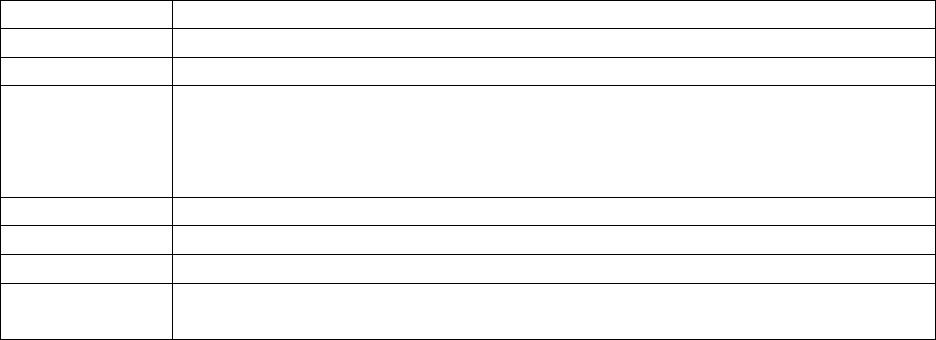
Marketing 335
Personal Selling
Spring (DATE)
Instructor:
Charles M. Futrell, Ph.D.; Certified Professional Salesperson.
Office:
201 L Wehner Building
Office Hours
M, W, F, 10:00 to 11:00 a.m. E-mailing to set an appointment is best. I
am in class most of Tuesday and Thursday. When labs are going on, I will
not have regular office hours since I will be involved with the labs. Please
set up appointments using e-mail to meet in the afternoon
Telephone:
(979) 845-5889
E-mail
c-futrell@tamu.edu
WWW
http//futrell-www.tamu.edu
Note:
See Professor Futrell for all instructions on tests, projects, and
assignments—not the TA.
Class Meeting Times and Locations
• All lectures will be held in WCBA 108; all labs will be held in WCBA 157 A-F—the small
rooms.
• Labs will be during your class time. You will be assigned to either Tuesday or Thursday.
There maybe times when we run past your lab’s ending time but this will be rare.
Course Objectives and Outcomes
The basic objectives for this course are to:
• Apply the Core Principles of Professional Selling to the sales workplace and marketplace
• Gain an understanding of personal selling as a major function within the marketing and
promotional mix of a firm.
• Improve your communication ability.
• Familiarize yourself with the principles of selling.
• Prepare and present a sales presentation, visually, verbally, and nonverbally communicate
your information using the selling skills discussed in class and in your textbook.
• Consider a career in sales.
Course Approach
Classes will be a combination of discussion, various exercises (conducted both inside and outside
of the classroom), and lectures. You will participate in several role-playing exercises. The
purpose of these activities is to provide you with an opportunity to practice your communication
and selling skills. Your class participation is expected and appreciated.
While some will feel this is a large class size, we treat it as a smaller class. Tests and
assignments are graded in a timely manner; there is ample opportunity for interaction in
classroom discussions, and your professor is always available to work with you.
Course Comments or Concerns
See Dr. Rajan, Head of the Department of Marketing, 220 C Wehner.
When To Attend Lab
When labs meet, you do not attend lecture. Your “Tentative Schedule” shows the dates you
attend labs.
Required Text
Charles M. Futrell, ABC’s of Relationship Selling through Service, 13th edition, McGraw-
Hill, 2013. You need this edition due to changes from last to new edition.
Prerequisites
Marketing 321 – The introductory marketing course must be taken before taking this course.
Role-Play Is A Test
The role-playing exercises will test how well you understand and can apply the course materials.
Role-plays also show how motivated you are to perform at a high level.
CAUTION: Preparation of a role-play takes longer than you might expect. Please start early so
you have time to practice, practice, practice.
What You Will Sell In Role-Plays
You will sell one of the products described in the textbook. More information will be
forthcoming. This is a B2B sales class.
Tips On Marketing 335
1. Class Procedures—administration stuff at the beginning of class.
2. Discussion—go over some materials quickly; will not leave up overheads from book; will
refer you to lecture information on our web site so you can print and learn anything I say
that might be on the test; do not print out assignments from our web site unless I ask you to
because some are outdated for your class.
3. Test Tips—whatever I say to know—know; definitions and examples of definitions are a
must to know; study as you normally do; memorize; first test is most important; key to
doing better on each test is to start studying several days before the test and get rest and
sleep the night before the test.
4. Everything is related—discussion materials to homework to tests to role-plays.
Tests
Multiple-choice and essay questions will be the main format used to test your knowledge of all
materials associated with the course—such as the text, lectures, videos and possible outside guest
discussions. You have up to one week after receiving your test grade to review a test.
Final grade
Your final grade is based upon the official university policy. There will be no curve. A 79.9
average equals a “C.” Your final course grade will be determined by dividing your total points
earned by the total points possible. Total points for the course will be 2,810 depending on
whether or not you are a buyer. If you are not scheduled to be a buyer, your total points will be
2,790, for example. It is common for this to happen because a lab may not have an equal number
of people in it.
1,500 points—three tests, including final
20 points—10-step Selling Process
20 points—Realistic Sales Presentation I
20 points—Realistic Sales Presentation II
20 points—role-play 1, mock interview
20 points— recruiter for role-play 1
20 points—SPIN questions
20 points—role-play 2, approach, product, marketing plan SELL’s
20 points—buyer for role-play 2
20 points—role-play 3, closing
20 points—buyer for role-play 3
Your course average will be calculated as: (your total points) / (max. points for course) = your
course grade.
Bonus grades may be available to you throughout the course. Earning bonus points does not
change the course’s 2,810 maximum point value. Earning 100 bonus points, for example, is like
Test/Assignment/Role-Play Grade(s)
I will not discuss a graded work on the day it is returned to you. Why? In the past, a few students
have gotten so upset over a grade, they become unprofessional. It helps a student to wait until the
next day to bring a grade to your instructor’s attention.
For any grade, you are asked to type out your views on the grade. At your first meeting, please
give to Professor Futrell. He will gladly review, and provide feedback as soon as possible. You
are asked to be professional and accurate in your write-up. Base your views on the textbook,
your notes, and class discussions.
Students With Disabilities
The Americans with Disabilities Act (ADA) is a federal anti-discrimination statute that provides
comprehensive civil rights protection for persons with disabilities. Among other things, this
legislation requires that all students with disabilities be guaranteed a learning environment that
provides for reasonable accommodation of their disabilities. If you believe you have a disability
requiring an accommodation, please contact Disability Services, in Cain Hall, Room B118, or
call 845-1637. For additional information visit http://disability.tamu.edu.
E-Mail—You Need It! c-futrell@tamu.edu
You will be informed of class activities, grades, assignments, bonus opportunities, etc. by e-mail.
If you do not have an e-mail account, please set one up. The fastest way for you to get a
response from me is using e-mail. This includes questions or comments about the course.
Assignment Formats
All assignments must be typed in a single or double-spaced format; otherwise the assignment
receives a grade of zero. No assignment will be accepted late unless the delay is due to an
Official University Excuse. Late refers to after the class is over on the day the assignment is due.
Assignment Cover Page. You must have a cover page for all work turned in for a grade. On
the cover page type: (1) your name (2) ID number (3) Marketing 335 (4) lecture section
number—501, 502, 503 (5) date assignment is due (6) title of assignment.
On the page immediately after the cover page but before your assignment’s answers, have the
following on a page by itself.
On my honor, as an Aggie, I have neither given nor received unauthorized aid on this
academic work.
__________________________________ __________________________________
Print Your Name Your signature
Staple together your cover page, signed Aggie Honor Code, and answers to assignment.
If you do not have a cover page with the above information, a signed Aggie Honor Code sheet,
and/or the assignment is not neatly typed it will not be graded and you will receive a “zero.”
Why am I asking for the above? I will grade hundreds of assignments. Some people’s
handwriting is very challenging to read! This will aid in getting the grades back to you in a
timely manner. Thank you for understanding.
Attendance Policy
There is no attendance policy for this class. However, make-up tests are allowed only if you have
a university excused absence. You receive a zero grade if you miss a test for any other reason.
Make-up Policy. If an absence is excused, the student will be allowed to make up work within 30
calendar days from the last day of the absence. To be excused the student must notify his or her
instructor in writing (acknowledged e-mail message is acceptable) prior to the date of absence,
and provide appropriate documentation for the absence. In cases where advance notification is
not feasible (e.g. accident or emergency) the student must provide notification by the end of the
second working day after the absence, including an explanation of why notice could not be sent
prior to the class. The reasons absences are considered excused by the university are listed
below. See Student Rule 7 for details (http://student-rules.tamu.edu/rule7.htm). The fact that
these are university-excused absences does not relieve the student of responsibility for prior
notification and documentation. Failure to notify and/or document properly may result in an
unexcused absence. Falsification of documentation is a violation of the Honor Code.
1) Participation in an activity that is required for a class and appears on the university
authorized activity list.
2) Death or major illness in a student’s immediate family.
3) Illness of a dependent family member.
4) Participation in legal proceedings or administrative procedures that require a student’s
presence.
5) Religious holy day.
6) Illness that is too severe or contagious for the student to attend class.
a. Injury or illness of three or more class days – student will provide a medical
confirmation note from his or her medical provider within one week of the last date
7) Required participation in military duties.
8) Other absences may be excused at the discretion of the instructor with prior notification and
proper documentation.
Conduct In the Classroom
1. We have beautiful and state-of-the-art classrooms in the Wehner Building. We want to
maintain the high-quality conditions of these classrooms for students in future years. Thus,
it is necessary for you to adhere to the established policy of NO BEVERAGES, FOOD,
TOBACCO PRODUCTS, OR ANIMALS (unless approved) within the Wehner Building
classrooms. Water is the only exception. This includes having closed containers on the floor,
desk, being held, or able to be seen in an open book bag. Your assistance in enforcing this
policy is greatly appreciated.
2. No talking in the classroom while your instructor is conducting the class.
3. Since etiquette is important in the business world, we will observe basic courtesies in our
class:
a. being present and on-time for each class section.
b. treating one another with dignity and respect.
c. wearing appropriate attire for a business classroom situation
d. no profane language or gestures.
Should the above occur you will be:
A. Asked to stop talking; take food, drink, and/or tobacco products out of the room; or correct
your language, gestures, or clothing. You may be asked not to come back to class without a
written admission note from the Head of the Marketing Department.
B. The second time you do not follow the above guidelines, up to 50 points will be deducted
from your grade, and you will be ejected from the class. To come back to class, you must have a
written admission note from the Head of the Marketing Department.
C. Each time thereafter you will have up to 100 points deducted from your grade and be
required again to leave the classroom and talk with the Head of the Marketing Department before
readmission.
Please Don’t Trash The Class!
Please do NOT leave behind any newspapers, other publications, or anything else that you might
have brought with you to class. To walk out of a classroom with the floor littered with trash isn’t
fair to the incoming class. Don’t mess with Texas A&M!
Copyrighted Materials
The handouts used in this course are copyrighted. By “handouts” I mean all materials generated
for this class, which include but are not limited to syllabi, quizzes, exams, lab problems, in-class
materials, internet materials, review sheets, and additional problem sets. Because these materials
are copyrighted, you do not have the right to copy the handouts, unless I expressly grant
permission.
Professor Futrell’s E-Mail And Website
Please contact me anytime using e-mail. My address is: c-futrell@tamu.edu. The e-mail address
is also available at the College of Business website: http://mays.tamu.edu. Under
Majors/Departments, select Marketing and click on faculty information.
Should you need extra copies of class handouts, first check the Marketing 335 link under
Classes. If not found, please contact Professor Futrell.
Aggie Code of Honor
For many years, Aggies have followed a Code of Honor which is stated in this very simple verse:
An Aggies does not lie, cheat, or steal
or tolerate those who do.
The Aggie Code of Honor is an effort to unify the aims of all Texas A&M men and women
toward a high code of ethics and personal dignity. For most, living under this code will be no
problem, as it asks nothing of a person that is beyond reason. It only calls for honesty and
integrity, characteristics that Aggies have always exemplified.
The Aggie Code of Honor functions as a symbol to all Aggies, promoting understanding and
loyalty to truth and confidence in each other.
Class Scholastic Dishonesty
Students have suggested I define what is meant by scholastic dishonesty in this class. I follow
Texas A&M University’s Student Rules book guidelines which is available at http://student-
rules.tamu.edu. The following is taken from Part I, Rule 20 of that book.
“It is the responsibility of students and instructors to help maintain scholastic integrity at the
university by refusing to participate in or tolerate scholastic dishonesty. In a case of scholastic
dishonesty, it is imperative that written documentation be kept at each level of the procedures
outlined below. Commission of any of the following acts shall constitute scholastic dishonesty.
This listing is not exclusive of any other acts that may reasonably be said to constitute scholastic
dishonesty.”
Acquiring Information
Acquiring answers for any assigned work or examination from any unauthorized source.
Working with another person or persons on any assignments or examination when not
specifically permitted by the instructor. Observing the work of other students during any
examination.
Providing Information
Providing answers for any assigned work or examination when not specifically authorized
to do so. Informing any person or persons of the contents of any examination prior to the time
the
examination is given.
Plagiarism
Plagiarism is failing to credit sources used in a work product in an attempt to pass off the work
as one’s own and/or attempting to receive credit for work performed by another, including
papers obtained in whole or in part from individuals or other sources.
As commonly defined, plagiarism consists of passing off as one’s own the ideas, words, writings,
etc., which belong to another. In accordance with this definition, you are committing plagiarism
if you copy the work of another person and turn it in as your own, even if you should have the
permission of that person. Plagiarism is one of the worst academic sins, for the plagiarist
destroys the trust among colleagues without which research cannot be communicated.
Conspiracy
Agreeing with one or more persons to commit any act of scholastic dishonesty.
Fabrication of Information
The falsification of the results obtained from a research or laboratory experiment.
The written or oral presentation of results of research or laboratory experiments without the
research or laboratory experiment having been performed.
Violation of Departmental or College Rules
Violation of any announced departmental or college rule relating to academic matters, including
but not limited to abuse or misuse of computer access or information.
All Work In This Course Must be Your Own
The individual student must do all of his/her own work in this class. Using any materials other
than materials you create on your own will be considered academic dishonesty. You may not
work with anyone on assignments for this course.
Your Aggie Code Makes Honesty Your Responsibility
Look at the second line of the Aggie Code. It is your responsibility to help maintain scholastic
integrity at the University by refusing to participate in or tolerate scholastic dishonesty. Please
tell Professor Futrell of any dishonesty that is connected to this class. In the long-run you may
be doing the person(s) involved in dishonest activities a life-changing favor.
What Is Dishonesty?
It is impossible to examine everything we do in this course and say exactly what is honest or
dishonest behavior. By the time you take a senior-level course such as this, you will know the
answer to the question “What is dishonesty?” However, if you have any questions, please ask
your instructor in this or in any other class.
Example: Let’s say your instructor asks you to write a paper based upon several articles and
summarize each article. Next, the assignment asks you to say how each article relates to one
another—“Is there a common theme?” If someone asks you something about the contents of the
articles and paper, such as “What do you feel is the main theme of Article A?” and you answer,
then this would be considered a dishonest activity for each of you. But if someone asked you if
an assignment was due, and you said “yes,” and then explained what was to be done for the
assignment, this would not be dishonest behavior.
Has Dishonesty Happened In The Past?
In each of the last five years, dishonesty has occurred in one or both of the two courses I teach at
TAMU. Several times fellow classmates have reported the dishonesty, which is appreciated by
the class and the instructor.
Dishonesty and the Student’s Course Grade
Any course dishonesty will be turned over to the University’s Honor Council. The Honor
Council Rules and Procedures are posted at: http://www.tamu.edu/aggiehonor.
Dishonesty on a 5-point assignment will be treated the same as dishonesty on a 500 point
assignment. Dishonesty is dishonesty, and a person breaking the Aggie Honor Code will be
sanctioned accordingly.
Contact Your Instructor
Please contact your instructor if you have any questions, concerns, comments, or observe
dishonest behavior. Remember the phrase “…or tolerate those who do.” Professor Futrell
believes in and follows “The Aggie Code.” Why?
The Aggie Code Is Fixed, Never Changing, and Equally Applies To All
The Aggie Code provides a fixed, never-changing point of reference that equally applies to all
Aggies.
Marketing 335 – Spring (DATE)
Example of Tentative Schedule
(This schedule may change during the class)
Jan. 18: Tuesday. Welcome, introduction to course, and Chapter 8—Planning the Sales
Call; brief discussion of mock sales interview. Discussion of 10-step sales process
to prepare for Thursday’s pop test.
Jan. 20: Thursday. Chapter 9—Sales Presentation Methods; Discussion of mock sales
interview; Video “Interviewing for a sales job;” pop test over 10-step selling
process. Handout ‘Realistic Sales Presentation’ and mock interview information.
Jan. 25: Tuesday. Role play 1: Mock sales interview in lab.
Jan. 27: Thursday. Role play 1: Mock sales interview in lab.
Feb. 1 Tuesday. Chapter 10—Beginning the Presentation (Approach);
Prepare for the Approach role-play. Hand out role-play Approach
Rubric. Pop test over first part of ‘Realistic Sales Presentation.’
Discuss all of this material and how to create SPIN questions for
role-play.
Turn in critique of your interview performance by describing what
you did well and improvements you could have made. Here is the
format for all assignments turned in for grading:
1. First page—cover page.
2. Second page—signed Aggie Code
3.Third page—DVD in envelope or plastic baggie.
A. All stapled together.
B. If above format not followed on each graded assignment you receive a zero.
Read Case 10.3, beginning before class.
Feb. 3: Thursday. Chapter 11—Elements of Presentation; Chapter 12—
Welcome Objections! Pop test over entire ‘Realistic Sales
Presentation.’
Feb. 8: Career Fair—Let’s have 100 % attendance today to learn from our
industry sales executives and maybe help get you a full-time position
after graduation or a summer internship job. Bring several copies of
your resume. Take good notes. Be sure and visit companies’ booths
looking for a full-time job or summer internship. Have resumes.
Feb. 10: Thursday. Chapter 13—Closing the Sale. Review what to do in
the approach, closing and main full presentation role-plays. Hand out
rubrics for approach, closing, and full presentation—know and do not
know buyer.
Feb. 15: Tuesday. Role-play 2—Approach, product, and marketing plan.
Use SPIN approach
Feb. 17: Thursday. Role-play 2—Approach, product, and marketing plan.
Use SPIN approach
Feb. 22: Tuesday. Role-play 3—Closing. Turn in critique and DVD of
role-play 2 in your lab on its day and time. Look for box.
Mar. 4 and 5: TAMU Collegiate Sales Competition. Top prize $3,000!
Mar. 8: Tuesday. Role-play 5—Second time same presentation—You
know buyer. Use different approach than SPIN. Turn in critique
and DVD of role-play 4 in your lab on its day and time. Look for box.
Mar. 10: Thursday. Role-play 5—Second time same presentation—You
know buyer. Use different approach than SPIN. Turn in critique and
DVD of role-play 4 in your lab on its day and time. Look for box.
Mar. 14—18 Spring Break
You may move the following up to the front. I place the role-plays at the first of the course
to prepare students for the sales competition.
Mar. 29: Tuesday. Chapter 1. Life, Times, and Career of the Professional
Salesperson. This includes the Appendix.
Mar. 31: Thursday. Chapter 2. —Ethics First.
Apr. 2: Tuesday. Chapter 3—Why People Buy. Review pages 114-120 before coming to
class. Answer questions 5, 6, and 9 before coming to class today.
DO NOT turn in your answers. This is not a graded assignment.
Turn in your ‘What’s Your Style’ assignment for grade.
Sit in the group with your personality style. Signs will show where to sit.
April 4 Thursday. Chapter 4 “Why People Buy.” Discuss ‘What’s Your Style…” exercise.
You will complete the questionnaire, fill-in the top table to determine your
personality type and then answer questions 1, 3, and 4. The
assignment will be turned in next class. Next class look for signs in the class
room of the four personality types and set in the personality type that best describes
you.
Apr. 12: Tuesday. Chapter 5—Communication and Persuasion. Turn in above
assignment.
Apr. 14: Thursday. Chapters 6—Sales Knowledge; Chapter 7—
Prospecting.