Chapter 07
Segmentation, Target Marketing, and Positioning
7-1
LEARNING OBJECTIVES
LO 7-2 Identify the various approaches to market segmentation.
LO 7-4 Define positioning and link it to the use of the marketing mix.
LO 7-6 Identify sources of differentiation.
LO 7-7 Avoid potential positioning errors.
CHAPTER OUTLINE
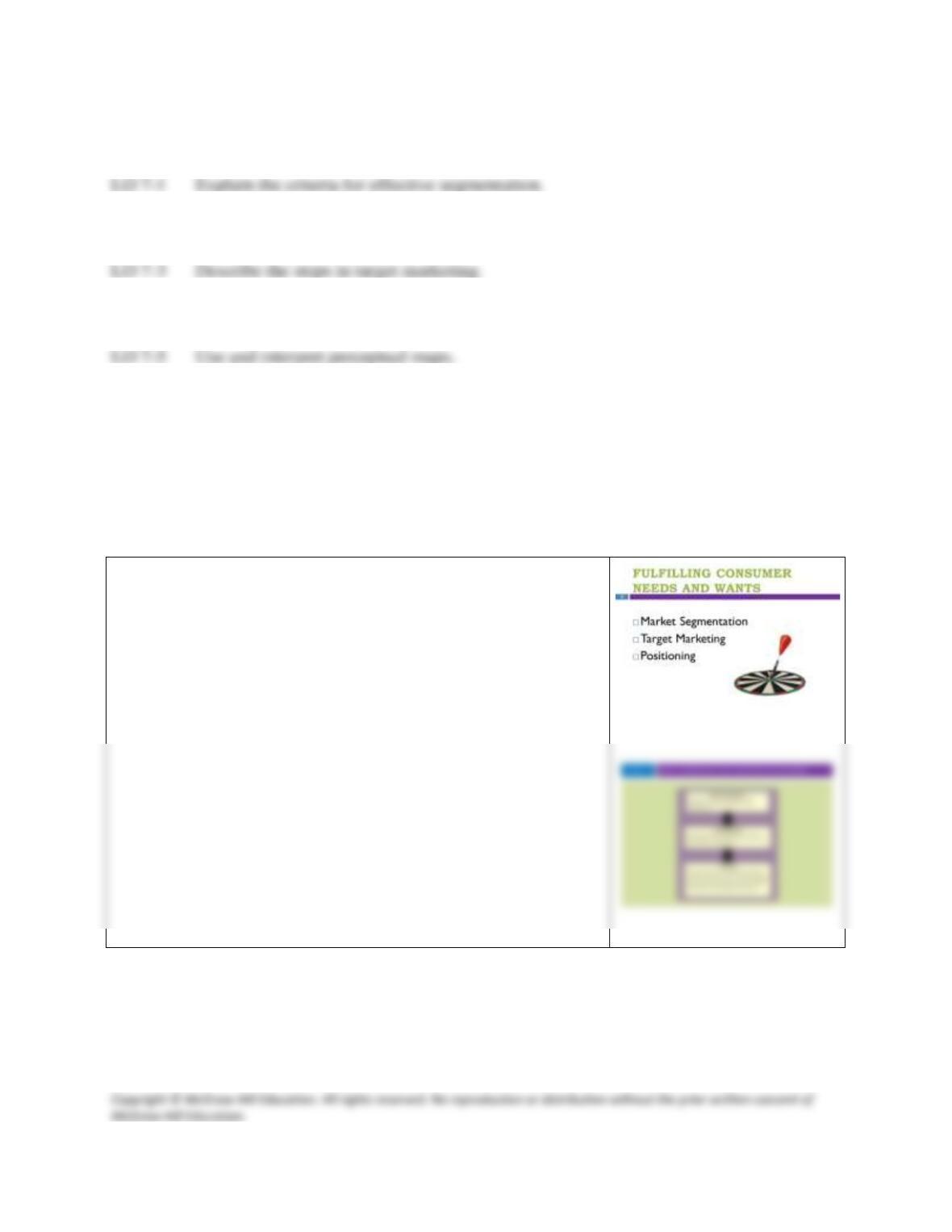
I. FULFILLING CONSUMER NEEDS AND WANTS
Chapter 07
Segmentation, Target Marketing, and Positioning
7-2
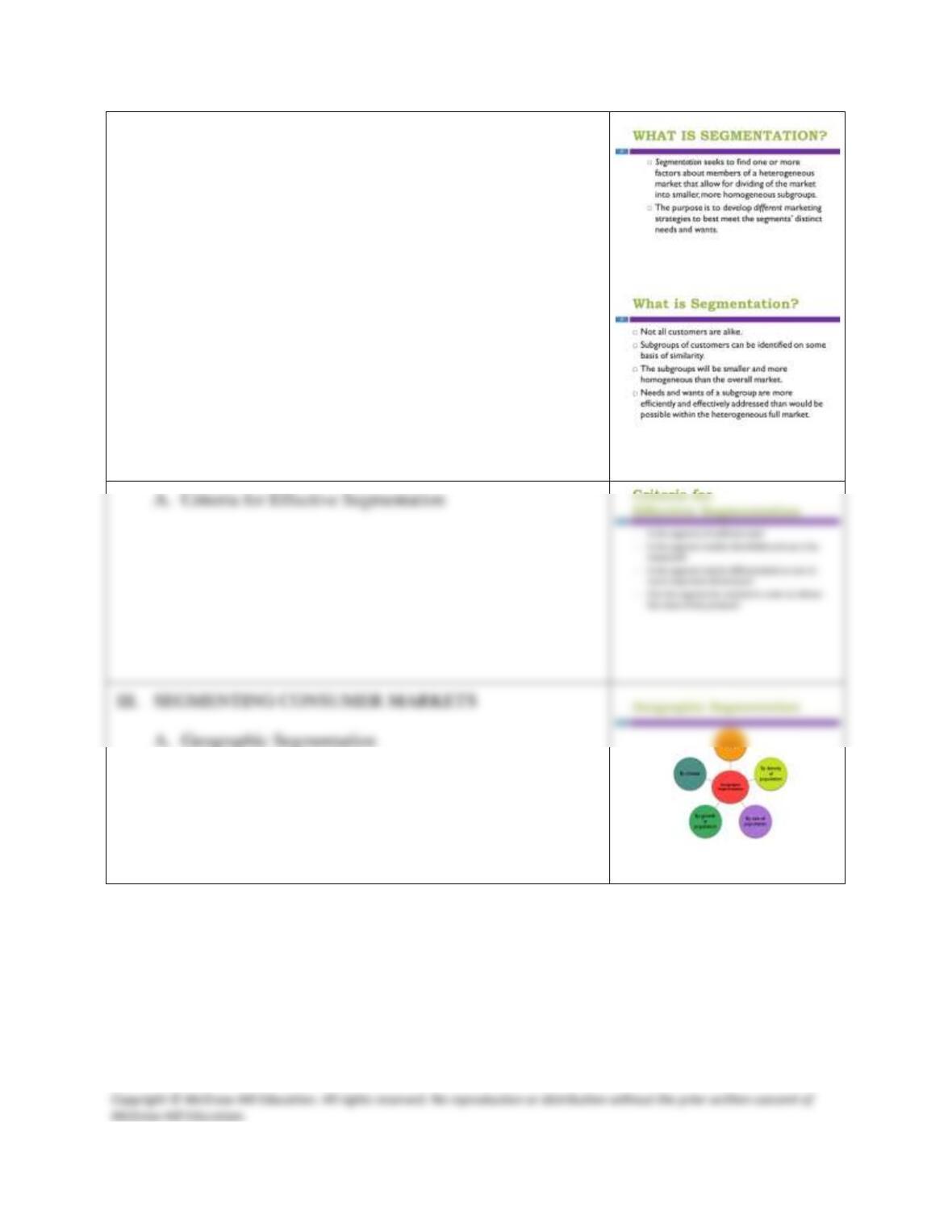
II. WHAT IS SEGMENTATION?
Chapter 07
Segmentation, Target Marketing, and Positioning
7-3
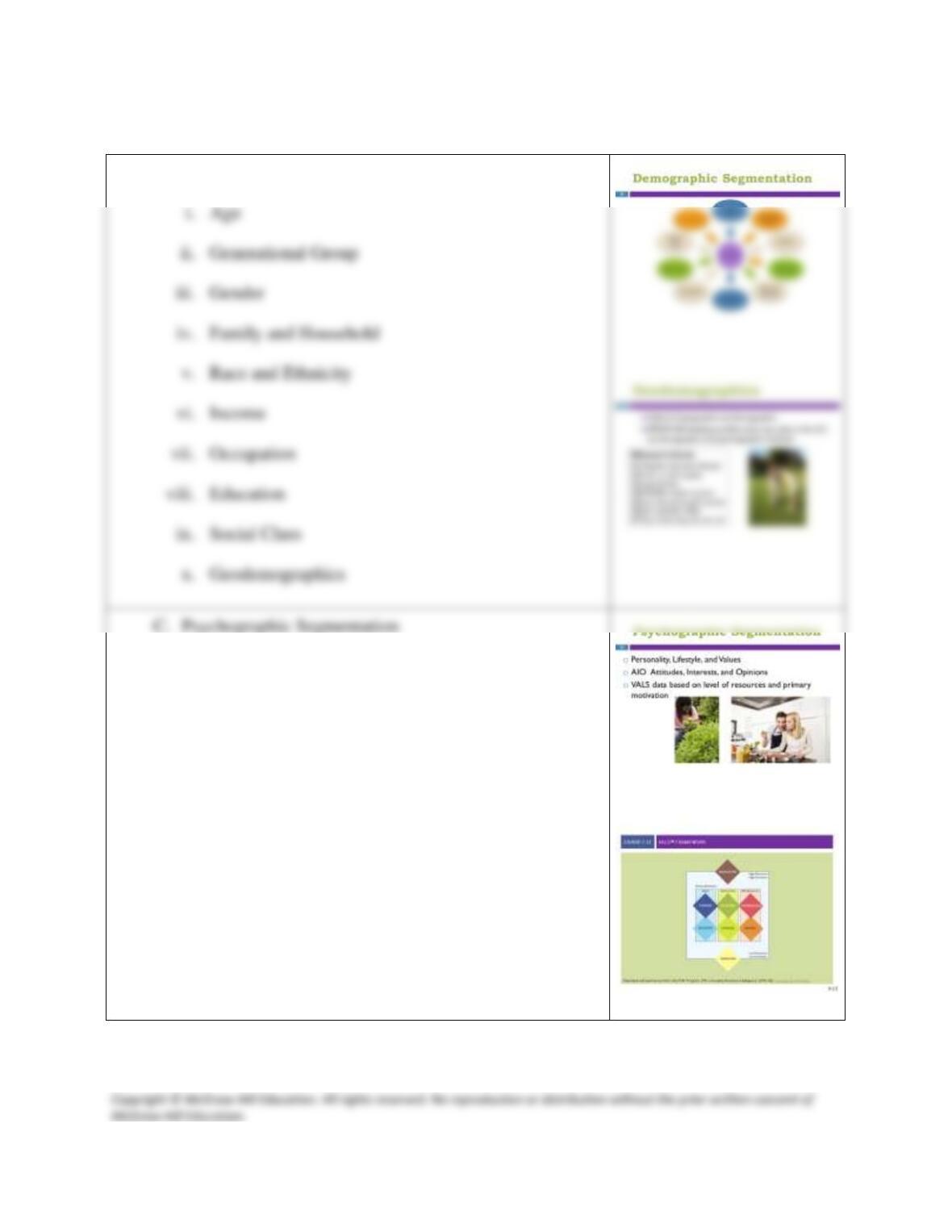
B. Demographic Segmentation
Chapter 07
Segmentation, Target Marketing, and Positioning
7-4
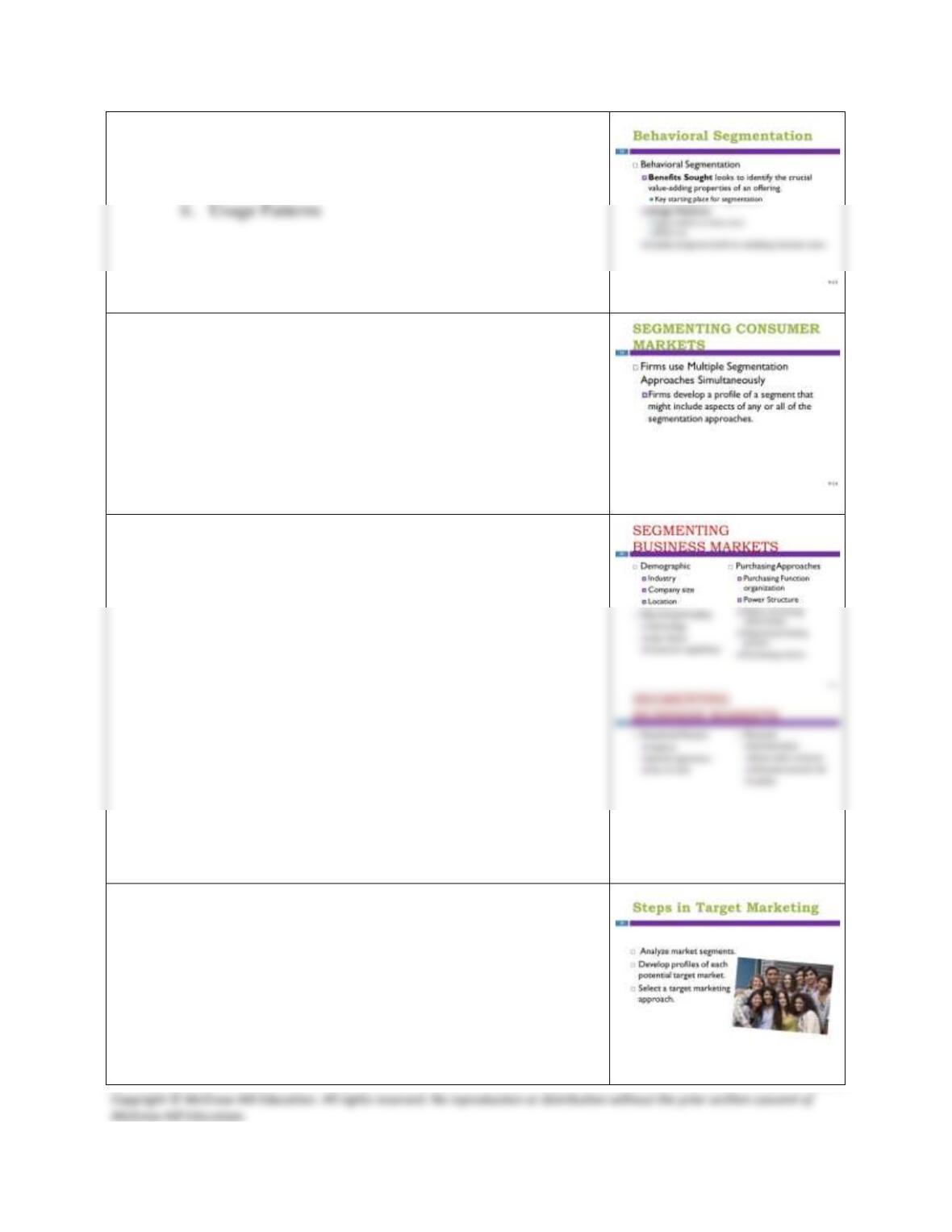
D. Behavioral Segmentation
i. Benefits Sought
E. Firms use Multiple Segmentation Approaches
Simultaneously
F. SEGMENTING BUSINESS MARKETS
IV. TARGET MARKETING
Chapter 07
Segmentation, Target Marketing, and Positioning
7-5
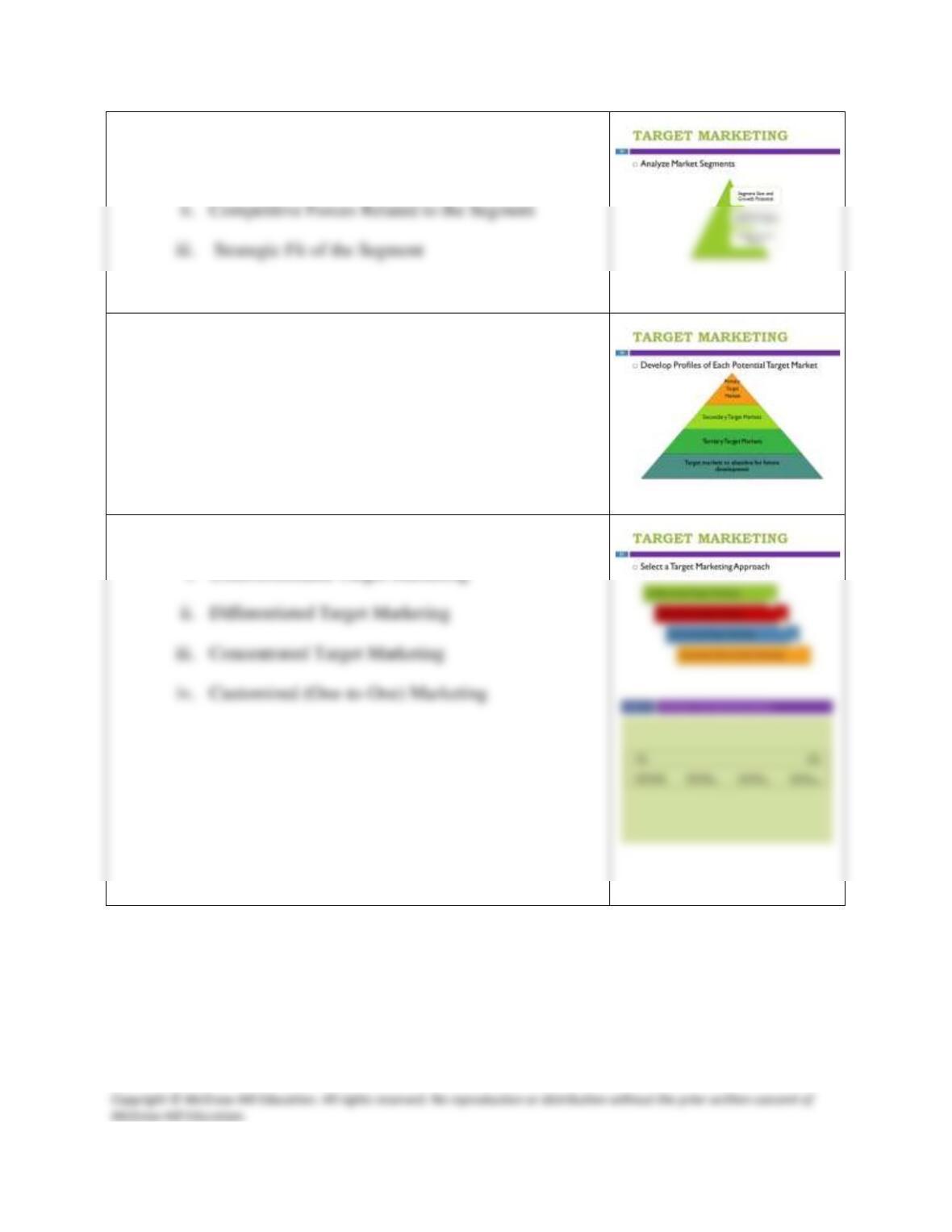
A. Analyze Market Segments
i. Segment Size and Growth Potential
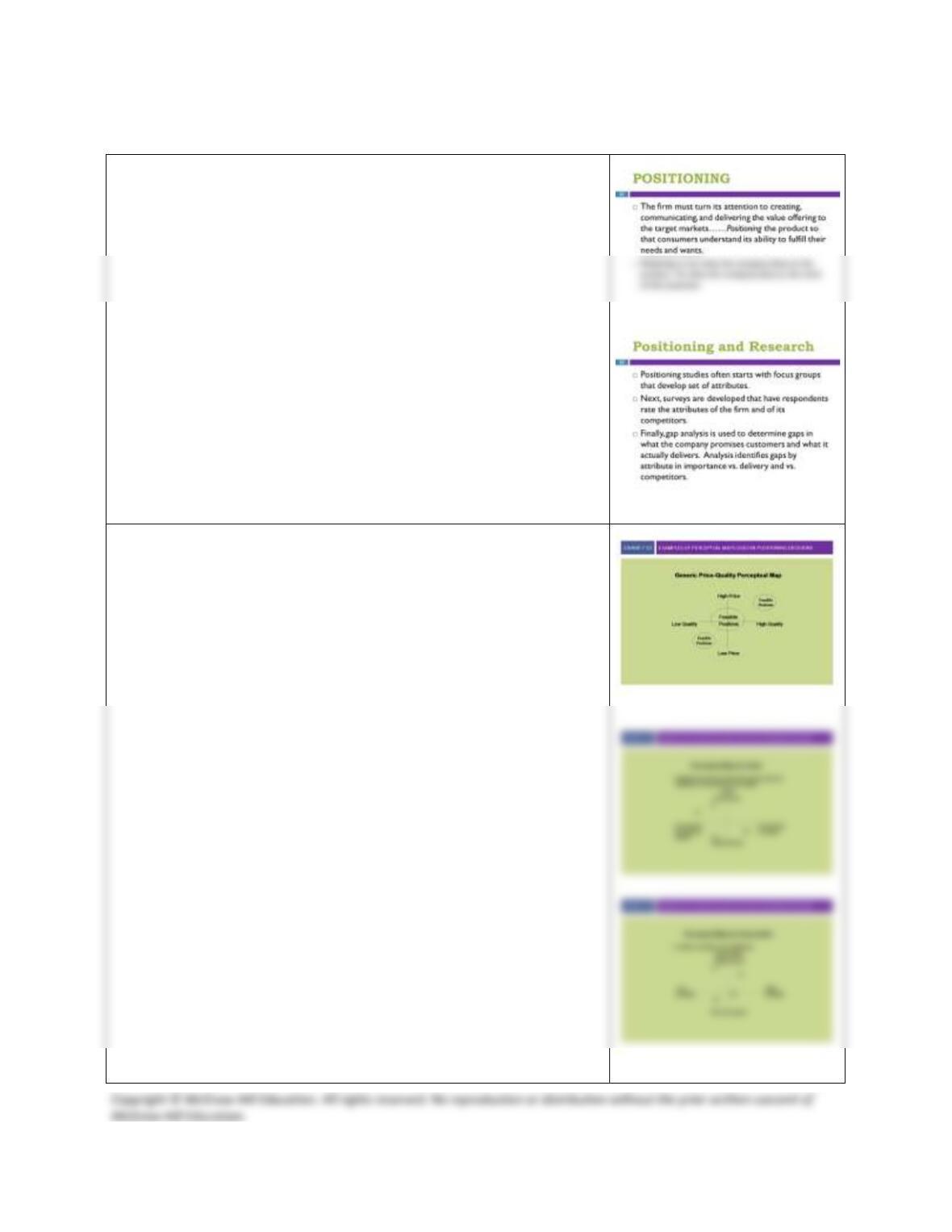
B. Develop Profiles of Each Potential Target Market
C. Select a Target Marketing Approach
i. Undifferentiated Target Marketing
Chapter 07
Segmentation, Target Marketing, and Positioning
7-6
V. POSITIONING
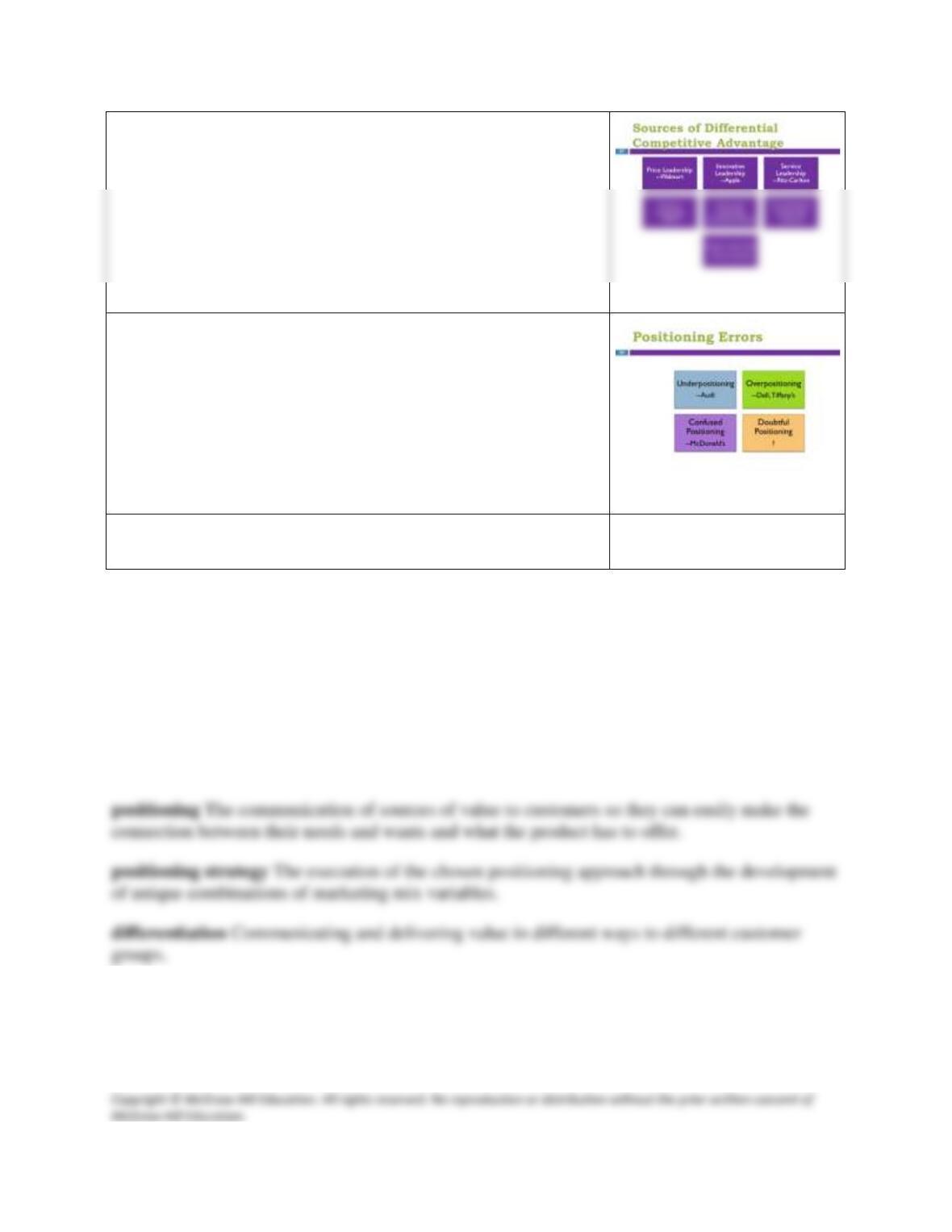
A. Perceptual Maps
Chapter 07
Segmentation, Target Marketing, and Positioning
7-7
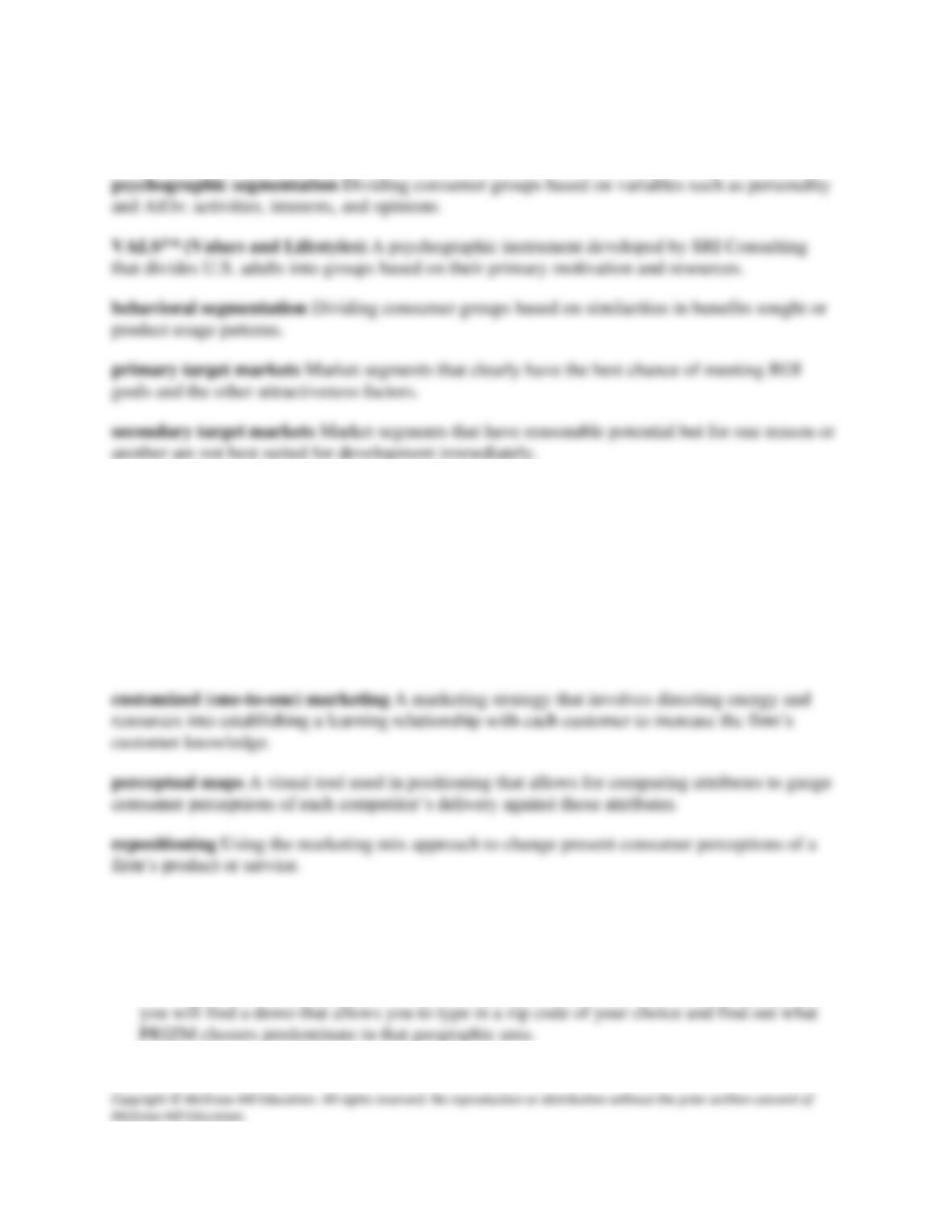
B. Sources of Differentiation
C. Positioning Errors
VI. SUMMARY
KEY TERMS
market segmentation Dividing a market into meaningful smaller markets or submarkets based
on common characteristics.
target marketing Evaluating market segments and making a decision about which among them
shows the most promise for development.
geographic segmentation Dividing consumer groups based on physical location.
demographic segmentation Dividing consumer groups based on a variety of readily measurable
descriptive factors about the group.
Chapter 07
Segmentation, Target Marketing, and Positioning
7-8
family life cycle A series of life stages defined by age, marital status, number of children, and
other factors.
tertiary target markets Market segments that may develop emerging attractiveness for
investment in the future but that do not appear attractive at present.
undifferentiated target marketing The broadest approach to target marketing that involves
offering a product or service that can be perceived as valuable to a very generalized group of
consumers.
concentrated target marketing The target marketing approach that involves targeting a large
portion of a small market.
APPLICATION QUESTIONS
1. Go to the Claritas website, click on MyBestSegments, and find the Zip Code Look-Up. There
Chapter 07
Segmentation, Target Marketing, and Positioning
7-9
a. What do the findings tell you about the overall composition of potential customers within
that zip code?
2. Go to the Strategic Business Insights (SBI) website ( www.strategicbusinessinsights.com)
and click through to the section on VALSTM . Find the VALSTM survey and complete the
questionnaire.
a. Are the results surprising? Why or why not? Do you see yourself as part of the
identified VALSTM segment?
b. If you are comfortable doing so, share your results with a few other people in the class
and ask if they mind sharing their results with you. What is the consensus among the
group about whether the survey actually captured a relevant profile about yourself and
your classmates?
c. How might each of these brands benefit from the use of VALSTM as a psychographic
segmentation tool?
i. Chipotle
ii. Walt Disney World Theme Park
iii. Target Stores
3. Assume for a moment that you are in marketing for Staples (the office supply company) and
that the clients you are responsible for are business users (not end-user consumers). What
five business market segmentation variables do think will be most useful to consider as you
move toward honing in on the Staples’ business target markets with the best ROI? Justify
your choice of each.
The following are some suggestions:
Chapter 07
Segmentation, Target Marketing, and Positioning
7-10
Company size (Demographic) – the size of the company may dictate the sales potential for
Staples.
Customer capabilities (Operating Variables) – can be used to determine whether Staples can
provide capabilities that the company does not provide in-house.
4. Consider each of the brands below. Review the list of potential sources of differential
competitive advantage (differentiation) highlighted in the chapter. For each: (a) indicate
which one differentiation source you believe is most important to them currently and (b)
indicate which other differentiation sources you believe might hold promise for development
for them in the near future and why.
a. Norwegian Cruise Lines
most important – Service Leadership
b. Sears Craftsman Tools
most important – Product Leadership
development – Personnel leadership could provide the opportunity for Sears to attract more
customers who need assistance with tool selection and use.
c. Avon
most important – Personnel Leadership
d. Lowe’s Home Improvement Stores
most important – Price leadership
e. The Salvation Army
Chapter 07
7-11
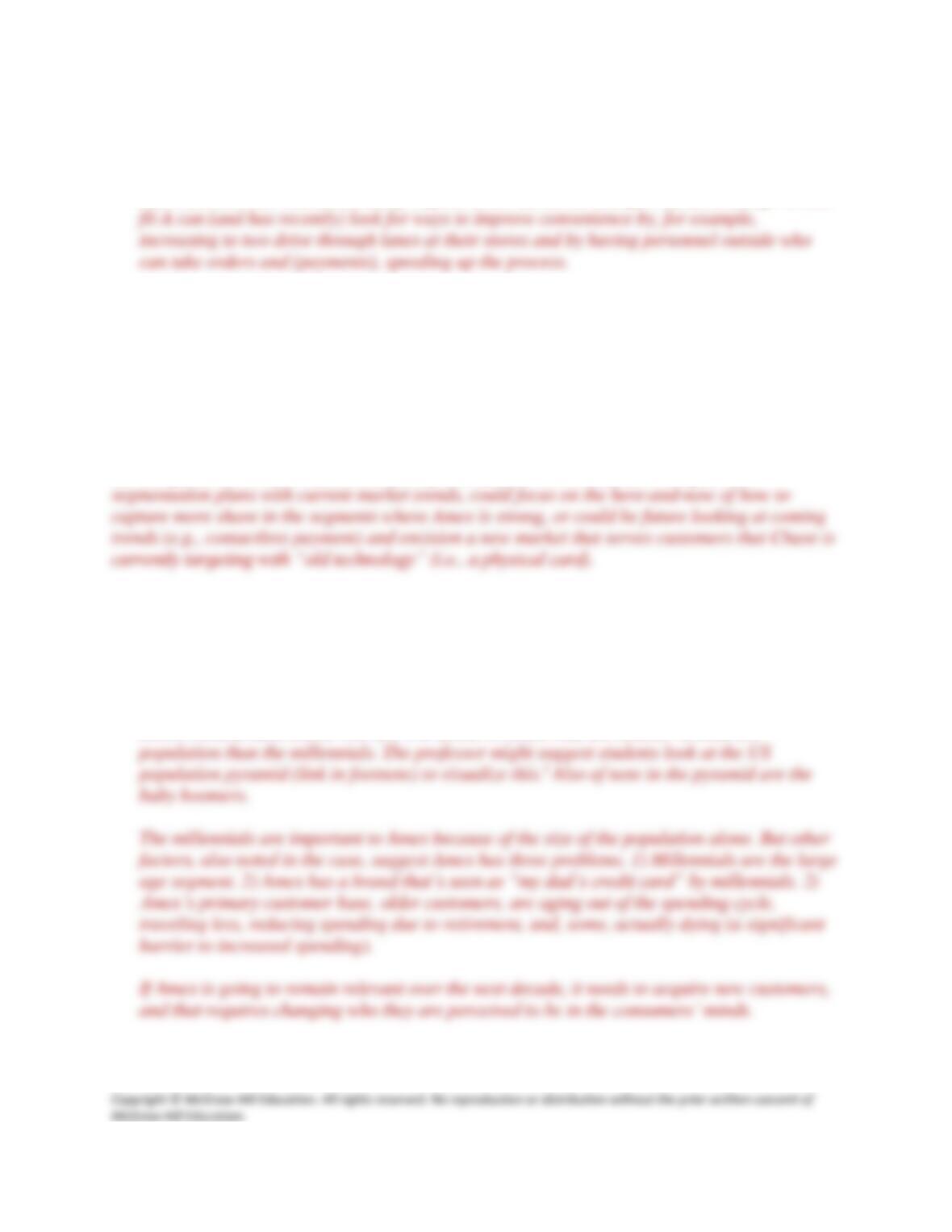
5. McDonald’s is interested in your opinion of how it would stack up on a perceptual map
against Burger King, Wendy’s, Taco Bell, and Chick-fil-A on the attributes of convenience
and product quality. Create the map by putting convenience as the vertical axis (high at the
top and low at the bottom) and product quality as the horizontal axis (low on the left and high
on the right). Then indicate your perceptions of the five brands on these attributes by placing
a dot for each in the spot that indicates your view (see Exhibit 7.13 for examples).
a. What does the result reveal about McDonald’s current positioning on these attributes,
based strictly from your perception?
b. If possible, compare notes with others in your class. Do you find consistency?
c. In general, what opportunities for repositioning do you see for any of the brands to take
advantage of current perceptions revealed on the perceptual map? What would they have
to do to accomplish this repositioning?
Below is a possible perceptual map.
Chapter 07
Segmentation, Target Marketing, and Positioning
7-12
Those companies perceived as lower on the quality scale could make product changes and
pursue training of their employees to improve actual quality. Once those steps are taken,
they could let their customers and prospects know about the changes via advertising. Chick-
MANAGEMENT DECISION CASE
Crafty Credit Card Competitor “Chases” Amex for Share of Millennials’ Wallets
Amex faces a daunting challenge. They have been caught off guard with Chase’s excellent
perception of which market is available and what would resonate with them. The professor could
use the questions below to discuss Amex’s past (and now obvious) failure to update its
Questions for Consideration
1. Why is the millennial generation, in particular, so important to Amex?
As noted in the case, the millennials are the largest age cohort in the US (larger than the
baby boomer cohort) and will remain so for at least the next 20 years. This is because the
cohort behind them (those who are 0 to about 18 years old) are smaller in total US
2. This case focuses primarily on the battle between Chase and Amex over millennial
consumers. But, as the content in this chapter points out, lumping all older consumers into a
Chapter 07
Segmentation, Target Marketing, and Positioning
7-13
generalized segment overlooks some important variables. Looking at the generational groups
and their representative values (see Exhibit 7.7), where would you suggest Amex focus its
marketing efforts, and why?
Each of these segments meets one of the main criteria for a target segment, which is to be of
sufficient size as to matter towards the company’s goals. Each of these segments is also
“reachable,” another attribute of a good target segment. Therefore, since we don’t exclude
3. As noted in the chapter, an external positioning statement is not just about being able to
describe how your product benefits the customer—it also needs to explain how your product
is different from the competition. Chase’s “It’s not your father’s credit card” external
positioning statement sums up in six words the idea that Chase is young while its competitors
are old. The statement leads millennial consumers to consider what this card could do for
them, beyond what their father’s card could. Amex’s positioning has always been that its
card is for the successful professional—what would happen if Amex changed that
positioning? (As a bonus, try to create a short external positioning phrase for Amex to use
with millennials.)
This, of course, would depend on the segment one chose to target. Assuming we used a
segment targeted in the discussion of the last question, gen Y, say, we’d add features to the
card that addresses their needs and position our card as the one that knows them better.
Chapter 07
Segmentation, Target Marketing, and Positioning
7-14
SUGGESTED VIDEO
New Balance: Targeting Multiple Segments (4:25 minutes)
Description: New Balance is the third largest athletic shoe company in the U.S. Their reputation
for creating innovative performance footwear available in multiple widths has helped them
achieve a loyal customer base. Segmentation and targeting is at the center of their marketing plan
to expand and grow. Their product line is divided into 7 segments.
1. By segmenting their product line into 7 segments, has New Balance selected the optimal
amount of segments?
There is no universal standard for the optimal number of segments to target. New Balance
can evaluate each segment’s attractiveness on factors such as”:
• Can New Balance identify who is within their market to be able to design footwear to
meet their needs?