Chapter 06
Understand Consumer and Business Markets
6-1
LEARNING OBJECTIVES
LO 6-2 Consider the role of personal and psychological factors in consumer decision making.
LO 6-4 Understand the consumer decision-making process.
LO 6-6 Understand the critical role of the buying center and each participant in the B2B
process.
LO 6-8 Comprehend the role of technology in business markets.
CHAPTER OUTLINE
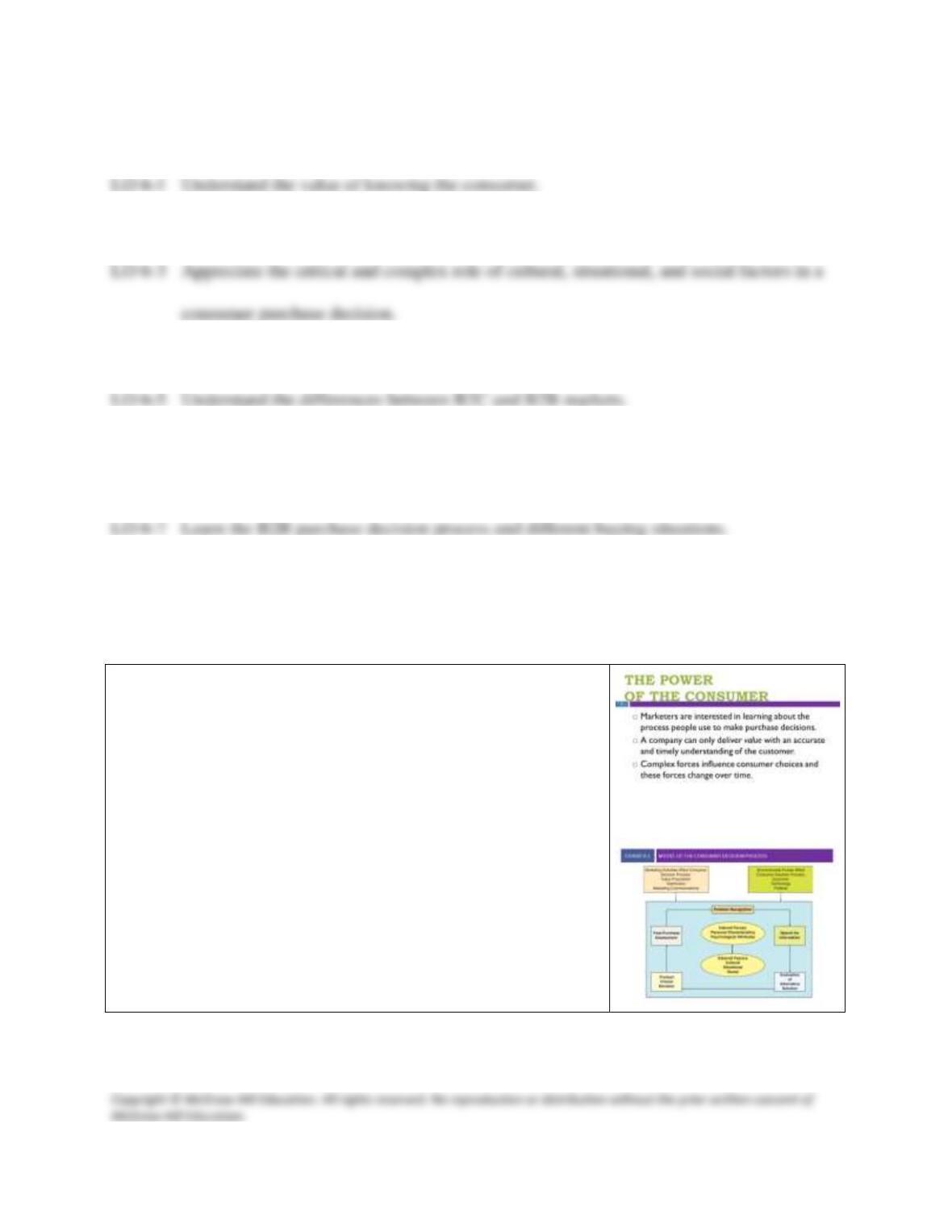
I. THE POWER OF THE CONSUMER
Chapter 06
Understand Consumer and Business Markets
6-2
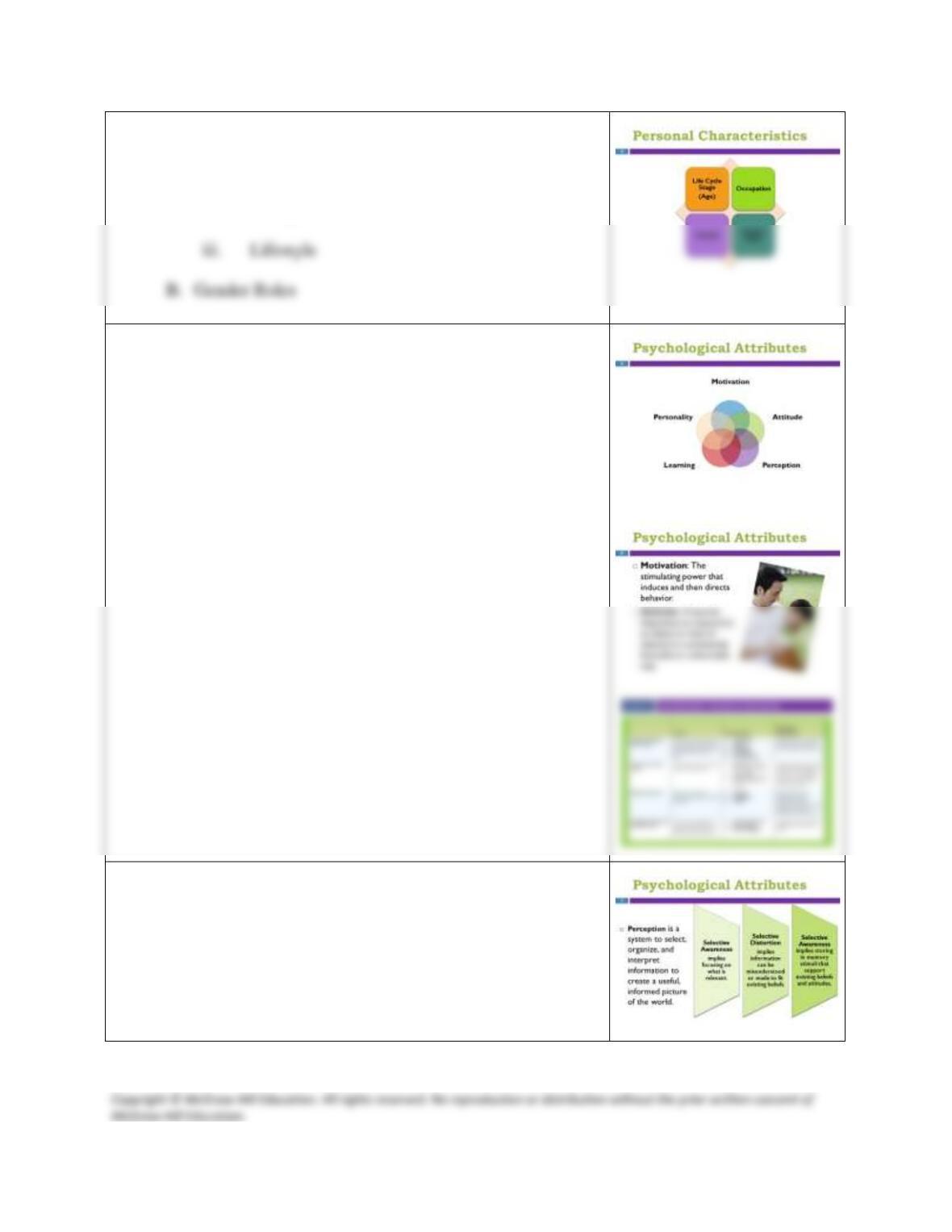
A. Personal Characteristics
i. Life Cycle Stage (Age)
ii. Occupation
C. Psychological Attributes
i. Motivation
ii. Attitude
iii. Perception
a. Selective Awareness
b. Selective Distortion
c. Selective Retention
Chapter 06
Understand Consumer and Business Markets
6-3
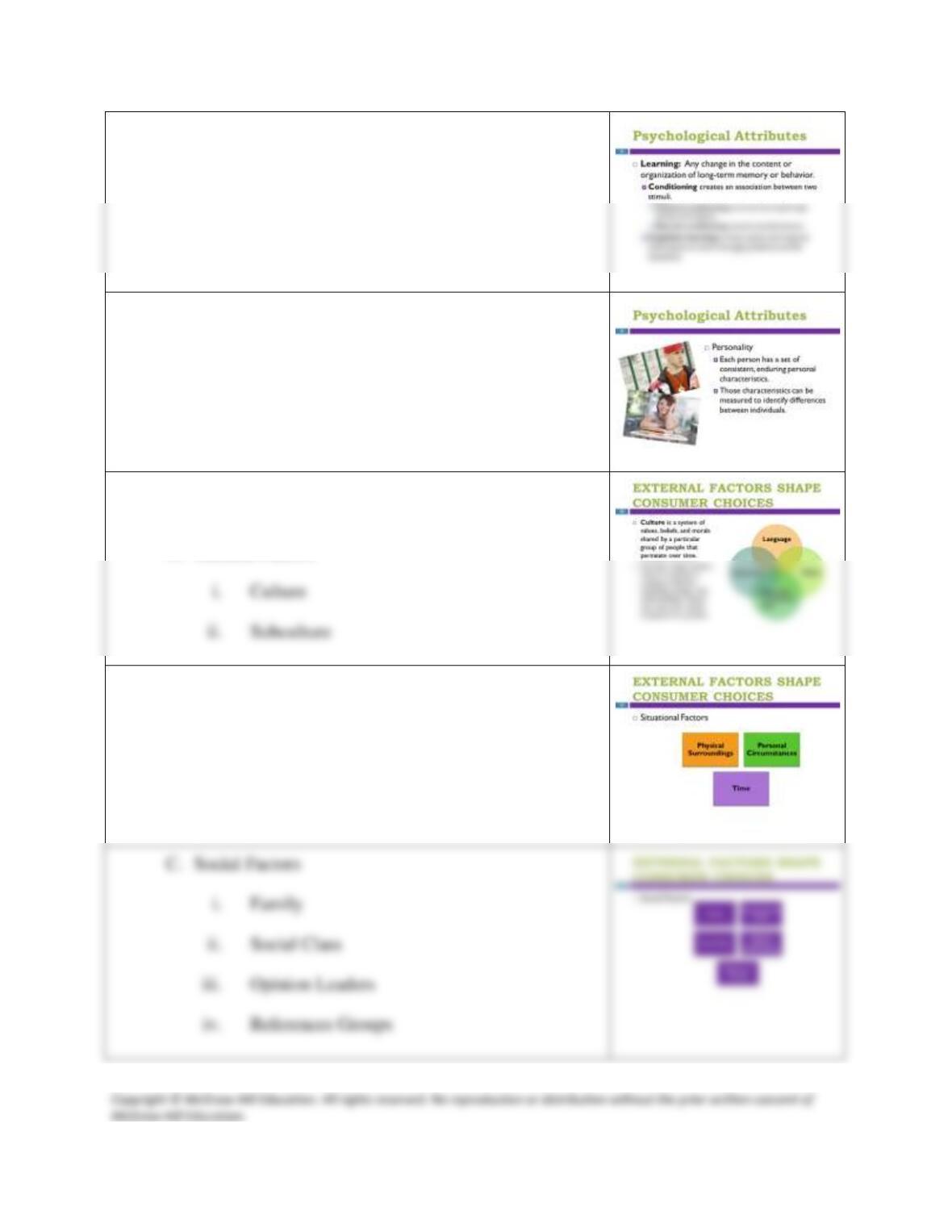
iv. Learning
v. Personality
II. EXTERNAL FACTORS SHAPE CONSUMER
CHOICES
A. Cultural Factors
B. Situational Factors
i. Physical Surroundings
ii. Personal Circumstances
iii. Time
Chapter 06
Understand Consumer and Business Markets
6-4
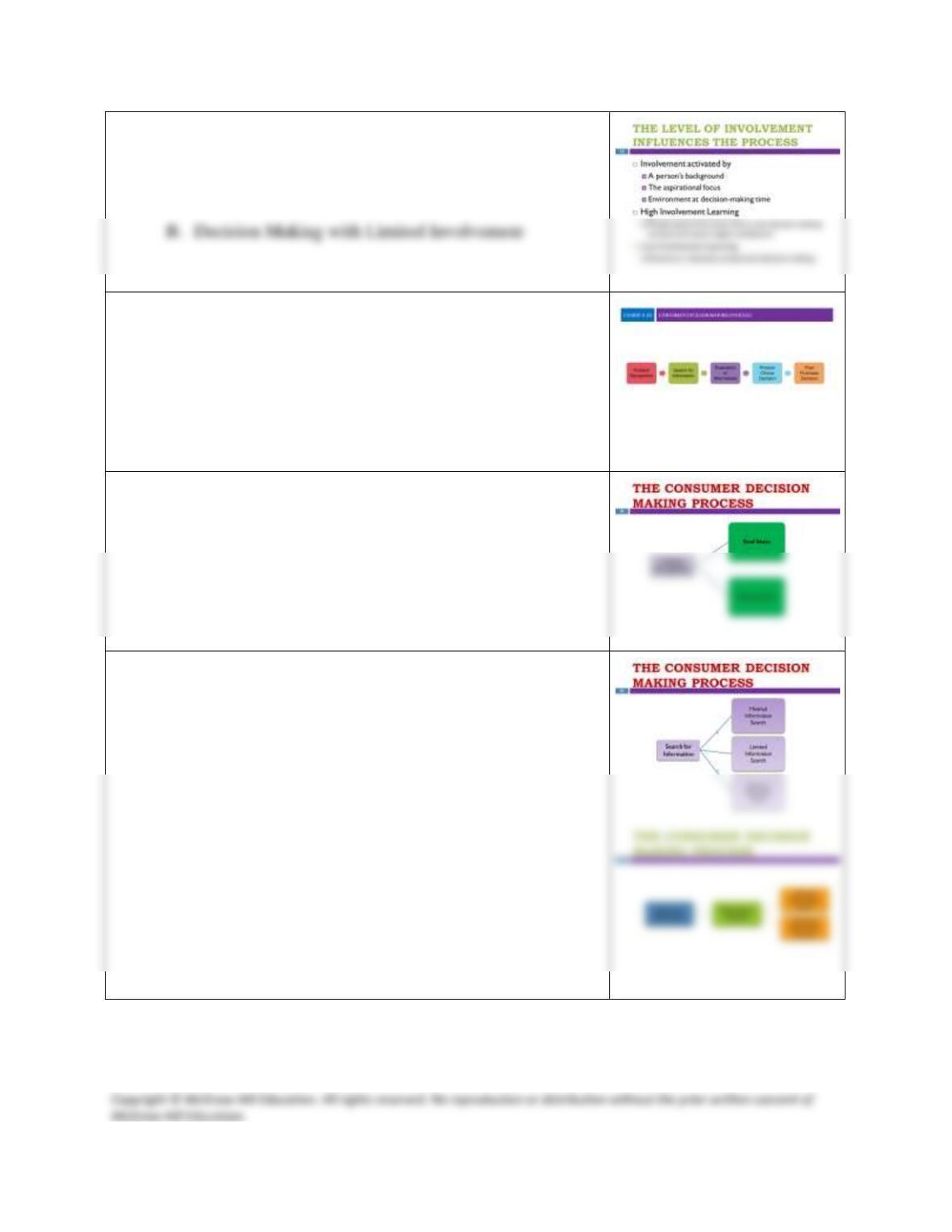
III. THE LEVEL OF INVOLVEMENT INFLUENCES THE
PROCESS
A. Decision Making with High Involvement
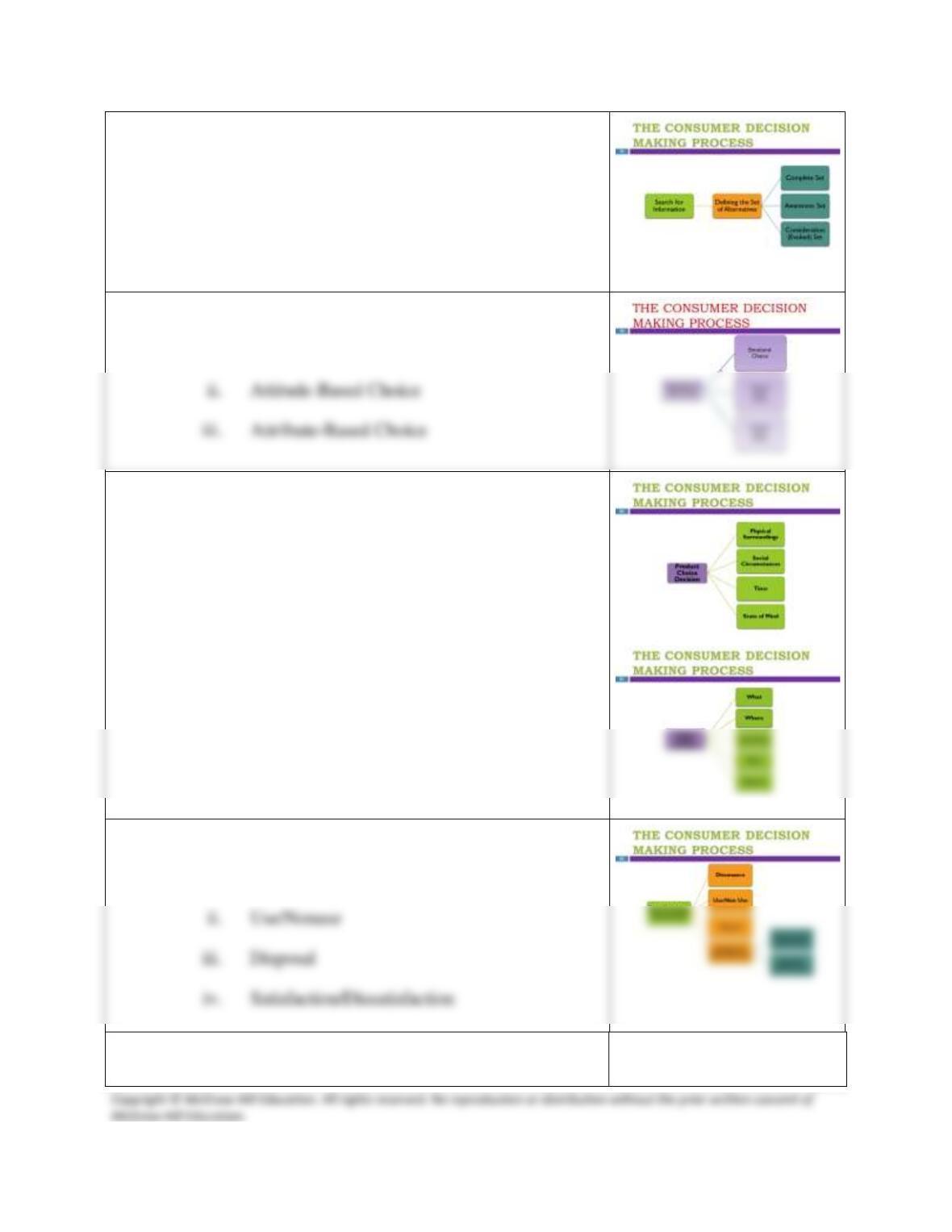
IV. THE CONSUMER DECISION MAKING PROCESS
A. Problem Recognition
B. Search for Information
i. Information Sources
ii. Defining the Set of Alternatives
Chapter 06
Understand Consumer and Business Markets
6-5
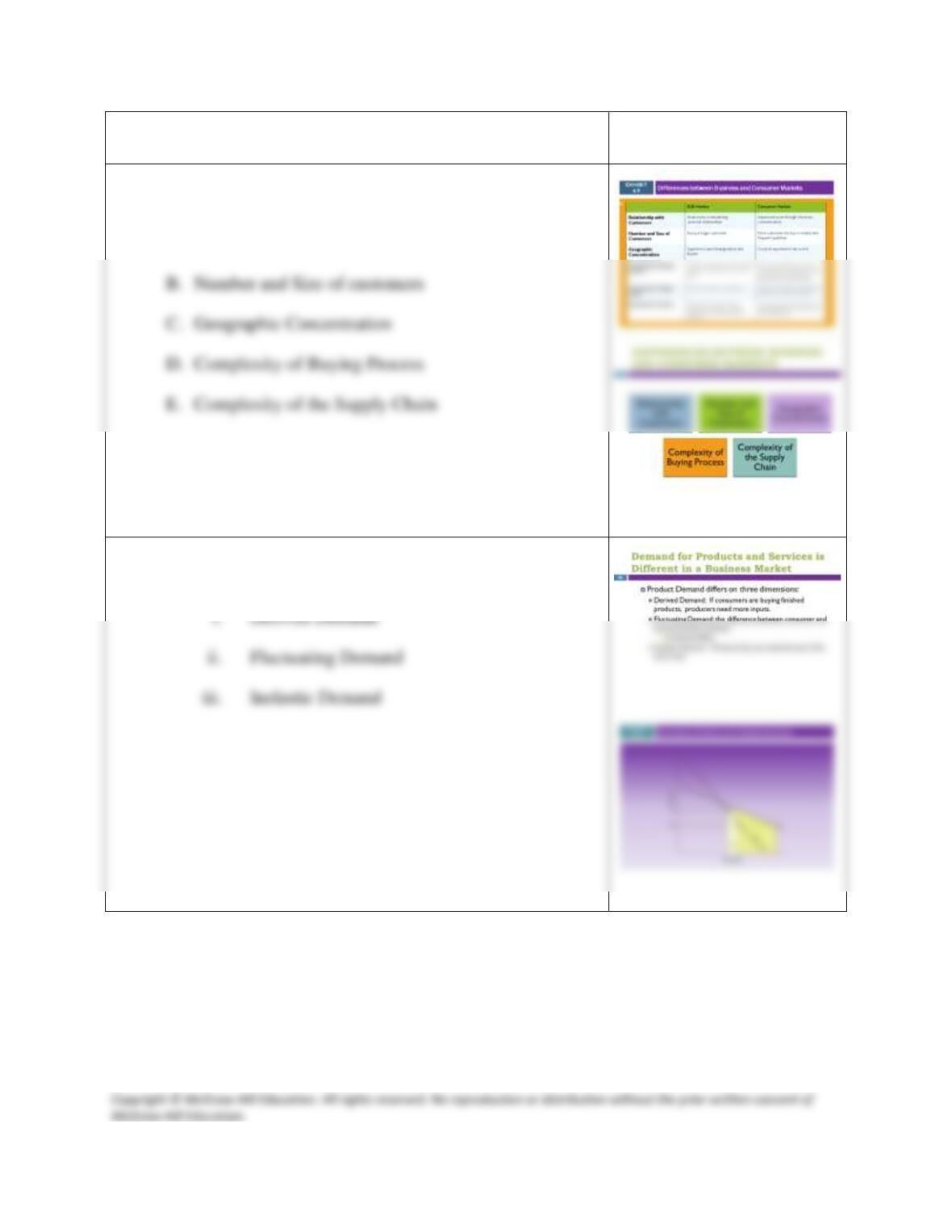
C. Evaluation of Alternatives
i. Emotional Choice
D. Product Choice Decisions
E. Post Purchase Assessment
i. Dissonance
V. ORGANIZATIONAL BUYING: MARKETING TO A
Chapter 06
Understand Consumer and Business Markets
6-6
BUSINESS
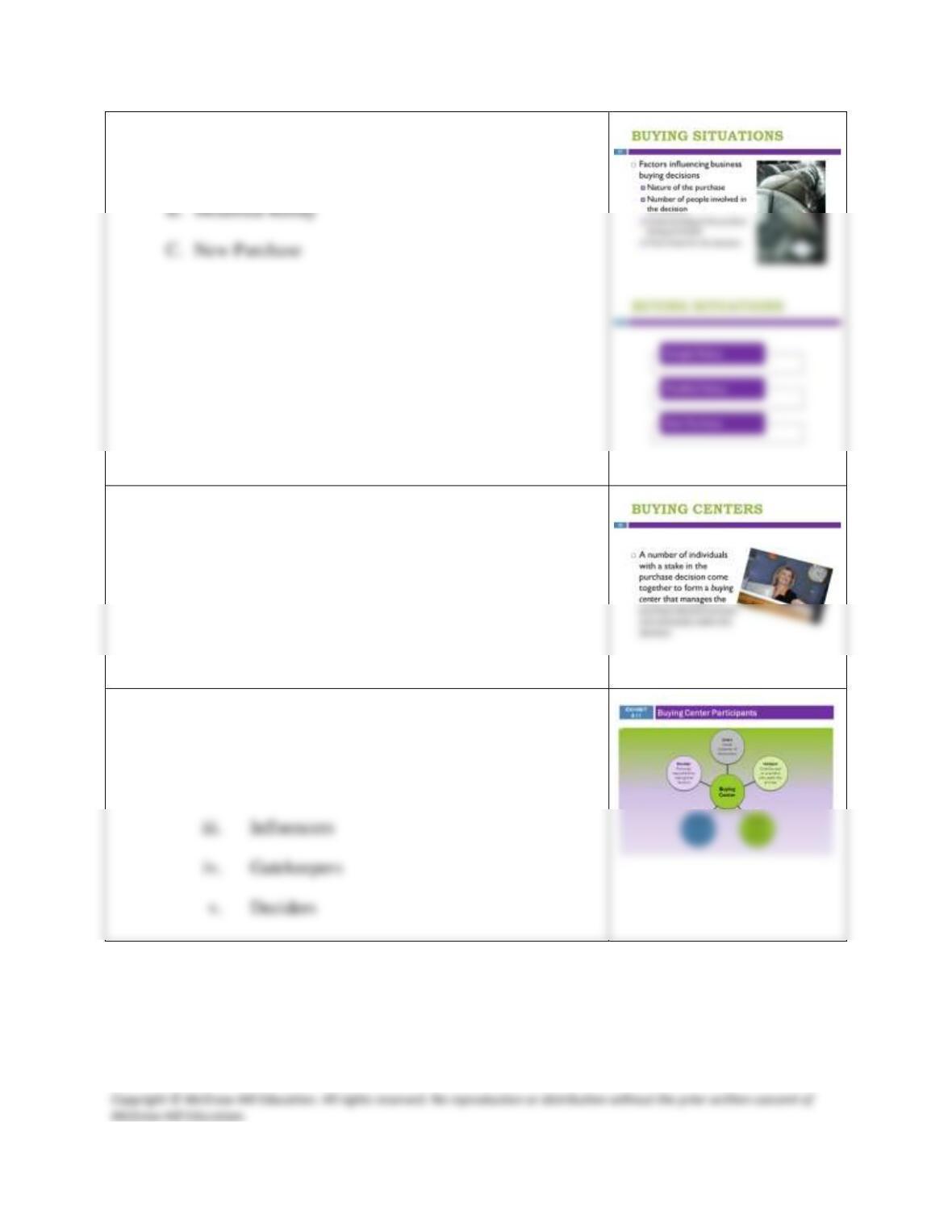
VI. DIFFERENCES BETWEEN BUSINESS AND
CONSUMER MARKETS
A. Relationship with Customers
F. Demand for Products and Services is Different in a
Business Market
Chapter 06
Understand Consumer and Business Markets
6-7
VII. BUYING SITUATIONS
A. Straight Rebuy
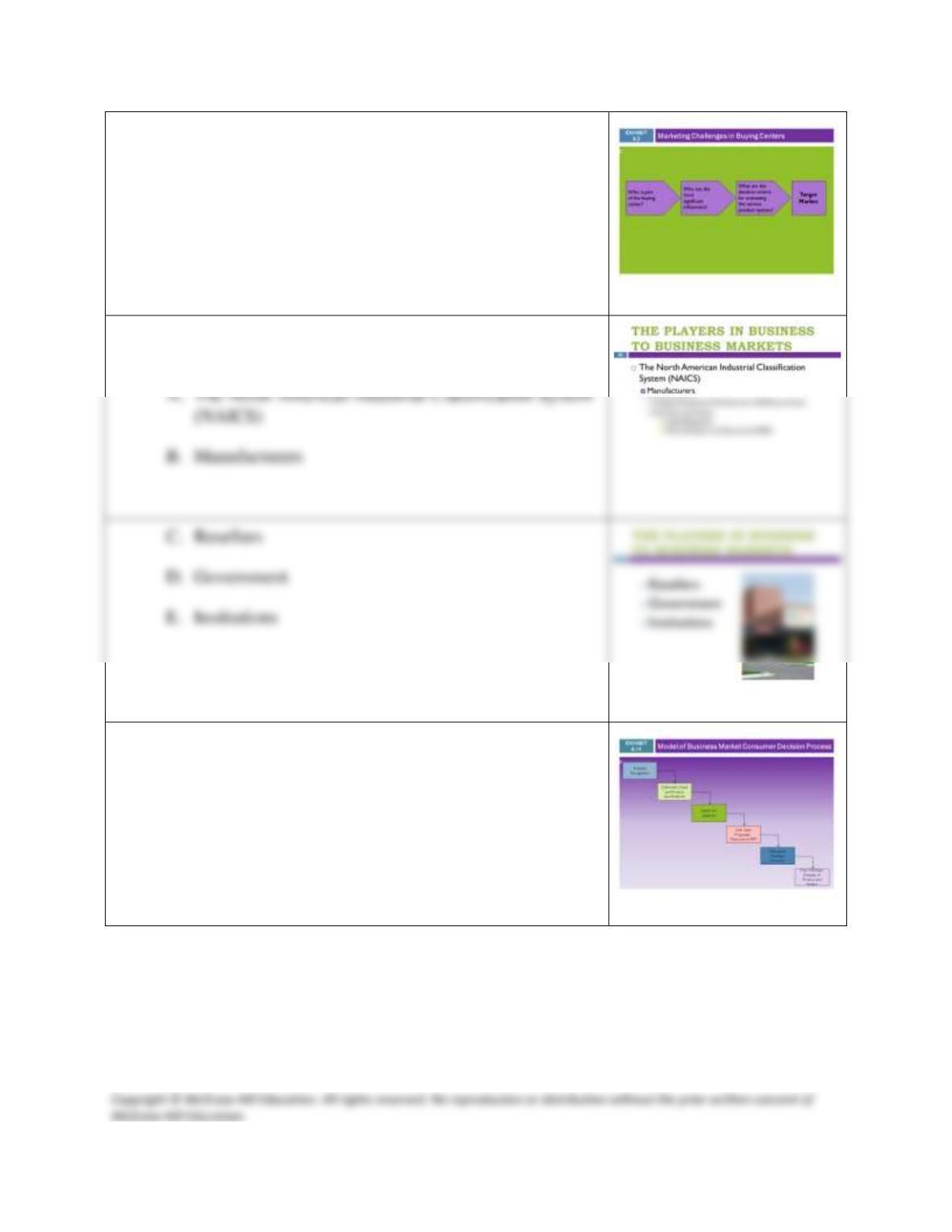
VIII. BUYING CENTERS
A. Members of the Buying Center
i. User
ii. Initiators
Chapter 06
Understand Consumer and Business Markets
6-8
B. Pursuing the Buying Center
IX. THE PLAYERS IN BUSINESS TO BUSINESS
MARKETS
X. THE BUSINESS MARKET PURCHASE DECISION
PROCESS
Chapter 06
Understand Consumer and Business Markets
6-9
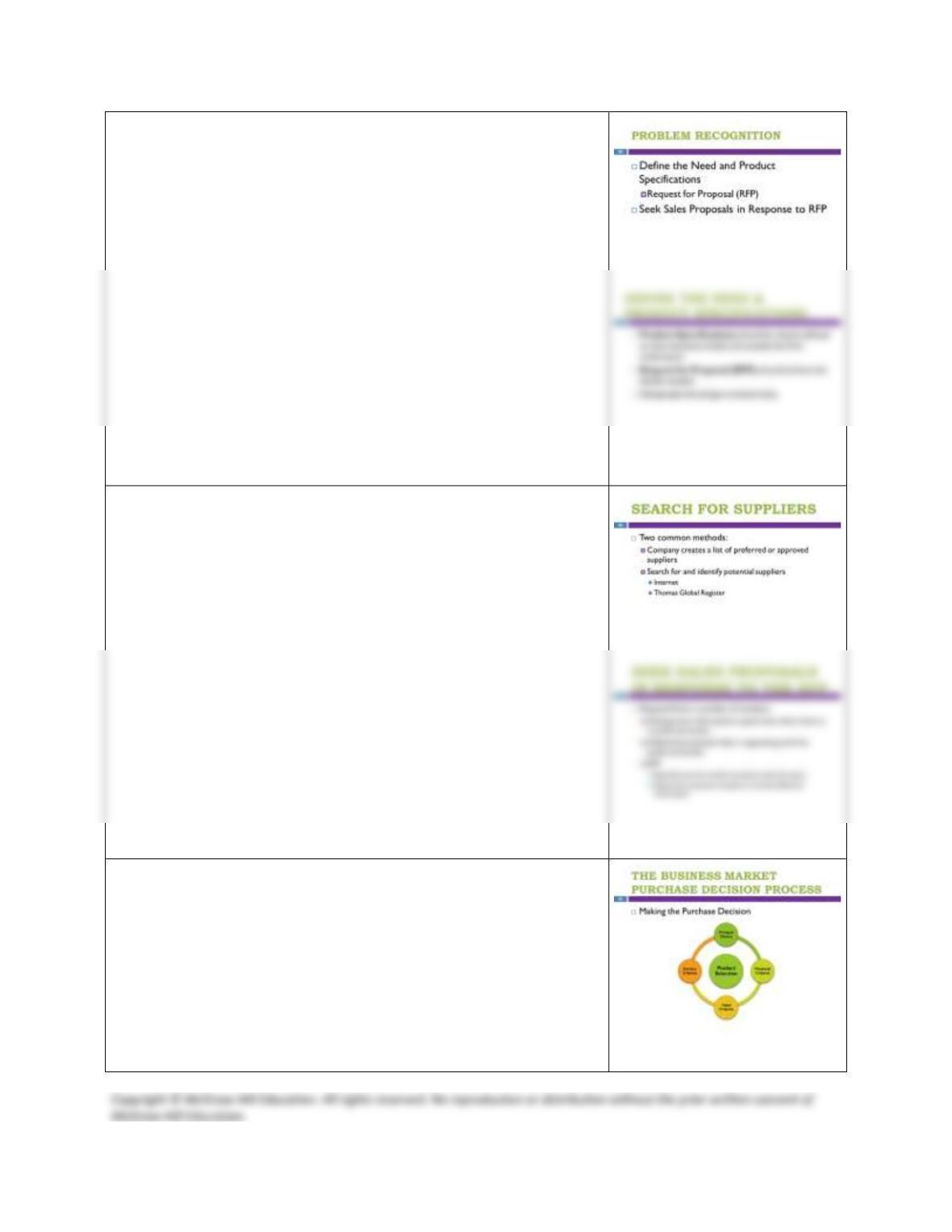
A. Problem Recognition
B. Define the Need and Product Specifications
C. Search for Suppliers
D. Seek Sales proposals in Response to RFP
E. Make the Purchase Decision
i. Product Selection
i. Financial Criteria
ii. Value Criteria
iii. Service Criteria
Chapter 06
Understand Consumer and Business Markets
6-10
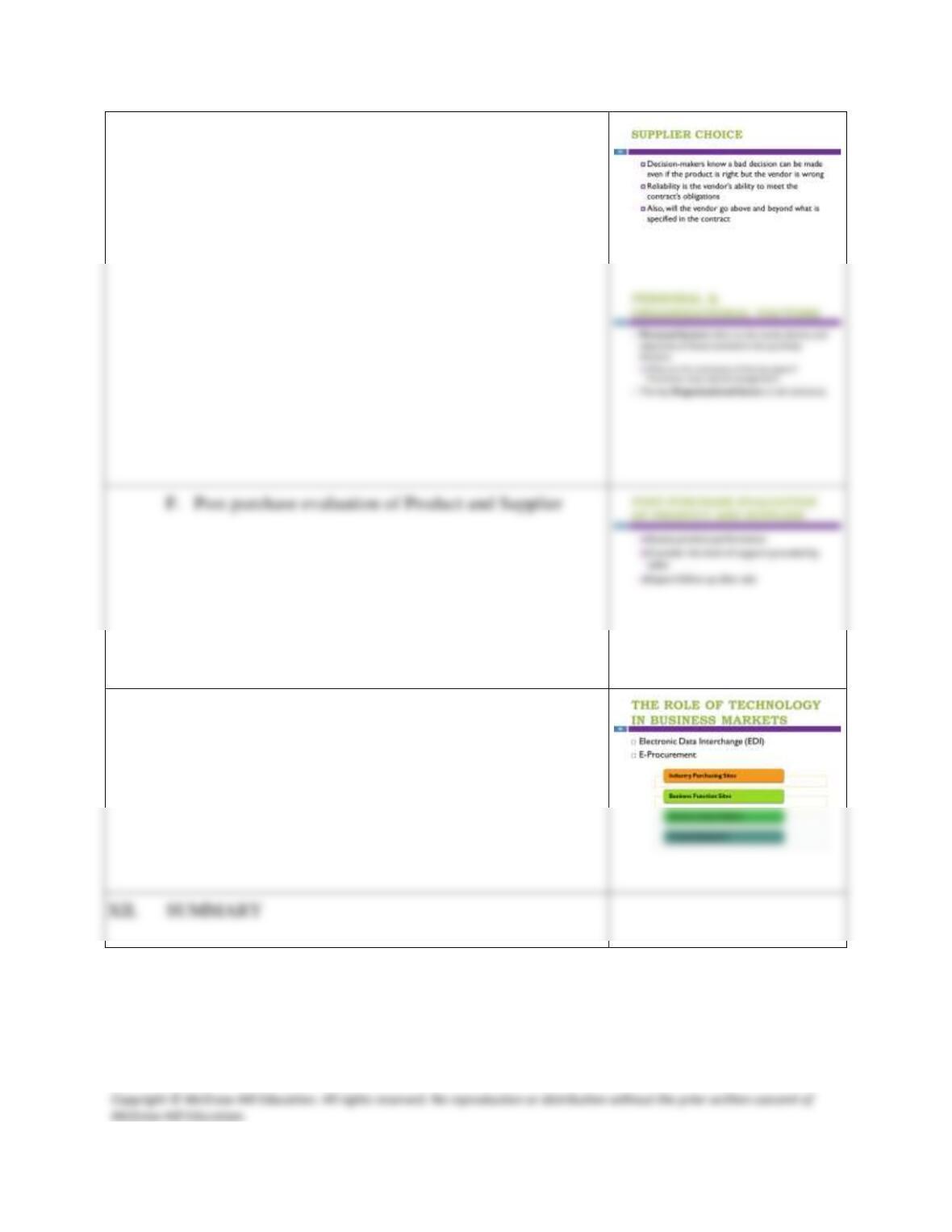
iv. Supplier Choice
v. Personal and Organizational Factors
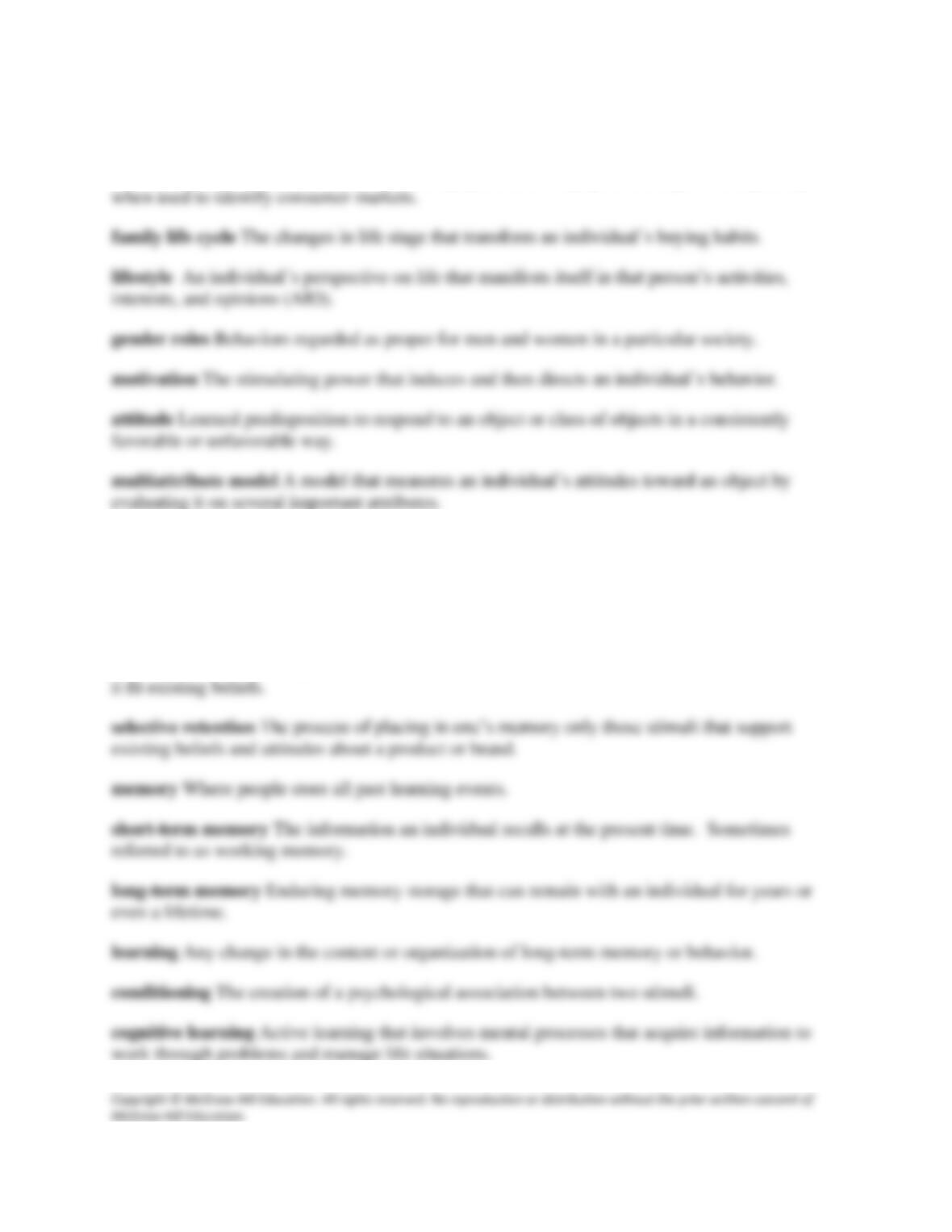
XI. THE ROLE OF TECHNOLOGY IN BUSINESS
MARKETS
A. E-Procurement
Chapter 06
Understand Consumer and Business Markets
6-11
KEY TERMS
demographics The characteristics of human populations and population segments, especially
perception A system to select, organize, and interpret information to create a useful, informative
picture of the world.
selective awareness A psychological tool an individual uses to help focus on what is relevant
and eliminate what is not relevant.
selective distortion The process in which an individual can misunderstand information or make
Chapter 06
Understand Consumer and Business Markets
6-12
personality An individual’s set of unique personal qualities that produce distinctive responses
across similar situations.
household life cycle (HLC) A structured set of chronological activities a particular household
follows over time.
social class A ranking of individuals into harmonized groups based on demographic
characteristics such as age, education, income, and occupation.
aspirational purchases Products bought outside the individual’s social standing.
Chapter 06
Understand Consumer and Business Markets
6-13
involvement A significant outcome of an individual’s motivation that mediates the product
choice decision. It is activated by three elements: background and psychological profile,
extensive information search When a consumer makes a purchase decision based on a thorough
process of investigation and research
limited information search When a consumer makes a purchase decision based on incomplete
information and/or lack of personal knowledge
internal information search All information stored in memory and accessed by the individual
Chapter 06
Understand Consumer and Business Markets
6-14
attribute-based choice A product choice based on the premise that product choices are made by
comparing brands across a defined set of attributes.
integration among its members.
product demand Demand within business markets affected by three critical dimensions: derived
demand, fluctuating demand, and inelastic demand
derived demand Demand that originates from the demand for consumer products in business-to–
consumer markets.
Chapter 06
Understand Consumer and Business Markets
6-15
buying center A number of individuals with a stake in a purchase decision who manage the
purchase decision process and ultimately make the decision.
States, Canada, and Mexico that classifies companies on the basis of their primary output to
define and segment business markets.
original equipment manufacturer (OEM) Manufacturing firms that sell products that are used
as integral manufacturing components by their customer companies.
end-user purchases A category of products purchased by manufacturers that represents the
Chapter 06
Understand Consumer and Business Markets
6-16
product choice The first decision made in the purchase decision process that is usually based on
a single criterion
supplier choice Selecting between multiple suppliers offering similar product configurations by
examining their qualifications.
reliability The percentage of time a product works without failure or stoppage.
APPLICATION QUESTIONS
1. As we have discussed, understanding the consumers in a target market is critical to creating
an effective value proposition. Assume you are the Vice President of Marketing for Regal
Cinemas. What do you think is the demographic profile (including the age, income, and life
cycle stage) of your largest target market? As part of a mini-market research project, visit a
movie theatre on a weekend and track the people entering. How old are they? Are they
families or people meeting friends?
2. You are the marketing manager for the Bowflex Revolution Home Gym. You believe the
product appeals to both men and women. As you develop the marketing strategy, what
differences might you consider in the product based on whether a man or woman is buying?
What about the marketing communications (message, choice of media)?
Men and women may differ in the type of “work–out” they prefer and therefore the “work–
out” programs available may differ. Men and women may differ in the style of the actual
Chapter 06
Understand Consumer and Business Markets
6-17
In addition, women and men both read magazines but the kinds of magazines they read vary
greatly, so marketers place ads in different magazines to reach both groups. Men prefer
automotive and sports magazines while women choose health and epicurean magazines.
3. You are the marketing manager for Lenovo laptop computers. Identify and briefly discuss
the differences between the consumer market for laptops and the business market. Then give
an example of each difference using college students as the consumer market and defense
related companies as the business market.
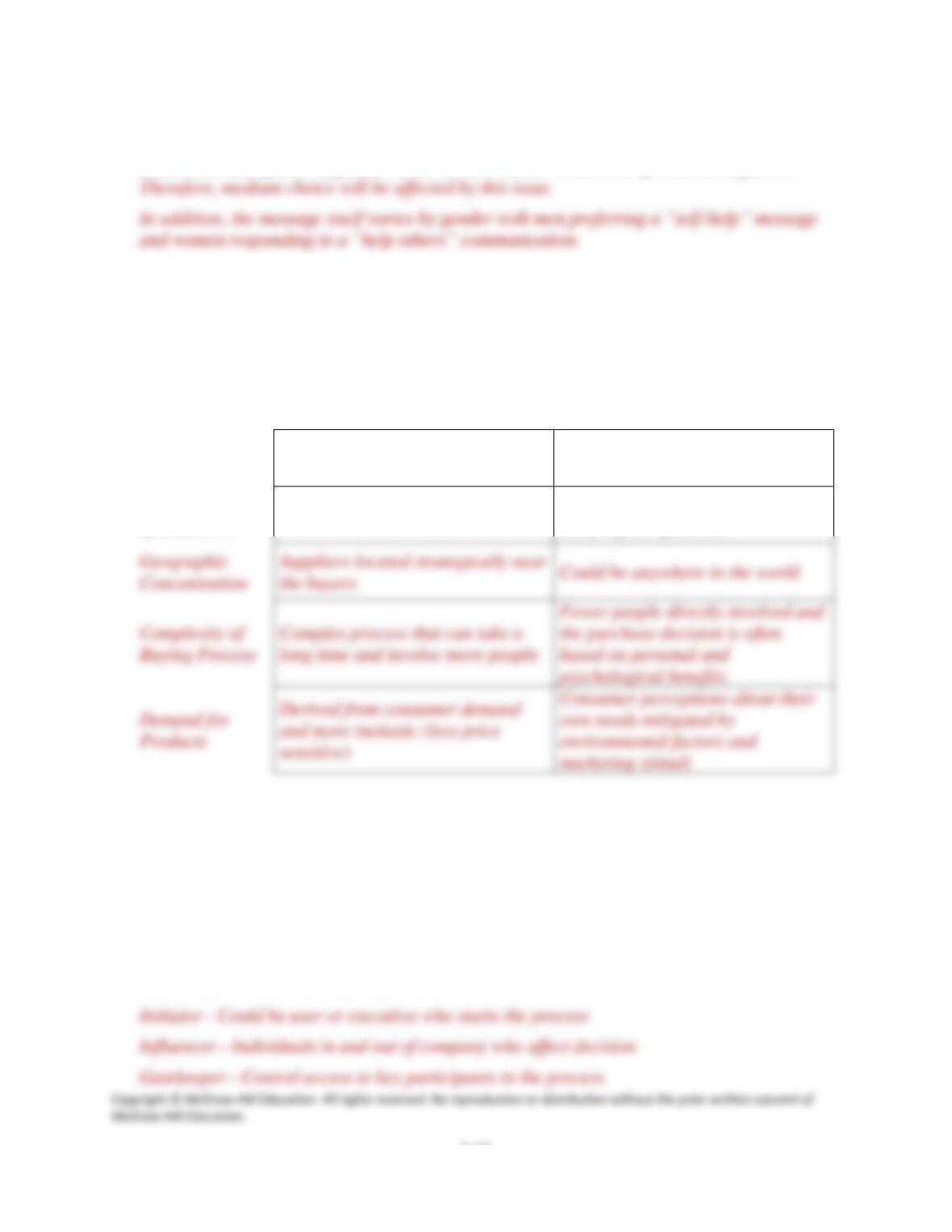
B2B Market
Consumer Market
Relationship
with Customers
Invest more in maintaining
personal relationships
Impersonal; exists through
electronic communication
Number and Size
of Customers
Few but larger customers
More customers but buy in smaller,
less frequent quantities
Geographic
Concentration
Suppliers located strategically near
the buyers
Could be anywhere in the world
4. You work for Siemens Power Generations systems and are responsible for the sale of large,
expensive ($2 million to $5 million) turbine generators to power utility companies. You
have been contacted by the Ever-Sure Utility Corporation in Any Town, USA. Identify the
buying center you are likely to find inside the company and how you would market the
generators to the buying center group.
You are likely to find every traditional role in the buying center, including:
Users – Actual consumers of the product
Chapter 06
Understand Consumer and Business Markets
6-18
Decider – Person(s) responsible for making final decision
MANAGEMENT DECISION CASE
Taking the Nike Experience Direct to Consumers
As described in the case, Nike is facing competitors (e.g. Under Armor) who are changing their
distribution strategies from B2B to B2C. Nike has traditionally been a B2B company when it
comes to distribution. Though it is not without experience in B2C distribution, it lacks the scale
Questions for Consideration
1. This chapter highlights how marketing efforts are different for B2B and B2C firms. As Nike,
and other manufacturers, continue to expand into B2C channels, what are some differences in
B2C and B2B behavior that might affect Nike’s approach to these channels?
There are many considerations and actions in marketing that are different in B2C and B2B
markets. Nike, moving more toward B2C, will face a few of these:
Purchases in B2C are usually in small quantities and for individual consumption with the
decision to buy usually the actual consumer of the product. In B2B the quantities are
much larger (hundreds to thousands of times larger) and the end-consumer is not the
6-19
2. What are some hurdles Nike may face as it expands its B2C business? Consider this question
both internally, with new skills Nike needs to amass, and externally, with challenges it may
face from its B2B channel partners.
Nike was selected for this case because of its interesting and complex business environment.
As the case notes, nearly all of Nike’s distribution is through a traditional B2B channels
(manufacturer to distributors to retail to consumers) and Nike owns very few direct-to-retail
outlets. Therefore, internally, Nike has less experience with managing direct retail than say,
Starbucks, and will need to acquire those skills, very likely by hiring experienced retail
3. What would be some negative consequences to consumers if all manufacturers sold only
B2C and eliminated wholesaler distributors who supply retail stores?
Since retail stores that are not owned by the manufacture are not exclusive to the
manufacturer, consumers can visit a store (e.g., Foot Locker) and find a variety of brands.
Chapter 06
Understand Consumer and Business Markets
6-20
shopping for a category of product (athletic shoes) in one place and advice that is, or at least
appears to be, unbiased toward a given brand.
Imagine having to visit four shops to compare the top brands of shoes you were interested in.
SUGGESTED VIDEO
Dole: Buying from Vendors around the Globe (7:05 minutes)
Description: Dole manages their large scale operations by contracting vendors from around the
world. Discusses some essential steps of business-to-business marketing.
1. Dole creates partnerships with its vendors, are there any drawbacks with this philosophy?
2. What are some of the criteria that Dole should consider when selecting vendors?
Here are a few criteria for selecting vendors:
• On-time delivery
• Product quality
• Price/cost