Chapter 05
CRM, Big Data, and Marketing Analytics
5-1
LEARNING OBJECTIVES
LO 5-2 Describe the CRM process cycle.
LO 5-4 Identify and appreciate the types of data used in marketing management decision
making.
LO 5-6 Understand the concept of a marketing dashboard and how it improves marketing
planning for a firm.
LO 5-7 Explain return on marketing investment (ROMI), including cautions about its use.
CHAPTER OUTLINE
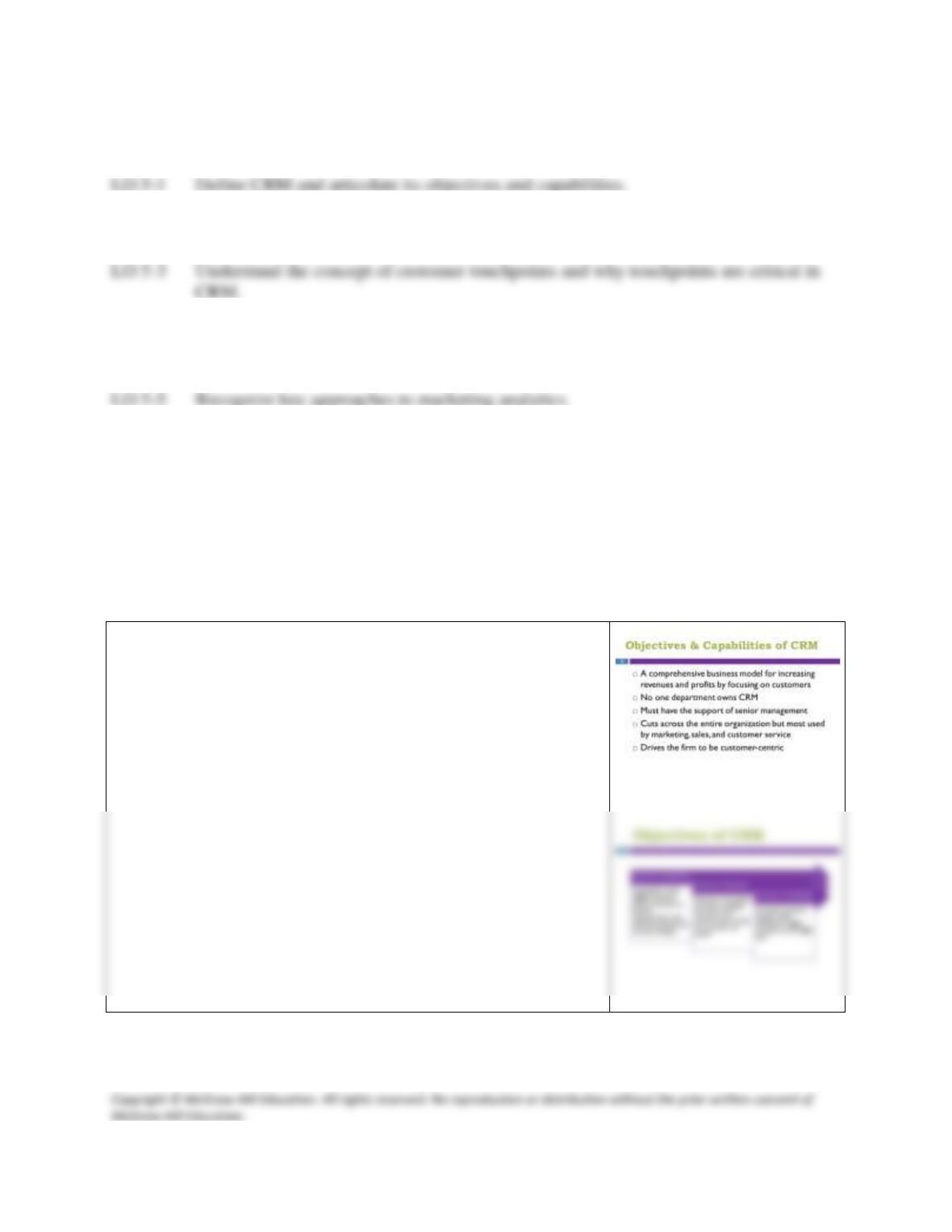
I. OBJECTIVES AND CAPABILITIES OF CRM
Chapter 05
CRM, Big Data, and Marketing Analytics
5-2
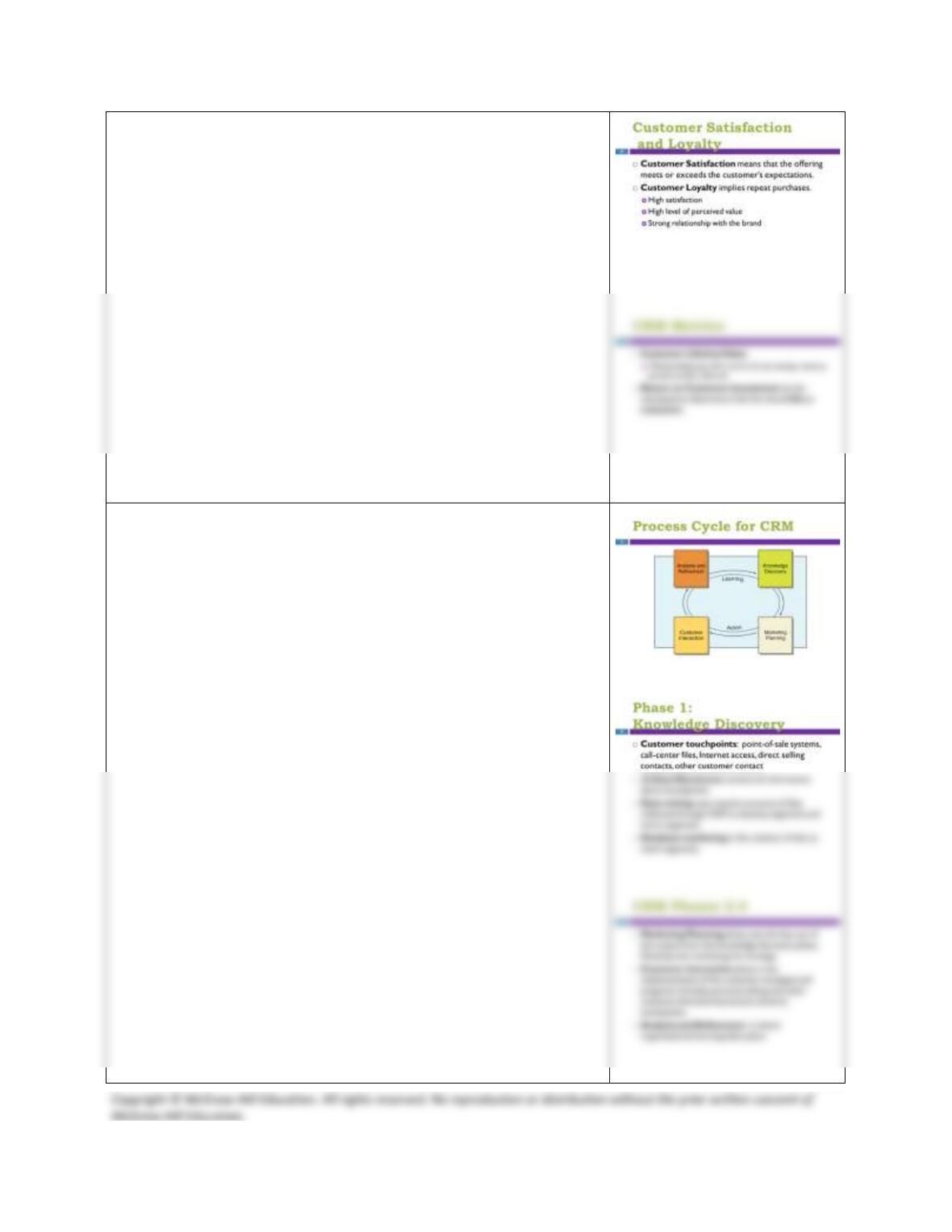
II. THE CRM PROCESS CYCLE
A. Knowledge Discovery
B. Marketing Planning
C. Customer Interaction
D. Analysis and Refinement
Chapter 05
CRM, Big Data, and Marketing Analytics
5-3
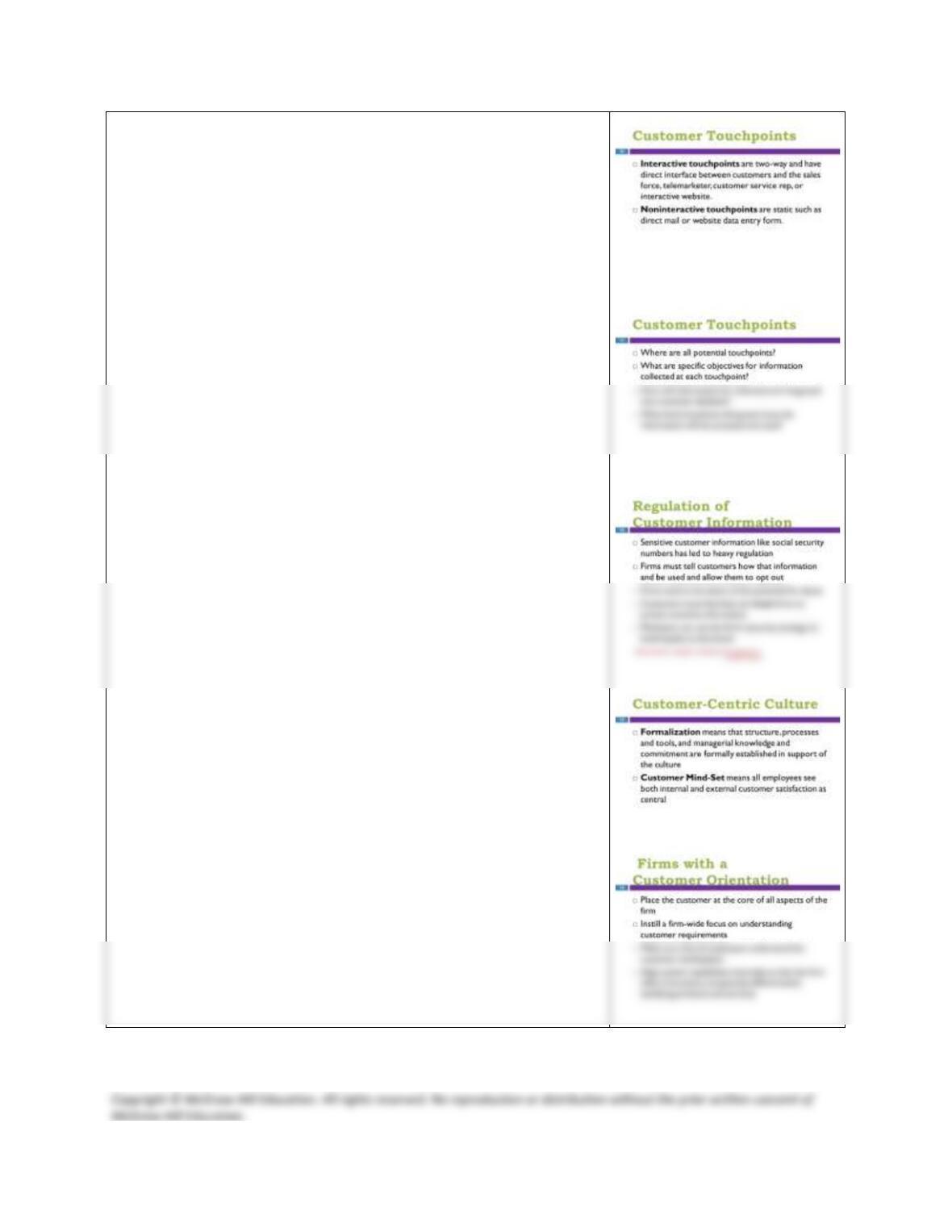
III. MORE ON CUSTOMER TOUCHPOINTS
A. CRM, Touchpoints, and Customer Trust
B. CRM Facilitates a Customer-Centric Culture
Chapter 05
CRM, Big Data, and Marketing Analytics
5-4
5-5
Chapter 05
CRM, Big Data, and Marketing Analytics
5-6
V. MARKETING ANALYTICS
A. Marketing Analytic Approaches
i. Descriptive Analytics
Chapter 05
CRM, Big Data, and Marketing Analytics
5-7
ii. Diagnostic Analytics
iii. Predictive Analytics
B. Capabilities of Marketing Analytics Supported by Big
Data
i. Marketing Mix Enhancement
ii. Increased Personalization
Chapter 05
CRM, Big Data, and Marketing Analytics
5-8
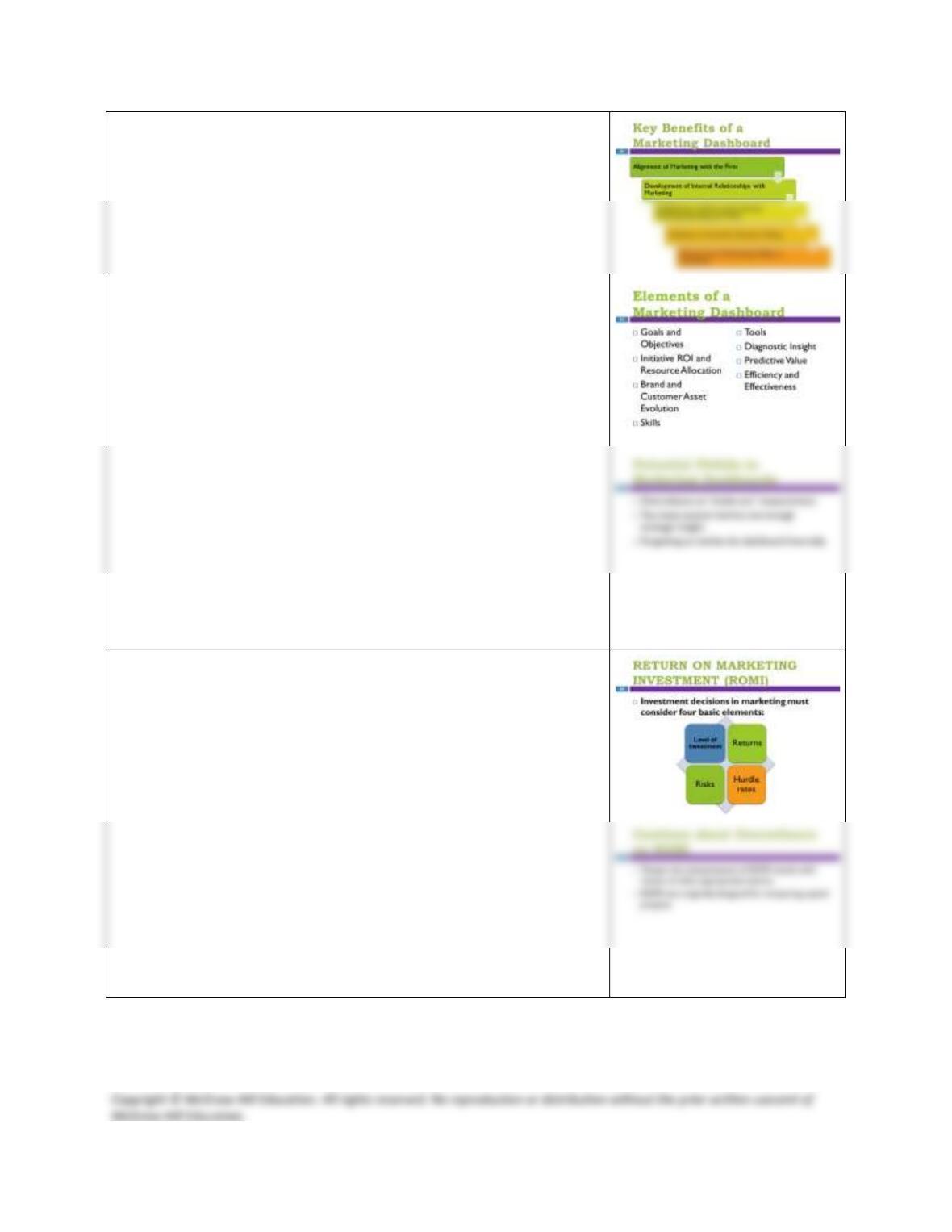
VI. THE MARKETING DASHBOARD
A. Goals and Elements of a Marketing Dashboard
Chapter 05
CRM, Big Data, and Marketing Analytics
5-9
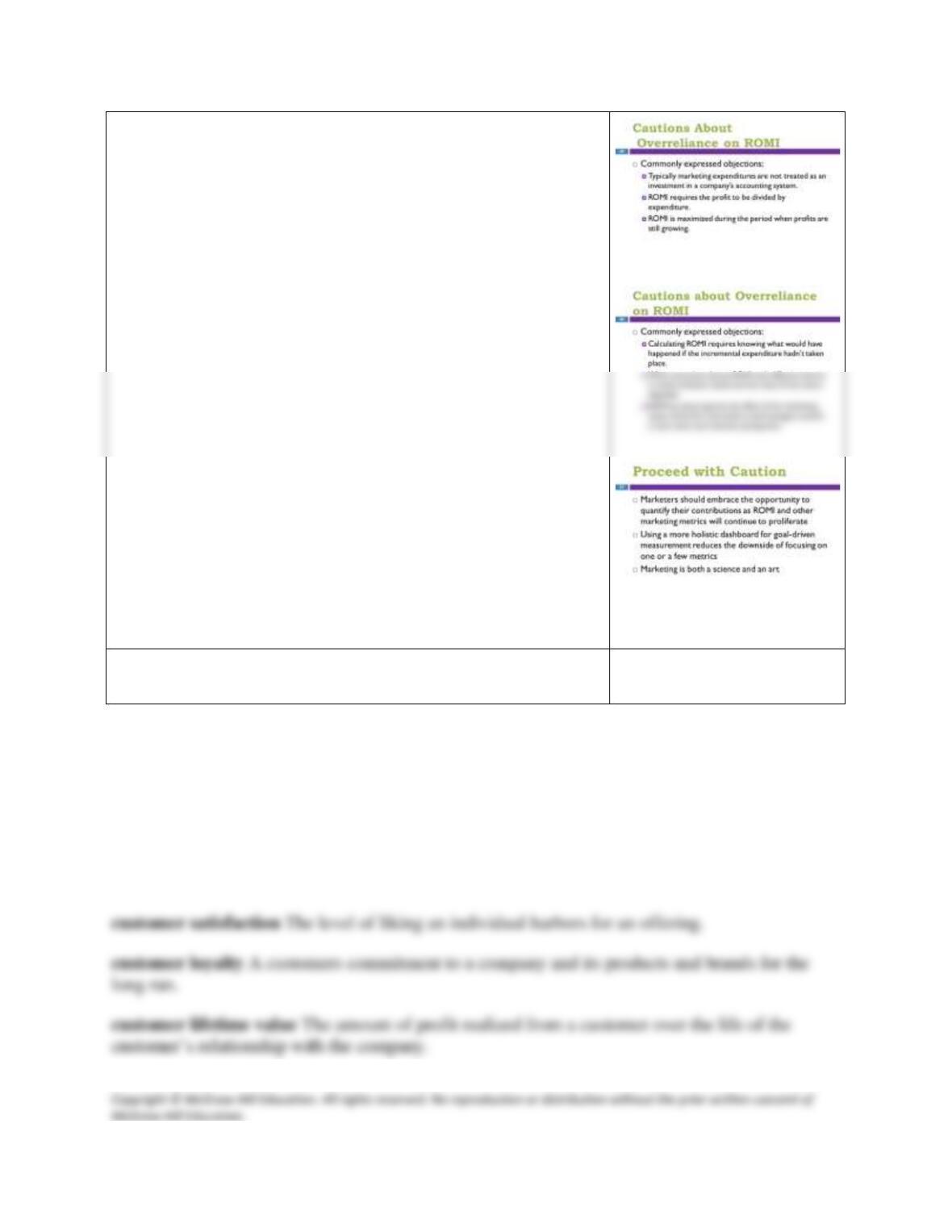
VII. RETURN ON MARKETING INVESTMENT (ROMI)
A. Cautions about Overreliance on ROMI
B. Proceed with Caution
Chapter 05
CRM, Big Data, and Marketing Analytics
5-10
VIII. SUMMARY
KEY TERMS
customer relationship management (CRM) A comprehensive business model for increasing
revenues and profits by focusing on customers.
customer satisfaction
Chapter 05
CRM, Big Data, and Marketing Analytics
5-11
return on customer investment (ROCI) A calculation that estimates the projected financial
returns from a customer. It is a useful strategic tool for deciding which customers deserve what
levels of investment of various resources.
firing a customer The shifting of investment of resources from less attractive customers to more
profitable ones.
data mining A sophisticated analytical approach to using the massive amounts of data
accumulated through a firm’s CRM system to develop segments and microsegments of
customers either for purposes of market research or development of market segmentation
strategies.
database marketing Direct marketing involving the utilization of the data generated through
CRM practices to create lists of customer prospects who are then contacted individually by
various means of marketing communication.
organizational learning The analysis and refinement phase of the CRM process that is based on
typically either numeric or text that is substantially limited to a certain set of input values.
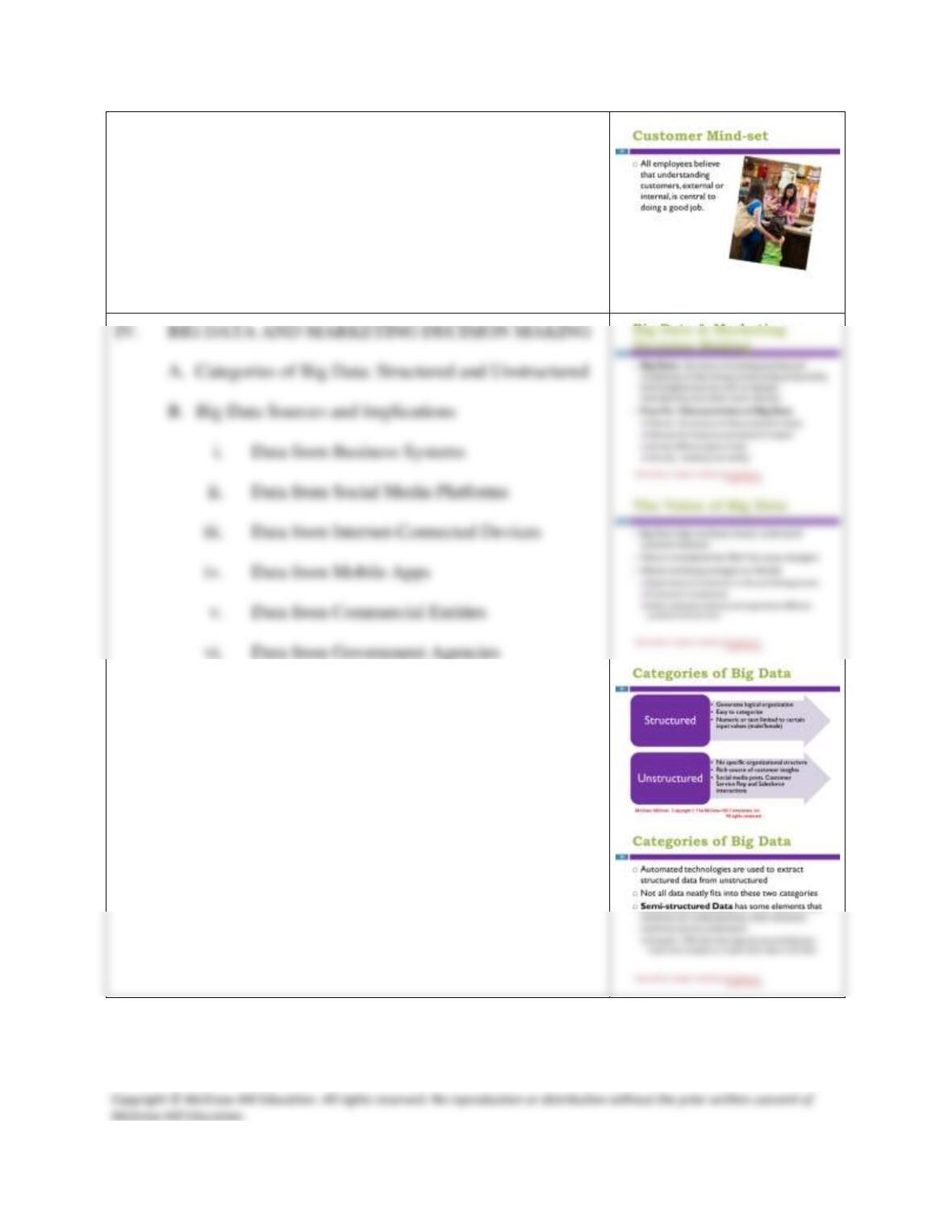
unstructured data Data that is generated in such a way that it does not possess a specific
organizational structure that renders it readily analyzable for knowledge creation.
semi-structured data Data that fits between structured and unstructured data in the sense that it
contains some elements of structure that make it easier for machines to understand its
Chapter 05
CRM, Big Data, and Marketing Analytics
marketing analytics Include a set of methods facilitated by technology that utilize individual-
level and market-level data to identify and communicate meaningful patterns within the data for
predictive analytics An approach that utilizes data to make predictions about future marketing
outcomes of interest.
prescriptive analytics An approach that involves determining the optimal level of marketing-
relevant factors for a specific context by considering how adjusting their levels in varying ways
will impact different marketing outcomes.
behaviors and preferences on the related website).
marketing dashboard A comprehensive system providing managers with up-to-the-minute
information necessary to run their operation including data on actual sales versus forecast,
progress on marketing plan objectives, distribution channel effectiveness, sales force
productivity, brand equity evolution, and whatever metrics and information are uniquely relevant