
Chapter Two
Business-to-Business Environment:
Customers, Organizations and Markets
Authors’ Comments
This chapter provides additional background for understanding the context of
business-to-business marketing. Also, it provides a way of looking at the context for a
given business–a way of classifying customers and markets–that helps in the
marketer’s first pass at understanding the business environment. Classification of the
competitive market and customers does not, in and of itself, provide enough
information for the marketer to create effective strategy. However, it provides a
sense of the constraints and drivers that will tend to shape the behavior of customers
and competitors. The marketer will then need to develop more refined information
about the environment to guide the development of marketing strategies and tactics.
The product life cycle (PLC) and the technology adoption life cycle (TALC) help the
marketer understand the dynamics of the market. While it is difficult to predict when
a market will change in nature, the life cycle concepts help the marketer understand
how the constraints and drivers will tend to evolve when the market does change.

Chapter 2: Business–to-Business Environment: Customers, Organizations and Markets 2
Opening Vignette
TRW Automotive operates in multiple categories
This opening discusses the many markets of TRW Automotive. TRW operates in OEM,
aftermarket, and service channels with products that range from airbag sensors to
braking systems. Each market involves a unique set of customers, though the core
product may not change.
As an example, consider TRW braking systems. These systems are sold to vehicle
manufacturers, usually co-designed with the vehicle manufacturer to meet the specific
requirements of the intended vehicle. Quantities are large, and the commitment may
extend over several years and/or models. In this case, the vehicle manufacturer is the
Learning Objective
Understand the Different Kinds of Business Customers.
Business exists in many shapes and forms. An understanding of the different
kinds of businesses and the markets they serve will assist in understanding the
varied environments in which business-to-business marketing operates.
Additionally, recognizing the variety and impact of external issues related to this
business will greatly enhance the ability to plan and strategize appropriately.
Chapter 2: Business–to-Business Environment: Customers, Organizations and Markets 3
Learning Objective
Understand the Different Categories of Business marketers.
Just as there are several types of businesses that purchase goods and services,
there are several categories of organizations that work to satisfy those
businesses. The goods produced can be a method to classify business
organizations.
• Producer Types (PowerPoint 2.10)
o Raw Materials Producers (PowerPoint 2.11)
o Component Parts and Manufactured Materials Producers (PowerPoint
Customer Needs Influenced by Classification of Markets
Some students may have been in marketing principles courses that
defined raw materials as limited to the raw form of materials as removed
from their natural state (iron from mines and so on). This limitation does
not serve to help understand customer behavior.
Chapter 2: Business–to-Business Environment: Customers, Organizations and Markets 4
Learning Objective
Gain an appreciation of the different kinds of competitive market
structures and their effects on buying behavior.
Classifying the Business-to-Business Market Environment
• Publics (PowerPoint 2.15)
• Financial Publics, Public Interest Groups, Internal Publics (PowerPoint 2.16)
• These public communities are
o not direct participants
The Macroenvironment (PowerPoint 2.17)
• The Demographic Environment: Issues that fall into this section include
o Demographics of “your customers’ customers,” to fully understand
The Economic Environment
Applying the Accelerator principle/bullwhip effect, the economy impacts
consumer willingness to spend.
Chapter 2: Business–to-Business Environment: Customers, Organizations and Markets 5
The Technological Environment
• Rapid changes in technology can obsolete a firm’s way of doing business.
Consider beginning to tie together Marketing Myopia with firms that
The Competitive Environment (PowerPoint 2.18 lists the types)
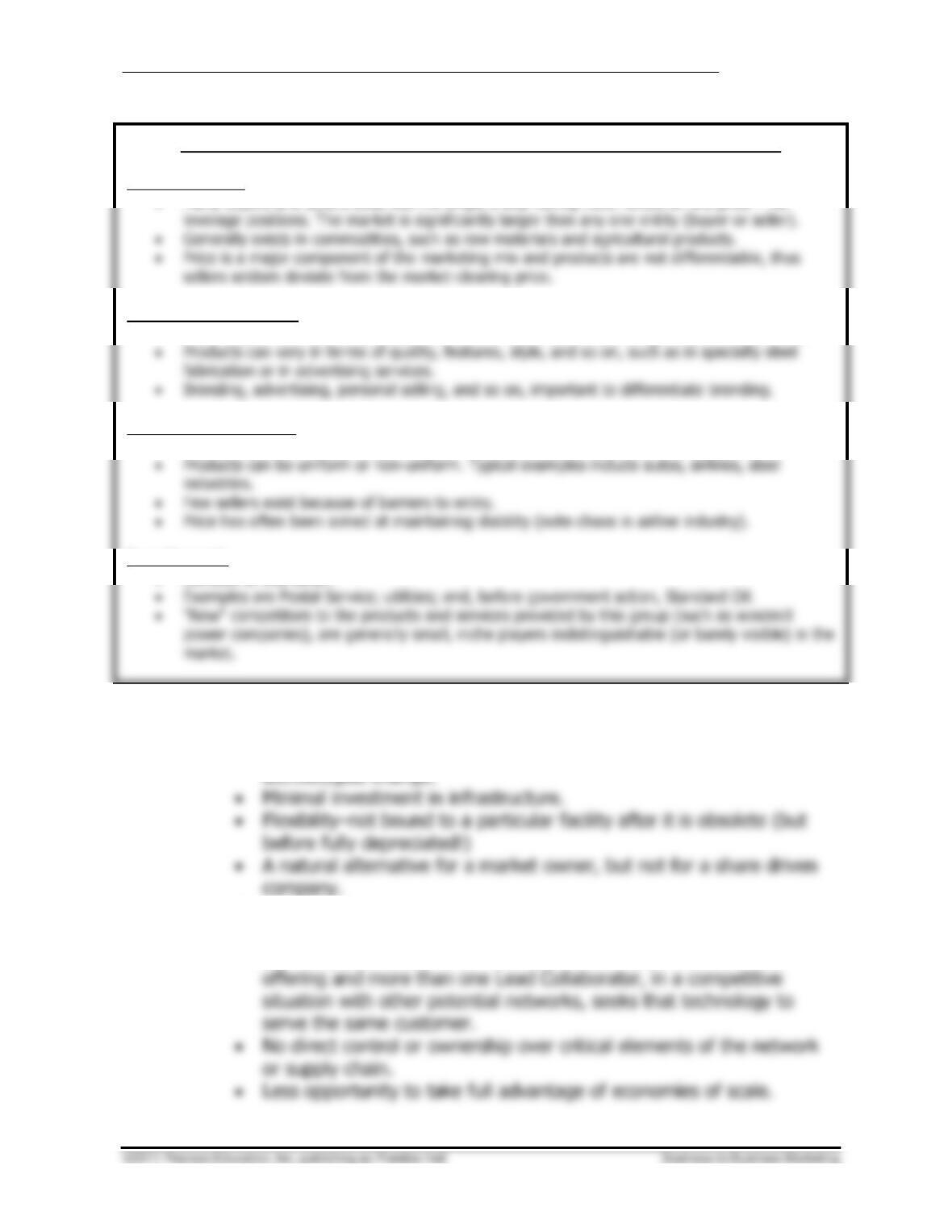
Exhibit 2-1 describes the four common forms of competition.
Learning Objective
Understand how the value chain concept is extended by the value
network concept and by the special case of integrated supply chains.
Value Creation
Value Networks and Supply Chains
Value Creation and the Value Chain, (Exhibit 1-5 and 2-2, PowerPoint
1.21) are generally discussed from the view of one organization. This
part of the book extends the concept to “Value Networks and Supply
Chains.”
Value Networks (Exhibit 2-3 and PowerPoint 2.19) can be viewed
Chapter 2: Business–to-Business Environment: Customers, Organizations and Markets 6
The Network model has many advantages/disadvantages, among them:
Advantages:
• Rapid development; ability to change partners as markets and
Disadvantages:
• Potential conflicts of interest, as flexibility allows a firm to have many
partners, particularly when one firm has a key portion of a total
Exhibit 2-1: Competitive Forms in Business–to-Business Markets
Pure Competition
• Many buyers and sellers exist with no single entity having much effect on the price – no
Monopolistic Competition
• Many buyers and sellers but product is differentiable such that a range of prices is possible.
Oligopolistic Competition
• Market consists of a few sellers who are highly sensitive to each other’s strategies.
Pure Monopoly
• Consists of one seller.
Chapter 2: Business–to-Business Environment: Customers, Organizations and Markets 7
Learning Objective
Reinforce and extend your understanding of the product life cycle and
its impacts on business-to-business markets.
Learning Objective
Introduce the technology adoption life cycle and its implications for
targeting and positioning.
Changes in Markets Over Time
Both the Product Life Cycle (PLC) Exhibit 2-5 (PowerPoint 2.20), and the
Technology Adoption Life Cycle (TALC) Exhibit 2-6 (PowerPoint 2.21) are
discussed.
The PLC serves as a hub or anchor that most concepts are related to
throughout the text. Discuss the PLC noting the changes over time not only
Key Terms
capital goods
chasm
culture
demographics
end user
industry standard
value networks
Chapter 2: Business–to-Business Environment: Customers, Organizations and Markets 8
Answers to Questions for Review and Discussion
1. What are some of the differences between marketing to typical commercial
enterprises and marketing to government agencies?
Differences in marketing between typical commercial companies and government agencies will
2. Classify the following businesses as VARs, users, component producers, or raw
material producers.
a. A supplier of copper to a wire manufacturer
b. A supplier of rear axle assemblies to a heavy truck manufacturer
c. A distributor of private telephone exchange equipment (PBX) and
installation services
d. A supplier of pigments to a paint manufacturer
e. A maker of automated assembly equipment
f. A supplier of small motors to disk drive manufacturers
a. raw materials producer
3. How can the agenda and focus of financial publics and public interest groups
create seemingly opposite goals for business-to-business marketing managers?
Opposing goals of financial publics versus public interest groups will run the gamut of responses
4. Defend the validity and importance of internal publics.
The company’s human resources make it possible to perform the necessary activities within the
Chapter 2: Business–to-Business Environment: Customers, Organizations and Markets 9
5. How can market-sensitive internal publics improve a firm’s competitiveness?
If the internal publics have an interest in pursuing the strategy of the firm, if they know how to
6. Should technology play a major role in your approach to your customers? Why
or why not?
In business-to–business marketing, the marketer can get caught up in the product’s technology.
7. How do oligopolies support the 80/20 rule?
Oligopolies support the 80/20 rule in that 80% of a vendor’s sales volume is likely to come from
8. Describe the areas of validity and fallacy associated with the study of the PLC.
validity fallacy
9. What market characteristics make it unlikely that pragmatists will easily follow
the role model of visionaries?
Pragmatists generally need to have two things in place before they will adopt. They need the

Chapter 2: Business–to-Business Environment: Customers, Organizations and Markets 10
10. Relate the PLC and the chasm, with particular emphasis on the market factors
that undergo change from introduction to rapid growth of an offering.
The chasm generally occurs very early in the growth period of the product life cycle. The
chasm−the period in transition−occurs because pragmatist buyers are not yet satisfied that a