Chapter 15: Distribution Channels and Supply Chain Management
CHAPTER SUMMARY AND LEARNING OBJECTIVES
LO 15.1 Describe the four types of distribution channels.
Distribution channels bring buyers and sellers together to complete transactions. There are four
types: direct, channels using marketing intermediaries, dual distribution, and reverse channels.
LO 15.2 Describe the three functions of marketing intermediaries.
LO 15.3 Outline the five factors that influence selection of distribution channels.
LO 15.4 List the key priorities for each function of the manufacturing supply chain.
The supply chain, also known as the value chain, is the complete sequence of suppliers and
activities that contribute to the creation and delivery of goods and services. Managers of each
function in the supply chain seek to accomplish priorities specific to that function.
LO 15.5 Summarize methods for managing the warehousing and storage function of the
LO 15.6 Compare the five major modes of transportation.
LO 15.7 Given an example of a supply chain, identify methods for accomplishing the
priorities of that supply chain.
Accomplishing the distribution priorities of a firm involves careful selection of intermediaries and
careful management of each function of the supply chain.
Chapter 15: Distribution Channels and Supply Chain Management
ACTIVATOR EXERCISE: The Last Mile
Purpose: To encourage students to think more closely about the importance of distribution and
logistics.
Format: Small group discussion, then presentations to the class.
Ask students to create a strategy that they’ll present to the class. They should address topics
such as:
• How will they physically transport the relief from the United States to the people in need.
Keep in mind that many roads and bridges have been wiped out. And it needs to make it
Note: Depending on time, you might have only 2–3 groups present, then have a class
discussion based on their various ideas.
Result: Students will realize that there’s more to distribution than meets the eye. We have
become accustomed to finding the products we want when we want them, but that’s because
Chapter 15: Distribution Channels and Supply Chain Management
LECTURE OUTLINE
15-1 What Are the Four Distribution Channels?
Distribution channels—also called marketing channels—bring buyers and sellers together to
complete transactions. These channels consist of the individuals and organizations who
manage the flow of product from producers to consumers. Even the best product would never
see the light of day without a plan for making that product available at the right time in the right
place to the right customers.
Direct Channel
The simplest and shortest distribution channel is a direct channel. A direct channel carries
goods directly from a producer to the ultimate user. This channel is often supplemented with
PRESENTATION VISUAL: MindTap Exhibit 15.1 showing direct distribution channel
Chapter 15: Distribution Channels and Supply Chain Management
Note: A company partnering with FedEx or UPS to actually deliver their product to the customer
is still a direct channel. In this case, FedEx or UPS is just a logistics partner—they aren’t a part
of actually marketing the product.
Discussion questions: What are the benefits of distributing products direct? What are the
drawbacks?
Channels Using Marketing Intermediaries
Although direct channels allow simple and straightforward marketing, they are not practical in
every case. Some products serve markets in different areas of the country or world, or have
Wholesalers, or distributors, take title to the goods, store them in warehouses, and distribute
them to retailers, other distributors, and sometimes end consumers.
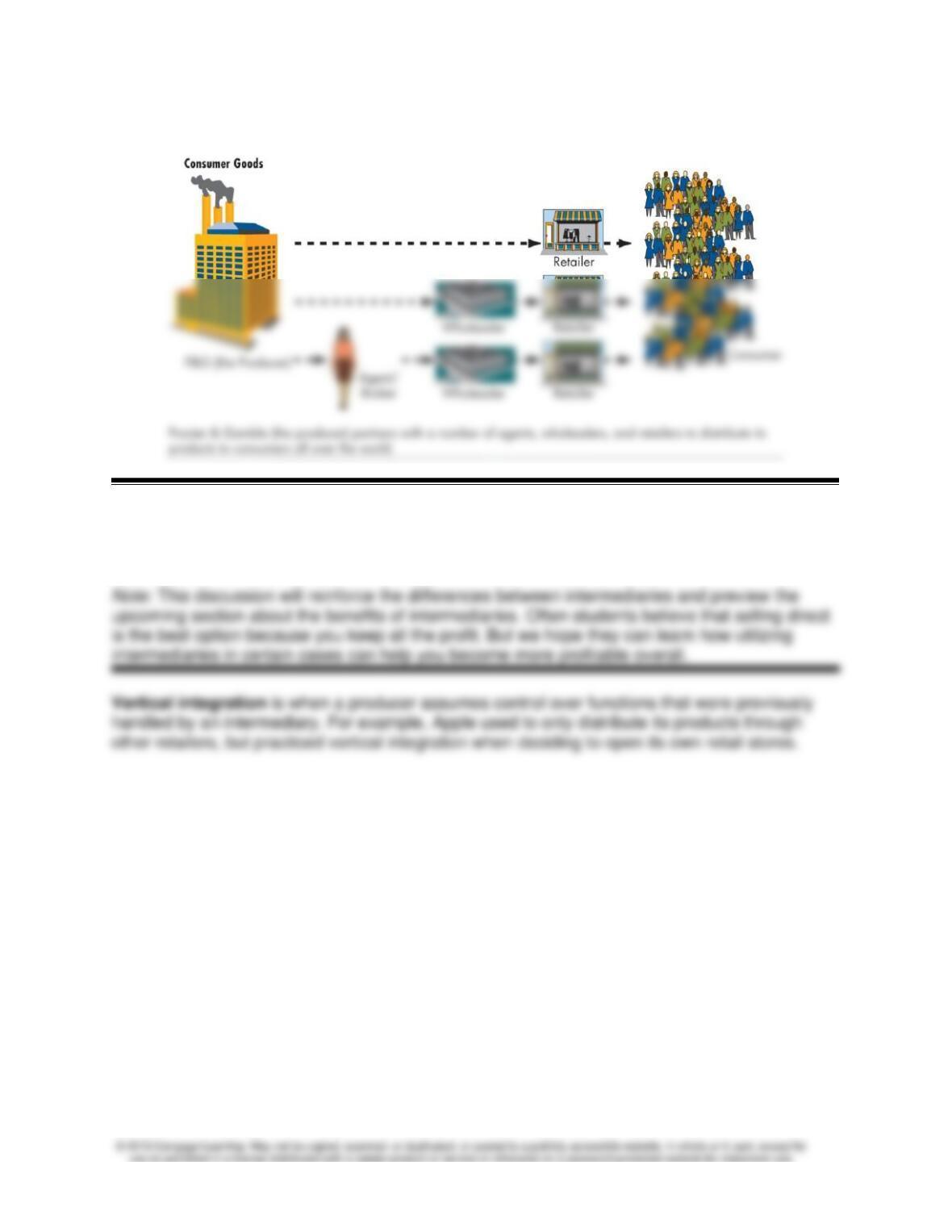
A sales agent is a third-party person or company who represents the producer to wholesalers
and retailers. Sales agents are essentially contracted salesforce with expertise in a particular
Chapter 15: Distribution Channels and Supply Chain Management
PRESENTATION VISUAL: MindTap Exhibit 15.2 showing channels using intermediaries
Discussion question: Imagine you manufacture clothing and typically utilize a direct sales
channel (i.e. you sell online only). What are the reasons or benefits you might realize by
partnering with retailers? What about wholesalers? What about sales agents? What are the
possible drawbacks?
Dual Distribution
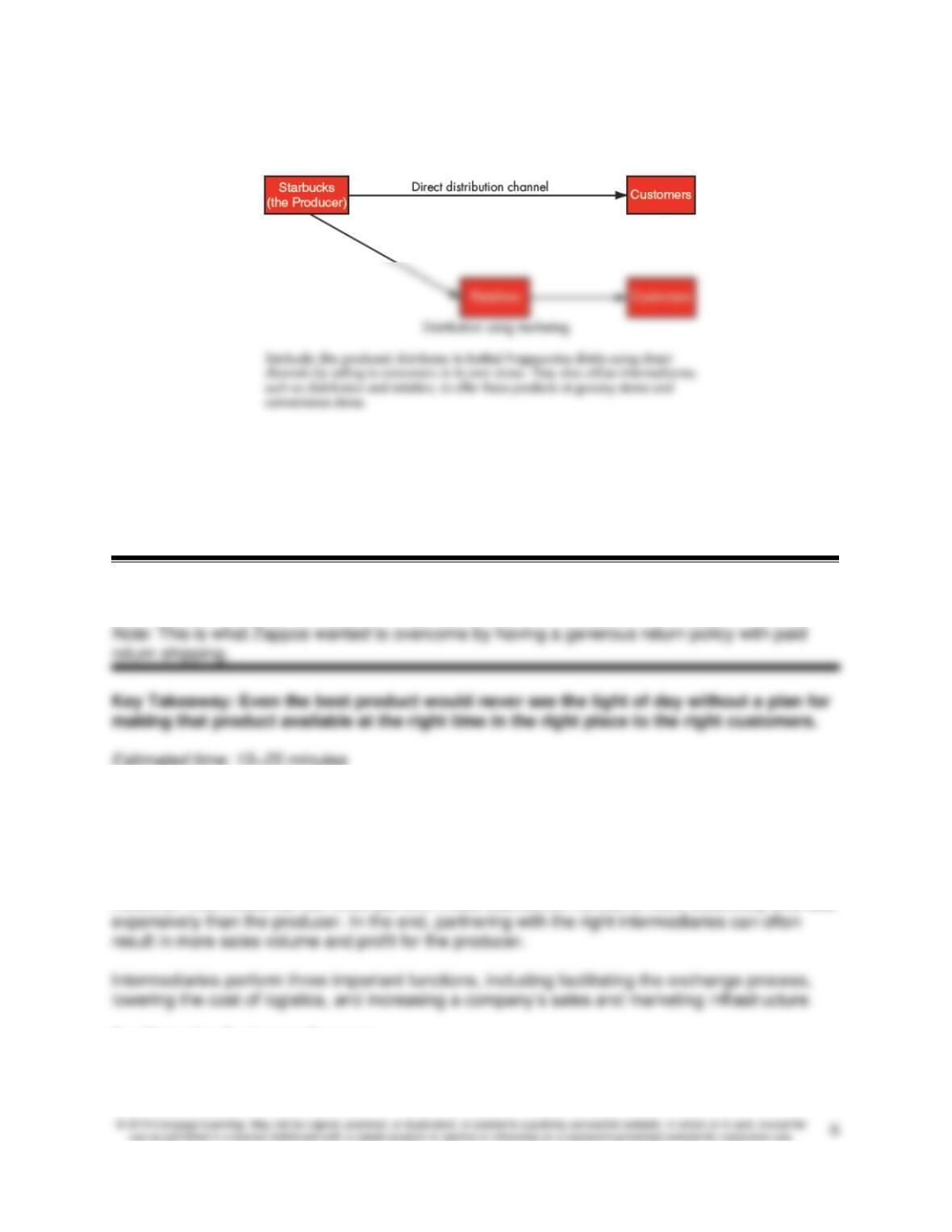
Dual distribution refers to the movement of products through two or more channels to reach
the firm’s target market.
Example: Nordstrom, for instance, has a three-pronged distribution system, selling
through stores, catalogs, and online. Marketers usually adopt a dual distribution strategy
either to maximize their firm’s coverage in the marketplace or to increase the cost–
effectiveness of the firm’s marketing effort.
Chapter 15: Distribution Channels and Supply Chain Management
PRESENTATION VISUAL: MindTap Exhibit 15.3 showing dual distribution for Starbucks
Frappuccino drinks
Reverse Channels
While the traditional concept of distribution channels involves the movement of goods and
services from producer to consumer, firms should not ignore reverse channels—channels
designed to return goods to their producers.
Discussion question: Who has ever hesitated to order something online because it might be
hard to return? What was it?
15-2 Functions of Intermediaries
The producer of a product might be tempted to believe they should always sell directly to
consumers. After all, it cuts out any middlemen and allows the company to keep all of the profit.
Facilitate the Exchange Process
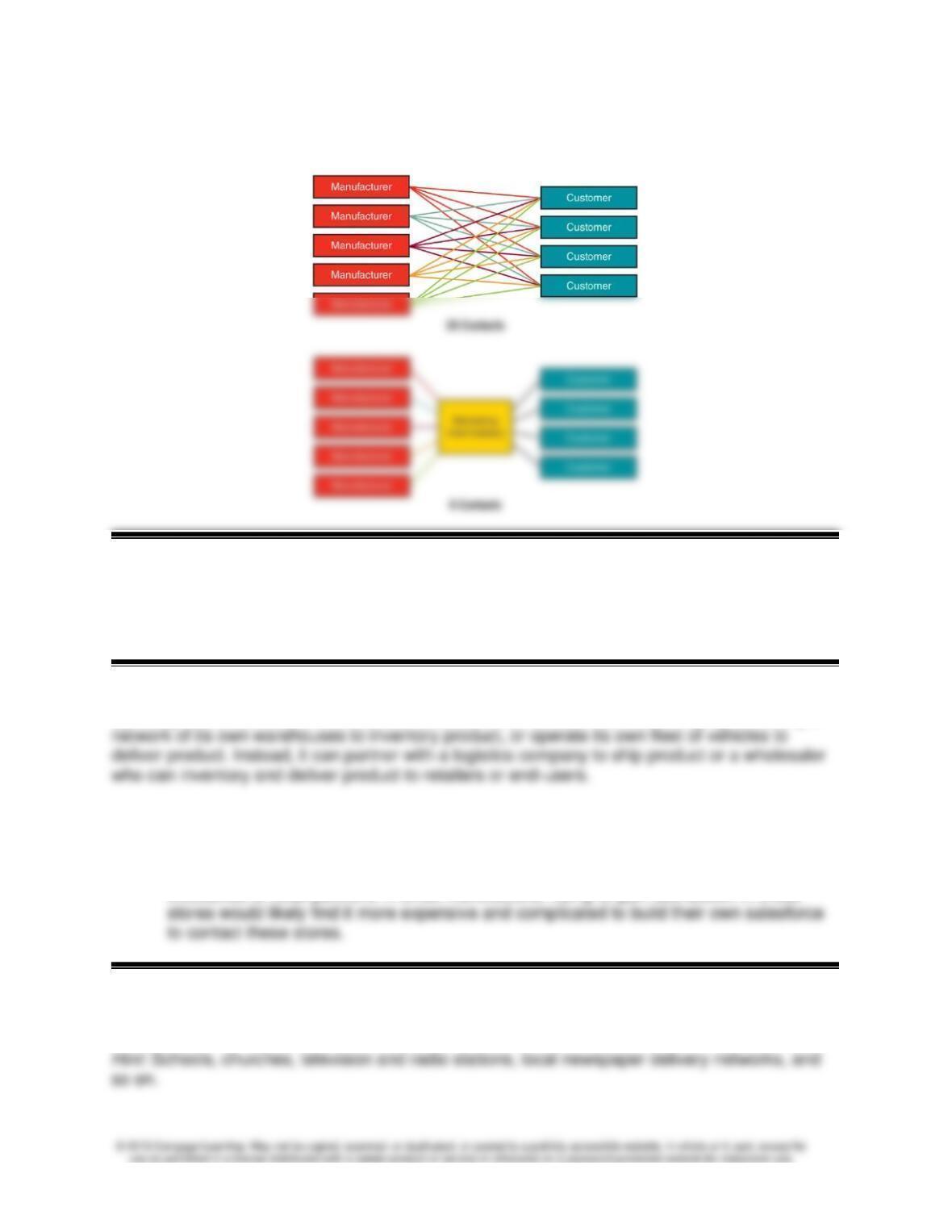
A producer can cut the costs of buying and selling to multiple customers by using an
intermediary.
Chapter 15: Distribution Channels and Supply Chain Management
PRESENTATION VISUAL: MindTap Exhibit 15.4 showing the efficiency of using a
marketing intermediary
Discussion question: Going back to the activator exercise, what are some intermediary parties
you could have used to help you disperse relief to those in need? Think of organizations that
might already have infrastructure and relationships with the people you want to reach.
Hint: Schools, churches, retail organizations that had a good disaster relief plan and are still
open, and so on.
Lower Cost of Logistics
By using intermediaries, a manufacturer does not need to incur the cost of buying or leasing a
Increase Sales and Marketing Infrastructure
Intermediaries provide cost-effective sales and marketing services to manufacturers as well.
Example: A wholesaler often has a large salesforce who calls on their hundreds or even
Discussion questions: Going back to the activator exercise, what are some intermediary
parties you could have used to help you better communicate and get the message out to people
in need?
Chapter 15: Distribution Channels and Supply Chain Management
Note: In this case, some of these intermediaries would equate to promotional channels instead
of distribution channels. However, it demonstrates that intermediaries can help carry your goods
AND your information through the distribution system. Some businesses have no advertising
budgets and rely on intermediaries to market and sell their products in all the right places.
Short and Long Distribution Channels
A short distribution channel involves few intermediaries. By contrast, a long distribution channel
Key Takeaway: Intermediaries perform three important functions, including facilitating
the exchange process, lowering the cost of logistics, and increasing a company’s sales
and marketing infrastructure.
Estimated time: 10–20 minutes
15-3 Selecting Distribution Channels
A variety of factors affect the selection of a distribution channel. These include market, product,
organizational, competitive, and intensity factors.
Market Factors
As discussed previously, products are intended for either consumer or business market end-
intermediaries who specialize in selling to farms. Choosing channels that offer wider
distribution, but don’t sell to farms, would be a poor choice.
Product Factors
Product characteristics also guide the selection of the optimal distribution channel strategy. For
example, perishable goods, such as fresh fruit and vegetables, milk, and fruit juice move
Chapter 15: Distribution Channels and Supply Chain Management
as cans of dog food, bars of soap, and packages of gum—typically travel through long channels
so that they can gain the widest distribution possible.
Bottled water for consumers
Bottled water for office buildings
Airplane parts sold to Boeing
Boxed cereal for consumers
Autos used by Puget Sound Energy as company cars
Caterpillar machinery used for construction
Organizational Factors
Companies with strong financial, management, and marketing resources feel less need for help
Competitive Factors
Marketers sometimes choose distribution channels to either avoid competitors or compete with
them head-to-head. Sometimes businesses will only work with distributors who offer exclusivity,
Horizontal Conflict results from disagreements among channel members at the same level,
such as two or more wholesalers or retailers.
Example: Retailer that was previously the exclusive seller of a manufacturer’s product
Vertical Conflict results from disagreements among channel members at different levels.
Chapter 15: Distribution Channels and Supply Chain Management
Example: Retailers may develop private brands to compete with producers’ brands or
producers may establish their own retail stores or create mail-order operations that
compete with retailers.
Intensity Factors
Another key channel strategy decision is the intensity of distribution. Distribution intensity
Example 1: The objective for a brand like Red Bull is to gain market share and maximize
sales volume. Its distribution strategy is to seek intensive distribution, such as through
convenience stores and grocery stores.
Example 2: On the other hand, a high-end shoe company such as Kenneth Cole wants
to maintain its brand by only working with retailers that can agree to the company’s rules
for pricing and product display. While Kenneth Cole could pursue a distribution partner
with more intensive market coverage, such as Target, that would not be a strategic fit for
its brand.
Classroom activity: Divide your students into pairs and instruct them to brainstorm examples
of companies with intensive, selective, and exclusive distribution for each of the following
Chapter 15: Distribution Channels and Supply Chain Management
Restaurants
After about 10 minutes, ask them to call out examples for each category. Write them on the
board (you’ll find that some were much harder for the students to think of than others). If they
don’t immediately see it, help your students understand the close links between distribution
intensity, product image, and price. For example, products with intense distribution often have a
volume pricing objective, while products with exclusive distribution often have a prestige pricing
objective.
15-4 Components of the Supply Chain
A distribution channel is made up of the individuals and organizations that manage the flow of
product from producers to consumers. If Oberto, which manufactures beef jerky, partners with a
wholesaler, who then sells to QFC grocery stores, these are the members of the distribution
channel.
PRESENTATION VISUAL: MindTap Exhibit 15.5 showing components and priorities for
the supply chain
Raw Materials
Inbound Logistics
Warehouse and Storage
Production
• Quality
• Availability
• Ethical sourcing
• Timeliness
• Reliability
• Safety
• Security
• Inventory control
• Quality control
• Safety
• Fair labor
practices
• Speed
Chapter 15: Distribution Channels and Supply Chain Management
Example 1: Sara Lee might have market tested an idea for a delicious new cake, and
have multiple retailers ready to carry the product. However, if Sara Lee can’t acquire the
raw materials to make the product, or partners with a logistics company that always
delivers late, then Sara Lee will have trouble fulfilling retailer demand on time, if at all.
Classroom activity: In small groups, ask students to select a product that is fairly new to the
market—perhaps one launched with big fanfare. Now ask them to create a scenario, like the
above examples, where a link in the company’s supply chain failed. Have them explain what
failed and what could have been done to avoid that failure.
From the perspective of a producer, supply chain management takes place in two directions:
upstream and downstream. Upstream management involves managing raw materials, inbound
logistics, and warehouse and storage facilities. Downstream management involves managing
finished product storage, outbound logistics, marketing and sales, and customer service.
15-5 Key Priorities of Warehousing and Storage
A firm’s warehousing and storage function contains the following elements:
1. Inventory control: Quantity of inventory the firm maintains at each location
the firm maintains
Chapter 15: Distribution Channels and Supply Chain Management
Inventory Control
Inventory control is critical, as companies need to maintain enough inventory to meet customer
demand without incurring costs for carrying excess inventory.
Example: THE DOWNSIDE OF TOO MUCH INVENTORY: Lenka Fresh Snacks (from
the opening vignette) could stock 10,000 boxes of each product to ensure that inventory
Protective Packaging and Materials Handling
Logistics managers arrange and control activities for moving products within plants,
warehouses, and transportation terminals. These activities compose the materials handling
system. Two important concepts influence many materials handling choices: unitizing and
containerization.
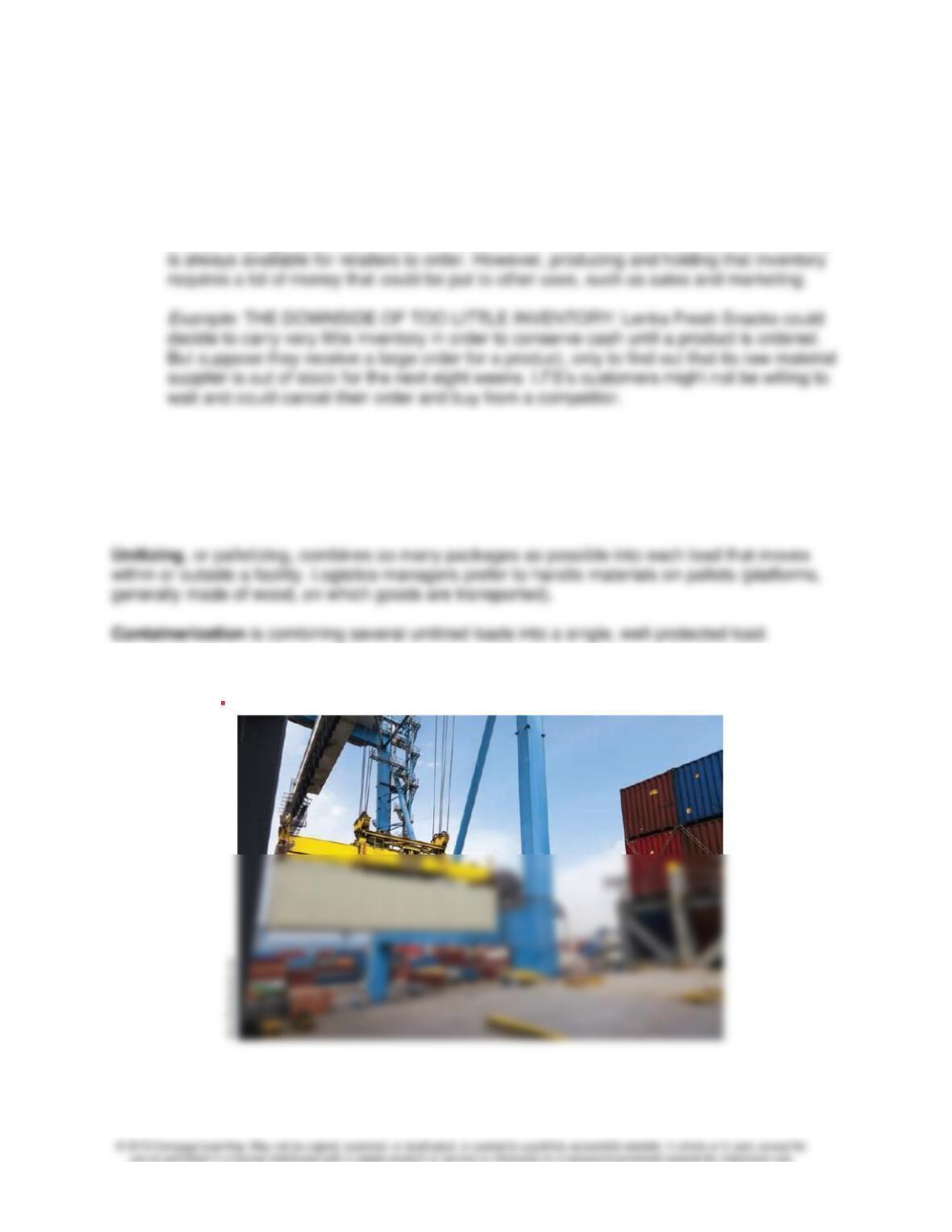
PRESENTATION VISUAL: Photo 15.07 of a shipping container being loaded