Chapter One
Introduction to Business-to-Business Marketing
Authors’ Comments
This chapter sets the tone for the book. Three areas emphasized in this chapter are:
• Application of the marketing concept in business-to-business marketing.
• Development of the concept of value and the total offering (rather than “the
product”).
• Comparison between business-to-business marketing and consumer marketing.
The application of the marketing fundamentals to business-to-business marketing may
seem basic, however we are continually surprised at how many undergraduate
The concept of Value and the Value Chain is introduced. The value chain works as a
framework for thinking about how to structure marketing strategy and why. While the
implications are simple they are also profound: the ideas of core competencies,
market segmentation, positioning, channel management, branding, setting prices and
many others all find important guidance from the value chain notion (and from the
idea of the value network, built upon the value chain concept). Thus value and the
value chain are important concepts to get across as they form the foundation to the
“total offering,” a framework of value for much of what follows in the book.
Chapter 1: Introduction to Business–to-Business Marketing 2
Opening Vignette
FedEx Kinko’s vs. The UPS Stores
The opening describes the expansion of transportation competitors FedEx and UPS
into retail locations for mailing and some copy services. FedEx acquired Kinko’s, the
Learning Objective
Reinforce the Basics of Marketing from your Marketing Principles
Course.
With a good grounding in marketing principles, Chapter 1 should be fairly easy
for students to understand on their own. All marketing anticipates and
measures needs and wants of buyers, whether service buyers or actual product
purchasers.
Learning Objective
Gain an appreciation for the main differences between consumer
marketing and business-to-business marketing.
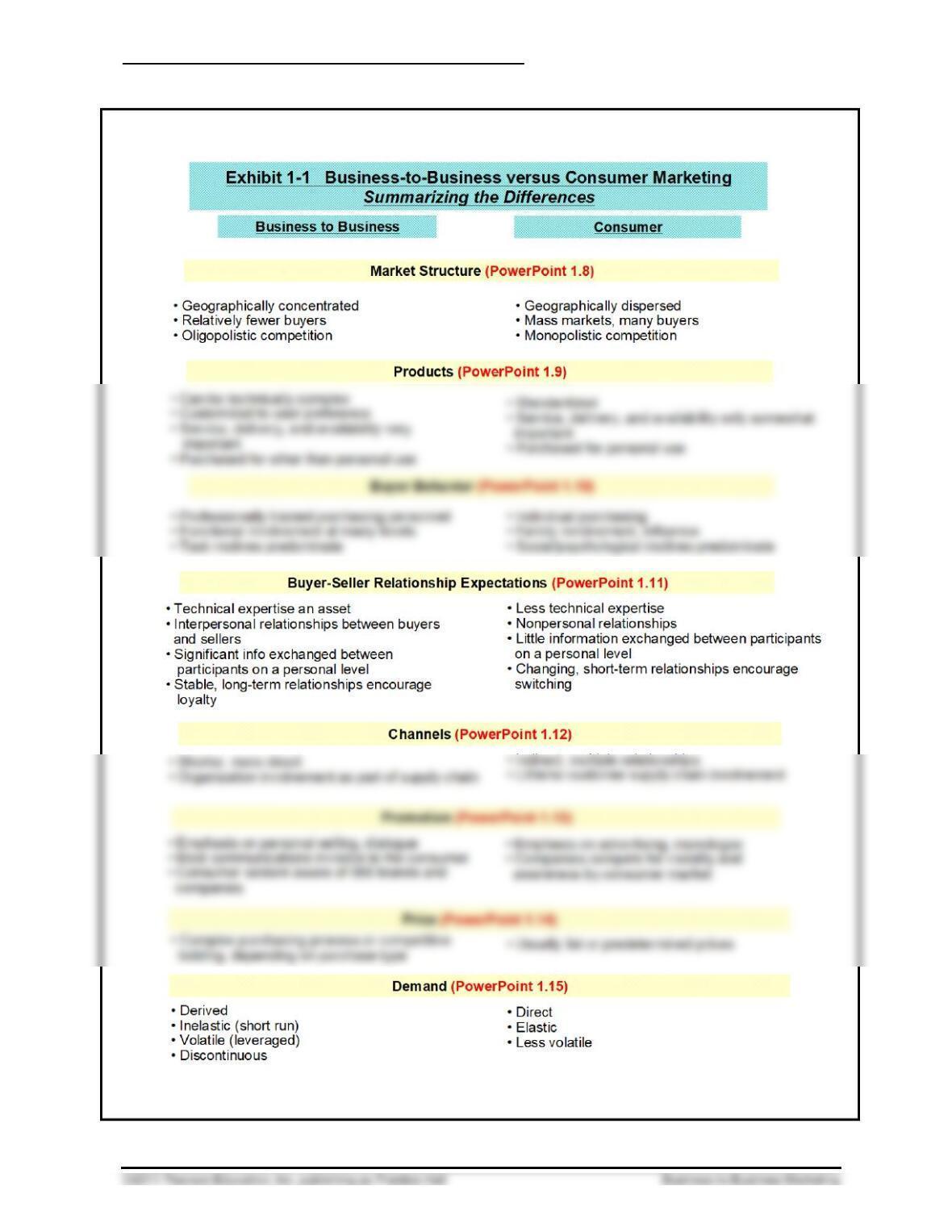
Exhibit 1-1 summarizes these differences. Each portion of the exhibit is
displayed on PowerPoint slides 1.8 – 15.
Chapter 1: Introduction to Business–to-Business Marketing 3
Chapter 1: Introduction to Business–to-Business Marketing 4
• Concept of Derived Demand
The Acceleration Principle (Bullwhip Effect) is an important concept in business–
Learning Objective
Understand the Marketing Concept and its Implications for Business-
to-Business Marketing.
Relationship marketing, central to business-to-business, becomes more distant
in consumer marketing via media communications rather than interpersonal.
• Complexity–A Rationale for Relationship Marketing
• Opportunities Through Relationships
Consider asking students how and where they shop. Do they always return to
the same store and/or sales associate for assistance? Do they count on these
sales associates as a resource and expect recommendations that are of benefit
to both parties? Are they confident that value is created for both parties? Can a
sale at a competitor distract them from this loyalty? Most likely, students will
not have established relationships with consumer sellers.
• Market Structure
Consumer instincts, conditioned by mass marketing approaches, are often
contrary to business-to-business marketing logic.
Chapter 1: Introduction to Business–to-Business Marketing 5
Learning Objective
Understand the meaning of value.
Have students examine their perceptions of “value” in terms of things they
purchase and the actual + physical costs they incur compared to a product that
is specified as to content, size, weight, etc. and purchased in volumes. Ask the
students to think in terms of economic utility–time value, place value, form
value, exchange value, etc.
• Evaluated Price (PowerPoint 1.19)
Discuss the total cost of owning and using the product. This may include
Learning Objective
Gain a sense of how the value chain is structured and how it is related
to the concept of a supply chain.
Some students seem to have difficulty dealing with the value chain concept and
the inherent importance of every element from start to finish and throughout to
generate true overall “value.”
Consider a discussion where students name the portions of an organization

Chapter 1: Introduction to Business–to-Business Marketing 6
Learning Objective
Gain an understanding of the implications of the value chain for
business-to-business marketing.
Learning Objective
Obtain a sense of the changing nature of the business environment.
PowerPoint 1.24:
Trends and Changes in Business Marketing
Key Terms
bullwhip effect
business marketing
business markets
channel facilitators
consumer demand
derived demand
discontinuous demand
economic utility
elasticity
entrepreneurial marketing

Chapter 1: Introduction to Business–to-Business Marketing 7
Answers to Questions for Review and Discussion
1. Describe the differences between business-to-business and consumer
marketing for the following market elements:
products buyer behavior decision making
Products differ by typically being larger in quantity and total purchase value, and they are
generally used in the creation of another, final product in business–to-business. Consumer
products will probably have only a few ancillary features, such as a warranty or a service
contract. Business–to–business “products” are often more complex, with features that include
Customer decision making in business-to-business marketing often progresses in somewhat
observable stages, focused on the satisfaction of organizational needs. Conversely, decision
making by consumers seldom moves through observable, quantifiable stages and is often
focused on the satisfaction of individual, personal needs.
Referenced from Exhibit 1-1:
Business Products:
•
Can be technically complex
•
Customized to user preference
Consumer Buyer Behavior:
•
Individual purchasing
•
Family involvement, influence
•
Social/psychological motives predominate
Business Decision Making:
•
Must satisfy specific technical needs
Chapter 1: Introduction to Business–to-Business Marketing 8
2. Describe the differences between business–to-business and consumer
marketing for the following market elements:
market structure channels promotion
Market structures in business-to-business markets often follow the 80/20 rule, with few
buyers−an oligopoly−that consume a high percentage of products. Additionally, businesses will
3. Describe the difference between derived demand and consumer demand. How
does the leveraging phenomenon occur?
Derived demand starts with consumer demand for goods and services. To create these
consumer products, businesses must obtain goods and services themselves, which are
4. What is the difference between value as perceived by the customer and value
as perceived by the supplier?
Value as perceived by the customer is the sum of the benefits, less the sum of all costs,
monetary and otherwise, that are incurred with the purchase and use of the product. Value
5. We learned in economics the difference between elasticity and inelasticity.
Chapter 1: Introduction to Business–to-Business Marketing 9
What is meant when we say that business-to-business demand is inelastic in
the short term and discontinuous in the long term?
Business-to-business demand is inelastic in the short run and discontinuous in the long run
6. Ultimately, who is the long-term benefactor of application of the value chain?
Explain your answer.
The long-term benefactor of value chain application is ultimately the purchasing customer, but
7. Considering all of the elements of evaluated price, would value to the
customer’s customer be a major consideration? Why or why not?
8. How is value created in the transaction process?
Value is created in the transaction process as both buyer and seller recognize increased value
9. As consumers, how do our “shopping instincts” make it difficult to understand
business-to-business marketing philosophy?
Consumer “shopping instincts” are often based on emotional needs/wants, individual
10. What factors can contribute to a customer remaining with a particular supplier
even though lower-cost substitutes may be available?
Customer retention in business-to-business in the face of lower-cost substitutes can be
Chapter 1: Introduction to Business–to-Business Marketing 10
11. What factors contribute to the decision to outsource versus vertically integrate?
How does proprietary technology affect this decision?
In the formative years of an industrialized economy, vertical integration was a necessity−Edison
invented the light bulb but also had to invent the socket as well as develop the generation and
distribution of residential electricity. Henry Ford required volumes of steel and glass that were
12. Discuss the bullwhip effect. How can management of the supply chain reduce
the volatility produced by the bullwhip effect?
The bullwhip effect (short-term) and the accelerator effect (long-term) can be better managed
13. Discuss the relationship between evaluated price and value and the importance
of that relationship to both suppliers and buyers.
Evaluated price is the total cost of owning and using the product. This may include
transportation, inventory-carrying costs, financing costs, potential obsolescence, installation,
14. How can a company gain competitive advantage through supply chain
management?

Chapter 1: Introduction to Business–to-Business Marketing 11
A supply chain is the chain of entities and activities that results in products provided to end–
users. It starts with raw materials and traces the flow of materials and subassemblies through